Cambridge A Level Marine Science 9693 — 2019 May/June Paper 4 · Variant 1
9693/41/M/J/19 · 4 questions · 50 marks · ≈56 min
The question paper and its mark scheme, free to read here and free to download. This is Cambridge’s own paper, exactly as it was sat.
Question paper16 pages





Mark scheme10 pages
Answers below. Sit the paper first if you are practising.
Questions as text
Q1 · A marine reserve was set up in an area of the Mediterranean Sea to protect fish stocks
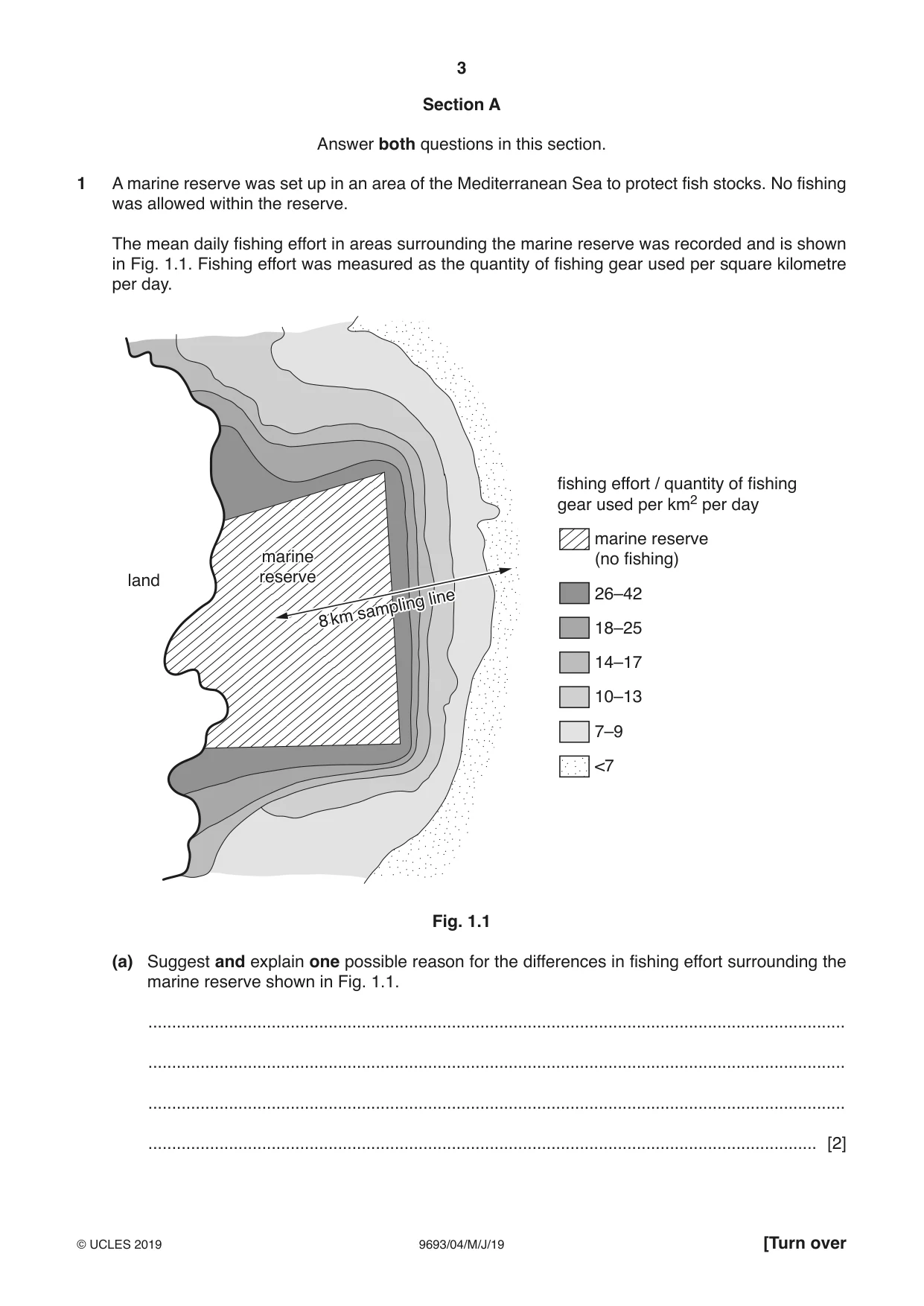
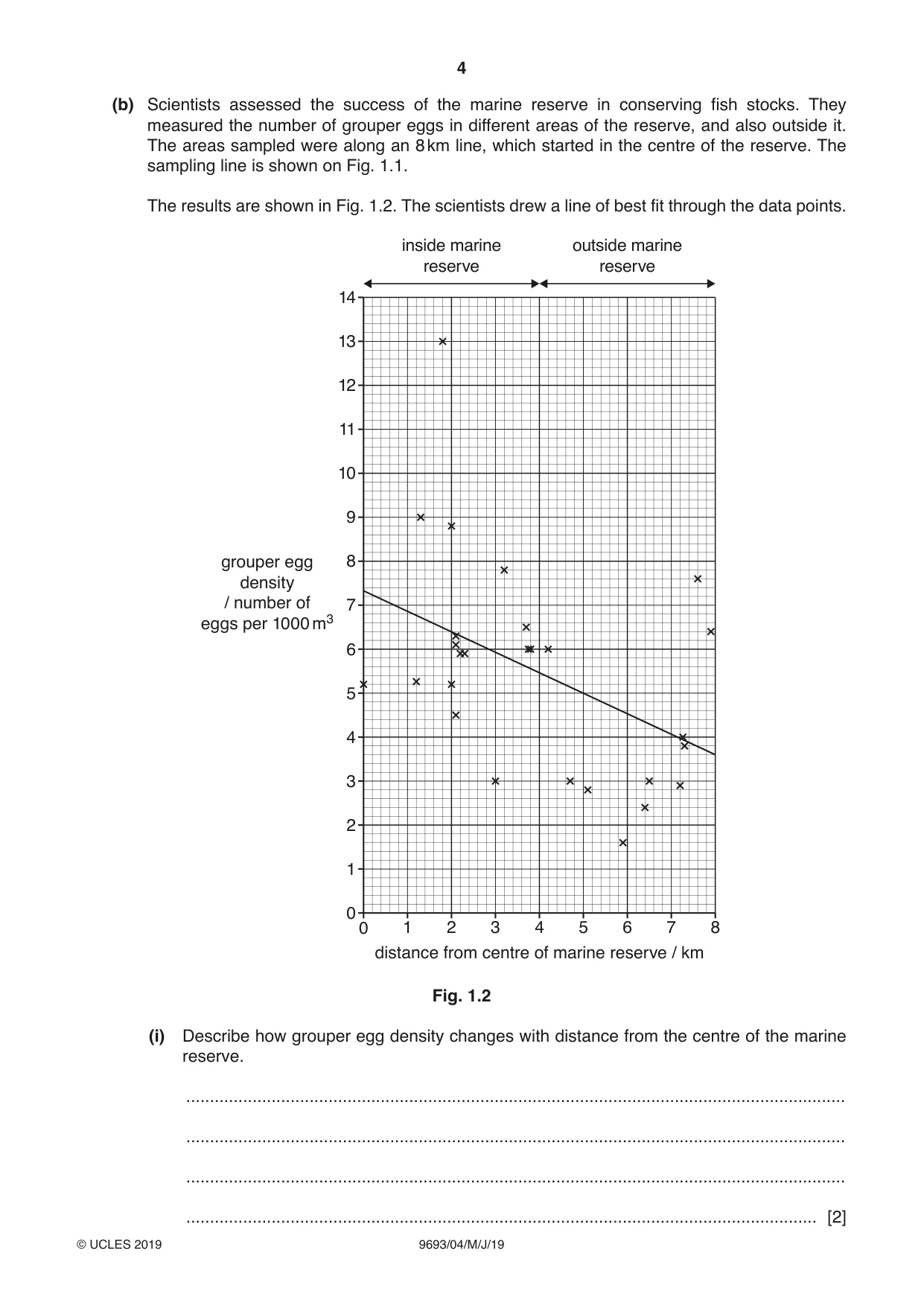
1 A marine reserve was set up in an area of the Mediterranean Sea to protect fish stocks. No fishing was allowed within the reserve. The mean daily fishing effort in areas surrounding the marine reserve was recorded and is shown in Fig. 1.1. Fishing effort was measured as the quantity of fishing gear used per square kilometre per day. fishing effort / quantity of fishing gear used per km2 per day marine reserve marine (no fishing) land reserve line 26–42 sampling 8km 18–25 14–17 10–13 7–9 <7 Fig. 1.1 (a) Suggest and explain one possible reason for the differences in fishing effort surrounding the marine reserve shown in Fig. 1.1. ................................................................................................................................................... ................................................................................................................................................... ................................................................................................................................................... ............................................................................................................................................. [2] (b) Scientists assessed the success of the marine reserve in conserving fish stocks. They measured the number of grouper eggs in different areas of the reserve, and also outside it. The areas sampled were along an 8 km line, which started in the centre of the reserve. The sampling line is shown on Fig. 1.1. The results are shown in Fig. 1.2. The scientists drew a line of best fit through the data points. inside marine outside marine reserve reserve 14 13 12 11 10 9 grouper egg 8 density / number of 7 eggs per 1000 m3 6 5 4 3 2 1 0 0 1 2 3 4 5 6 7 8 distance from centre of marine reserve / km Fig. 1.2 (i) Describe how grouper egg density changes with distance from the centre of the marine reserve. ........................................................................................................................................... ........................................................................................................................................... ........................................................................................................................................... ..................................................................................................................................... [2] (ii) Use the line of best fit on Fig. 1.2 to calculate the change in grouper egg density per kilometre between the centre of the reserve and a distance of 8 km from the centre. ....................... eggs per 1000 m3 per km [3] (c) Discuss whether the information in Figs. 1.1 and 1.2 could be used to show that the marine reserve is beneficial to fish stocks in and around the reserve. ................................................................................................................................................... ................................................................................................................................................... ................................................................................................................................................... ................................................................................................................................................... ................................................................................................................................................... ................................................................................................................................................... ................................................................................................................................................... ................................................................................................................................................... ............................................................................................................................................. [4] [Total: 11]
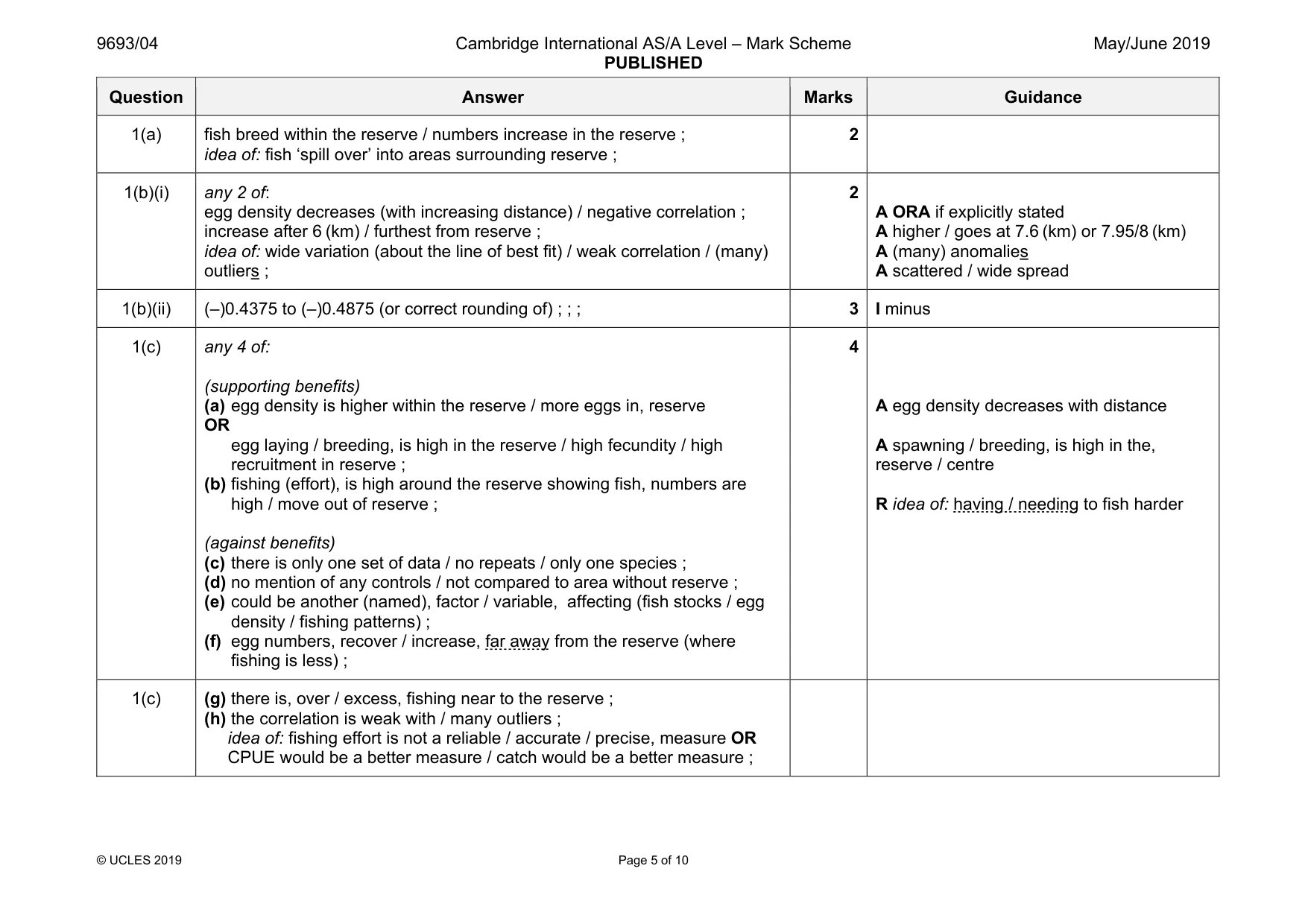
Mark scheme: 1(a) fish breed within the reserve / numbers increase in the reserve ; idea of: fish ‘spill over’ into areas surrounding reserve ; 2 1(b)(i) any 2 of: egg density decreases (with increasing distance) / negative correlation ; increase after 6 (km) / furthest from reserve ; idea of: wide variation (about the line of best fit) / weak correlation / (many) outliers ; 2 A ORA if explicitly stated A higher / goes at 7.6 (km) or 7.95/8 (km) A (many) anomalies A scattered / wide spread 1(b)(ii) (–)0.4375 to (–)0.4875 (or correct rounding of) ; ; ; 3 I minus 1(c) any 4 of: (supporting benefits) (a) egg density is higher within the reserve / more eggs in, reserve OR egg laying / breeding, is high in the reserve / high fecundity / high recruitment in reserve ; (b) fishing (effort), is high around the reserve showing fish, numbers are high / move out of reserve ; (against benefits) (c) there is only one set of data / no repeats / only one species ; (d) no mention of any controls / not compared to area without reserve ; (e) could be another (named), factor / variable, affecting (fish stocks / egg density / fishing patterns) ; (f) egg numbers, recover / increase, far away from the reserve (where fishing is less) ; 4 A egg density decreases with distance A spawning / breeding, is high in the, reserve / centre R idea of: having / needing to fish harder 1(c) (g) there is, over / excess, fishing near to the reserve ; (h) the correlation is weak with / many outliers ; idea of: fishing effort is not a reliable / accurate / precise, measure OR CPUE would be a better measure / catch would be a better measure ;
Q2 · One method used to measure water pollution by organic waste is to calculate the…
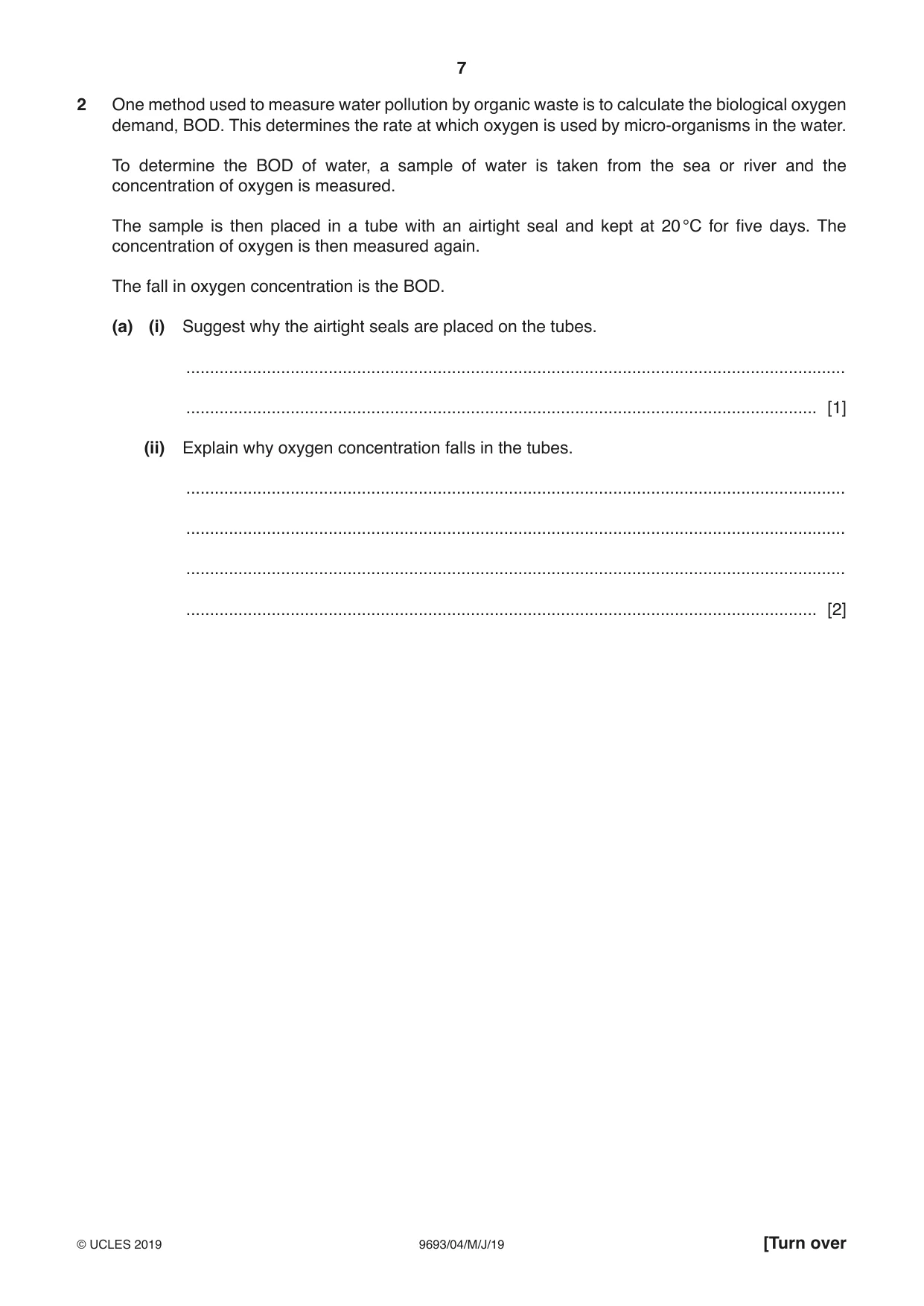
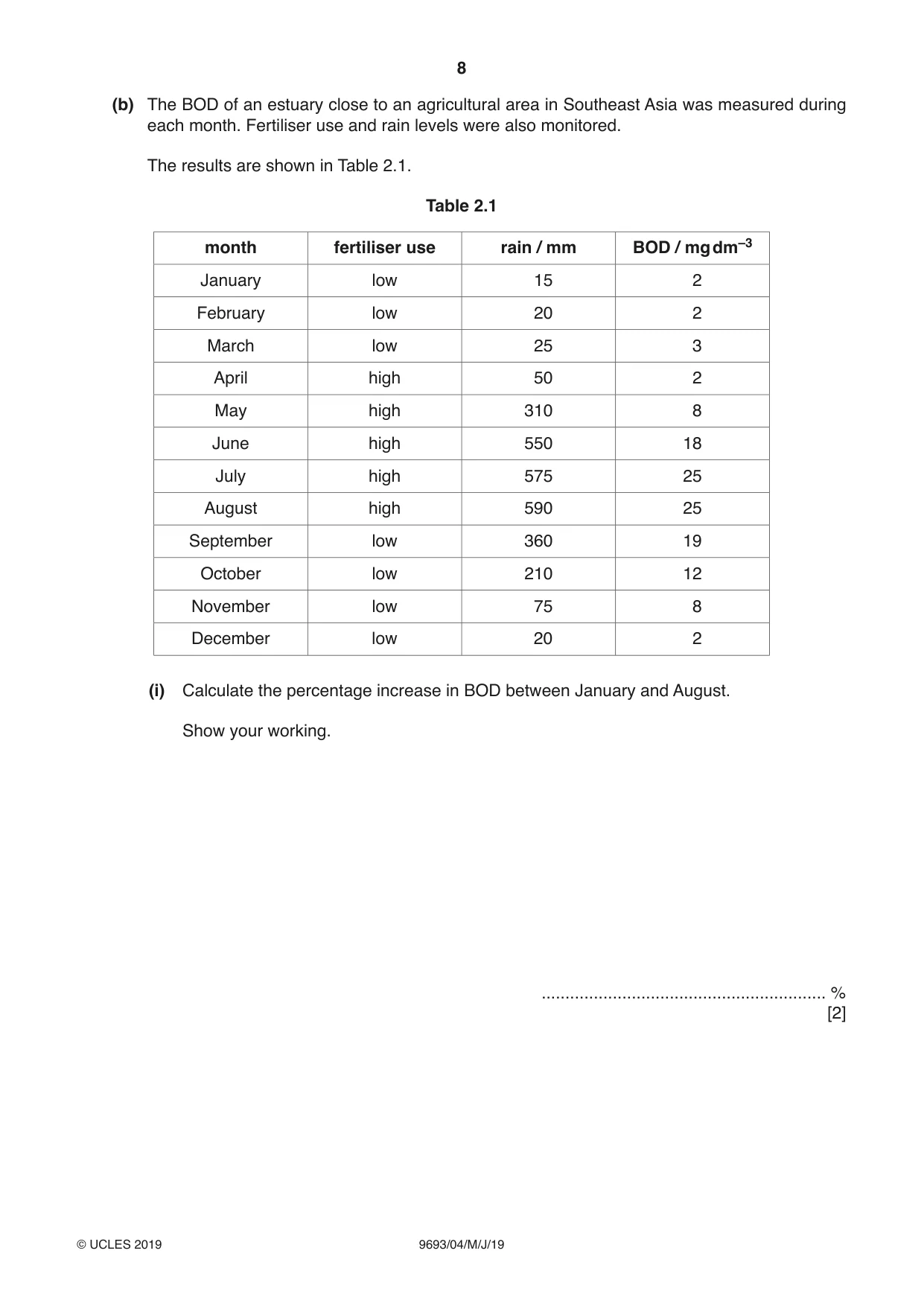
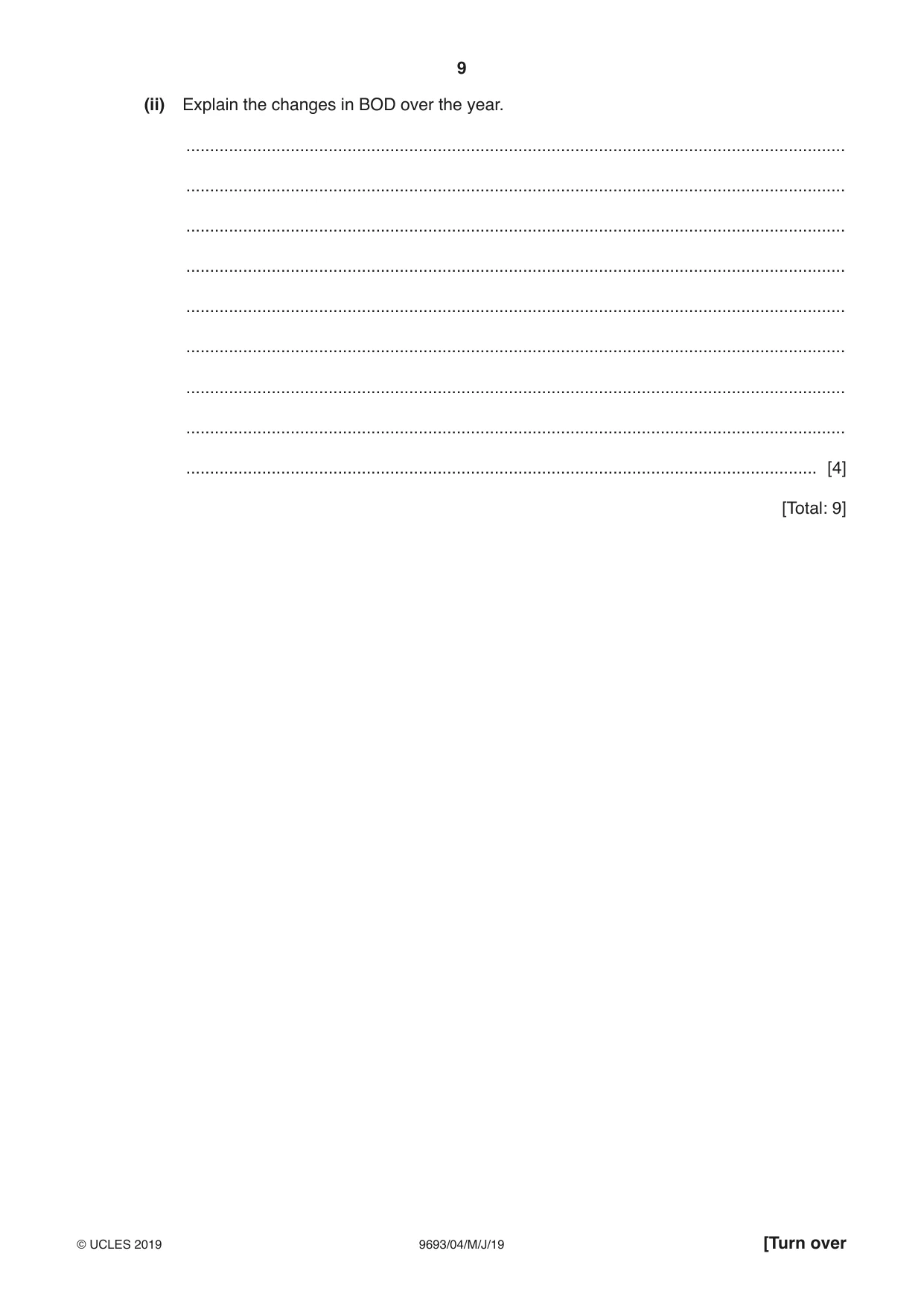
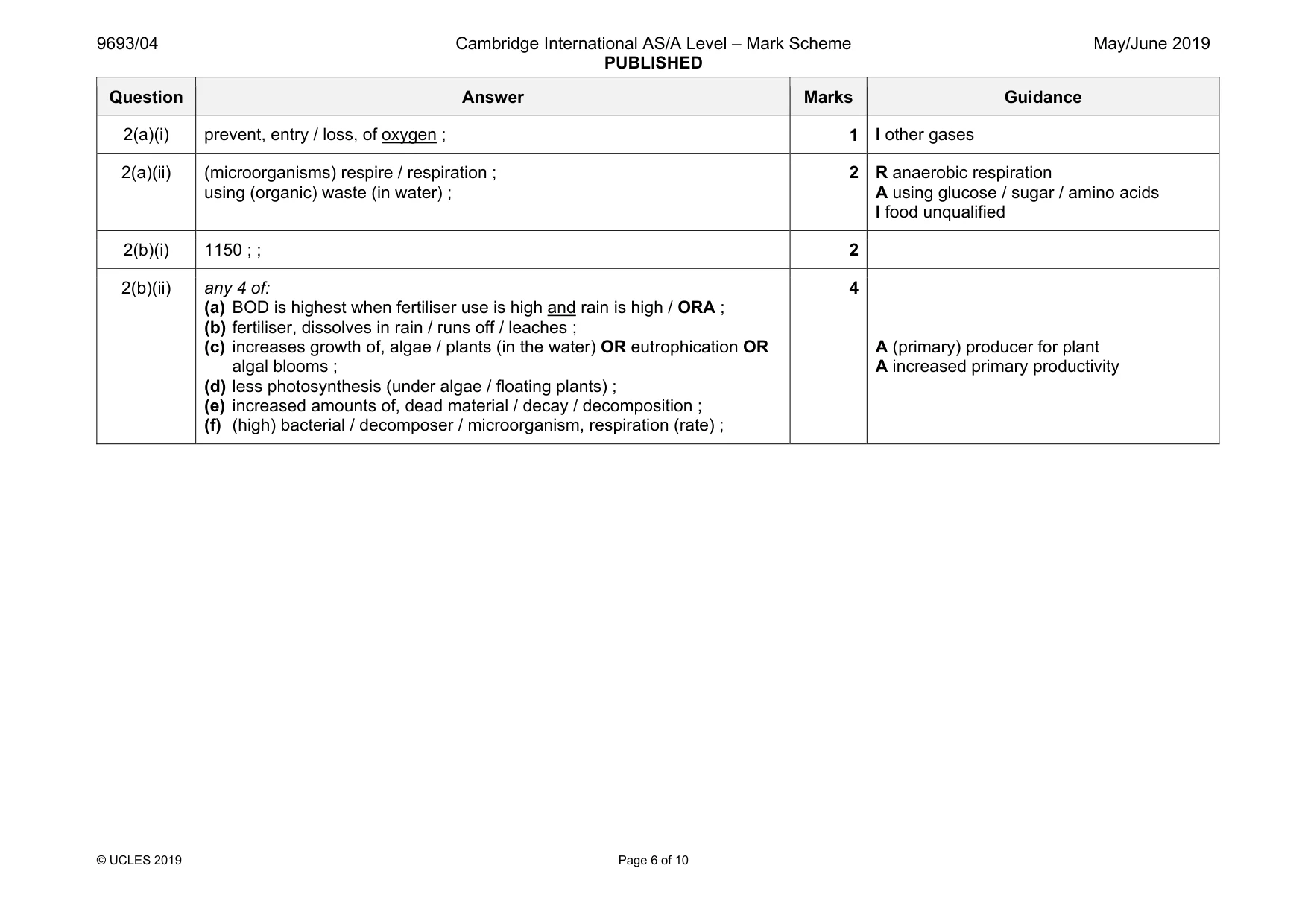
2 One method used to measure water pollution by organic waste is to calculate the biological oxygen demand, BOD. This determines the rate at which oxygen is used by micro-organisms in the water. To determine the BOD of water, a sample of water is taken from the sea or river and the concentration of oxygen is measured. The sample is then placed in a tube with an airtight seal and kept at 20 °C for five days. The concentration of oxygen is then measured again. The fall in oxygen concentration is the BOD. (a) (i) Suggest why the airtight seals are placed on the tubes. ........................................................................................................................................... ..................................................................................................................................... [1] (ii) Explain why oxygen concentration falls in the tubes. ........................................................................................................................................... ........................................................................................................................................... ........................................................................................................................................... ..................................................................................................................................... [2] (b) The BOD of an estuary close to an agricultural area in Southeast Asia was measured during each month. Fertiliser use and rain levels were also monitored. The results are shown in Table 2.1. Table 2.1 month fertiliser use rain / mm BOD / mg dm–3 January low 15 2 February low 20 2 March low 25 3 April high 50 2 May high 310 8 June high 550 18 July high 575 25 August high 590 25 September low 360 19 October low 210 12 November low 75 8 December low 20 2 (i) Calculate the percentage increase in BOD between January and August. Show your working. ............................................................ % [2] (ii) Explain the changes in BOD over the year. ........................................................................................................................................... ........................................................................................................................................... ........................................................................................................................................... ........................................................................................................................................... ........................................................................................................................................... ........................................................................................................................................... ........................................................................................................................................... ........................................................................................................................................... ..................................................................................................................................... [4] [Total: 9]
Mark scheme: 2(a)(i) prevent, entry / loss, of oxygen ; 1 2(a)(ii) (microorganisms) respire / respiration ; using (organic) waste (in water) ; 2 R anaerobic respiration A using glucose / sugar / amino acids I food unqualified 2(b)(i) 1150 ; ; 2 2(b)(ii) any 4 of: (a) BOD is highest when fertiliser use is high and rain is high / ORA ; (b) fertiliser, dissolves in rain / runs off / leaches ; (c) increases growth of, algae / plants (in the water) OR eutrophication OR algal blooms ; (d) less photosynthesis (under algae / floating plants) ; (e) increased amounts of, dead material / decay / decomposition ; (f) (high) bacterial / decomposer / microorganism, respiration (rate) ; 4 A (primary) producer for plant A increased primary productivity
Q3 · Explain the meaning of the terms osmoconformer and euryhaline
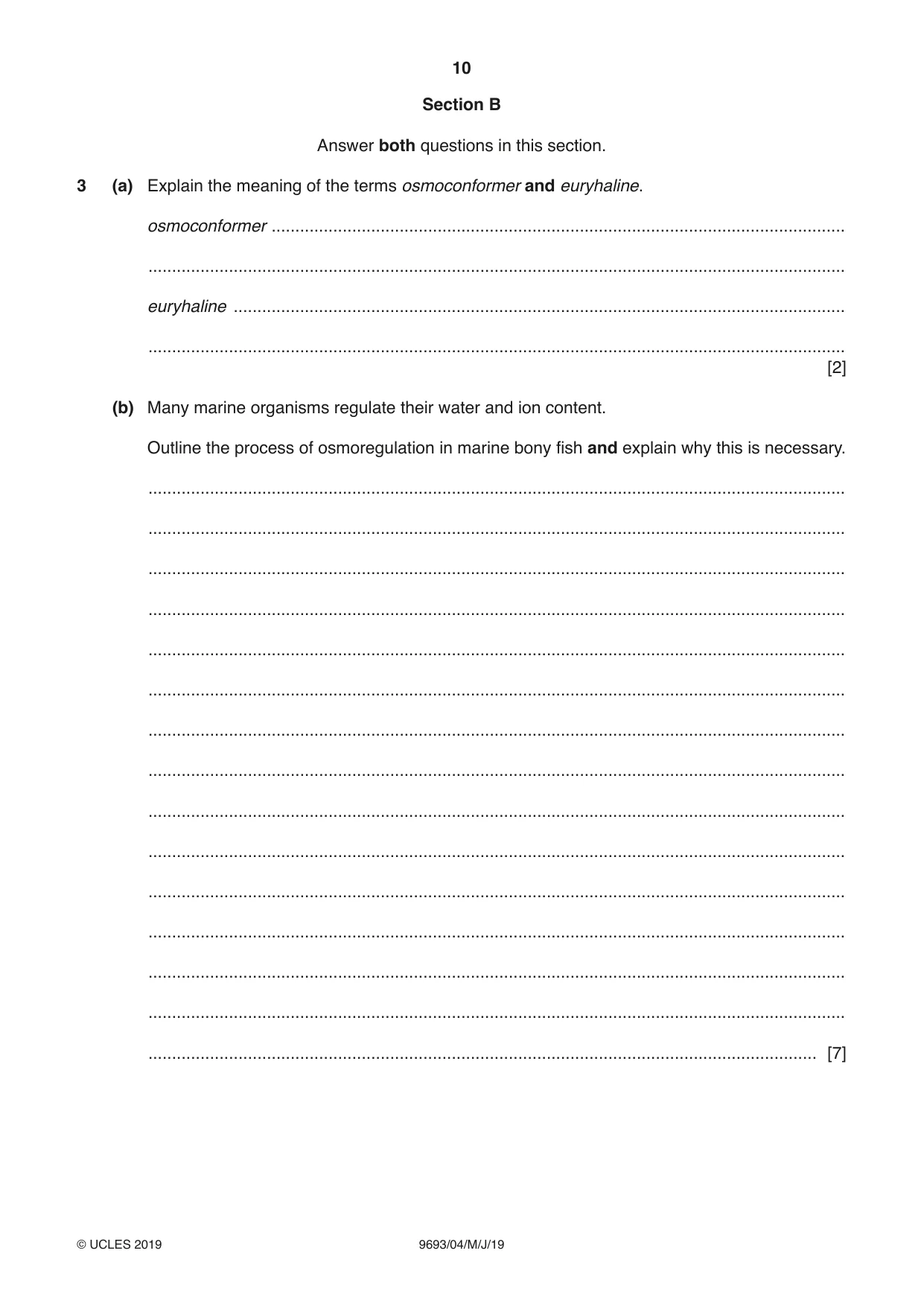
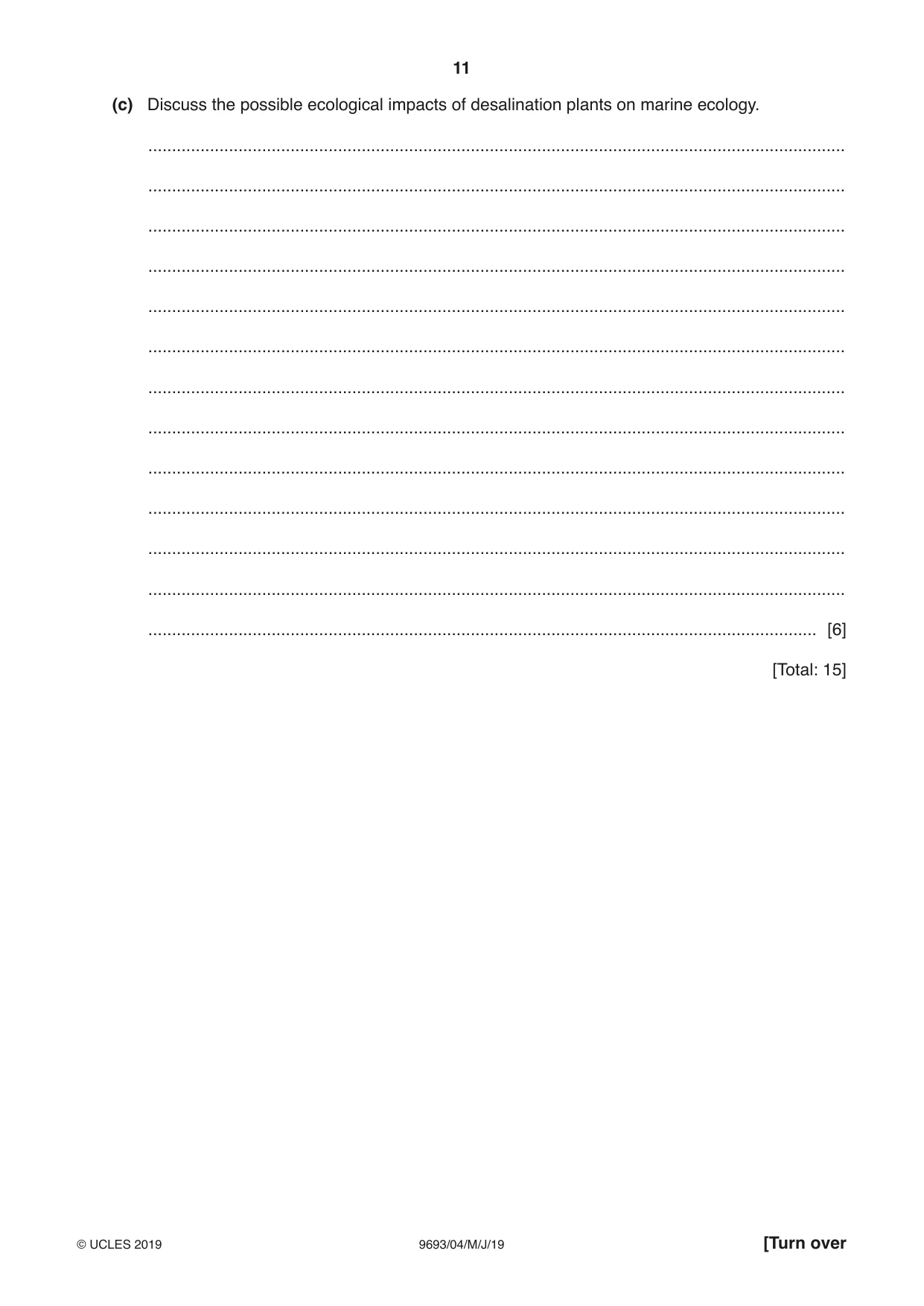
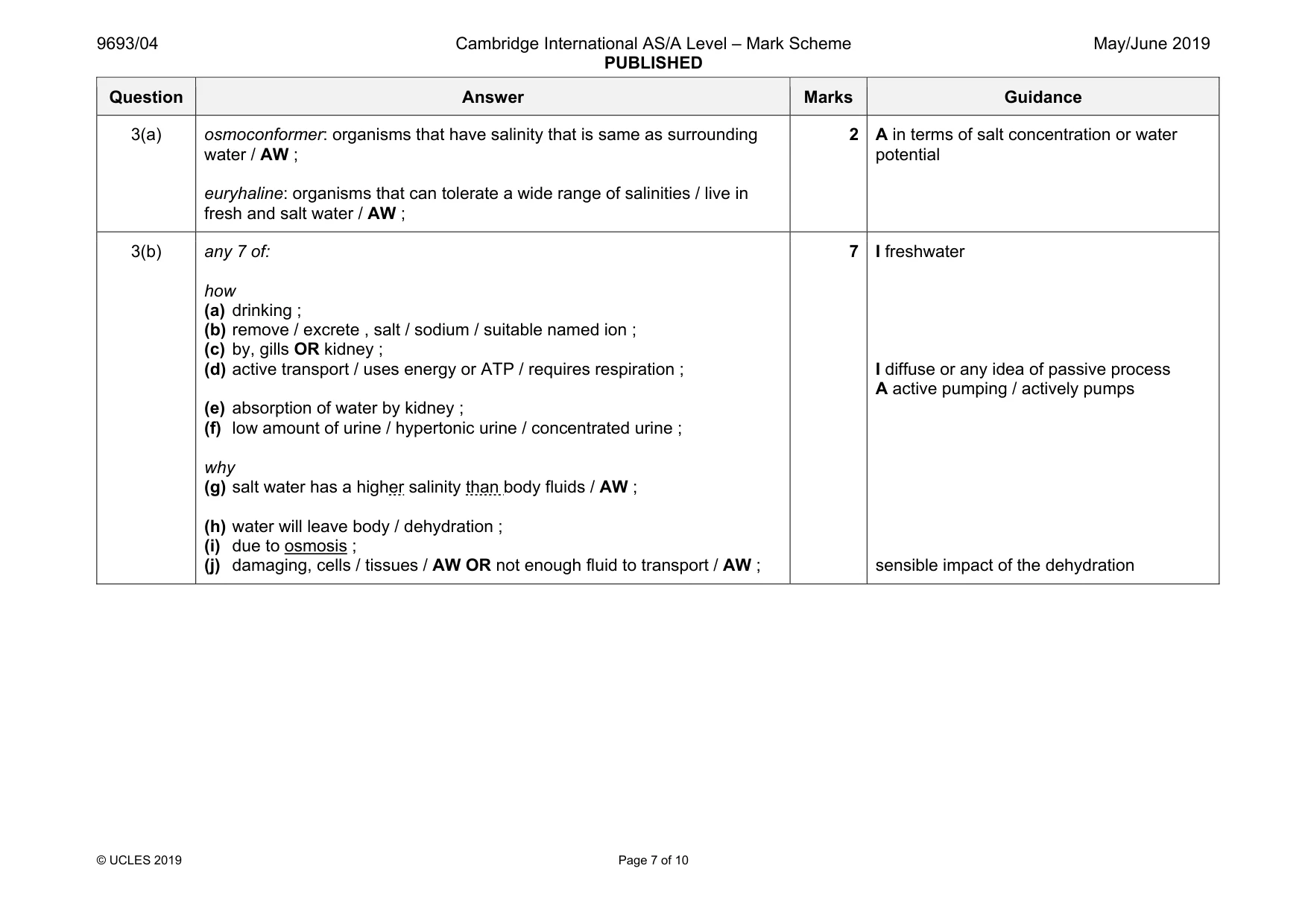
3 (a) Explain the meaning of the terms osmoconformer and euryhaline. osmoconformer ......................................................................................................................... ................................................................................................................................................... euryhaline ................................................................................................................................. ................................................................................................................................................... [2] (b) Many marine organisms regulate their water and ion content. Outline the process of osmoregulation in marine bony fish and explain why this is necessary. ................................................................................................................................................... ................................................................................................................................................... ................................................................................................................................................... ................................................................................................................................................... ................................................................................................................................................... ................................................................................................................................................... ................................................................................................................................................... ................................................................................................................................................... ................................................................................................................................................... ................................................................................................................................................... ................................................................................................................................................... ................................................................................................................................................... ................................................................................................................................................... ................................................................................................................................................... ............................................................................................................................................. [7] (c) Discuss the possible ecological impacts of desalination plants on marine ecology. ................................................................................................................................................... ................................................................................................................................................... ................................................................................................................................................... ................................................................................................................................................... ................................................................................................................................................... ................................................................................................................................................... ................................................................................................................................................... ................................................................................................................................................... ................................................................................................................................................... ................................................................................................................................................... ................................................................................................................................................... ................................................................................................................................................... ............................................................................................................................................. [6] [Total: 15]
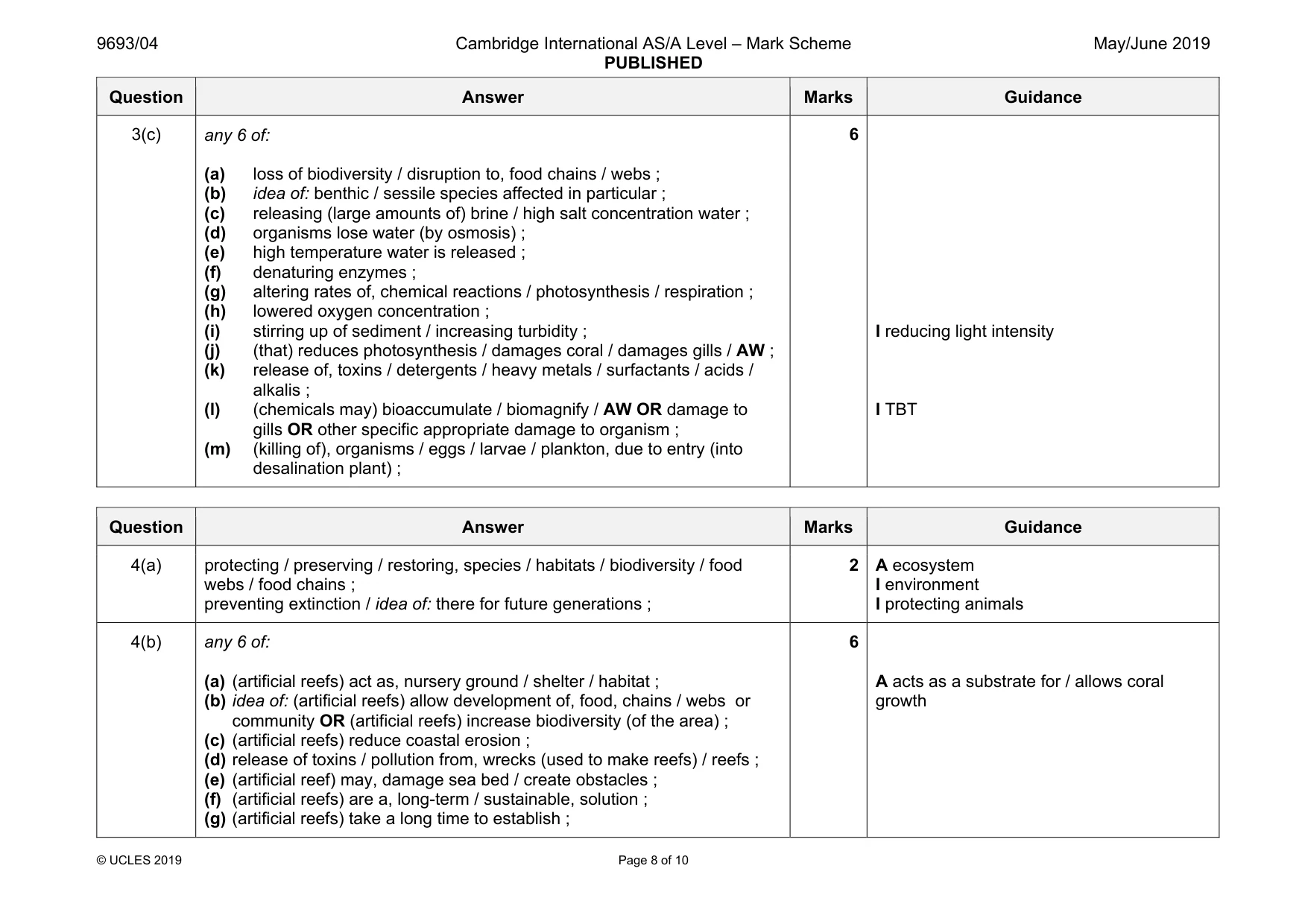
Mark scheme: 3(a) osmoconformer: organisms that have salinity that is same as surrounding water / AW ; euryhaline: organisms that can tolerate a wide range of salinities / live in fresh and salt water / AW ; 2 potential 3(b) any 7 of: how (a) drinking ; (b) remove / excrete , salt / sodium / suitable named ion ; (c) by, gills OR kidney ; (d) active transport / uses energy or ATP / requires respiration ; (e) absorption of water by kidney ; (f) low amount of urine / hypertonic urine / concentrated urine ; why (g) salt water has a higher salinity than body fluids / AW ; (h) water will leave body / dehydration ; (i) due to osmosis ; (j) damaging, cells / tissues / AW OR not enough fluid to transport / AW ; 7 I freshwater I diffuse or any idea of passive process A active pumping / actively pumps sensible impact of the dehydration Question Answer Marks Guidance 3(c) any 6 of: (a) loss of biodiversity / disruption to, food chains / webs ; (b) idea of: benthic / sessile species affected in particular ; (c) releasing (large amounts of) brine / high salt concentration water ; (d) organisms lose water (by osmosis) ; (e) high temperature water is released ; (f) denaturing enzymes ; (g) altering rates of, chemical reactions / photosynthesis / respiration ; (h) lowered oxygen concentration ; (i) stirring up of sediment / increasing turbidity ; (j) (that) reduces photosynthesis / damages coral / damages gills / AW ; (k) release of, toxins / detergents / heavy metals / surfactants / acids / alkalis ; (l) (chemicals may) bioaccumulate / biomagnify / AW OR damage to gills OR other specific appropriate damage to organism ; (m) (killing of), organisms / eggs / larvae / plankton, due to entry (into desalination plant) ; 6 I reducing light intensity I TBT
Q4 · Human activity is threatening the marine environment in many ways
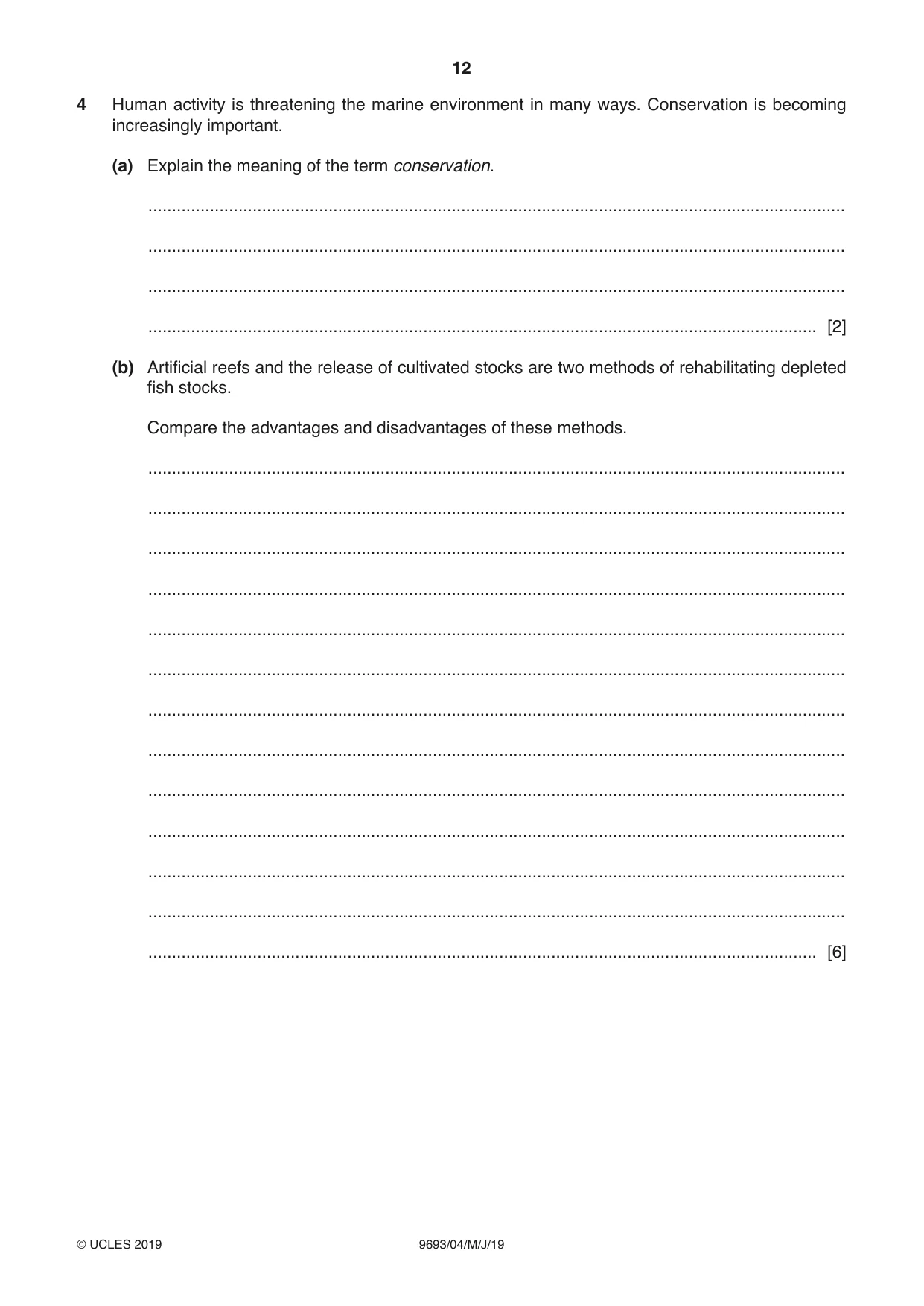
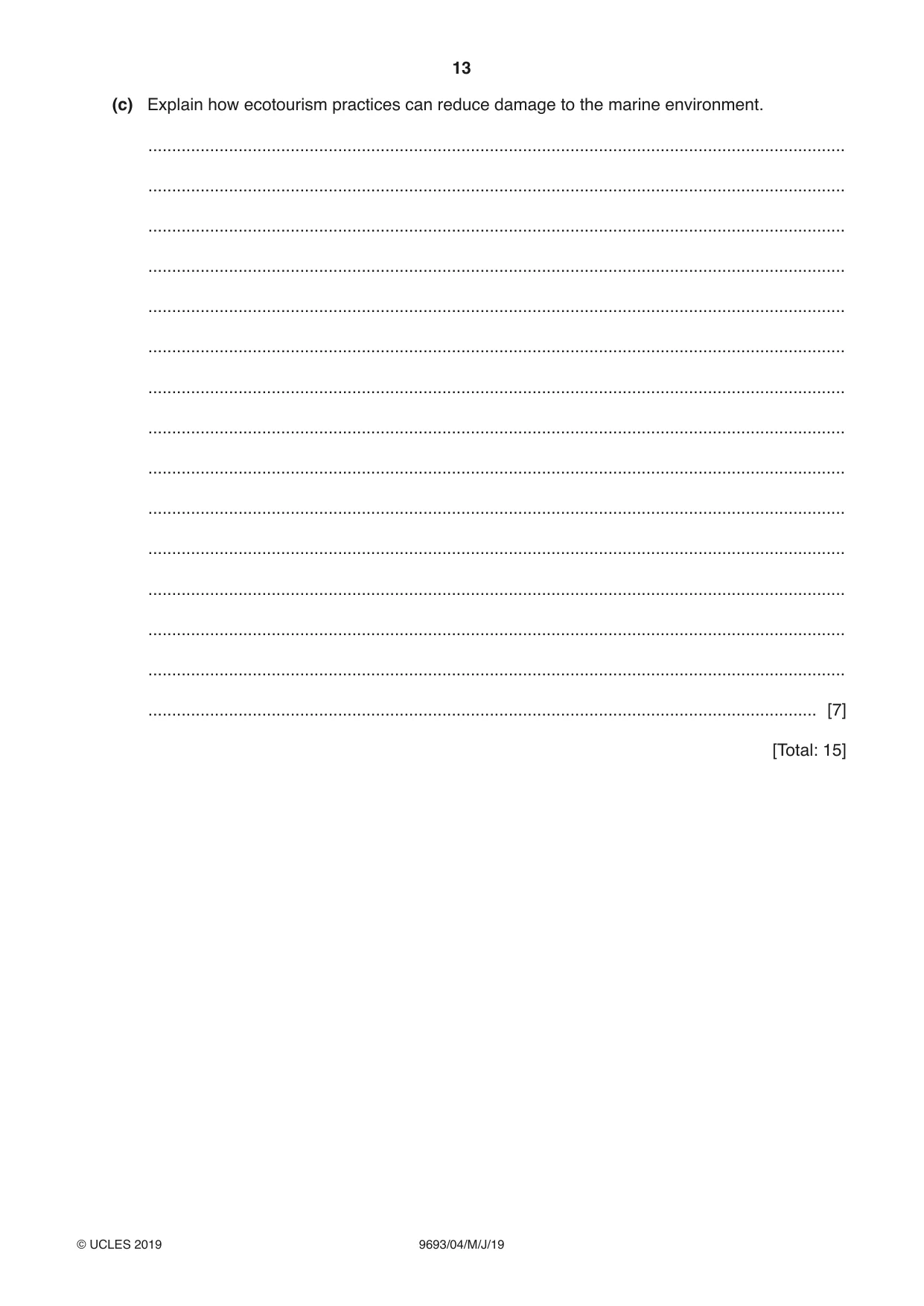
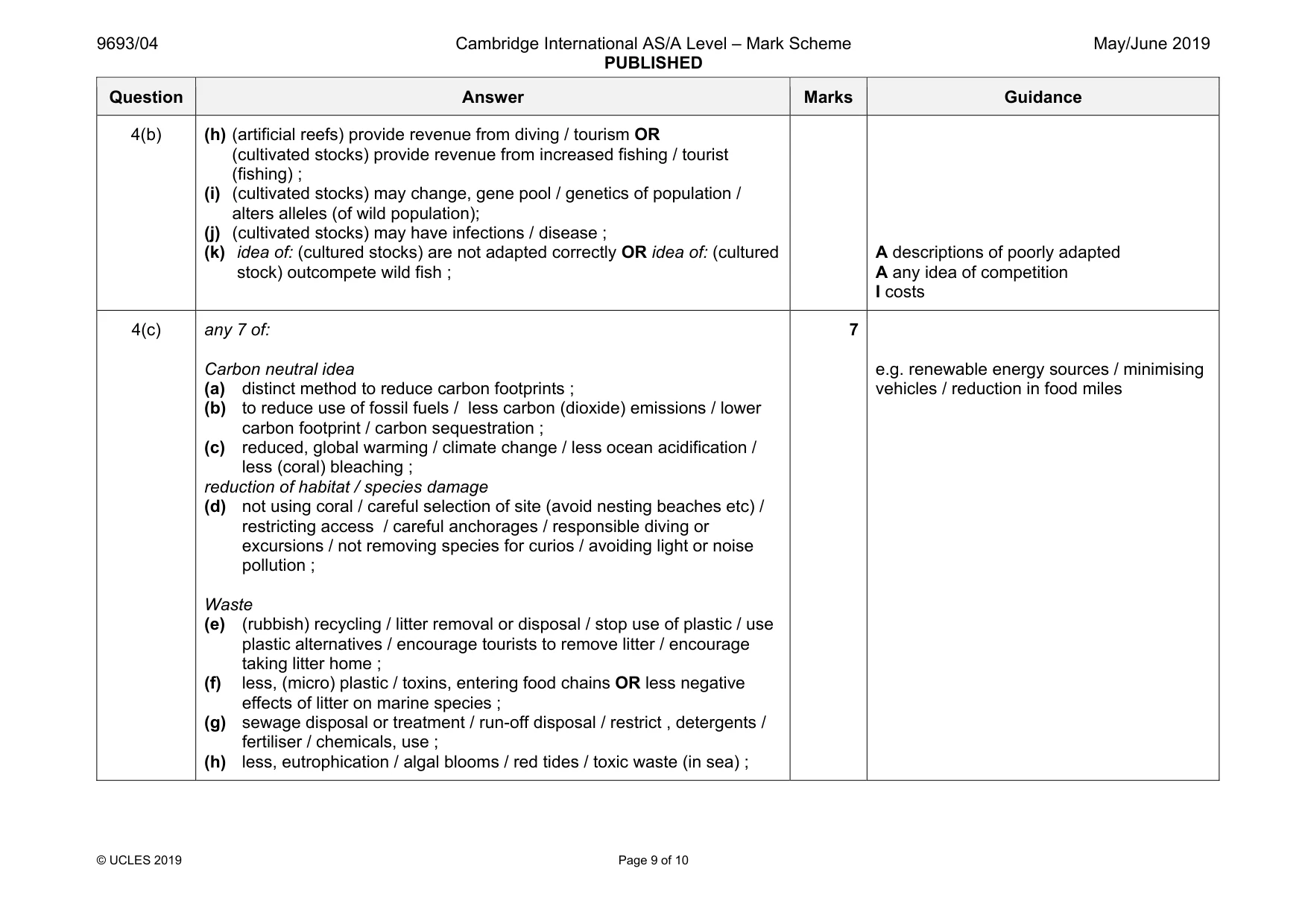
4 Human activity is threatening the marine environment in many ways. Conservation is becoming increasingly important. (a) Explain the meaning of the term conservation. ................................................................................................................................................... ................................................................................................................................................... ................................................................................................................................................... ............................................................................................................................................. [2] (b) Artificial reefs and the release of cultivated stocks are two methods of rehabilitating depleted fish stocks. Compare the advantages and disadvantages of these methods. ................................................................................................................................................... ................................................................................................................................................... ................................................................................................................................................... ................................................................................................................................................... ................................................................................................................................................... ................................................................................................................................................... ................................................................................................................................................... ................................................................................................................................................... ................................................................................................................................................... ................................................................................................................................................... ................................................................................................................................................... ................................................................................................................................................... ............................................................................................................................................. [6] (c) Explain how ecotourism practices can reduce damage to the marine environment. ................................................................................................................................................... ................................................................................................................................................... ................................................................................................................................................... ................................................................................................................................................... ................................................................................................................................................... ................................................................................................................................................... ................................................................................................................................................... ................................................................................................................................................... ................................................................................................................................................... ................................................................................................................................................... ................................................................................................................................................... ................................................................................................................................................... ................................................................................................................................................... ................................................................................................................................................... ............................................................................................................................................. [7] [Total: 15]
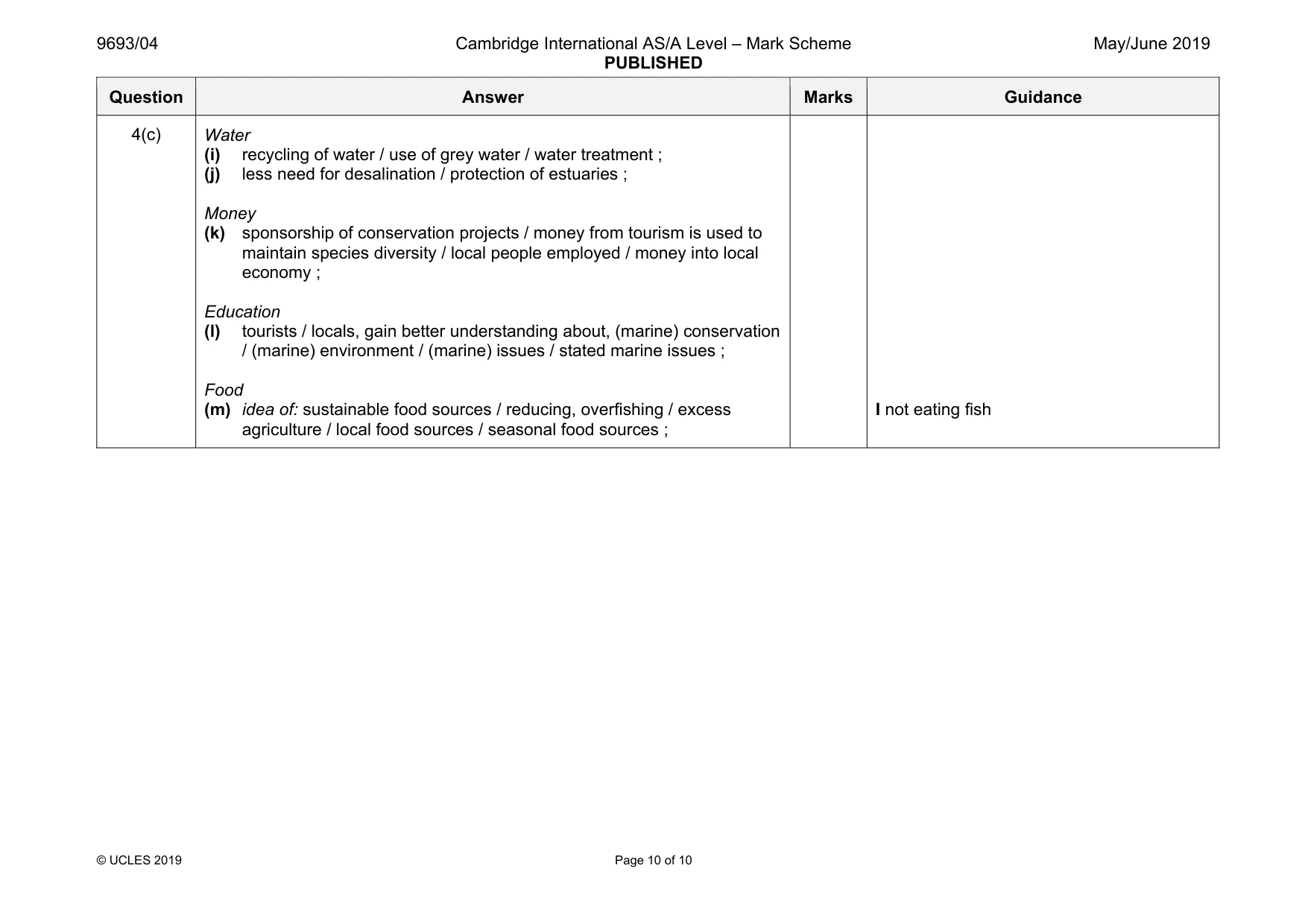
Mark scheme: 4(a) protecting / preserving / restoring, species / habitats / biodiversity / food webs / food chains ; preventing extinction / idea of: there for future generations ; 2 I environment I protecting animals 4(b) any 6 of: (a) (artificial reefs) act as, nursery ground / shelter / habitat ; (b) idea of: (artificial reefs) allow development of, food, chains / webs or community OR (artificial reefs) increase biodiversity (of the area) ; (c) (artificial reefs) reduce coastal erosion ; (d) release of toxins / pollution from, wrecks (used to make reefs) / reefs ; (e) (artificial reef) may, damage sea bed / create obstacles ; (f) (artificial reefs) are a, long-term / sustainable, solution ; (g) (artificial reefs) take a long time to establish ; 6 A acts as a substrate for / allows coral growth Question Answer Marks Guidance 4(b) (h) (artificial reefs) provide revenue from diving / tourism OR (cultivated stocks) provide revenue from increased fishing / tourist (fishing) ; (i) (cultivated stocks) may change, gene pool / genetics of population / alters alleles (of wild population); (j) (cultivated stocks) may have infections / disease ; (k) idea of: (cultured stocks) are not adapted correctly OR idea of: (cultured stock) outcompete wild fish ; A descriptions of poorly adapted A any idea of competition I costs 4(c) any 7 of: Carbon neutral idea (a) distinct method to reduce carbon footprints ; (b) to reduce use of fossil fuels / less carbon (dioxide) emissions / lower carbon footprint / carbon sequestration ; (c) reduced, global warming / climate change / less ocean acidification / less (coral) bleaching ; reduction of habitat / species damage (d) not using coral / careful selection of site (avoid nesting beaches etc) / restricting access / careful anchorages / responsible diving or excursions / not removing species for curios / avoiding light or noise pollution ; Waste (e) (rubbish) recycling / litter removal or disposal / stop use of plastic / use plastic alternatives / encourage tourists to remove litter / encourage taking litter home ; (f) less, (micro) plastic / toxins, entering food chains OR less negative effects of litter on marine species ; (g) sewage disposal or treatment / run-off disposal / restrict , detergents / fertiliser / chemicals, use ; (h) less, eutrophication / algal blooms / red tides / toxic waste (in sea) ; 7 e.g. renewable energy sources / minimising vehicles / reduction in food miles Question Answer Marks Guidance 4(c) Water (i) recycling of water / use of grey water / water treatment ; (j) less need for desalination / protection of estuaries ; Money (k) sponsorship of conservation projects / money from tourism is used to maintain species diversity / local people employed / money into local economy ; Education (l) tourists / locals, gain better understanding about, (marine) conservation / (marine) environment / (marine) issues / stated marine issues ; Food (m) idea of: sustainable food sources / reducing, overfishing / excess agriculture / local food sources / seasonal food sources ; I not eating fish
What was in this paper
The subtopics covered by these 4 questions, and how many questions each got. Open one in a new tab to see every Cambridge question on it.
What you needed in this session
Cambridge’s own grade thresholds for 2019 May/June, Paper 4 · Variant 1. A higher threshold means an easier paper — the bar moves with how the cohort did.