Cambridge A Level Marine Science 9693 — 2017 May/June Paper 4 · Variant 1
9693/41/M/J/17 · 4 questions · 50 marks · ≈56 min
The question paper and its mark scheme, free to read here and free to download. This is Cambridge’s own paper, exactly as it was sat.
Question paper12 pages

Mark scheme11 pages
Answers below. Sit the paper first if you are practising.
Questions as text
Q1 · The table shows the estimated populations of Atlantic cod and green sea urchins in an…
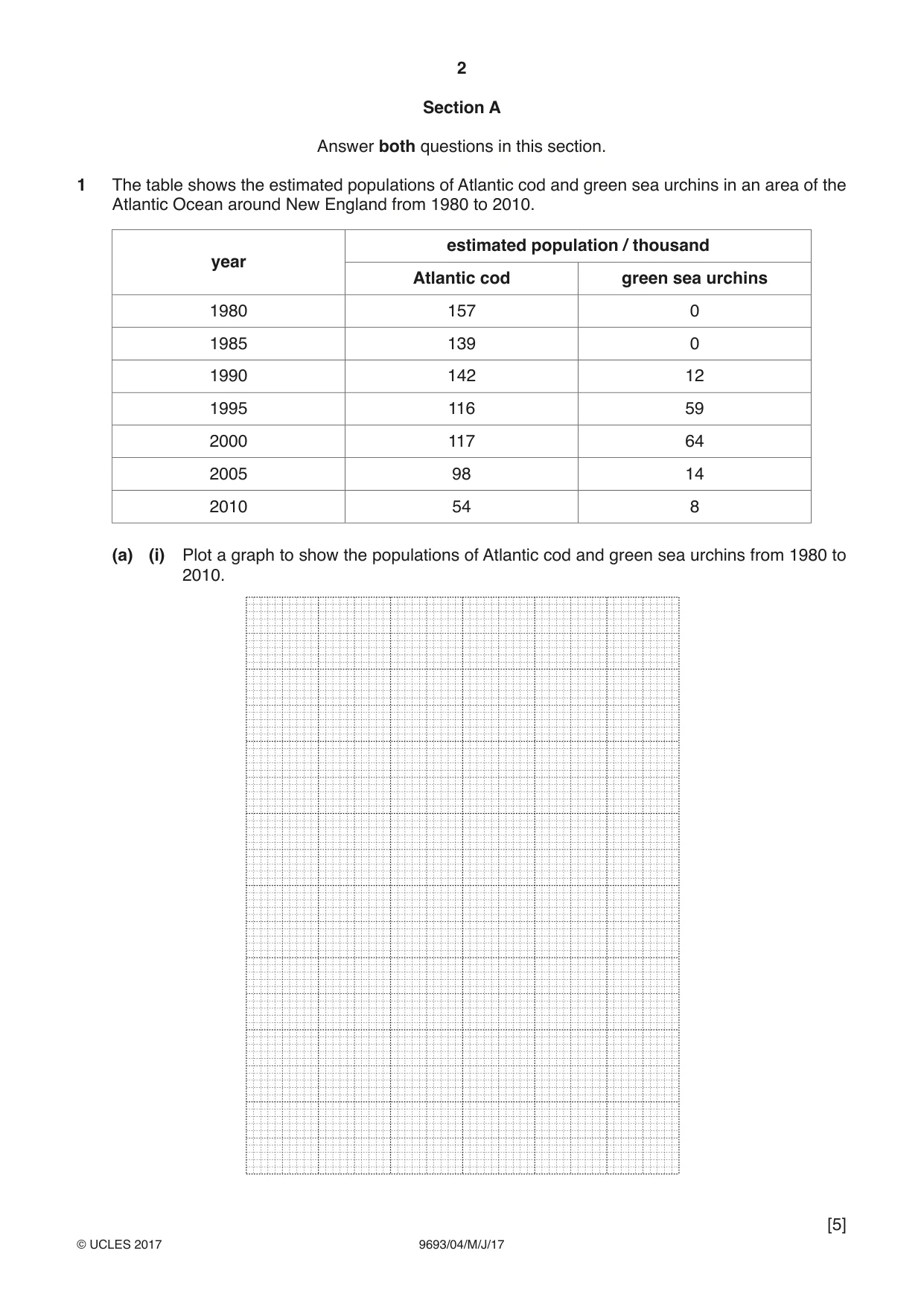
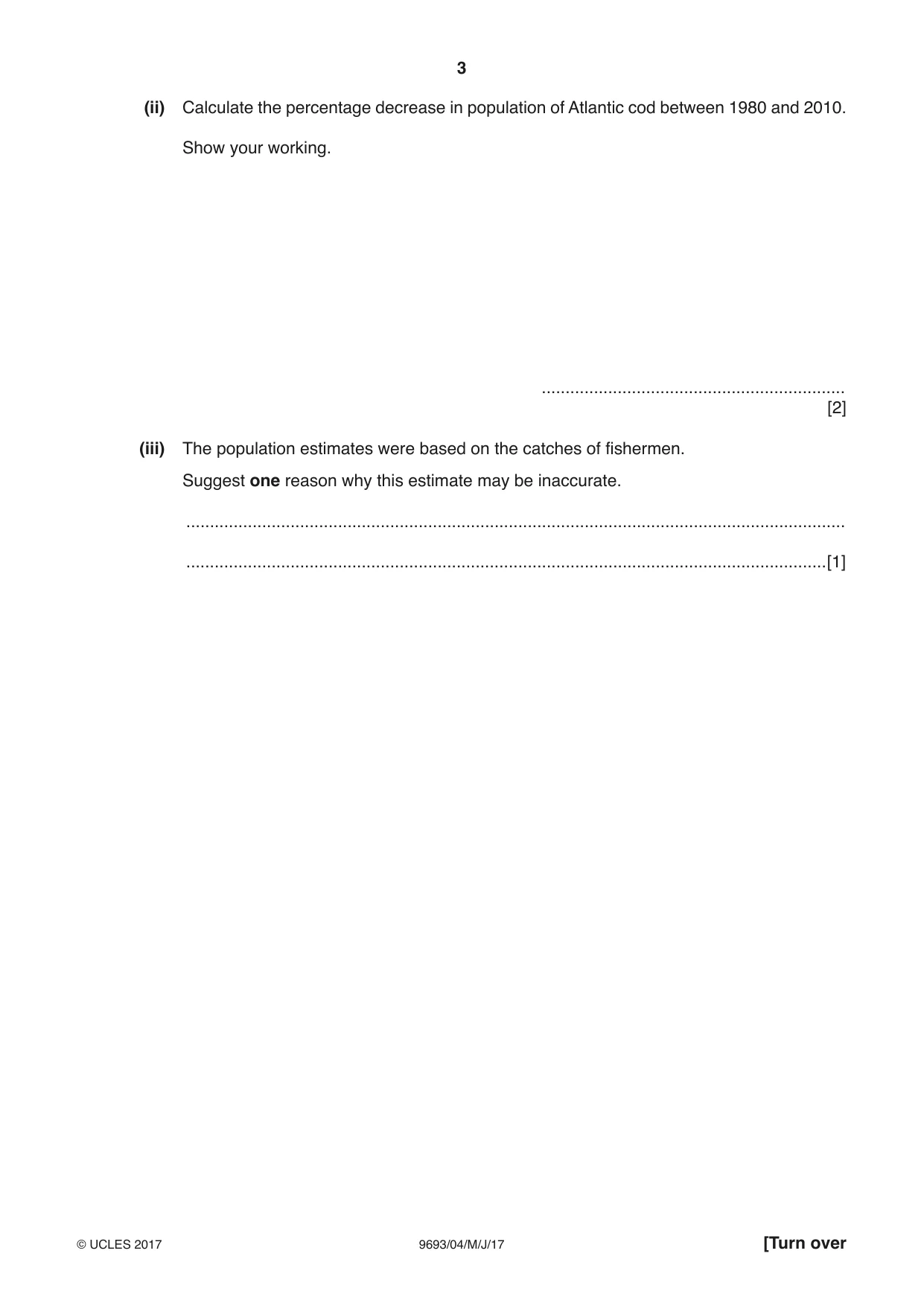
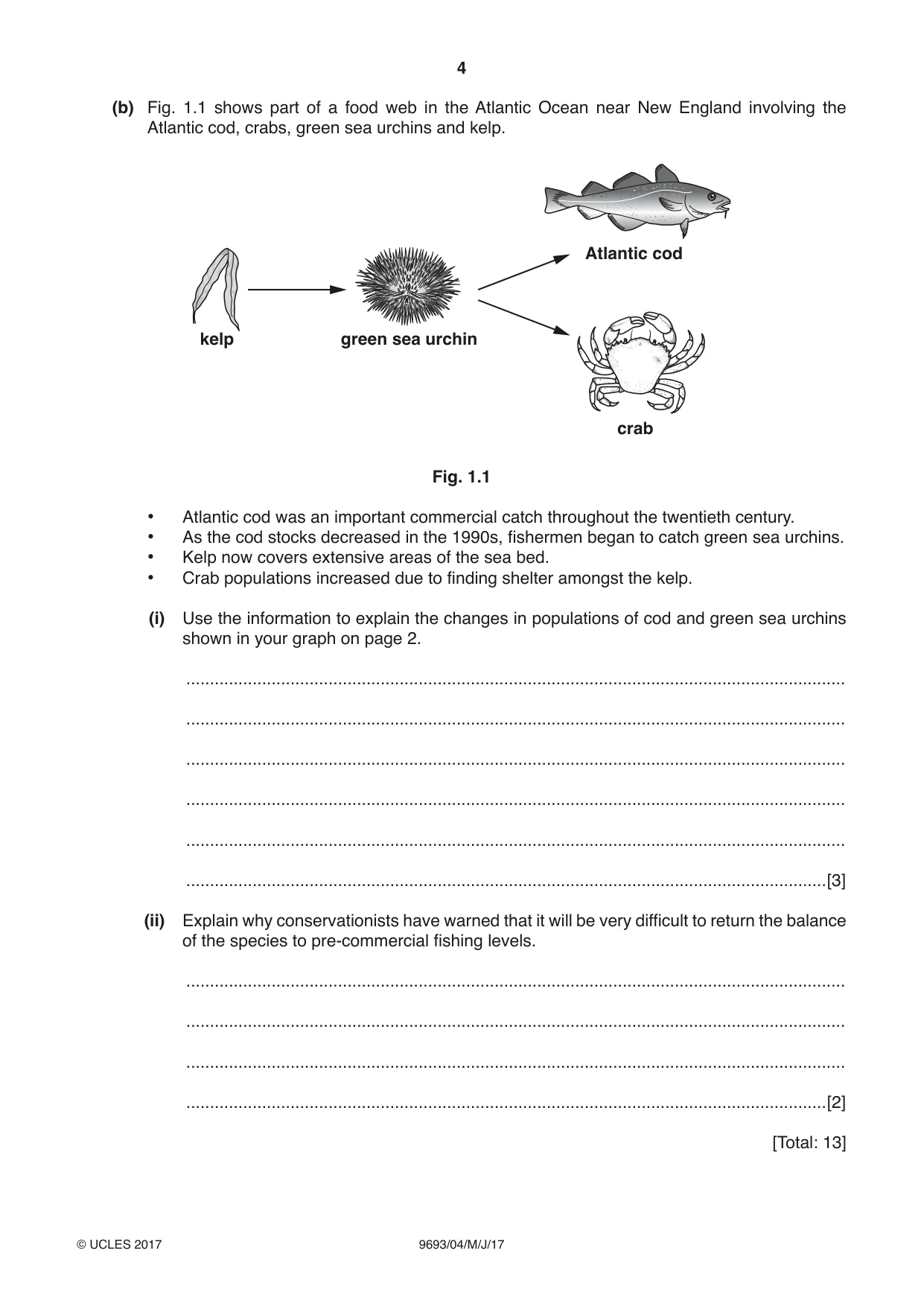
1 The table shows the estimated populations of Atlantic cod and green sea urchins in an area of the Atlantic Ocean around New England from 1980 to 2010. estimated population / thousand year Atlantic cod green sea urchins 1980 157 0 1985 139 0 1990 142 12 1995 116 59 2000 117 64 2005 98 14 2010 54 8 (a) (i) Plot a graph to show the populations of Atlantic cod and green sea urchins from 1980 to 2010. (ii) Calculate the percentage decrease in population of Atlantic cod between 1980 and 2010. Show your working. ................................................................ [2] (iii) The population estimates were based on the catches of fishermen. Suggest one reason why this estimate may be inaccurate. ........................................................................................................................................... .......................................................................................................................................[1] (b) Fig. 1.1 shows part of a food web in the Atlantic Ocean near New England involving the Atlantic cod, crabs, green sea urchins and kelp. Atlantic cod kelp green sea urchin crab Fig. 1.1 • Atlantic cod was an important commercial catch throughout the twentieth century. • As the cod stocks decreased in the 1990s, fishermen began to catch green sea urchins. • Kelp now covers extensive areas of the sea bed. • Crab populations increased due to finding shelter amongst the kelp. (i) Use the information to explain the changes in populations of cod and green sea urchins shown in your graph on page 2. ........................................................................................................................................... ........................................................................................................................................... ........................................................................................................................................... ........................................................................................................................................... ........................................................................................................................................... .......................................................................................................................................[3] (ii) Explain why conservationists have warned that it will be very difficult to return the balance of the species to pre-commercial fishing levels. ........................................................................................................................................... ........................................................................................................................................... ........................................................................................................................................... .......................................................................................................................................[2] [Total: 13]
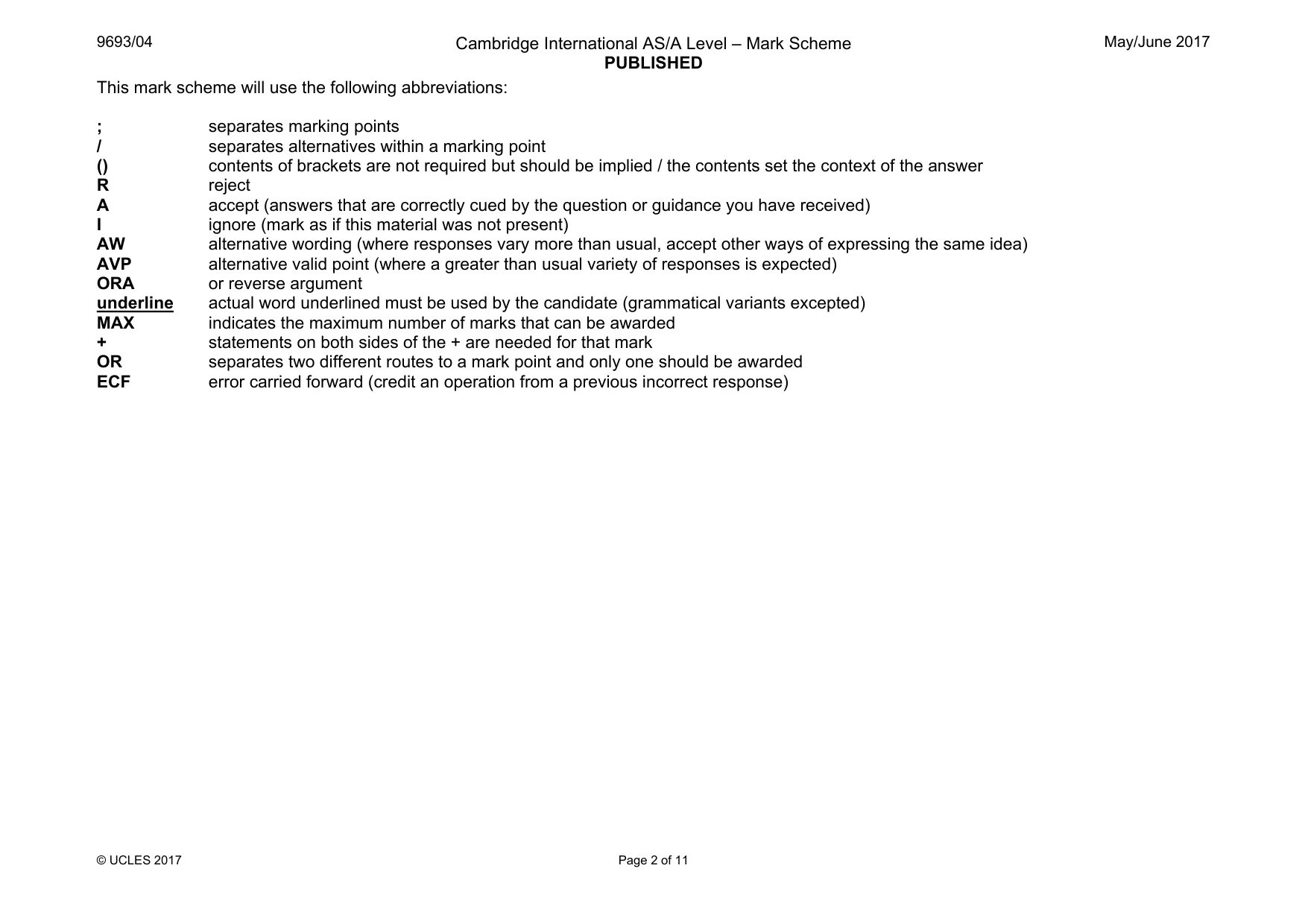
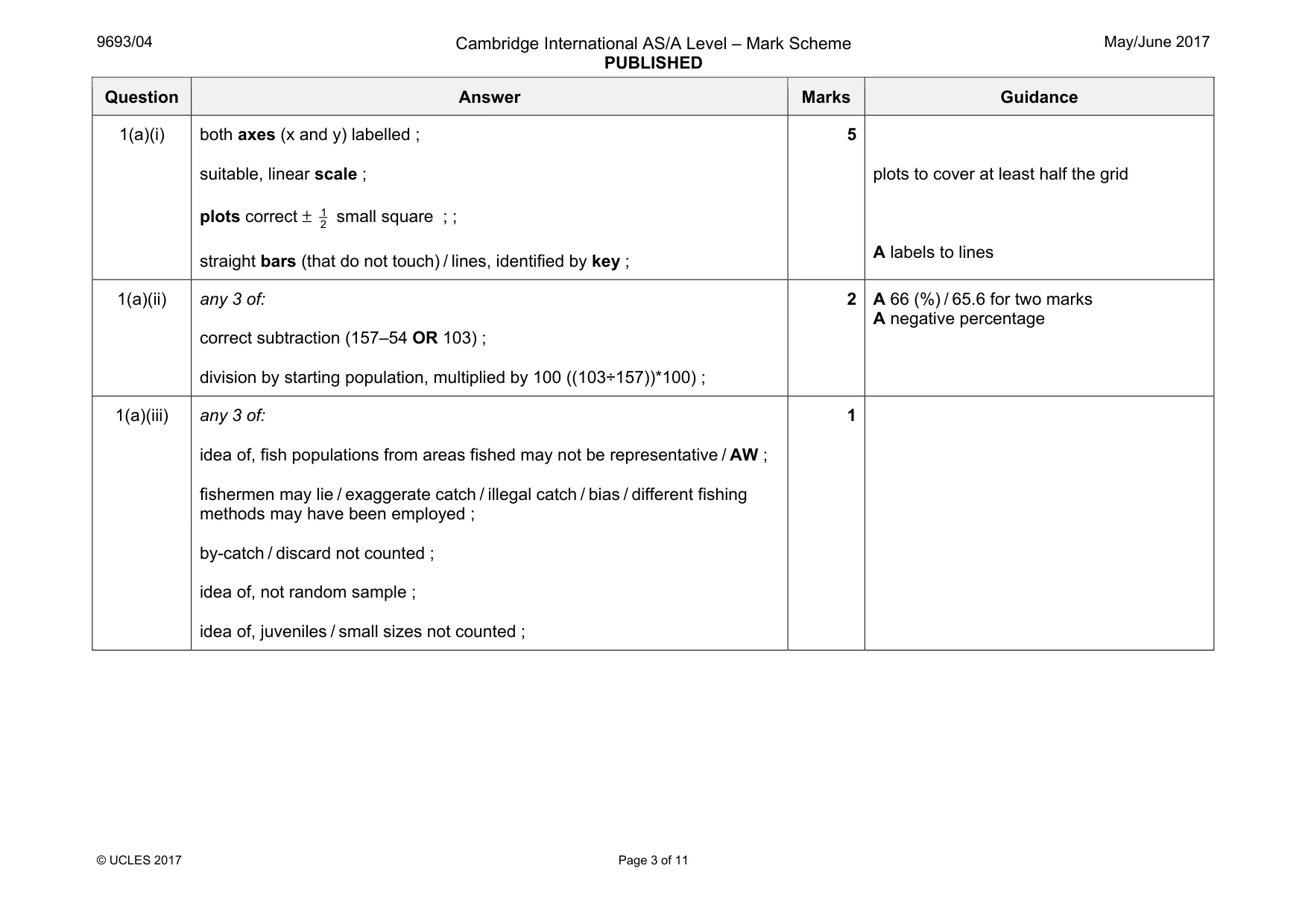
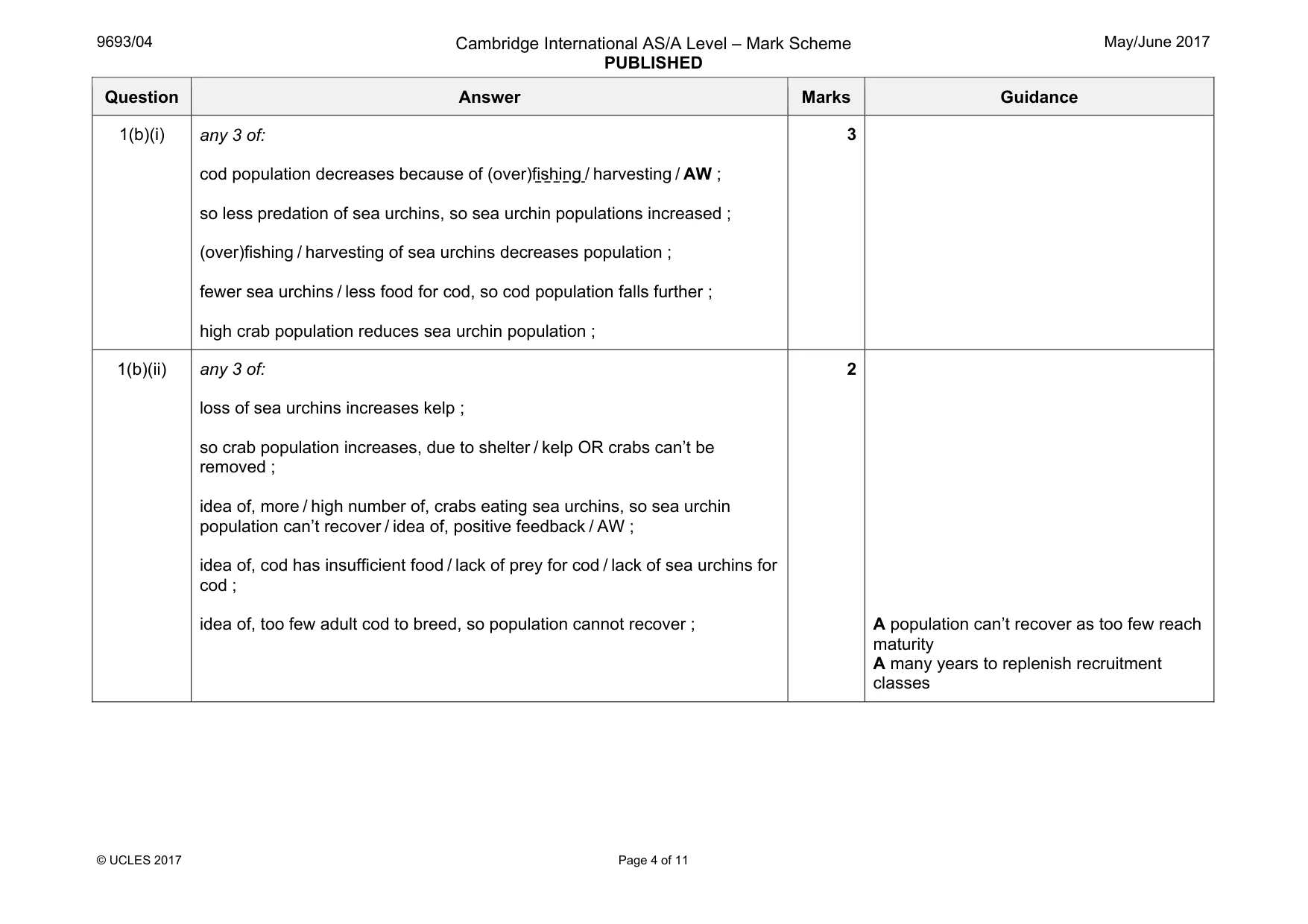
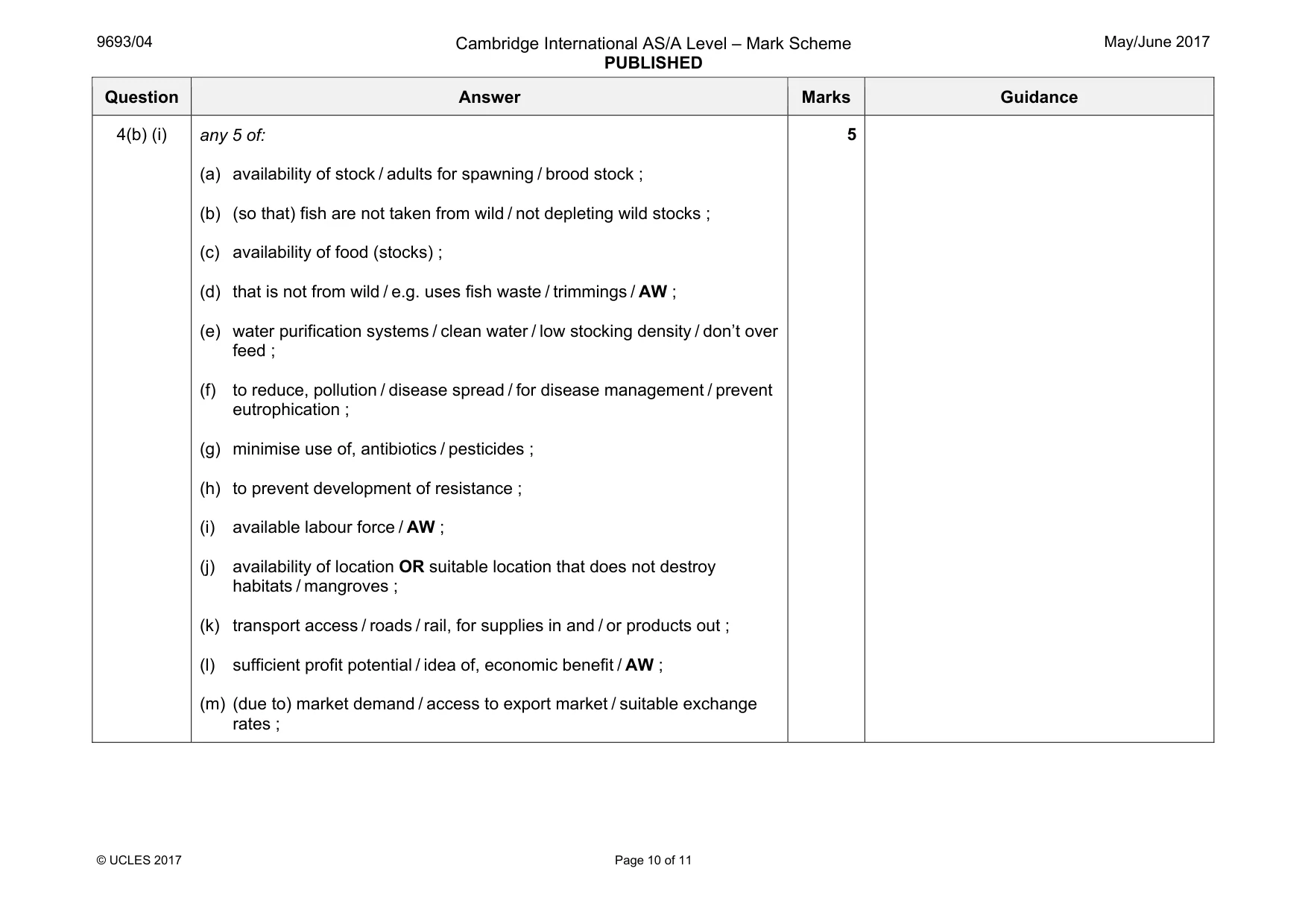
Mark scheme: 1(a)(i) both axes (x and y) labelled ; suitable, linear scale ; plots correct ± 1 2 small square ; ; straight bars (that do not touch) / lines, identified by key ; 5 plots to cover at least half the grid A labels to lines 1(a)(ii) any 3 of: correct subtraction (157–54 OR 103) ; division by starting population, multiplied by 100 ((103÷157))*100) ; 2 A 66 (%) / 65.6 for two marks A negative percentage 1(a)(iii) any 3 of: idea of, fish populations from areas fished may not be representative / AW ; fishermen may lie / exaggerate catch / illegal catch / bias / different fishing methods may have been employed ; by-catch / discard not counted ; idea of, not random sample ; idea of, juveniles / small sizes not counted ; 1 Question Answer Marks Guidance 1(b)(i) any 3 of: cod population decreases because of (over)fishing / harvesting / AW ; so less predation of sea urchins, so sea urchin populations increased ; (over)fishing / harvesting of sea urchins decreases population ; fewer sea urchins / less food for cod, so cod population falls further ; high crab population reduces sea urchin population ; 3 1(b)(ii) any 3 of: loss of sea urchins increases kelp ; so crab population increases, due to shelter / kelp OR crabs can’t be removed ; idea of, more / high number of, crabs eating sea urchins, so sea urchin population can’t recover / idea of, positive feedback / AW ; idea of, cod has insufficient food / lack of prey for cod / lack of sea urchins for cod ; idea of, too few adult cod to breed, so population cannot recover ; 2 A population can’t recover as too few reach maturity A many years to replenish recruitment classes
Q2 · Chinook salmon, blue crabs and marine mussels were placed into water of different…
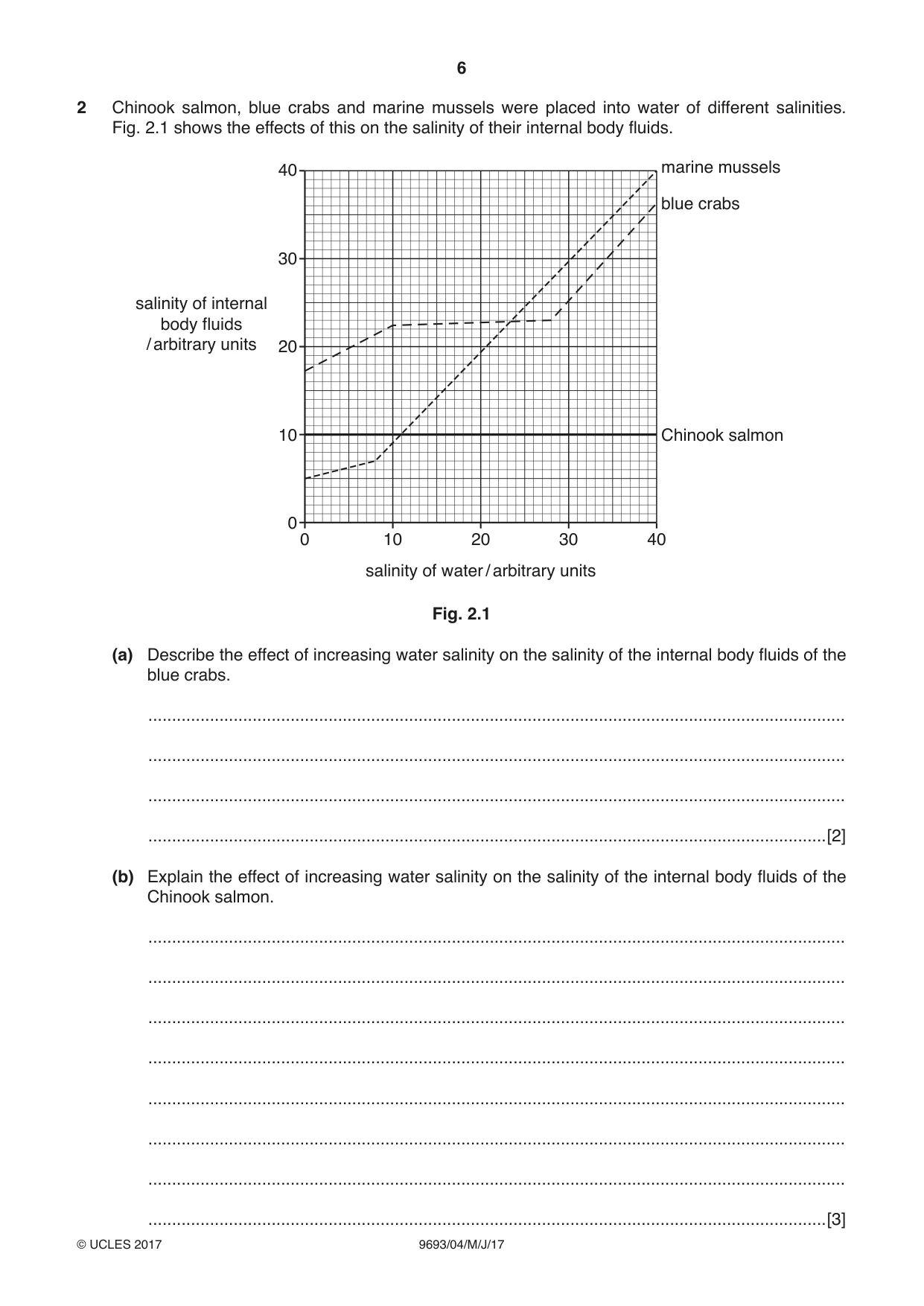
2 Chinook salmon, blue crabs and marine mussels were placed into water of different salinities. Fig. 2.1 shows the effects of this on the salinity of their internal body fluids. 40 marine mussels blue crabs 30 salinity of internal body fluids / arbitrary units 20 10 Chinook salmon 0 0 10 20 30 40 salinity of water / arbitrary units Fig. 2.1 (a) Describe the effect of increasing water salinity on the salinity of the internal body fluids of the blue crabs. ................................................................................................................................................... ................................................................................................................................................... ................................................................................................................................................... ...............................................................................................................................................[2] (b) Explain the effect of increasing water salinity on the salinity of the internal body fluids of the Chinook salmon. ................................................................................................................................................... ................................................................................................................................................... ................................................................................................................................................... ................................................................................................................................................... ................................................................................................................................................... ................................................................................................................................................... ................................................................................................................................................... ...............................................................................................................................................[3] (c) The blue crab is restricted to estuarine conditions. The mussel is restricted to marine conditions. Use the information in Fig. 2.1 to explain each of these ecological distributions. ................................................................................................................................................... ................................................................................................................................................... ................................................................................................................................................... ................................................................................................................................................... ...............................................................................................................................................[2] [Total: 7]
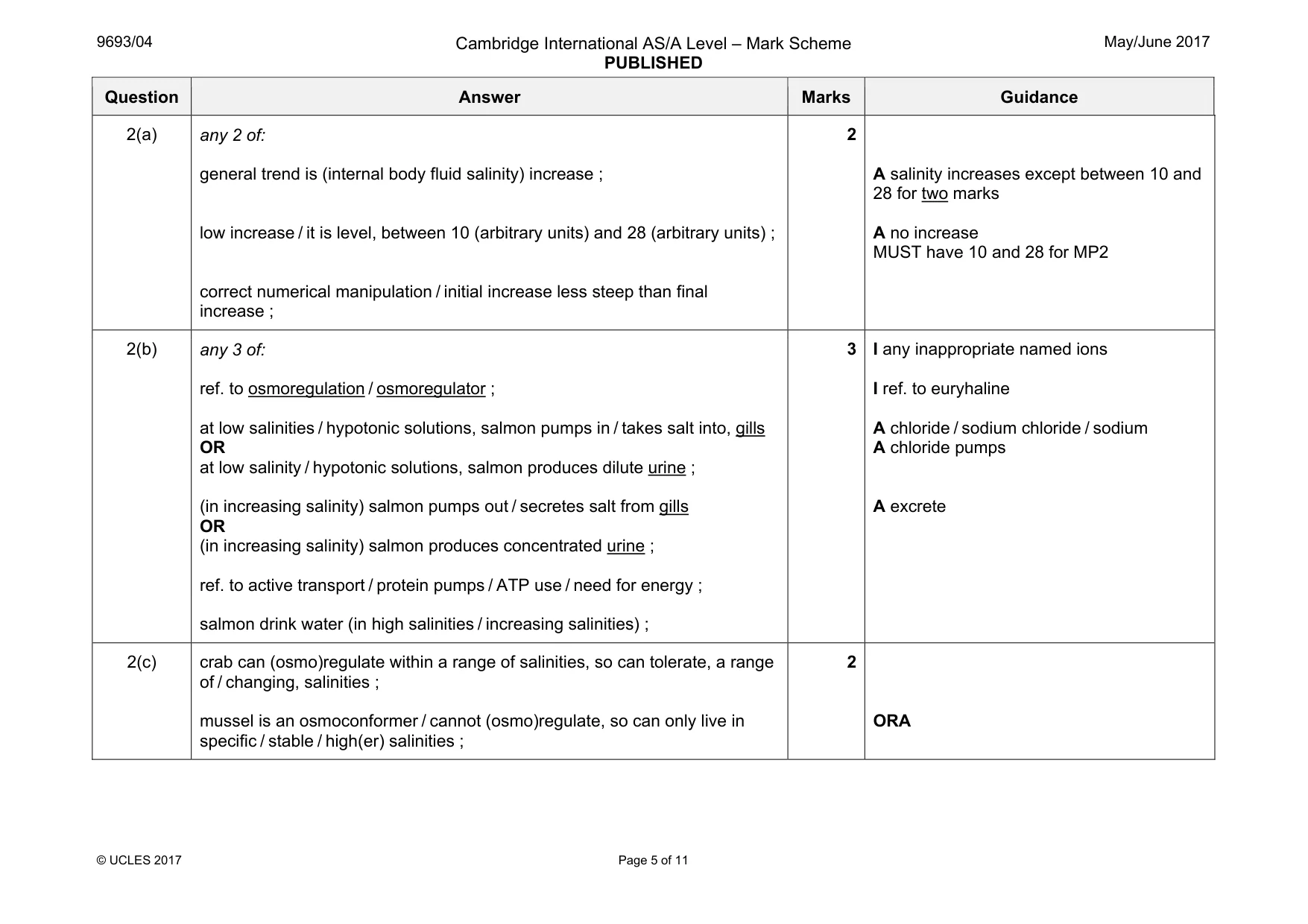
Mark scheme: 2(a) any 2 of: general trend is (internal body fluid salinity) increase ; low increase / it is level, between 10 (arbitrary units) and 28 (arbitrary units) ; correct numerical manipulation / initial increase less steep than final increase ; 2 A salinity increases except between 10 and 28 for two marks A no increase MUST have 10 and 28 for MP2 2(b) any 3 of: ref. to osmoregulation / osmoregulator ; at low salinities / hypotonic solutions, salmon pumps in / takes salt into, gills OR at low salinity / hypotonic solutions, salmon produces dilute urine ; (in increasing salinity) salmon pumps out / secretes salt from gills OR (in increasing salinity) salmon produces concentrated urine ; ref. to active transport / protein pumps / ATP use / need for energy ; salmon drink water (in high salinities / increasing salinities) ; 3 I any inappropriate named ions I ref. to euryhaline A chloride / sodium chloride / sodium A chloride pumps A excrete 2(c) crab can (osmo)regulate within a range of salinities, so can tolerate, a range of / changing, salinities ; mussel is an osmoconformer / cannot (osmo)regulate, so can only live in specific / stable / high(er) salinities ; 2 ORA
Q3 · Explain how dredging affects water quality, productivity and food webs in marine…
3 (a) Explain how dredging affects water quality, productivity and food webs in marine environments. ................................................................................................................................................... ................................................................................................................................................... ................................................................................................................................................... ................................................................................................................................................... ................................................................................................................................................... ................................................................................................................................................... ................................................................................................................................................... ................................................................................................................................................... ................................................................................................................................................... ................................................................................................................................................... ................................................................................................................................................... ................................................................................................................................................... ................................................................................................................................................... ................................................................................................................................................... ................................................................................................................................................... ................................................................................................................................................... ................................................................................................................................................... ...............................................................................................................................................[7] (b) Explain the possible ecological consequences of using marine antifouling paints. ................................................................................................................................................... ................................................................................................................................................... ................................................................................................................................................... ................................................................................................................................................... ................................................................................................................................................... ................................................................................................................................................... ................................................................................................................................................... ................................................................................................................................................... ................................................................................................................................................... ...............................................................................................................................................[3] (c) Genetically engineered fish have recently been produced that contain a fluorescence gene from jellyfish. The fish fluoresce, glowing green, when under conditions of environmental stress such as the presence of pollution. (i) State the meaning of the following terms. genetic engineering ........................................................................................................... ........................................................................................................................................... selective breeding ............................................................................................................. ........................................................................................................................................... [2] (ii) Suggest benefits and risks of using these fish as indicators of pollution. ........................................................................................................................................... ........................................................................................................................................... ........................................................................................................................................... ........................................................................................................................................... ........................................................................................................................................... ........................................................................................................................................... .......................................................................................................................................[3] [Total: 15]
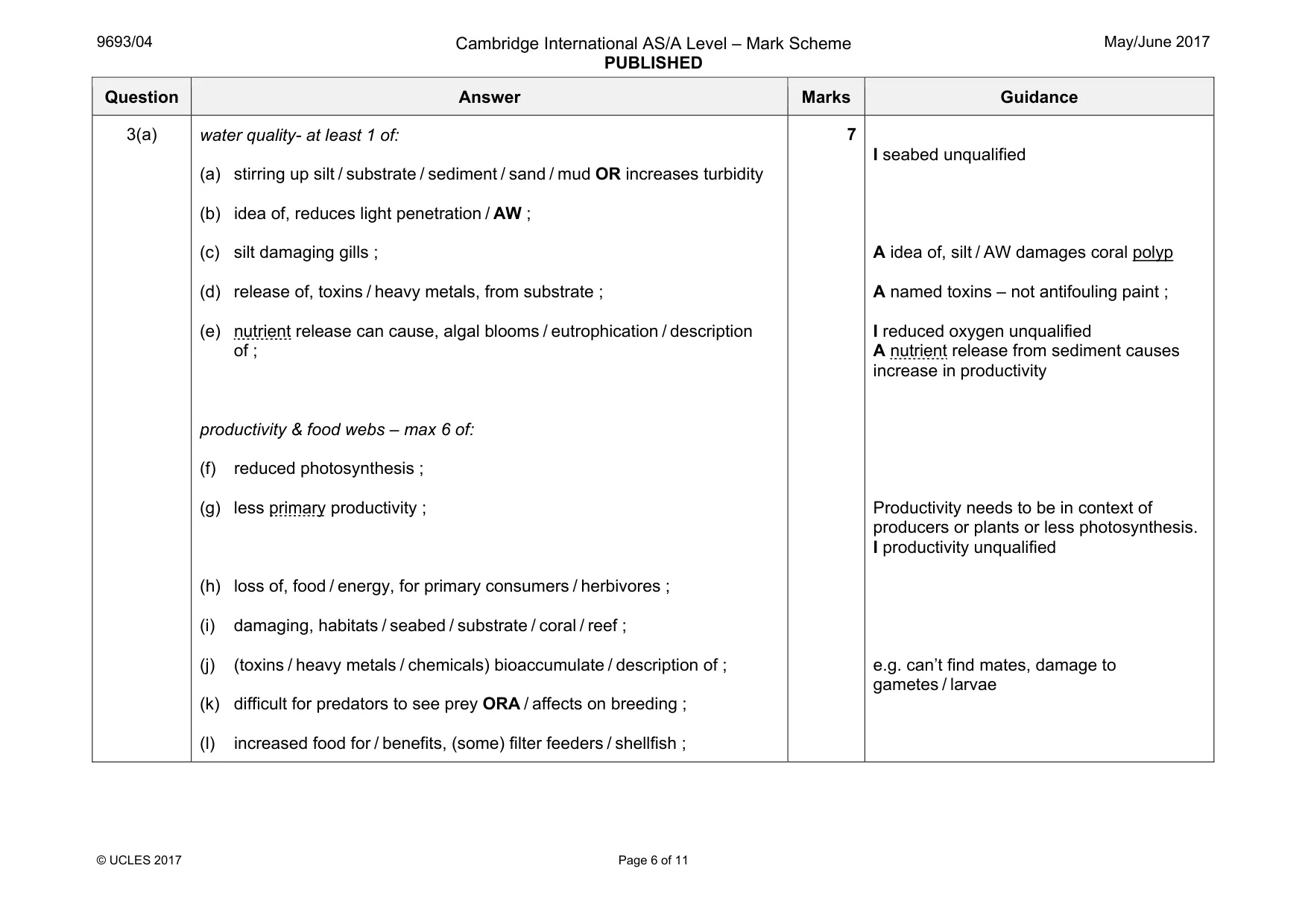
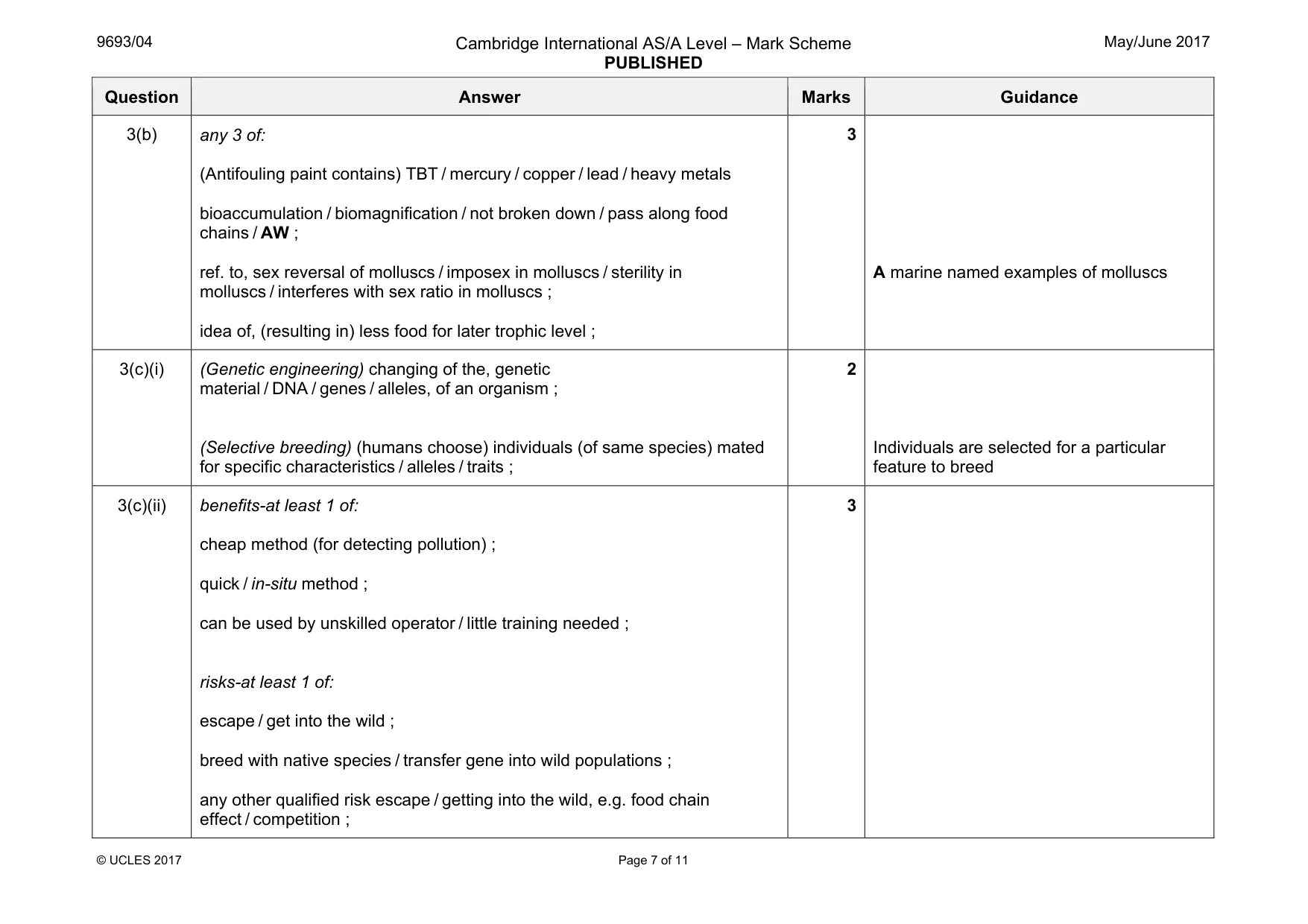
Mark scheme: 3(a) water quality- at least 1 of: (a) stirring up silt / substrate / sediment / sand / mud OR increases turbidity (b) idea of, reduces light penetration / AW ; (c) silt damaging gills ; (d) release of, toxins / heavy metals, from substrate ; (e) nutrient release can cause, algal blooms / eutrophication / description of ; productivity & food webs – max 6 of: (f) reduced photosynthesis ; (g) less primary productivity ; (h) loss of, food / energy, for primary consumers / herbivores ; (i) damaging, habitats / seabed / substrate / coral / reef ; (j) (toxins / heavy metals / chemicals) bioaccumulate / description of ; (k) difficult for predators to see prey ORA / affects on breeding ; (l) increased food for / benefits, (some) filter feeders / shellfish ; 7 I seabed unqualified A idea of, silt / AW damages coral polyp A named toxins – not antifouling paint ; I reduced oxygen unqualified A nutrient release from sediment causes increase in productivity Productivity needs to be in context of producers or plants or less photosynthesis. I productivity unqualified e.g. can’t find mates, damage to gametes / larvae Question Answer Marks Guidance 3(b) any 3 of: (Antifouling paint contains) TBT / mercury / copper / lead / heavy metals bioaccumulation / biomagnification / not broken down / pass along food chains / AW ; ref. to, sex reversal of molluscs / imposex in molluscs / sterility in molluscs / interferes with sex ratio in molluscs ; idea of, (resulting in) less food for later trophic level ; 3 A marine named examples of molluscs 3(c)(i) (Genetic engineering) changing of the, genetic material / DNA / genes / alleles, of an organism ; (Selective breeding) (humans choose) individuals (of same species) mated for specific characteristics / alleles / traits ; 2 Individuals are selected for a particular feature to breed 3(c)(ii) benefits-at least 1 of: cheap method (for detecting pollution) ; quick / in-situ method ; can be used by unskilled operator / little training needed ; risks-at least 1 of: escape / get into the wild ; breed with native species / transfer gene into wild populations ; any other qualified risk escape / getting into the wild, e.g. food chain effect / competition ; 3
Q4 · Many areas of coastline in tropical countries are experiencing increased tourism
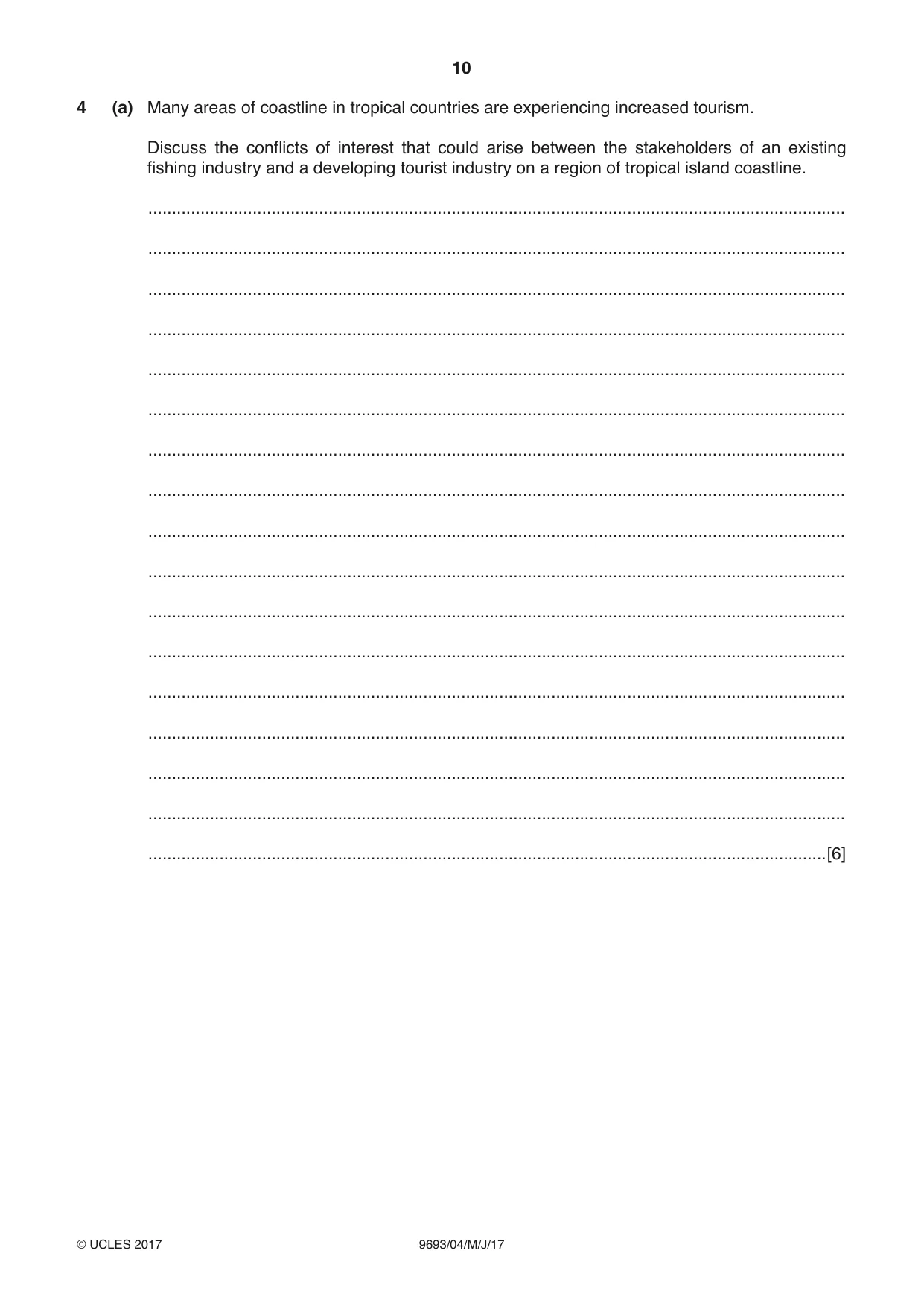
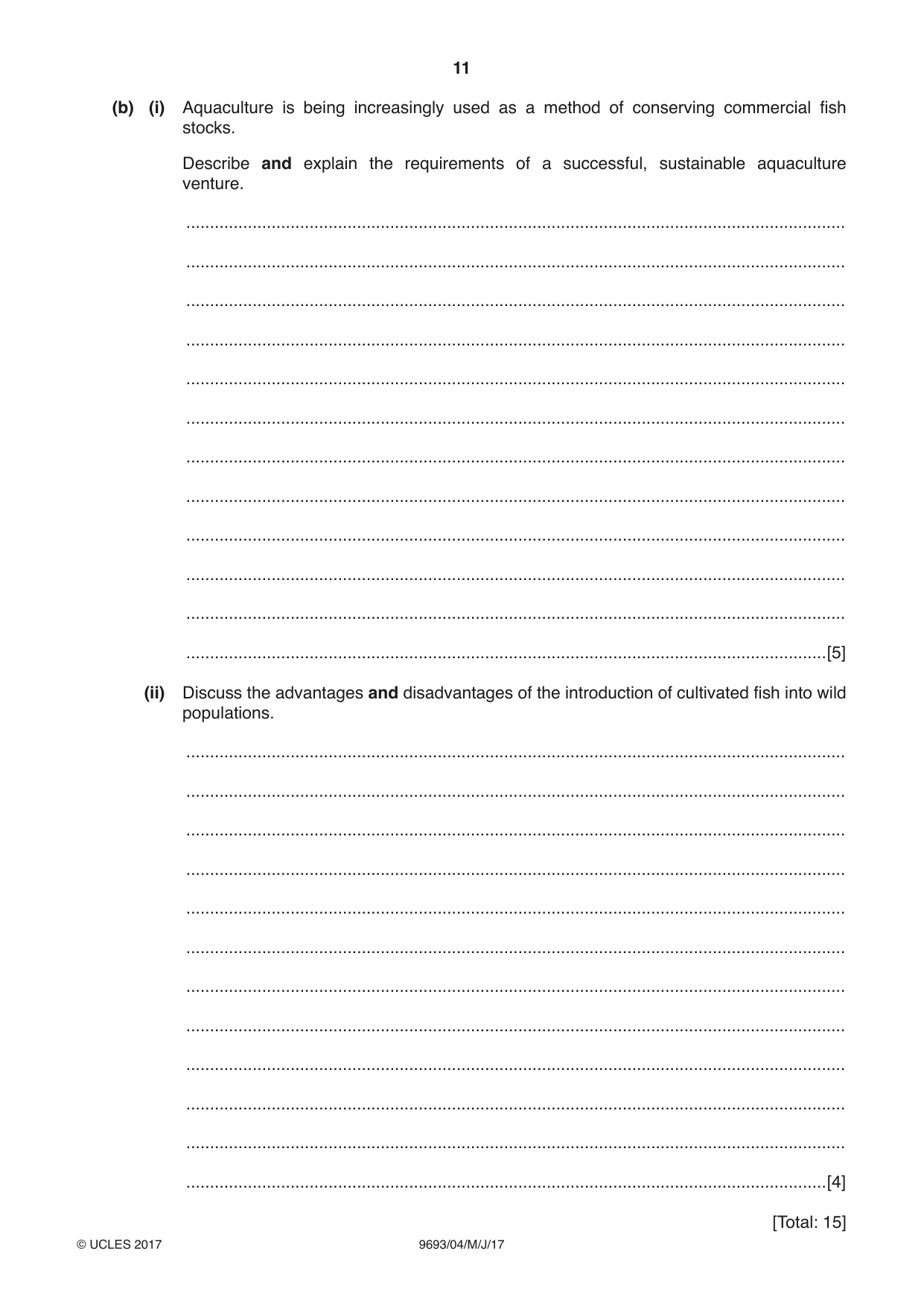
4 (a) Many areas of coastline in tropical countries are experiencing increased tourism. Discuss the conflicts of interest that could arise between the stakeholders of an existing fishing industry and a developing tourist industry on a region of tropical island coastline. ................................................................................................................................................... ................................................................................................................................................... ................................................................................................................................................... ................................................................................................................................................... ................................................................................................................................................... ................................................................................................................................................... ................................................................................................................................................... ................................................................................................................................................... ................................................................................................................................................... ................................................................................................................................................... ................................................................................................................................................... ................................................................................................................................................... ................................................................................................................................................... ................................................................................................................................................... ................................................................................................................................................... ................................................................................................................................................... ...............................................................................................................................................[6] (b) (i) Aquaculture is being increasingly used as a method of conserving commercial fish stocks. Describe and explain the requirements of a successful, sustainable aquaculture venture. ........................................................................................................................................... ........................................................................................................................................... ........................................................................................................................................... ........................................................................................................................................... ........................................................................................................................................... ........................................................................................................................................... ........................................................................................................................................... ........................................................................................................................................... ........................................................................................................................................... ........................................................................................................................................... ........................................................................................................................................... .......................................................................................................................................[5] (ii) Discuss the advantages and disadvantages of the introduction of cultivated fish into wild populations. ........................................................................................................................................... ........................................................................................................................................... ........................................................................................................................................... ........................................................................................................................................... ........................................................................................................................................... ........................................................................................................................................... ........................................................................................................................................... ........................................................................................................................................... ........................................................................................................................................... ........................................................................................................................................... ........................................................................................................................................... .......................................................................................................................................[4]
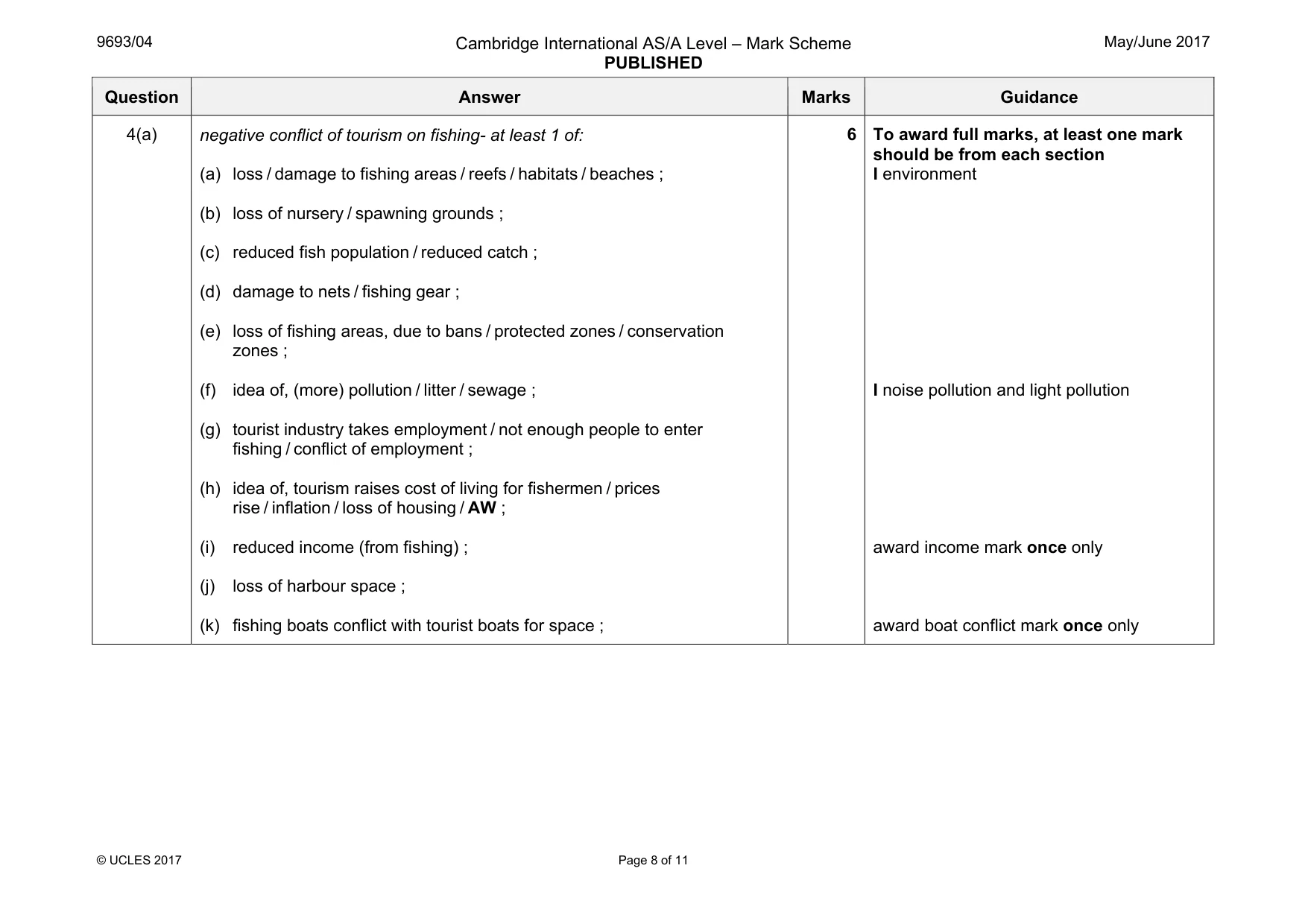
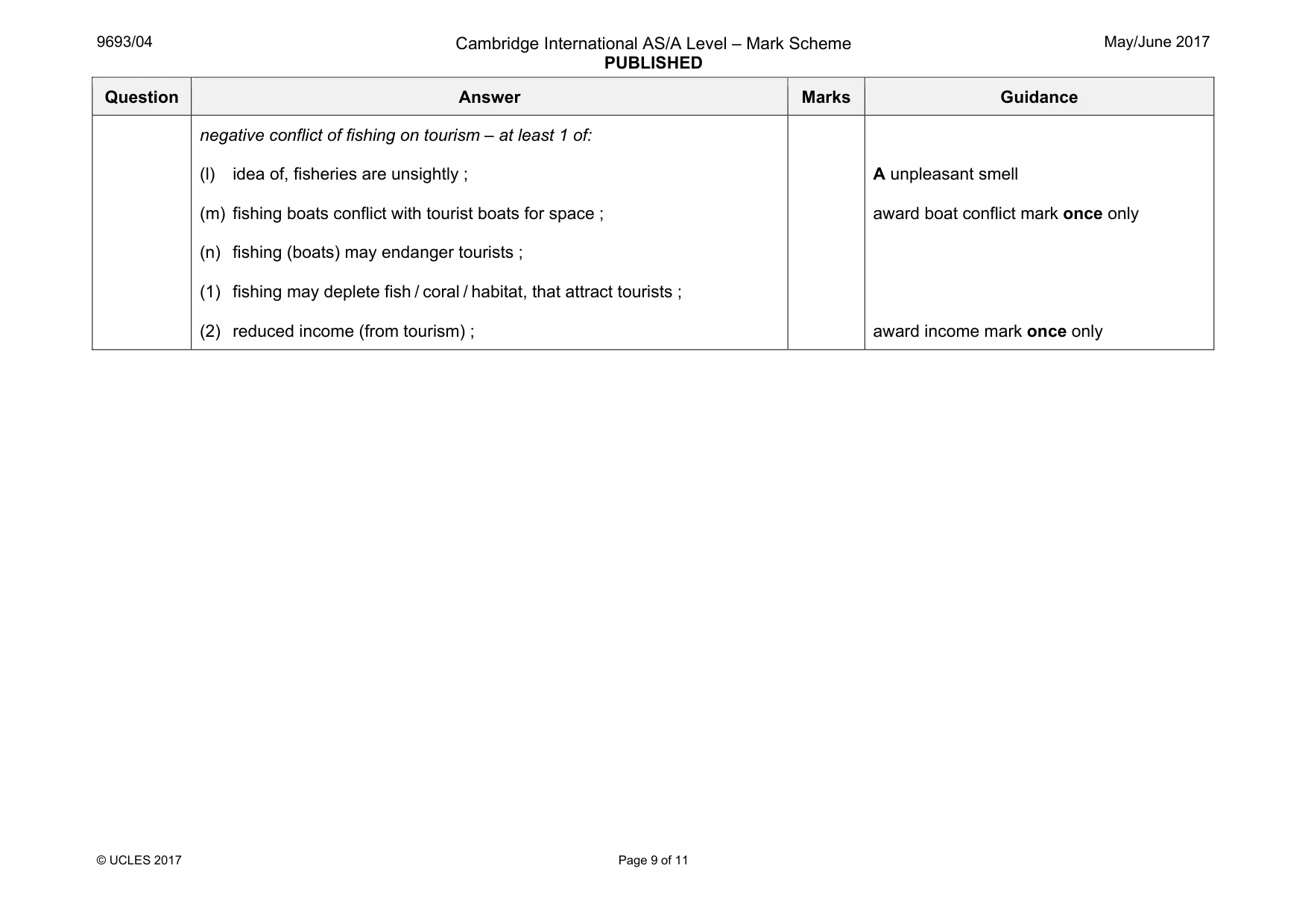
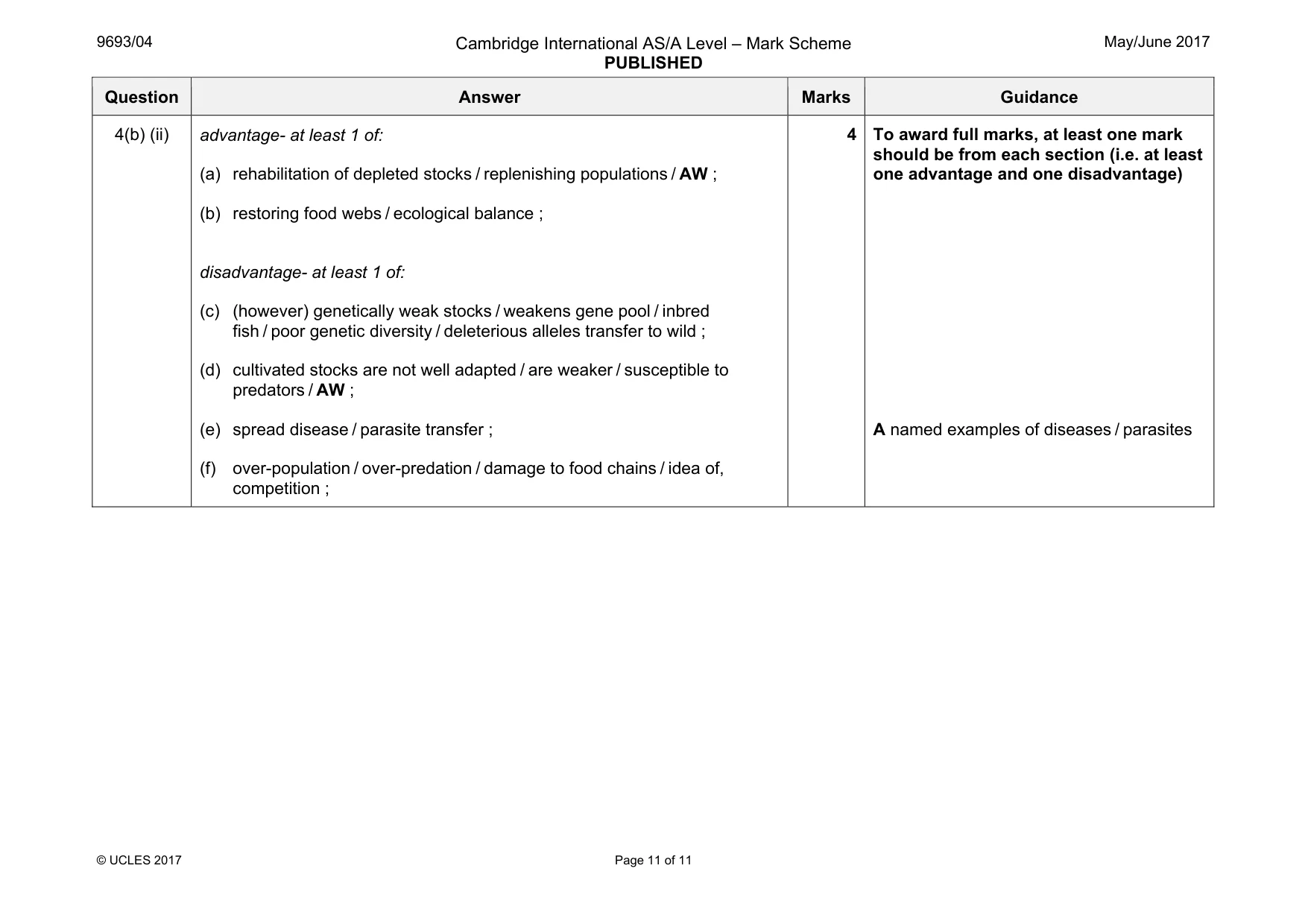
Mark scheme: 4(a) negative conflict of tourism on fishing- at least 1 of: (a) loss / damage to fishing areas / reefs / habitats / beaches ; (b) loss of nursery / spawning grounds ; (c) reduced fish population / reduced catch ; (d) damage to nets / fishing gear ; (e) loss of fishing areas, due to bans / protected zones / conservation zones ; (f) idea of, (more) pollution / litter / sewage ; (g) tourist industry takes employment / not enough people to enter fishing / conflict of employment ; (h) idea of, tourism raises cost of living for fishermen / prices rise / inflation / loss of housing / AW ; (i) reduced income (from fishing) ; (j) loss of harbour space ; (k) fishing boats conflict with tourist boats for space ; 6 To award full marks, at least one mark should be from each section I environment I noise pollution and light pollution award income mark once only award boat conflict mark once only Question Answer Marks Guidance negative conflict of fishing on tourism – at least 1 of: (l) idea of, fisheries are unsightly ; (m) fishing boats conflict with tourist boats for space ; (n) fishing (boats) may endanger tourists ; (1) fishing may deplete fish / coral / habitat, that attract tourists ; (2) reduced income (from tourism) ; A unpleasant smell award boat conflict mark once only award income mark once only Question Answer Marks Guidance 4(b) (i) any 5 of: (a) availability of stock / adults for spawning / brood stock ; (b) (so that) fish are not taken from wild / not depleting wild stocks ; (c) availability of food (stocks) ; (d) that is not from wild / e.g. uses fish waste / trimmings / AW ; (e) water purification systems / clean water / low stocking density / don’t over feed ; (f) to reduce, pollution / disease spread / for disease management / prevent eutrophication ; (g) minimise use of, antibiotics / pesticides ; (h) to prevent development of resistance ; (i) available labour force / AW ; (j) availability of location OR suitable location that does not destroy habitats / mangroves ; (k) transport access / roads / rail, for supplies in and / or products out ; (l) sufficient profit potential / idea of, economic benefit / AW ; (m) (due to) market demand / access to export market / suitable exchange rates ; 5 Question Answer Marks Guidance 4(b) (ii) advantage- at least 1 of: (a) rehabilitation of depleted stocks / replenishing populations / AW ; (b) restoring food webs / ecological balance ; disadvantage- at least 1 of: (c) (however) genetically weak stocks / weakens gene pool / inbred fish / poor genetic diversity / deleterious alleles transfer to wild ; (d) cultivated stocks are not well adapted / are weaker / susceptible to predators / AW ; (e) spread disease / parasite transfer ; (f) over-population / over-predation / damage to food chains / idea of, competition ; 4 To award full marks, at least one mark should be from each section (i.e. at least one advantage and one disadvantage) A named examples of diseases / parasites
What was in this paper
The subtopics covered by these 4 questions, and how many questions each got. Open one in a new tab to see every Cambridge question on it.
What you needed in this session
Cambridge’s own grade thresholds for 2017 May/June, Paper 4 · Variant 1. A higher threshold means an easier paper — the bar moves with how the cohort did.