Cambridge A Level Marine Science 9693 — 2016 Oct/Nov Paper 4 · Variant 1
9693/41/O/N/16 · 50 marks · ≈56 min
The question paper and its mark scheme, free to read here and free to download. This is Cambridge’s own paper, exactly as it was sat.
Question paper12 pages
Mark scheme12 pages
Answers below. Sit the paper first if you are practising.
Paper as text
Question paper, page 1
This document consists of 11 printed pages and 1 blank page. DC (KN/SW) 113370/2 © UCLES 2016 [Turn over Cambridge International Examinations Cambridge International Advanced Subsidiary and Advanced Level * 2 3 7 0 9 0 2 7 2 6 * MARINE SCIENCE 9693/04 Paper 4 A2 Data-Handling and Free-Response October/November 2016 1 hour 15 minutes Candidates answer on the Question Paper. No Additional Materials are required. READ THESE INSTRUCTIONS FIRST Write your Centre number, candidate number and name on all the work you hand in. Write in dark blue or black pen. You may use an HB pencil for any diagrams or graphs. Do not use staples, paper clips, glue or correction fluid. DO NOT WRITE IN ANY BARCODES. Section A Answer both questions in this section. Write your answers in the spaces provided on the Question Paper. Section B Answer both questions in this section. Write your answers in the spaces provided on the Question Paper. Electronic calculators may be used. You may lose marks if you do not show your working or if you do not use appropriate units. At the end of the examination, fasten all your work securely together. The number of marks is given in brackets [ ] at the end of each question or part question.
Question paper, page 2
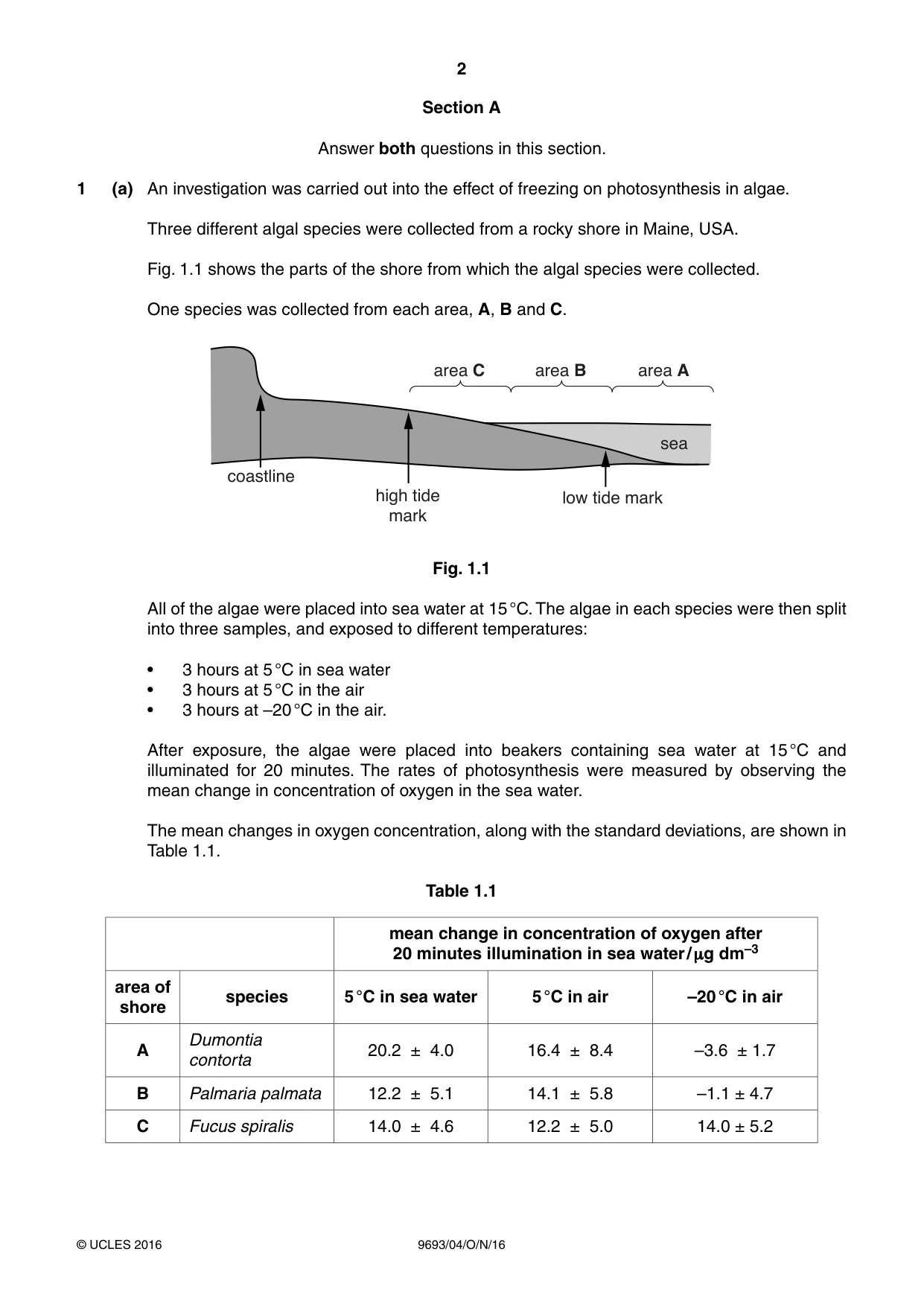
2 9693/04/O/N/16 © UCLES 2016 Section A Answer both questions in this section. 1 (a) An investigation was carried out into the effect of freezing on photosynthesis in algae. Three different algal species were collected from a rocky shore in Maine, USA. Fig. 1.1 shows the parts of the shore from which the algal species were collected. One species was collected from each area, A, B and C. area C high tide mark coastline low tide mark area B area A sea Fig. 1.1 All of the algae were placed into sea water at 15 °C. The algae in each species were then split into three samples, and exposed to different temperatures: • 3 hours at 5 °C in sea water • 3 hours at 5 °C in the air • 3 hours at –20 °C in the air. After exposure, the algae were placed into beakers containing sea water at 15 °C and illuminated for 20 minutes. The rates of photosynthesis were measured by observing the mean change in concentration of oxygen in the sea water. The mean changes in oxygen concentration, along with the standard deviations, are shown in Table 1.1. Table 1.1 mean change in concentration of oxygen after 20 minutes illumination in sea water / μg dm–3 area of sho re species 5 °C in sea water 5 °C in air –20 °C in air A Dumontia contorta 20.2 ± 4.0 16.4 ± 8.4 –3.6 ± 1.7 B Palmaria palmata 12.2 ± 5.1 14.1 ± 5.8 –1.1 ± 4.7 C Fucus spiralis 14.0 ± 4.6 12.2 ± 5.0 14.0 ± 5.2
Question paper, page 3
3 9693/04/O/N/16 © UCLES 2016 [Turn over (i) Suggest the purpose of the experiment carried out at 5 °C in sea water. … … …[1] (ii) Describe and explain the effect of the different treatments on the mean changes in oxygen concentration for the different species of algae. … … … … … … … … … …[4]
Question paper, page 4
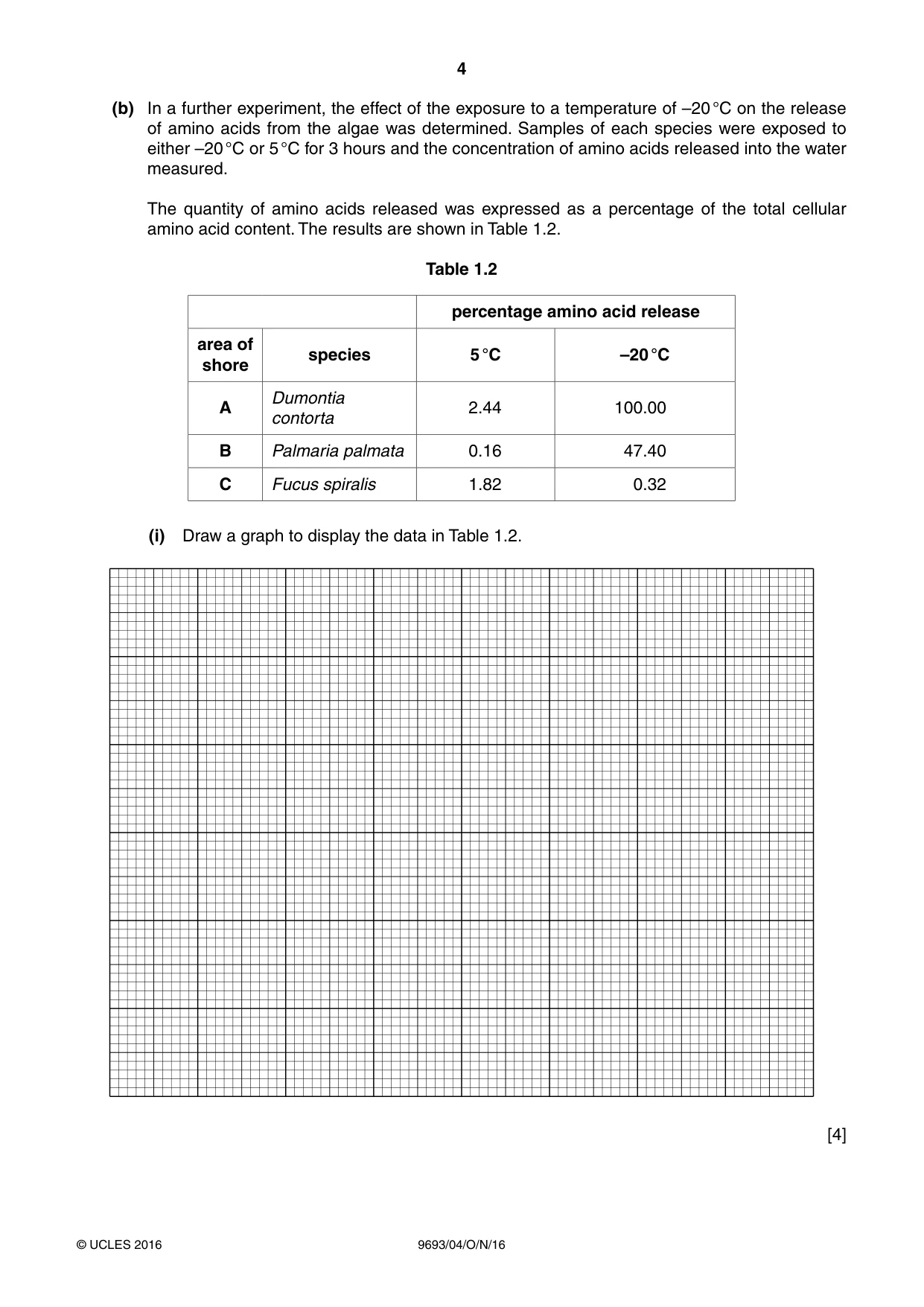
4 9693/04/O/N/16 © UCLES 2016 (b) In a further experiment, the effect of the exposure to a temperature of –20 °C on the release of amino acids from the algae was determined. Samples of each species were exposed to either –20 °C or 5 °C for 3 hours and the concentration of amino acids released into the water measured. The quantity of amino acids released was expressed as a percentage of the total cellular amino acid content. The results are shown in Table 1.2. Table 1.2 percentage amino acid release area of shore species 5 °C –20 °C A Dumontia contorta 2.44 100.00 B Palmaria palmata 0.16 47.40 C Fucus spiralis 1.82 0.32 (i) Draw a graph to display the data in Table 1.2. [4]
Question paper, page 5
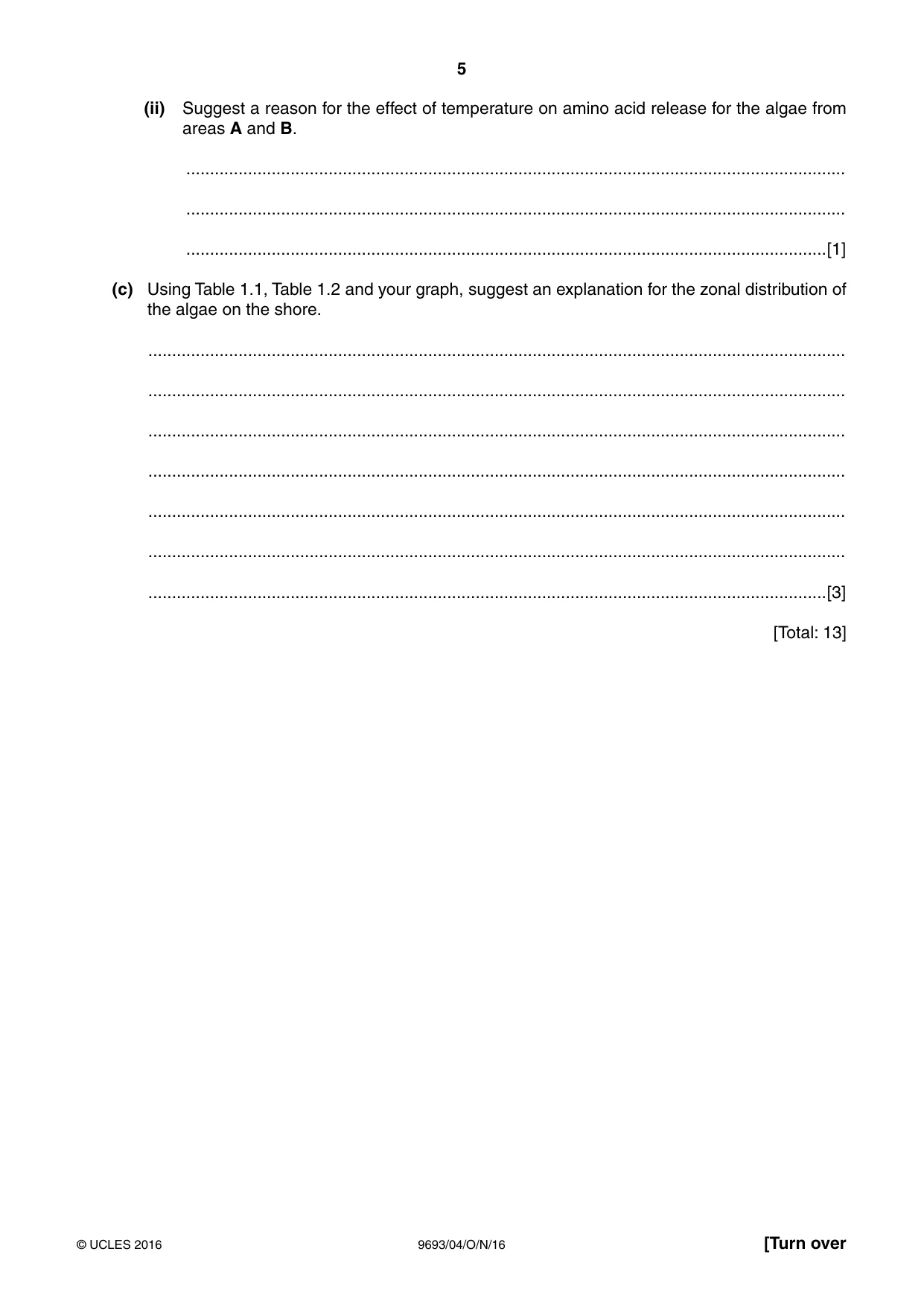
5 9693/04/O/N/16 © UCLES 2016 [Turn over (ii) Suggest a reason for the effect of temperature on amino acid release for the algae from areas A and B. … … …[1] (c) Using Table 1.1, Table 1.2 and your graph, suggest an explanation for the zonal distribution of the algae on the shore. … … … … … … …[3] [Total: 13]
Question paper, page 6
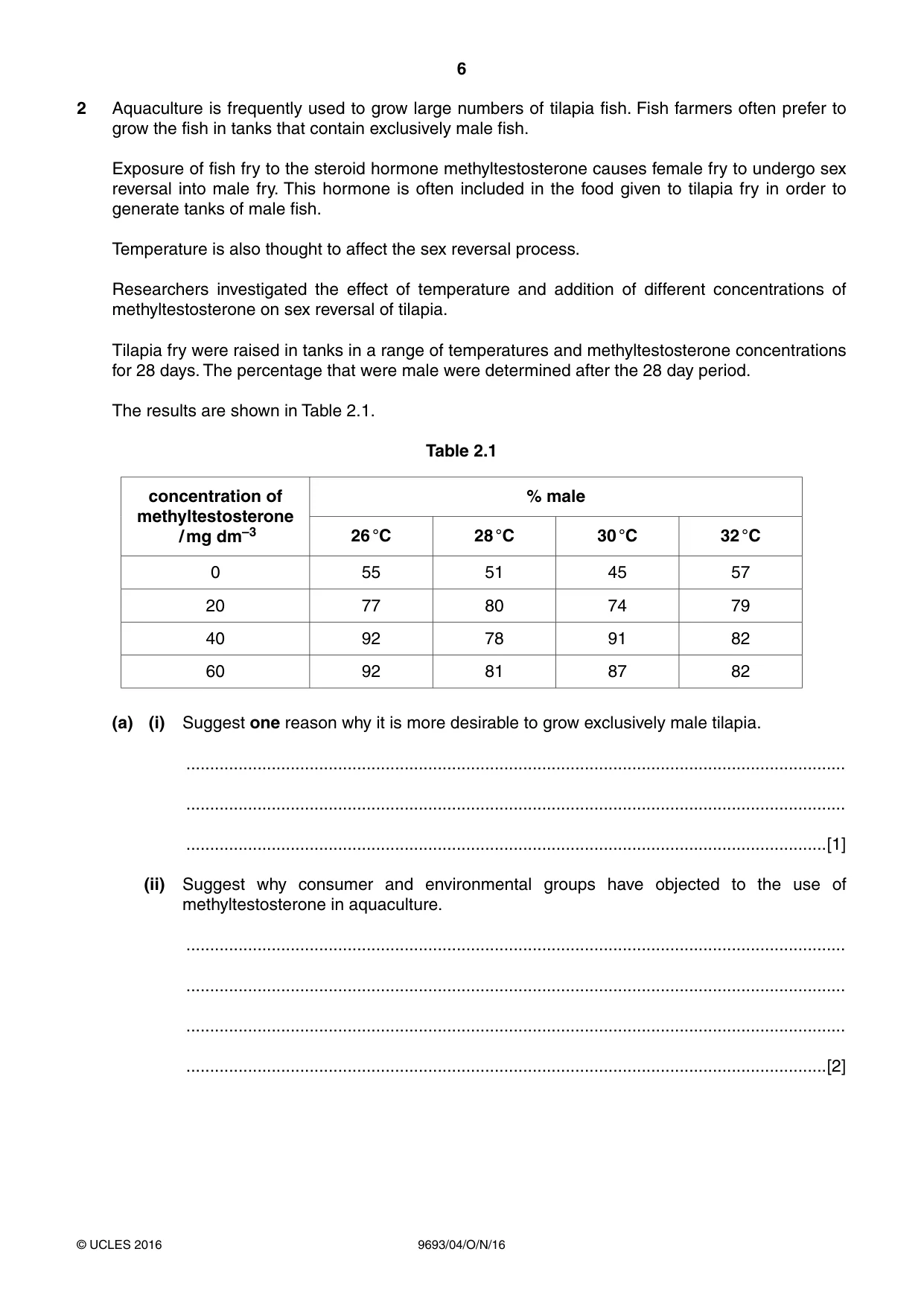
6 9693/04/O/N/16 © UCLES 2016 2 Aquaculture is frequently used to grow large numbers of tilapia fish. Fish farmers often prefer to grow the fish in tanks that contain exclusively male fish. Exposure of fish fry to the steroid hormone methyltestosterone causes female fry to undergo sex reversal into male fry. This hormone is often included in the food given to tilapia fry in order to generate tanks of male fish. Temperature is also thought to affect the sex reversal process. Researchers investigated the effect of temperature and addition of different concentrations of methyltestosterone on sex reversal of tilapia. Tilapia fry were raised in tanks in a range of temperatures and methyltestosterone concentrations for 28 days. The percentage that were male were determined after the 28 day period. The results are shown in Table 2.1. Table 2.1 concentration of methyltestosterone / mg dm–3 % male 26 °C 28 °C 30 °C 32 °C 0 55 51 45 57 20 77 80 74 79 40 92 78 91 82 60 92 81 87 82 (a) (i) Suggest one reason why it is more desirable to grow exclusively male tilapia. … … …[1] (ii) Suggest why consumer and environmental groups have objected to the use of methyltestosterone in aquaculture. … … … …[2]
Question paper, page 7
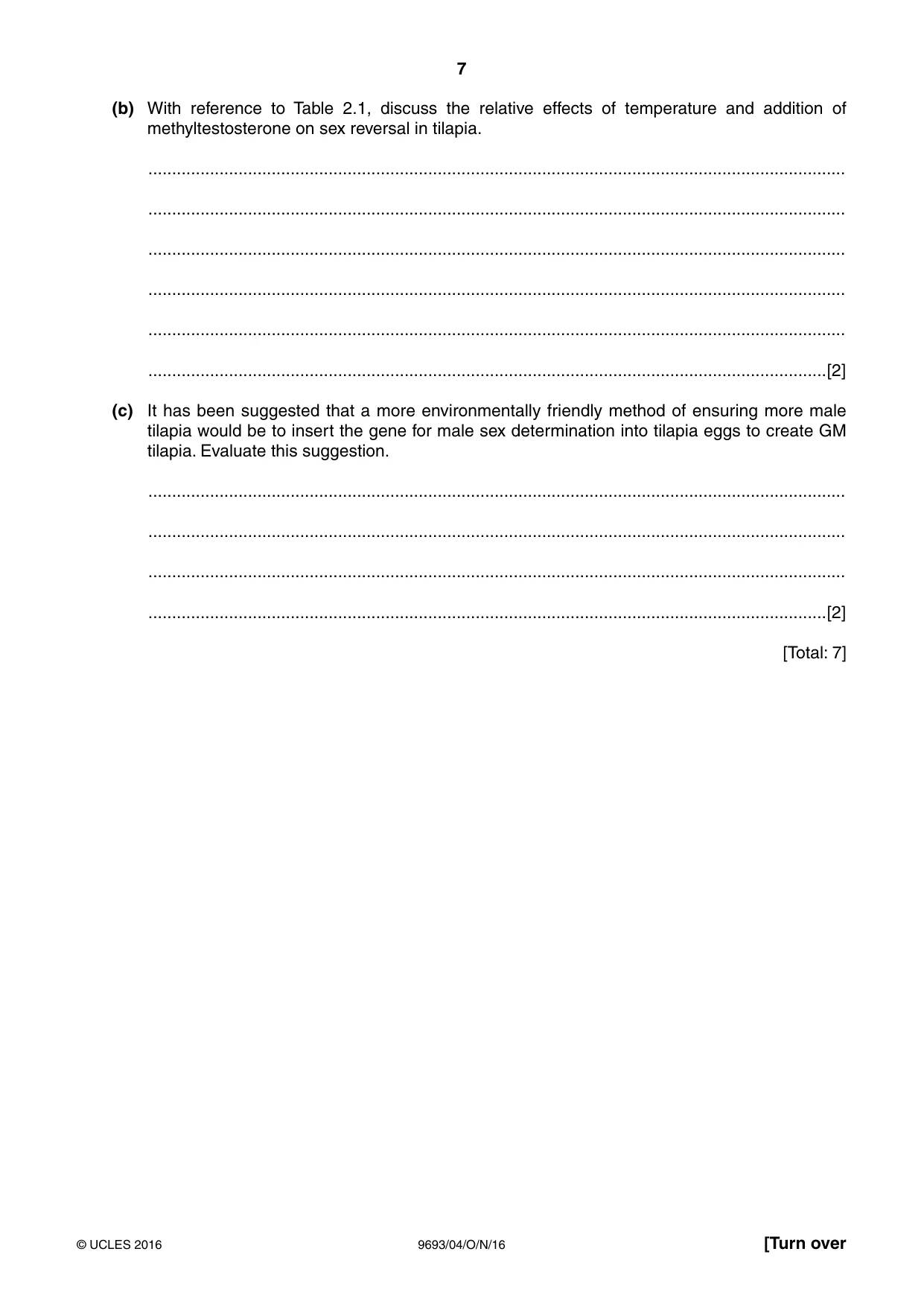
7 9693/04/O/N/16 © UCLES 2016 [Turn over (b) With reference to Table 2.1, discuss the relative effects of temperature and addition of methyltestosterone on sex reversal in tilapia. … … … … … …[2] (c) It has been suggested that a more environmentally friendly method of ensuring more male tilapia would be to insert the gene for male sex determination into tilapia eggs to create GM tilapia. Evaluate this suggestion. … … … …[2] [Total: 7]
Question paper, page 8
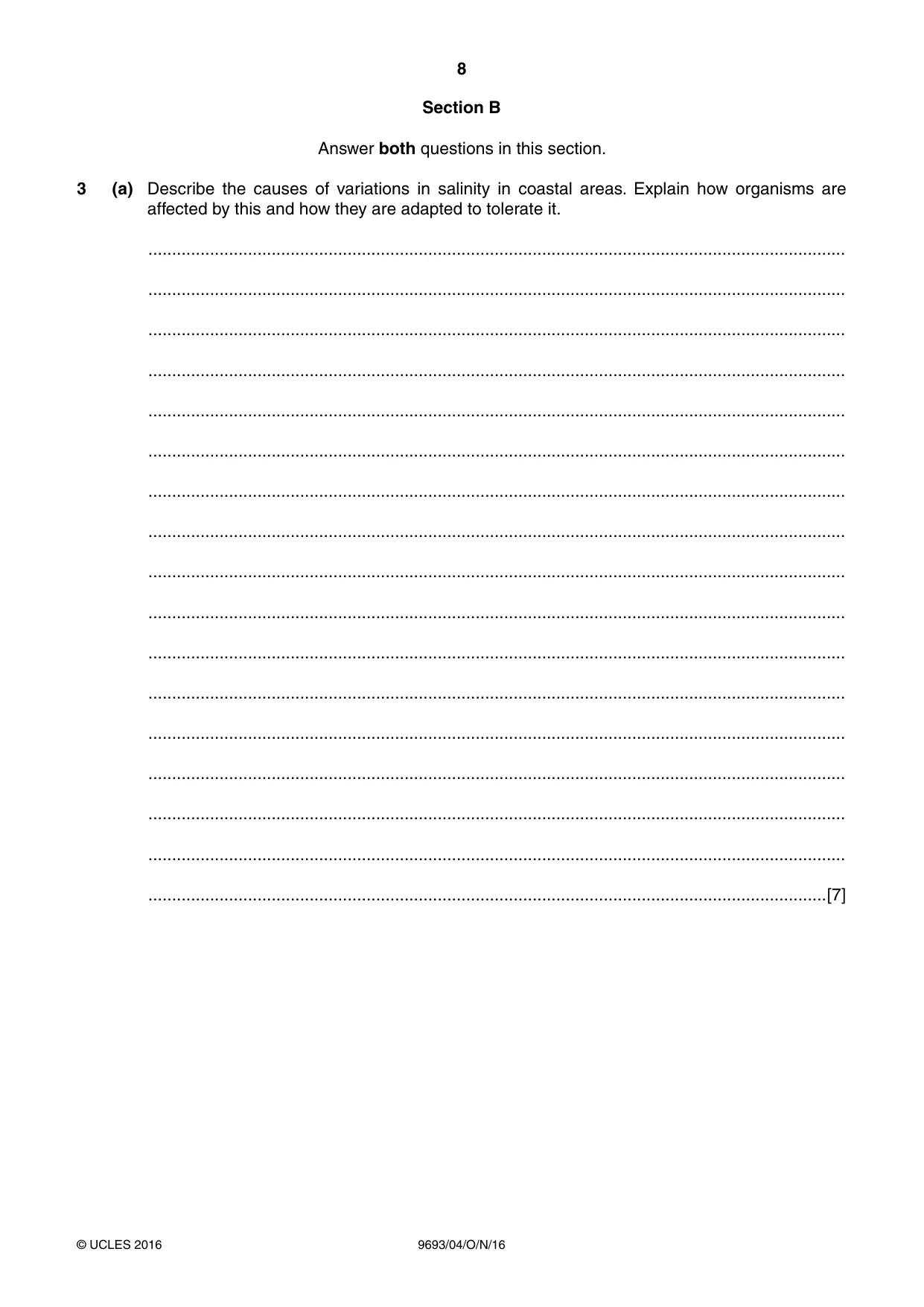
8 9693/04/O/N/16 © UCLES 2016 Section B Answer both questions in this section. 3 (a) Describe the causes of variations in salinity in coastal areas. Explain how organisms are affected by this and how they are adapted to tolerate it. … … … … … … … … … … … … … … … … …[7]
Question paper, page 9
9 9693/04/O/N/16 © UCLES 2016 [Turn over (b) Carbon dioxide is another abiotic factor that affects marine organisms both directly and indirectly. Suggest why atmospheric carbon dioxide concentrations may change and how this may affect marine organisms. … … … … … … … … … … … … … … … … … … … …[8] [Total: 15]
Question paper, page 10
10 9693/04/O/N/16 © UCLES 2016 4 (a) State three of the principal methods that can be used to ensure that fish stocks are exploited on a sustainable basis. 1 … 2 … 3 …[3] (b) Human activities in marine areas have had major impacts on marine biodiversity and many pressure groups have called for conservation measures to be put in place. One suggestion is the generation of marine nature reserves where no fishing and only very limited development may occur. Explain the arguments for and against the setting up of such marine nature reserves. … … … … … … … … … … … … … … … … … … …[7]
Question paper, page 11
11 9693/04/O/N/16 © UCLES 2016 (c) In an effort to increase bluefin tuna populations, it has been suggested that young bluefin tuna could be grown in culture and then released into certain areas of the Pacific and Indian Oceans. Suggest what factors should be considered before embarking on such a project. … … … … … … … … … … … …[5] [Total:15]
Question paper, page 12
12 9693/04/O/N/16 © UCLES 2016 Permission to reproduce items where third-party owned material protected by copyright is included has been sought and cleared where possible. Every reasonable effort has been made by the publisher (UCLES) to trace copyright holders, but if any items requiring clearance have unwittingly been included, the publisher will be pleased to make amends at the earliest possible opportunity. To avoid the issue of disclosure of answer-related information to candidates, all copyright acknowledgements are reproduced online in the Cambridge International Examinations Copyright Acknowledgements Booklet. This is produced for each series of examinations and is freely available to download at www.cie.org.uk after the live examination series. Cambridge International Examinations is part of the Cambridge Assessment Group. Cambridge Assessment is the brand name of University of Cambridge Local Examinations Syndicate (UCLES), which is itself a department of the University of Cambridge. BLANK PAGE
Mark scheme, page 1
® IGCSE is the registered trademark of Cambridge International Examinations. This document consists of 12 printed pages. © UCLES 2016 [Turn over Cambridge International Examinations Cambridge International Advanced Subsidiary and Advanced Level MARINE SCIENCE 9693/04 Paper 4 A2 Data-Handing and Free-Response October/November 2016 MARK SCHEME Maximum Mark: 50 Published This mark scheme is published as an aid to teachers and candidates, to indicate the requirements of the examination. It shows the basis on which Examiners were instructed to award marks. It does not indicate the details of the discussions that took place at an Examiners’ meeting before marking began, which would have considered the acceptability of alternative answers. Mark schemes should be read in conjunction with the question paper and the Principal Examiner Report for Teachers. Cambridge will not enter into discussions about these mark schemes. Cambridge is publishing the mark schemes for the October/November 2016 series for most Cambridge IGCSE®, Cambridge International A and AS Level components and some Cambridge O Level components.
Mark scheme, page 2
Page 2 Mark Scheme Syllabus Paper Cambridge International AS/A Level – October/November 2016 9693 04 © UCLES 2016 This mark scheme will use the following abbreviations: ; separates marking points / separates alternatives within a marking point () contents of brackets are not required but should be implied / the contents set the context of the answer R reject A accept (answers that are correctly cued by the question or guidance you have received) I ignore (mark as if this material was not present) AW alternative wording (where responses vary more than usual, accept other ways of expressing the same idea) AVP alternative valid point (where a greater than usual variety of responses is expected) ORA or reverse argument underline actual word underlined must be used by the candidate (grammatical variants excepted) MAX indicates the maximum number of marks that can be awarded + statements on both sides of the + are needed for that mark OR separates two different routes to a mark point and only one should be awarded ECF error carried forward (credit an operation from a previous incorrect response)
Mark scheme, page 3
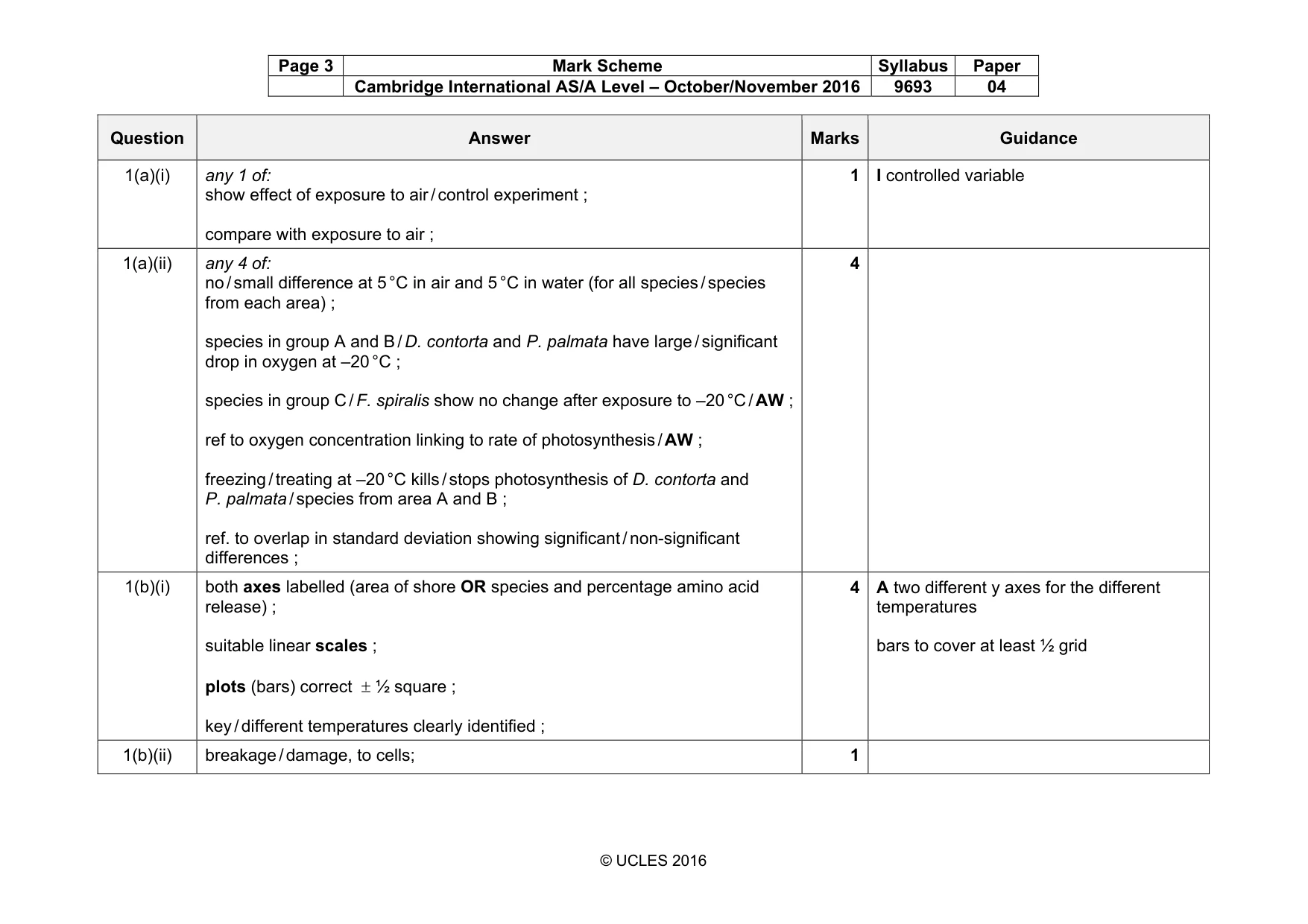
Page 3 Mark Scheme Syllabus Paper Cambridge International AS/A Level – October/November 2016 9693 04 © UCLES 2016 Question Answer Marks Guidance 1(a)(i) any 1 of: show effect of exposure to air / control experiment ; compare with exposure to air ; 1 I controlled variable 1(a)(ii) any 4 of: no / small difference at 5 °C in air and 5 °C in water (for all species / species from each area) ; species in group A and B / D. contorta and P. palmata have large / significant drop in oxygen at –20 °C ; species in group C / F. spiralis show no change after exposure to –20 °C / AW ; ref to oxygen concentration linking to rate of photosynthesis / AW ; freezing / treating at –20 °C kills / stops photosynthesis of D. contorta and P. palmata / species from area A and B ; ref. to overlap in standard deviation showing significant / non-significant differences ; 4 1(b)(i) both axes labelled (area of shore OR species and percentage amino acid release) ; suitable linear scales ; plots (bars) correct ± ½ square ; key / different temperatures clearly identified ; 4 A two different y axes for the different temperatures bars to cover at least ½ grid 1(b)(ii) breakage / damage, to cells; 1
Mark scheme, page 4
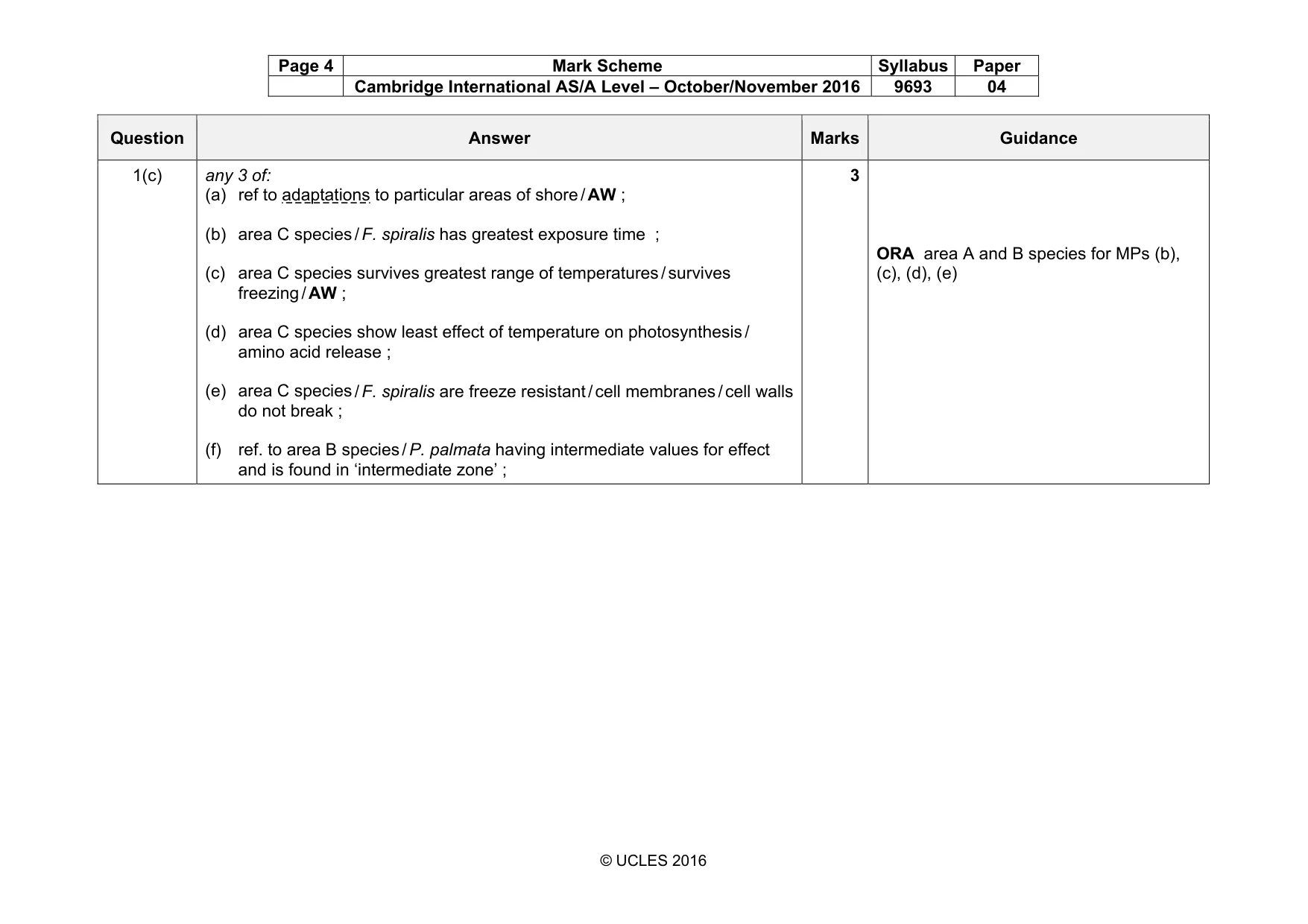
Page 4 Mark Scheme Syllabus Paper Cambridge International AS/A Level – October/November 2016 9693 04 © UCLES 2016 Question Answer Marks Guidance 1(c) any 3 of: (a) ref to adaptations to particular areas of shore / AW ; (b) area C species / F. spiralis has greatest exposure time ; (c) area C species survives greatest range of temperatures / survives freezing / AW ; (d) area C species show least effect of temperature on photosynthesis / amino acid release ; (e) area C species / F. spiralis are freeze resistant / cell membranes / cell walls do not break ; (f) ref. to area B species / P. palmata having intermediate values for effect and is found in ‘intermediate zone’ ; 3 ORA area A and B species for MPs (b), (c), (d), (e)
Mark scheme, page 5
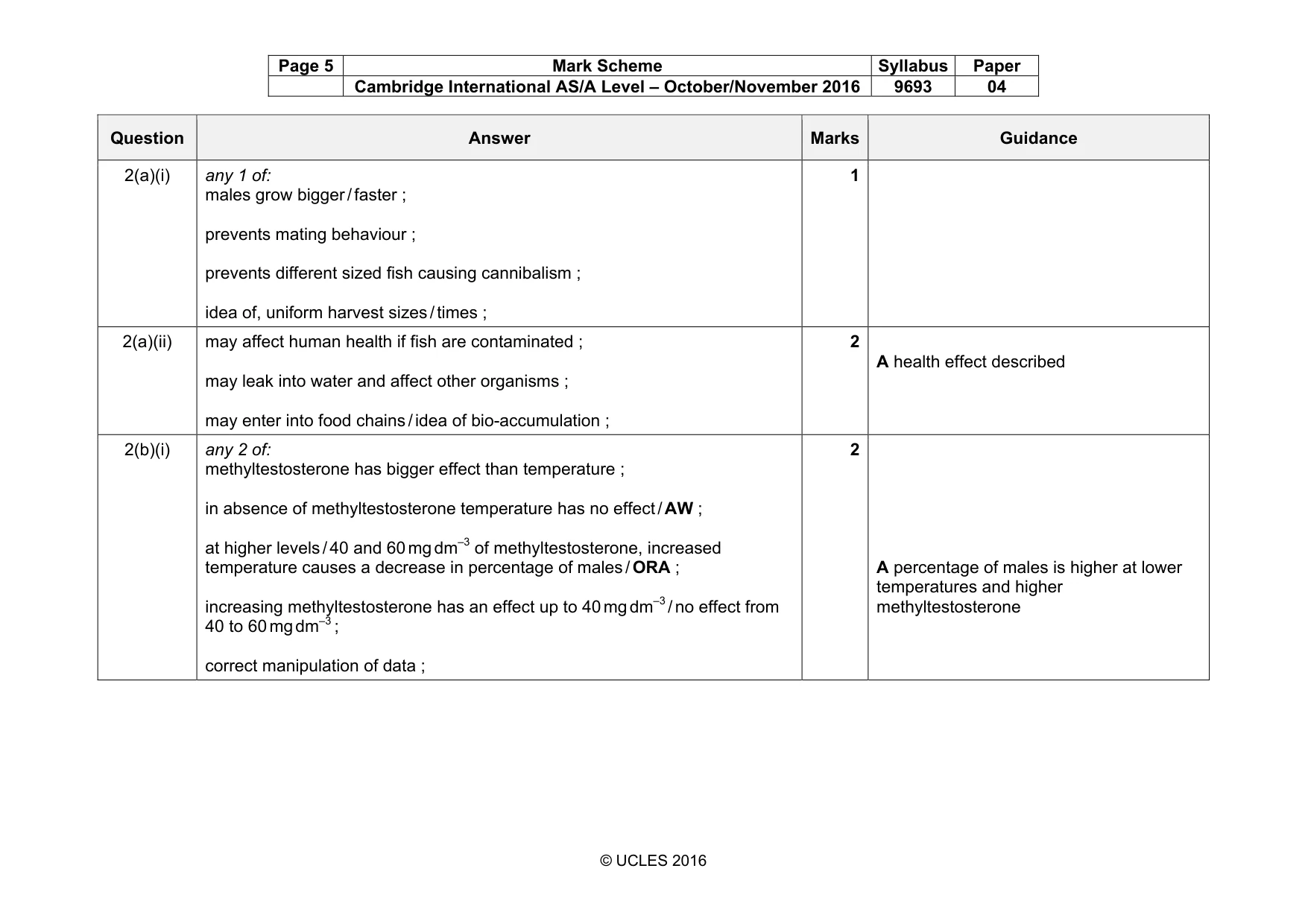
Page 5 Mark Scheme Syllabus Paper Cambridge International AS/A Level – October/November 2016 9693 04 © UCLES 2016 Question Answer Marks Guidance 2(a)(i) any 1 of: males grow bigger / faster ; prevents mating behaviour ; prevents different sized fish causing cannibalism ; idea of, uniform harvest sizes / times ; 1 2(a)(ii) may affect human health if fish are contaminated ; may leak into water and affect other organisms ; may enter into food chains / idea of bio-accumulation ; 2 A health effect described 2(b)(i) any 2 of: methyltestosterone has bigger effect than temperature ; in absence of methyltestosterone temperature has no effect / AW ; at higher levels / 40 and 60 mg dm–3 of methyltestosterone, increased temperature causes a decrease in percentage of males / ORA ; increasing methyltestosterone has an effect up to 40 mg dm–3 / no effect from 40 to 60 mg dm–3 ; correct manipulation of data ; 2 A percentage of males is higher at lower temperatures and higher methyltestosterone
Mark scheme, page 6
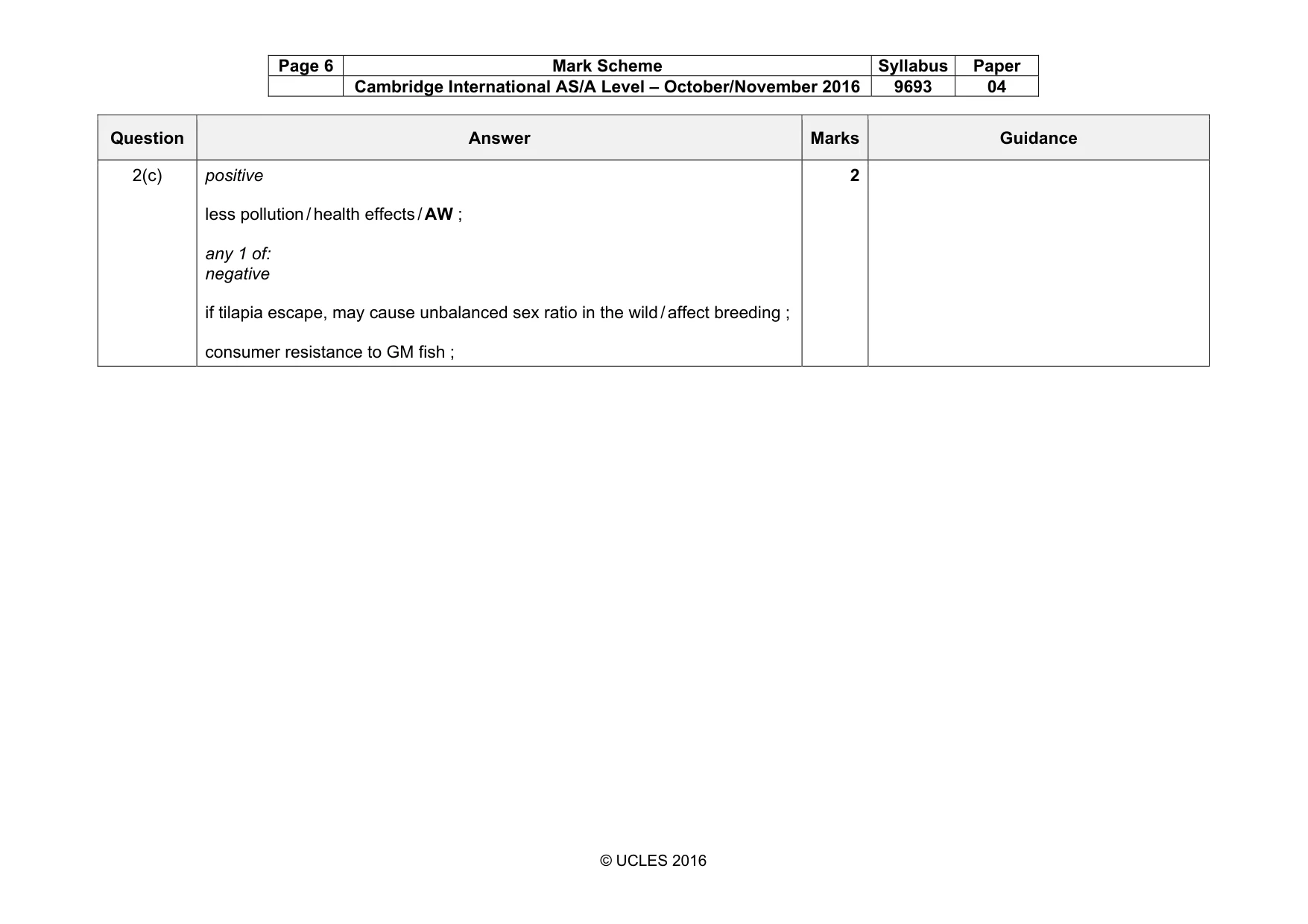
Page 6 Mark Scheme Syllabus Paper Cambridge International AS/A Level – October/November 2016 9693 04 © UCLES 2016 Question Answer Marks Guidance 2(c) positive less pollution / health effects / AW ; any 1 of: negative if tilapia escape, may cause unbalanced sex ratio in the wild / affect breeding ; consumer resistance to GM fish ; 2
Mark scheme, page 7
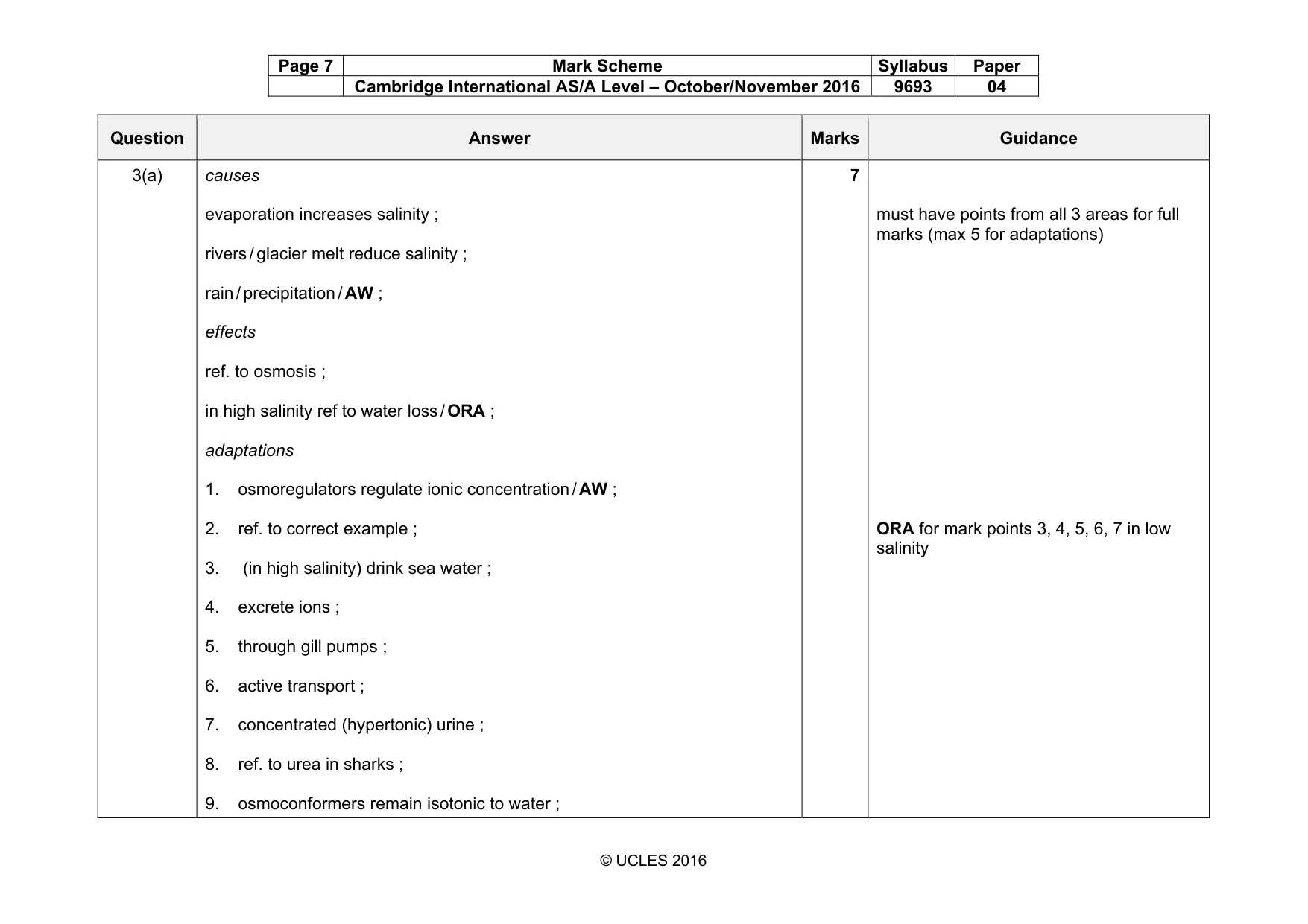
Page 7 Mark Scheme Syllabus Paper Cambridge International AS/A Level – October/November 2016 9693 04 © UCLES 2016 Question Answer Marks Guidance 3(a) causes evaporation increases salinity ; rivers / glacier melt reduce salinity ; rain / precipitation / AW ; effects ref. to osmosis ; in high salinity ref to water loss / ORA ; adaptations 1. osmoregulators regulate ionic concentration / AW ; 2. ref. to correct example ; 3. (in high salinity) drink sea water ; 4. excrete ions ; 5. through gill pumps ; 6. active transport ; 7. concentrated (hypertonic) urine ; 8. ref. to urea in sharks ; 9. osmoconformers remain isotonic to water ; 7 must have points from all 3 areas for full marks (max 5 for adaptations) ORA for mark points 3, 4, 5, 6, 7 in low salinity
Mark scheme, page 8
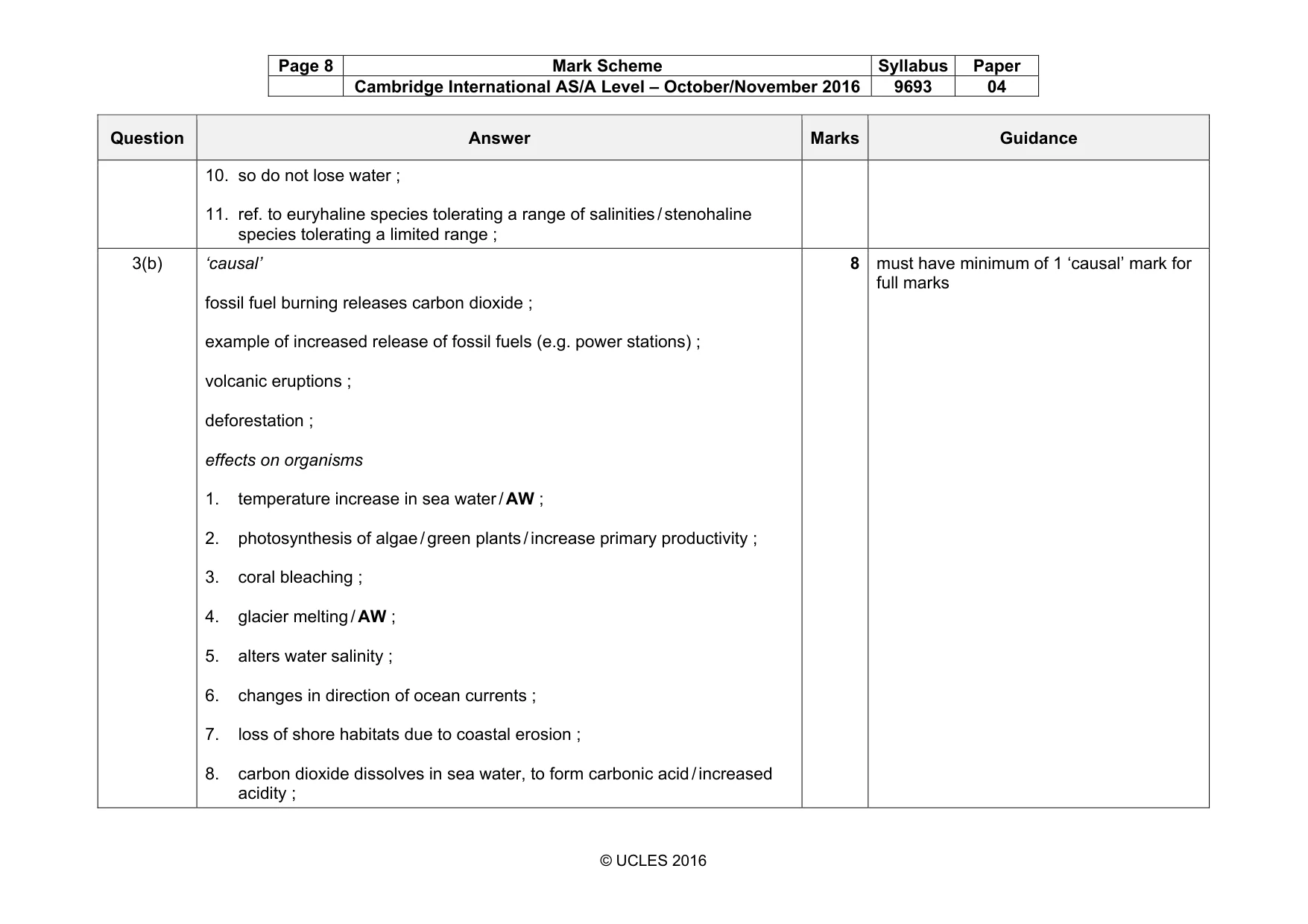
Page 8 Mark Scheme Syllabus Paper Cambridge International AS/A Level – October/November 2016 9693 04 © UCLES 2016 Question Answer Marks Guidance 10. so do not lose water ; 11. ref. to euryhaline species tolerating a range of salinities / stenohaline species tolerating a limited range ; 3(b) ‘causal’ fossil fuel burning releases carbon dioxide ; example of increased release of fossil fuels (e.g. power stations) ; volcanic eruptions ; deforestation ; effects on organisms 1. temperature increase in sea water / AW ; 2. photosynthesis of algae / green plants / increase primary productivity ; 3. coral bleaching ; 4. glacier melting / AW ; 5. alters water salinity ; 6. changes in direction of ocean currents ; 7. loss of shore habitats due to coastal erosion ; 8. carbon dioxide dissolves in sea water, to form carbonic acid / increased acidity ; 8 must have minimum of 1 ‘causal’ mark for full marks
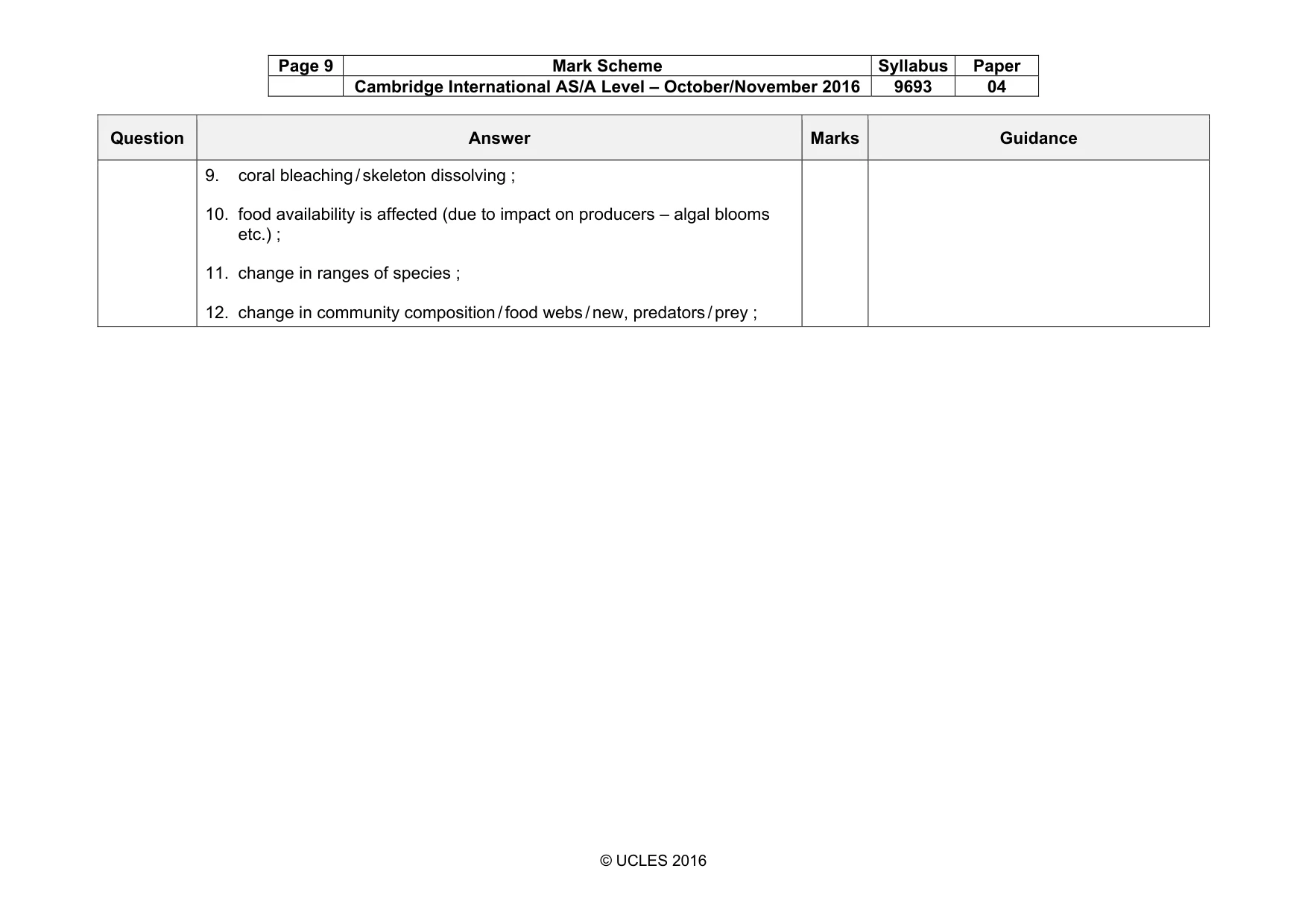
Mark scheme, page 9
Page 9 Mark Scheme Syllabus Paper Cambridge International AS/A Level – October/November 2016 9693 04 © UCLES 2016 Question Answer Marks Guidance 9. coral bleaching / skeleton dissolving ; 10. food availability is affected (due to impact on producers – algal blooms etc.) ; 11. change in ranges of species ; 12. change in community composition / food webs / new, predators / prey ;
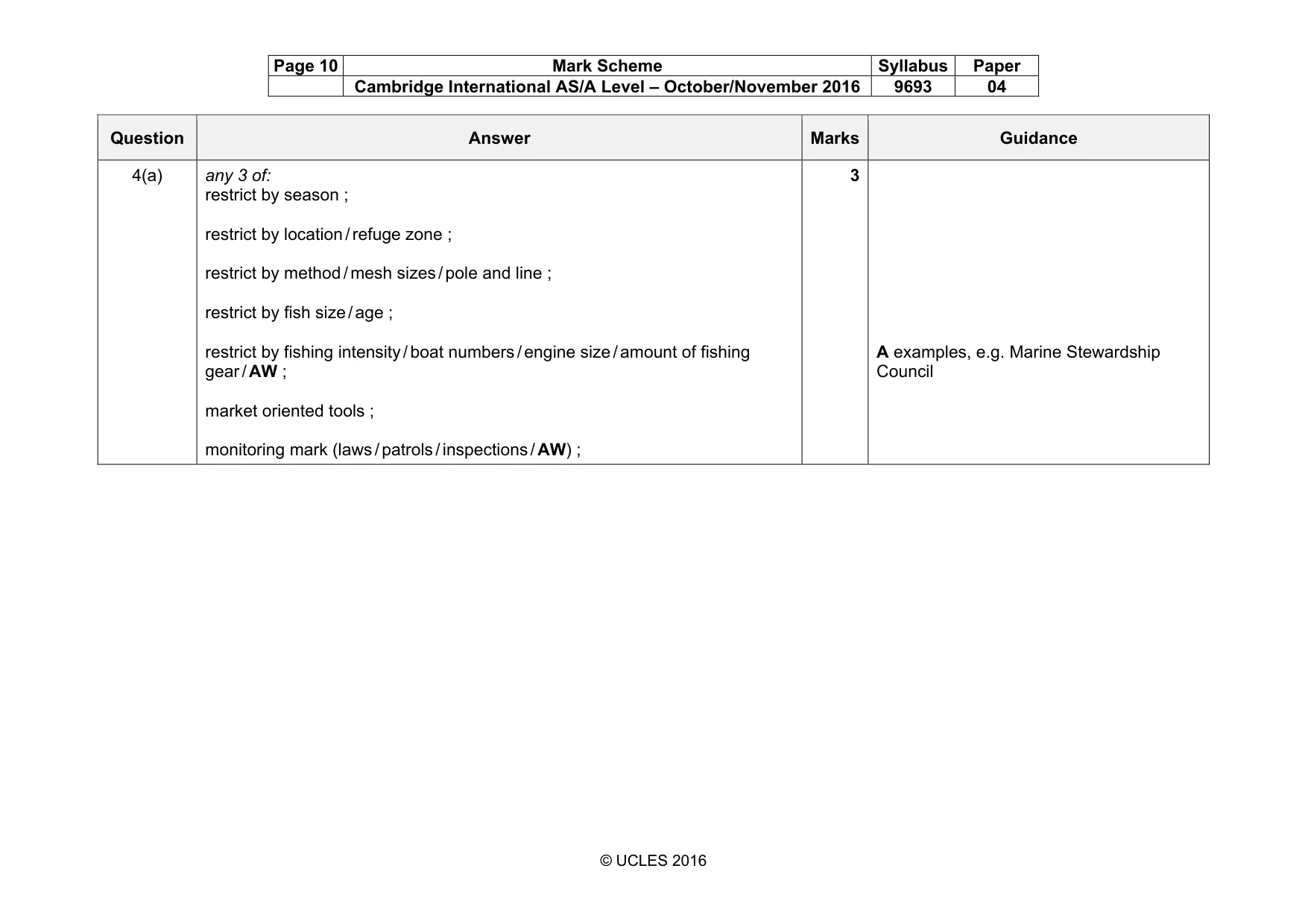
Mark scheme, page 10
Page 10 Mark Scheme Syllabus Paper Cambridge International AS/A Level – October/November 2016 9693 04 © UCLES 2016 Question Answer Marks Guidance 4(a) any 3 of: restrict by season ; restrict by location / refuge zone ; restrict by method / mesh sizes / pole and line ; restrict by fish size / age ; restrict by fishing intensity / boat numbers / engine size / amount of fishing gear / AW ; market oriented tools ; monitoring mark (laws / patrols / inspections / AW) ; 3 A examples, e.g. Marine Stewardship Council
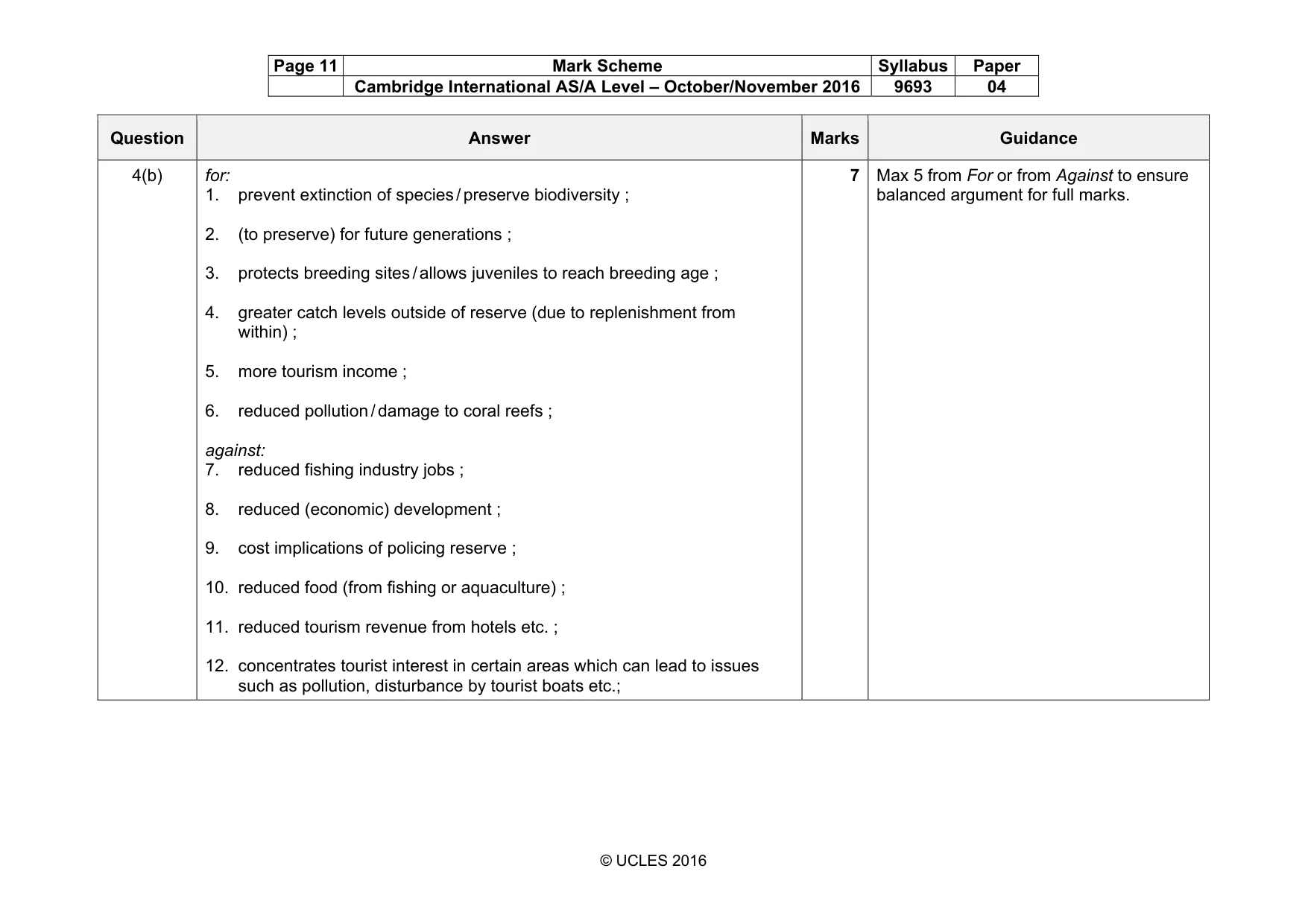
Mark scheme, page 11
Page 11 Mark Scheme Syllabus Paper Cambridge International AS/A Level – October/November 2016 9693 04 © UCLES 2016 Question Answer Marks Guidance 4(b) for: 1. prevent extinction of species / preserve biodiversity ; 2. (to preserve) for future generations ; 3. protects breeding sites / allows juveniles to reach breeding age ; 4. greater catch levels outside of reserve (due to replenishment from within) ; 5. more tourism income ; 6. reduced pollution / damage to coral reefs ; against: 7. reduced fishing industry jobs ; 8. reduced (economic) development ; 9. cost implications of policing reserve ; 10. reduced food (from fishing or aquaculture) ; 11. reduced tourism revenue from hotels etc. ; 12. concentrates tourist interest in certain areas which can lead to issues such as pollution, disturbance by tourist boats etc.; 7 Max 5 from For or from Against to ensure balanced argument for full marks.
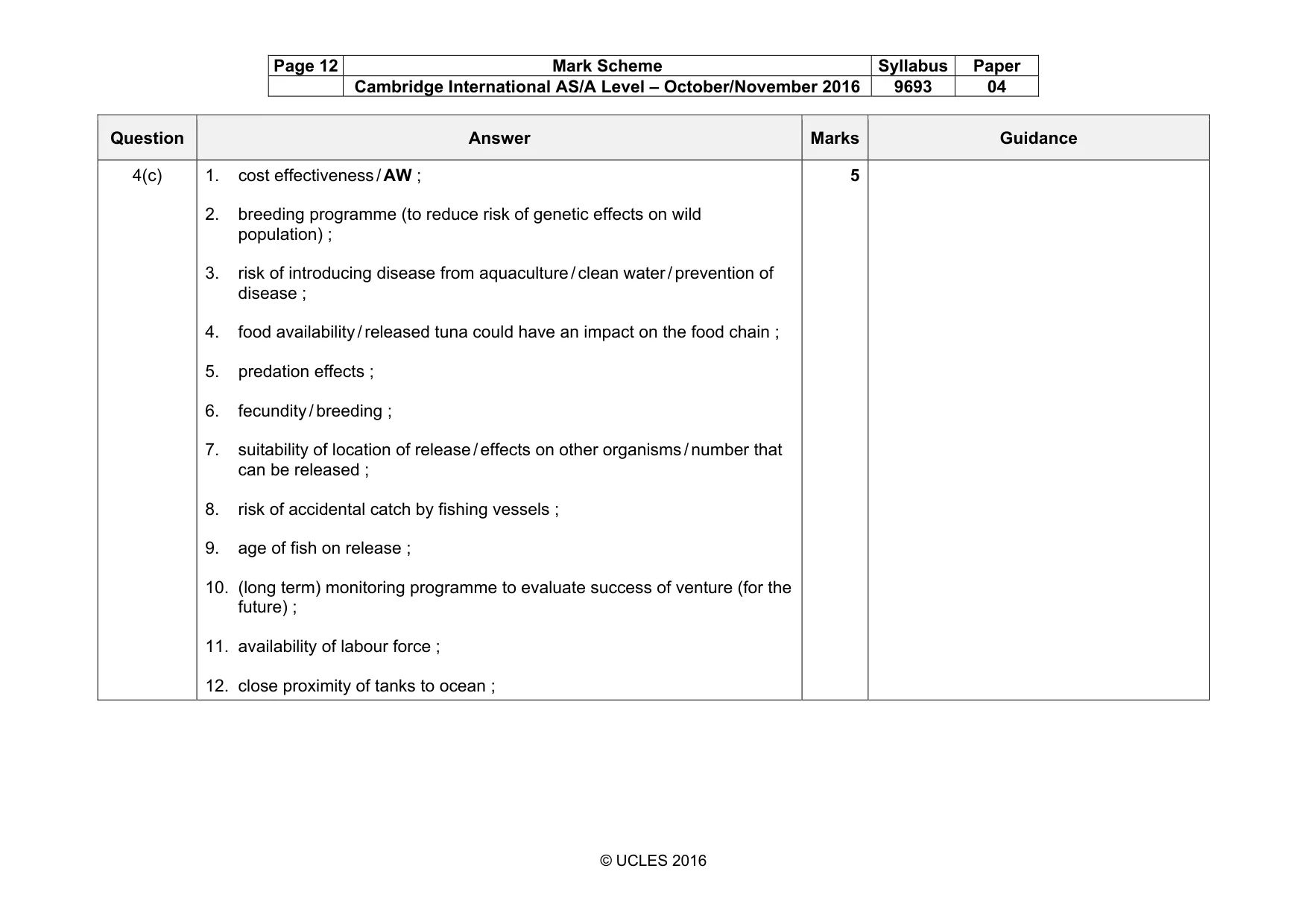
Mark scheme, page 12
Page 12 Mark Scheme Syllabus Paper Cambridge International AS/A Level – October/November 2016 9693 04 © UCLES 2016 Question Answer Marks Guidance 4(c) 1. cost effectiveness / AW ; 2. breeding programme (to reduce risk of genetic effects on wild population) ; 3. risk of introducing disease from aquaculture / clean water / prevention of disease ; 4. food availability / released tuna could have an impact on the food chain ; 5. predation effects ; 6. fecundity / breeding ; 7. suitability of location of release / effects on other organisms / number that can be released ; 8. risk of accidental catch by fishing vessels ; 9. age of fish on release ; 10. (long term) monitoring programme to evaluate success of venture (for the future) ; 11. availability of labour force ; 12. close proximity of tanks to ocean ; 5
What you needed in this session
Cambridge’s own grade thresholds for 2016 Oct/Nov, Paper 4 · Variant 1. A higher threshold means an easier paper — the bar moves with how the cohort did.