Cambridge A Level Marine Science 9693 — 2014 May/June Paper 4 · Variant 1
9693/41/M/J/14 · 50 marks · ≈56 min
The question paper and its mark scheme, free to read here and free to download. This is Cambridge’s own paper, exactly as it was sat.
Question paper12 pages
Mark scheme7 pages
Answers below. Sit the paper first if you are practising.
Paper as text
Question paper, page 1
This document consists of 12 printed pages. DC (CW/SW) 84353/6 © UCLES 2014 [Turn over Cambridge International Examinations Cambridge International Advanced Subsidiary and Advanced Level * 3 6 9 5 5 9 3 7 8 4 * MARINE SCIENCE 9693/04 Data-Handling and Free-Response May/June 2014 Paper 4 1 hour 15 minutes Candidates answer on the Question Paper. No Additional Materials are required. READ THESE INSTRUCTIONS FIRST Write your Centre number, candidate number and name on all the work you hand in. Write in dark blue or black pen. You may use an HB pencil for any diagrams or graphs. Do not use staples, paper clips, glue or correction fluid. DO NOT WRITE IN ANY BARCODES. Answer all questions. Section A Answer all questions. Write your answers in the spaces provided on the question paper. Section B Answer all questions. Write your answers in the spaces provided on the question paper. Electronic calculators may be used. You may lose marks if you do not show your working or if you do not use appropriate units. At the end of the examination, fasten all your work securely together. The number of marks is given in brackets [ ] at the end of each question or part question. For Examiner’s Use 1 2 3 4 Total
Question paper, page 2
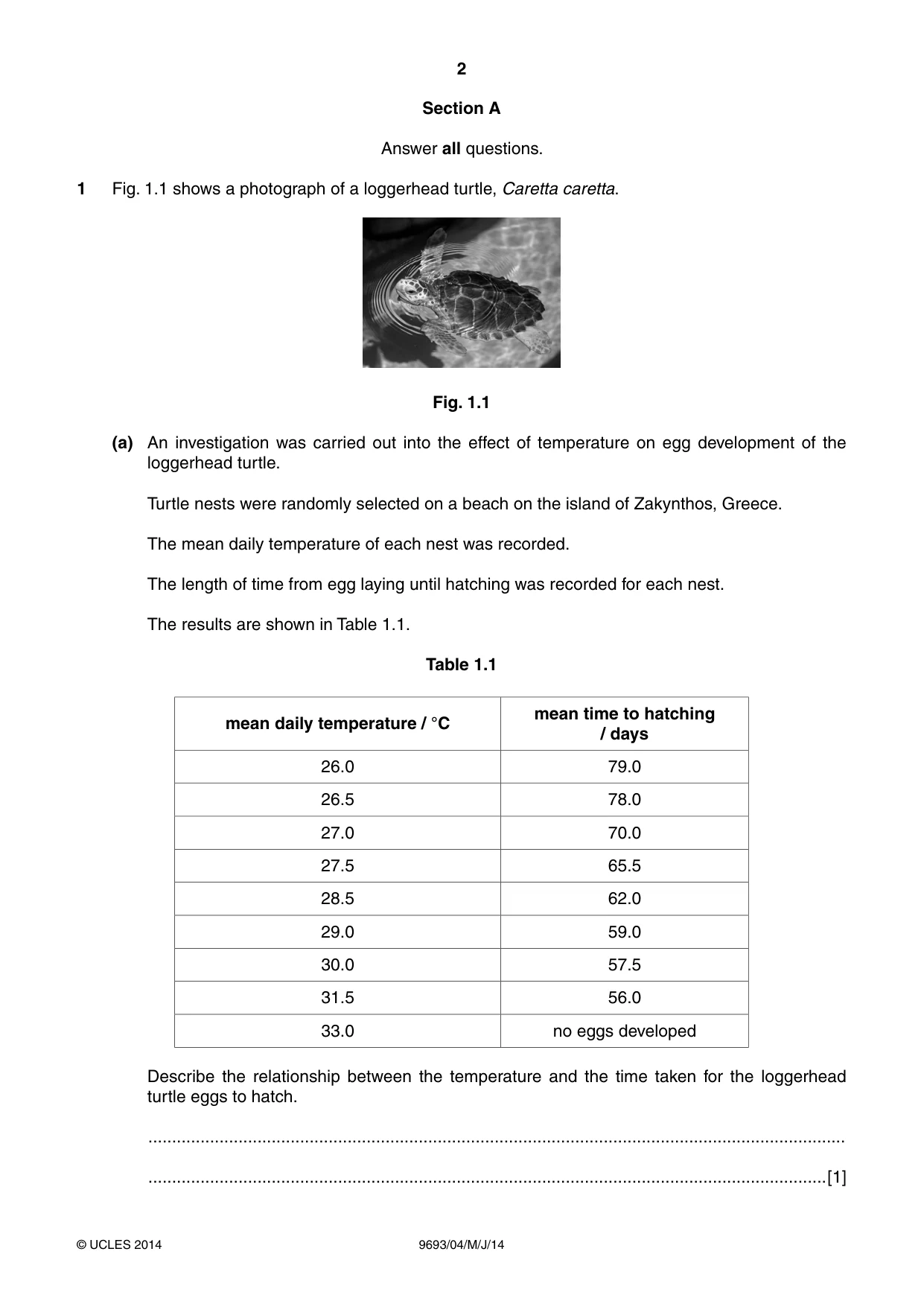
2 9693/04/M/J/14 © UCLES 2014 Section A Answer all questions. 1 Fig. 1.1 shows a photograph of a loggerhead turtle, Caretta caretta. Fig. 1.1 (a) An investigation was carried out into the effect of temperature on egg development of the loggerhead turtle. Turtle nests were randomly selected on a beach on the island of Zakynthos, Greece. The mean daily temperature of each nest was recorded. The length of time from egg laying until hatching was recorded for each nest. The results are shown in Table 1.1. Table 1.1 mean daily temperature / °C mean time to hatching / days 26.0 79.0 26.5 78.0 27.0 70.0 27.5 65.5 28.5 62.0 29.0 59.0 30.0 57.5 31.5 56.0 33.0 no eggs developed Describe the relationship between the temperature and the time taken for the loggerhead turtle eggs to hatch. … …[1]
Question paper, page 3
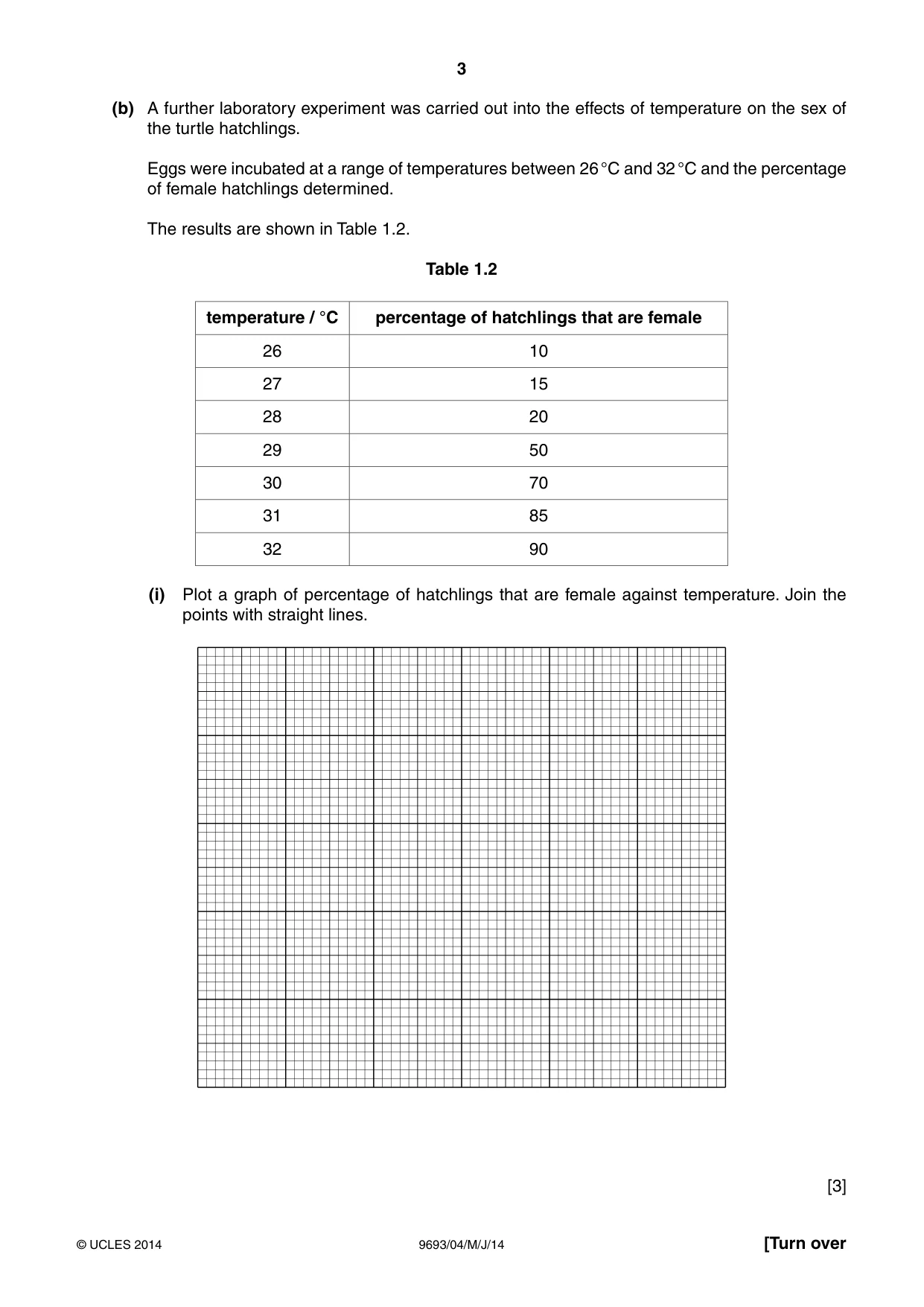
3 9693/04/M/J/14 © UCLES 2014 [Turn over (b) A further laboratory experiment was carried out into the effects of temperature on the sex of the turtle hatchlings. Eggs were incubated at a range of temperatures between 26 °C and 32 °C and the percentage of female hatchlings determined. The results are shown in Table 1.2. Table 1.2 temperature / °C percentage of hatchlings that are female 26 10 27 15 28 20 29 50 30 70 31 85 32 90 (i) Plot a graph of percentage of hatchlings that are female against temperature. Join the points with straight lines. [3]
Question paper, page 4
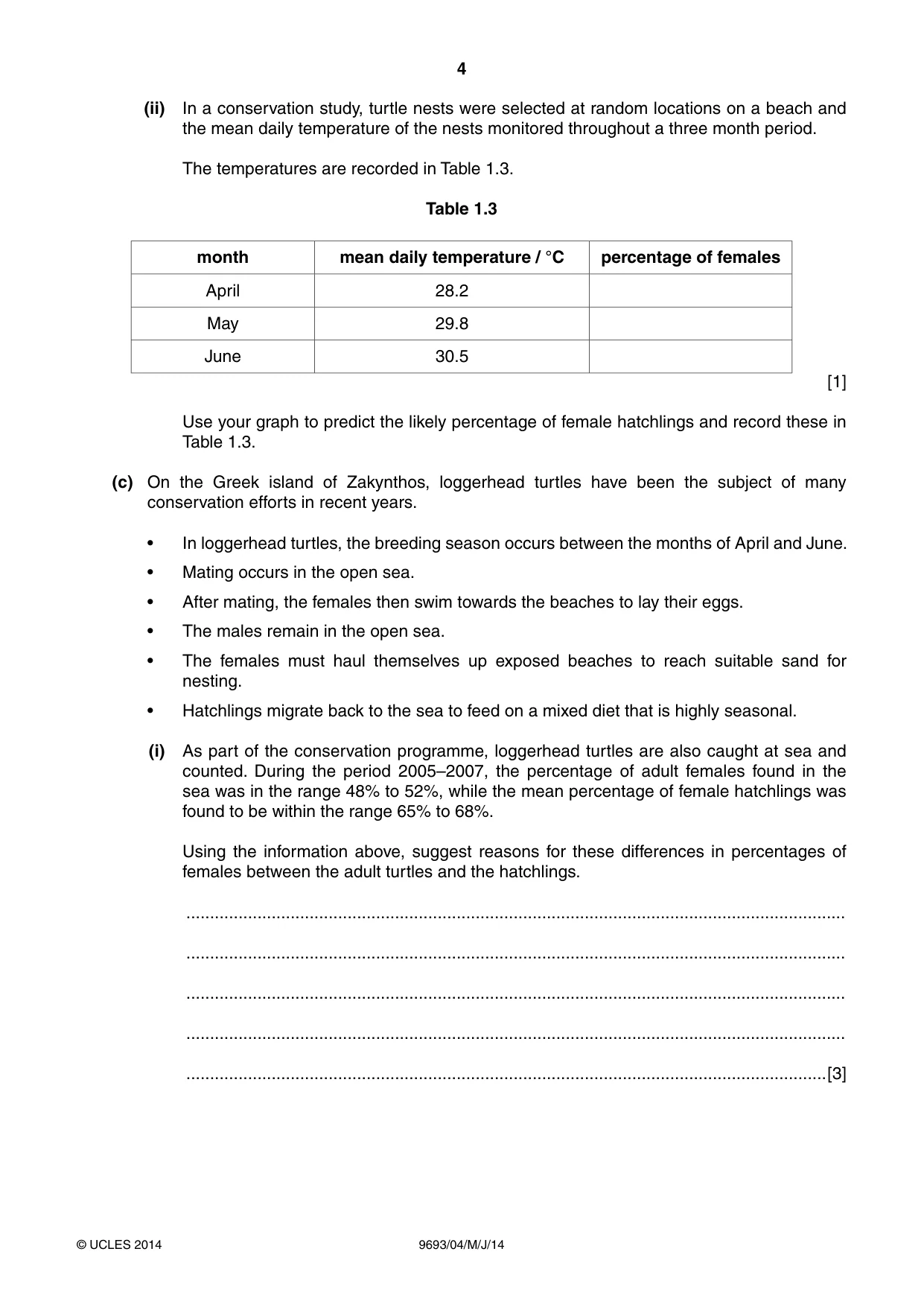
4 9693/04/M/J/14 © UCLES 2014 (ii) In a conservation study, turtle nests were selected at random locations on a beach and the mean daily temperature of the nests monitored throughout a three month period. The temperatures are recorded in Table 1.3. Table 1.3 month mean daily temperature / °C percentage of females April 28.2 May 29.8 June 30.5 [1] Use your graph to predict the likely percentage of female hatchlings and record these in Table 1.3. (c) On the Greek island of Zakynthos, loggerhead turtles have been the subject of many conservation efforts in recent years. • In loggerhead turtles, the breeding season occurs between the months of April and June. • Mating occurs in the open sea. • After mating, the females then swim towards the beaches to lay their eggs. • The males remain in the open sea. • The females must haul themselves up exposed beaches to reach suitable sand for nesting. • Hatchlings migrate back to the sea to feed on a mixed diet that is highly seasonal. (i) As part of the conservation programme, loggerhead turtles are also caught at sea and counted. During the period 2005–2007, the percentage of adult females found in the sea was in the range 48% to 52%, while the mean percentage of female hatchlings was found to be within the range 65% to 68%. Using the information above, suggest reasons for these differences in percentages of females between the adult turtles and the hatchlings. … … … … …[3]
Question paper, page 5
5 9693/04/M/J/14 © UCLES 2014 [Turn over (ii) It has been suggested that due to global warming the Earth’s mean temperature could rise by up to 2 °C over the next 50 years. Use Tables 1.1, 1.2 and your graph to suggest and explain how this could cause a decline in loggerhead turtle population. … … … … … … … … … …[4] [Total: 12]
Question paper, page 6
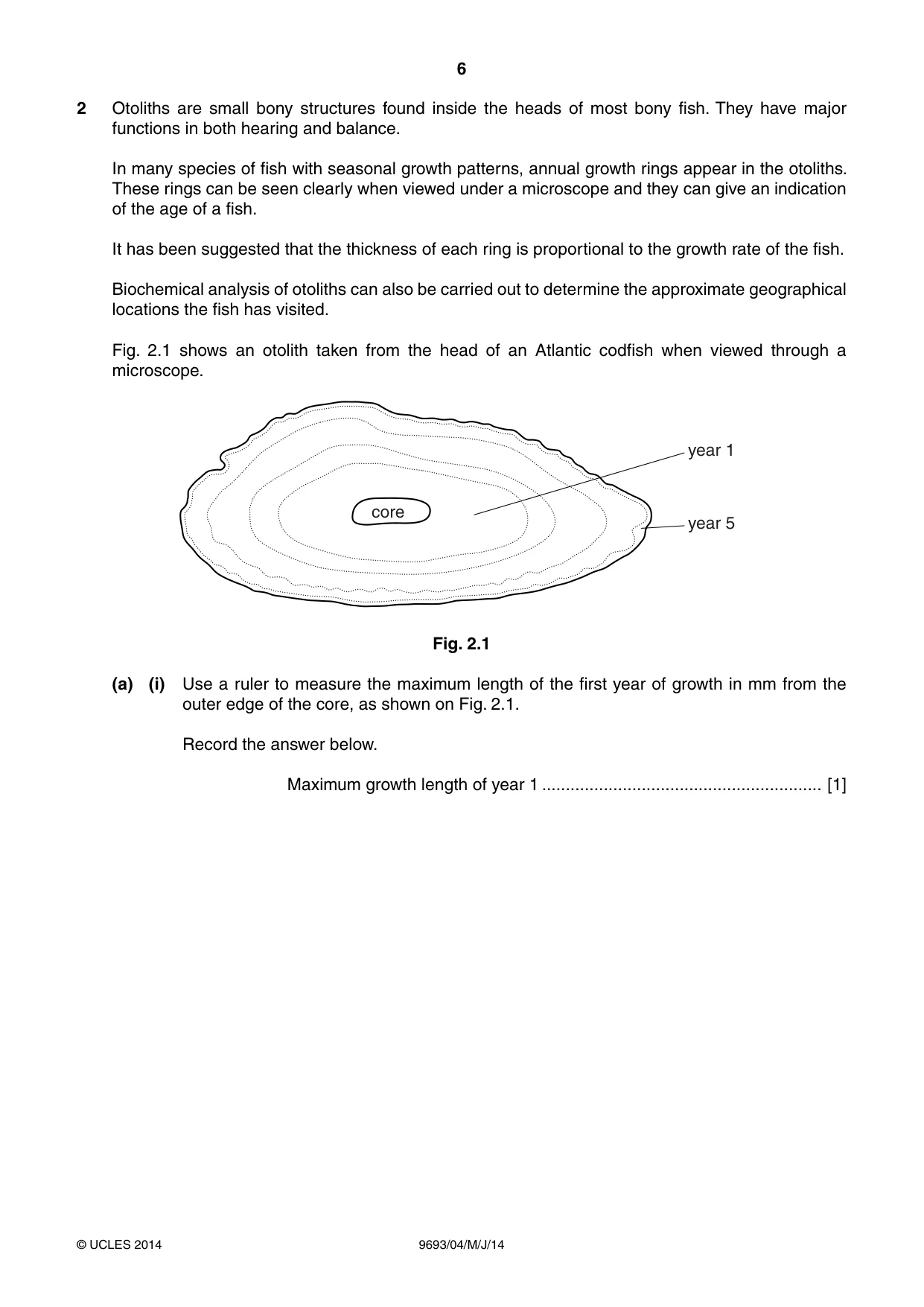
6 9693/04/M/J/14 © UCLES 2014 2 Otoliths are small bony structures found inside the heads of most bony fish. They have major functions in both hearing and balance. In many species of fish with seasonal growth patterns, annual growth rings appear in the otoliths. These rings can be seen clearly when viewed under a microscope and they can give an indication of the age of a fish. It has been suggested that the thickness of each ring is proportional to the growth rate of the fish. Biochemical analysis of otoliths can also be carried out to determine the approximate geographical locations the fish has visited. Fig. 2.1 shows an otolith taken from the head of an Atlantic codfish when viewed through a microscope. core year 1 year 5 Fig. 2.1 (a) (i) Use a ruler to measure the maximum length of the first year of growth in mm from the outer edge of the core, as shown on Fig. 2.1. Record the answer below. Maximum growth length of year 1 … [1]
Question paper, page 7
7 9693/04/M/J/14 © UCLES 2014 [Turn over (ii) The magnification of the image in Fig. 2.1 is × 10. Using the formula below, calculate the actual length of year 1 growth as shown in the image in Fig. 2.1. magnification = image length actual length Actual length … [1] (b) Use Fig. 2.1 to compare the growth rate of the cod in year 1 with subsequent years. Suggest reasons for differences. … … … … … … … [2]
Question paper, page 8
8 9693/04/M/J/14 © UCLES 2014 (c) Fisheries monitoring programmes often make use of otolith data to assess the health of fish stocks. Suggest how this information can be used in these programmes. … … … … … … … … …[4] [Total: 8]
Question paper, page 9
9 9693/04/M/J/14 © UCLES 2014 [Turn over Section B Answer all questions. 3 (a) With reference to named examples, explain the meaning of each of the following terms. (i) euryhaline … … … …[2] (ii) osmoconformer … … … …[2] (b) Explain why marine fish need to regulate their water and ion content and describe how they do this. … … … … … … … … … … … … … … … …[6]
Question paper, page 10
10 9693/04/M/J/14 © UCLES 2014 (c) Describe the life cycle of the giant clam. … … … … … … … … … … … …[5] [Total: 15]
Question paper, page 11
11 9693/04/M/J/14 © UCLES 2014 [Turn over 4 (a) Green algae are found abundantly in surface waters. Red and brown algae are found at lower depths. Red and brown algae possess large concentrations of accessory pigments such as xanthophyll and phycobilin in addition to the chlorophylls. Green algae possess lower concentrations of xanthophylls and phycobilin. Suggest and explain reasons for the distribution of the different algae. … … … … … … … … … … … … … … … … … … … …[8]
Question paper, page 12
12 9693/04/M/J/14 © UCLES 2014 (b) Wild salmon only feed and grow at certain times of the year. It is now possible to genetically modify salmon so that they feed and grow all year round. Suggest advantages and disadvantages of farming genetically modified salmon. … … … … … … … … … … … … … … … …[7] [Total: 15] Copyright Acknowledgements: Question 1 © http://www.sciencephoto.com/media/378877/view Permission to reproduce items where third-party owned material protected by copyright is included has been sought and cleared where possible. Every reasonable effort has been made by the publisher (UCLES) to trace copyright holders, but if any items requiring clearance have unwittingly been included, the publisher will be pleased to make amends at the earliest possible opportunity. Cambridge International Examinations is part of the Cambridge Assessment Group. Cambridge Assessment is the brand name of University of Cambridge Local Examinations Syndicate (UCLES), which is itself a department of the University of Cambridge.
Mark scheme, page 1
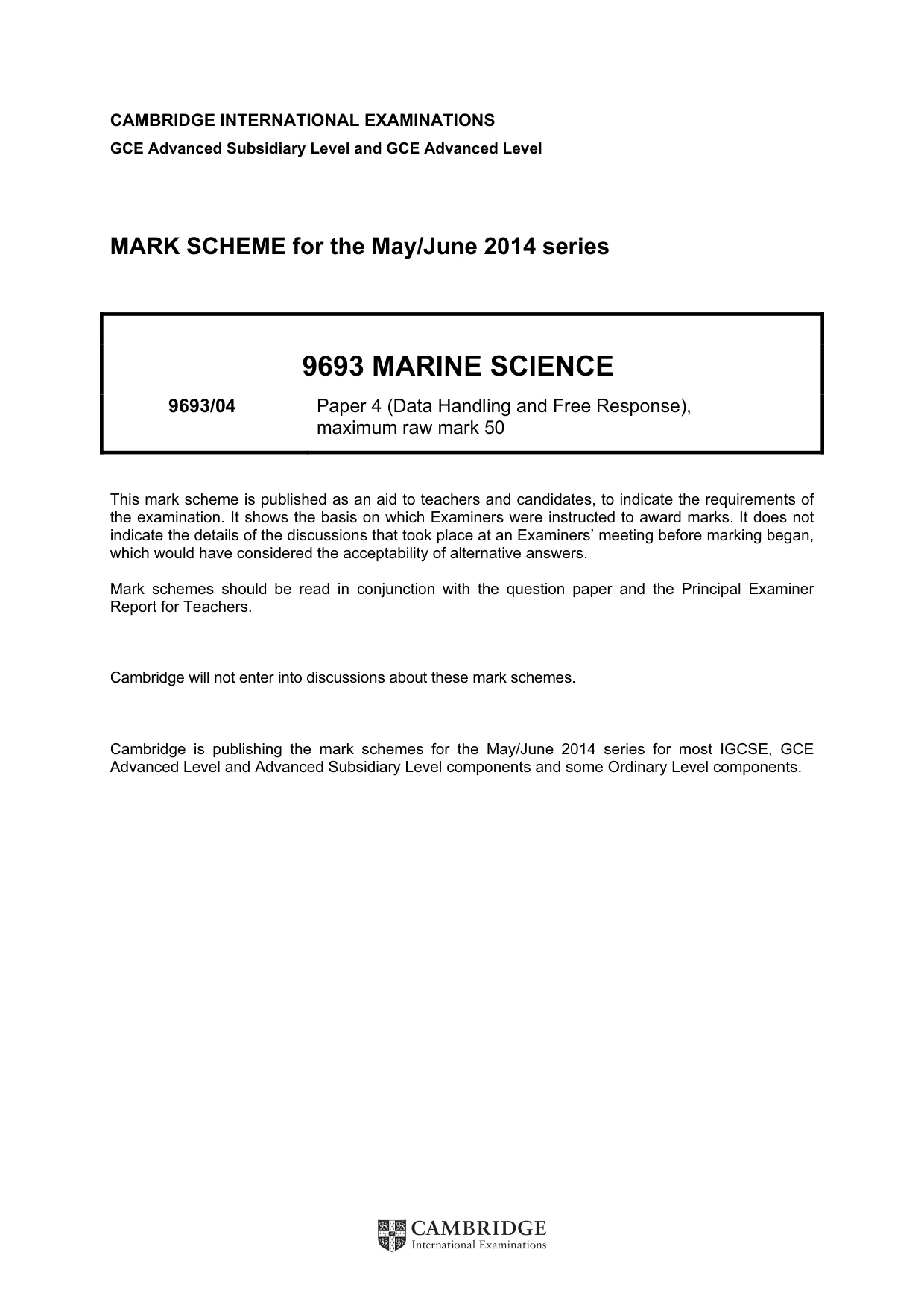
CAMBRIDGE INTERNATIONAL EXAMINATIONS GCE Advanced Subsidiary Level and GCE Advanced Level MARK SCHEME for the May/June 2014 series 9693 MARINE SCIENCE 9693/04 Paper 4 (Data Handling and Free Response), maximum raw mark 50 This mark scheme is published as an aid to teachers and candidates, to indicate the requirements of the examination. It shows the basis on which Examiners were instructed to award marks. It does not indicate the details of the discussions that took place at an Examiners’ meeting before marking began, which would have considered the acceptability of alternative answers. Mark schemes should be read in conjunction with the question paper and the Principal Examiner Report for Teachers. Cambridge will not enter into discussions about these mark schemes. Cambridge is publishing the mark schemes for the May/June 2014 series for most IGCSE, GCE Advanced Level and Advanced Subsidiary Level components and some Ordinary Level components.
Mark scheme, page 2
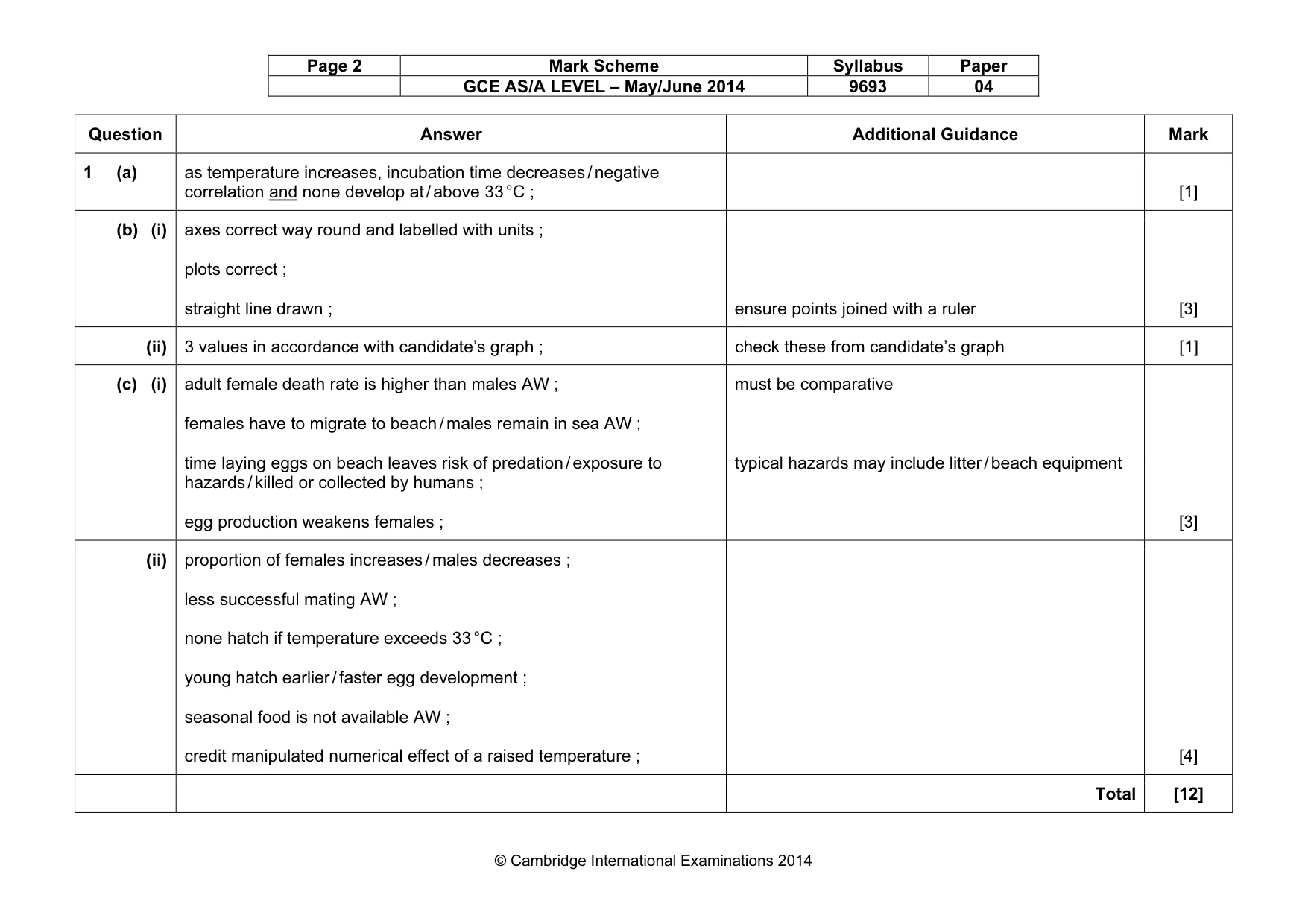
Page 2 Mark Scheme Syllabus Paper GCE AS/A LEVEL – May/June 2014 9693 04 © Cambridge International Examinations 2014 Question Answer Additional Guidance Mark 1 (a) as temperature increases, incubation time decreases / negative correlation and none develop at / above 33 °C ; [1] (b) (i) axes correct way round and labelled with units ; plots correct ; straight line drawn ; ensure points joined with a ruler [3] (ii) 3 values in accordance with candidate’s graph ; check these from candidate’s graph [1] (c) (i) adult female death rate is higher than males AW ; females have to migrate to beach / males remain in sea AW ; time laying eggs on beach leaves risk of predation / exposure to hazards / killed or collected by humans ; egg production weakens females ; must be comparative typical hazards may include litter / beach equipment [3] (ii) proportion of females increases / males decreases ; less successful mating AW ; none hatch if temperature exceeds 33 °C ; young hatch earlier / faster egg development ; seasonal food is not available AW ; credit manipulated numerical effect of a raised temperature ; [4] Total [12]
Mark scheme, page 3
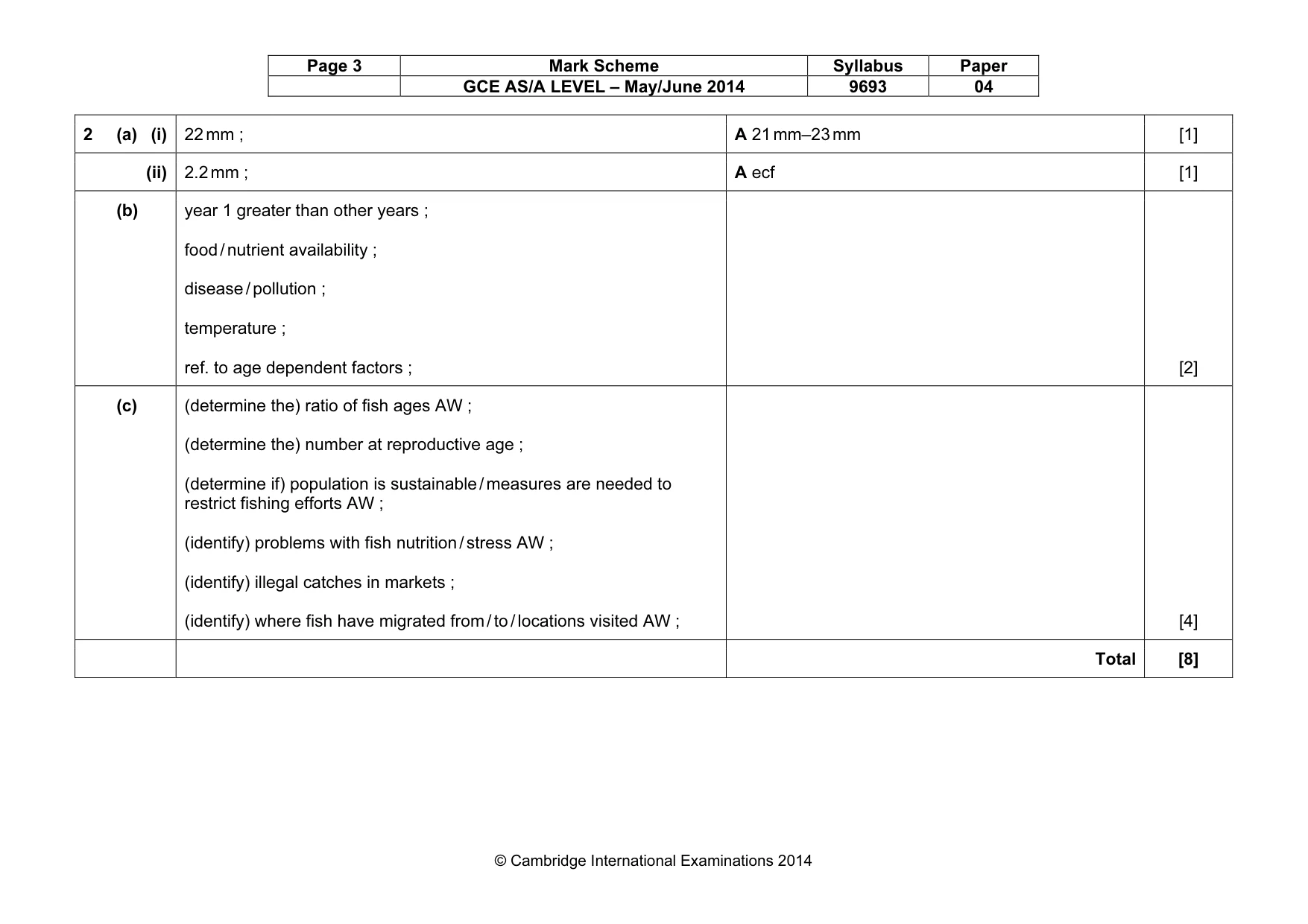
Page 3 Mark Scheme Syllabus Paper GCE AS/A LEVEL – May/June 2014 9693 04 © Cambridge International Examinations 2014 2 (a) (i) 22 mm ; A 21 mm–23 mm [1] (ii) 2.2 mm ; A ecf [1] (b) year 1 greater than other years ; food / nutrient availability ; disease / pollution ; temperature ; ref. to age dependent factors ; [2] (c) (determine the) ratio of fish ages AW ; (determine the) number at reproductive age ; (determine if) population is sustainable / measures are needed to restrict fishing efforts AW ; (identify) problems with fish nutrition / stress AW ; (identify) illegal catches in markets ; (identify) where fish have migrated from / to / locations visited AW ; [4] Total [8]
Mark scheme, page 4
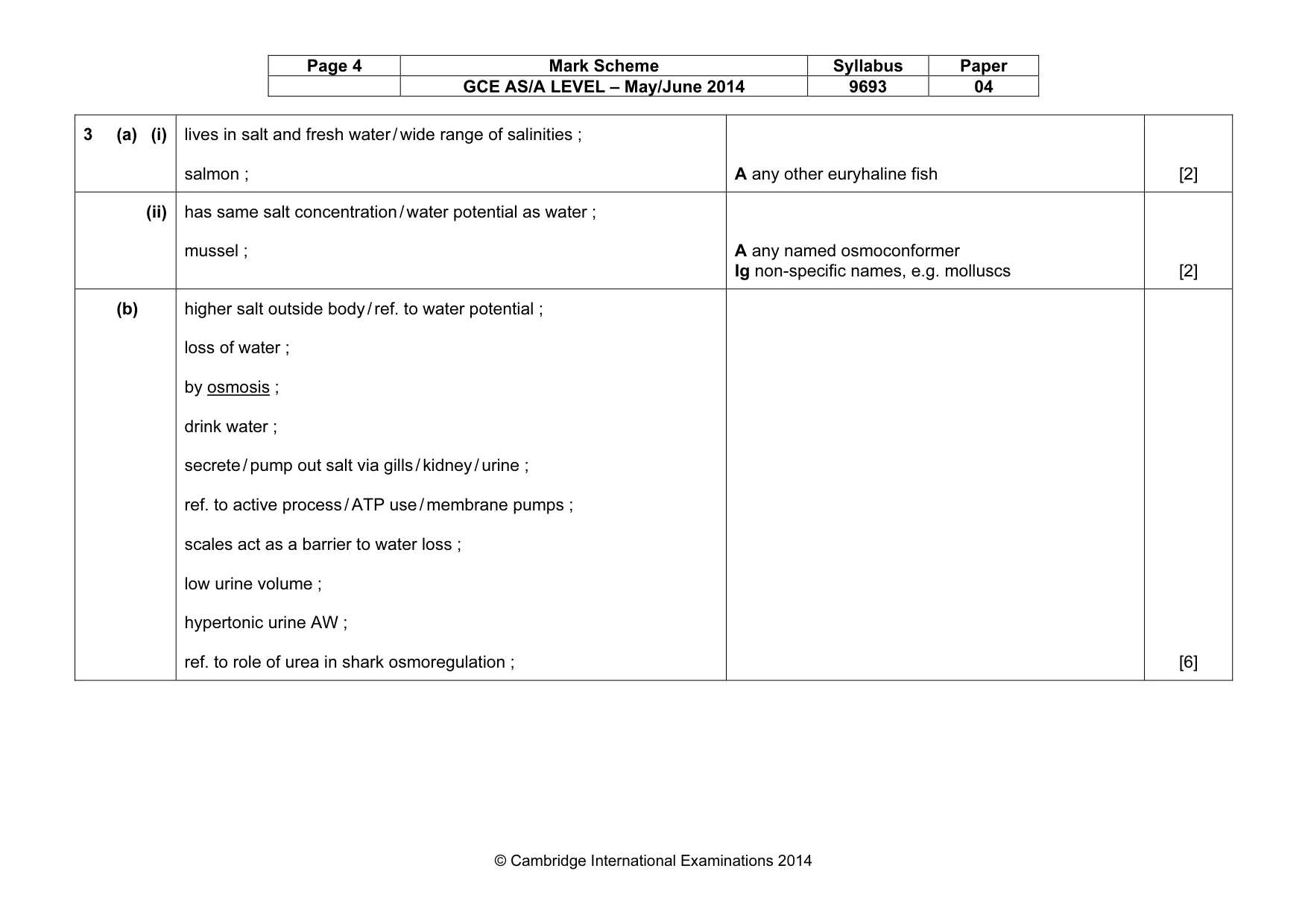
Page 4 Mark Scheme Syllabus Paper GCE AS/A LEVEL – May/June 2014 9693 04 © Cambridge International Examinations 2014 3 (a) (i) lives in salt and fresh water / wide range of salinities ; salmon ; A any other euryhaline fish [2] (ii) has same salt concentration / water potential as water ; mussel ; A any named osmoconformer Ig non-specific names, e.g. molluscs [2] (b) higher salt outside body / ref. to water potential ; loss of water ; by osmosis ; drink water ; secrete / pump out salt via gills / kidney / urine ; ref. to active process / ATP use / membrane pumps ; scales act as a barrier to water loss ; low urine volume ; hypertonic urine AW ; ref. to role of urea in shark osmoregulation ; [6]
Mark scheme, page 5
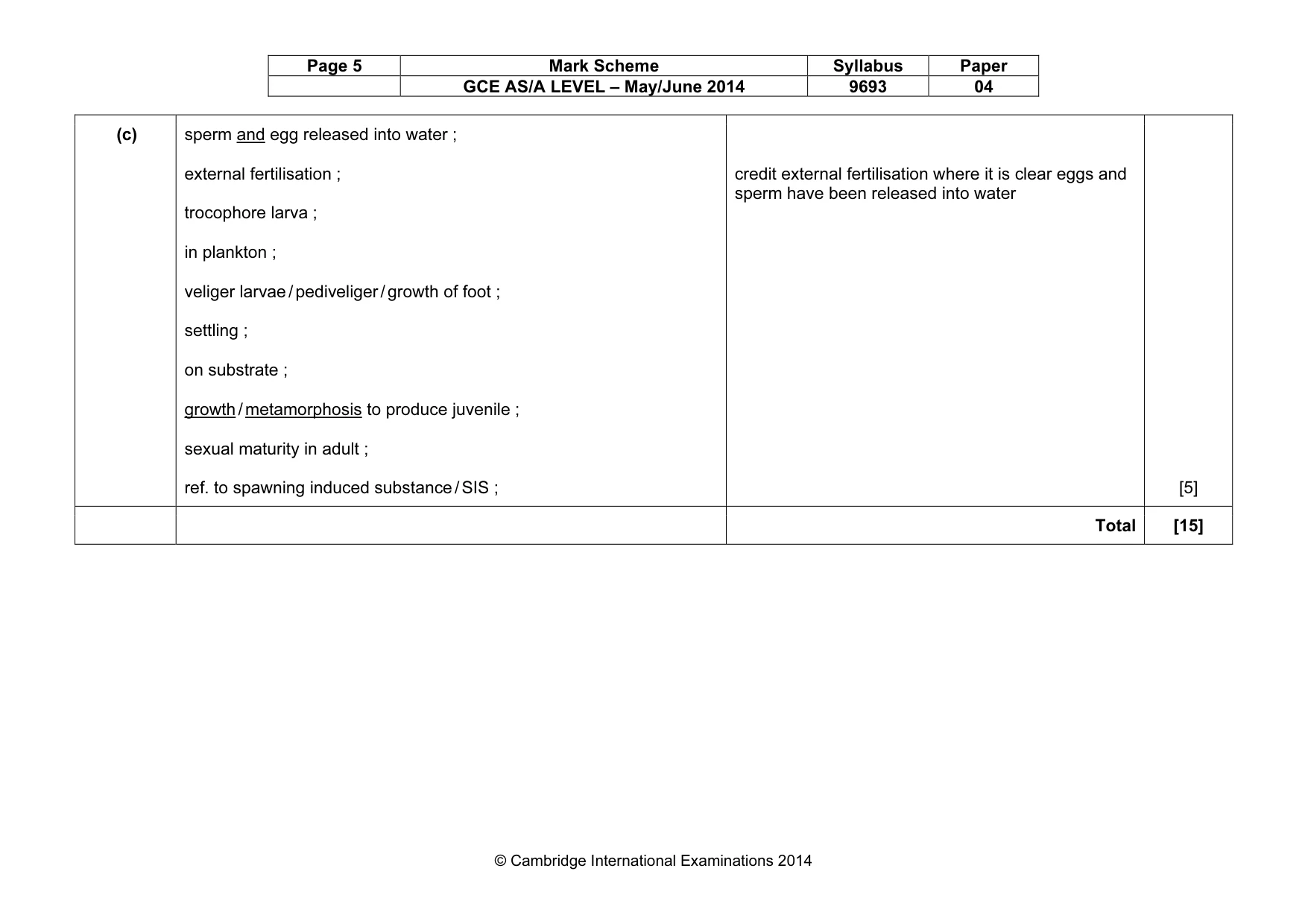
Page 5 Mark Scheme Syllabus Paper GCE AS/A LEVEL – May/June 2014 9693 04 © Cambridge International Examinations 2014 (c) sperm and egg released into water ; external fertilisation ; trocophore larva ; in plankton ; veliger larvae / pediveliger / growth of foot ; settling ; on substrate ; growth / metamorphosis to produce juvenile ; sexual maturity in adult ; ref. to spawning induced substance / SIS ; credit external fertilisation where it is clear eggs and sperm have been released into water [5] Total [15]
Mark scheme, page 6
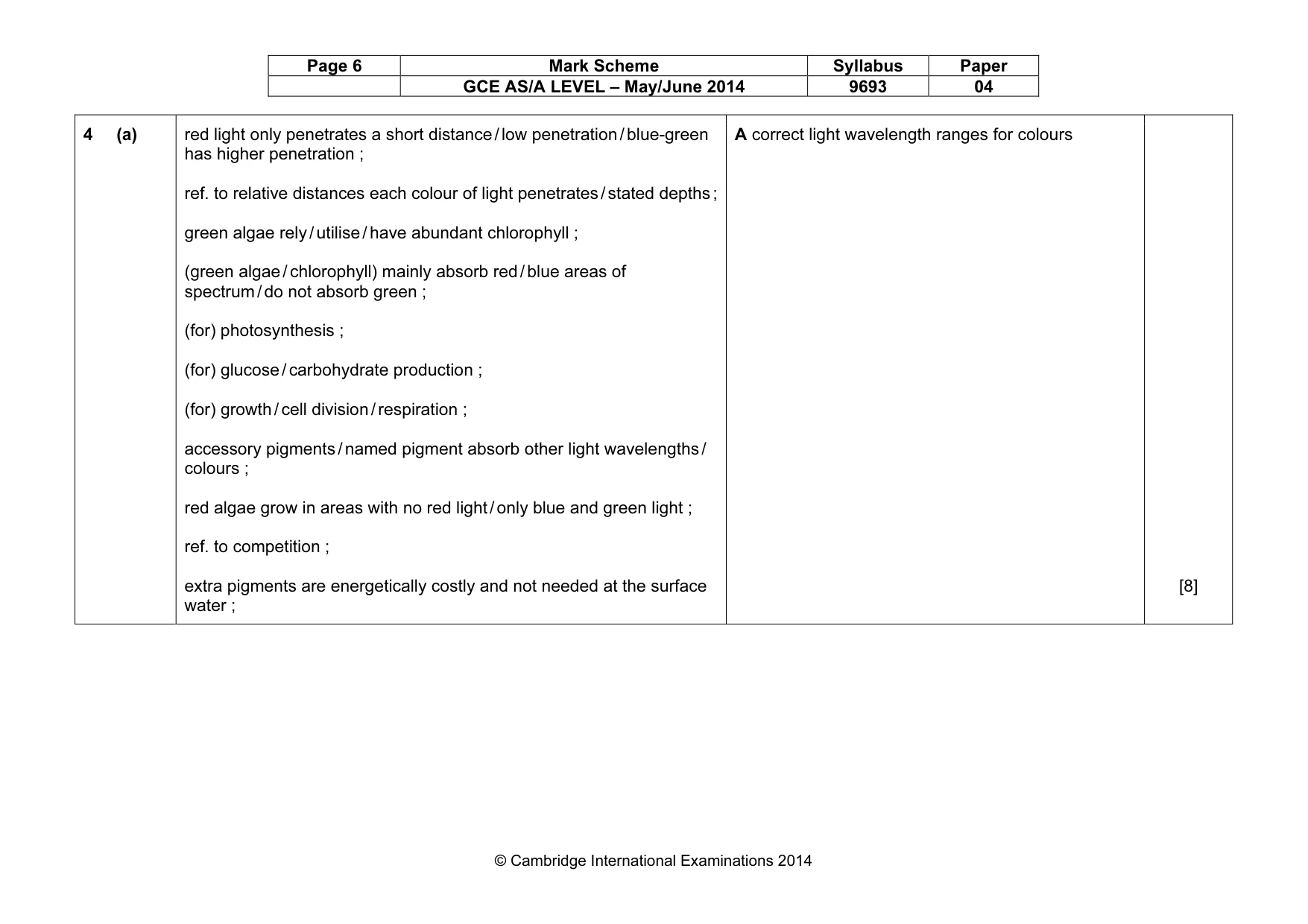
Page 6 Mark Scheme Syllabus Paper GCE AS/A LEVEL – May/June 2014 9693 04 © Cambridge International Examinations 2014 4 (a) red light only penetrates a short distance / low penetration / blue-green has higher penetration ; ref. to relative distances each colour of light penetrates / stated depths ; green algae rely / utilise / have abundant chlorophyll ; (green algae / chlorophyll) mainly absorb red / blue areas of spectrum / do not absorb green ; (for) photosynthesis ; (for) glucose / carbohydrate production ; (for) growth / cell division / respiration ; accessory pigments / named pigment absorb other light wavelengths / colours ; red algae grow in areas with no red light / only blue and green light ; ref. to competition ; extra pigments are energetically costly and not needed at the surface water ; A correct light wavelength ranges for colours [8]
Mark scheme, page 7
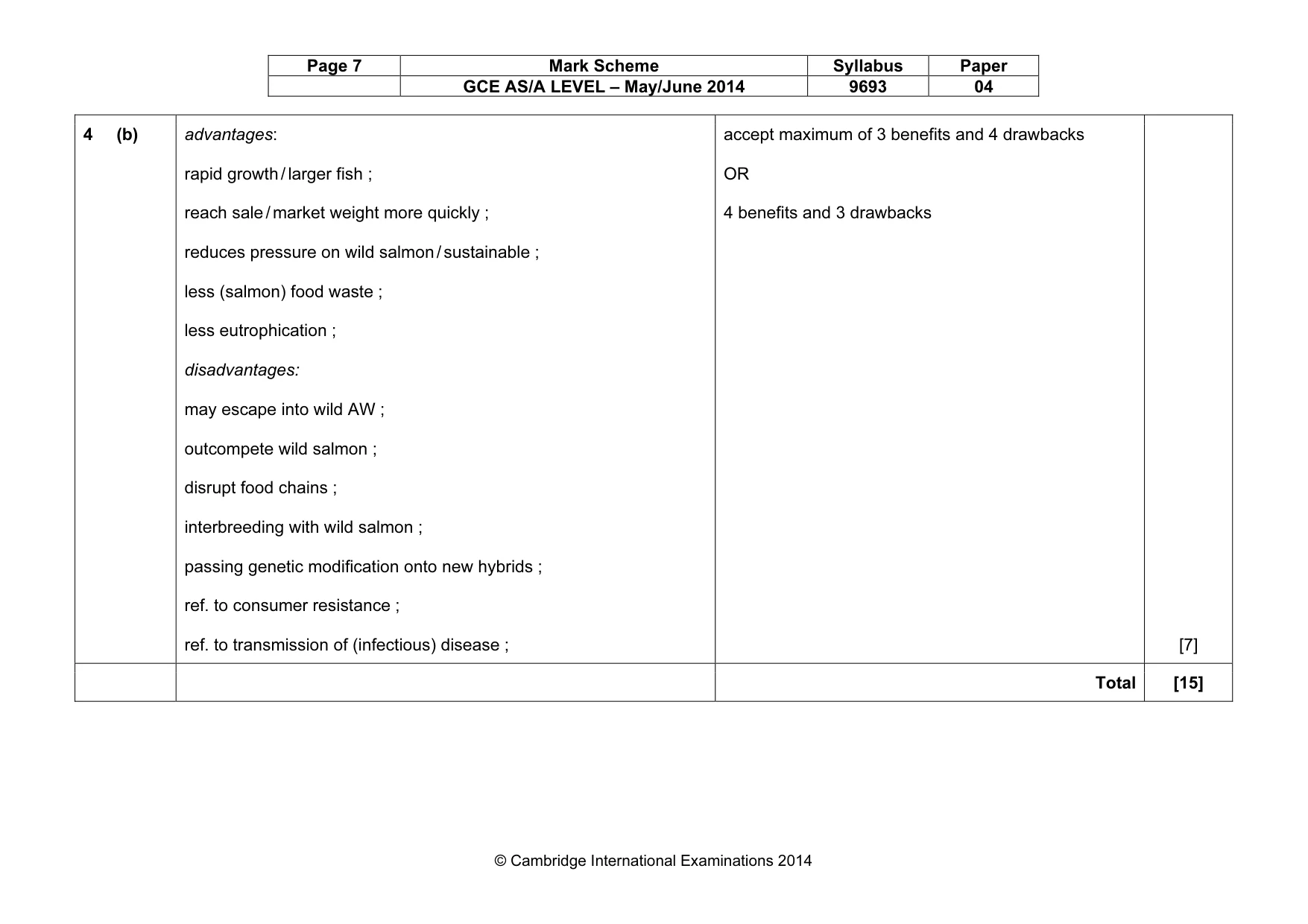
Page 7 Mark Scheme Syllabus Paper GCE AS/A LEVEL – May/June 2014 9693 04 © Cambridge International Examinations 2014 4 (b) advantages: rapid growth / larger fish ; reach sale / market weight more quickly ; reduces pressure on wild salmon / sustainable ; less (salmon) food waste ; less eutrophication ; disadvantages: may escape into wild AW ; outcompete wild salmon ; disrupt food chains ; interbreeding with wild salmon ; passing genetic modification onto new hybrids ; ref. to consumer resistance ; ref. to transmission of (infectious) disease ; accept maximum of 3 benefits and 4 drawbacks OR 4 benefits and 3 drawbacks [7] Total [15]
What you needed in this session
Cambridge’s own grade thresholds for 2014 May/June, Paper 4 · Variant 1. A higher threshold means an easier paper — the bar moves with how the cohort did.