Cambridge A Level Chemistry 9701 — 2018 Oct/Nov Paper 5 · Variant 3
9701/53/O/N/18 · 2 questions · 30 marks · ≈34 min
The question paper and its mark scheme, free to read here and free to download. This is Cambridge’s own paper, exactly as it was sat.
Question paper12 pages
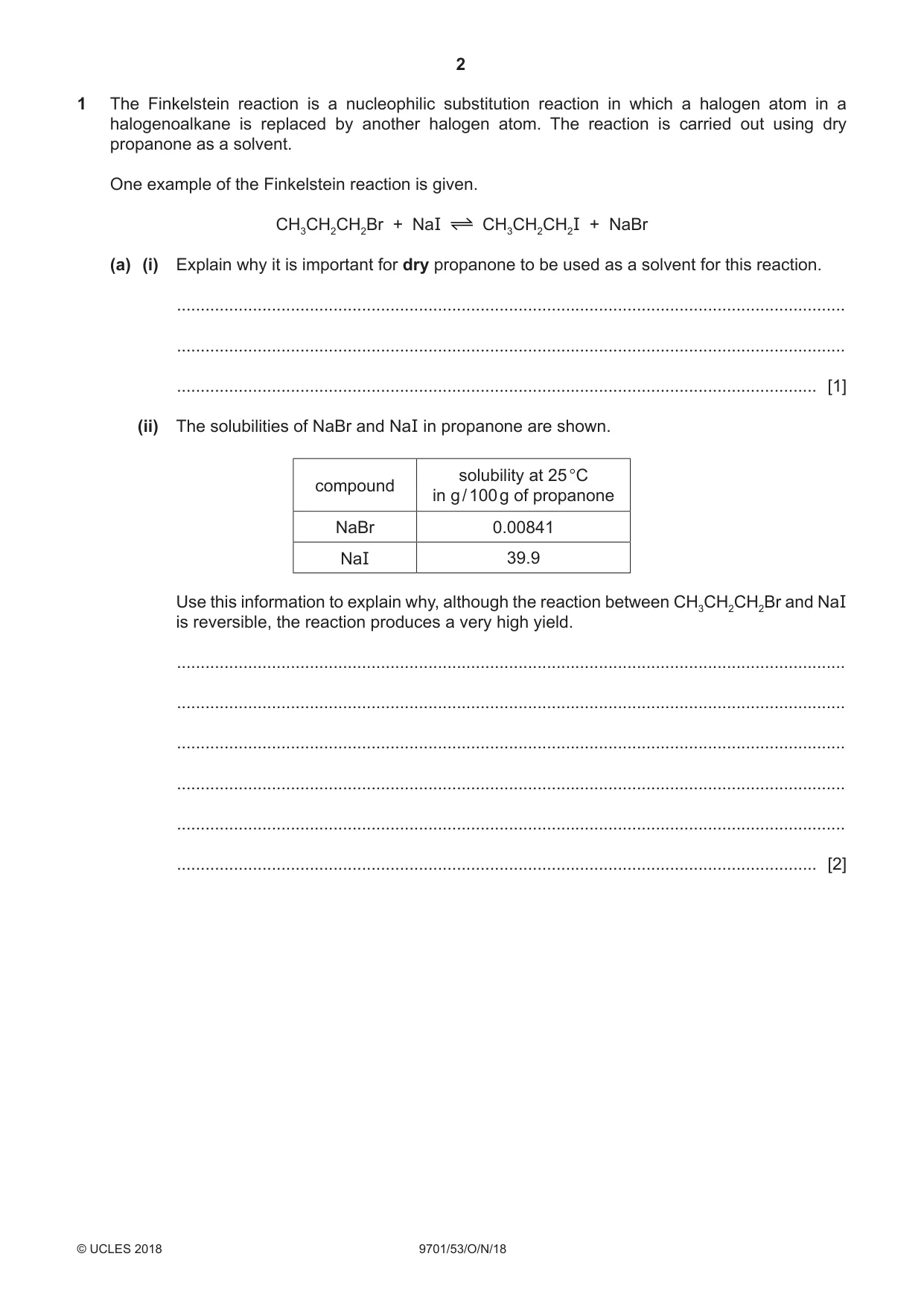
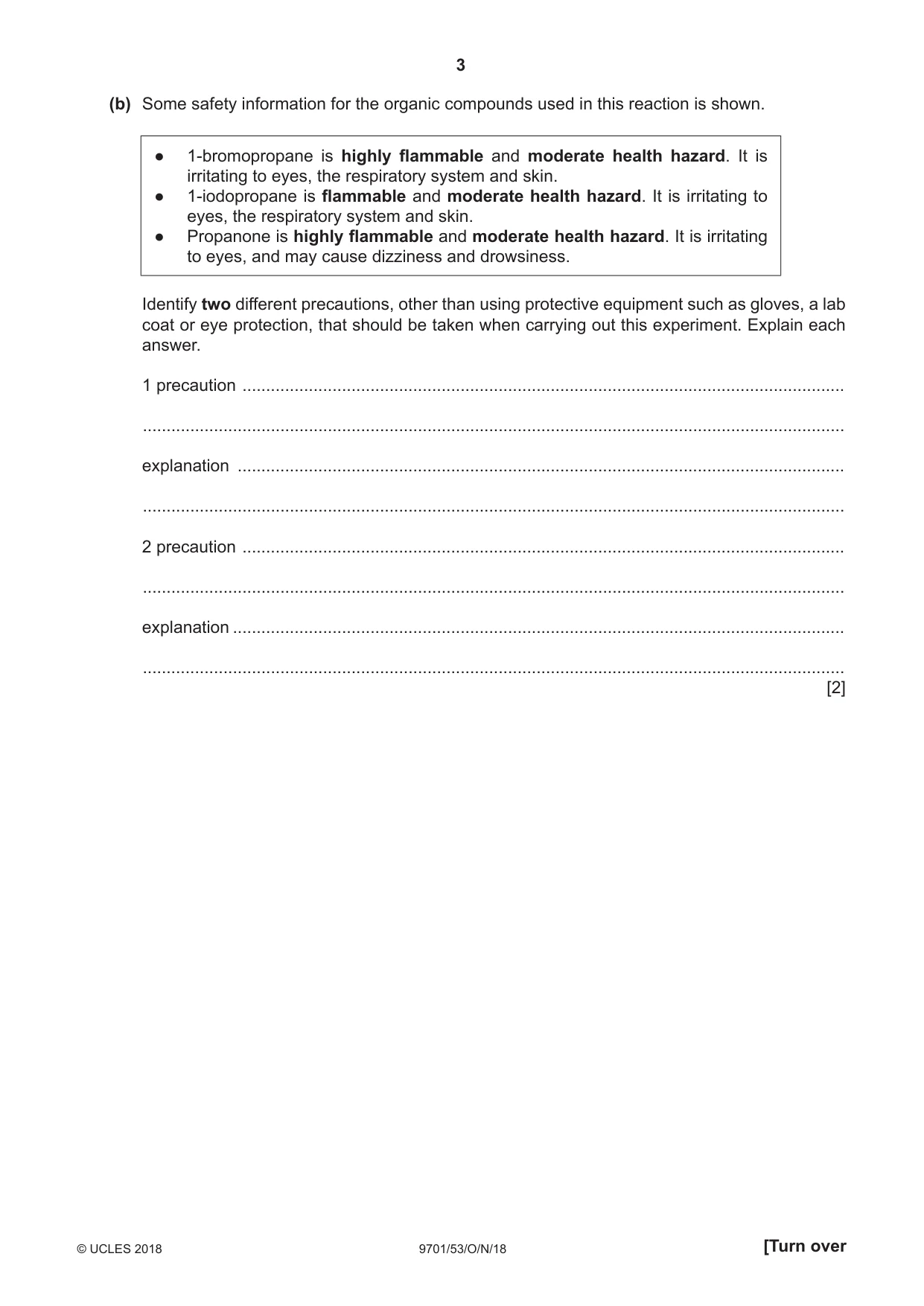
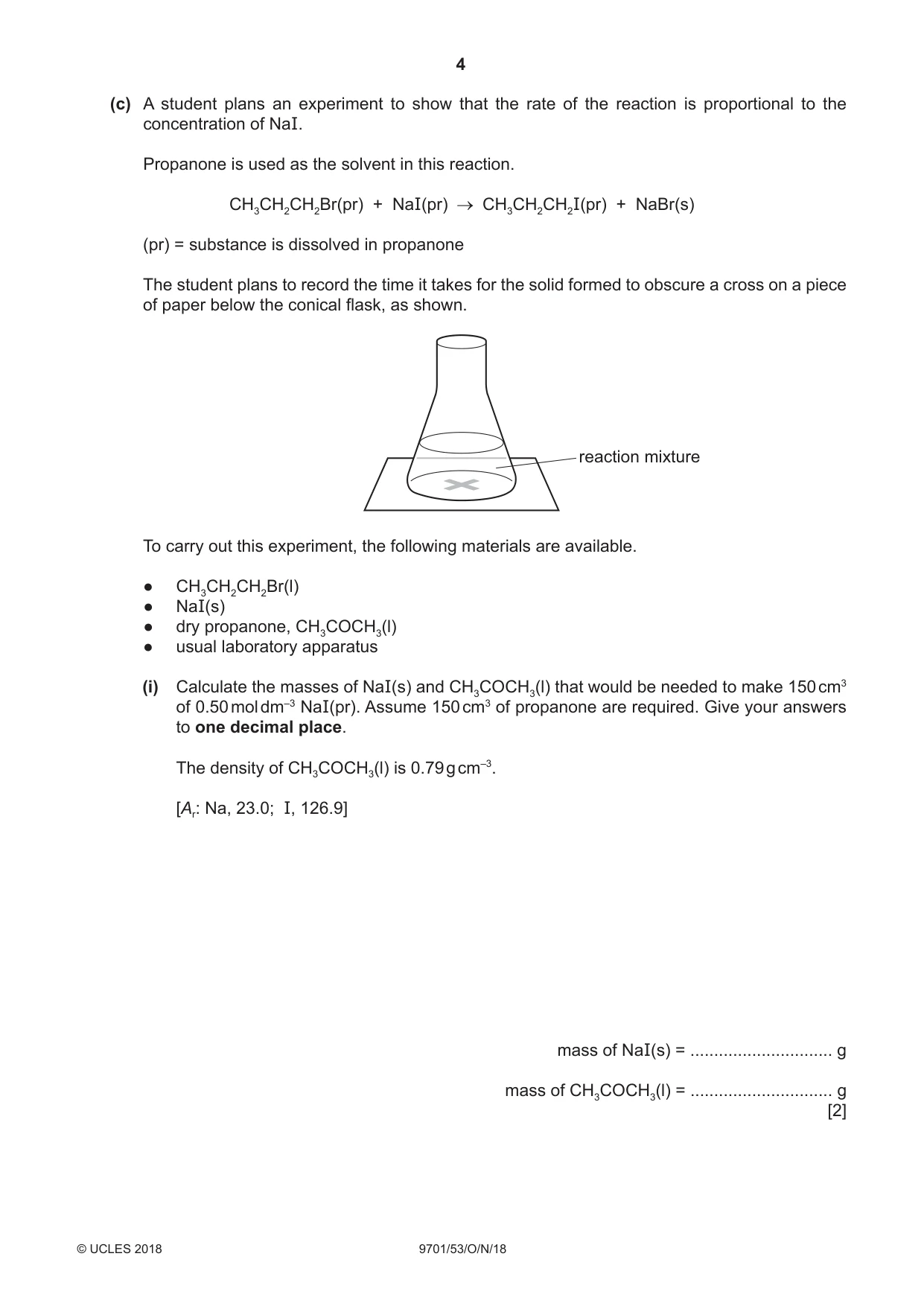

Mark scheme7 pages
Answers below. Sit the paper first if you are practising.
Questions as text
Q1 · The Finkelstein reaction is a nucleophilic substitution reaction in which a halogen atom…
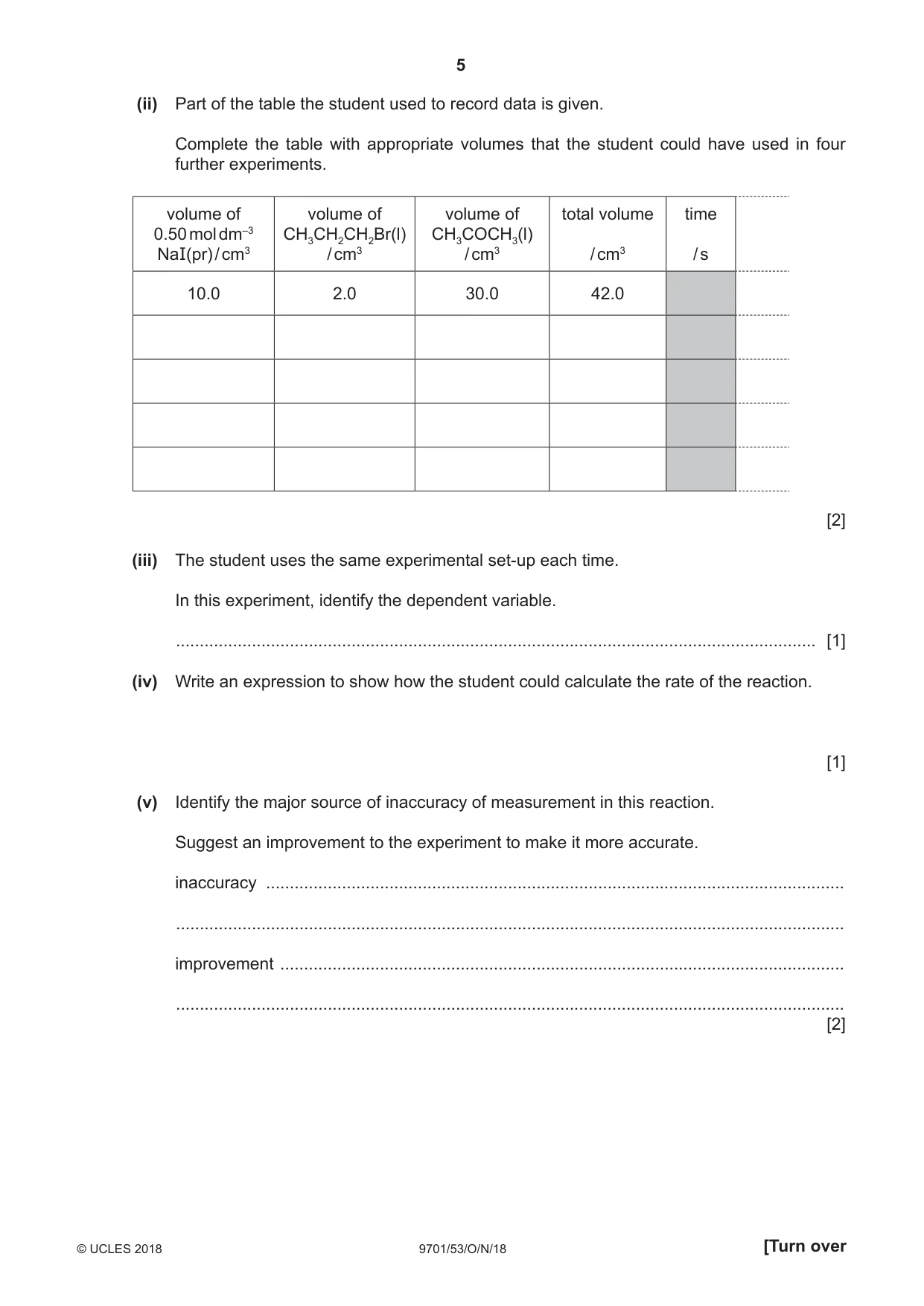
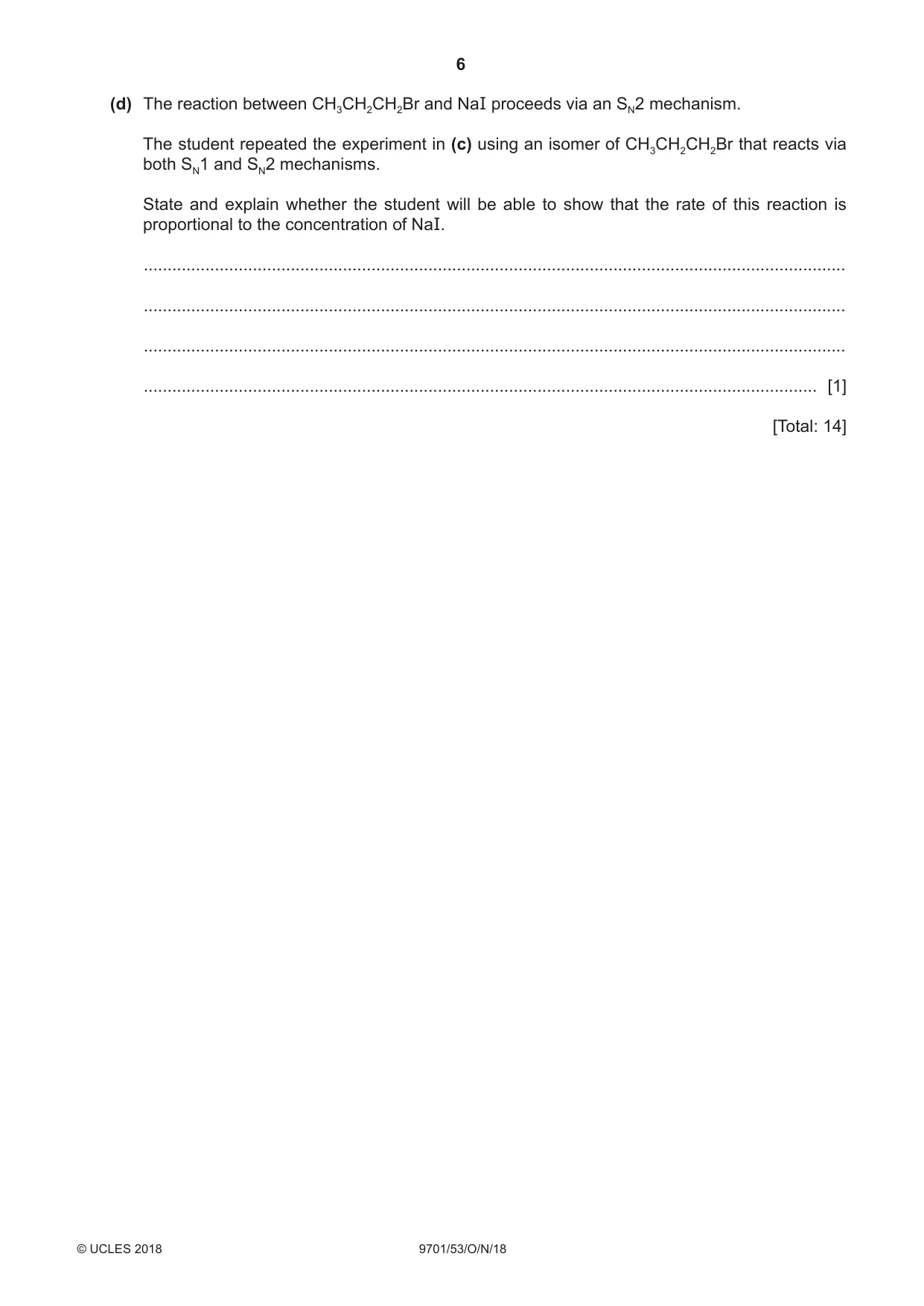
1 The Finkelstein reaction is a nucleophilic substitution reaction in which a halogen atom in a halogenoalkane is replaced by another halogen atom. The reaction is carried out using dry propanone as a solvent. One example of the Finkelstein reaction is given. CH3CH2CH2Br + NaI CH3CH2CH2I + NaBr (a) (i) Explain why it is important for dry propanone to be used as a solvent for this reaction. ............................................................................................................................................. ............................................................................................................................................. ....................................................................................................................................... [1] (ii) The solubilities of NaBr and NaI in propanone are shown. solubility at 25 °C compound in g / 100 g of propanone NaBr 0.00841 NaI 39.9 Use this information to explain why, although the reaction between CH3CH2CH2Br and NaI is reversible, the reaction produces a very high yield. ............................................................................................................................................. ............................................................................................................................................. ............................................................................................................................................. ............................................................................................................................................. ............................................................................................................................................. ....................................................................................................................................... [2] (b) Some safety information for the organic compounds used in this reaction is shown. ● 1-bromopropane is highly flammable and moderate health hazard. It is irritating to eyes, the respiratory system and skin. ● 1-iodopropane is flammable and moderate health hazard. It is irritating to eyes, the respiratory system and skin. ● Propanone is highly flammable and moderate health hazard. It is irritating to eyes, and may cause dizziness and drowsiness. Identify two different precautions, other than using protective equipment such as gloves, a lab coat or eye protection, that should be taken when carrying out this experiment. Explain each answer. 1 precaution ............................................................................................................................... .................................................................................................................................................... explanation ................................................................................................................................. .................................................................................................................................................... 2 precaution ............................................................................................................................... .................................................................................................................................................... explanation.................................................................................................................................. .................................................................................................................................................... [2] (c) A student plans an experiment to show that the rate of the reaction is proportional to the concentration of NaI. Propanone is used as the solvent in this reaction. CH3CH2CH2Br(pr) + NaI(pr) CH3CH2CH2I(pr) + NaBr(s) (pr) = substance is dissolved in propanone The student plans to record the time it takes for the solid formed to obscure a cross on a piece of paper below the conical flask, as shown. reaction mixture To carry out this experiment, the following materials are available. ●● CH3CH2CH2Br(l) ●● NaI(s) ●● dry propanone, CH3COCH3(l) ●● usual laboratory apparatus (i) Calculate the masses of NaI(s) and CH3COCH3(l) that would be needed to make 150 cm3 of 0.50 mol dm–3 NaI(pr). Assume 150 cm3 of propanone are required. Give your answers to one decimal place. The density of CH3COCH3(l) is 0.79 g cm–3. [Ar: Na, 23.0; I, 126.9] mass of NaI(s) = .............................. g mass of CH3COCH3(l) = .............................. g [2] (ii) Part of the table the student used to record data is given. Complete the table with appropriate volumes that the student could have used in four further experiments. volume of volume of volume of total volume time 0.50 mol dm–3 CH3CH2CH2Br(l) CH3COCH3(l) NaI(pr) / cm3 / cm3 / cm3 / cm3 / s 10.0 2.0 30.0 42.0 [2] (iii) The student uses the same experimental set-up each time. In this experiment, identify the dependent variable. ....................................................................................................................................... [1] (iv) Write an expression to show how the student could calculate the rate of the reaction. [1] (v) Identify the major source of inaccuracy of measurement in this reaction. Suggest an improvement to the experiment to make it more accurate. inaccuracy ........................................................................................................................... ............................................................................................................................................. improvement ....................................................................................................................... ............................................................................................................................................. [2] (d) The reaction between CH3CH2CH2Br and NaI proceeds via an SN2 mechanism. The student repeated the experiment in (c) using an isomer of CH3CH2CH2Br that reacts via both SN1 and SN2 mechanisms. State and explain whether the student will be able to show that the rate of this reaction is proportional to the concentration of NaI. .................................................................................................................................................... .................................................................................................................................................... .................................................................................................................................................... .............................................................................................................................................. [1] [Total: 14]
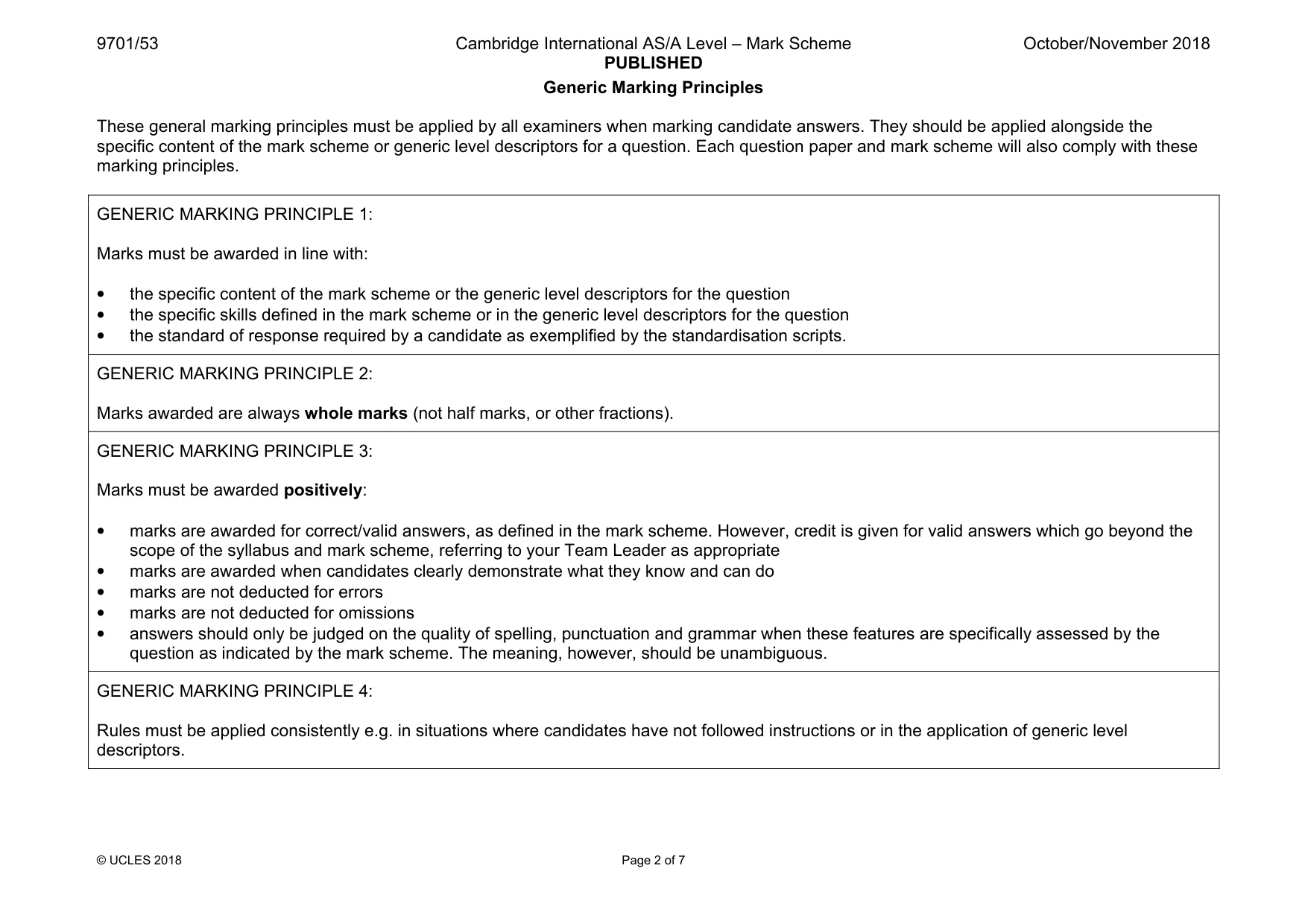
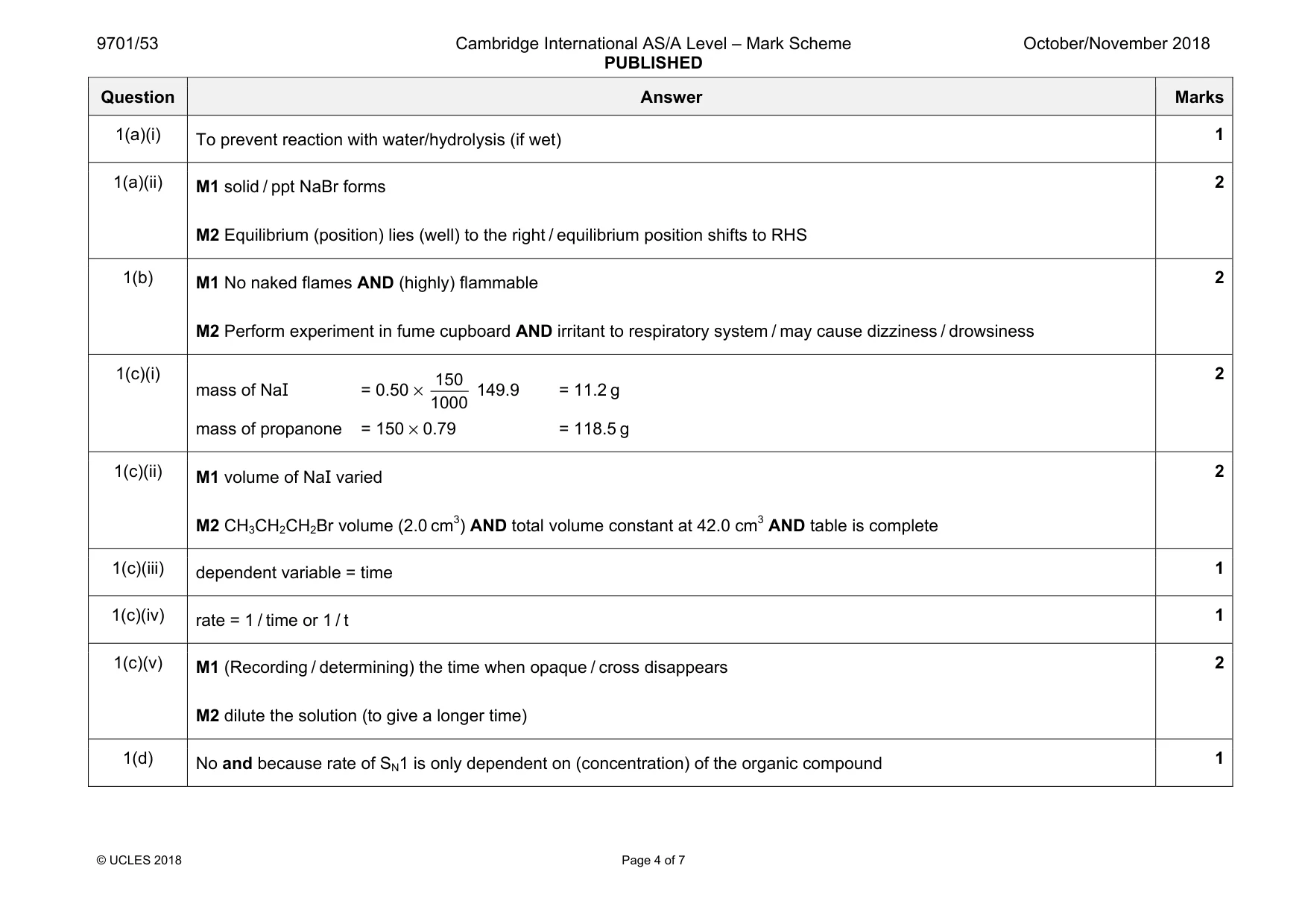
Mark scheme: 1(a)(i) To prevent reaction with water/hydrolysis (if wet) 1 1(a)(ii) M1 solid / ppt NaBr forms M2 Equilibrium (position) lies (well) to the right / equilibrium position shifts to RHS 2 1(b) M1 No naked flames AND (highly) flammable M2 Perform experiment in fume cupboard AND irritant to respiratory system / may cause dizziness / drowsiness 2 1(c)(i) mass of NaI = 0.50 × 150 1000 149.9 = 11.2 g mass of propanone = 150 × 0.79 = 118.5 g 2 1(c)(ii) M1 volume of NaI varied M2 CH3CH2CH2Br volume (2.0 cm3) AND total volume constant at 42.0 cm3 AND table is complete 2 1(c)(iii) dependent variable = time 1 1(c)(iv) rate = 1 / time or 1 / t 1 1(c)(v) M1 (Recording / determining) the time when opaque / cross disappears M2 dilute the solution (to give a longer time) 2 1(d) No and because rate of SN1 is only dependent on (concentration) of the organic compound 1
More questions on Reacting masses and volumes (of solutions and gases)
Q2 · The solubility product, Ksp, of a sparingly soluble salt can be determined by measuring…
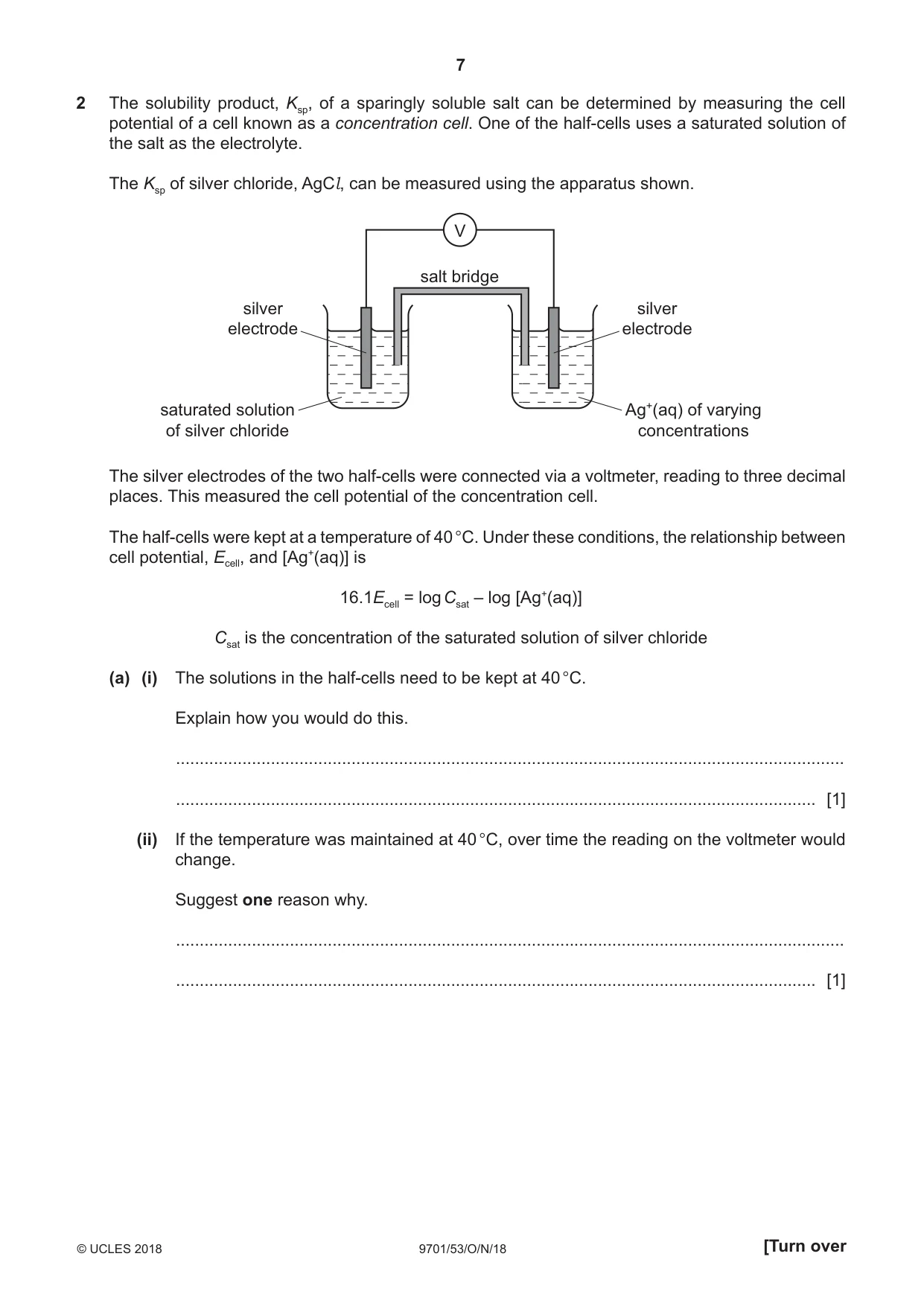
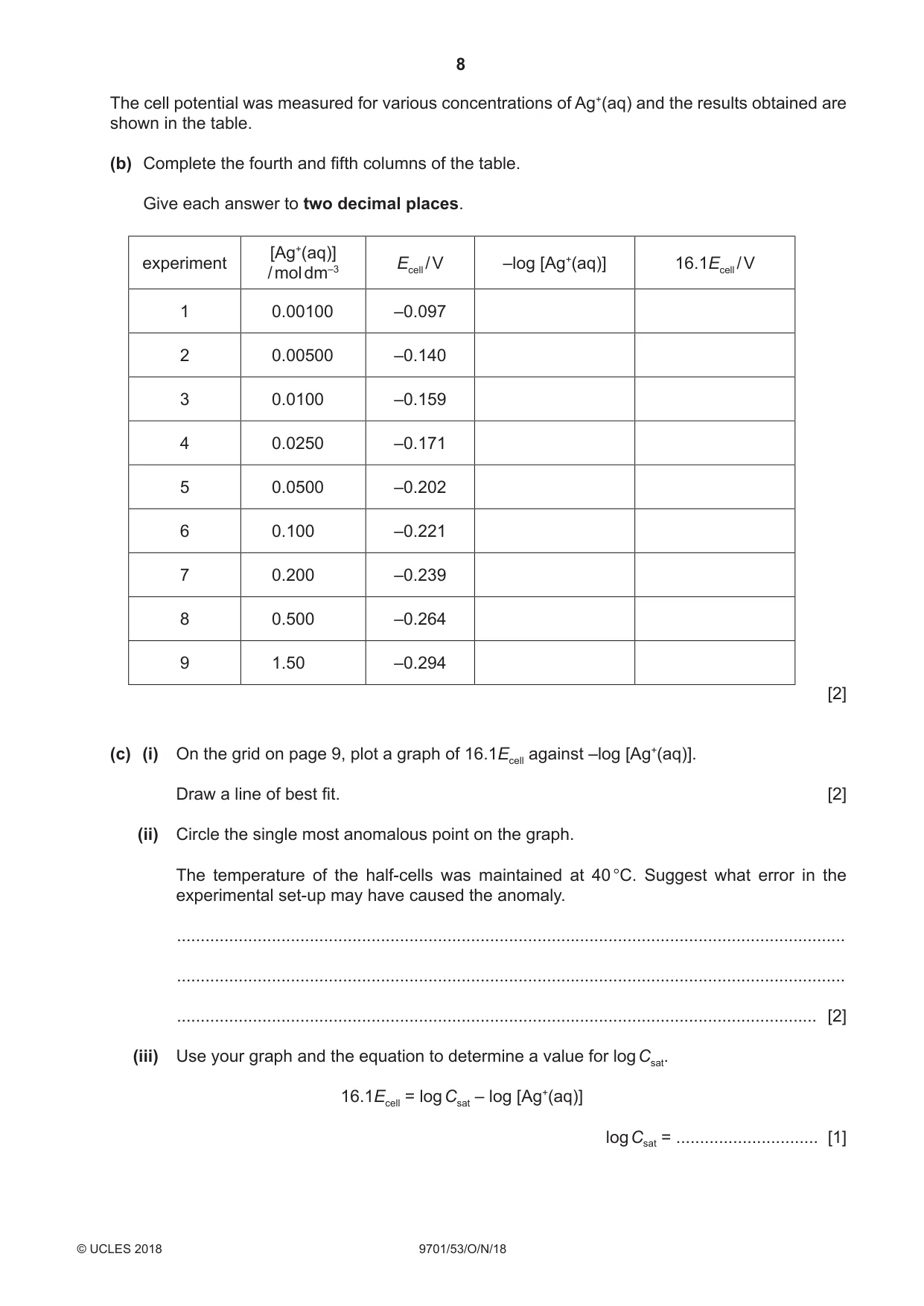
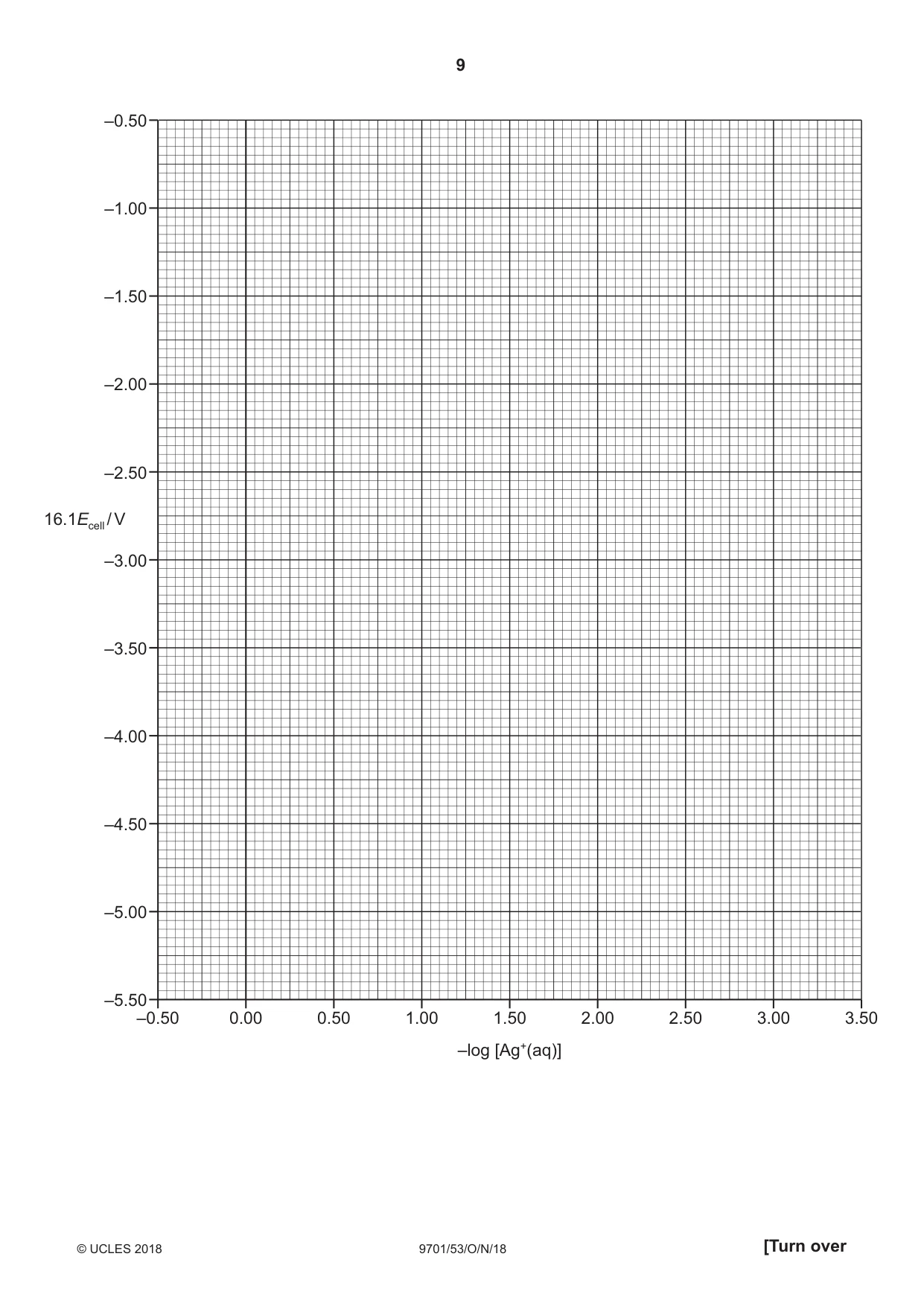
2 The solubility product, Ksp, of a sparingly soluble salt can be determined by measuring the cell potential of a cell known as a concentration cell. One of the half-cells uses a saturated solution of the salt as the electrolyte. The Ksp of silver chloride, AgCl, can be measured using the apparatus shown. V salt bridge silver silver electrode electrode saturated solution Ag+(aq) of varying of silver chloride concentrations The silver electrodes of the two half-cells were connected via a voltmeter, reading to three decimal places. This measured the cell potential of the concentration cell. The half-cells were kept at a temperature of 40 °C. Under these conditions, the relationship between cell potential, Ecell, and [Ag+(aq)] is 16.1Ecell = log Csat – log [Ag+(aq)] Csat is the concentration of the saturated solution of silver chloride (a) (i) The solutions in the half‑cells need to be kept at 40 °C. Explain how you would do this. ............................................................................................................................................. ....................................................................................................................................... [1] (ii) If the temperature was maintained at 40 °C, over time the reading on the voltmeter would change. Suggest one reason why. ............................................................................................................................................. ....................................................................................................................................... [1] The cell potential was measured for various concentrations of Ag+(aq) and the results obtained are shown in the table. (b) Complete the fourth and fifth columns of the table. Give each answer to two decimal places. [Ag+(aq)] experiment Ecell / V –log [Ag+(aq)] 16.1Ecell / V / mol dm–3 1 0.00100 –0.097 2 0.00500 –0.140 3 0.0100 –0.159 4 0.0250 –0.171 5 0.0500 –0.202 6 0.100 –0.221 7 0.200 –0.239 8 0.500 –0.264 9 1.50 –0.294 [2] (c) (i) On the grid on page 9, plot a graph of 16.1Ecell against –log [Ag+(aq)]. Draw a line of best fit. [2] (ii) Circle the single most anomalous point on the graph. The temperature of the half‑cells was maintained at 40 °C. Suggest what error in the experimental set-up may have caused the anomaly. ............................................................................................................................................. ............................................................................................................................................. ....................................................................................................................................... [2] (iii) Use your graph and the equation to determine a value for log Csat. 16.1Ecell = log Csat – log [Ag+(aq)] log Csat = .............................. [1]
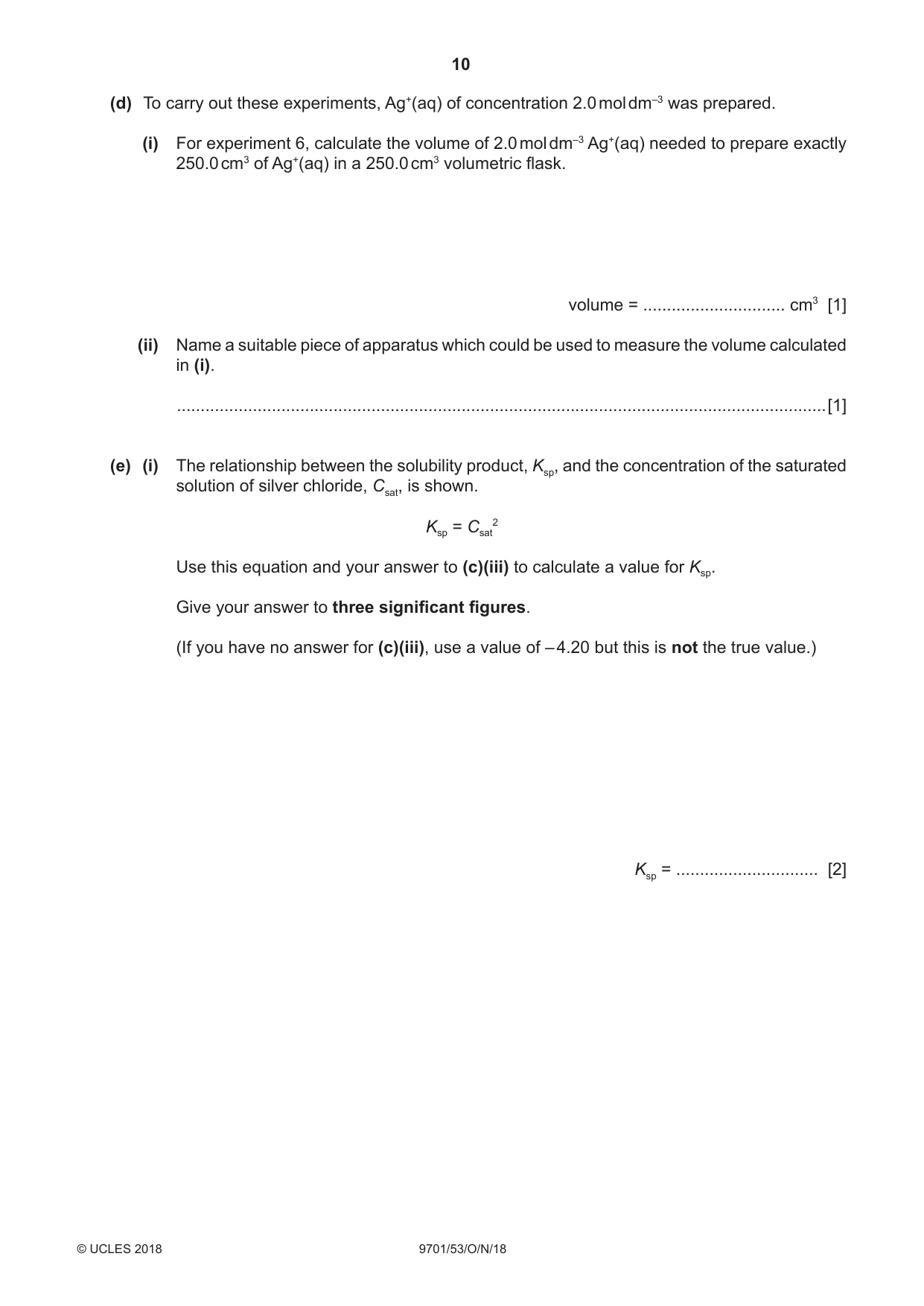
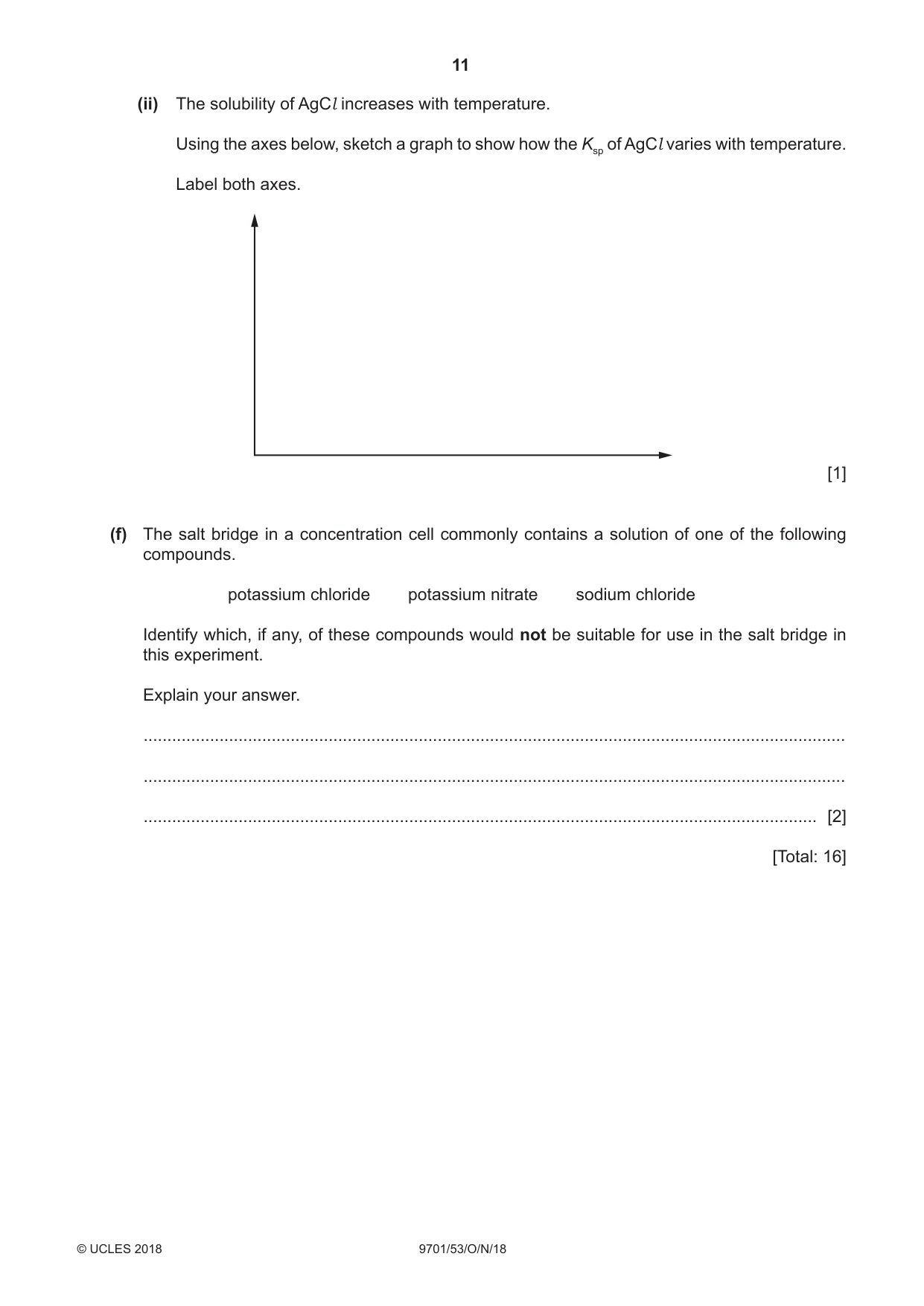
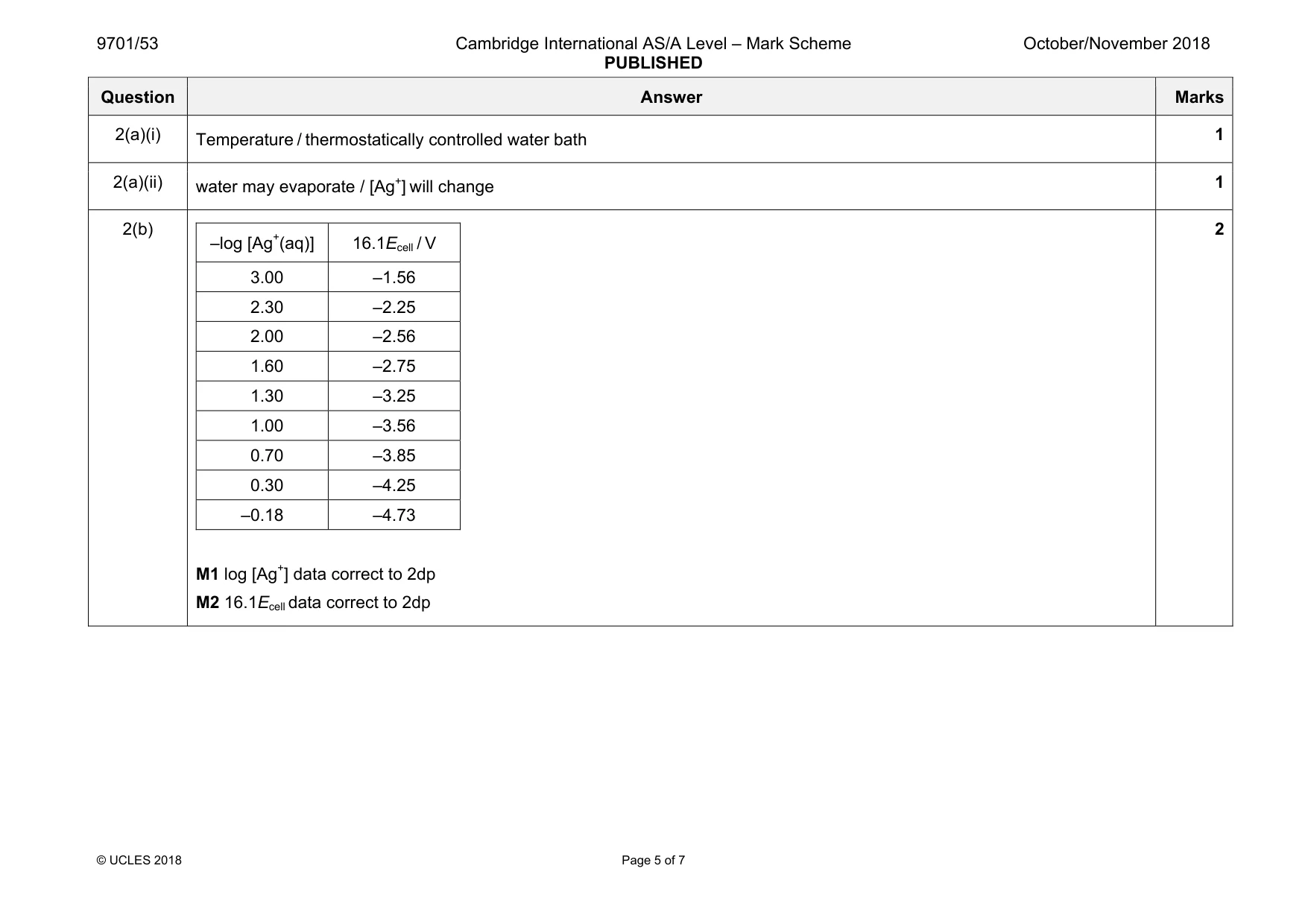
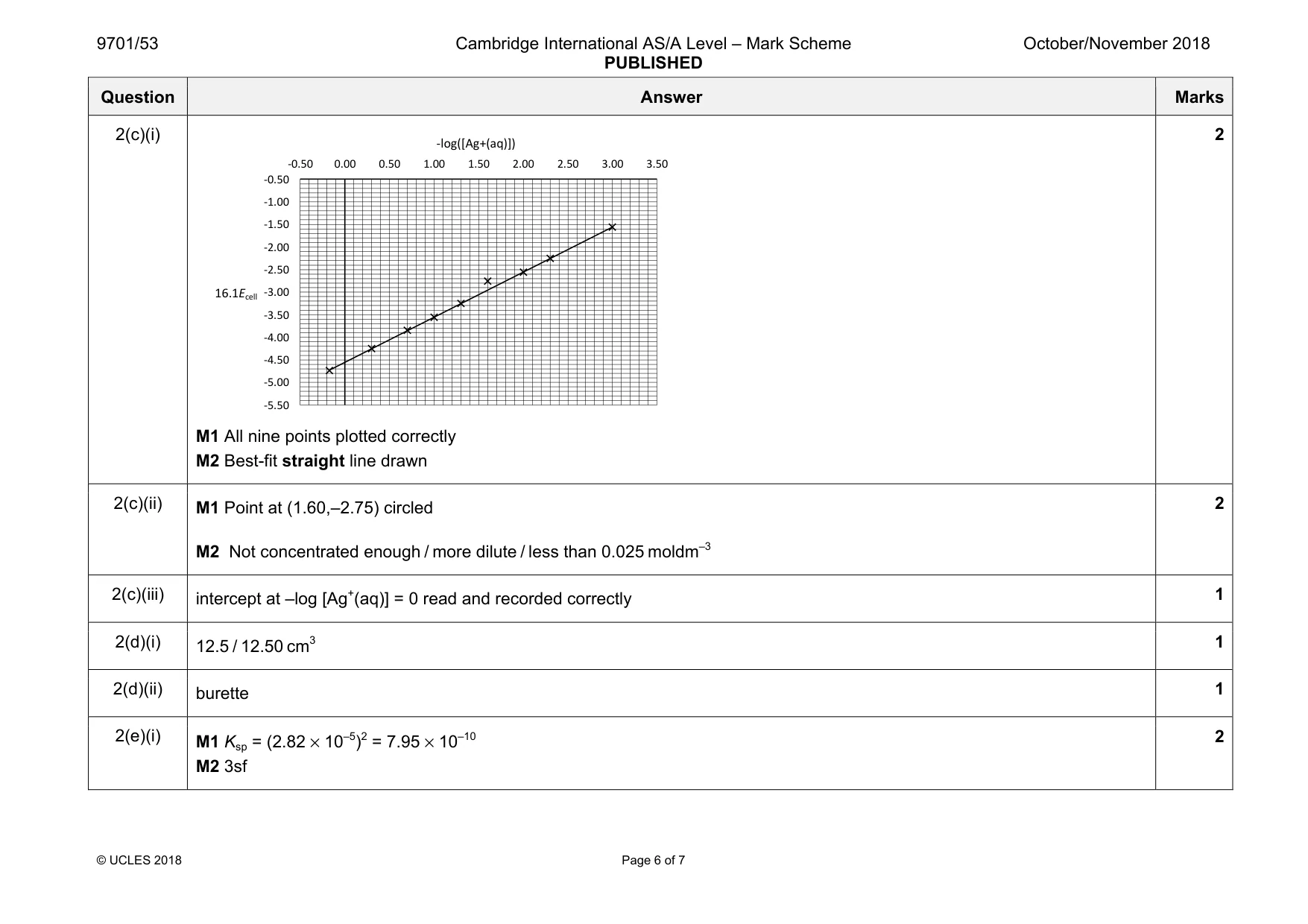
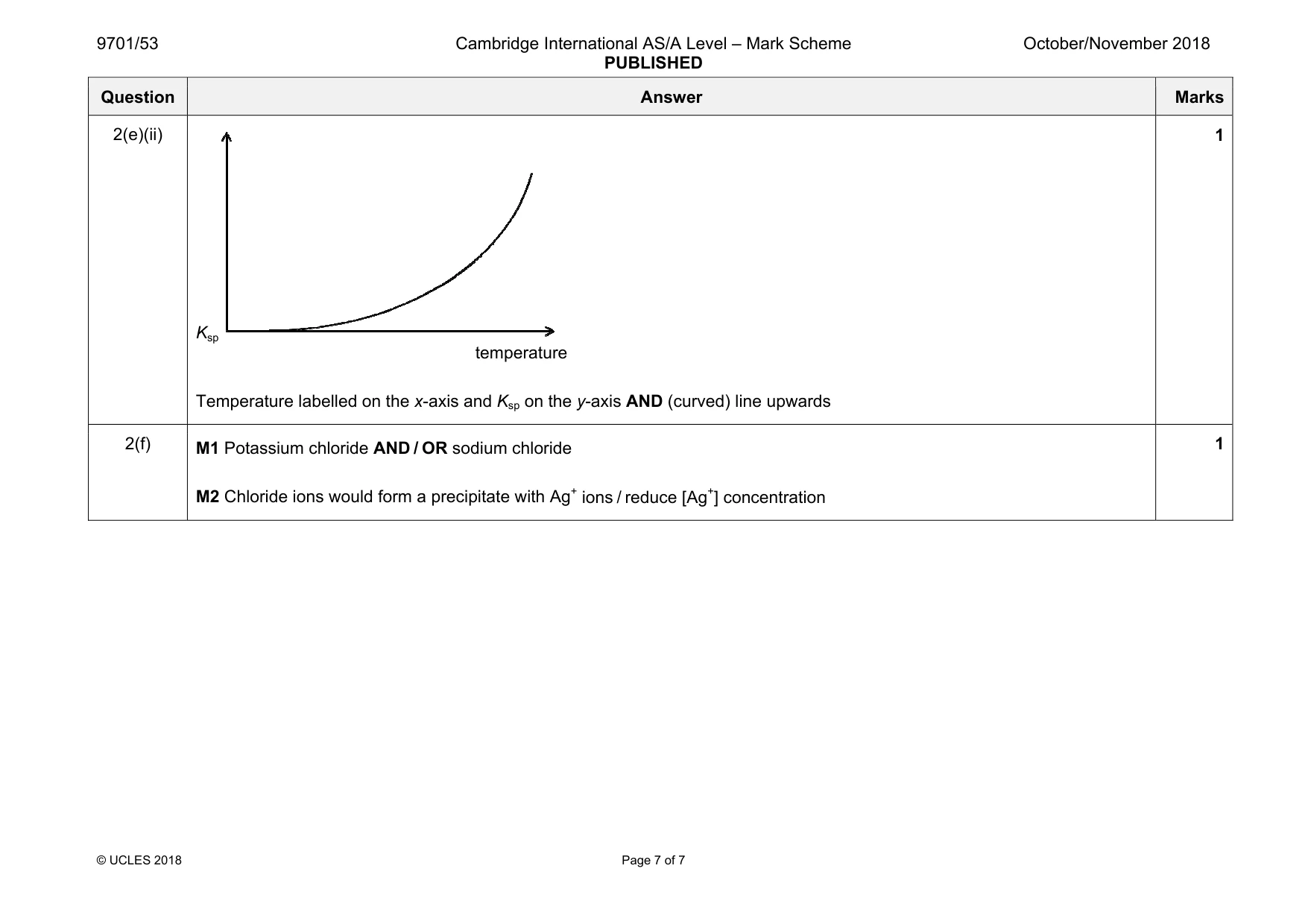
Mark scheme: 2(a)(i) Temperature / thermostatically controlled water bath 1 2(a)(ii) water may evaporate / [Ag+] will change 1 2(b) –log [Ag+(aq)] 16.1Ecell / V 3.00 –1.56 2.30 –2.25 2.00 –2.56 1.60 –2.75 1.30 –3.25 1.00 –3.56 0.70 –3.85 0.30 –4.25 –0.18 –4.73 M1 log [Ag+] data correct to 2dp M2 16.1Ecell data correct to 2dp 2 Question Answer Marks 2(c)(i) -5.50 -5.00 -4.50 -4.00 -3.50 -3.00 -2.50 -2.00 -1.50 -1.00 -0.50 -0.50 0.00 0.50 1.00 1.50 2.00 2.50 3.00 3.50 16.1Ecell -log([Ag+(aq)]) M1 All nine points plotted correctly M2 Best-fit straight line drawn 2 2(c)(ii) M1 Point at (1.60,–2.75) circled M2 Not concentrated enough / more dilute / less than 0.025 moldm–3 2 2(c)(iii) intercept at –log [Ag+(aq)] = 0 read and recorded correctly 1 2(d)(i) 12.5 / 12.50 cm3 1 2(d)(ii) burette 1 2(e)(i) M1 Ksp = (2.82 × 10⁻⁵)2 = 7.95 × 10⁻¹⁰ M2 3sf 2 Question Answer Marks 2(e)(ii) Ksp temperature Temperature labelled on the x-axis and Ksp on the y-axis AND (curved) line upwards 1 2(f) M1 Potassium chloride AND / OR sodium chloride M2 Chloride ions would form a precipitate with Ag+ ions / reduce [Ag+] concentration 1
What was in this paper
The subtopics covered by these 2 questions, and how many questions each got. Open one in a new tab to see every Cambridge question on it.
What you needed in this session
Cambridge’s own grade thresholds for 2018 Oct/Nov, Paper 5 · Variant 3. A higher threshold means an easier paper — the bar moves with how the cohort did.