Cambridge A Level Chemistry 9701 — 2015 Oct/Nov Paper 5 · Variant 3
9701/53/O/N/15 · 30 marks · ≈34 min
The question paper and its mark scheme, free to read here and free to download. This is Cambridge’s own paper, exactly as it was sat.
Question paper12 pages


Mark scheme4 pages
Answers below. Sit the paper first if you are practising.
Paper as text
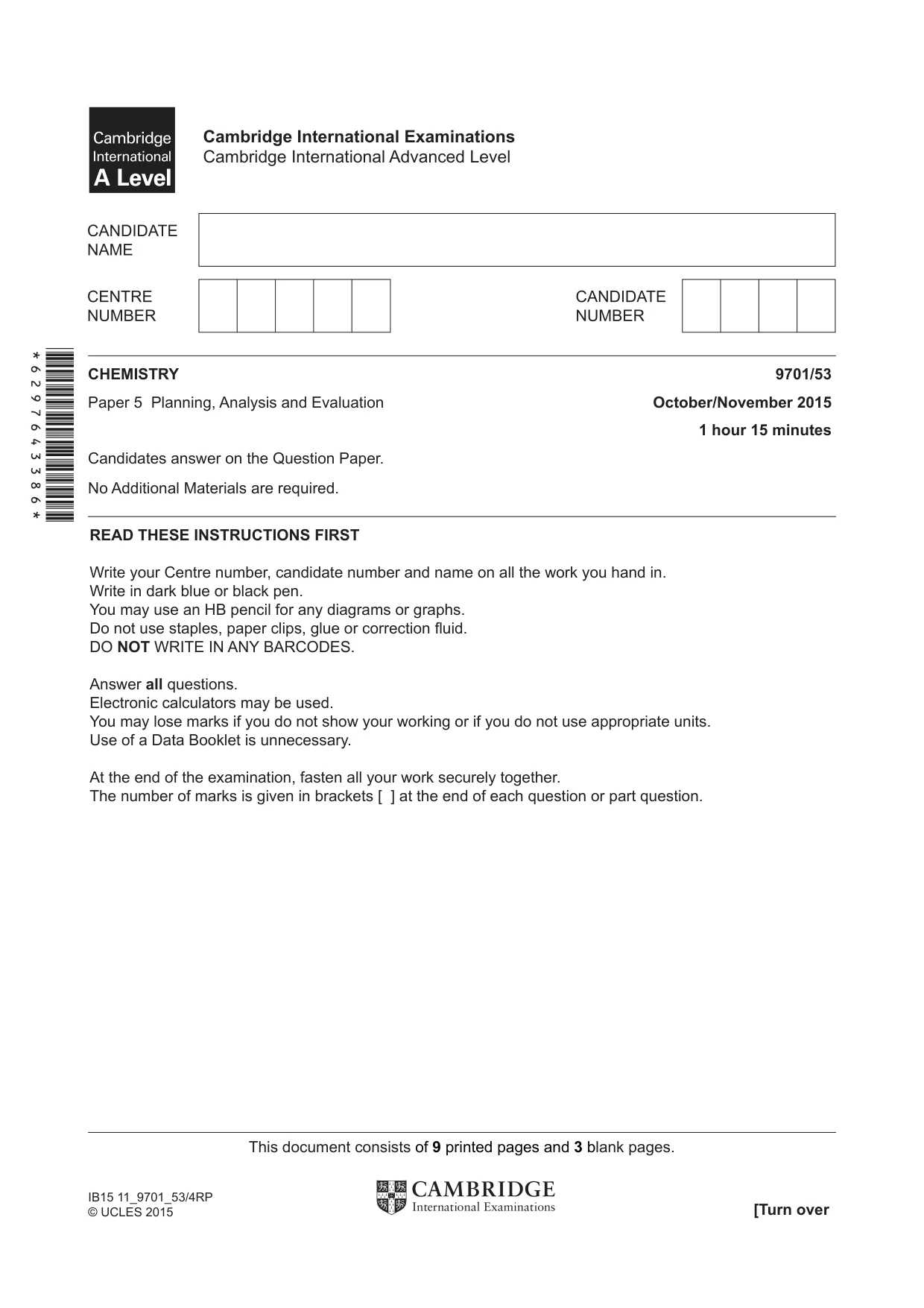
Question paper, page 1
READ THESE INSTRUCTIONS FIRST Write your Centre number, candidate number and name on all the work you hand in. Write in dark blue or black pen. You may use an HB pencil for any diagrams or graphs. Do not use staples, paper clips, glue or correction fl uid. DO NOT WRITE IN ANY BARCODES. Answer all questions. Electronic calculators may be used. You may lose marks if you do not show your working or if you do not use appropriate units. Use of a Data Booklet is unnecessary. At the end of the examination, fasten all your work securely together. The number of marks is given in brackets [ ] at the end of each question or part question. CHEMISTRY 9701/53 Paper 5 Planning, Analysis and Evaluation October/November 2015 1 hour 15 minutes Candidates answer on the Question Paper. No Additional Materials are required. Cambridge International Examinations Cambridge International Advanced Level This document consists of 9 printed pages and 3 blank pages. [Turn over IB15 11_9701_53/4RP © UCLES 2015 *6297643386*
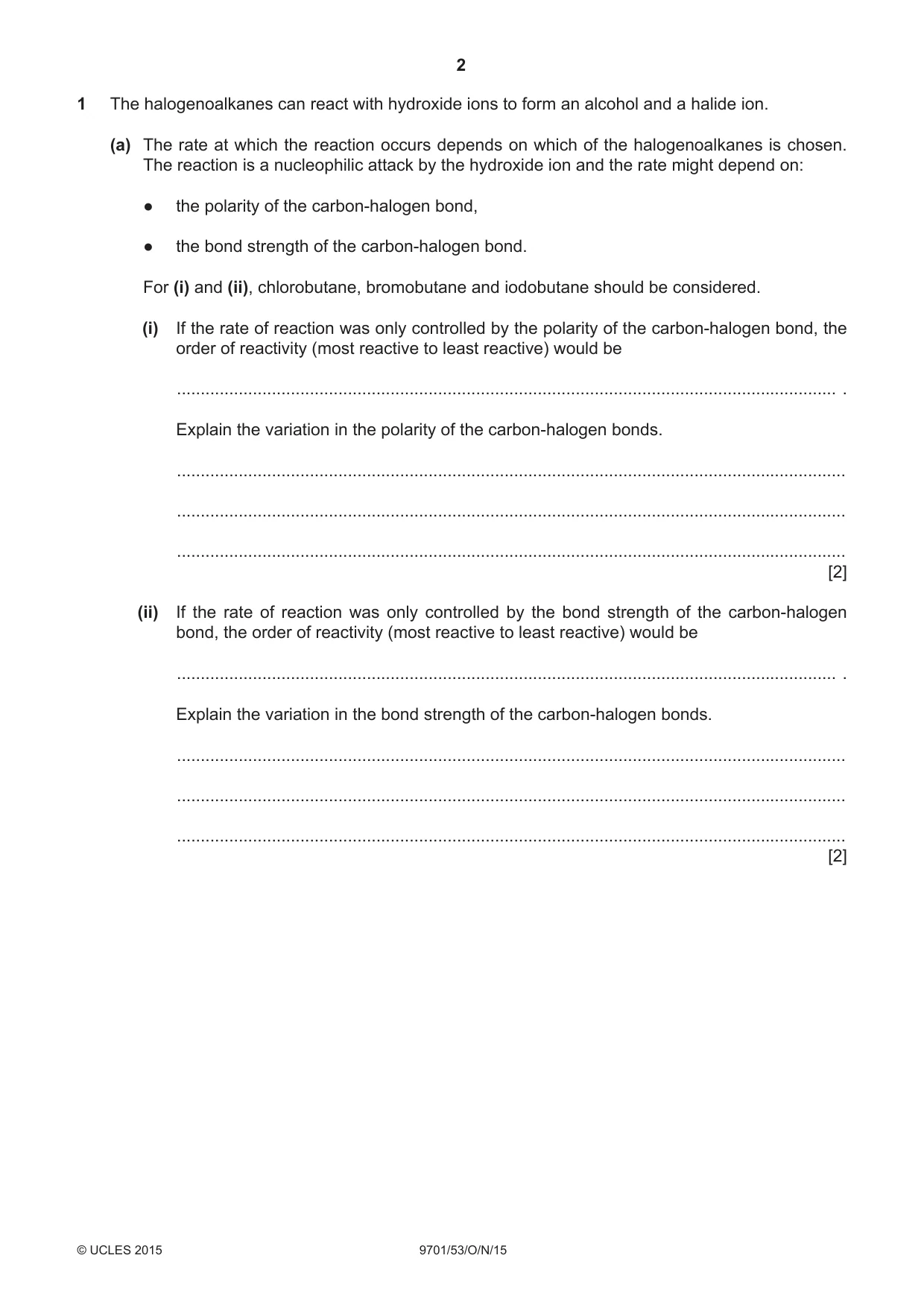
Question paper, page 2
2 9701/53/O/N/15 © UCLES 2015 1 The halogenoalkanes can react with hydroxide ions to form an alcohol and a halide ion. (a) The rate at which the reaction occurs depends on which of the halogenoalkanes is chosen. The reaction is a nucleophilic attack by the hydroxide ion and the rate might depend on: ● the polarity of the carbon-halogen bond, ● the bond strength of the carbon-halogen bond. For (i) and (ii), chlorobutane, bromobutane and iodobutane should be considered. (i) If the rate of reaction was only controlled by the polarity of the carbon-halogen bond, the order of reactivity (most reactive to least reactive) would be … . Explain the variation in the polarity of the carbon-halogen bonds. … … … [2] (ii) If the rate of reaction was only controlled by the bond strength of the carbon-halogen bond, the order of reactivity (most reactive to least reactive) would be … . Explain the variation in the bond strength of the carbon-halogen bonds. … … … [2]
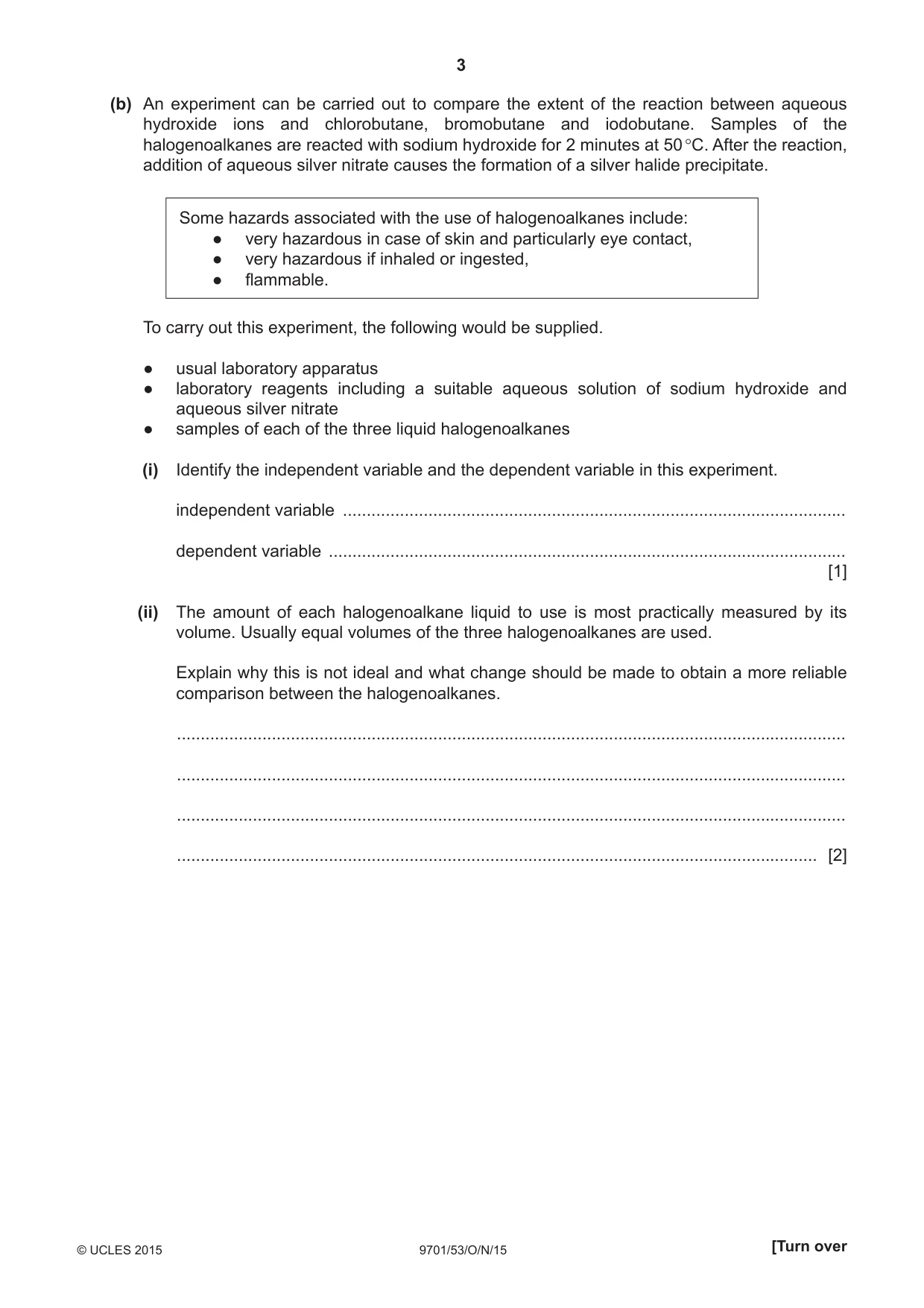
Question paper, page 3
3 9701/53/O/N/15 © UCLES 2015 [Turn over (b) An experiment can be carried out to compare the extent of the reaction between aqueous hydroxide ions and chlorobutane, bromobutane and iodobutane. Samples of the halogenoalkanes are reacted with sodium hydroxide for 2 minutes at 50 °C. After the reaction, addition of aqueous silver nitrate causes the formation of a silver halide precipitate. Some hazards associated with the use of halogenoalkanes include: ● very hazardous in case of skin and particularly eye contact, ● very hazardous if inhaled or ingested, ● fl ammable. To carry out this experiment, the following would be supplied. ● usual laboratory apparatus ● laboratory reagents including a suitable aqueous solution of sodium hydroxide and aqueous silver nitrate ● samples of each of the three liquid halogenoalkanes (i) Identify the independent variable and the dependent variable in this experiment. independent variable … dependent variable … [1] (ii) The amount of each halogenoalkane liquid to use is most practically measured by its volume. Usually equal volumes of the three halogenoalkanes are used. Explain why this is not ideal and what change should be made to obtain a more reliable comparison between the halogenoalkanes. … … … … [2]
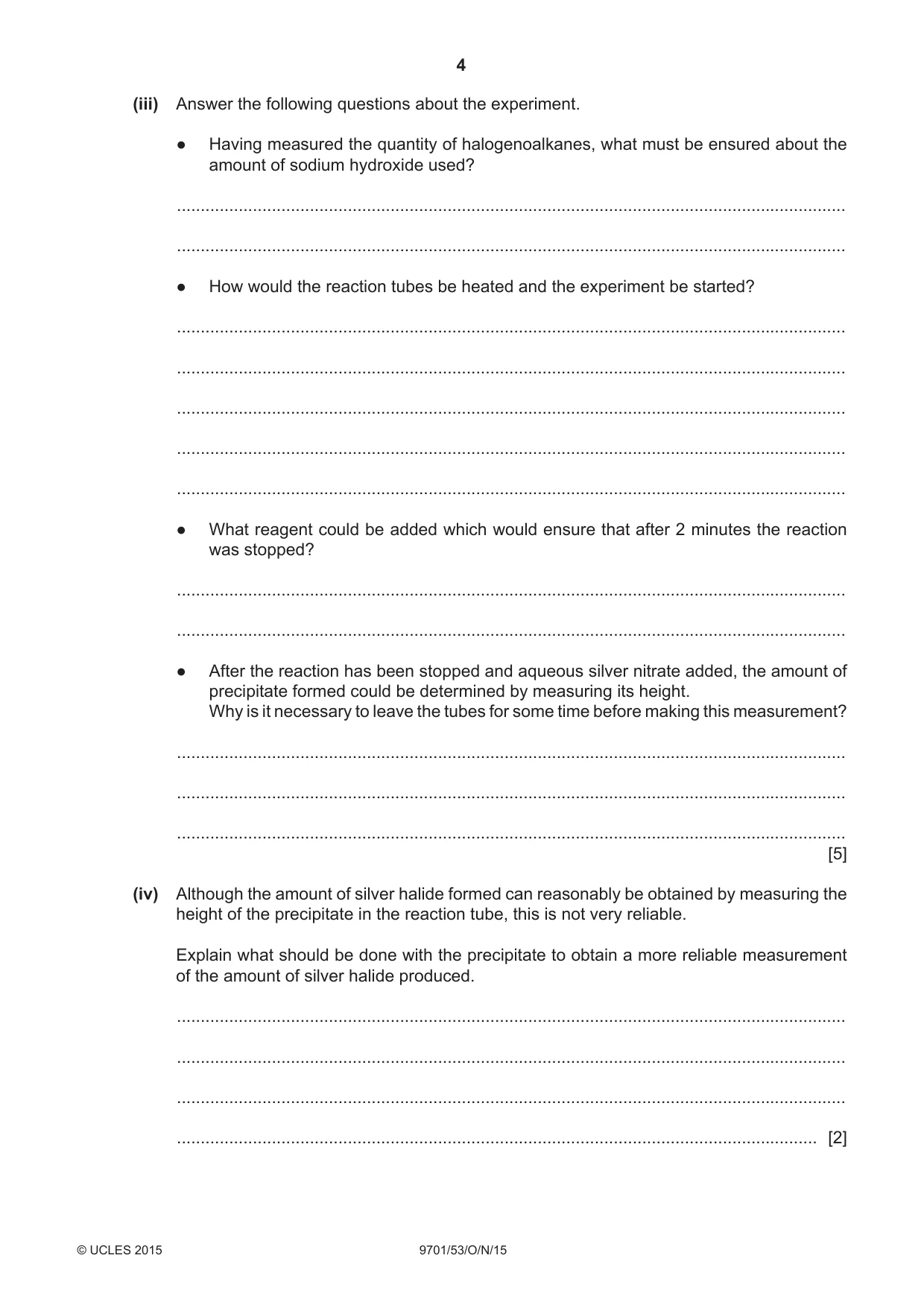
Question paper, page 4
4 9701/53/O/N/15 © UCLES 2015 (iii) Answer the following questions about the experiment. ● Having measured the quantity of halogenoalkanes, what must be ensured about the amount of sodium hydroxide used? … … ● How would the reaction tubes be heated and the experiment be started? … … … … … ● What reagent could be added which would ensure that after 2 minutes the reaction was stopped? … … ● After the reaction has been stopped and aqueous silver nitrate added, the amount of precipitate formed could be determined by measuring its height. Why is it necessary to leave the tubes for some time before making this measurement? … … … [5] (iv) Although the amount of silver halide formed can reasonably be obtained by measuring the height of the precipitate in the reaction tube, this is not very reliable. Explain what should be done with the precipitate to obtain a more reliable measurement of the amount of silver halide produced. … … … … [2]
Question paper, page 5
5 9701/53/O/N/15 © UCLES 2015 [Turn over (c) The use of halogenoalkanes is hazardous and both gloves and eye protection are necessary. State one other essential precaution which should be taken when carrying out the experiments. … … … … [1] [Total: 15]
Question paper, page 6
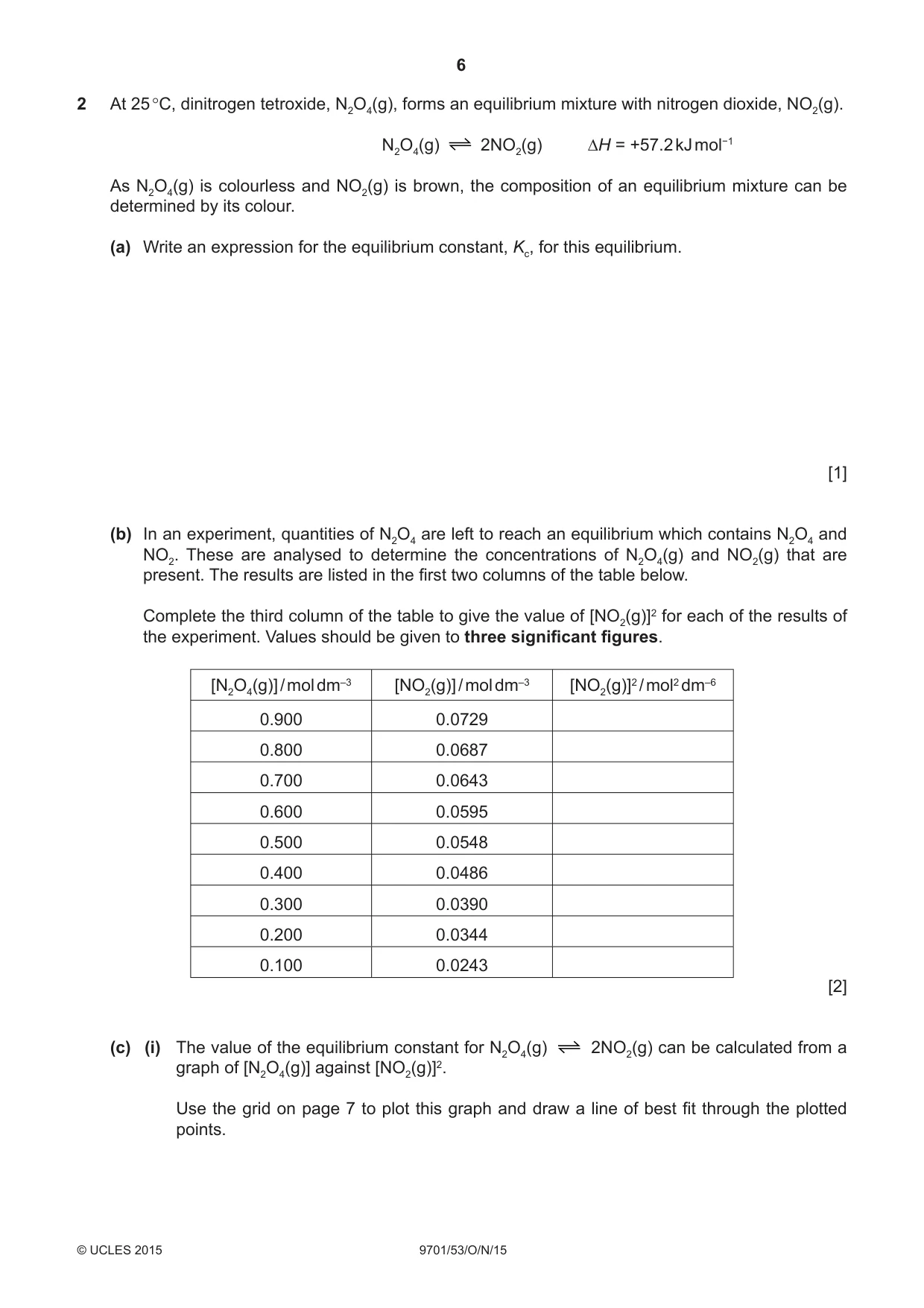
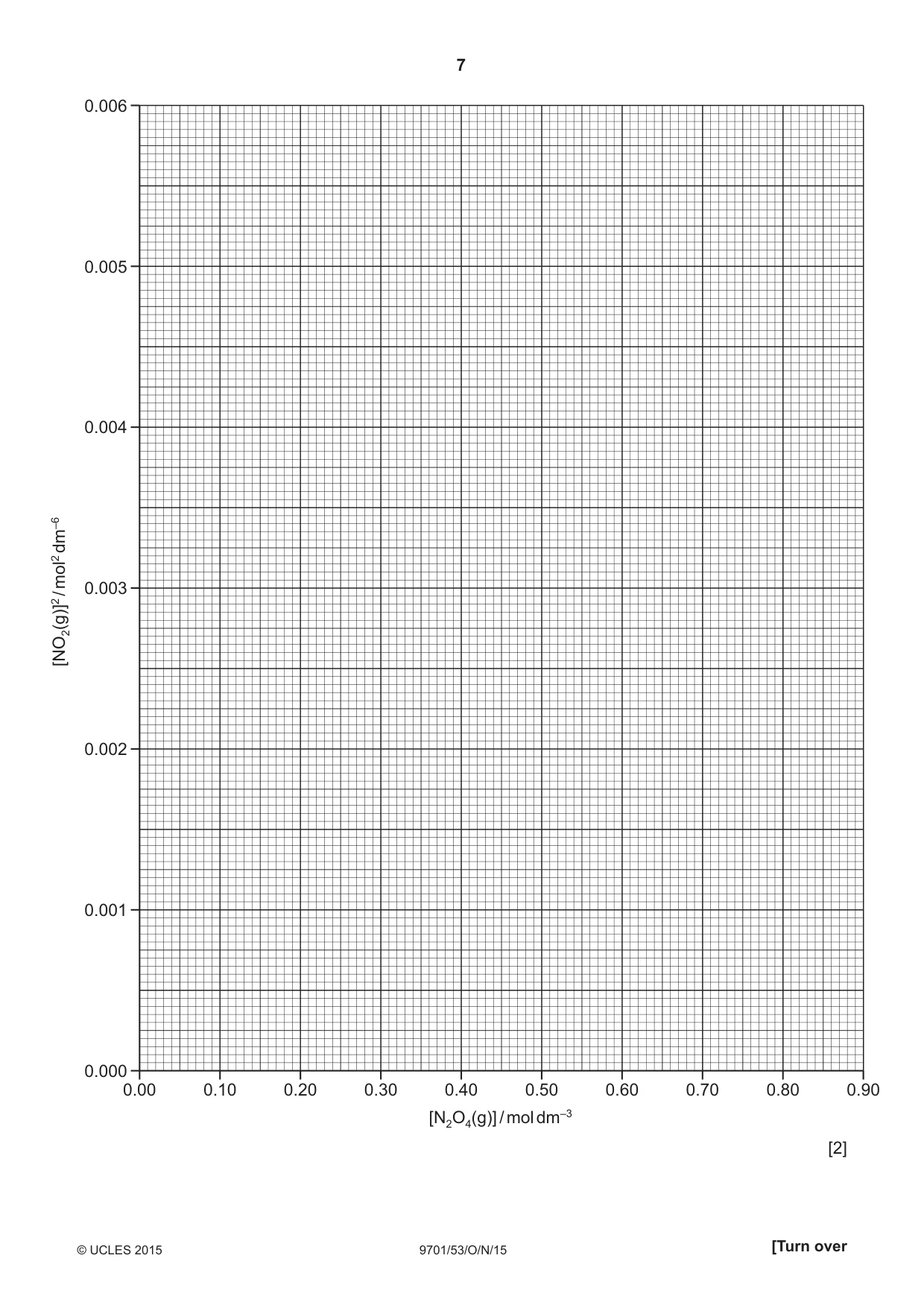
6 9701/53/O/N/15 © UCLES 2015 2 At 25 °C, dinitrogen tetroxide, N2O4(g), forms an equilibrium mixture with nitrogen dioxide, NO2(g). N2O4(g) 2NO2(g) ∆H = +57.2 kJ mol−1 As N2O4(g) is colourless and NO2(g) is brown, the composition of an equilibrium mixture can be determined by its colour. (a) Write an expression for the equilibrium constant, Kc, for this equilibrium. [1] (b) In an experiment, quantities of N2O4 are left to reach an equilibrium which contains N2O4 and NO2. These are analysed to determine the concentrations of N2O4(g) and NO2(g) that are present. The results are listed in the fi rst two columns of the table below. Complete the third column of the table to give the value of [NO2(g)]2 for each of the results of the experiment. Values should be given to three signifi cant fi gures. [N2O4(g)] / mol dm–3 [NO2(g)] / mol dm–3 [NO2(g)]2 / mol2 dm–6 0.900 0.0729 0.800 0.0687 0.700 0.0643 0.600 0.0595 0.500 0.0548 0.400 0.0486 0.300 0.0390 0.200 0.0344 0.100 0.0243 [2] (c) (i) The value of the equilibrium constant for N2O4(g) 2NO2(g) can be calculated from a graph of [N2O4(g)] against [NO2(g)]2. Use the grid on page 7 to plot this graph and draw a line of best fi t through the plotted points.
Question paper, page 7
7 9701/53/O/N/15 © UCLES 2015 [Turn over 0.00 0.10 0.20 0.30 0.40 0.50 [N2O4(g)] / mol dm–3 [NO2(g)]2 / mol2 dm–6 0.60 0.70 0.80 0.90 0.006 0.005 0.004 0.003 0.002 0.001 0.000 [2]
Question paper, page 8
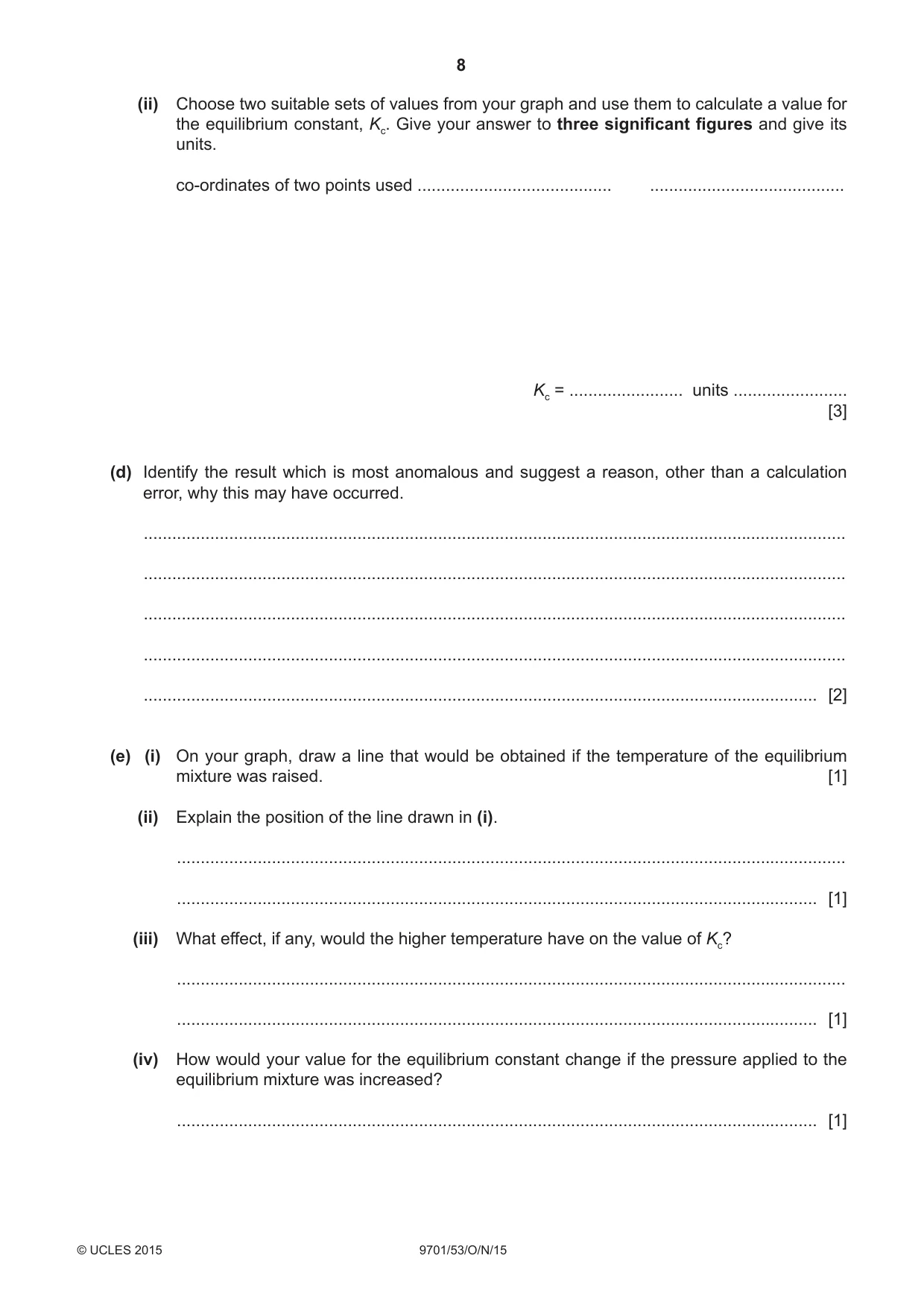
8 9701/53/O/N/15 © UCLES 2015 (ii) Choose two suitable sets of values from your graph and use them to calculate a value for the equilibrium constant, Kc. Give your answer to three signifi cant fi gures and give its units. co-ordinates of two points used … … Kc = … units … [3] (d) Identify the result which is most anomalous and suggest a reason, other than a calculation error, why this may have occurred. … … … … … [2] (e) (i) On your graph, draw a line that would be obtained if the temperature of the equilibrium mixture was raised. [1] (ii) Explain the position of the line drawn in (i). … … [1] (iii) What effect, if any, would the higher temperature have on the value of Kc? … … [1] (iv) How would your value for the equilibrium constant change if the pressure applied to the equilibrium mixture was increased? … [1]
Question paper, page 9
9 9701/53/O/N/15 © UCLES 2015 [Turn over (f) In the experiments, the results have been obtained by starting with pure N2O4(g) and then letting the equilibrium with NO2(g) form. Calculate the starting concentration of pure N2O4(g) that would be required to produce the mixture of 0.900 mol dm–3 of N2O4(g) and 0.0729 mol dm–3 of NO2(g) once equilibrium had been established. [1] [Total: 15]
Question paper, page 10
10 9701/53/O/N/15 © UCLES 2015 BLANK PAGE
Question paper, page 11
11 9701/53/O/N/15 © UCLES 2015 BLANK PAGE
Question paper, page 12
12 9701/53/O/N/15 © UCLES 2015 BLANK PAGE Permission to reproduce items where third-party owned material protected by copyright is included has been sought and cleared where possible. Every reasonable effort has been made by the publisher (UCLES) to trace copyright holders, but if any items requiring clearance have unwittingly been included, the publisher will be pleased to make amends at the earliest possible opportunity. To avoid the issue of disclosure of answer-related information to candidates, all copyright acknowledgements are reproduced online in the Cambridge International Examinations Copyright Acknowledgements Booklet. This is produced for each series of examinations and is freely available to download at www.cie.org.uk after the live examination series. Cambridge International Examinations is part of the Cambridge Assessment Group. Cambridge Assessment is the brand name of University of Cambridge Local Examinations Syndicate (UCLES), which is itself a department of the University of Cambridge.
Mark scheme, page 1
® IGCSE is the registered trademark of Cambridge International Examinations. CAMBRIDGE INTERNATIONAL EXAMINATIONS Cambridge International Advanced Level MARK SCHEME for the October/November 2015 series 9701 CHEMISTRY 9701/53 Paper 5 (Planning, Analysis and Evaluation), maximum raw mark 30 This mark scheme is published as an aid to teachers and candidates, to indicate the requirements of the examination. It shows the basis on which Examiners were instructed to award marks. It does not indicate the details of the discussions that took place at an Examiners’ meeting before marking began, which would have considered the acceptability of alternative answers. Mark schemes should be read in conjunction with the question paper and the Principal Examiner Report for Teachers. Cambridge will not enter into discussions about these mark schemes. Cambridge is publishing the mark schemes for the October/November 2015 series for most Cambridge IGCSE®, Cambridge International A and AS Level components and some Cambridge O Level components.
Mark scheme, page 2
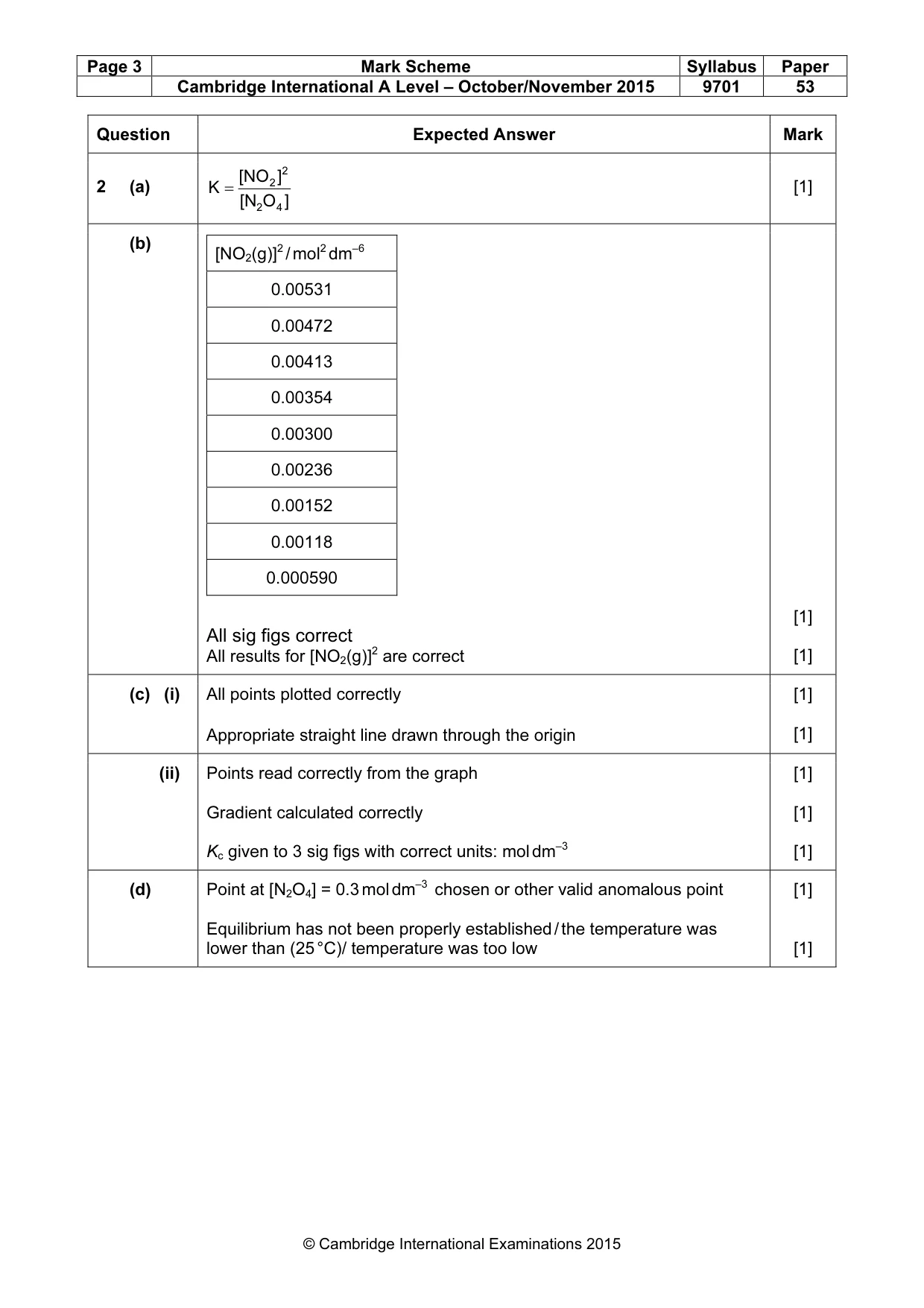
Page 2 Mark Scheme Syllabus Paper Cambridge International A Level – October/November 2015 9701 53 © Cambridge International Examinations 2015 Question Expected Answer Mark 1 (a) (i) chlorobutane, bromobutane, iodobutane decreasing electronegativity of chlorine, bromine and iodine [1] [1] (ii) iodobutane, bromobutane, chlorobutane decreasing size of atoms of iodine, bromine and chlorine/decreasing bond length of the C-Hal bond [1] [1] (b) (i) The halogenoalkane(s) AND the amount of precipitate [1] (ii) Equal moles / amounts are not being used Use same number of moles / amounts of halogenoalkane [1] [1] (iii) • Use the same amount of sodium hydroxide each time • heat water / oil bath / heating mantle (to 50 °C) • mix reagents / mix halogenoalkane and hydroxide and immediately start timer • add nitric acid • allow precipitate to settle [1] [1] [1] [1] [1] (iv) The precipitates should be filtered and dried The precipitates should be weighed [1] [1] (c) Avoid the use of flames / keep away from flames / use a fume cupboard/wear a face mask / well ventilated room [1] [15]
Mark scheme, page 3
Page 3 Mark Scheme Syllabus Paper Cambridge International A Level – October/November 2015 9701 53 © Cambridge International Examinations 2015 Question Expected Answer Mark 2 (a) ] O [N ] [NO K 4 2 2 2 = [1] (b) [NO2(g)]2 / mol2 dm–6 0.00531 0.00472 0.00413 0.00354 0.00300 0.00236 0.00152 0.00118 0.000590 All sig figs correct All results for [NO2(g)]2 are correct [1] [1] (c) (i) All points plotted correctly Appropriate straight line drawn through the origin [1] [1] (ii) Points read correctly from the graph Gradient calculated correctly Kc given to 3 sig figs with correct units: mol dm–3 [1] [1] [1] (d) Point at [N2O4] = 0.3 mol dm–3 chosen or other valid anomalous point Equilibrium has not been properly established / the temperature was lower than (25 °C)/ temperature was too low [1] [1]
Mark scheme, page 4
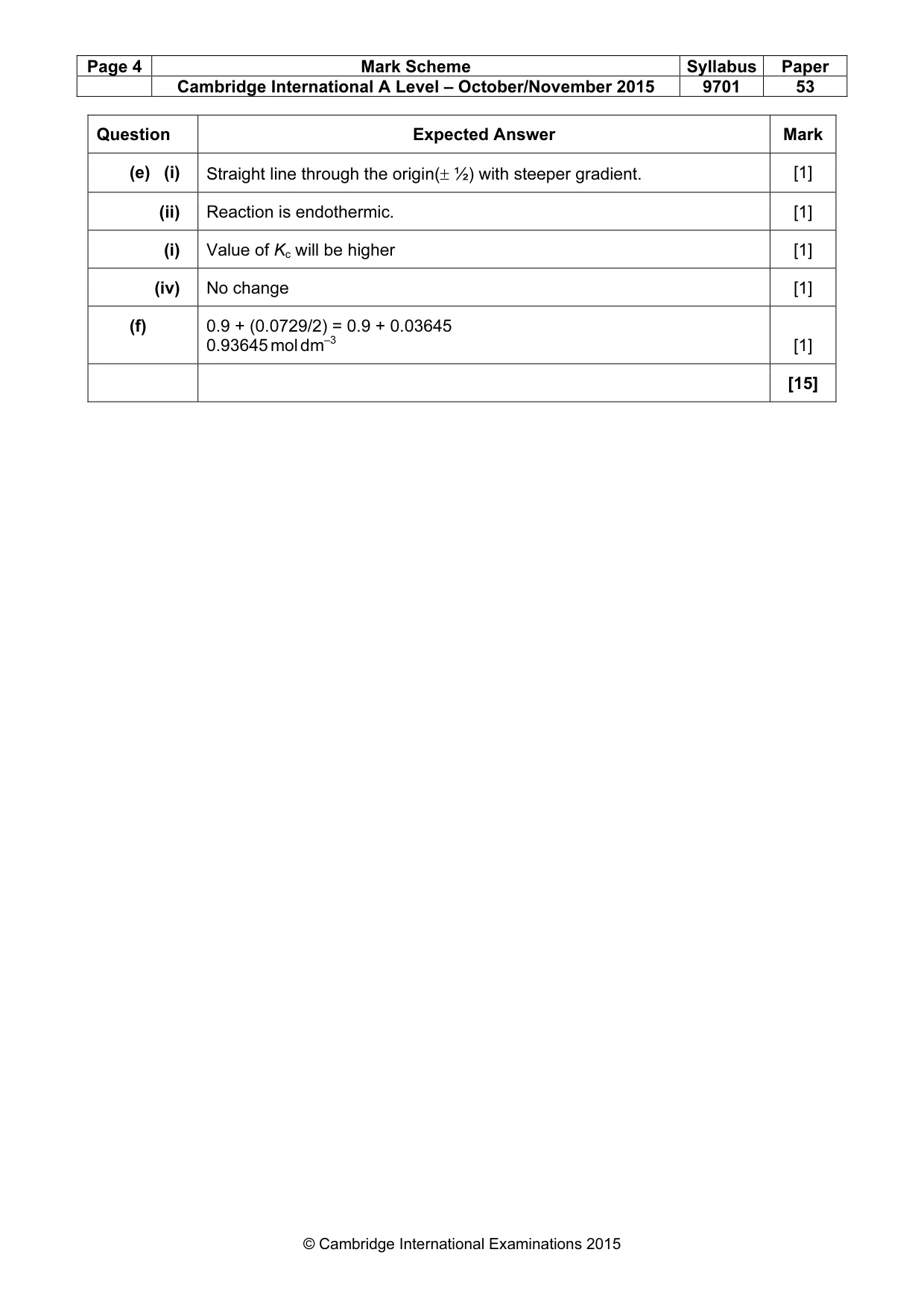
Page 4 Mark Scheme Syllabus Paper Cambridge International A Level – October/November 2015 9701 53 © Cambridge International Examinations 2015 Question Expected Answer Mark (e) (i) Straight line through the origin(± ½) with steeper gradient. [1] (ii) Reaction is endothermic. [1] (i) Value of Kc will be higher [1] (iv) No change [1] (f) 0.9 + (0.0729/2) = 0.9 + 0.03645 0.93645 mol dm–3 [1] [15]
What you needed in this session
Cambridge’s own grade thresholds for 2015 Oct/Nov, Paper 5 · Variant 3. A higher threshold means an easier paper — the bar moves with how the cohort did.