Cambridge A Level Chemistry 9701 — 2012 Oct/Nov Paper 2 · Variant 1
9701/21/O/N/12 · 60 marks · ≈68 min
The question paper and its mark scheme, free to read here and free to download. This is Cambridge’s own paper, exactly as it was sat.
Question paper12 pages
Mark scheme6 pages
Answers below. Sit the paper first if you are practising.
Paper as text
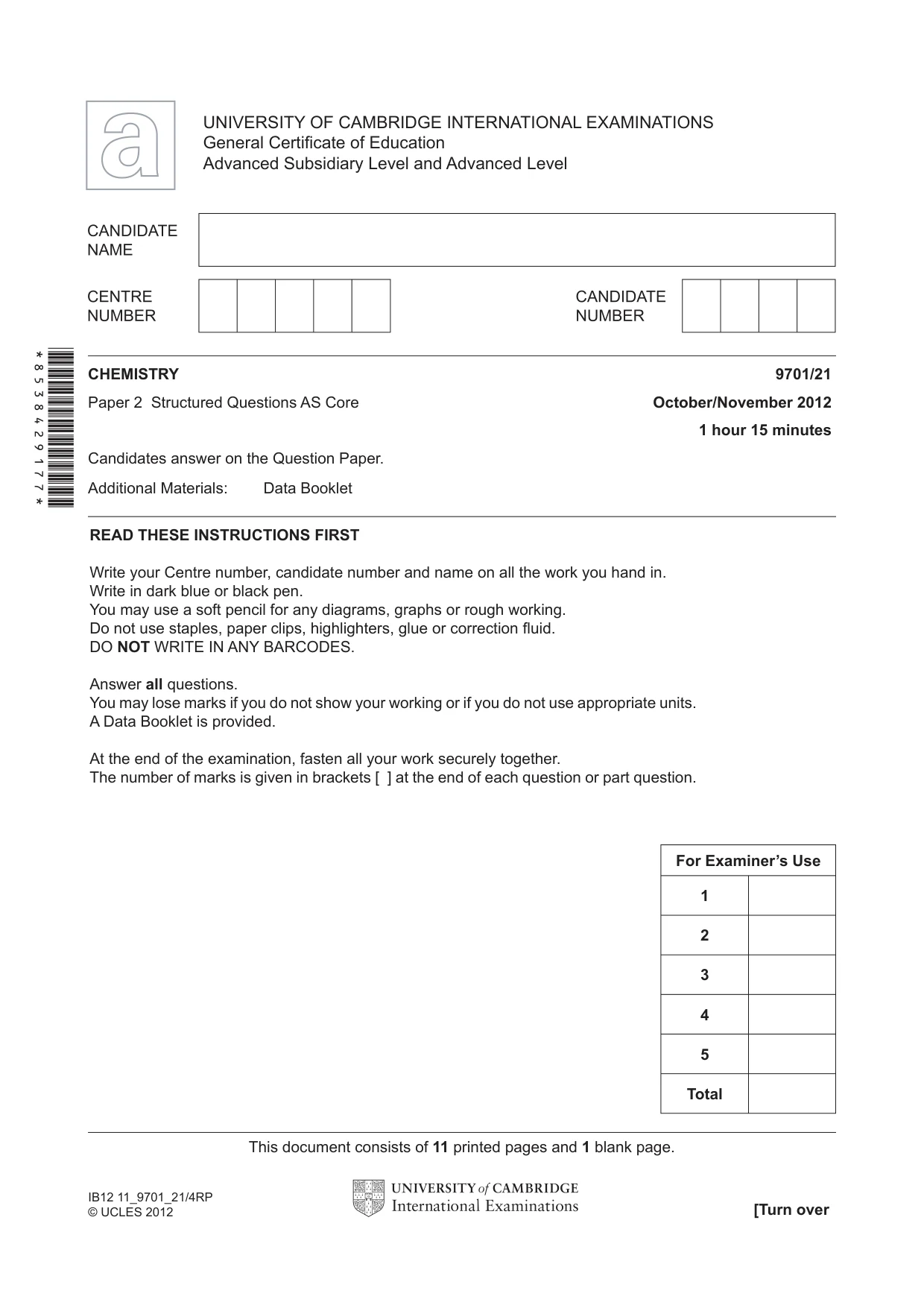
Question paper, page 1
READ THESE INSTRUCTIONS FIRST Write your Centre number, candidate number and name on all the work you hand in. Write in dark blue or black pen. You may use a soft pencil for any diagrams, graphs or rough working. Do not use staples, paper clips, highlighters, glue or correction fl uid. DO NOT WRITE IN ANY BARCODES. Answer all questions. You may lose marks if you do not show your working or if you do not use appropriate units. A Data Booklet is provided. At the end of the examination, fasten all your work securely together. The number of marks is given in brackets [ ] at the end of each question or part question. CHEMISTRY 9701/21 Paper 2 Structured Questions AS Core October/November 2012 1 hour 15 minutes Candidates answer on the Question Paper. Additional Materials: Data Booklet UNIVERSITY OF CAMBRIDGE INTERNATIONAL EXAMINATIONS General Certifi cate of Education Advanced Subsidiary Level and Advanced Level This document consists of 11 printed pages and 1 blank page. [Turn over IB12 11_9701_21/4RP © UCLES 2012 *8538429177* For Examiner’s Use 1 2 3 4 5 Total
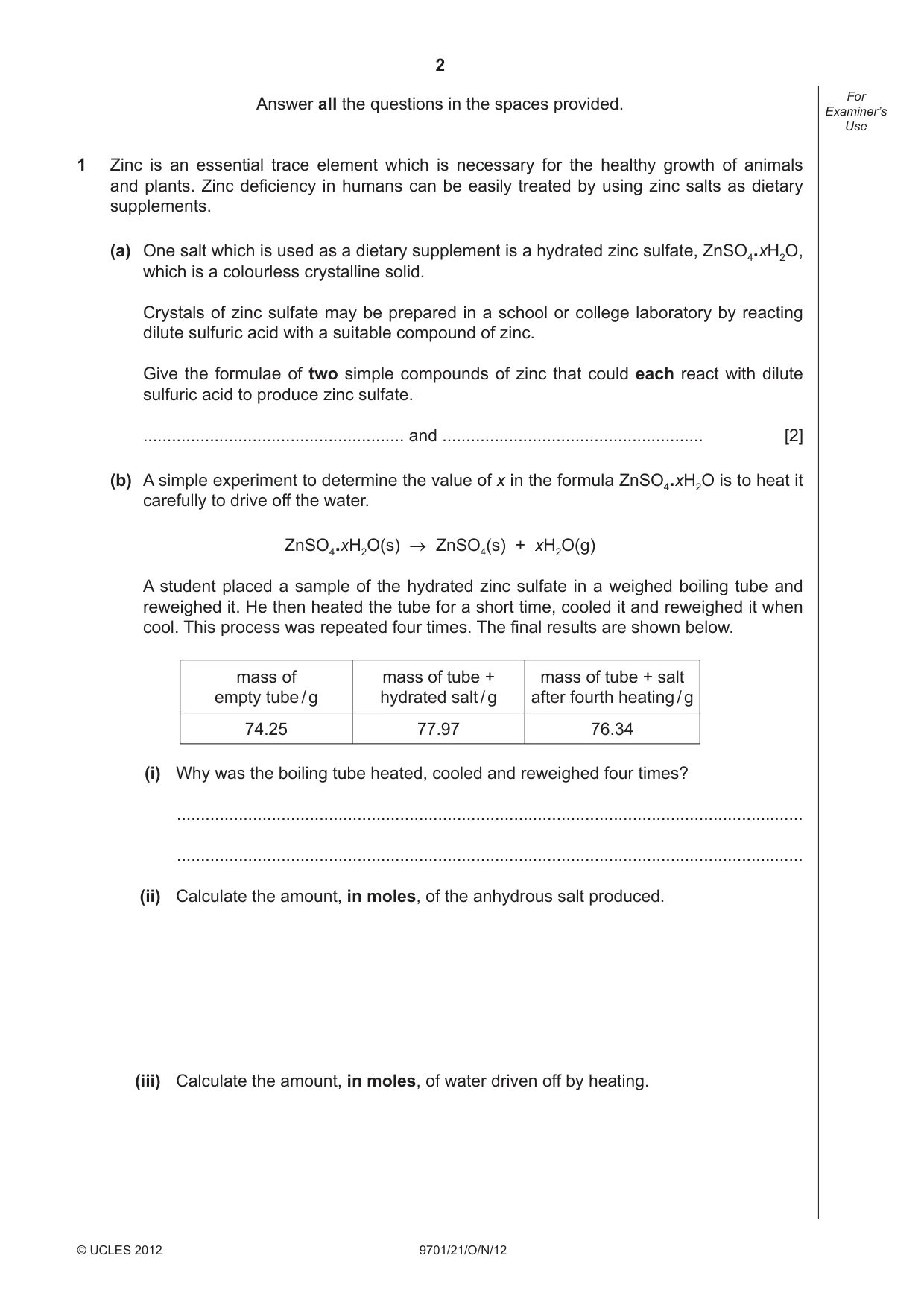
Question paper, page 2
2 9701/21/O/N/12 © UCLES 2012 For Examiner’s Use Answer all the questions in the spaces provided. 1 Zinc is an essential trace element which is necessary for the healthy growth of animals and plants. Zinc defi ciency in humans can be easily treated by using zinc salts as dietary supplements. (a) One salt which is used as a dietary supplement is a hydrated zinc sulfate, ZnSO4.xH2O, which is a colourless crystalline solid. Crystals of zinc sulfate may be prepared in a school or college laboratory by reacting dilute sulfuric acid with a suitable compound of zinc. Give the formulae of two simple compounds of zinc that could each react with dilute sulfuric acid to produce zinc sulfate. … and … [2] (b) A simple experiment to determine the value of x in the formula ZnSO4.xH2O is to heat it carefully to drive off the water. ZnSO4.xH2O(s) → ZnSO4(s) + xH2O(g) A student placed a sample of the hydrated zinc sulfate in a weighed boiling tube and reweighed it. He then heated the tube for a short time, cooled it and reweighed it when cool. This process was repeated four times. The fi nal results are shown below. mass of empty tube / g mass of tube + hydrated salt / g mass of tube + salt after fourth heating / g 74.25 77.97 76.34 (i) Why was the boiling tube heated, cooled and reweighed four times? … … (ii) Calculate the amount, in moles, of the anhydrous salt produced. (iii) Calculate the amount, in moles, of water driven off by heating.
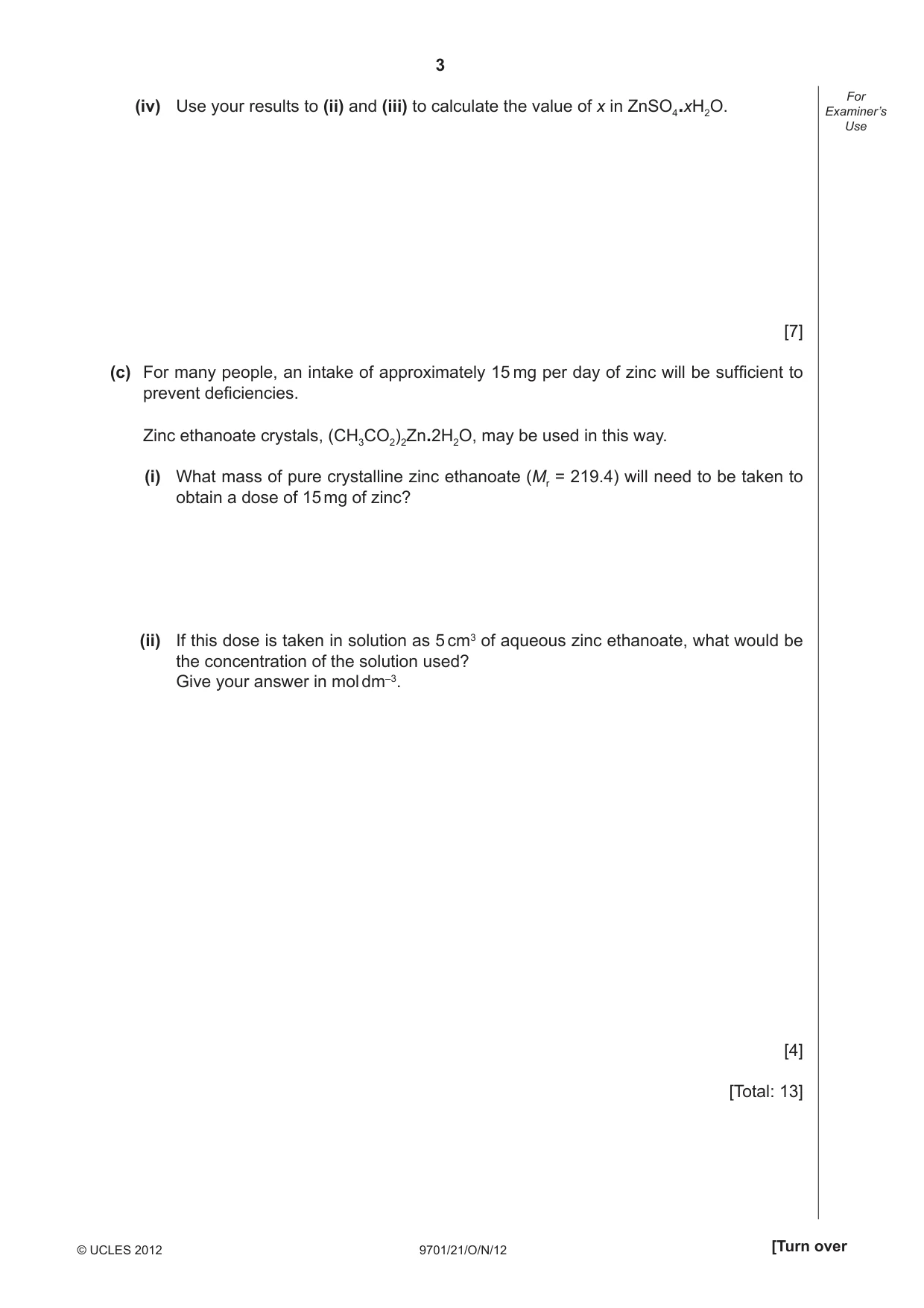
Question paper, page 3
3 9701/21/O/N/12 © UCLES 2012 [Turn over For Examiner’s Use (iv) Use your results to (ii) and (iii) to calculate the value of x in ZnSO4.xH2O. [7] (c) For many people, an intake of approximately 15 mg per day of zinc will be suffi cient to prevent defi ciencies. Zinc ethanoate crystals, (CH3CO2)2Zn.2H2O, may be used in this way. (i) What mass of pure crystalline zinc ethanoate (Mr = 219.4) will need to be taken to obtain a dose of 15 mg of zinc? (ii) If this dose is taken in solution as 5 cm3 of aqueous zinc ethanoate, what would be the concentration of the solution used? Give your answer in mol dm–3. [4] [Total: 13]
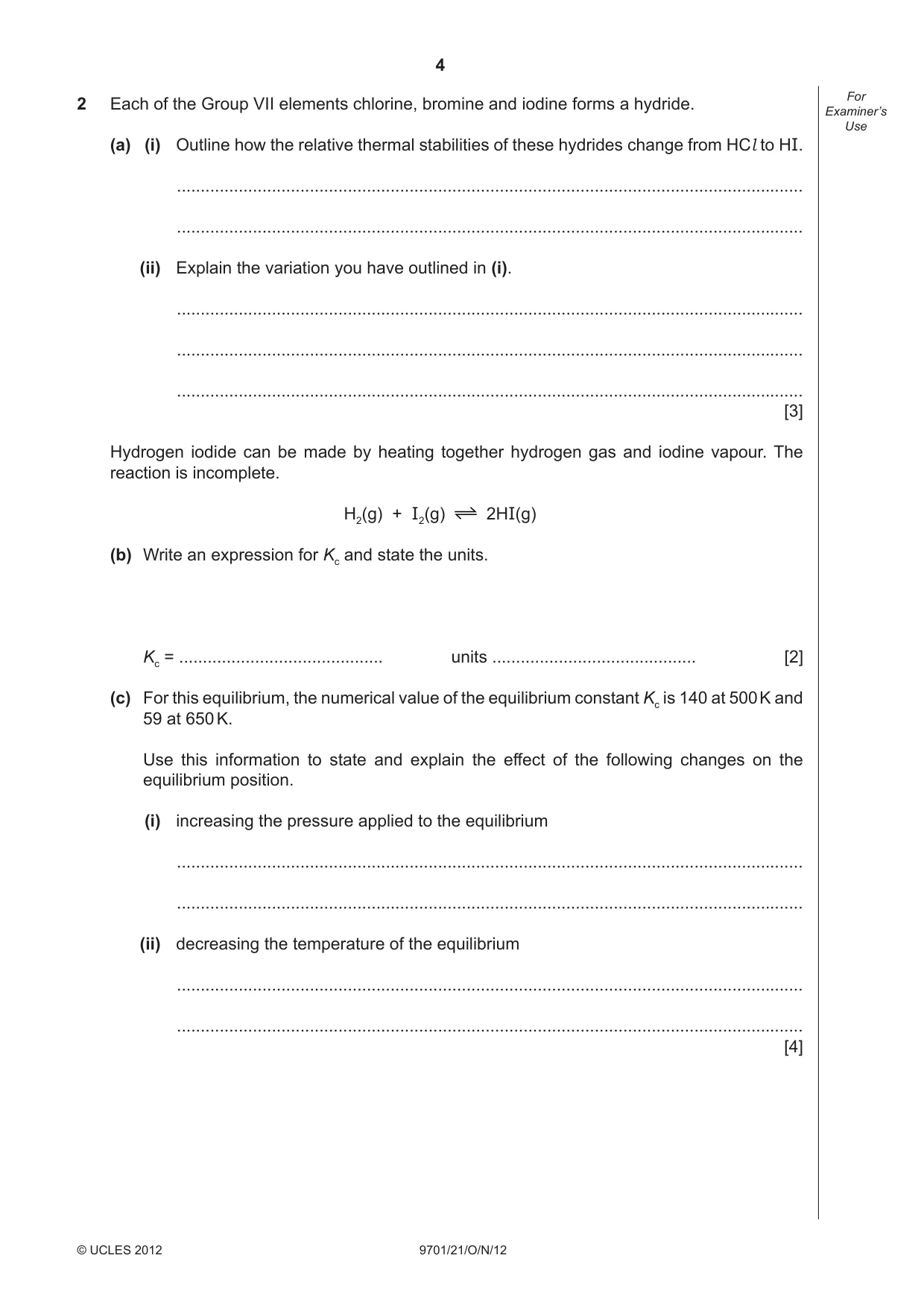
Question paper, page 4
4 9701/21/O/N/12 © UCLES 2012 For Examiner’s Use 2 Each of the Group VII elements chlorine, bromine and iodine forms a hydride. (a) (i) Outline how the relative thermal stabilities of these hydrides change from HCl to HI. … … (ii) Explain the variation you have outlined in (i). … … … [3] Hydrogen iodide can be made by heating together hydrogen gas and iodine vapour. The reaction is incomplete. H2(g) + I2(g) 2HI(g) (b) Write an expression for Kc and state the units. Kc = … units … [2] (c) For this equilibrium, the numerical value of the equilibrium constant Kc is 140 at 500 K and 59 at 650 K. Use this information to state and explain the effect of the following changes on the equilibrium position. (i) increasing the pressure applied to the equilibrium … … (ii) decreasing the temperature of the equilibrium … … [4]
Question paper, page 5
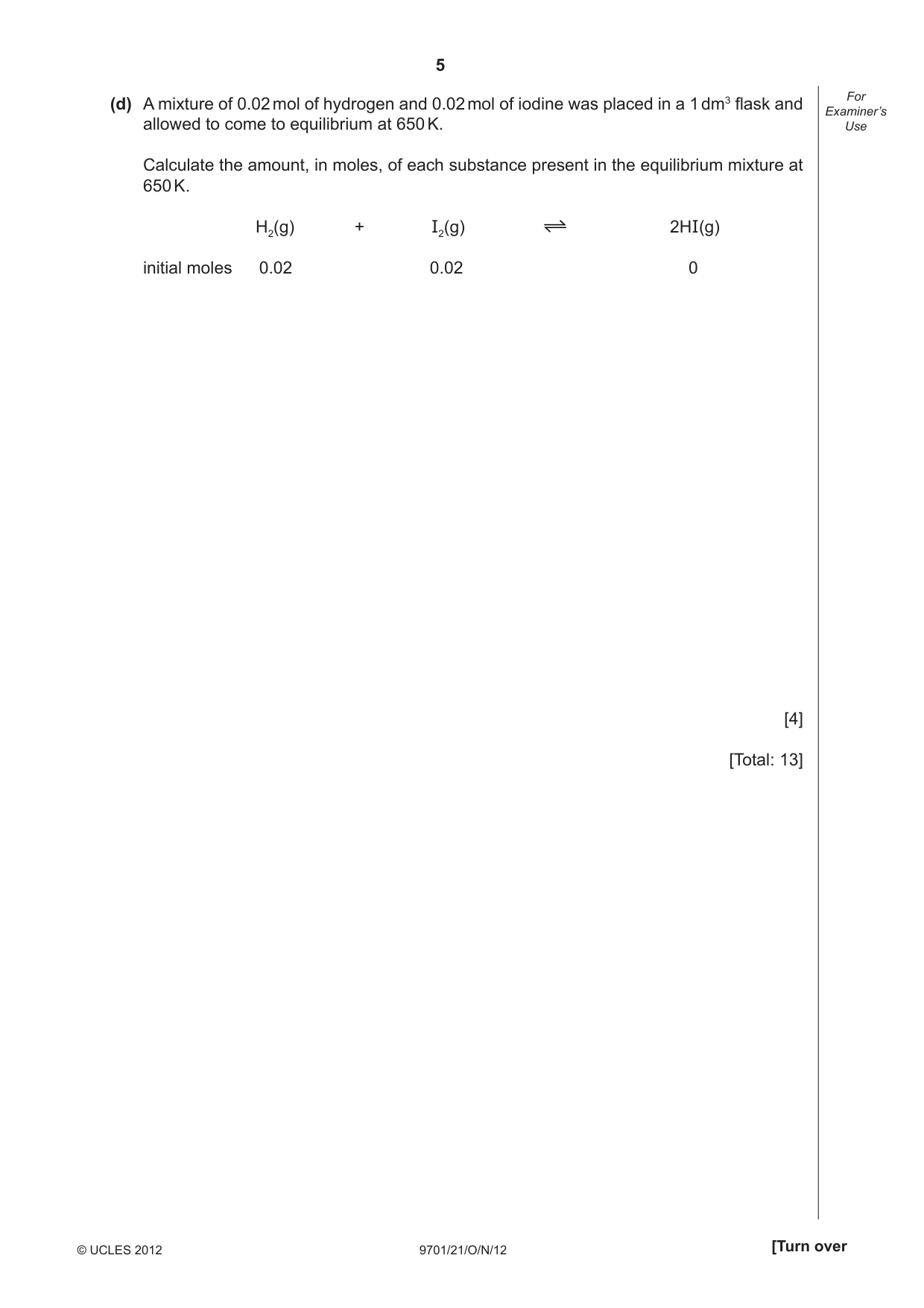
5 9701/21/O/N/12 © UCLES 2012 [Turn over For Examiner’s Use (d) A mixture of 0.02 mol of hydrogen and 0.02 mol of iodine was placed in a 1 dm3 fl ask and allowed to come to equilibrium at 650 K. Calculate the amount, in moles, of each substance present in the equilibrium mixture at 650 K. H2(g) + I2(g) 2HI(g) initial moles 0.02 0.02 0 [4] [Total: 13]
Question paper, page 6
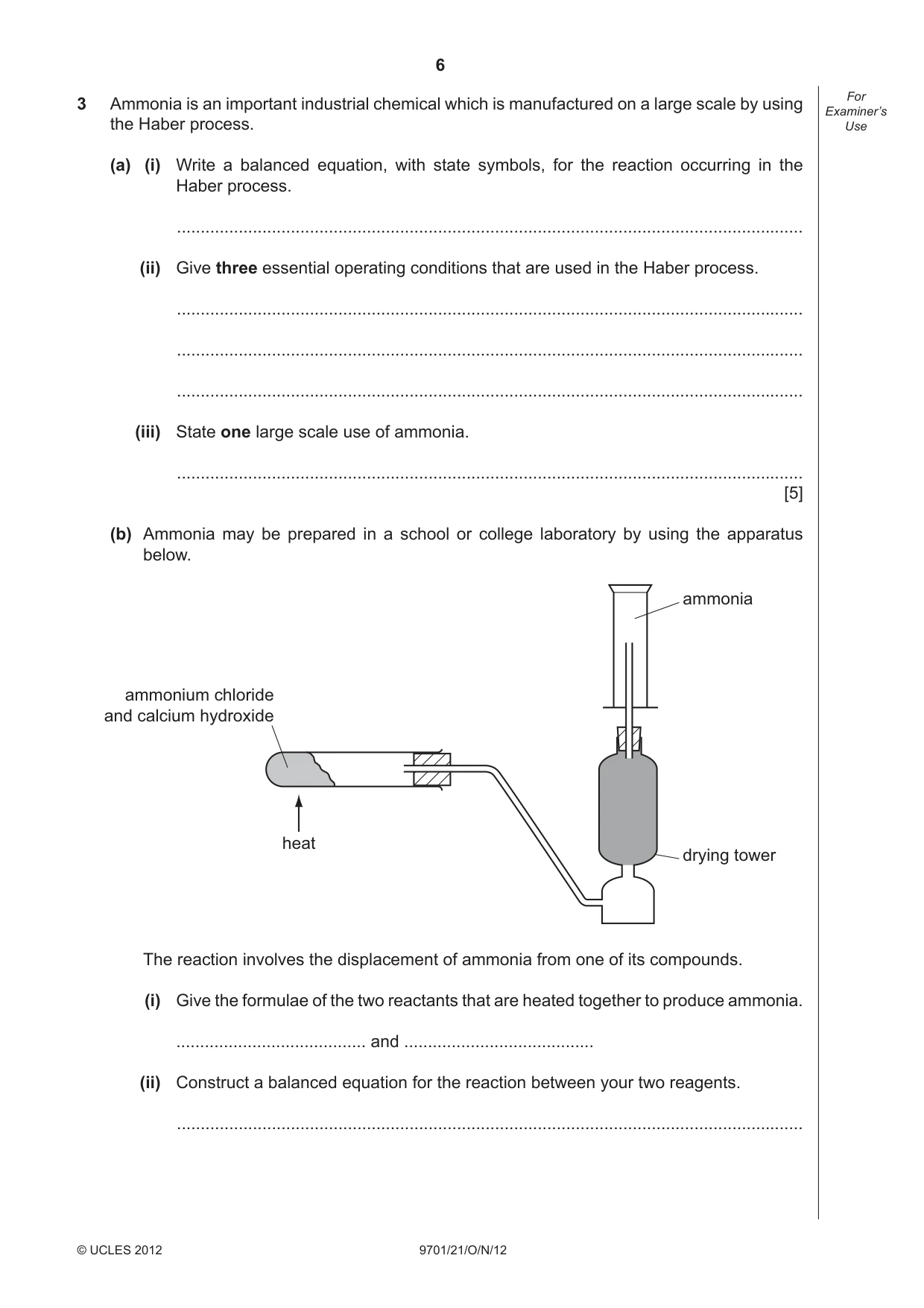
6 9701/21/O/N/12 © UCLES 2012 For Examiner’s Use 3 Ammonia is an important industrial chemical which is manufactured on a large scale by using the Haber process. (a) (i) Write a balanced equation, with state symbols, for the reaction occurring in the Haber process. … (ii) Give three essential operating conditions that are used in the Haber process. … … … (iii) State one large scale use of ammonia. … [5] (b) Ammonia may be prepared in a school or college laboratory by using the apparatus below. ammonium chloride and calcium hydroxide heat ammonia drying tower The reaction involves the displacement of ammonia from one of its compounds. (i) Give the formulae of the two reactants that are heated together to produce ammonia. … and … (ii) Construct a balanced equation for the reaction between your two reagents. …
Question paper, page 7
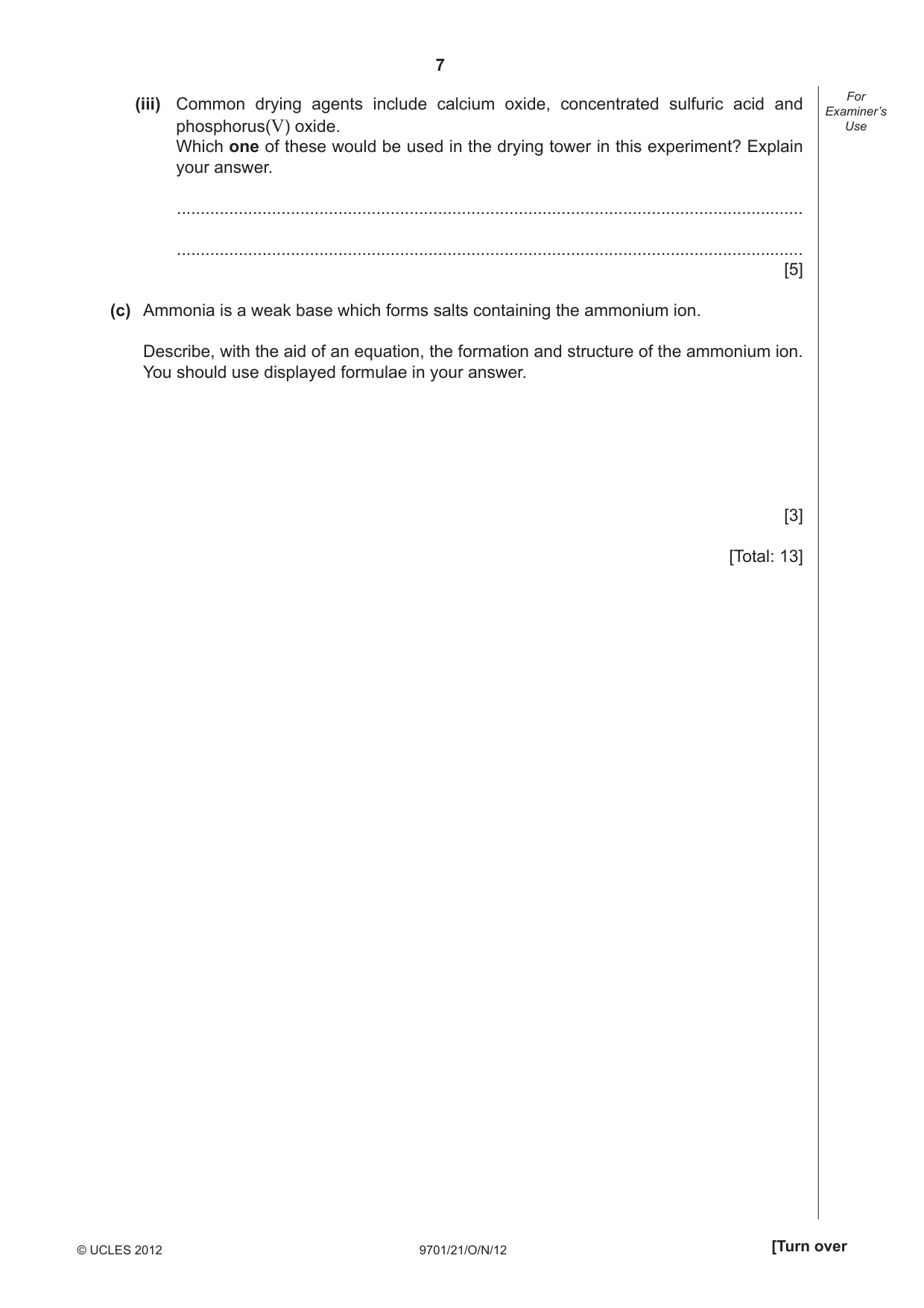
7 9701/21/O/N/12 © UCLES 2012 [Turn over For Examiner’s Use (iii) Common drying agents include calcium oxide, concentrated sulfuric acid and phosphorus(V) oxide. Which one of these would be used in the drying tower in this experiment? Explain your answer. … … [5] (c) Ammonia is a weak base which forms salts containing the ammonium ion. Describe, with the aid of an equation, the formation and structure of the ammonium ion. You should use displayed formulae in your answer. [3] [Total: 13]
Question paper, page 8
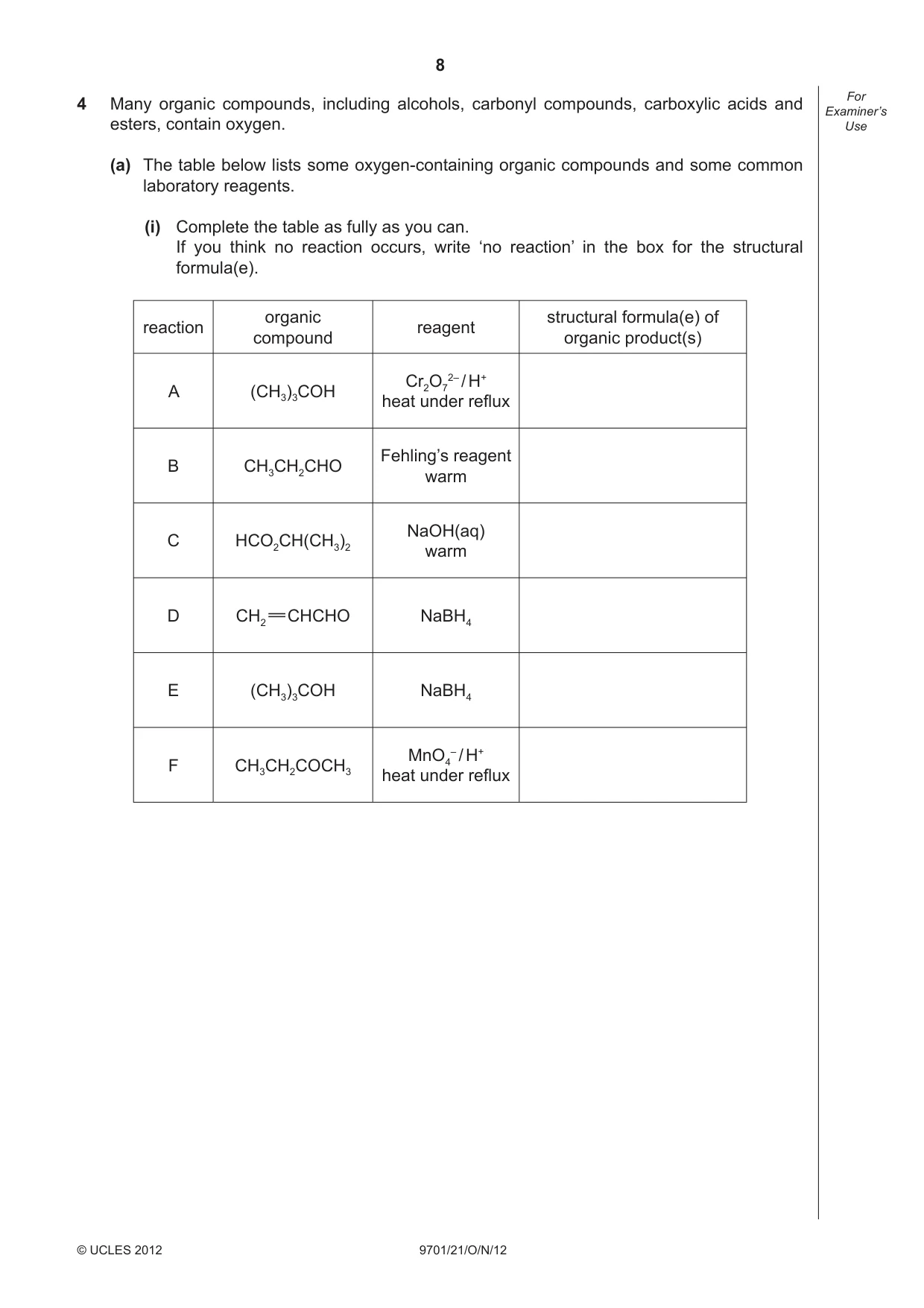
8 9701/21/O/N/12 © UCLES 2012 For Examiner’s Use 4 Many organic compounds, including alcohols, carbonyl compounds, carboxylic acids and esters, contain oxygen. (a) The table below lists some oxygen-containing organic compounds and some common laboratory reagents. (i) Complete the table as fully as you can. If you think no reaction occurs, write ‘no reaction’ in the box for the structural formula(e). reaction organic compound reagent structural formula(e) of organic product(s) A (CH3)3COH Cr2O7 2– / H+ heat under refl ux B CH3CH2CHO Fehling’s reagent warm C HCO2CH(CH3)2 NaOH(aq) warm D CH2 CHCHO NaBH4 E (CH3)3COH NaBH4 F CH3CH2COCH3 MnO4 – / H+ heat under refl ux
Question paper, page 9
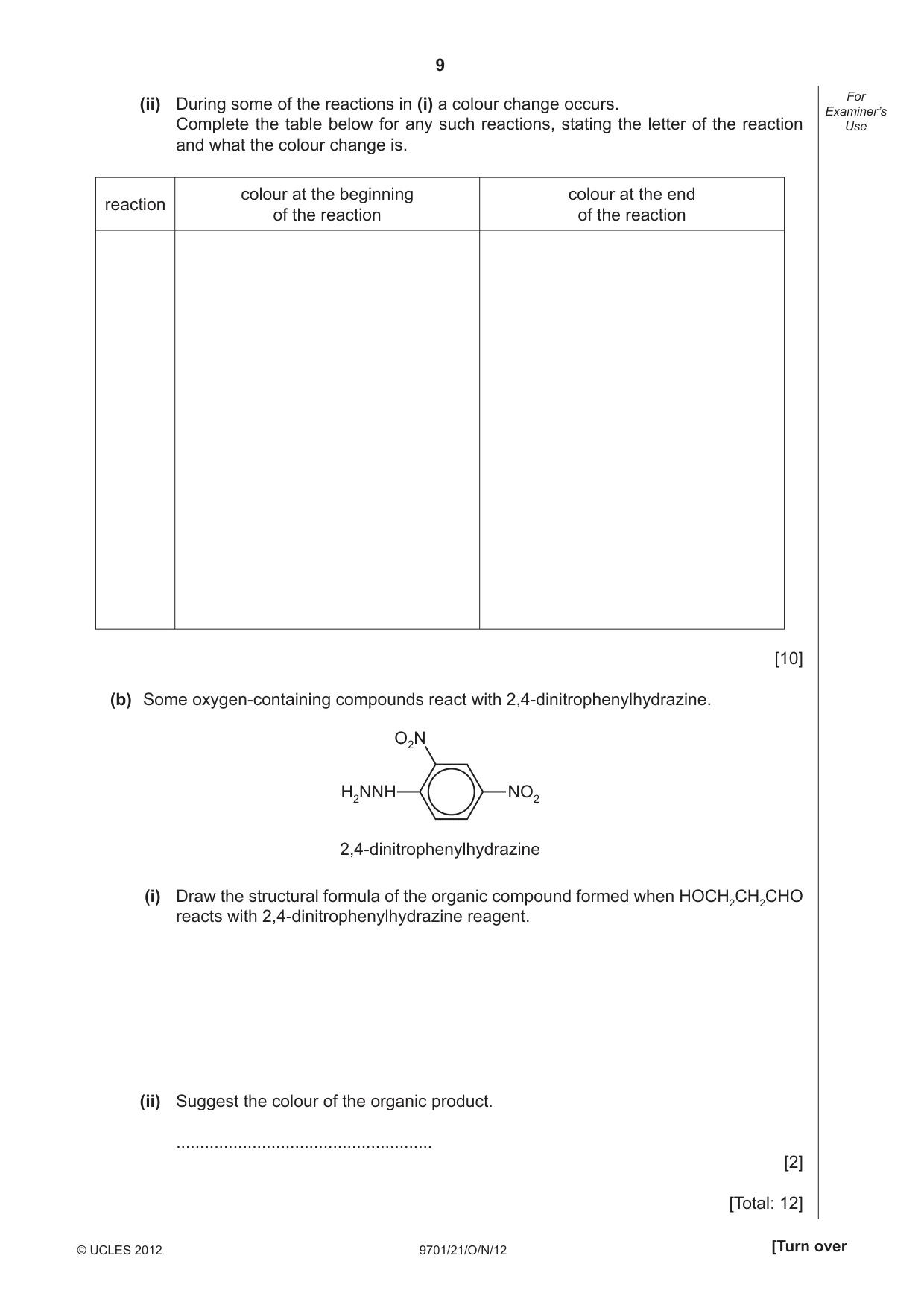
9 9701/21/O/N/12 © UCLES 2012 [Turn over For Examiner’s Use (ii) During some of the reactions in (i) a colour change occurs. Complete the table below for any such reactions, stating the letter of the reaction and what the colour change is. reaction colour at the beginning of the reaction colour at the end of the reaction [10] (b) Some oxygen-containing compounds react with 2,4-dinitrophenylhydrazine. O2N H2NNH NO2 2,4-dinitrophenylhydrazine (i) Draw the structural formula of the organic compound formed when HOCH2CH2CHO reacts with 2,4-dinitrophenylhydrazine reagent. (ii) Suggest the colour of the organic product. … [2] [Total: 12]
Question paper, page 10
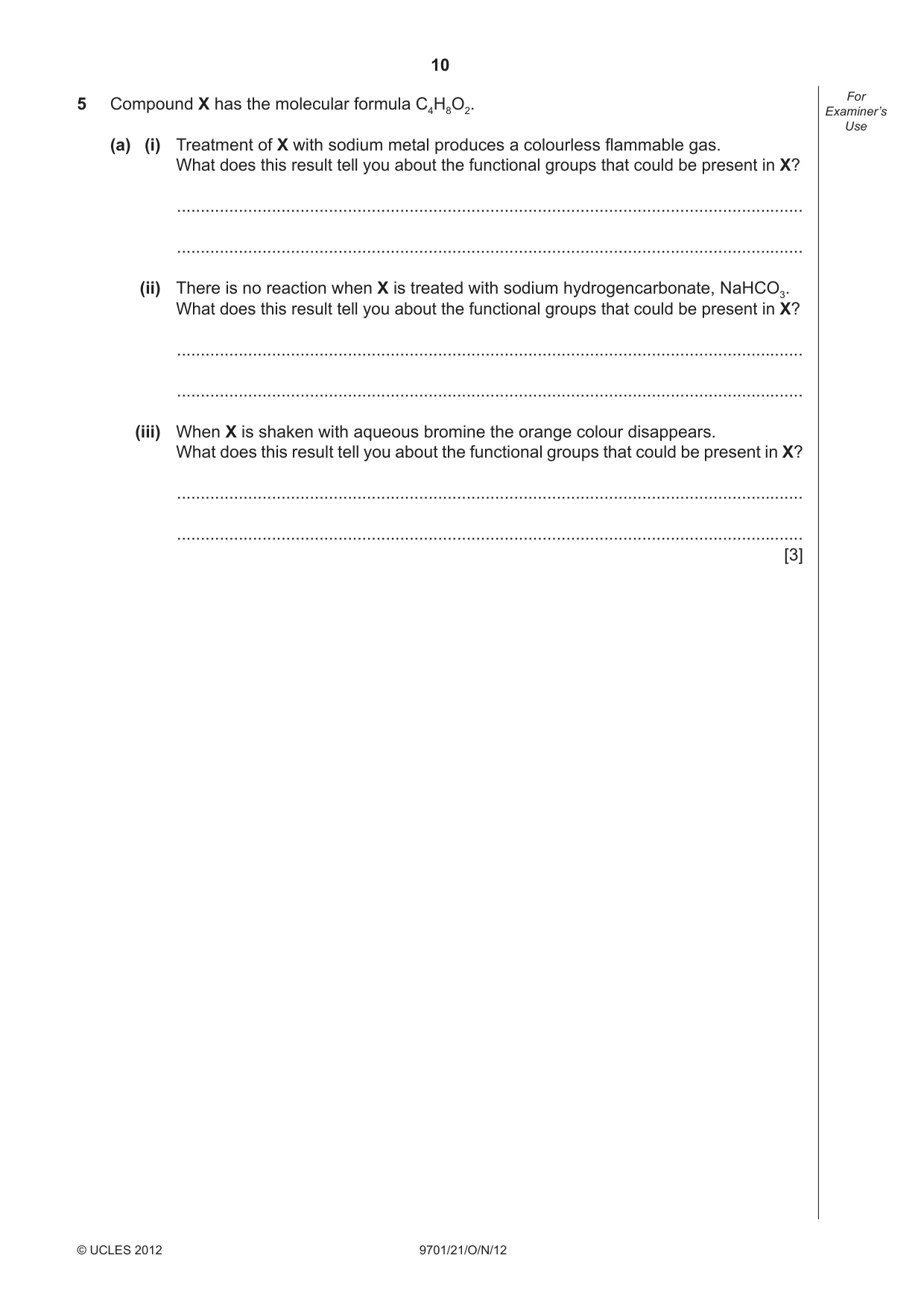
10 9701/21/O/N/12 © UCLES 2012 For Examiner’s Use 5 Compound X has the molecular formula C4H8O2. (a) (i) Treatment of X with sodium metal produces a colourless fl ammable gas. What does this result tell you about the functional groups that could be present in X? … … (ii) There is no reaction when X is treated with sodium hydrogencarbonate, NaHCO3. What does this result tell you about the functional groups that could be present in X? … … (iii) When X is shaken with aqueous bromine the orange colour disappears. What does this result tell you about the functional groups that could be present in X? … … [3]
Question paper, page 11
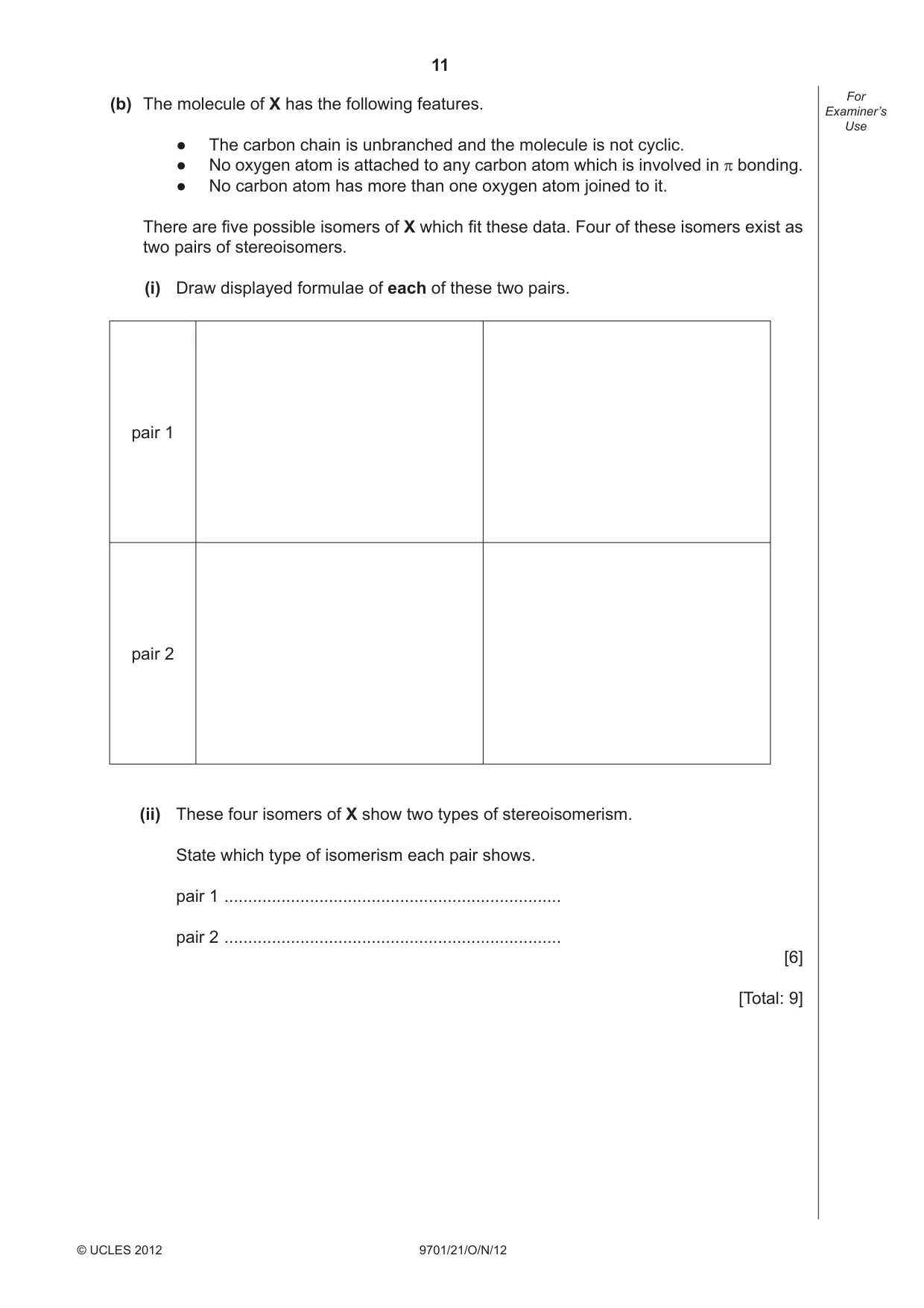
11 9701/21/O/N/12 © UCLES 2012 [Turn over For Examiner’s Use (b) The molecule of X has the following features. ● The carbon chain is unbranched and the molecule is not cyclic. ● No oxygen atom is attached to any carbon atom which is involved in π bonding. ● No carbon atom has more than one oxygen atom joined to it. There are fi ve possible isomers of X which fi t these data. Four of these isomers exist as two pairs of stereoisomers. (i) Draw displayed formulae of each of these two pairs. pair 1 pair 2 (ii) These four isomers of X show two types of stereoisomerism. State which type of isomerism each pair shows. pair 1 … pair 2 … [6] [Total: 9]
Question paper, page 12
12 Permission to reproduce items where third-party owned material protected by copyright is included has been sought and cleared where possible. Every reasonable effort has been made by the publisher (UCLES) to trace copyright holders, but if any items requiring clearance have unwittingly been included the publisher will be pleased to make amends at the earliest possible opportunity. University of Cambridge International Examinations is part of the Cambridge Assessment Group. Cambridge Assessment is the brand name of University of Cambridge Local Examinations Syndicate (UCLES), which is itself a department of the University of Cambridge. 9701/21/O/N/12 © UCLES 2012 BLANK PAGE
Mark scheme, page 1
CAMBRIDGE INTERNATIONAL EXAMINATIONS GCE Advanced Subsidiary Level and GCE Advanced Level MARK SCHEME for the October/November 2012 series 9701 CHEMISTRY 9701/21 Paper 2 (AS Structured Questions), maximum raw mark 60 This mark scheme is published as an aid to teachers and candidates, to indicate the requirements of the examination. It shows the basis on which Examiners were instructed to award marks. It does not indicate the details of the discussions that took place at an Examiners’ meeting before marking began, which would have considered the acceptability of alternative answers. Mark schemes should be read in conjunction with the question paper and the Principal Examiner Report for Teachers. Cambridge will not enter into discussions about these mark schemes. Cambridge is publishing the mark schemes for the October/November 2012 series for most IGCSE, GCE Advanced Level and Advanced Subsidiary Level components and some Ordinary Level components.
Mark scheme, page 2
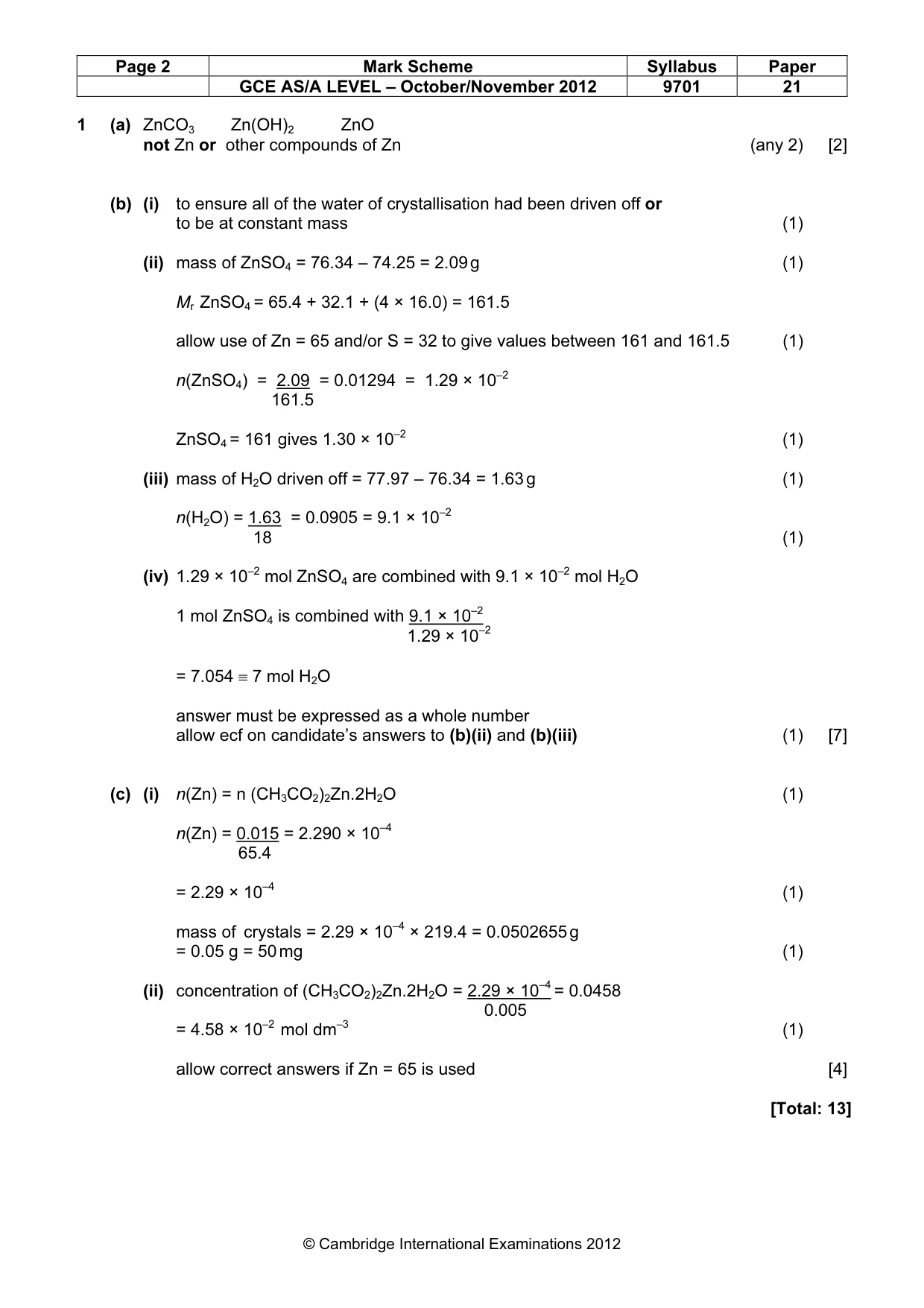
Page 2 Mark Scheme Syllabus Paper GCE AS/A LEVEL – October/November 2012 9701 21 © Cambridge International Examinations 2012 1 (a) ZnCO3 Zn(OH)2 ZnO not Zn or other compounds of Zn (any 2) [2] (b) (i) to ensure all of the water of crystallisation had been driven off or to be at constant mass (1) (ii) mass of ZnSO4 = 76.34 – 74.25 = 2.09 g (1) Mr ZnSO4 = 65.4 + 32.1 + (4 × 16.0) = 161.5 allow use of Zn = 65 and/or S = 32 to give values between 161 and 161.5 (1) n(ZnSO4) = 2.09 = 0.01294 = 1.29 × 10⁻² 161.5 ZnSO4 = 161 gives 1.30 × 10⁻² (1) (iii) mass of H2O driven off = 77.97 – 76.34 = 1.63 g (1) n(H2O) = 1.63 = 0.0905 = 9.1 × 10⁻² 18 (1) (iv) 1.29 × 10⁻² mol ZnSO4 are combined with 9.1 × 10⁻² mol H2O 1 mol ZnSO4 is combined with 9.1 × 10⁻² 1.29 × 10–2 = 7.054 ≡ 7 mol H2O answer must be expressed as a whole number allow ecf on candidate’s answers to (b)(ii) and (b)(iii) (1) [7] (c) (i) n(Zn) = n (CH3CO2)2Zn.2H2O (1) n(Zn) = 0.015 = 2.290 × 10⁻⁴ 65.4 = 2.29 × 10⁻⁴ (1) mass of crystals = 2.29 × 10–4 × 219.4 = 0.0502655 g = 0.05 g = 50 mg (1) (ii) concentration of (CH3CO2)2Zn.2H2O = 2.29 × 10–4 = 0.0458 0.005 = 4.58 × 10⁻² mol dm–3 (1) allow correct answers if Zn = 65 is used [4] [Total: 13]
Mark scheme, page 3
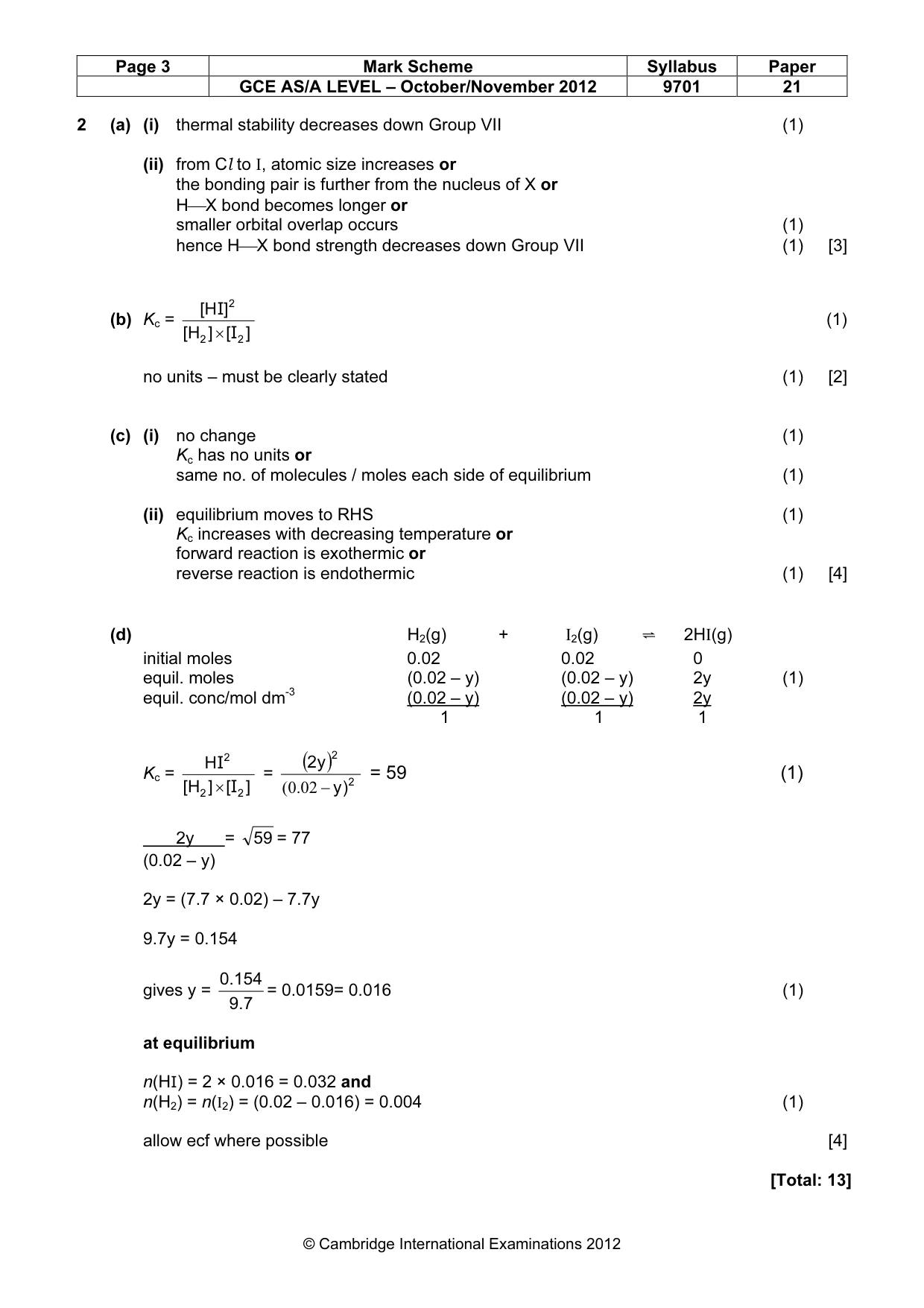
Page 3 Mark Scheme Syllabus Paper GCE AS/A LEVEL – October/November 2012 9701 21 © Cambridge International Examinations 2012 2 (a) (i) thermal stability decreases down Group VII (1) (ii) from Cl to I, atomic size increases or the bonding pair is further from the nucleus of X or HX bond becomes longer or smaller orbital overlap occurs (1) hence HX bond strength decreases down Group VII (1) [3] (b) Kc = ] [ ] [H ] [H 2 2 2 I I × (1) no units – must be clearly stated (1) [2] (c) (i) no change (1) Kc has no units or same no. of molecules / moles each side of equilibrium (1) (ii) equilibrium moves to RHS (1) Kc increases with decreasing temperature or forward reaction is exothermic or reverse reaction is endothermic (1) [4] (d) H2(g) + I2(g) ⇋ 2HI(g) initial moles 0.02 0.02 0 equil. moles (0.02 – y) (0.02 – y) 2y (1) equil. conc/mol dm-3 (0.02 – y) (0.02 – y) 2y 1 1 1 Kc = ] [ ] [H H 2 2 2 I I × = ( ) 2 2 ) y y 2 − (0.02 = 59 (1) 2y = 59 = 77 (0.02 – y) 2y = (7.7 × 0.02) – 7.7y 9.7y = 0.154 gives y = 9.7 0.154 = 0.0159= 0.016 (1) at equilibrium n(HI) = 2 × 0.016 = 0.032 and n(H2) = n(I2) = (0.02 – 0.016) = 0.004 (1) allow ecf where possible [4] [Total: 13]
Mark scheme, page 4
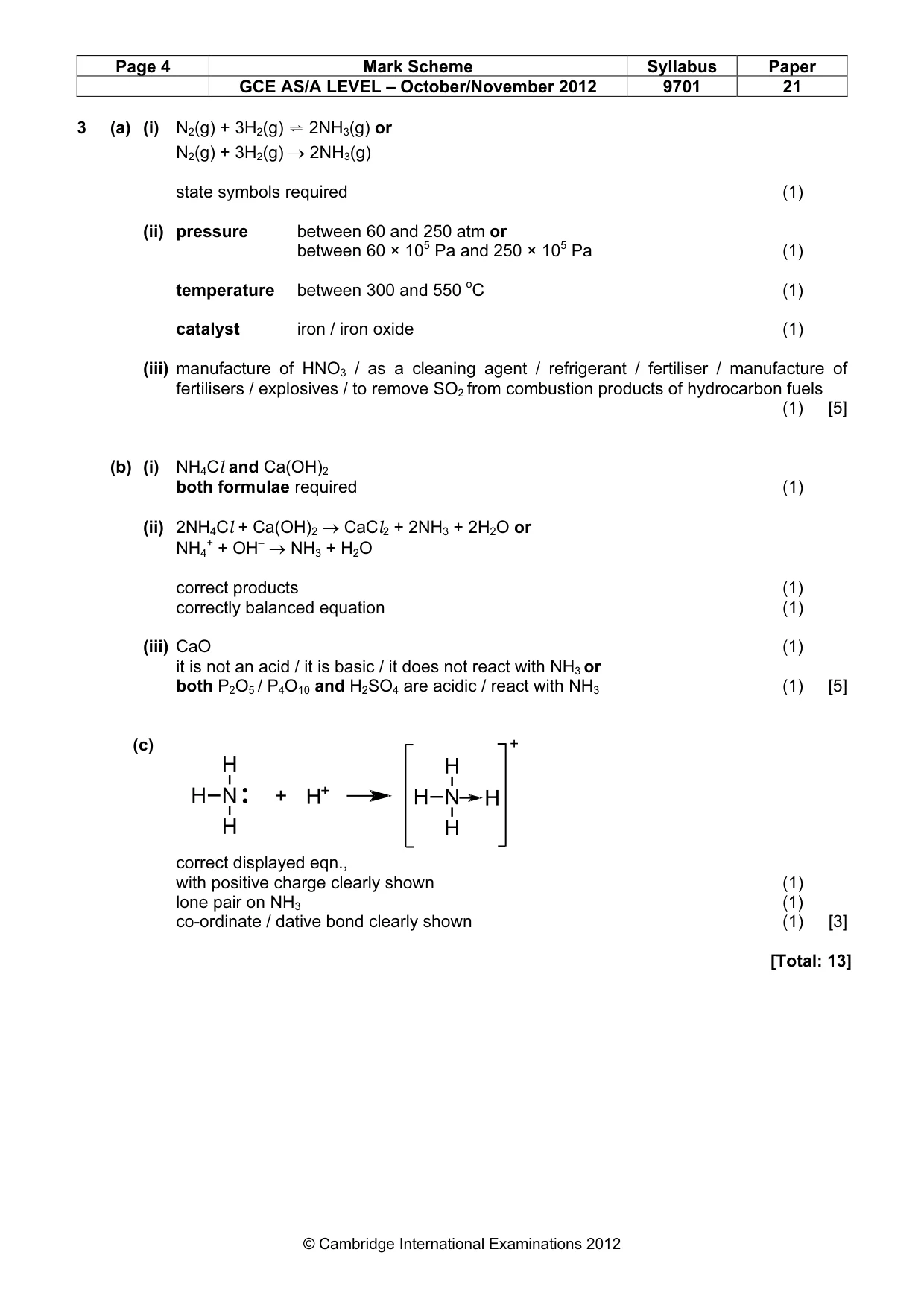
Page 4 Mark Scheme Syllabus Paper GCE AS/A LEVEL – October/November 2012 9701 21 © Cambridge International Examinations 2012 3 (a) (i) N2(g) + 3H2(g) ⇋ 2NH3(g) or N2(g) + 3H2(g) → 2NH3(g) state symbols required (1) (ii) pressure between 60 and 250 atm or between 60 × 105 Pa and 250 × 105 Pa (1) temperature between 300 and 550 oC (1) catalyst iron / iron oxide (1) (iii) manufacture of HNO3 / as a cleaning agent / refrigerant / fertiliser / manufacture of fertilisers / explosives / to remove SO2 from combustion products of hydrocarbon fuels (1) [5] (b) (i) NH4Cl and Ca(OH)2 both formulae required (1) (ii) 2NH4Cl + Ca(OH)2 → CaCl2 + 2NH3 + 2H2O or NH4 + + OH– → NH3 + H2O correct products (1) correctly balanced equation (1) (iii) CaO (1) it is not an acid / it is basic / it does not react with NH3 or both P2O5 / P4O10 and H2SO4 are acidic / react with NH3 (1) [5] (c) correct displayed eqn., with positive charge clearly shown (1) lone pair on NH3 (1) co-ordinate / dative bond clearly shown (1) [3] [Total: 13]
Mark scheme, page 5
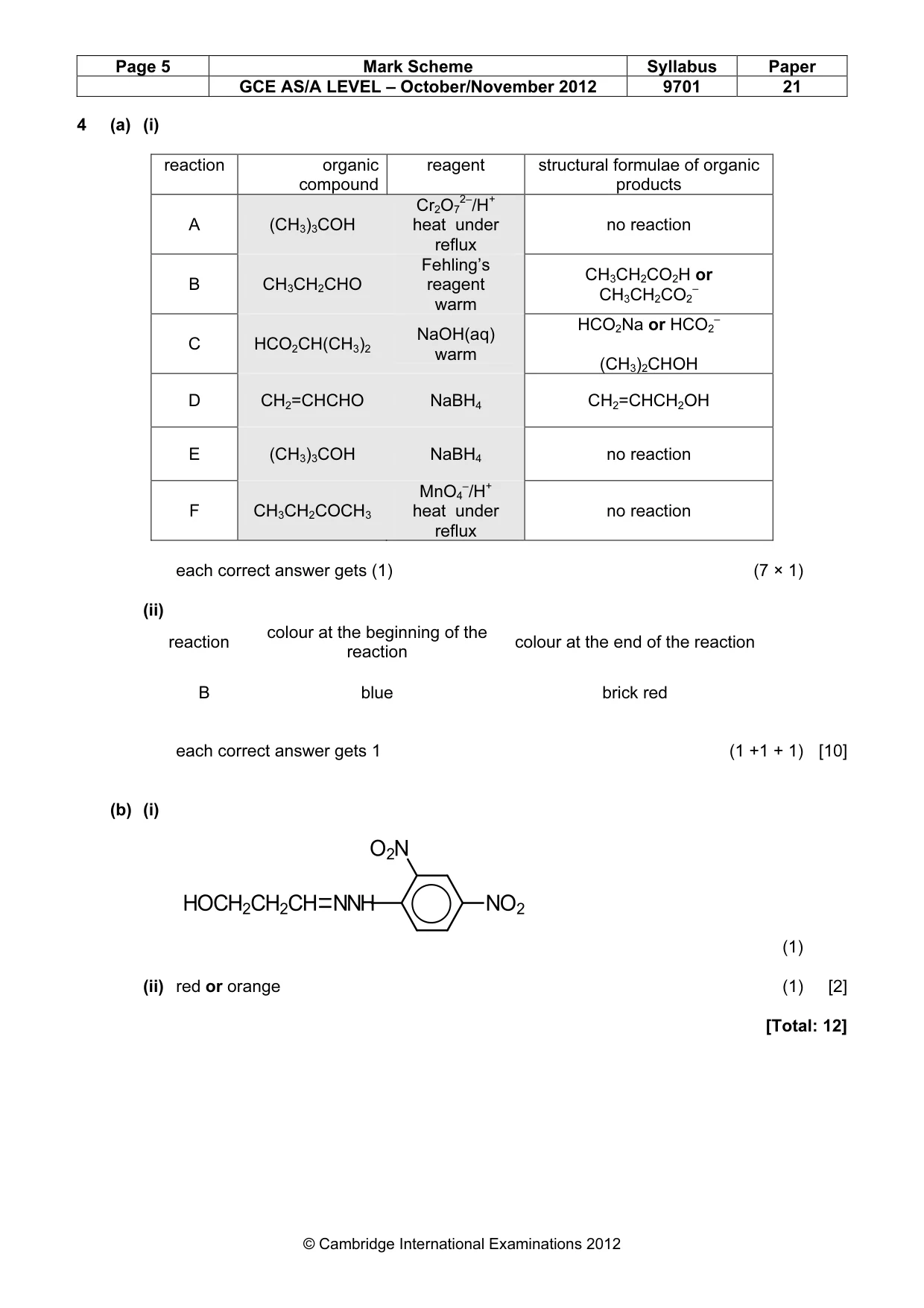
Page 5 Mark Scheme Syllabus Paper GCE AS/A LEVEL – October/November 2012 9701 21 © Cambridge International Examinations 2012 4 (a) (i) reaction organic compound reagent structural formulae of organic products A (CH3)3COH Cr2O7 2–/H+ heat under reflux no reaction B CH3CH2CHO Fehling’s reagent warm CH3CH2CO2H or CH3CH2CO2 – C HCO2CH(CH3)2 NaOH(aq) warm HCO2Na or HCO2 – (CH3)2CHOH D CH2=CHCHO NaBH4 CH2=CHCH2OH E (CH3)3COH NaBH4 no reaction F CH3CH2COCH3 MnO4 –/H+ heat under reflux no reaction each correct answer gets (1) (7 × 1) (ii) reaction colour at the beginning of the reaction colour at the end of the reaction B blue brick red each correct answer gets 1 (1 +1 + 1) [10] (b) (i) (1) (ii) red or orange (1) [2] [Total: 12]
Mark scheme, page 6
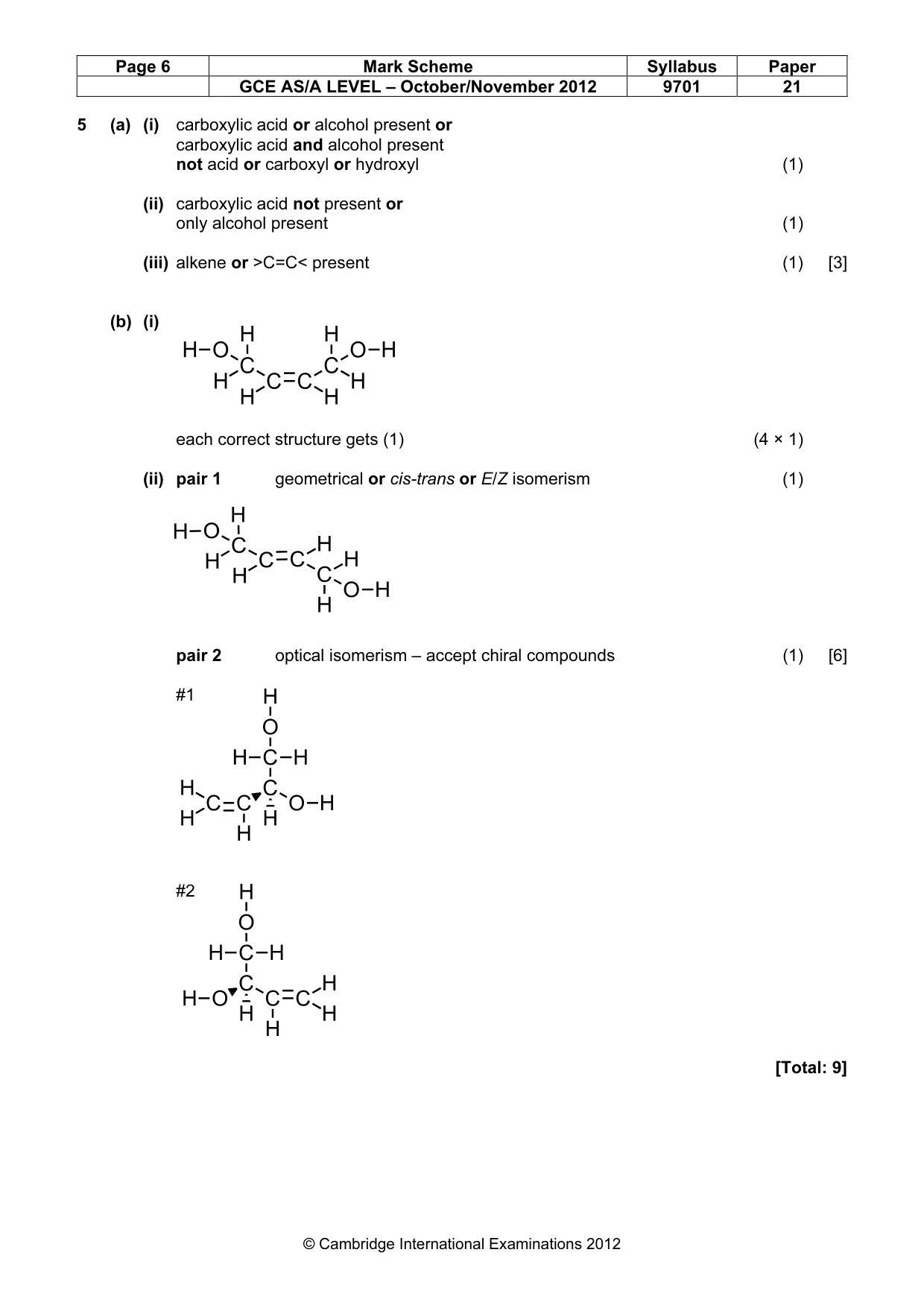
Page 6 Mark Scheme Syllabus Paper GCE AS/A LEVEL – October/November 2012 9701 21 © Cambridge International Examinations 2012 5 (a) (i) carboxylic acid or alcohol present or carboxylic acid and alcohol present not acid or carboxyl or hydroxyl (1) (ii) carboxylic acid not present or only alcohol present (1) (iii) alkene or >C=C< present (1) [3] (b) (i) each correct structure gets (1) (4 × 1) (ii) pair 1 geometrical or cis-trans or E/Z isomerism (1) pair 2 optical isomerism – accept chiral compounds (1) [6] #1 #2 [Total: 9]
What you needed in this session
Cambridge’s own grade thresholds for 2012 Oct/Nov, Paper 2 · Variant 1. A higher threshold means an easier paper — the bar moves with how the cohort did.