Cambridge A Level Chemistry 9701 — 2011 Oct/Nov Paper 4 · Variant 2
9701/42/O/N/11 · 100 marks · ≈113 min
The question paper and its mark scheme, free to read here and free to download. This is Cambridge’s own paper, exactly as it was sat.
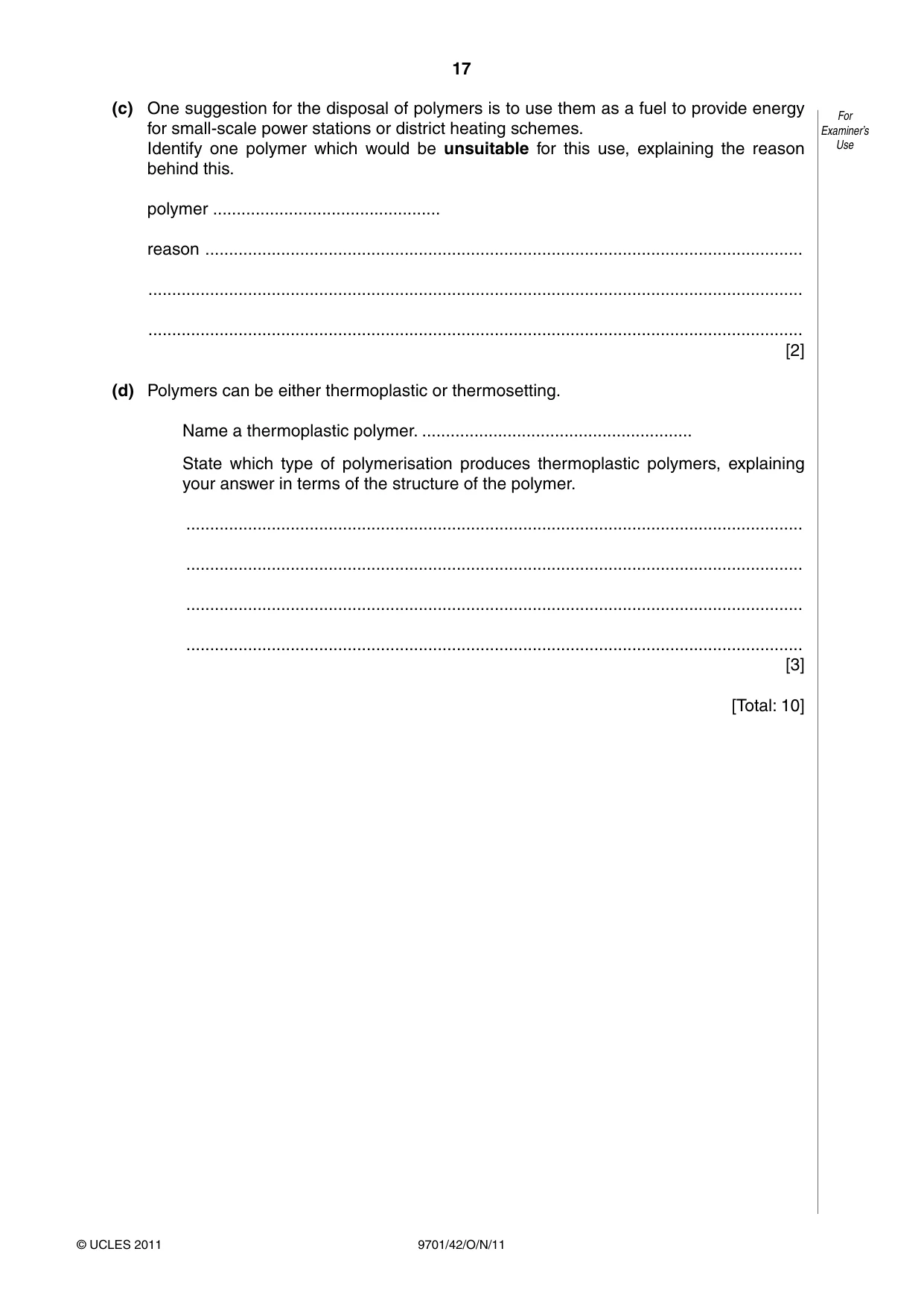
Question paper20 pages


Mark scheme9 pages
Answers below. Sit the paper first if you are practising.
Paper as text
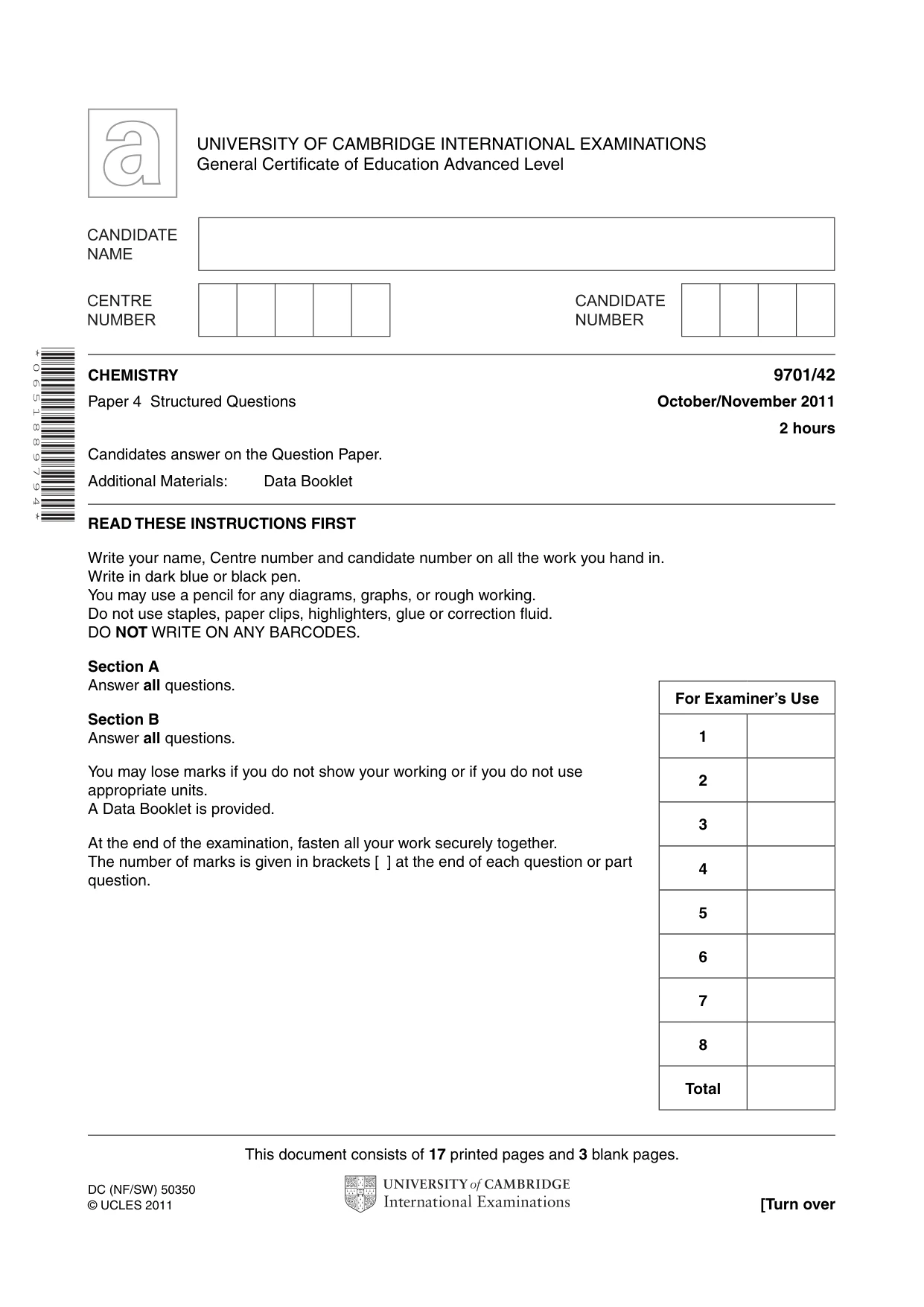
Question paper, page 1
This document consists of 17 printed pages and 3 blank pages. DC (NF/SW) 50350 © UCLES 2011 [Turn over UNIVERSITY OF CAMBRIDGE INTERNATIONAL EXAMINATIONS General Certificate of Education Advanced Level * 0 6 5 1 8 8 9 7 9 4 * CHEMISTRY 9701/42 Paper 4 Structured Questions October/November 2011 2 hours Candidates answer on the Question Paper. Additional Materials: Data Booklet READ THESE INSTRUCTIONS FIRST Write your name, Centre number and candidate number on all the work you hand in. Write in dark blue or black pen. You may use a pencil for any diagrams, graphs, or rough working. Do not use staples, paper clips, highlighters, glue or correction fluid. DO NOT WRITE ON ANY BARCODES. Section A Answer all questions. Section B Answer all questions. You may lose marks if you do not show your working or if you do not use appropriate units. A Data Booklet is provided. At the end of the examination, fasten all your work securely together. The number of marks is given in brackets [ ] at the end of each question or part question. For Examiner’s Use 1 2 3 4 5 6 7 8 Total
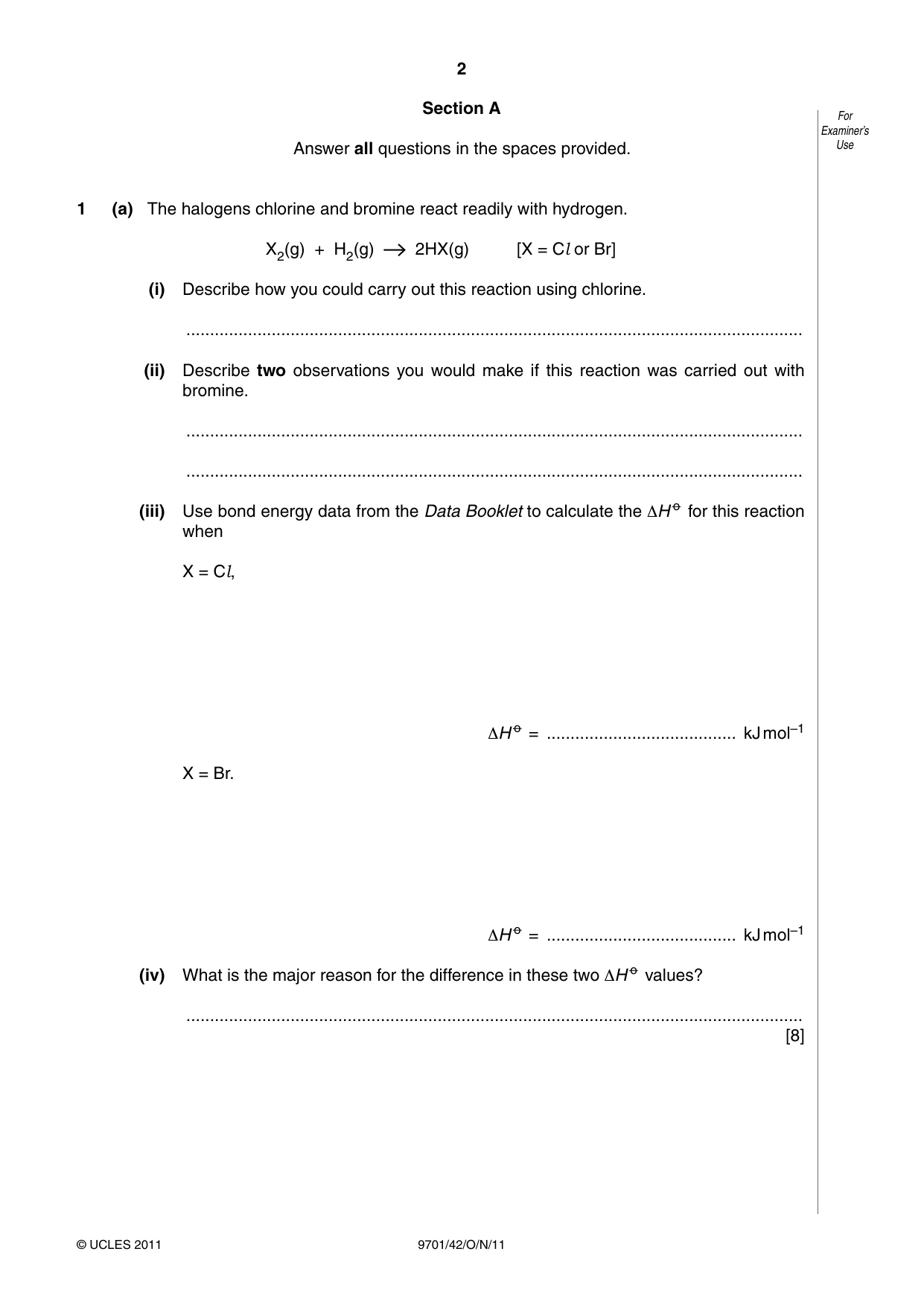
Question paper, page 2
2 9701/42/O/N/11 © UCLES 2011 For Examiner’s Use Section A Answer all questions in the spaces provided. 1 (a) The halogens chlorine and bromine react readily with hydrogen. X2(g) + H2(g) 2HX(g) [X = Cl or Br] (i) Describe how you could carry out this reaction using chlorine. … (ii) Describe two observations you would make if this reaction was carried out with bromine. … … (iii) Use bond energy data from the Data Booklet to calculate the ΔH o for this reaction when X = Cl, ΔH o = … kJ mol–1 X = Br. ΔH o = … kJ mol–1 (iv) What is the major reason for the difference in these two ΔH o values? … [8]
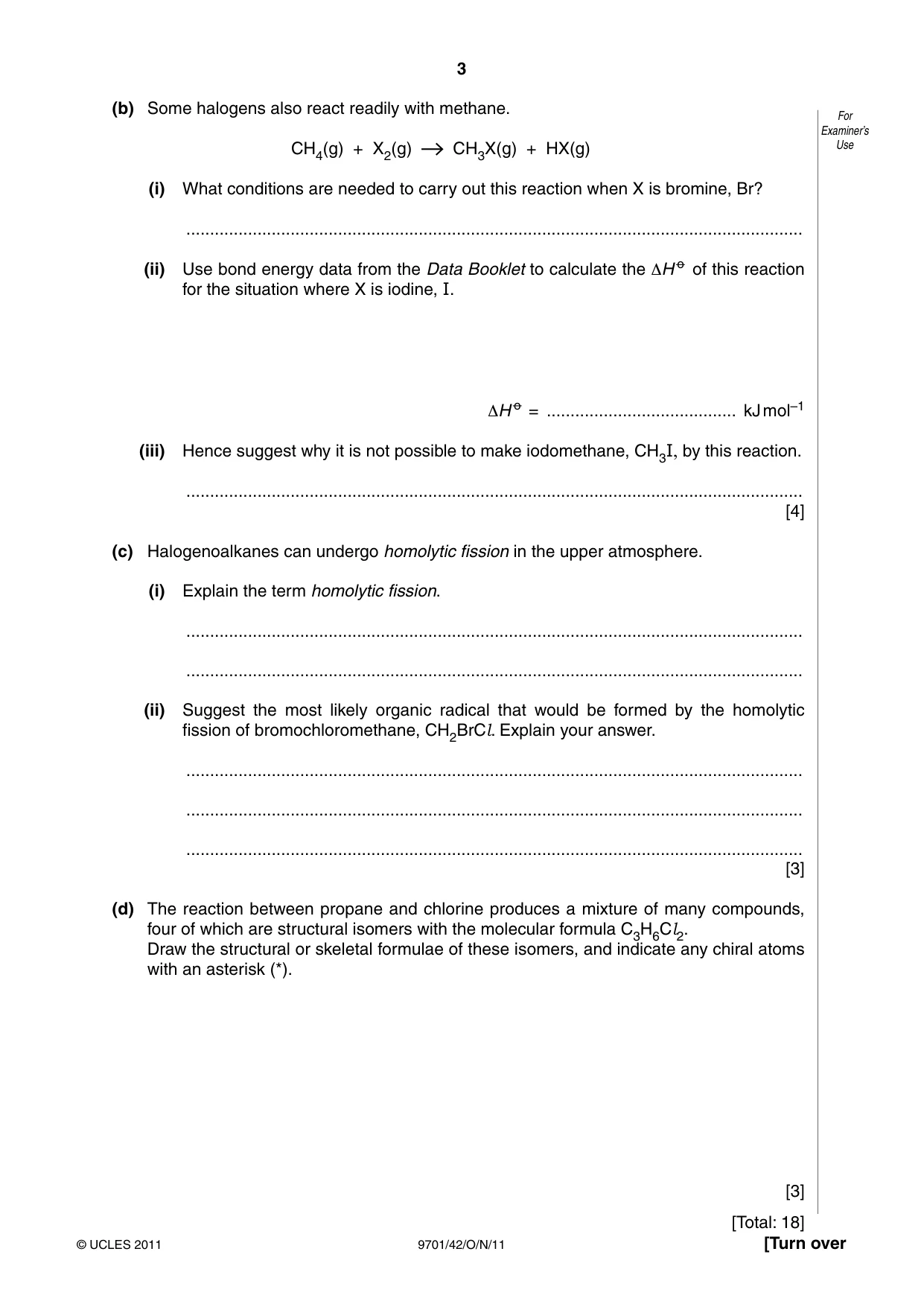
Question paper, page 3
3 9701/42/O/N/11 © UCLES 2011 [Turn over For Examiner’s Use (b) Some halogens also react readily with methane. CH4(g) + X2(g) CH3X(g) + HX(g) (i) What conditions are needed to carry out this reaction when X is bromine, Br? … (ii) Use bond energy data from the Data Booklet to calculate the ΔH o of this reaction for the situation where X is iodine, I. ΔH o = … kJ mol–1 (iii) Hence suggest why it is not possible to make iodomethane, CH3I, by this reaction. … [4] (c) Halogenoalkanes can undergo homolytic fission in the upper atmosphere. (i) Explain the term homolytic fission. … … (ii) Suggest the most likely organic radical that would be formed by the homolytic fission of bromochloromethane, CH2BrCl. Explain your answer. … … … [3] (d) The reaction between propane and chlorine produces a mixture of many compounds, four of which are structural isomers with the molecular formula C3H6Cl2. Draw the structural or skeletal formulae of these isomers, and indicate any chiral atoms with an asterisk (*). [3] [Total: 18]
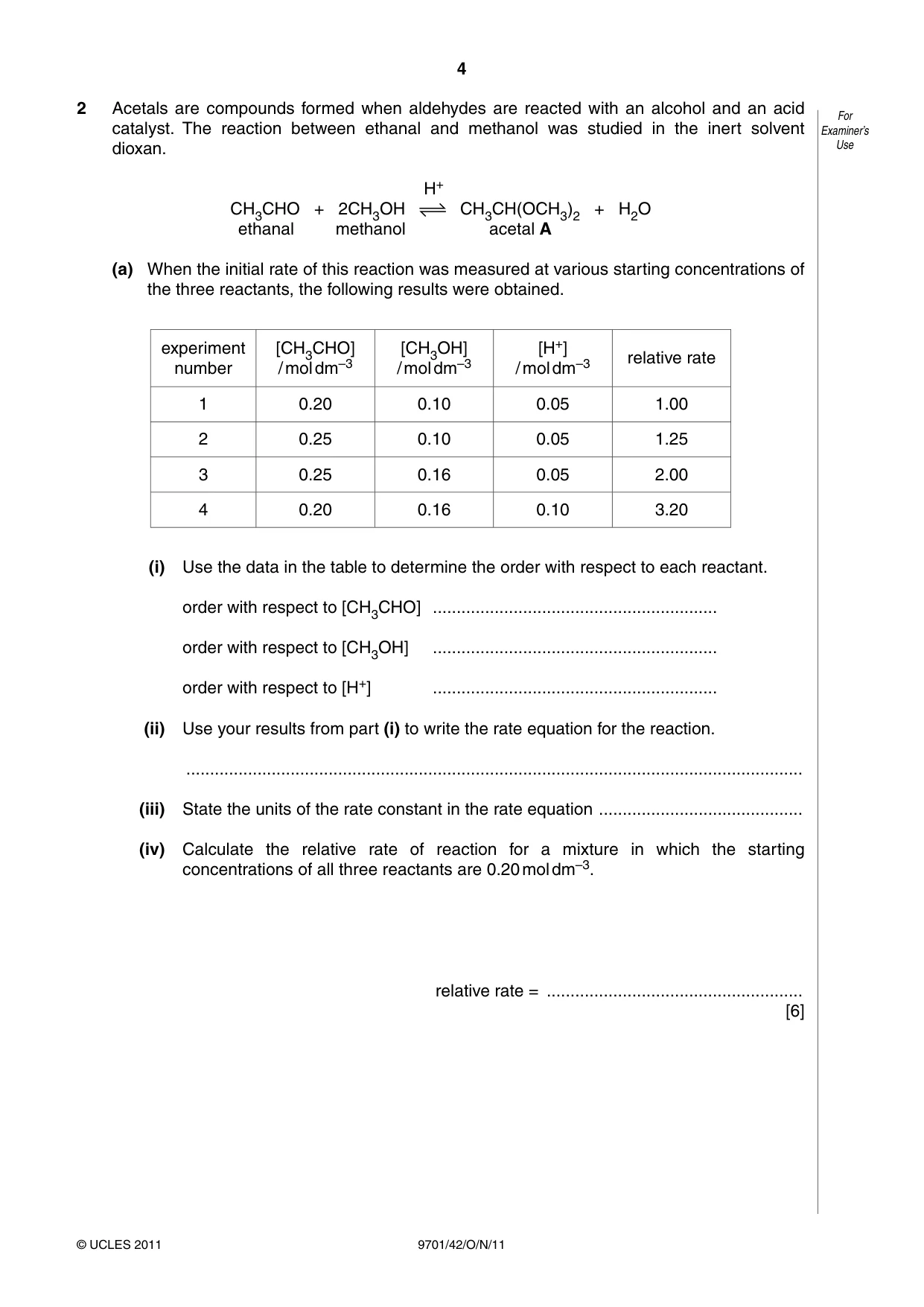
Question paper, page 4
4 9701/42/O/N/11 © UCLES 2011 For Examiner’s Use 2 Acetals are compounds formed when aldehydes are reacted with an alcohol and an acid catalyst. The reaction between ethanal and methanol was studied in the inert solvent dioxan. H+ CH3CHO + 2CH3OH CH3CH(OCH3)2 + H2O ethanal methanol acetal A (a) When the initial rate of this reaction was measured at various starting concentrations of the three reactants, the following results were obtained. experiment number [CH3CHO] / mol dm–3 [CH3OH] / mol dm–3 [H+] / mol dm–3 relative rate 1 0.20 0.10 0.05 1.00 2 0.25 0.10 0.05 1.25 3 0.25 0.16 0.05 2.00 4 0.20 0.16 0.10 3.20 (i) Use the data in the table to determine the order with respect to each reactant. order with respect to [CH3CHO] … order with respect to [CH3OH] … order with respect to [H+] … (ii) Use your results from part (i) to write the rate equation for the reaction. … (iii) State the units of the rate constant in the rate equation … (iv) Calculate the relative rate of reaction for a mixture in which the starting concentrations of all three reactants are 0.20 mol dm–3. relative rate = … [6]
Question paper, page 5
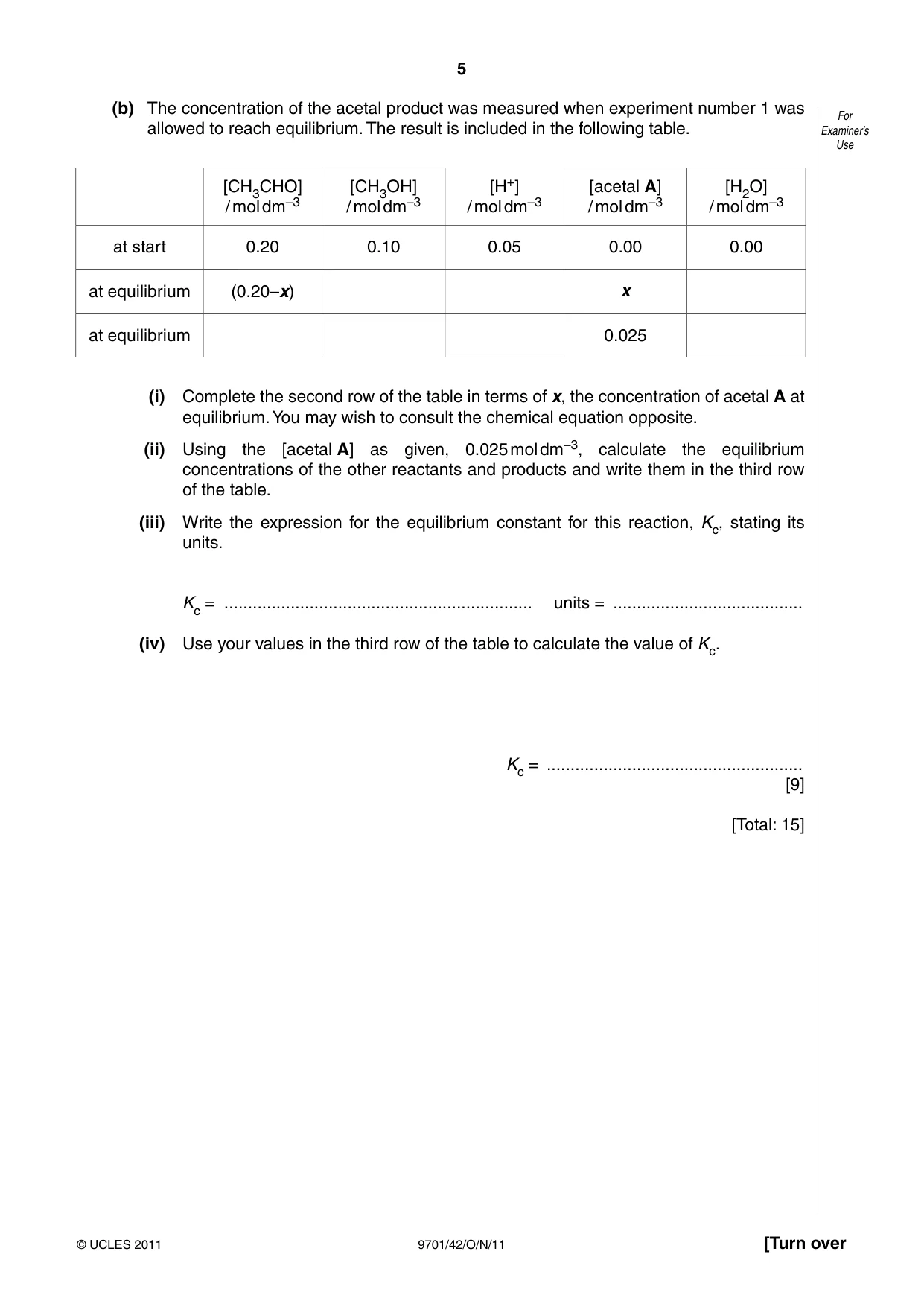
5 9701/42/O/N/11 © UCLES 2011 [Turn over For Examiner’s Use (b) The concentration of the acetal product was measured when experiment number 1 was allowed to reach equilibrium. The result is included in the following table. [CH3CHO] / mol dm–3 [CH3OH] / mol dm–3 [H+] / mol dm–3 [acetal A] / mol dm–3 [H2O] / mol dm–3 at start 0.20 0.10 0.05 0.00 0.00 at equilibrium (0.20–x) x at equilibrium 0.025 (i) Complete the second row of the table in terms of x, the concentration of acetal A at equilibrium. You may wish to consult the chemical equation opposite. (ii) Using the [acetal A] as given, 0.025 mol dm–3, calculate the equilibrium concentrations of the other reactants and products and write them in the third row of the table. (iii) Write the expression for the equilibrium constant for this reaction, Kc, stating its units. Kc = … units = … (iv) Use your values in the third row of the table to calculate the value of Kc. Kc = … [9] [Total: 15]
Question paper, page 6
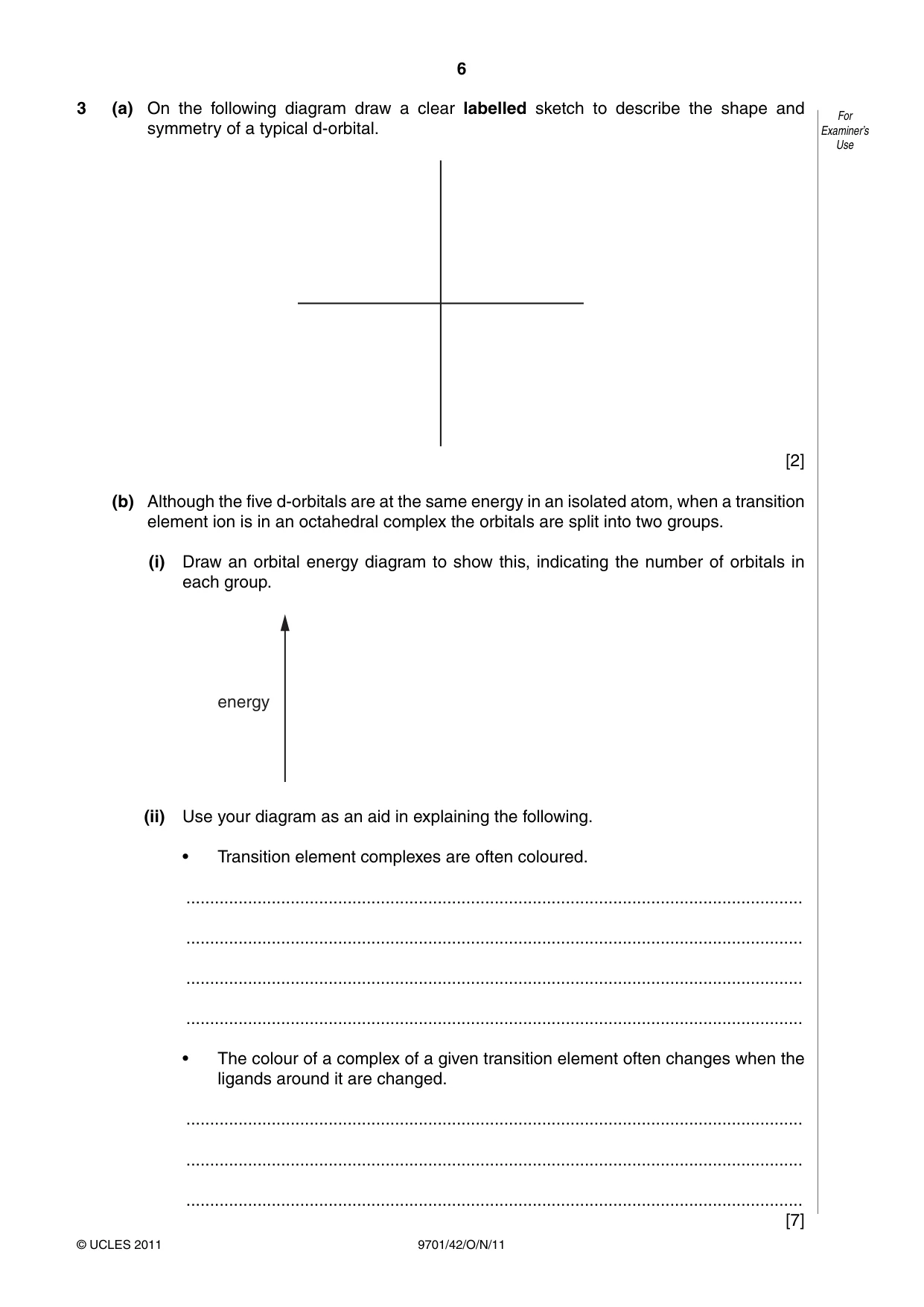
6 9701/42/O/N/11 © UCLES 2011 For Examiner’s Use 3 (a) On the following diagram draw a clear labelled sketch to describe the shape and symmetry of a typical d-orbital. [2] (b) Although the five d-orbitals are at the same energy in an isolated atom, when a transition element ion is in an octahedral complex the orbitals are split into two groups. (i) Draw an orbital energy diagram to show this, indicating the number of orbitals in each group. energy (ii) Use your diagram as an aid in explaining the following. • Transition element complexes are often coloured. … … … … • The colour of a complex of a given transition element often changes when the ligands around it are changed. … … … [7]
Question paper, page 7
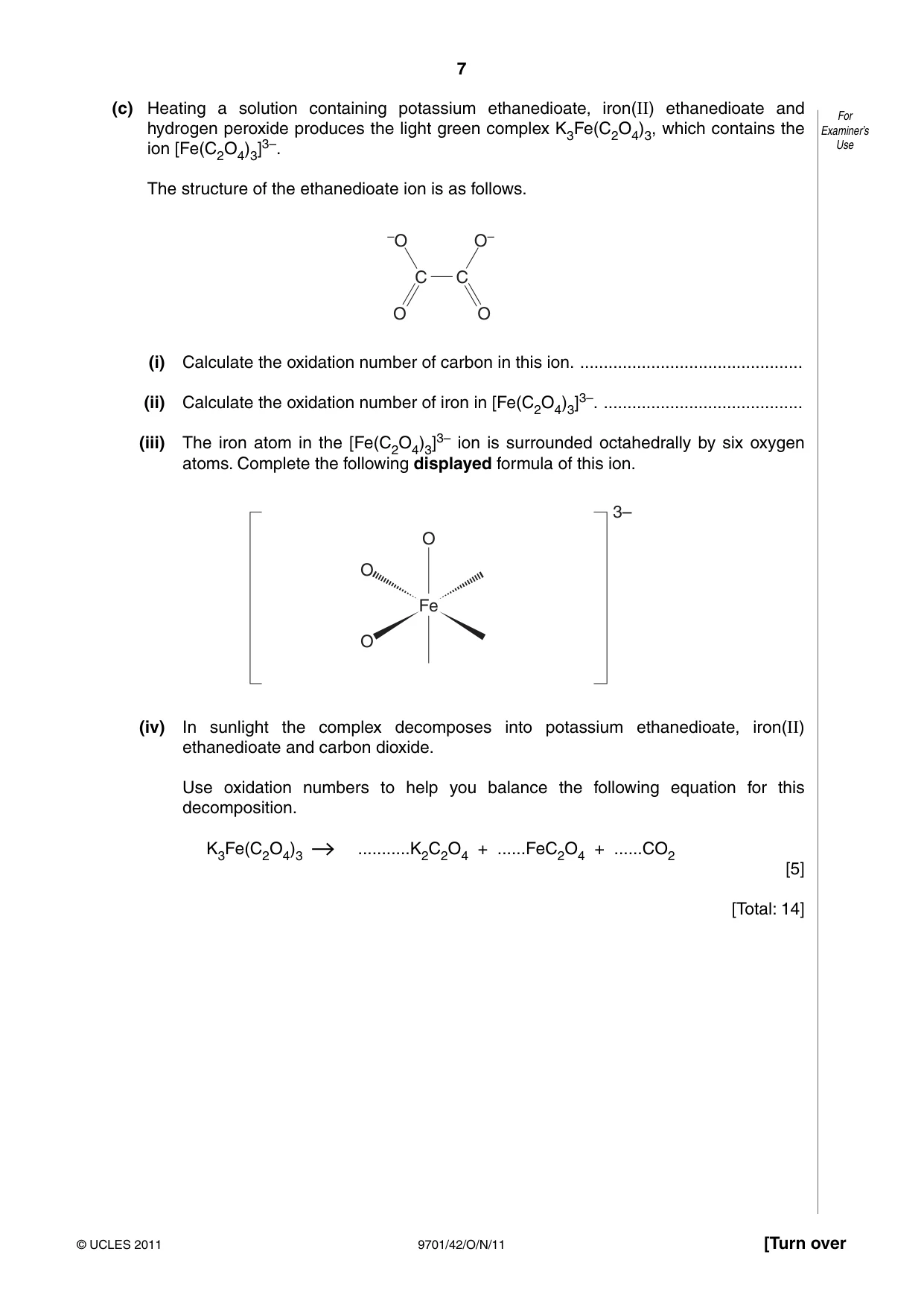
7 9701/42/O/N/11 © UCLES 2011 [Turn over For Examiner’s Use (c) Heating a solution containing potassium ethanedioate, iron(II) ethanedioate and hydrogen peroxide produces the light green complex K3Fe(C2O4)3, which contains the ion [Fe(C2O4)3]3–. The structure of the ethanedioate ion is as follows. –O O– C O O C (i) Calculate the oxidation number of carbon in this ion. … (ii) Calculate the oxidation number of iron in [Fe(C2O4)3]3–. … (iii) The iron atom in the [Fe(C2O4)3]3– ion is surrounded octahedrally by six oxygen atoms. Complete the following displayed formula of this ion. Fe O 3– O O (iv) In sunlight the complex decomposes into potassium ethanedioate, iron(II) ethanedioate and carbon dioxide. Use oxidation numbers to help you balance the following equation for this decomposition. K3Fe(C2O4)3 …K2C2O4 + …FeC2O4 + …CO2 [5] [Total: 14]
Question paper, page 8
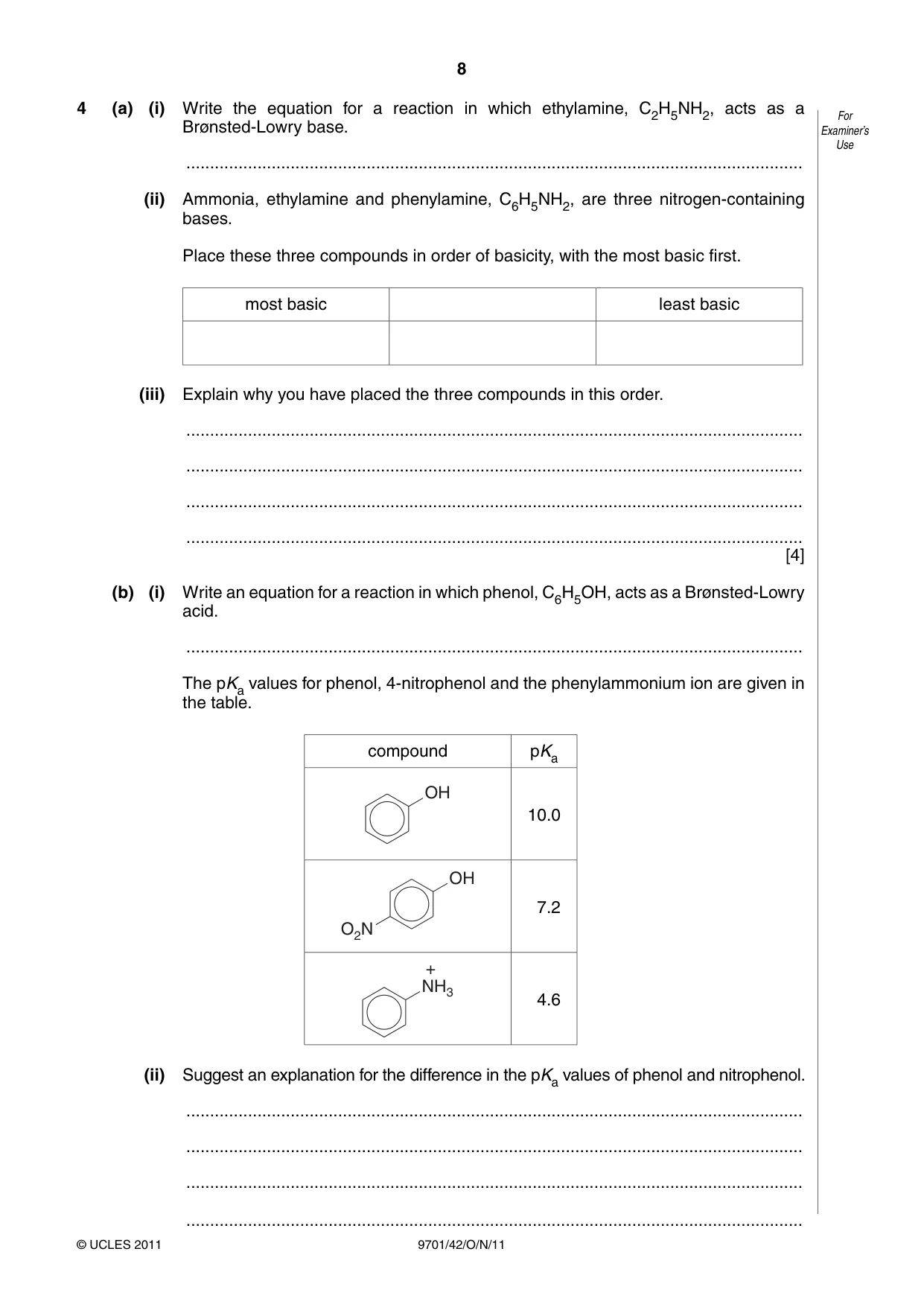
8 9701/42/O/N/11 © UCLES 2011 For Examiner’s Use 4 (a) (i) Write the equation for a reaction in which ethylamine, C2H5NH2, acts as a Brønsted-Lowry base. … (ii) Ammonia, ethylamine and phenylamine, C6H5NH2, are three nitrogen-containing bases. Place these three compounds in order of basicity, with the most basic first. most basic least basic (iii) Explain why you have placed the three compounds in this order. … … … … [4] (b) (i) Write an equation for a reaction in which phenol, C6H5OH, acts as a Brønsted-Lowry acid. … The pKa values for phenol, 4-nitrophenol and the phenylammonium ion are given in the table. compound pKa OH 10.0 OH O2N 7.2 NH3 + 4.6 (ii) Suggest an explanation for the difference in the pKa values of phenol and nitrophenol. … … … …
Question paper, page 9
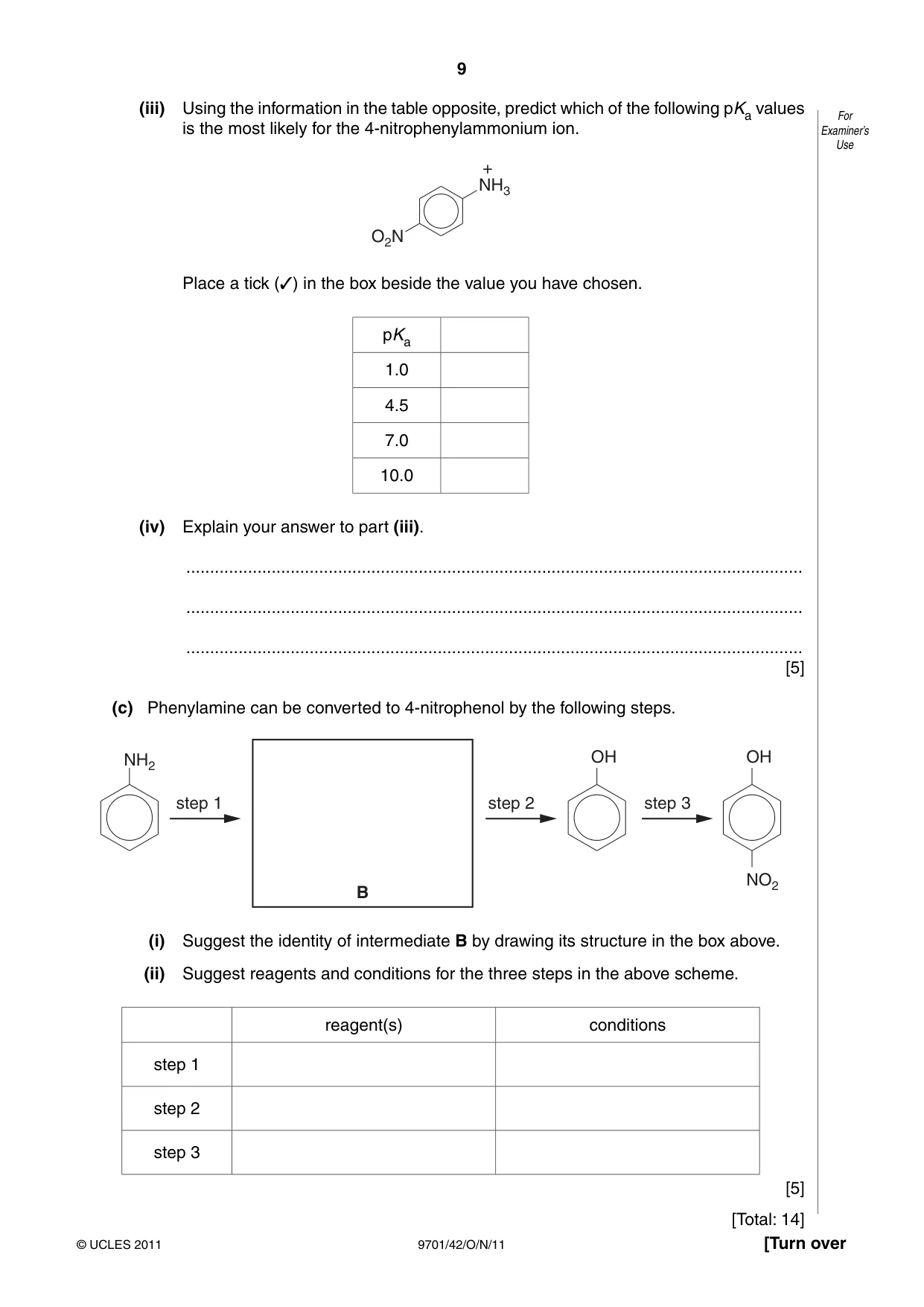
9 9701/42/O/N/11 © UCLES 2011 [Turn over For Examiner’s Use (iii) Using the information in the table opposite, predict which of the following pKa values is the most likely for the 4-nitrophenylammonium ion. NH3 O2N + Place a tick (✓) in the box beside the value you have chosen. pKa 1.0 4.5 7.0 10.0 (iv) Explain your answer to part (iii). … … … [5] (c) Phenylamine can be converted to 4-nitrophenol by the following steps. B OH step 2 step 1 OH NO2 step 3 NH2 (i) Suggest the identity of intermediate B by drawing its structure in the box above. (ii) Suggest reagents and conditions for the three steps in the above scheme. reagent(s) conditions step 1 step 2 step 3 [5] [Total: 14]
Question paper, page 10
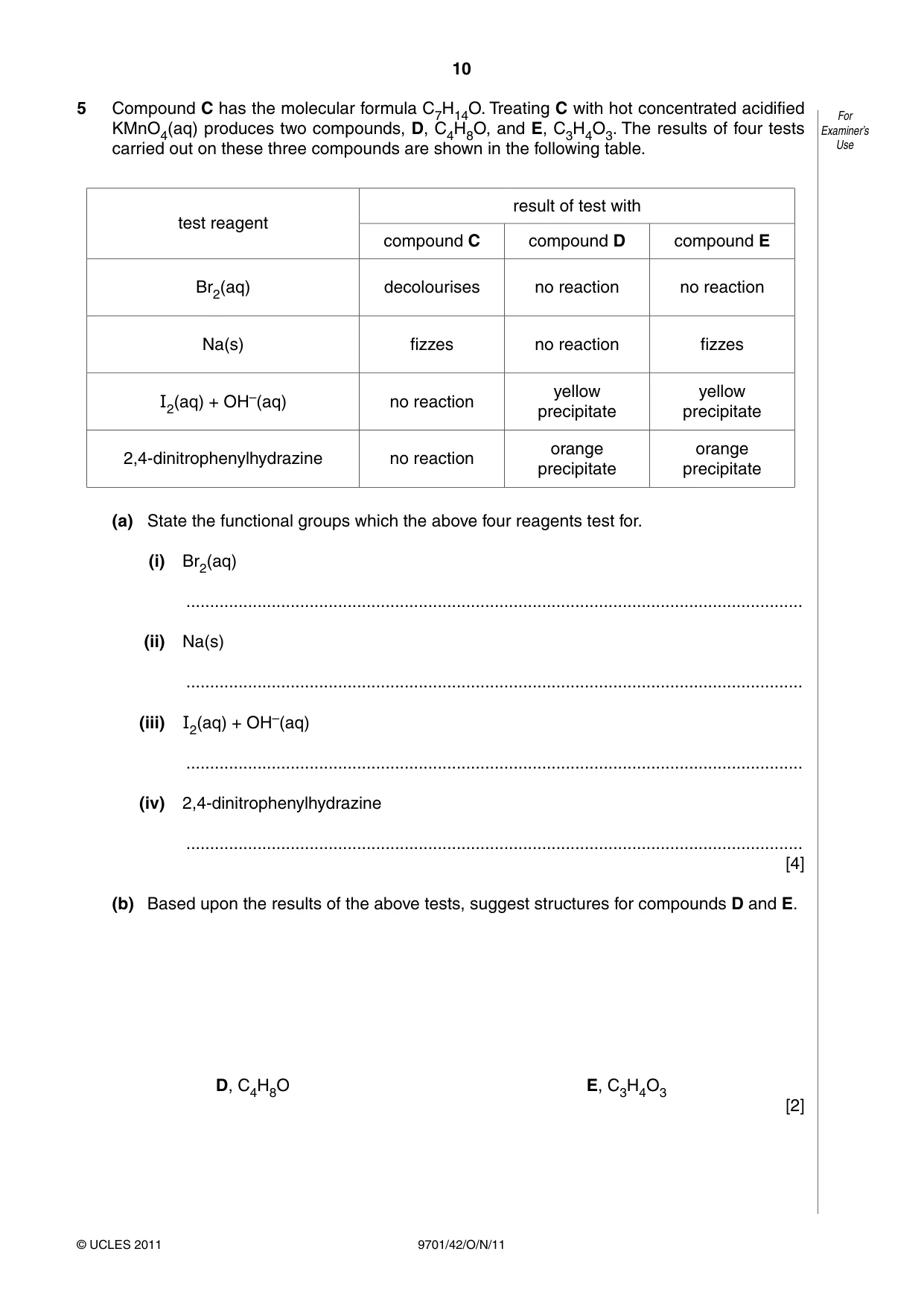
10 9701/42/O/N/11 © UCLES 2011 For Examiner’s Use 5 Compound C has the molecular formula C7H14O. Treating C with hot concentrated acidified KMnO4(aq) produces two compounds, D, C4H8O, and E, C3H4O3. The results of four tests carried out on these three compounds are shown in the following table. test reagent result of test with compound C compound D compound E Br2(aq) decolourises no reaction no reaction Na(s) fizzes no reaction fizzes I2(aq) + OH–(aq) no reaction yellow precipitate yellow precipitate 2,4-dinitrophenylhydrazine no reaction orange precipitate orange precipitate (a) State the functional groups which the above four reagents test for. (i) Br2(aq) … (ii) Na(s) … (iii) I2(aq) + OH–(aq) … (iv) 2,4-dinitrophenylhydrazine … [4] (b) Based upon the results of the above tests, suggest structures for compounds D and E. D, C4H8O E, C3H4O3 [2]
Question paper, page 11
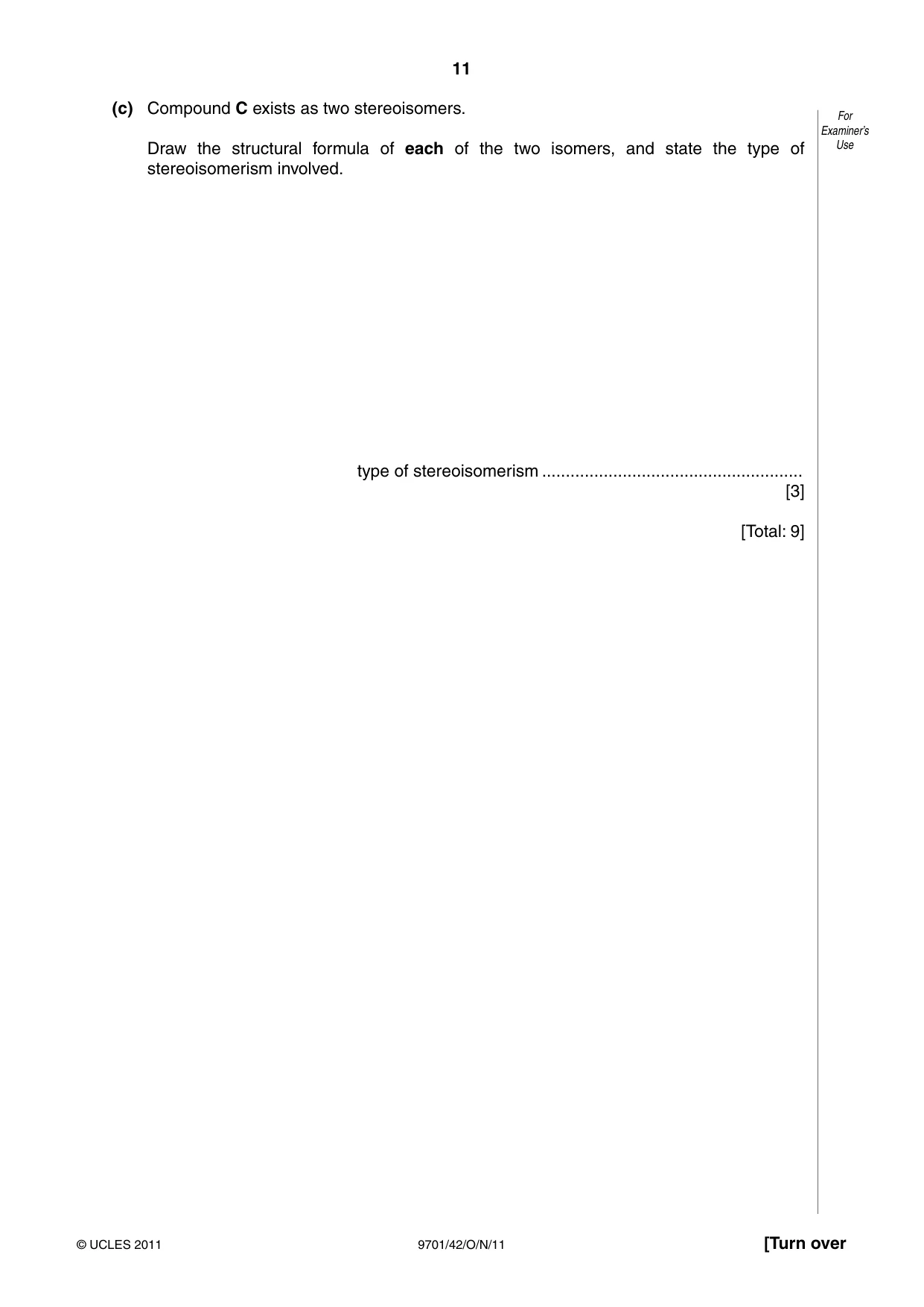
11 9701/42/O/N/11 © UCLES 2011 [Turn over For Examiner’s Use (c) Compound C exists as two stereoisomers. Draw the structural formula of each of the two isomers, and state the type of stereoisomerism involved. type of stereoisomerism … [3] [Total: 9]
Question paper, page 12
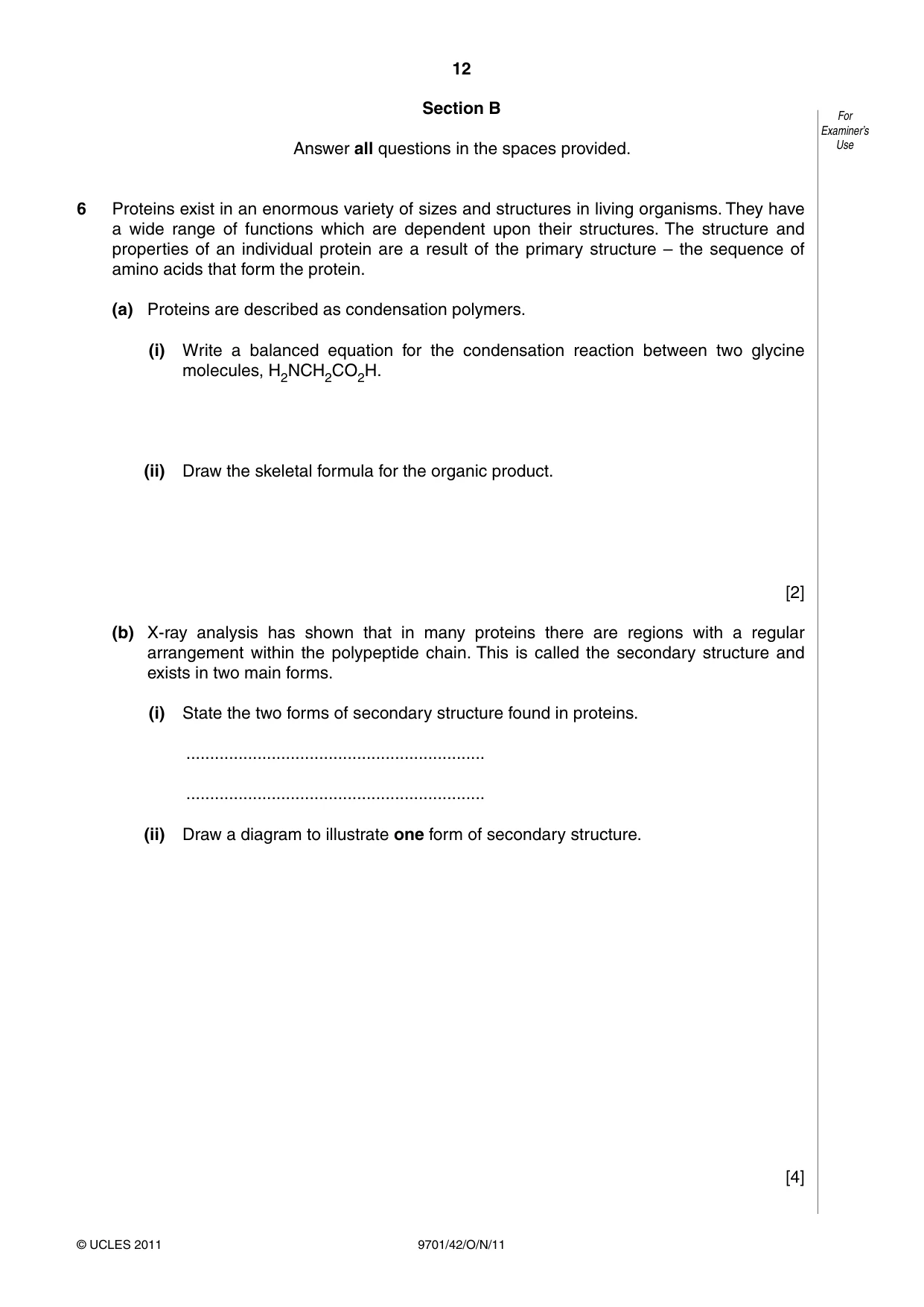
12 9701/42/O/N/11 © UCLES 2011 For Examiner’s Use Section B Answer all questions in the spaces provided. 6 Proteins exist in an enormous variety of sizes and structures in living organisms. They have a wide range of functions which are dependent upon their structures. The structure and properties of an individual protein are a result of the primary structure – the sequence of amino acids that form the protein. (a) Proteins are described as condensation polymers. (i) Write a balanced equation for the condensation reaction between two glycine molecules, H2NCH2CO2H. (ii) Draw the skeletal formula for the organic product. [2] (b) X-ray analysis has shown that in many proteins there are regions with a regular arrangement within the polypeptide chain. This is called the secondary structure and exists in two main forms. (i) State the two forms of secondary structure found in proteins. … … (ii) Draw a diagram to illustrate one form of secondary structure. [4]
Question paper, page 13
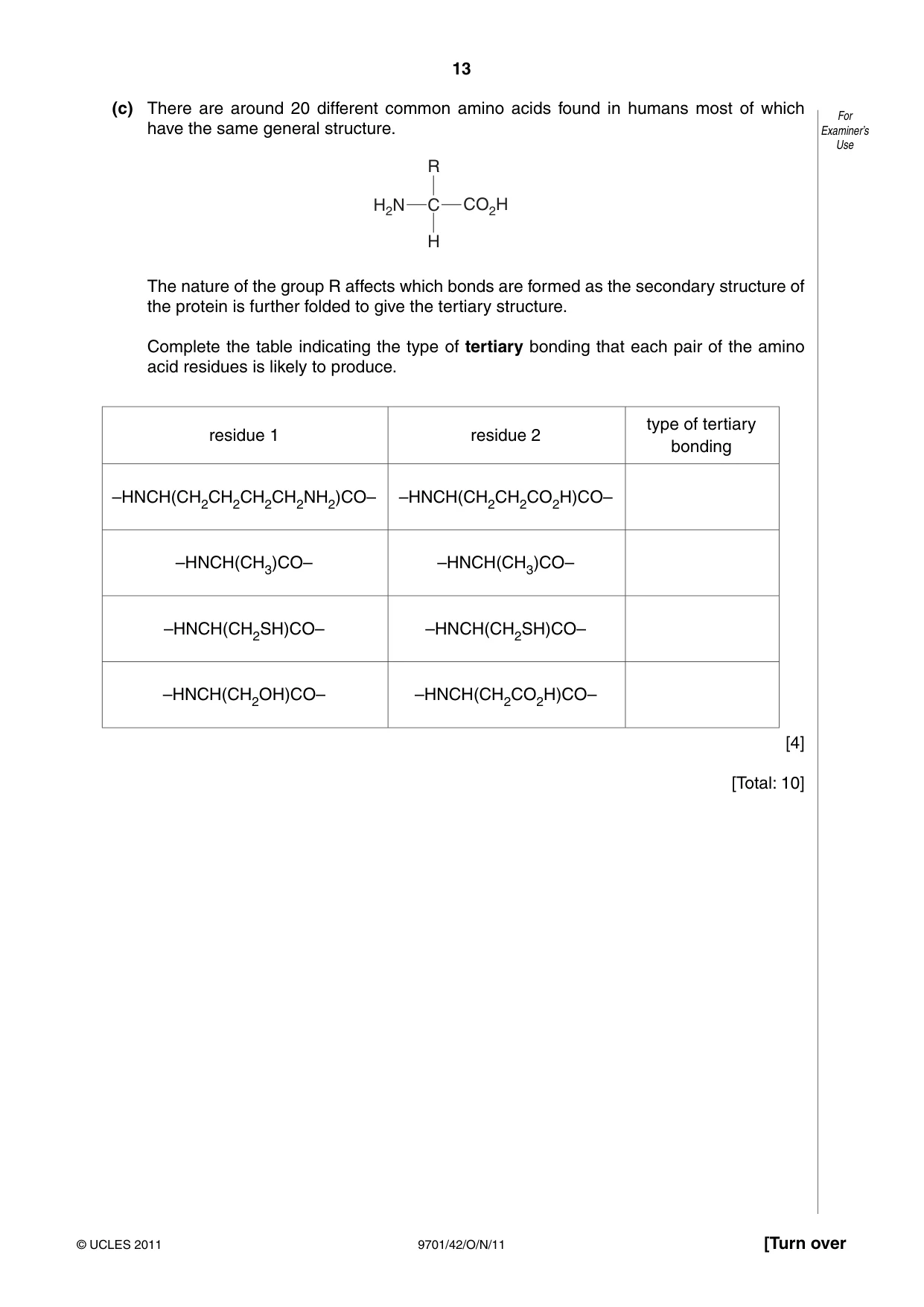
13 9701/42/O/N/11 © UCLES 2011 [Turn over For Examiner’s Use (c) There are around 20 different common amino acids found in humans most of which have the same general structure. C R H2N H CO2H The nature of the group R affects which bonds are formed as the secondary structure of the protein is further folded to give the tertiary structure. Complete the table indicating the type of tertiary bonding that each pair of the amino acid residues is likely to produce. residue 1 residue 2 type of tertiary bonding –HNCH(CH2CH2CH2CH2NH2)CO– –HNCH(CH2CH2CO2H)CO– –HNCH(CH3)CO– –HNCH(CH3)CO– –HNCH(CH2SH)CO– –HNCH(CH2SH)CO– –HNCH(CH2OH)CO– –HNCH(CH2CO2H)CO– [4] [Total: 10]
Question paper, page 14
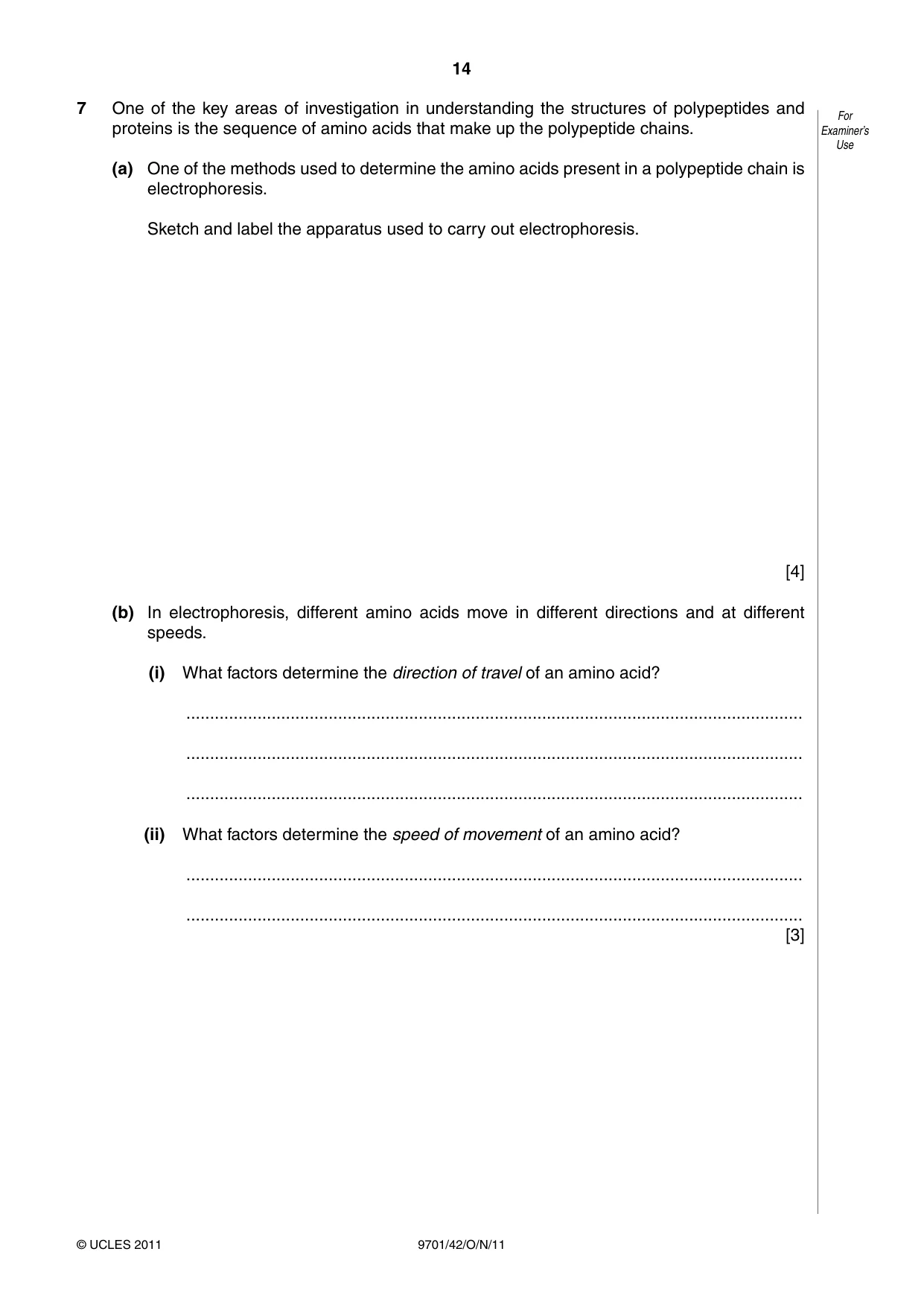
14 9701/42/O/N/11 © UCLES 2011 For Examiner’s Use 7 One of the key areas of investigation in understanding the structures of polypeptides and proteins is the sequence of amino acids that make up the polypeptide chains. (a) One of the methods used to determine the amino acids present in a polypeptide chain is electrophoresis. Sketch and label the apparatus used to carry out electrophoresis. [4] (b) In electrophoresis, different amino acids move in different directions and at different speeds. (i) What factors determine the direction of travel of an amino acid? … … … (ii) What factors determine the speed of movement of an amino acid? … … [3]
Question paper, page 15
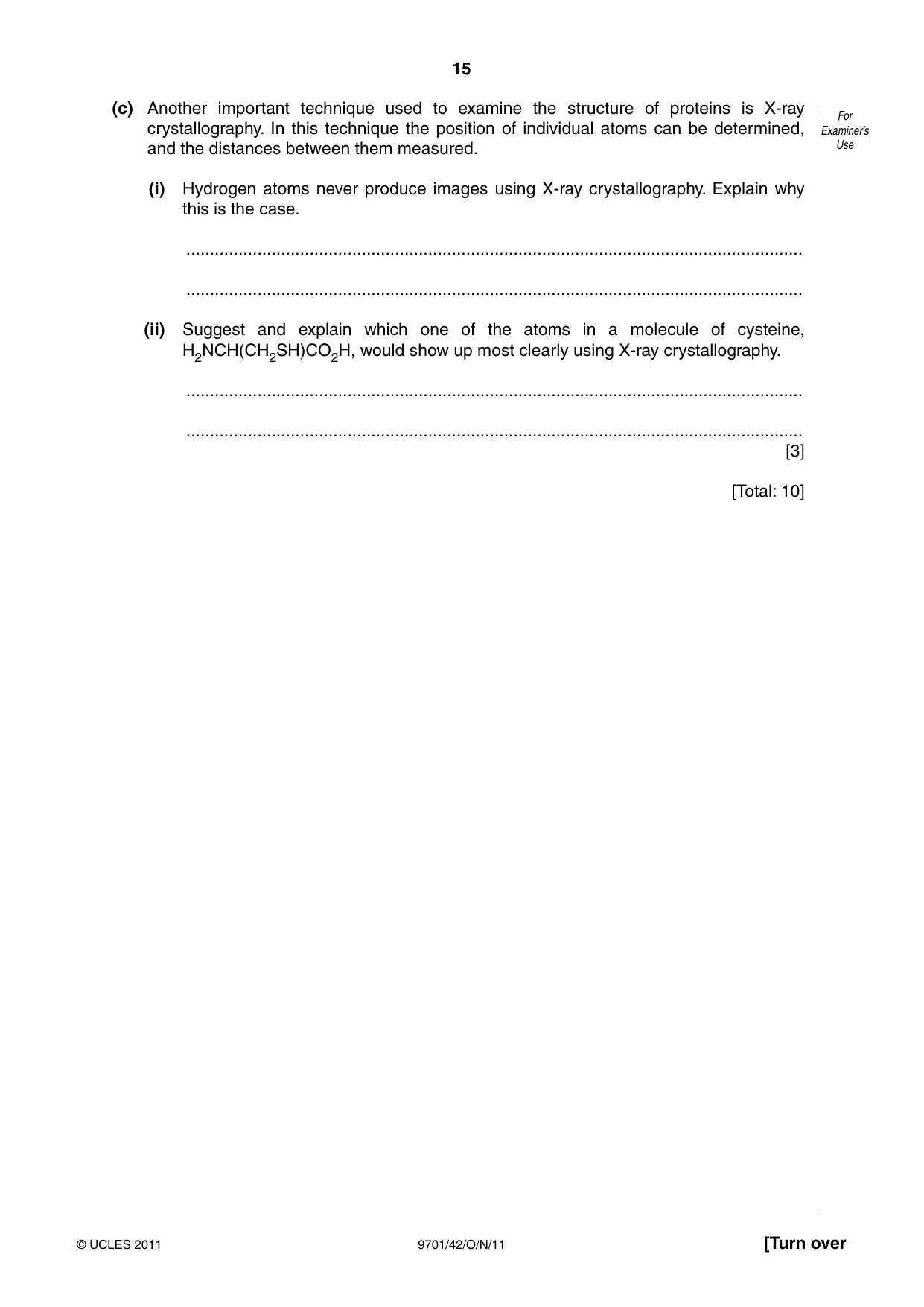
15 9701/42/O/N/11 © UCLES 2011 [Turn over For Examiner’s Use (c) Another important technique used to examine the structure of proteins is X-ray crystallography. In this technique the position of individual atoms can be determined, and the distances between them measured. (i) Hydrogen atoms never produce images using X-ray crystallography. Explain why this is the case. … … (ii) Suggest and explain which one of the atoms in a molecule of cysteine, H2NCH(CH2SH)CO2H, would show up most clearly using X-ray crystallography. … … [3] [Total: 10]
Question paper, page 16
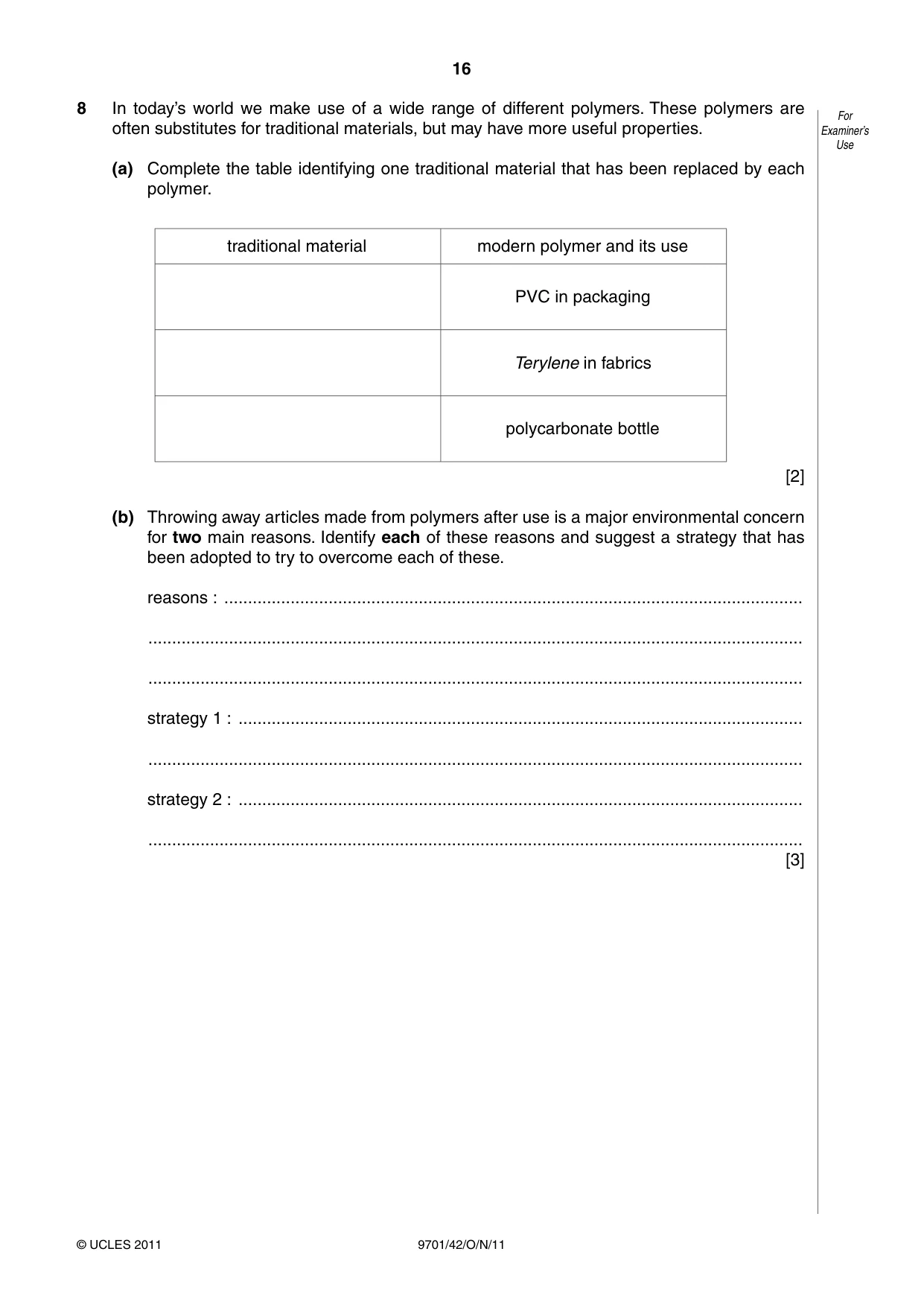
16 9701/42/O/N/11 © UCLES 2011 For Examiner’s Use 8 In today’s world we make use of a wide range of different polymers. These polymers are often substitutes for traditional materials, but may have more useful properties. (a) Complete the table identifying one traditional material that has been replaced by each polymer. traditional material modern polymer and its use PVC in packaging Terylene in fabrics polycarbonate bottle [2] (b) Throwing away articles made from polymers after use is a major environmental concern for two main reasons. Identify each of these reasons and suggest a strategy that has been adopted to try to overcome each of these. reasons : … … … strategy 1 : … … strategy 2 : … … [3]
Question paper, page 17
17 9701/42/O/N/11 © UCLES 2011 For Examiner’s Use (c) One suggestion for the disposal of polymers is to use them as a fuel to provide energy for small-scale power stations or district heating schemes. Identify one polymer which would be unsuitable for this use, explaining the reason behind this. polymer … reason … … … [2] (d) Polymers can be either thermoplastic or thermosetting. Name a thermoplastic polymer. … State which type of polymerisation produces thermoplastic polymers, explaining your answer in terms of the structure of the polymer. … … … … [3] [Total: 10]
Question paper, page 18
18 9701/42/O/N/11 © UCLES 2011 BLANK PAGE
Question paper, page 19
19 9701/42/O/N/11 © UCLES 2011 BLANK PAGE
Question paper, page 20
20 9701/42/O/N/11 © UCLES 2011 BLANK PAGE Permission to reproduce items where third-party owned material protected by copyright is included has been sought and cleared where possible. Every reasonable effort has been made by the publisher (UCLES) to trace copyright holders, but if any items requiring clearance have unwittingly been included, the publisher will be pleased to make amends at the earliest possible opportunity. University of Cambridge International Examinations is part of the Cambridge Assessment Group. Cambridge Assessment is the brand name of University of Cambridge Local Examinations Syndicate (UCLES), which is itself a department of the University of Cambridge.
Mark scheme, page 1
UNIVERSITY OF CAMBRIDGE INTERNATIONAL EXAMINATIONS GCE Advanced Level MARK SCHEME for the October/November 2011 question paper for the guidance of teachers 9701 CHEMISTRY 9701/42 Paper 4 (A2 Structured Questions), maximum raw mark 100 This mark scheme is published as an aid to teachers and candidates, to indicate the requirements of the examination. It shows the basis on which Examiners were instructed to award marks. It does not indicate the details of the discussions that took place at an Examiners’ meeting before marking began, which would have considered the acceptability of alternative answers. Mark schemes must be read in conjunction with the question papers and the report on the examination. • Cambridge will not enter into discussions or correspondence in connection with these mark schemes. Cambridge is publishing the mark schemes for the October/November 2011 question papers for most IGCSE, GCE Advanced Level and Advanced Subsidiary Level syllabuses and some Ordinary Level syllabuses.
Mark scheme, page 2
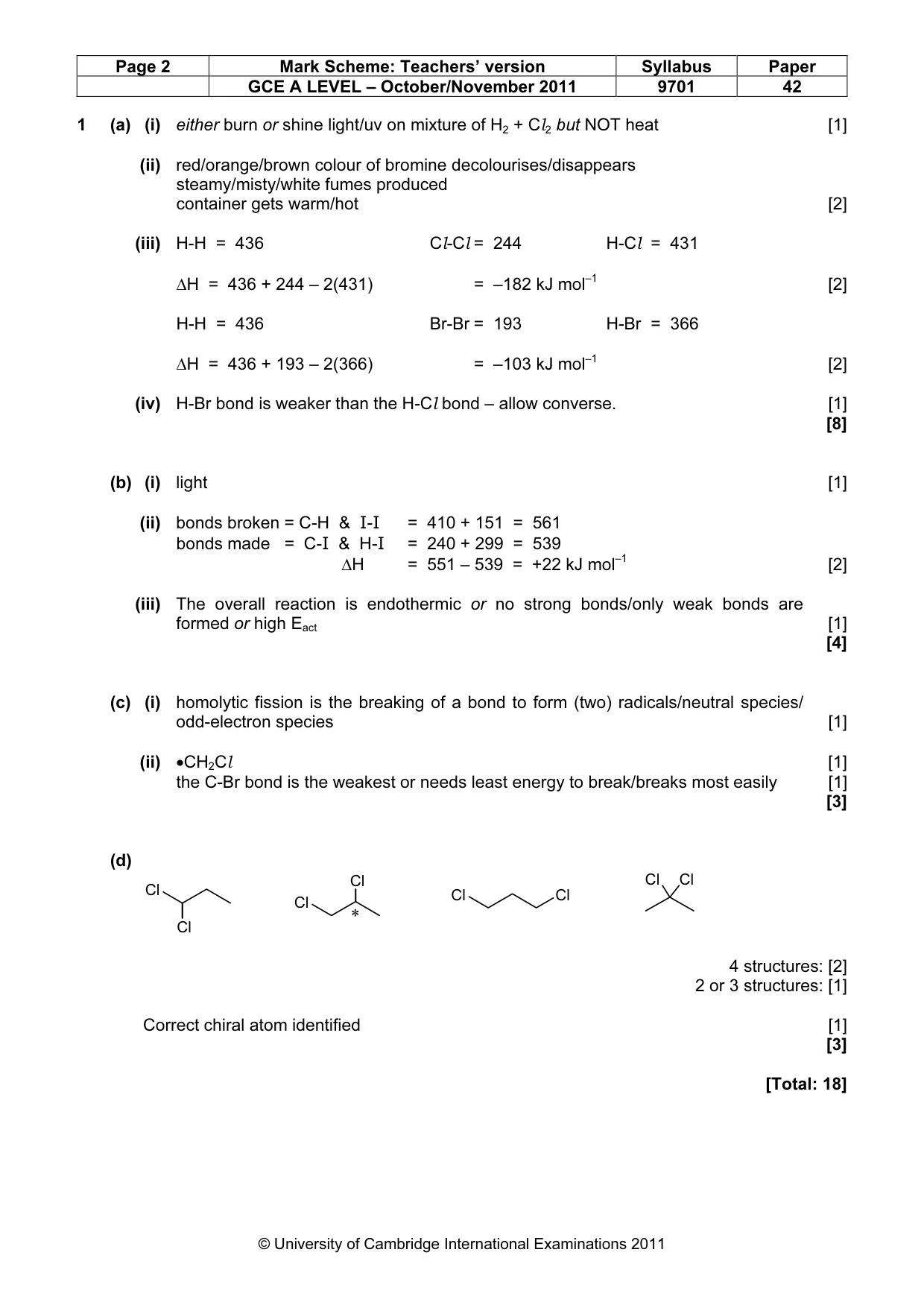
Page 2 Mark Scheme: Teachers’ version Syllabus Paper GCE A LEVEL – October/November 2011 9701 42 © University of Cambridge International Examinations 2011 1 (a) (i) either burn or shine light/uv on mixture of H2 + Cl2 but NOT heat [1] (ii) red/orange/brown colour of bromine decolourises/disappears steamy/misty/white fumes produced container gets warm/hot [2] (iii) H-H = 436 Cl-Cl = 244 H-Cl = 431 ∆H = 436 + 244 – 2(431) = –182 kJ mol–1 [2] H-H = 436 Br-Br = 193 H-Br = 366 ∆H = 436 + 193 – 2(366) = –103 kJ mol–1 [2] (iv) H-Br bond is weaker than the H-Cl bond – allow converse. [1] [8] (b) (i) light [1] (ii) bonds broken = C-H & I-I = 410 + 151 = 561 bonds made = C-I & H-I = 240 + 299 = 539 ∆H = 551 – 539 = +22 kJ mol–1 [2] (iii) The overall reaction is endothermic or no strong bonds/only weak bonds are formed or high Eact [1] [4] (c) (i) homolytic fission is the breaking of a bond to form (two) radicals/neutral species/ odd-electron species [1] (ii) •CH2Cl [1] the C-Br bond is the weakest or needs least energy to break/breaks most easily [1] [3] (d) Cl Cl Cl Cl Cl Cl * Cl Cl 4 structures: [2] 2 or 3 structures: [1] Correct chiral atom identified [1] [3] [Total: 18]
Mark scheme, page 3
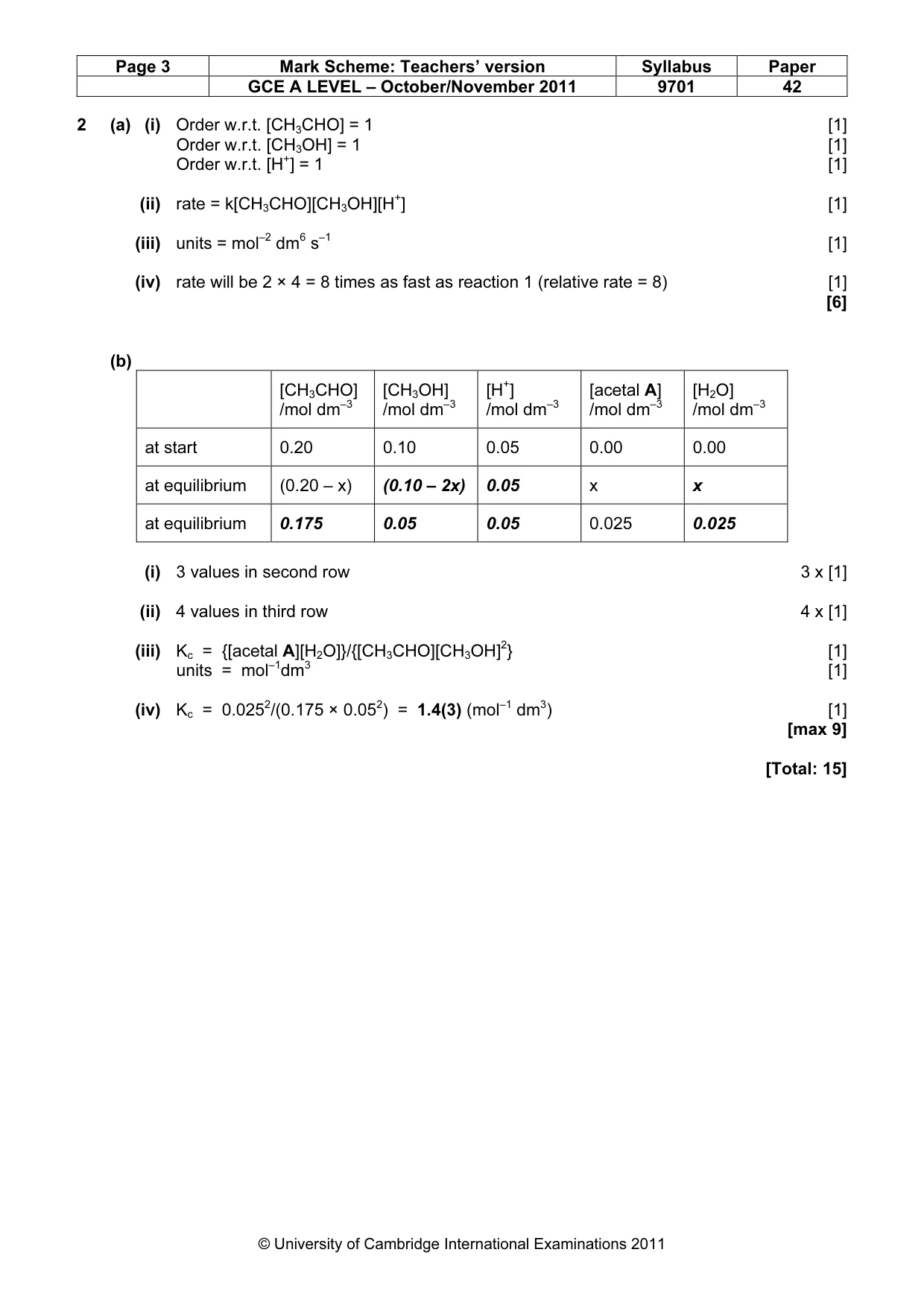
Page 3 Mark Scheme: Teachers’ version Syllabus Paper GCE A LEVEL – October/November 2011 9701 42 © University of Cambridge International Examinations 2011 2 (a) (i) Order w.r.t. [CH3CHO] = 1 [1] Order w.r.t. [CH3OH] = 1 [1] Order w.r.t. [H+] = 1 [1] (ii) rate = k[CH3CHO][CH3OH][H+] [1] (iii) units = mol–2 dm6 s–1 [1] (iv) rate will be 2 × 4 = 8 times as fast as reaction 1 (relative rate = 8) [1] [6] (b) [CH3CHO] /mol dm–3 [CH3OH] /mol dm–3 [H+] /mol dm–3 [acetal A] /mol dm–3 [H2O] /mol dm–3 at start 0.20 0.10 0.05 0.00 0.00 at equilibrium (0.20 – x) (0.10 – 2x) 0.05 x x at equilibrium 0.175 0.05 0.05 0.025 0.025 (i) 3 values in second row 3 x [1] (ii) 4 values in third row 4 x [1] (iii) Kc = {[acetal A][H2O]}/{[CH3CHO][CH3OH]2} [1] units = mol–1dm3 [1] (iv) Kc = 0.0252/(0.175 × 0.052) = 1.4(3) (mol–1 dm3) [1] [max 9] [Total: 15]
Mark scheme, page 4
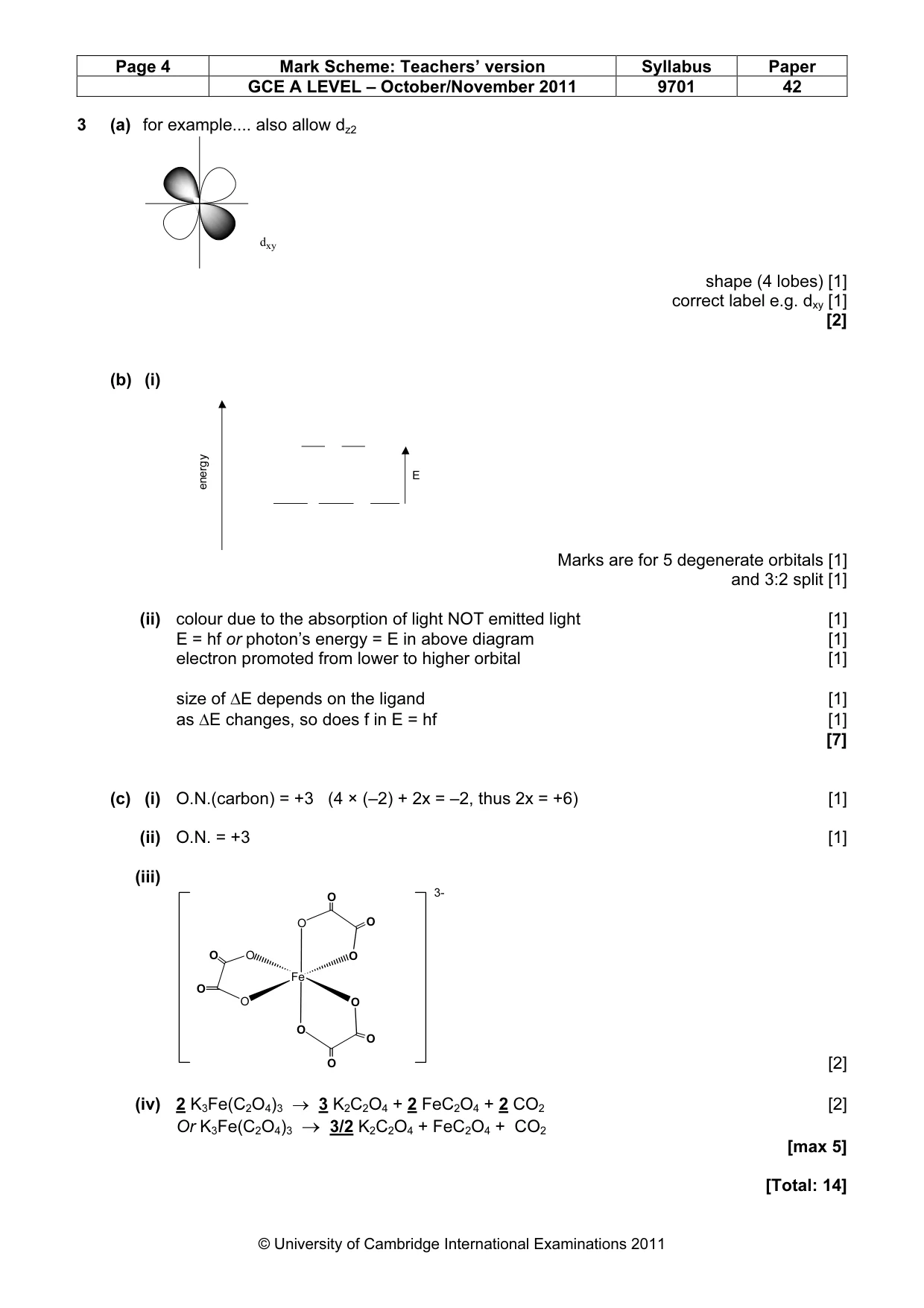
Page 4 Mark Scheme: Teachers’ version Syllabus Paper GCE A LEVEL – October/November 2011 9701 42 © University of Cambridge International Examinations 2011 3 (a) for example… also allow dz2 dxy shape (4 lobes) [1] correct label e.g. dxy [1] [2] (b) (i) energy E Marks are for 5 degenerate orbitals [1] and 3:2 split [1] (ii) colour due to the absorption of light NOT emitted light [1] E = hf or photon’s energy = E in above diagram [1] electron promoted from lower to higher orbital [1] size of ∆E depends on the ligand [1] as ∆E changes, so does f in E = hf [1] [7] (c) (i) O.N.(carbon) = +3 (4 × (–2) + 2x = –2, thus 2x = +6) [1] (ii) O.N. = +3 [1] (iii) O Fe O O O O O 3- O O O O O O [2] (iv) 2 K3Fe(C2O4)3 → 3 K2C2O4 + 2 FeC2O4 + 2 CO2 [2] Or K3Fe(C2O4)3 → 3/2 K2C2O4 + FeC2O4 + CO2 [max 5] [Total: 14]
Mark scheme, page 5
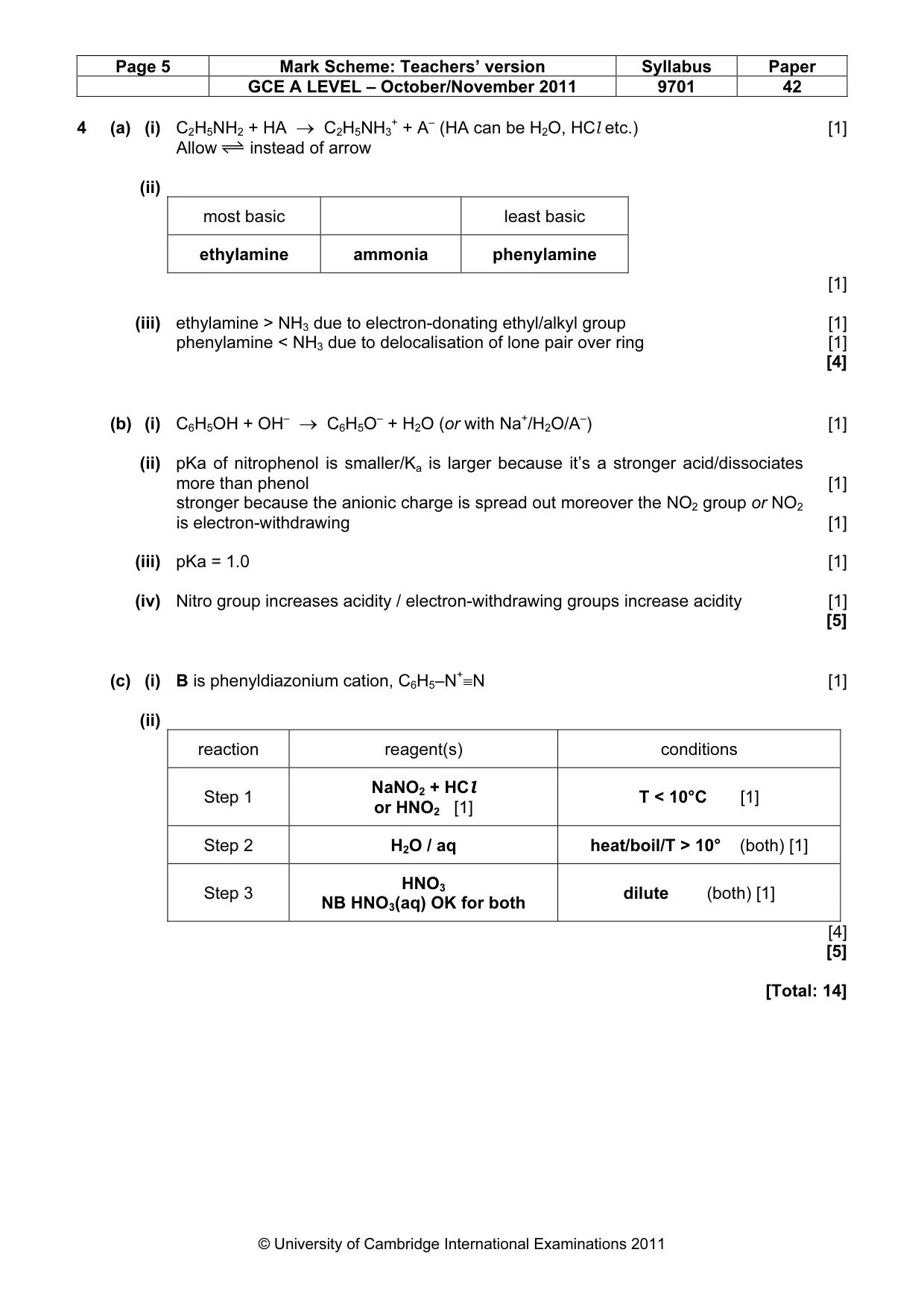
Page 5 Mark Scheme: Teachers’ version Syllabus Paper GCE A LEVEL – October/November 2011 9701 42 © University of Cambridge International Examinations 2011 4 (a) (i) C2H5NH2 + HA → C2H5NH3 + + A– (HA can be H2O, HCl etc.) [1] Allow instead of arrow (ii) most basic least basic ethylamine ammonia phenylamine [1] (iii) ethylamine > NH3 due to electron-donating ethyl/alkyl group [1] phenylamine < NH3 due to delocalisation of lone pair over ring [1] [4] (b) (i) C6H5OH + OH– → C6H5O– + H2O (or with Na+/H2O/A–) [1] (ii) pKa of nitrophenol is smaller/Ka is larger because it’s a stronger acid/dissociates more than phenol [1] stronger because the anionic charge is spread out moreover the NO2 group or NO2 is electron-withdrawing [1] (iii) pKa = 1.0 [1] (iv) Nitro group increases acidity / electron-withdrawing groups increase acidity [1] [5] (c) (i) B is phenyldiazonium cation, C6H5–N+≡N [1] (ii) reaction reagent(s) conditions Step 1 NaNO2 + HCl or HNO2 [1] T < 10°C [1] Step 2 H2O / aq heat/boil/T > 10° (both) [1] Step 3 HNO3 NB HNO3(aq) OK for both dilute (both) [1] [4] [5] [Total: 14]
Mark scheme, page 6
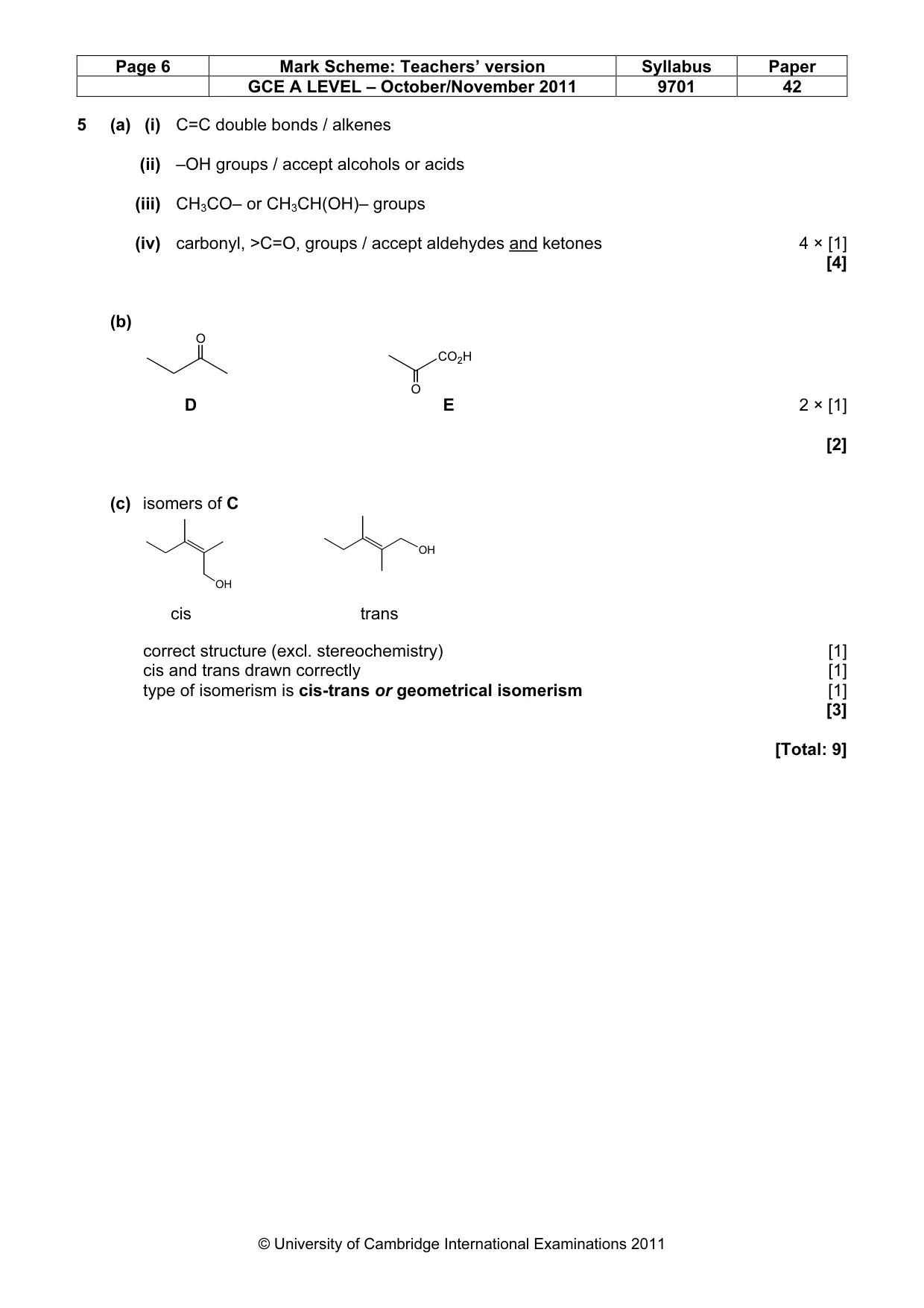
Page 6 Mark Scheme: Teachers’ version Syllabus Paper GCE A LEVEL – October/November 2011 9701 42 © University of Cambridge International Examinations 2011 5 (a) (i) C=C double bonds / alkenes (ii) –OH groups / accept alcohols or acids (iii) CH3CO– or CH3CH(OH)– groups (iv) carbonyl, >C=O, groups / accept aldehydes and ketones 4 × [1] [4] (b) O CO2H D E O 2 × [1] [2] (c) isomers of C OH OH cis trans correct structure (excl. stereochemistry) [1] cis and trans drawn correctly [1] type of isomerism is cis-trans or geometrical isomerism [1] [3] [Total: 9] D E cis trans
Mark scheme, page 7
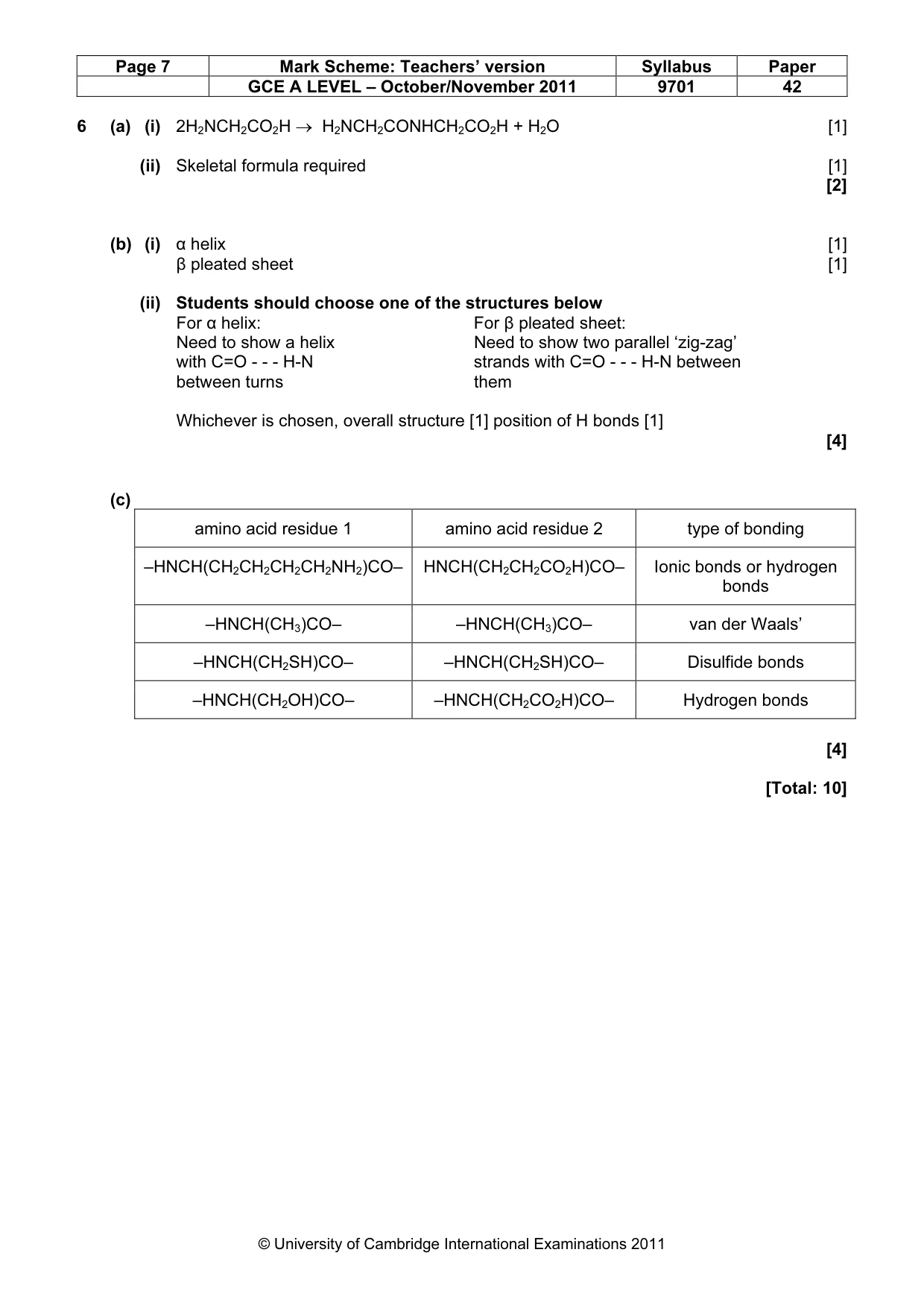
Page 7 Mark Scheme: Teachers’ version Syllabus Paper GCE A LEVEL – October/November 2011 9701 42 © University of Cambridge International Examinations 2011 6 (a) (i) 2H2NCH2CO2H → H2NCH2CONHCH2CO2H + H2O [1] (ii) Skeletal formula required [1] [2] (b) (i) α helix [1] β pleated sheet [1] (ii) Students should choose one of the structures below For α helix: For β pleated sheet: Need to show a helix Need to show two parallel ‘zig-zag’ with C=O - - - H-N strands with C=O - - - H-N between between turns them Whichever is chosen, overall structure [1] position of H bonds [1] [4] (c) amino acid residue 1 amino acid residue 2 type of bonding –HNCH(CH2CH2CH2CH2NH2)CO– HNCH(CH2CH2CO2H)CO– Ionic bonds or hydrogen bonds –HNCH(CH3)CO– –HNCH(CH3)CO– van der Waals’ –HNCH(CH2SH)CO– –HNCH(CH2SH)CO– Disulfide bonds –HNCH(CH2OH)CO– –HNCH(CH2CO2H)CO– Hydrogen bonds [4] [Total: 10]
Mark scheme, page 8
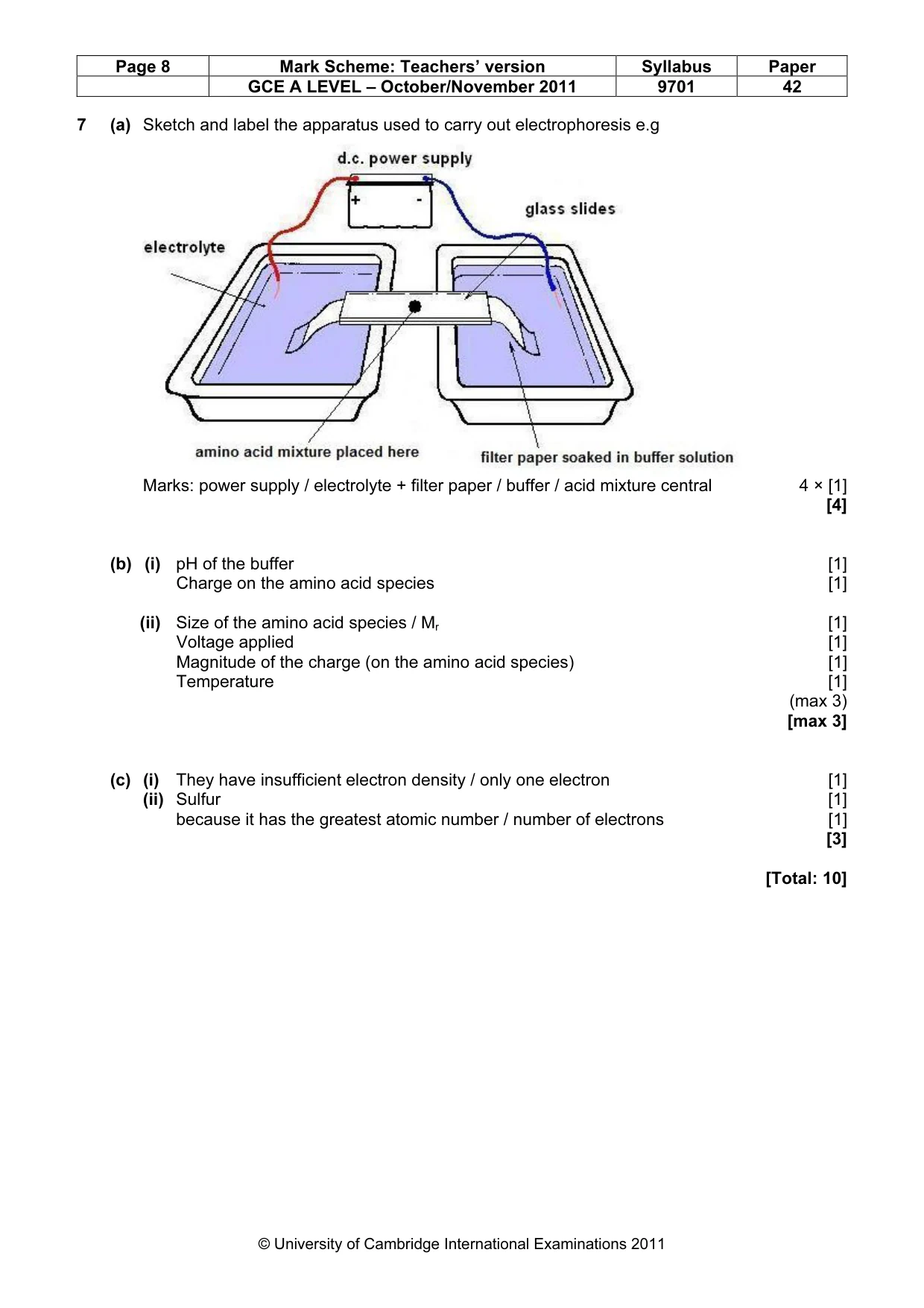
Page 8 Mark Scheme: Teachers’ version Syllabus Paper GCE A LEVEL – October/November 2011 9701 42 © University of Cambridge International Examinations 2011 7 (a) Sketch and label the apparatus used to carry out electrophoresis e.g Marks: power supply / electrolyte + filter paper / buffer / acid mixture central 4 × [1] [4] (b) (i) pH of the buffer [1] Charge on the amino acid species [1] (ii) Size of the amino acid species / Mr [1] Voltage applied [1] Magnitude of the charge (on the amino acid species) [1] Temperature [1] (max 3) [max 3] (c) (i) They have insufficient electron density / only one electron [1] (ii) Sulfur [1] because it has the greatest atomic number / number of electrons [1] [3] [Total: 10]
Mark scheme, page 9
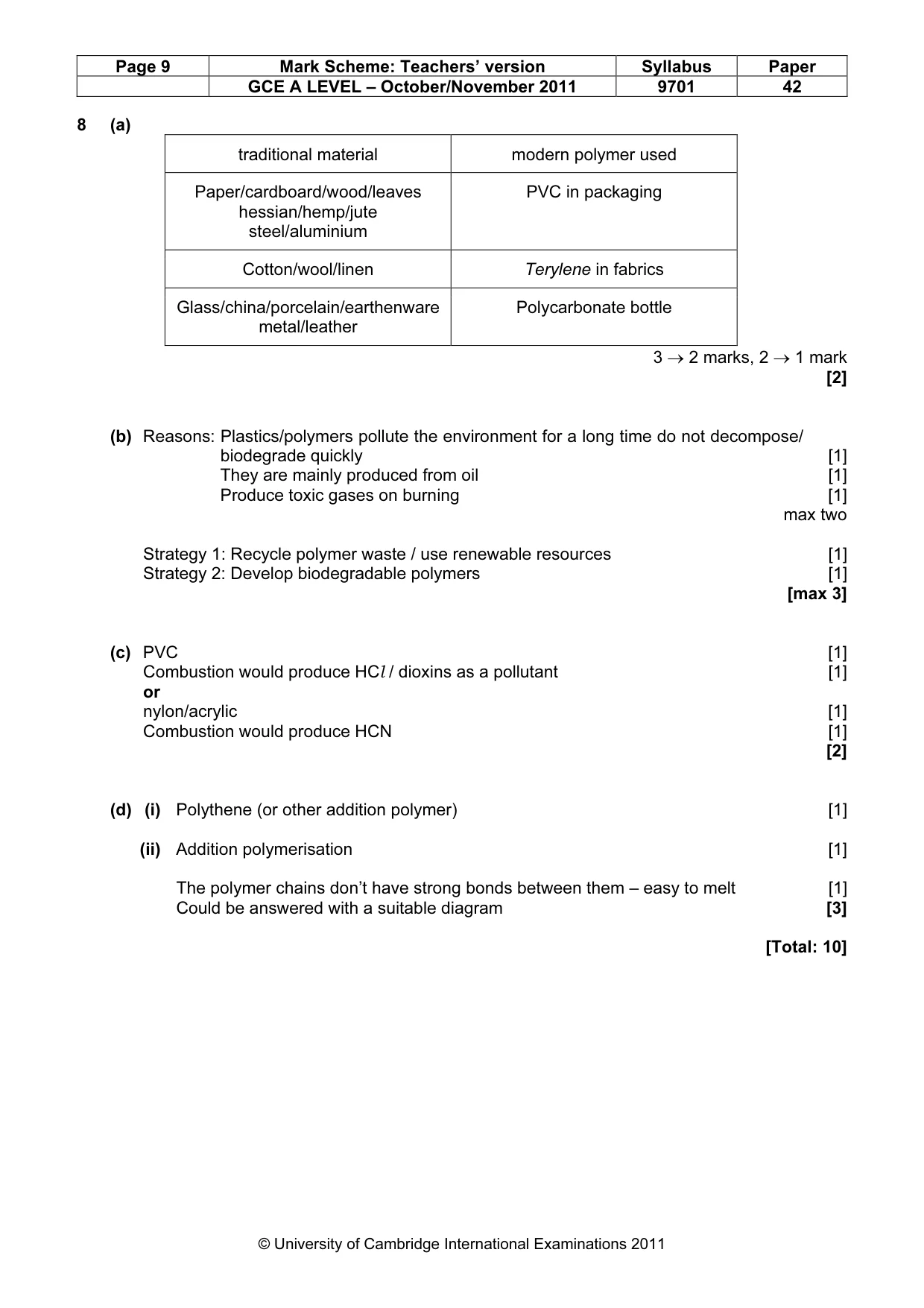
Page 9 Mark Scheme: Teachers’ version Syllabus Paper GCE A LEVEL – October/November 2011 9701 42 © University of Cambridge International Examinations 2011 8 (a) traditional material modern polymer used Paper/cardboard/wood/leaves hessian/hemp/jute steel/aluminium PVC in packaging Cotton/wool/linen Terylene in fabrics Glass/china/porcelain/earthenware metal/leather Polycarbonate bottle 3 → 2 marks, 2 → 1 mark [2] (b) Reasons: Plastics/polymers pollute the environment for a long time do not decompose/ biodegrade quickly [1] They are mainly produced from oil [1] Produce toxic gases on burning [1] max two Strategy 1: Recycle polymer waste / use renewable resources [1] Strategy 2: Develop biodegradable polymers [1] [max 3] (c) PVC [1] Combustion would produce HCl / dioxins as a pollutant [1] or nylon/acrylic [1] Combustion would produce HCN [1] [2] (d) (i) Polythene (or other addition polymer) [1] (ii) Addition polymerisation [1] The polymer chains don’t have strong bonds between them – easy to melt [1] Could be answered with a suitable diagram [3] [Total: 10]
What you needed in this session
Cambridge’s own grade thresholds for 2011 Oct/Nov, Paper 4 · Variant 2. A higher threshold means an easier paper — the bar moves with how the cohort did.