Cambridge A Level Chemistry 9701 — 2011 Oct/Nov Paper 4 · Variant 3
9701/43/O/N/11 · 100 marks · ≈113 min
The question paper and its mark scheme, free to read here and free to download. This is Cambridge’s own paper, exactly as it was sat.
Question paper20 pages



Mark scheme10 pages
Answers below. Sit the paper first if you are practising.
Paper as text
Question paper, page 1
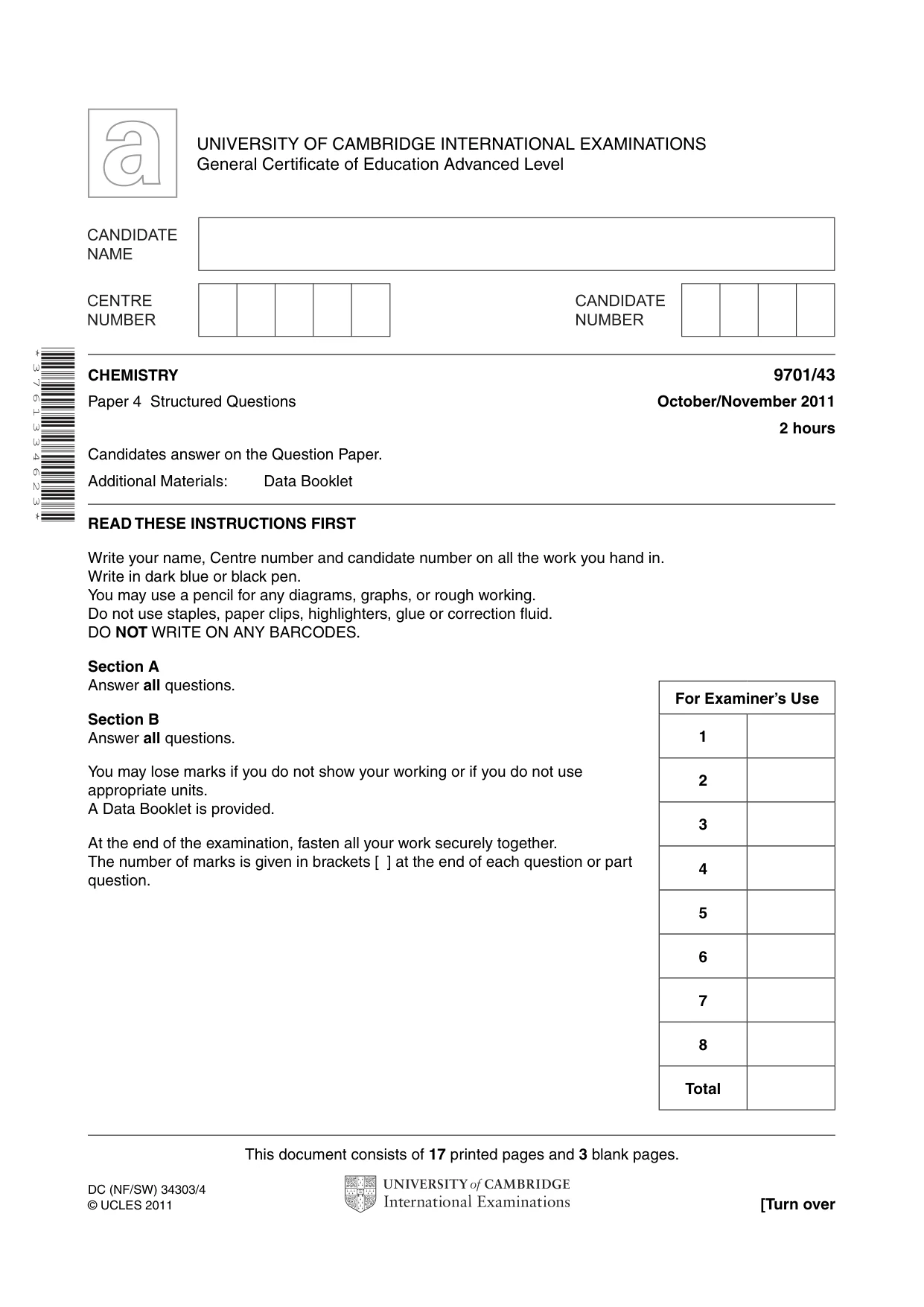
This document consists of 17 printed pages and 3 blank pages. DC (NF/SW) 34303/4 © UCLES 2011 [Turn over UNIVERSITY OF CAMBRIDGE INTERNATIONAL EXAMINATIONS General Certificate of Education Advanced Level * 3 7 6 1 3 3 4 6 2 3 * CHEMISTRY 9701/43 Paper 4 Structured Questions October/November 2011 2 hours Candidates answer on the Question Paper. Additional Materials: Data Booklet READ THESE INSTRUCTIONS FIRST Write your name, Centre number and candidate number on all the work you hand in. Write in dark blue or black pen. You may use a pencil for any diagrams, graphs, or rough working. Do not use staples, paper clips, highlighters, glue or correction fluid. DO NOT WRITE ON ANY BARCODES. Section A Answer all questions. Section B Answer all questions. You may lose marks if you do not show your working or if you do not use appropriate units. A Data Booklet is provided. At the end of the examination, fasten all your work securely together. The number of marks is given in brackets [ ] at the end of each question or part question. For Examiner’s Use 1 2 3 4 5 6 7 8 Total
Question paper, page 2
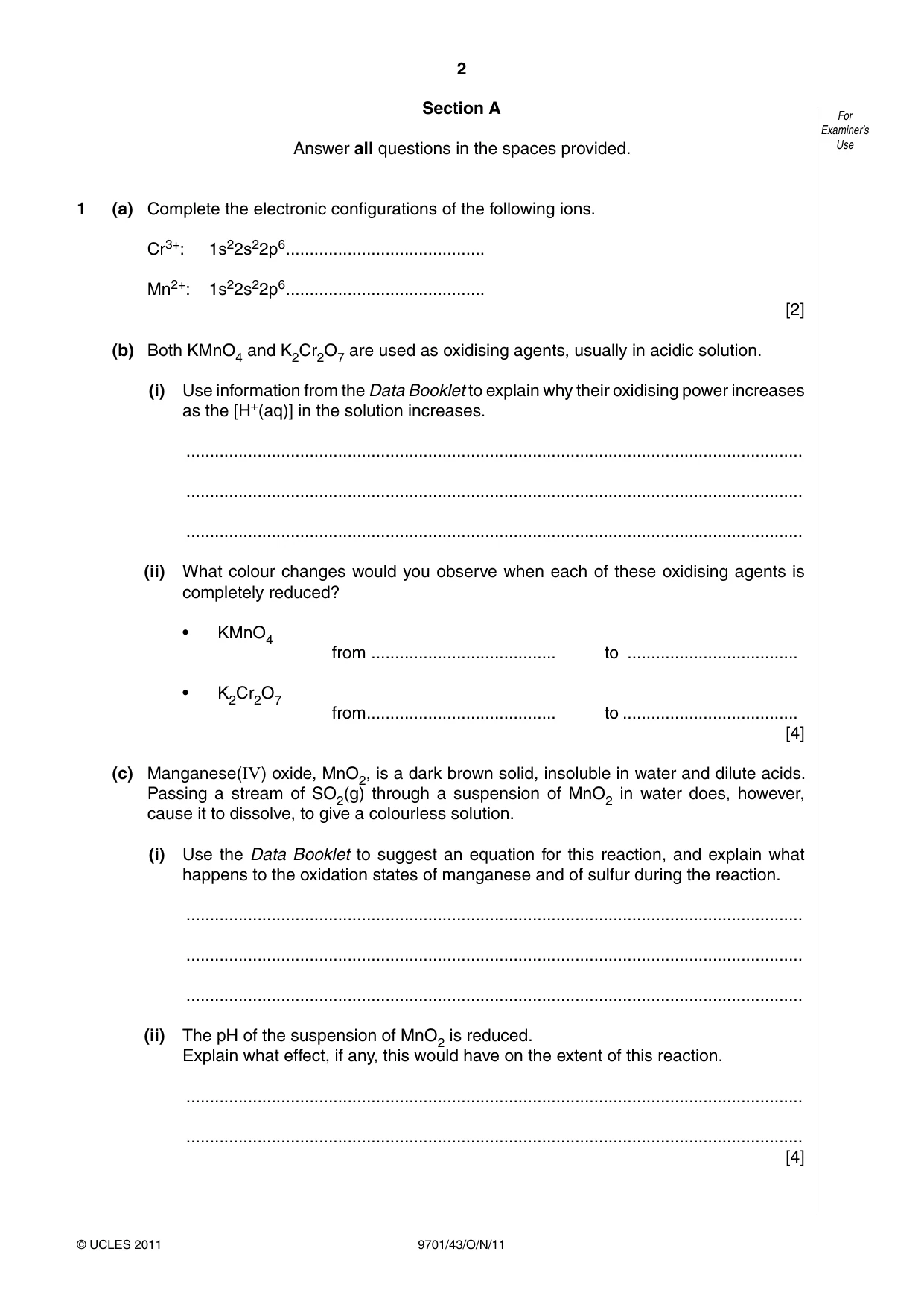
2 9701/43/O/N/11 © UCLES 2011 For Examiner’s Use Section A Answer all questions in the spaces provided. 1 (a) Complete the electronic configurations of the following ions. Cr3+: 1s22s22p6 … Mn2+: 1s22s22p6 … [2] (b) Both KMnO4 and K2Cr2O7 are used as oxidising agents, usually in acidic solution. (i) Use information from the Data Booklet to explain why their oxidising power increases as the [H+(aq)] in the solution increases. … … … (ii) What colour changes would you observe when each of these oxidising agents is completely reduced? • KMnO4 from … to … • K2Cr2O7 from … to … [4] (c) Manganese(IV) oxide, MnO2, is a dark brown solid, insoluble in water and dilute acids. Passing a stream of SO2(g) through a suspension of MnO2 in water does, however, cause it to dissolve, to give a colourless solution. (i) Use the Data Booklet to suggest an equation for this reaction, and explain what happens to the oxidation states of manganese and of sulfur during the reaction. … … … (ii) The pH of the suspension of MnO2 is reduced. Explain what effect, if any, this would have on the extent of this reaction. … … [4]
Question paper, page 3
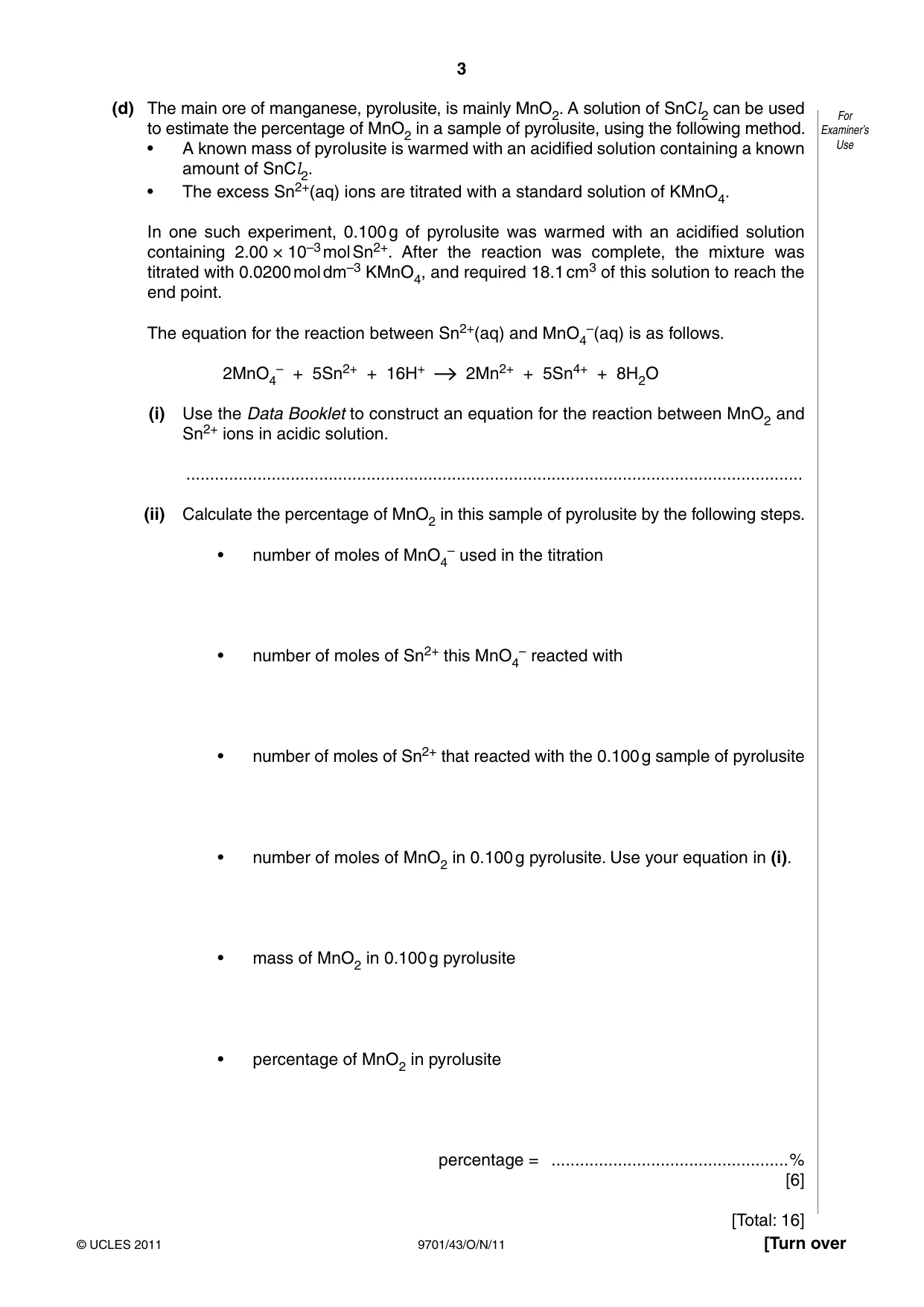
3 9701/43/O/N/11 © UCLES 2011 [Turn over For Examiner’s Use (d) The main ore of manganese, pyrolusite, is mainly MnO2. A solution of SnCl2 can be used to estimate the percentage of MnO2 in a sample of pyrolusite, using the following method. • A known mass of pyrolusite is warmed with an acidified solution containing a known amount of SnCl2. • The excess Sn2+(aq) ions are titrated with a standard solution of KMnO4. In one such experiment, 0.100 g of pyrolusite was warmed with an acidified solution containing 2.00 × 10⁻³ mol Sn2+. After the reaction was complete, the mixture was titrated with 0.0200 mol dm–3 KMnO4, and required 18.1 cm3 of this solution to reach the end point. The equation for the reaction between Sn2+(aq) and MnO4 –(aq) is as follows. 2MnO4 – + 5Sn2+ + 16H+ 2Mn2+ + 5Sn4+ + 8H2O (i) Use the Data Booklet to construct an equation for the reaction between MnO2 and Sn2+ ions in acidic solution. … (ii) Calculate the percentage of MnO2 in this sample of pyrolusite by the following steps. • number of moles of MnO4 – used in the titration • number of moles of Sn2+ this MnO4 – reacted with • number of moles of Sn2+ that reacted with the 0.100 g sample of pyrolusite • number of moles of MnO2 in 0.100 g pyrolusite. Use your equation in (i). • mass of MnO2 in 0.100 g pyrolusite • percentage of MnO2 in pyrolusite percentage = …% [6] [Total: 16]
Question paper, page 4
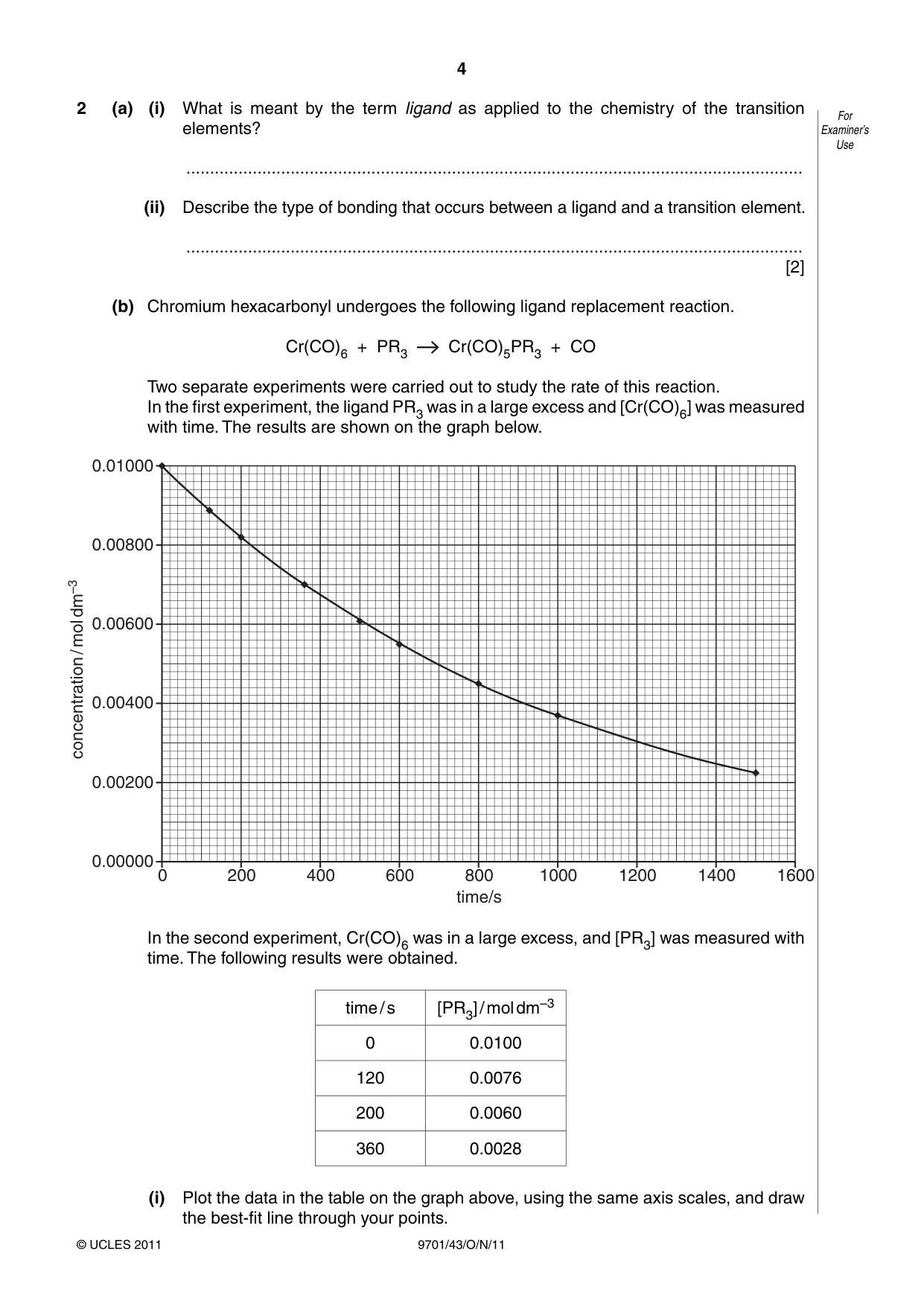
4 9701/43/O/N/11 © UCLES 2011 For Examiner’s Use 2 (a) (i) What is meant by the term ligand as applied to the chemistry of the transition elements? … (ii) Describe the type of bonding that occurs between a ligand and a transition element. … [2] (b) Chromium hexacarbonyl undergoes the following ligand replacement reaction. Cr(CO)6 + PR3 Cr(CO)5PR3 + CO Two separate experiments were carried out to study the rate of this reaction. In the first experiment, the ligand PR3 was in a large excess and [Cr(CO)6] was measured with time. The results are shown on the graph below. 0 0.00000 0.00200 0.00400 0.00600 concentration / mol dm–3 0.00800 0.01000 200 400 600 800 time/s 1000 1200 1400 1600 In the second experiment, Cr(CO)6 was in a large excess, and [PR3] was measured with time. The following results were obtained. time / s [PR3] / mol dm–3 0 0.0100 120 0.0076 200 0.0060 360 0.0028 (i) Plot the data in the table on the graph above, using the same axis scales, and draw the best-fit line through your points.
Question paper, page 5
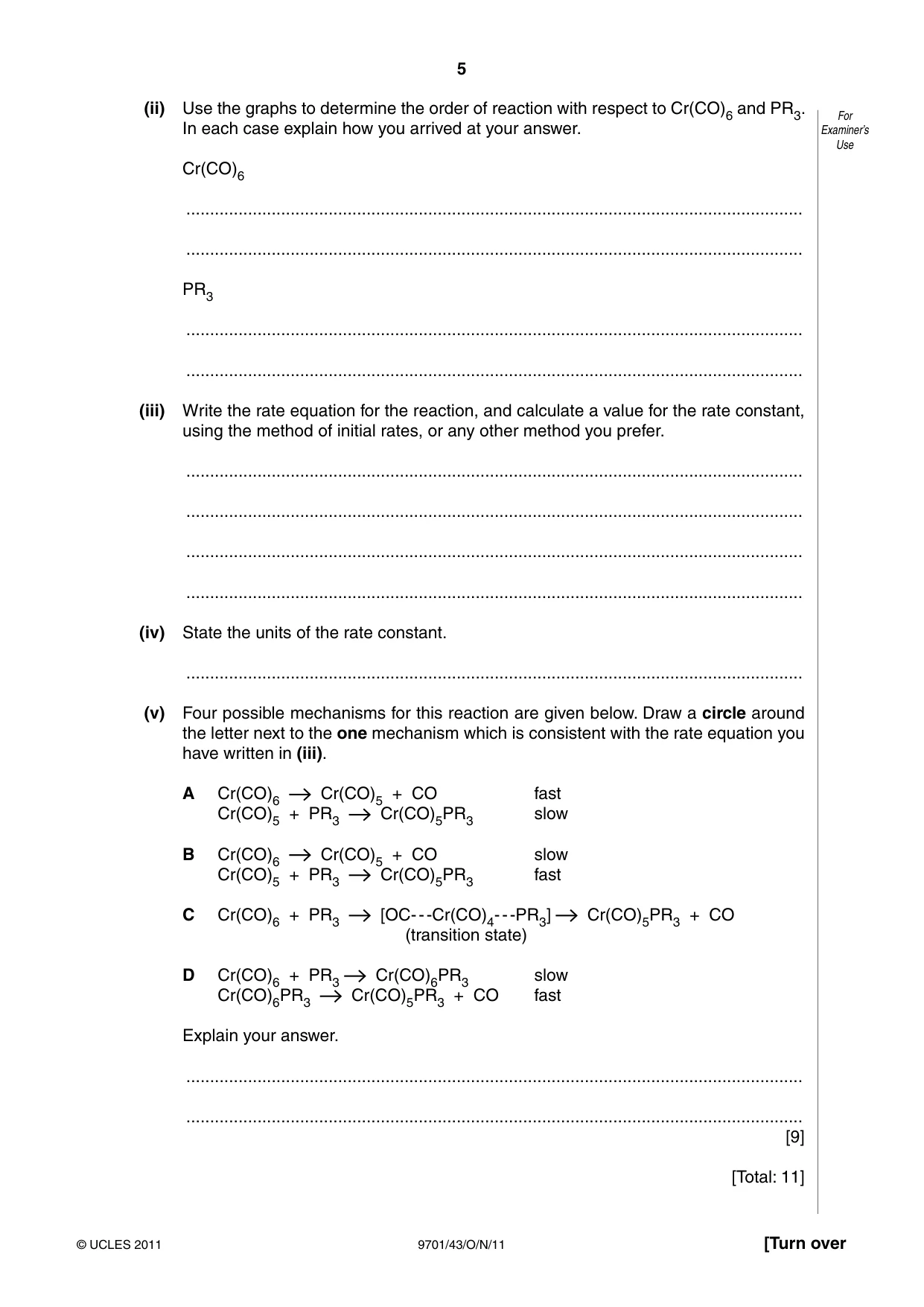
5 9701/43/O/N/11 © UCLES 2011 [Turn over For Examiner’s Use (ii) Use the graphs to determine the order of reaction with respect to Cr(CO)6 and PR3. In each case explain how you arrived at your answer. Cr(CO)6 … … PR3 … … (iii) Write the rate equation for the reaction, and calculate a value for the rate constant, using the method of initial rates, or any other method you prefer. … … … … (iv) State the units of the rate constant. … (v) Four possible mechanisms for this reaction are given below. Draw a circle around the letter next to the one mechanism which is consistent with the rate equation you have written in (iii). A Cr(CO)6 Cr(CO)5 + CO fast Cr(CO)5 + PR3 Cr(CO)5PR3 slow B Cr(CO)6 Cr(CO)5 + CO slow Cr(CO)5 + PR3 Cr(CO)5PR3 fast C Cr(CO)6 + PR3 [OC- - -Cr(CO)4- - -PR3] Cr(CO)5PR3 + CO (transition state) D Cr(CO)6 + PR3 Cr(CO)6PR3 slow Cr(CO)6PR3 Cr(CO)5PR3 + CO fast Explain your answer. … … [9] [Total: 11]
Question paper, page 6
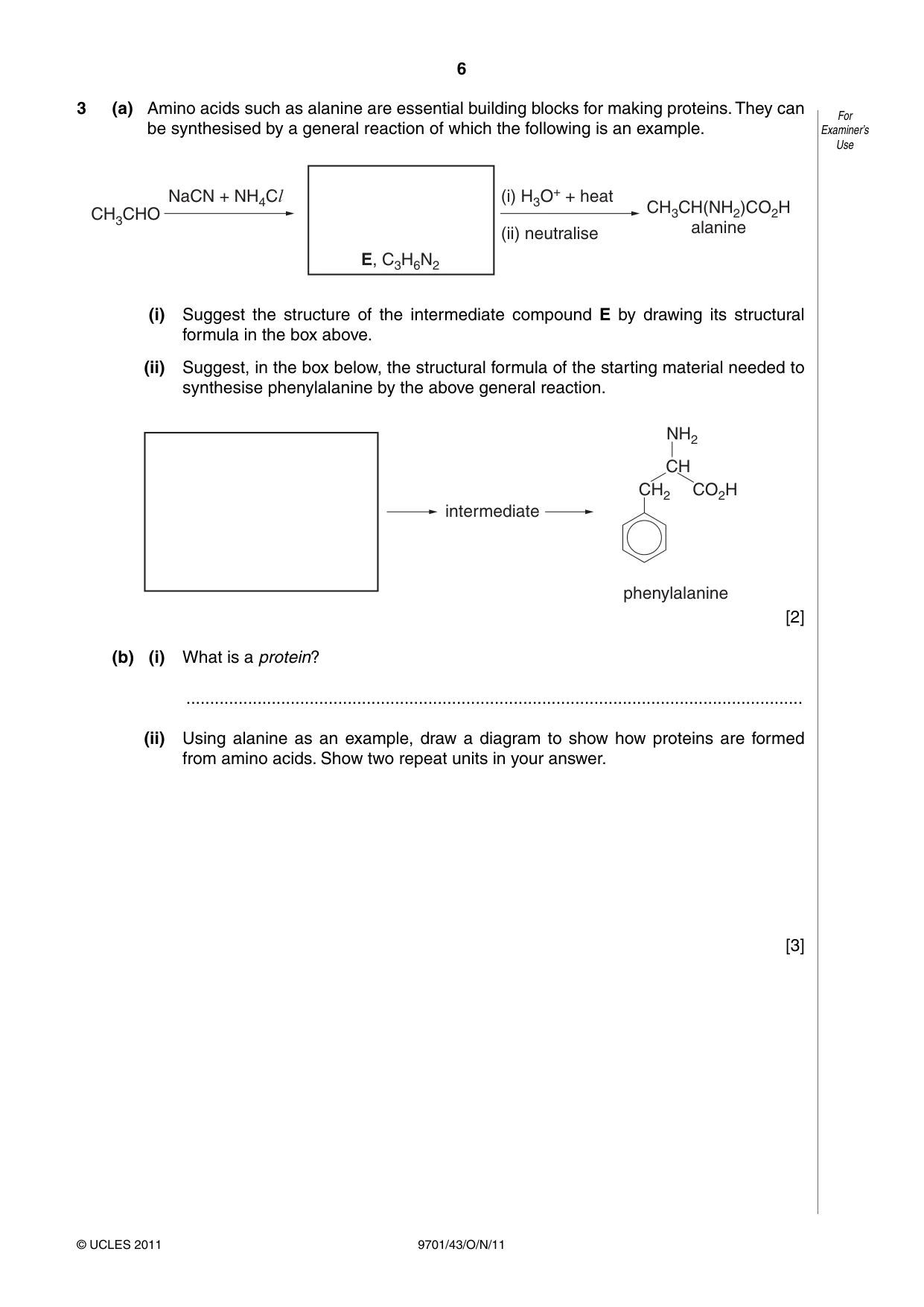
6 9701/43/O/N/11 © UCLES 2011 For Examiner’s Use 3 (a) Amino acids such as alanine are essential building blocks for making proteins. They can be synthesised by a general reaction of which the following is an example. CH3CHO CH3CH(NH2)CO2H alanine NaCN + NH4Cl E, C3H6N2 (i) H3O+ + heat (ii) neutralise (i) Suggest the structure of the intermediate compound E by drawing its structural formula in the box above. (ii) Suggest, in the box below, the structural formula of the starting material needed to synthesise phenylalanine by the above general reaction. CH2 NH2 CO2H phenylalanine intermediate CH [2] (b) (i) What is a protein? … (ii) Using alanine as an example, draw a diagram to show how proteins are formed from amino acids. Show two repeat units in your answer. [3]
Question paper, page 7
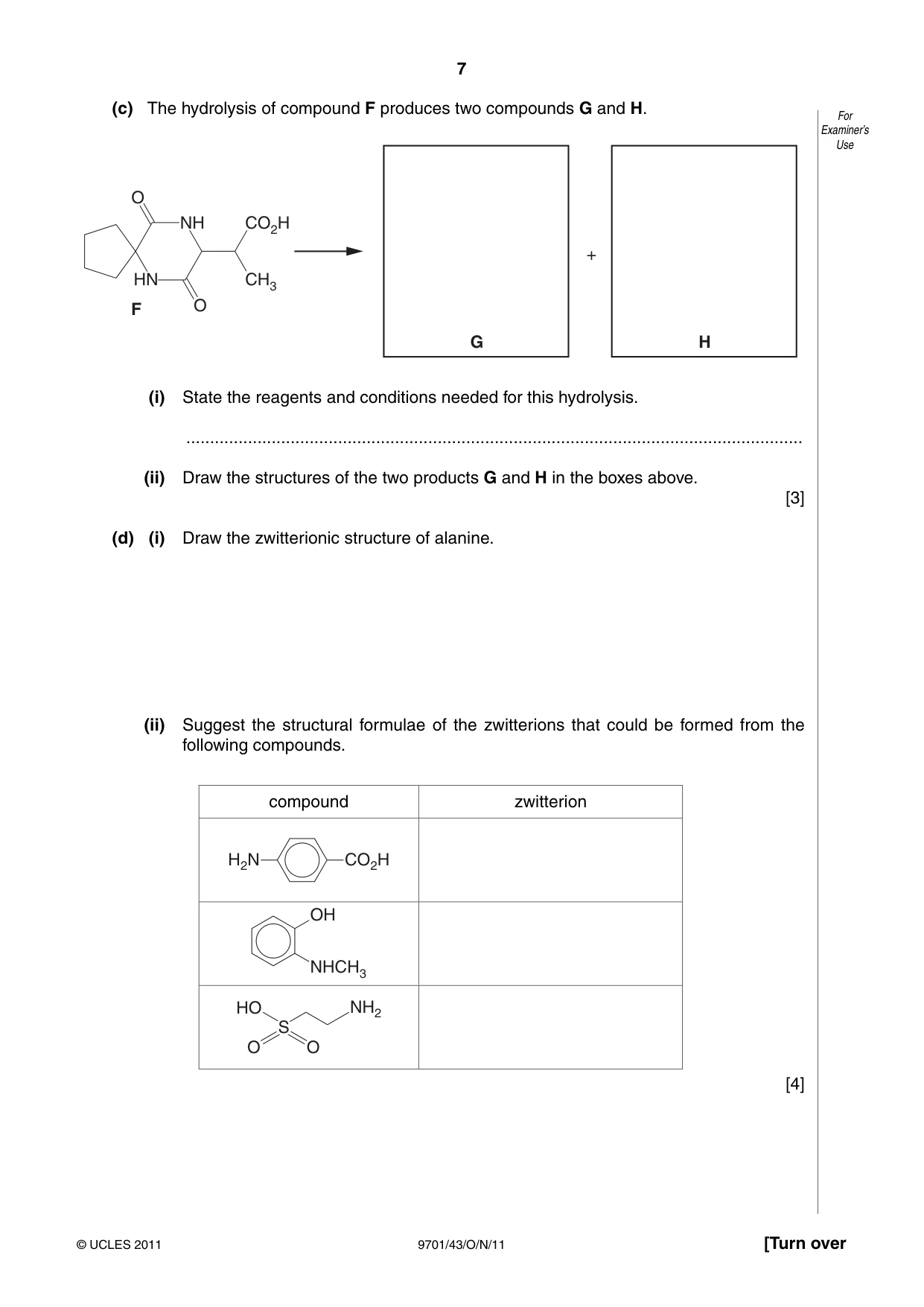
7 9701/43/O/N/11 © UCLES 2011 [Turn over For Examiner’s Use (c) The hydrolysis of compound F produces two compounds G and H. O O G F + NH CO2H CH3 HN H (i) State the reagents and conditions needed for this hydrolysis. … (ii) Draw the structures of the two products G and H in the boxes above. [3] (d) (i) Draw the zwitterionic structure of alanine. (ii) Suggest the structural formulae of the zwitterions that could be formed from the following compounds. compound zwitterion H2N CO2H NHCH3 OH NH2 HO S O O [4]
Question paper, page 8
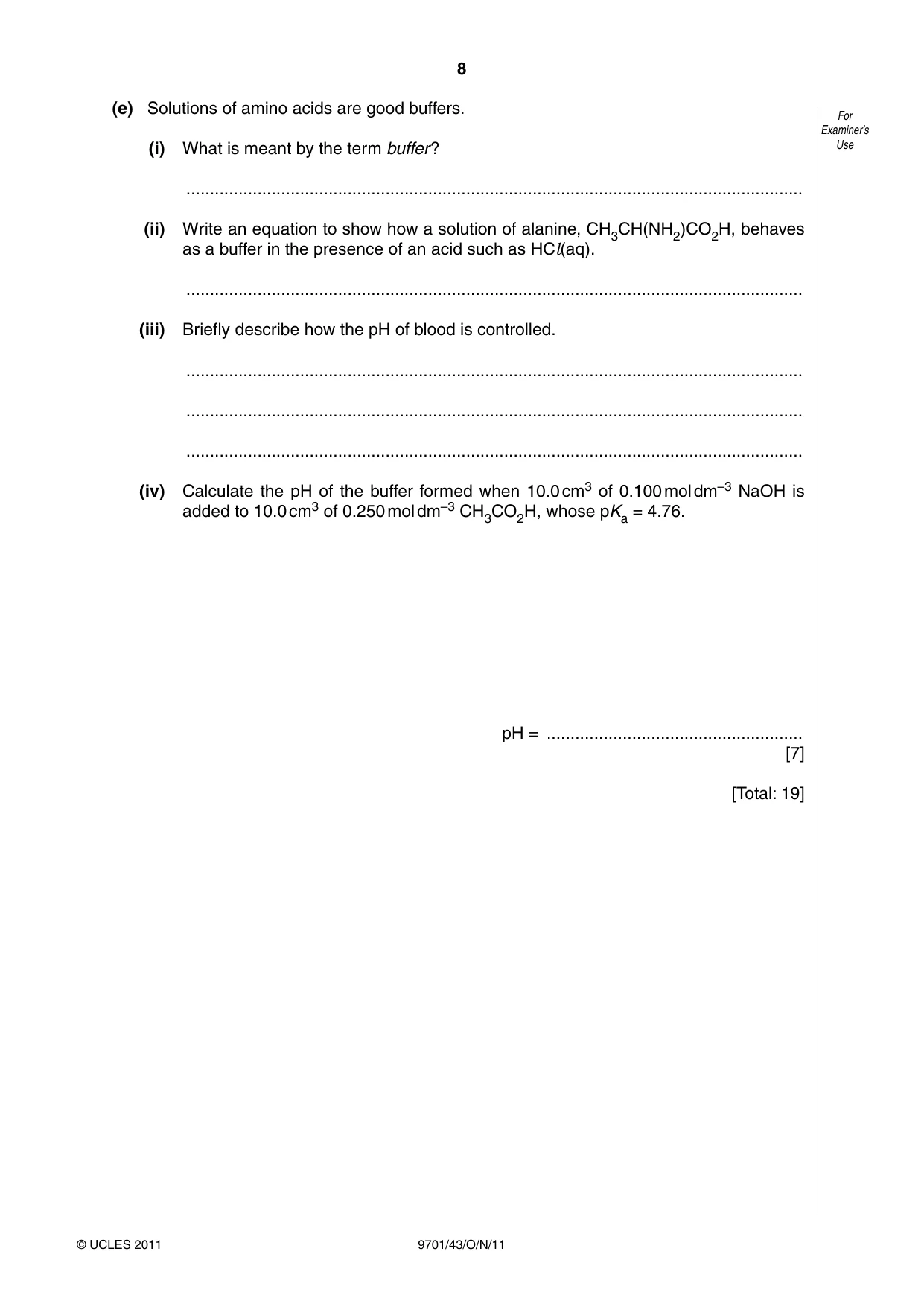
8 9701/43/O/N/11 © UCLES 2011 For Examiner’s Use (e) Solutions of amino acids are good buffers. (i) What is meant by the term buffer? … (ii) Write an equation to show how a solution of alanine, CH3CH(NH2)CO2H, behaves as a buffer in the presence of an acid such as HCl(aq). … (iii) Briefly describe how the pH of blood is controlled. … … … (iv) Calculate the pH of the buffer formed when 10.0 cm3 of 0.100 mol dm–3 NaOH is added to 10.0 cm3 of 0.250 mol dm–3 CH3CO2H, whose pKa = 4.76. pH = … [7] [Total: 19]
Question paper, page 9
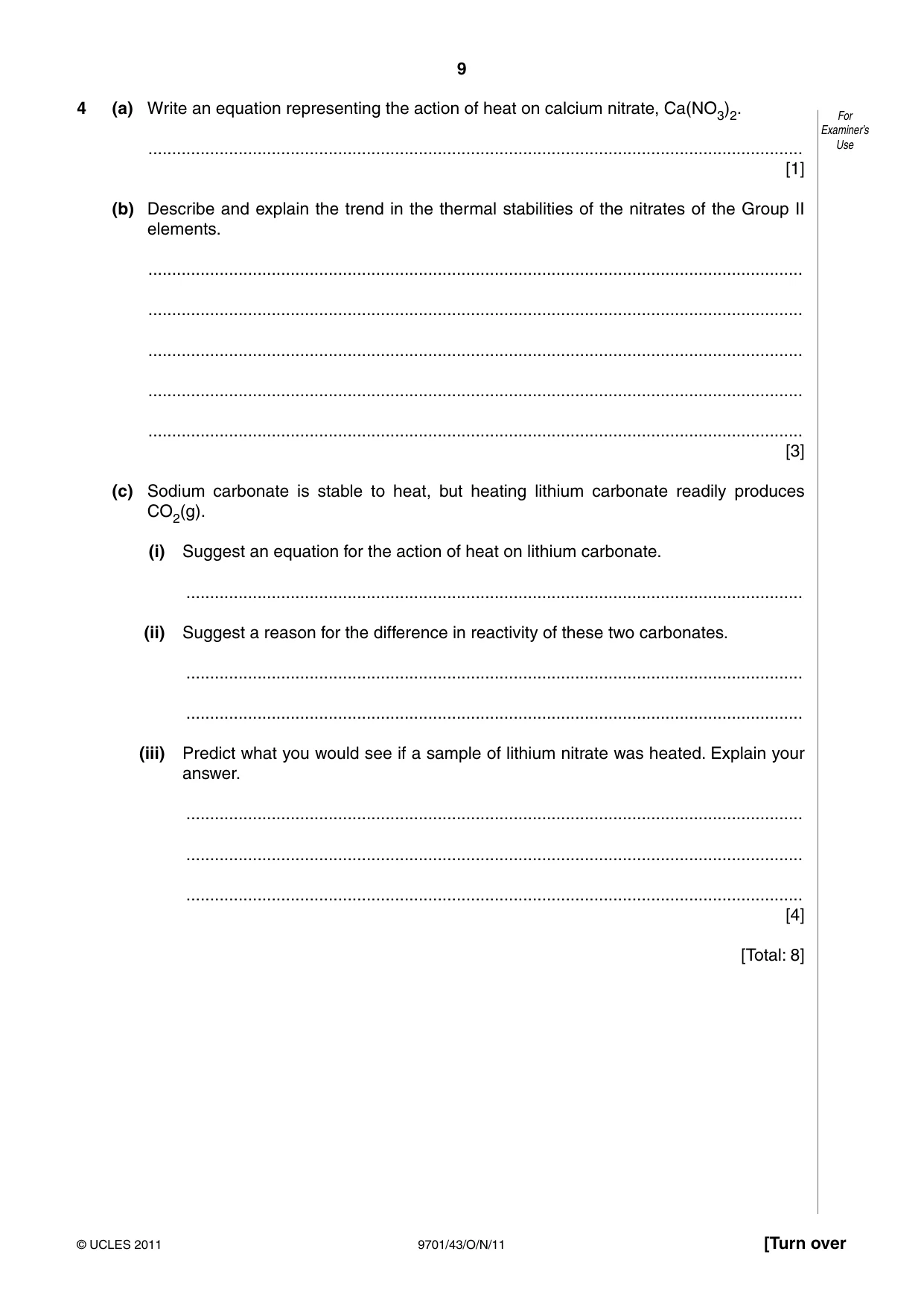
9 9701/43/O/N/11 © UCLES 2011 [Turn over For Examiner’s Use 4 (a) Write an equation representing the action of heat on calcium nitrate, Ca(NO3)2. … [1] (b) Describe and explain the trend in the thermal stabilities of the nitrates of the Group II elements. … … … … … [3] (c) Sodium carbonate is stable to heat, but heating lithium carbonate readily produces CO2(g). (i) Suggest an equation for the action of heat on lithium carbonate. … (ii) Suggest a reason for the difference in reactivity of these two carbonates. … … (iii) Predict what you would see if a sample of lithium nitrate was heated. Explain your answer. … … … [4] [Total: 8]
Question paper, page 10
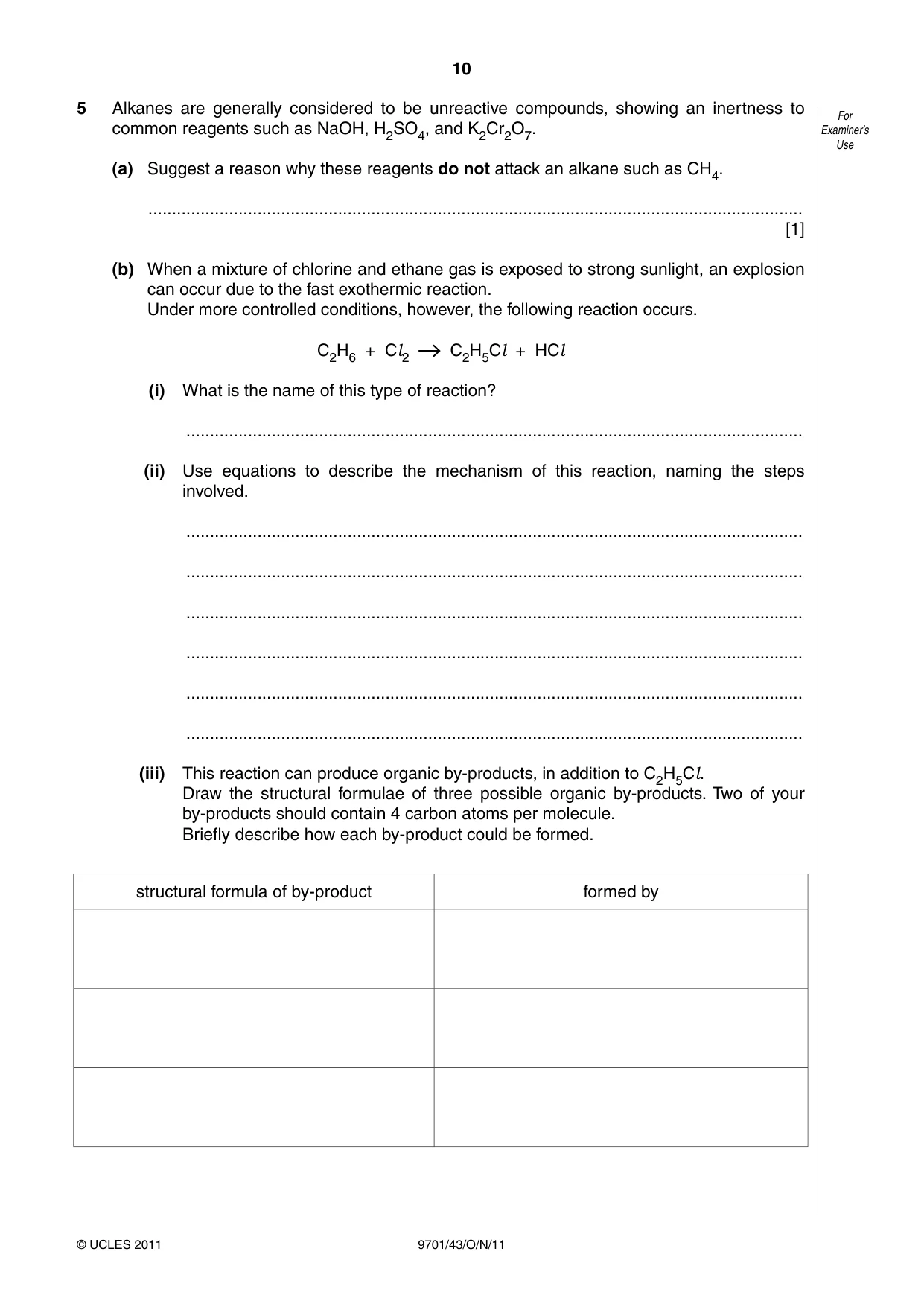
10 9701/43/O/N/11 © UCLES 2011 For Examiner’s Use 5 Alkanes are generally considered to be unreactive compounds, showing an inertness to common reagents such as NaOH, H2SO4, and K2Cr2O7. (a) Suggest a reason why these reagents do not attack an alkane such as CH4. … [1] (b) When a mixture of chlorine and ethane gas is exposed to strong sunlight, an explosion can occur due to the fast exothermic reaction. Under more controlled conditions, however, the following reaction occurs. C2H6 + Cl2 C2H5Cl + HCl (i) What is the name of this type of reaction? … (ii) Use equations to describe the mechanism of this reaction, naming the steps involved. … … … … … … (iii) This reaction can produce organic by-products, in addition to C2H5Cl. Draw the structural formulae of three possible organic by-products. Two of your by-products should contain 4 carbon atoms per molecule. Briefly describe how each by-product could be formed. structural formula of by-product formed by
Question paper, page 11
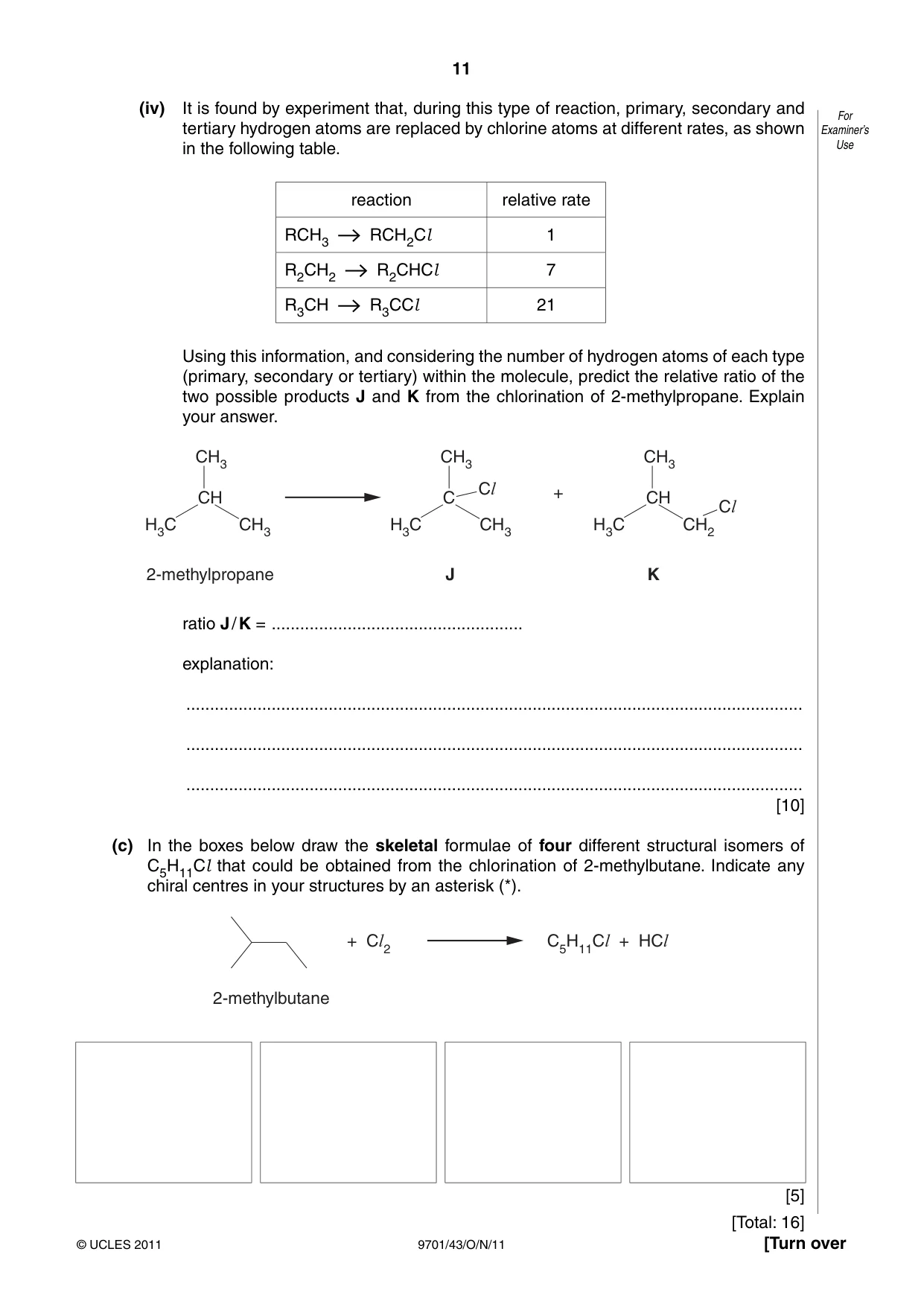
11 9701/43/O/N/11 © UCLES 2011 [Turn over For Examiner’s Use (iv) It is found by experiment that, during this type of reaction, primary, secondary and tertiary hydrogen atoms are replaced by chlorine atoms at different rates, as shown in the following table. reaction relative rate RCH3 RCH2Cl 1 R2CH2 R2CHCl 7 R3CH R3CCl 21 Using this information, and considering the number of hydrogen atoms of each type (primary, secondary or tertiary) within the molecule, predict the relative ratio of the two possible products J and K from the chlorination of 2-methylpropane. Explain your answer. H3C CH3 CH3 CH H3C CH3 CH3 + C Cl H3C CH3 CH2 CH 2-methylpropane J K Cl ratio J / K = … explanation: … … … [10] (c) In the boxes below draw the skeletal formulae of four different structural isomers of C5H11Cl that could be obtained from the chlorination of 2-methylbutane. Indicate any chiral centres in your structures by an asterisk (*). C5H11Cl + HCl + Cl2 2-methylbutane [5] [Total: 16]
Question paper, page 12
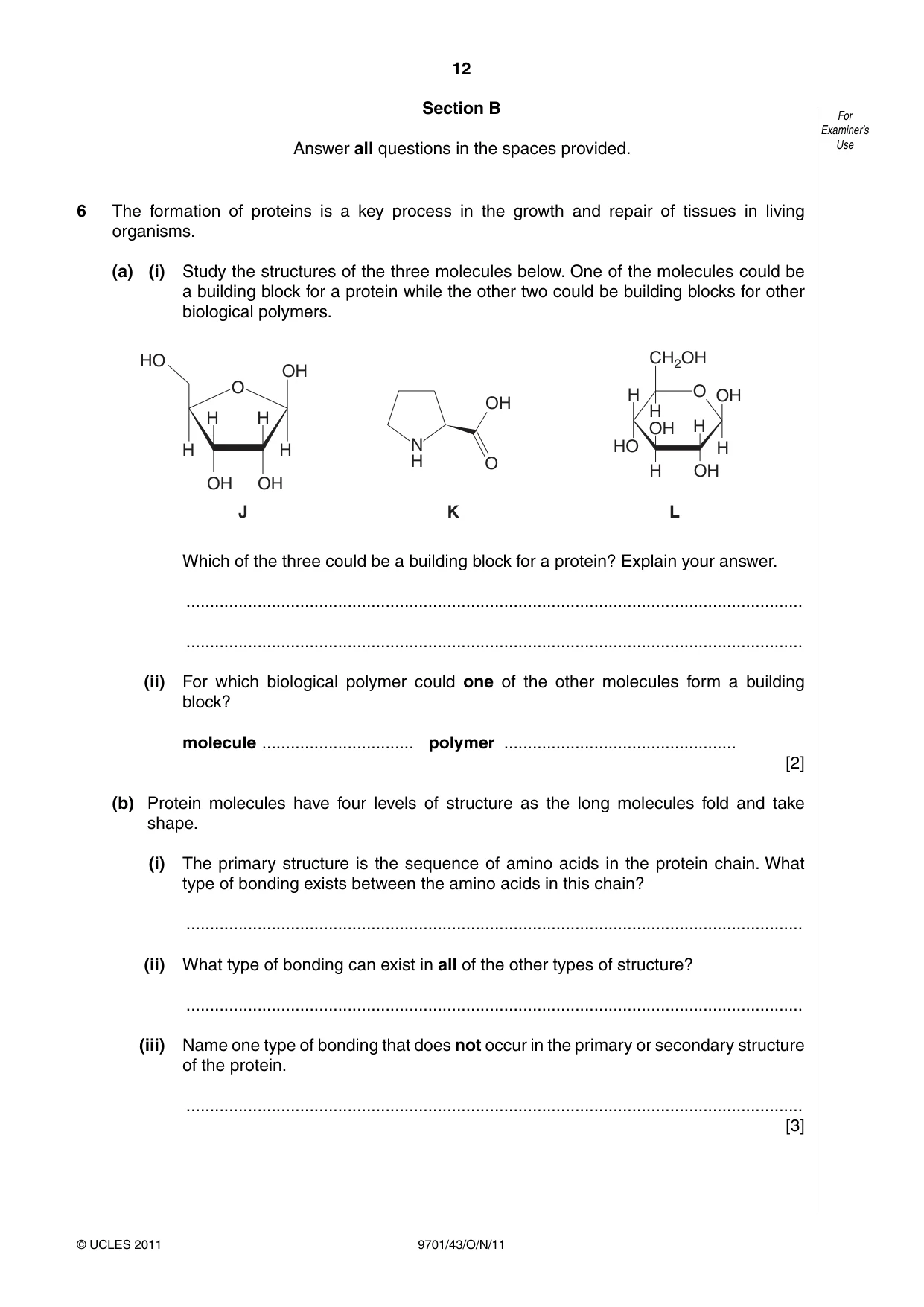
12 9701/43/O/N/11 © UCLES 2011 For Examiner’s Use Section B Answer all questions in the spaces provided. 6 The formation of proteins is a key process in the growth and repair of tissues in living organisms. (a) (i) Study the structures of the three molecules below. One of the molecules could be a building block for a protein while the other two could be building blocks for other biological polymers. CH2OH O OH HO H H H H OH OH H O O OH J K L OH OH HO OH H H N H H H Which of the three could be a building block for a protein? Explain your answer. … … (ii) For which biological polymer could one of the other molecules form a building block? molecule … polymer … [2] (b) Protein molecules have four levels of structure as the long molecules fold and take shape. (i) The primary structure is the sequence of amino acids in the protein chain. What type of bonding exists between the amino acids in this chain? … (ii) What type of bonding can exist in all of the other types of structure? … (iii) Name one type of bonding that does not occur in the primary or secondary structure of the protein. … [3]
Question paper, page 13
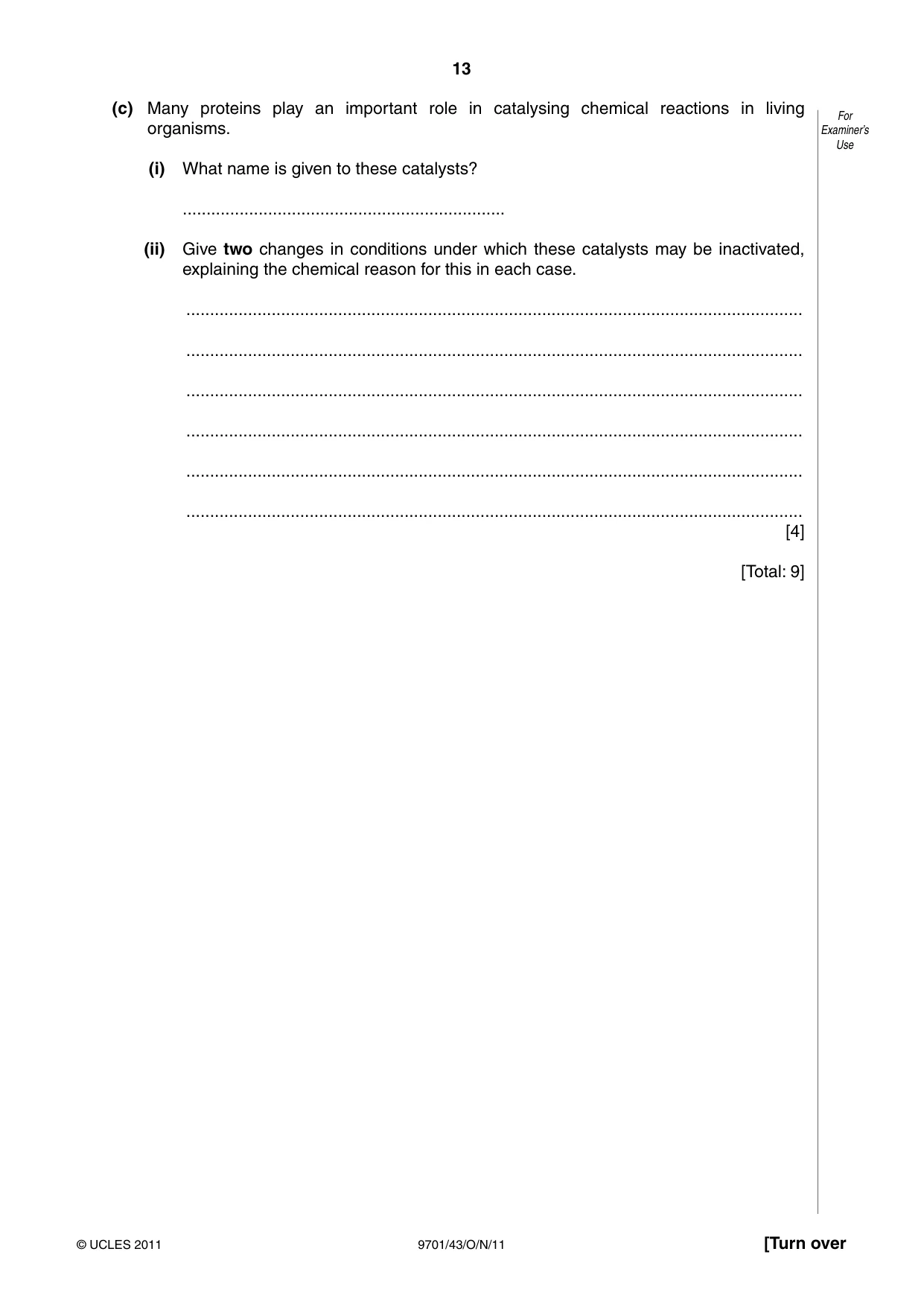
13 9701/43/O/N/11 © UCLES 2011 [Turn over For Examiner’s Use (c) Many proteins play an important role in catalysing chemical reactions in living organisms. (i) What name is given to these catalysts? … (ii) Give two changes in conditions under which these catalysts may be inactivated, explaining the chemical reason for this in each case. … … … … … … [4] [Total: 9]
Question paper, page 14
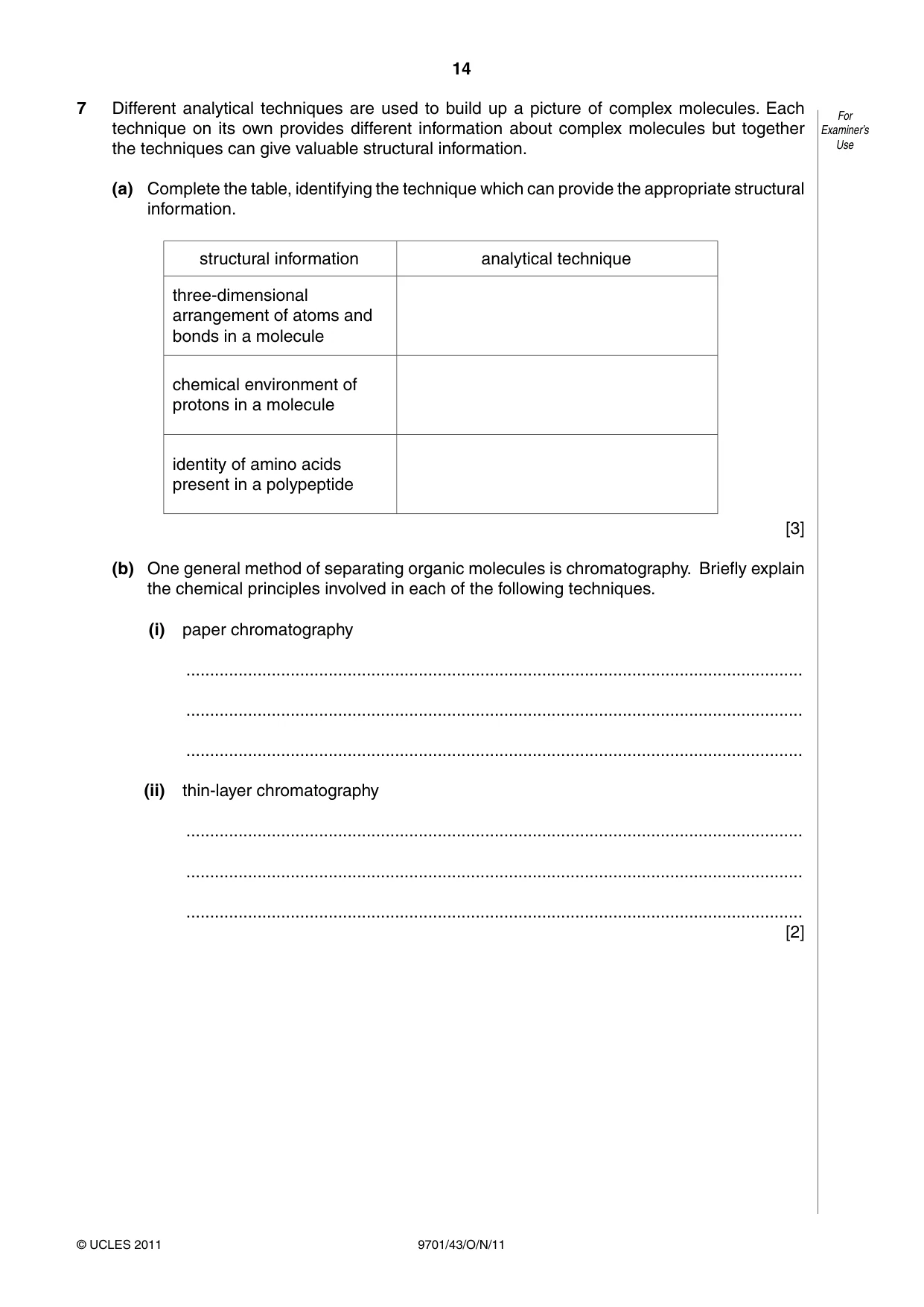
14 9701/43/O/N/11 © UCLES 2011 For Examiner’s Use 7 Different analytical techniques are used to build up a picture of complex molecules. Each technique on its own provides different information about complex molecules but together the techniques can give valuable structural information. (a) Complete the table, identifying the technique which can provide the appropriate structural information. structural information analytical technique three-dimensional arrangement of atoms and bonds in a molecule chemical environment of protons in a molecule identity of amino acids present in a polypeptide [3] (b) One general method of separating organic molecules is chromatography. Briefly explain the chemical principles involved in each of the following techniques. (i) paper chromatography … … … (ii) thin-layer chromatography … … … [2]
Question paper, page 15
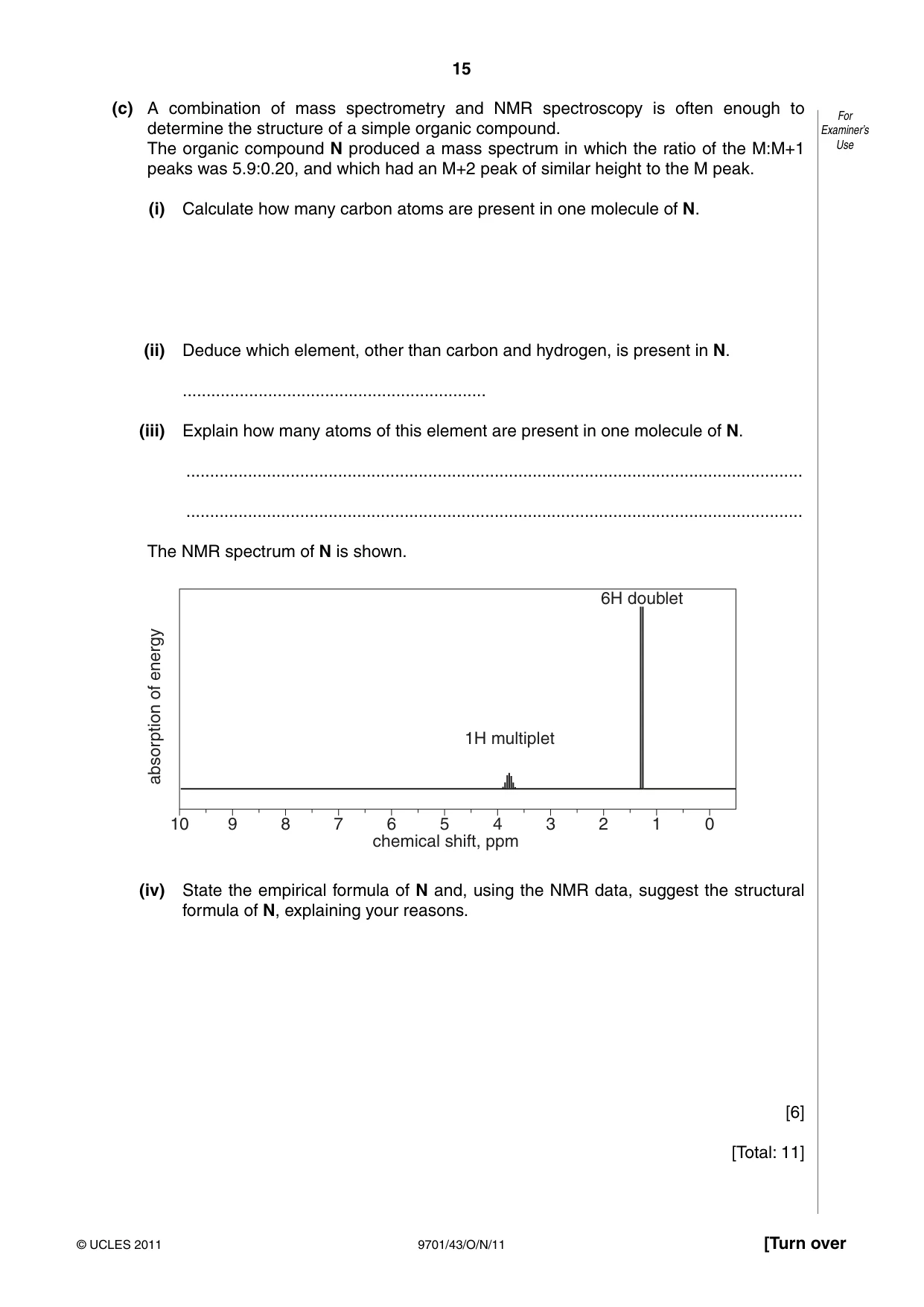
15 9701/43/O/N/11 © UCLES 2011 [Turn over For Examiner’s Use (c) A combination of mass spectrometry and NMR spectroscopy is often enough to determine the structure of a simple organic compound. The organic compound N produced a mass spectrum in which the ratio of the M:M+1 peaks was 5.9:0.20, and which had an M+2 peak of similar height to the M peak. (i) Calculate how many carbon atoms are present in one molecule of N. (ii) Deduce which element, other than carbon and hydrogen, is present in N. … (iii) Explain how many atoms of this element are present in one molecule of N. … … The NMR spectrum of N is shown. 10 9 8 7 6 5 4 1H multiplet 6H doublet 3 2 1 0 chemical shift, ppm absorption of energy (iv) State the empirical formula of N and, using the NMR data, suggest the structural formula of N, explaining your reasons. [6] [Total: 11]
Question paper, page 16
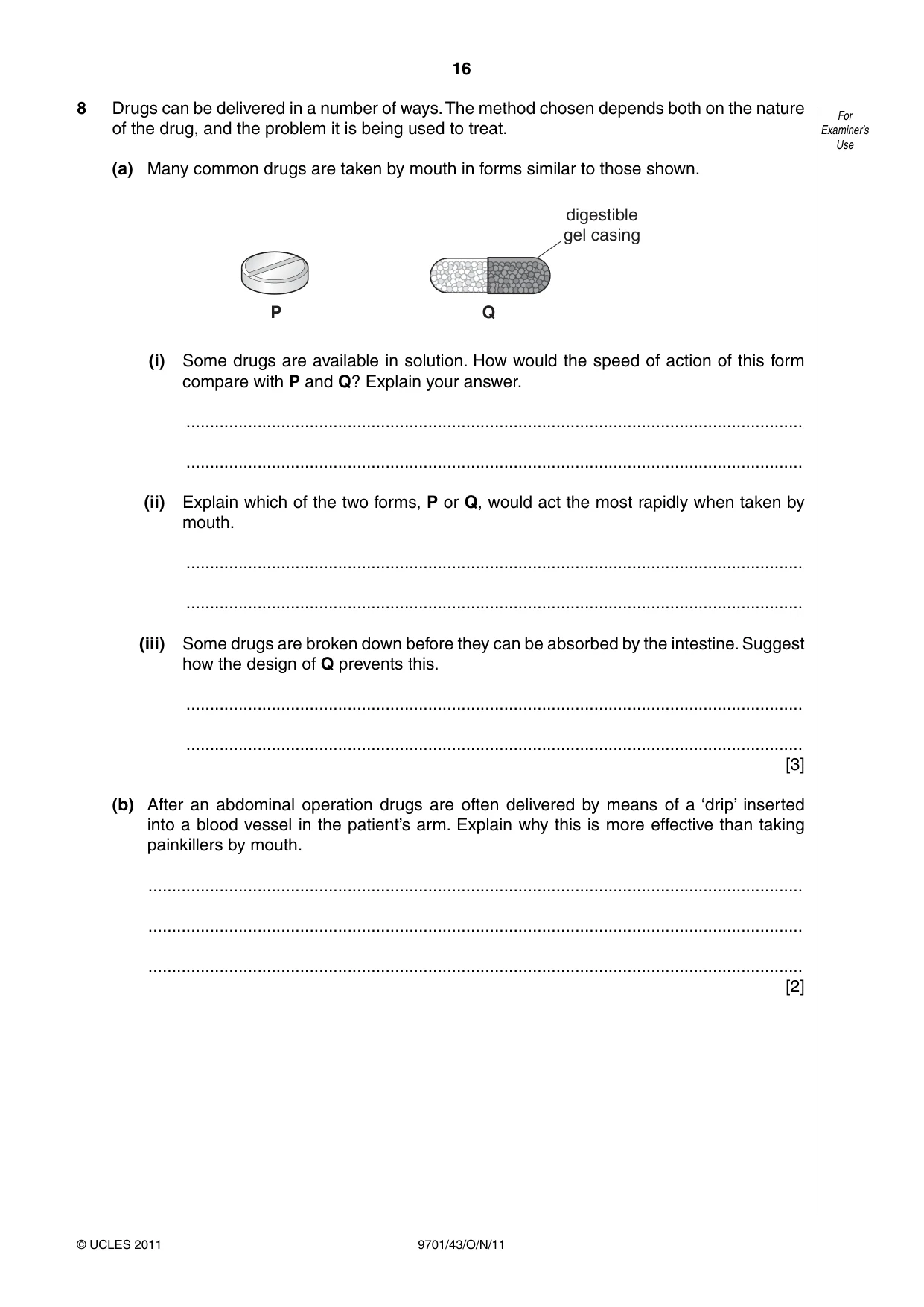
16 9701/43/O/N/11 © UCLES 2011 For Examiner’s Use 8 Drugs can be delivered in a number of ways. The method chosen depends both on the nature of the drug, and the problem it is being used to treat. (a) Many common drugs are taken by mouth in forms similar to those shown. P Q digestible gel casing (i) Some drugs are available in solution. How would the speed of action of this form compare with P and Q? Explain your answer. … … (ii) Explain which of the two forms, P or Q, would act the most rapidly when taken by mouth. … … (iii) Some drugs are broken down before they can be absorbed by the intestine. Suggest how the design of Q prevents this. … … [3] (b) After an abdominal operation drugs are often delivered by means of a ‘drip’ inserted into a blood vessel in the patient’s arm. Explain why this is more effective than taking painkillers by mouth. … … … [2]
Question paper, page 17
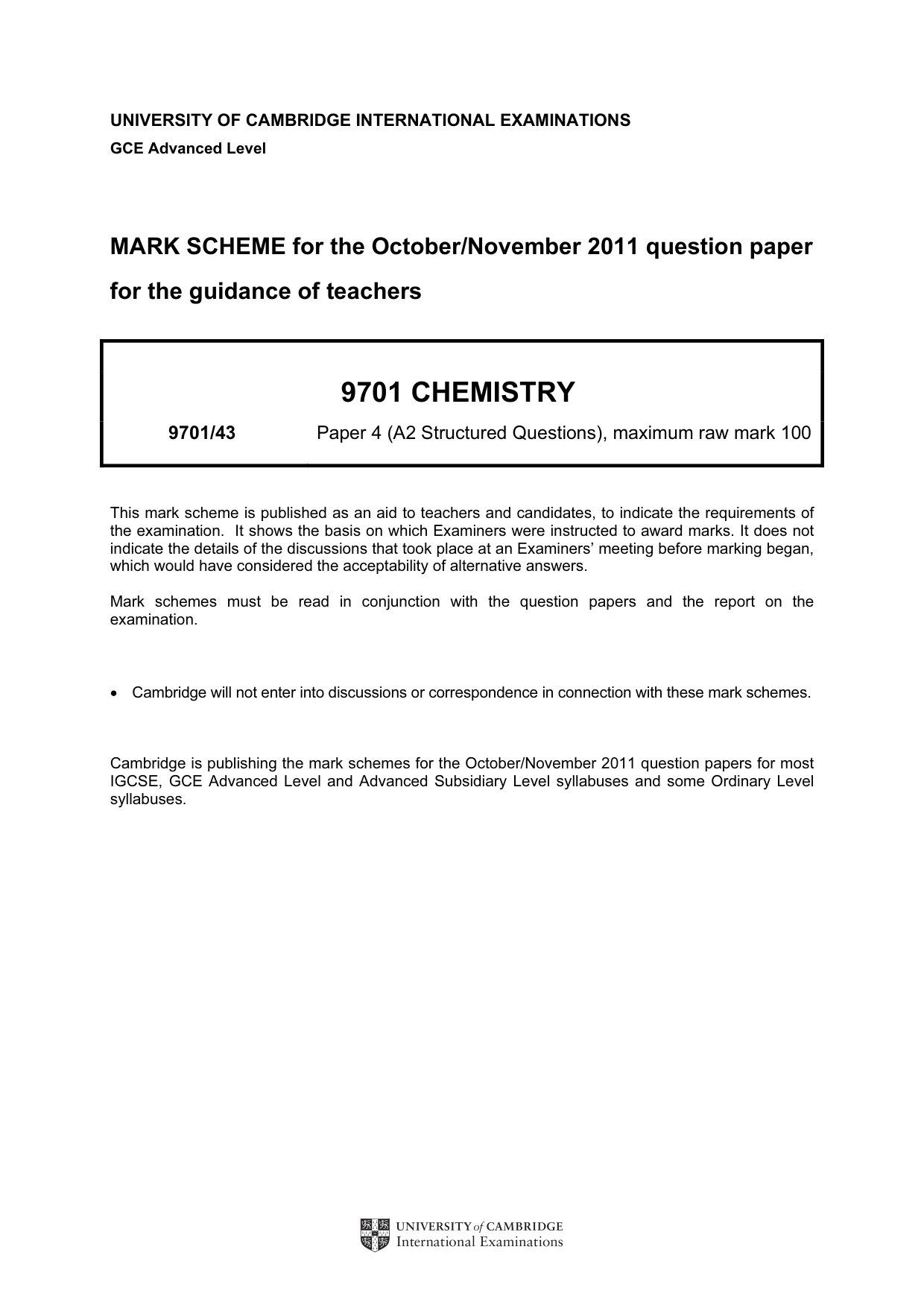
17 9701/43/O/N/11 © UCLES 2011 For Examiner’s Use (c) One of the molecules that has found a variety of uses in drug delivery is poly(ethylene glycol) or PEG. It is formed from dihydroxyethane, HOCH2CH2OH. 2n HOCH2CH2OH H–(OCH2CH2OCH2CH2)n–OH + (2n–1) H2O (i) What type of reaction is this? … Attaching a PEG molecule to a drug increases the time that it takes for the drug to be broken down and flushed from the body. There are thought to be two major reasons for this: firstly the PEG can form bonds to slow the passage of the drug around the body; secondly it may reduce the efficiency of breakdown of the drug by enzymes. (ii) What type of bonds would the PEG part of the molecule form with molecules in the body? … (iii) Suggest why attaching a PEG molecule to a drug molecule would reduce the rate of the drug’s decomposition by enzymes. … … … (iv) Drugs are often protein or polypeptide molecules. What type of reaction might occur in the breakdown of such a drug? … [5] [Total: 10]
Question paper, page 18
18 9701/43/O/N/11 © UCLES 2011 BLANK PAGE
Question paper, page 19
19 9701/43/O/N/11 © UCLES 2011 BLANK PAGE
Question paper, page 20
20 9701/43/O/N/11 © UCLES 2011 BLANK PAGE Permission to reproduce items where third-party owned material protected by copyright is included has been sought and cleared where possible. Every reasonable effort has been made by the publisher (UCLES) to trace copyright holders, but if any items requiring clearance have unwittingly been included, the publisher will be pleased to make amends at the earliest possible opportunity. University of Cambridge International Examinations is part of the Cambridge Assessment Group. Cambridge Assessment is the brand name of University of Cambridge Local Examinations Syndicate (UCLES), which is itself a department of the University of Cambridge.
Mark scheme, page 1
UNIVERSITY OF CAMBRIDGE INTERNATIONAL EXAMINATIONS GCE Advanced Level MARK SCHEME for the October/November 2011 question paper for the guidance of teachers 9701 CHEMISTRY 9701/43 Paper 4 (A2 Structured Questions), maximum raw mark 100 This mark scheme is published as an aid to teachers and candidates, to indicate the requirements of the examination. It shows the basis on which Examiners were instructed to award marks. It does not indicate the details of the discussions that took place at an Examiners’ meeting before marking began, which would have considered the acceptability of alternative answers. Mark schemes must be read in conjunction with the question papers and the report on the examination. • Cambridge will not enter into discussions or correspondence in connection with these mark schemes. Cambridge is publishing the mark schemes for the October/November 2011 question papers for most IGCSE, GCE Advanced Level and Advanced Subsidiary Level syllabuses and some Ordinary Level syllabuses.
Mark scheme, page 2
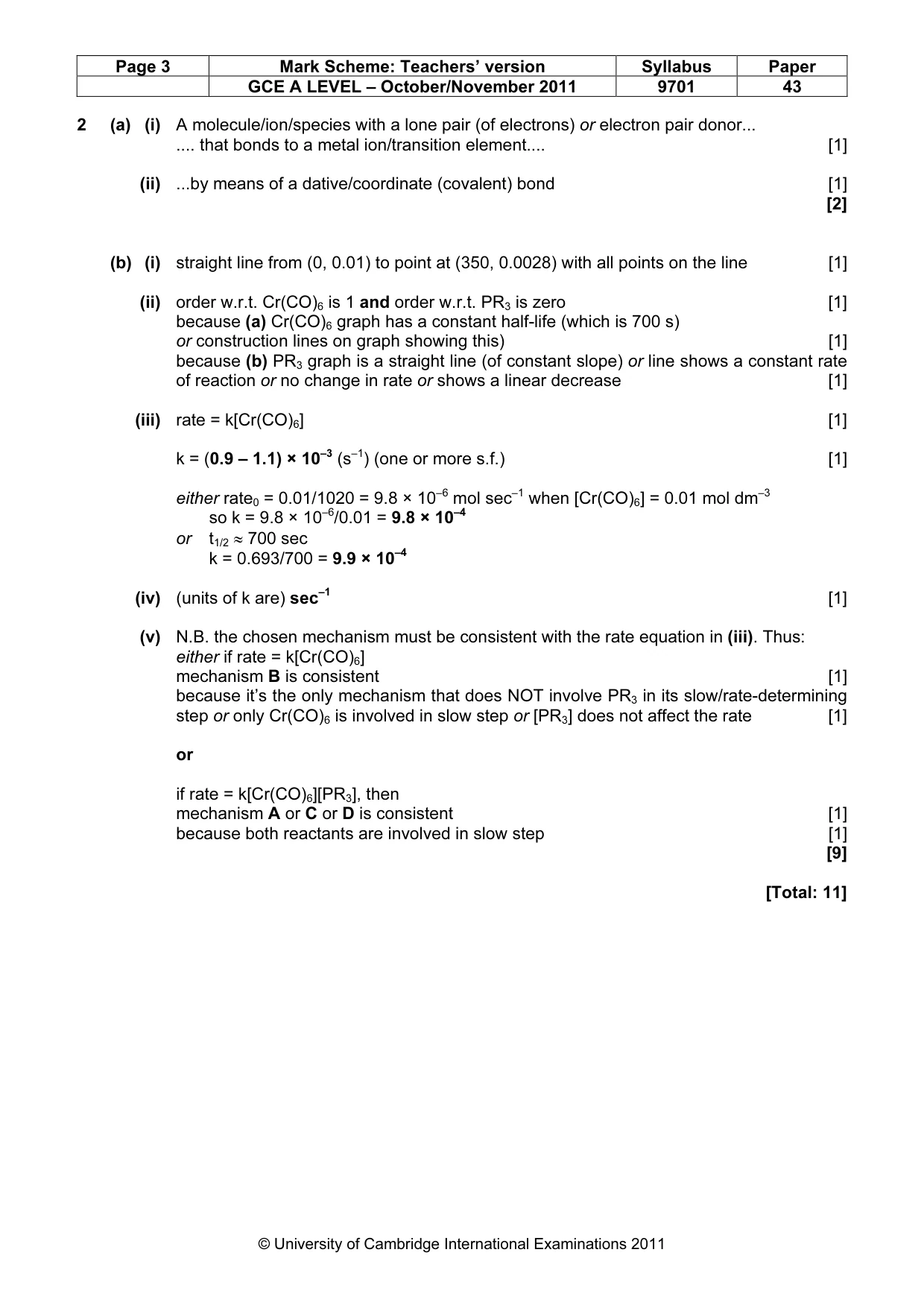
Page 2 Mark Scheme: Teachers’ version Syllabus Paper GCE A LEVEL – October/November 2011 9701 43 © University of Cambridge International Examinations 2011 1 (a) Cr3+: 1s22s22p6 3s2 3p6 3d3 [1] Mn2+: 1s22s22p6 3s2 3p6 3d5 [1] [2] (b) (i) Any two from • H+ is on the oxidant/L.H. side of each of the ½-equations, or H+ is a reactant • (increasing [H+]) will make Eo more positive • (increasing [H+]) will drive the reaction over to the R.H./reductant side or forward direction [1] + [1] (ii) KMnO4: Purple/violet to colourless (allow very pale pink) [1] K2Cr2O7 Orange to green [1] [4] (c) (i) MnO2 + SO2 → MnSO4 (or Mn2+ + SO4 2–) [1] manganese changes/is reduced from +4 to +2 [1] sulfur changes/is oxidised from +4 to +6 [1] (ii) No effect, because H+ does not appear in the overall equation or its effect on the MnO2/Mn2+ change is cancelled out by its effect on the SO2/SO4 2– change [1] [4] (d) (i) MnO2 + 4H+ + Sn2+ → Mn2+ + 2H2O + Sn4+ [1] (ii) n(MnO4 –) = 0.02 × 18.1/1000 = 3.62 × 10⁻⁴ mol [1] n(Sn2+) = 3.62 × 10–4 × 5/2 = 9.05 × 10⁻⁴ mol [1] n(Sn2+) that reacted with MnO2 = (20 – 9.05) × 10–4 = 1.095 × 10⁻³ mol [1] reaction is 1:1, so this is also n(MnO2) mass of MnO2 = 1.095 × 10–3 × (54.9+16+16) = 0.0952 g [1] ⇒ 95% – 96%; 2 or more s.f. [1] [6] [Total: 16]
Mark scheme, page 3
Page 3 Mark Scheme: Teachers’ version Syllabus Paper GCE A LEVEL – October/November 2011 9701 43 © University of Cambridge International Examinations 2011 2 (a) (i) A molecule/ion/species with a lone pair (of electrons) or electron pair donor... … that bonds to a metal ion/transition element… [1] (ii) ...by means of a dative/coordinate (covalent) bond [1] [2] (b) (i) straight line from (0, 0.01) to point at (350, 0.0028) with all points on the line [1] (ii) order w.r.t. Cr(CO)6 is 1 and order w.r.t. PR3 is zero [1] because (a) Cr(CO)6 graph has a constant half-life (which is 700 s) or construction lines on graph showing this) [1] because (b) PR3 graph is a straight line (of constant slope) or line shows a constant rate of reaction or no change in rate or shows a linear decrease [1] (iii) rate = k[Cr(CO)6] [1] k = (0.9 – 1.1) × 10–3 (s–1) (one or more s.f.) [1] either rate0 = 0.01/1020 = 9.8 × 10⁻⁶ mol sec–1 when [Cr(CO)6] = 0.01 mol dm–3 so k = 9.8 × 10⁻⁶/0.01 = 9.8 × 10⁻⁴ or t1/2 ≈ 700 sec k = 0.693/700 = 9.9 × 10⁻⁴ (iv) (units of k are) sec–1 [1] (v) N.B. the chosen mechanism must be consistent with the rate equation in (iii). Thus: either if rate = k[Cr(CO)6] mechanism B is consistent [1] because it’s the only mechanism that does NOT involve PR3 in its slow/rate-determining step or only Cr(CO)6 is involved in slow step or [PR3] does not affect the rate [1] or if rate = k[Cr(CO)6][PR3], then mechanism A or C or D is consistent [1] because both reactants are involved in slow step [1] [9] [Total: 11]
Mark scheme, page 4
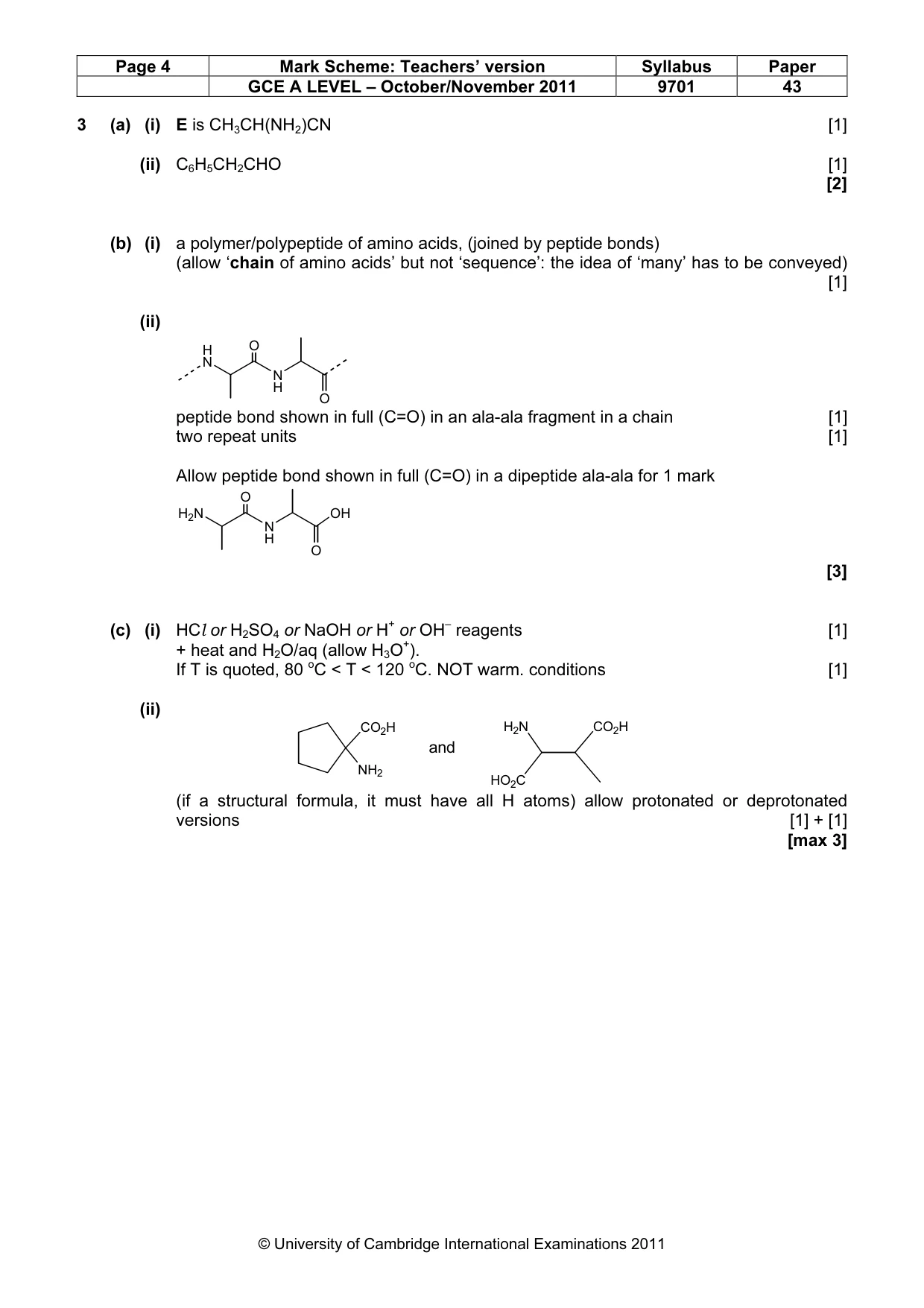
Page 4 Mark Scheme: Teachers’ version Syllabus Paper GCE A LEVEL – October/November 2011 9701 43 © University of Cambridge International Examinations 2011 3 (a) (i) E is CH3CH(NH2)CN [1] (ii) C6H5CH2CHO [1] [2] (b) (i) a polymer/polypeptide of amino acids, (joined by peptide bonds) (allow ‘chain of amino acids’ but not ‘sequence’: the idea of ‘many’ has to be conveyed) [1] (ii) H N N H O O peptide bond shown in full (C=O) in an ala-ala fragment in a chain [1] two repeat units [1] Allow peptide bond shown in full (C=O) in a dipeptide ala-ala for 1 mark H2N N H O O OH [3] (c) (i) HCl or H2SO4 or NaOH or H+ or OH– reagents [1] + heat and H2O/aq (allow H3O+). If T is quoted, 80 oC < T < 120 oC. NOT warm. conditions [1] (ii) NH2 CO2H and CO2H H2N HO2C (if a structural formula, it must have all H atoms) allow protonated or deprotonated versions [1] + [1] [max 3]
Mark scheme, page 5
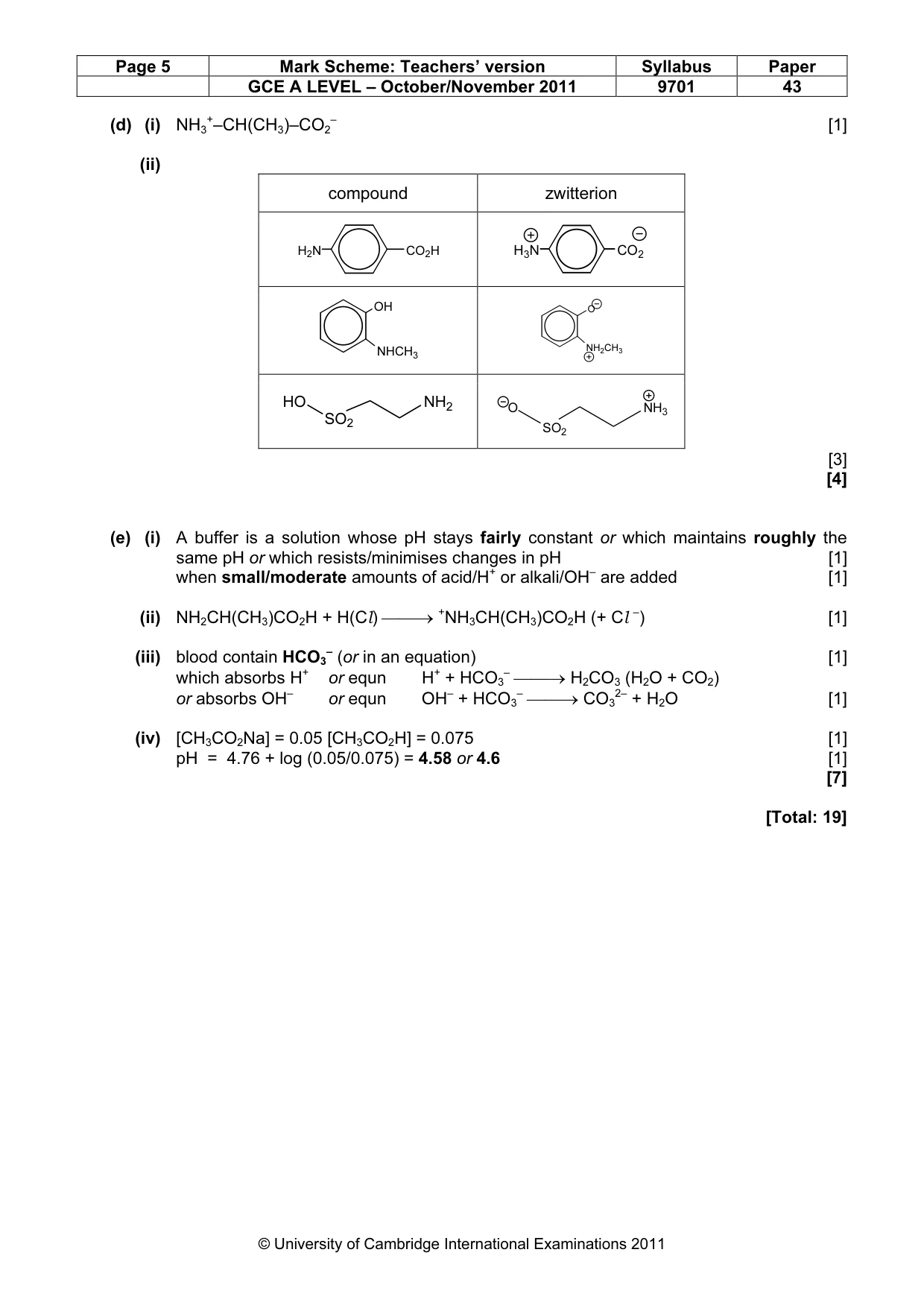
Page 5 Mark Scheme: Teachers’ version Syllabus Paper GCE A LEVEL – October/November 2011 9701 43 © University of Cambridge International Examinations 2011 (d) (i) NH3 +–CH(CH3)–CO2 – [1] (ii) compound zwitterion H2N CO2H H3N CO2 OH NHCH3 O NH2CH3 HO SO2 NH2 O SO2 NH3 [3] [4] (e) (i) A buffer is a solution whose pH stays fairly constant or which maintains roughly the same pH or which resists/minimises changes in pH [1] when small/moderate amounts of acid/H+ or alkali/OH– are added [1] (ii) NH2CH(CH3)CO2H + H(Cl) → +NH3CH(CH3)CO2H (+ Cl –) [1] (iii) blood contain HCO3 – (or in an equation) [1] which absorbs H+ or equn H+ + HCO3 – → H2CO3 (H2O + CO2) or absorbs OH– or equn OH– + HCO3 – → CO3 2– + H2O [1] (iv) [CH3CO2Na] = 0.05 [CH3CO2H] = 0.075 [1] pH = 4.76 + log (0.05/0.075) = 4.58 or 4.6 [1] [7] [Total: 19]
Mark scheme, page 6
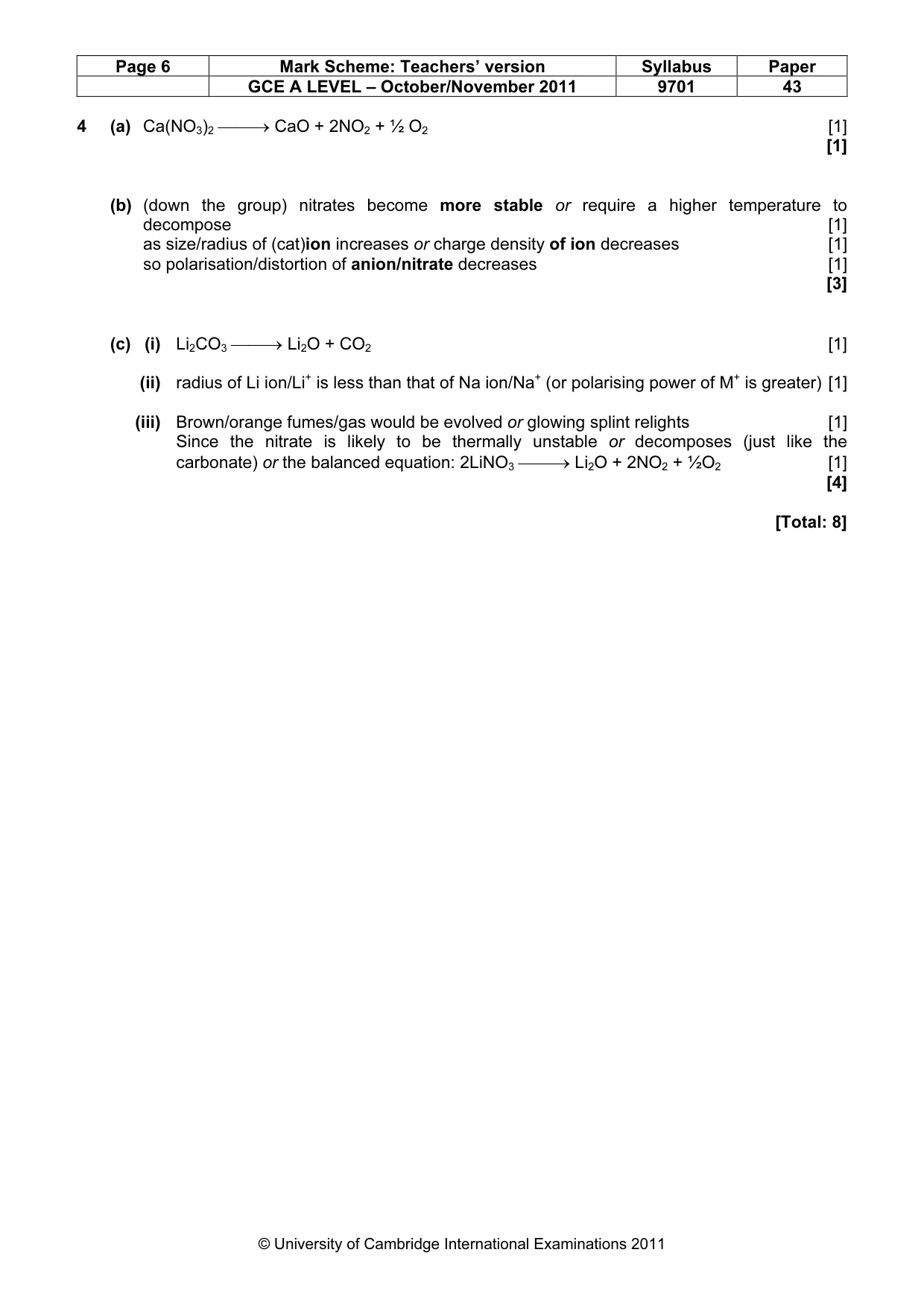
Page 6 Mark Scheme: Teachers’ version Syllabus Paper GCE A LEVEL – October/November 2011 9701 43 © University of Cambridge International Examinations 2011 4 (a) Ca(NO3)2 → CaO + 2NO2 + ½ O2 [1] [1] (b) (down the group) nitrates become more stable or require a higher temperature to decompose [1] as size/radius of (cat)ion increases or charge density of ion decreases [1] so polarisation/distortion of anion/nitrate decreases [1] [3] (c) (i) Li2CO3 → Li2O + CO2 [1] (ii) radius of Li ion/Li+ is less than that of Na ion/Na+ (or polarising power of M+ is greater) [1] (iii) Brown/orange fumes/gas would be evolved or glowing splint relights [1] Since the nitrate is likely to be thermally unstable or decomposes (just like the carbonate) or the balanced equation: 2LiNO3 → Li2O + 2NO2 + ½O2 [1] [4] [Total: 8]
Mark scheme, page 7
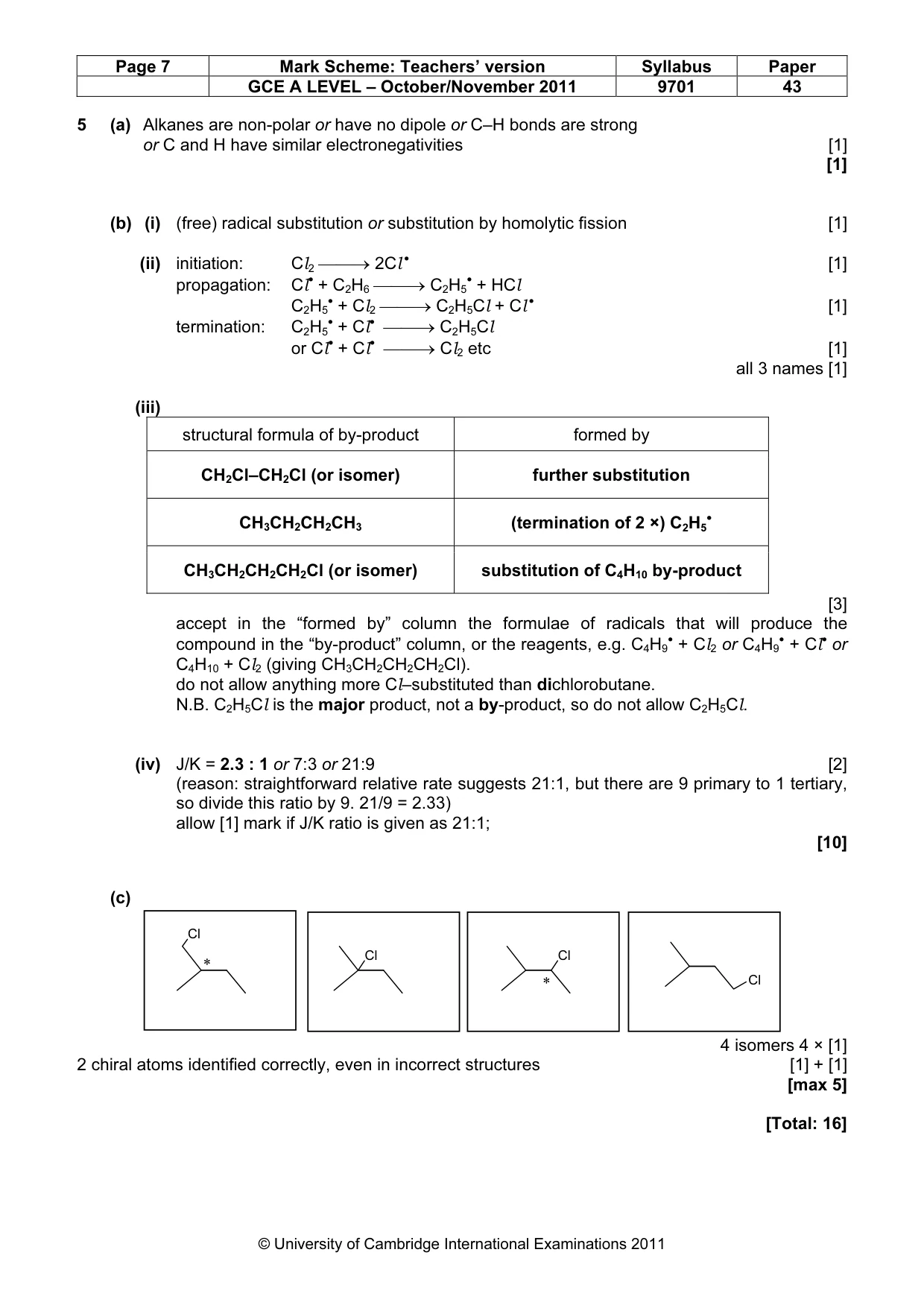
Page 7 Mark Scheme: Teachers’ version Syllabus Paper GCE A LEVEL – October/November 2011 9701 43 © University of Cambridge International Examinations 2011 5 (a) Alkanes are non-polar or have no dipole or C–H bonds are strong or C and H have similar electronegativities [1] [1] (b) (i) (free) radical substitution or substitution by homolytic fission [1] (ii) initiation: Cl2 → 2Cl • [1] propagation: Cl• + C2H6 → C2H5 • + HCl C2H5 • + Cl2 → C2H5Cl + Cl • [1] termination: C2H5 • + Cl• → C2H5Cl or Cl• + Cl• → Cl2 etc [1] all 3 names [1] (iii) structural formula of by-product formed by CH2Cl–CH2Cl (or isomer) further substitution CH3CH2CH2CH3 (termination of 2 ×) C2H5 • CH3CH2CH2CH2Cl (or isomer) substitution of C4H10 by-product [3] accept in the “formed by” column the formulae of radicals that will produce the compound in the “by-product” column, or the reagents, e.g. C4H9 • + Cl2 or C4H9 • + Cl• or C4H10 + Cl2 (giving CH3CH2CH2CH2Cl). do not allow anything more Cl–substituted than dichlorobutane. N.B. C2H5Cl is the major product, not a by-product, so do not allow C2H5Cl. (iv) J/K = 2.3 : 1 or 7:3 or 21:9 [2] (reason: straightforward relative rate suggests 21:1, but there are 9 primary to 1 tertiary, so divide this ratio by 9. 21/9 = 2.33) allow [1] mark if J/K ratio is given as 21:1; [10] (c) Cl Cl Cl Cl * * 4 isomers 4 × [1] 2 chiral atoms identified correctly, even in incorrect structures [1] + [1] [max 5] [Total: 16]
Mark scheme, page 8
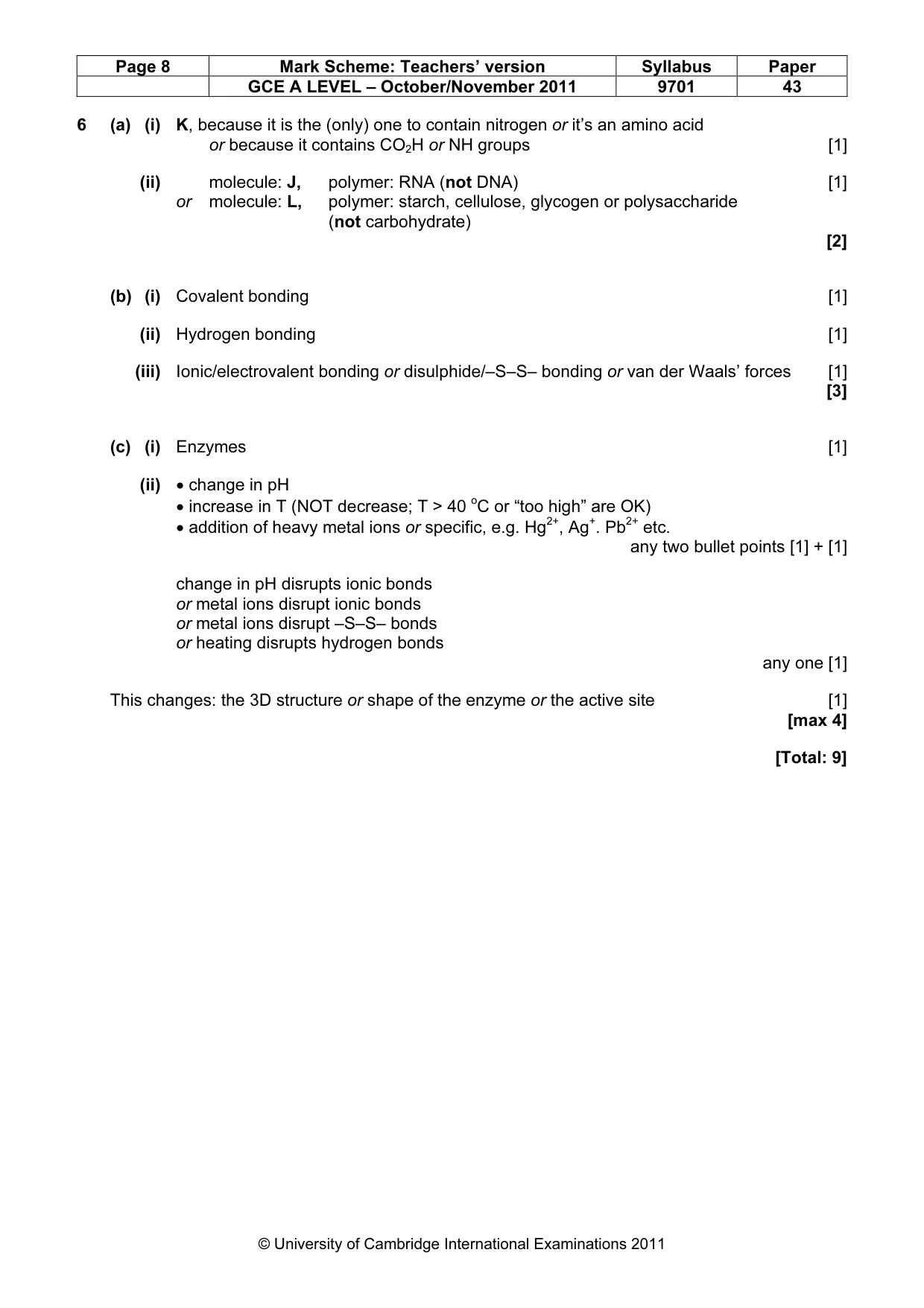
Page 8 Mark Scheme: Teachers’ version Syllabus Paper GCE A LEVEL – October/November 2011 9701 43 © University of Cambridge International Examinations 2011 6 (a) (i) K, because it is the (only) one to contain nitrogen or it’s an amino acid or because it contains CO2H or NH groups [1] (ii) molecule: J, polymer: RNA (not DNA) [1] or molecule: L, polymer: starch, cellulose, glycogen or polysaccharide (not carbohydrate) [2] (b) (i) Covalent bonding [1] (ii) Hydrogen bonding [1] (iii) Ionic/electrovalent bonding or disulphide/–S–S– bonding or van der Waals’ forces [1] [3] (c) (i) Enzymes [1] (ii) • change in pH • increase in T (NOT decrease; T > 40 oC or “too high” are OK) • addition of heavy metal ions or specific, e.g. Hg2+, Ag+. Pb2+ etc. any two bullet points [1] + [1] change in pH disrupts ionic bonds or metal ions disrupt ionic bonds or metal ions disrupt –S–S– bonds or heating disrupts hydrogen bonds any one [1] This changes: the 3D structure or shape of the enzyme or the active site [1] [max 4] [Total: 9]
Mark scheme, page 9
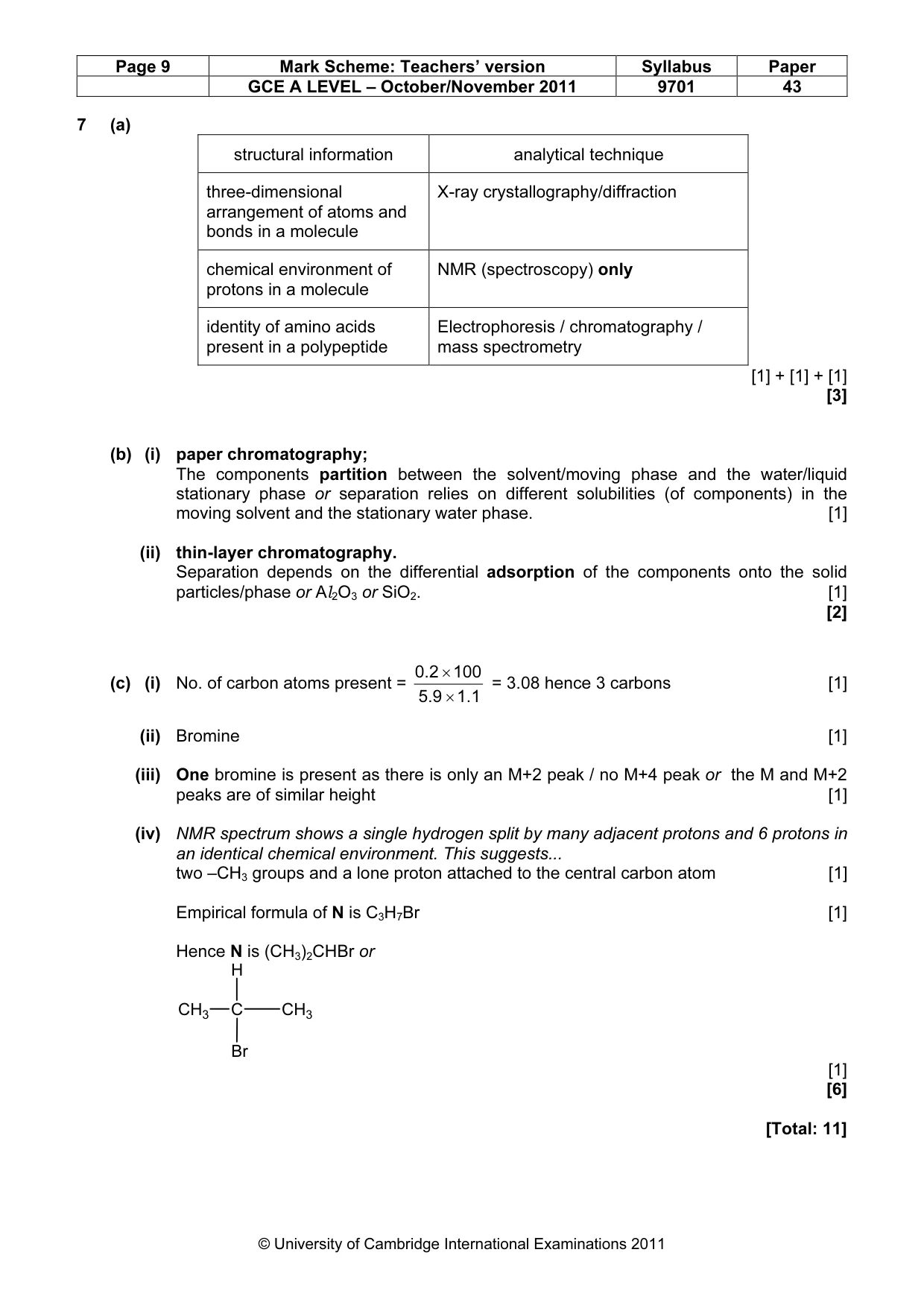
Page 9 Mark Scheme: Teachers’ version Syllabus Paper GCE A LEVEL – October/November 2011 9701 43 © University of Cambridge International Examinations 2011 7 (a) structural information analytical technique three-dimensional arrangement of atoms and bonds in a molecule X-ray crystallography/diffraction chemical environment of protons in a molecule NMR (spectroscopy) only identity of amino acids present in a polypeptide Electrophoresis / chromatography / mass spectrometry [1] + [1] + [1] [3] (b) (i) paper chromatography; The components partition between the solvent/moving phase and the water/liquid stationary phase or separation relies on different solubilities (of components) in the moving solvent and the stationary water phase. [1] (ii) thin-layer chromatography. Separation depends on the differential adsorption of the components onto the solid particles/phase or Al2O3 or SiO2. [1] [2] (c) (i) No. of carbon atoms present = 1.1 5.9 100 0.2 × × = 3.08 hence 3 carbons [1] (ii) Bromine [1] (iii) One bromine is present as there is only an M+2 peak / no M+4 peak or the M and M+2 peaks are of similar height [1] (iv) NMR spectrum shows a single hydrogen split by many adjacent protons and 6 protons in an identical chemical environment. This suggests... two –CH3 groups and a lone proton attached to the central carbon atom [1] Empirical formula of N is C3H7Br [1] Hence N is (CH3)2CHBr or C H CH3 CH3 Br [1] [6] [Total: 11]
Mark scheme, page 10
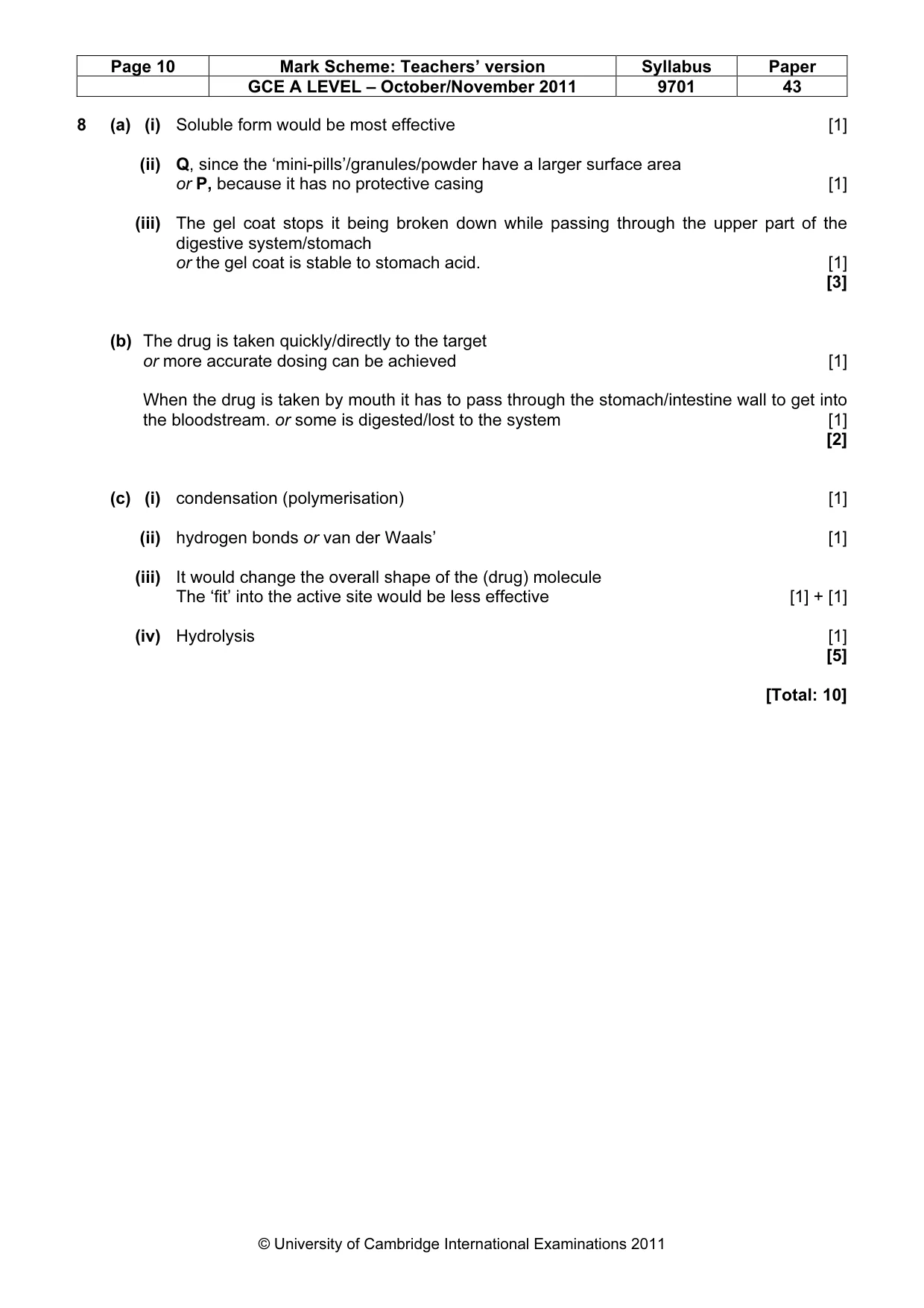
Page 10 Mark Scheme: Teachers’ version Syllabus Paper GCE A LEVEL – October/November 2011 9701 43 © University of Cambridge International Examinations 2011 8 (a) (i) Soluble form would be most effective [1] (ii) Q, since the ‘mini-pills’/granules/powder have a larger surface area or P, because it has no protective casing [1] (iii) The gel coat stops it being broken down while passing through the upper part of the digestive system/stomach or the gel coat is stable to stomach acid. [1] [3] (b) The drug is taken quickly/directly to the target or more accurate dosing can be achieved [1] When the drug is taken by mouth it has to pass through the stomach/intestine wall to get into the bloodstream. or some is digested/lost to the system [1] [2] (c) (i) condensation (polymerisation) [1] (ii) hydrogen bonds or van der Waals’ [1] (iii) It would change the overall shape of the (drug) molecule The ‘fit’ into the active site would be less effective [1] + [1] (iv) Hydrolysis [1] [5] [Total: 10]
What you needed in this session
Cambridge’s own grade thresholds for 2011 Oct/Nov, Paper 4 · Variant 3. A higher threshold means an easier paper — the bar moves with how the cohort did.