Cambridge A Level Chemistry 9701 — 2010 Oct/Nov Paper 2 · Variant 1
9701/21/O/N/10 · 60 marks · ≈68 min
The question paper and its mark scheme, free to read here and free to download. This is Cambridge’s own paper, exactly as it was sat.
Question paper12 pages


Mark scheme6 pages
Answers below. Sit the paper first if you are practising.
Paper as text
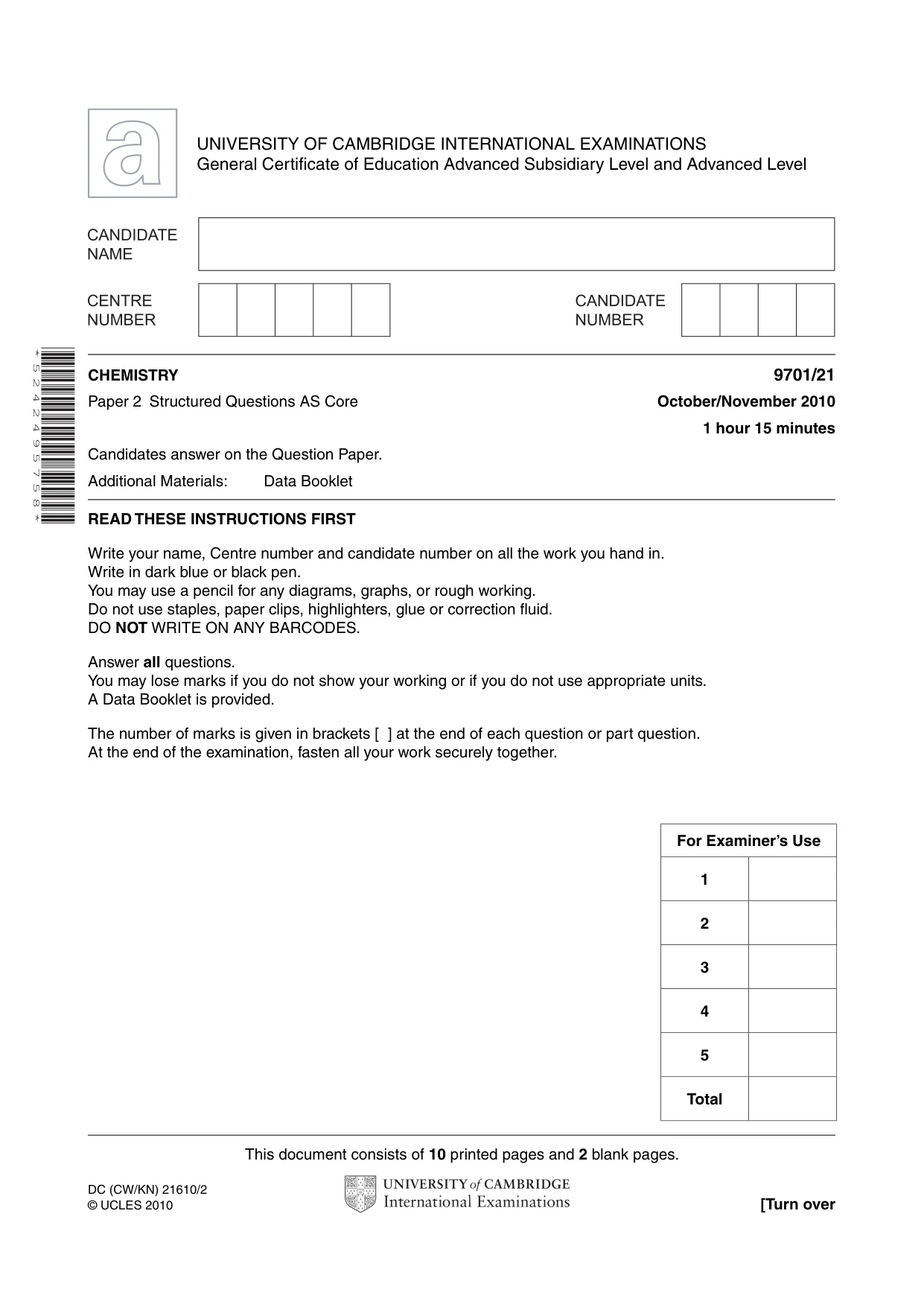
Question paper, page 1
This document consists of 10 printed pages and 2 blank pages. DC (CW/KN) 21610/2 © UCLES 2010 [Turn over UNIVERSITY OF CAMBRIDGE INTERNATIONAL EXAMINATIONS General Certificate of Education Advanced Subsidiary Level and Advanced Level READ THESE INSTRUCTIONS FIRST Write your name, Centre number and candidate number on all the work you hand in. Write in dark blue or black pen. You may use a pencil for any diagrams, graphs, or rough working. Do not use staples, paper clips, highlighters, glue or correction fluid. DO NOT WRITE ON ANY BARCODES. Answer all questions. You may lose marks if you do not show your working or if you do not use appropriate units. A Data Booklet is provided. The number of marks is given in brackets [ ] at the end of each question or part question. At the end of the examination, fasten all your work securely together. * 5 2 4 2 4 9 5 7 5 8 * CHEMISTRY 9701/21 Paper 2 Structured Questions AS Core October/November 2010 1 hour 15 minutes Candidates answer on the Question Paper. Additional Materials: Data Booklet For Examiner’s Use 1 2 3 4 5 Total
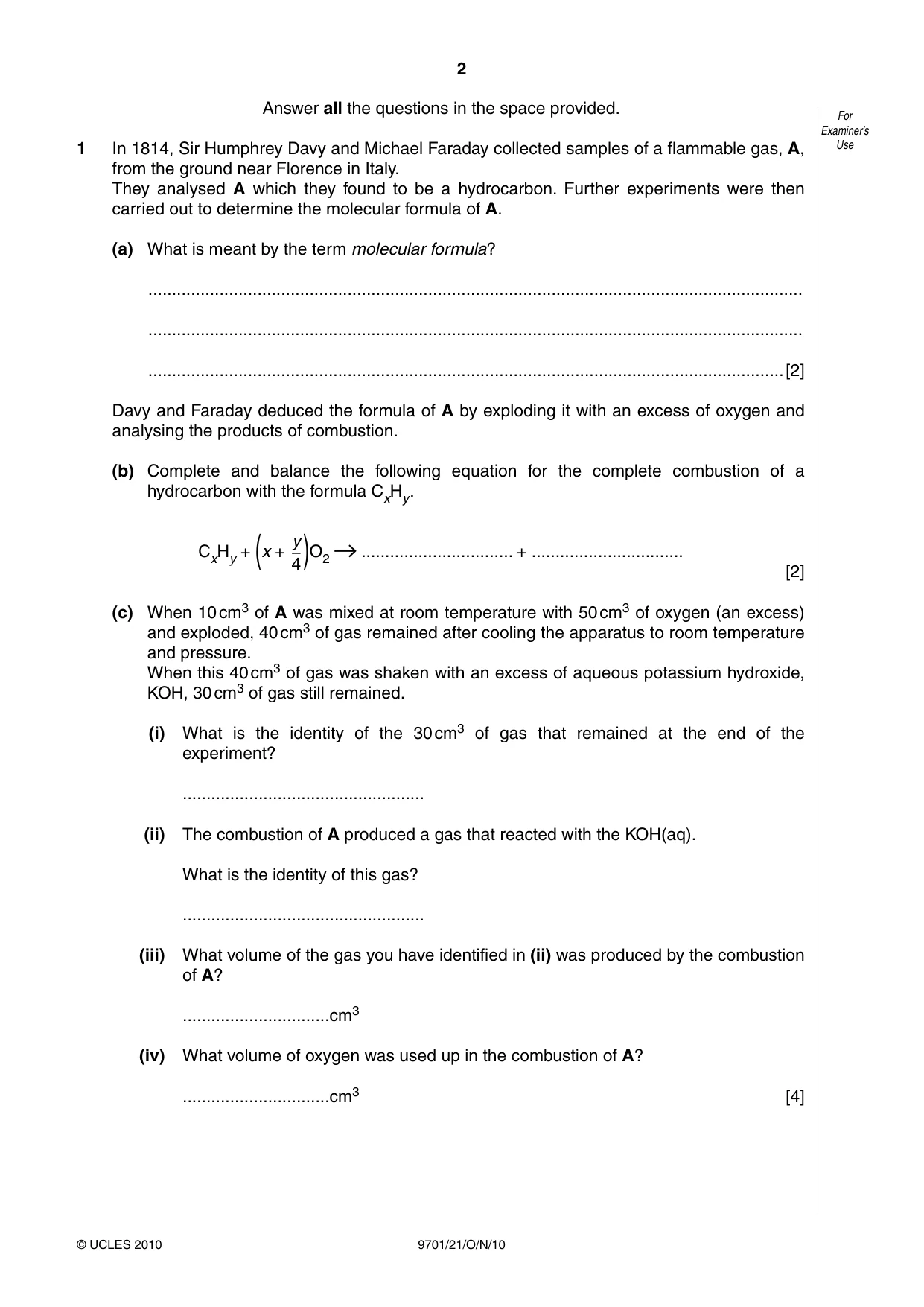
Question paper, page 2
2 9701/21/O/N/10 © UCLES 2010 For Examiner’s Use Answer all the questions in the space provided. 1 In 1814, Sir Humphrey Davy and Michael Faraday collected samples of a flammable gas, A, from the ground near Florence in Italy. They analysed A which they found to be a hydrocarbon. Further experiments were then carried out to determine the molecular formula of A. (a) What is meant by the term molecular formula? … … …[2] Davy and Faraday deduced the formula of A by exploding it with an excess of oxygen and analysing the products of combustion. (b) Complete and balance the following equation for the complete combustion of a hydrocarbon with the formula CxHy . CxHy + (x + y 4)O2 … + … [2] (c) When 10 cm3 of A was mixed at room temperature with 50 cm3 of oxygen (an excess) and exploded, 40 cm3 of gas remained after cooling the apparatus to room temperature and pressure. When this 40 cm3 of gas was shaken with an excess of aqueous potassium hydroxide, KOH, 30 cm3 of gas still remained. (i) What is the identity of the 30 cm3 of gas that remained at the end of the experiment? … (ii) The combustion of A produced a gas that reacted with the KOH(aq). What is the identity of this gas? … (iii) What volume of the gas you have identified in (ii) was produced by the combustion of A? …cm3 (iv) What volume of oxygen was used up in the combustion of A? …cm3 [4]
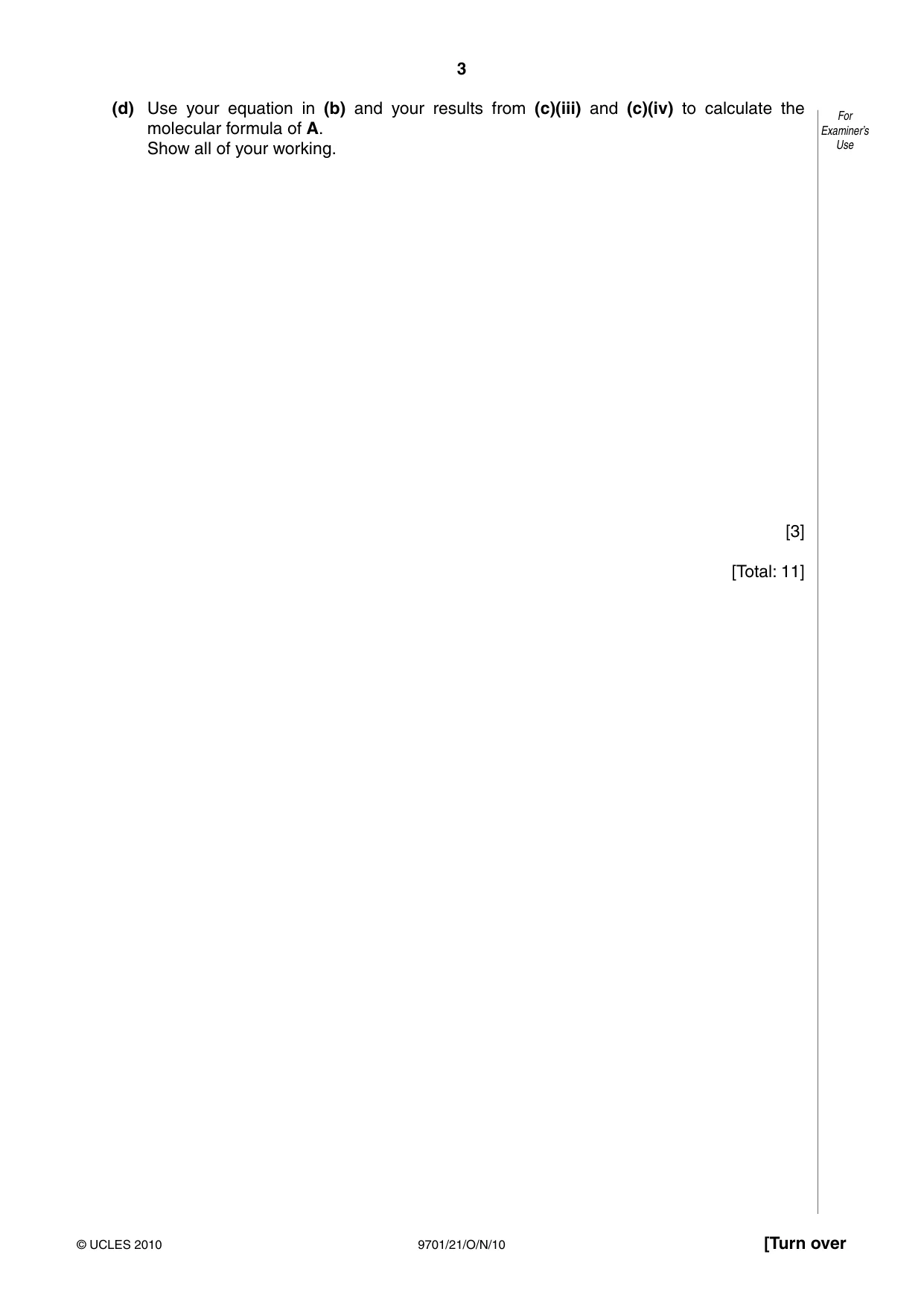
Question paper, page 3
3 9701/21/O/N/10 © UCLES 2010 [Turn over For Examiner’s Use (d) Use your equation in (b) and your results from (c)(iii) and (c)(iv) to calculate the molecular formula of A. Show all of your working. [3] [Total: 11]
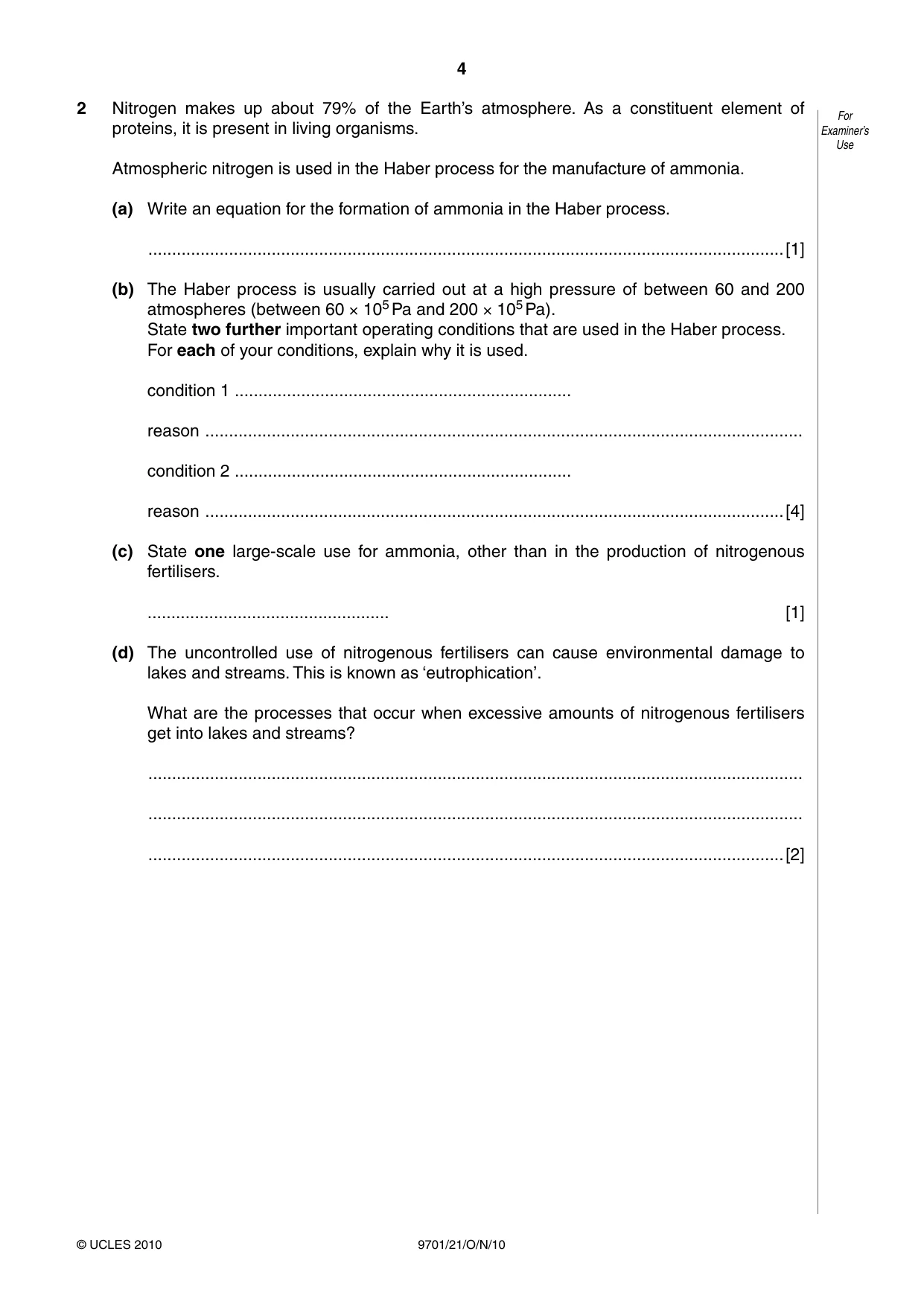
Question paper, page 4
4 9701/21/O/N/10 © UCLES 2010 For Examiner’s Use 2 Nitrogen makes up about 79% of the Earth’s atmosphere. As a constituent element of proteins, it is present in living organisms. Atmospheric nitrogen is used in the Haber process for the manufacture of ammonia. (a) Write an equation for the formation of ammonia in the Haber process. …[1] (b) The Haber process is usually carried out at a high pressure of between 60 and 200 atmospheres (between 60 × 105 Pa and 200 × 105 Pa). State two further important operating conditions that are used in the Haber process. For each of your conditions, explain why it is used. condition 1 … reason … condition 2 … reason …[4] (c) State one large-scale use for ammonia, other than in the production of nitrogenous fertilisers. … [1] (d) The uncontrolled use of nitrogenous fertilisers can cause environmental damage to lakes and streams. This is known as ‘eutrophication’. What are the processes that occur when excessive amounts of nitrogenous fertilisers get into lakes and streams? … … …[2]
Question paper, page 5
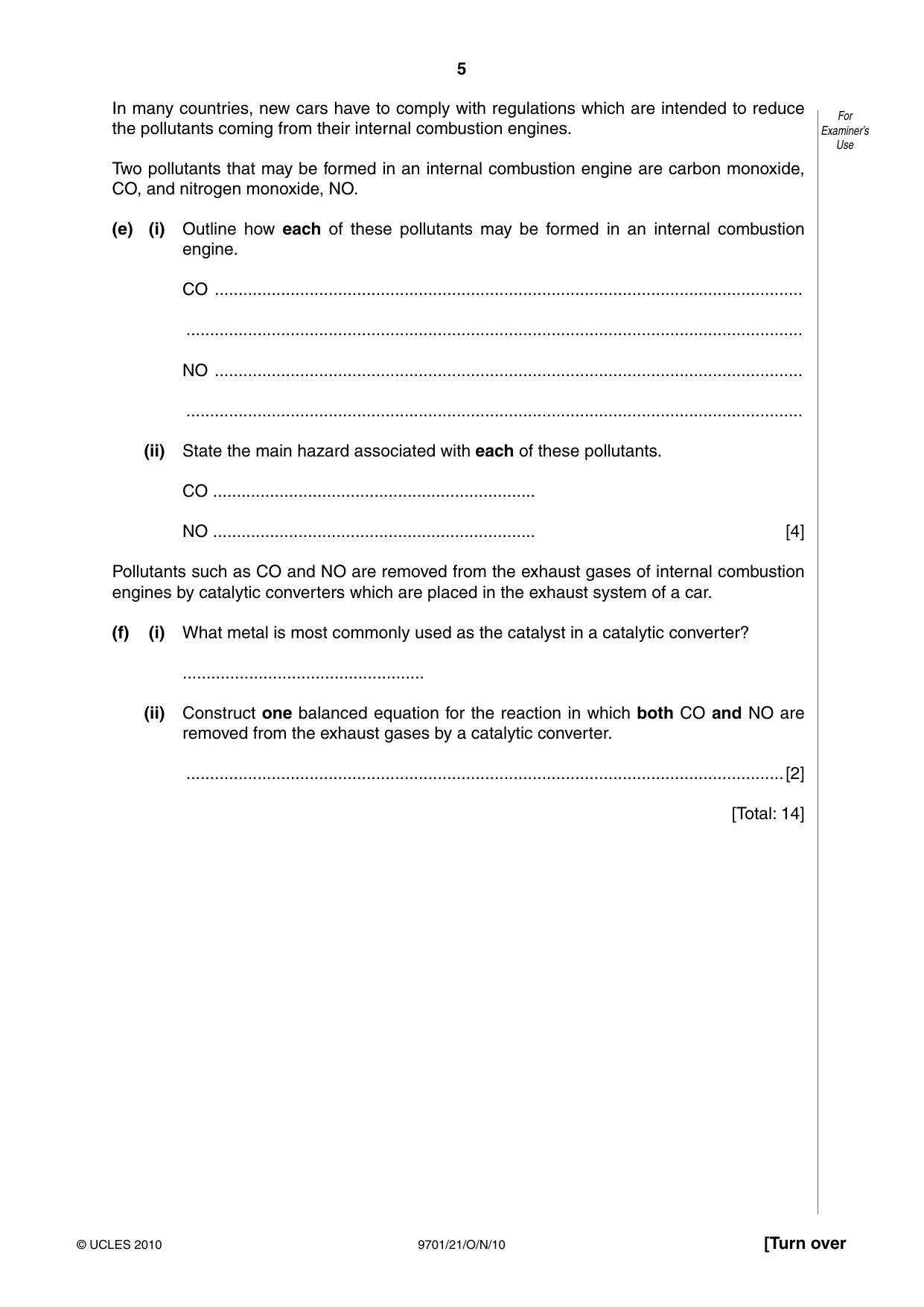
5 9701/21/O/N/10 © UCLES 2010 [Turn over For Examiner’s Use In many countries, new cars have to comply with regulations which are intended to reduce the pollutants coming from their internal combustion engines. Two pollutants that may be formed in an internal combustion engine are carbon monoxide, CO, and nitrogen monoxide, NO. (e) (i) Outline how each of these pollutants may be formed in an internal combustion engine. CO … … NO … … (ii) State the main hazard associated with each of these pollutants. CO … NO … [4] Pollutants such as CO and NO are removed from the exhaust gases of internal combustion engines by catalytic converters which are placed in the exhaust system of a car. (f) (i) What metal is most commonly used as the catalyst in a catalytic converter? … (ii) Construct one balanced equation for the reaction in which both CO and NO are removed from the exhaust gases by a catalytic converter. …[2] [Total: 14]
Question paper, page 6
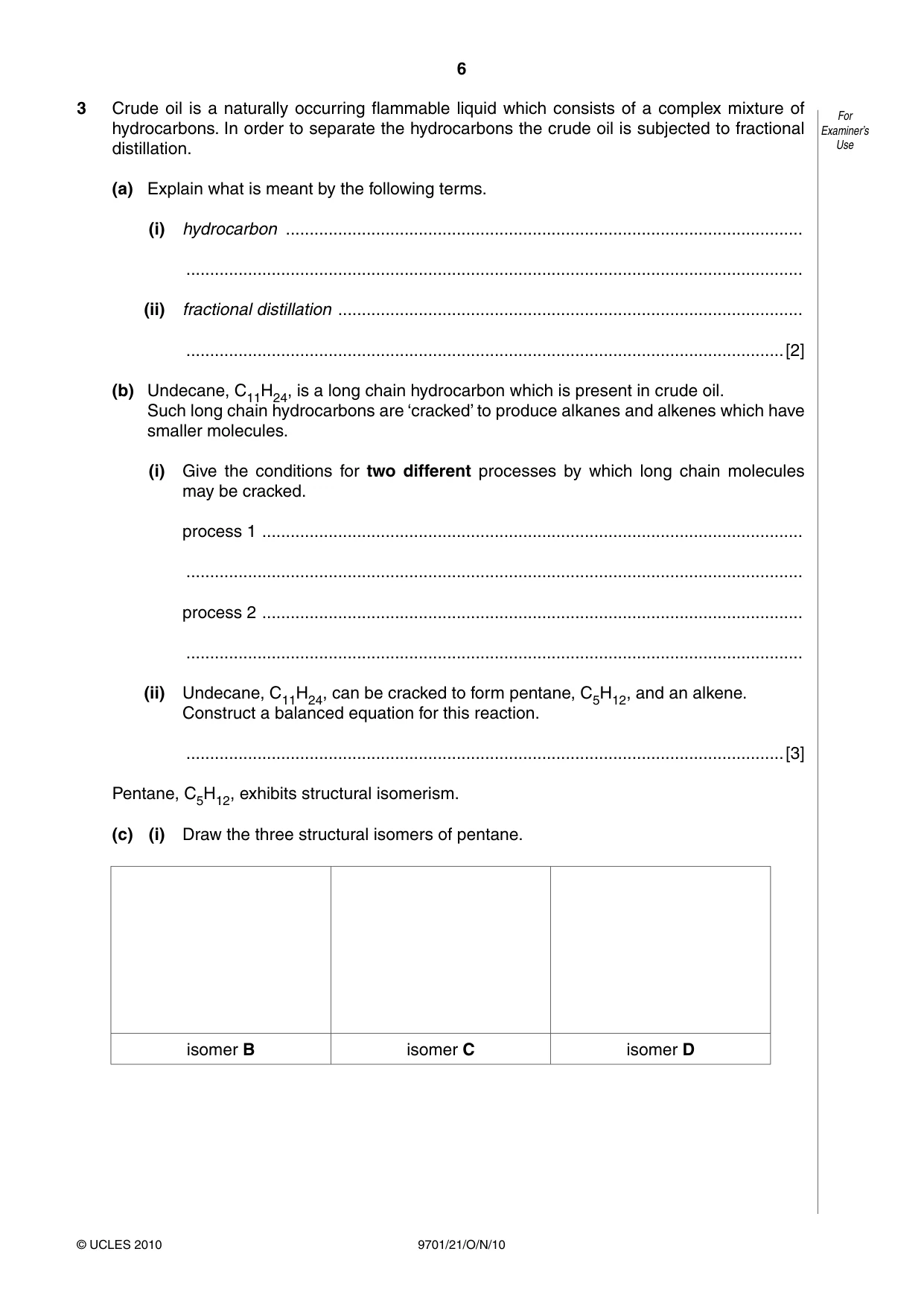
6 9701/21/O/N/10 © UCLES 2010 For Examiner’s Use 3 Crude oil is a naturally occurring flammable liquid which consists of a complex mixture of hydrocarbons. In order to separate the hydrocarbons the crude oil is subjected to fractional distillation. (a) Explain what is meant by the following terms. (i) hydrocarbon … … (ii) fractional distillation … …[2] (b) Undecane, C11H24, is a long chain hydrocarbon which is present in crude oil. Such long chain hydrocarbons are ‘cracked’ to produce alkanes and alkenes which have smaller molecules. (i) Give the conditions for two different processes by which long chain molecules may be cracked. process 1 … … process 2 … … (ii) Undecane, C11H24, can be cracked to form pentane, C5H12, and an alkene. Construct a balanced equation for this reaction. …[3] Pentane, C5H12, exhibits structural isomerism. (c) (i) Draw the three structural isomers of pentane. isomer B isomer C isomer D
Question paper, page 7
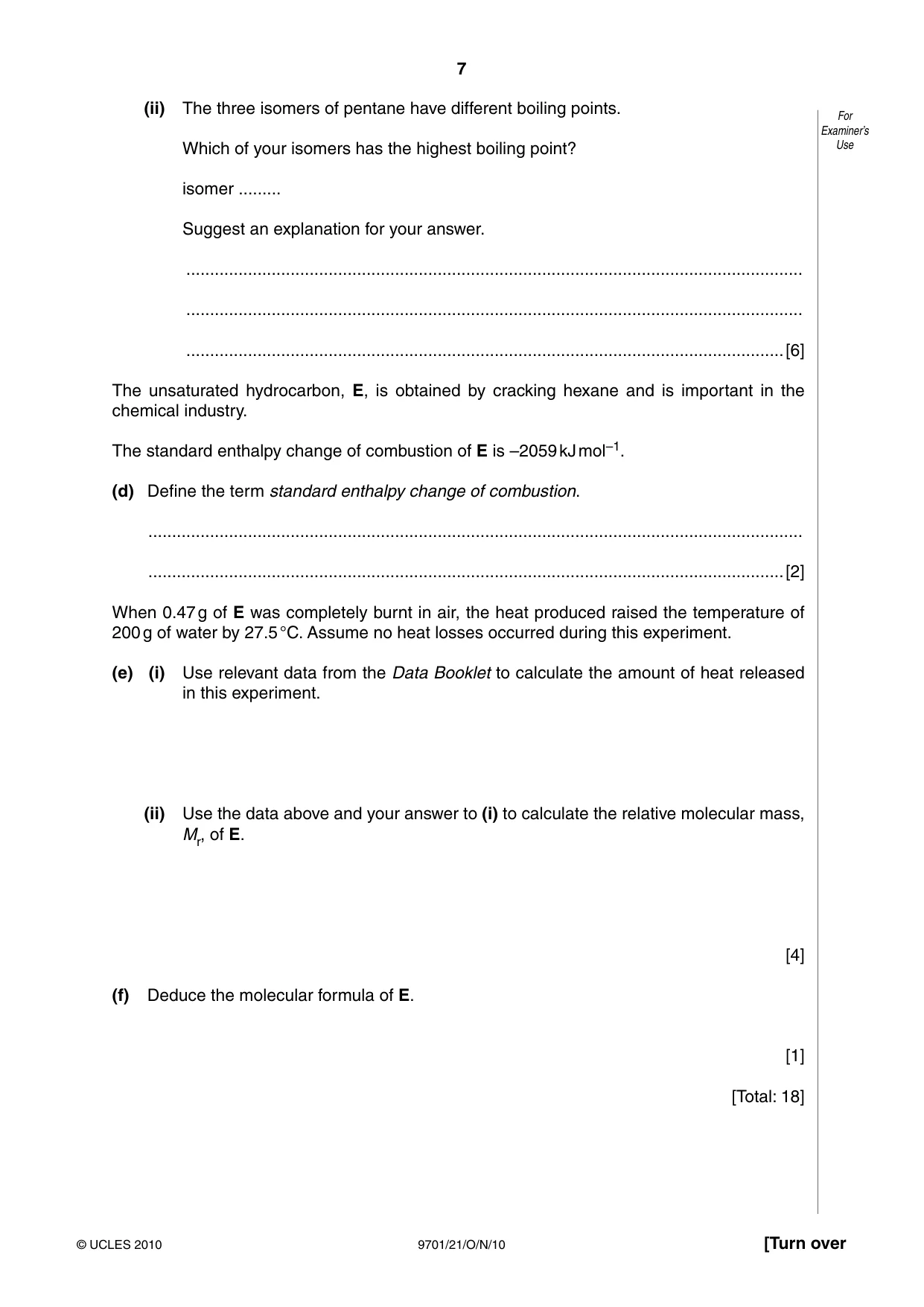
7 9701/21/O/N/10 © UCLES 2010 [Turn over For Examiner’s Use (ii) The three isomers of pentane have different boiling points. Which of your isomers has the highest boiling point? isomer … Suggest an explanation for your answer. … … …[6] The unsaturated hydrocarbon, E, is obtained by cracking hexane and is important in the chemical industry. The standard enthalpy change of combustion of E is –2059 kJ mol–1. (d) Define the term standard enthalpy change of combustion. … …[2] When 0.47 g of E was completely burnt in air, the heat produced raised the temperature of 200 g of water by 27.5 °C. Assume no heat losses occurred during this experiment. (e) (i) Use relevant data from the Data Booklet to calculate the amount of heat released in this experiment. (ii) Use the data above and your answer to (i) to calculate the relative molecular mass, Mr, of E. [4] (f) Deduce the molecular formula of E. [1] [Total: 18]
Question paper, page 8
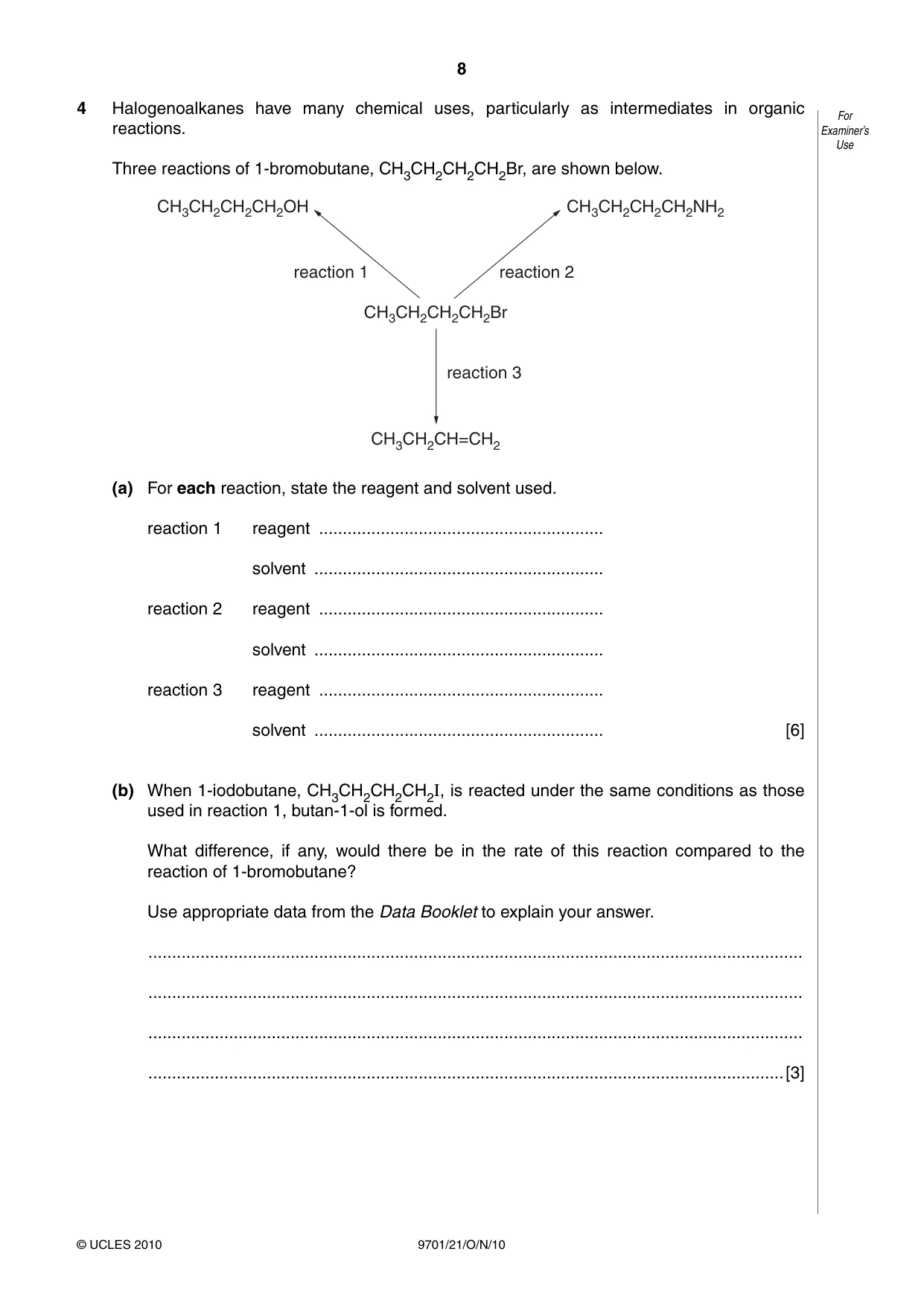
8 9701/21/O/N/10 © UCLES 2010 For Examiner’s Use 4 Halogenoalkanes have many chemical uses, particularly as intermediates in organic reactions. Three reactions of 1-bromobutane, CH3CH2CH2CH2Br, are shown below. CH3CH2CH2CH2OH CH3CH2CH2CH2NH2 CH3CH2CH2CH2Br CH3CH2CH=CH2 reaction 1 reaction 2 reaction 3 (a) For each reaction, state the reagent and solvent used. reaction 1 reagent … solvent … reaction 2 reagent … solvent … reaction 3 reagent … solvent … [6] (b) When 1-iodobutane, CH3CH2CH2CH2I, is reacted under the same conditions as those used in reaction 1, butan-1-ol is formed. What difference, if any, would there be in the rate of this reaction compared to the reaction of 1-bromobutane? Use appropriate data from the Data Booklet to explain your answer. … … … …[3]
Question paper, page 9
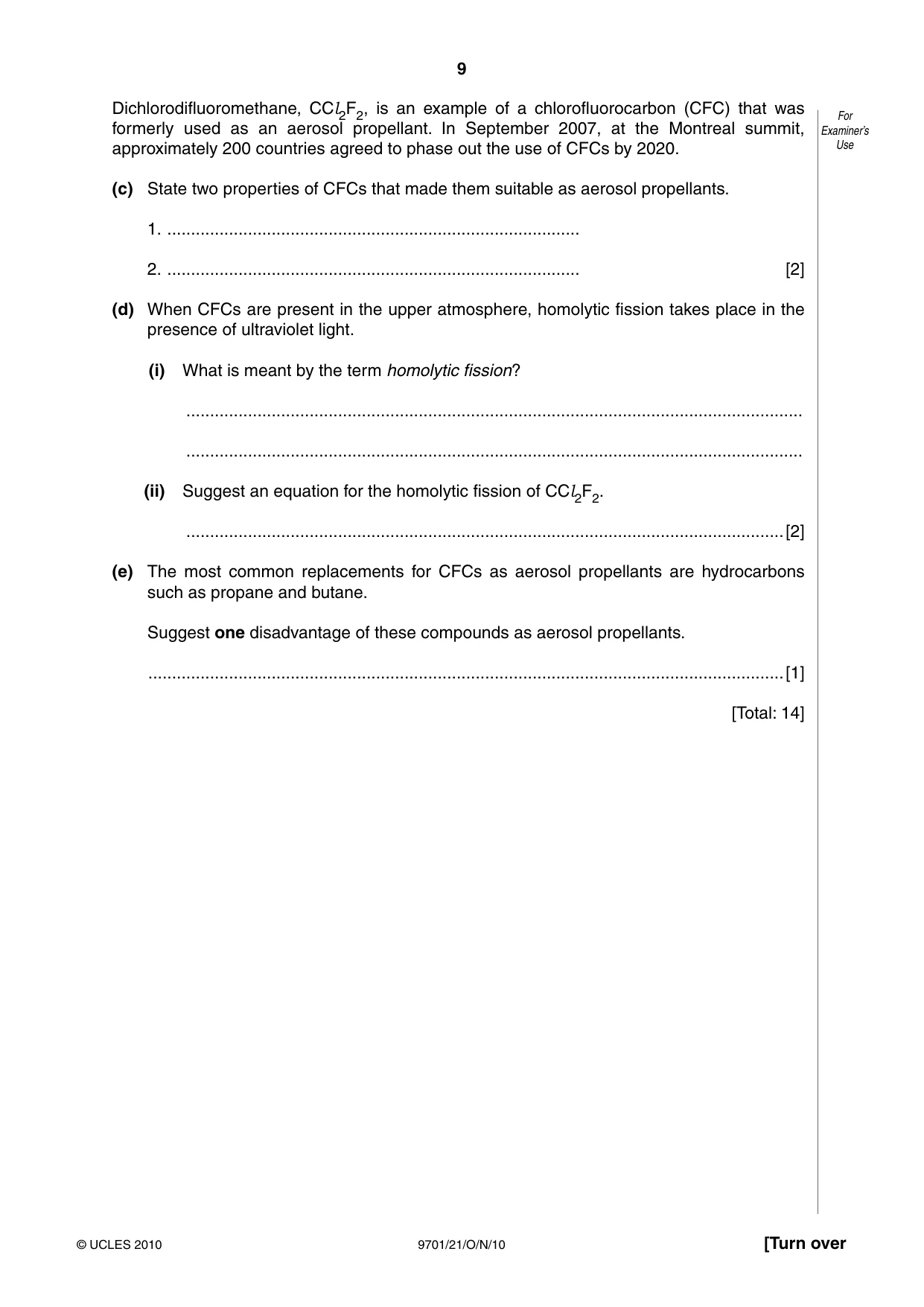
9 9701/21/O/N/10 © UCLES 2010 [Turn over For Examiner’s Use Dichlorodifluoromethane, CCl2F2, is an example of a chlorofluorocarbon (CFC) that was formerly used as an aerosol propellant. In September 2007, at the Montreal summit, approximately 200 countries agreed to phase out the use of CFCs by 2020. (c) State two properties of CFCs that made them suitable as aerosol propellants. 1. … 2. … [2] (d) When CFCs are present in the upper atmosphere, homolytic fission takes place in the presence of ultraviolet light. (i) What is meant by the term homolytic fission? … … (ii) Suggest an equation for the homolytic fission of CCl2F2. …[2] (e) The most common replacements for CFCs as aerosol propellants are hydrocarbons such as propane and butane. Suggest one disadvantage of these compounds as aerosol propellants. …[1] [Total: 14]
Question paper, page 10
10 9701/21/O/N/10 © UCLES 2010 BLANK PAGE
Question paper, page 11
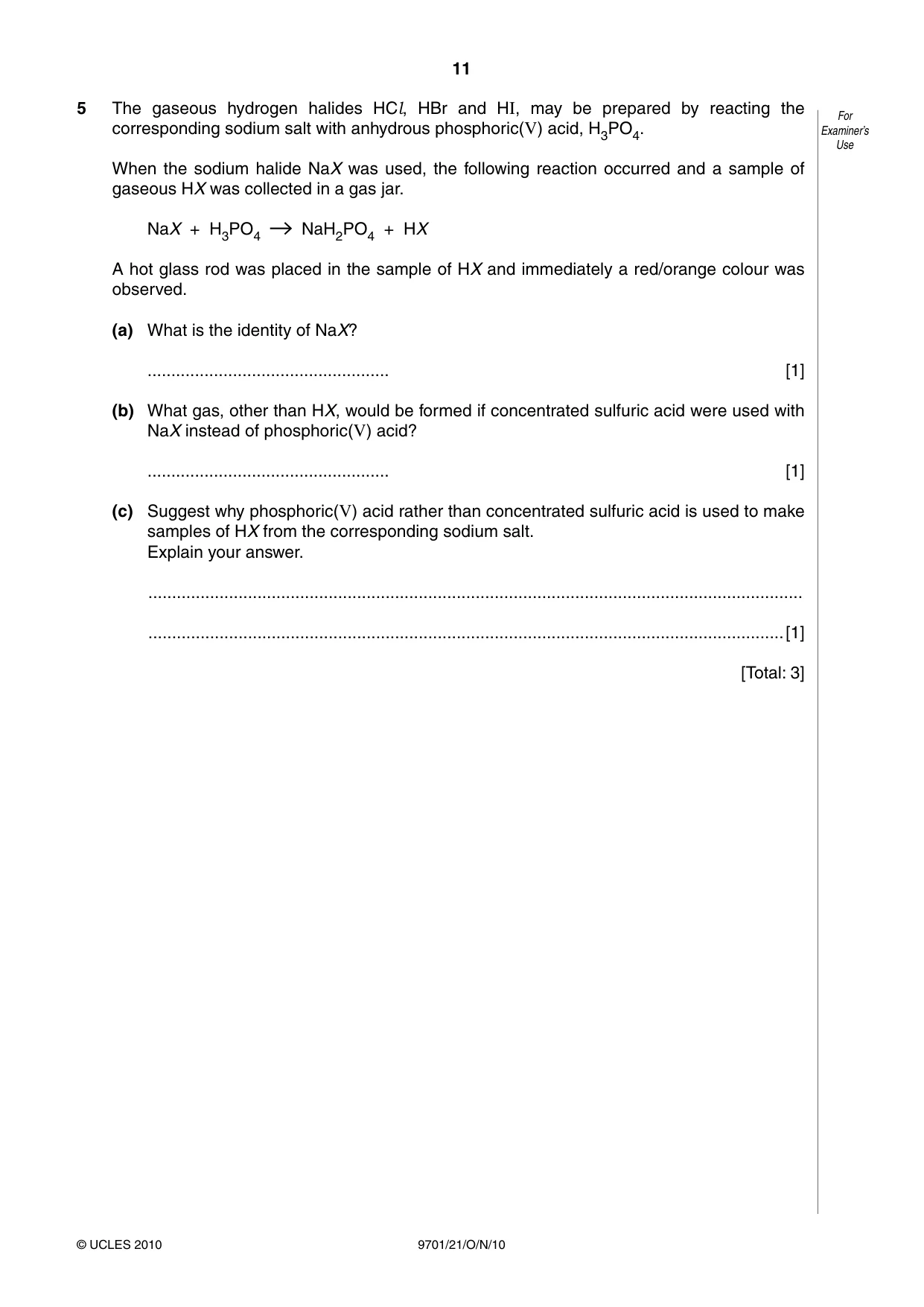
11 9701/21/O/N/10 © UCLES 2010 For Examiner’s Use 5 The gaseous hydrogen halides HCl, HBr and HI, may be prepared by reacting the corresponding sodium salt with anhydrous phosphoric(V) acid, H3PO4. When the sodium halide NaX was used, the following reaction occurred and a sample of gaseous HX was collected in a gas jar. NaX + H3PO4 NaH2PO4 + HX A hot glass rod was placed in the sample of HX and immediately a red/orange colour was observed. (a) What is the identity of NaX? … [1] (b) What gas, other than HX, would be formed if concentrated sulfuric acid were used with NaX instead of phosphoric(V) acid? … [1] (c) Suggest why phosphoric(V) acid rather than concentrated sulfuric acid is used to make samples of HX from the corresponding sodium salt. Explain your answer. … …[1] [Total: 3]
Question paper, page 12
12 9701/21/O/N/10 © UCLES 2010 BLANK PAGE Permission to reproduce items where third-party owned material protected by copyright is included has been sought and cleared where possible. Every reasonable effort has been made by the publisher (UCLES) to trace copyright holders, but if any items requiring clearance have unwittingly been included, the publisher will be pleased to make amends at the earliest possible opportunity. University of Cambridge International Examinations is part of the Cambridge Assessment Group. Cambridge Assessment is the brand name of University of Cambridge Local Examinations Syndicate (UCLES), which is itself a department of the University of Cambridge.
Mark scheme, page 1
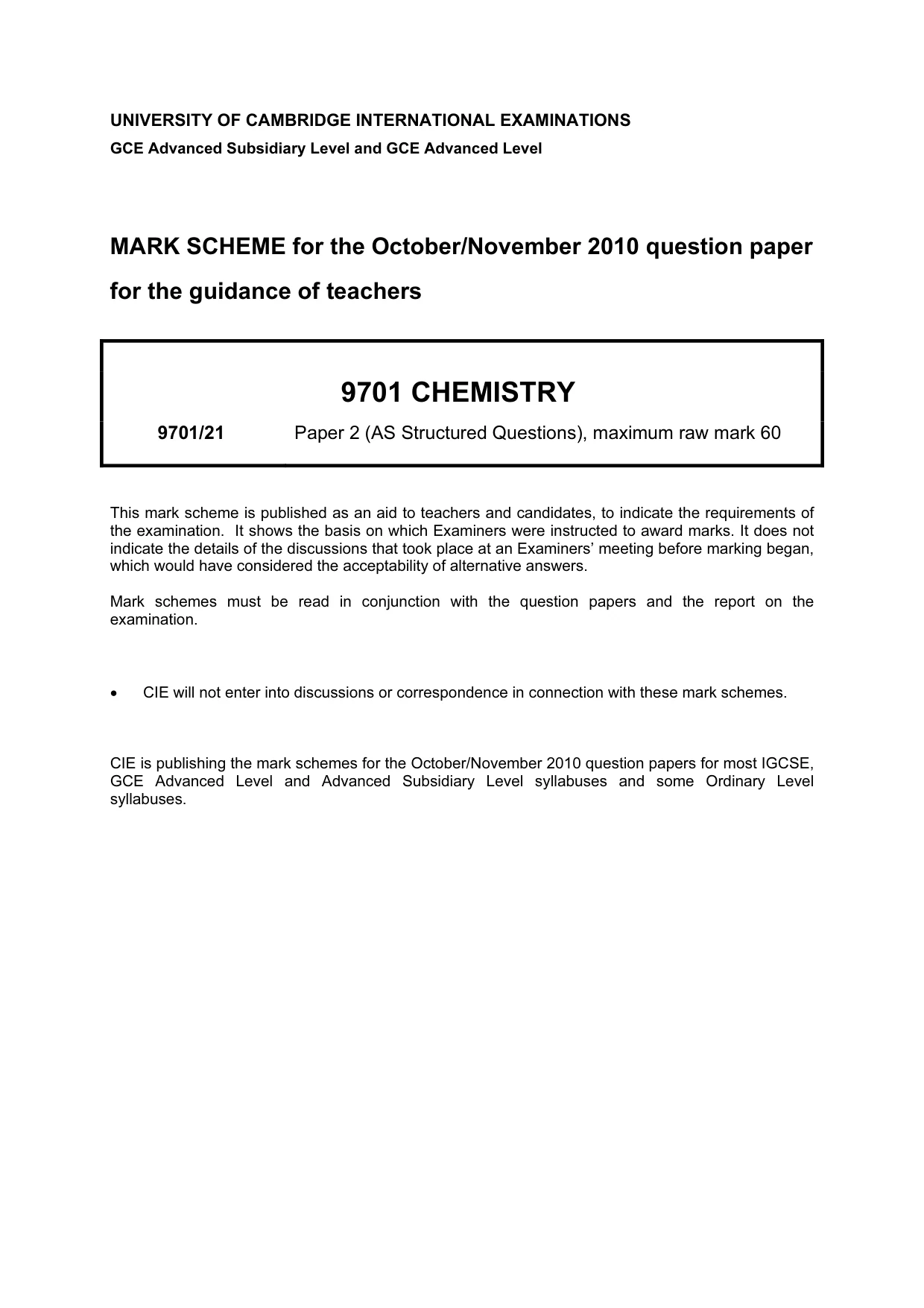
UNIVERSITY OF CAMBRIDGE INTERNATIONAL EXAMINATIONS GCE Advanced Subsidiary Level and GCE Advanced Level MARK SCHEME for the October/November 2010 question paper for the guidance of teachers 9701 CHEMISTRY 9701/21 Paper 2 (AS Structured Questions), maximum raw mark 60 This mark scheme is published as an aid to teachers and candidates, to indicate the requirements of the examination. It shows the basis on which Examiners were instructed to award marks. It does not indicate the details of the discussions that took place at an Examiners’ meeting before marking began, which would have considered the acceptability of alternative answers. Mark schemes must be read in conjunction with the question papers and the report on the examination. • CIE will not enter into discussions or correspondence in connection with these mark schemes. CIE is publishing the mark schemes for the October/November 2010 question papers for most IGCSE, GCE Advanced Level and Advanced Subsidiary Level syllabuses and some Ordinary Level syllabuses.
Mark scheme, page 2
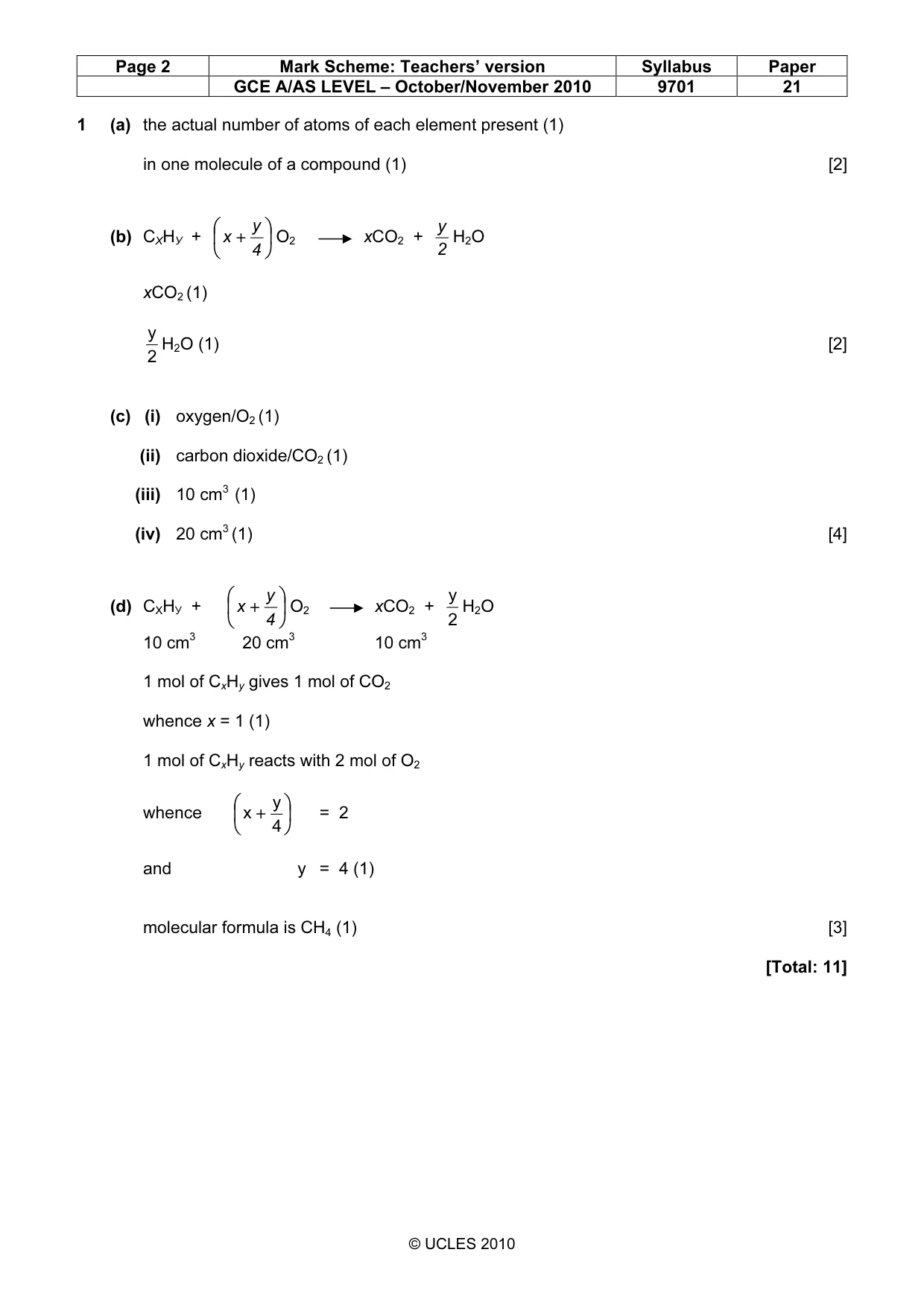
Page 2 Mark Scheme: Teachers’ version Syllabus Paper GCE A/AS LEVEL – October/November 2010 9701 21 © UCLES 2010 1 (a) the actual number of atoms of each element present (1) in one molecule of a compound (1) [2] (b) CХHУ + + 4 y x O2 xCO2 + 2 y H2O xCO2 (1) 2 y H2O (1) [2] (c) (i) oxygen/O2 (1) (ii) carbon dioxide/CO2 (1) (iii) 10 cm3 (1) (iv) 20 cm3 (1) [4] (d) CХHУ + + 4 y x O2 xCO2 + 2 y H2O 10 cm3 20 cm3 10 cm3 1 mol of CxHy gives 1 mol of CO2 whence x = 1 (1) 1 mol of CxHy reacts with 2 mol of O2 whence + 4 y x = 2 and y = 4 (1) molecular formula is CH4 (1) [3] [Total: 11]
Mark scheme, page 3
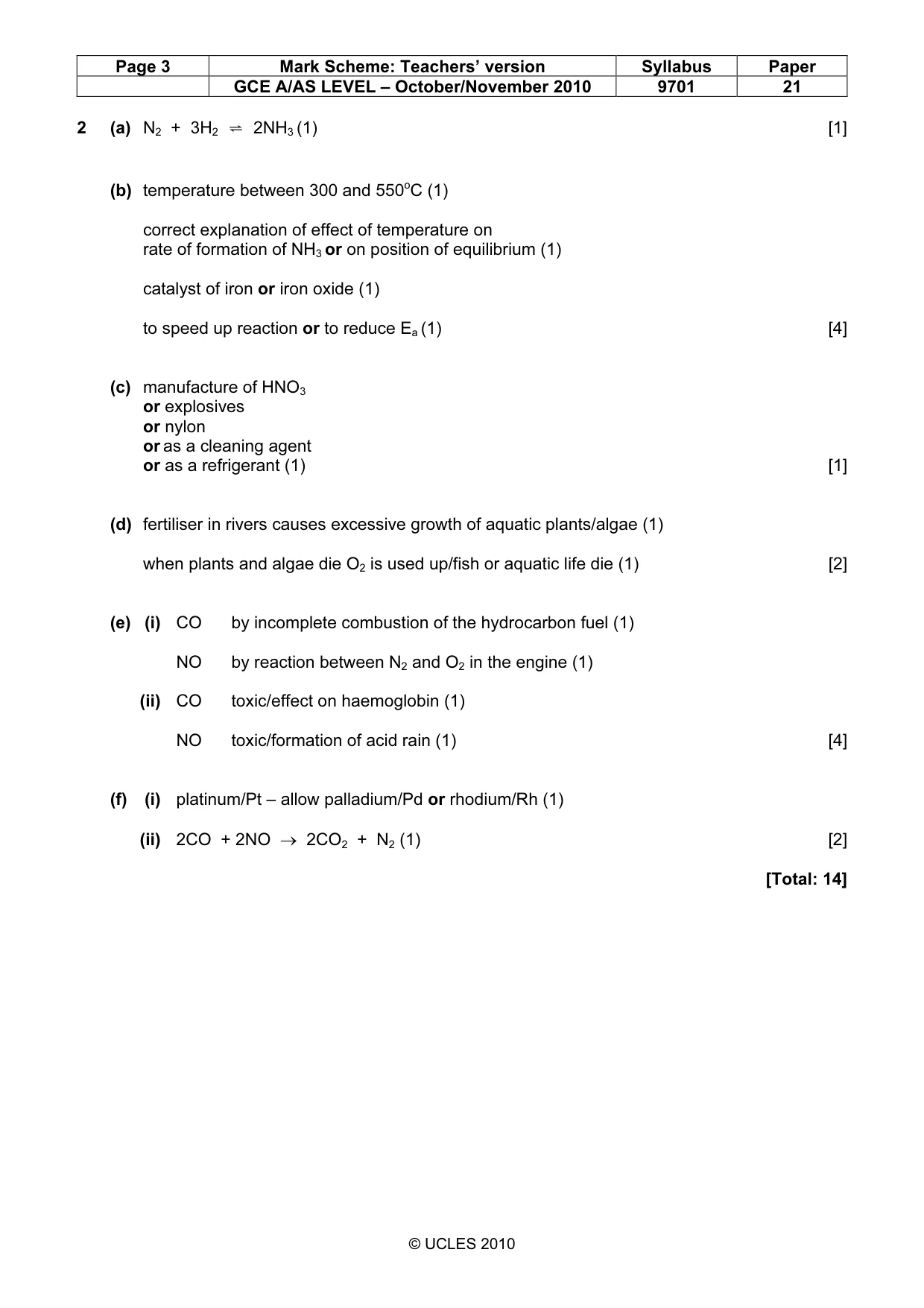
Page 3 Mark Scheme: Teachers’ version Syllabus Paper GCE A/AS LEVEL – October/November 2010 9701 21 © UCLES 2010 2 (a) N2 + 3H2 ⇋ 2NH3 (1) [1] (b) temperature between 300 and 550oC (1) correct explanation of effect of temperature on rate of formation of NH3 or on position of equilibrium (1) catalyst of iron or iron oxide (1) to speed up reaction or to reduce Ea (1) [4] (c) manufacture of HNO3 or explosives or nylon or as a cleaning agent or as a refrigerant (1) [1] (d) fertiliser in rivers causes excessive growth of aquatic plants/algae (1) when plants and algae die O2 is used up/fish or aquatic life die (1) [2] (e) (i) CO by incomplete combustion of the hydrocarbon fuel (1) NO by reaction between N2 and O2 in the engine (1) (ii) CO toxic/effect on haemoglobin (1) NO toxic/formation of acid rain (1) [4] (f) (i) platinum/Pt – allow palladium/Pd or rhodium/Rh (1) (ii) 2CO + 2NO → 2CO2 + N2 (1) [2] [Total: 14]
Mark scheme, page 4
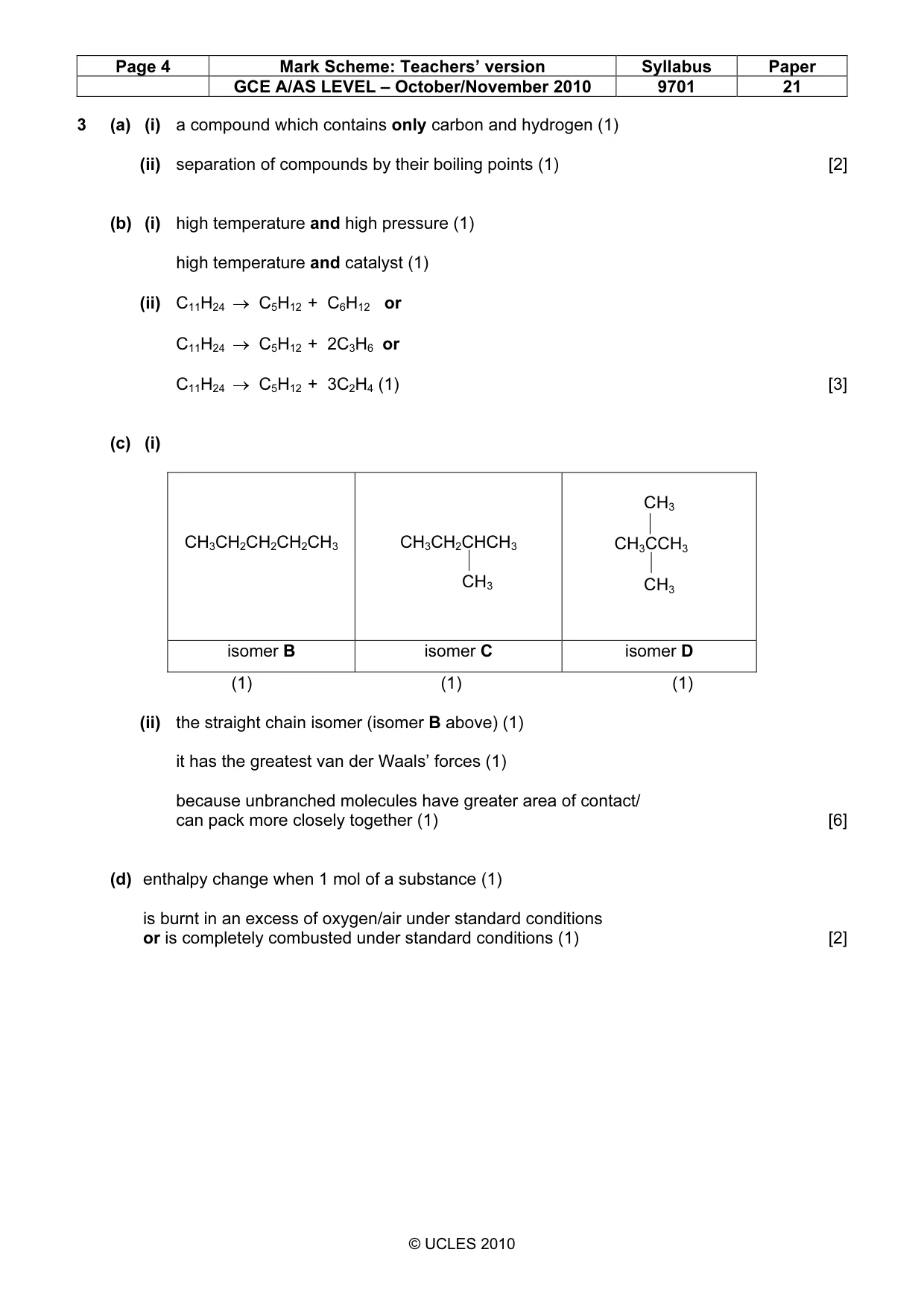
Page 4 Mark Scheme: Teachers’ version Syllabus Paper GCE A/AS LEVEL – October/November 2010 9701 21 © UCLES 2010 3 (a) (i) a compound which contains only carbon and hydrogen (1) (ii) separation of compounds by their boiling points (1) [2] (b) (i) high temperature and high pressure (1) high temperature and catalyst (1) (ii) C11H24 → C5H12 + C6H12 or C11H24 → C5H12 + 2C3H6 or C11H24 → C5H12 + 3C2H4 (1) [3] (c) (i) CH3CH2CH2CH2CH3 CH3CH2CHCH3 CH3 CH3 CH3CCH3 CH3 isomer B isomer C isomer D (1) (1) (1) (ii) the straight chain isomer (isomer B above) (1) it has the greatest van der Waals’ forces (1) because unbranched molecules have greater area of contact/ can pack more closely together (1) [6] (d) enthalpy change when 1 mol of a substance (1) is burnt in an excess of oxygen/air under standard conditions or is completely combusted under standard conditions (1) [2]
Mark scheme, page 5
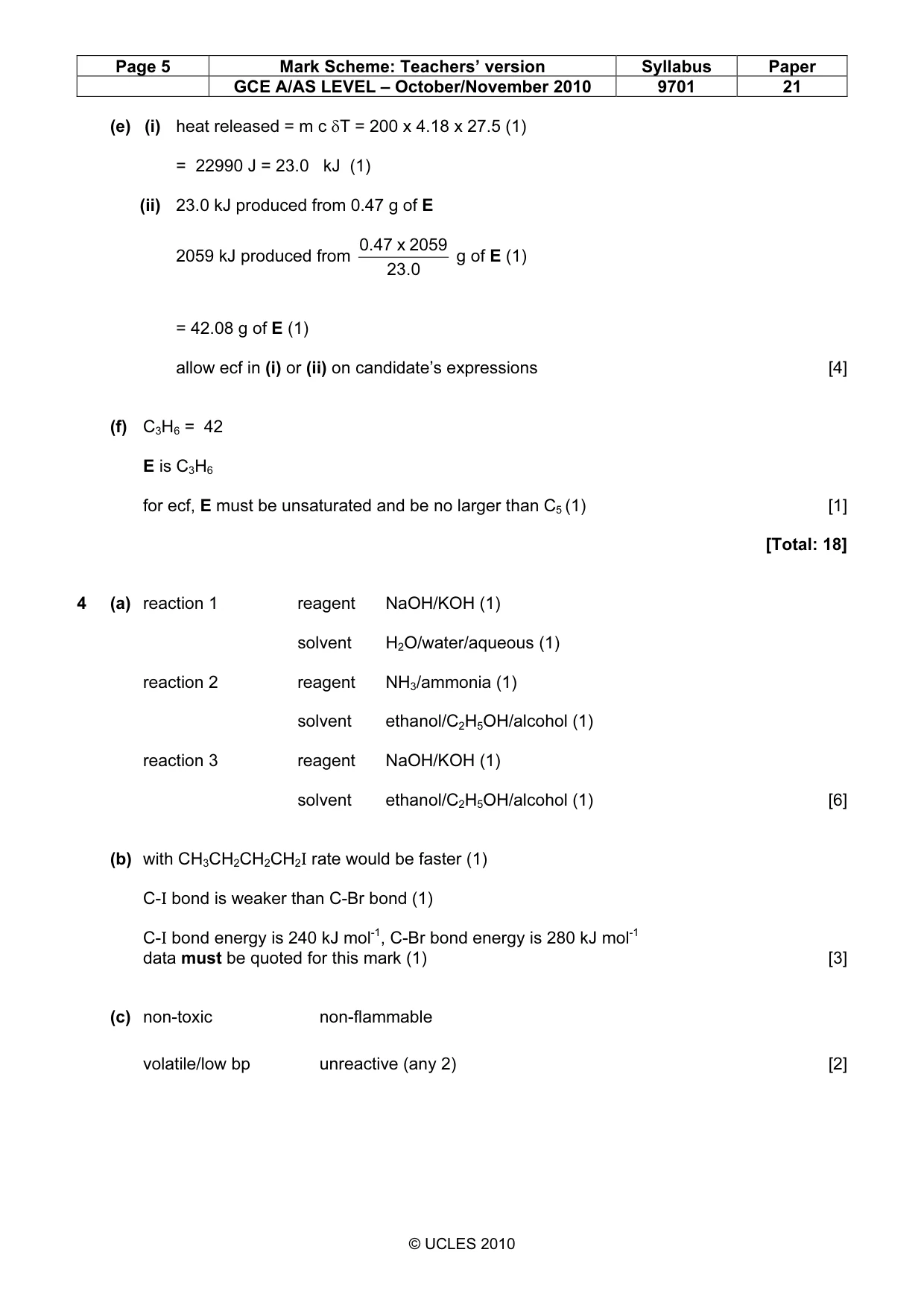
Page 5 Mark Scheme: Teachers’ version Syllabus Paper GCE A/AS LEVEL – October/November 2010 9701 21 © UCLES 2010 (e) (i) heat released = m c δT = 200 x 4.18 x 27.5 (1) = 22990 J = 23.0 kJ (1) (ii) 23.0 kJ produced from 0.47 g of E 2059 kJ produced from 0 . 23 2059 x 47 . 0 g of E (1) = 42.08 g of E (1) allow ecf in (i) or (ii) on candidate’s expressions [4] (f) C3H6 = 42 E is C3H6 for ecf, E must be unsaturated and be no larger than C5 (1) [1] [Total: 18] 4 (a) reaction 1 reagent NaOH/KOH (1) solvent H2O/water/aqueous (1) reaction 2 reagent NH3/ammonia (1) solvent ethanol/C2H5OH/alcohol (1) reaction 3 reagent NaOH/KOH (1) solvent ethanol/C2H5OH/alcohol (1) [6] (b) with CH3CH2CH2CH2I rate would be faster (1) C-I bond is weaker than C-Br bond (1) C-I bond energy is 240 kJ mol-1, C-Br bond energy is 280 kJ mol-1 data must be quoted for this mark (1) [3] (c) non-toxic non-flammable volatile/low bp unreactive (any 2) [2]
Mark scheme, page 6
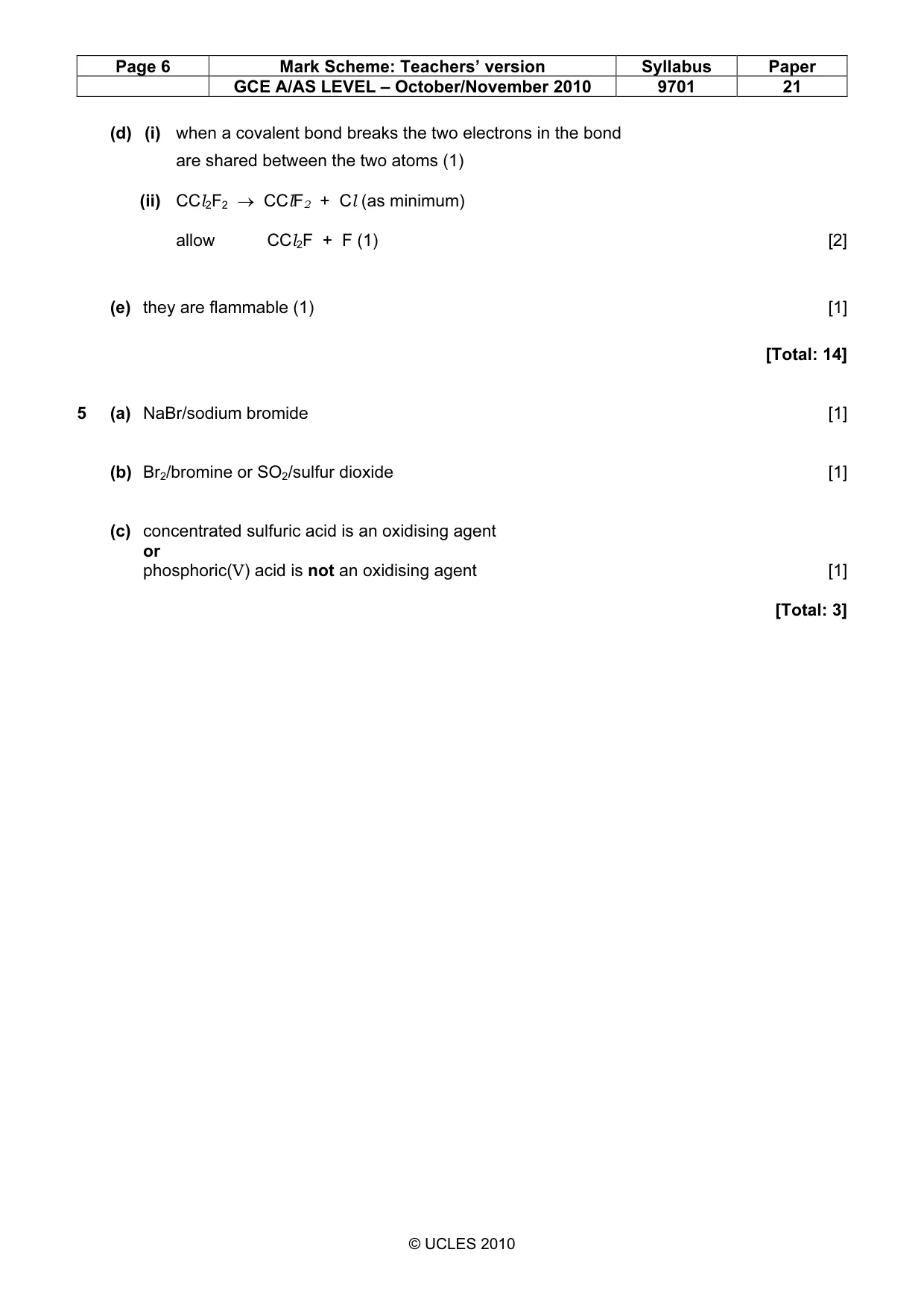
Page 6 Mark Scheme: Teachers’ version Syllabus Paper GCE A/AS LEVEL – October/November 2010 9701 21 © UCLES 2010 (d) (i) when a covalent bond breaks the two electrons in the bond are shared between the two atoms (1) (ii) CCl2F2 → CClF2 + Cl (as minimum) allow CCl2F + F (1) [2] (e) they are flammable (1) [1] [Total: 14] 5 (a) NaBr/sodium bromide [1] (b) Br2/bromine or SO2/sulfur dioxide [1] (c) concentrated sulfuric acid is an oxidising agent or phosphoric(V) acid is not an oxidising agent [1] [Total: 3]
What you needed in this session
Cambridge’s own grade thresholds for 2010 Oct/Nov, Paper 2 · Variant 1. A higher threshold means an easier paper — the bar moves with how the cohort did.