Cambridge A Level Business (for first examination in 2016) 9609 — 2023 May/June Paper 2 · Variant 3
9609/23/M/J/23 · 2 questions · 60 marks · ≈68 min
The question paper and its mark scheme, free to read here and free to download. This is Cambridge’s own paper, exactly as it was sat.
Question paper4 pages
Mark scheme34 pages
Answers below. Sit the paper first if you are practising.
Questions as text
Q1 · Fretter’s Music (FM) FM is a private limited company based in country Z
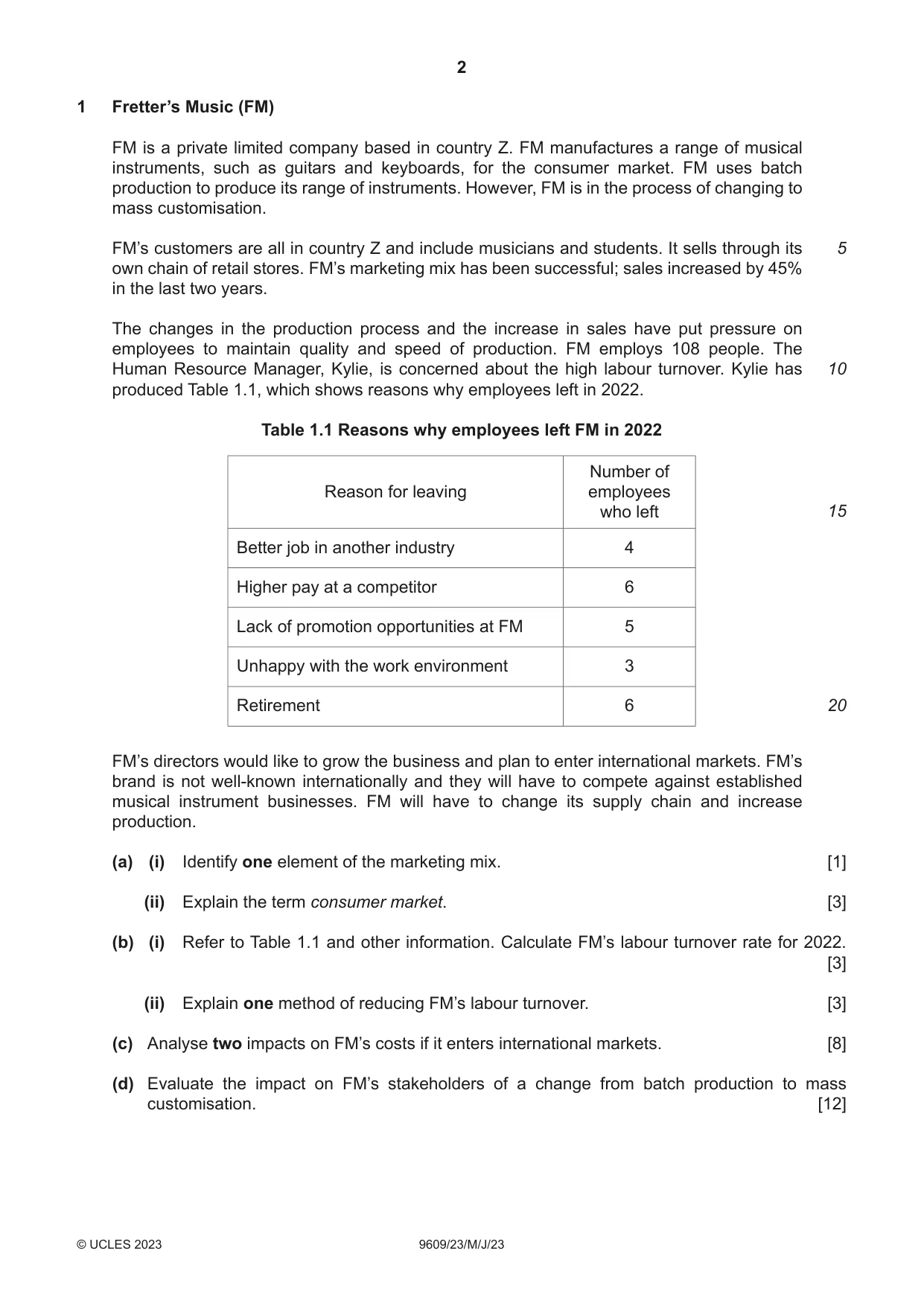
1 Fretter’s Music (FM) FM is a private limited company based in country Z. FM manufactures a range of musical instruments, such as guitars and keyboards, for the consumer market. FM uses batch production to produce its range of instruments. However, FM is in the process of changing to mass customisation. FM’s customers are all in country Z and include musicians and students. It sells through its 5 own chain of retail stores. FM’s marketing mix has been successful; sales increased by 45% in the last two years. The changes in the production process and the increase in sales have put pressure on employees to maintain quality and speed of production. FM employs 108 people. The Human Resource Manager, Kylie, is concerned about the high labour turnover. Kylie has 10 produced Table 1.1, which shows reasons why employees left in 2022. Table 1.1 Reasons why employees left FM in 2022 Number of Reason for leaving employees who left 15 Better job in another industry 4 Higher pay at a competitor 6 Lack of promotion opportunities at FM 5 Unhappy with the work environment 3 Retirement 6 20 FM’s directors would like to grow the business and plan to enter international markets. FM’s brand is not well-known internationally and they will have to compete against established musical instrument businesses. FM will have to change its supply chain and increase production. (a) (i) Identify one element of the marketing mix. [1] (ii) Explain the term consumer market. [3] (b) (i) Refer to Table 1.1 and other information. Calculate FM’s labour turnover rate for 2022. [3] (ii) Explain one method of reducing FM’s labour turnover. [3] (c) Analyse two impacts on FM’s costs if it enters international markets. [8] (d) Evaluate the impact on FM’s stakeholders of a change from batch production to mass customisation. [12]
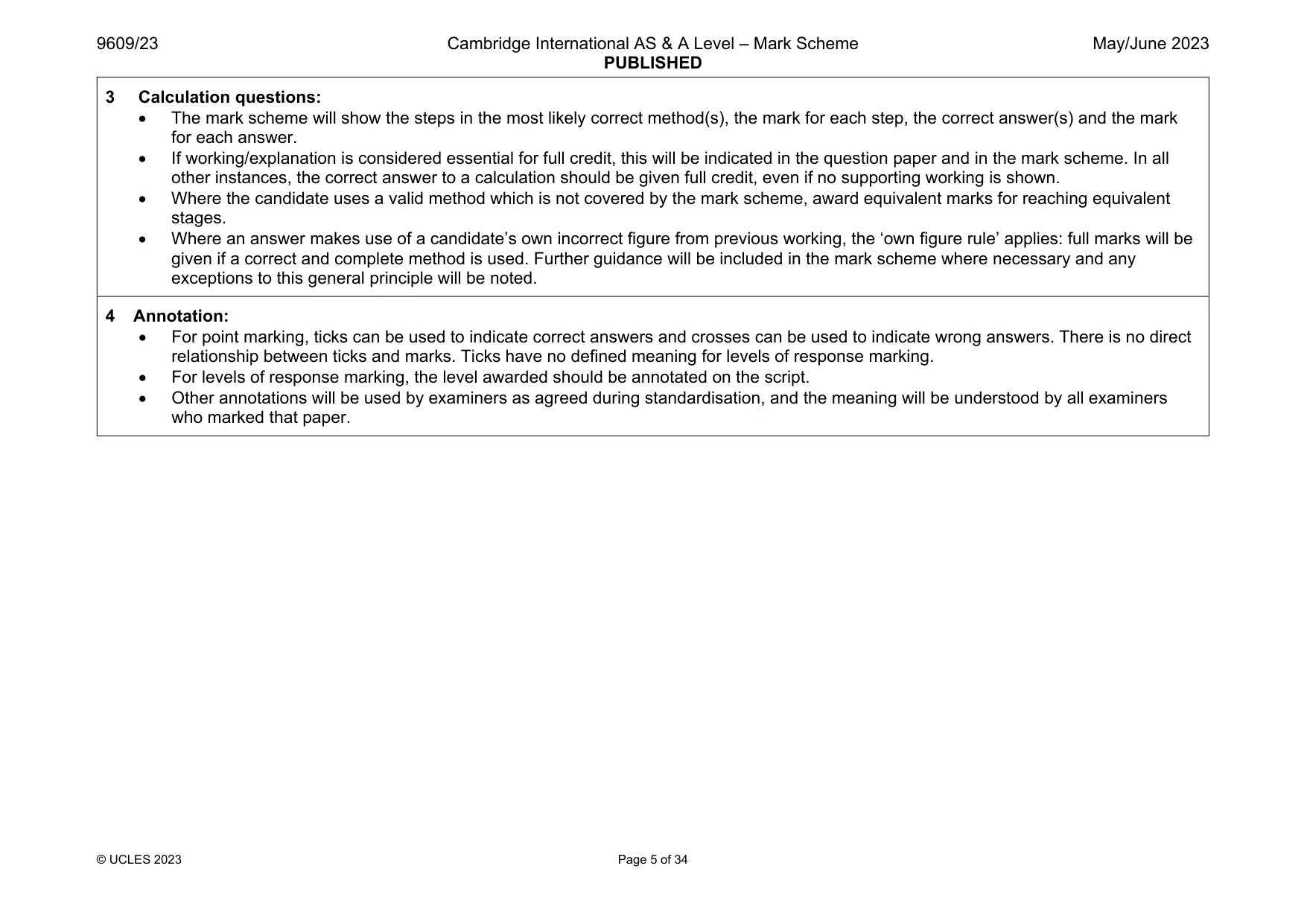
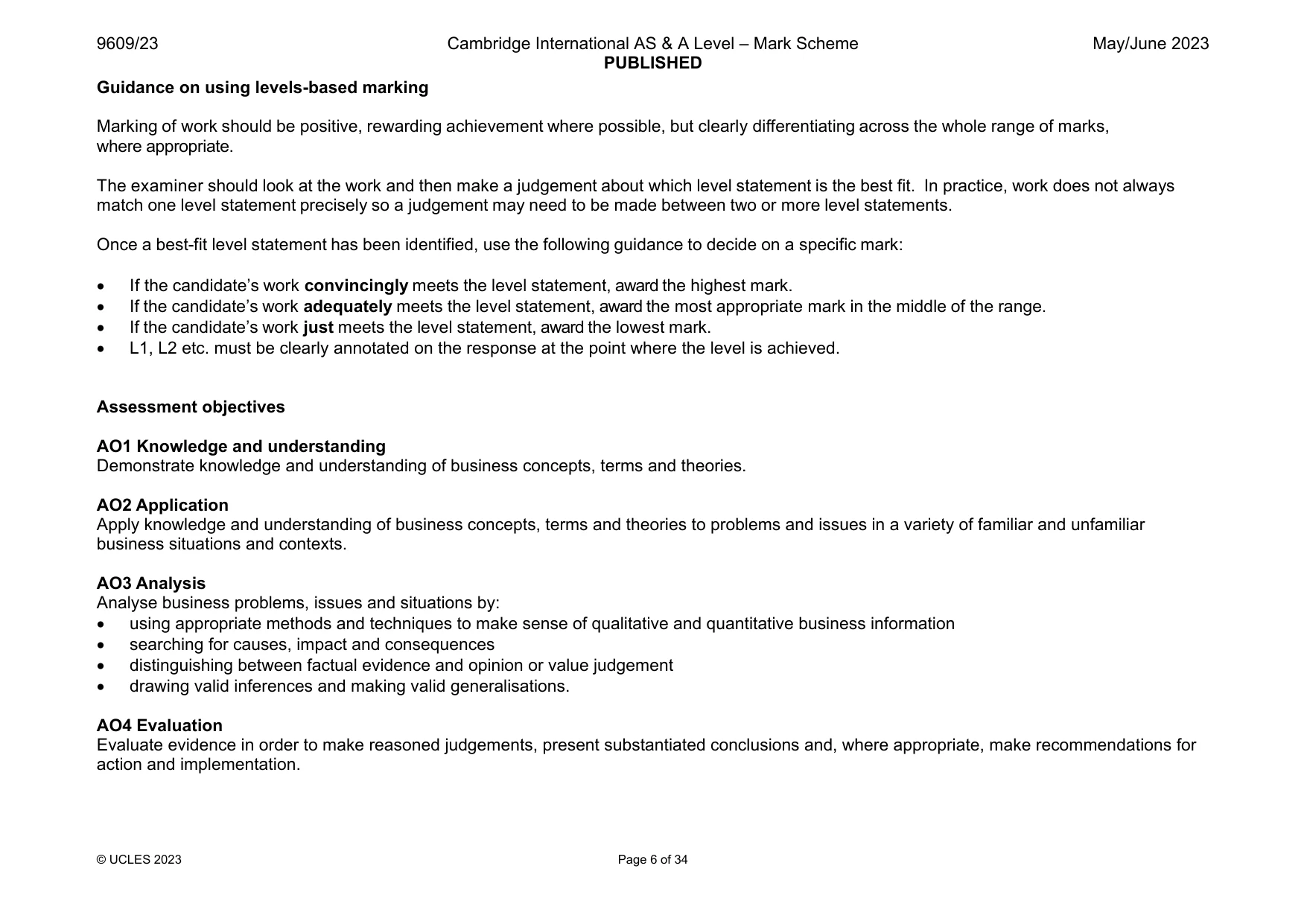
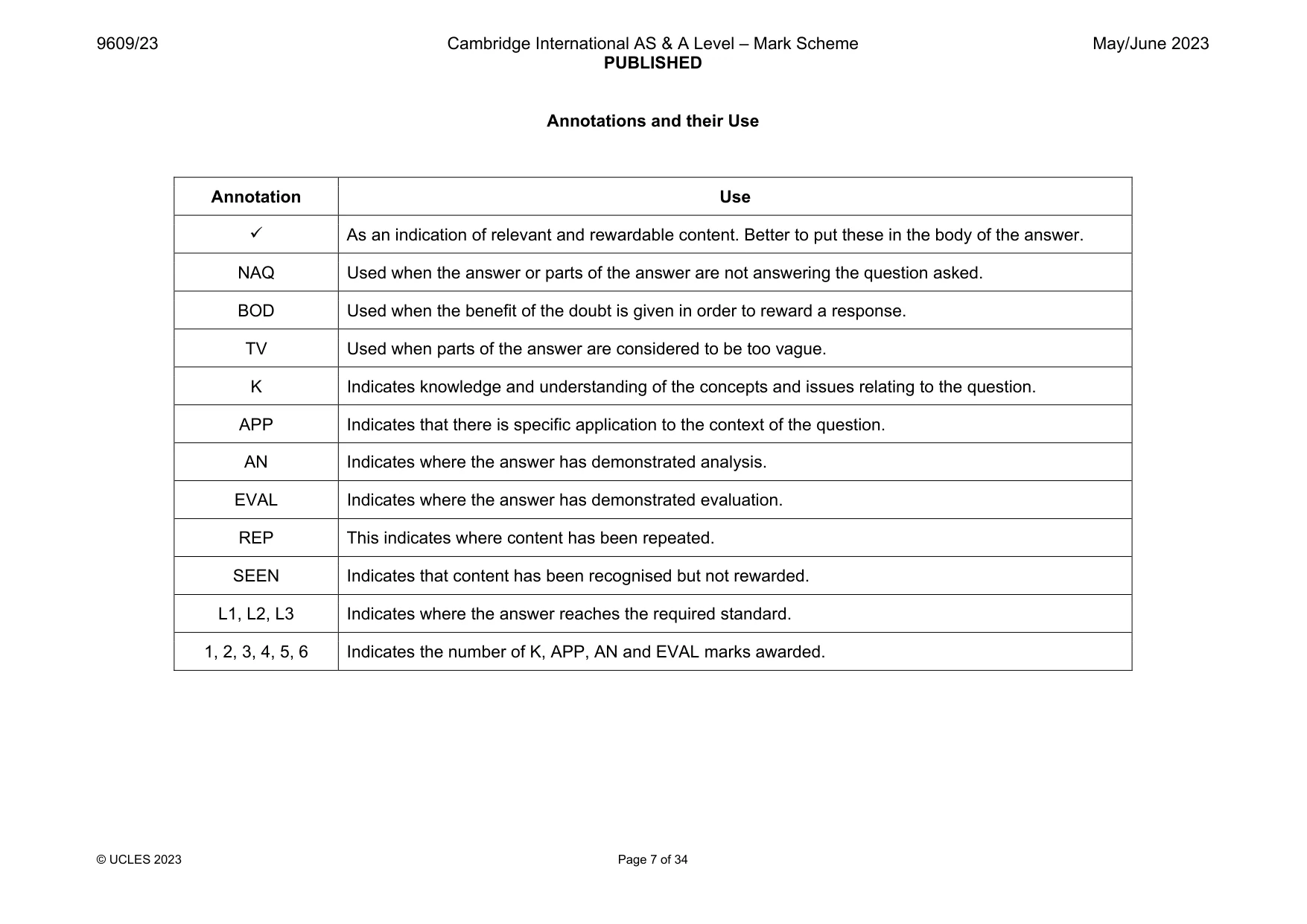
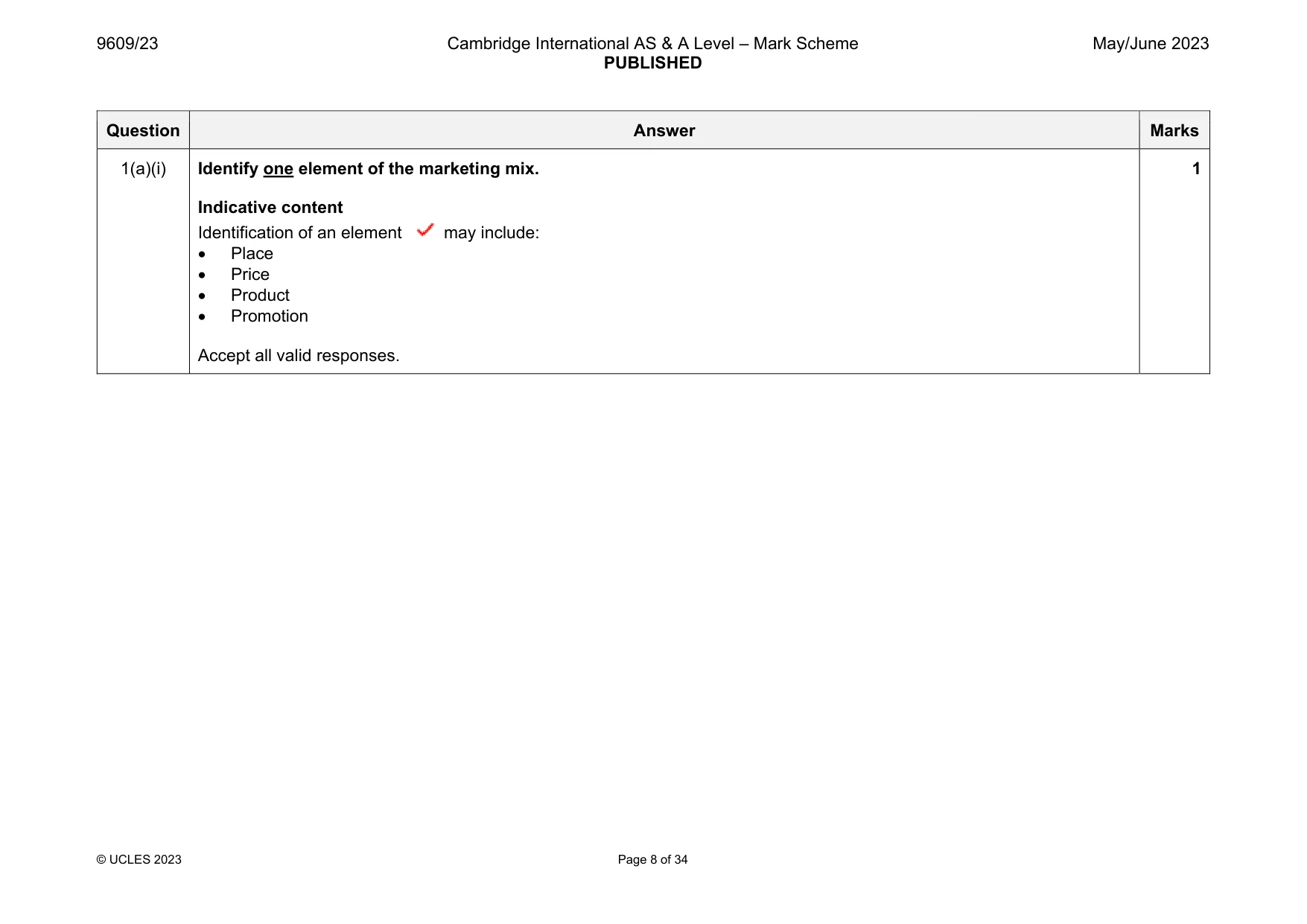
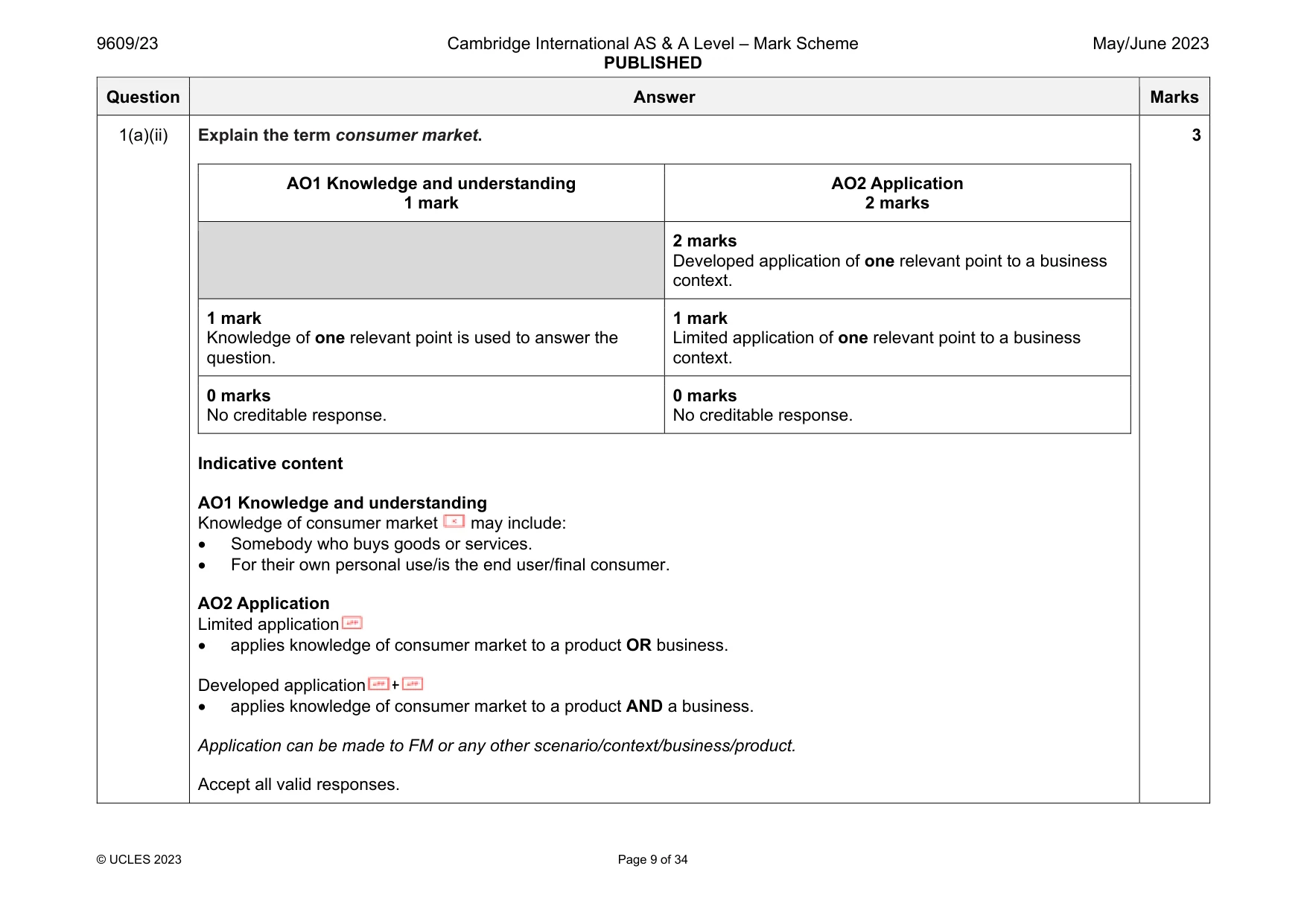
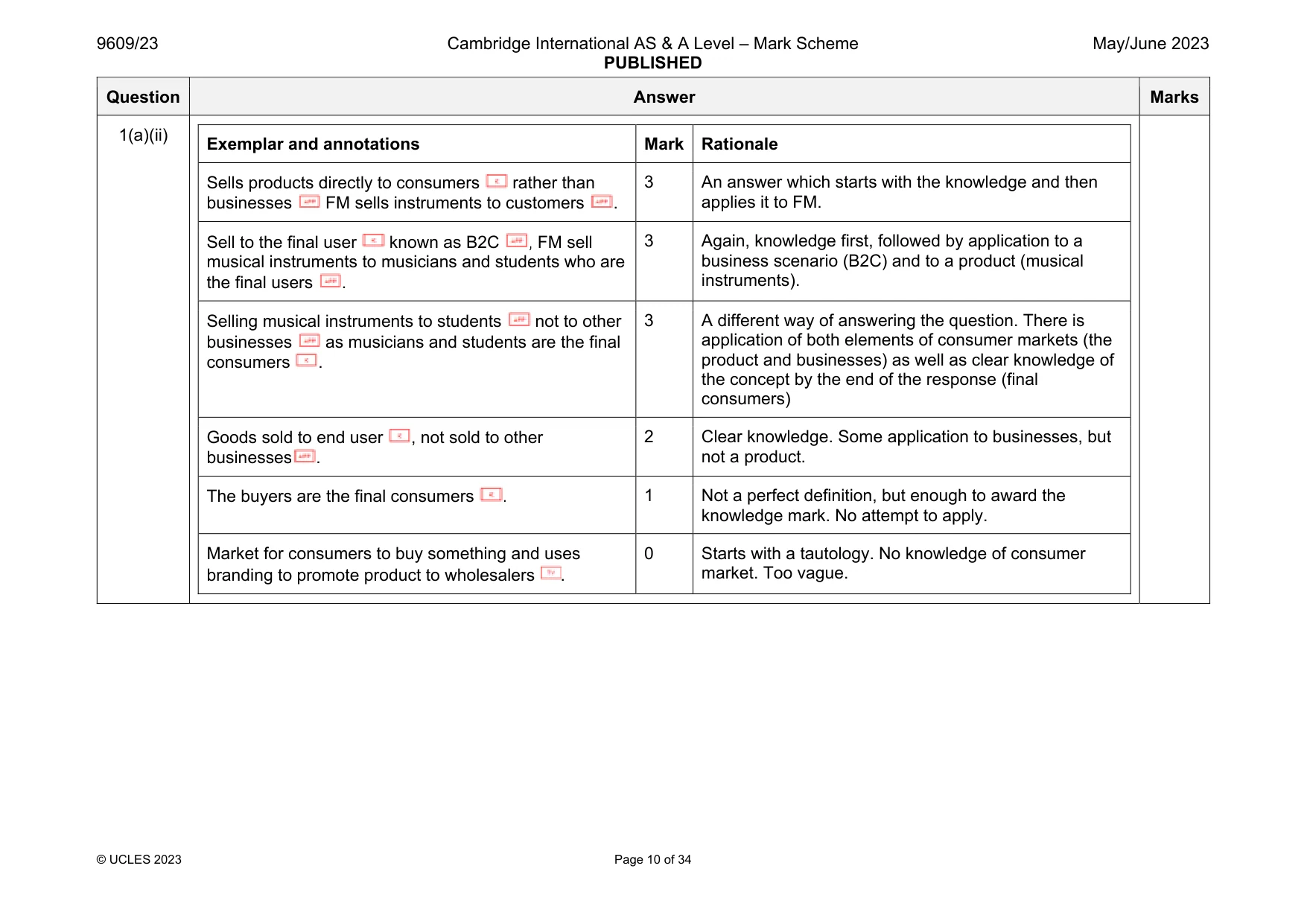
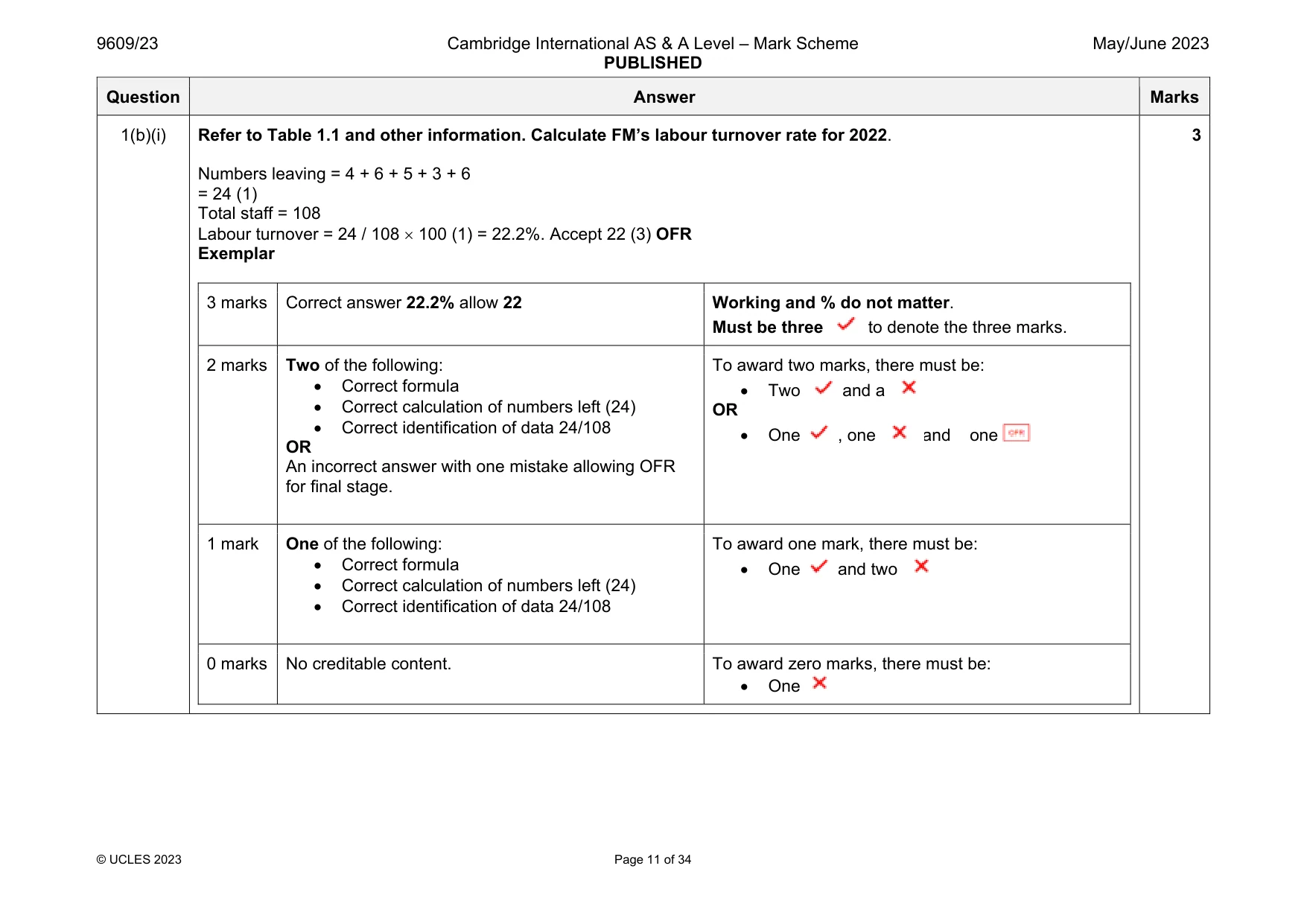
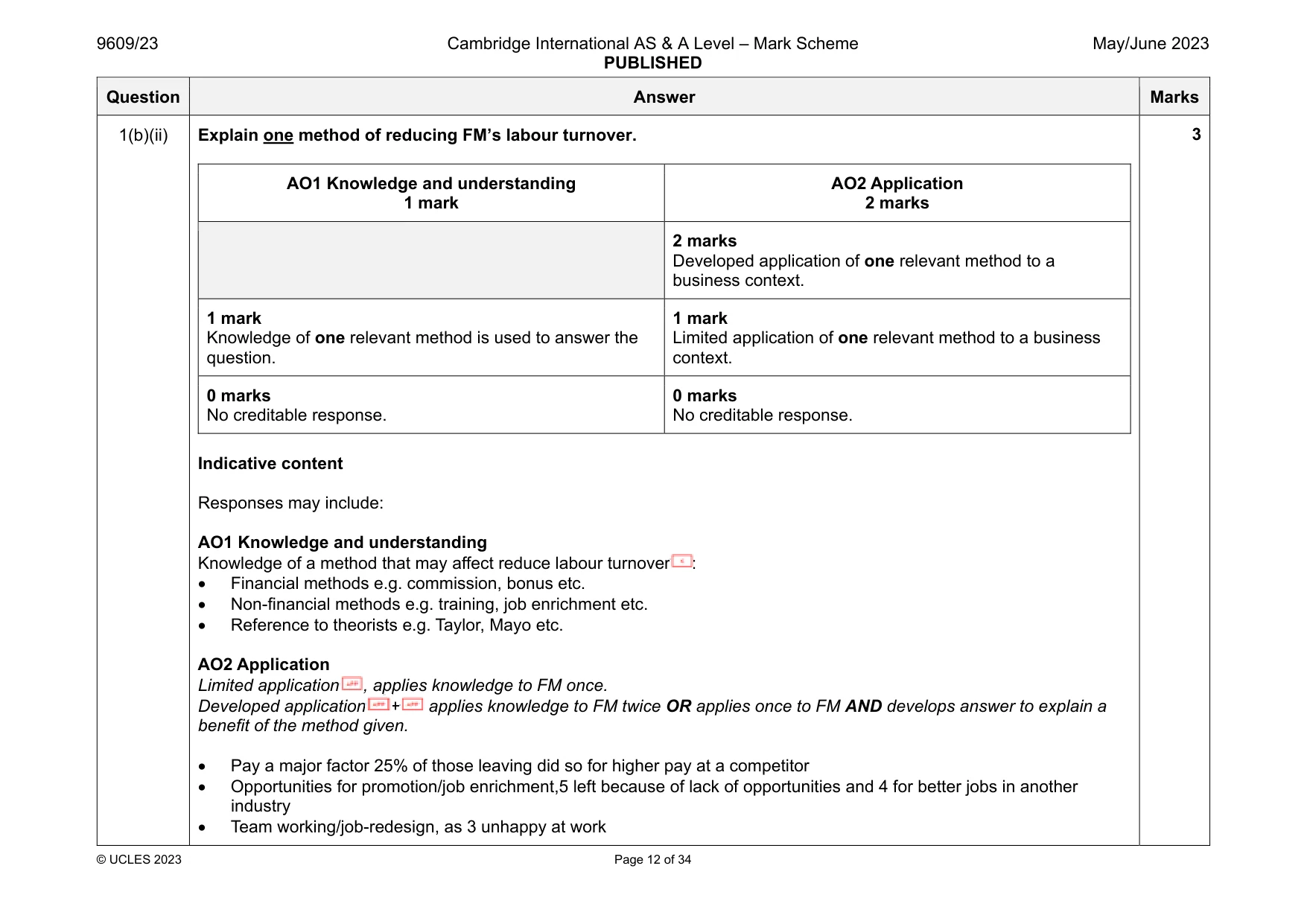
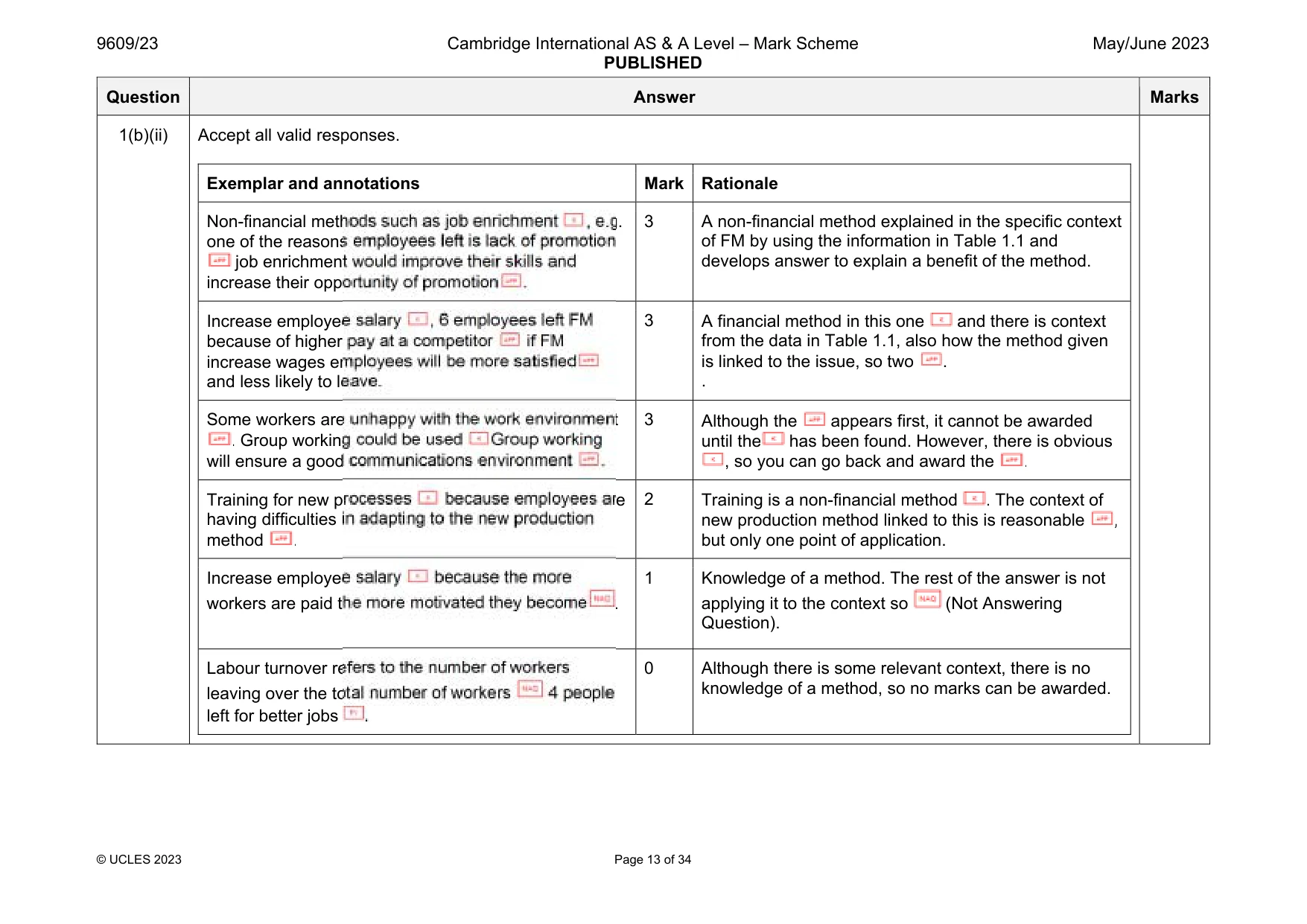
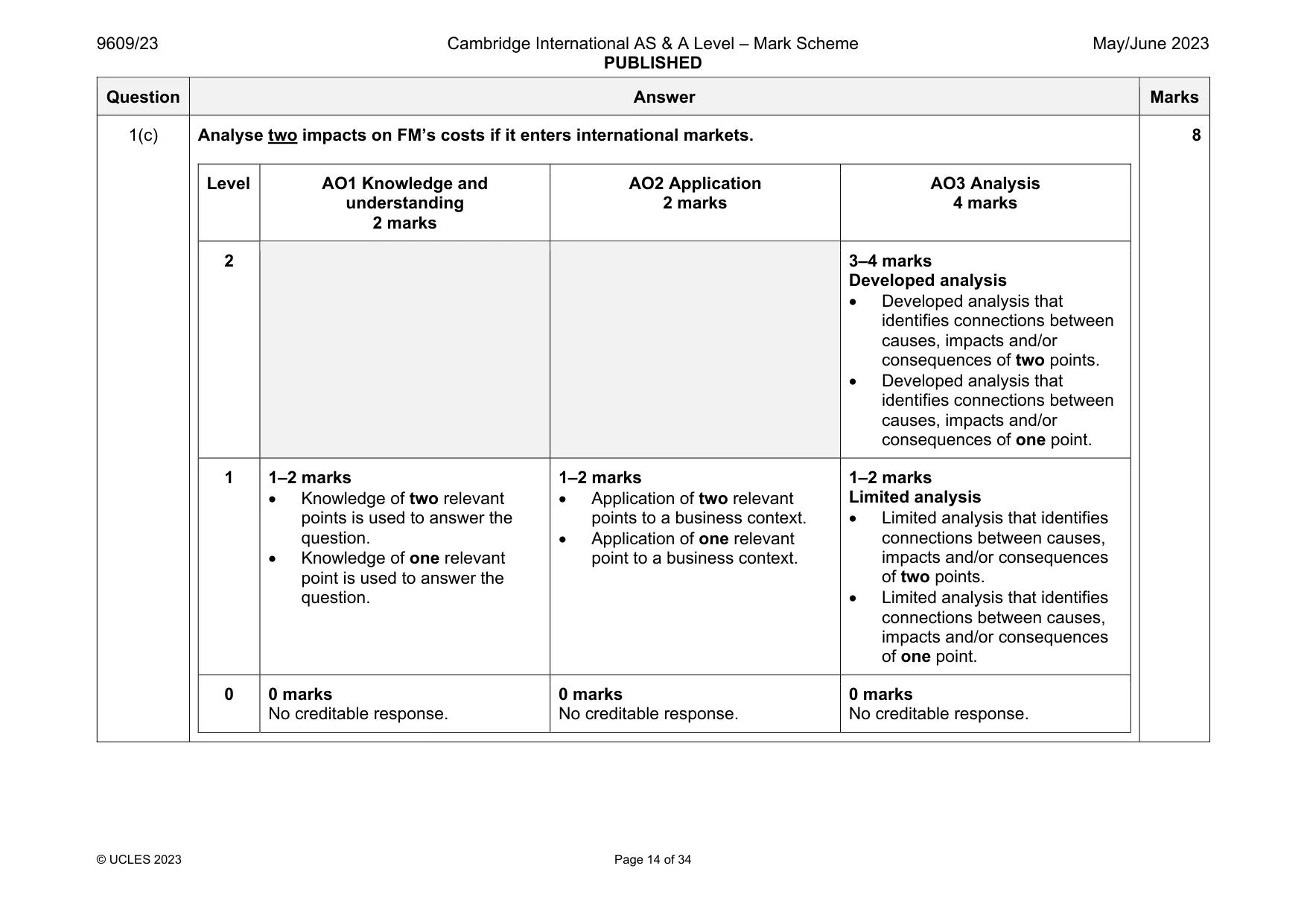
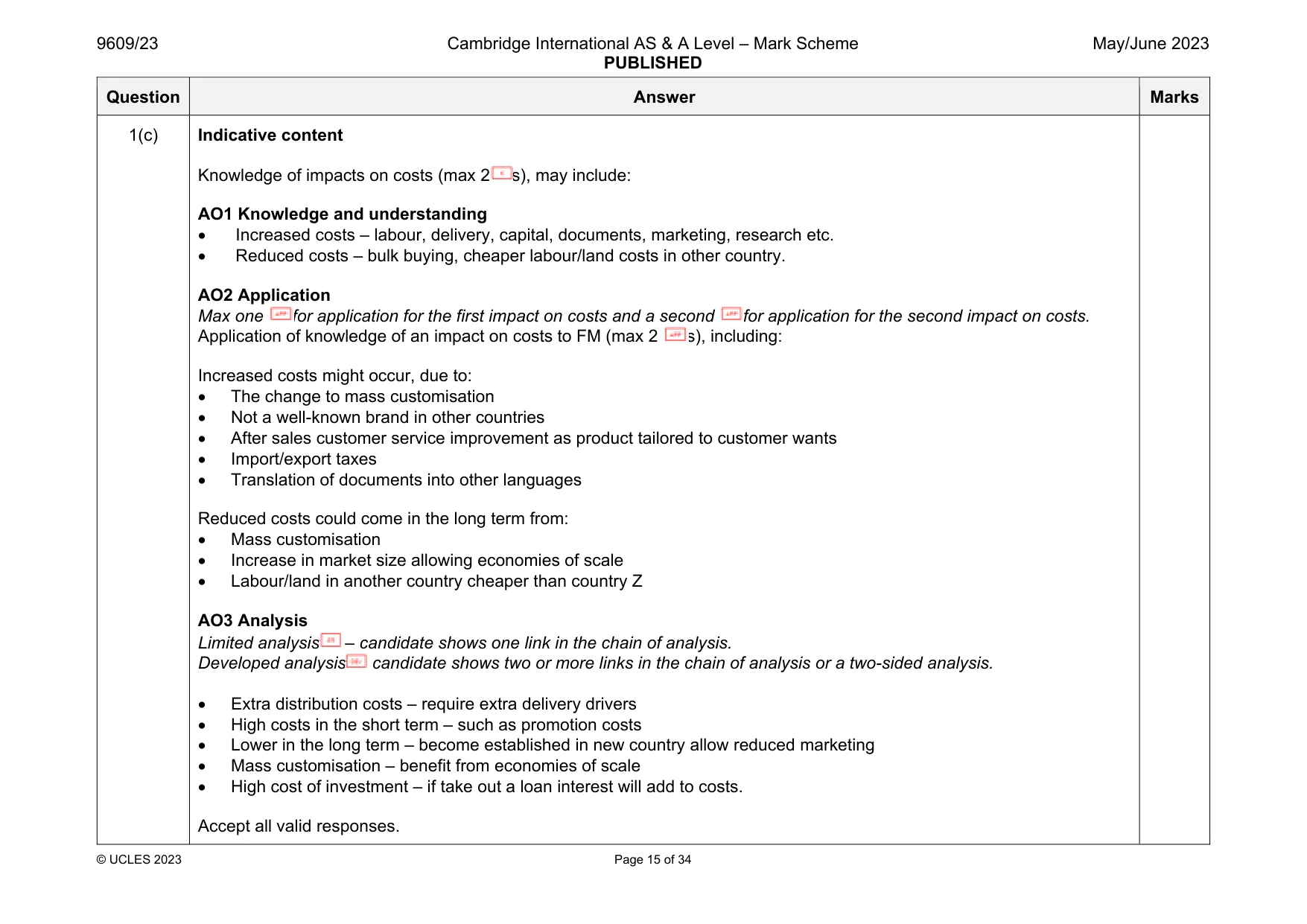
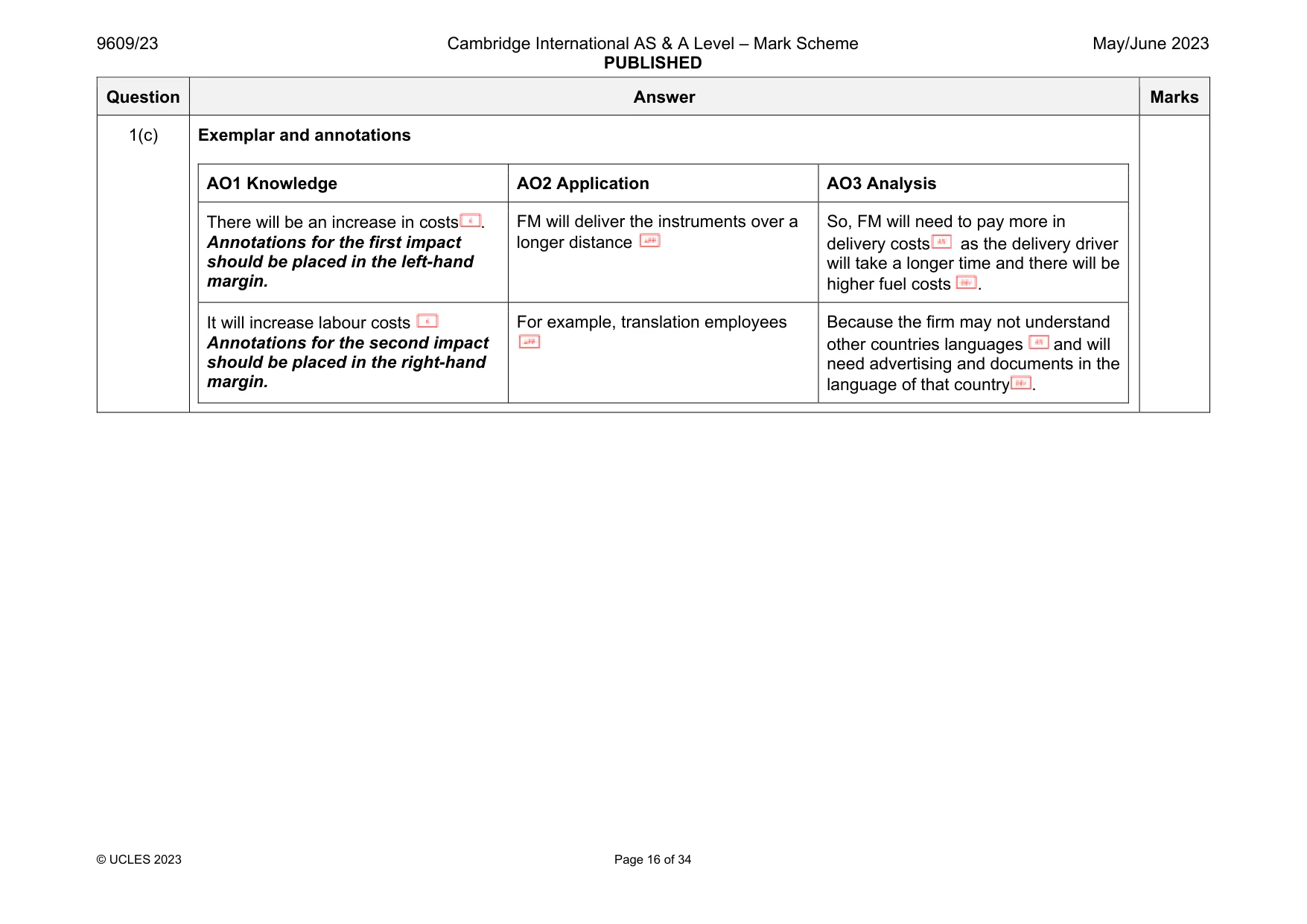
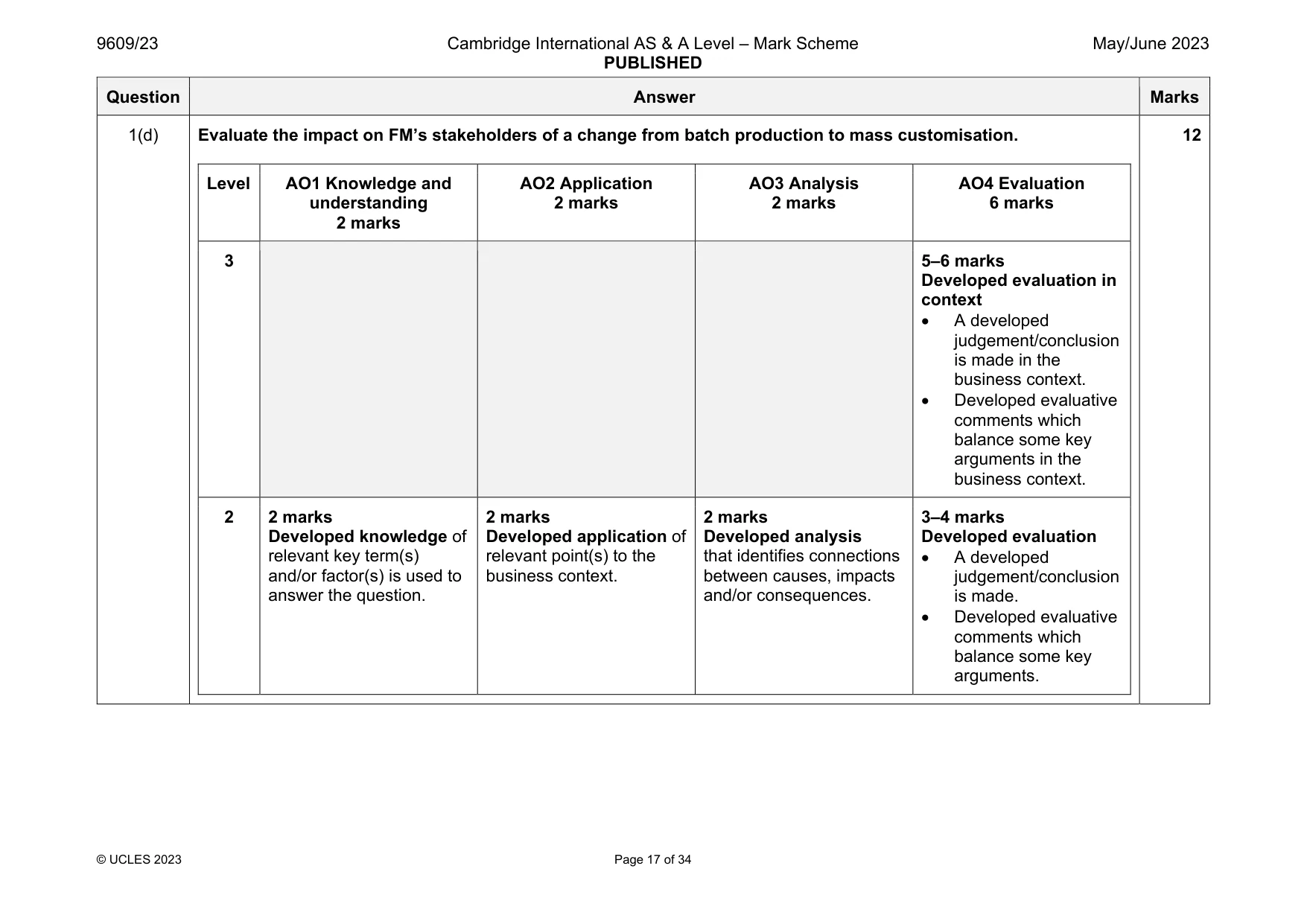
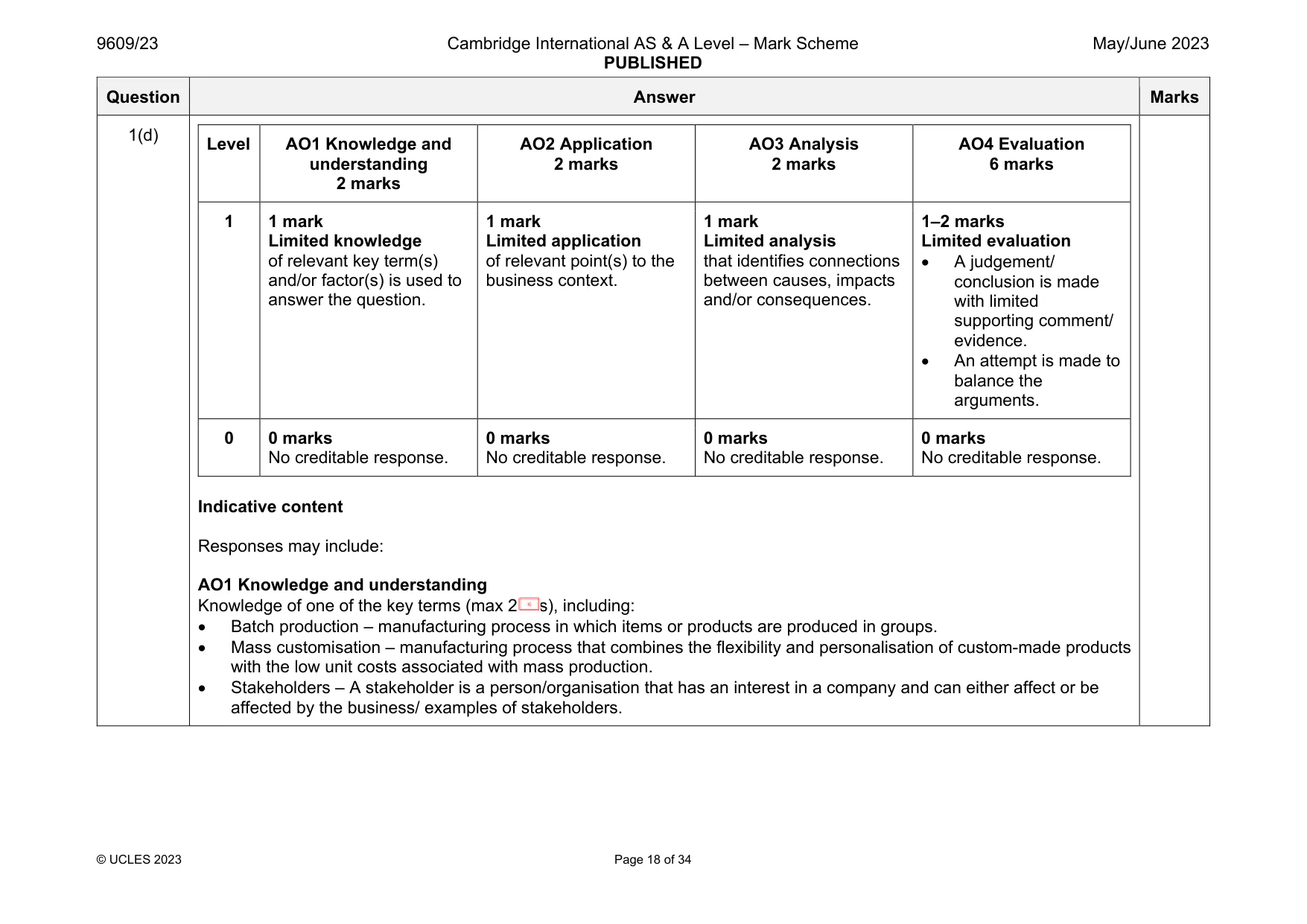
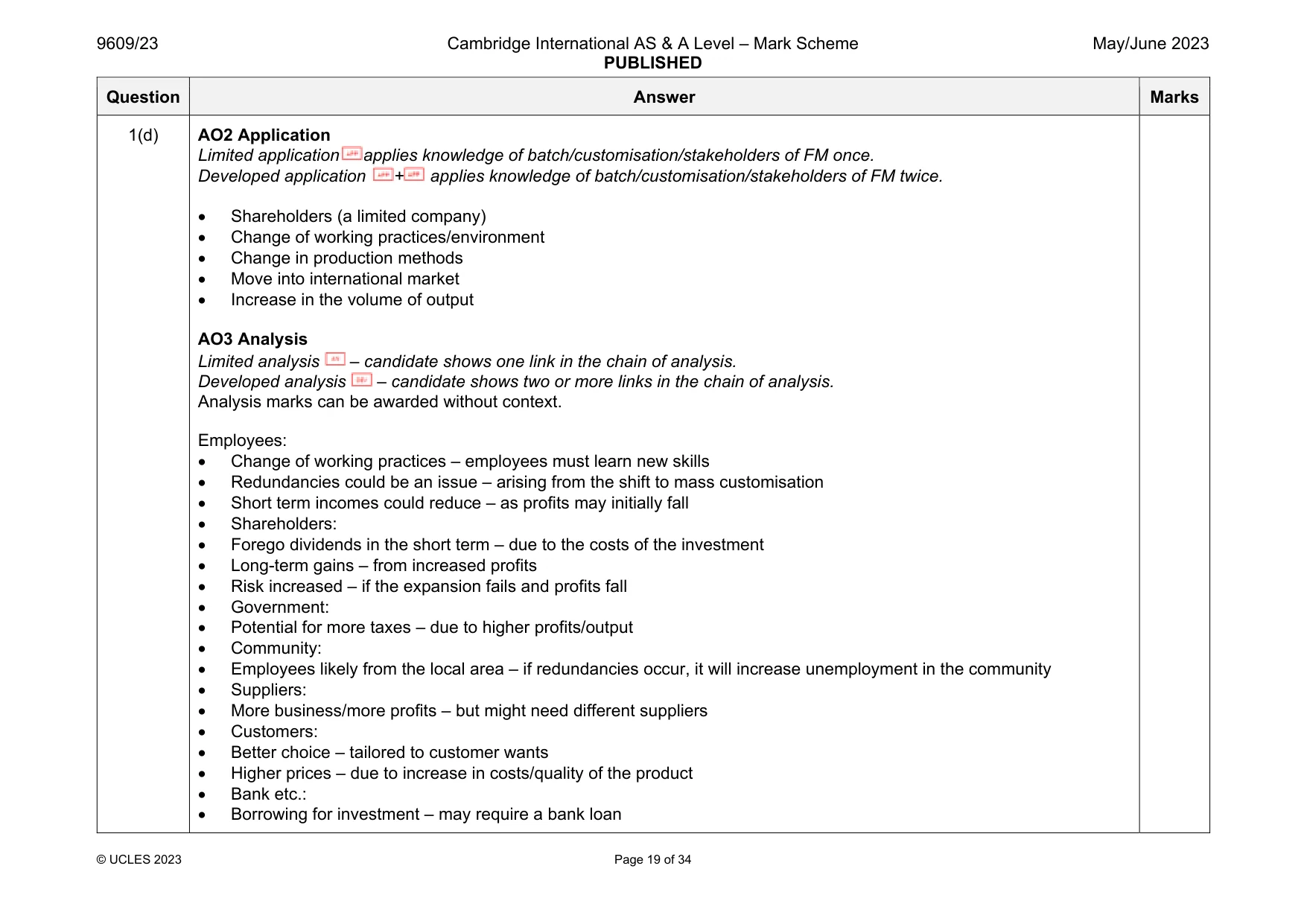
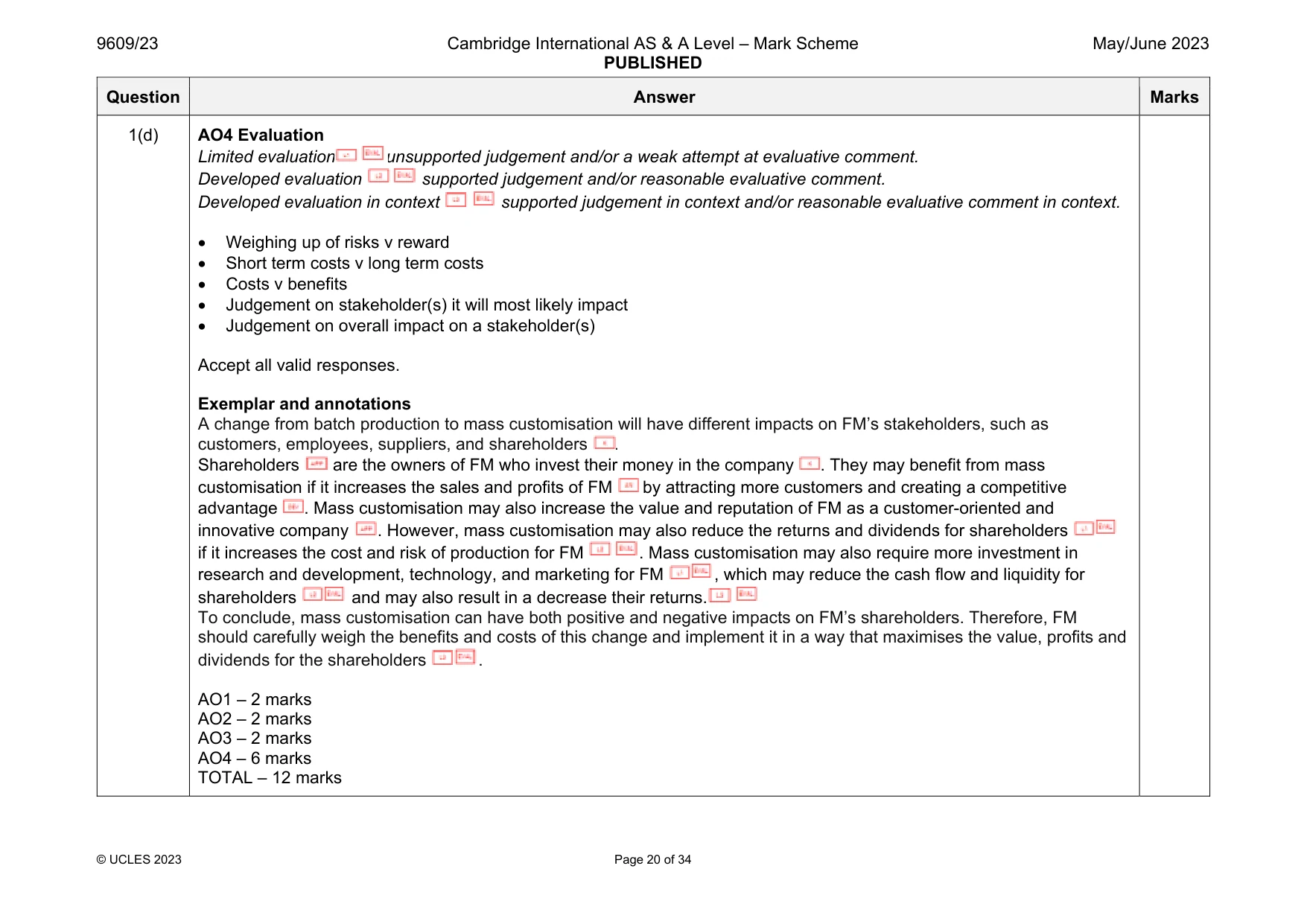
Mark scheme: 1(a)(i) Identify one element of the marketing mix. Indicative content Identification of an element may include: Place Price Product Promotion Accept all valid responses. Question Answer Marks 1(a)(ii) Explain the term consumer market. AO1 Knowledge and understanding 1 mark AO2 Application 2 marks 2 marks Developed application of one relevant point to a business context. 1 mark Knowledge of one relevant point is used to answer the question. 1 mark Limited application of one relevant point to a business context. 0 marks No creditable response. 0 marks No creditable response. Indicative content AO1 Knowledge and understanding Knowledge of consumer market may include: Somebody who buys goods or services. For their own personal use/is the end user/final consumer. AO2 Application Limited application applies knowledge of consumer market to a product OR business. Developed application + applies knowledge of consumer market to a product AND a business. Application can be made to FM or any other scenario/context/business/product. Accept all valid responses. 3 Question Answer Marks 1(a)(ii) Exemplar and annotations Mark Rationale Sells products directly to consumers rather than businesses FM sells instruments to customers . 3 An answer which starts with the knowledge and then applies it to FM. Sell to the final user known as B2C , FM sell musical instruments to musicians and students who are the final users . 3 Again, knowledge first, followed by application to a business scenario (B2C) and to a product (musical instruments). Selling musical instruments to students not to other businesses as musicians and students are the final consumers . 3 A different way of answering the question. There is application of both elements of consumer markets (the product and businesses) as well as clear knowledge of the concept by the end of the response (final consumers) Goods sold to end user , not sold to other businesses . 2 Clear knowledge. Some application to businesses, but not a product. The buyers are the final consumers . 1 Not a perfect definition, but enough to award the knowledge mark. No attempt to apply. Market for consumers to buy something and uses branding to promote product to wholesalers . 0 Starts with a tautology. No knowledge of consumer market. Too vague. Question Answer Marks 1(b)(i) Refer to Table 1.1 and other information. Calculate FM’s labour turnover rate for 2022. Numbers leaving = 4 + 6 + 5 + 3 + 6 = 24 (1) Total staff = 108 Labour turnover = 24 / 108 100 (1) = 22.2%. Accept 22 (3) OFR Exemplar 3 marks Correct answer 22.2% allow 22 Working and % do not matter. Must be three to denote the three marks. 2 marks Two of the following: Correct formula Correct calculation of numbers left (24) Correct identification of data 24/108 OR An incorrect answer with one mistake allowing OFR for final stage. To award two marks, there must be: Two and a OR One , one and one 1 mark One of the following: Correct formula Correct calculation of numbers left (24) Correct identification of data 24/108 To award one mark, there must be: One and two 0 marks No creditable content. To award zero marks, there must be: One 3 Question Answer Marks 1(b)(ii) Explain one method of reducing FM’s labour turnover. AO1 Knowledge and understanding 1 mark AO2 Application 2 marks 2 marks Developed application of one relevant method to a business context. 1 mark Knowledge of one relevant method is used to answer the question. 1 mark Limited application of one relevant method to a business context. 0 marks No creditable response. 0 marks No creditable response. Indicative content Responses may include: AO1 Knowledge and understanding Knowledge of a method that may affect reduce labour turnover : Financial methods e.g. commission, bonus etc. Non-financial methods e.g. training, job enrichment etc. Reference to theorists e.g. Taylor, Mayo etc. AO2 Application Limited application , applies knowledge to FM once. Developed application + applies knowledge to FM twice OR applies once to FM AND develops answer to explain a benefit of the method given. Pay a major factor 25% of those leaving did so for higher pay at a competitor Opportunities for promotion/job enrichment,5 left because of lack of opportunities and 4 for better jobs in another industry Team working/job-redesign, as 3 unhappy at work 3 Question Answer Marks 1(b)(ii) Accept all valid responses. Exemplar and annotations Mark Rationale Non-financial methods such as job enrichment , e.g. one of the reasons employees left is lack of promotion job enrichment would improve their skills and increase their opportunity of promotion . 3 A non-financial method explained in the specific context of FM by using the information in Table 1.1 and develops answer to explain a benefit of the method. Increase employee salary , 6 employees left FM because of higher pay at a competitor if FM increase wages employees will be more satisfied and less likely to leave. 3 A financial method in this one and there is context from the data in Table 1.1, also how the method given is linked to the issue, so two . . Some workers are unhappy with the work environment . Group working could be used Group working will ensure a good communications environment . 3 Although the appears first, it cannot be awarded until the has been found. However, there is obvious , so you can go back and award the . Training for new processes because employees are having difficulties in adapting to the new production method . 2 Training is a non-financial method . The context of new production method linked to this is reasonable , but only one point of application. Increase employee salary because the more workers are paid the more motivated they become . 1 Knowledge of a method. The rest of the answer is not applying it to the context so (Not Answering Question). Labour turnover refers to the number of workers leaving over the total number of workers 4 people left for better jobs . 0 Although there is some relevant context, there is no knowledge of a method, so no marks can be awarded. Question Answer Marks 1(c) Analyse two impacts on FM’s costs if it enters international markets. Level AO1 Knowledge and understanding 2 marks AO2 Application 2 marks AO3 Analysis 4 marks 2 3–4 marks Developed analysis Developed analysis that identifies connections between causes, impacts and/or consequences of two points. Developed analysis that identifies connections between causes, impacts and/or consequences of one point. 1 1–2 marks Knowledge of two relevant points is used to answer the question. Knowledge of one relevant point is used to answer the question. 1–2 marks Application of two relevant points to a business context. Application of one relevant point to a business context. 1–2 marks Limited analysis Limited analysis that identifies connections between causes, impacts and/or consequences of two points. Limited analysis that identifies connections between causes, impacts and/or consequences of one point. 0 0 marks No creditable response. 0 marks No creditable response. 0 marks No creditable response. 8 Question Answer Marks 1(c) Indicative content Knowledge of impacts on costs (max 2 s), may include: AO1 Knowledge and understanding Increased costs – labour, delivery, capital, documents, marketing, research etc. Reduced costs – bulk buying, cheaper labour/land costs in other country. AO2 Application Max one for application for the first impact on costs and a second for application for the second impact on costs. Application of knowledge of an impact on costs to FM (max 2 s), including: Increased costs might occur, due to: The change to mass customisation Not a well-known brand in other countries After sales customer service improvement as product tailored to customer wants Import/export taxes Translation of documents into other languages Reduced costs could come in the long term from: Mass customisation Increase in market size allowing economies of scale Labour/land in another country cheaper than country Z AO3 Analysis Limited analysis – candidate shows one link in the chain of analysis. Developed analysis candidate shows two or more links in the chain of analysis or a two-sided analysis. Extra distribution costs – require extra delivery drivers High costs in the short term – such as promotion costs Lower in the long term – become established in new country allow reduced marketing Mass customisation – benefit from economies of scale High cost of investment – if take out a loan interest will add to costs. Accept all valid responses. Question Answer Marks 1(c) Exemplar and annotations AO1 Knowledge AO2 Application AO3 Analysis There will be an increase in costs . Annotations for the first impact should be placed in the left-hand margin. FM will deliver the instruments over a longer distance So, FM will need to pay more in delivery costs as the delivery driver will take a longer time and there will be higher fuel costs . It will increase labour costs Annotations for the second impact should be placed in the right-hand margin. For example, translation employees Because the firm may not understand other countries languages and will need advertising and documents in the language of that country . Question Answer Marks 1(d) Evaluate the impact on FM’s stakeholders of a change from batch production to mass customisation. Level AO1 Knowledge and understanding 2 marks AO2 Application 2 marks AO3 Analysis 2 marks AO4 Evaluation 6 marks 3 5–6 marks Developed evaluation in context A developed judgement/conclusion is made in the business context. Developed evaluative comments which balance some key arguments in the business context. 2 2 marks Developed knowledge of relevant key term(s) and/or factor(s) is used to answer the question. 2 marks Developed application of relevant point(s) to the business context. 2 marks Developed analysis that identifies connections between causes, impacts and/or consequences. 3–4 marks Developed evaluation A developed judgement/conclusion is made. Developed evaluative comments which balance some key arguments. 12 Question Answer Marks 1(d) Level AO1 Knowledge and understanding 2 marks AO2 Application 2 marks AO3 Analysis 2 marks AO4 Evaluation 6 marks 1 1 mark Limited knowledge of relevant key term(s) and/or factor(s) is used to answer the question. 1 mark Limited application of relevant point(s) to the business context. 1 mark Limited analysis that identifies connections between causes, impacts and/or consequences. 1–2 marks Limited evaluation A judgement/ conclusion is made with limited supporting comment/ evidence. An attempt is made to balance the arguments. 0 0 marks No creditable response. 0 marks No creditable response. 0 marks No creditable response. 0 marks No creditable response. Indicative content Responses may include: AO1 Knowledge and understanding Knowledge of one of the key terms (max 2 s), including: Batch production – manufacturing process in which items or products are produced in groups. Mass customisation – manufacturing process that combines the flexibility and personalisation of custom-made products with the low unit costs associated with mass production. Stakeholders – A stakeholder is a person/organisation that has an interest in a company and can either affect or be affected by the business/ examples of stakeholders. Question Answer Marks 1(d) AO2 Application Limited application applies knowledge of batch/customisation/stakeholders of FM once. Developed application + applies knowledge of batch/customisation/stakeholders of FM twice. Shareholders (a limited company) Change of working practices/environment Change in production methods Move into international market Increase in the volume of output AO3 Analysis Limited analysis – candidate shows one link in the chain of analysis. Developed analysis – candidate shows two or more links in the chain of analysis. Analysis marks can be awarded without context. Employees: Change of working practices – employees must learn new skills Redundancies could be an issue – arising from the shift to mass customisation Short term incomes could reduce – as profits may initially fall Shareholders: Forego dividends in the short term – due to the costs of the investment Long-term gains – from increased profits Risk increased – if the expansion fails and profits fall Government: Potential for more taxes – due to higher profits/output Community: Employees likely from the local area – if redundancies occur, it will increase unemployment in the community Suppliers: More business/more profits – but might need different suppliers Customers: Better choice – tailored to customer wants Higher prices – due to increase in costs/quality of the product Bank etc.: Borrowing for investment – may require a bank loan Question Answer Marks 1(d) AO4 Evaluation Limited evaluation unsupported judgement and/or a weak attempt at evaluative comment. Developed evaluation supported judgement and/or reasonable evaluative comment. Developed evaluation in context supported judgement in context and/or reasonable evaluative comment in context. Weighing up of risks v reward Short term costs v long term costs Costs v benefits Judgement on stakeholder(s) it will most likely impact Judgement on overall impact on a stakeholder(s) Accept all valid responses. Exemplar and annotations A change from batch production to mass customisation will have different impacts on FM’s stakeholders, such as customers, employees, suppliers, and shareholders . Shareholders are the owners of FM who invest their money in the company . They may benefit from mass customisation if it increases the sales and profits of FM by attracting more customers and creating a competitive advantage . Mass customisation may also increase the value and reputation of FM as a customer-oriented and innovative company . However, mass customisation may also reduce the returns and dividends for shareholders if it increases the cost and risk of production for FM . Mass customisation may also require more investment in research and development, technology, and marketing for FM , which may reduce the cash flow and liquidity for shareholders and may also result in a decrease their returns. To conclude, mass customisation can have both positive and negative impacts on FM’s shareholders. Therefore, FM should carefully weigh the benefits and costs of this change and implement it in a way that maximises the value, profits and dividends for the shareholders . AO1 – 2 marks AO2 – 2 marks AO3 – 2 marks AO4 – 6 marks TOTAL – 12 marks
Q2 · Great Desks (GD) GD is a co-operative owned by all of its employees
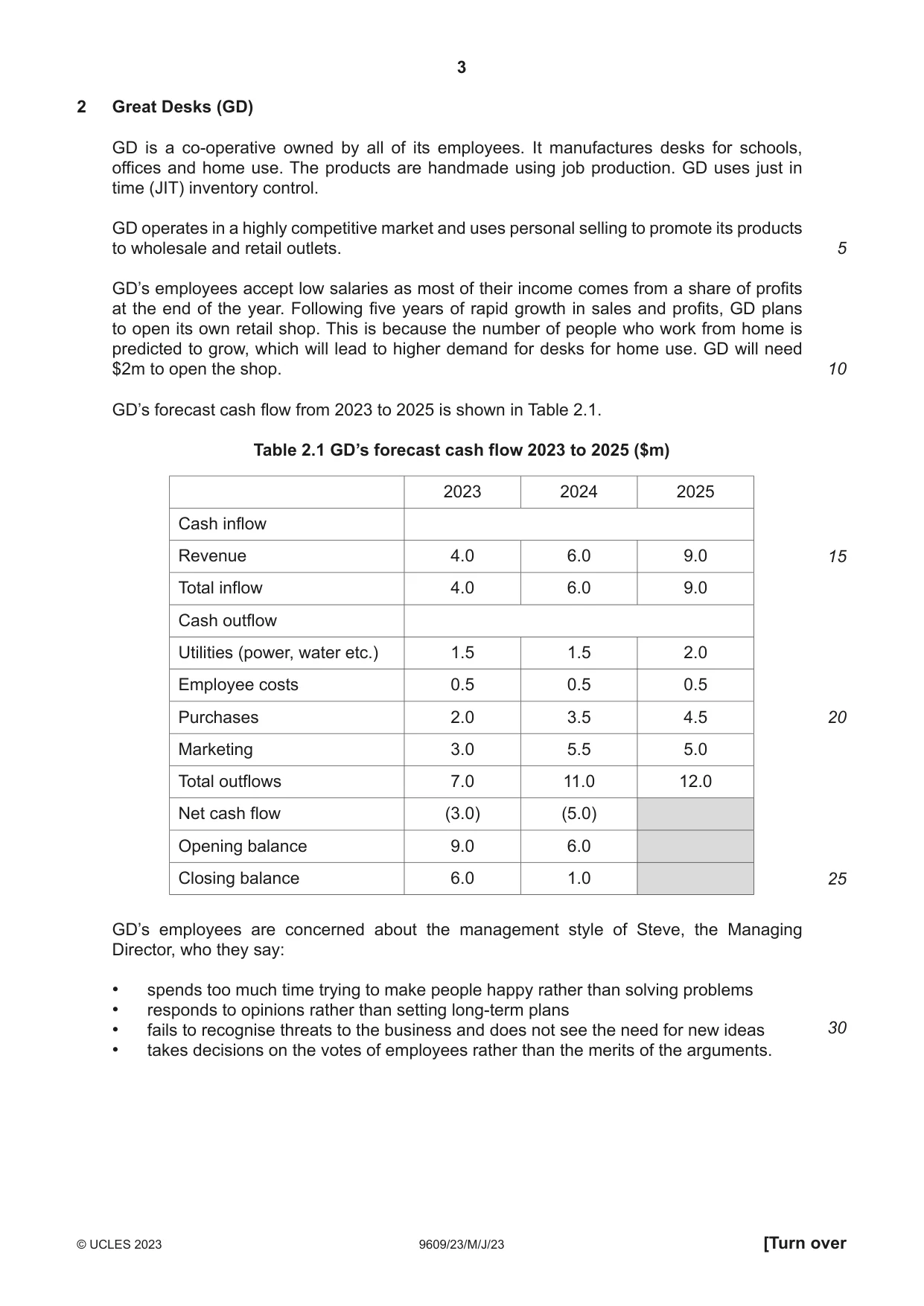
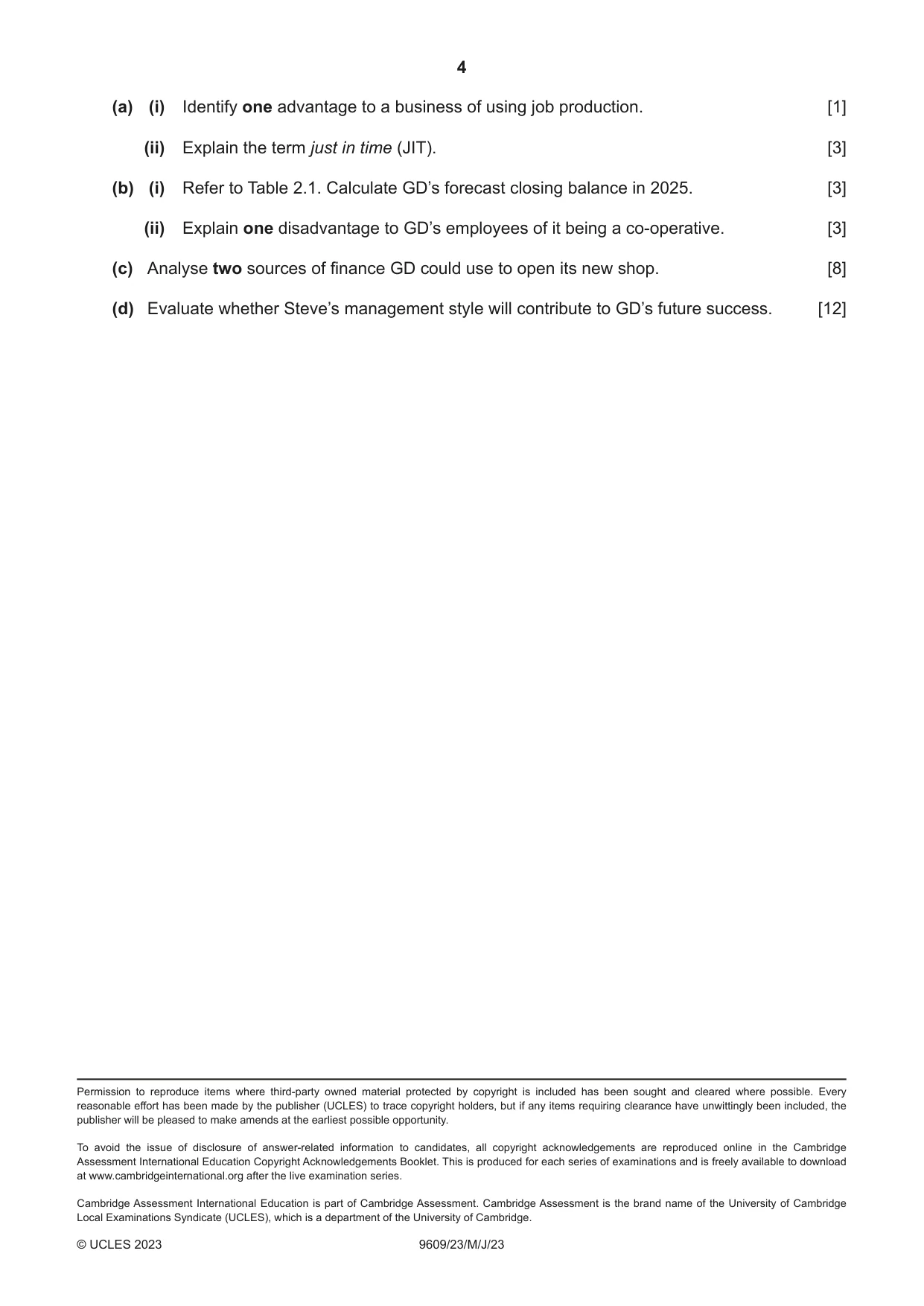
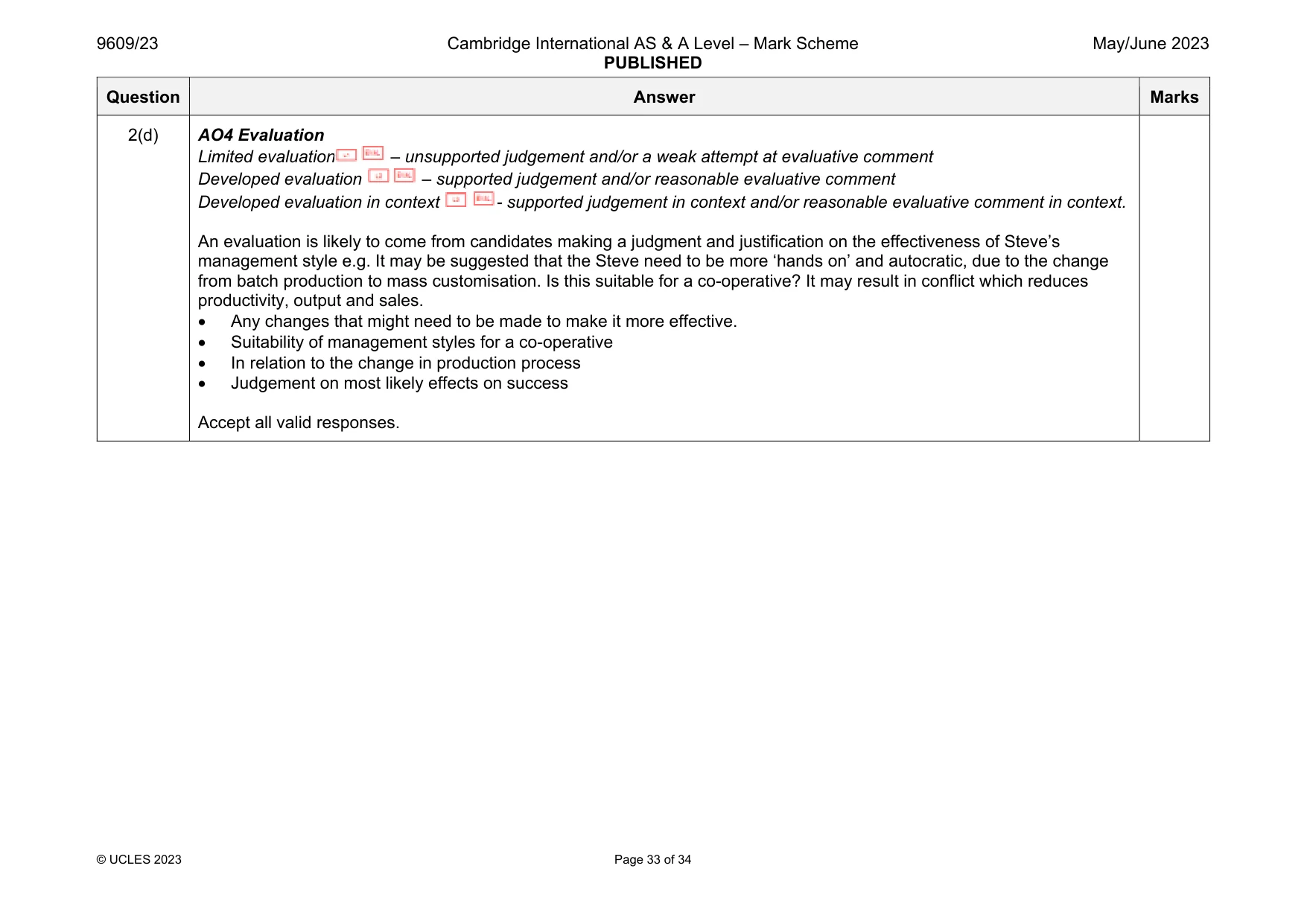
2 Great Desks (GD) GD is a co-operative owned by all of its employees. It manufactures desks for schools, offices and home use. The products are handmade using job production. GD uses just in time (JIT) inventory control. GD operates in a highly competitive market and uses personal selling to promote its products to wholesale and retail outlets. 5 GD’s employees accept low salaries as most of their income comes from a share of profits at the end of the year. Following five years of rapid growth in sales and profits, GD plans to open its own retail shop. This is because the number of people who work from home is predicted to grow, which will lead to higher demand for desks for home use. GD will need $2m to open the shop. 10 GD’s forecast cash flow from 2023 to 2025 is shown in Table 2.1. Table 2.1 GD’s forecast cash flow 2023 to 2025 ($m) 2023 2024 2025 Cash inflow Revenue 4.0 6.0 9.0 15 Total inflow 4.0 6.0 9.0 Cash outflow Utilities (power, water etc.) 1.5 1.5 2.0 Employee costs 0.5 0.5 0.5 Purchases 2.0 3.5 4.5 20 Marketing 3.0 5.5 5.0 Total outflows 7.0 11.0 12.0 Net cash flow (3.0) (5.0) Opening balance 9.0 6.0 Closing balance 6.0 1.0 25 GD’s employees are concerned about the management style of Steve, the Managing Director, who they say: • spends too much time trying to make people happy rather than solving problems • responds to opinions rather than setting long-term plans • fails to recognise threats to the business and does not see the need for new ideas 30 • takes decisions on the votes of employees rather than the merits of the arguments. (a) (i) Identify one advantage to a business of using job production. [1] (ii) Explain the term just in time (JIT). [3] (b) (i) Refer to Table 2.1. Calculate GD’s forecast closing balance in 2025. [3] (ii) Explain one disadvantage to GD’s employees of it being a co-operative. [3] (c) Analyse two sources of finance GD could use to open its new shop. [8] (d) Evaluate whether Steve’s management style will contribute to GD’s future success. [12]
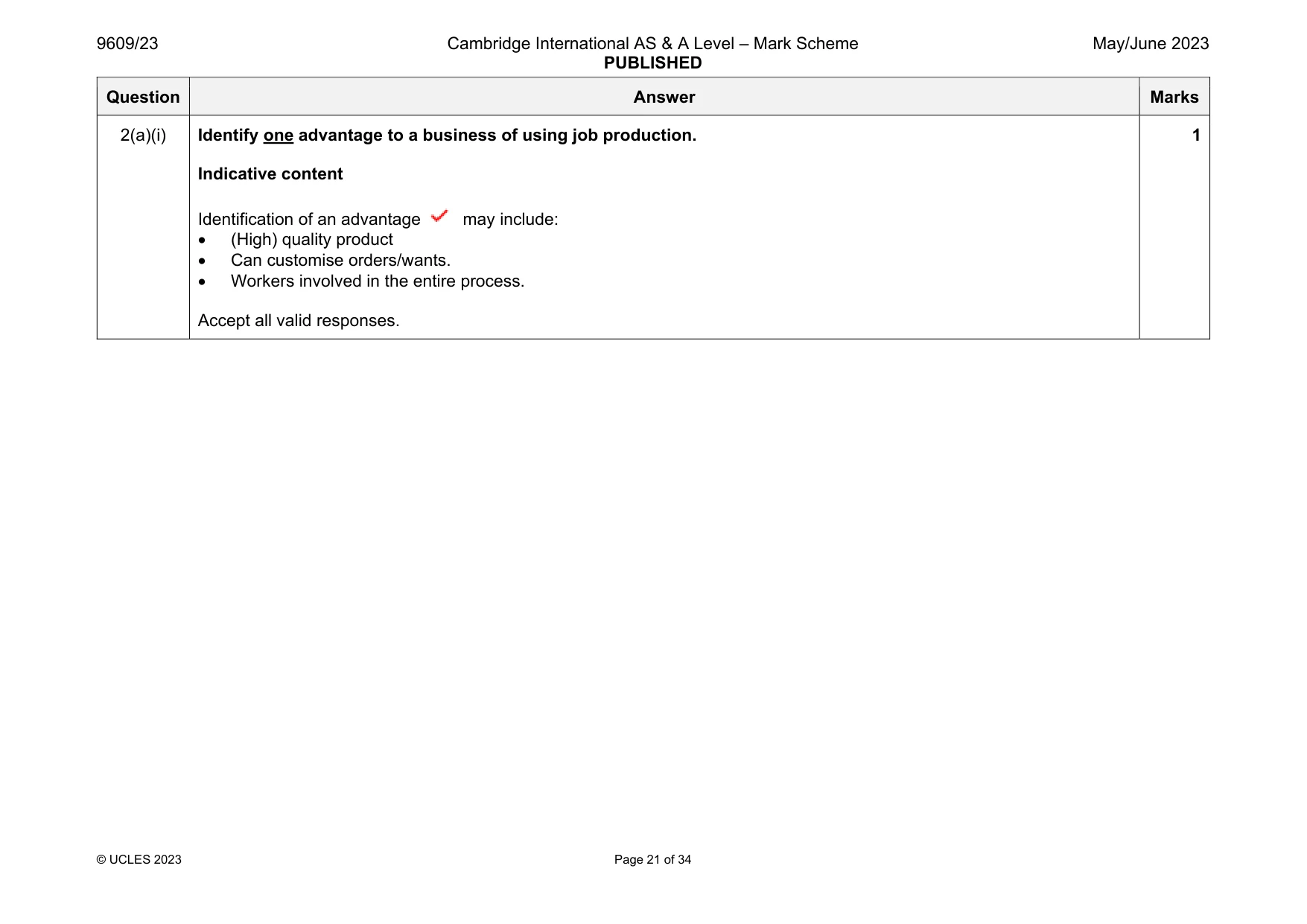
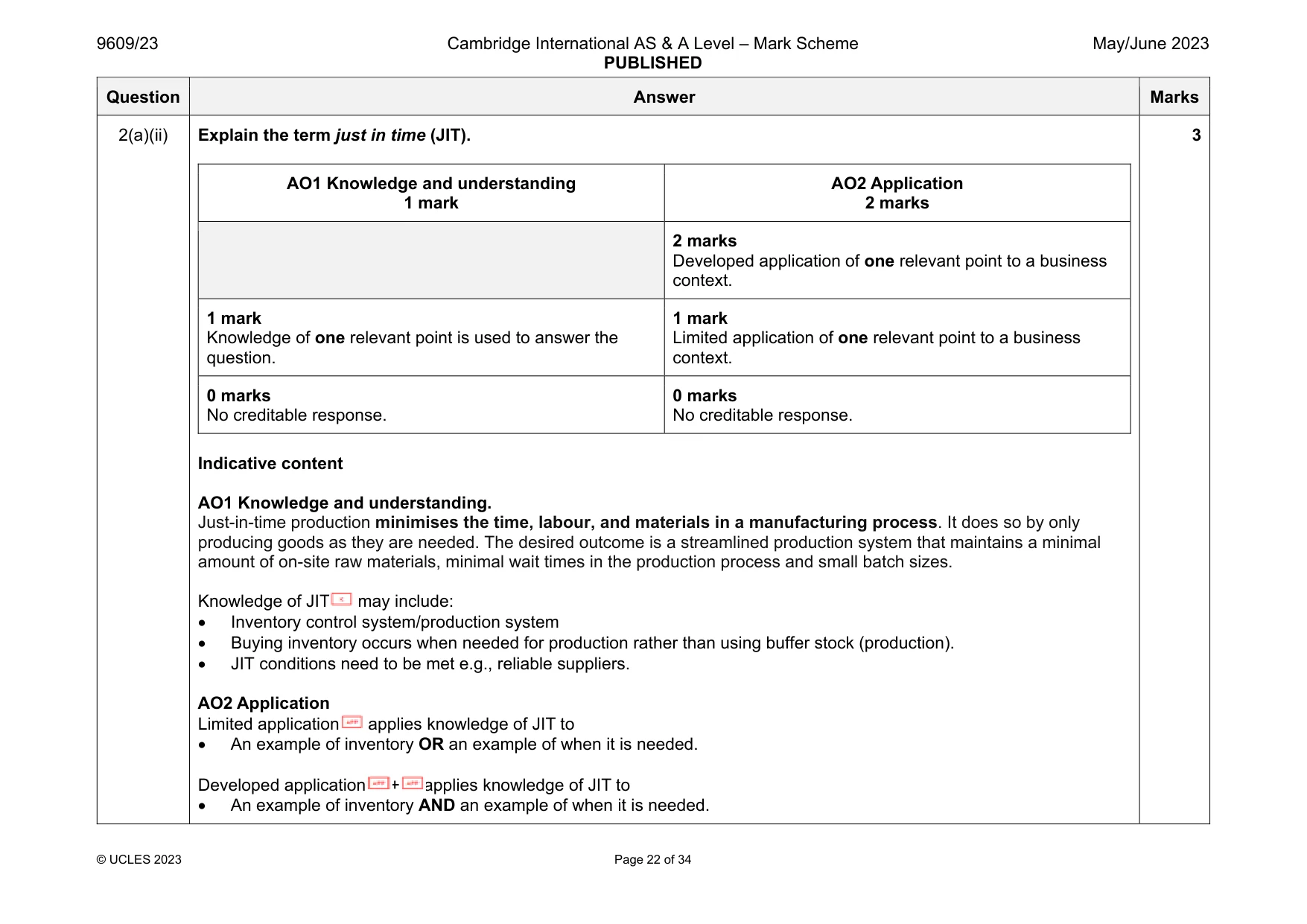
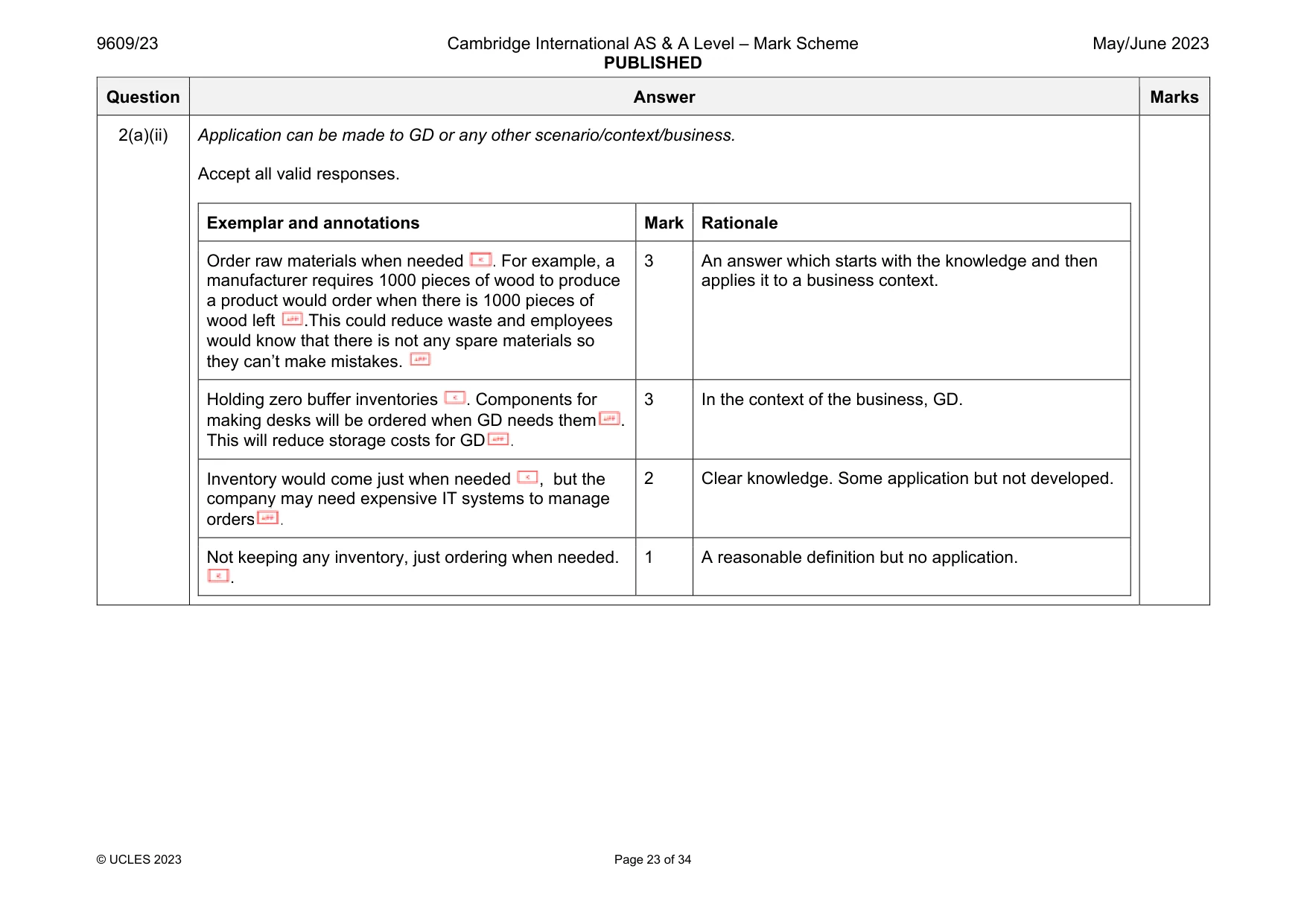
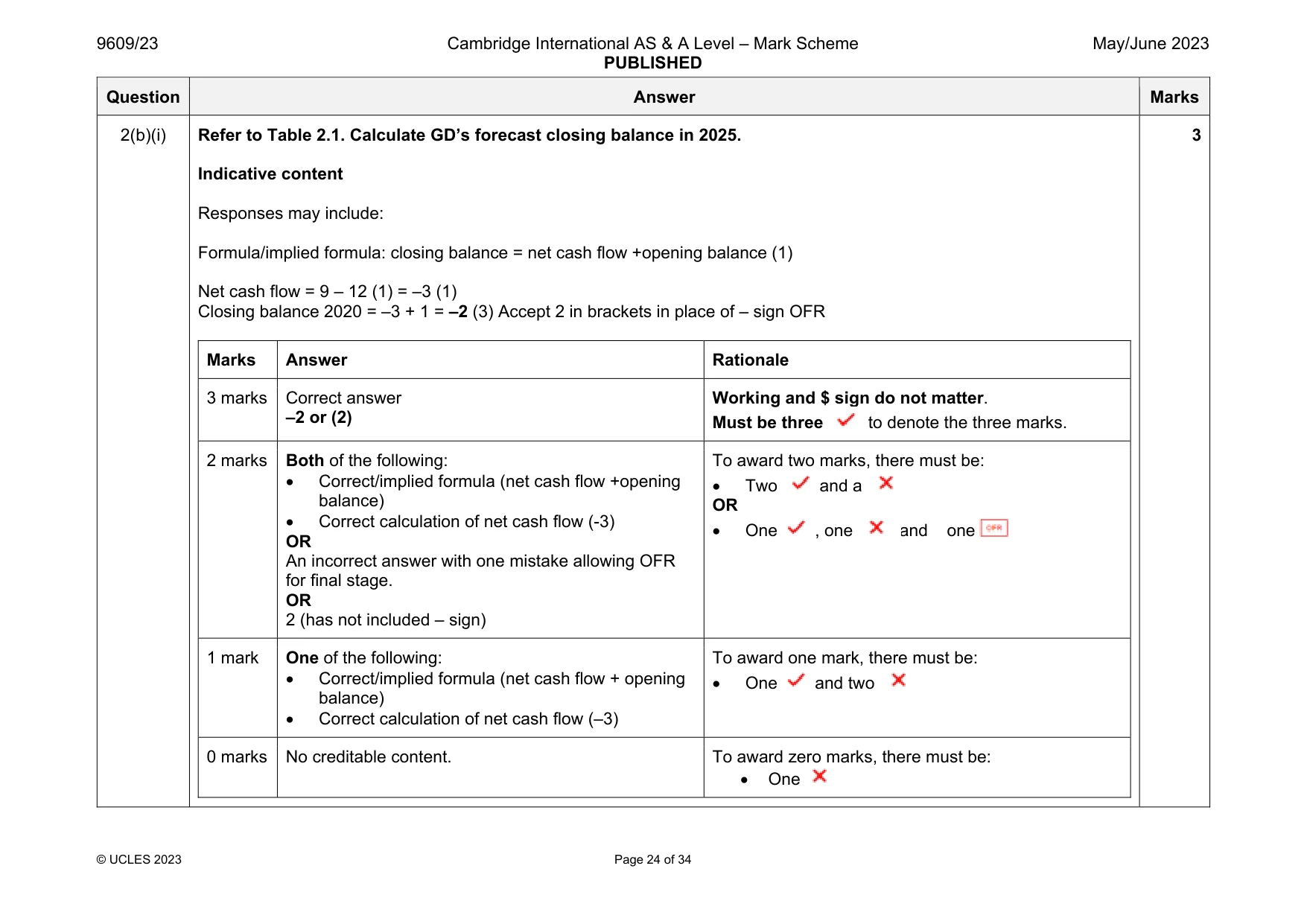
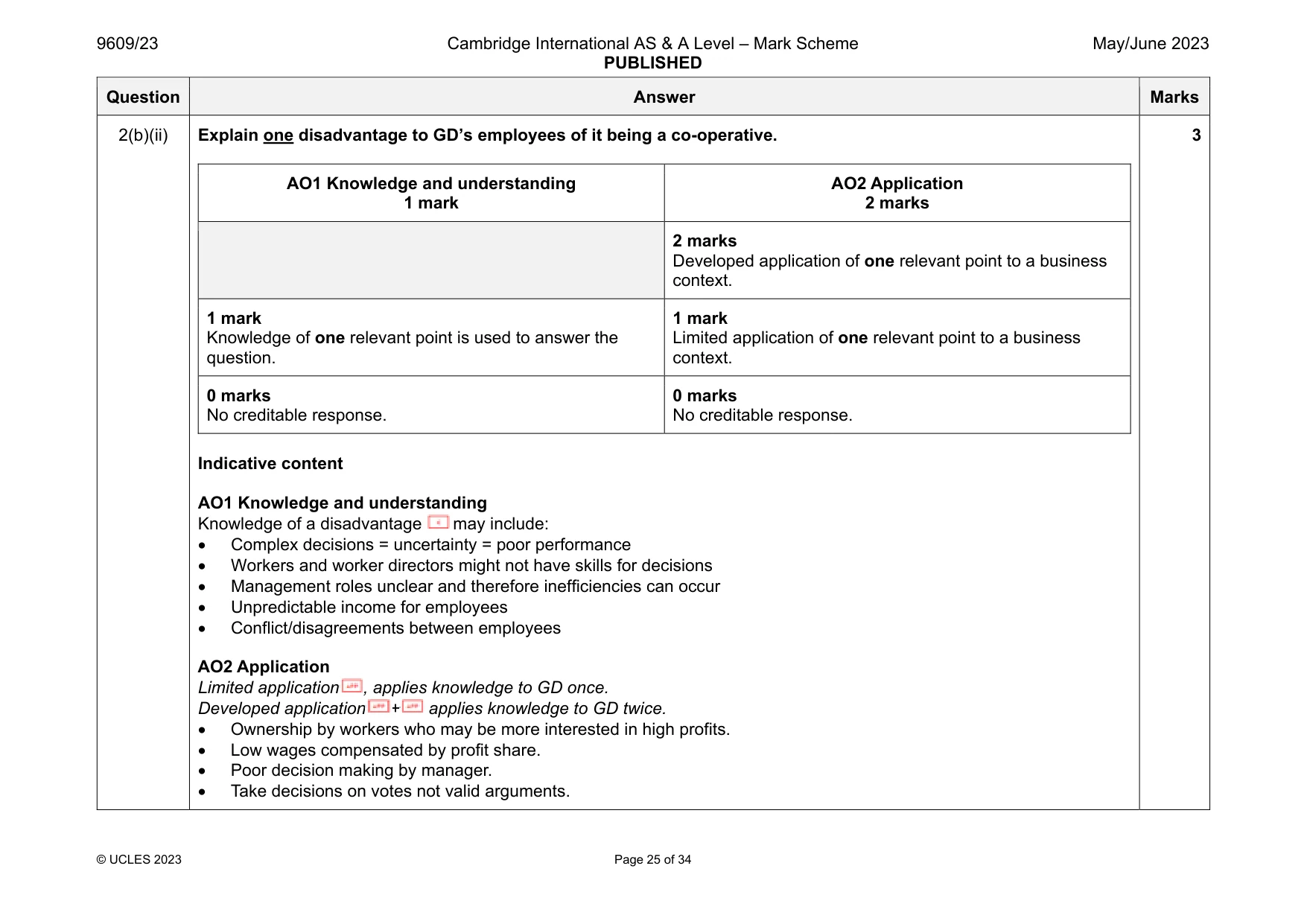
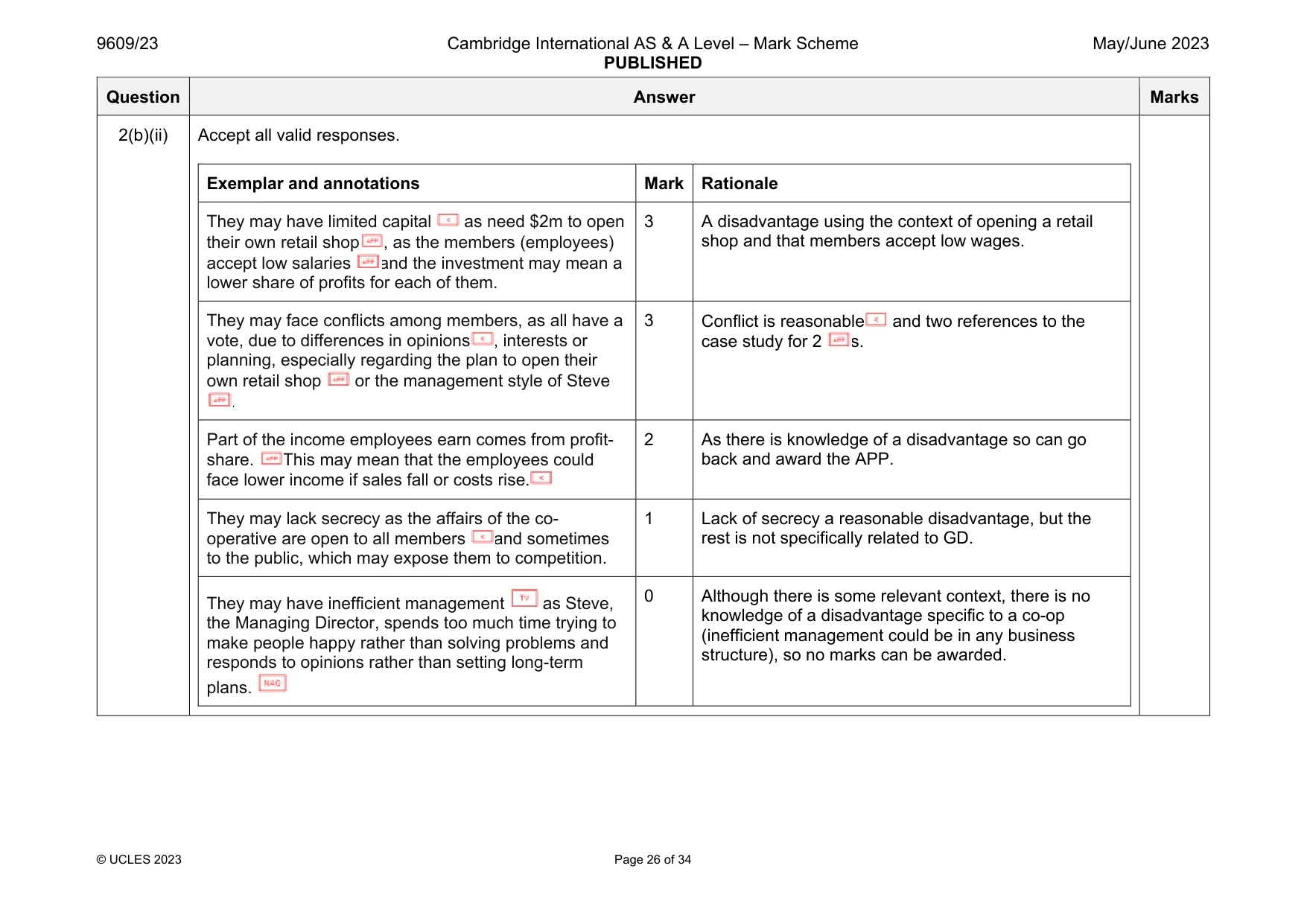
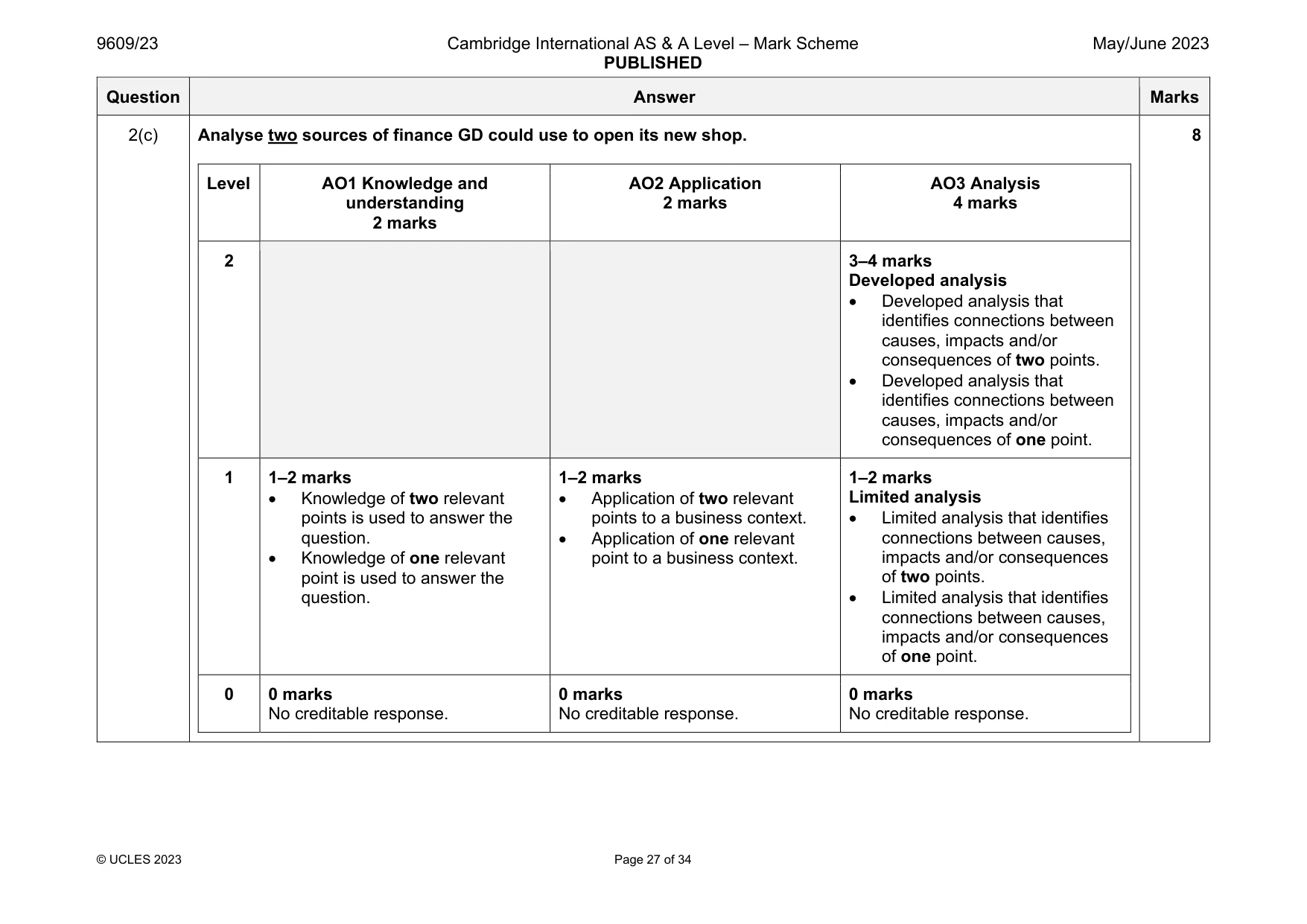
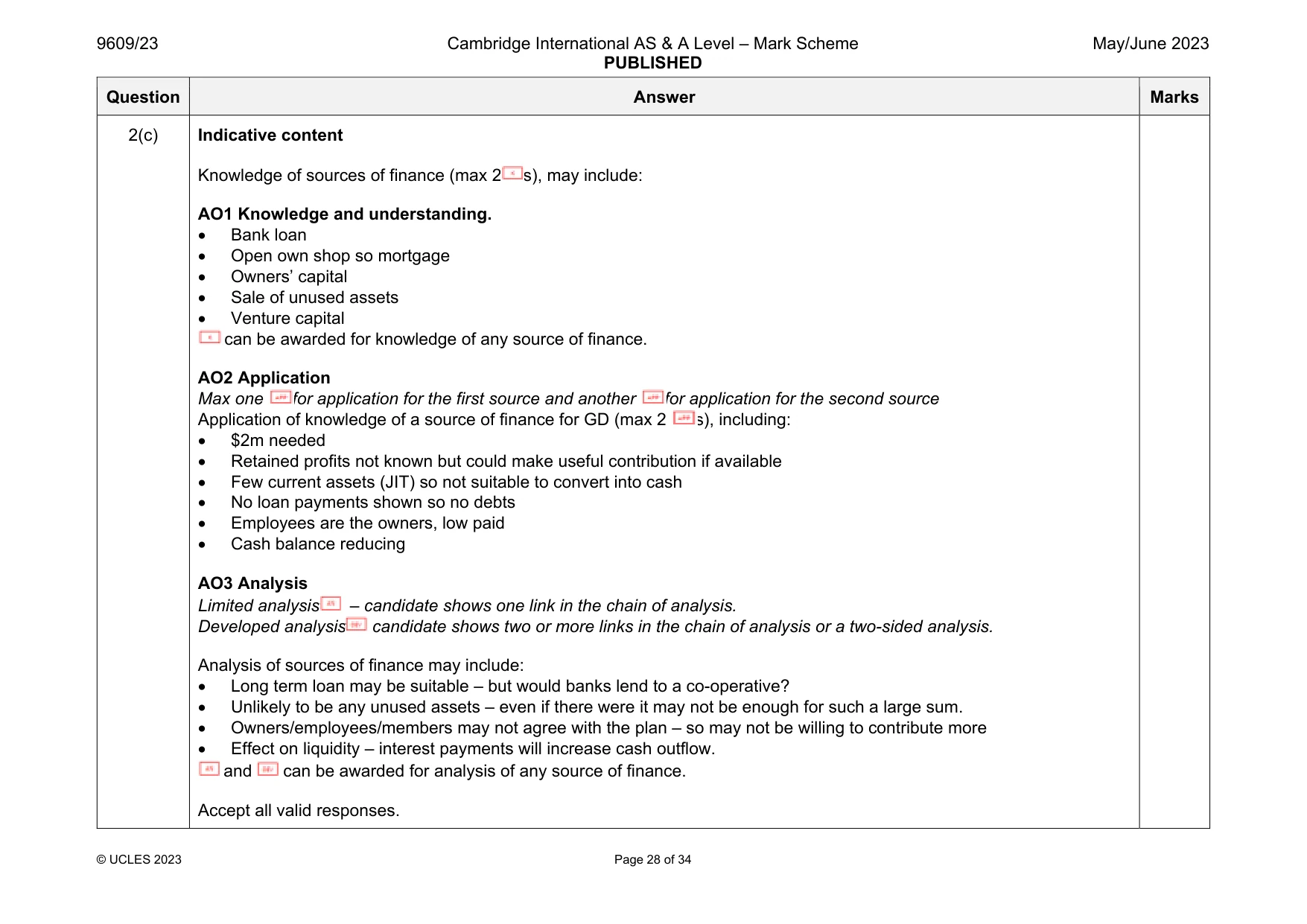
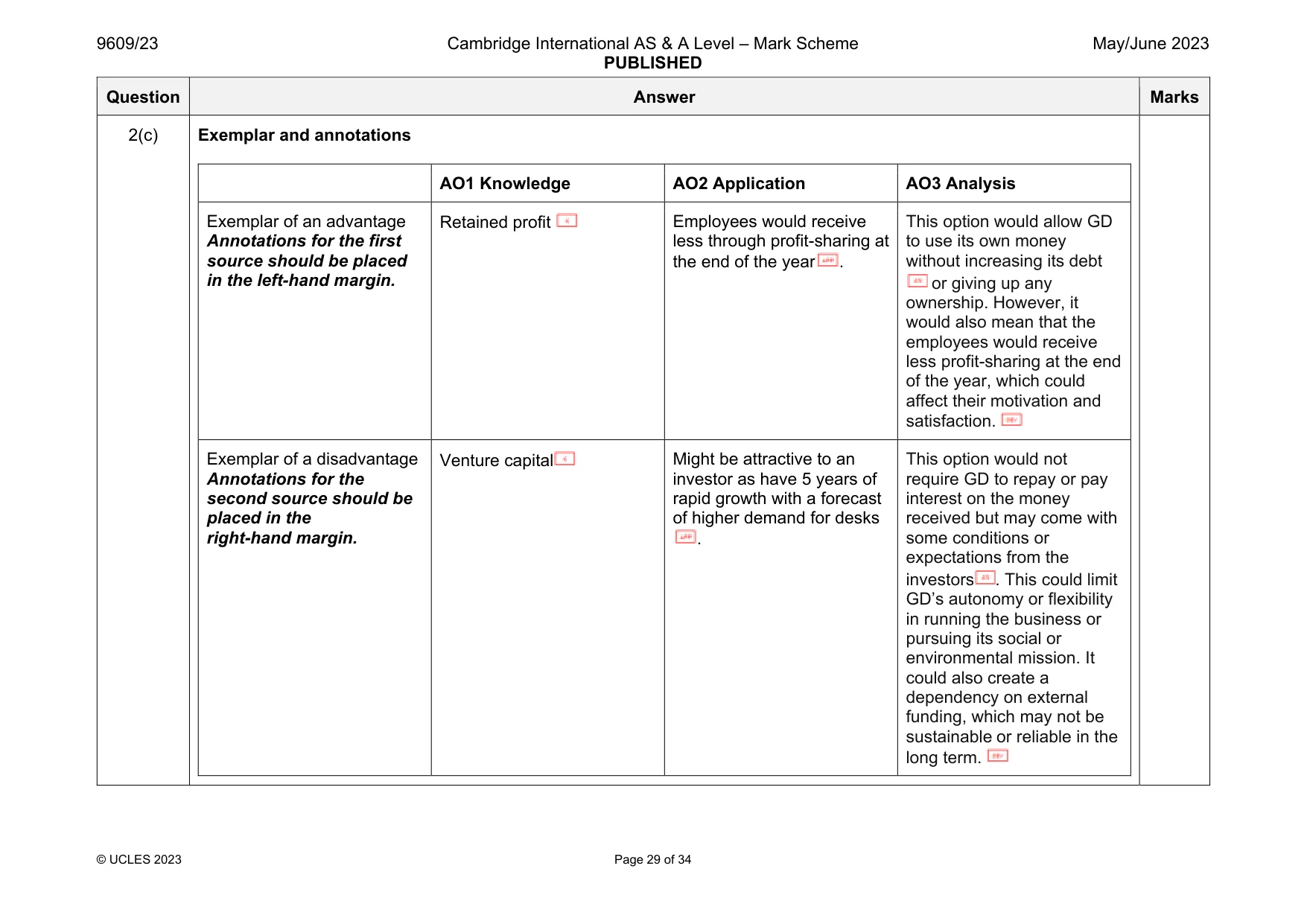
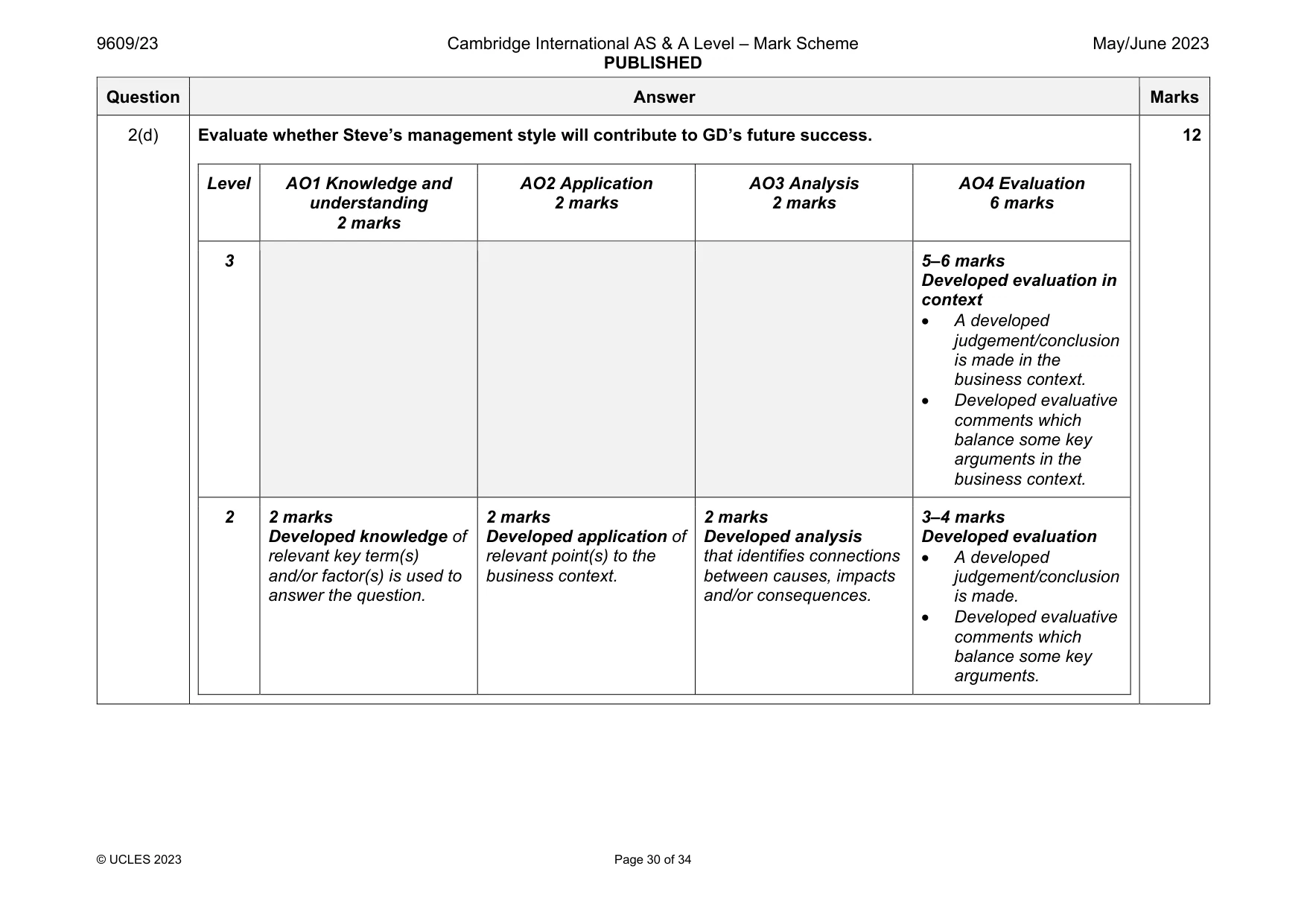
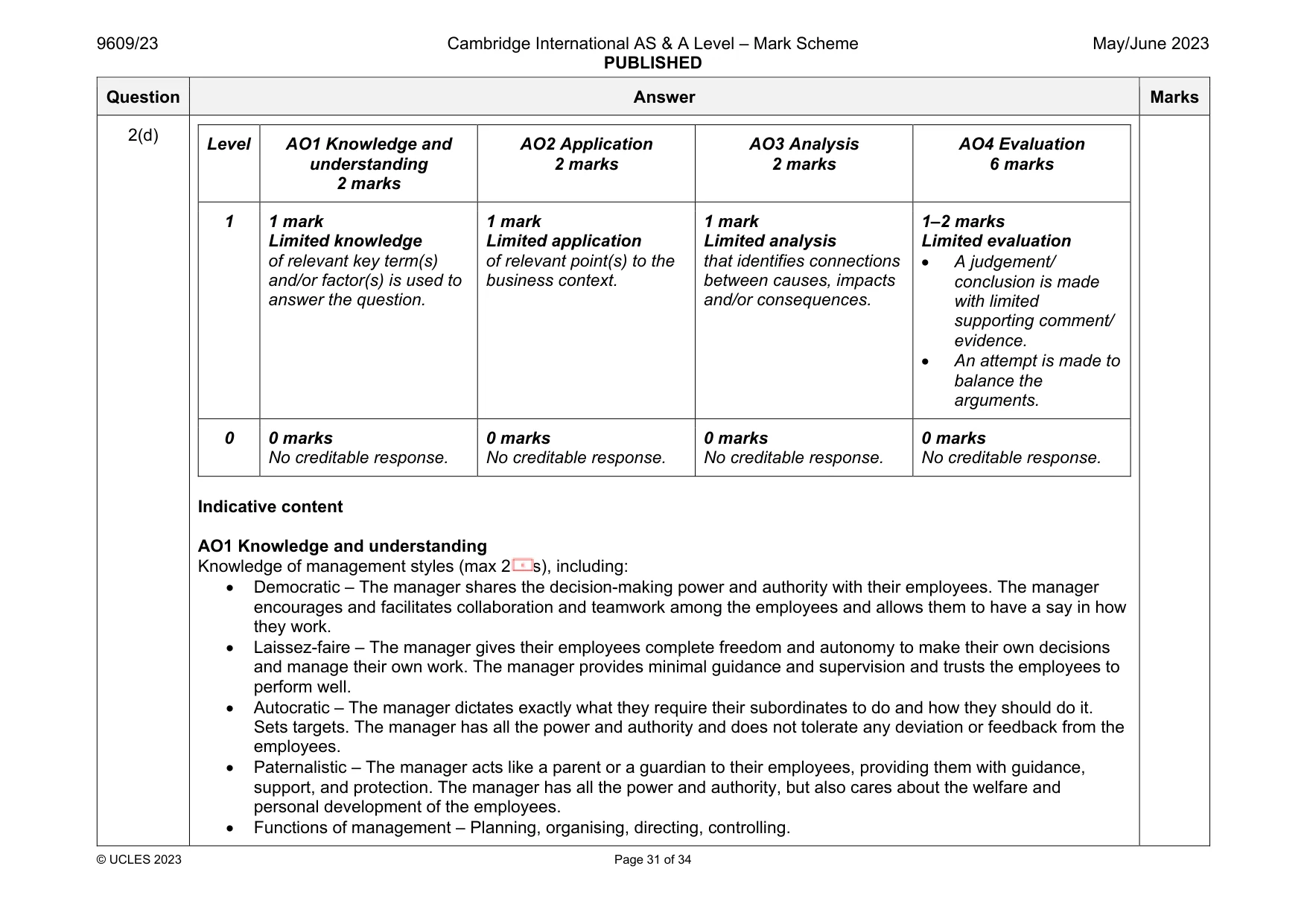
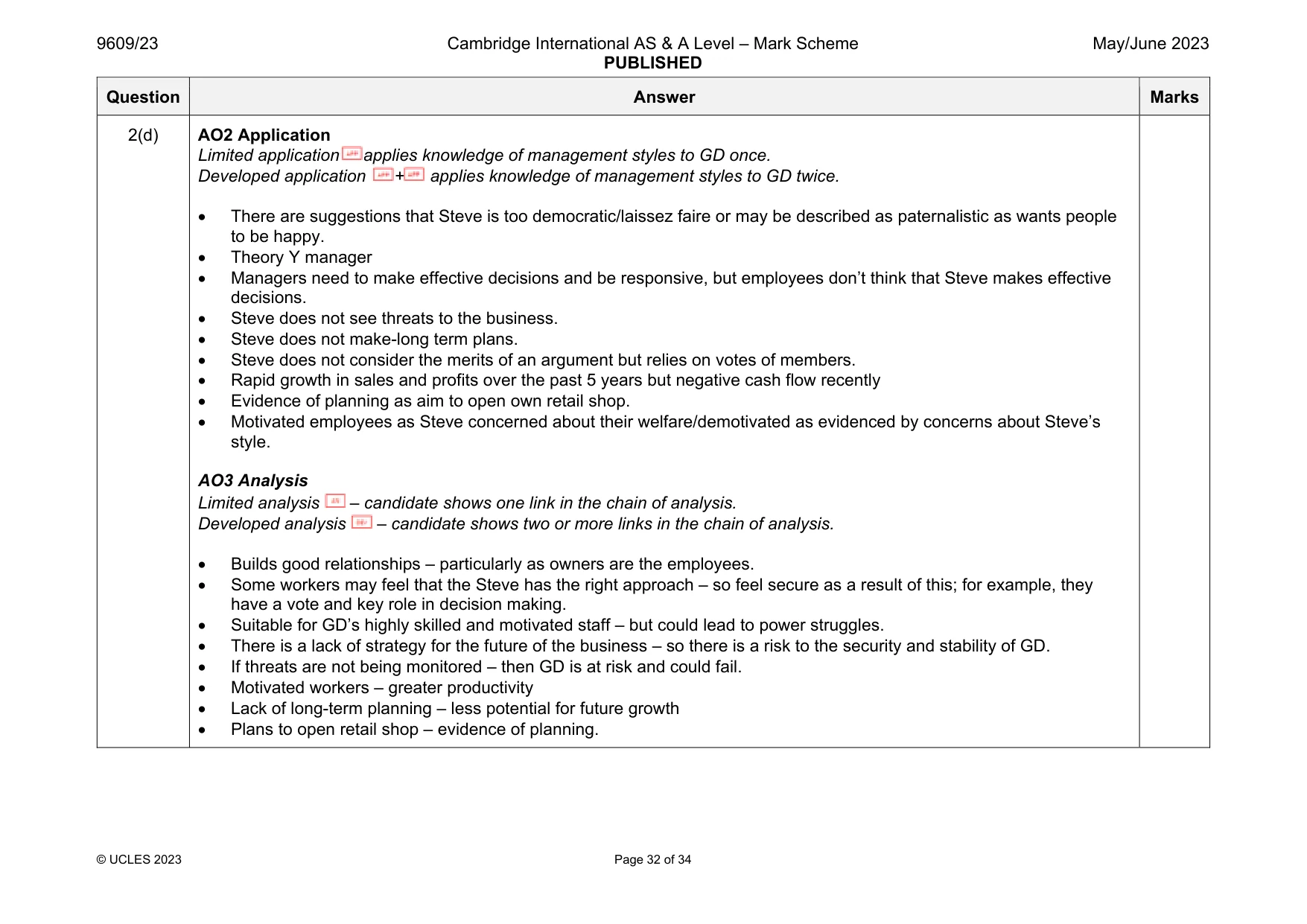
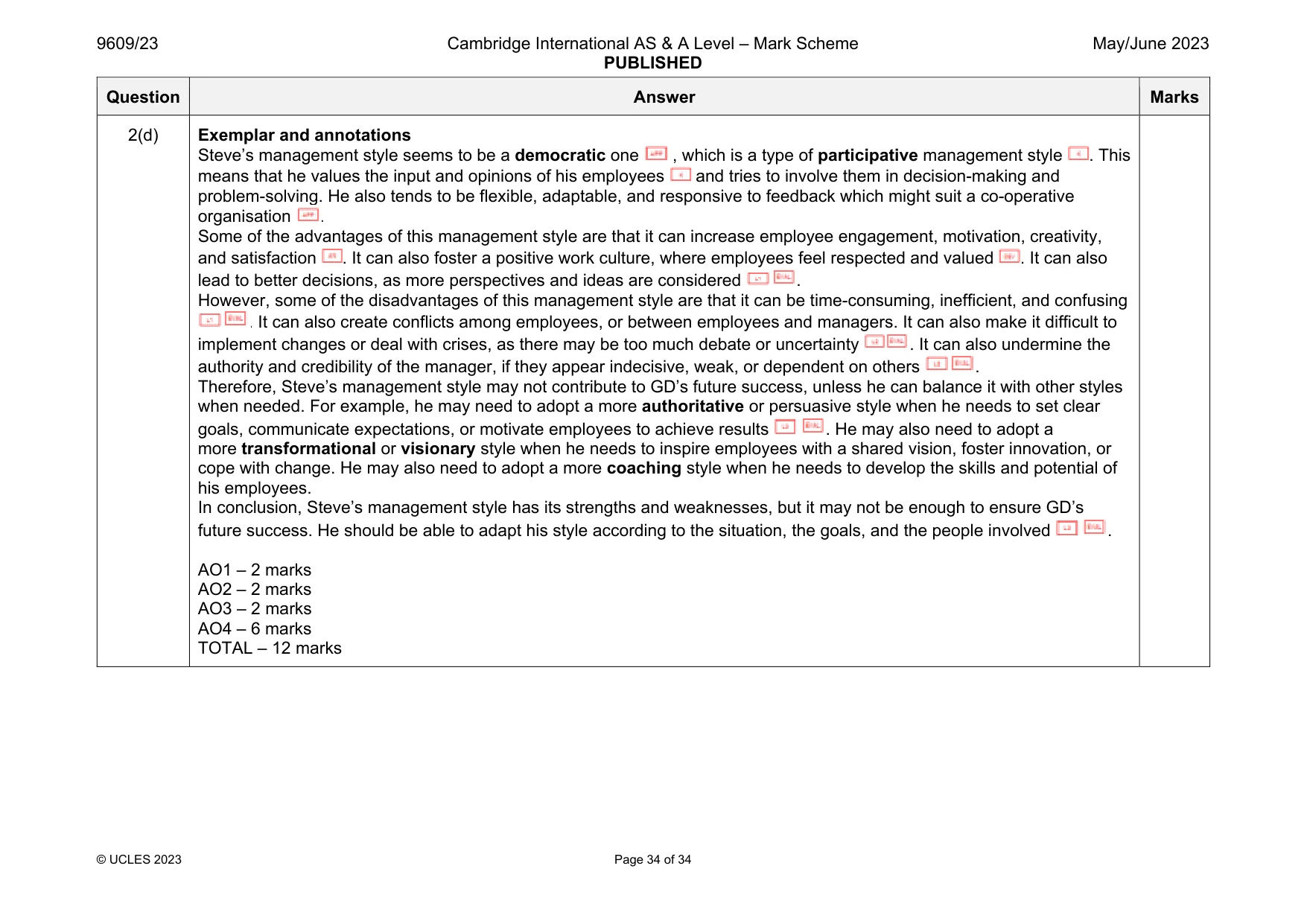
Mark scheme: 2(a)(i) Identify one advantage to a business of using job production. Indicative content Identification of an advantage may include: (High) quality product Can customise orders/wants. Workers involved in the entire process. Accept all valid responses. 1 Question Answer Marks 2(a)(ii) Explain the term just in time (JIT). AO1 Knowledge and understanding 1 mark AO2 Application 2 marks 2 marks Developed application of one relevant point to a business context. 1 mark Knowledge of one relevant point is used to answer the question. 1 mark Limited application of one relevant point to a business context. 0 marks No creditable response. 0 marks No creditable response. Indicative content AO1 Knowledge and understanding. Just-in-time production minimises the time, labour, and materials in a manufacturing process. It does so by only producing goods as they are needed. The desired outcome is a streamlined production system that maintains a minimal amount of on-site raw materials, minimal wait times in the production process and small batch sizes. Knowledge of JIT may include: Inventory control system/production system Buying inventory occurs when needed for production rather than using buffer stock (production). JIT conditions need to be met e.g., reliable suppliers. AO2 Application Limited application applies knowledge of JIT to An example of inventory OR an example of when it is needed. Developed application + applies knowledge of JIT to An example of inventory AND an example of when it is needed. 3 Question Answer Marks 2(a)(ii) Application can be made to GD or any other scenario/context/business. Accept all valid responses. Exemplar and annotations Mark Rationale Order raw materials when needed . For example, a manufacturer requires 1000 pieces of wood to produce a product would order when there is 1000 pieces of wood left .This could reduce waste and employees would know that there is not any spare materials so they can’t make mistakes. 3 An answer which starts with the knowledge and then applies it to a business context. Holding zero buffer inventories . Components for making desks will be ordered when GD needs them . This will reduce storage costs for GD . 3 In the context of the business, GD. Inventory would come just when needed , but the company may need expensive IT systems to manage orders . 2 Clear knowledge. Some application but not developed. Not keeping any inventory, just ordering when needed. . 1 A reasonable definition but no application. Question Answer Marks 2(b)(i) Refer to Table 2.1. Calculate GD’s forecast closing balance in 2025. Indicative content Responses may include: Formula/implied formula: closing balance = net cash flow +opening balance (1) Net cash flow = 9 – 12 (1) = –3 (1) Closing balance 2020 = –3 + 1 = –2 (3) Accept 2 in brackets in place of – sign OFR Marks Answer Rationale 3 marks Correct answer –2 or (2) Working and $ sign do not matter. Must be three to denote the three marks. 2 marks Both of the following: Correct/implied formula (net cash flow +opening balance) Correct calculation of net cash flow (-3) OR An incorrect answer with one mistake allowing OFR for final stage. OR 2 (has not included – sign) To award two marks, there must be: Two and a OR One , one and one 1 mark One of the following: Correct/implied formula (net cash flow + opening balance) Correct calculation of net cash flow (–3) To award one mark, there must be: One and two 0 marks No creditable content. To award zero marks, there must be: One 3 Question Answer Marks 2(b)(ii) Explain one disadvantage to GD’s employees of it being a co-operative. AO1 Knowledge and understanding 1 mark AO2 Application 2 marks 2 marks Developed application of one relevant point to a business context. 1 mark Knowledge of one relevant point is used to answer the question. 1 mark Limited application of one relevant point to a business context. 0 marks No creditable response. 0 marks No creditable response. Indicative content AO1 Knowledge and understanding Knowledge of a disadvantage may include: Complex decisions = uncertainty = poor performance Workers and worker directors might not have skills for decisions Management roles unclear and therefore inefficiencies can occur Unpredictable income for employees Conflict/disagreements between employees AO2 Application Limited application , applies knowledge to GD once. Developed application + applies knowledge to GD twice. Ownership by workers who may be more interested in high profits. Low wages compensated by profit share. Poor decision making by manager. Take decisions on votes not valid arguments. 3 Question Answer Marks 2(b)(ii) Accept all valid responses. Exemplar and annotations Mark Rationale They may have limited capital as need $2m to open their own retail shop , as the members (employees) accept low salaries and the investment may mean a lower share of profits for each of them. 3 A disadvantage using the context of opening a retail shop and that members accept low wages. They may face conflicts among members, as all have a vote, due to differences in opinions , interests or planning, especially regarding the plan to open their own retail shop or the management style of Steve . 3 Conflict is reasonable and two references to the case study for 2 s. Part of the income employees earn comes from profit- share. This may mean that the employees could face lower income if sales fall or costs rise. 2 As there is knowledge of a disadvantage so can go back and award the APP. They may lack secrecy as the affairs of the co- operative are open to all members and sometimes to the public, which may expose them to competition. 1 Lack of secrecy a reasonable disadvantage, but the rest is not specifically related to GD. They may have inefficient management as Steve, the Managing Director, spends too much time trying to make people happy rather than solving problems and responds to opinions rather than setting long-term plans. 0 Although there is some relevant context, there is no knowledge of a disadvantage specific to a co-op (inefficient management could be in any business structure), so no marks can be awarded. Question Answer Marks 2(c) Analyse two sources of finance GD could use to open its new shop. Level AO1 Knowledge and understanding 2 marks AO2 Application 2 marks AO3 Analysis 4 marks 2 3–4 marks Developed analysis Developed analysis that identifies connections between causes, impacts and/or consequences of two points. Developed analysis that identifies connections between causes, impacts and/or consequences of one point. 1 1–2 marks Knowledge of two relevant points is used to answer the question. Knowledge of one relevant point is used to answer the question. 1–2 marks Application of two relevant points to a business context. Application of one relevant point to a business context. 1–2 marks Limited analysis Limited analysis that identifies connections between causes, impacts and/or consequences of two points. Limited analysis that identifies connections between causes, impacts and/or consequences of one point. 0 0 marks No creditable response. 0 marks No creditable response. 0 marks No creditable response. 8 Question Answer Marks 2(c) Indicative content Knowledge of sources of finance (max 2 s), may include: AO1 Knowledge and understanding. Bank loan Open own shop so mortgage Owners’ capital Sale of unused assets Venture capital can be awarded for knowledge of any source of finance. AO2 Application Max one for application for the first source and another for application for the second source Application of knowledge of a source of finance for GD (max 2 s), including: $2m needed Retained profits not known but could make useful contribution if available Few current assets (JIT) so not suitable to convert into cash No loan payments shown so no debts Employees are the owners, low paid Cash balance reducing AO3 Analysis Limited analysis – candidate shows one link in the chain of analysis. Developed analysis candidate shows two or more links in the chain of analysis or a two-sided analysis. Analysis of sources of finance may include: Long term loan may be suitable – but would banks lend to a co-operative? Unlikely to be any unused assets – even if there were it may not be enough for such a large sum. Owners/employees/members may not agree with the plan – so may not be willing to contribute more Effect on liquidity – interest payments will increase cash outflow. and can be awarded for analysis of any source of finance. Accept all valid responses. Question Answer Marks 2(c) Exemplar and annotations AO1 Knowledge AO2 Application AO3 Analysis Exemplar of an advantage Annotations for the first source should be placed in the left-hand margin. Retained profit Employees would receive less through profit-sharing at the end of the year . This option would allow GD to use its own money without increasing its debt or giving up any ownership. However, it would also mean that the employees would receive less profit-sharing at the end of the year, which could affect their motivation and satisfaction. Exemplar of a disadvantage Annotations for the second source should be placed in the right-hand margin. Venture capital Might be attractive to an investor as have 5 years of rapid growth with a forecast of higher demand for desks . This option would not require GD to repay or pay interest on the money received but may come with some conditions or expectations from the investors . This could limit GD’s autonomy or flexibility in running the business or pursuing its social or environmental mission. It could also create a dependency on external funding, which may not be sustainable or reliable in the long term. Question Answer Marks 2(d) Evaluate whether Steve’s management style will contribute to GD’s future success. Level AO1 Knowledge and understanding 2 marks AO2 Application 2 marks AO3 Analysis 2 marks AO4 Evaluation 6 marks 3 5–6 marks Developed evaluation in context A developed judgement/conclusion is made in the business context. Developed evaluative comments which balance some key arguments in the business context. 2 2 marks Developed knowledge of relevant key term(s) and/or factor(s) is used to answer the question. 2 marks Developed application of relevant point(s) to the business context. 2 marks Developed analysis that identifies connections between causes, impacts and/or consequences. 3–4 marks Developed evaluation A developed judgement/conclusion is made. Developed evaluative comments which balance some key arguments. 12 Question Answer Marks 2(d) Level AO1 Knowledge and understanding 2 marks AO2 Application 2 marks AO3 Analysis 2 marks AO4 Evaluation 6 marks 1 1 mark Limited knowledge of relevant key term(s) and/or factor(s) is used to answer the question. 1 mark Limited application of relevant point(s) to the business context. 1 mark Limited analysis that identifies connections between causes, impacts and/or consequences. 1–2 marks Limited evaluation A judgement/ conclusion is made with limited supporting comment/ evidence. An attempt is made to balance the arguments. 0 0 marks No creditable response. 0 marks No creditable response. 0 marks No creditable response. 0 marks No creditable response. Indicative content AO1 Knowledge and understanding Knowledge of management styles (max 2 s), including: Democratic – The manager shares the decision-making power and authority with their employees. The manager encourages and facilitates collaboration and teamwork among the employees and allows them to have a say in how they work. Laissez-faire – The manager gives their employees complete freedom and autonomy to make their own decisions and manage their own work. The manager provides minimal guidance and supervision and trusts the employees to perform well. Autocratic – The manager dictates exactly what they require their subordinates to do and how they should do it. Sets targets. The manager has all the power and authority and does not tolerate any deviation or feedback from the employees. Paternalistic – The manager acts like a parent or a guardian to their employees, providing them with guidance, support, and protection. The manager has all the power and authority, but also cares about the welfare and personal development of the employees. Functions of management – Planning, organising, directing, controlling. Question Answer Marks 2(d) AO2 Application Limited application applies knowledge of management styles to GD once. Developed application + applies knowledge of management styles to GD twice. There are suggestions that Steve is too democratic/laissez faire or may be described as paternalistic as wants people to be happy. Theory Y manager Managers need to make effective decisions and be responsive, but employees don’t think that Steve makes effective decisions. Steve does not see threats to the business. Steve does not make-long term plans. Steve does not consider the merits of an argument but relies on votes of members. Rapid growth in sales and profits over the past 5 years but negative cash flow recently Evidence of planning as aim to open own retail shop. Motivated employees as Steve concerned about their welfare/demotivated as evidenced by concerns about Steve’s style. AO3 Analysis Limited analysis – candidate shows one link in the chain of analysis. Developed analysis – candidate shows two or more links in the chain of analysis. Builds good relationships – particularly as owners are the employees. Some workers may feel that the Steve has the right approach – so feel secure as a result of this; for example, they have a vote and key role in decision making. Suitable for GD’s highly skilled and motivated staff – but could lead to power struggles. There is a lack of strategy for the future of the business – so there is a risk to the security and stability of GD. If threats are not being monitored – then GD is at risk and could fail. Motivated workers – greater productivity Lack of long-term planning – less potential for future growth Plans to open retail shop – evidence of planning. Question Answer Marks 2(d) AO4 Evaluation Limited evaluation – unsupported judgement and/or a weak attempt at evaluative comment Developed evaluation – supported judgement and/or reasonable evaluative comment Developed evaluation in context - supported judgement in context and/or reasonable evaluative comment in context. An evaluation is likely to come from candidates making a judgment and justification on the effectiveness of Steve’s management style e.g. It may be suggested that the Steve need to be more ‘hands on’ and autocratic, due to the change from batch production to mass customisation. Is this suitable for a co-operative? It may result in conflict which reduces productivity, output and sales. Any changes that might need to be made to make it more effective. Suitability of management styles for a co-operative In relation to the change in production process Judgement on most likely effects on success Accept all valid responses. Question Answer Marks 2(d) Exemplar and annotations Steve’s management style seems to be a democratic one , which is a type of participative management style . This means that he values the input and opinions of his employees and tries to involve them in decision-making and problem-solving. He also tends to be flexible, adaptable, and responsive to feedback which might suit a co-operative organisation . Some of the advantages of this management style are that it can increase employee engagement, motivation, creativity, and satisfaction . It can also foster a positive work culture, where employees feel respected and valued . It can also lead to better decisions, as more perspectives and ideas are considered . However, some of the disadvantages of this management style are that it can be time-consuming, inefficient, and confusing . It can also create conflicts among employees, or between employees and managers. It can also make it difficult to implement changes or deal with crises, as there may be too much debate or uncertainty . It can also undermine the authority and credibility of the manager, if they appear indecisive, weak, or dependent on others . Therefore, Steve’s management style may not contribute to GD’s future success, unless he can balance it with other styles when needed. For example, he may need to adopt a more authoritative or persuasive style when he needs to set clear goals, communicate expectations, or motivate employees to achieve results . He may also need to adopt a more transformational or visionary style when he needs to inspire employees with a shared vision, foster innovation, or cope with change. He may also need to adopt a more coaching style when he needs to develop the skills and potential of his employees. In conclusion, Steve’s management style has its strengths and weaknesses, but it may not be enough to ensure GD’s future success. He should be able to adapt his style according to the situation, the goals, and the people involved . AO1 – 2 marks AO2 – 2 marks AO3 – 2 marks AO4 – 6 marks TOTAL – 12 marks
What was in this paper
The subtopics covered by these 2 questions, and how many questions each got. Open one in a new tab to see every Cambridge question on it.
What you needed in this session
Cambridge’s own grade thresholds for 2023 May/June, Paper 2 · Variant 3. A higher threshold means an easier paper — the bar moves with how the cohort did.