Cambridge IGCSE Thai - First Language 0518 — 2011 May/June Paper 2 · Variant 1
0518/21/M/J/11 · 60 marks · ≈68 min
The question paper and its mark scheme, free to read here and free to download. This is Cambridge’s own paper, exactly as it was sat.
Question paper8 pages
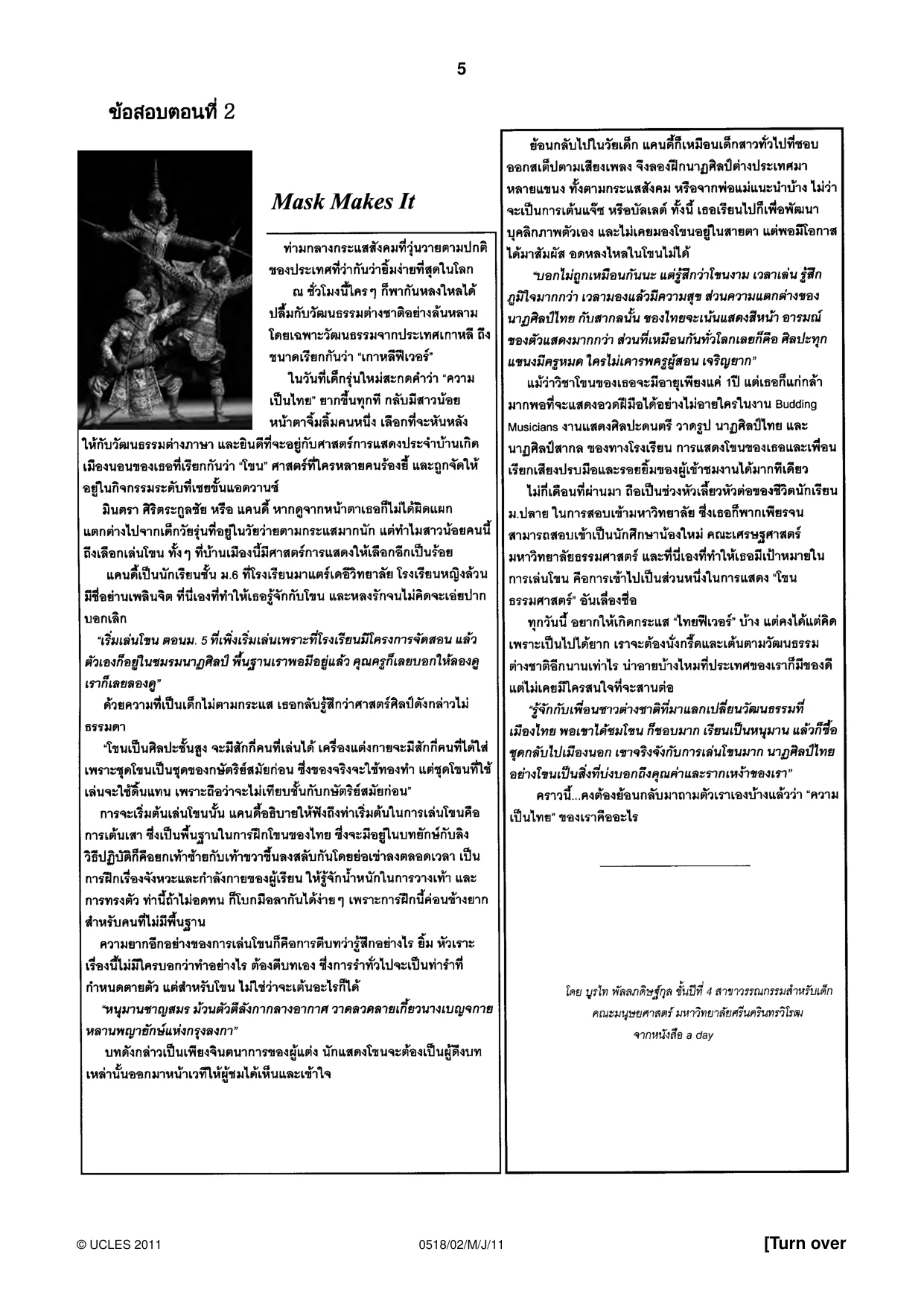
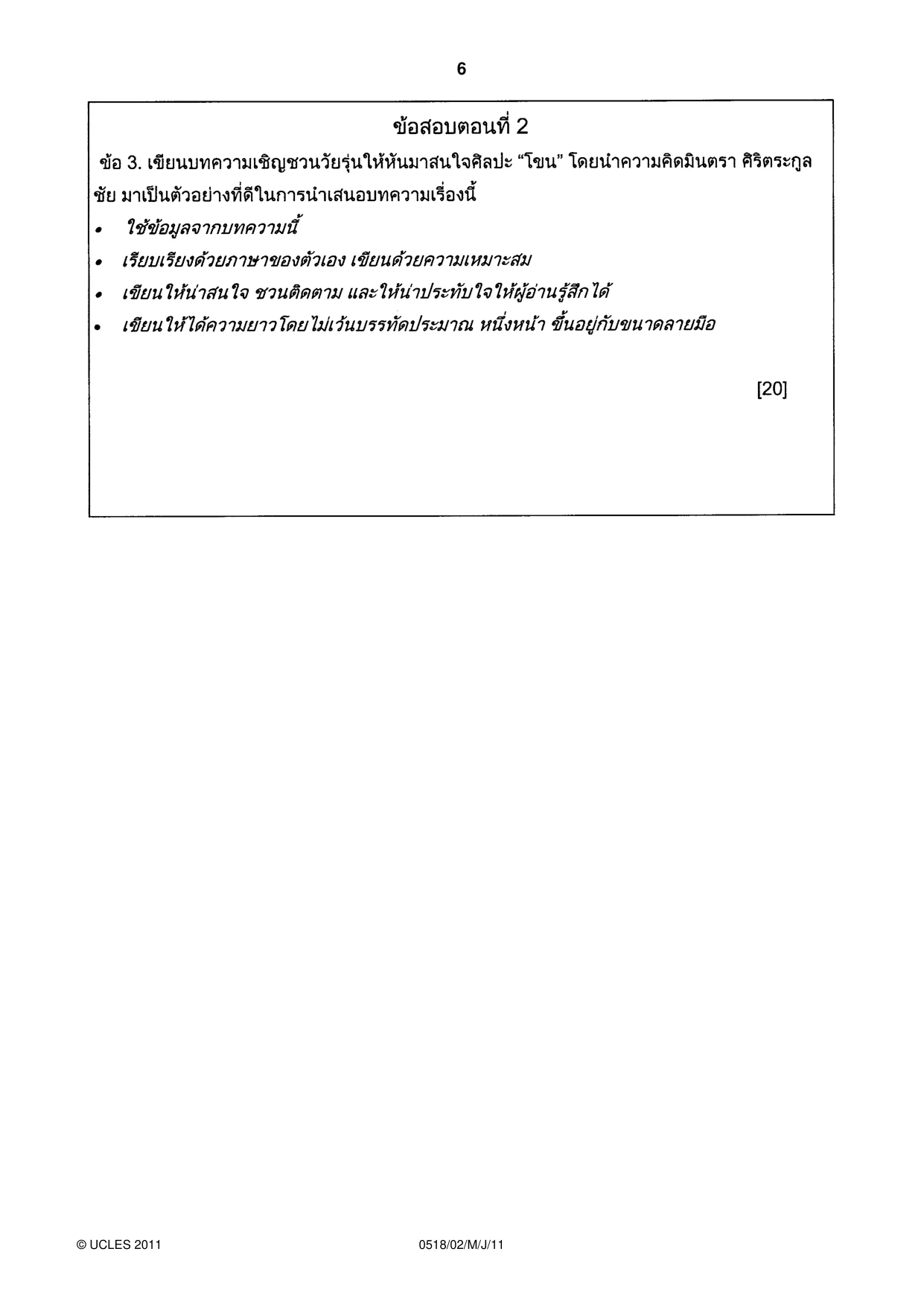

Mark scheme6 pages
Answers below. Sit the paper first if you are practising.
Paper as text
Question paper, page 1
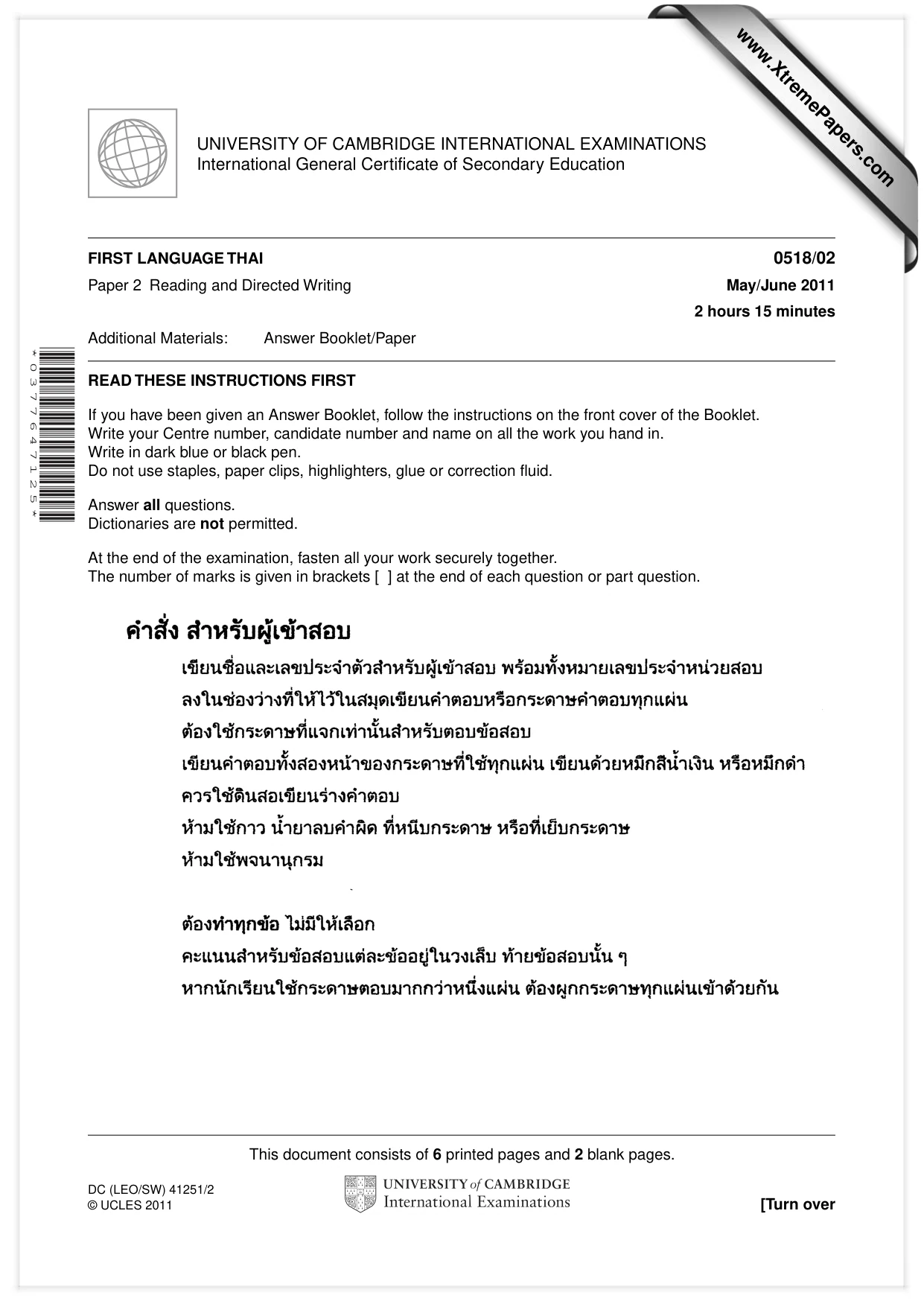
* 0 3 7 7 6 4 7 1 2 5 * This document consists of 6 printed pages and 2 blank pages. DC (LEO/SW) 41251/2 © UCLES 2011 [Turn over UNIVERSITY OF CAMBRIDGE INTERNATIONAL EXAMINATIONS International General Certificate of Secondary Education READ THESE INSTRUCTIONS FIRST If you have been given an Answer Booklet, follow the instructions on the front cover of the Booklet. Write your Centre number, candidate number and name on all the work you hand in. Write in dark blue or black pen. Do not use staples, paper clips, highlighters, glue or correction fluid. Answer all questions. Dictionaries are not permitted. At the end of the examination, fasten all your work securely together. The number of marks is given in brackets [ ] at the end of each question or part question. FIRST LANGUAGE THAI 0518/02 Paper 2 Reading and Directed Writing May/June 2011 2 hours 15 minutes Additional Materials: Answer Booklet/Paper www.XtremePapers.com
Question paper, page 2
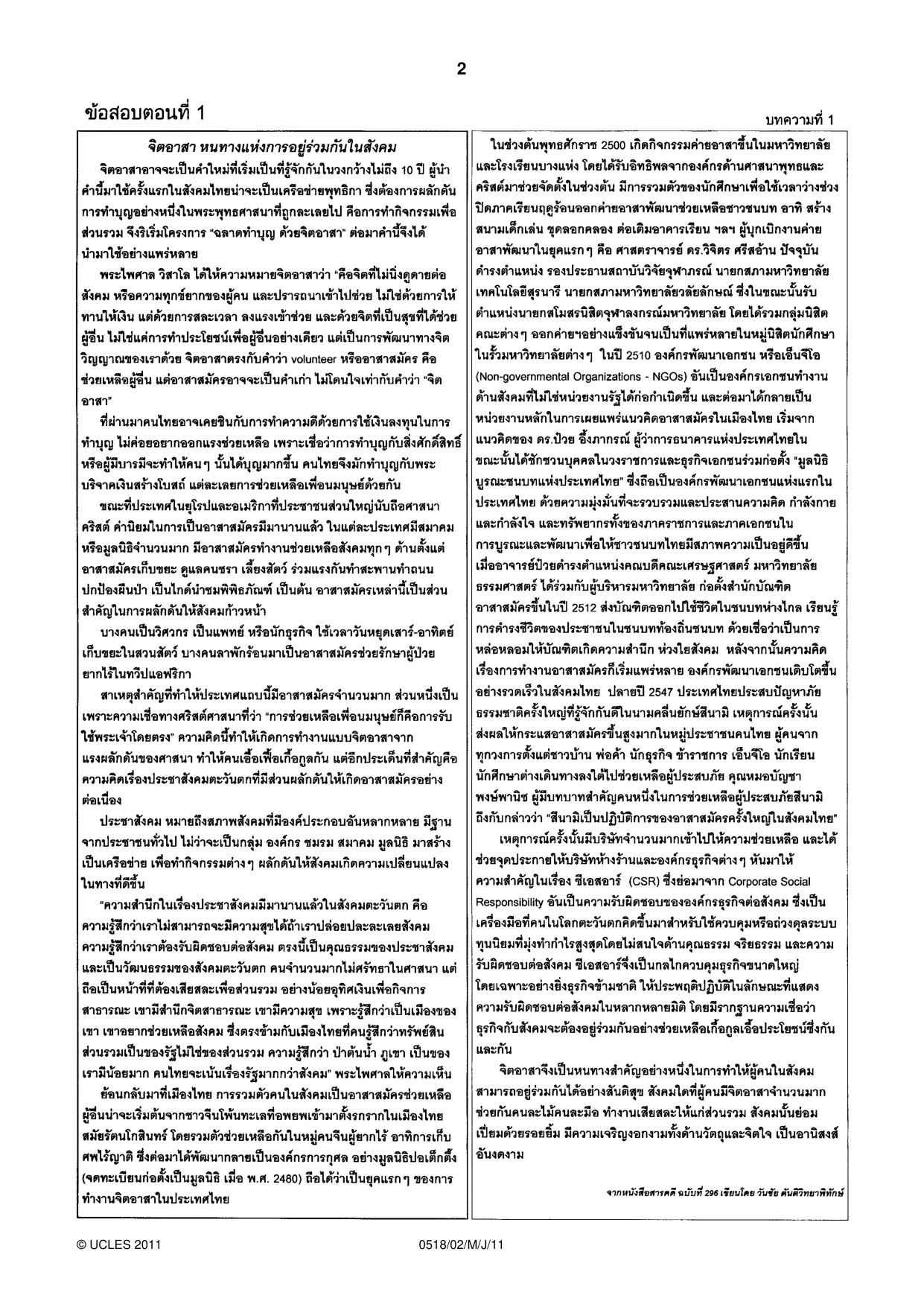
dadaunaun 1 unerwt 1 Snare wunnuninsagsauniuludan Famrmeaailuduingauiunganiulusanhelaide 107 gin shilnldadusnludeaslnniraciuniedieynam defaansnadnay maryqatrenidslunseynsmisuiignaciagll Aanisvitanssaite dausan SeGGatasans “ammninyry MaeAnaray siaanAilaell thinliarhauniuers wazlwma Fanta litvaniamneianranrh “Aatanaiisgeesia fran viaanamndennvasday uarisisowuihides Lildmaansl muliiau widemsaaciie acusetrdoe uardetaniuqanlados au ildudmevnuselenitadaued aes uslunisviaumnsta FqyQnayasis we InararassiuArh volunteer VIaarAaIAT Aa domuaagau usirmadiasorsaxiludauriy lailaulaviniudi aa ana" Finanaulvenraassuiumshanaadaams dauasyulunrs ynyry Lidasarineanusedamuaa nsrededimanyyiuasdnnand viagitinsilaediiauy duldyqunniu aulneteinnyyiuns: wisratuahsluad usiasiasnsdnmaaunywsraeny auvihlszindluglsluacetnwhseatudaulughiuierrau Aled Anfeslumaiueraradiasiinwiuuds luudacderinaiiaanay Wayalid aun flawmaiasvinudanmaadeaayn 4 Musas aaraitaaiuve: quaauss auedas daausstuvhaewnnhaun Unilasfuth ulndiaaawRadcun Hucu araaiasusrithiudey aAqylumsnanmuliaenntranh unsawiluaaans Duunnd watingsiia Viaariungaand-arvind Mugeclusoudad unsauaniniawniduasaitasteinundis ennluviuantnn sung aqyinh alse naunuilitermadastuauien douniiaiy inozanafamantadauniin ‘madaeuaaaunyudiaanssy Vinseditnanse anaaaddtiiiamsvnuuuuaneransin usendnduredmran iawaadlatagaty udinussiaundayie anahatanlsandannnsSuanhidaundndulviinaraaiiacady faviies Usesndenn wanetsammndenaiiastusenaudunainuers fig sanisensuvialal lsidaifunga asdns aan aan yads satis (duaFathe ifaviifanssaine9 nandulidonaufinanlaeuulas umeitaitiu sanudimudanlendnntanuundludannstuan Ae anaganiunlinwnmmeianagaladisidaniavariandaay anafanduswasiulinvaudadian nssiduqusssmeslseadenn uariflutmusssmartennaziuan auduawnnlaiainstluman ust fadumhiiiteudasacHadausin adinanghiaguianans anersns wnididtingamersey wniianiga waeganiuiuilesneas tn urna indaeinadian densetatuilaslnenauganiminday sousaudlusasigldaacdausan anagand theinh gun dluves inihfassnn aulneaeuludasigannnddenw waelwmalianiaiu faundinniiiadlns masamaavludsniuarmadtasianae PnhseGaduensAubiunciaianenhandensinluiiedne ailagautndund lnesudadommaanulungautugenny avimaiu anliqna deriaanlawannnmmiuasdnsmsqaa adsyatauaidinis (Gsomziiiourianatuyadl ile w.a, 2480) faléinilugausn 4 vesnrs yaiowaneralulseinalne @UCLES 2011 Vusautuymsdnsas 2500 tinfianssaumeeretuluawvinende |uaclesiFaurreuvis Taslasuendwavinesdnsmumauiynsun: eGadndsedandludesdu imssomtawaninanwunaliiaariredas Tamedoungiavsanhaaninuniauaanosuun ain ae auUMinisu yaRananas siaanerAraiseu ias Hyniiinewuede ananvinutlugausn) fa craanaisd as.8ns AFadru daqiy snsaenuuue saclsze an uadequniasdl wenamawinends inaluladqeui? wenamawvinededednvel dlumustusy shumiswranalnasanaqwrasnsciawinenaa lneldsaangadan Anzeine] sandrerad wudsduaulufluniumelungiamindan Aufaauvinerdesiney Tull 2510 asdnaWannensy weasuata (Non-governmental Organizations - NGOs) duiuasAnstansurins shudaantlllimisneruiglsriaruindu uscsiawlénarenilu wmbenundnlumsaeunduuanarmnadiasludiedne Guan uurAmvas astlog Saninsel ddamssuriarsuvelssindlnelu anslulsdnauyanslusssramsuargeivandussurians “yads yravsuunudalsinalne’ dedaruacdnswanvansuuvisuantu dseinalne Masavaajsduvlersusauacdseauaniaa haeme uasihasle usennennsvevasmasaimsuazmavanduly maysnzuacwanutelinrasuunlneiiammanianiuagaay aarsisdiedsetumisanutansarugmans awiinende sssumand Ldauiugudwmsawiinende nanediinicuia aanradastulull 2512 datuAneantlatinlusuuninslna Gaug mamaMavanlsemaulusuuniasiusuun sadeduiums udaunanlitinfininaniidiin vasledaan udeeiniuaniia Geamahnuernaiasiiaunivens adnsiauvansudulaiu atrasasiluadealns ware) 2547 uazinalnedsvautiywnaie sssuT And luaiAsnhuMunanaudndaun’d mamsoiagey denalinseudarmnasiastugsinlunglsearsuaulns dausan ynamsdausitnatiy vada dingstia dss uate YinFeu thAnwihraiumvadlaludoamaaduesauda quunatiya nadie diumnndraquaunislumsduaedisvaudadund Satundred “Adu dimsvararnadasadlunludanalne" wamsdiagtuiutdnduawneilianadcenae ual doaqoaemeldusinmnshuuacesAnsgaiaeine 4 Wuasly anadiagluizas Gaaarg (CSR) Fatianrsin Corporate Social Responsibility SuUunviasullmdaunarasAnsgsiaviadaan Fauilu | nfasilafaululanneTunnfntuandmiuldaouqaviadamqascuy quilanijavininlegeqatagliauladiuqcsssy ausssa wazavi Fuflavaudadsan Fanerstaiunalnauqugsianwialug) Tnckawwatheisgafietuna Wilsenqaupimluanwnciiuans arwivanraudadsaslunainuareia lasing uansudan qofiafiutannsedacagsautuatnedanuaattagaseusslomideiu wasiiu FnaraSatunumadrayachnenislumebigauludeny munsnagiaiuldadwauaiqn Manlatigauianmarduaunn srofuauarliauasiia vienmdeaad vurdusan donaniuden Geadaesaetin facnausiqeannavaduiaquactals ueriaed Susasn sinmnistiomand ait 296 Toulay tute duminenivin’ 0518/02/M/J/11
Question paper, page 3
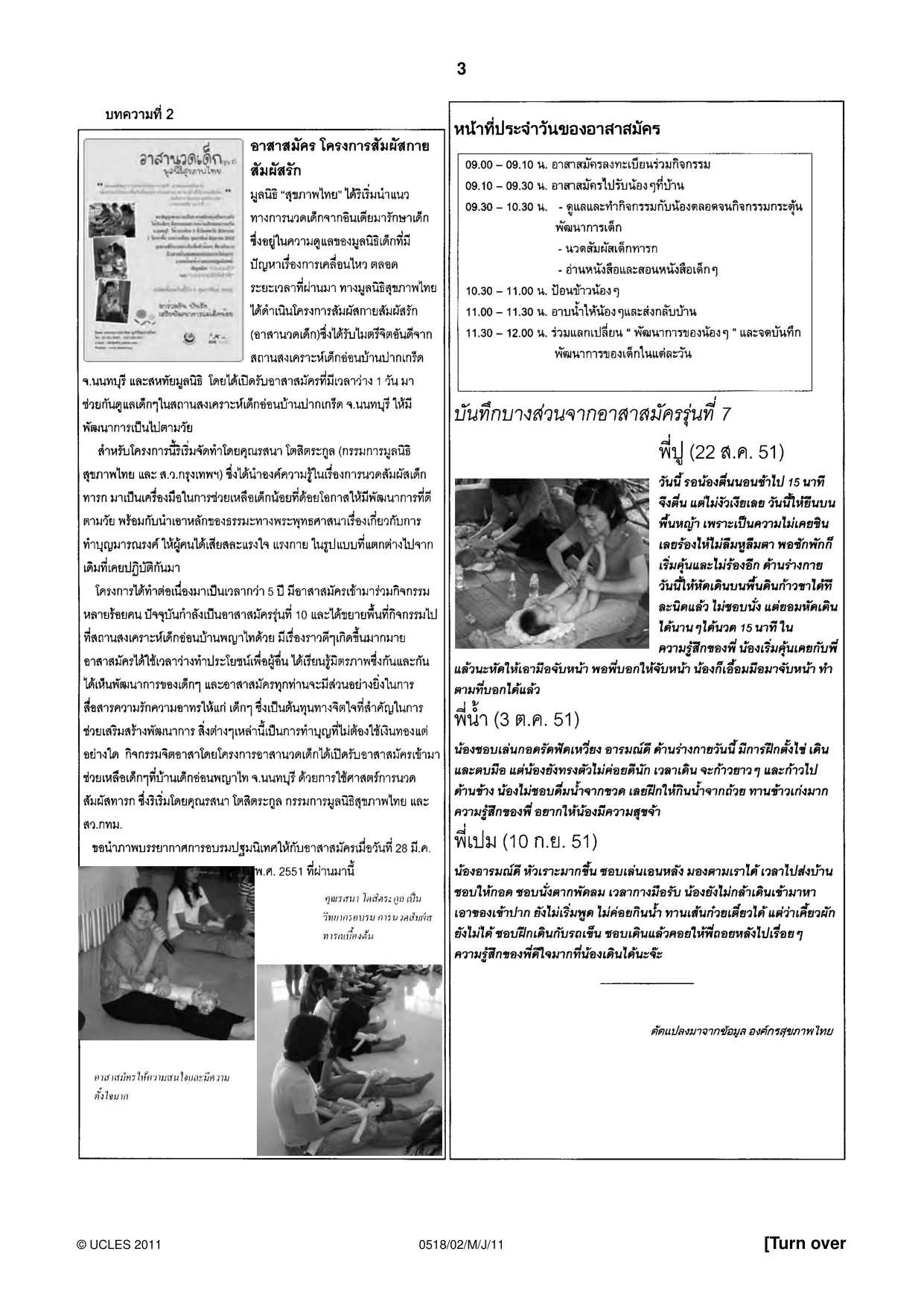
3 0518/02/M/J/11 © UCLES 2011 [Turn over
Question paper, page 4
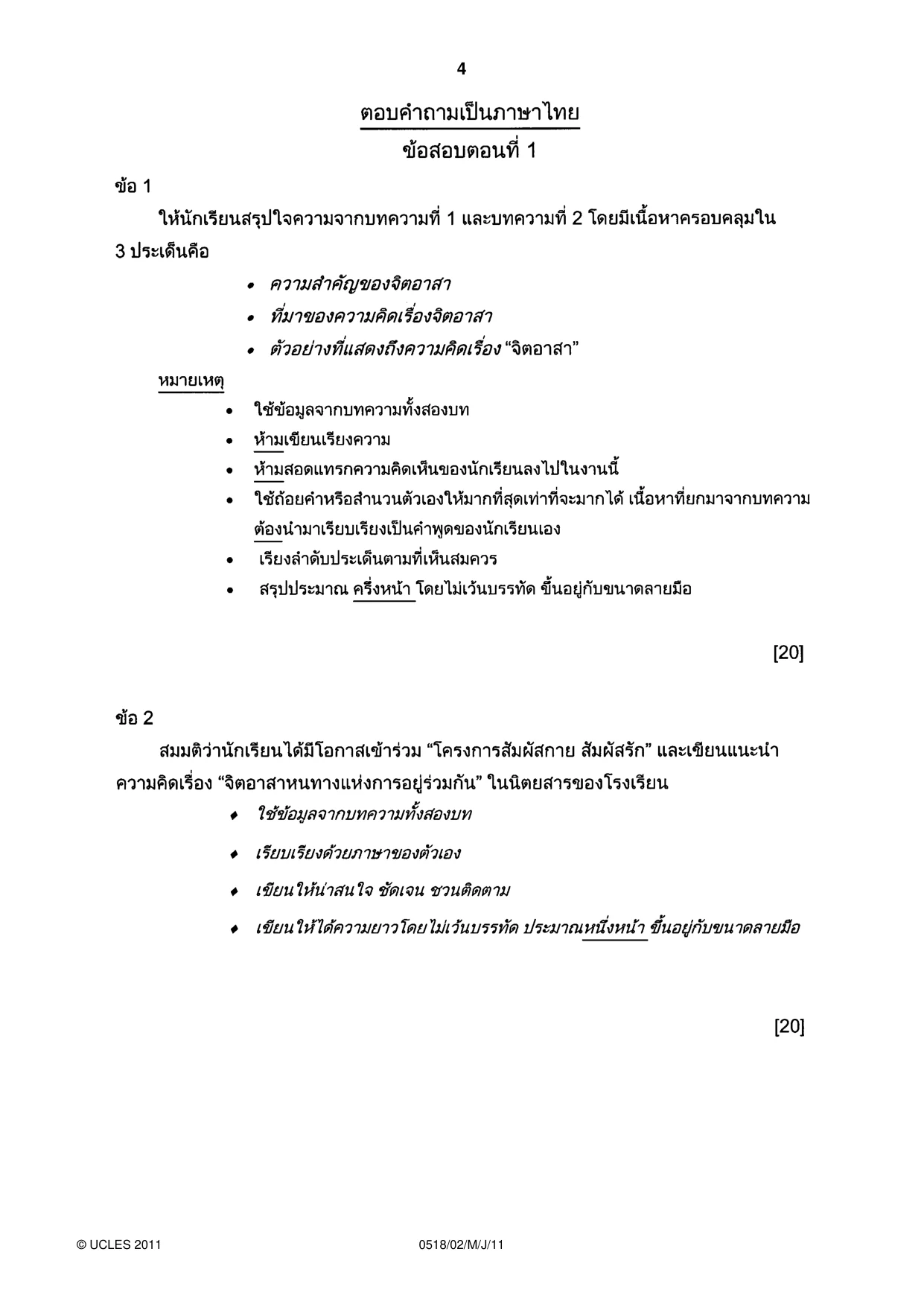
4 nauminiuniyd7 ne dadaunaun 1 ta Whinduudglaaruainunatwil 1 warunarwi 2 Taufilavasaunaquly 3 useiiuda ° AIMAYYaIIANAIAT © ManwavaruAa saving ° dad wiudaviionrnibasay “Snare” yu © Iddayasinunanuviedasun e VoudeuSeverw © VoudanunsnanuAamtuaastingauasltucnud © ‘IdidauravtadqwaudatayWannatidouwiniasuind ilavaiensnsinunar das wnsauaasiucrayavaningauas © Busdadiulsevtumufiiuauas © agus: aFotr Tau iiduussiia duadAuauriaarusia [20] a2 aunAdrinisaulaitamiadiaen “Taswnrsdunanie aunain” uavdeuuuey ANNAAaAN “Amara MunTUnyNrsadsaUAUY” ludmuArsuarTsgeU ¢ Idstayaomnunarwvvdavun ¢ Guulsuvdnus yaa ¢ iMeulinrauls goou gausan7 6 Meuultdarwuertag Lkduussia /sanuutemts Guayiveumawia (20) @UCLES 2011 0518/02/M/J/11
Question paper, page 5
5 0518/02/M/J/11 © UCLES 2011 [Turn over
Question paper, page 6
dadaunaun 2 da 3. dauuunaridqniutuqulvvunaulears “Tau” Taswrarinaatiunsy Aaaseqa fu wdlusradwitlumsuaduaunaniaactl - Ietayaoinunarit © Gaus wa VaIGUad /FPUPIOMIUNA IEA ieulhwiauts vousani uae tduaseviv la lig@aqugan lot (euli dares tae liduyssviiavsean wien Guayiveuimareiia (20) @UCLES 2011 0518/02/M/J/11
Question paper, page 7
7 0518/02/M/J/11 © UCLES 2011 BLANK PAGE
Question paper, page 8
8 0518/02/M/J/11 © UCLES 2011 BLANK PAGE Permission to reproduce items where third-party owned material protected by copyright is included has been sought and cleared where possible. Every reasonable effort has been made by the publisher (UCLES) to trace copyright holders, but if any items requiring clearance have unwittingly been included, the publisher will be pleased to make amends at the earliest possible opportunity. University of Cambridge International Examinations is part of the Cambridge Assessment Group. Cambridge Assessment is the brand name of University of Cambridge Local Examinations Syndicate (UCLES), which is itself a department of the University of Cambridge.
Mark scheme, page 1
UNIVERSITY OF CAMBRIDGE INTERNATIONAL EXAMINATIONS International General Certificate of Secondary Education MARK SCHEME for the May/June 2011 question paper for the guidance of teachers 0518 FIRST LANGUAGE THAI 0518/02 Paper 2 (Reading and Directed Writing), maximum raw mark 60 This mark scheme is published as an aid to teachers and candidates, to indicate the requirements of the examination. It shows the basis on which Examiners were instructed to award marks. It does not indicate the details of the discussions that took place at an Examiners’ meeting before marking began, which would have considered the acceptability of alternative answers. Mark schemes must be read in conjunction with the question papers and the report on the examination. • Cambridge will not enter into discussions or correspondence in connection with these mark schemes. Cambridge is publishing the mark schemes for the May/June 2011 question papers for most IGCSE, GCE Advanced Level and Advanced Subsidiary Level syllabuses and some Ordinary Level syllabuses. www.XtremePapers.com
Mark scheme, page 2
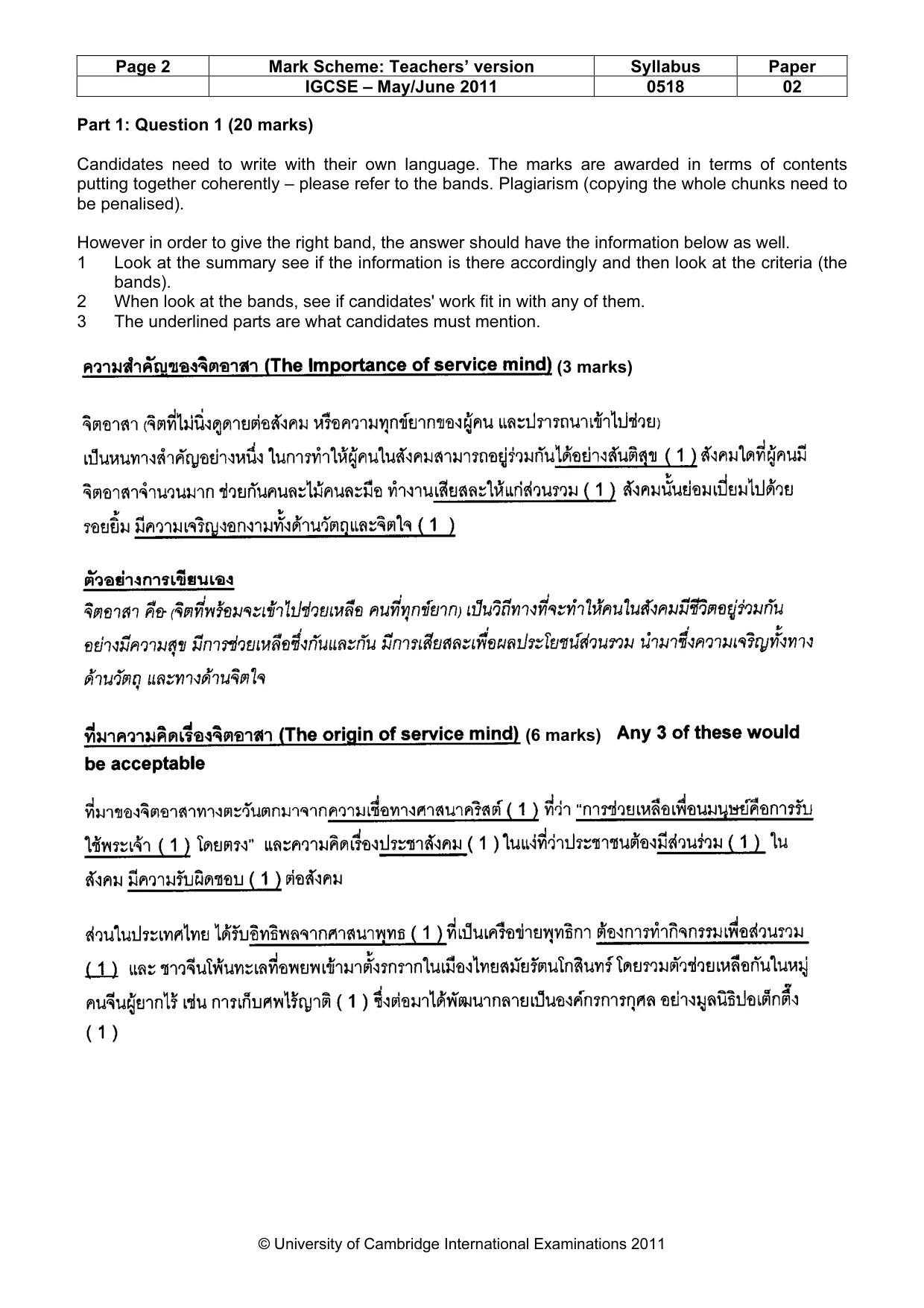
Page 2 Mark Scheme: Teachers’ version Syllabus Paper IGCSE – May/June 2011 0518 02 © University of Cambridge International Examinations 2011 Part 1: Question 1 (20 marks) Candidates need to write with their own language. The marks are awarded in terms of contents putting together coherently – please refer to the bands. Plagiarism (copying the whole chunks need to be penalised). However in order to give the right band, the answer should have the information below as well. 1 Look at the summary see if the information is there accordingly and then look at the criteria (the bands). 2 When look at the bands, see if candidates' work fit in with any of them. 3 The underlined parts are what candidates must mention. (3 marks) (6 marks)
Mark scheme, page 3
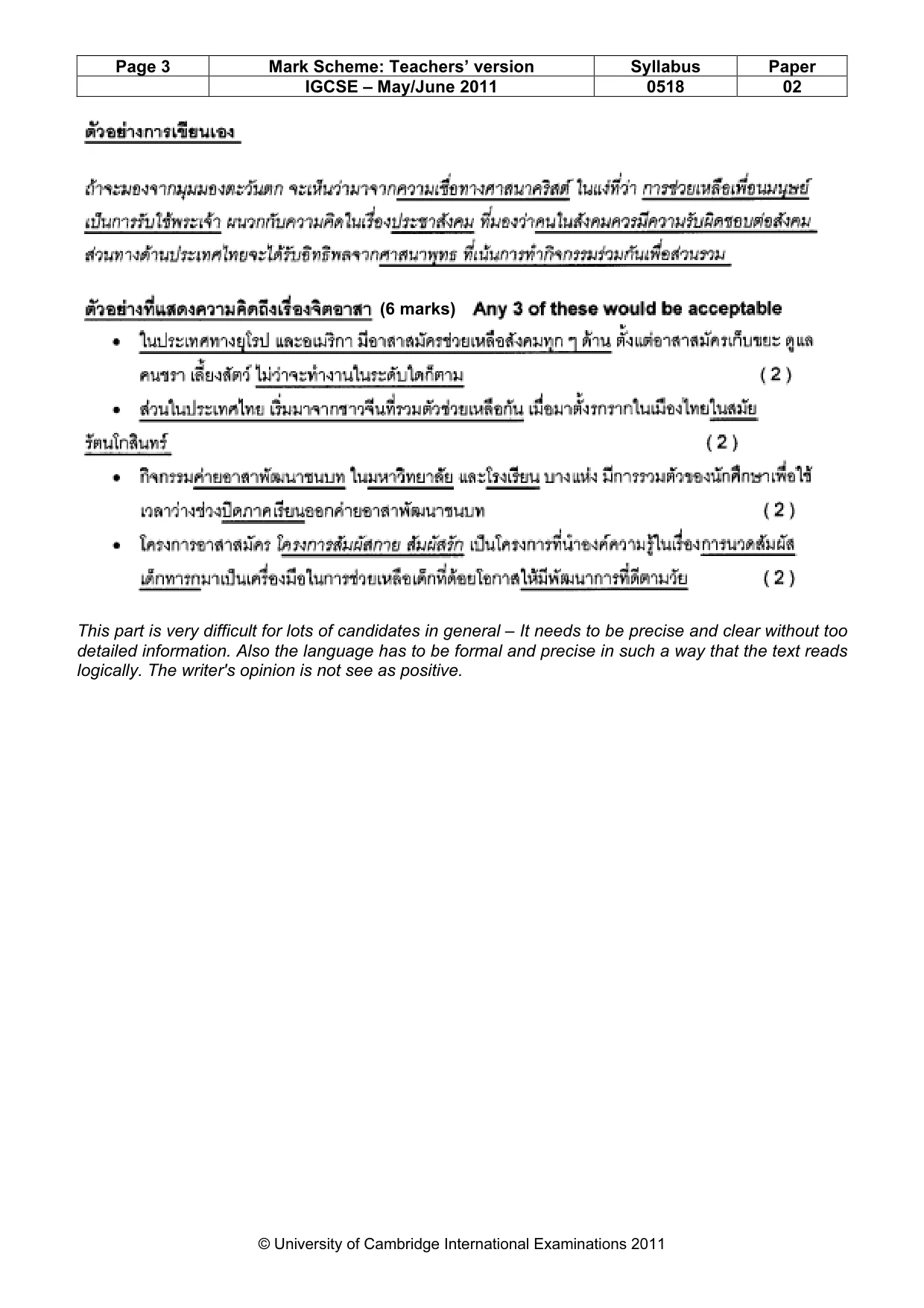
Page 3 Mark Scheme: Teachers’ version Syllabus Paper IGCSE – May/June 2011 0518 02 © University of Cambridge International Examinations 2011 This part is very difficult for lots of candidates in general – It needs to be precise and clear without too detailed information. Also the language has to be formal and precise in such a way that the text reads logically. The writer's opinion is not see as positive. (6 marks)
Mark scheme, page 4
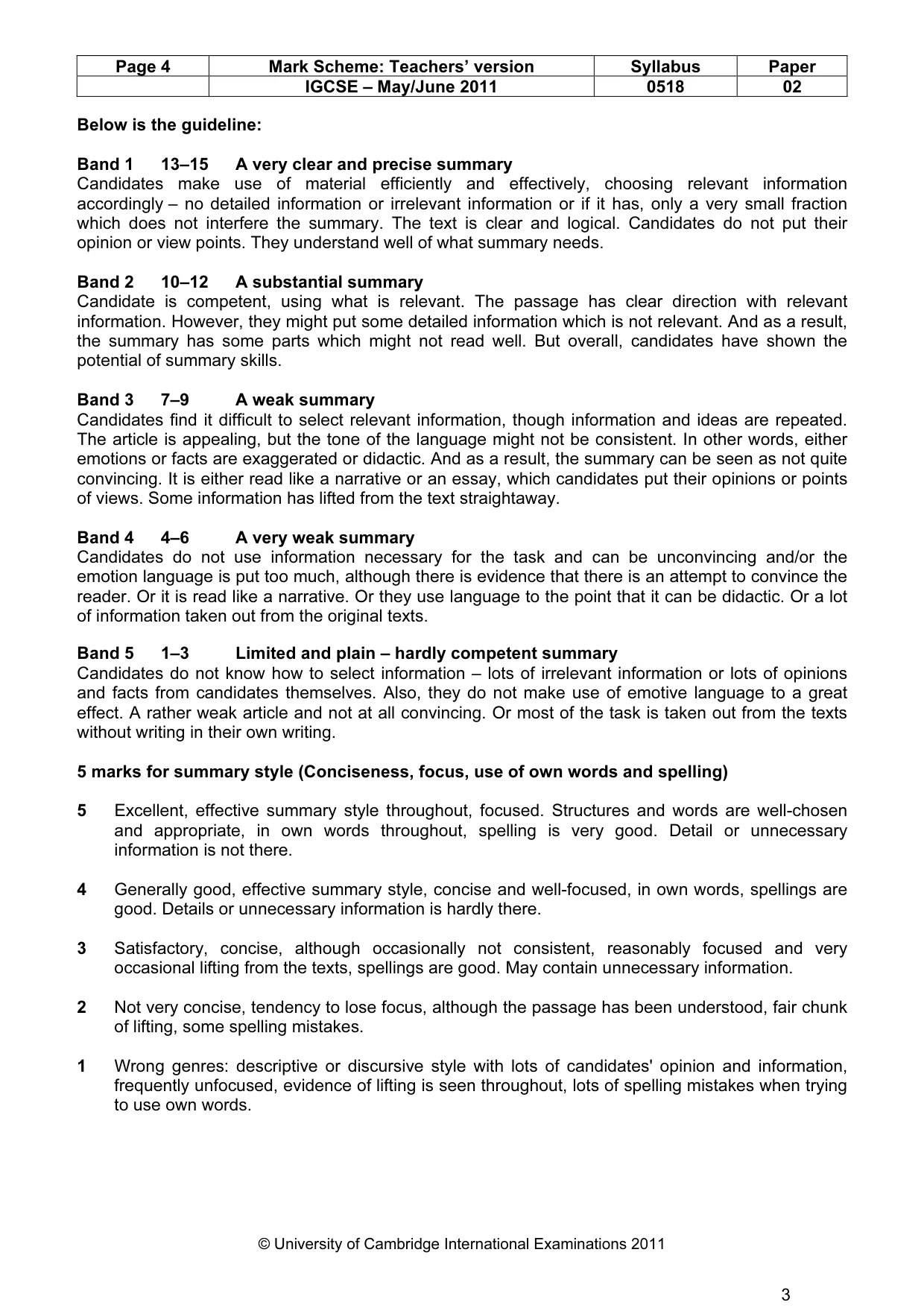
Page 4 Mark Scheme: Teachers’ version Syllabus Paper IGCSE – May/June 2011 0518 02 © University of Cambridge International Examinations 2011 Below is the guideline: Band 1 13–15 A very clear and precise summary Candidates make use of material efficiently and effectively, choosing relevant information accordingly – no detailed information or irrelevant information or if it has, only a very small fraction which does not interfere the summary. The text is clear and logical. Candidates do not put their opinion or view points. They understand well of what summary needs. Band 2 10–12 A substantial summary Candidate is competent, using what is relevant. The passage has clear direction with relevant information. However, they might put some detailed information which is not relevant. And as a result, the summary has some parts which might not read well. But overall, candidates have shown the potential of summary skills. Band 3 7–9 A weak summary Candidates find it difficult to select relevant information, though information and ideas are repeated. The article is appealing, but the tone of the language might not be consistent. In other words, either emotions or facts are exaggerated or didactic. And as a result, the summary can be seen as not quite convincing. It is either read like a narrative or an essay, which candidates put their opinions or points of views. Some information has lifted from the text straightaway. Band 4 4–6 A very weak summary Candidates do not use information necessary for the task and can be unconvincing and/or the emotion language is put too much, although there is evidence that there is an attempt to convince the reader. Or it is read like a narrative. Or they use language to the point that it can be didactic. Or a lot of information taken out from the original texts. Band 5 1–3 Limited and plain – hardly competent summary Candidates do not know how to select information – lots of irrelevant information or lots of opinions and facts from candidates themselves. Also, they do not make use of emotive language to a great effect. A rather weak article and not at all convincing. Or most of the task is taken out from the texts without writing in their own writing. 5 marks for summary style (Conciseness, focus, use of own words and spelling) 5 Excellent, effective summary style throughout, focused. Structures and words are well-chosen and appropriate, in own words throughout, spelling is very good. Detail or unnecessary information is not there. 4 Generally good, effective summary style, concise and well-focused, in own words, spellings are good. Details or unnecessary information is hardly there. 3 Satisfactory, concise, although occasionally not consistent, reasonably focused and very occasional lifting from the texts, spellings are good. May contain unnecessary information. 2 Not very concise, tendency to lose focus, although the passage has been understood, fair chunk of lifting, some spelling mistakes. 1 Wrong genres: descriptive or discursive style with lots of candidates' opinion and information, frequently unfocused, evidence of lifting is seen throughout, lots of spelling mistakes when trying to use own words. 3
Mark scheme, page 5
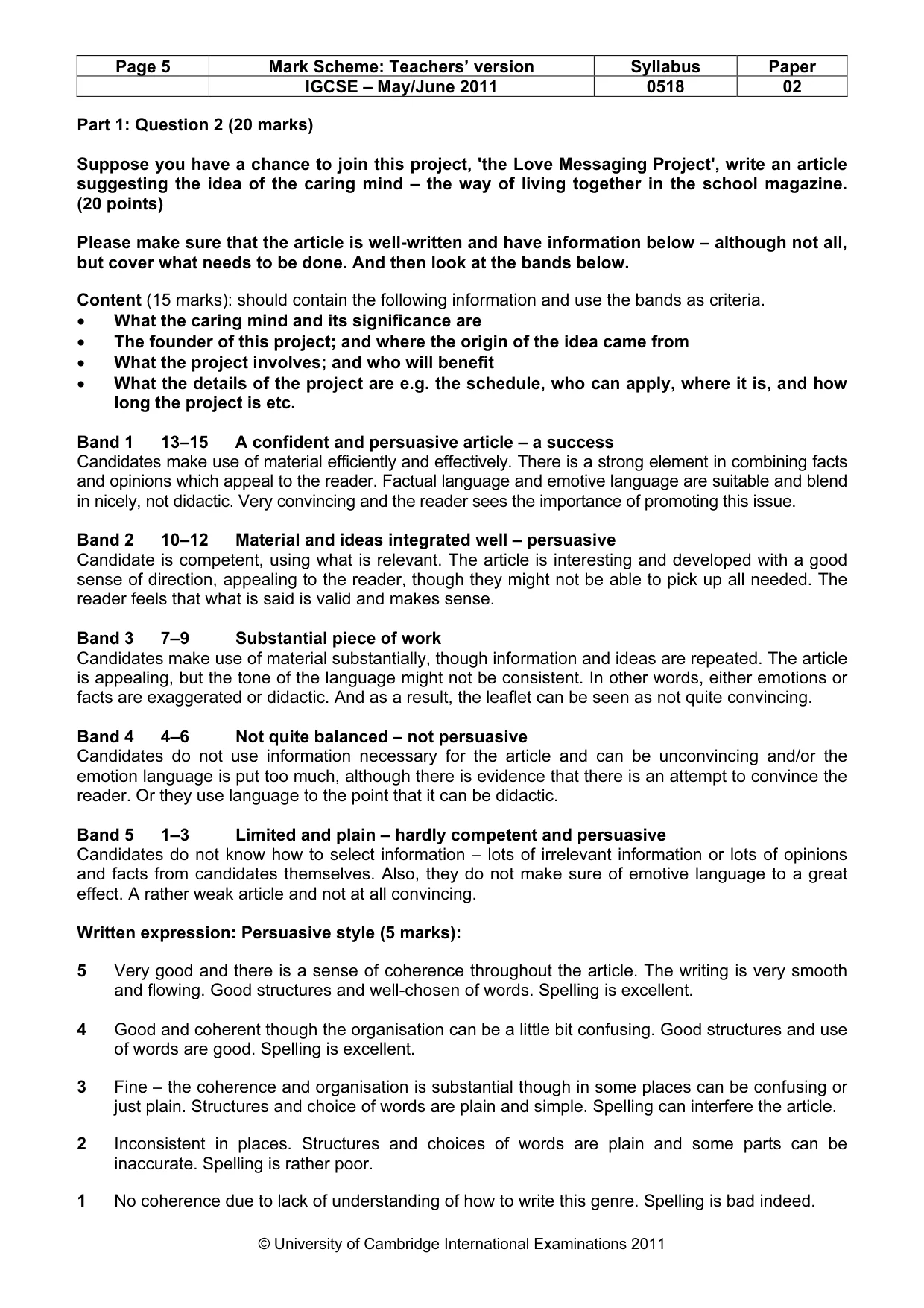
Page 5 Mark Scheme: Teachers’ version Syllabus Paper IGCSE – May/June 2011 0518 02 © University of Cambridge International Examinations 2011 Part 1: Question 2 (20 marks) Suppose you have a chance to join this project, 'the Love Messaging Project', write an article suggesting the idea of the caring mind – the way of living together in the school magazine. (20 points) Please make sure that the article is well-written and have information below – although not all, but cover what needs to be done. And then look at the bands below. Content (15 marks): should contain the following information and use the bands as criteria. • What the caring mind and its significance are • The founder of this project; and where the origin of the idea came from • What the project involves; and who will benefit • What the details of the project are e.g. the schedule, who can apply, where it is, and how long the project is etc. Band 1 13–15 A confident and persuasive article – a success Candidates make use of material efficiently and effectively. There is a strong element in combining facts and opinions which appeal to the reader. Factual language and emotive language are suitable and blend in nicely, not didactic. Very convincing and the reader sees the importance of promoting this issue. Band 2 10–12 Material and ideas integrated well – persuasive Candidate is competent, using what is relevant. The article is interesting and developed with a good sense of direction, appealing to the reader, though they might not be able to pick up all needed. The reader feels that what is said is valid and makes sense. Band 3 7–9 Substantial piece of work Candidates make use of material substantially, though information and ideas are repeated. The article is appealing, but the tone of the language might not be consistent. In other words, either emotions or facts are exaggerated or didactic. And as a result, the leaflet can be seen as not quite convincing. Band 4 4–6 Not quite balanced – not persuasive Candidates do not use information necessary for the article and can be unconvincing and/or the emotion language is put too much, although there is evidence that there is an attempt to convince the reader. Or they use language to the point that it can be didactic. Band 5 1–3 Limited and plain – hardly competent and persuasive Candidates do not know how to select information – lots of irrelevant information or lots of opinions and facts from candidates themselves. Also, they do not make sure of emotive language to a great effect. A rather weak article and not at all convincing. Written expression: Persuasive style (5 marks): 5 Very good and there is a sense of coherence throughout the article. The writing is very smooth and flowing. Good structures and well-chosen of words. Spelling is excellent. 4 Good and coherent though the organisation can be a little bit confusing. Good structures and use of words are good. Spelling is excellent. 3 Fine – the coherence and organisation is substantial though in some places can be confusing or just plain. Structures and choice of words are plain and simple. Spelling can interfere the article. 2 Inconsistent in places. Structures and choices of words are plain and some parts can be inaccurate. Spelling is rather poor. 1 No coherence due to lack of understanding of how to write this genre. Spelling is bad indeed.
Mark scheme, page 6
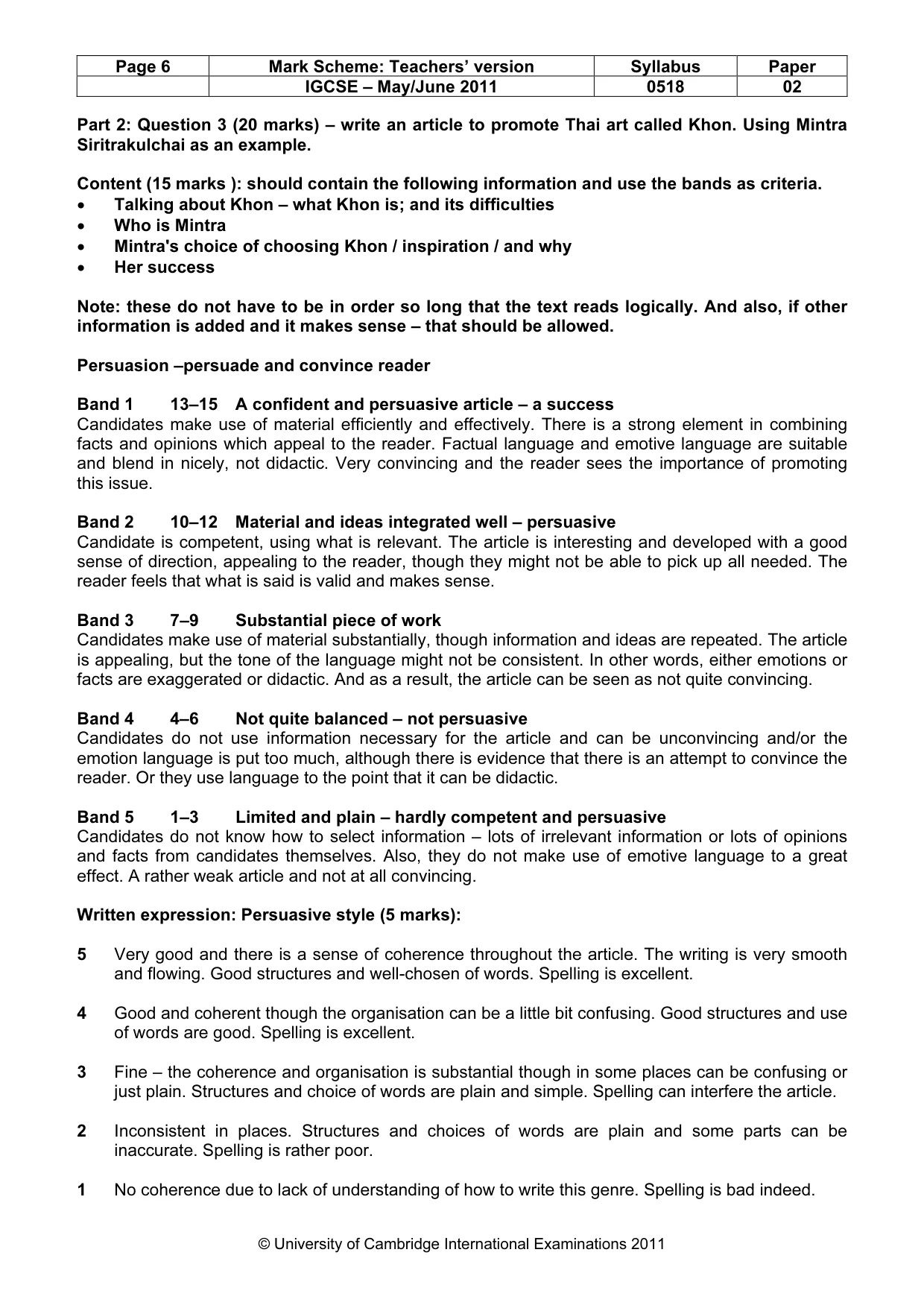
Page 6 Mark Scheme: Teachers’ version Syllabus Paper IGCSE – May/June 2011 0518 02 © University of Cambridge International Examinations 2011 Part 2: Question 3 (20 marks) – write an article to promote Thai art called Khon. Using Mintra Siritrakulchai as an example. Content (15 marks ): should contain the following information and use the bands as criteria. • Talking about Khon – what Khon is; and its difficulties • Who is Mintra • Mintra's choice of choosing Khon / inspiration / and why • Her success Note: these do not have to be in order so long that the text reads logically. And also, if other information is added and it makes sense – that should be allowed. Persuasion –persuade and convince reader Band 1 13–15 A confident and persuasive article – a success Candidates make use of material efficiently and effectively. There is a strong element in combining facts and opinions which appeal to the reader. Factual language and emotive language are suitable and blend in nicely, not didactic. Very convincing and the reader sees the importance of promoting this issue. Band 2 10–12 Material and ideas integrated well – persuasive Candidate is competent, using what is relevant. The article is interesting and developed with a good sense of direction, appealing to the reader, though they might not be able to pick up all needed. The reader feels that what is said is valid and makes sense. Band 3 7–9 Substantial piece of work Candidates make use of material substantially, though information and ideas are repeated. The article is appealing, but the tone of the language might not be consistent. In other words, either emotions or facts are exaggerated or didactic. And as a result, the article can be seen as not quite convincing. Band 4 4–6 Not quite balanced – not persuasive Candidates do not use information necessary for the article and can be unconvincing and/or the emotion language is put too much, although there is evidence that there is an attempt to convince the reader. Or they use language to the point that it can be didactic. Band 5 1–3 Limited and plain – hardly competent and persuasive Candidates do not know how to select information – lots of irrelevant information or lots of opinions and facts from candidates themselves. Also, they do not make use of emotive language to a great effect. A rather weak article and not at all convincing. Written expression: Persuasive style (5 marks): 5 Very good and there is a sense of coherence throughout the article. The writing is very smooth and flowing. Good structures and well-chosen of words. Spelling is excellent. 4 Good and coherent though the organisation can be a little bit confusing. Good structures and use of words are good. Spelling is excellent. 3 Fine – the coherence and organisation is substantial though in some places can be confusing or just plain. Structures and choice of words are plain and simple. Spelling can interfere the article. 2 Inconsistent in places. Structures and choices of words are plain and some parts can be inaccurate. Spelling is rather poor. 1 No coherence due to lack of understanding of how to write this genre. Spelling is bad indeed.
What you needed in this session
Cambridge’s own grade thresholds for 2011 May/June, Paper 2 · Variant 1. A higher threshold means an easier paper — the bar moves with how the cohort did.