Cambridge IGCSE Thai - First Language 0518 — 2009 May/June Paper 2 · Variant 1
0518/21/M/J/09 · 60 marks · ≈68 min
The question paper and its mark scheme, free to read here and free to download. This is Cambridge’s own paper, exactly as it was sat.
Question paper8 pages


Mark scheme6 pages
Answers below. Sit the paper first if you are practising.
Paper as text
Question paper, page 1
* 7 2 5 6 1 3 6 9 9 7 * This document consists of 6 printed pages and 2 blank pages. SP (SJH/TL) V02144/2 © UCLES 2009 [Turn over UNIVERSITY OF CAMBRIDGE INTERNATIONAL EXAMINATIONS International General Certificate of Education Secondary Education READ THESE INSTRUCTIONS FIRST If you have been given an Answer Booklet, follow the instructions on the front cover of the Booklet. Write your Centre number, candidate number and name on all the work you hand in. Write in dark blue or black pen. Do not use staples, paper clips, highlighters, glue or correction fluid. Answer all questions. Dictionaries are not permitted. At the end of the examination, fasten all your work securely together. The number of marks is given in brackets [ ] at the end of each question or part question. FIRST LANGUAGE THAI 0518/02 Paper 2 Reading and Directed Writing May/June 2009 2 hours 15 minutes Additional Materials: Answer Booklet/Paper www.XtremePapers.com
Question paper, page 2
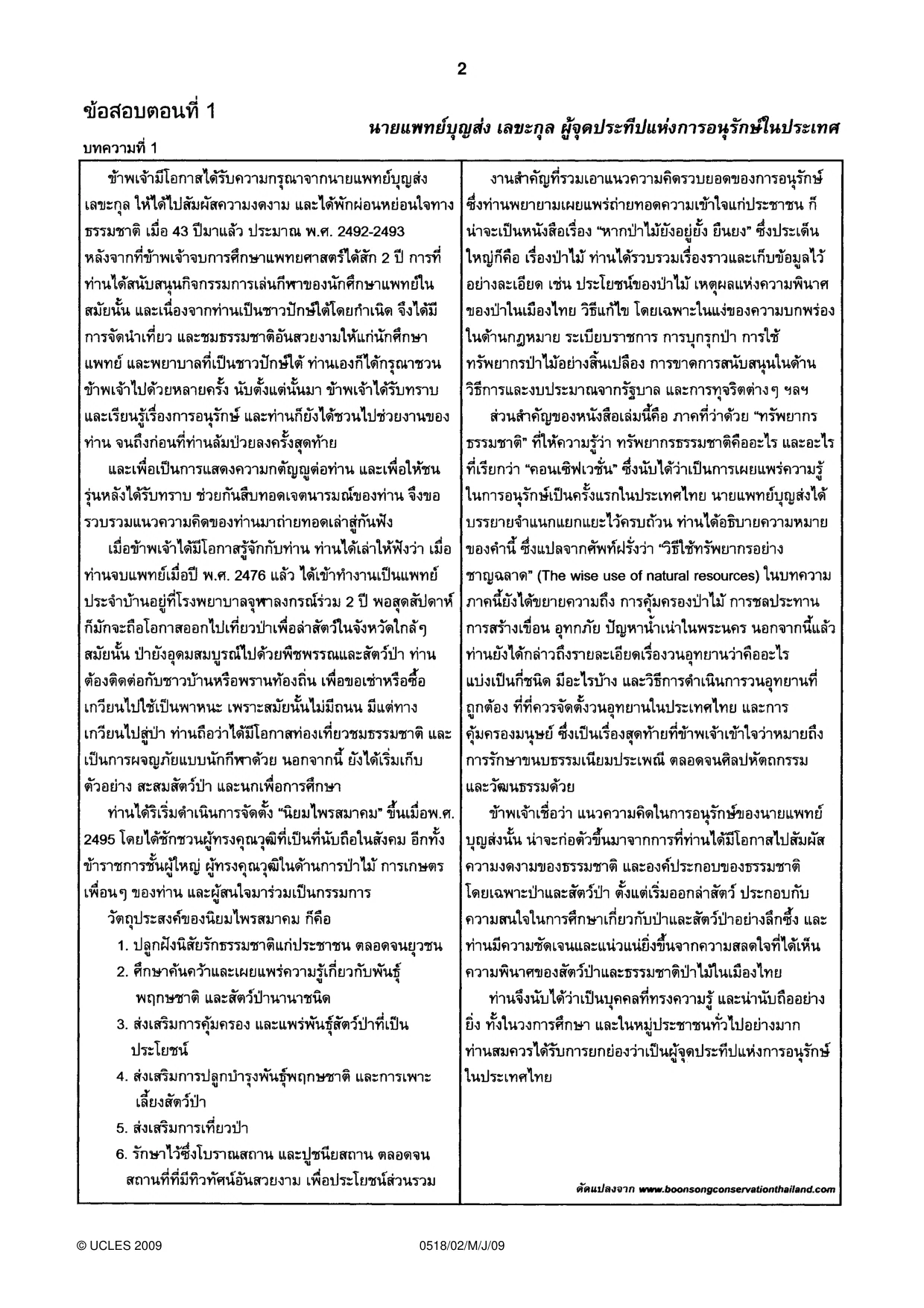
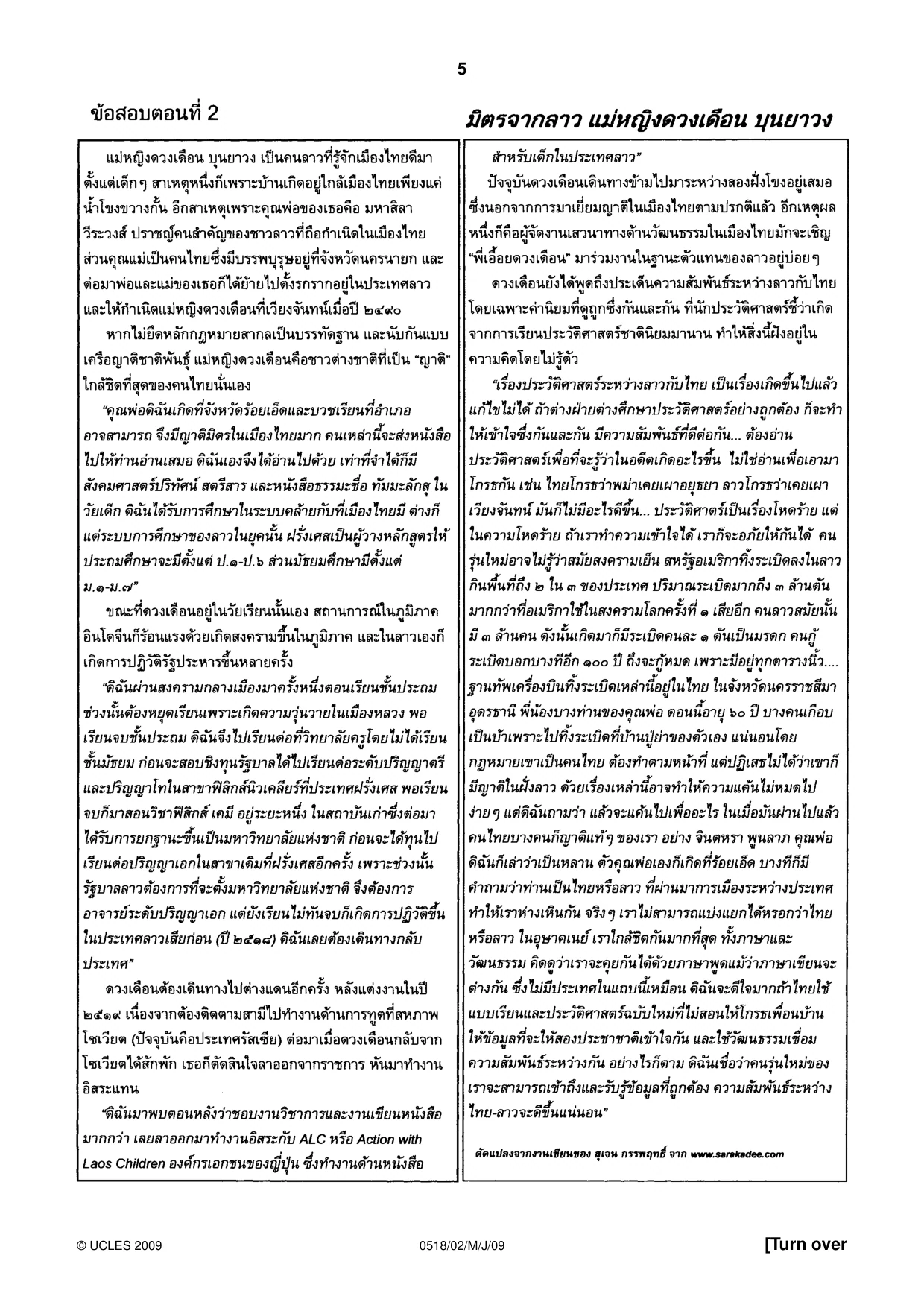
dadaunaun 1 wieunndyyas tavena daausefivuionisonsndluidseina a unayinn 1 thwuhilomalduanungansinnwuwndyyas varzna Widlududannwsas uaslainiawndawlema saa ile 43 Danuda ussanm w.a. 2492-2493 nasainiihwtaumsfinwunnumand idan 2 f nisi vow lemiveyuiansaniadufmpeninfinunndly aaiuntn waciosainrnudlunnaiinsldlautauie Sseit mataifier warmunsuemauewealturingins uwnd uarwennafiunaiinsly ynmasit dingo thd hdaenanunds duaudiunn twhldsunnw uactiuusieonsaying uacrnufdsldaulis nudes yin auflsriowfirnudinhwasniaartie uacifaiumsuansnnundyadariny uaciieliou junds Sunny toutwaunaaaawrsaunivasiv Jove UTUWIANIFAMAIMMANTHENALAgHUNS lath éillamadtniurny rnwldidbivien ule youauunniiiiall wa. 2476 uaa Tdthieiuunnd useduuadflsamenuragmaansaliay 27 waqatlonk fuinazflalamaaantuiiunhwWasndetusenialnd 9 aan thisqauanysoludauWowssmuazdatih vou dastadonurrahuniawnurastin Wavatiwiete intuwhiliifiuwamns wvnemiadulaisionn fludims indowlugih voudlataillameviaafinaussamna wa \dumanaysnuuurnfimnday wanaind deldaaniu hatin araudoith uasunWansinwn vow léiGudauttunisdade “loalwsanna Sudlew.e. 2495 Tasldtnrudnssqadiiutivaeludans anv thnwmstudlng dnasqaygdludumalh ay manwas tawg vasyiw uacdeulaiaauiunssanas Toqussaruasionlwianiay Aa 1. Ugnilsiavinsssamwuriuserioy aaaawuey 2. anwnduetussiisuwianasiivaiuwag wonwTné uasdeithwiwifia 3. dasfanrafnzos uacuwsmudae dif uszlomt 4, don Ugninywuswgnw7e uarnisiwie (ausdasth 5. datumafieath 6. Inw8slumnmann uazypivenin naanan amufihifiavietdueasw Walselumteasw © UCLES 2009 smdhdiyiraauwanaianuuamvasnieyiny Sovinanenenanaunscrwnaanrantlaurissrian A dazifluntsfaias “womb baldaagits duns” Galseaiu lnnjfife Gest rnwldsausautesruaciiutoyaly adnsaciiua itu Uselumivent Ty mqnaunanrwiura vasthludaslny Furly Tanawisluudvasarunwios usungmany selaunan maynimth male rawennaih lad waaldes momneamsmiunyludn Fmauarsursesrmsndgura waenranvaeag 4a soudAqueswbsfadailfia maine “niwwins prune" Alvan niwennssssumamaa: ls waverly fidunh ‘nawidoiw Sui nudlunaasuninrny lumseuinsiiuadusntudseineine wunndyyael ustneuunusnuss esuday mwldatiwananan vast Saulanindwilash Silinsweinsady 12819” (The wise use of natural resources) Awunana mattis dunuenutis nisdunresi hl nissan miahadon annay Dymihudlunssues wanainduda routsléndnaifiymuastiuaaruannwhiaasls uvailufgiia fasts uartimsdaumsugnarufi andes Afieastadeuaneluscinelny waens duevawuwe Sulludosqarhuthwhuhleimanséls misinwwuussativalsswd aaaaaumalvaanssy War tmunssudoe thin unianafeluniayindaaswwuwnd yrysiavins shasriawathansinmatriléillemaluauia ATUNIATAVAIDINGTA UarasAusrnavyvasDsIWMA Tauawiethuardetih dausiGuaansdad useneuiy anuaulelunrsfinwafaaiuihuasdeitharnsands waz rhudenatarauuacuiauudstusinanuaaalat laity anuamevasdeithuarsssum ah Whuilas ine rwiniulduluynnafinssary uastiniuaaatin a. A 2 . Bs Mlwasmafinw wazlundisemaura aden vousunaadtunrsundosiuiudgadseiuunamsaniny Tuszinelne Saurlasa1n www.boonsongconservationthailand.com 0518/02/M/J/09
Question paper, page 3
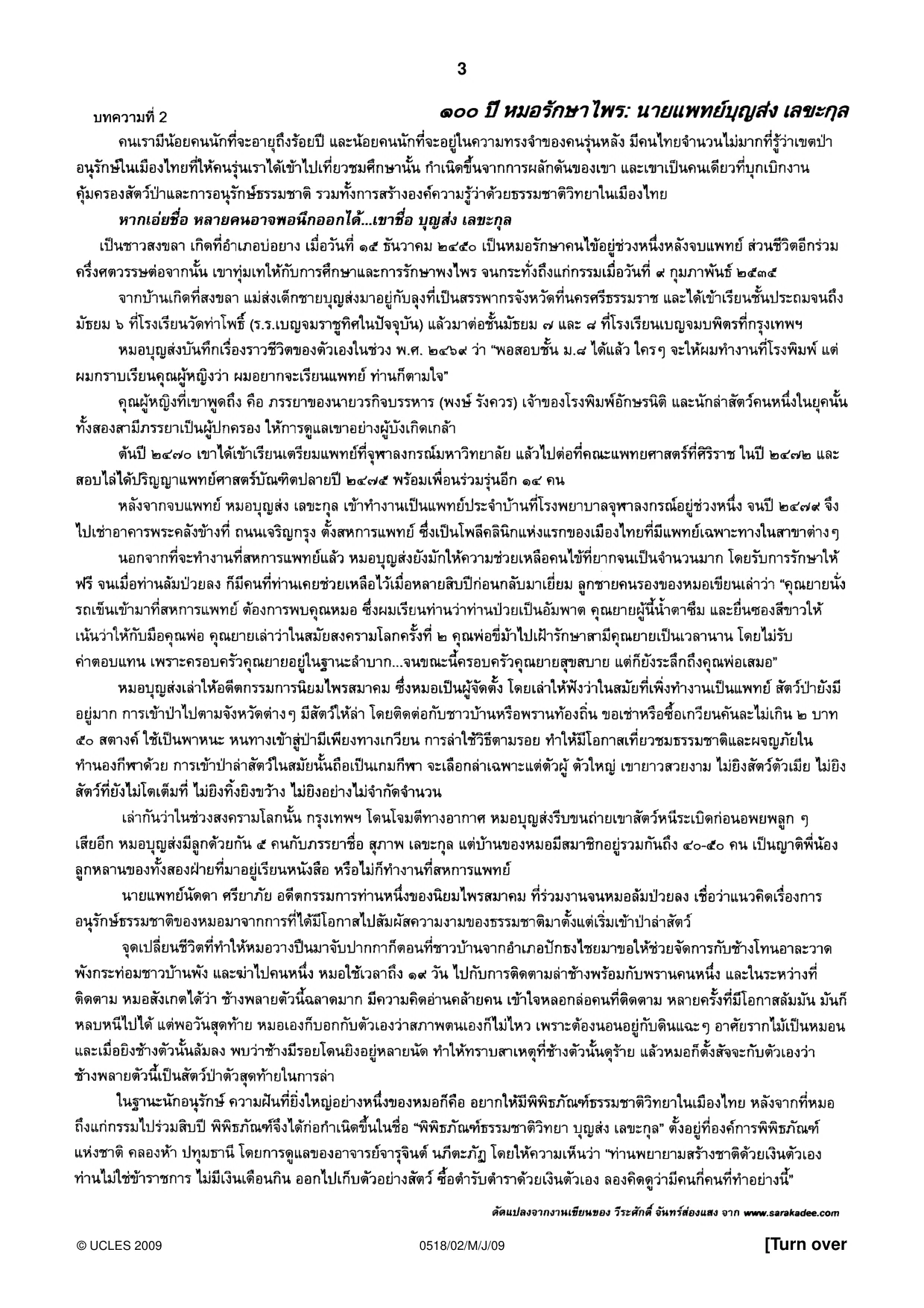
3 0518/02/M/J/09 © UCLES 2009 [Turn over
Question paper, page 4
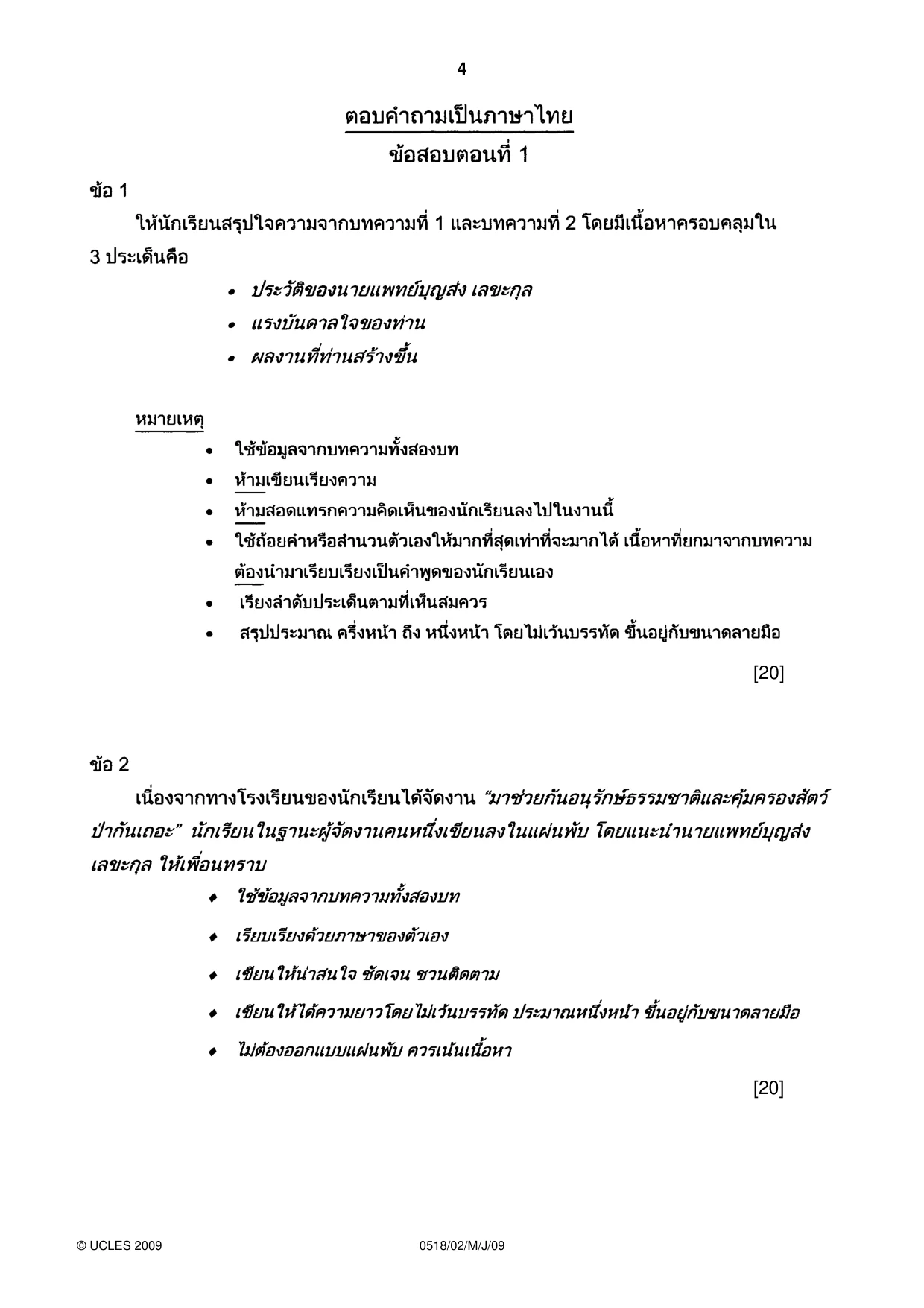
4 naumiomiiunrsdg ne dadaunaun 4 da 1 WhinSeuagleariatnunAT NG 1 WasunArt 2 Taufirilaviasaunaulu 3 useuinfia ° Usetdvasureunndyyas avena ° usvijunralavauniqU ° waviuriviuatwdu uNIELUH © ‘Isidayasinunariuriedaoun eo vaudeudevarw © VoudanunsnanuAamuganingauarhitusmil © ‘Ididaurawaad audrey Wannviqatviniaannld lanwiunnainunata Hai nisausunTudmnuasinseuas © Husa diniseiiuawdiiiuauas © aghiseanm agen fis wile Taw birtuussvin duadduauiaaruiia [20] da 2 laeminanaTaauusaninsawlddao “wreenuay inverse auachunsavdat thftuna:” unsuulugqueAsavuaunitadouay luudury Tauusrduaaunndyyae tavena Tiviaunsiw ¢ Isilayaainunarurvaavun 6 Guusewwdwnmivaiiuay 6 Meuliwiauls goou vausianiy 6 auld idarueritag biduussiin Usearnuuitons Guayiveumawiia ¢ laitavaanuuuudurty arsiutuitany [20] © UCLES 2009 0518/02/M/J/09
Question paper, page 5
5 0518/02/M/J/09 © UCLES 2009 [Turn over
Question paper, page 6
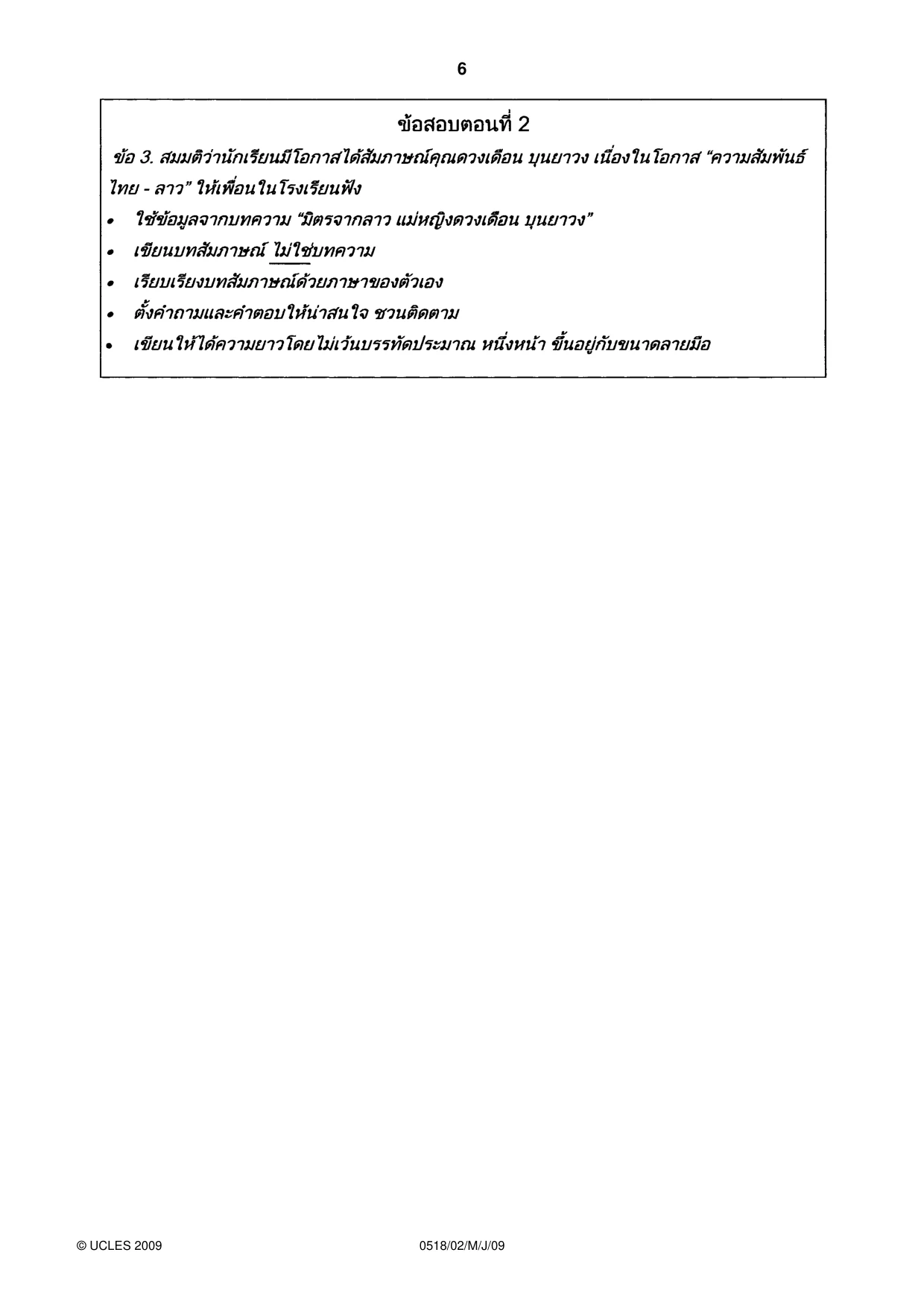
6 diadaunaun 2 da 3. audit nimsyulitana Widunwolnmaraiau yuer wavlulania ‘avast Ing - 477” WitviauluTsuSeurte ¢ = Isdayarinunaqi ‘iasa1NAN72 UinEIATVIIU YULTIN” ° iieuundunival laitdunaqi « Gaususunduniwadqwnw waweInay © duronamuacriimau Ihiaaule wausaen gu lvidarqwer ag biduussiasanm uitenus Guayivauimaruiia © UCLES 2009 0518/02/M/J/09
Question paper, page 8
8 0518/02/M/J/09 Permission to reproduce items where third-party owned material protected by copyright is included has been sought and cleared where possible. Every reasonable effort has been made by the publisher (UCLES) to trace copyright holders, but if any items requiring clearance have unwittingly been included, the publisher will be pleased to make amends at the earliest possible opportunity. University of Cambridge International Examinations is part of the Cambridge Assessment Group. Cambridge Assessment is the brand name of University of Cambridge Local Examinations Syndicate (UCLES), which is itself a department of the University of Cambridge. BLANK PAGE
Mark scheme, page 1
UNIVERSITY OF CAMBRIDGE INTERNATIONAL EXAMINATIONS International General Certificate of Secondary Education MARK SCHEME for the May/June 2009 question paper for the guidance of teachers 0518 FIRST LANGUAGE THAI 0518/02 Paper 2 (Reading and Directed Writing), maximum raw mark 60 This mark scheme is published as an aid to teachers and candidates, to indicate the requirements of the examination. It shows the basis on which Examiners were instructed to award marks. It does not indicate the details of the discussions that took place at an Examiners’ meeting before marking began, which would have considered the acceptability of alternative answers. Mark schemes must be read in conjunction with the question papers and the report on the examination. • CIE will not enter into discussions or correspondence in connection with these mark schemes. CIE is publishing the mark schemes for the May/June 2009 question papers for most IGCSE, GCE Advanced Level and Advanced Subsidiary Level syllabuses and some Ordinary Level syllabuses. www.XtremePapers.com
Mark scheme, page 2
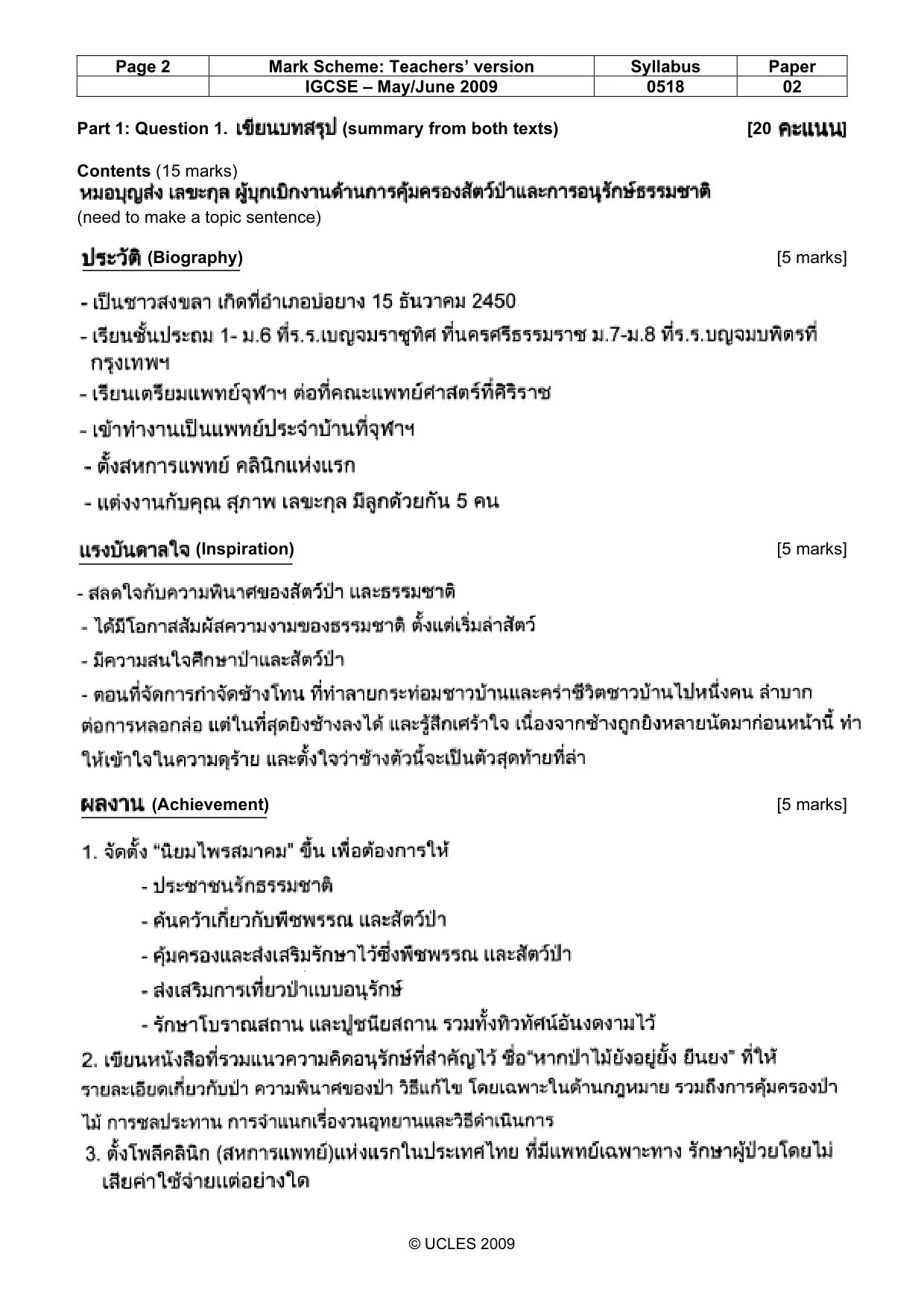
Page 2 Mark Scheme: Teachers’ version Syllabus Paper IGCSE – May/June 2009 0518 02 © UCLES 2009 Part 1: Question 1. (summary from both texts) [20 ] Contents (15 marks) (need to make a topic sentence) (Biography) [5 marks] (Inspiration) [5 marks] (Achievement) [5 marks]
Mark scheme, page 3
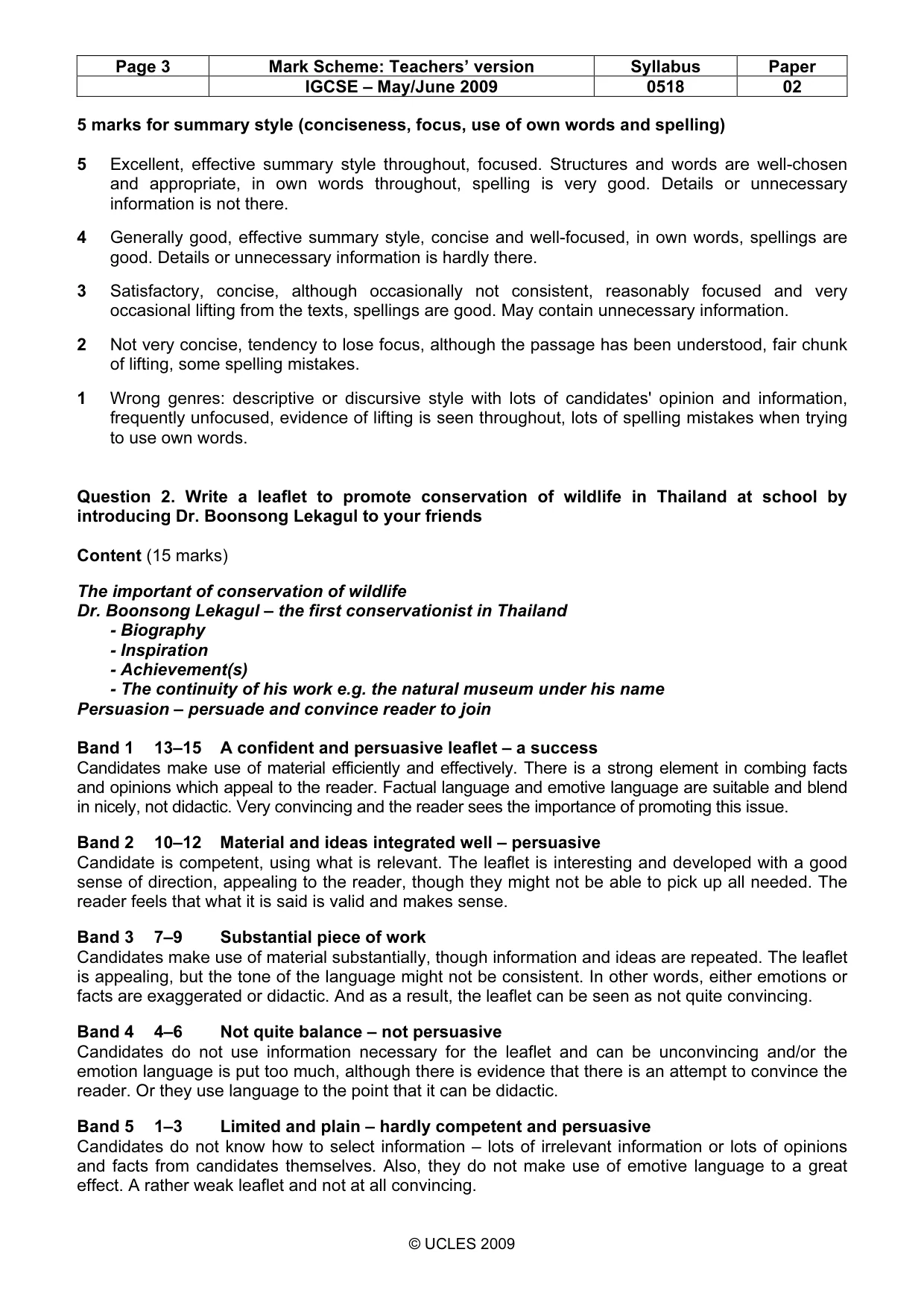
Page 3 Mark Scheme: Teachers’ version Syllabus Paper IGCSE – May/June 2009 0518 02 © UCLES 2009 5 marks for summary style (conciseness, focus, use of own words and spelling) 5 Excellent, effective summary style throughout, focused. Structures and words are well-chosen and appropriate, in own words throughout, spelling is very good. Details or unnecessary information is not there. 4 Generally good, effective summary style, concise and well-focused, in own words, spellings are good. Details or unnecessary information is hardly there. 3 Satisfactory, concise, although occasionally not consistent, reasonably focused and very occasional lifting from the texts, spellings are good. May contain unnecessary information. 2 Not very concise, tendency to lose focus, although the passage has been understood, fair chunk of lifting, some spelling mistakes. 1 Wrong genres: descriptive or discursive style with lots of candidates' opinion and information, frequently unfocused, evidence of lifting is seen throughout, lots of spelling mistakes when trying to use own words. Question 2. Write a leaflet to promote conservation of wildlife in Thailand at school by introducing Dr. Boonsong Lekagul to your friends Content (15 marks) The important of conservation of wildlife Dr. Boonsong Lekagul – the first conservationist in Thailand - Biography - Inspiration - Achievement(s) - The continuity of his work e.g. the natural museum under his name Persuasion – persuade and convince reader to join Band 1 13–15 A confident and persuasive leaflet – a success Candidates make use of material efficiently and effectively. There is a strong element in combing facts and opinions which appeal to the reader. Factual language and emotive language are suitable and blend in nicely, not didactic. Very convincing and the reader sees the importance of promoting this issue. Band 2 10–12 Material and ideas integrated well – persuasive Candidate is competent, using what is relevant. The leaflet is interesting and developed with a good sense of direction, appealing to the reader, though they might not be able to pick up all needed. The reader feels that what it is said is valid and makes sense. Band 3 7–9 Substantial piece of work Candidates make use of material substantially, though information and ideas are repeated. The leaflet is appealing, but the tone of the language might not be consistent. In other words, either emotions or facts are exaggerated or didactic. And as a result, the leaflet can be seen as not quite convincing. Band 4 4–6 Not quite balance – not persuasive Candidates do not use information necessary for the leaflet and can be unconvincing and/or the emotion language is put too much, although there is evidence that there is an attempt to convince the reader. Or they use language to the point that it can be didactic. Band 5 1–3 Limited and plain – hardly competent and persuasive Candidates do not know how to select information – lots of irrelevant information or lots of opinions and facts from candidates themselves. Also, they do not make use of emotive language to a great effect. A rather weak leaflet and not at all convincing.
Mark scheme, page 4
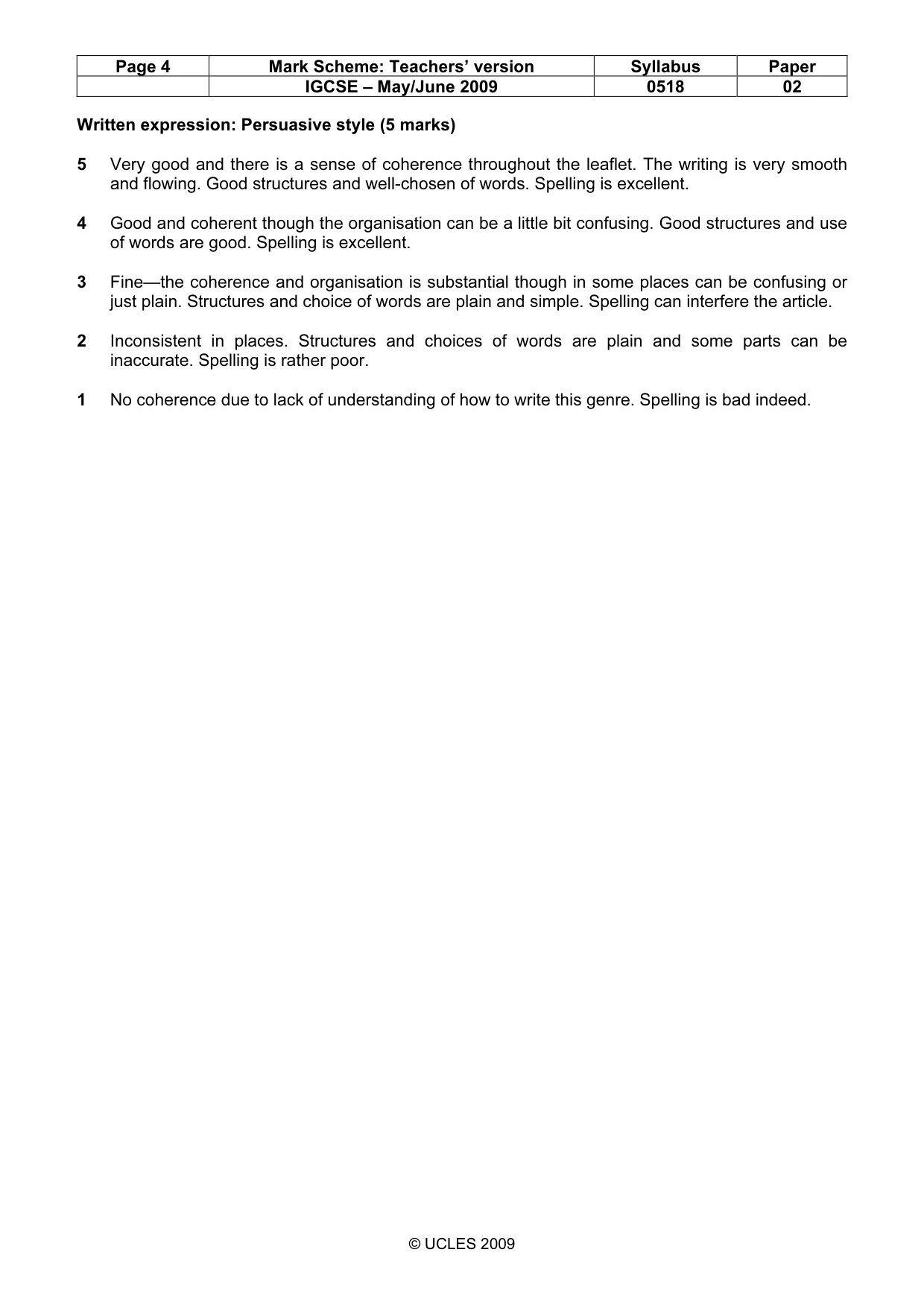
Page 4 Mark Scheme: Teachers’ version Syllabus Paper IGCSE – May/June 2009 0518 02 © UCLES 2009 Written expression: Persuasive style (5 marks) 5 Very good and there is a sense of coherence throughout the leaflet. The writing is very smooth and flowing. Good structures and well-chosen of words. Spelling is excellent. 4 Good and coherent though the organisation can be a little bit confusing. Good structures and use of words are good. Spelling is excellent. 3 Fine—the coherence and organisation is substantial though in some places can be confusing or just plain. Structures and choice of words are plain and simple. Spelling can interfere the article. 2 Inconsistent in places. Structures and choices of words are plain and some parts can be inaccurate. Spelling is rather poor. 1 No coherence due to lack of understanding of how to write this genre. Spelling is bad indeed.
Mark scheme, page 5
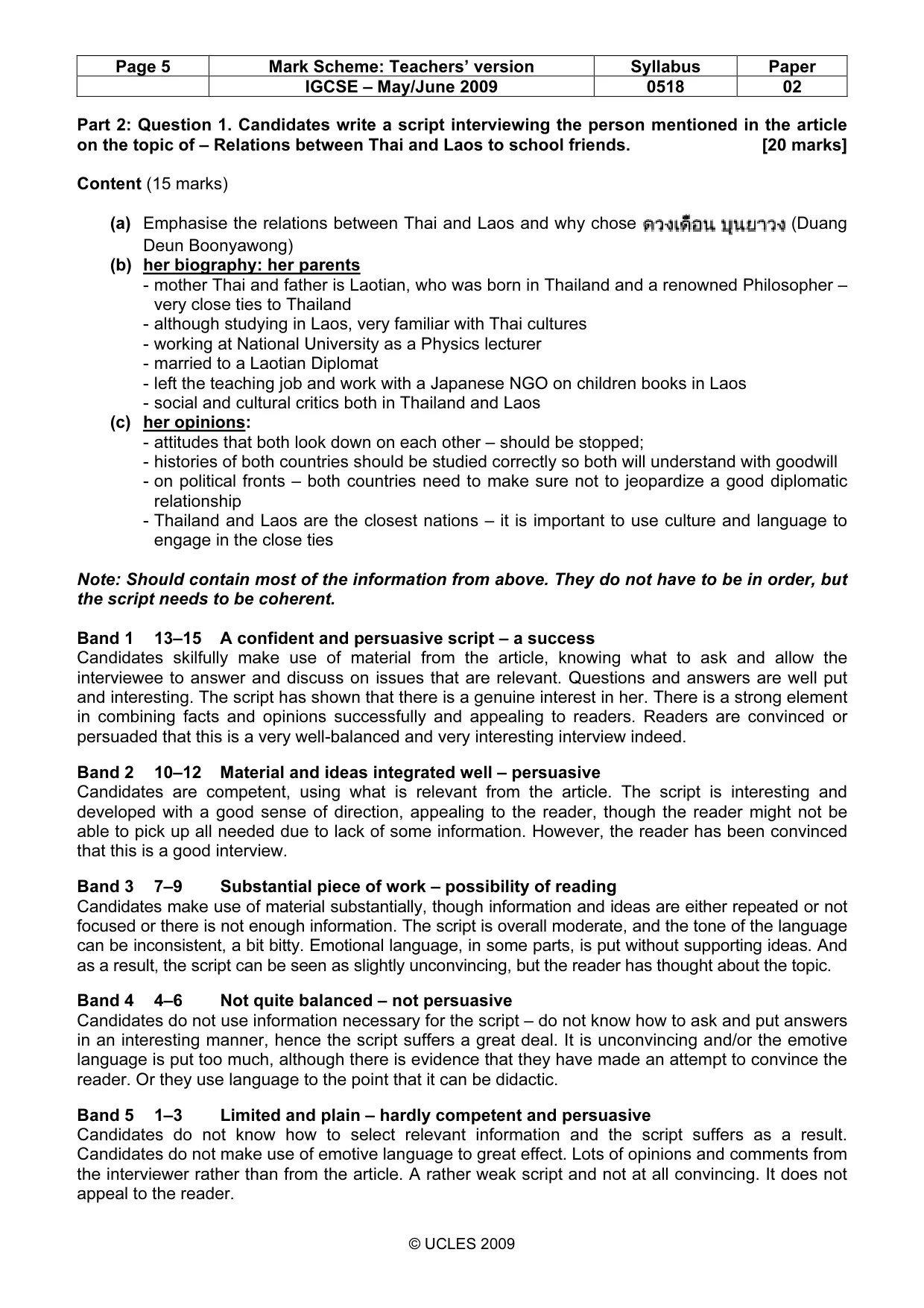
Page 5 Mark Scheme: Teachers’ version Syllabus Paper IGCSE – May/June 2009 0518 02 © UCLES 2009 Part 2: Question 1. Candidates write a script interviewing the person mentioned in the article on the topic of – Relations between Thai and Laos to school friends. [20 marks] Content (15 marks) (a) Emphasise the relations between Thai and Laos and why chose (Duang Deun Boonyawong) (b) her biography: her parents - mother Thai and father is Laotian, who was born in Thailand and a renowned Philosopher – very close ties to Thailand - although studying in Laos, very familiar with Thai cultures - working at National University as a Physics lecturer - married to a Laotian Diplomat - left the teaching job and work with a Japanese NGO on children books in Laos - social and cultural critics both in Thailand and Laos (c) her opinions: - attitudes that both look down on each other – should be stopped; - histories of both countries should be studied correctly so both will understand with goodwill - on political fronts – both countries need to make sure not to jeopardize a good diplomatic relationship - Thailand and Laos are the closest nations – it is important to use culture and language to engage in the close ties Note: Should contain most of the information from above. They do not have to be in order, but the script needs to be coherent. Band 1 13–15 A confident and persuasive script – a success Candidates skilfully make use of material from the article, knowing what to ask and allow the interviewee to answer and discuss on issues that are relevant. Questions and answers are well put and interesting. The script has shown that there is a genuine interest in her. There is a strong element in combining facts and opinions successfully and appealing to readers. Readers are convinced or persuaded that this is a very well-balanced and very interesting interview indeed. Band 2 10–12 Material and ideas integrated well – persuasive Candidates are competent, using what is relevant from the article. The script is interesting and developed with a good sense of direction, appealing to the reader, though the reader might not be able to pick up all needed due to lack of some information. However, the reader has been convinced that this is a good interview. Band 3 7–9 Substantial piece of work – possibility of reading Candidates make use of material substantially, though information and ideas are either repeated or not focused or there is not enough information. The script is overall moderate, and the tone of the language can be inconsistent, a bit bitty. Emotional language, in some parts, is put without supporting ideas. And as a result, the script can be seen as slightly unconvincing, but the reader has thought about the topic. Band 4 4–6 Not quite balanced – not persuasive Candidates do not use information necessary for the script – do not know how to ask and put answers in an interesting manner, hence the script suffers a great deal. It is unconvincing and/or the emotive language is put too much, although there is evidence that they have made an attempt to convince the reader. Or they use language to the point that it can be didactic. Band 5 1–3 Limited and plain – hardly competent and persuasive Candidates do not know how to select relevant information and the script suffers as a result. Candidates do not make use of emotive language to great effect. Lots of opinions and comments from the interviewer rather than from the article. A rather weak script and not at all convincing. It does not appeal to the reader.
Mark scheme, page 6
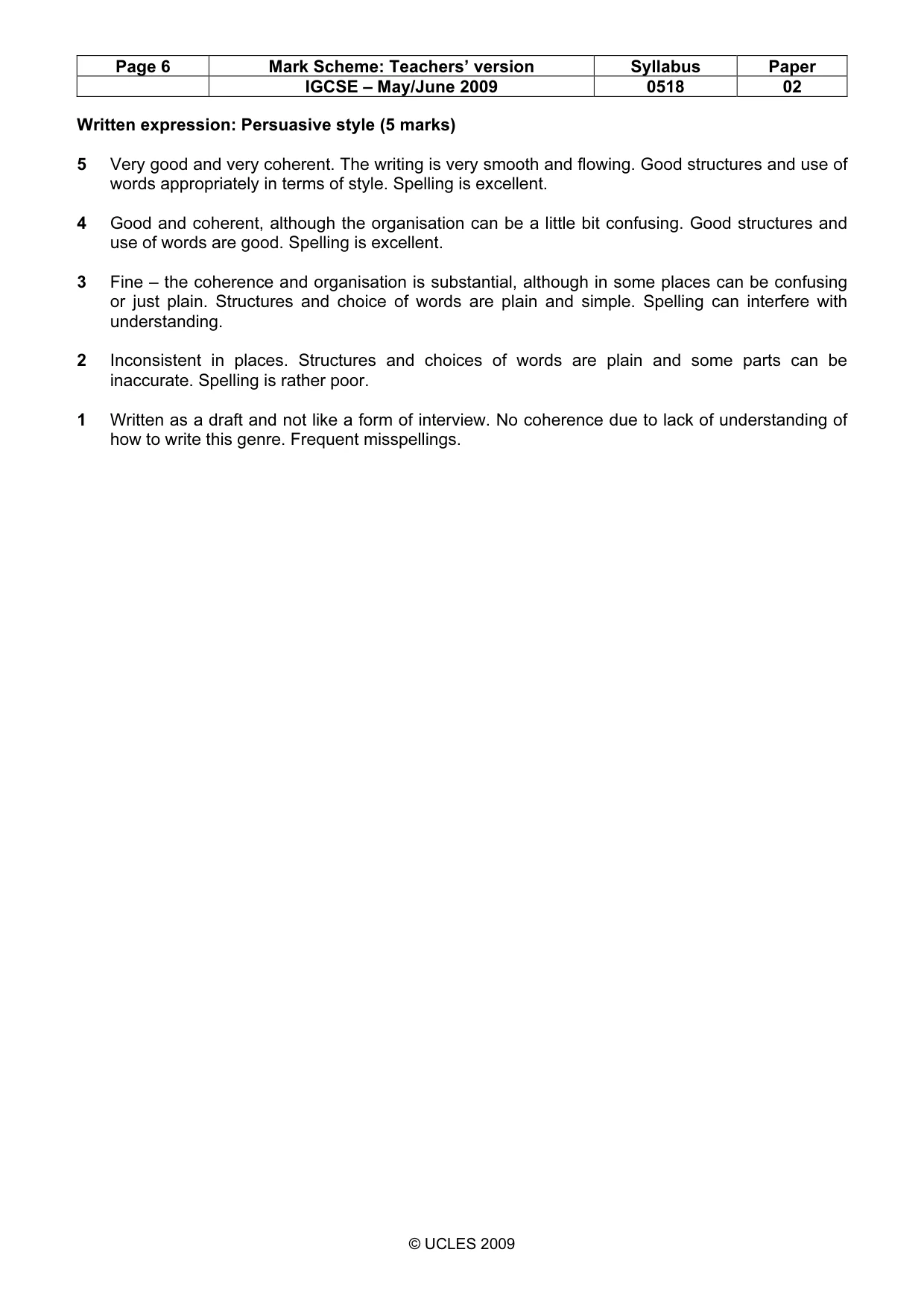
Page 6 Mark Scheme: Teachers’ version Syllabus Paper IGCSE – May/June 2009 0518 02 © UCLES 2009 Written expression: Persuasive style (5 marks) 5 Very good and very coherent. The writing is very smooth and flowing. Good structures and use of words appropriately in terms of style. Spelling is excellent. 4 Good and coherent, although the organisation can be a little bit confusing. Good structures and use of words are good. Spelling is excellent. 3 Fine – the coherence and organisation is substantial, although in some places can be confusing or just plain. Structures and choice of words are plain and simple. Spelling can interfere with understanding. 2 Inconsistent in places. Structures and choices of words are plain and some parts can be inaccurate. Spelling is rather poor. 1 Written as a draft and not like a form of interview. No coherence due to lack of understanding of how to write this genre. Frequent misspellings.
What you needed in this session
Cambridge’s own grade thresholds for 2009 May/June, Paper 2 · Variant 1. A higher threshold means an easier paper — the bar moves with how the cohort did.