Cambridge IGCSE Mathematics 0580 — 2014 May/June Paper 2 · Variant 3
0580/23/M/J/14 · 3 questions · 70 marks · ≈79 min
The question paper and its mark scheme, free to read here and free to download. This is Cambridge’s own paper, exactly as it was sat.
Question paper12 pages
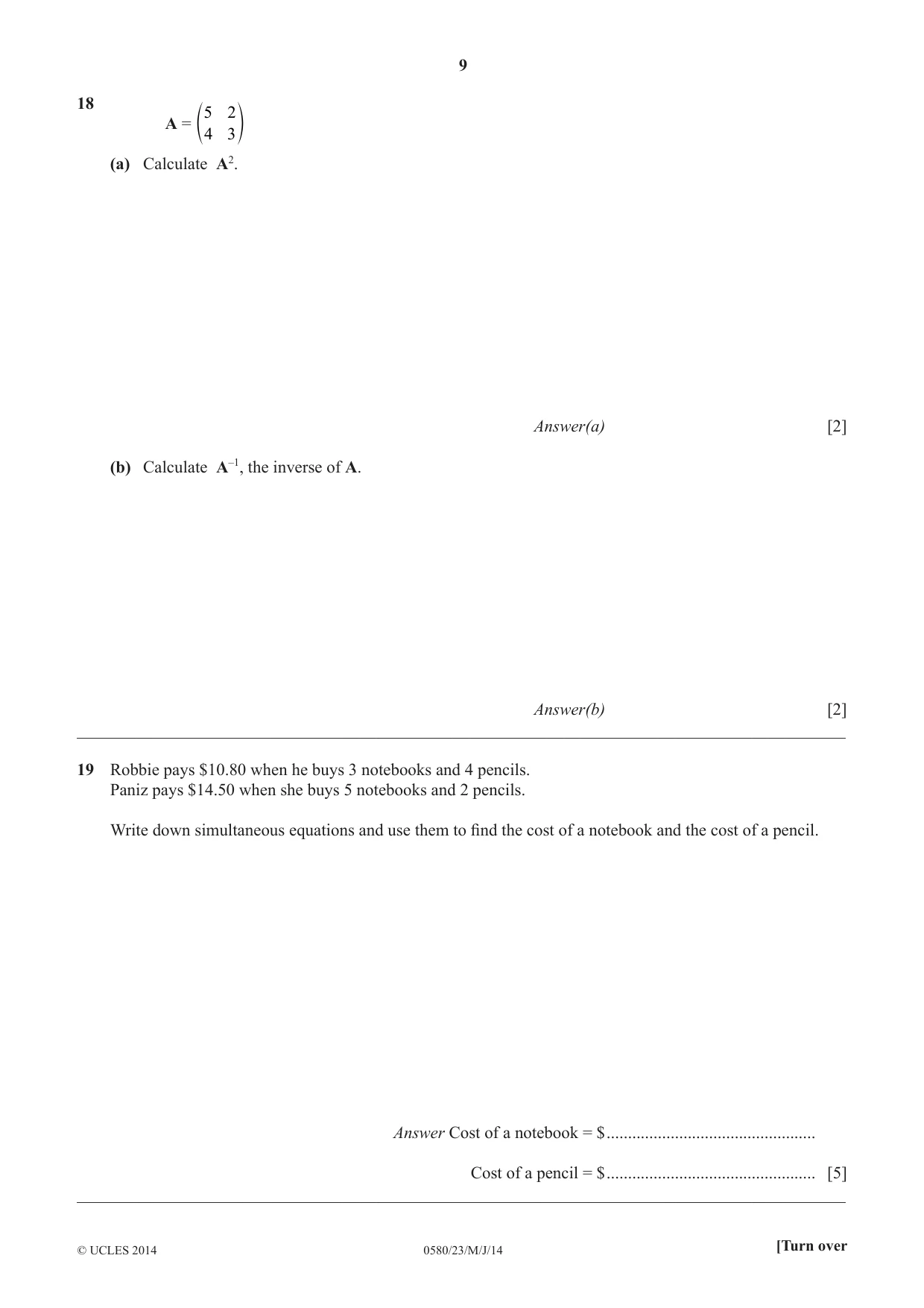
Mark scheme5 pages
Answers below. Sit the paper first if you are practising.
Questions as text
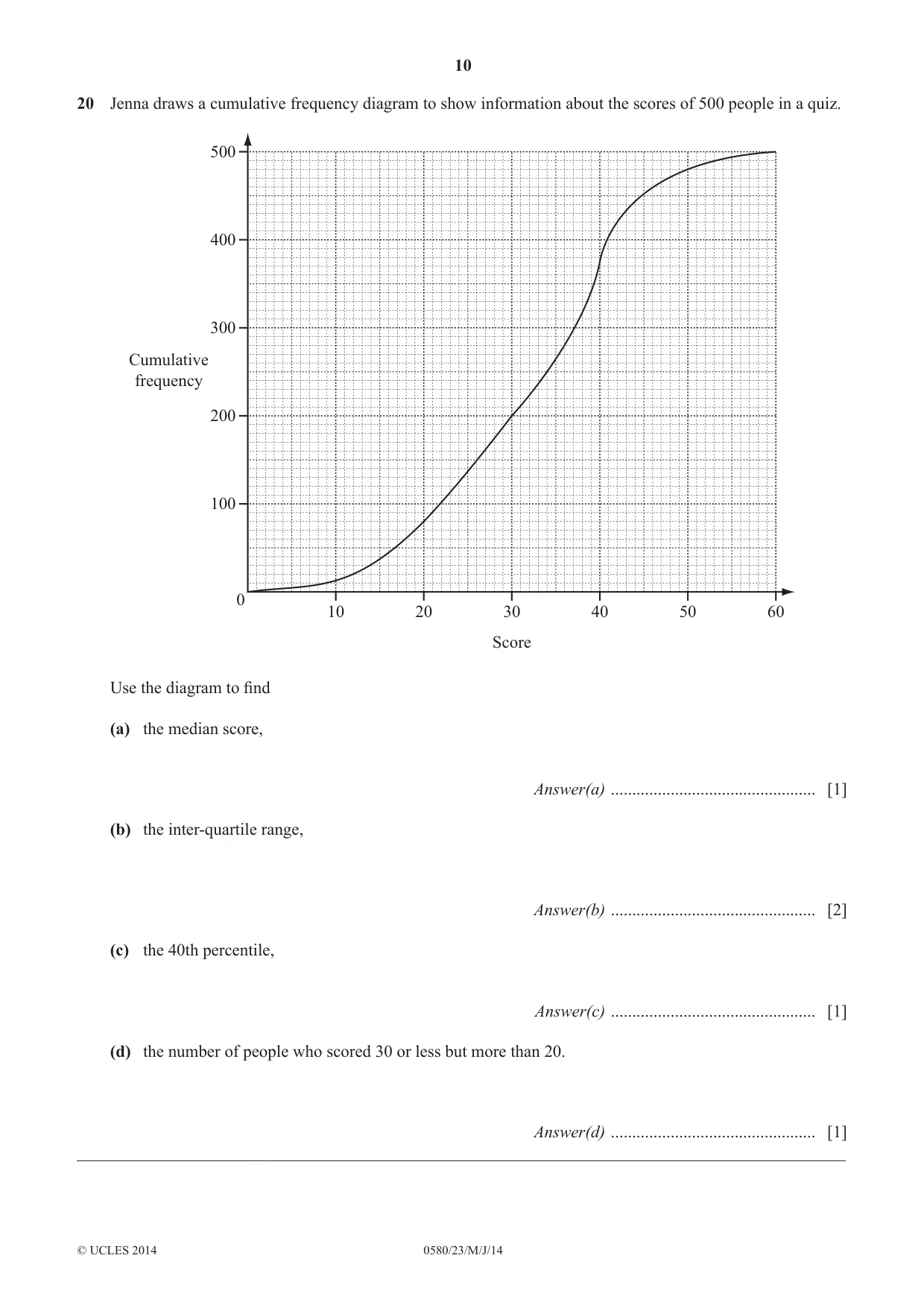
Q20 · Jenna draws a cumulative frequency diagram to show information about the scores of 500…
20 Jenna draws a cumulative frequency diagram to show information about the scores of 500 people in a quiz. 500 400 300 Cumulative frequency 200 100 0 10 20 30 40 50 60 Score Use the diagram to fi nd (a) the median score, Answer(a) ................................................ [1] (b) the inter-quartile range, Answer(b) ................................................ [2] (c) the 40th percentile, Answer(c) ................................................ [1] (d) the number of people who scored 30 or less but more than 20. Answer(d) ................................................ [1] __________________________________________________________________________________________
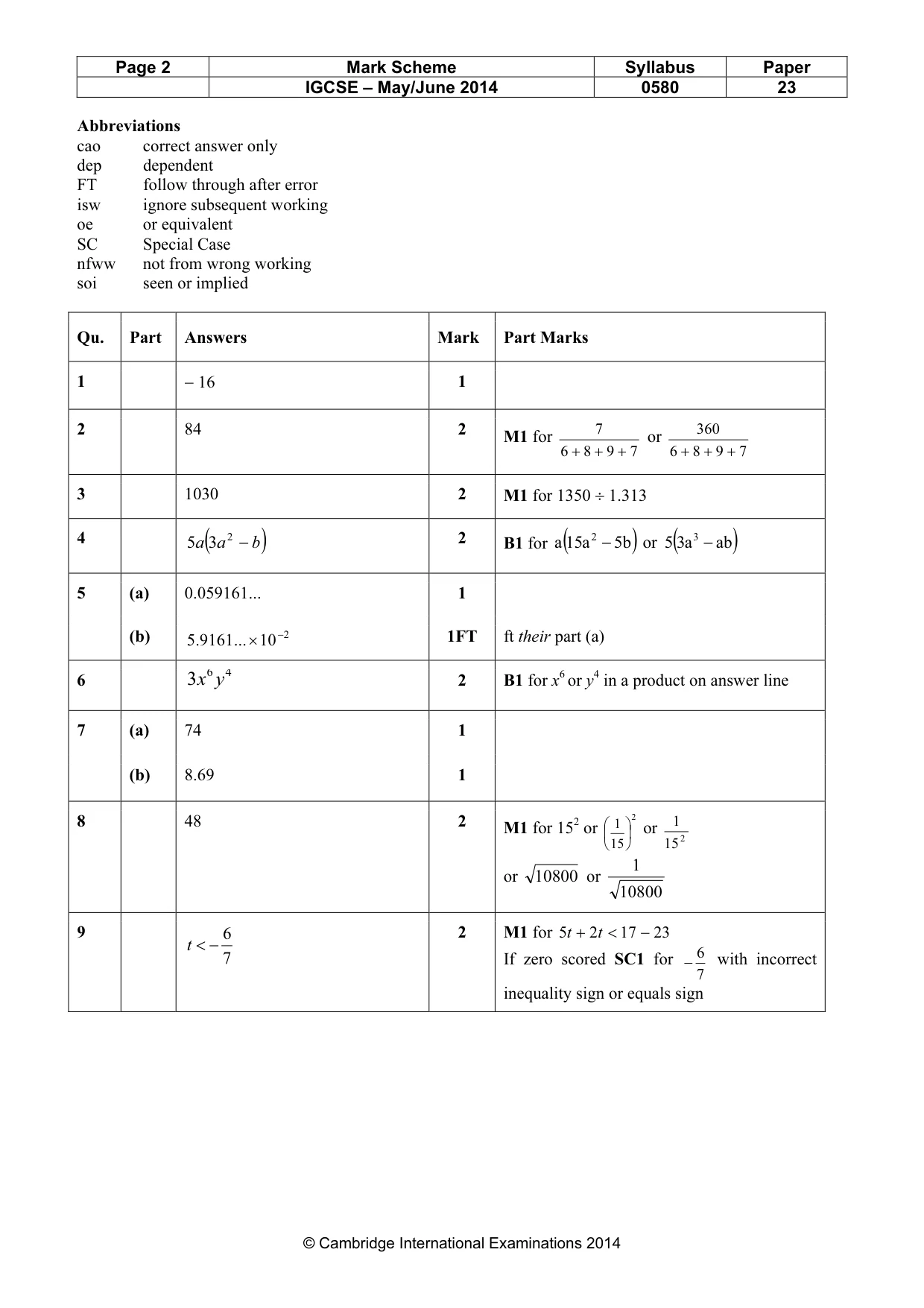
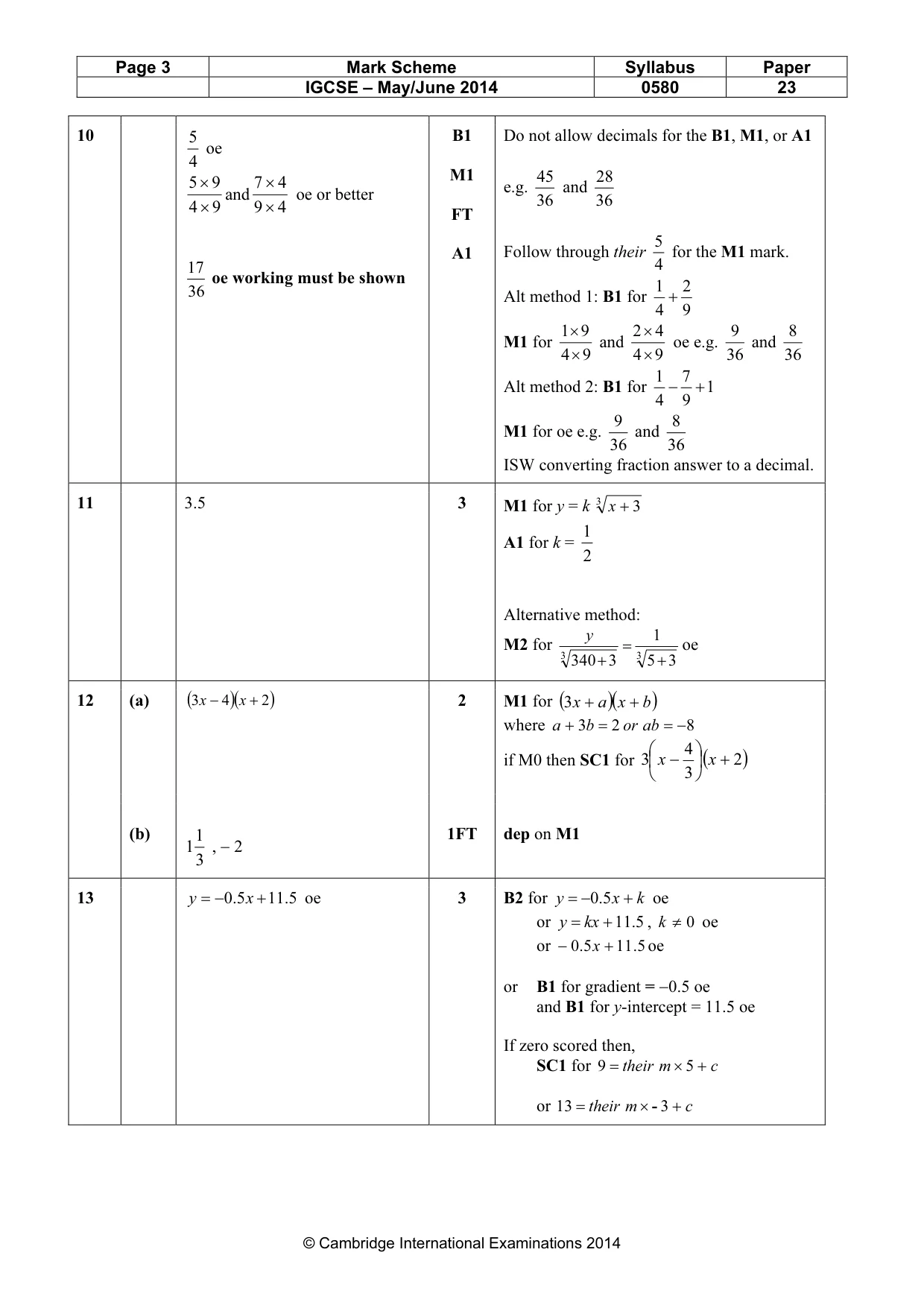
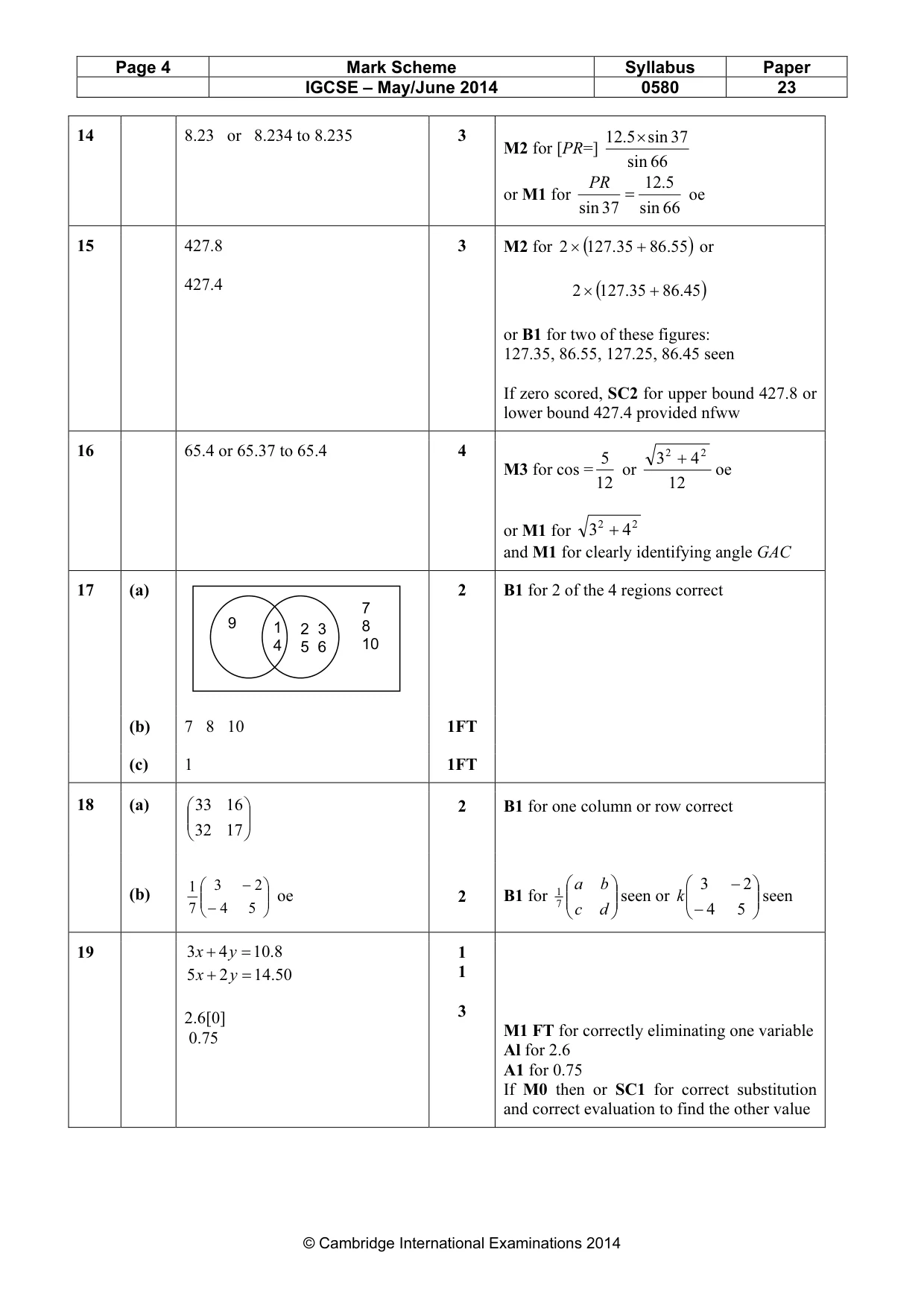
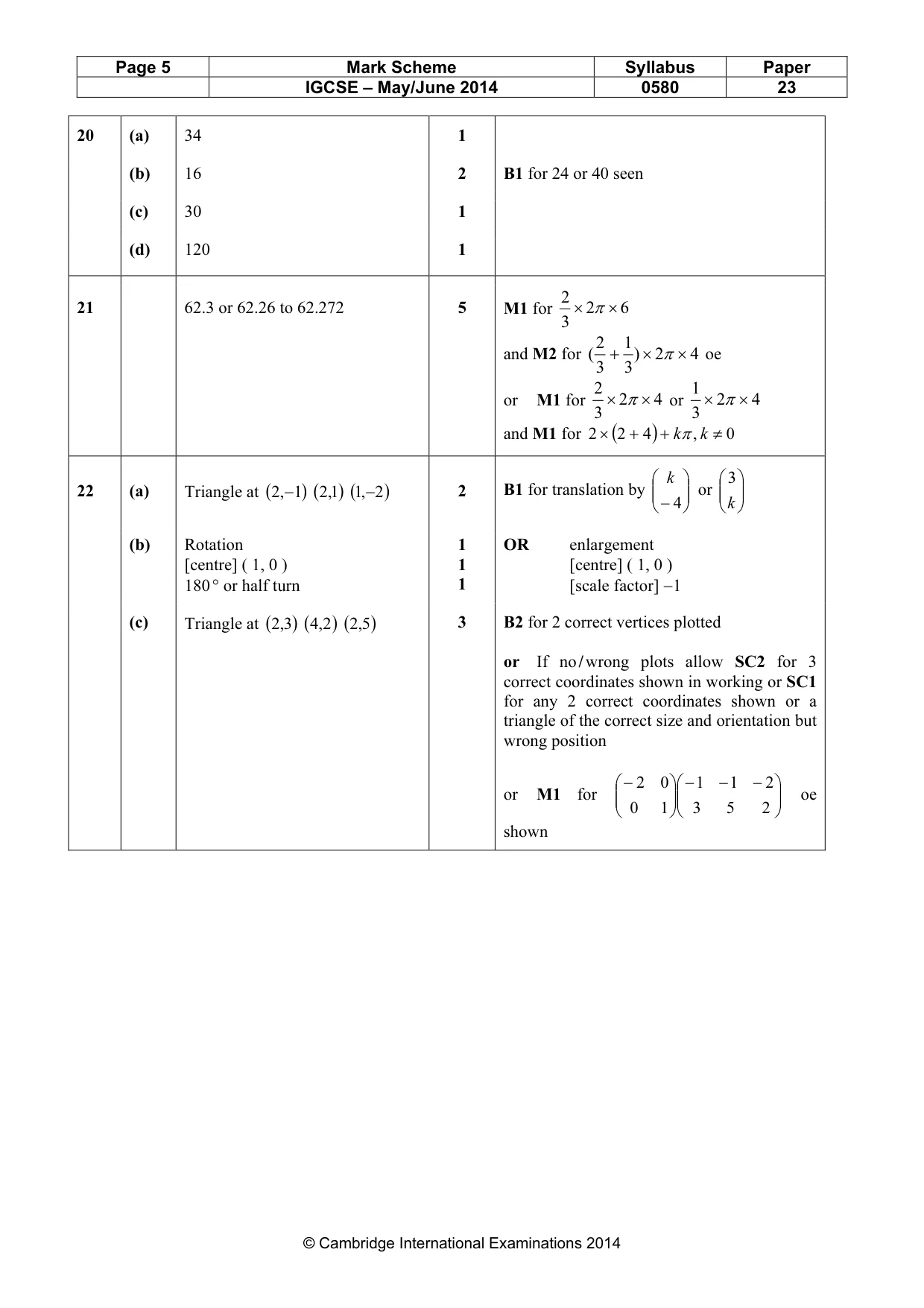
Mark scheme: 20 (a) 34 1 (b) 16 2 B1 for 24 or 40 seen (c) 30 1 (d) 120 1 2
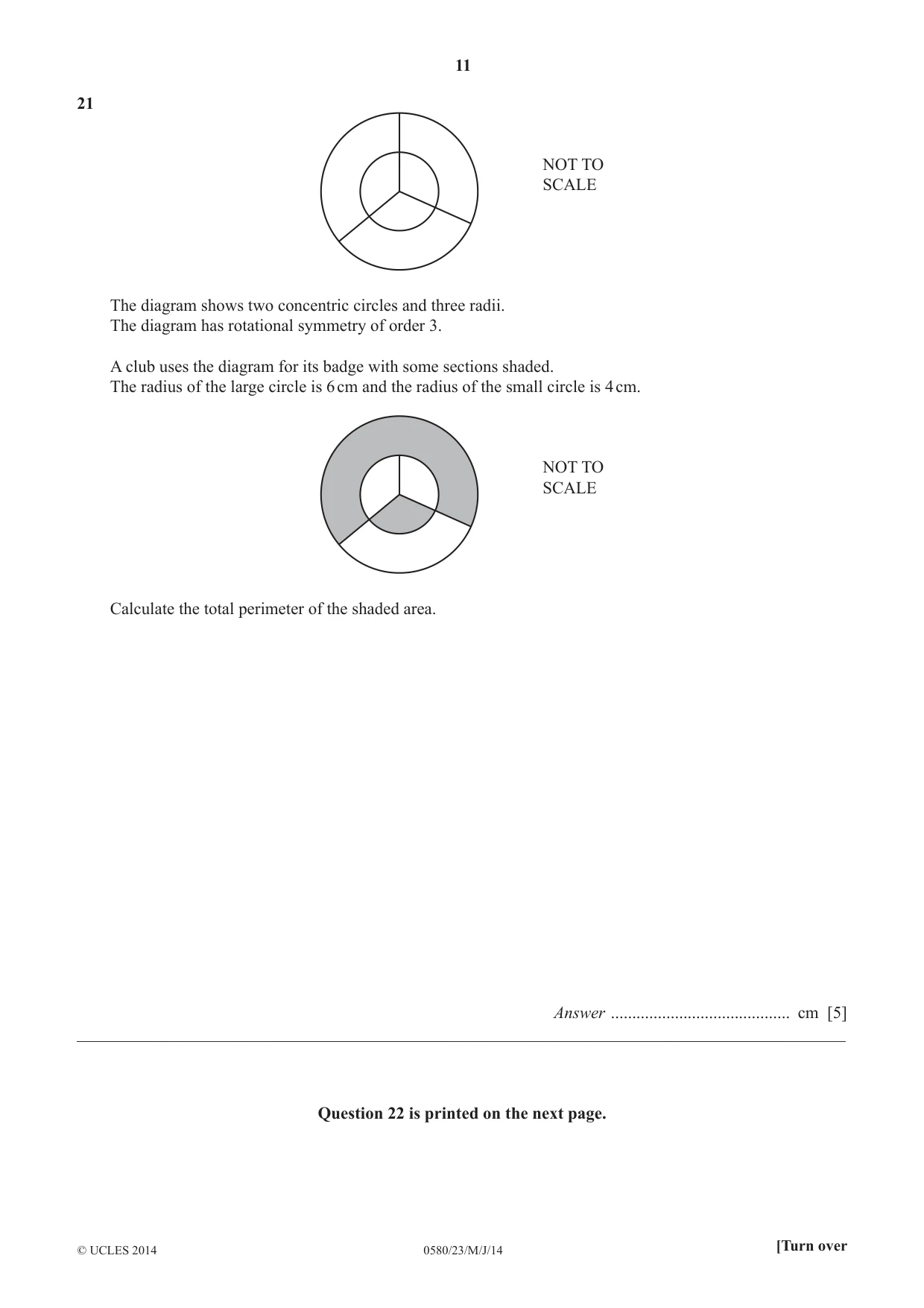
Q21 · NOT TO SCALE The diagram shows two concentric circles and three radii
21 NOT TO SCALE The diagram shows two concentric circles and three radii. The diagram has rotational symmetry of order 3. A club uses the diagram for its badge with some sections shaded. The radius of the large circle is 6 cm and the radius of the small circle is 4 cm. NOT TO SCALE Calculate the total perimeter of the shaded area. Answer .......................................... cm [5] __________________________________________________________________________________________ Question 22 is printed on the next page.
Mark scheme: 2 21 62.3 or 62.26 to 62.272 5 M1 for × 2π × 6 3 2 1 and M2 for ( + ) × 2π × 4 oe 3 3 2 1 or M1 for × 2π × 4 or × 2π × 4 3 3 and M1 for 2 × (2 + 4 ) + kπ , k ≠ 0 ( ) ( ) ( ) 1 f l i b k 3
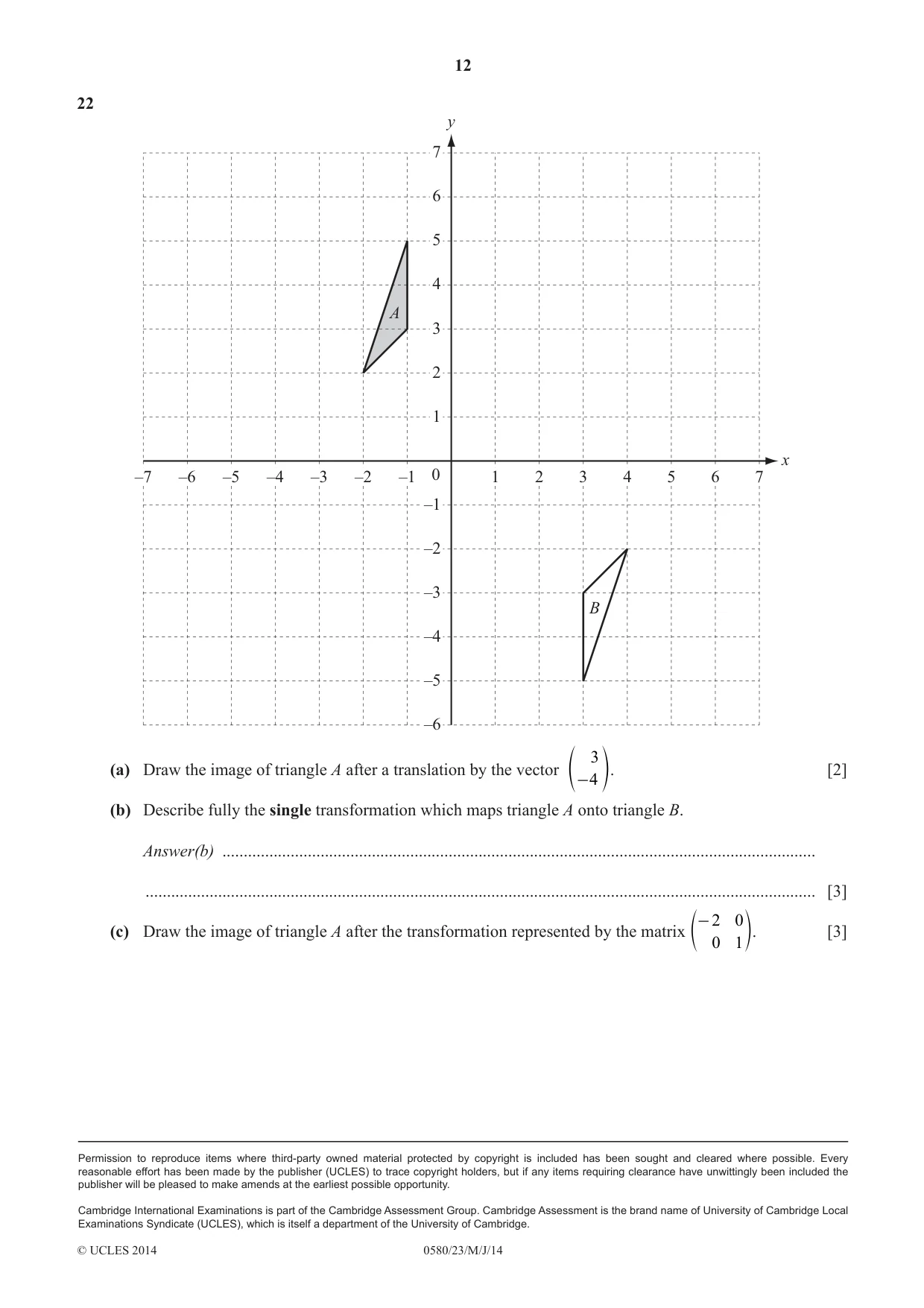
Q22 · Y 7 6 5 4 A 3 2 1 x –7 –6 –5 –4 –3 –2 –1 0 1 2 3 4 5 6 7 –1 –2 –3 B –4 –5 –6 3 (a) Draw…
22 y 7 6 5 4 A 3 2 1 x –7 –6 –5 –4 –3 –2 –1 0 1 2 3 4 5 6 7 –1 –2 –3 B –4 –5 –6 3 (a) Draw the image of triangle A after a translation by the vector [2] 4 e - o. (b) Describe fully the single transformation which maps triangle A onto triangle B. Answer(b) ........................................................................................................................................... ............................................................................................................................................................. [3] - 2 0 (c) Draw the image of triangle A after the transformation represented by the matrix [3] e 0 1 o.
Mark scheme: 22 (a) Triangle at ( ,2 −1) ( 1,2) (,1 −2 ) 2 B1 for translation by or −4 k (b) Rotation 1 OR enlargement [centre] ( 1, 0 ) 1 [centre] ( 1, 0 ) 180 ° or half turn 1 [scale factor] −1 (c) Triangle at ( 3,2) ( 2,4 ) ( 5,2 ) 3 B2 for 2 correct vertices plotted or If no / wrong plots allow SC2 for 3 correct coordinates shown in working or SC1 for any 2 correct coordinates shown or a triangle of the correct size and orientation but wrong position − 2 0 − 1 − 1 − 2 or M1 for oe 0 1 3 5 2 shown
What was in this paper
The subtopics covered by these 3 questions, and how many questions each got. Open one in a new tab to see every Cambridge question on it.
What you needed in this session
Cambridge’s own grade thresholds for 2014 May/June, Paper 2 · Variant 3. A higher threshold means an easier paper — the bar moves with how the cohort did.