Cambridge IGCSE Food and Nutrition 0648 — 2014 Oct/Nov Paper 1 · Variant 3
0648/13/O/N/14 · 100 marks · ≈113 min
The question paper and its mark scheme, free to read here and free to download. This is Cambridge’s own paper, exactly as it was sat.
Question paper12 pages
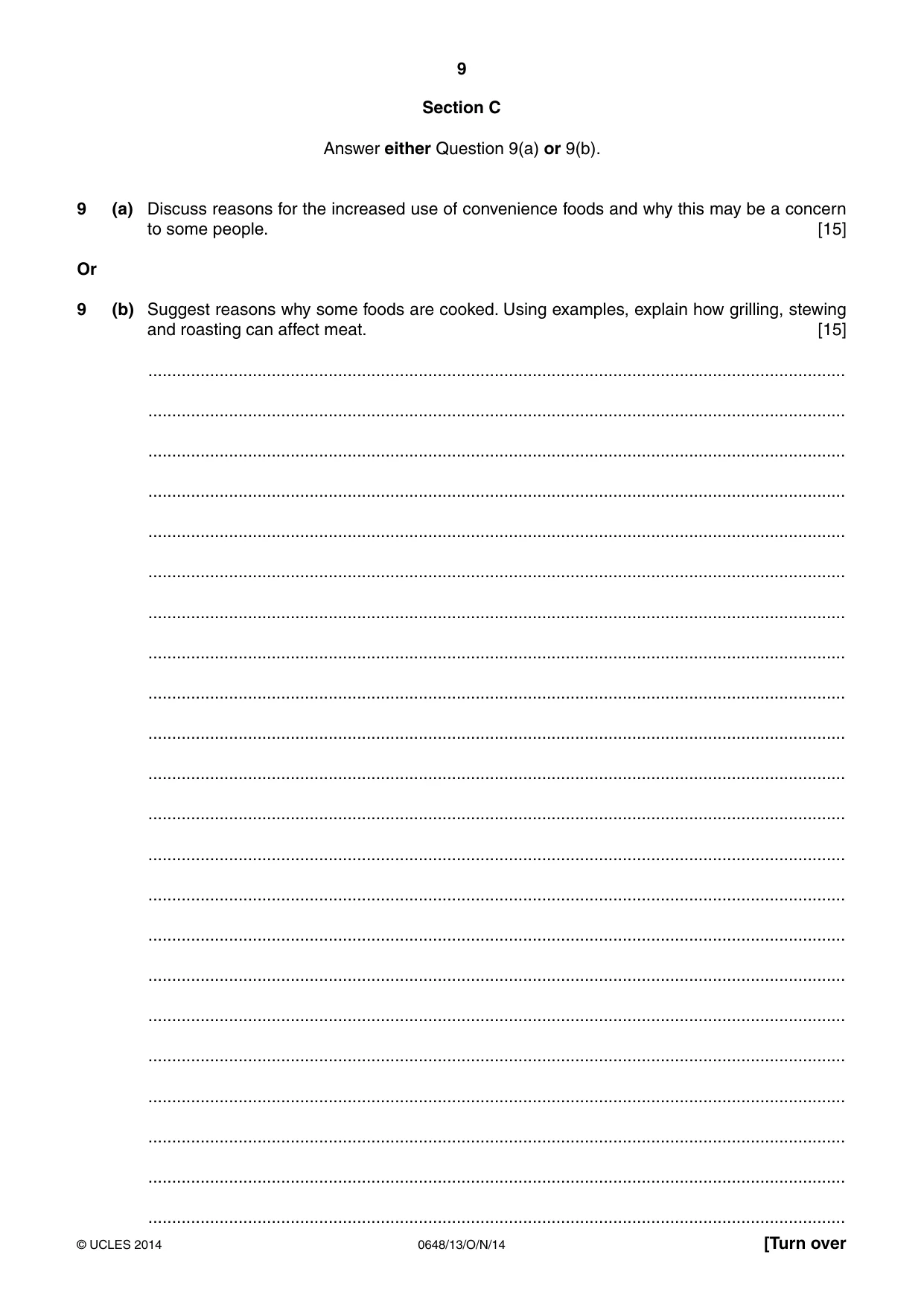


Mark scheme11 pages
Answers below. Sit the paper first if you are practising.
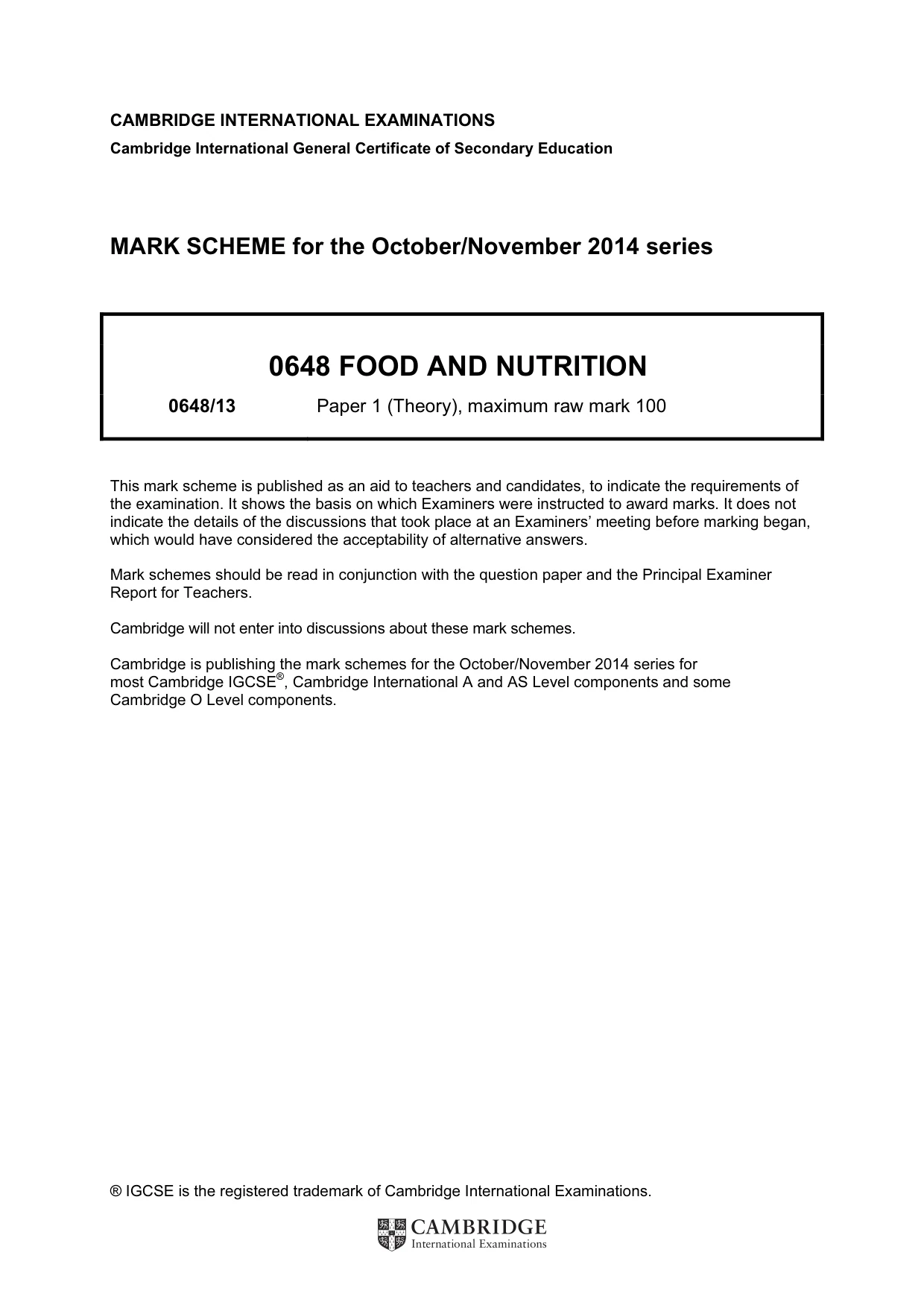
Paper as text
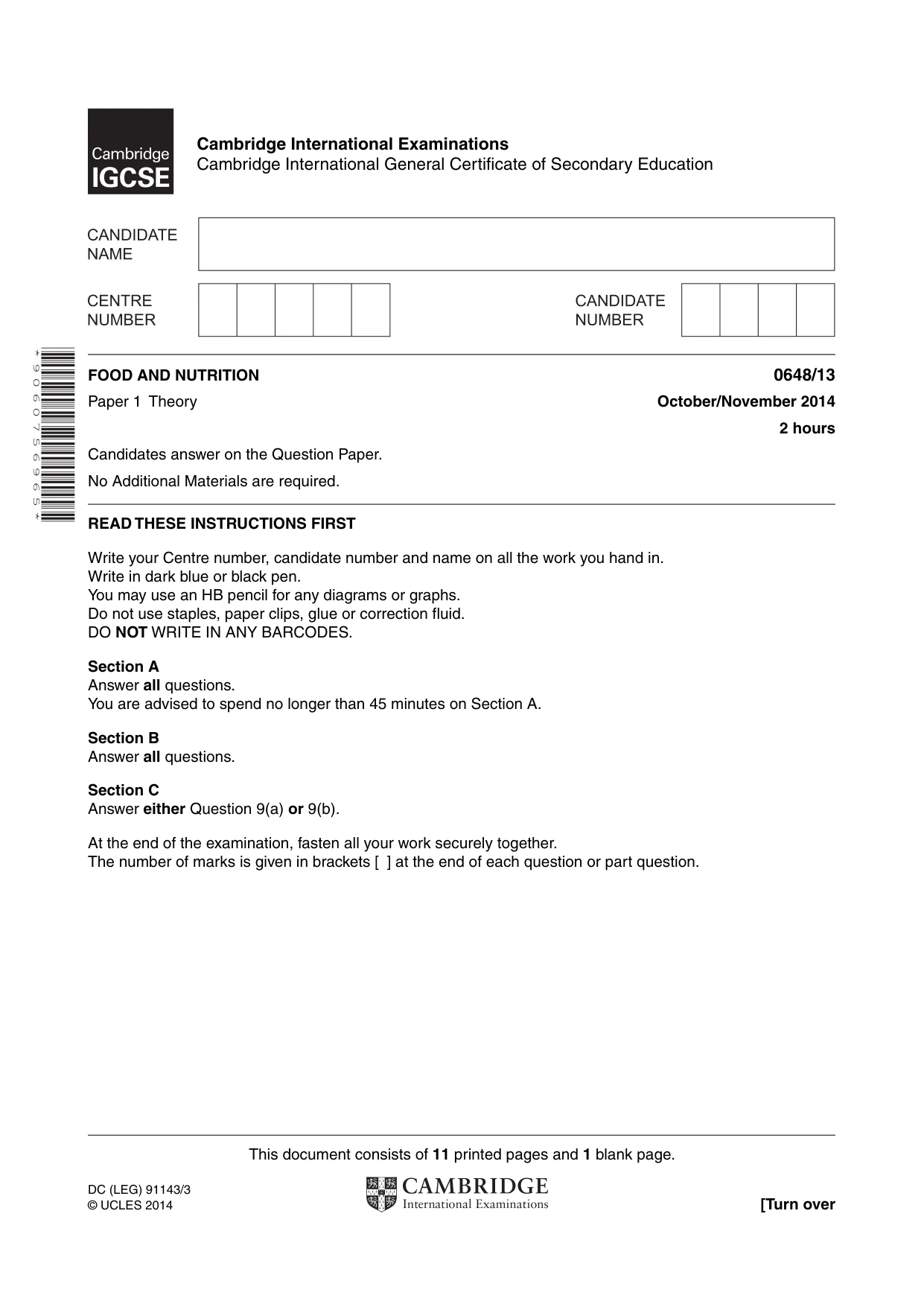
Question paper, page 1
This document consists of 11 printed pages and 1 blank page. DC (LEG) 91143/3 © UCLES 2014 [Turn over Cambridge International Examinations Cambridge International General Certificate of Secondary Education * 9 0 6 0 7 5 6 9 6 5 * FOOD AND NUTRITION 0648/13 Paper 1 Theory October/November 2014 2 hours Candidates answer on the Question Paper. No Additional Materials are required. READ THESE INSTRUCTIONS FIRST Write your Centre number, candidate number and name on all the work you hand in. Write in dark blue or black pen. You may use an HB pencil for any diagrams or graphs. Do not use staples, paper clips, glue or correction fluid. DO NOT WRITE IN ANY BARCODES. Section A Answer all questions. You are advised to spend no longer than 45 minutes on Section A. Section B Answer all questions. Section C Answer either Question 9(a) or 9(b). At the end of the examination, fasten all your work securely together. The number of marks is given in brackets [ ] at the end of each question or part question.
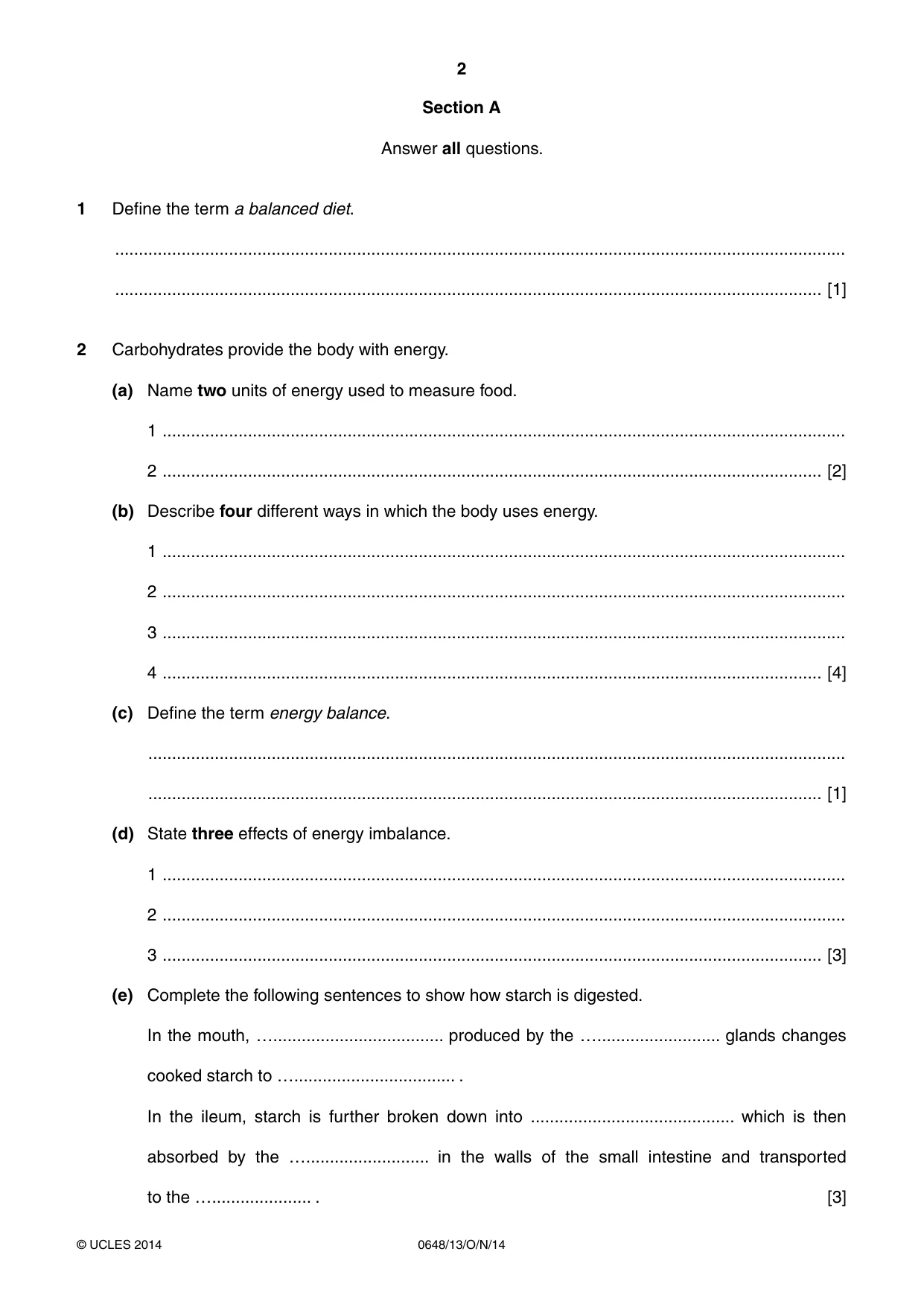
Question paper, page 2
2 0648/13/O/N/14 © UCLES 2014 Section A Answer all questions. 1 Define the term a balanced diet. … … [1] 2 Carbohydrates provide the body with energy. (a) Name two units of energy used to measure food. 1 … 2 … [2] (b) Describe four different ways in which the body uses energy. 1 … 2 … 3 … 4 … [4] (c) Define the term energy balance. … … [1] (d) State three effects of energy imbalance. 1 … 2 … 3 … [3] (e) Complete the following sentences to show how starch is digested. In the mouth, …… produced by the …… glands changes cooked starch to …… . In the ileum, starch is further broken down into … which is then absorbed by the …… in the walls of the small intestine and transported to the …… . [3]
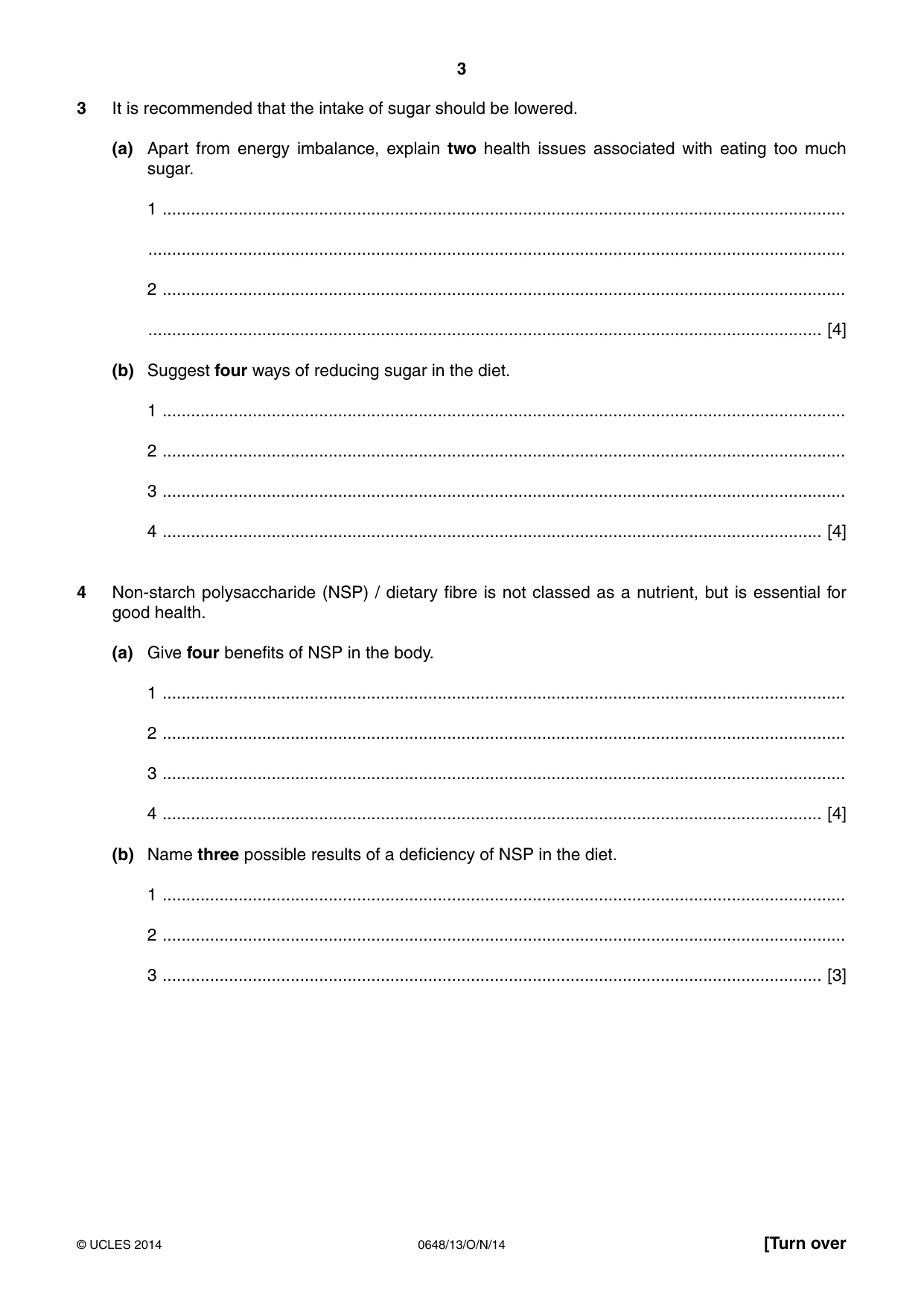
Question paper, page 3
3 0648/13/O/N/14 © UCLES 2014 [Turn over 3 It is recommended that the intake of sugar should be lowered. (a) Apart from energy imbalance, explain two health issues associated with eating too much sugar. 1 … … 2 … … [4] (b) Suggest four ways of reducing sugar in the diet. 1 … 2 … 3 … 4 … [4] 4 Non-starch polysaccharide (NSP) / dietary fibre is not classed as a nutrient, but is essential for good health. (a) Give four benefits of NSP in the body. 1 … 2 … 3 … 4 … [4] (b) Name three possible results of a deficiency of NSP in the diet. 1 … 2 … 3 … [3]
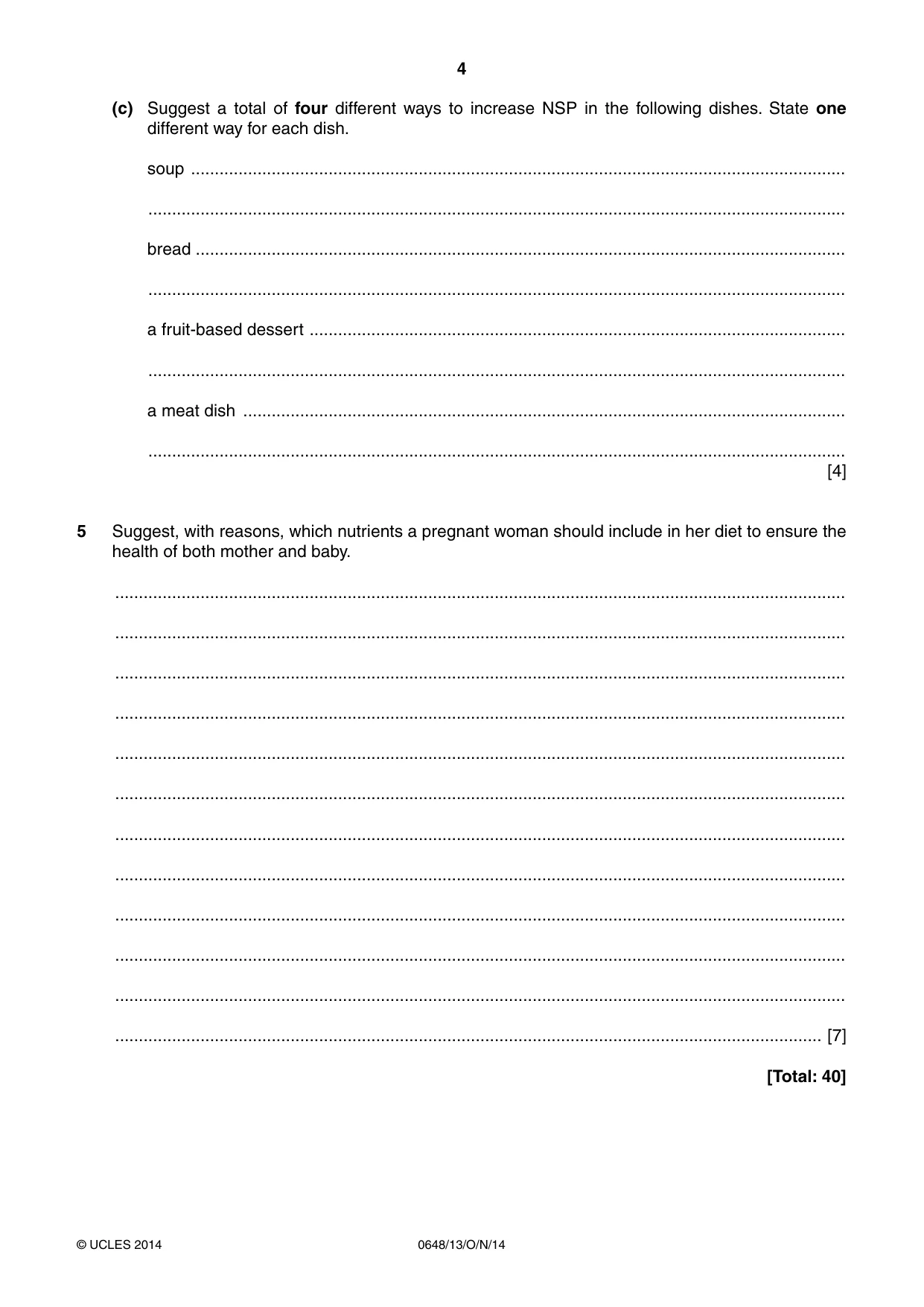
Question paper, page 4
4 0648/13/O/N/14 © UCLES 2014 (c) Suggest a total of four different ways to increase NSP in the following dishes. State one different way for each dish. soup … … bread … … a fruit-based dessert … … a meat dish … … [4] 5 Suggest, with reasons, which nutrients a pregnant woman should include in her diet to ensure the health of both mother and baby. … … … … … … … … … … … … [7] [Total: 40]
Question paper, page 5
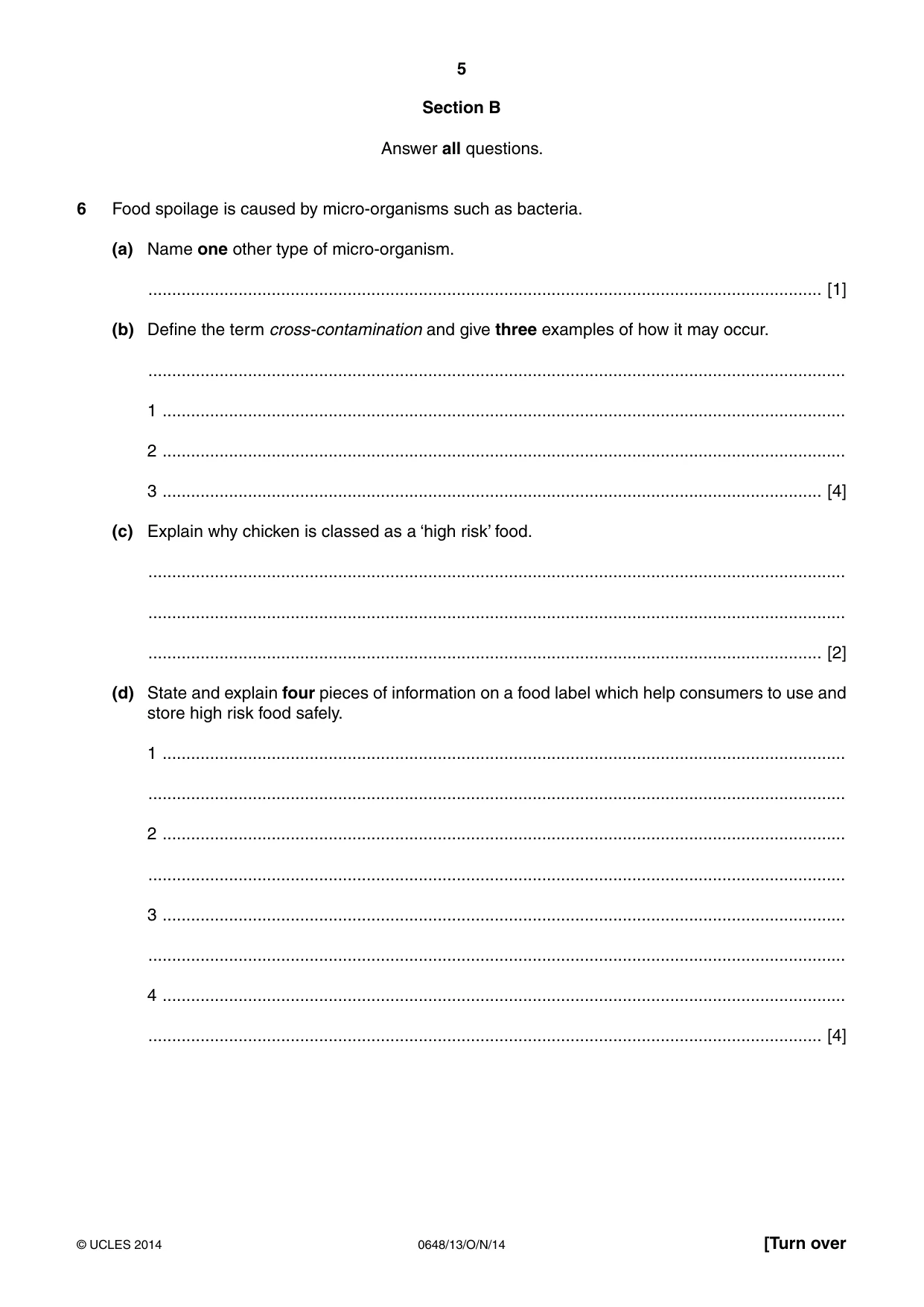
5 0648/13/O/N/14 © UCLES 2014 [Turn over Section B Answer all questions. 6 Food spoilage is caused by micro-organisms such as bacteria. (a) Name one other type of micro-organism. … [1] (b) Define the term cross-contamination and give three examples of how it may occur. … 1 … 2 … 3 … [4] (c) Explain why chicken is classed as a ‘high risk’ food. … … … [2] (d) State and explain four pieces of information on a food label which help consumers to use and store high risk food safely. 1 … … 2 … … 3 … … 4 … … [4]
Question paper, page 6
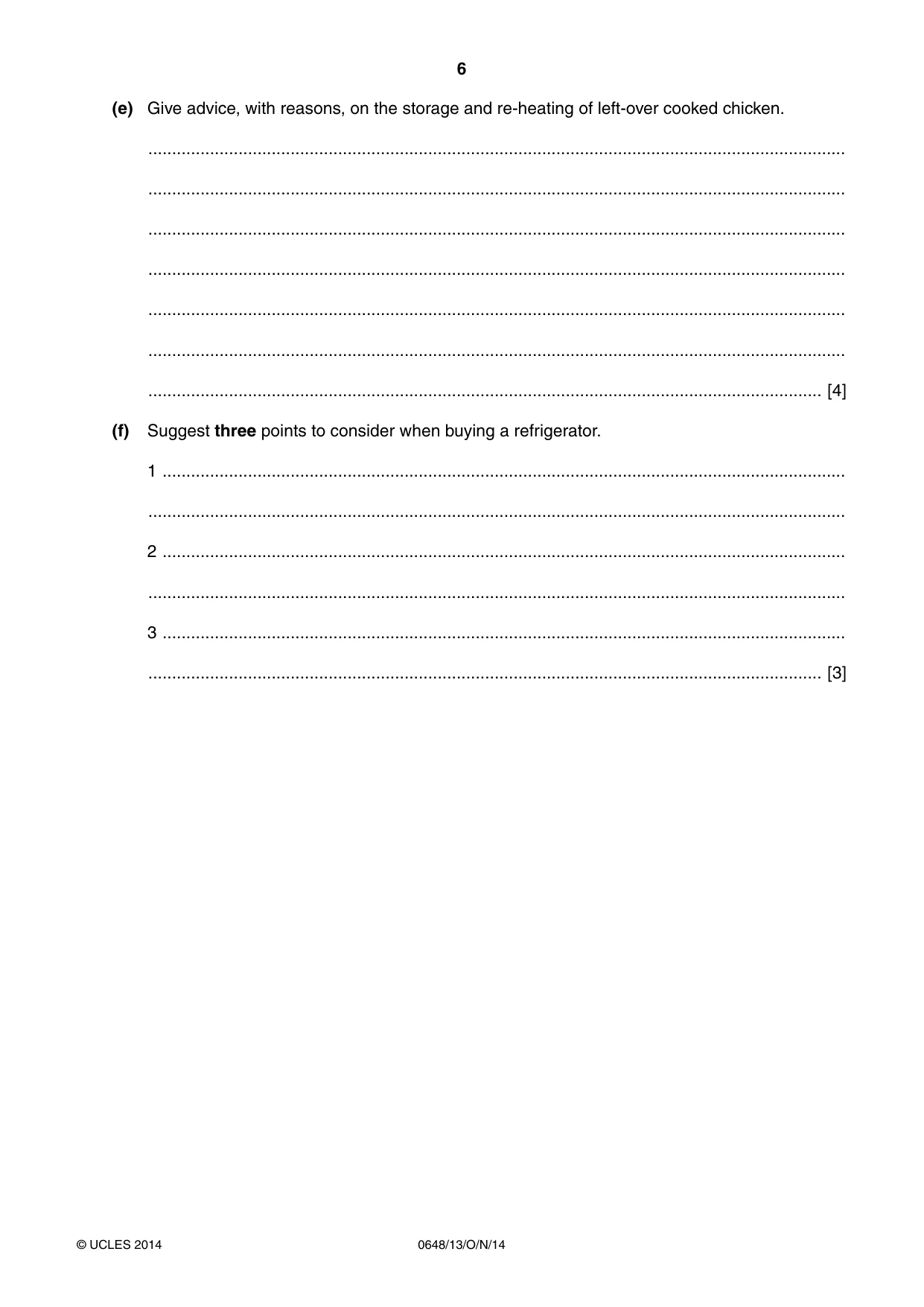
6 0648/13/O/N/14 © UCLES 2014 (e) Give advice, with reasons, on the storage and re-heating of left-over cooked chicken. … … … … … … … [4] (f) Suggest three points to consider when buying a refrigerator. 1 … … 2 … … 3 … … [3]
Question paper, page 7
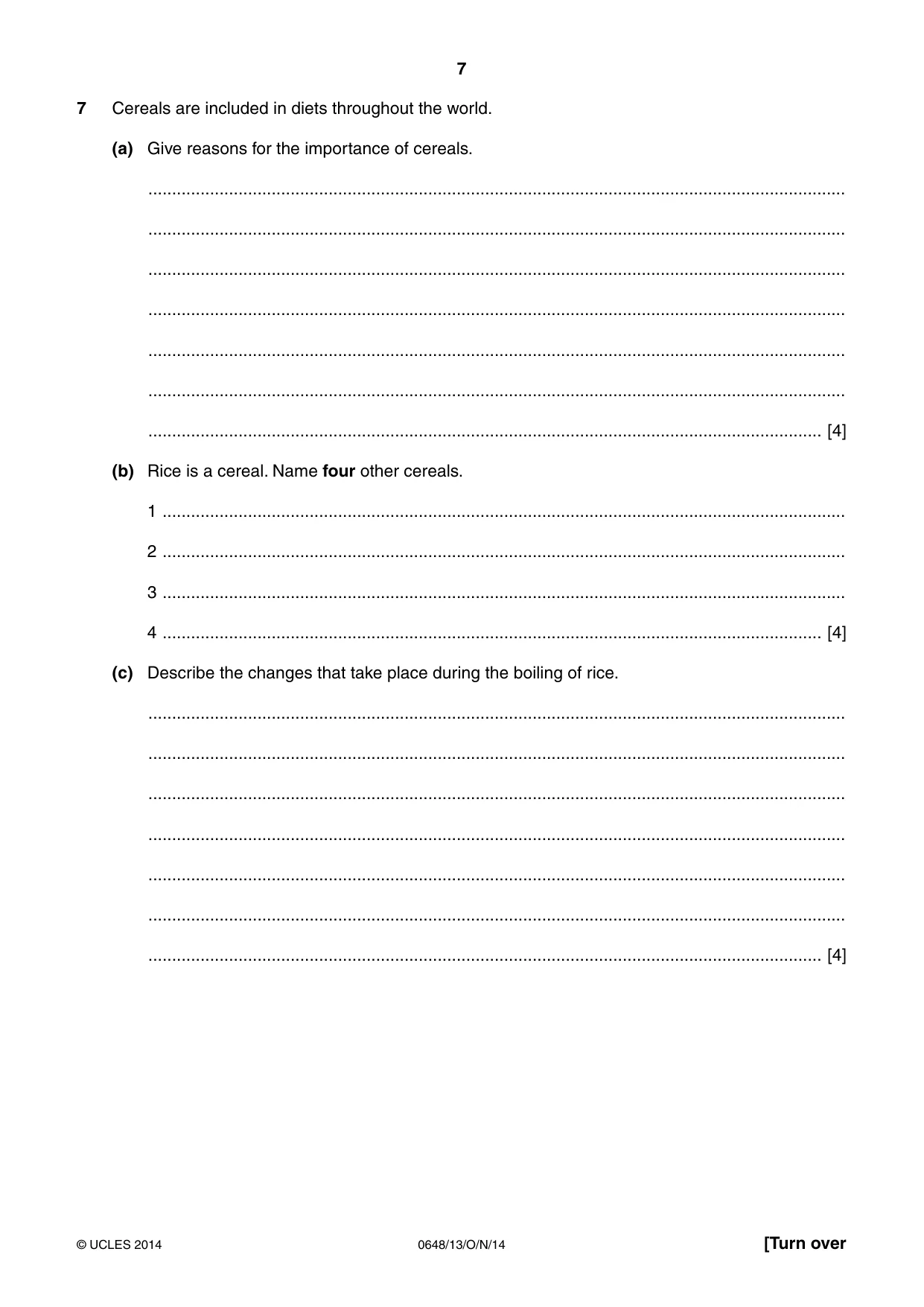
7 0648/13/O/N/14 © UCLES 2014 [Turn over 7 Cereals are included in diets throughout the world. (a) Give reasons for the importance of cereals. … … … … … … … [4] (b) Rice is a cereal. Name four other cereals. 1 … 2 … 3 … 4 … [4] (c) Describe the changes that take place during the boiling of rice. … … … … … … … [4]
Question paper, page 8
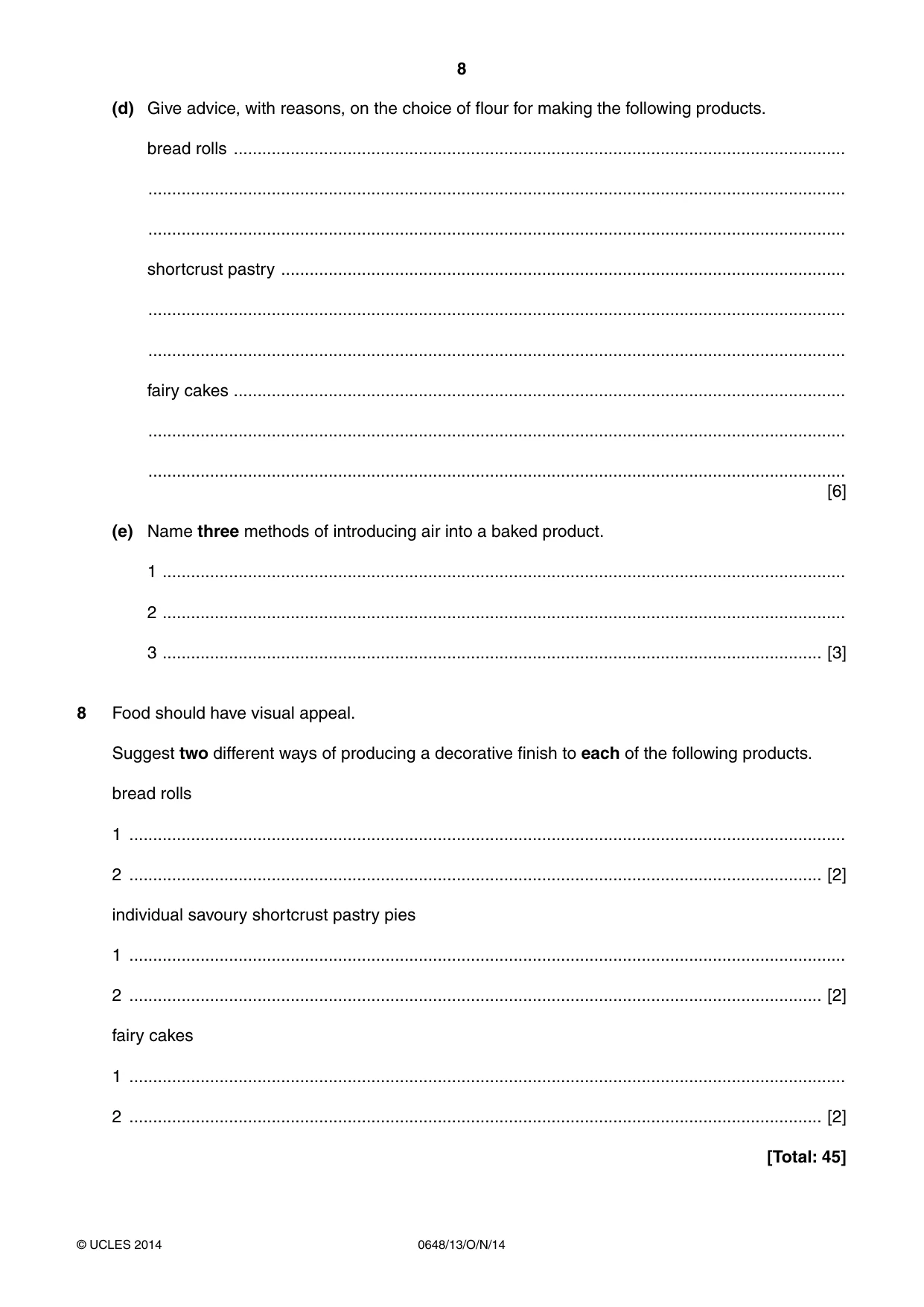
8 0648/13/O/N/14 © UCLES 2014 (d) Give advice, with reasons, on the choice of flour for making the following products. bread rolls … … … shortcrust pastry … … … fairy cakes … … … [6] (e) Name three methods of introducing air into a baked product. 1 … 2 … 3 … [3] 8 Food should have visual appeal. Suggest two different ways of producing a decorative finish to each of the following products. bread rolls 1 … 2 … [2] individual savoury shortcrust pastry pies 1 … 2 … [2] fairy cakes 1 … 2 … [2] [Total: 45]
Question paper, page 9
9 0648/13/O/N/14 © UCLES 2014 [Turn over Section C Answer either Question 9(a) or 9(b). 9 (a) Discuss reasons for the increased use of convenience foods and why this may be a concern to some people. [15] Or 9 (b) Suggest reasons why some foods are cooked. Using examples, explain how grilling, stewing and roasting can affect meat. [15] … … … … … … … … … … … … … … … … … … … … … …
Question paper, page 10
10 0648/13/O/N/14 © UCLES 2014 … … … … … … … … … … … … … … … … … … … … … … … … … … … …
Question paper, page 11
11 0648/13/O/N/14 © UCLES 2014 … … … … … … … … … … … … … … … … … … … … … … … … … … [Total: 15]
Question paper, page 12
12 0648/13/O/N/14 © UCLES 2014 Permission to reproduce items where third-party owned material protected by copyright is included has been sought and cleared where possible. Every reasonable effort has been made by the publisher (UCLES) to trace copyright holders, but if any items requiring clearance have unwittingly been included, the publisher will be pleased to make amends at the earliest possible opportunity. Cambridge International Examinations is part of the Cambridge Assessment Group. Cambridge Assessment is the brand name of University of Cambridge Local Examinations Syndicate (UCLES), which is itself a department of the University of Cambridge. BLANK PAGE
Mark scheme, page 1
® IGCSE is the registered trademark of Cambridge International Examinations. CAMBRIDGE INTERNATIONAL EXAMINATIONS Cambridge International General Certificate of Secondary Education MARK SCHEME for the October/November 2014 series 0648 FOOD AND NUTRITION 0648/13 Paper 1 (Theory), maximum raw mark 100 This mark scheme is published as an aid to teachers and candidates, to indicate the requirements of the examination. It shows the basis on which Examiners were instructed to award marks. It does not indicate the details of the discussions that took place at an Examiners’ meeting before marking began, which would have considered the acceptability of alternative answers. Mark schemes should be read in conjunction with the question paper and the Principal Examiner Report for Teachers. Cambridge will not enter into discussions about these mark schemes. Cambridge is publishing the mark schemes for the October/November 2014 series for most Cambridge IGCSE®, Cambridge International A and AS Level components and some Cambridge O Level components.
Mark scheme, page 2
Page 2 Mark Scheme Syllabus Paper Cambridge IGCSE – October/November 2014 0648 13 © Cambridge International Examinations 2014 Mark schemes will use these abbreviations • ; separates points worth 1 mark • – separates points worth less than 1 mark • / alternatives • R reject • A accept (for answers correctly cued by the question) • I ignore as irrelevant • ecf error carried forward • AW alternative wording (where responses vary more than usual) • AVP alternative valid point • ORA or reverse argument • underline actual word given must be used by candidate • ( ) the word / phrase in brackets is not required but sets the context • max indicates the maximum number of marks • italics used to denote words or phrases from the question
Mark scheme, page 3
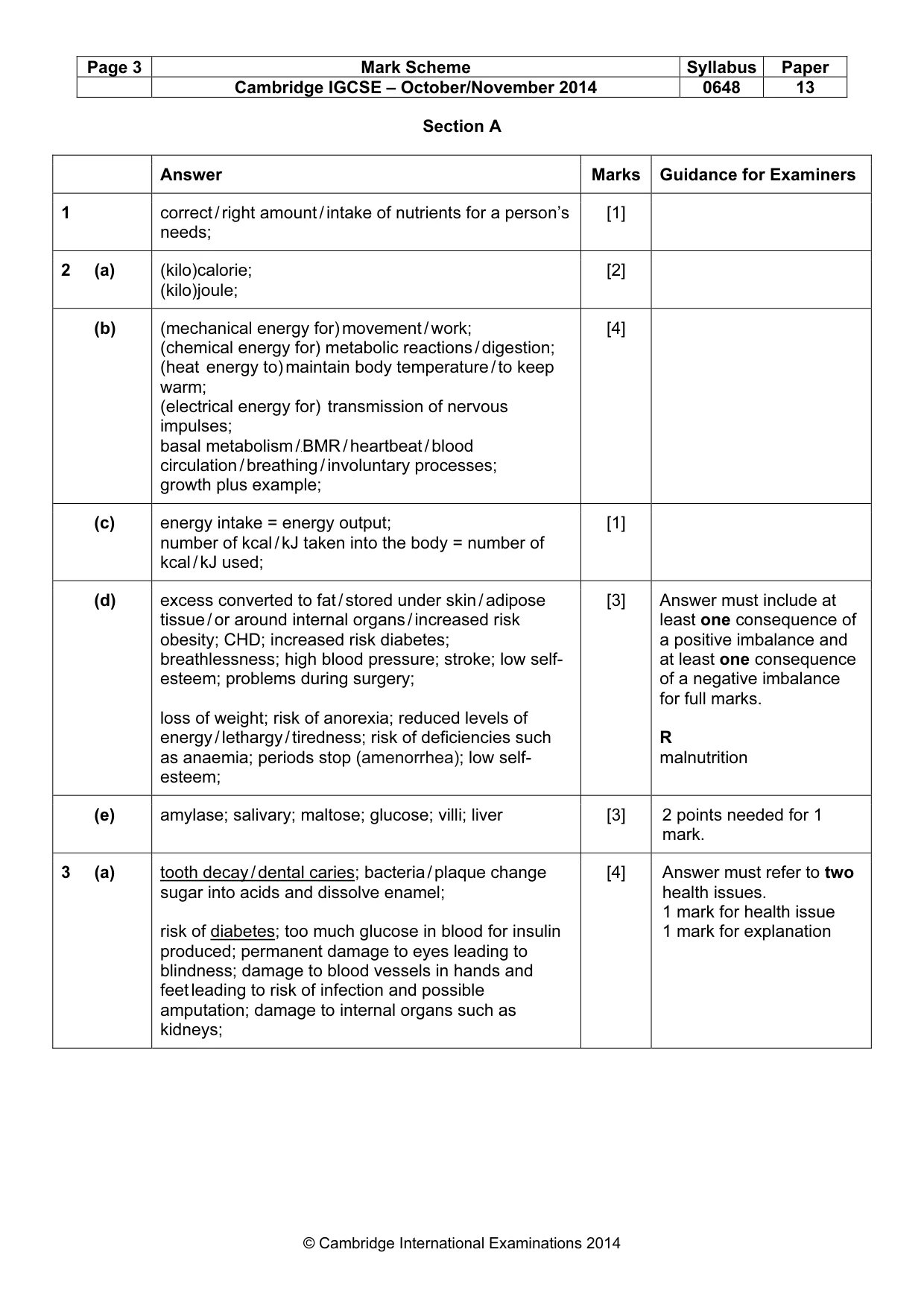
Page 3 Mark Scheme Syllabus Paper Cambridge IGCSE – October/November 2014 0648 13 © Cambridge International Examinations 2014 Section A Answer Marks Guidance for Examiners 1 correct / right amount / intake of nutrients for a person’s needs; [1] 2 (a) (kilo)calorie; (kilo)joule; [2] (b) (mechanical energy for) movement / work; (chemical energy for) metabolic reactions / digestion; (heat energy to) maintain body temperature / to keep warm; (electrical energy for) transmission of nervous impulses; basal metabolism /.BMR / heartbeat / blood circulation / breathing / involuntary processes; growth plus example; [4] (c) energy intake = energy output; number of kcal / kJ taken into the body = number of kcal / kJ used; [1] (d) excess converted to fat / stored under skin / adipose tissue / or around internal organs / increased risk obesity; CHD; increased risk diabetes; breathlessness; high blood pressure; stroke; low self- esteem; problems during surgery; loss of weight; risk of anorexia; reduced levels of energy / lethargy / tiredness; risk of deficiencies such as anaemia; periods stop (amenorrhea); low self- esteem; [3] Answer must include at least one consequence of a positive imbalance and at least one consequence of a negative imbalance for full marks. R malnutrition (e) amylase; salivary; maltose; glucose; villi; liver [3] 2 points needed for 1 mark. 3 (a) tooth decay / dental caries; bacteria / plaque change sugar into acids and dissolve enamel; risk of diabetes; too much glucose in blood for insulin produced; permanent damage to eyes leading to blindness; damage to blood vessels in hands and feet leading to risk of infection and possible amputation; damage to internal organs such as kidneys; [4] Answer must refer to two health issues. 1 mark for health issue 1 mark for explanation
Mark scheme, page 4
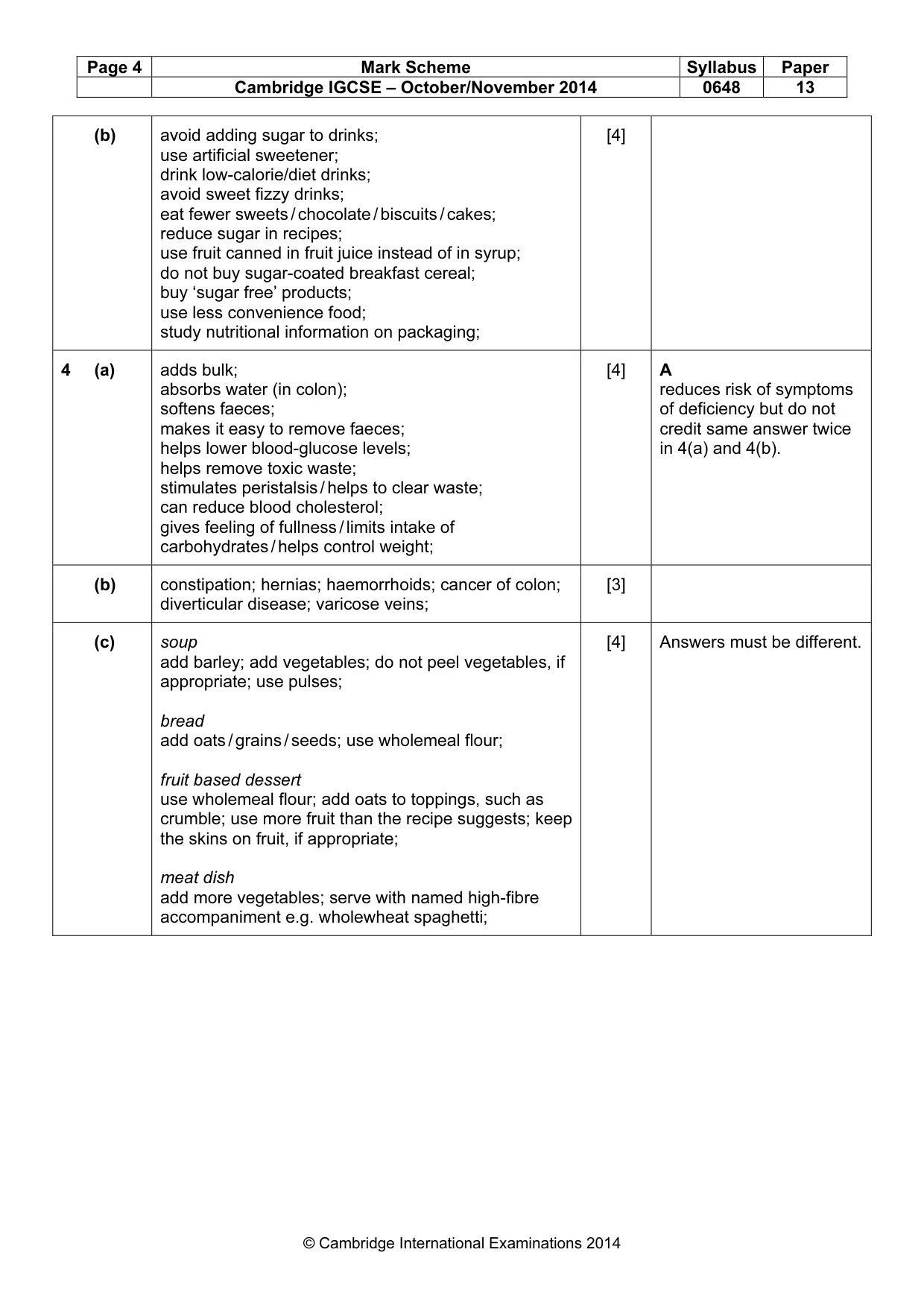
Page 4 Mark Scheme Syllabus Paper Cambridge IGCSE – October/November 2014 0648 13 © Cambridge International Examinations 2014 (b) avoid adding sugar to drinks; use artificial sweetener; drink low-calorie/diet drinks; avoid sweet fizzy drinks; eat fewer sweets / chocolate / biscuits / cakes; reduce sugar in recipes; use fruit canned in fruit juice instead of in syrup; do not buy sugar-coated breakfast cereal; buy ‘sugar free’ products; use less convenience food; study nutritional information on packaging; [4] 4 (a) adds bulk; absorbs water (in colon); softens faeces; makes it easy to remove faeces; helps lower blood-glucose levels; helps remove toxic waste; stimulates peristalsis / helps to clear waste; can reduce blood cholesterol; gives feeling of fullness / limits intake of carbohydrates / helps control weight; [4] A reduces risk of symptoms of deficiency but do not credit same answer twice in 4(a) and 4(b). (b) constipation; hernias; haemorrhoids; cancer of colon; diverticular disease; varicose veins; [3] (c) soup add barley; add vegetables; do not peel vegetables, if appropriate; use pulses; bread add oats / grains / seeds; use wholemeal flour; fruit based dessert use wholemeal flour; add oats to toppings, such as crumble; use more fruit than the recipe suggests; keep the skins on fruit, if appropriate; meat dish add more vegetables; serve with named high-fibre accompaniment e.g. wholewheat spaghetti; [4] Answers must be different.
Mark scheme, page 5
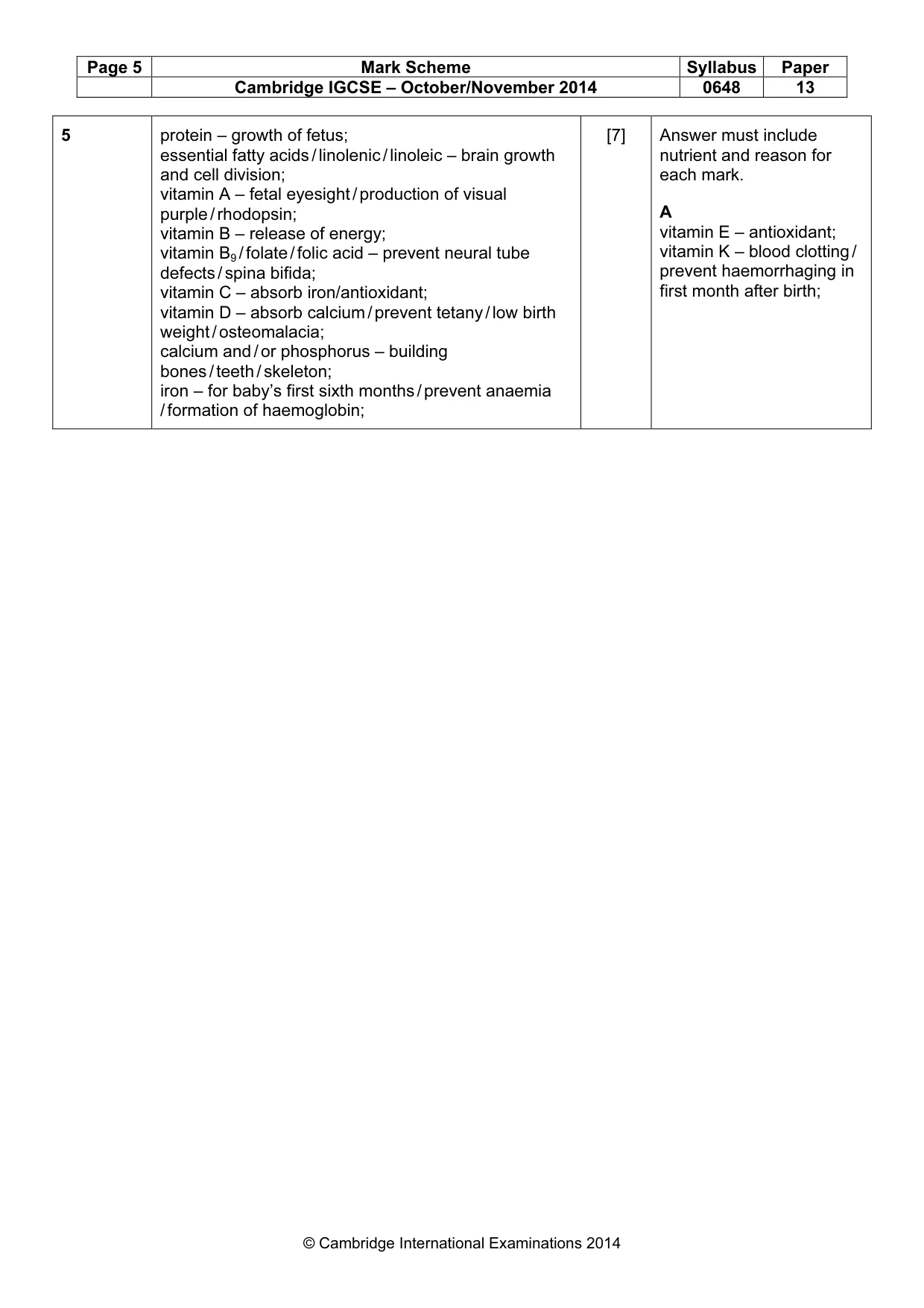
Page 5 Mark Scheme Syllabus Paper Cambridge IGCSE – October/November 2014 0648 13 © Cambridge International Examinations 2014 5 protein – growth of fetus; essential fatty acids / linolenic / linoleic – brain growth and cell division; vitamin A – fetal eyesight / production of visual purple / rhodopsin; vitamin B – release of energy; vitamin B9 / folate / folic acid – prevent neural tube defects / spina bifida; vitamin C – absorb iron/antioxidant; vitamin D – absorb calcium / prevent tetany / low birth weight / osteomalacia; calcium and / or phosphorus – building bones / teeth / skeleton; iron – for baby’s first sixth months / prevent anaemia / formation of haemoglobin; [7] Answer must include nutrient and reason for each mark. A vitamin E – antioxidant; vitamin K – blood clotting / prevent haemorrhaging in first month after birth;
Mark scheme, page 6
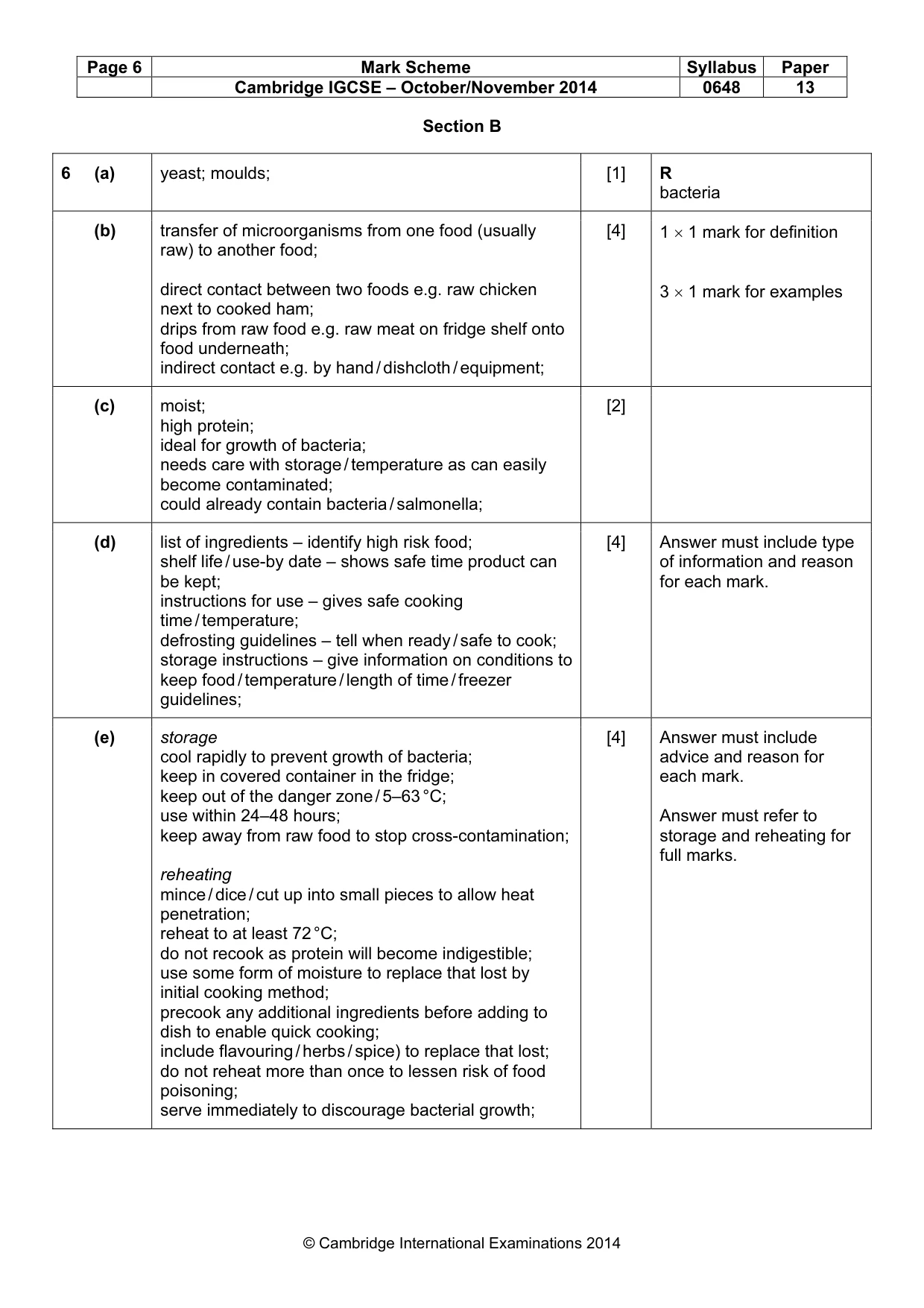
Page 6 Mark Scheme Syllabus Paper Cambridge IGCSE – October/November 2014 0648 13 © Cambridge International Examinations 2014 Section B 6 (a) yeast; moulds; [1] R bacteria (b) transfer of microorganisms from one food (usually raw) to another food; direct contact between two foods e.g. raw chicken next to cooked ham; drips from raw food e.g. raw meat on fridge shelf onto food underneath; indirect contact e.g. by hand / dishcloth / equipment; [4] 1 × 1 mark for definition 3 × 1 mark for examples (c) moist; high protein; ideal for growth of bacteria; needs care with storage / temperature as can easily become contaminated; could already contain bacteria / salmonella; [2] (d) list of ingredients – identify high risk food; shelf life / use-by date – shows safe time product can be kept; instructions for use – gives safe cooking time / temperature; defrosting guidelines – tell when ready / safe to cook; storage instructions – give information on conditions to keep food / temperature / length of time / freezer guidelines; [4] Answer must include type of information and reason for each mark. (e) storage cool rapidly to prevent growth of bacteria; keep in covered container in the fridge; keep out of the danger zone / 5–63 °C; use within 24–48 hours; keep away from raw food to stop cross-contamination; reheating mince / dice / cut up into small pieces to allow heat penetration; reheat to at least 72 °C; do not recook as protein will become indigestible; use some form of moisture to replace that lost by initial cooking method; precook any additional ingredients before adding to dish to enable quick cooking; include flavouring / herbs / spice) to replace that lost; do not reheat more than once to lessen risk of food poisoning; serve immediately to discourage bacterial growth; [4] Answer must include advice and reason for each mark. Answer must refer to storage and reheating for full marks.
Mark scheme, page 7
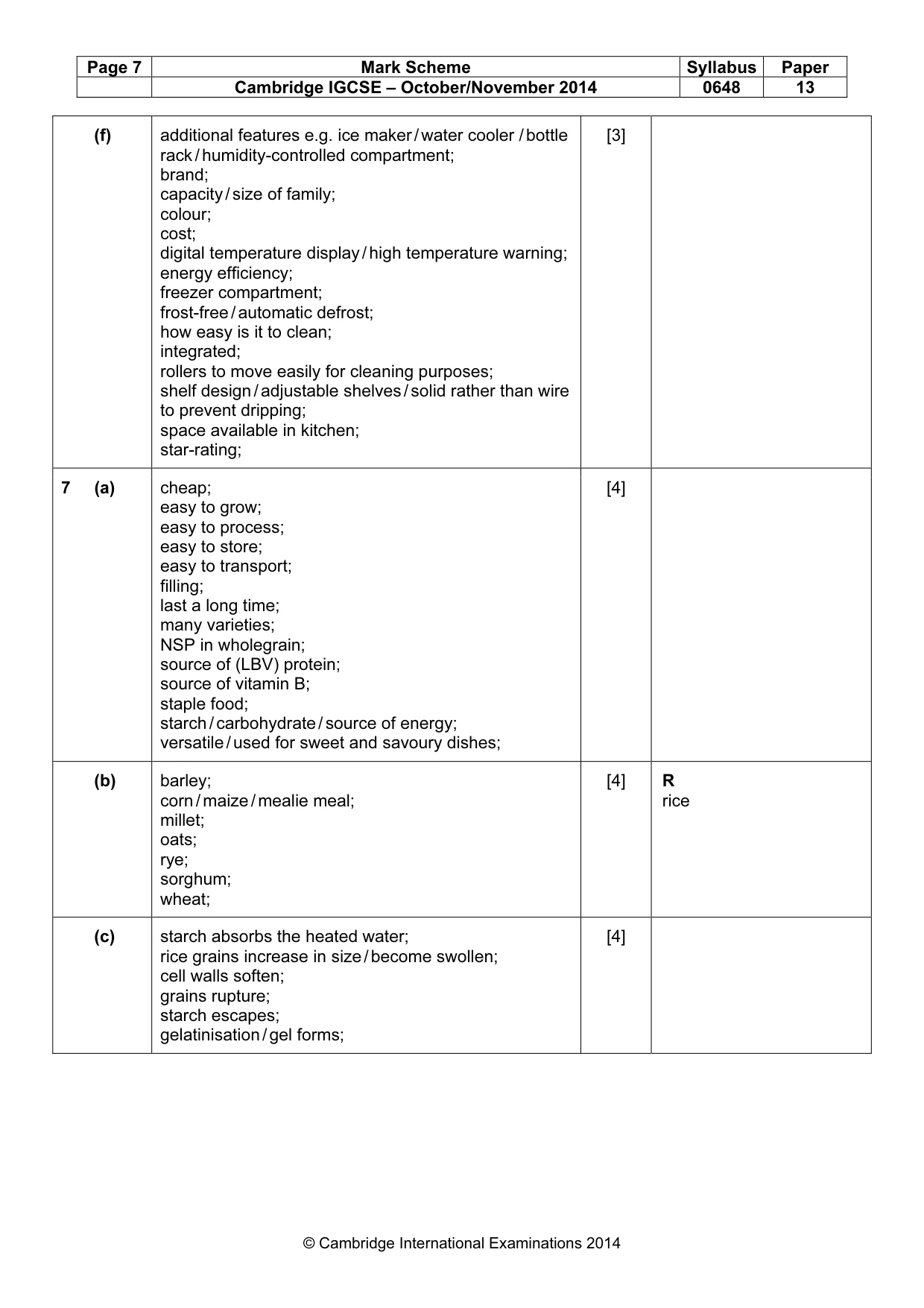
Page 7 Mark Scheme Syllabus Paper Cambridge IGCSE – October/November 2014 0648 13 © Cambridge International Examinations 2014 (f) additional features e.g. ice maker / water cooler / bottle rack / humidity-controlled compartment; brand; capacity / size of family; colour; cost; digital temperature display / high temperature warning; energy efficiency; freezer compartment; frost-free / automatic defrost; how easy is it to clean; integrated; rollers to move easily for cleaning purposes; shelf design / adjustable shelves / solid rather than wire to prevent dripping; space available in kitchen; star-rating; [3] 7 (a) cheap; easy to grow; easy to process; easy to store; easy to transport; filling; last a long time; many varieties; NSP in wholegrain; source of (LBV) protein; source of vitamin B; staple food; starch / carbohydrate / source of energy; versatile / used for sweet and savoury dishes; [4] (b) barley; corn / maize / mealie meal; millet; oats; rye; sorghum; wheat; [4] R rice (c) starch absorbs the heated water; rice grains increase in size / become swollen; cell walls soften; grains rupture; starch escapes; gelatinisation / gel forms; [4]
Mark scheme, page 8
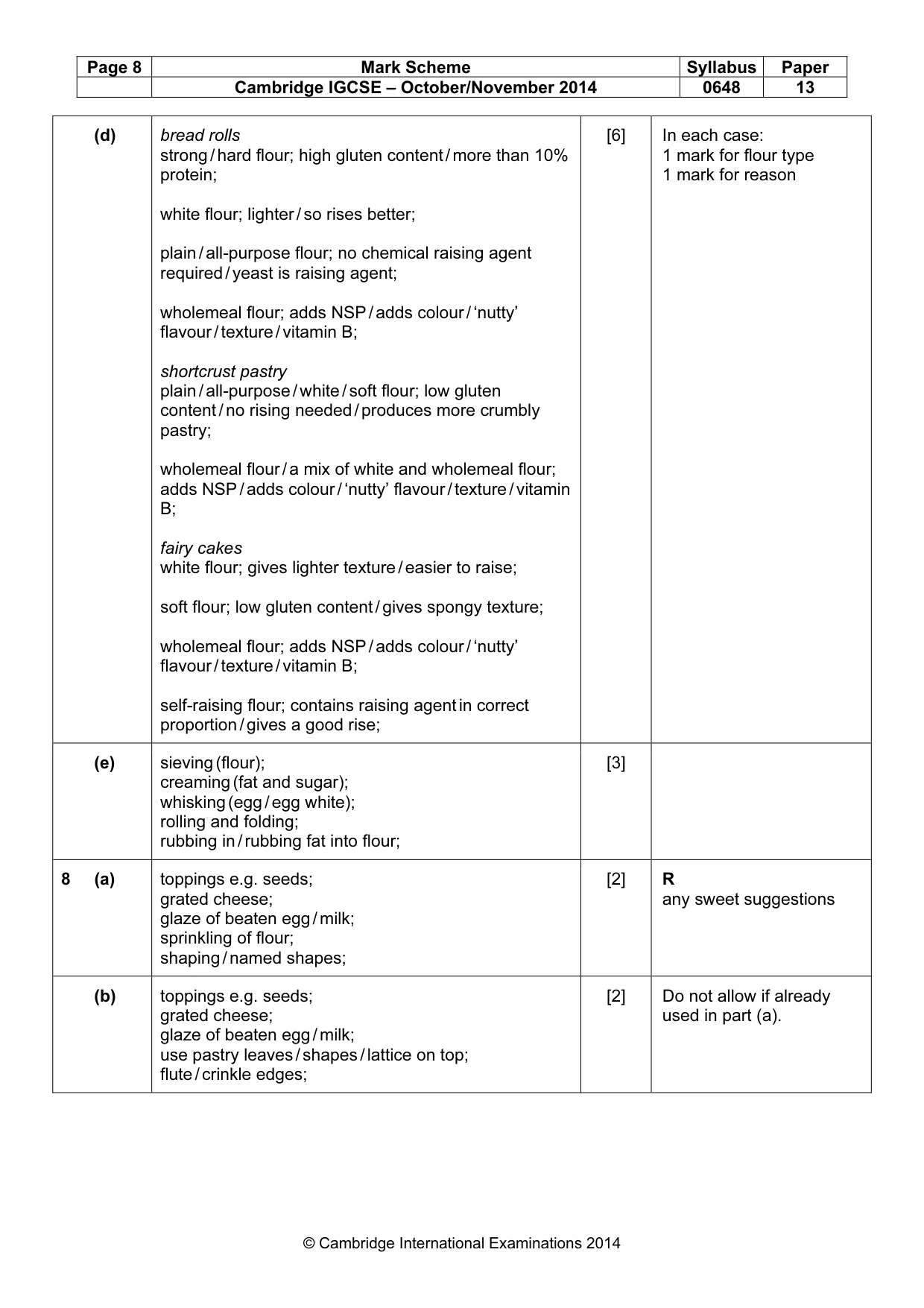
Page 8 Mark Scheme Syllabus Paper Cambridge IGCSE – October/November 2014 0648 13 © Cambridge International Examinations 2014 (d) bread rolls strong / hard flour; high gluten content / more than 10% protein; white flour; lighter / so rises better; plain / all-purpose flour; no chemical raising agent required / yeast is raising agent; wholemeal flour; adds NSP / adds colour / ‘nutty’ flavour / texture / vitamin B; shortcrust pastry plain / all-purpose / white / soft flour; low gluten content / no rising needed / produces more crumbly pastry; wholemeal flour / a mix of white and wholemeal flour; adds NSP / adds colour / ‘nutty’ flavour / texture / vitamin B; fairy cakes white flour; gives lighter texture / easier to raise; soft flour; low gluten content / gives spongy texture; wholemeal flour; adds NSP / adds colour / ‘nutty’ flavour / texture / vitamin B; self-raising flour; contains raising agent in correct proportion / gives a good rise; [6] In each case: 1 mark for flour type 1 mark for reason (e) sieving (flour); creaming (fat and sugar); whisking (egg / egg white); rolling and folding; rubbing in / rubbing fat into flour; [3] 8 (a) toppings e.g. seeds; grated cheese; glaze of beaten egg / milk; sprinkling of flour; shaping / named shapes; [2] R any sweet suggestions (b) toppings e.g. seeds; grated cheese; glaze of beaten egg / milk; use pastry leaves / shapes / lattice on top; flute / crinkle edges; [2] Do not allow if already used in part (a).
Mark scheme, page 9
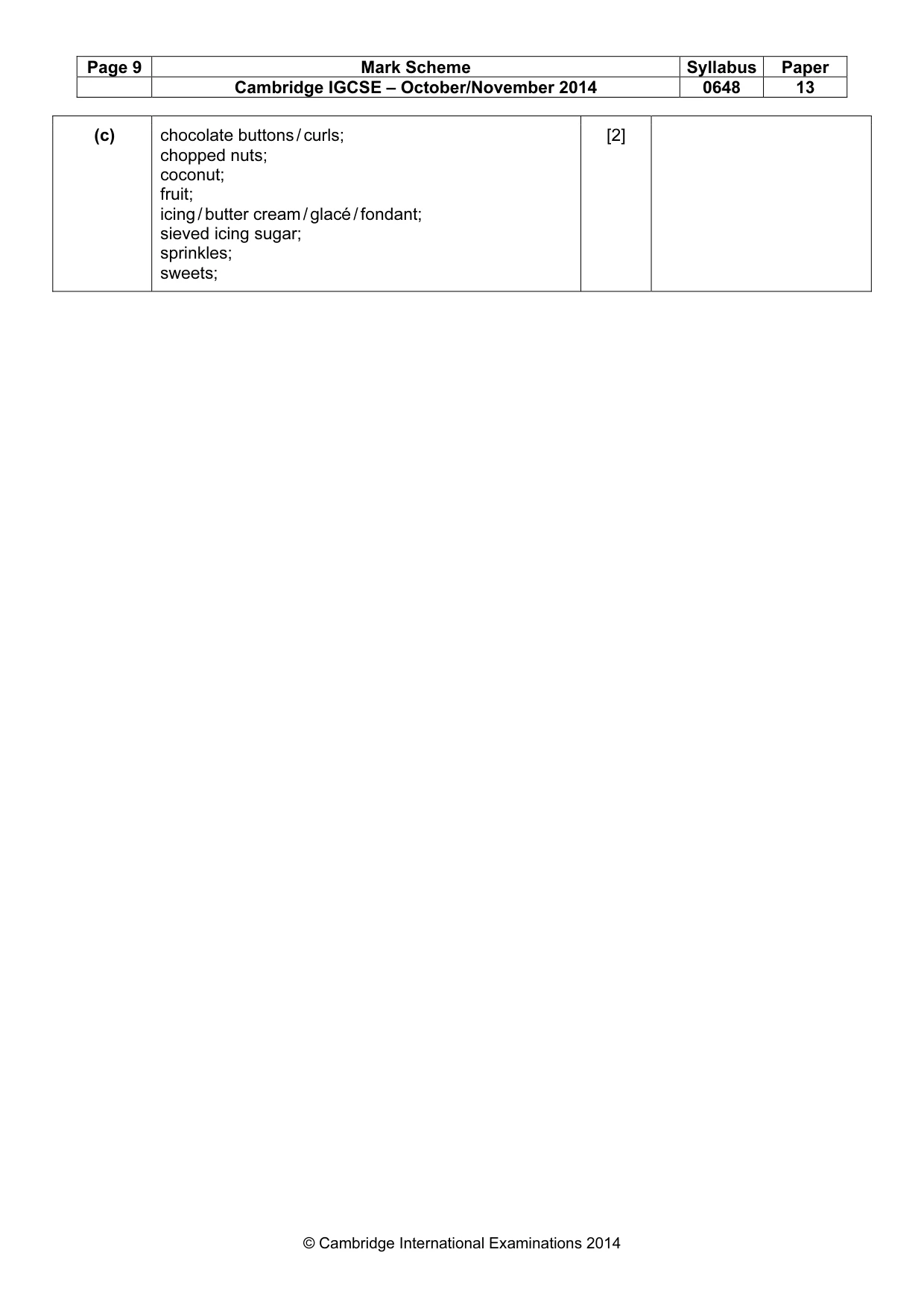
Page 9 Mark Scheme Syllabus Paper Cambridge IGCSE – October/November 2014 0648 13 © Cambridge International Examinations 2014 (c) chocolate buttons / curls; chopped nuts; coconut; fruit; icing / butter cream / glacé / fondant; sieved icing sugar; sprinkles; sweets; [2]
Mark scheme, page 10
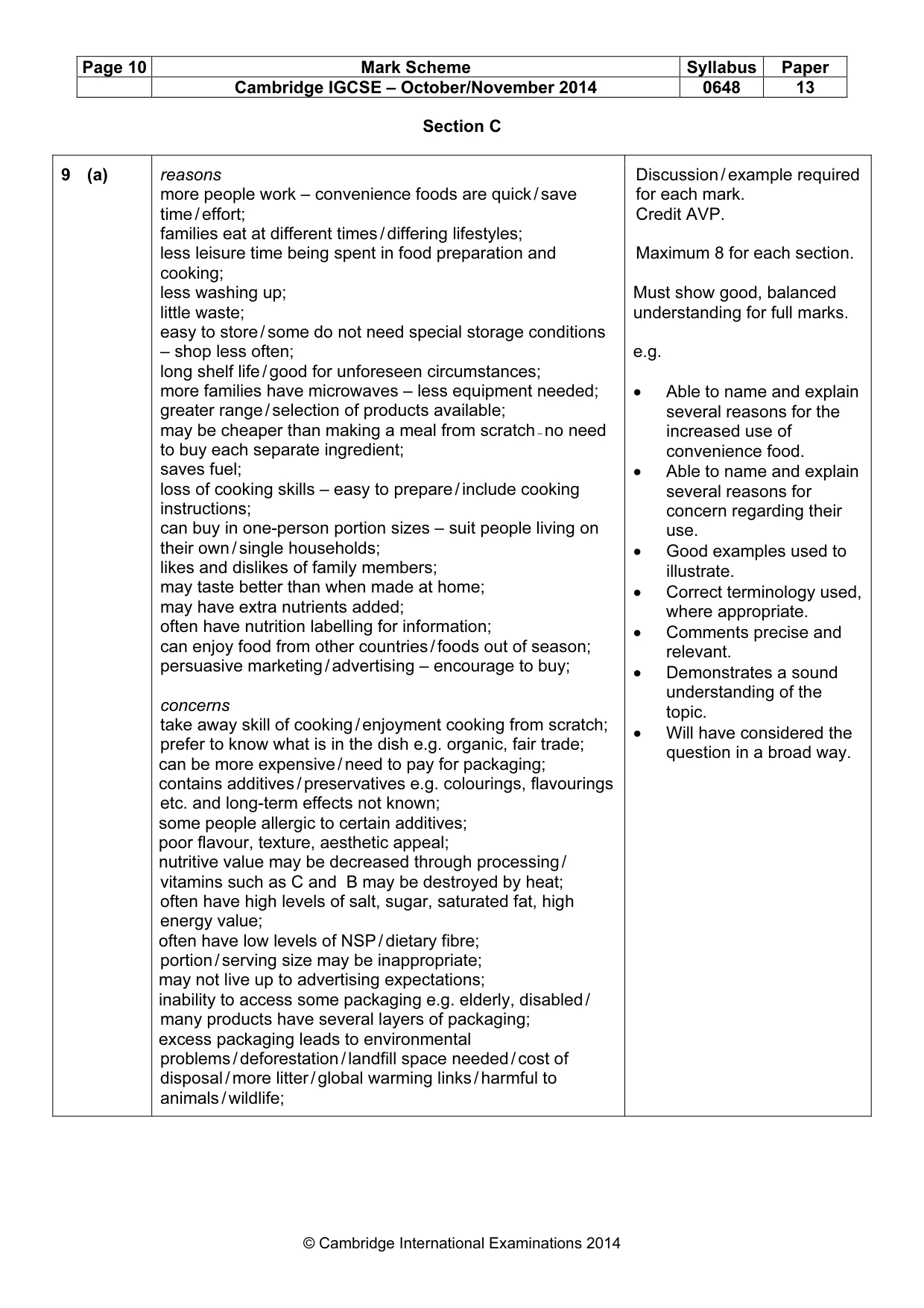
Page 10 Mark Scheme Syllabus Paper Cambridge IGCSE – October/November 2014 0648 13 © Cambridge International Examinations 2014 Section C 9 (a) reasons more people work – convenience foods are quick / save time / effort; families eat at different times / differing lifestyles; less leisure time being spent in food preparation and cooking; less washing up; little waste; easy to store / some do not need special storage conditions – shop less often; long shelf life / good for unforeseen circumstances; more families have microwaves – less equipment needed; greater range / selection of products available; may be cheaper than making a meal from scratch – no need to buy each separate ingredient; saves fuel; loss of cooking skills – easy to prepare / include cooking instructions; can buy in one-person portion sizes – suit people living on their own / single households; likes and dislikes of family members; may taste better than when made at home; may have extra nutrients added; often have nutrition labelling for information; can enjoy food from other countries / foods out of season; persuasive marketing / advertising – encourage to buy; concerns take away skill of cooking / enjoyment cooking from scratch; prefer to know what is in the dish e.g. organic, fair trade; can be more expensive / need to pay for packaging; contains additives / preservatives e.g. colourings, flavourings etc. and long-term effects not known; some people allergic to certain additives; poor flavour, texture, aesthetic appeal; nutritive value may be decreased through processing / vitamins such as C and B may be destroyed by heat; often have high levels of salt, sugar, saturated fat, high energy value; often have low levels of NSP / dietary fibre; portion / serving size may be inappropriate; may not live up to advertising expectations; inability to access some packaging e.g. elderly, disabled / many products have several layers of packaging; excess packaging leads to environmental problems / deforestation / landfill space needed / cost of disposal / more litter / global warming links / harmful to animals / wildlife; Discussion / example required for each mark. Credit AVP. Maximum 8 for each section. Must show good, balanced understanding for full marks. e.g. • Able to name and explain several reasons for the increased use of convenience food. • Able to name and explain several reasons for concern regarding their use. • Good examples used to illustrate. • Correct terminology used, where appropriate. • Comments precise and relevant. • Demonstrates a sound understanding of the topic. • Will have considered the question in a broad way.
Mark scheme, page 11
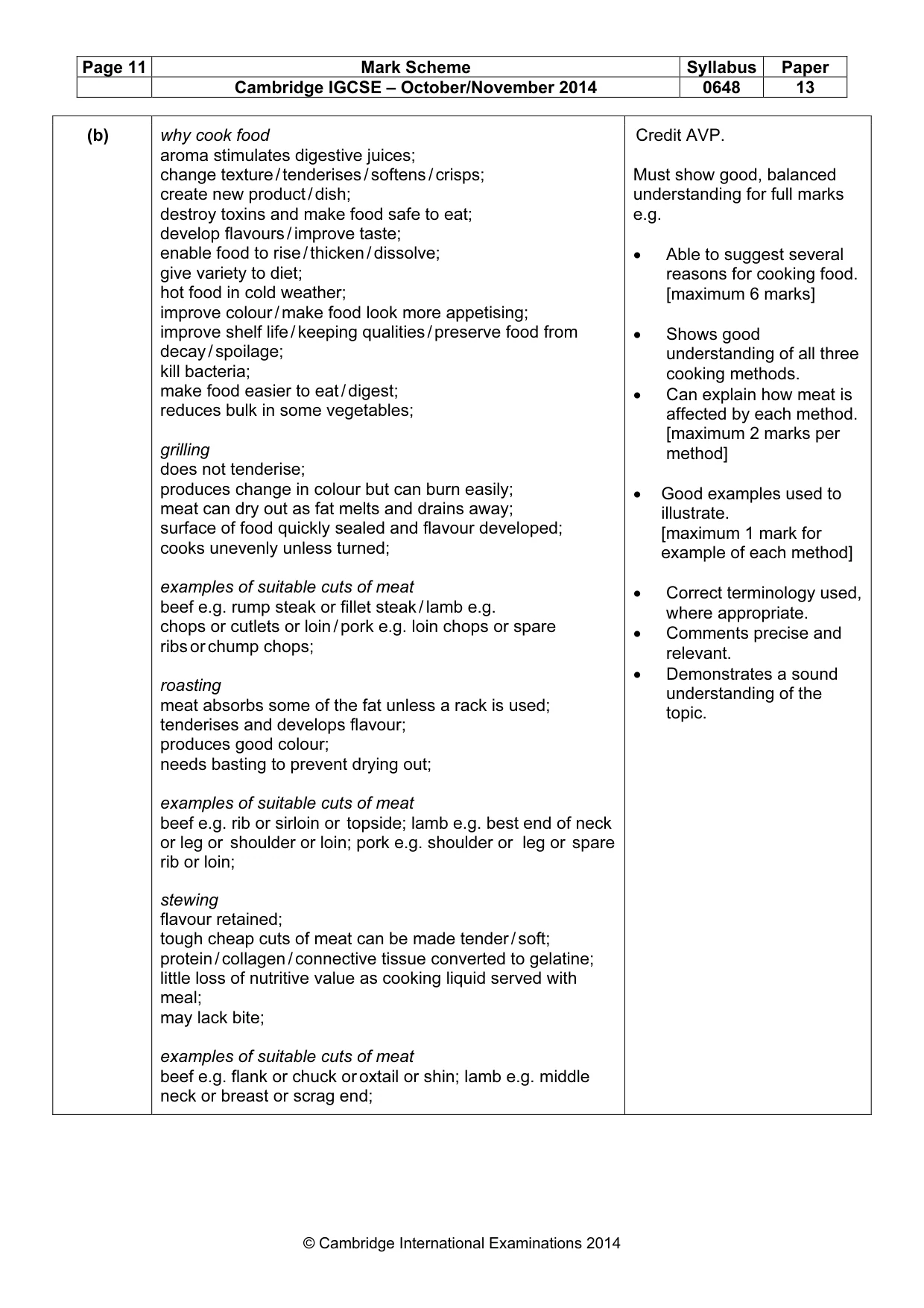
Page 11 Mark Scheme Syllabus Paper Cambridge IGCSE – October/November 2014 0648 13 © Cambridge International Examinations 2014 (b) why cook food aroma stimulates digestive juices; change texture / tenderises / softens / crisps; create new product / dish; destroy toxins and make food safe to eat; develop flavours / improve taste; enable food to rise / thicken / dissolve; give variety to diet; hot food in cold weather; improve colour / make food look more appetising; improve shelf life / keeping qualities / preserve food from decay / spoilage; kill bacteria; make food easier to eat / digest; reduces bulk in some vegetables; grilling does not tenderise; produces change in colour but can burn easily; meat can dry out as fat melts and drains away; surface of food quickly sealed and flavour developed; cooks unevenly unless turned; examples of suitable cuts of meat beef e.g. rump steak or fillet steak / lamb e.g. chops or cutlets or loin / pork e.g. loin chops or spare ribs or chump chops; roasting meat absorbs some of the fat unless a rack is used; tenderises and develops flavour; produces good colour; needs basting to prevent drying out; examples of suitable cuts of meat beef e.g. rib or sirloin or topside; lamb e.g. best end of neck or leg or shoulder or loin; pork e.g. shoulder or leg or spare rib or loin; stewing flavour retained; tough cheap cuts of meat can be made tender / soft; protein / collagen / connective tissue converted to gelatine; little loss of nutritive value as cooking liquid served with meal; may lack bite; examples of suitable cuts of meat beef e.g. flank or chuck or oxtail or shin; lamb e.g. middle neck or breast or scrag end; Credit AVP. Must show good, balanced understanding for full marks e.g. • Able to suggest several reasons for cooking food. [maximum 6 marks] • Shows good understanding of all three cooking methods. • Can explain how meat is affected by each method. [maximum 2 marks per method] • Good examples used to illustrate. [maximum 1 mark for example of each method] • Correct terminology used, where appropriate. • Comments precise and relevant. • Demonstrates a sound understanding of the topic.
What you needed in this session
Cambridge’s own grade thresholds for 2014 Oct/Nov, Paper 1 · Variant 3. A higher threshold means an easier paper — the bar moves with how the cohort did.