Cambridge IGCSE Biology (BES) 0438 — 2013 May/June Paper 2 · Variant 3
0438/23/M/J/13
The question paper and its mark scheme, free to read here and free to download. This is Cambridge’s own paper, exactly as it was sat.
Question paper20 pages




Mark scheme10 pages
Answers below. Sit the paper first if you are practising.
Paper as text
Question paper, page 1
This document consists of 19 printed pages and 1 blank page. IB13 06_0438_23/FP © UCLES 2013 [Turn over *4041412193* UNIVERSITY OF CAMBRIDGE INTERNATIONAL EXAMINATIONS International General Certificate of Secondary Education BIOLOGY (US) 0438/23 Paper 2 Core May/June 2013 1 hour 15 minutes Candidates answer on the Question Paper. No Additional Materials are required. READ THESE INSTRUCTIONS FIRST Write your Center number, candidate number and name on all the work you hand in. Write in dark blue or black pen. You may use a pencil for any diagrams or graphs. Do not use staples, paper clips, highlighters, glue or correction fluid. DO NOT WRITE IN ANY BARCODES. Answer all questions. Electronic calculators may be used. You may lose marks if you do not show your working or if you do not use appropriate units. At the end of the examination, fasten all your work securely together. The number of marks is given in brackets [ ] at the end of each question or part question.
Question paper, page 2
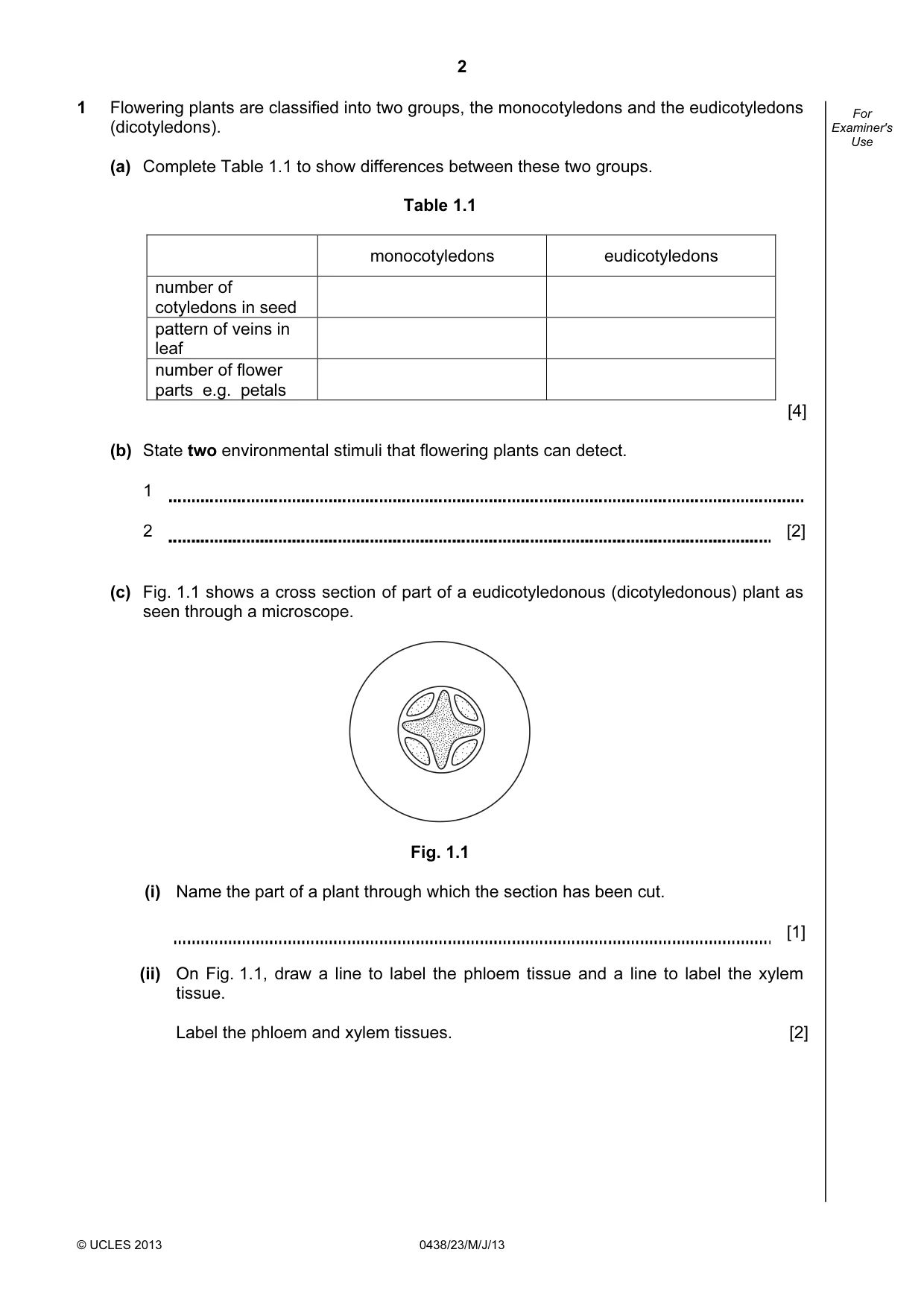
2 © UCLES 2013 0438/23/M/J/13 For Examiner's Use 1 Flowering plants are classified into two groups, the monocotyledons and the eudicotyledons (dicotyledons). (a) Complete Table 1.1 to show differences between these two groups. Table 1.1 monocotyledons eudicotyledons number of cotyledons in seed pattern of veins in leaf number of flower parts e.g. petals [4] (b) State two environmental stimuli that flowering plants can detect. 1 2 [2] (c) Fig. 1.1 shows a cross section of part of a eudicotyledonous (dicotyledonous) plant as seen through a microscope. Fig. 1.1 (i) Name the part of a plant through which the section has been cut. [1] (ii) On Fig. 1.1, draw a line to label the phloem tissue and a line to label the xylem tissue. Label the phloem and xylem tissues. [2]
Question paper, page 3
3 © UCLES 2013 0438/23/M/J/13 [Turn over For Examiner's Use (iii) Describe two functions of xylem tissue. 1 2 [2] [Total: 11]
Question paper, page 4
4 © UCLES 2013 0438/23/M/J/13 For Examiner's Use 2 State and explain two ways in which the use of agricultural machinery and fertilizers have helped to increase food production. agricultural machinery 1 2 fertilizers 1 2 [6] [Total: 6]
Question paper, page 5
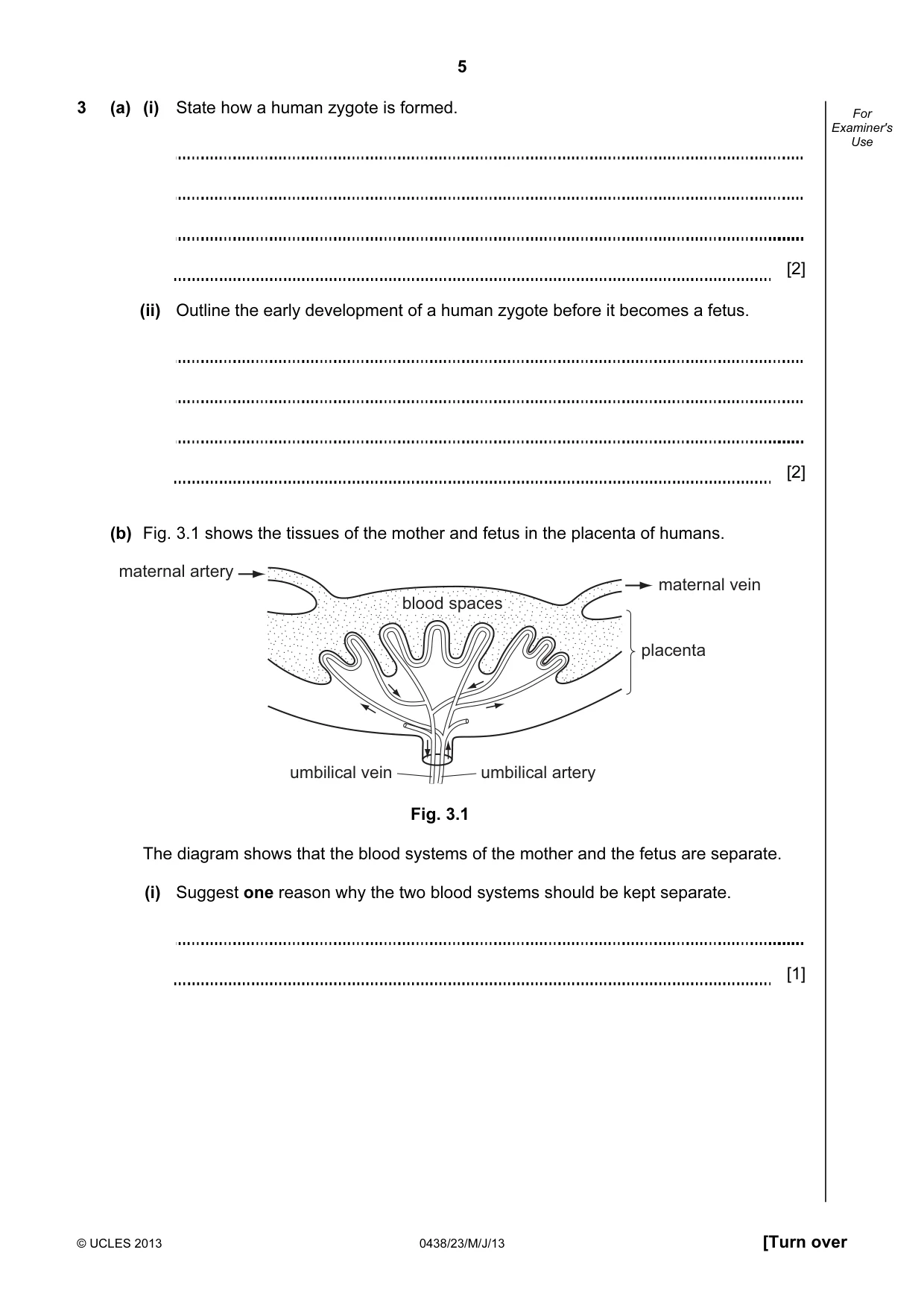
5 © UCLES 2013 0438/23/M/J/13 [Turn over For Examiner's Use 3 (a) (i) State how a human zygote is formed. [2] (ii) Outline the early development of a human zygote before it becomes a fetus. [2] (b) Fig. 3.1 shows the tissues of the mother and fetus in the placenta of humans. blood spaces blood spaces blood spaces maternal artery maternal vein umbilical vein umbilical artery placenta Fig. 3.1 The diagram shows that the blood systems of the mother and the fetus are separate. (i) Suggest one reason why the two blood systems should be kept separate. [1]
Question paper, page 6
6 © UCLES 2013 0438/23/M/J/13 For Examiner's Use (ii) The placenta is often described as “a small intestine, a lung and a kidney”. Explain how the placenta functions like each of these organs. small intestine lung kidney [6] (c) Describe two ways in which a pregnant mother could help the healthy development of her fetus. 1 2 [2] [Total: 13]
Question paper, page 7
7 © UCLES 2013 0438/23/M/J/13 [Turn over Question 4 begins on page 8.
Question paper, page 8
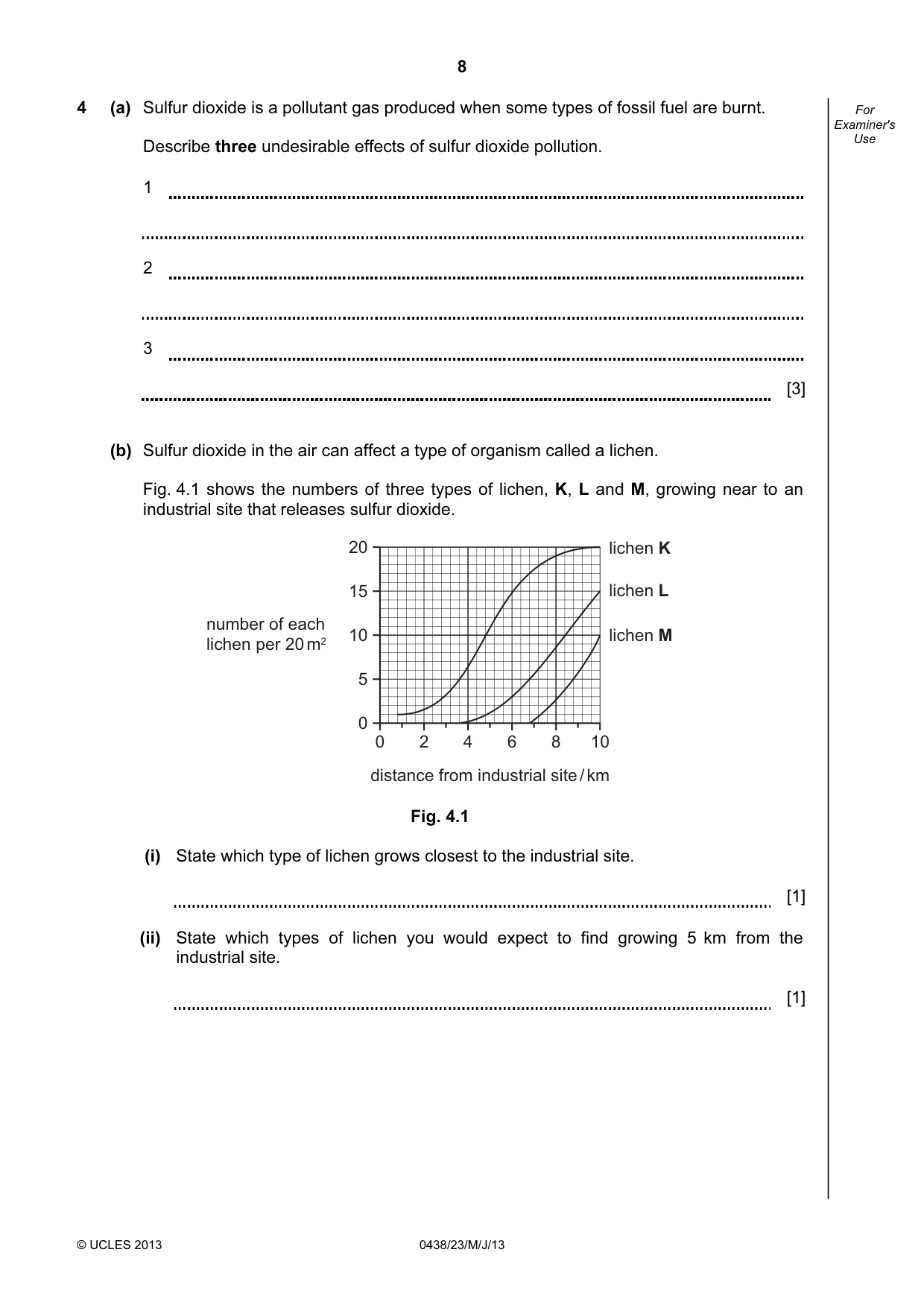
8 © UCLES 2013 0438/23/M/J/13 For Examiner's Use 4 (a) Sulfur dioxide is a pollutant gas produced when some types of fossil fuel are burnt. Describe three undesirable effects of sulfur dioxide pollution. 1 2 3 [3] (b) Sulfur dioxide in the air can affect a type of organism called a lichen. Fig. 4.1 shows the numbers of three types of lichen, K, L and M, growing near to an industrial site that releases sulfur dioxide. 20 15 10 5 0 0 2 4 6 8 10 distance from industrial site / km number of each lichen per 20 m2 lichen K lichen L lichen M Fig. 4.1 (i) State which type of lichen grows closest to the industrial site. [1] (ii) State which types of lichen you would expect to find growing 5 km from the industrial site. [1]
Question paper, page 9
9 © UCLES 2013 0438/23/M/J/13 [Turn over For Examiner's Use (iii) Explain which type of lichen is most affected by the sulfur dioxide. [2] (iv) Calculate how many lichen plants you would expect to find in a 20 m2 area at 10 km from the industrial site. Show your working. lichen plants [2] [Total: 9]
Question paper, page 10
10 © UCLES 2013 0438/23/M/J/13 For Examiner's Use 5 (a) An investigation was carried out by a student on the effect of temperature on the digestion of fat by an enzyme. (i) Name an enzyme that digests fats. [1] (ii) One product of fat digestion is fatty acids. Name the other product. [1] Six test-tubes containing the same volume of olive oil and the enzyme solution were set up. One drop of an indicator was added to each test-tube. The six test-tubes were labeled and placed in separate water baths at different temperatures. The indicator was blue at the start and changed to yellow when the pH fell to pH 5 or below. The time for the contents of each test-tube to turn yellow was recorded. (iii) Suggest why the pH of the mixture would fall as digestion takes place. [1]
Question paper, page 11
11 © UCLES 2013 0438/23/M/J/13 [Turn over Question 5 continues on page 12.
Question paper, page 12
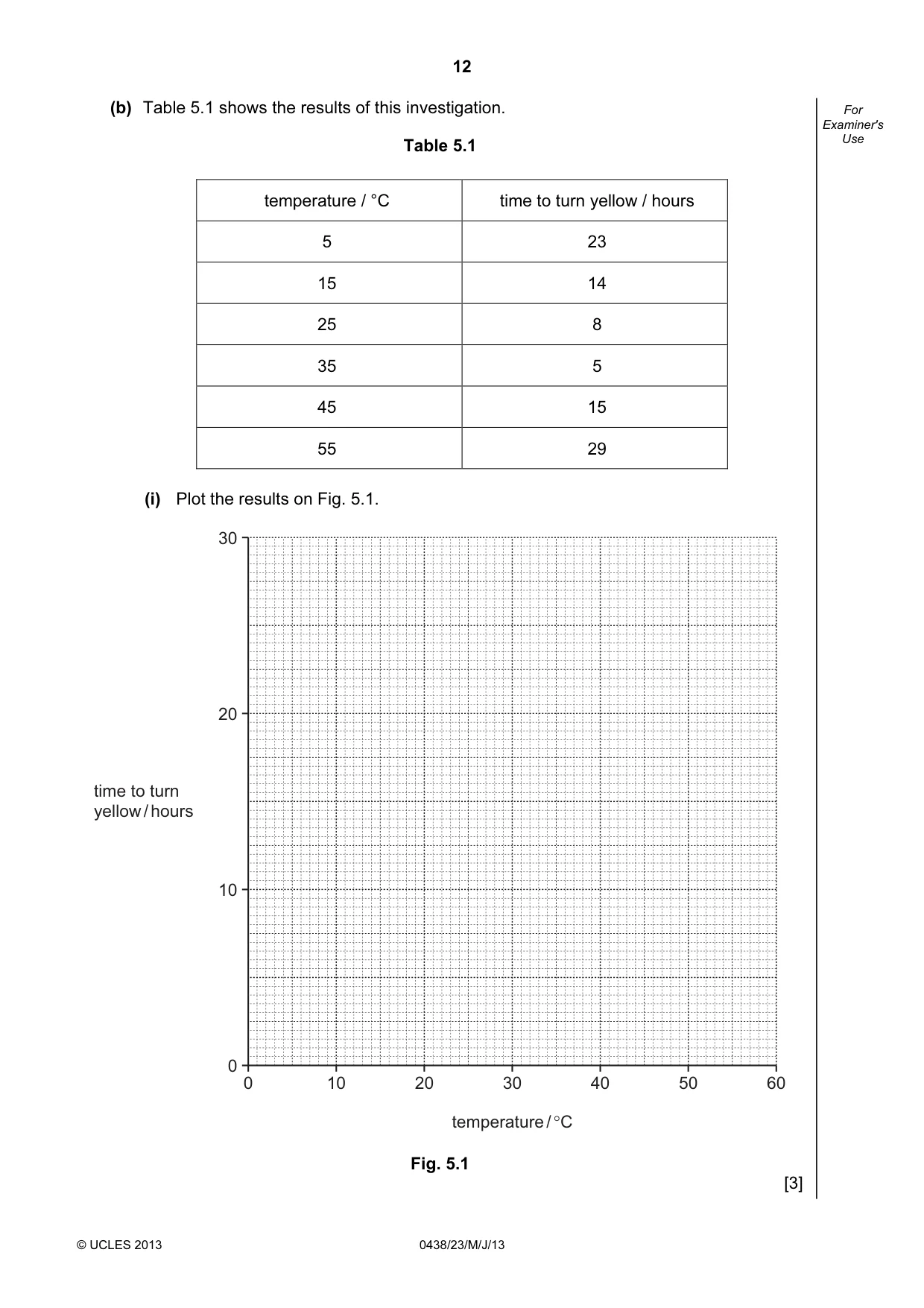
12 © UCLES 2013 0438/23/M/J/13 For Examiner's Use (b) Table 5.1 shows the results of this investigation. Table 5.1 temperature / °C time to turn yellow / hours 5 23 15 14 25 8 35 5 45 15 55 29 (i) Plot the results on Fig. 5.1. 0 10 20 30 temperature / °C 40 50 60 30 20 10 0 time to turn yellow / hours Fig. 5.1 [3]
Question paper, page 13
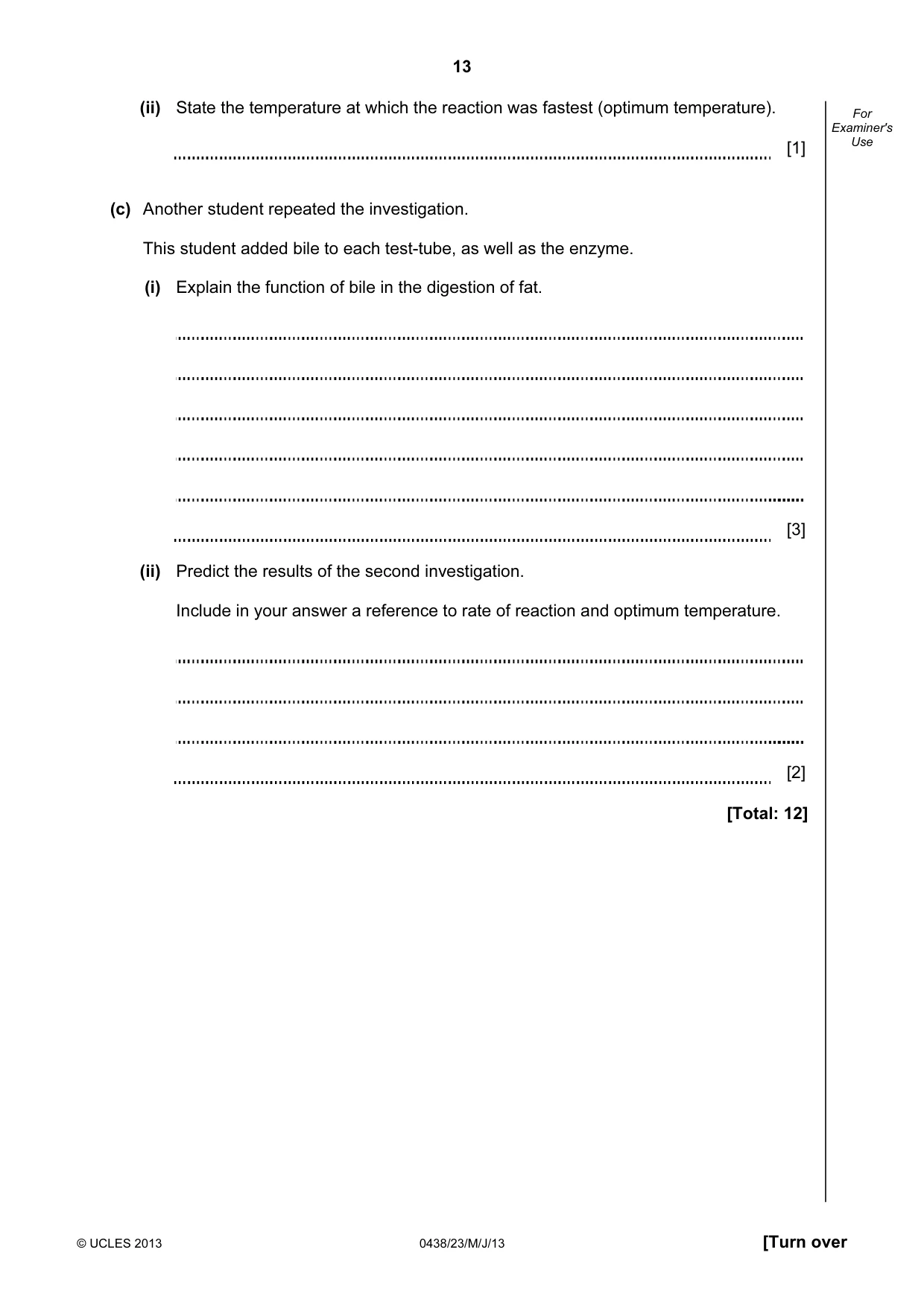
13 © UCLES 2013 0438/23/M/J/13 [Turn over For Examiner's Use (ii) State the temperature at which the reaction was fastest (optimum temperature). [1] (c) Another student repeated the investigation. This student added bile to each test-tube, as well as the enzyme. (i) Explain the function of bile in the digestion of fat. [3] (ii) Predict the results of the second investigation. Include in your answer a reference to rate of reaction and optimum temperature. [2] [Total: 12]
Question paper, page 14
14 © UCLES 2013 0438/23/M/J/13 For Examiner's Use 6 Complete the sentences about respiration by writing the most appropriate word(s) in each space. Respiration in living cells is a series of chemical reactions that release energy. These chemical reactions are speeded up by . If a yeast cell does not have enough oxygen it may carry out respiration. In this process and carbon dioxide are formed. This type of respiration in yeast is used by humans in In humans, when muscle cells do not have enough oxygen during exercise, is broken down into [6] [Total: 6]
Question paper, page 15
15 © UCLES 2013 0438/23/M/J/13 [Turn over For Examiner's Use 7 (a) Animals such as birds and mammals can help in the dispersal of fruits and seeds. (i) Seeds develop from ovules. Name the structure from which fruits develop. [1] (ii) State three features of fruits that would help their dispersal by animals. 1 2 3 [3] (iii) Name one other mechanism of fruit or seed dispersal. [1] (b) Describe one way in which insects can help in the life cycle of a flowering plant. [2] [Total: 7]
Question paper, page 16
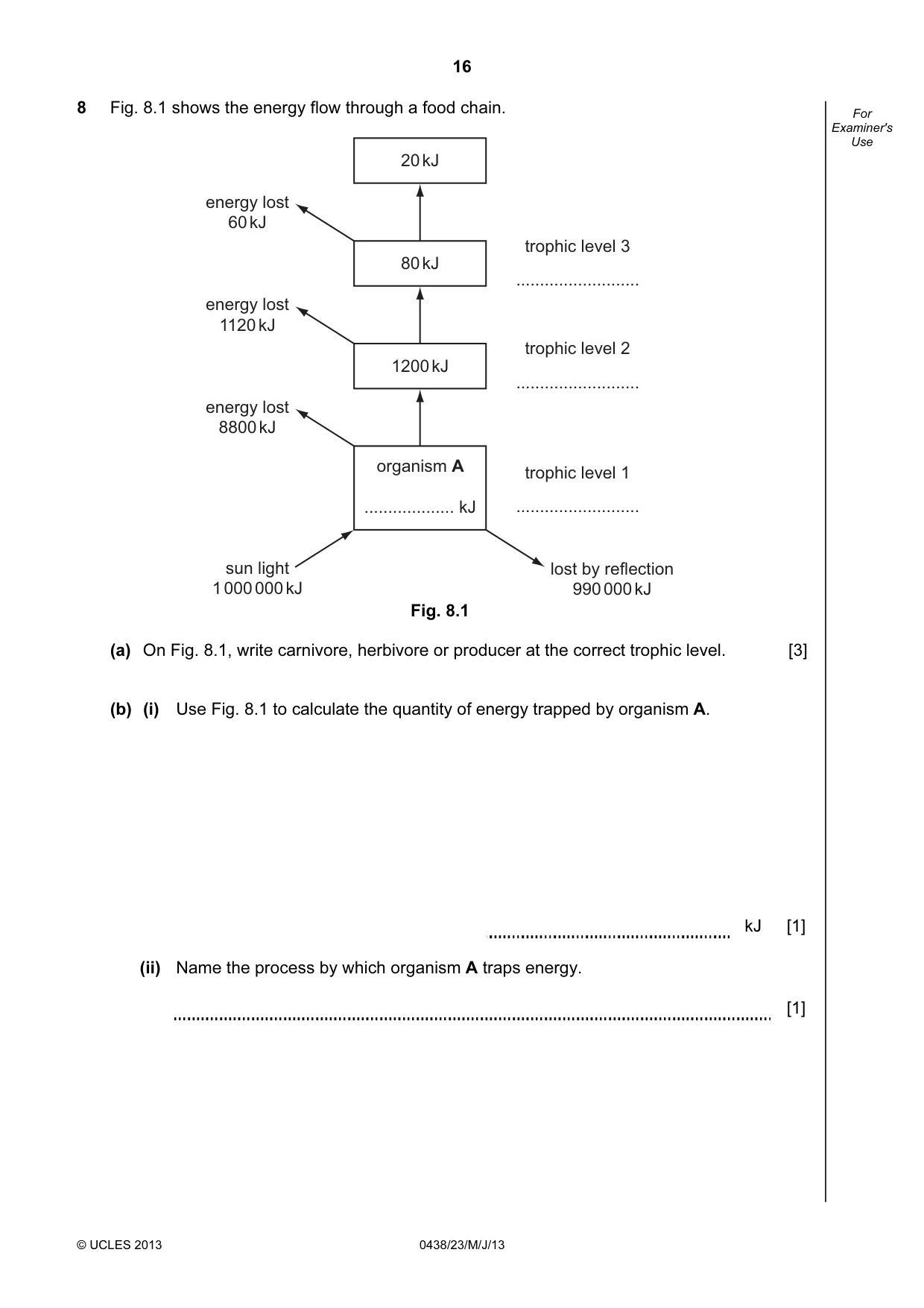
16 © UCLES 2013 0438/23/M/J/13 For Examiner's Use 8 Fig. 8.1 shows the energy flow through a food chain. organism A … kJ trophic level 3 … trophic level 2 … trophic level 1 … 1200 kJ 80 kJ 20 kJ energy lost 8800 kJ sun light 1 000 000 kJ lost by reflection 990 000 kJ energy lost 1120 kJ energy lost 60 kJ Fig. 8.1 (a) On Fig. 8.1, write carnivore, herbivore or producer at the correct trophic level. [3] (b) (i) Use Fig. 8.1 to calculate the quantity of energy trapped by organism A. kJ [1] (ii) Name the process by which organism A traps energy. [1]
Question paper, page 17
17 © UCLES 2013 0438/23/M/J/13 [Turn over For Examiner's Use (iii) State two ways by which energy is lost at each trophic level. 1 2 [2] [Total: 7]
Question paper, page 18
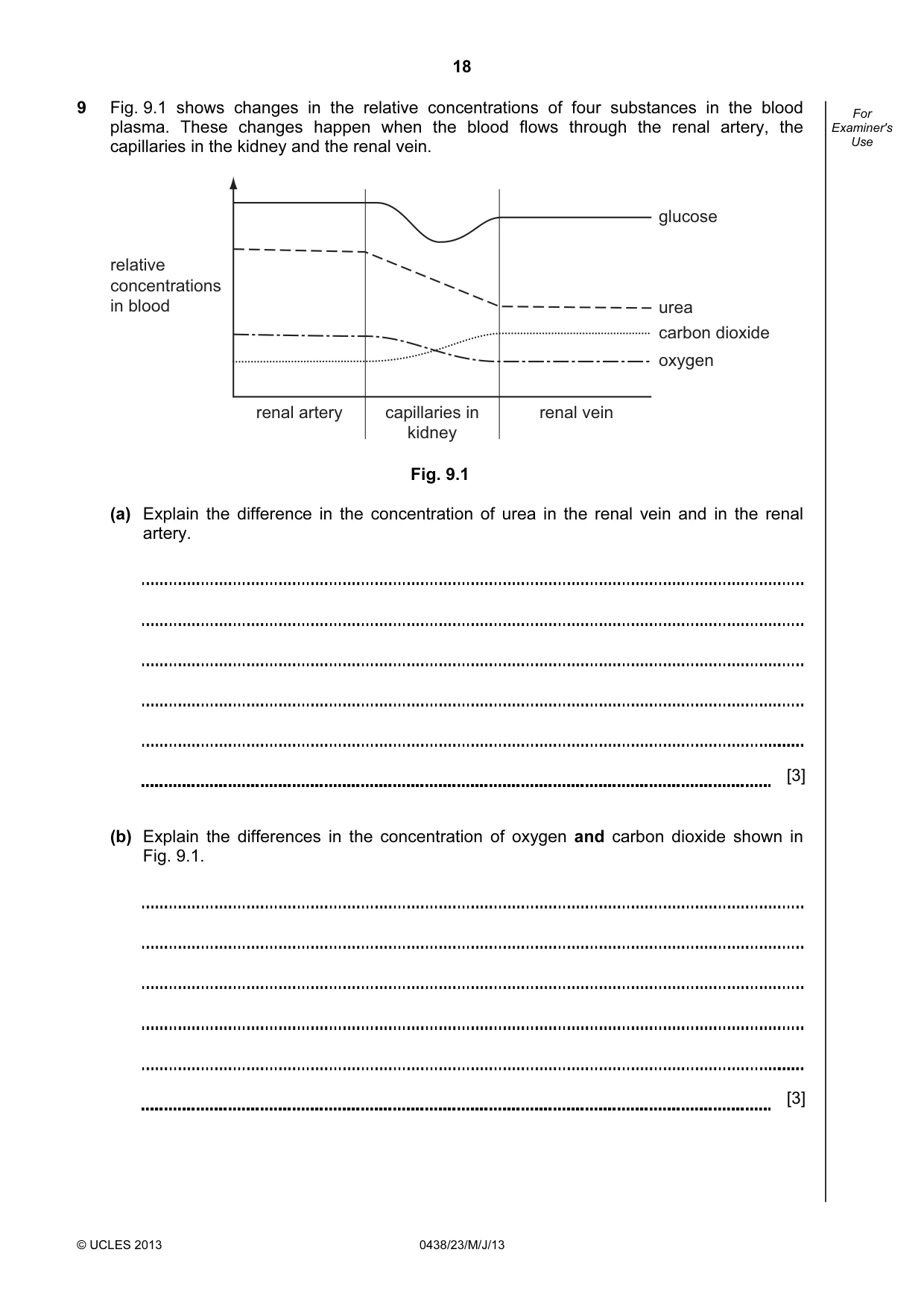
18 © UCLES 2013 0438/23/M/J/13 For Examiner's Use 9 Fig. 9.1 shows changes in the relative concentrations of four substances in the blood plasma. These changes happen when the blood flows through the renal artery, the capillaries in the kidney and the renal vein. renal artery capillaries in kidney renal vein relative concentrations in blood glucose urea carbon dioxide oxygen Fig. 9.1 (a) Explain the difference in the concentration of urea in the renal vein and in the renal artery. [3] (b) Explain the differences in the concentration of oxygen and carbon dioxide shown in Fig. 9.1. [3]
Question paper, page 19
19 © UCLES 2013 0610/23/M/J/13 For Examiner's Use (c) Describe and explain the changes in glucose concentration shown in Fig. 9.1. [3] [Total: 9]
Question paper, page 20
20 Permission to reproduce items where third-party owned material protected by copyright is included has been sought and cleared where possible. Every reasonable effort has been made by the publisher (UCLES) to trace copyright holders, but if any items requiring clearance have unwittingly been included, the publisher will be pleased to make amends at the earliest possible opportunity. University of Cambridge International Examinations is part of the Cambridge Assessment Group. Cambridge Assessment is the brand name of University of Cambridge Local Examinations Syndicate (UCLES), which is itself a department of the University of Cambridge. © UCLES 2013 0438/23/M/J/13 BLANK PAGE
Mark scheme, page 1
CAMBRIDGE INTERNATIONAL EXAMINATIONS International General Certificate of Secondary Education MARK SCHEME for the May/June 2013 series 0438 BIOLOGY (US) 0438/23 Paper 2 (Core Theory), maximum raw mark 80 This mark scheme is published as an aid to teachers and candidates, to indicate the requirements of the examination. It shows the basis on which Examiners were instructed to award marks. It does not indicate the details of the discussions that took place at an Examiners’ meeting before marking began, which would have considered the acceptability of alternative answers. Mark schemes should be read in conjunction with the question paper and the Principal Examiner Report for Teachers. Cambridge will not enter into discussions about these mark schemes. Cambridge is publishing the mark schemes for the May/June 2013 series for most IGCSE, GCE Advanced Level and Advanced Subsidiary Level components and some Ordinary Level components.
Mark scheme, page 2
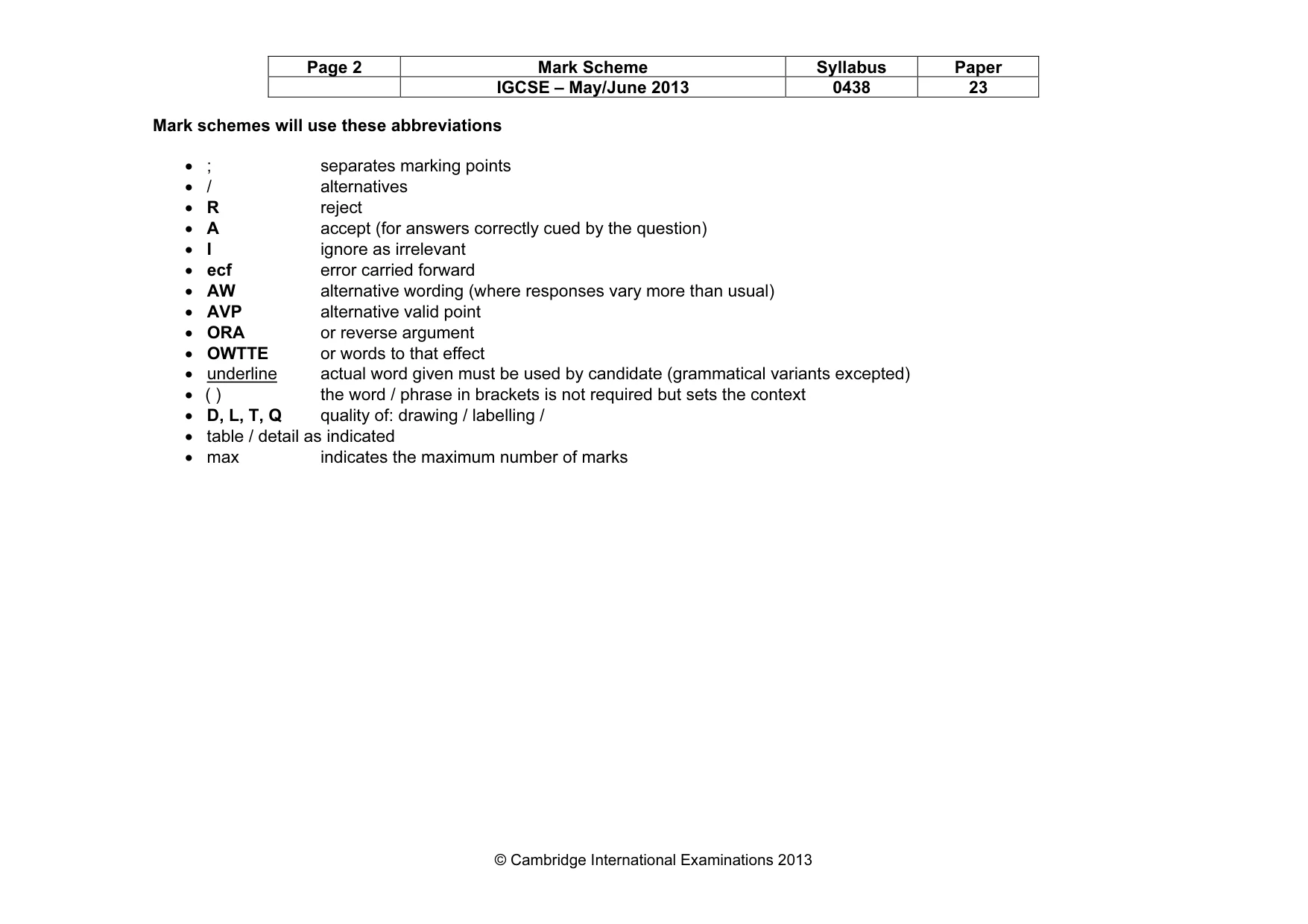
Page 2 Mark Scheme Syllabus Paper IGCSE – May/June 2013 0438 23 © Cambridge International Examinations 2013 Mark schemes will use these abbreviations • ; separates marking points • / alternatives • R reject • A accept (for answers correctly cued by the question) • I ignore as irrelevant • ecf error carried forward • AW alternative wording (where responses vary more than usual) • AVP alternative valid point • ORA or reverse argument • OWTTE or words to that effect • underline actual word given must be used by candidate (grammatical variants excepted) • ( ) the word / phrase in brackets is not required but sets the context • D, L, T, Q quality of: drawing / labelling / • table / detail as indicated • max indicates the maximum number of marks
Mark scheme, page 3
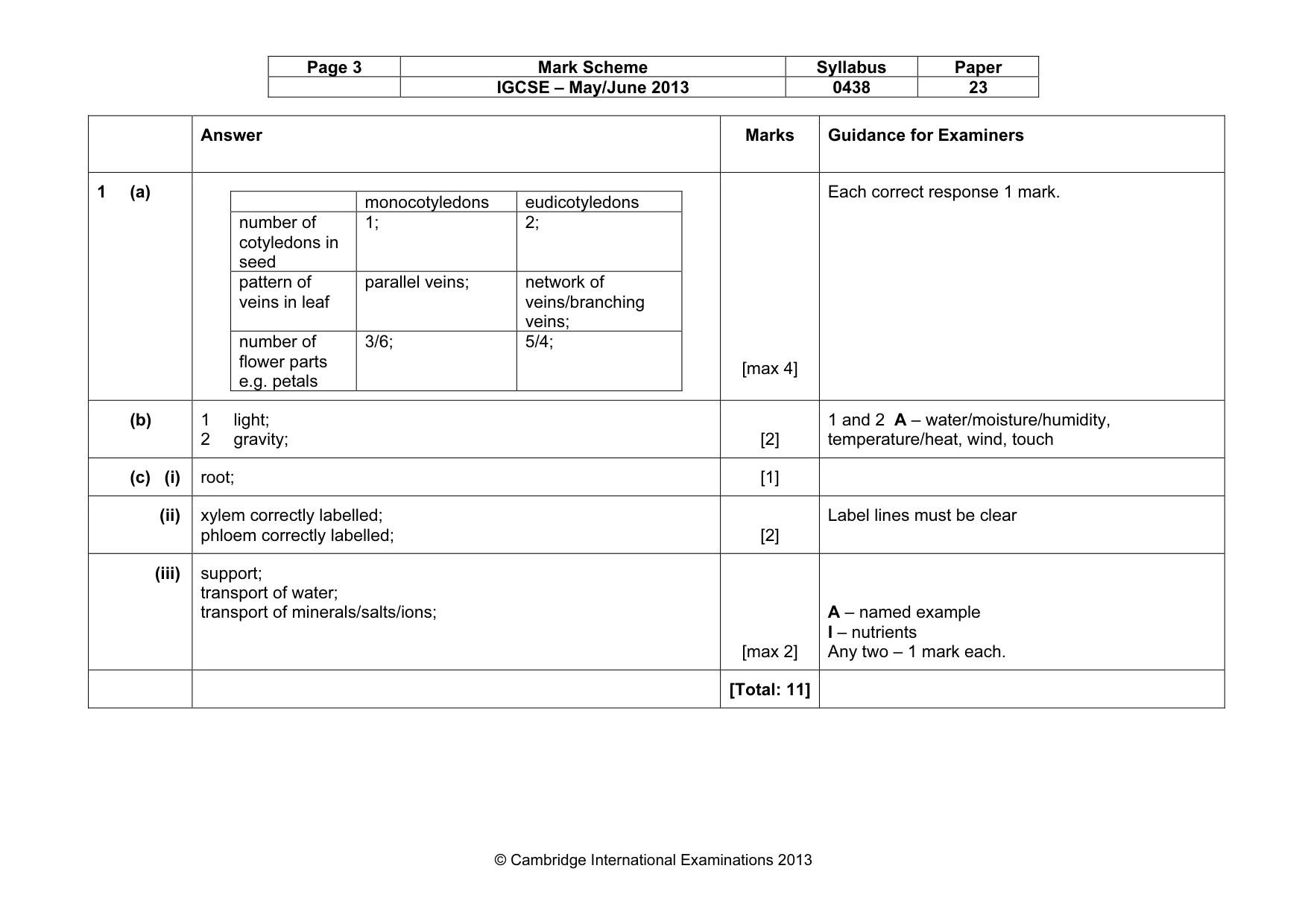
Page 3 Mark Scheme Syllabus Paper IGCSE – May/June 2013 0438 23 © Cambridge International Examinations 2013 Answer Marks Guidance for Examiners 1 (a) monocotyledons eudicotyledons number of cotyledons in seed 1; 2; pattern of veins in leaf parallel veins; network of veins/branching veins; number of flower parts e.g. petals 3/6; 5/4; [max 4] Each correct response 1 mark. (b) 1 light; 2 gravity; [2] 1 and 2 A – water/moisture/humidity, temperature/heat, wind, touch (c) (i) root; [1] (ii) xylem correctly labelled; phloem correctly labelled; [2] Label lines must be clear (iii) support; transport of water; transport of minerals/salts/ions; [max 2] A – named example I – nutrients Any two – 1 mark each. [Total: 11]
Mark scheme, page 4
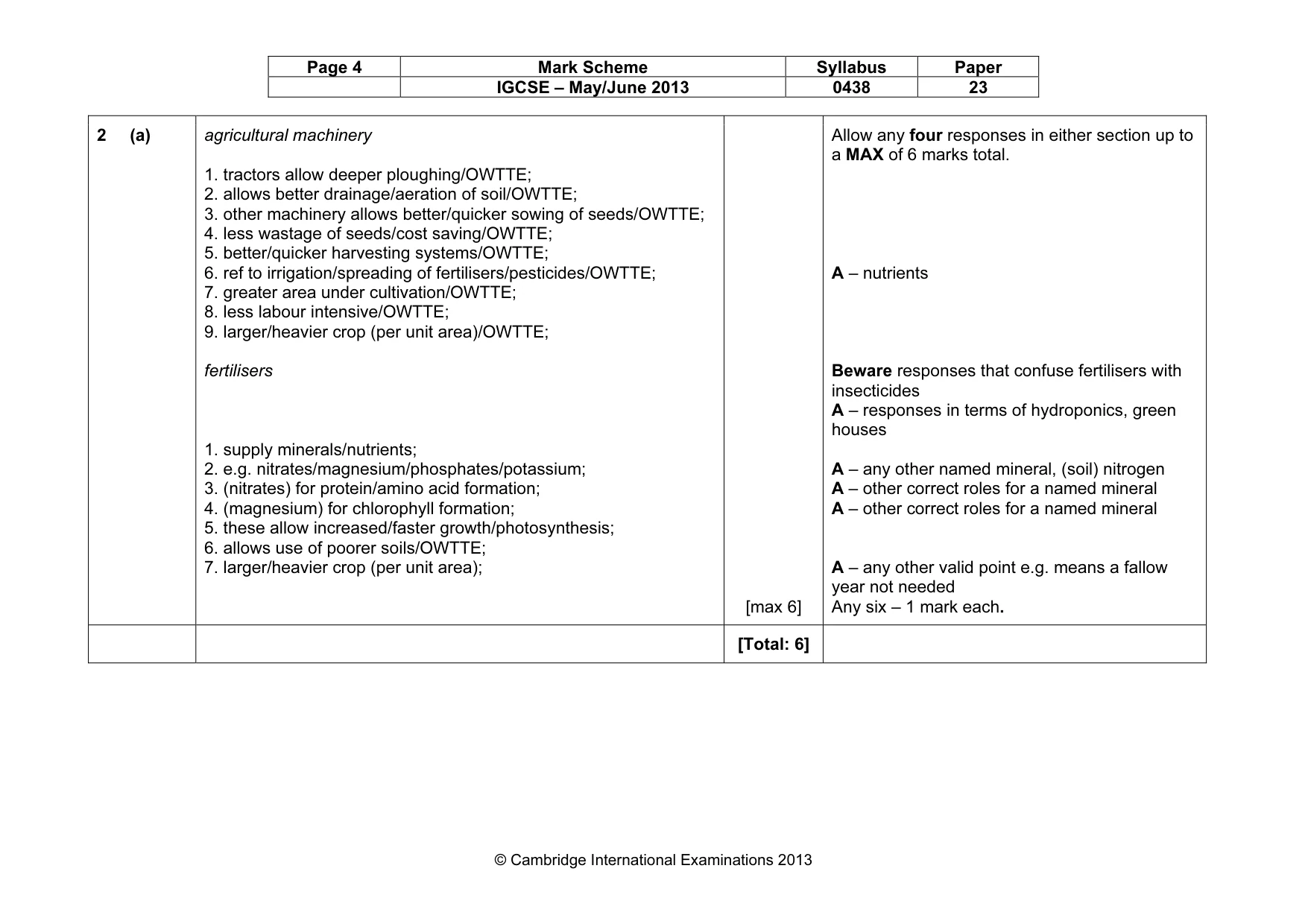
Page 4 Mark Scheme Syllabus Paper IGCSE – May/June 2013 0438 23 © Cambridge International Examinations 2013 2 (a) agricultural machinery 1. tractors allow deeper ploughing/OWTTE; 2. allows better drainage/aeration of soil/OWTTE; 3. other machinery allows better/quicker sowing of seeds/OWTTE; 4. less wastage of seeds/cost saving/OWTTE; 5. better/quicker harvesting systems/OWTTE; 6. ref to irrigation/spreading of fertilisers/pesticides/OWTTE; 7. greater area under cultivation/OWTTE; 8. less labour intensive/OWTTE; 9. larger/heavier crop (per unit area)/OWTTE; fertilisers 1. supply minerals/nutrients; 2. e.g. nitrates/magnesium/phosphates/potassium; 3. (nitrates) for protein/amino acid formation; 4. (magnesium) for chlorophyll formation; 5. these allow increased/faster growth/photosynthesis; 6. allows use of poorer soils/OWTTE; 7. larger/heavier crop (per unit area); [max 6] Allow any four responses in either section up to a MAX of 6 marks total. A – nutrients Beware responses that confuse fertilisers with insecticides A – responses in terms of hydroponics, green houses A – any other named mineral, (soil) nitrogen A – other correct roles for a named mineral A – other correct roles for a named mineral A – any other valid point e.g. means a fallow year not needed Any six – 1 mark each. [Total: 6]
Mark scheme, page 5
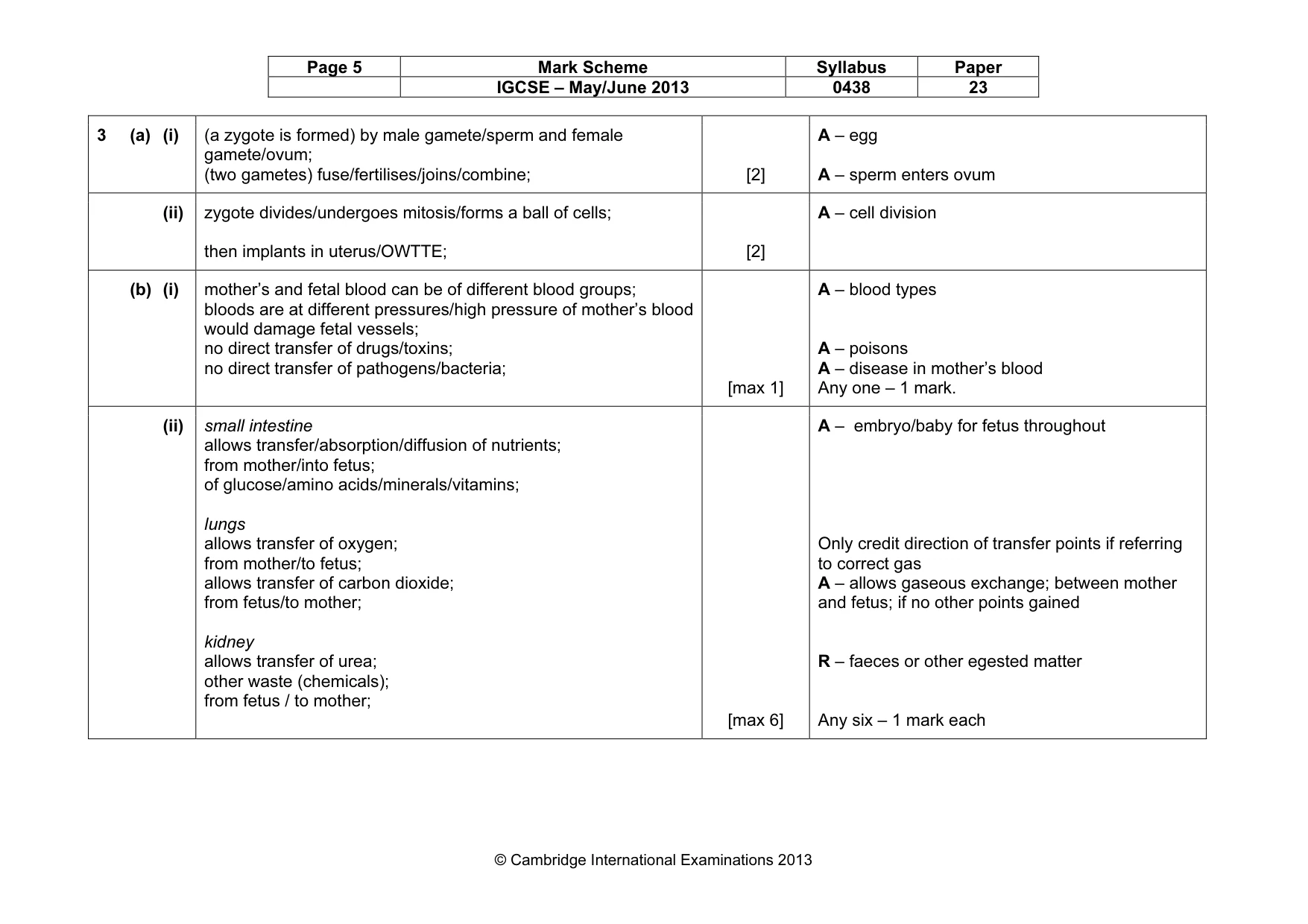
Page 5 Mark Scheme Syllabus Paper IGCSE – May/June 2013 0438 23 © Cambridge International Examinations 2013 3 (a) (i) (a zygote is formed) by male gamete/sperm and female gamete/ovum; (two gametes) fuse/fertilises/joins/combine; [2] A – egg A – sperm enters ovum (ii) zygote divides/undergoes mitosis/forms a ball of cells; then implants in uterus/OWTTE; [2] A – cell division (b) (i) mother’s and fetal blood can be of different blood groups; bloods are at different pressures/high pressure of mother’s blood would damage fetal vessels; no direct transfer of drugs/toxins; no direct transfer of pathogens/bacteria; [max 1] A – blood types A – poisons A – disease in mother’s blood Any one – 1 mark. (ii) small intestine allows transfer/absorption/diffusion of nutrients; from mother/into fetus; of glucose/amino acids/minerals/vitamins; lungs allows transfer of oxygen; from mother/to fetus; allows transfer of carbon dioxide; from fetus/to mother; kidney allows transfer of urea; other waste (chemicals); from fetus / to mother; [max 6] A – embryo/baby for fetus throughout Only credit direction of transfer points if referring to correct gas A – allows gaseous exchange; between mother and fetus; if no other points gained R – faeces or other egested matter Any six – 1 mark each
Mark scheme, page 6
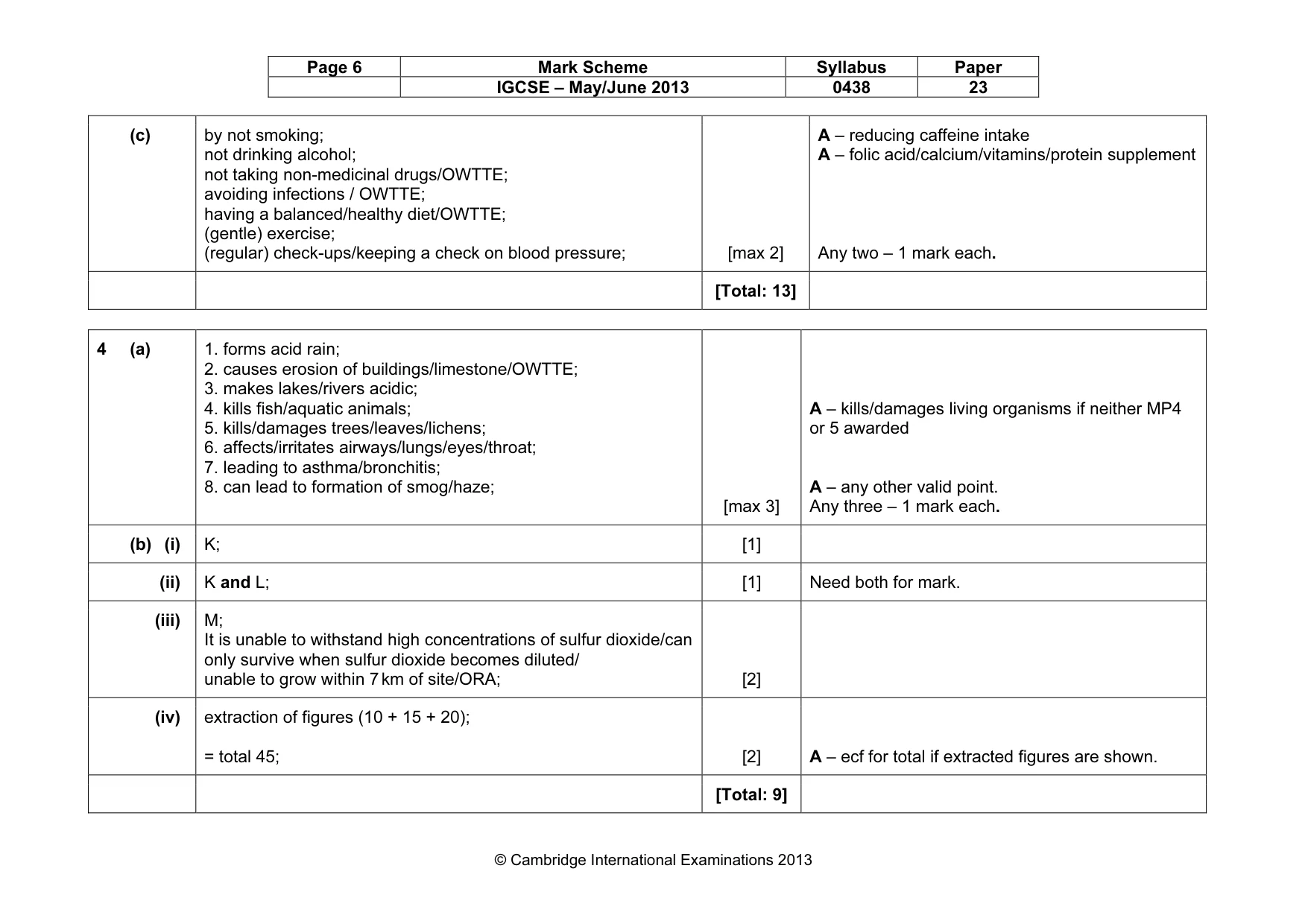
Page 6 Mark Scheme Syllabus Paper IGCSE – May/June 2013 0438 23 © Cambridge International Examinations 2013 (c) by not smoking; not drinking alcohol; not taking non-medicinal drugs/OWTTE; avoiding infections / OWTTE; having a balanced/healthy diet/OWTTE; (gentle) exercise; (regular) check-ups/keeping a check on blood pressure; [max 2] A – reducing caffeine intake A – folic acid/calcium/vitamins/protein supplement Any two – 1 mark each. [Total: 13] 4 (a) 1. forms acid rain; 2. causes erosion of buildings/limestone/OWTTE; 3. makes lakes/rivers acidic; 4. kills fish/aquatic animals; 5. kills/damages trees/leaves/lichens; 6. affects/irritates airways/lungs/eyes/throat; 7. leading to asthma/bronchitis; 8. can lead to formation of smog/haze; [max 3] A – kills/damages living organisms if neither MP4 or 5 awarded A – any other valid point. Any three – 1 mark each. (b) (i) K; [1] (ii) K and L; [1] Need both for mark. (iii) M; It is unable to withstand high concentrations of sulfur dioxide/can only survive when sulfur dioxide becomes diluted/ unable to grow within 7 km of site/ORA; [2] (iv) extraction of figures (10 + 15 + 20); = total 45; [2] A – ecf for total if extracted figures are shown. [Total: 9]
Mark scheme, page 7
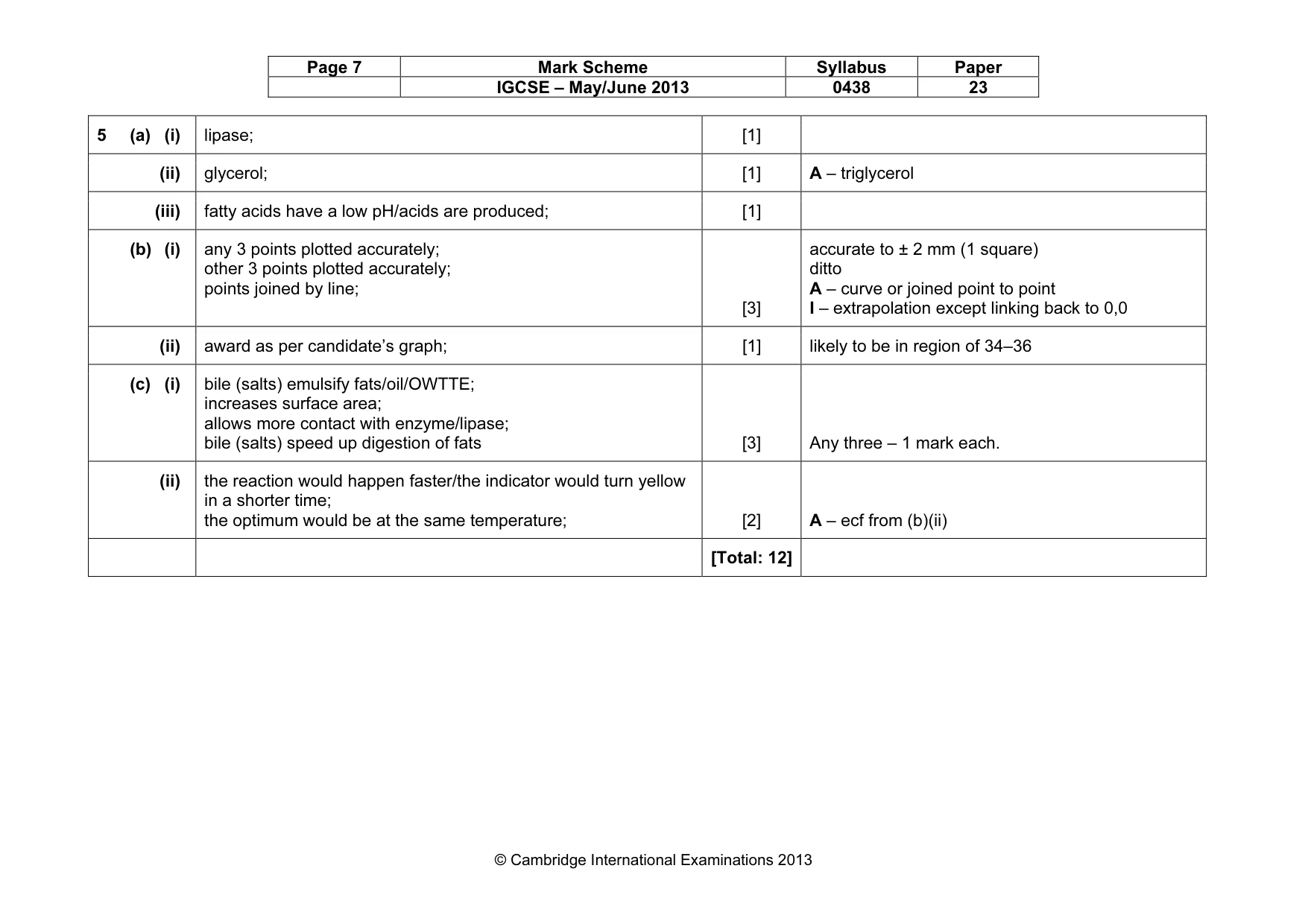
Page 7 Mark Scheme Syllabus Paper IGCSE – May/June 2013 0438 23 © Cambridge International Examinations 2013 5 (a) (i) lipase; [1] (ii) glycerol; [1] A – triglycerol (iii) fatty acids have a low pH/acids are produced; [1] (b) (i) any 3 points plotted accurately; other 3 points plotted accurately; points joined by line; [3] accurate to ± 2 mm (1 square) ditto A – curve or joined point to point I – extrapolation except linking back to 0,0 (ii) award as per candidate’s graph; [1] likely to be in region of 34–36 (c) (i) bile (salts) emulsify fats/oil/OWTTE; increases surface area; allows more contact with enzyme/lipase; bile (salts) speed up digestion of fats [3] Any three – 1 mark each. (ii) the reaction would happen faster/the indicator would turn yellow in a shorter time; the optimum would be at the same temperature; [2] A – ecf from (b)(ii) [Total: 12]
Mark scheme, page 8
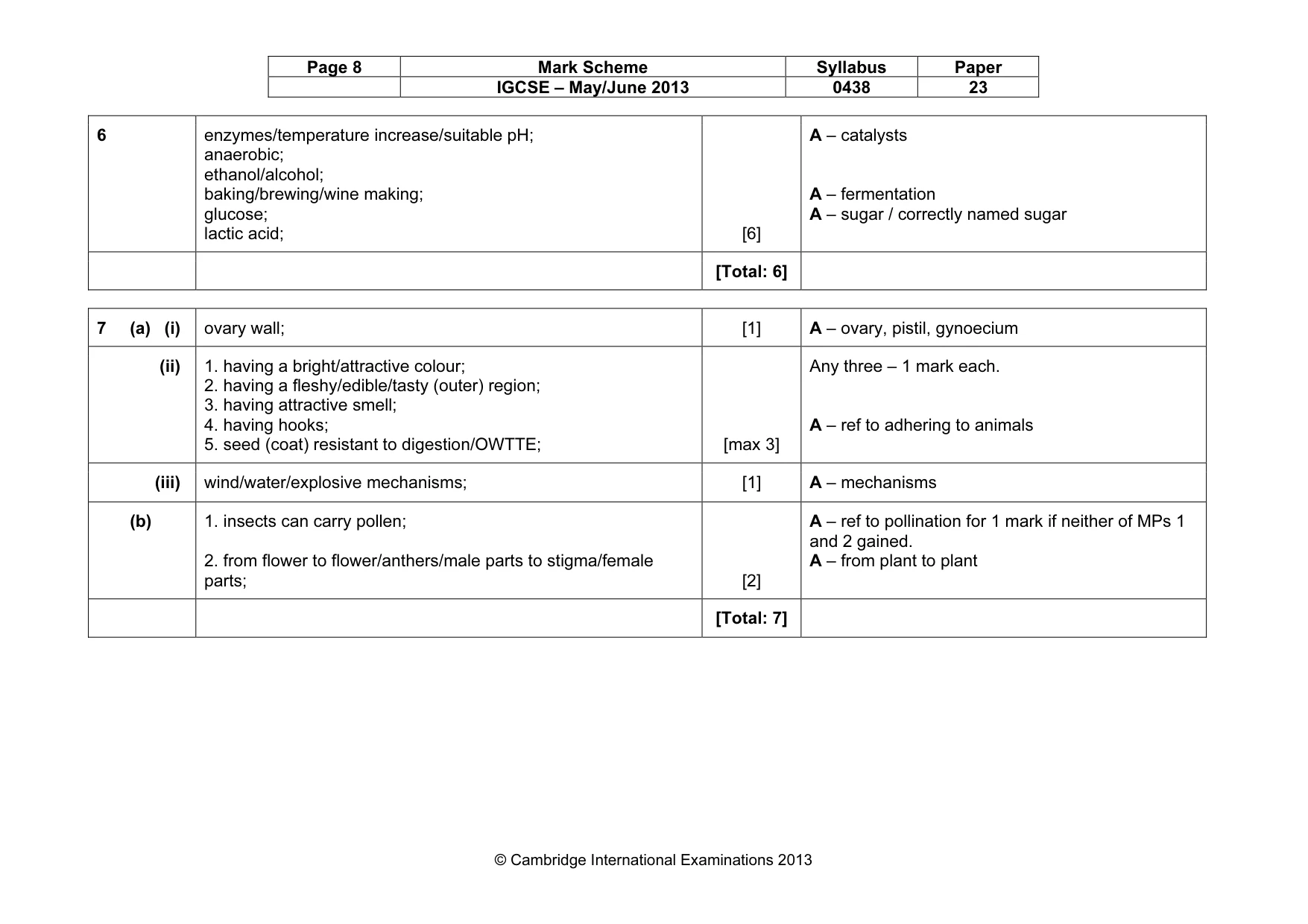
Page 8 Mark Scheme Syllabus Paper IGCSE – May/June 2013 0438 23 © Cambridge International Examinations 2013 6 enzymes/temperature increase/suitable pH; anaerobic; ethanol/alcohol; baking/brewing/wine making; glucose; lactic acid; [6] A – catalysts A – fermentation A – sugar / correctly named sugar [Total: 6] 7 (a) (i) ovary wall; [1] A – ovary, pistil, gynoecium (ii) 1. having a bright/attractive colour; 2. having a fleshy/edible/tasty (outer) region; 3. having attractive smell; 4. having hooks; 5. seed (coat) resistant to digestion/OWTTE; [max 3] Any three – 1 mark each. A – ref to adhering to animals (iii) wind/water/explosive mechanisms; [1] A – mechanisms (b) 1. insects can carry pollen; 2. from flower to flower/anthers/male parts to stigma/female parts; [2] A – ref to pollination for 1 mark if neither of MPs 1 and 2 gained. A – from plant to plant [Total: 7]
Mark scheme, page 9
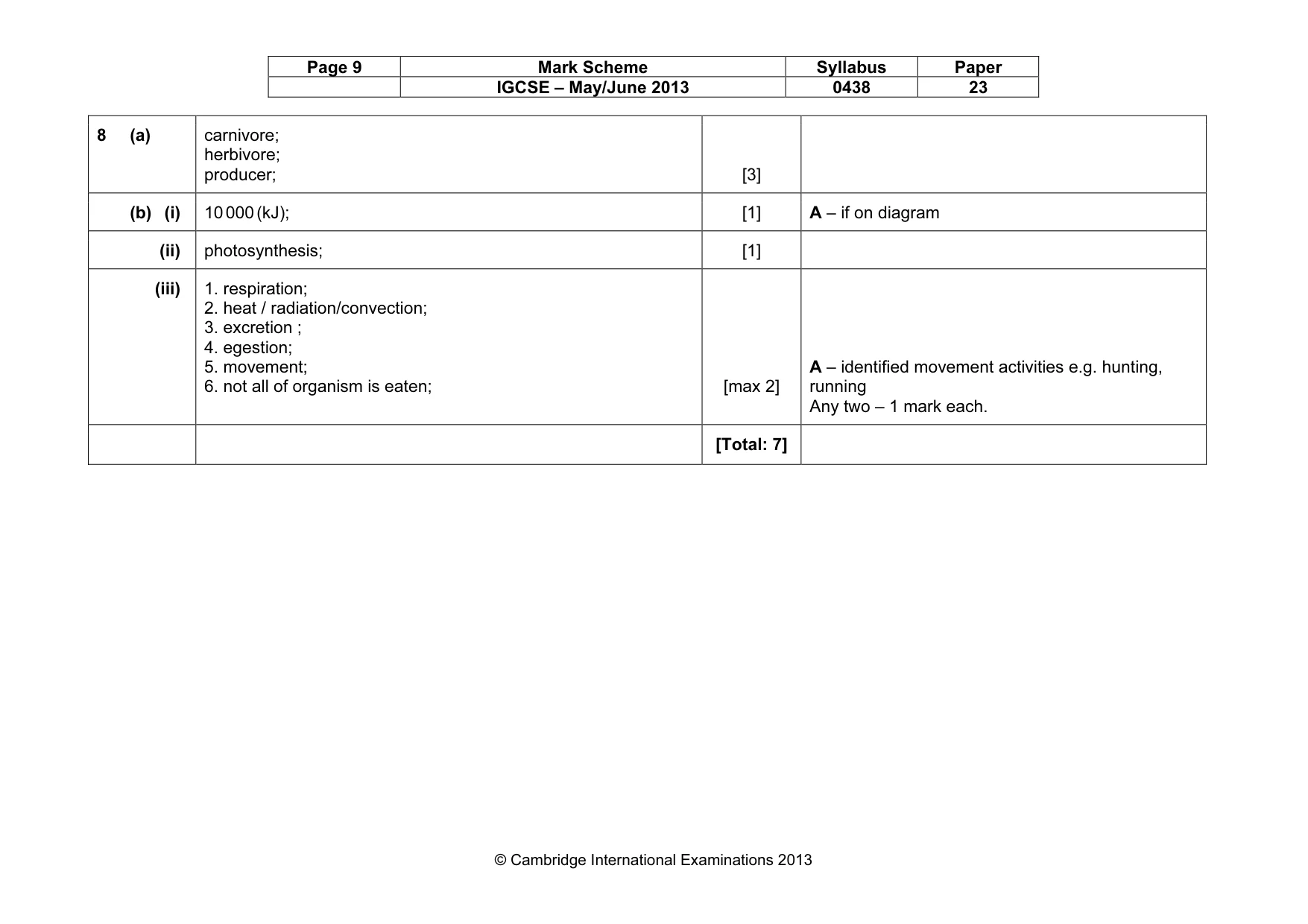
Page 9 Mark Scheme Syllabus Paper IGCSE – May/June 2013 0438 23 © Cambridge International Examinations 2013 8 (a) carnivore; herbivore; producer; [3] (b) (i) 10 000 (kJ); [1] A – if on diagram (ii) photosynthesis; [1] (iii) 1. respiration; 2. heat / radiation/convection; 3. excretion ; 4. egestion; 5. movement; 6. not all of organism is eaten; [max 2] A – identified movement activities e.g. hunting, running Any two – 1 mark each. [Total: 7]
Mark scheme, page 10
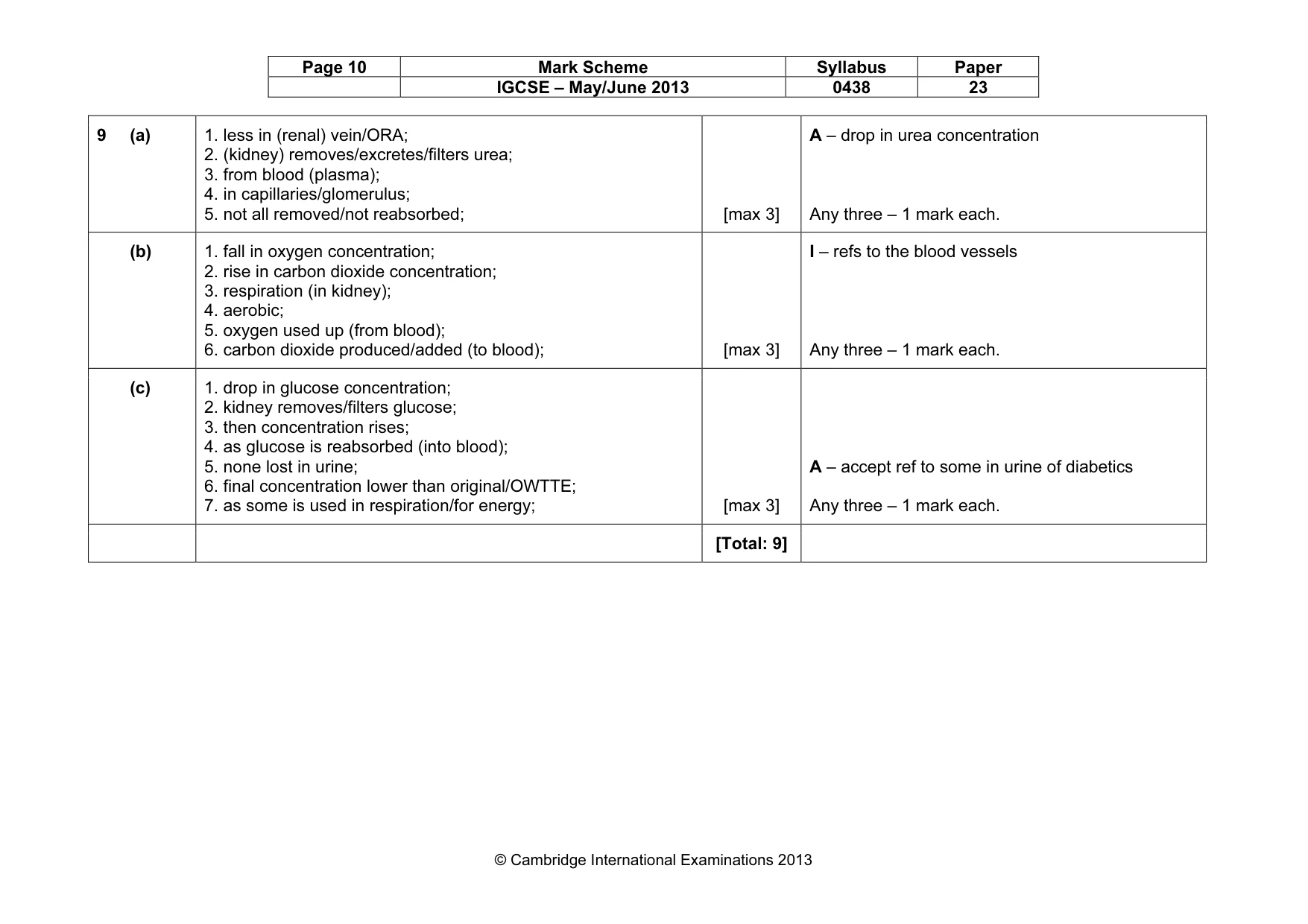
Page 10 Mark Scheme Syllabus Paper IGCSE – May/June 2013 0438 23 © Cambridge International Examinations 2013 9 (a) 1. less in (renal) vein/ORA; 2. (kidney) removes/excretes/filters urea; 3. from blood (plasma); 4. in capillaries/glomerulus; 5. not all removed/not reabsorbed; [max 3] A – drop in urea concentration Any three – 1 mark each. (b) 1. fall in oxygen concentration; 2. rise in carbon dioxide concentration; 3. respiration (in kidney); 4. aerobic; 5. oxygen used up (from blood); 6. carbon dioxide produced/added (to blood); [max 3] I – refs to the blood vessels Any three – 1 mark each. (c) 1. drop in glucose concentration; 2. kidney removes/filters glucose; 3. then concentration rises; 4. as glucose is reabsorbed (into blood); 5. none lost in urine; 6. final concentration lower than original/OWTTE; 7. as some is used in respiration/for energy; [max 3] A – accept ref to some in urine of diabetics Any three – 1 mark each. [Total: 9]