Cambridge IGCSE Bangladesh Studies 0449 — 2015 May/June Paper 2 · Variant 1
0449/21/M/J/15 · 5 questions · 75 marks · ≈84 min
The question paper and its mark scheme, free to read here and free to download. This is Cambridge’s own paper, exactly as it was sat.
Question paper24 pages












Mark scheme14 pages
Answers below. Sit the paper first if you are practising.

Questions as text
Question 1
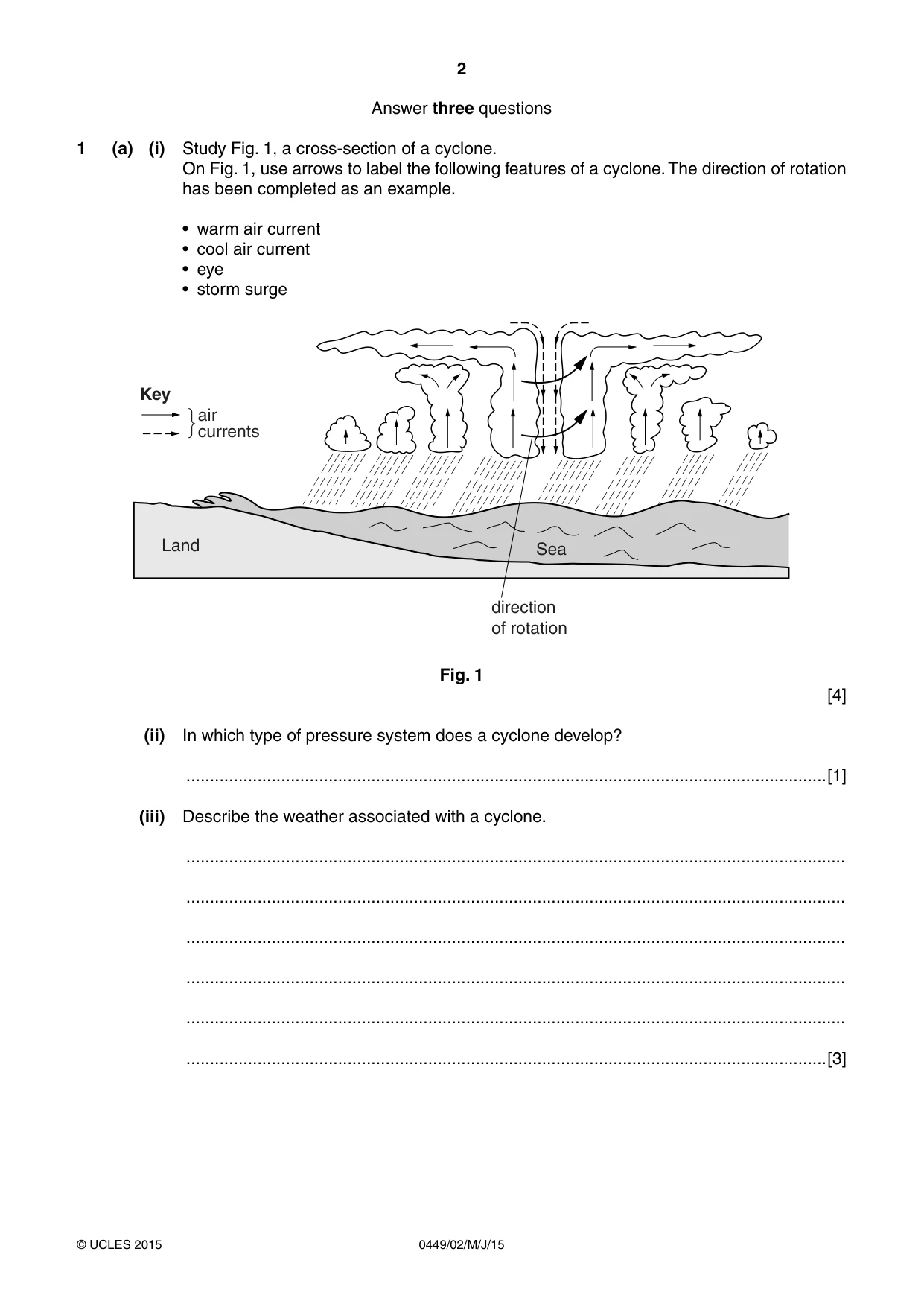
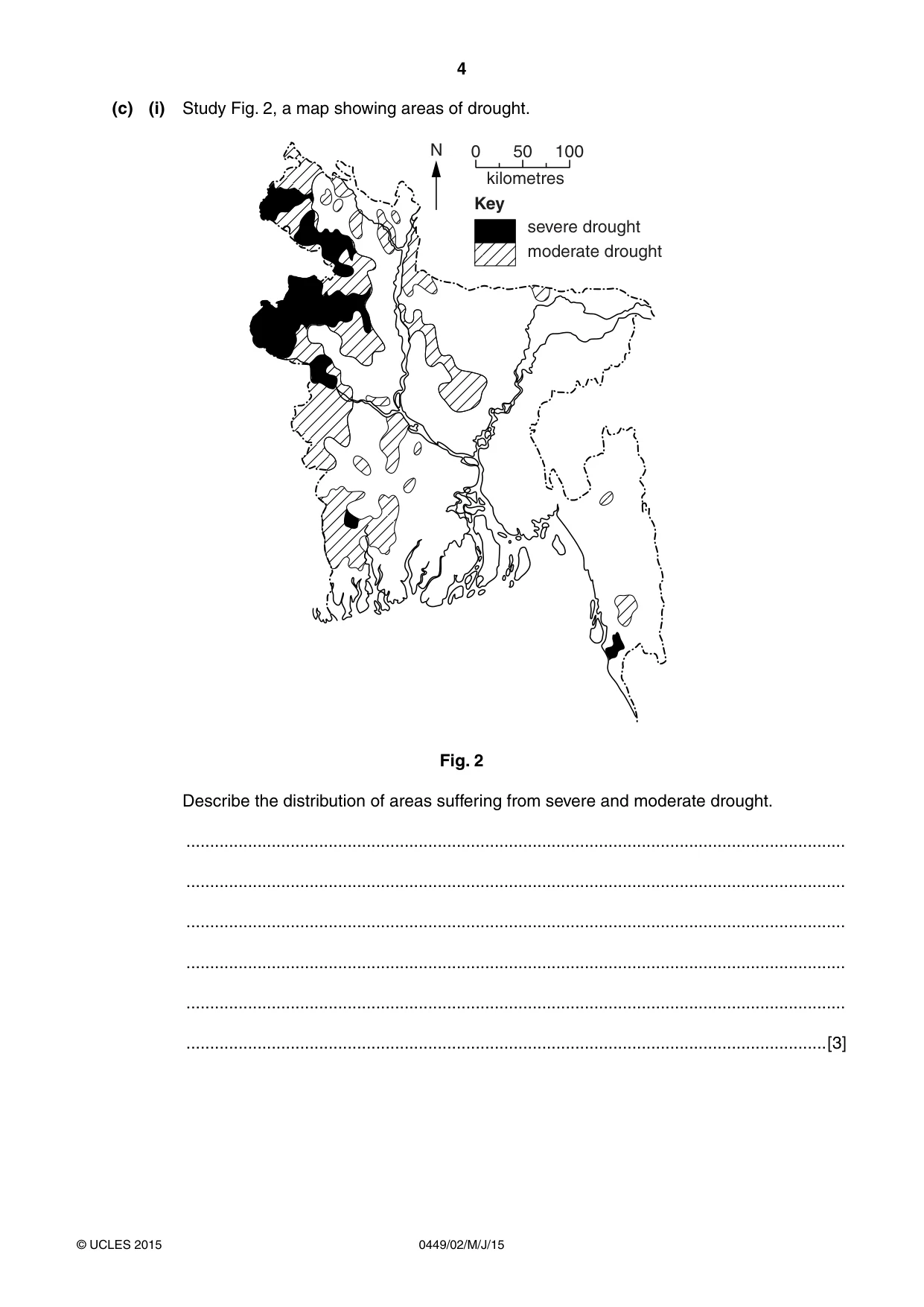
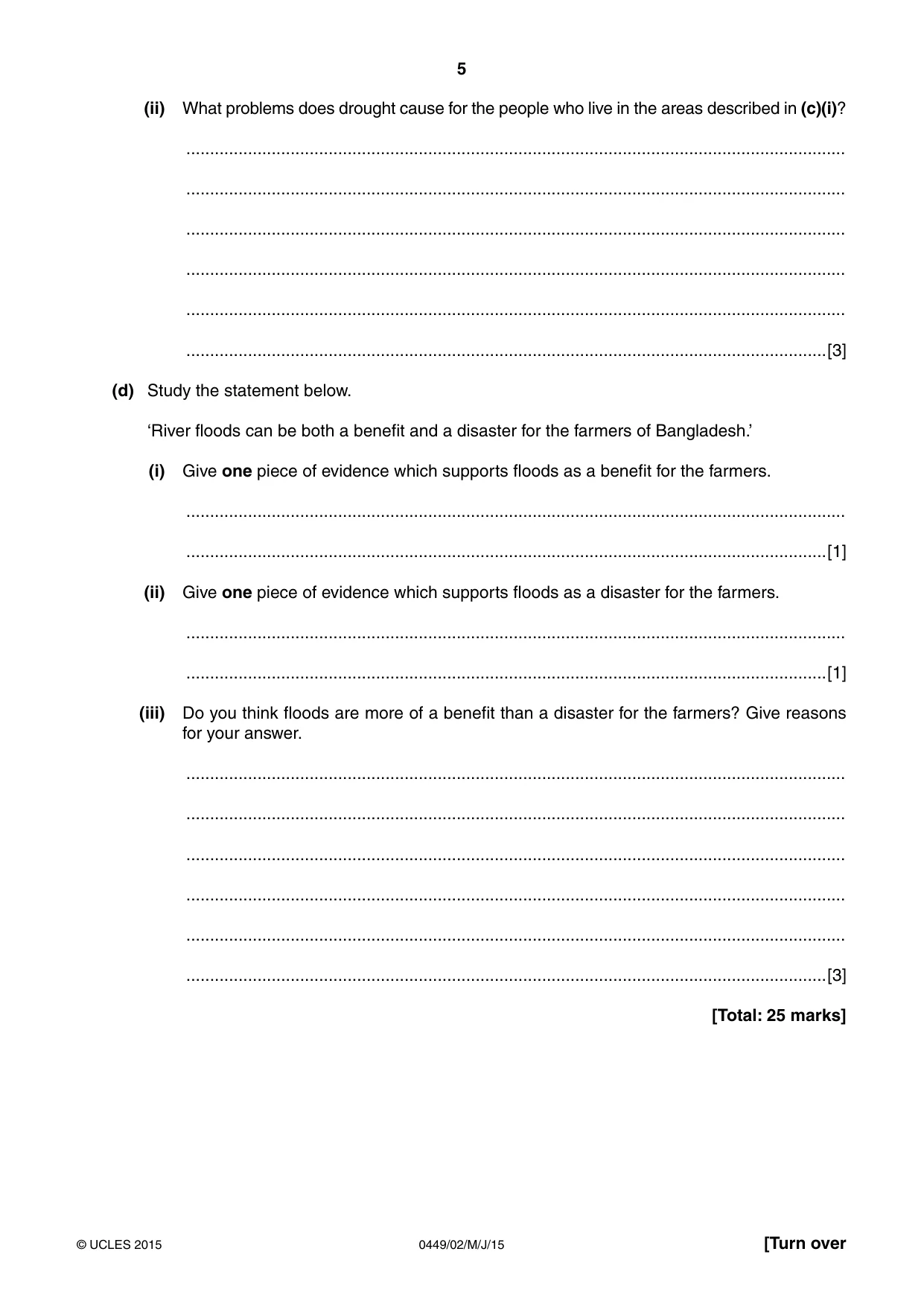
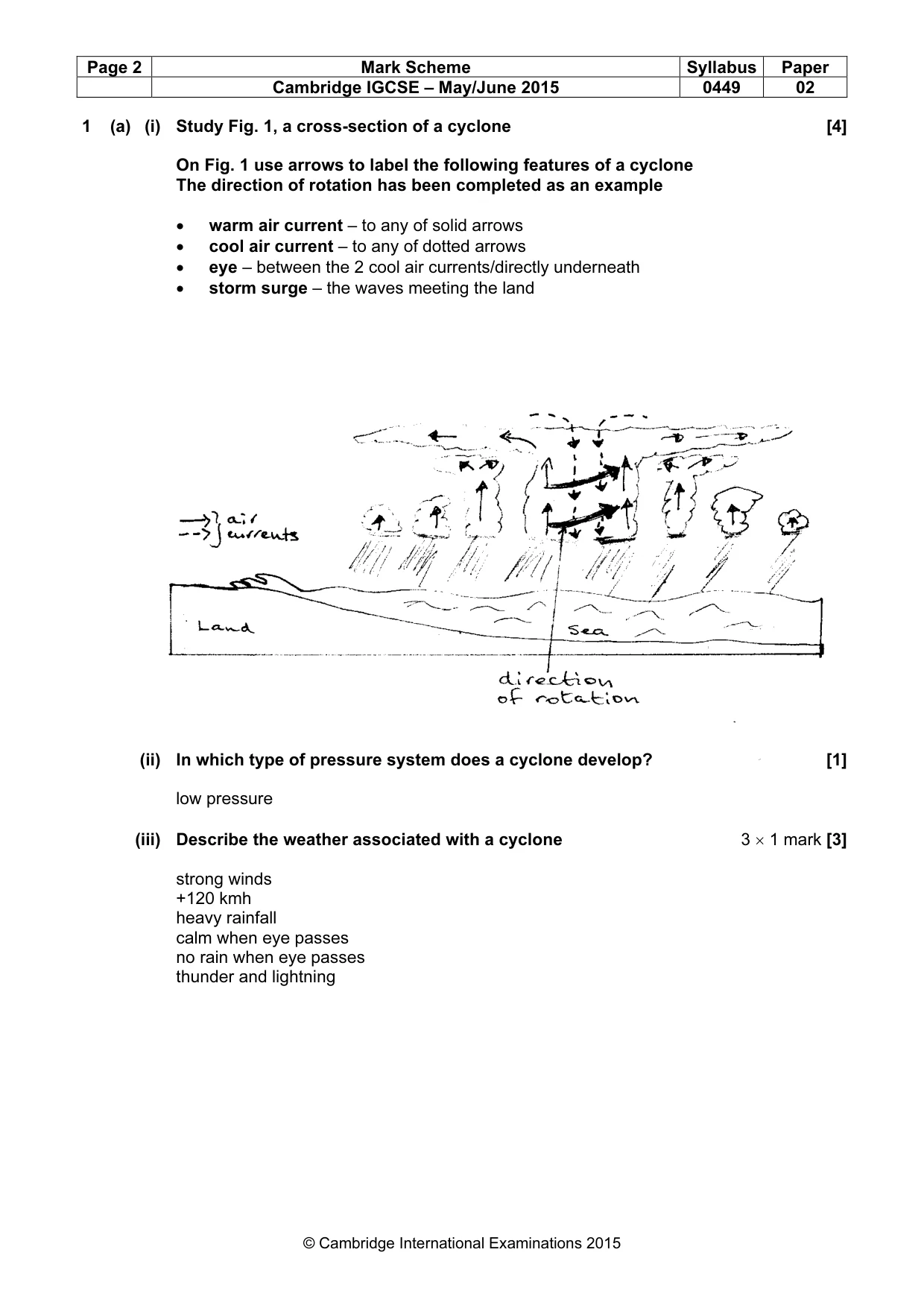
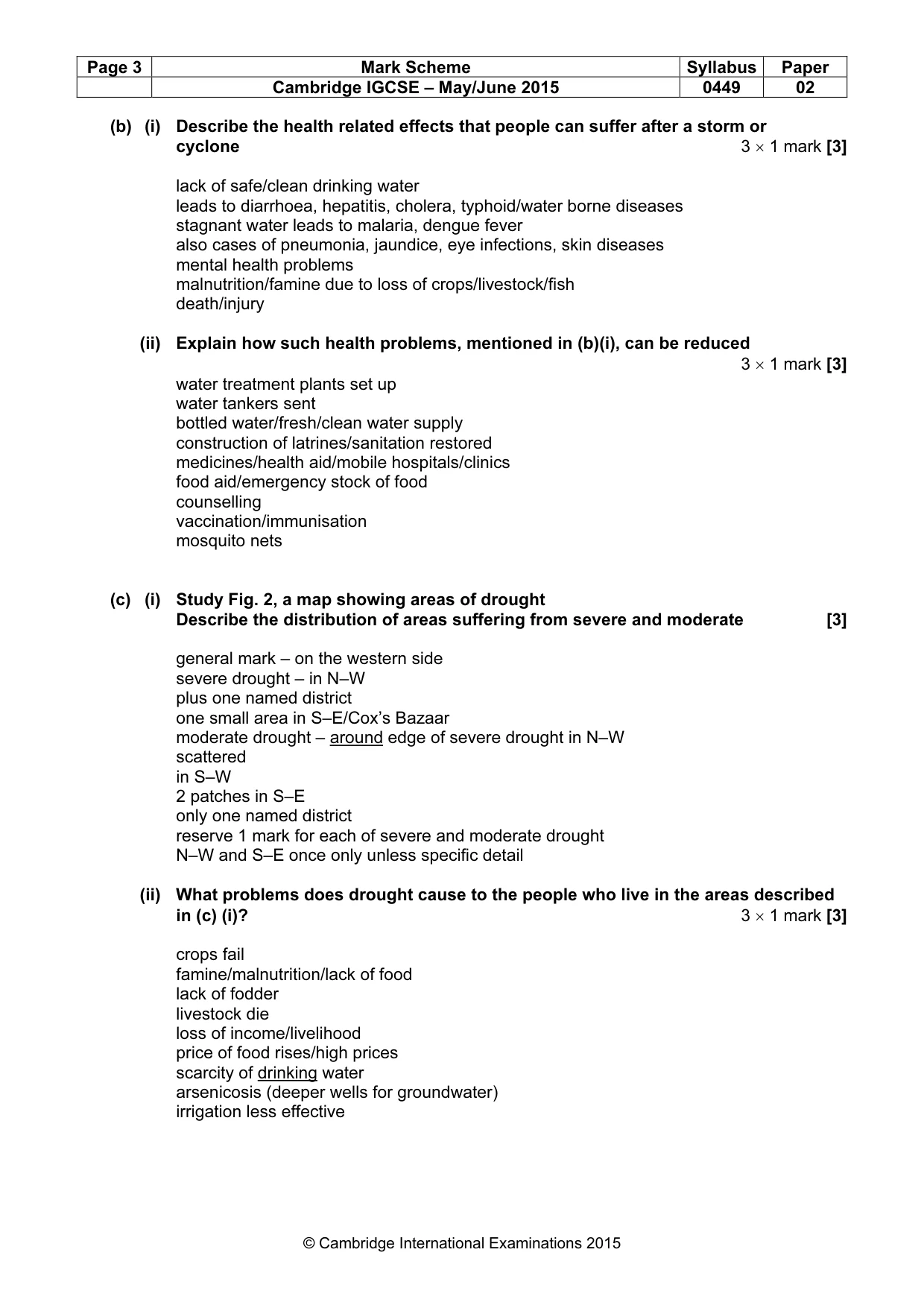
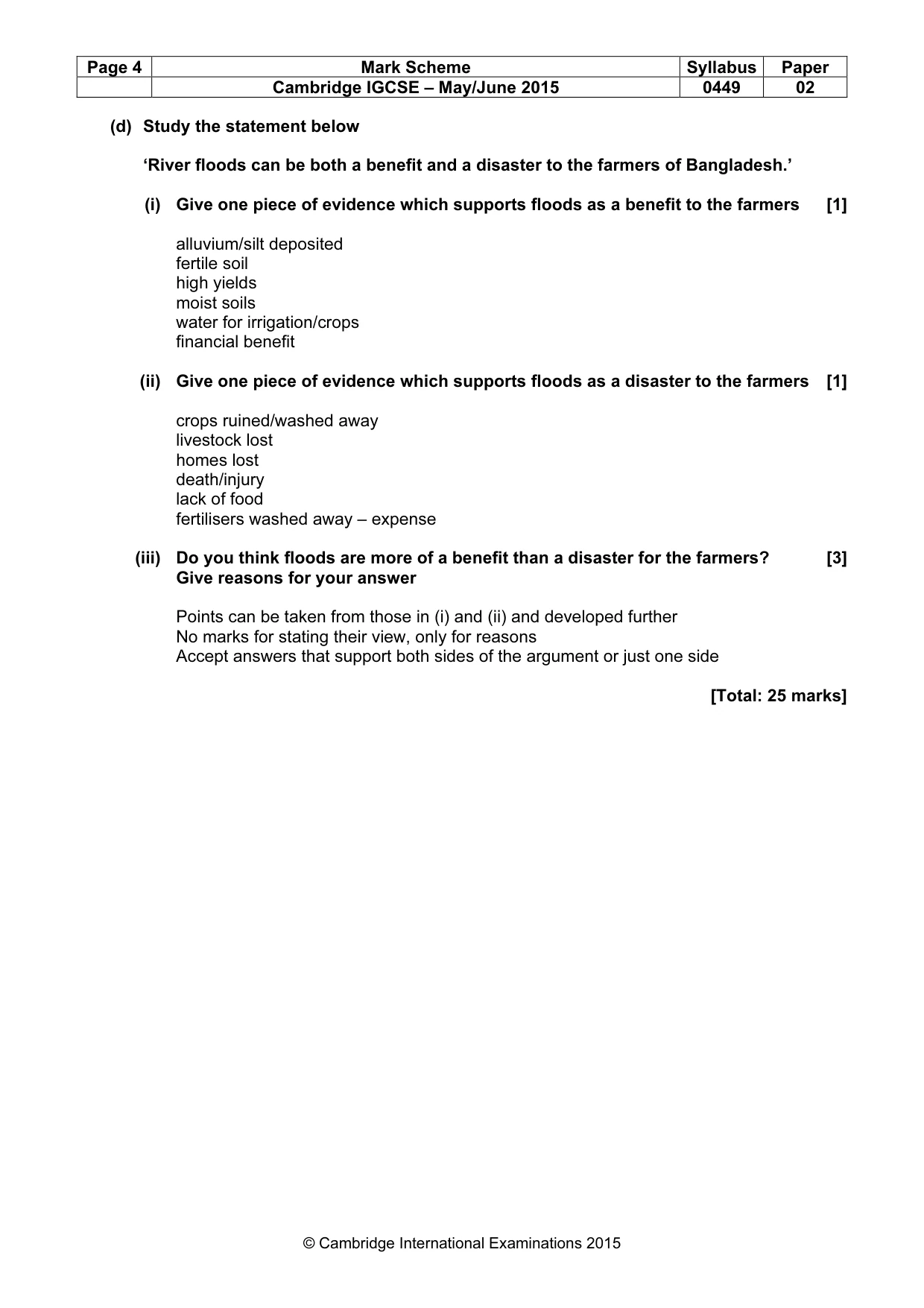
1 (a) (i) Study Fig. 1, a cross-section of a cyclone. On Fig. 1, use arrows to label the following features of a cyclone. The direction of rotation has been completed as an example. • warm air current • cool air current • eye • storm surge Key air currents Land Sea direction of rotation Fig. 1 [4] (ii) In which type of pressure system does a cyclone develop? .......................................................................................................................................[1] (iii) Describe the weather associated with a cyclone. ........................................................................................................................................... ........................................................................................................................................... ........................................................................................................................................... ........................................................................................................................................... ........................................................................................................................................... .......................................................................................................................................[3] (b) (i) Describe the health-related problems that people can suffer after a storm or cyclone. ........................................................................................................................................... ........................................................................................................................................... ........................................................................................................................................... ........................................................................................................................................... ........................................................................................................................................... .......................................................................................................................................[3] (ii) Explain how such health problems, mentioned in (b)(i), can be reduced. ........................................................................................................................................... ........................................................................................................................................... ........................................................................................................................................... ........................................................................................................................................... ........................................................................................................................................... .......................................................................................................................................[3] (c) (i) Study Fig. 2, a map showing areas of drought. N 0 50 100 kilometres Key severe drought moderate drought Fig. 2 Describe the distribution of areas suffering from severe and moderate drought. ........................................................................................................................................... ........................................................................................................................................... ........................................................................................................................................... ........................................................................................................................................... ........................................................................................................................................... .......................................................................................................................................[3] (ii) What problems does drought cause for the people who live in the areas described in (c)(i)? ........................................................................................................................................... ........................................................................................................................................... ........................................................................................................................................... ........................................................................................................................................... ........................................................................................................................................... .......................................................................................................................................[3] (d) Study the statement below. ‘River floods can be both a benefit and a disaster for the farmers of Bangladesh.’ (i) Give one piece of evidence which supports floods as a benefit for the farmers. ........................................................................................................................................... .......................................................................................................................................[1] (ii) Give one piece of evidence which supports floods as a disaster for the farmers. ........................................................................................................................................... .......................................................................................................................................[1] (iii) Do you think floods are more of a benefit than a disaster for the farmers? Give reasons for your answer. ........................................................................................................................................... ........................................................................................................................................... ........................................................................................................................................... ........................................................................................................................................... ........................................................................................................................................... .......................................................................................................................................[3] [Total: 25 marks]
Mark scheme: 1 (a) (i) Study Fig. 1, a cross-section of a cyclone [4] On Fig. 1 use arrows to label the following features of a cyclone The direction of rotation has been completed as an example • warm air current – to any of solid arrows • cool air current – to any of dotted arrows • eye – between the 2 cool air currents/directly underneath • storm surge – the waves meeting the land (ii) In which type of pressure system does a cyclone develop? [1] low pressure (iii) Describe the weather associated with a cyclone 3 × 1 mark [3] strong winds +120 kmh heavy rainfall calm when eye passes no rain when eye passes thunder and lightning (b) (i) Describe the health related effects that people can suffer after a storm or cyclone 3 × 1 mark [3] lack of safe/clean drinking water leads to diarrhoea, hepatitis, cholera, typhoid/water borne diseases stagnant water leads to malaria, dengue fever also cases of pneumonia, jaundice, eye infections, skin diseases mental health problems malnutrition/famine due to loss of crops/livestock/fish death/injury (ii) Explain how such health problems, mentioned in (b)(i), can be reduced 3 × 1 mark [3] water treatment plants set up water tankers sent bottled water/fresh/clean water supply construction of latrines/sanitation restored medicines/health aid/mobile hospitals/clinics food aid/emergency stock of food counselling vaccination/immunisation mosquito nets (c) (i) Study Fig. 2, a map showing areas of drought Describe the distribution of areas suffering from severe and moderate [3] general mark – on the western side severe drought – in N–W plus one named district one small area in S–E/Cox’s Bazaar moderate drought – around edge of severe drought in N–W scattered in S–W 2 patches in S–E only one named district reserve 1 mark for each of severe and moderate drought N–W and S–E once only unless specific detail (ii) What problems does drought cause to the people who live in the areas described in (c) (i)? 3 × 1 mark [3] crops fail famine/malnutrition/lack of food lack of fodder livestock die loss of income/livelihood price of food rises/high prices scarcity of drinking water arsenicosis (deeper wells for groundwater) irrigation less effective (d) Study the statement below ‘River floods can be both a benefit and a disaster to the farmers of Bangladesh.’ (i) Give one piece of evidence which supports floods as a benefit to the farmers [1] alluvium/silt deposited fertile soil high yields moist soils water for irrigation/crops financial benefit (ii) Give one piece of evidence which supports floods as a disaster to the farmers [1] crops ruined/washed away livestock lost homes lost death/injury lack of food fertilisers washed away – expense (iii) Do you think floods are more of a benefit than a disaster for the farmers? [3] Give reasons for your answer Points can be taken from those in (i) and (ii) and developed further No marks for stating their view, only for reasons Accept answers that support both sides of the argument or just one side [Total: 25 marks]
Question 2
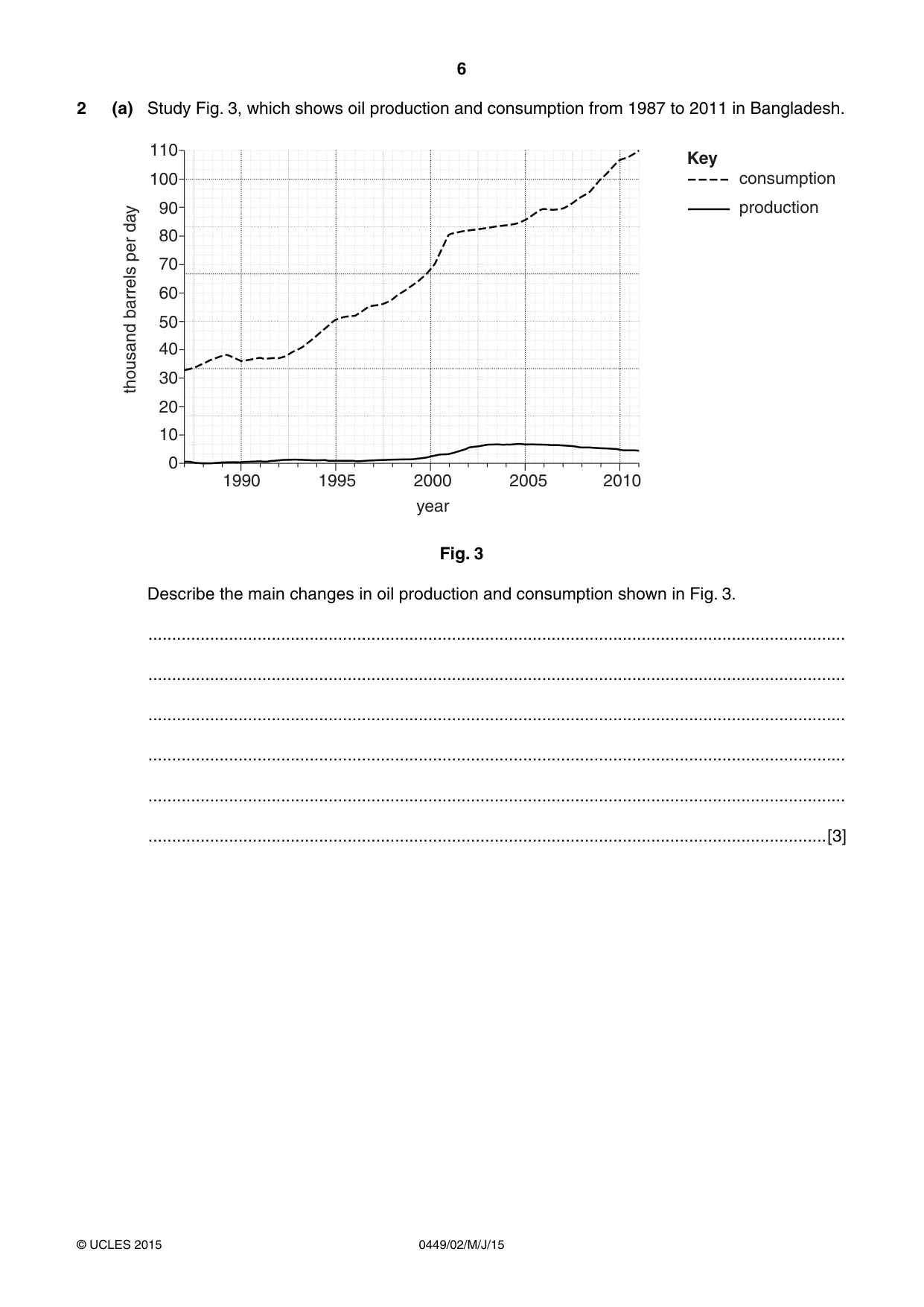
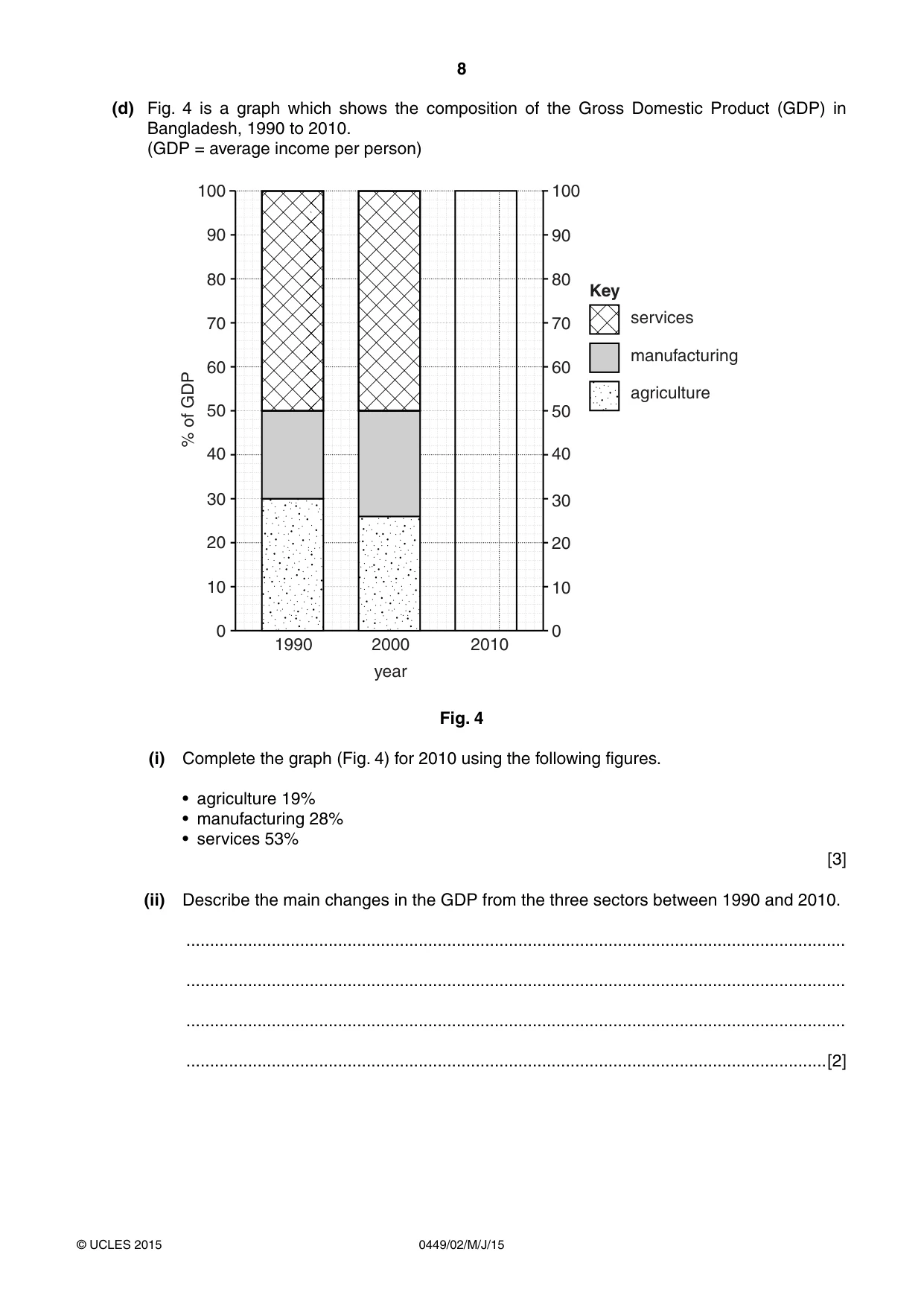
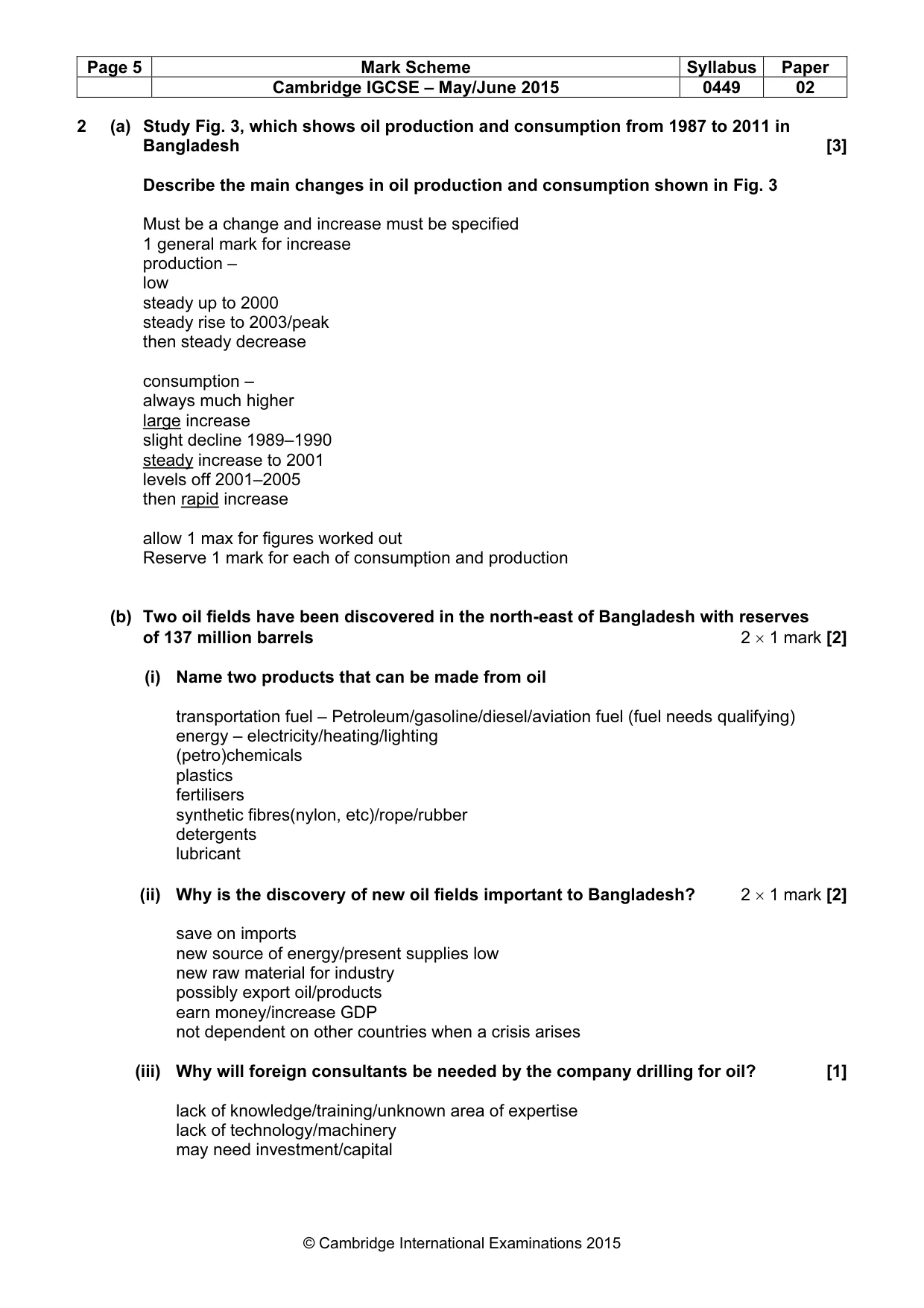
2 (a) Study Fig. 3, which shows oil production and consumption from 1987 to 2011 in Bangladesh. 110 Key 100 consumption 90 production day 80 per 70 60 barrels 50 40 30 thousand 20 10 0 1990 1995 2000 2005 2010 year Fig. 3 Describe the main changes in oil production and consumption shown in Fig. 3. ................................................................................................................................................... ................................................................................................................................................... ................................................................................................................................................... ................................................................................................................................................... ................................................................................................................................................... ...............................................................................................................................................[3] (b) Two oil fields have been discovered in the north-east of Bangladesh with reserves of 137 million barrels. (i) Name two products that can be made from oil. ........................................................................................................................................... .......................................................................................................................................[2] (ii) Why is the discovery of new oil fields important to Bangladesh? ........................................................................................................................................... ........................................................................................................................................... ........................................................................................................................................... .......................................................................................................................................[2] (iii) Why will foreign consultants be needed by the company drilling for oil? ........................................................................................................................................... .......................................................................................................................................[1] (c) (i) Name two types of biomass and state how they are used. ........................................................................................................................................... ........................................................................................................................................... ........................................................................................................................................... ........................................................................................................................................... ........................................................................................................................................... ........................................................................................................................................... ........................................................................................................................................... .......................................................................................................................................[4] (ii) What are the advantages of biomass? ........................................................................................................................................... ........................................................................................................................................... ........................................................................................................................................... ........................................................................................................................................... ........................................................................................................................................... .......................................................................................................................................[3] (d) Fig. 4 is a graph which shows the composition of the Gross Domestic Product (GDP) in Bangladesh, 1990 to 2010. (GDP = average income per person) 100 100 90 90 80 80 Key services 70 70 manufacturing 60 60 agriculture GDP 50 50 of % 40 40 30 30 20 20 10 10 0 0 1990 2000 2010 year Fig. 4 (i) Complete the graph (Fig. 4) for 2010 using the following figures. • agriculture 19% • manufacturing 28% • services 53% [3] (ii) Describe the main changes in the GDP from the three sectors between 1990 and 2010. ........................................................................................................................................... ........................................................................................................................................... ........................................................................................................................................... .......................................................................................................................................[2] (e) Study the statement below. ‘Developing the service industry is the best way forward to improve the economy of Bangladesh.’ (i) Give one piece of evidence which supports this statement. ........................................................................................................................................... .......................................................................................................................................[1] (ii) Give one piece of evidence which does not support this statement. ........................................................................................................................................... .......................................................................................................................................[1] (iii) Do you agree with the statement? Give reasons for your answer. ........................................................................................................................................... ........................................................................................................................................... ........................................................................................................................................... ........................................................................................................................................... ........................................................................................................................................... .......................................................................................................................................[3] [Total: 25 marks]
Mark scheme: 2 (a) Study Fig. 3, which shows oil production and consumption from 1987 to 2011 in Bangladesh [3] Describe the main changes in oil production and consumption shown in Fig. 3 Must be a change and increase must be specified 1 general mark for increase production – low steady up to 2000 steady rise to 2003/peak then steady decrease consumption – always much higher large increase slight decline 1989–1990 steady increase to 2001 levels off 2001–2005 then rapid increase allow 1 max for figures worked out Reserve 1 mark for each of consumption and production (b) Two oil fields have been discovered in the north-east of Bangladesh with reserves of 137 million barrels 2 × 1 mark [2] (i) Name two products that can be made from oil transportation fuel – Petroleum/gasoline/diesel/aviation fuel (fuel needs qualifying) energy – electricity/heating/lighting (petro)chemicals plastics fertilisers synthetic fibres(nylon, etc)/rope/rubber detergents lubricant (ii) Why is the discovery of new oil fields important to Bangladesh? 2 × 1 mark [2] save on imports new source of energy/present supplies low new raw material for industry possibly export oil/products earn money/increase GDP not dependent on other countries when a crisis arises (iii) Why will foreign consultants be needed by the company drilling for oil? [1] lack of knowledge/training/unknown area of expertise lack of technology/machinery may need investment/capital (c) (i) Name two types of biomass and state how they are used 4 × 1 mark [4] solid biomass – trees, crop residue, animal and human waste domestic use biogas – digest animal waste/dung to produce methane gas domestic use liquid biofuels – organic materials (sugar cane, etc) to produce a liquid fuel ethanol/fuel for vehicles (ii) What are the advantages of biomass? 3 × 1 mark [3] biogas and liquid fuel cleaner than solid biomass cheap to collect solid biomass around home/farm) cheap by itself once only = 1 cheaper than imported fuels not subject to load shedding/shortages use residue as fertiliser cleaner than fuelwood/less harm to environment readily available/abundant/found naturally sustainable/renewable (d) Fig. 4 is a graph which shows the composition of GDP in Bangladesh, 1990–2010 (i) Complete the graph (Fig. 4) for 2010 using the following figures [3] • agriculture 19% • manufacturing 28% • services 53% 1 mark for each correct line = 2 1 mark for correct shading (ii) Describe the main changes in the GDP contributions from the three sectors between 1990 and 2010? [2] agriculture declined manufacturing increased services steady/slight increase (e) Study the statement below ‘Developing the service industry is the best way forward to improve the economy of Bangladesh.’ (i) Give one piece of evidence which supports this statement [1] Informal sector – employs unskilled employs many people/lowers unemployment provides earnings/taxes/reduces poverty Formal sector – high-value services such as finance, medicine, research, IT earn money/foreign exchange (ii) Give one piece of evidence which does not support this statement [1] need agriculture to feed the population need industry to provide goods to reduce import bill employs both educated and unskilled people if informal – cannot export/earn foreign currency poorly paid (iii) Do you agree with the statement? Give reasons for your answer [3] Points can be taken from those in (i) and (ii) and developed further No marks for stating their view, only for reasons Accept answers that support both sides of the argument or just one side [Total: 25 marks]
Q3 · Study Photograph A (Insert) which shows farming in northern Bangladesh
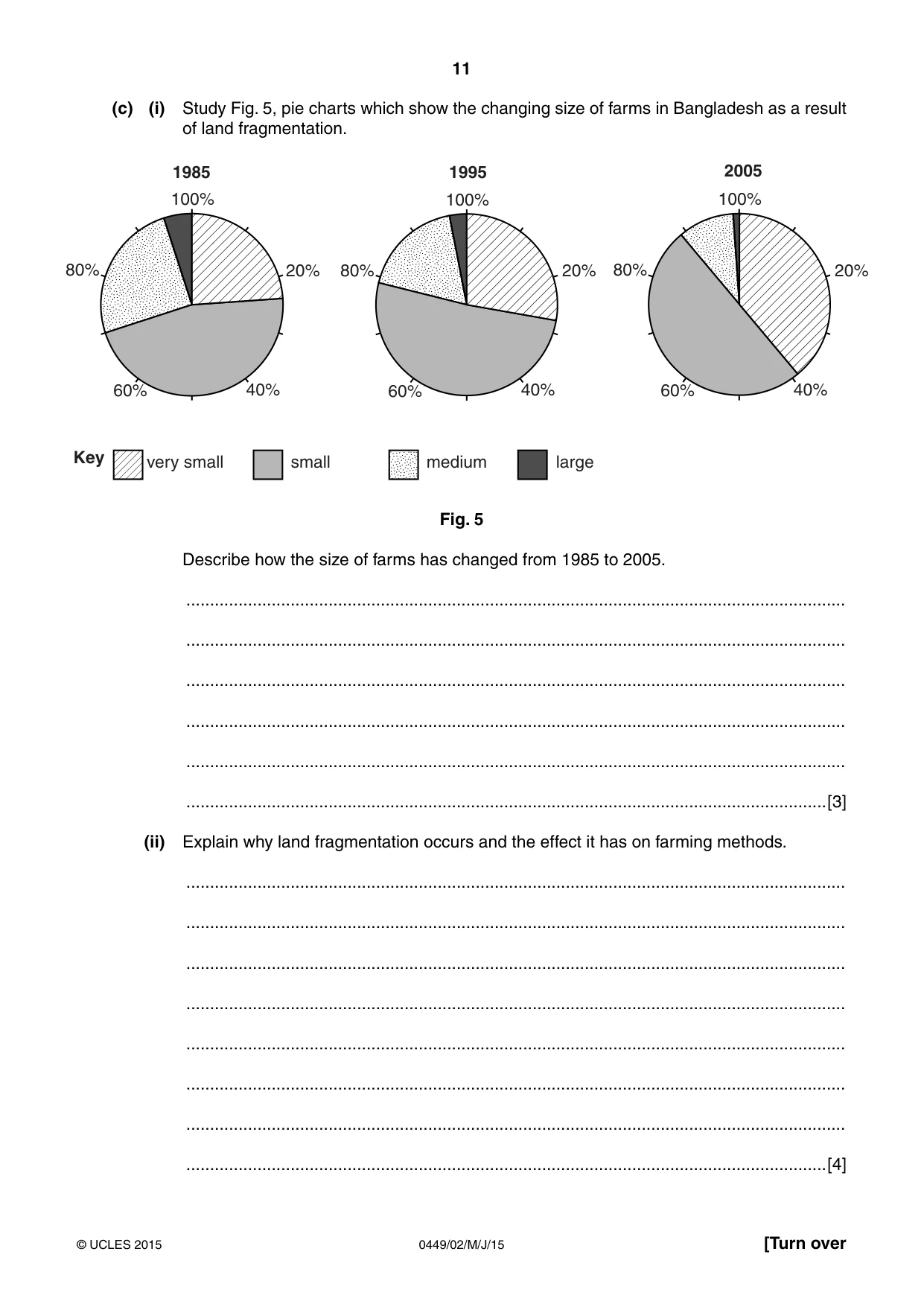
3 (a) Study Photograph A (Insert) which shows farming in northern Bangladesh. (i) What crop is being grown in the fields? .......................................................................................................................................[1] (ii) Describe the relief of the area in Photograph A. ........................................................................................................................................... .......................................................................................................................................[1] (iii) Name three human inputs to farming seen in Photograph A. ........................................................................................................................................... ........................................................................................................................................... .......................................................................................................................................[3] (b) (i) Name two pulses grown as foodcrops. ........................................................................................................................................... .......................................................................................................................................[2] (ii) Why are pulses an important foodcrop? ........................................................................................................................................... ........................................................................................................................................... ........................................................................................................................................... .......................................................................................................................................[2] (c) (i) Study Fig. 5, pie charts which show the changing size of farms in Bangladesh as a result of land fragmentation. 1985 1995 2005 100% 100% 100% 80% 20% 80% 20% 80% 20% 60% 40% 60% 40% 60% 40% .H\ very small small medium large Fig. 5 Describe how the size of farms has changed from 1985 to 2005. ........................................................................................................................................... ........................................................................................................................................... ........................................................................................................................................... ........................................................................................................................................... ........................................................................................................................................... .......................................................................................................................................[3] (ii) Explain why land fragmentation occurs and the effect it has on farming methods. ........................................................................................................................................... ........................................................................................................................................... ........................................................................................................................................... ........................................................................................................................................... ........................................................................................................................................... ........................................................................................................................................... ........................................................................................................................................... .......................................................................................................................................[4] (d) One effect of land fragmentation is the increasing number of landless families migrating to the cities. What effect does this migration have on the cities? ................................................................................................................................................... ................................................................................................................................................... ................................................................................................................................................... ................................................................................................................................................... ................................................................................................................................................... ................................................................................................................................................... ................................................................................................................................................... ...............................................................................................................................................[4] (e) Study the two statements below. A ‘More cash crops need to be grown for industry and export.’ B ‘Increasing food production for the people of Bangladesh is the most important use of agricultural land.’ (i) Give one piece of evidence which supports statement A. ........................................................................................................................................... .......................................................................................................................................[1] (ii) Give one piece of evidence which supports statement B. ........................................................................................................................................... .......................................................................................................................................[1] (iii) Which statement do you agree with the most? Give reasons for your answer. ........................................................................................................................................... ........................................................................................................................................... ........................................................................................................................................... ........................................................................................................................................... ........................................................................................................................................... .......................................................................................................................................[3] [Total: 25 marks]
Mark scheme: 3 (a) Study Photography A (Insert) which shows farming in northern Bangladesh [1] (i) What crop is being grown in the fields? rice (ii) Describe the relief of the area in Photograph A [1] flat low-lying floodplain/plain land (iii) Name three human inputs to farming seen in Photograph A [3] labour/man power seeds/seedlings/planting animals plough/cart irrigation bunds/embankments (b) (i) Name two pulses grown as foodcrops any × 1 mark [2] lentils, mungbean, chick pea/gram, black gram, masur, khesari, pigeon pea, mashkalai (ii) Why are pulses an important foodcrop? 2 × 1 mark [2] protein/nutrionally rich/healthy roughage/fibre cheap easy to grow/in rainfed areas/very productive (c) (i) Study Fig. 5, pie charts which show the changing size of farms in Bangladesh as a result of land fragmentation 3 × 1 mark [3] Describe how the size of farms has changed from 1985 to 2005 more very small more small farms now 90% of farms from 70% (approx.) small stayed same/similar 1995–2005 v small great increase 1995–2005 fewer medium farms reduced by ½ medium decreased greatly 1995–2005 fewer large farms/almost none (ii) Explain why land fragmentation occurs and the effect it has on farming methods reserve 1 mark for each part of question [4] inheritance laws land split between sons becomes smaller each time scattered plots too small to use machinery too small to have surplus earn little money cannot buy good seeds/fertilisers low yields no longer big enough to support families allow positive comments e.g. can just grow enough to feed a family (d) One effect of land fragmentation is the increasing number of landless families migrating to the cities [4] What effect does this migration have on the cities? overcrowded development of slums/homelessness unemployment crime rates increase unhygienic conditions/poor sanitation lead to disease spreading increased pressure on infrastructure or named type(eg education healthcare) more labour available more markets available increase in informal sector thriving/dynamic cities (e) Study the two statements below A ‘More cash crops need to be grown for industry and export.’ B ‘Increasing food production for the people of Bangladeshis is the most important use of agricultural land.’ (i) Give one piece of evidence which supports statement A [1] increase GDP/foreign exchange if more industry and export/profit/earnings increase employment if more industry results jute important to Bangladesh’s economy (ii) Give one piece of evidence which supports statement B [1] need food to survive increasing population needs more food/no food scarcity reduce cost of importing food (iii) Which opinion do you agree with the most? Give reasons for your answer [3] Points can be taken from those in (i) and (ii) and developed No marks for stating A or B, only for reasons Accept answers that support both statements [Total: 25 marks]
Q4 · Read the article below (Fig
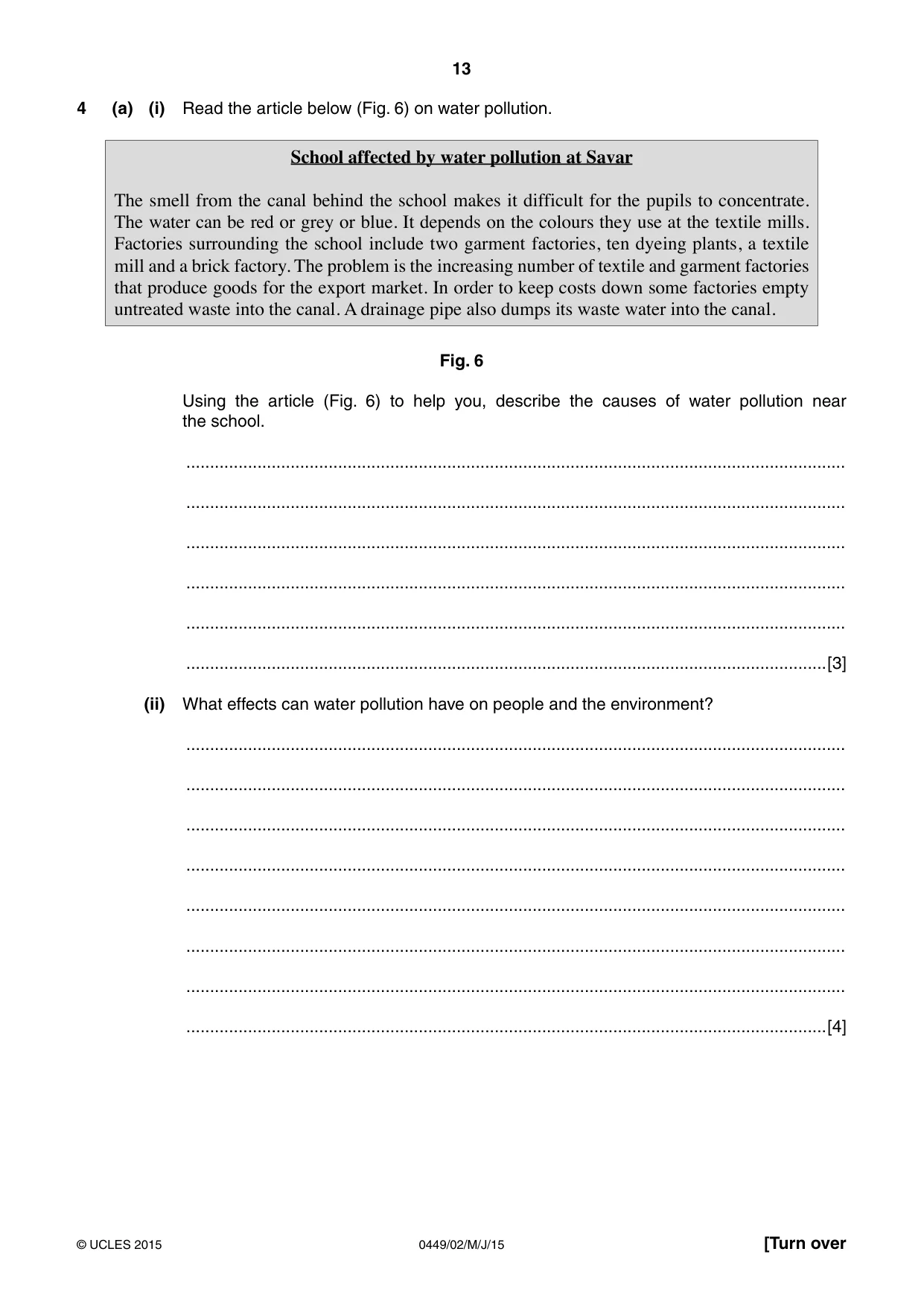
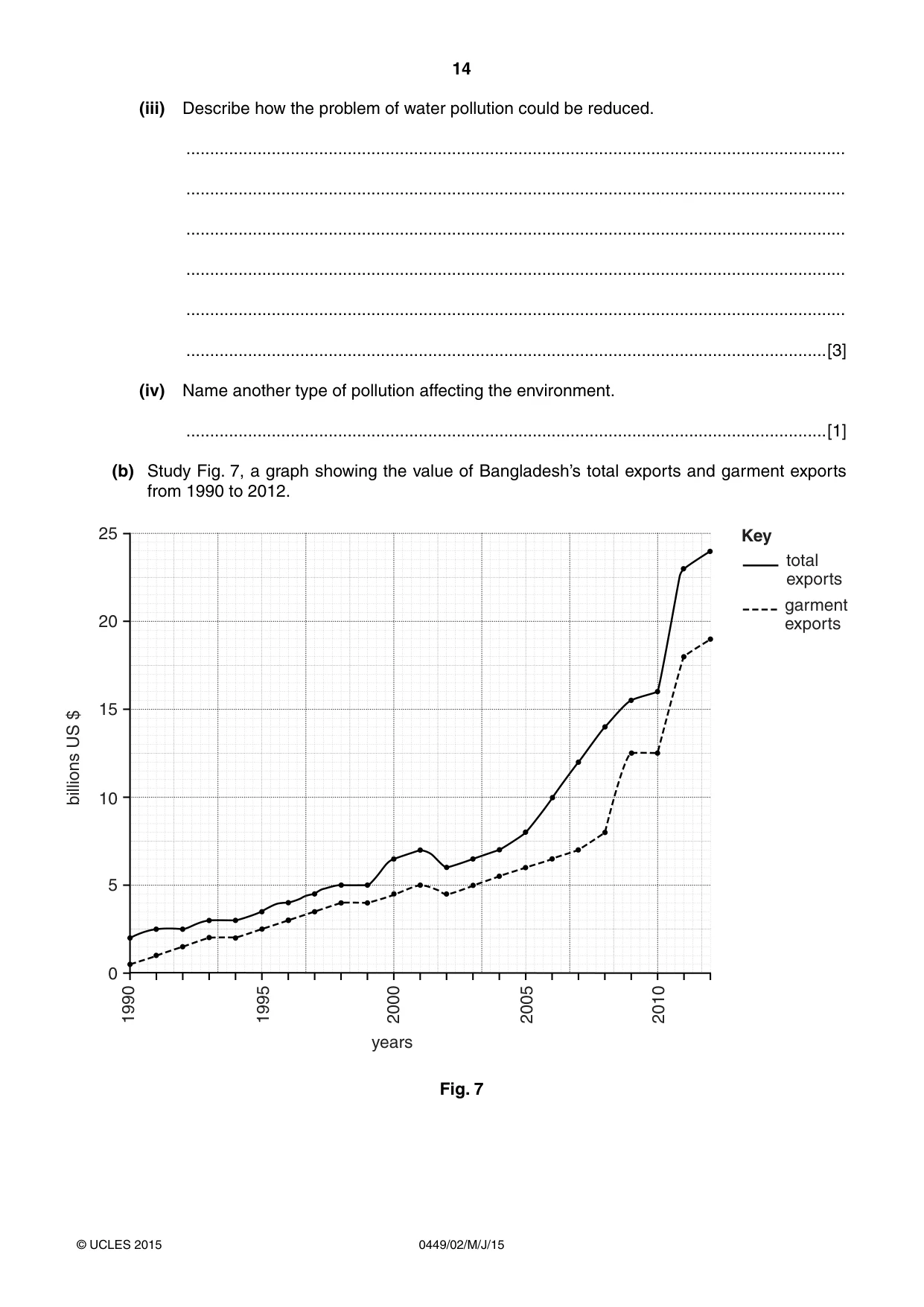
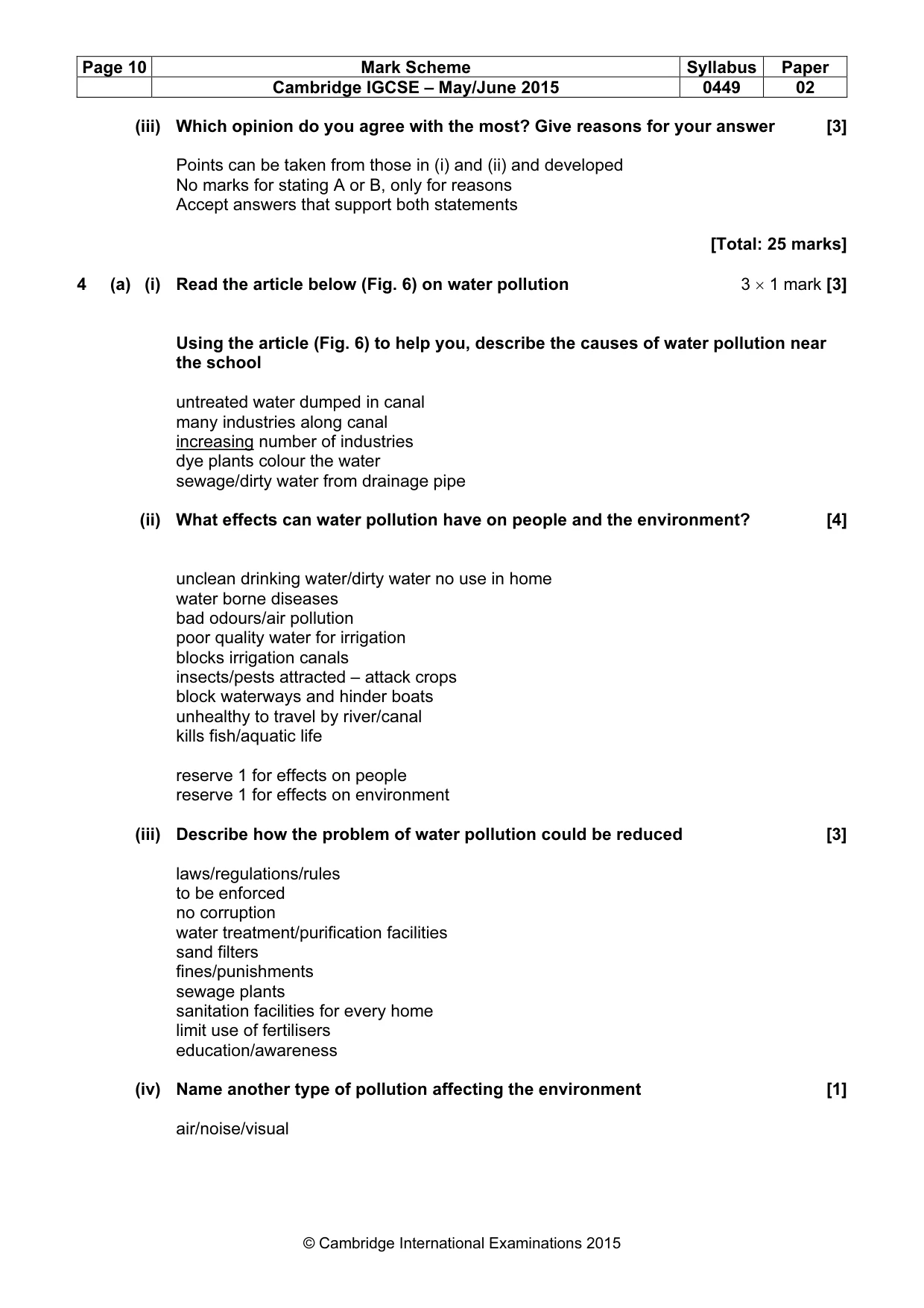
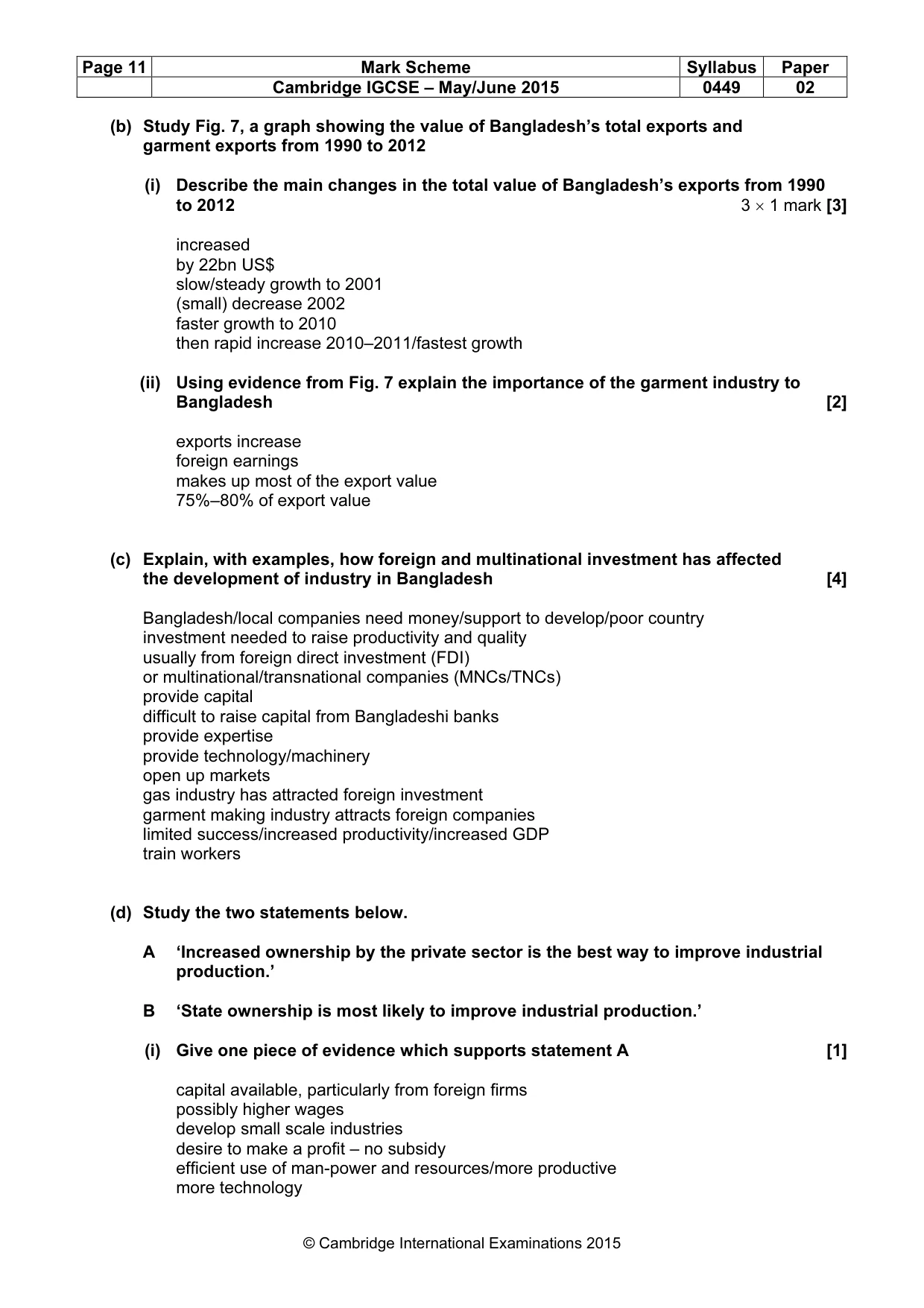
4 (a) (i) Read the article below (Fig. 6) on water pollution. School affected by water pollution at Savar The smell from the canal behind the school makes it difficult for the pupils to concentrate. The water can be red or grey or blue. It depends on the colours they use at the textile mills. Factories surrounding the school include two garment factories, ten dyeing plants, a textile mill and a brick factory. The problem is the increasing number of textile and garment factories that produce goods for the export market. In order to keep costs down some factories empty untreated waste into the canal. A drainage pipe also dumps its waste water into the canal. Fig. 6 Using the article (Fig. 6) to help you, describe the causes of water pollution near the school. ........................................................................................................................................... ........................................................................................................................................... ........................................................................................................................................... ........................................................................................................................................... ........................................................................................................................................... .......................................................................................................................................[3] (ii) What effects can water pollution have on people and the environment? ........................................................................................................................................... ........................................................................................................................................... ........................................................................................................................................... ........................................................................................................................................... ........................................................................................................................................... ........................................................................................................................................... ........................................................................................................................................... .......................................................................................................................................[4] (iii) Describe how the problem of water pollution could be reduced. ........................................................................................................................................... ........................................................................................................................................... ........................................................................................................................................... ........................................................................................................................................... ........................................................................................................................................... .......................................................................................................................................[3] (iv) Name another type of pollution affecting the environment. .......................................................................................................................................[1] (b) Study Fig. 7, a graph showing the value of Bangladesh’s total exports and garment exports from 1990 to 2012. 25 Key total exports garment 20 exports $ 15 US billions 10 5 0 1990 1995 2000 2005 2010 years Fig. 7 (i) Describe the main changes in the total value of Bangladesh’s exports from 1990 to 2012. ........................................................................................................................................... ........................................................................................................................................... ........................................................................................................................................... ........................................................................................................................................... ........................................................................................................................................... .......................................................................................................................................[3] (ii) Using evidence from Fig. 7, explain the importance of the garment industry to Bangladesh. ........................................................................................................................................... ........................................................................................................................................... ........................................................................................................................................... .......................................................................................................................................[2] (c) Explain, with examples, how foreign and multinational investment has affected the development of industry in Bangladesh. ................................................................................................................................................... ................................................................................................................................................... ................................................................................................................................................... ................................................................................................................................................... ................................................................................................................................................... ................................................................................................................................................... ................................................................................................................................................... ...............................................................................................................................................[4] (d) Study the two statements below. A ‘Increased ownership by the private sector is the best way to improve industrial production.’ B ‘State ownership is most likely to improve industrial production.’ (i) Give one piece of evidence which supports statement A. ........................................................................................................................................... .......................................................................................................................................[1] (ii) Give one piece of evidence which supports statement B. ........................................................................................................................................... .......................................................................................................................................[1] (iii) Which statement do you agree with the most? Give reasons for your answer. ........................................................................................................................................... ........................................................................................................................................... ........................................................................................................................................... ........................................................................................................................................... ........................................................................................................................................... .......................................................................................................................................[3] [Total: 25 marks]
Mark scheme: 4 (a) (i) Read the article below (Fig. 6) on water pollution 3 × 1 mark [3] Using the article (Fig. 6) to help you, describe the causes of water pollution near the school untreated water dumped in canal many industries along canal increasing number of industries dye plants colour the water sewage/dirty water from drainage pipe (ii) What effects can water pollution have on people and the environment? [4] unclean drinking water/dirty water no use in home water borne diseases bad odours/air pollution poor quality water for irrigation blocks irrigation canals insects/pests attracted – attack crops block waterways and hinder boats unhealthy to travel by river/canal kills fish/aquatic life reserve 1 for effects on people reserve 1 for effects on environment (iii) Describe how the problem of water pollution could be reduced [3] laws/regulations/rules to be enforced no corruption water treatment/purification facilities sand filters fines/punishments sewage plants sanitation facilities for every home limit use of fertilisers education/awareness (iv) Name another type of pollution affecting the environment [1] air/noise/visual (b) Study Fig. 7, a graph showing the value of Bangladesh’s total exports and garment exports from 1990 to 2012 (i) Describe the main changes in the total value of Bangladesh’s exports from 1990 to 2012 3 × 1 mark [3] increased by 22bn US$ slow/steady growth to 2001 (small) decrease 2002 faster growth to 2010 then rapid increase 2010–2011/fastest growth (ii) Using evidence from Fig. 7 explain the importance of the garment industry to Bangladesh [2] exports increase foreign earnings makes up most of the export value 75%–80% of export value (c) Explain, with examples, how foreign and multinational investment has affected the development of industry in Bangladesh [4] Bangladesh/local companies need money/support to develop/poor country investment needed to raise productivity and quality usually from foreign direct investment (FDI) or multinational/transnational companies (MNCs/TNCs) provide capital difficult to raise capital from Bangladeshi banks provide expertise provide technology/machinery open up markets gas industry has attracted foreign investment garment making industry attracts foreign companies limited success/increased productivity/increased GDP train workers (d) Study the two statements below. A ‘Increased ownership by the private sector is the best way to improve industrial production.’ B ‘State ownership is most likely to improve industrial production.’ (i) Give one piece of evidence which supports statement A [1] capital available, particularly from foreign firms possibly higher wages develop small scale industries desire to make a profit – no subsidy efficient use of man-power and resources/more productive more technology (ii) Give one piece of evidence which supports statement B [1] subsidised by the state allowed loans from banks profits kept within the country – not private hands possible corruption/obverse – law enforcement certain industries set aside for state ownership/issue licences have control of infrastructure political pressure to do well/regulated by government train workers slow development (iii) Which opinion do you agree with the most? Give reasons for your answer [3] Points can be taken from those in (i) and (ii) and developed No marks for stating A or B, only for reasons Accept answers that support both statements or neither [Total: 25 marks]
Question 5
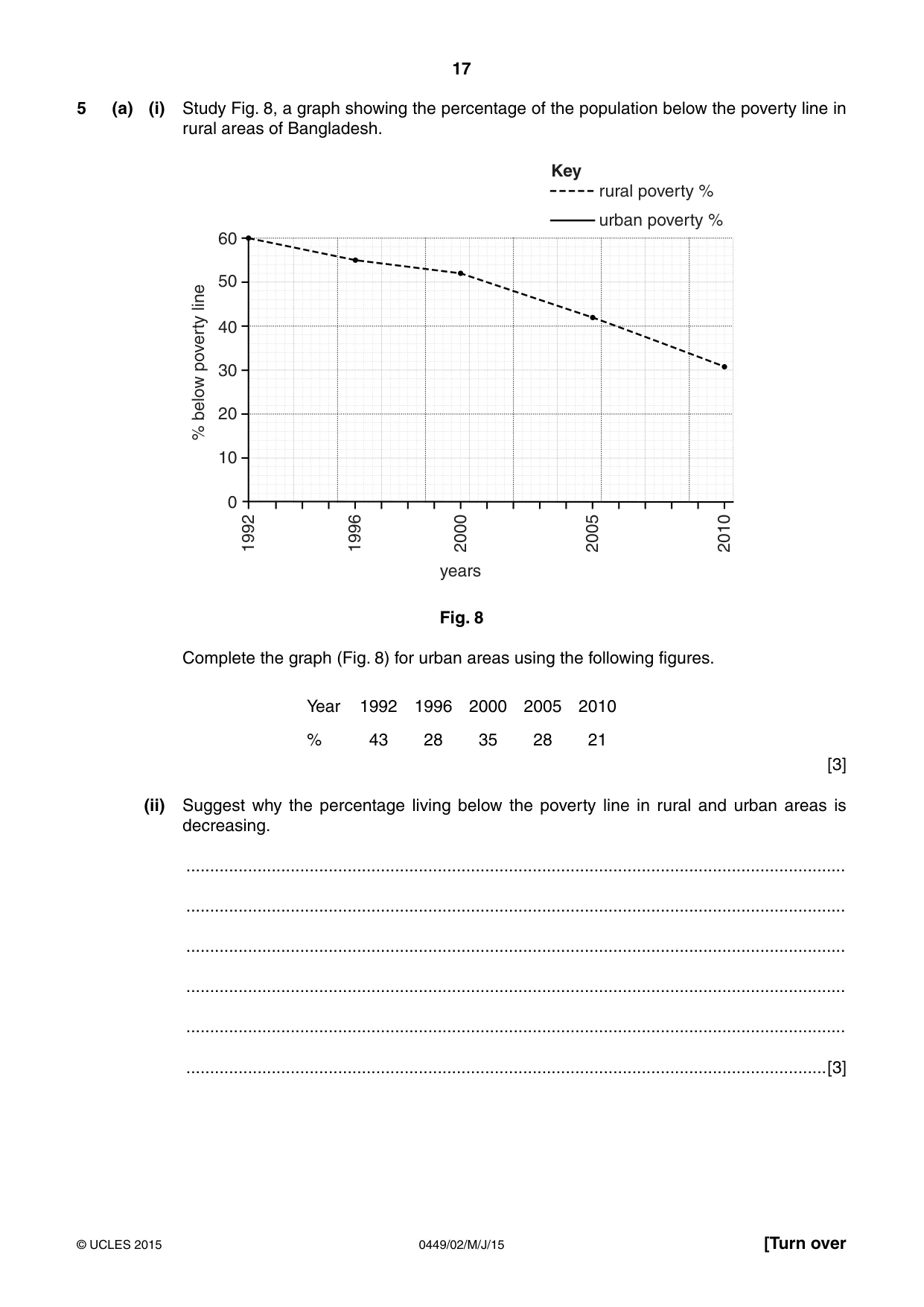
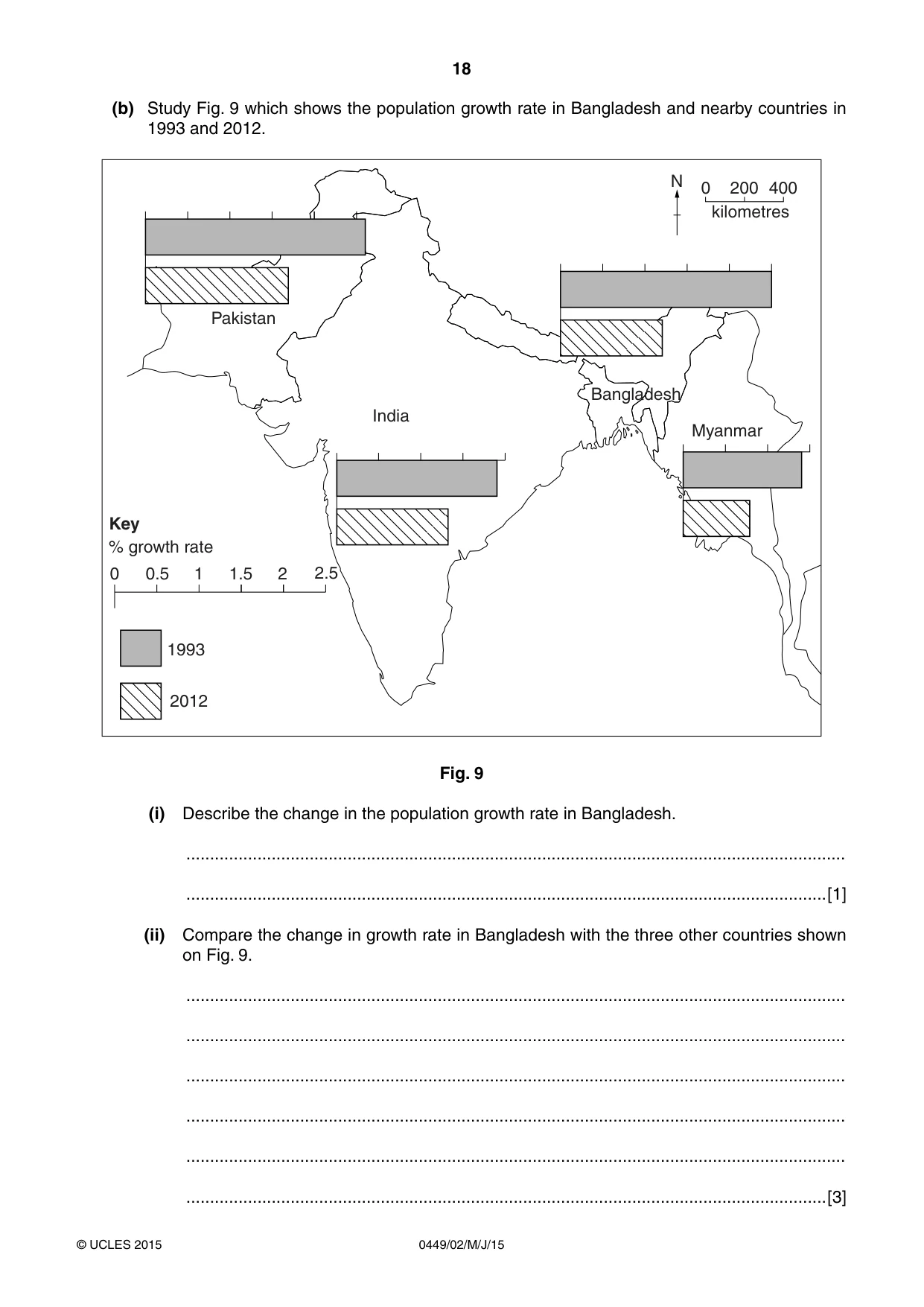
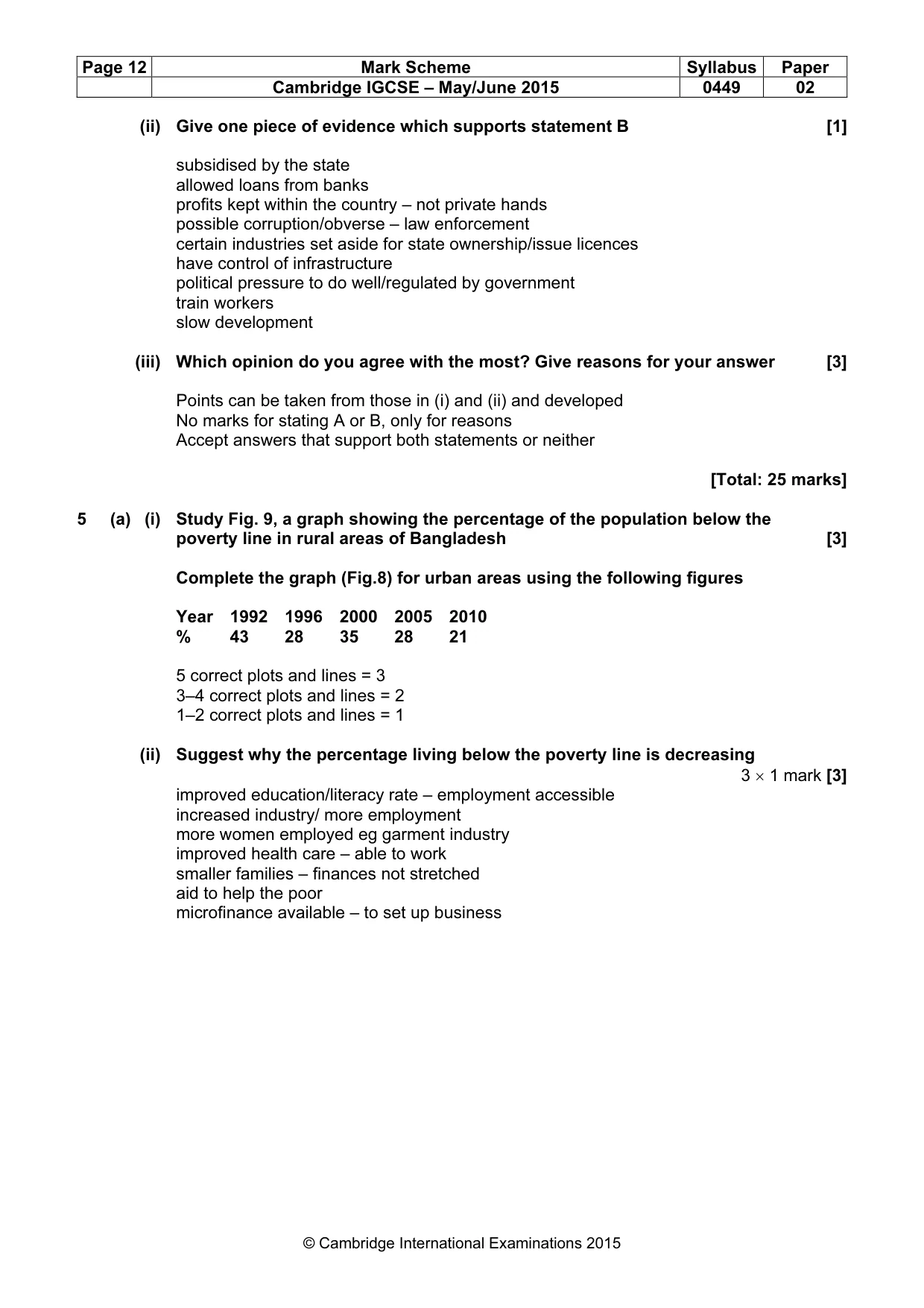
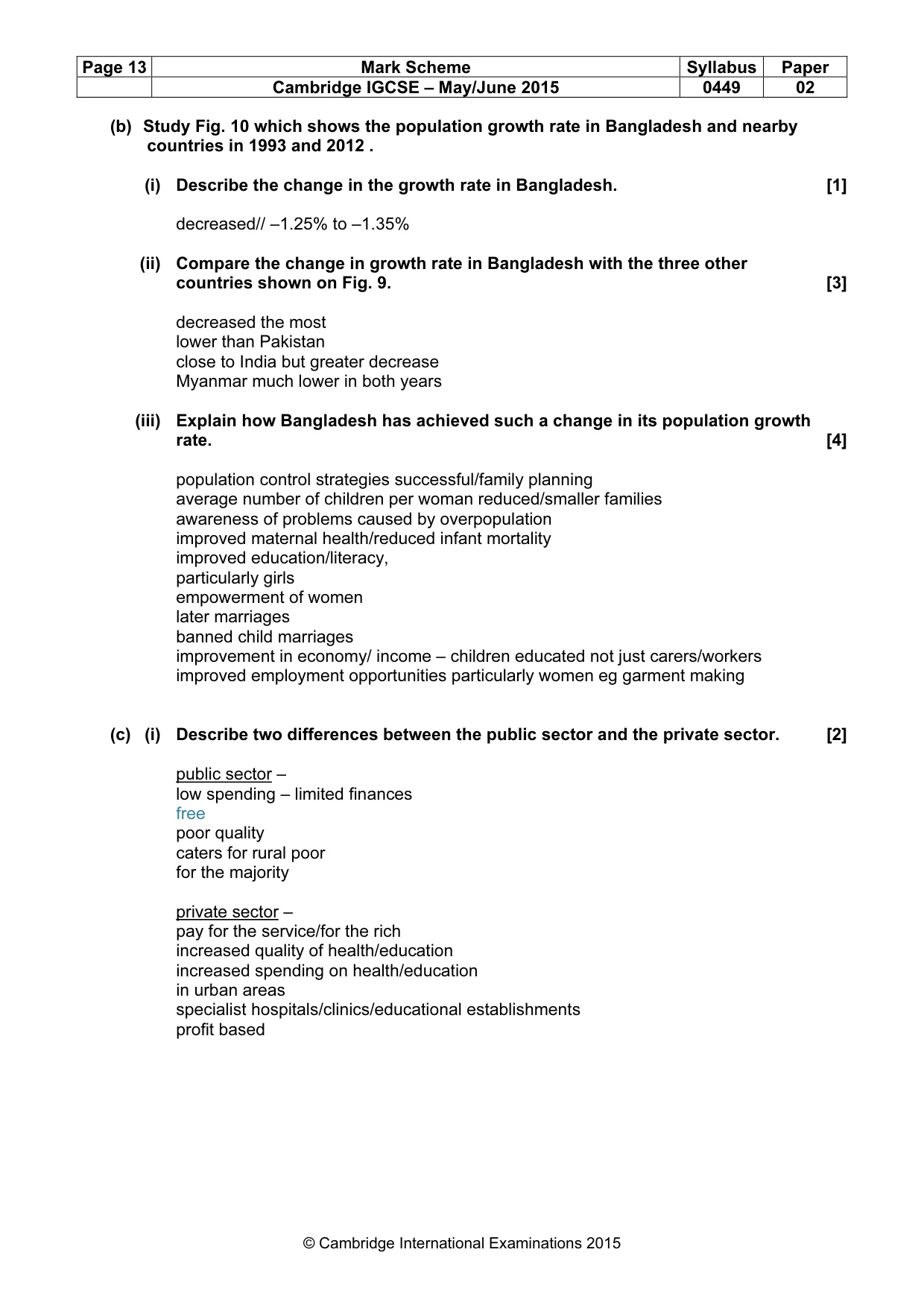
5 (a) (i) Study Fig. 8, a graph showing the percentage of the population below the poverty line in rural areas of Bangladesh. Key rural poverty % urban poverty % 60 50 line poverty 40 30 below 20 % 10 0 1992 1996 2000 2005 2010 years Fig. 8 Complete the graph (Fig. 8) for urban areas using the following figures. Year 1992 1996 2000 2005 2010 % 43 28 35 28 21 [3] (ii) Suggest why the percentage living below the poverty line in rural and urban areas is decreasing. ........................................................................................................................................... ........................................................................................................................................... ........................................................................................................................................... ........................................................................................................................................... ........................................................................................................................................... .......................................................................................................................................[3] (b) Study Fig. 9 which shows the population growth rate in Bangladesh and nearby countries in 1993 and 2012. N 0 200 400 kilometres Pakistan Bangladesh India Myanmar Key % growth rate 0 0.5 1 1.5 2 2.5 1993 2012 Fig. 9 (i) Describe the change in the population growth rate in Bangladesh. ........................................................................................................................................... .......................................................................................................................................[1] (ii) Compare the change in growth rate in Bangladesh with the three other countries shown on Fig. 9. ........................................................................................................................................... ........................................................................................................................................... ........................................................................................................................................... ........................................................................................................................................... ........................................................................................................................................... .......................................................................................................................................[3] (iii) Explain how Bangladesh has achieved such a change in its population growth rate. ........................................................................................................................................... ........................................................................................................................................... ........................................................................................................................................... ........................................................................................................................................... ........................................................................................................................................... ........................................................................................................................................... ........................................................................................................................................... .......................................................................................................................................[4] (c) (i) Describe two differences between the public sector and the private sector. ........................................................................................................................................... ........................................................................................................................................... ........................................................................................................................................... .......................................................................................................................................[2] (ii) Explain the advantages and the disadvantages of the private sector in delivering either health care or education. ........................................................................................................................................... ........................................................................................................................................... ........................................................................................................................................... ........................................................................................................................................... ........................................................................................................................................... ........................................................................................................................................... ........................................................................................................................................... .......................................................................................................................................[4]
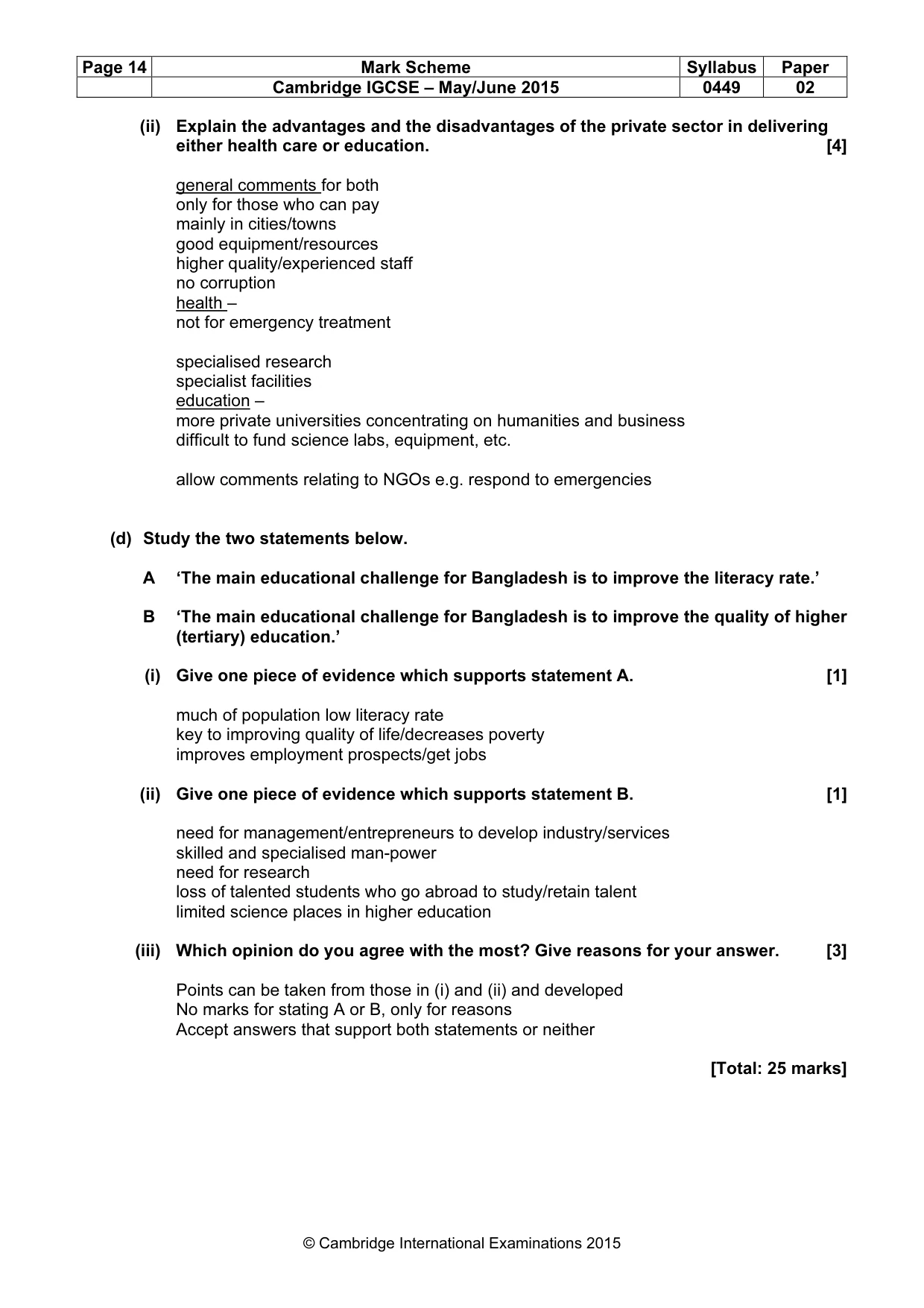
Mark scheme: 5 (a) (i) Study Fig. 9, a graph showing the percentage of the population below the poverty line in rural areas of Bangladesh [3] Complete the graph (Fig.8) for urban areas using the following figures Year 1992 1996 2000 2005 2010 % 43 28 35 28 21 5 correct plots and lines = 3 3–4 correct plots and lines = 2 1–2 correct plots and lines = 1 (ii) Suggest why the percentage living below the poverty line is decreasing 3 × 1 mark [3] improved education/literacy rate – employment accessible increased industry/ more employment more women employed eg garment industry improved health care – able to work smaller families – finances not stretched aid to help the poor microfinance available – to set up business (b) Study Fig. 10 which shows the population growth rate in Bangladesh and nearby countries in 1993 and 2012 . (i) Describe the change in the growth rate in Bangladesh. [1] decreased// –1.25% to –1.35% (ii) Compare the change in growth rate in Bangladesh with the three other countries shown on Fig. 9. [3] decreased the most lower than Pakistan close to India but greater decrease Myanmar much lower in both years (iii) Explain how Bangladesh has achieved such a change in its population growth rate. [4] population control strategies successful/family planning average number of children per woman reduced/smaller families awareness of problems caused by overpopulation improved maternal health/reduced infant mortality improved education/literacy, particularly girls empowerment of women later marriages banned child marriages improvement in economy/ income – children educated not just carers/workers improved employment opportunities particularly women eg garment making (c) (i) Describe two differences between the public sector and the private sector. [2] public sector – low spending – limited finances free poor quality caters for rural poor for the majority private sector – pay for the service/for the rich increased quality of health/education increased spending on health/education in urban areas specialist hospitals/clinics/educational establishments profit based (ii) Explain the advantages and the disadvantages of the private sector in delivering either health care or education. [4] general comments for both only for those who can pay mainly in cities/towns good equipment/resources higher quality/experienced staff no corruption health – not for emergency treatment specialised research specialist facilities education – more private universities concentrating on humanities and business difficult to fund science labs, equipment, etc. allow comments relating to NGOs e.g. respond to emergencies (d) Study the two statements below. A ‘The main educational challenge for Bangladesh is to improve the literacy rate.’ B ‘The main educational challenge for Bangladesh is to improve the quality of higher (tertiary) education.’ (i) Give one piece of evidence which supports statement A. [1] much of population low literacy rate key to improving quality of life/decreases poverty improves employment prospects/get jobs (ii) Give one piece of evidence which supports statement B. [1] need for management/entrepreneurs to develop industry/services skilled and specialised man-power need for research loss of talented students who go abroad to study/retain talent limited science places in higher education (iii) Which opinion do you agree with the most? Give reasons for your answer. [3] Points can be taken from those in (i) and (ii) and developed No marks for stating A or B, only for reasons Accept answers that support both statements or neither [Total: 25 marks]
What you needed in this session
Cambridge’s own grade thresholds for 2015 May/June, Paper 2 · Variant 1. A higher threshold means an easier paper — the bar moves with how the cohort did.