Cambridge IGCSE Arabic - First Language 0508 — 2013 Oct/Nov Paper 1 · Variant 1
0508/11/O/N/13 · 50 marks · ≈56 min
The question paper and its mark scheme, free to read here and free to download. This is Cambridge’s own paper, exactly as it was sat.
Question paper8 pages
Mark scheme7 pages
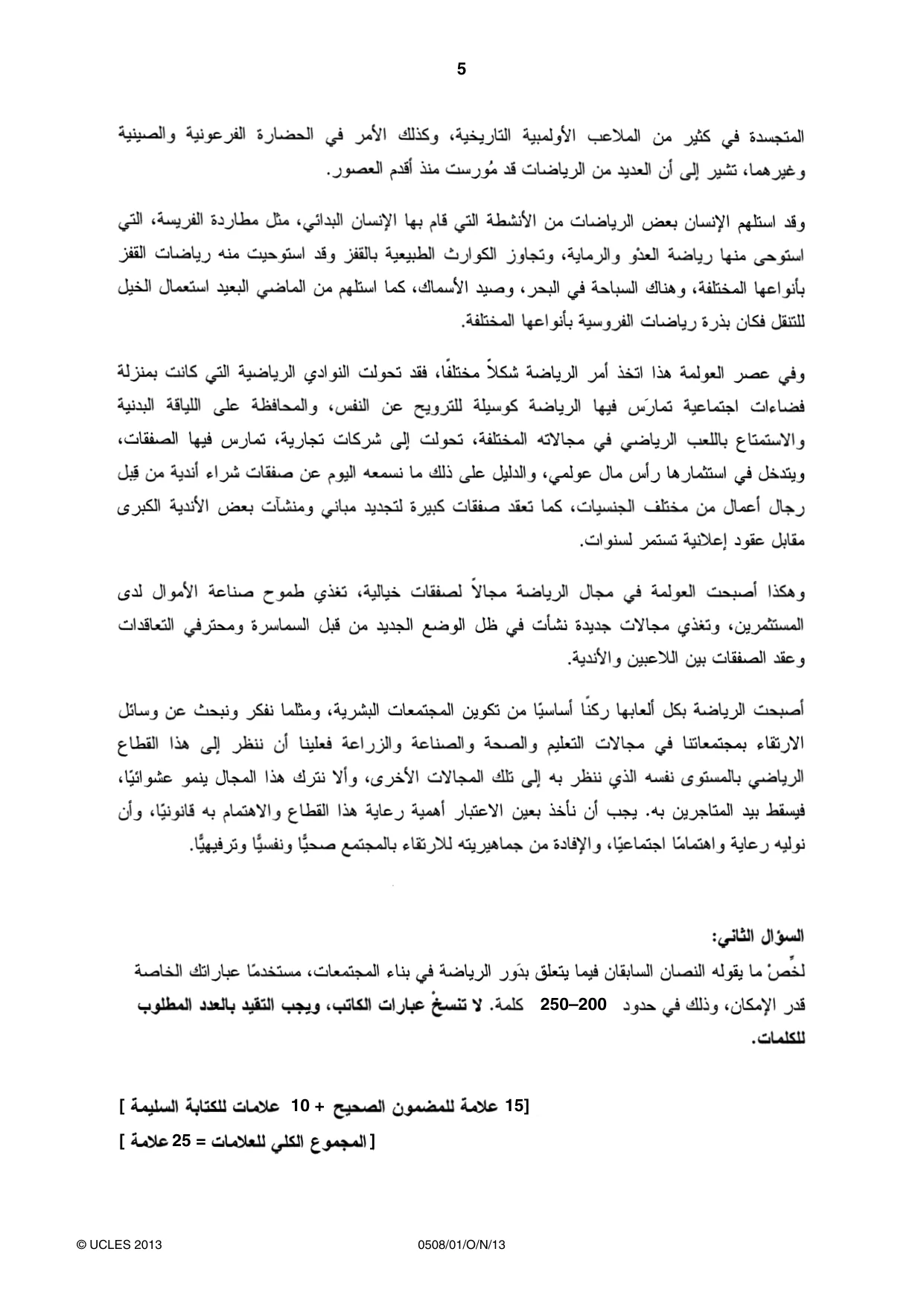
Answers below. Sit the paper first if you are practising.
Paper as text
Question paper, page 1
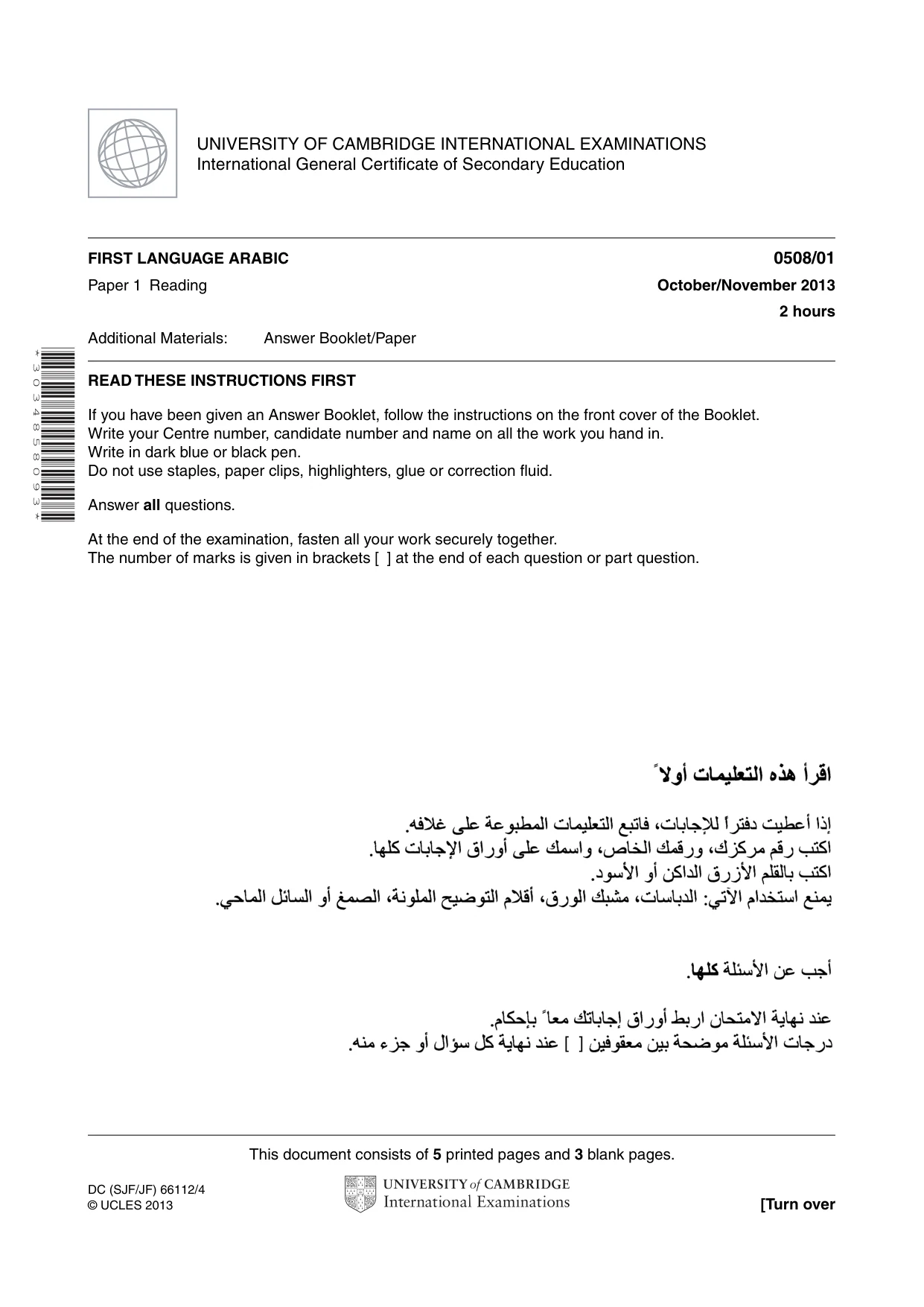
This document consists of 5 printed pages and 3 blank pages. DC (SJF/JF) 66112/4 © UCLES 2013 [Turn over UNIVERSITY OF CAMBRIDGE INTERNATIONAL EXAMINATIONS International General Certificate of Secondary Education READ THESE INSTRUCTIONS FIRST If you have been given an Answer Booklet, follow the instructions on the front cover of the Booklet. Write your Centre number, candidate number and name on all the work you hand in. Write in dark blue or black pen. Do not use staples, paper clips, highlighters, glue or correction fluid. Answer all questions. At the end of the examination, fasten all your work securely together. The number of marks is given in brackets [ ] at the end of each question or part question. * 3 0 3 4 8 5 8 0 9 3 * FIRST LANGUAGE ARABIC 0508/01 Paper 1 Reading October/November 2013 2 hours Additional Materials: Answer Booklet/Paper [ ]
Question paper, page 2
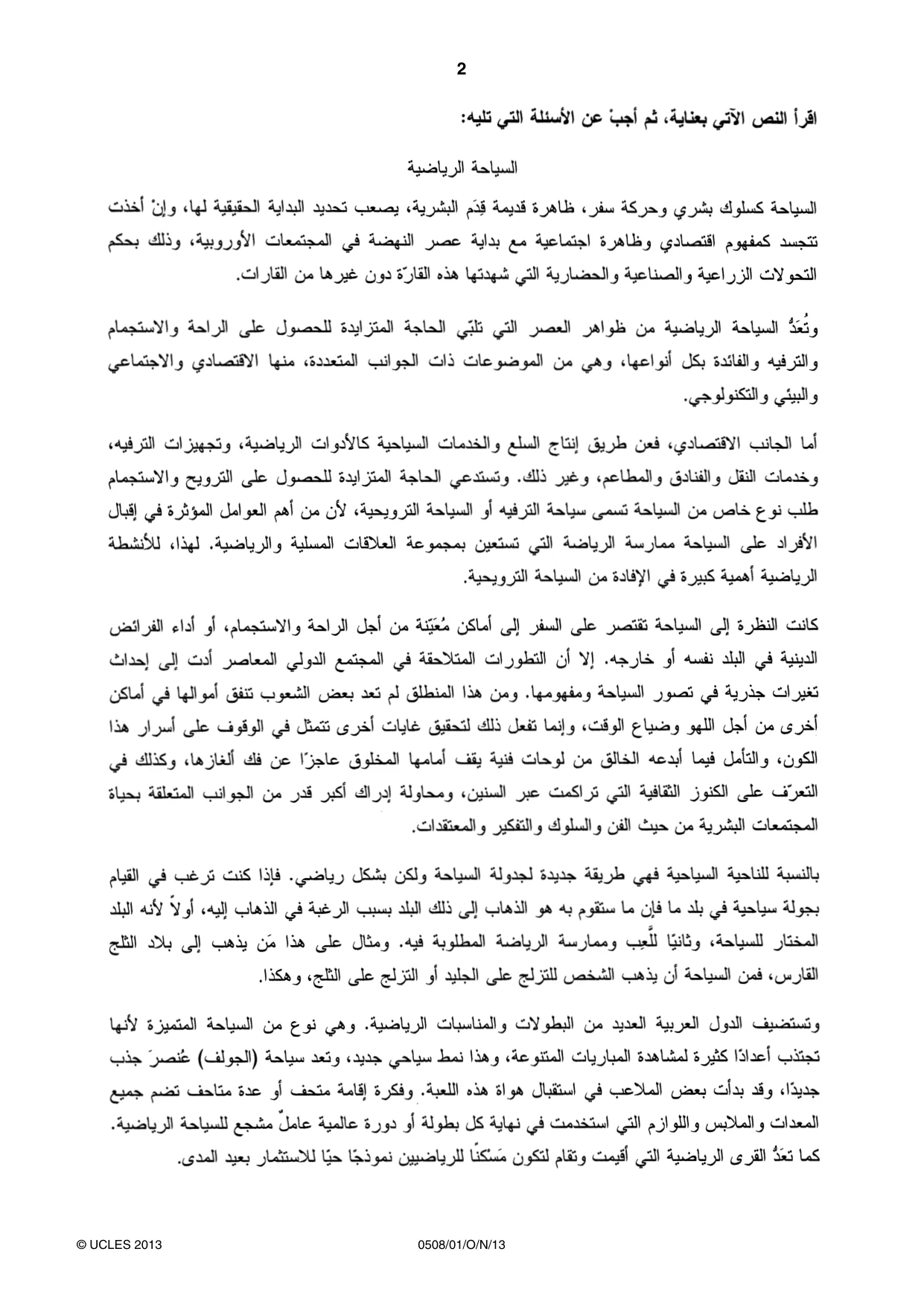
2 Ag Gell ALS Ge Gaal ab Ayly NI Gail {al Apcaly I) da uull OSS Golly oll Susi lad) goss Genes Ay pall pAb daad sale «pie AS yay gpd Al plas dala paz dllby ny SI Glaciol Gb Angi poe Alar ee Aeleial 5 yalby (galueiil p sgieS aati LNB) Gyo LA et go SUL ode UGlagt ll 4 luna y Qyelkally Gel pill OY gall alanis dal gle Syunall su) ji) Malad) (ab Gal) jamal Galyb ge Analyt daludl 4d, cetlaia ls glial) Upie careiall Gil gall GIS Cle guia gall Ge Gay lect sl JS sailill, 45 ally see dss alls 4d Sl jugaty Amal IVS dala! Glastly ell eli} Gob Gad gcheifY! Gila Ld pleats ces ill le Upeoall sul jie) dala) Gesissy ld yey cpelbaally Galidlly Jill clas, Lil gi Sigal al gall pal ce GY Agay sy sil daluall gf 4 cl) dale gaat doll) Ge Geld ¢ 5) lb ASU lagh Agcoly ly Sahsall Gla de gone Qyeiad Gi) deol I dus los dala le oil Agog s fll doluall go SaldYl (4 3 aS dyaal doll ail jill elal yf plantas dal dal ye Aikee SLE Gl) jill gle petit dala (ol) 3 bul cals Glas} MY Sh juoledd Ayal acinall ga did GI shill Gf Y) dalle sf dud alll d Auuall SLA 8 Lal ge) Gi Ga gest Gunny and ab Glial) 18 Gyoy sea ggiey doll bprad Gi dhe Gloss Va oul gle sig gd hats ssl Gble Guiatl Ad Lait Lally cod eluery sell dal Ge Wal get AS y cba ja a Ge Hale Gy Gall Gy Aad Gad Ge Gill acal Lad lilly «cy Sl Bling Milei) Gil gall Gye pad Sh alla) Alas y ctl) pe CaS! s (gill AUB) 5 iS) le at paill wl atieall 9 Sally A gla y Gill Cue Ge Ay dll Glacial) SU) a Yoh cag) la ob 2 Caney at) AS I Unt) ya ay stl Le Gl Le ab od anlage Ga De Go Gans cio Ha le ling 4b Aigllaall Lal alee Corll HE, auld taal S3Sa 5 «get le al ll sf alall le al jl Gest ay of Aaluall Gad ou tal UY sical Malad Go esi dy Analy! Gluulialy GY shall Ge yaell du yall Jsall usin y Geka uate (algal) dale acts care Galue baad ley che gitall Gl ball saaliid 85 ISlaef Gites Qeee pee Chale bac sf Cintis Auli 3 Say ell ode sl ya hii) gd Ge Dall Qaaey Gly By clap vAgal I Malu gacte ele dydle 5 p99 sf gly JS As Gb raadid Gll pally Gadlally Hloedl gaa aye GLE Ua aS gad Qual MI USide GS pity Gaal ct dal sll gall bs LS © UCLES 2013 0508/01/O/N/13
Question paper, page 3
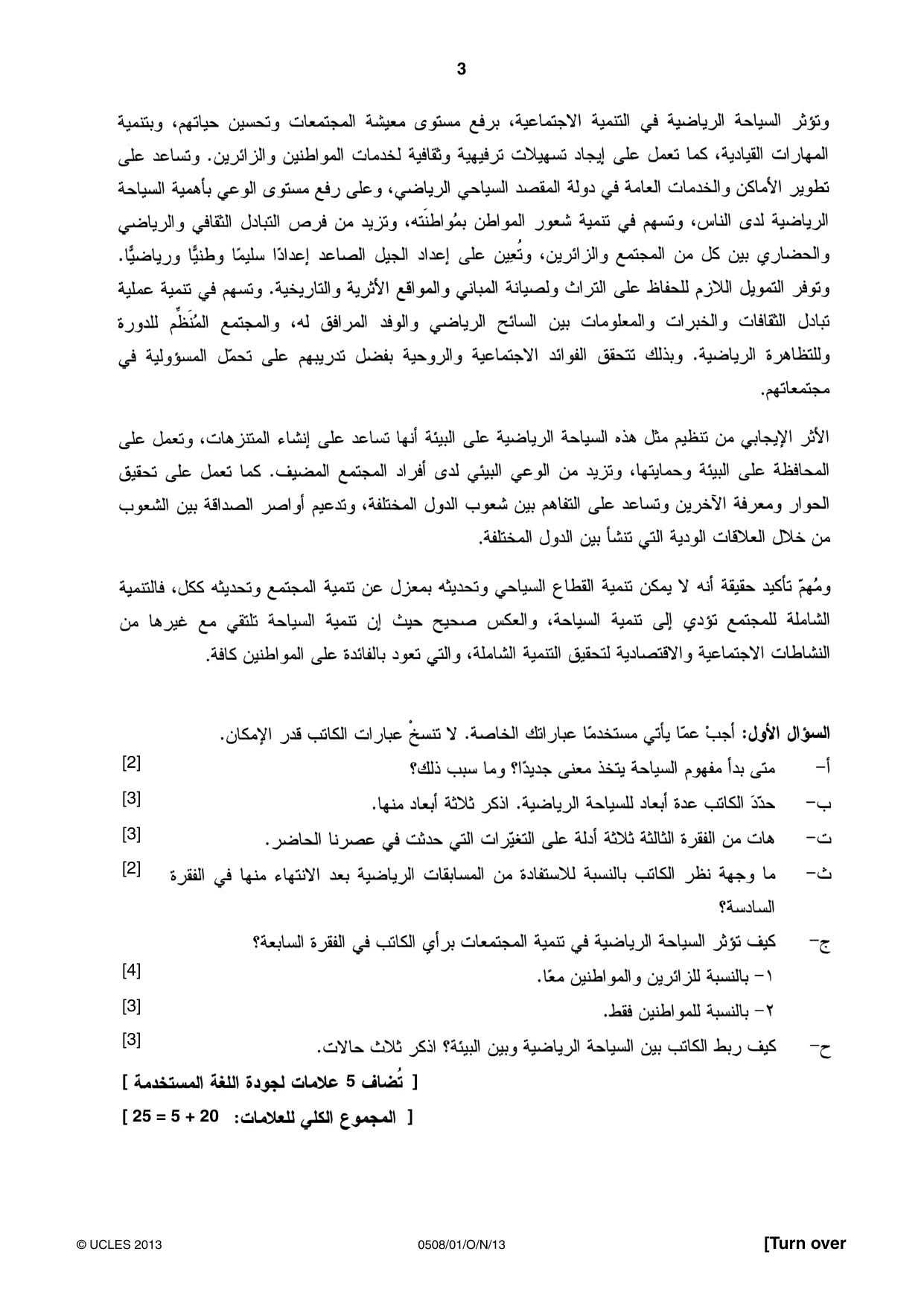
3 0508/01/O/N/13 © UCLES 2013 [Turn over [2] [3] [3] [2] [4] [3] [3] [ 5 ] [ 25 = 5 + 20 ]
Question paper, page 4
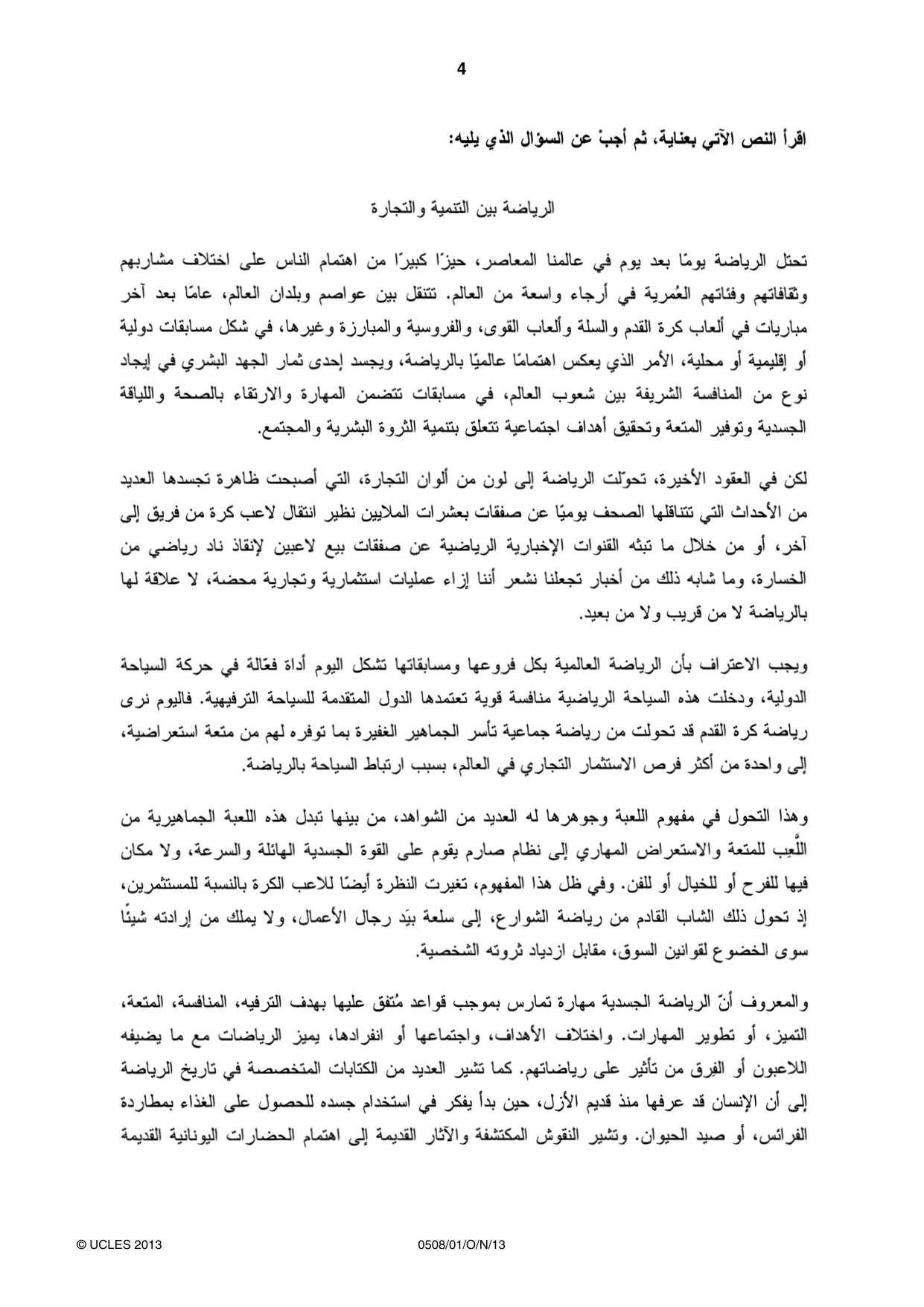
Ag gill Squall Ge Gaal Ad aylig oN Gall [al Beall y Apel) Gay deal I) pele GES! le ull) plaial Gye IbuS Mua «pealedll Liddle Gi ay aay Lag Lol ll iat al say Lele calla labs aad se Cu Sits salle Gye dents cla! Gd Arpad) pgilldy pgililt Aygo Gillies USE (gb Laud g Bj saall y Lae y silly cos sill lal), AL y paill 84S lal Gd Go le shed Gb Go agall JUS as} sears aol Tl alle Cease! GaSey gill eV alae gh dsaalil sf FAL 5 Aacall lB Vly soled) Gest Gliles Qi celled) syed Gy Aa pill Lill Oe & 55 ecto y 4 pall 8 5 fll Ayaity Gls yelcial Cilasl juin deial) yoy Asal syaall Wasa bal Gand Bel ot oe od dl Sab! Glas G59) oséll 3 oS co) Ged 2 8S Ge Si jas GDL) Gl petey Gillie yo Ube gy Caneel) {glib 3) Glas Yl ye O eels USMY One gy ollie ge dual I Q lay! Gi sill is Le DE ge J cal Yh te Y diene Aylady 4 Leal Glee lj} Li juts Ubeas Sha! ye ulld Lb Ley Luc! wy Oe V9 ad Ge Y dell Halal) ASja i Ata all pg) US Upilslany ed JS Alla Gaol I ob il jie! Ginss GH psalld Aygad fl) datyall Leatiall J yall Laaeied Ayyb dudlic dncly sl dala! oda Gildas cdg] yall Agecal patel dake Gye ag] o isi Le 6 ill psleall jul elon duals) ye Gilyai S alll 5S Lal) Asal gh dala) BLS) Gees allel gd slat SLAY) Ged SI Ge Sasly Cs Ay pppleall Asal oda Sah Ugie ye cal pill Go ayaall Al Le ya gay Analll pggie ob sail Ida y Se Vy Ae pally UL) dyaneall $l) le pip pe ALS oY lead) Gaal pial y etal cull 6p petal Ayuilly 3S ae Cal 3 phil) aid cp geil Ida DB dy wcll of SLA I cil La Lind iat) Gye allay Vy Slee Slay Gp Mabe GM eg sl pl Leaky Go pall GLA alld Syed 3) Aged 455 8 ala i) Sibde 63 saall Cail sl & peedll spe cada Aadlial) od fl) Caags Yule gis self Gia gar Geli bylge Kaul) Lah I Ol Cay peally dina; Le as Shab jug clad yal sf eldtaly ila¥) duals ijledl ja yhi sf « jucill Aol Go gb Leemediall GUUS Gye gael) path LS agile gle AG Ge Guill I oe 0Ul bo Uae eldall gle Sproall sama plastid (6 Si fay Gus «IYI aa de Gage of Glu of Go gail) AgU gl) Gi jleeal) alaial (gl) Aagaill UV), ALS Of Bill uty Gl gel ane sf ¢cutl pill © UCLES 2013 0508/01/O/N/13
Question paper, page 5
5 0508/01/O/N/13 © UCLES 2013 250–200 [ 10 + 15] [ 25 = ]
Question paper, page 6
6 0508/01/O/N/13 © UCLES 2013 BLANK PAGE
Question paper, page 7
7 0508/01/O/N/13 © UCLES 2013 BLANK PAGE
Question paper, page 8
8 0508/01/O/N/13 © UCLES 2013 BLANK PAGE Copyright Acknowledgements: Questions 1 - 2 © Nu’man Abdel Ghani; Al-Siyaha al Riyadiyya; www.wata.cc/forums; February 2011. Question 2 © Sulaiman Al-Askari; Al-Riyada bain al-Tanmiya wa al-Tijara; Al-Arabi Magazine; 2010. Permission to reproduce items where third-party owned material protected by copyright is included has been sought and cleared where possible. Every reasonable effort has been made by the publisher (UCLES) to trace copyright holders, but if any items requiring clearance have unwittingly been included, the publisher will be pleased to make amends at the earliest possible opportunity. University of Cambridge International Examinations is part of the Cambridge Assessment Group. Cambridge Assessment is the brand name of University of Cambridge Local Examinations Syndicate (UCLES), which is itself a department of the University of Cambridge.
Mark scheme, page 1
CAMBRIDGE INTERNATIONAL EXAMINATIONS International General Certificate of Secondary Education MARK SCHEME for the October/November 2013 series 0508 FIRST LANGUAGE ARABIC 0508/01 Paper 1 (Reading), maximum raw mark 50 This mark scheme is published as an aid to teachers and candidates, to indicate the requirements of the examination. It shows the basis on which Examiners were instructed to award marks. It does not indicate the details of the discussions that took place at an Examiners’ meeting before marking began, which would have considered the acceptability of alternative answers. Mark schemes should be read in conjunction with the question paper and the Principal Examiner Report for Teachers. Cambridge will not enter into discussions about these mark schemes. Cambridge is publishing the mark schemes for the October/November 2013 series for most IGCSE, GCE Advanced Level and Advanced Subsidiary Level components and some Ordinary Level components.
Mark scheme, page 2
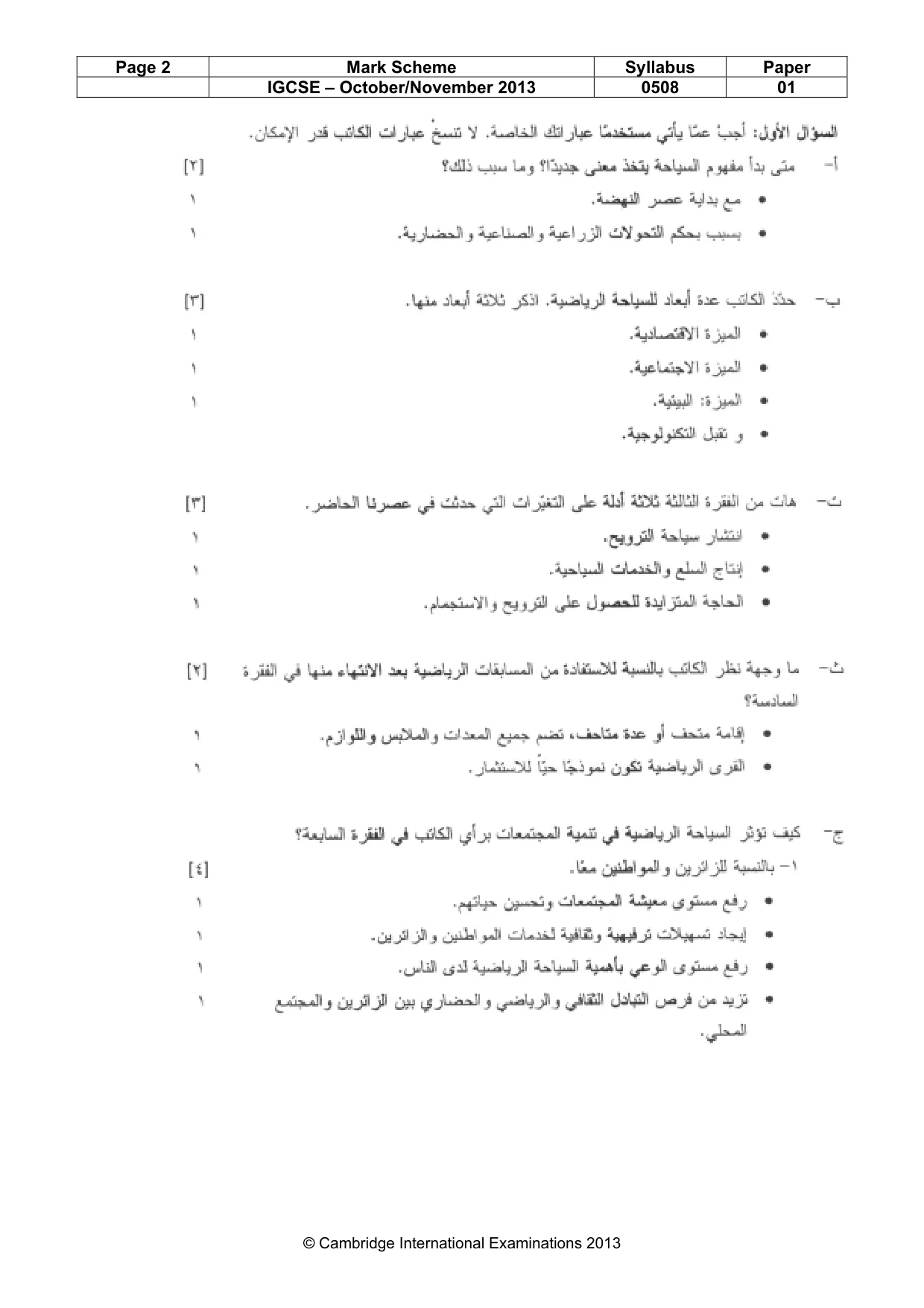
Page 2 Mark Scheme Syllabus Paper IGCSE – October/November 2013 0508 01 © Cambridge International Examinations 2013
Mark scheme, page 3
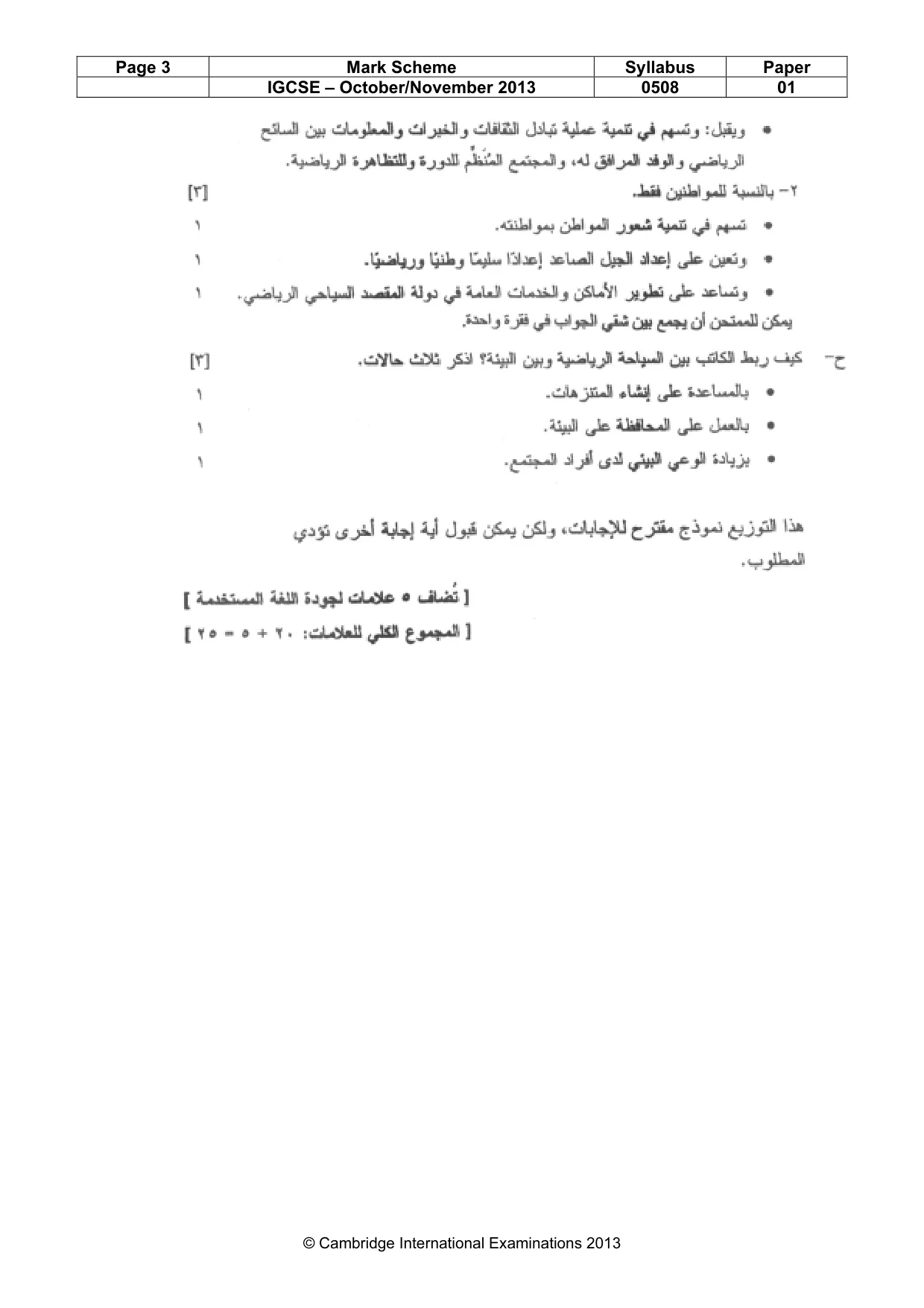
Page 3 Mark Scheme Syllabus Paper IGCSE – October/November 2013 0508 01 © Cambridge International Examinations 2013
Mark scheme, page 4
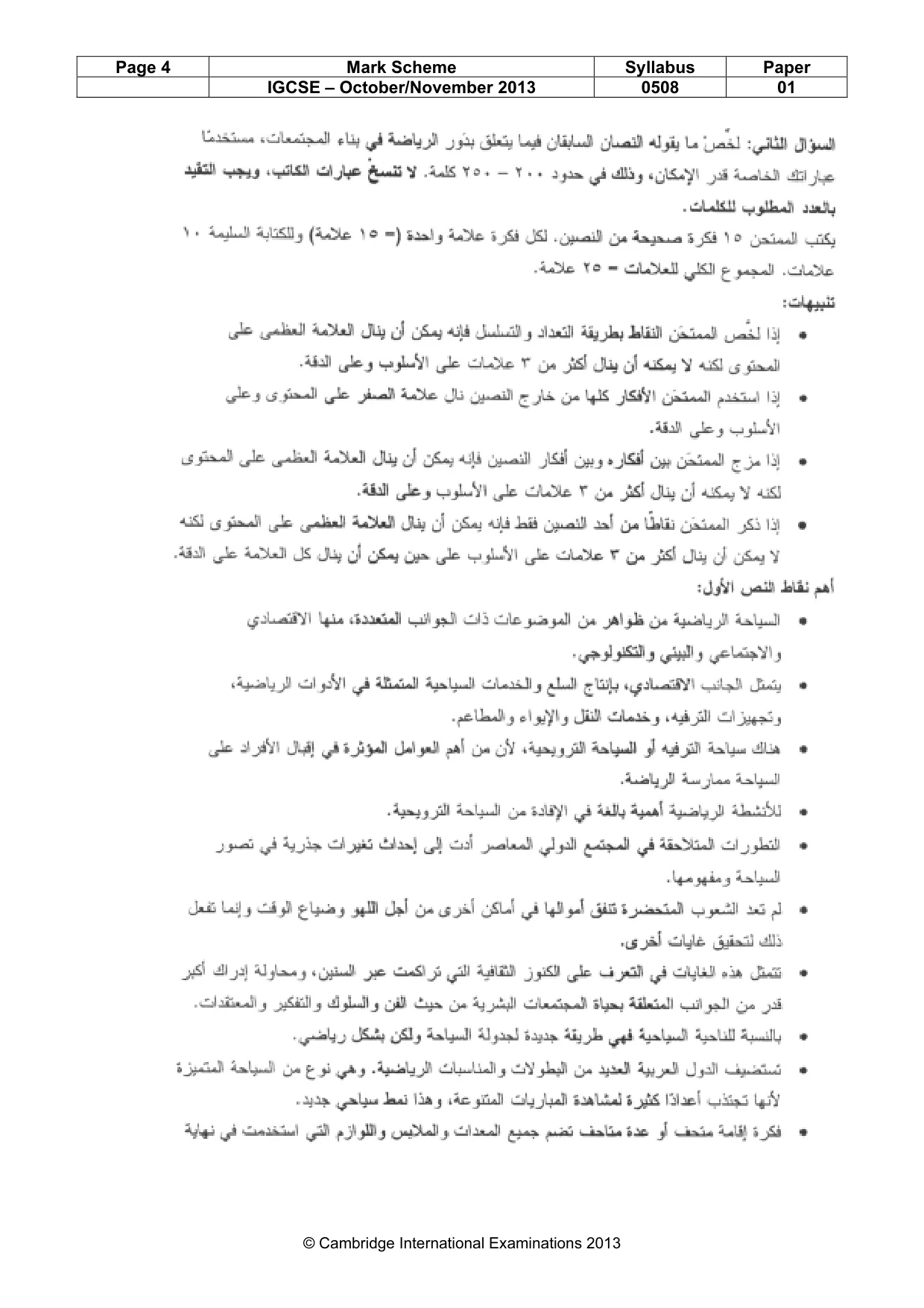
Page 4 Mark Scheme Syllabus Paper IGCSE – October/November 2013 0508 01 © Cambridge International Examinations 2013
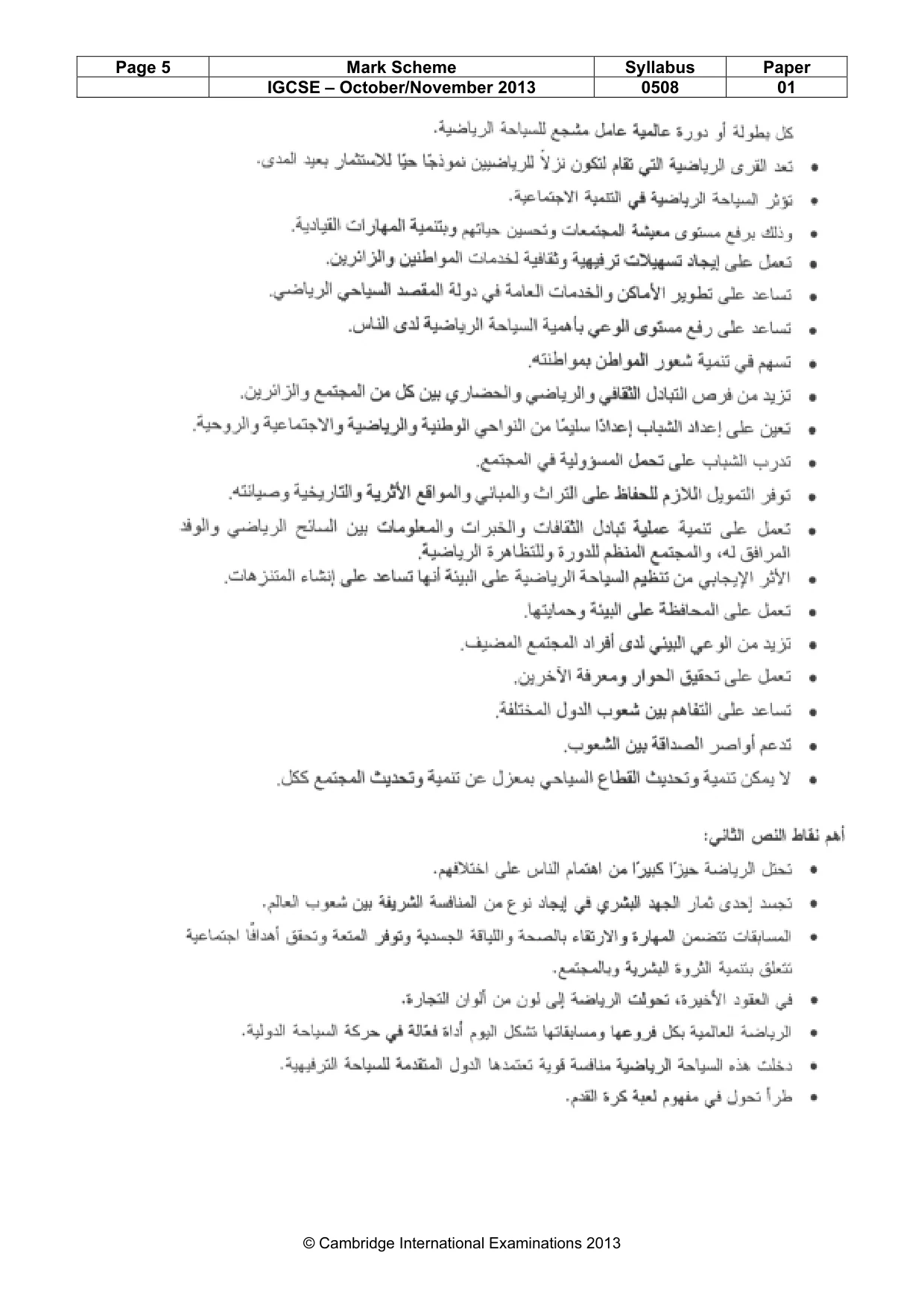
Mark scheme, page 5
Page 5 Mark Scheme Syllabus Paper IGCSE – October/November 2013 0508 01 © Cambridge International Examinations 2013
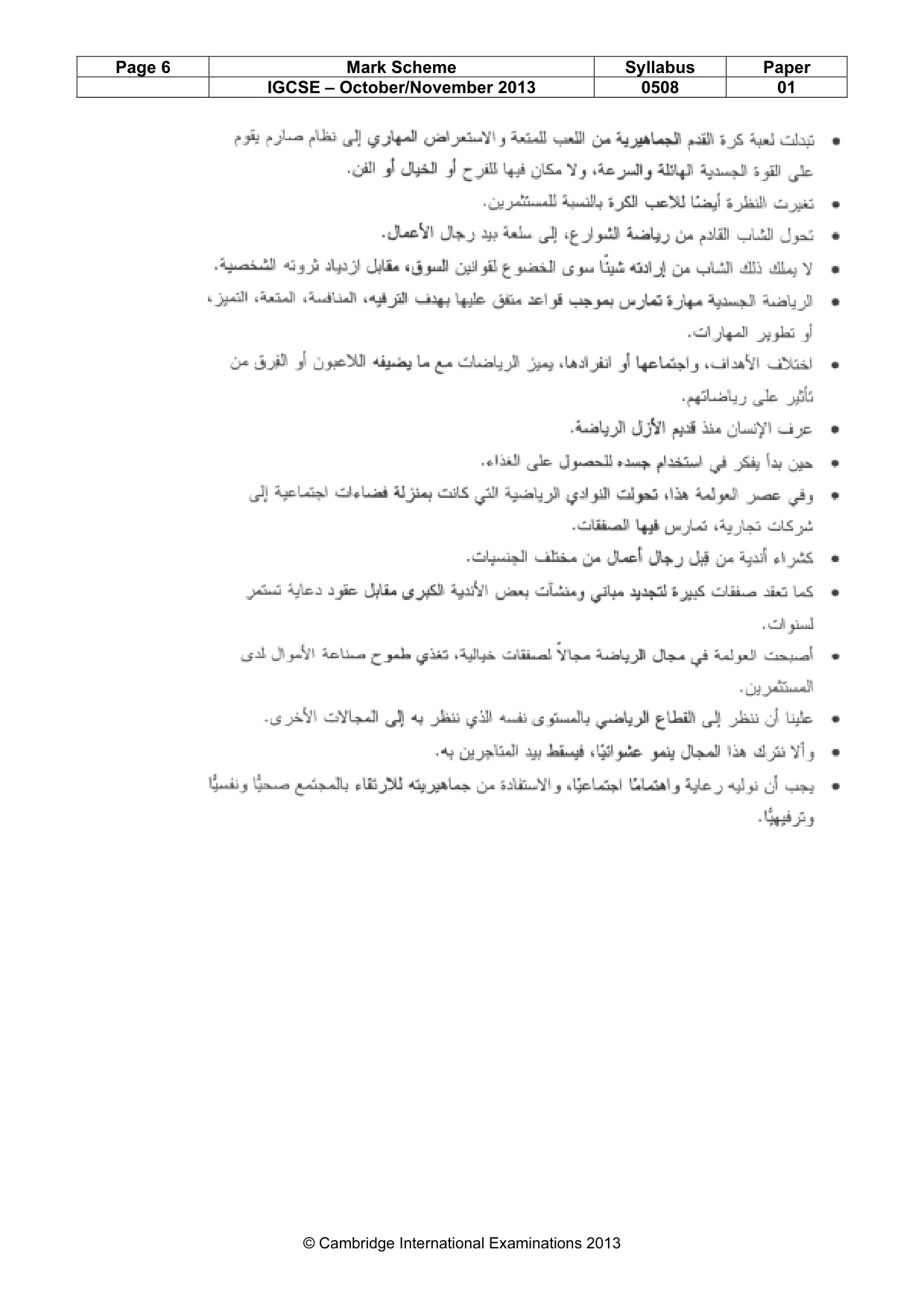
Mark scheme, page 6
Page 6 Mark Scheme Syllabus Paper IGCSE – October/November 2013 0508 01 © Cambridge International Examinations 2013
Mark scheme, page 7
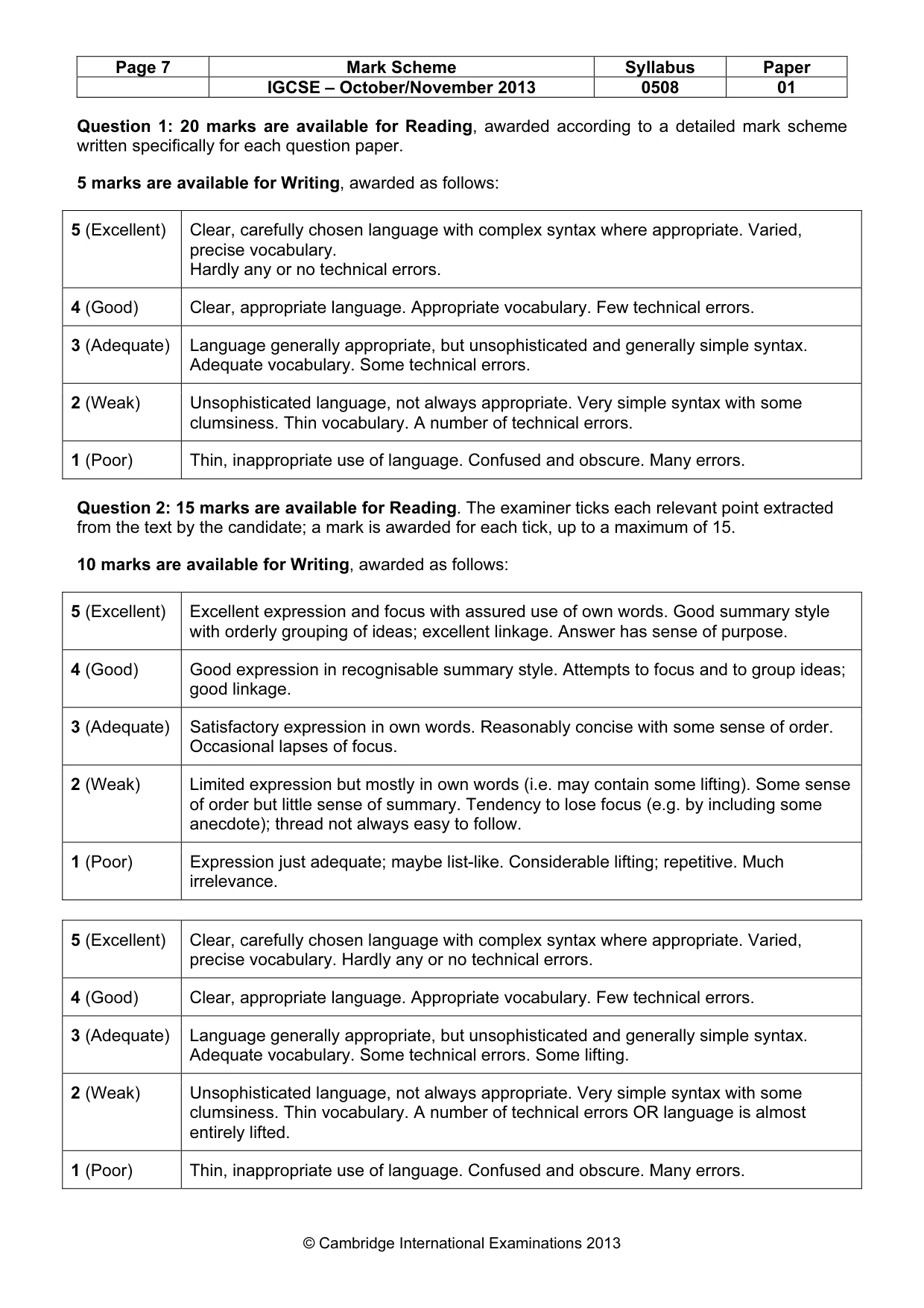
Page 7 Mark Scheme Syllabus Paper IGCSE – October/November 2013 0508 01 © Cambridge International Examinations 2013 Question 1: 20 marks are available for Reading, awarded according to a detailed mark scheme written specifically for each question paper. 5 marks are available for Writing, awarded as follows: 5 (Excellent) Clear, carefully chosen language with complex syntax where appropriate. Varied, precise vocabulary. Hardly any or no technical errors. 4 (Good) Clear, appropriate language. Appropriate vocabulary. Few technical errors. 3 (Adequate) Language generally appropriate, but unsophisticated and generally simple syntax. Adequate vocabulary. Some technical errors. 2 (Weak) Unsophisticated language, not always appropriate. Very simple syntax with some clumsiness. Thin vocabulary. A number of technical errors. 1 (Poor) Thin, inappropriate use of language. Confused and obscure. Many errors. Question 2: 15 marks are available for Reading. The examiner ticks each relevant point extracted from the text by the candidate; a mark is awarded for each tick, up to a maximum of 15. 10 marks are available for Writing, awarded as follows: 5 (Excellent) Excellent expression and focus with assured use of own words. Good summary style with orderly grouping of ideas; excellent linkage. Answer has sense of purpose. 4 (Good) Good expression in recognisable summary style. Attempts to focus and to group ideas; good linkage. 3 (Adequate) Satisfactory expression in own words. Reasonably concise with some sense of order. Occasional lapses of focus. 2 (Weak) Limited expression but mostly in own words (i.e. may contain some lifting). Some sense of order but little sense of summary. Tendency to lose focus (e.g. by including some anecdote); thread not always easy to follow. 1 (Poor) Expression just adequate; maybe list-like. Considerable lifting; repetitive. Much irrelevance. Writing: Accuracy of Language 5 (Excellent) Clear, carefully chosen language with complex syntax where appropriate. Varied, precise vocabulary. Hardly any or no technical errors. 4 (Good) Clear, appropriate language. Appropriate vocabulary. Few technical errors. 3 (Adequate) Language generally appropriate, but unsophisticated and generally simple syntax. Adequate vocabulary. Some technical errors. Some lifting. 2 (Weak) Unsophisticated language, not always appropriate. Very simple syntax with some clumsiness. Thin vocabulary. A number of technical errors OR language is almost entirely lifted. 1 (Poor) Thin, inappropriate use of language. Confused and obscure. Many errors.
What you needed in this session
Cambridge’s own grade thresholds for 2013 Oct/Nov, Paper 1 · Variant 1. A higher threshold means an easier paper — the bar moves with how the cohort did.