Cambridge IGCSE Arabic - First Language 0508 — 2009 Oct/Nov Paper 1 · Variant 1
0508/11/O/N/09 · 50 marks · ≈56 min
The question paper and its mark scheme, free to read here and free to download. This is Cambridge’s own paper, exactly as it was sat.
Question paper4 pages
Mark scheme4 pages
Answers below. Sit the paper first if you are practising.
Paper as text
Question paper, page 1
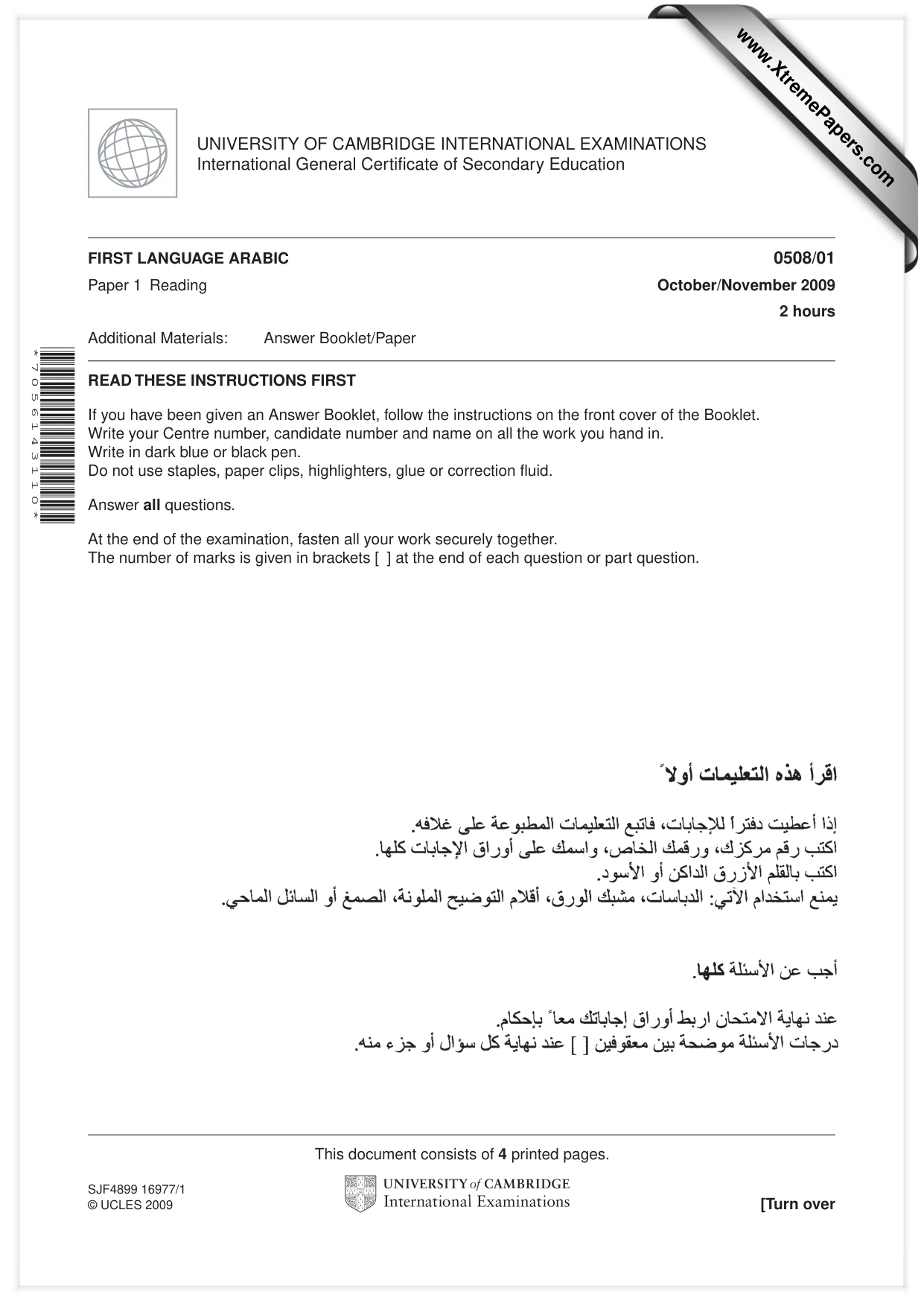
This document consists of 4 printed pages. SJF4899 16977/1 © UCLES 2009 [Turn over UNIVERSITY OF CAMBRIDGE INTERNATIONAL EXAMINATIONS International General Certificate of Secondary Education READ THESE INSTRUCTIONS FIRST If you have been given an Answer Booklet, follow the instructions on the front cover of the Booklet. Write your Centre number, candidate number and name on all the work you hand in. Write in dark blue or black pen. Do not use staples, paper clips, highlighters, glue or correction fluid. Answer all questions. At the end of the examination, fasten all your work securely together. The number of marks is given in brackets [ ] at the end of each question or part question. * 7 0 5 6 1 4 3 1 1 0 * FIRST LANGUAGE ARABIC 0508/01 Paper 1 Reading October/November 2009 2 hours Additional Materials: Answer Booklet/Paper www.XtremePapers.com
Question paper, page 2
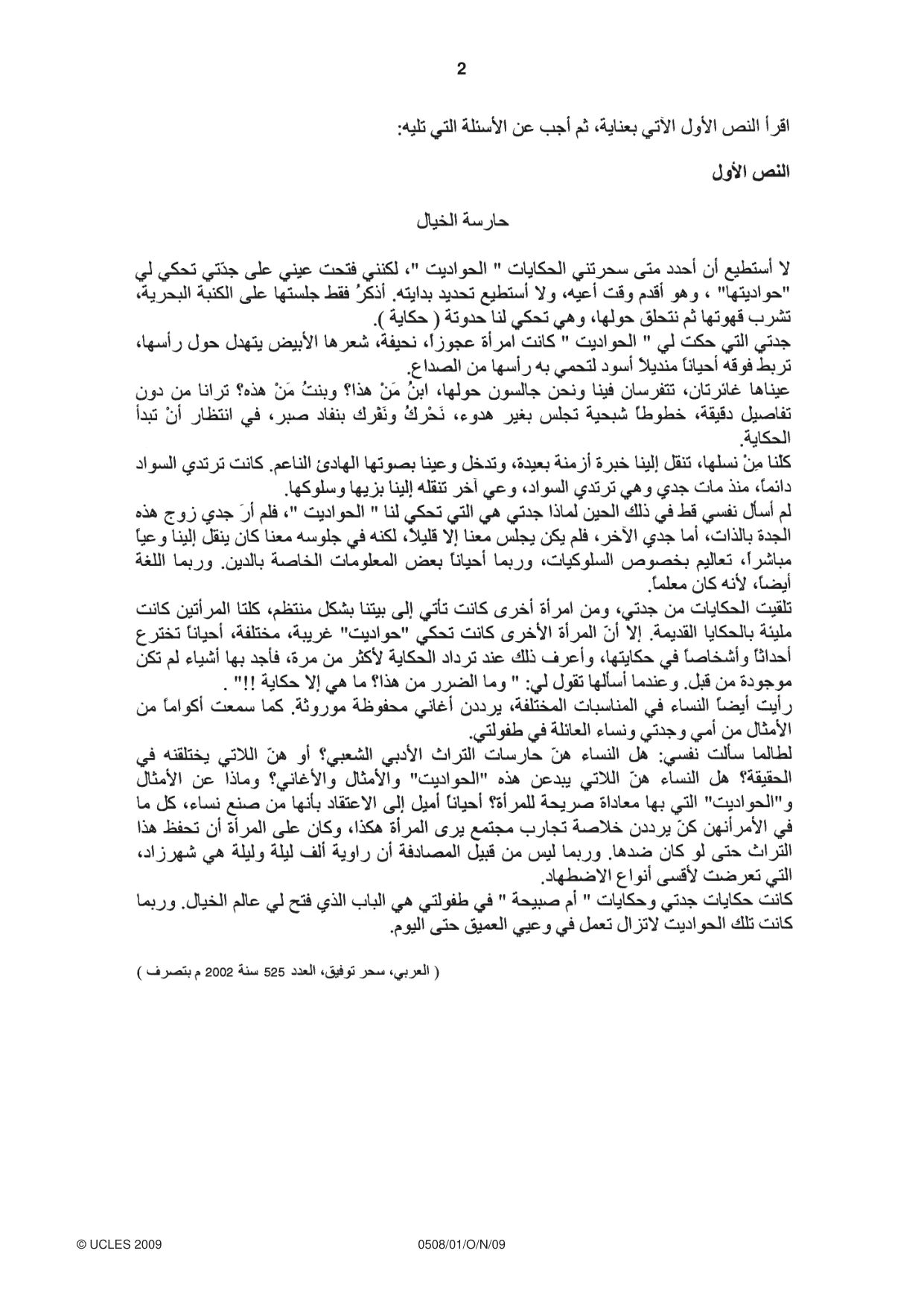
Ag ill AUST Ge Gal ob Aylin (SY! UY! Gall [al JY! Gail! yall Aaah gab gS gba le phe nh GS) 6 Ca) gall " GUISaI (i jas te onal GI auld Y 4g yaa! AuSI! le (Giada bid Sa) ala apes quel Yy sel Os ail yoy « Mga pa" (ANS ) 45 gan Ud Sa5 (pg lel ys Glad a5 gi gg tt clgaly Sse Uae Gary! a jad diss fj gnc ah yel GS” Cool gall" 1 Se all gine aE baaell ye Ugaal y dy pani a gual Sake Gal 48 6 by C92 (pe UI Pode Gye Calg Ha Gye Get clglge pull Gedy Lad Gls pitt yl le Lele lag Go) GUBGI b jue lly Ul ily GI jad ce gas juts Gulad dead Ub pls Aids oldi ASal ON gual gai gi GIS peli Goalgll Ug5 gues Lise JSaiy Baya ie jl Bad Lil) i cigs ye LIS UGS shan y Lg jp Lill AUG ST ey cal gull gai opt g gan ile die cLaila oda e535 gael ald Guat gall UD Sa all ga ae HL Qual alld (8 bd padi SLul al Leg Gall Sai GIS Lane dan gla 9 48) SUM Y} Line Gules OS ald GA gan Li «Stall Saal AaM Lary y Opals Motel cle geal Gunes Glial Leys US glall ya guady alle al pole Lalas lS GY cleat IS Gh pall GIS cabbie JS Libs col} 5 Gls yal Sd Gey eghae Ge GUIS cual ESS Lah dalide ye "Casl ga Sas CaS cg pA af pall GI Y] Aauill USally Aighe OS al elu Lg sald yo Go SISY ASall ala i aie ah Cayo y UghiSe (§ Lola» Glasi SIN AMS YY gt Le $1R8 ey paca Leg" sg) S98 glad Laaic: 5 8 (y 32 9 5 Cy LS) Gras LS BS yy ge AB gine piled Gory, Ailidall Glaslidl (8 claill Lal cui) weil gil pf AULA clay cine y coal ye JUAYI cod Alig GUI Ga ol Set oY) SIL Slagle Ga eladll Ja gad Gulls Lalla MEY Gye Nles Sle y MEY s "Curl gall oda Yeay DUI Ga cluill Ua (igall Le US celead gine (ye Leal atitin YI Col} Deal Glial $3i pall day pu Stolen Lge (sill Must golly Va Liss oof sh pall gle Sy 18a af pall 5 yp ecine Glad Le Gay US Ges! cole gt Ally Ad Gall ay) gol Abate! Ud Ge Gal Lays loans YS sb ie GI) wlgbel gl sil gui) Cue ai (ill Leggs DSN alle (gl id sal GUM (gh gil pile gb" dayne al " GUIGa y ire GLISe cals eal) im Gueall (se 5 cod Land SI 58Y Cul gall alls cuits (Chaat 2002 Ais 525 otall «ish yi yous og yall) © UCLES 2009 0508/01/0/N/09
Question paper, page 3
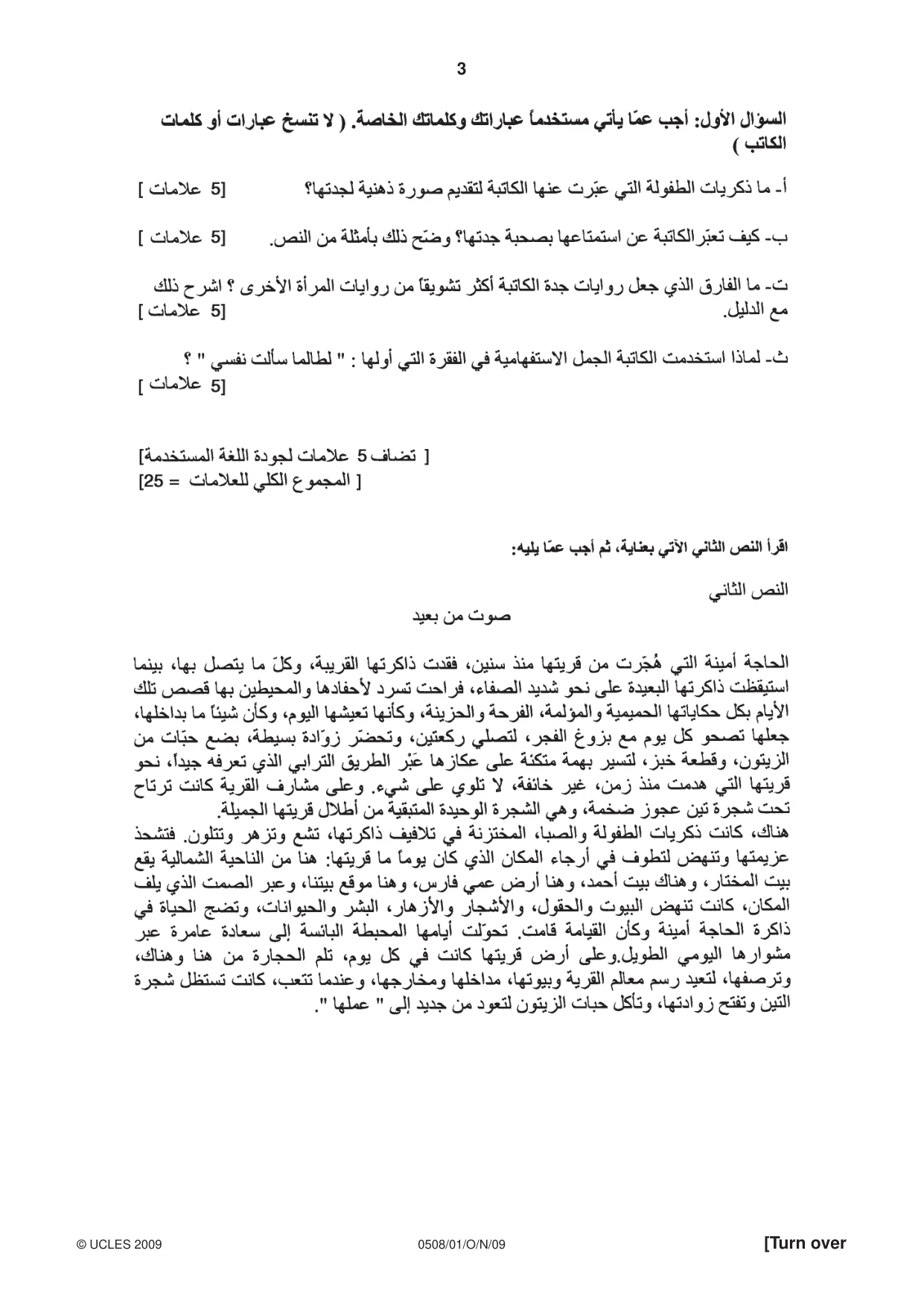
3 0508/01/O/N/09 © UCLES 2009 [Turn over
Question paper, page 4
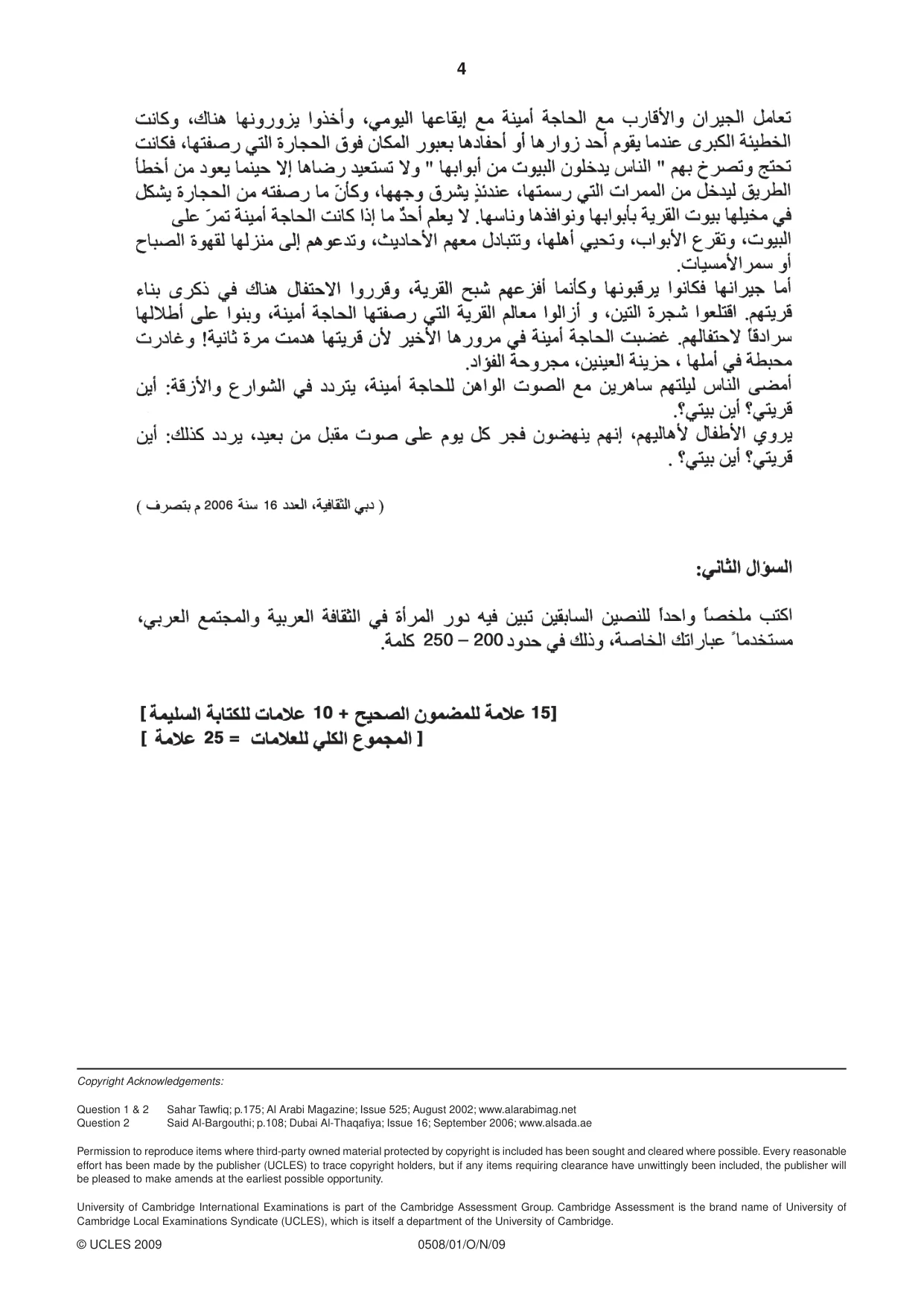
4 0508/01/O/N/09 © UCLES 2009 Copyright Acknowledgements: Question 1 & 2 Sahar Tawfiq; p.175; Al Arabi Magazine; Issue 525; August 2002; www.alarabimag.net Question 2 Said Al-Bargouthi; p.108; Dubai Al-Thaqafiya; Issue 16; September 2006; www.alsada.ae Permission to reproduce items where third-party owned material protected by copyright is included has been sought and cleared where possible. Every reasonable effort has been made by the publisher (UCLES) to trace copyright holders, but if any items requiring clearance have unwittingly been included, the publisher will be pleased to make amends at the earliest possible opportunity. University of Cambridge International Examinations is part of the Cambridge Assessment Group. Cambridge Assessment is the brand name of University of Cambridge Local Examinations Syndicate (UCLES), which is itself a department of the University of Cambridge.
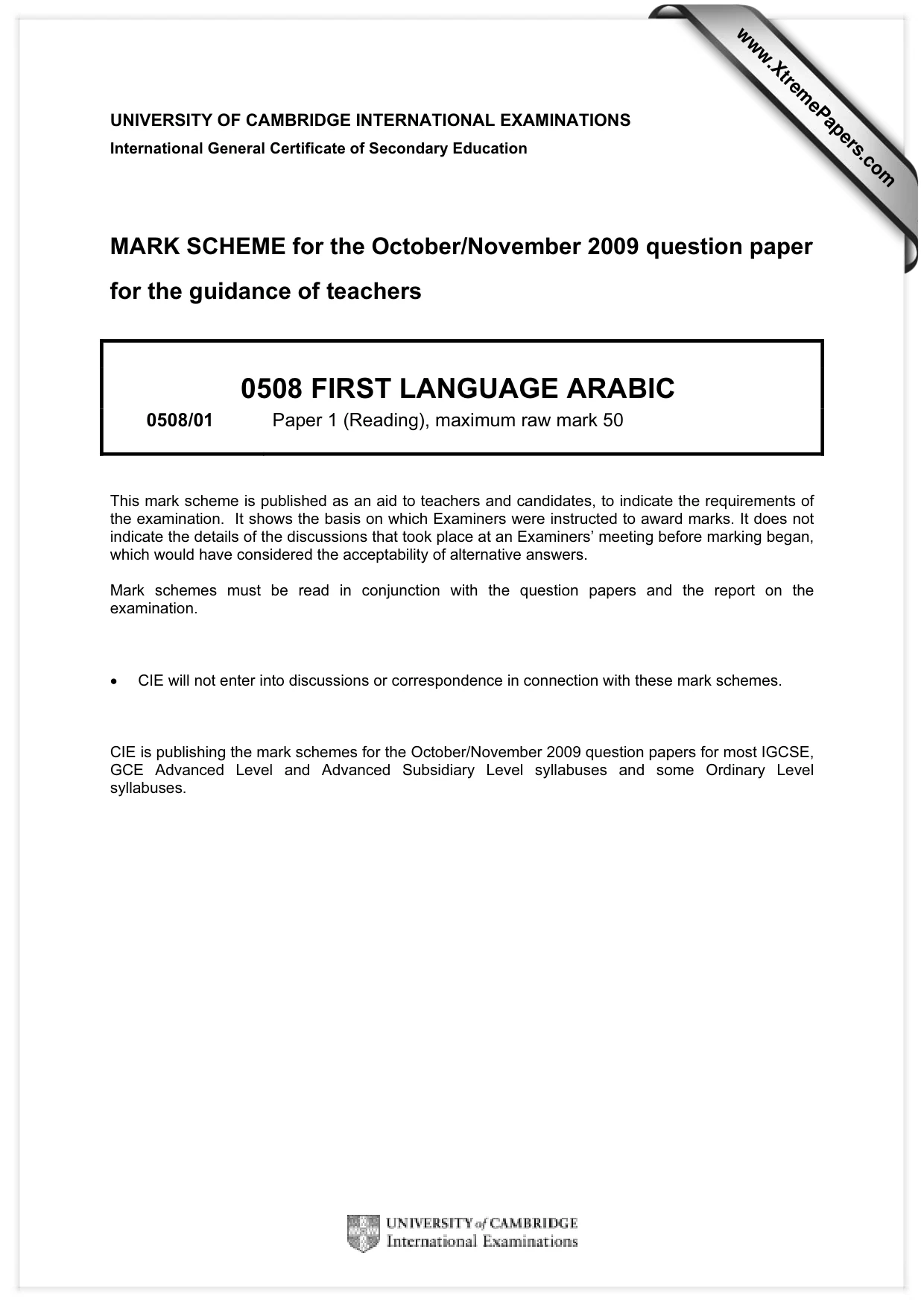
Mark scheme, page 1
UNIVERSITY OF CAMBRIDGE INTERNATIONAL EXAMINATIONS International General Certificate of Secondary Education MARK SCHEME for the October/November 2009 question paper for the guidance of teachers 0508 FIRST LANGUAGE ARABIC 0508/01 Paper 1 (Reading), maximum raw mark 50 This mark scheme is published as an aid to teachers and candidates, to indicate the requirements of the examination. It shows the basis on which Examiners were instructed to award marks. It does not indicate the details of the discussions that took place at an Examiners’ meeting before marking began, which would have considered the acceptability of alternative answers. Mark schemes must be read in conjunction with the question papers and the report on the examination. • CIE will not enter into discussions or correspondence in connection with these mark schemes. CIE is publishing the mark schemes for the October/November 2009 question papers for most IGCSE, GCE Advanced Level and Advanced Subsidiary Level syllabuses and some Ordinary Level syllabuses. www.XtremePapers.com
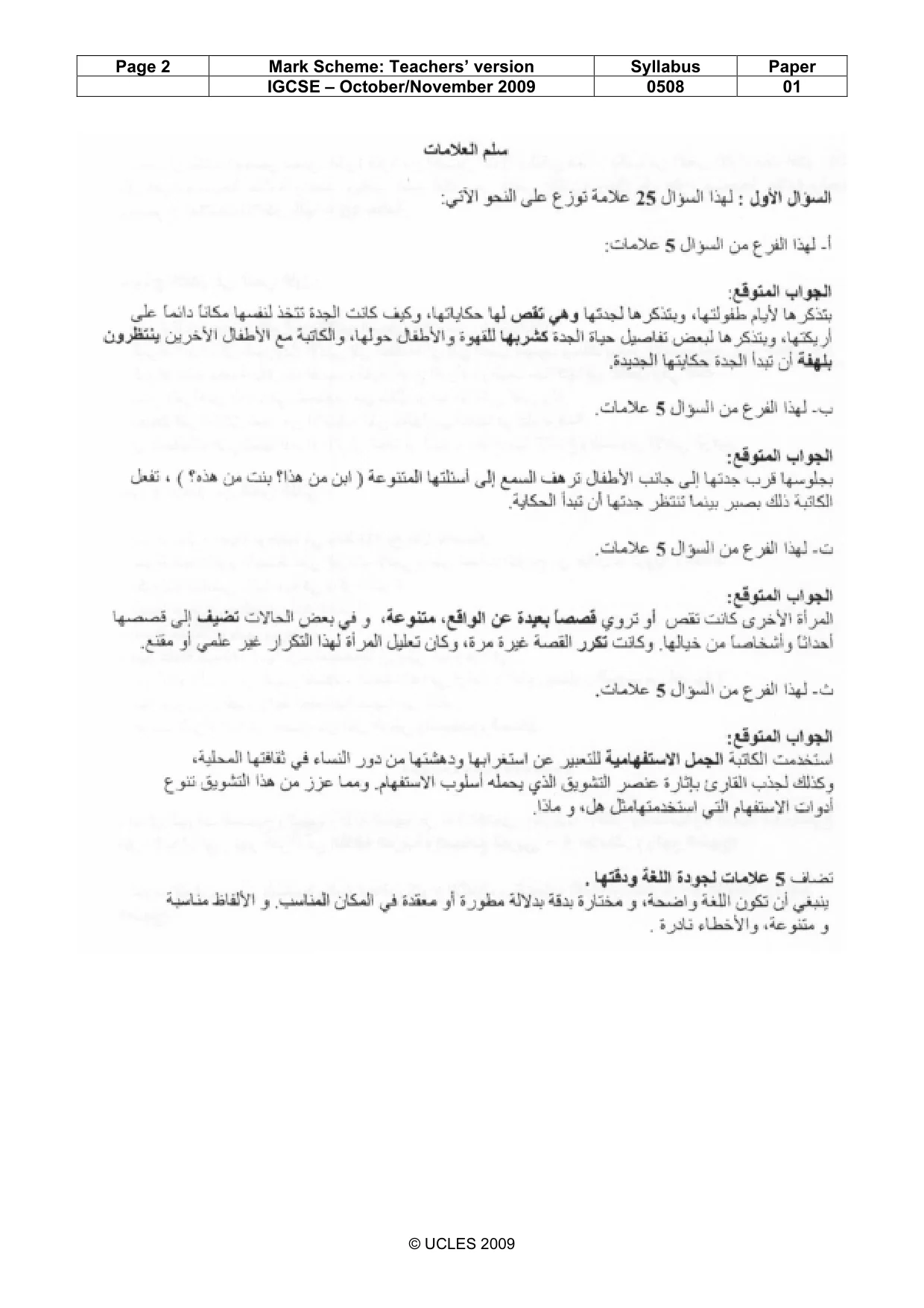
Mark scheme, page 2
Page 2 Mark Scheme: Teachers’ version Syllabus Paper IGCSE – October/November 2009 0508 01 © UCLES 2009
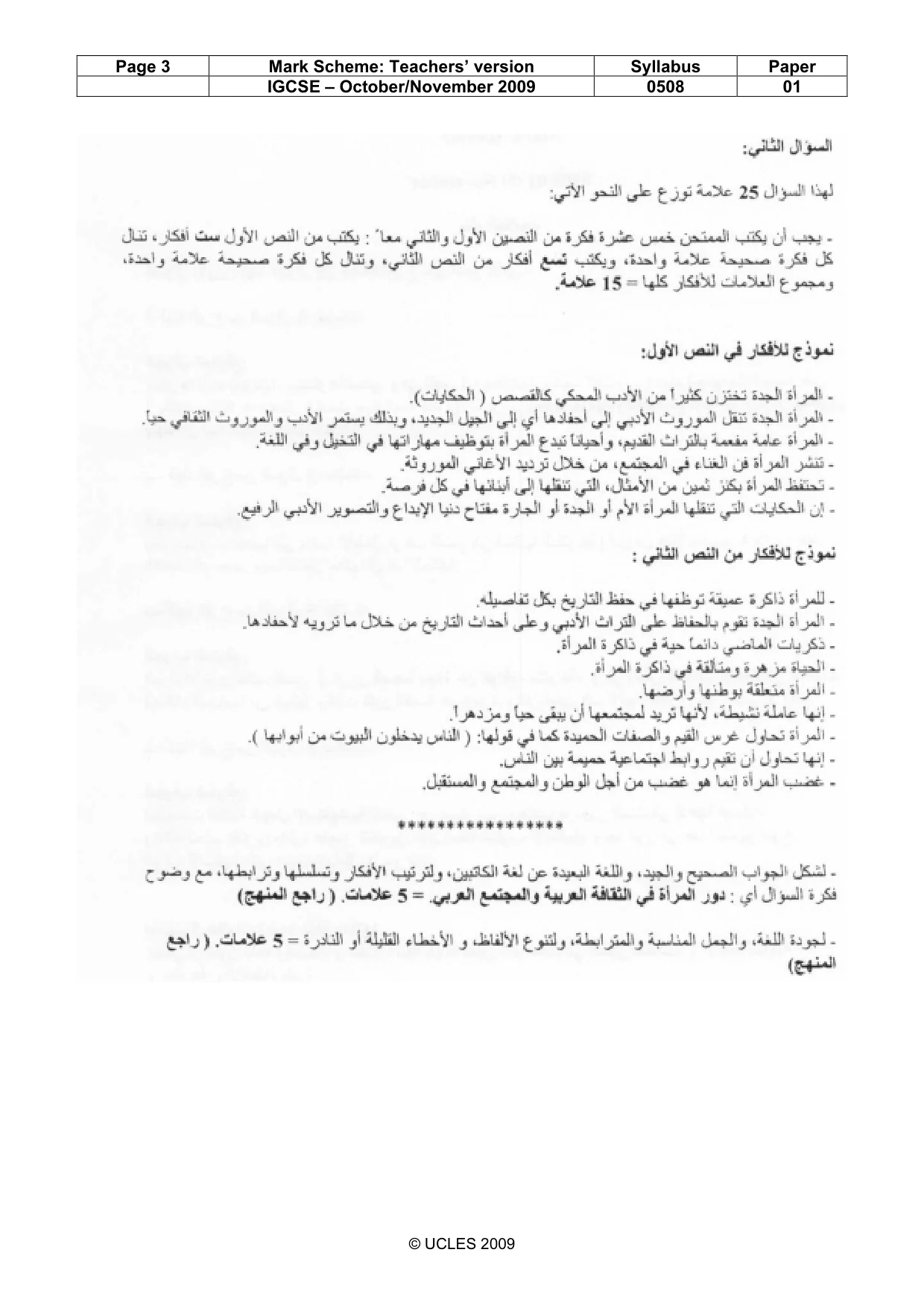
Mark scheme, page 3
Page 3 Mark Scheme: Teachers’ version Syllabus Paper IGCSE – October/November 2009 0508 01 © UCLES 2009
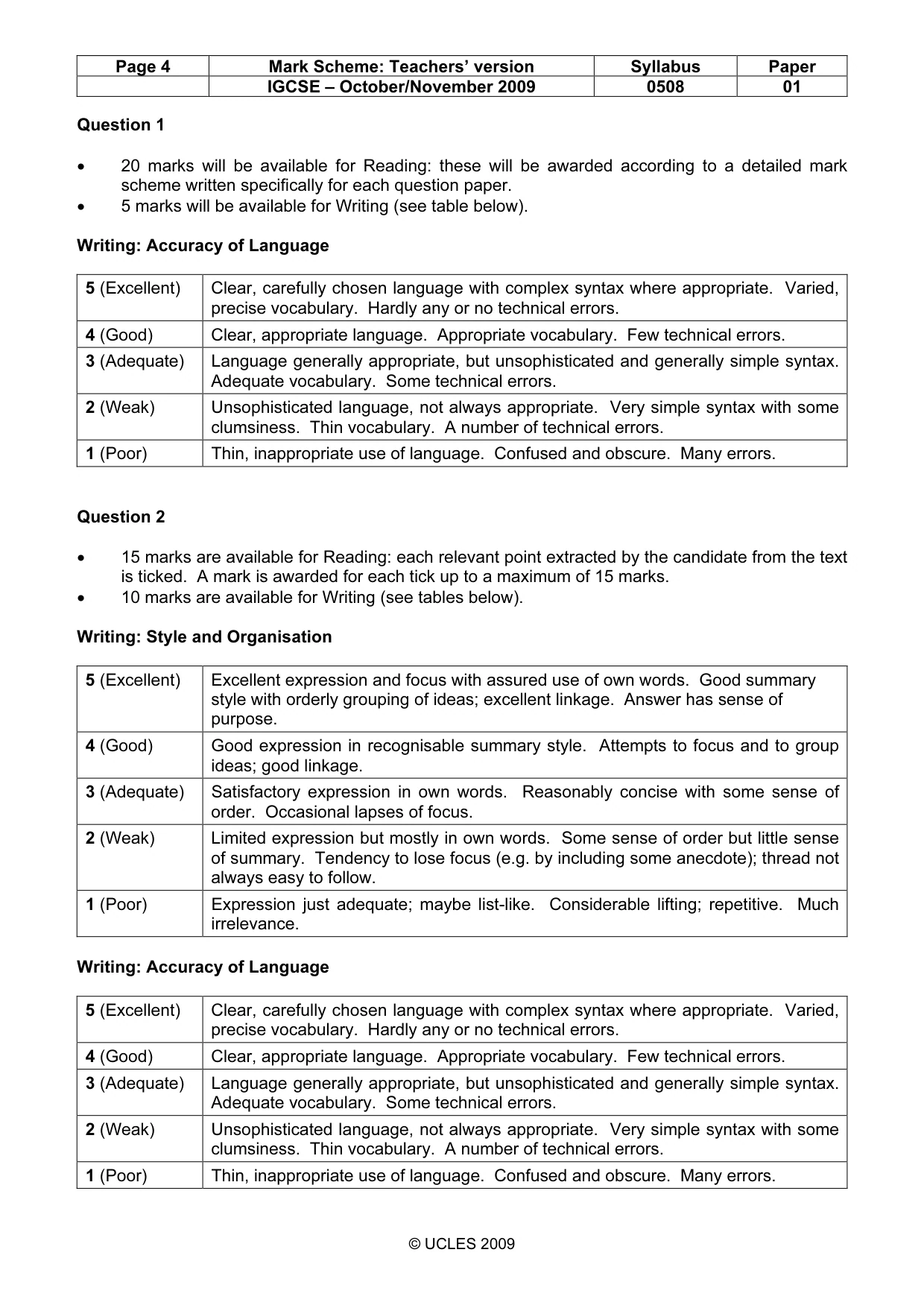
Mark scheme, page 4
Page 4 Mark Scheme: Teachers’ version Syllabus Paper IGCSE – October/November 2009 0508 01 © UCLES 2009 Question 1 • 20 marks will be available for Reading: these will be awarded according to a detailed mark scheme written specifically for each question paper. • 5 marks will be available for Writing (see table below). Writing: Accuracy of Language 5 (Excellent) Clear, carefully chosen language with complex syntax where appropriate. Varied, precise vocabulary. Hardly any or no technical errors. 4 (Good) Clear, appropriate language. Appropriate vocabulary. Few technical errors. 3 (Adequate) Language generally appropriate, but unsophisticated and generally simple syntax. Adequate vocabulary. Some technical errors. 2 (Weak) Unsophisticated language, not always appropriate. Very simple syntax with some clumsiness. Thin vocabulary. A number of technical errors. 1 (Poor) Thin, inappropriate use of language. Confused and obscure. Many errors. Question 2 • 15 marks are available for Reading: each relevant point extracted by the candidate from the text is ticked. A mark is awarded for each tick up to a maximum of 15 marks. • 10 marks are available for Writing (see tables below). Writing: Style and Organisation 5 (Excellent) Excellent expression and focus with assured use of own words. Good summary style with orderly grouping of ideas; excellent linkage. Answer has sense of purpose. 4 (Good) Good expression in recognisable summary style. Attempts to focus and to group ideas; good linkage. 3 (Adequate) Satisfactory expression in own words. Reasonably concise with some sense of order. Occasional lapses of focus. 2 (Weak) Limited expression but mostly in own words. Some sense of order but little sense of summary. Tendency to lose focus (e.g. by including some anecdote); thread not always easy to follow. 1 (Poor) Expression just adequate; maybe list-like. Considerable lifting; repetitive. Much irrelevance. Writing: Accuracy of Language 5 (Excellent) Clear, carefully chosen language with complex syntax where appropriate. Varied, precise vocabulary. Hardly any or no technical errors. 4 (Good) Clear, appropriate language. Appropriate vocabulary. Few technical errors. 3 (Adequate) Language generally appropriate, but unsophisticated and generally simple syntax. Adequate vocabulary. Some technical errors. 2 (Weak) Unsophisticated language, not always appropriate. Very simple syntax with some clumsiness. Thin vocabulary. A number of technical errors. 1 (Poor) Thin, inappropriate use of language. Confused and obscure. Many errors.
What you needed in this session
Cambridge’s own grade thresholds for 2009 Oct/Nov, Paper 1 · Variant 1. A higher threshold means an easier paper — the bar moves with how the cohort did.