Cambridge IGCSE Agriculture 0600 — 2011 Oct/Nov Paper 2 · Variant 1
0600/21/O/N/11 · 9 questions · 80 marks · ≈90 min
The question paper and its mark scheme, free to read here and free to download. This is Cambridge’s own paper, exactly as it was sat.
Question paper16 pages

Mark scheme5 pages
Answers below. Sit the paper first if you are practising.
Questions as text
Q1 · The products obtained from farm animals
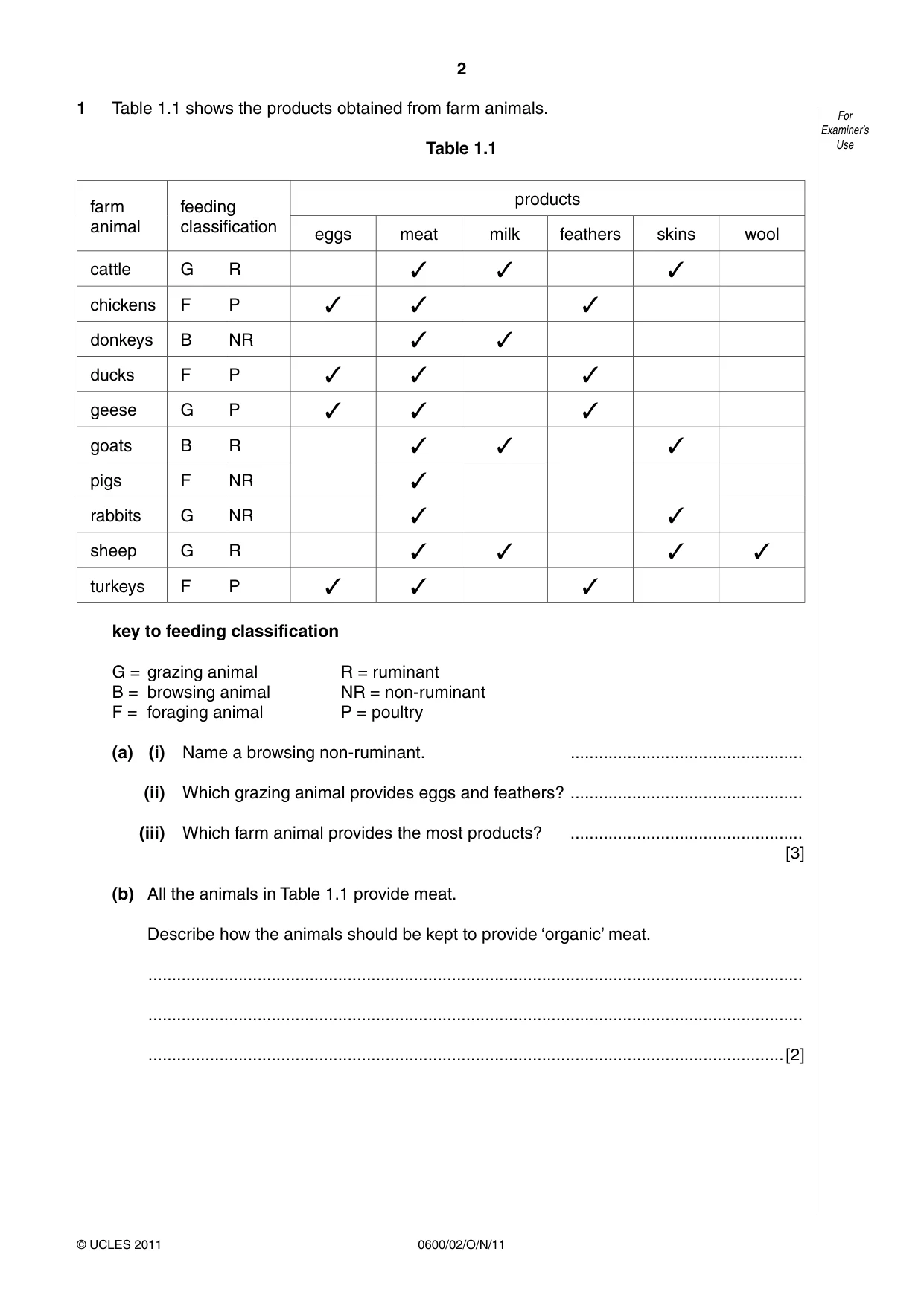
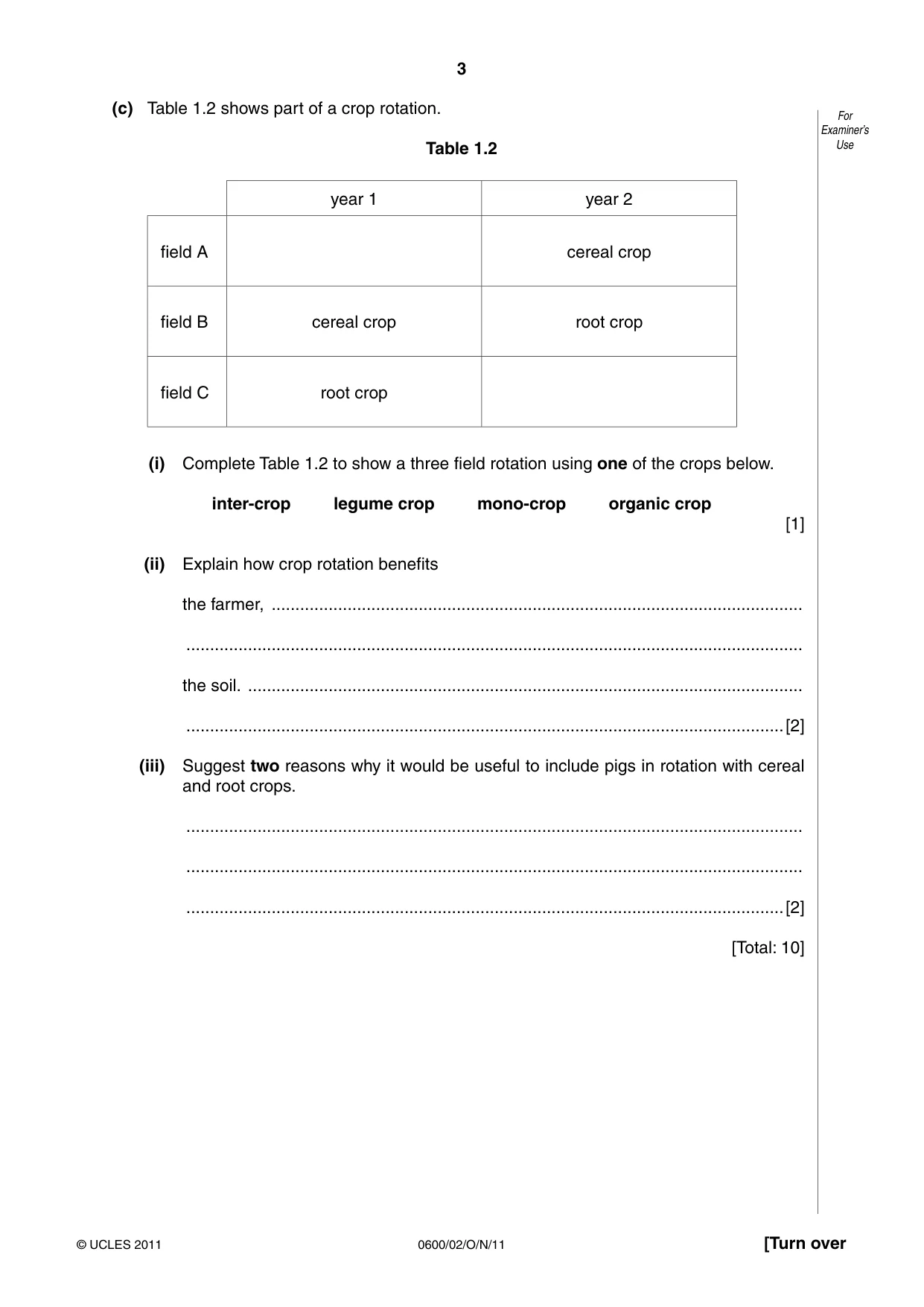
1 Table 1.1 shows the products obtained from farm animals. Table 1.1 products farm feeding animal classification eggs meat milk feathers skins wool cattle G R ✓ ✓ ✓ chickens F P ✓ ✓ ✓ donkeys B NR ✓ ✓ ducks F P ✓ ✓ ✓ geese G P ✓ ✓ ✓ goats B R ✓ ✓ ✓ pigs F NR ✓ rabbits G NR ✓ ✓ sheep G R ✓ ✓ ✓ ✓ turkeys F P ✓ ✓ ✓ key to feeding classification G = grazing animal R = ruminant B = browsing animal NR = non-ruminant F = foraging animal P = poultry (a) (i) Name a browsing non-ruminant. ................................................. (ii) Which grazing animal provides eggs and feathers? ................................................. (iii) Which farm animal provides the most products? ................................................. [3] (b) All the animals in Table 1.1 provide meat. Describe how the animals should be kept to provide ‘organic’ meat. .......................................................................................................................................... .......................................................................................................................................... ......................................................................................................................................[2] (c) Table 1.2 shows part of a crop rotation. Table 1.2 year 1 year 2 field A cereal crop field B cereal crop root crop field C root crop (i) Complete Table 1.2 to show a three field rotation using one of the crops below. inter-crop legume crop mono-crop organic crop [1] (ii) Explain how crop rotation benefits the farmer, ................................................................................................................ .................................................................................................................................. the soil. ..................................................................................................................... ..............................................................................................................................[2] (iii) Suggest two reasons why it would be useful to include pigs in rotation with cereal and root crops. .................................................................................................................................. .................................................................................................................................. ..............................................................................................................................[2] [Total: 10]
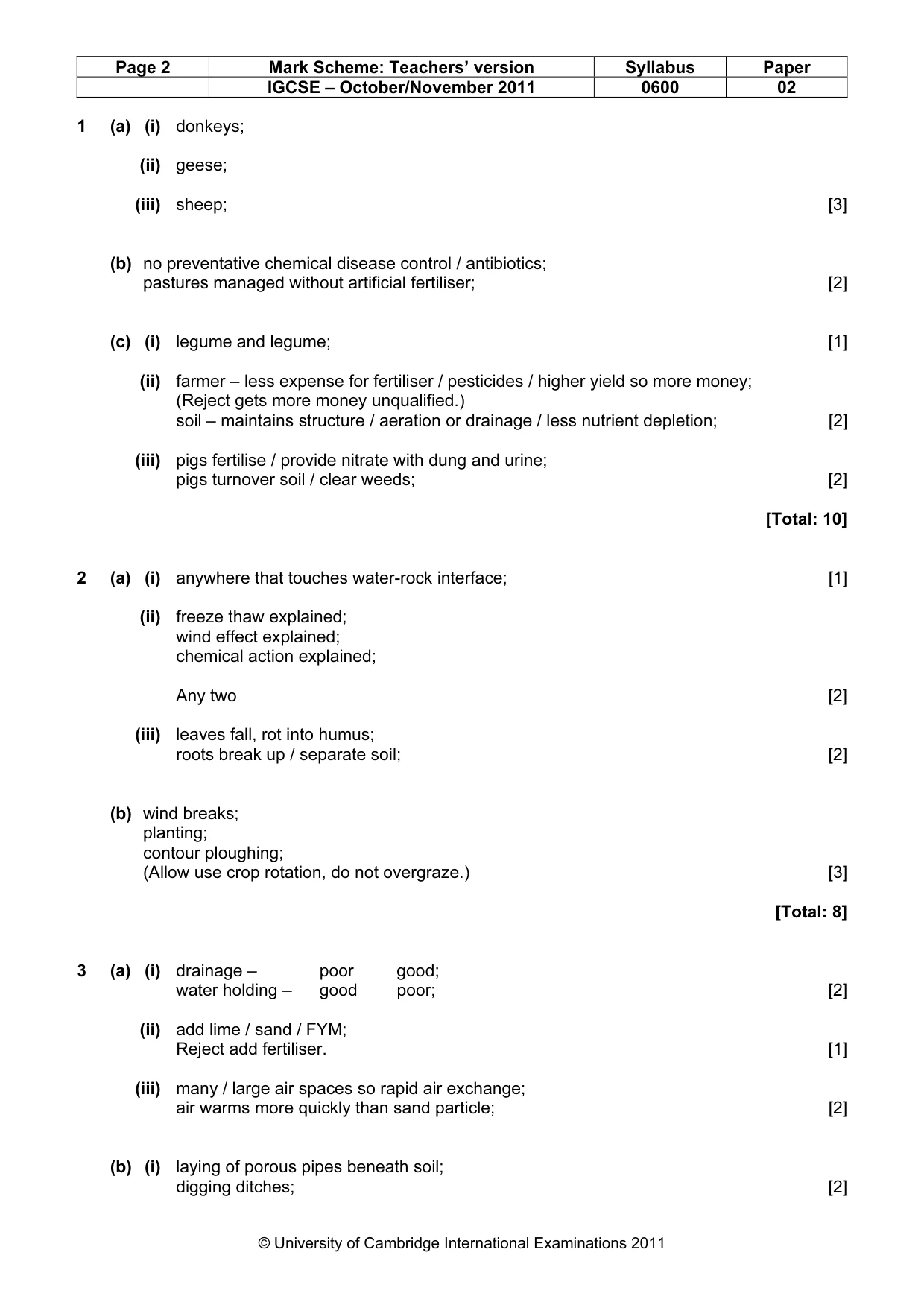
Mark scheme: 1 (a) (i) donkeys; (ii) geese; (iii) sheep; [3] (b) no preventative chemical disease control / antibiotics; pastures managed without artificial fertiliser; [2] (c) (i) legume and legume; [1] (ii) farmer – less expense for fertiliser / pesticides / higher yield so more money; (Reject gets more money unqualified.) soil – maintains structure / aeration or drainage / less nutrient depletion; [2] (iii) pigs fertilise / provide nitrate with dung and urine; pigs turnover soil / clear weeds; [2] [Total: 10]
Question 2
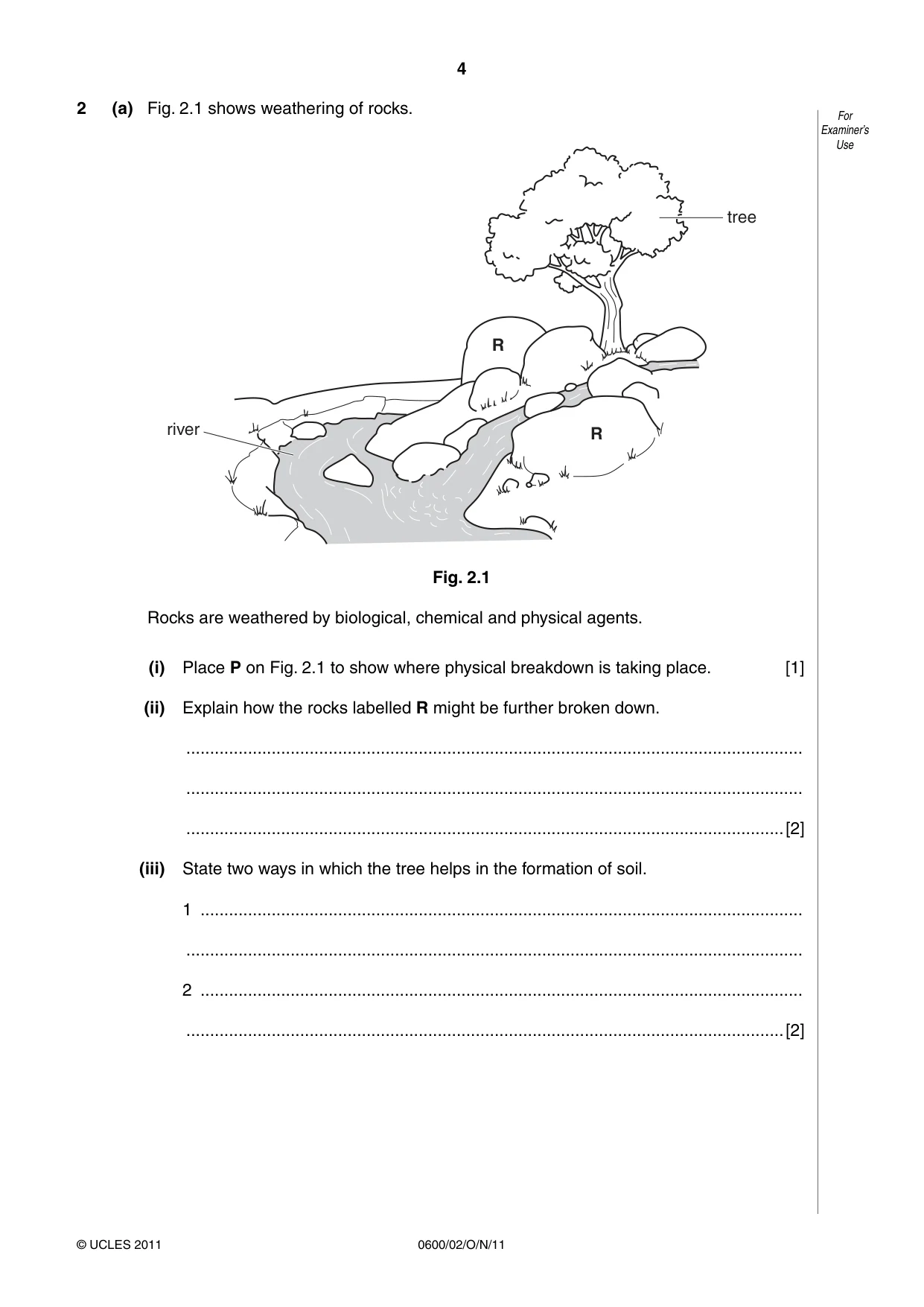
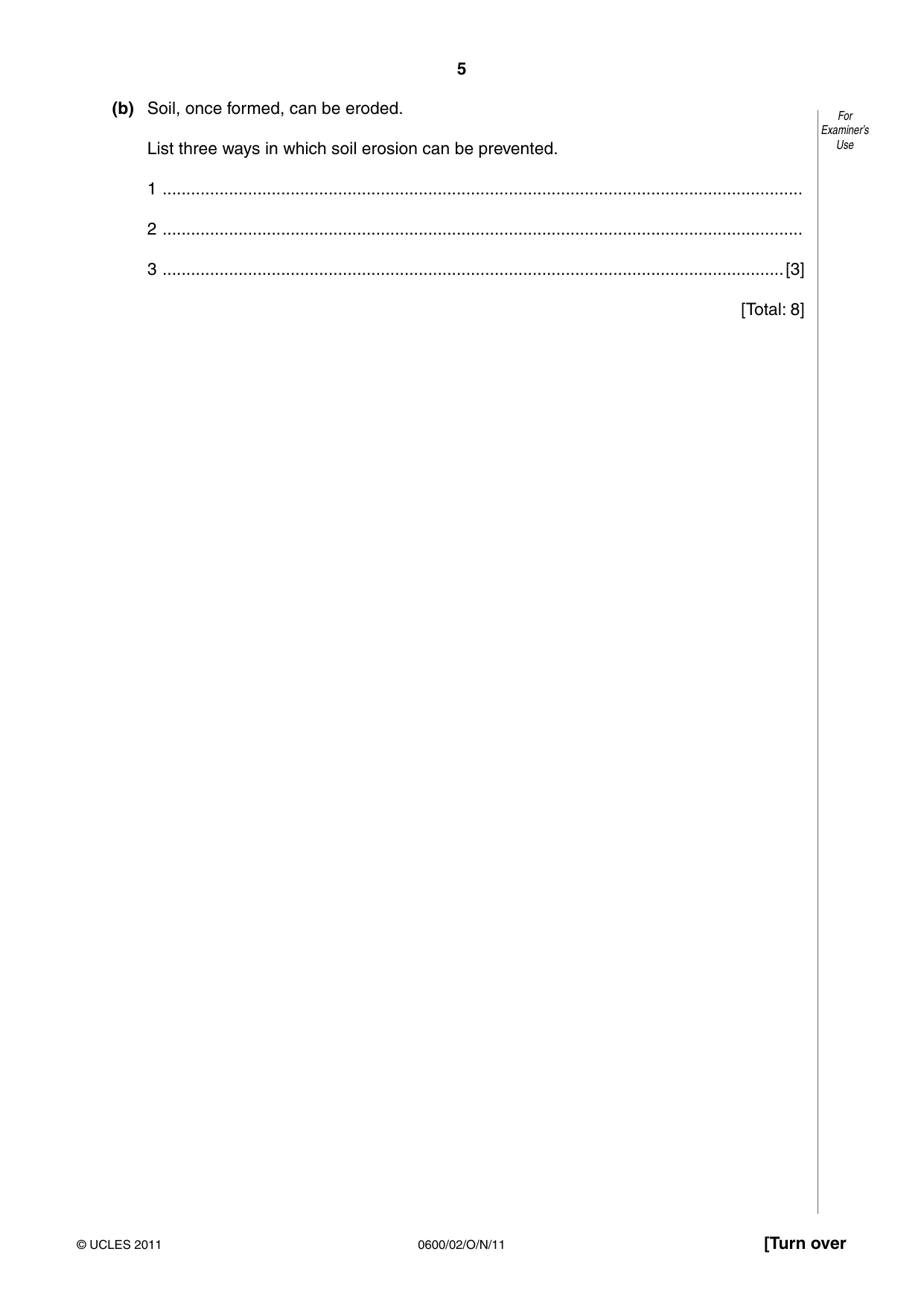
2 (a) Fig. 2.1 shows weathering of rocks. tree R river R Fig. 2.1 Rocks are weathered by biological, chemical and physical agents. (i) Place P on Fig. 2.1 to show where physical breakdown is taking place. [1] (ii) Explain how the rocks labelled R might be further broken down. .................................................................................................................................. .................................................................................................................................. ..............................................................................................................................[2] (iii) State two ways in which the tree helps in the formation of soil. 1 ............................................................................................................................... .................................................................................................................................. 2 ............................................................................................................................... ..............................................................................................................................[2] (b) Soil, once formed, can be eroded. List three ways in which soil erosion can be prevented. 1 ....................................................................................................................................... 2 ....................................................................................................................................... 3 ...................................................................................................................................[3] [Total: 8]
Mark scheme: 2 (a) (i) anywhere that touches water-rock interface; [1] (ii) freeze thaw explained; wind effect explained; chemical action explained; Any two [2] (iii) leaves fall, rot into humus; roots break up / separate soil; [2] (b) wind breaks; planting; contour ploughing; (Allow use crop rotation, do not overgraze.) [3] [Total: 8]
Q3 · Table 3.1 compares a clay soil with a sandy soil
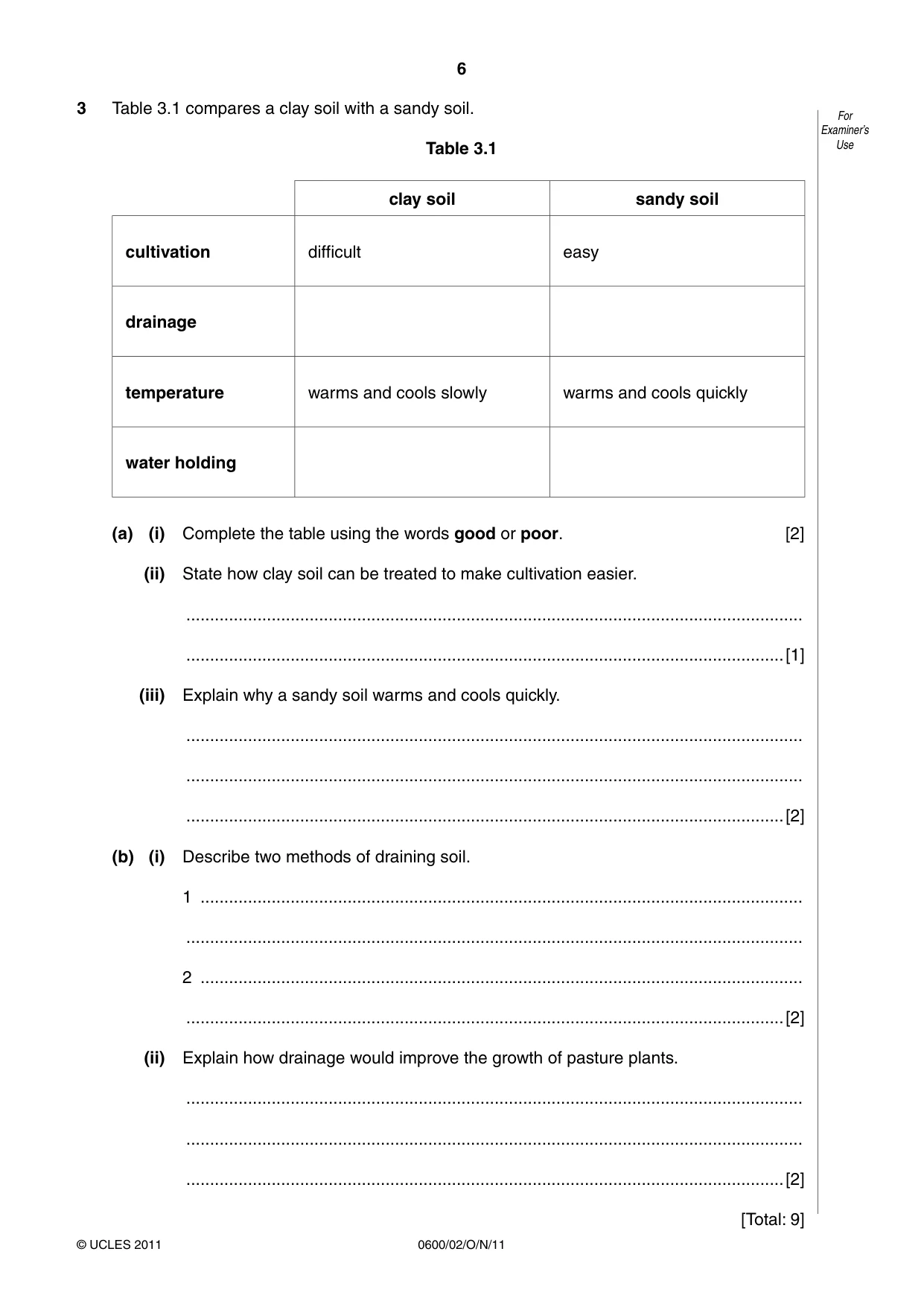
3 Table 3.1 compares a clay soil with a sandy soil. Table 3.1 clay soil sandy soil cultivation difficult easy drainage temperature warms and cools slowly warms and cools quickly water holding (a) (i) Complete the table using the words good or poor. [2] (ii) State how clay soil can be treated to make cultivation easier. .................................................................................................................................. ..............................................................................................................................[1] (iii) Explain why a sandy soil warms and cools quickly. .................................................................................................................................. .................................................................................................................................. ..............................................................................................................................[2] (b) (i) Describe two methods of draining soil. 1 ............................................................................................................................... .................................................................................................................................. 2 ............................................................................................................................... ..............................................................................................................................[2] (ii) Explain how drainage would improve the growth of pasture plants. .................................................................................................................................. .................................................................................................................................. ..............................................................................................................................[2] [Total: 9]
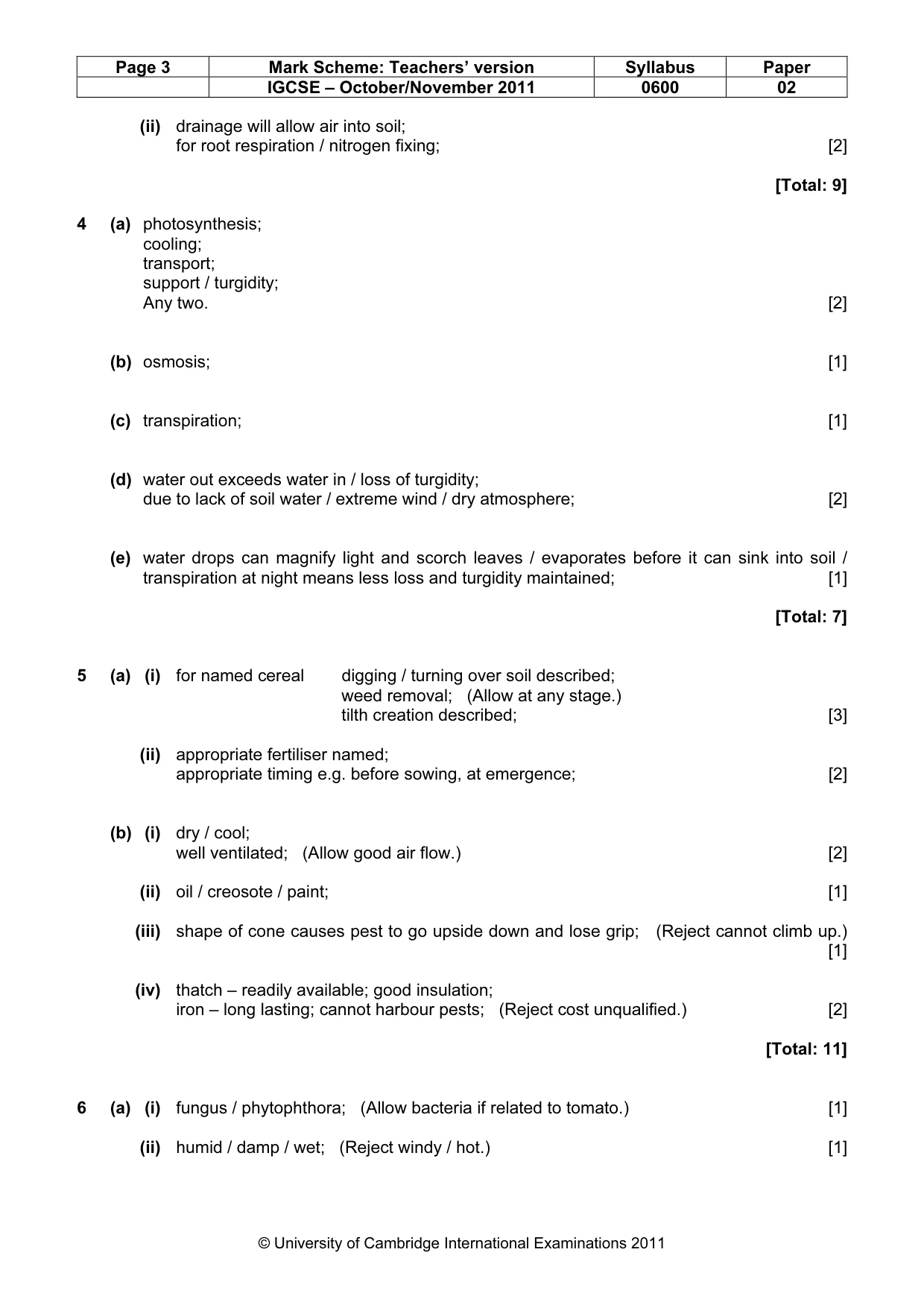
Mark scheme: 3 (a) (i) drainage – poor good; water holding – good poor; [2] (ii) add lime / sand / FYM; Reject add fertiliser. [1] (iii) many / large air spaces so rapid air exchange; air warms more quickly than sand particle; [2] (b) (i) laying of porous pipes beneath soil; digging ditches; [2] IGCSE – October/November 2011 0600 02 (ii) drainage will allow air into soil; for root respiration / nitrogen fixing; [2] [Total: 9]
Q4 · Parts of a plant and the way in which water moves through the plant
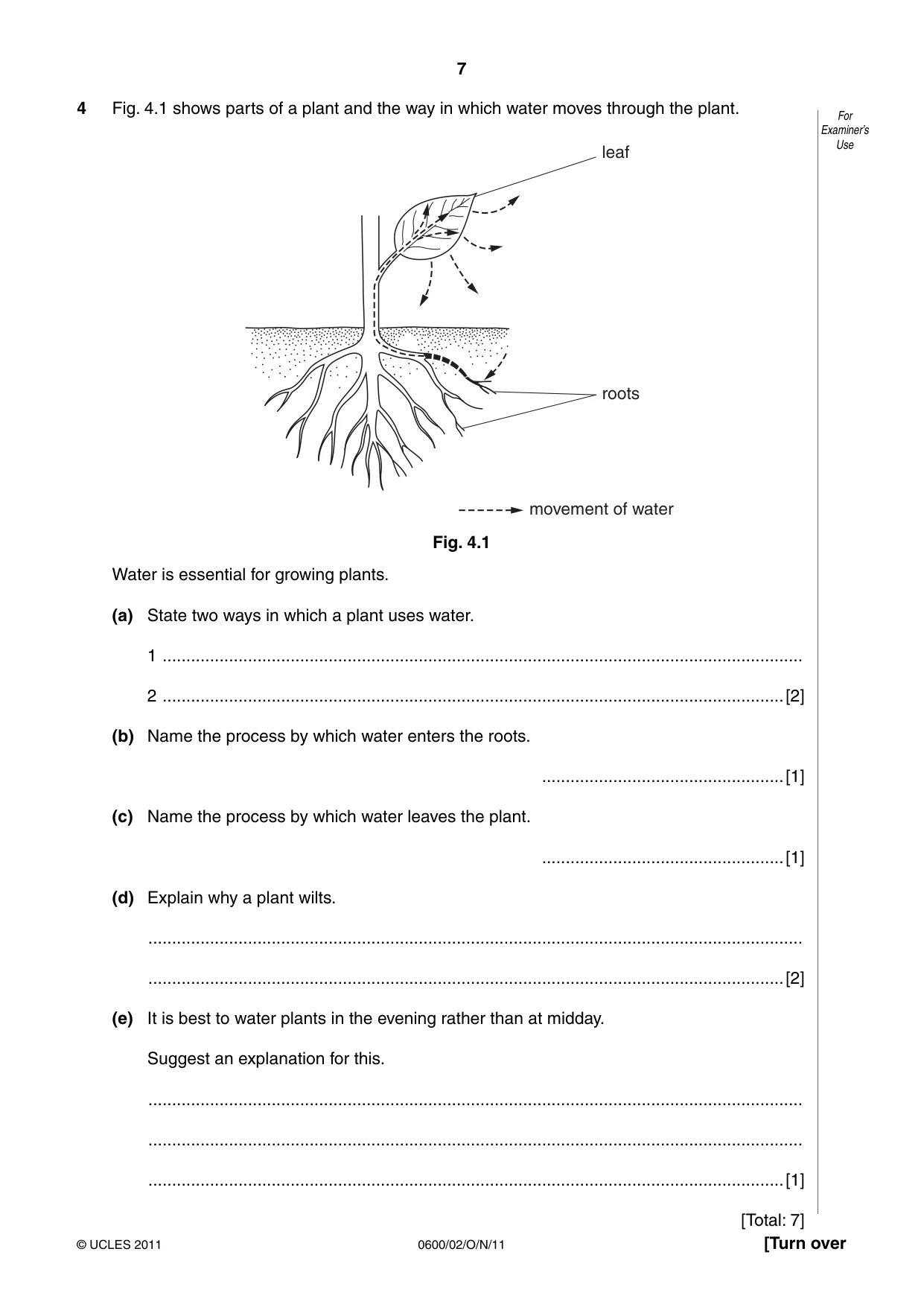
4 Fig. 4.1 shows parts of a plant and the way in which water moves through the plant. leaf roots movement of water Fig. 4.1 Water is essential for growing plants. (a) State two ways in which a plant uses water. 1 ....................................................................................................................................... 2 ...................................................................................................................................[2] (b) Name the process by which water enters the roots. ...................................................[1] (c) Name the process by which water leaves the plant. ...................................................[1] (d) Explain why a plant wilts. .......................................................................................................................................... ......................................................................................................................................[2] (e) It is best to water plants in the evening rather than at midday. Suggest an explanation for this. .......................................................................................................................................... .......................................................................................................................................... ......................................................................................................................................[1] [Total: 7]
Mark scheme: 4 (a) photosynthesis; cooling; transport; support / turgidity; Any two. [2] (b) osmosis; [1] (c) transpiration; [1] (d) water out exceeds water in / loss of turgidity; due to lack of soil water / extreme wind / dry atmosphere; [2] (e) water drops can magnify light and scorch leaves / evaporates before it can sink into soil / transpiration at night means less loss and turgidity maintained; [1] [Total: 7]
Q5 · You are asked to grow cereals in a garden plot
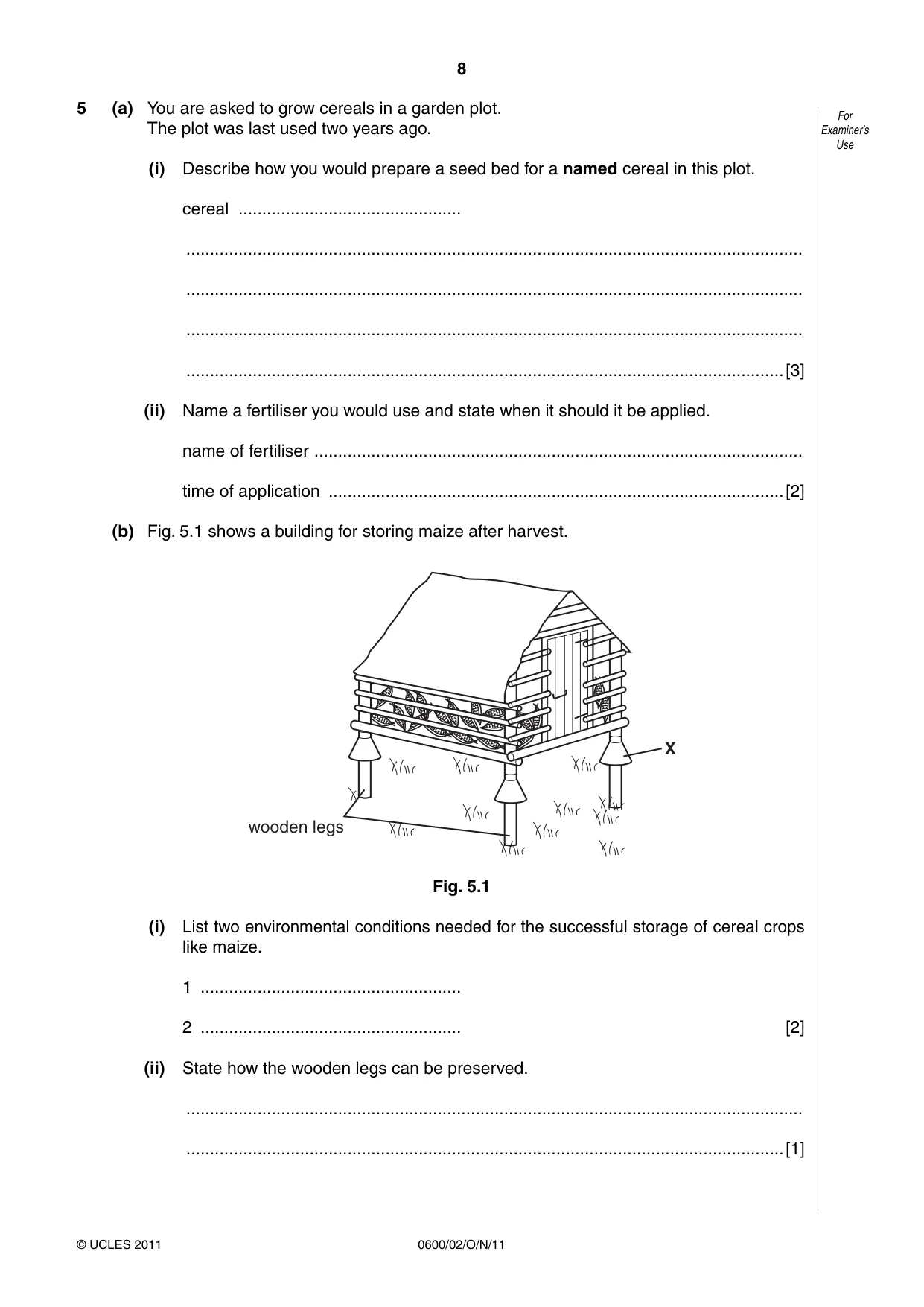
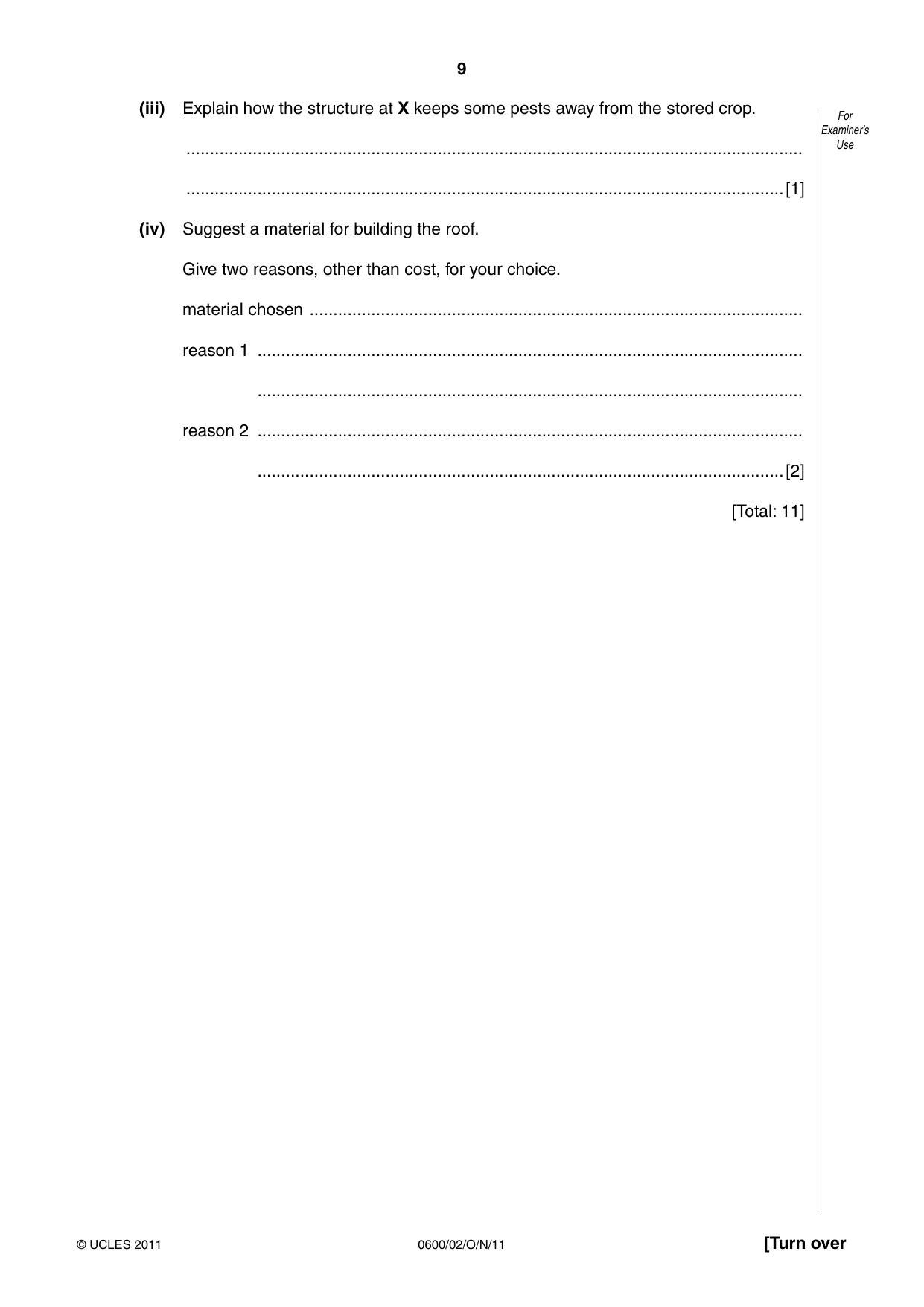
5 (a) You are asked to grow cereals in a garden plot. The plot was last used two years ago. (i) Describe how you would prepare a seed bed for a named cereal in this plot. cereal ............................................... .................................................................................................................................. .................................................................................................................................. .................................................................................................................................. ..............................................................................................................................[3] (ii) Name a fertiliser you would use and state when it should it be applied. name of fertiliser ....................................................................................................... time of application ................................................................................................[2] (b) Fig. 5.1 shows a building for storing maize after harvest. X wooden legs Fig. 5.1 (i) List two environmental conditions needed for the successful storage of cereal crops like maize. 1 ....................................................... 2 ....................................................... [2] (ii) State how the wooden legs can be preserved. .................................................................................................................................. ..............................................................................................................................[1] (iii) Explain how the structure at X keeps some pests away from the stored crop. .................................................................................................................................. ..............................................................................................................................[1] (iv) Suggest a material for building the roof. Give two reasons, other than cost, for your choice. material chosen ........................................................................................................ reason 1 ................................................................................................................... ................................................................................................................... reason 2 ................................................................................................................... ...............................................................................................................[2] [Total: 11]
Mark scheme: 5 (a) (i) for named cereal digging / turning over soil described; weed removal; (Allow at any stage.) tilth creation described; [3] (ii) appropriate fertiliser named; appropriate timing e.g. before sowing, at emergence; [2] (b) (i) dry / cool; well ventilated; (Allow good air flow.) [2] (ii) oil / creosote / paint; [1] (iii) shape of cone causes pest to go upside down and lose grip; (Reject cannot climb up.) [1] (iv) thatch – readily available; good insulation; iron – long lasting; cannot harbour pests; (Reject cost unqualified.) [2] [Total: 11]
Q6 · An Irish potato plant
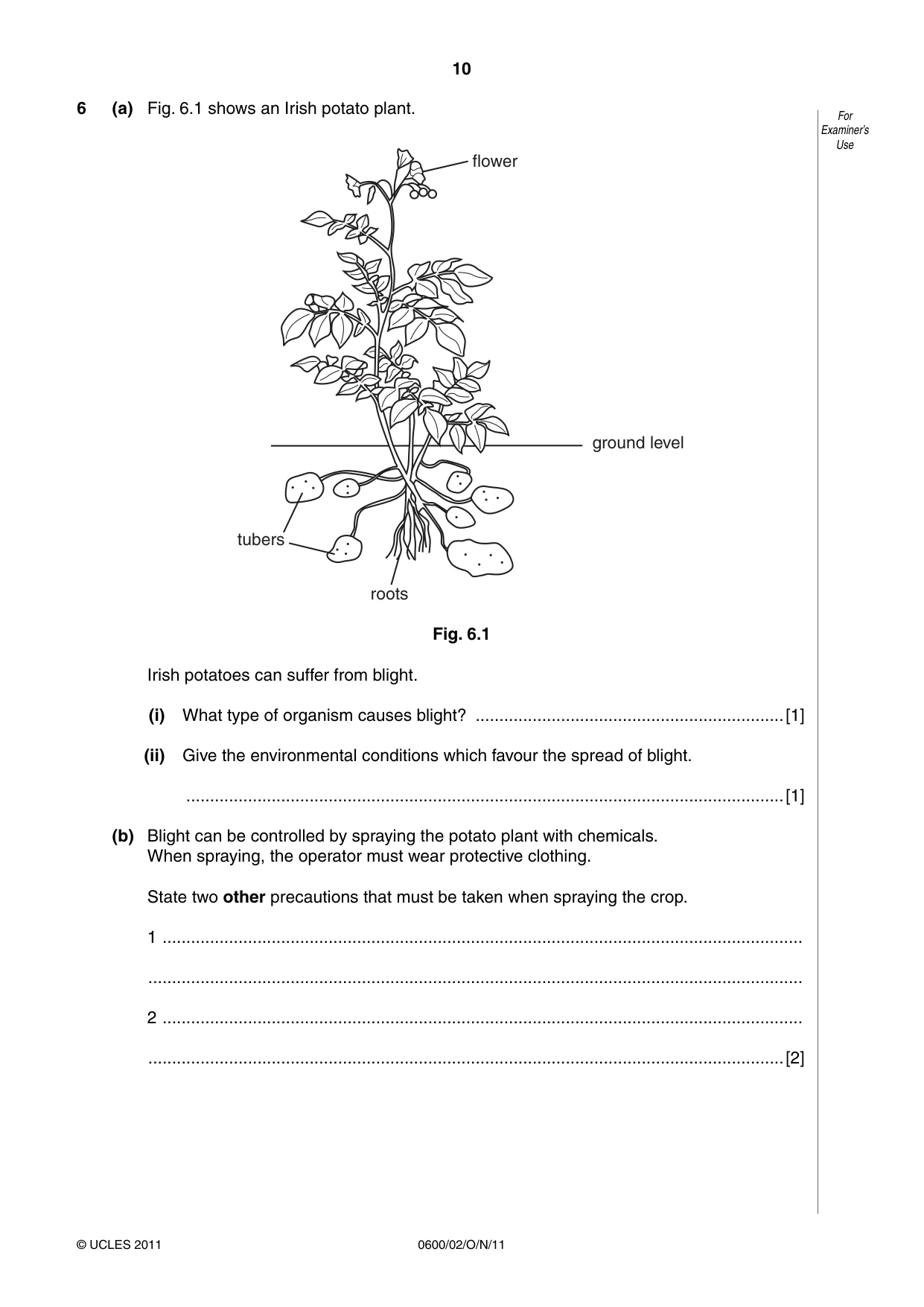
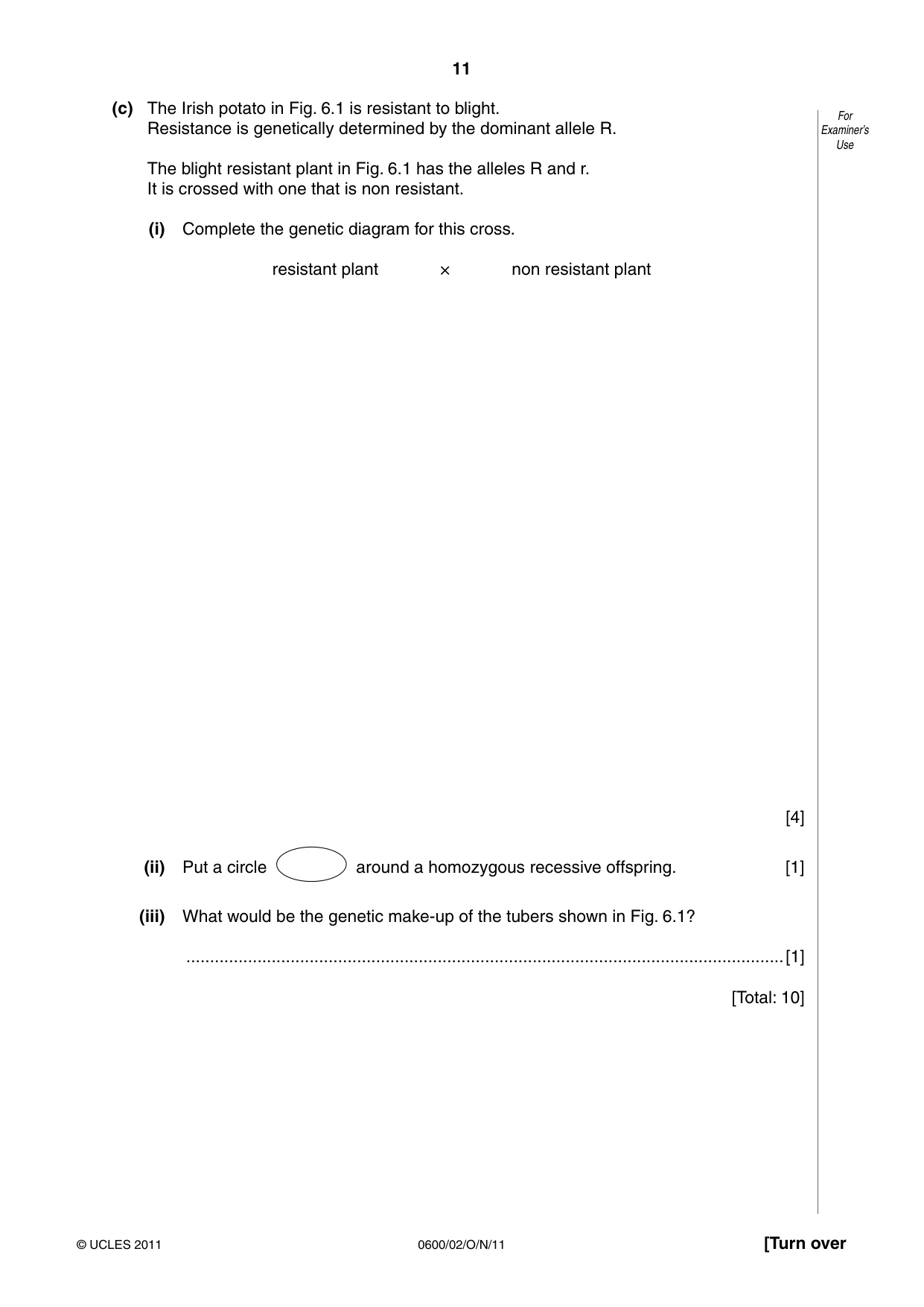
6 (a) Fig. 6.1 shows an Irish potato plant. flower ground level tubers roots Fig. 6.1 Irish potatoes can suffer from blight. (i) What type of organism causes blight? .................................................................[1] (ii) Give the environmental conditions which favour the spread of blight. ..............................................................................................................................[1] (b) Blight can be controlled by spraying the potato plant with chemicals. When spraying, the operator must wear protective clothing. State two other precautions that must be taken when spraying the crop. 1 ....................................................................................................................................... .......................................................................................................................................... 2 ....................................................................................................................................... ......................................................................................................................................[2] (c) The Irish potato in Fig. 6.1 is resistant to blight. Resistance is genetically determined by the dominant allele R. The blight resistant plant in Fig. 6.1 has the alleles R and r. It is crossed with one that is non resistant. (i) Complete the genetic diagram for this cross. resistant plant × non resistant plant [4] (ii) Put a circle around a homozygous recessive offspring. [1] (iii) What would be the genetic make-up of the tubers shown in Fig. 6.1? ..............................................................................................................................[1] [Total: 10]
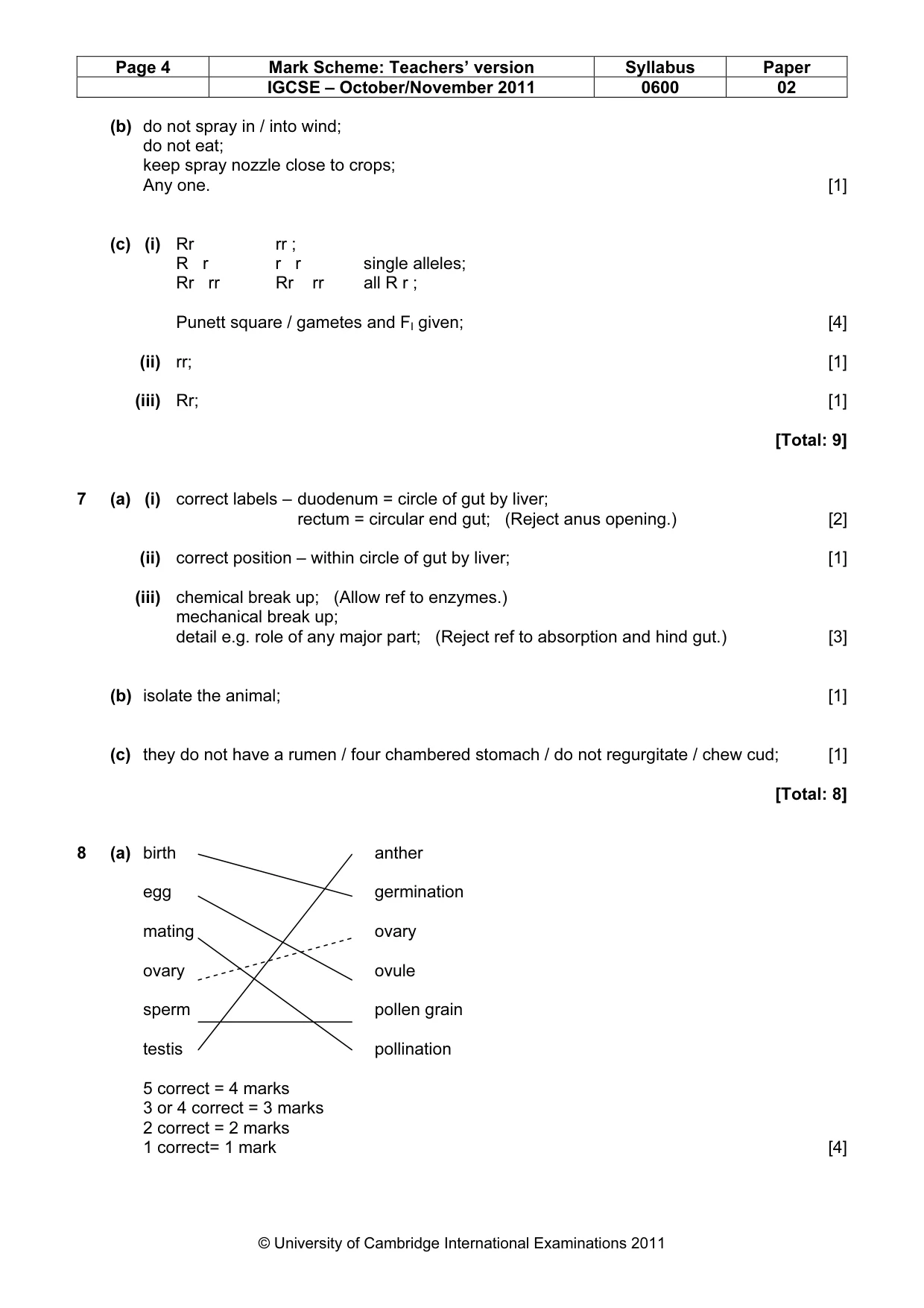
Mark scheme: 6 (a) (i) fungus / phytophthora; (Allow bacteria if related to tomato.) [1] (ii) humid / damp / wet; (Reject windy / hot.) [1] IGCSE – October/November 2011 0600 02 (b) do not spray in / into wind; do not eat; keep spray nozzle close to crops; Any one. [1] (c) (i) Rr rr ; R r r r single alleles; Rr rr Rr rr all R r ; Punett square / gametes and FI given; [4] (ii) rr; [1] (iii) Rr; [1] [Total: 9]
Q7 · A diagram of the digestive system of a rabbit
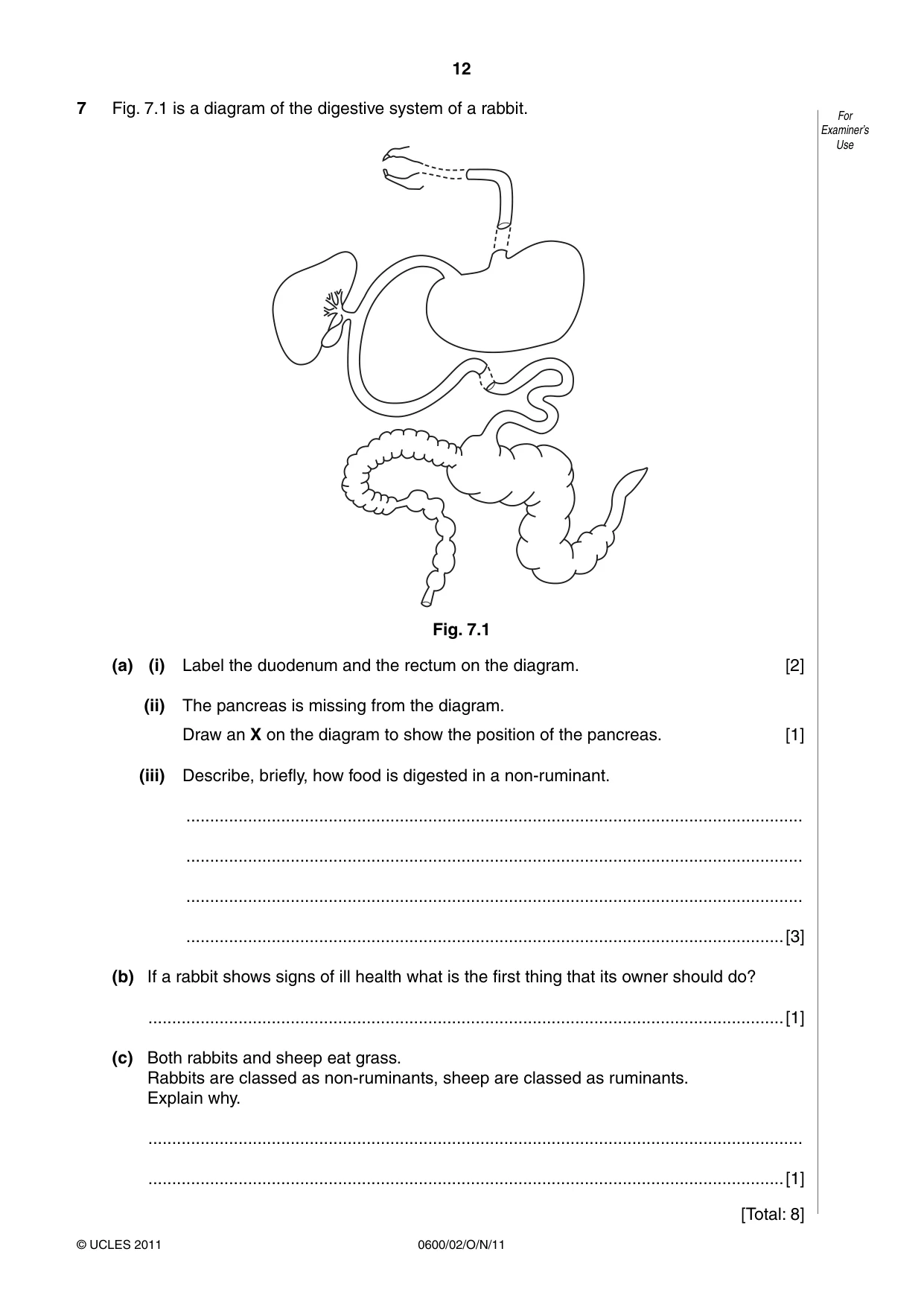
7 Fig. 7.1 is a diagram of the digestive system of a rabbit. Fig. 7.1 (a) (i) Label the duodenum and the rectum on the diagram. [2] (ii) The pancreas is missing from the diagram. Draw an X on the diagram to show the position of the pancreas. [1] (iii) Describe, briefly, how food is digested in a non-ruminant. .................................................................................................................................. .................................................................................................................................. .................................................................................................................................. ..............................................................................................................................[3] (b) If a rabbit shows signs of ill health what is the first thing that its owner should do? ......................................................................................................................................[1] (c) Both rabbits and sheep eat grass. Rabbits are classed as non-ruminants, sheep are classed as ruminants. Explain why. .......................................................................................................................................... ......................................................................................................................................[1] [Total: 8]
Mark scheme: 7 (a) (i) correct labels – duodenum = circle of gut by liver; rectum = circular end gut; (Reject anus opening.) [2] (ii) correct position – within circle of gut by liver; [1] (iii) chemical break up; (Allow ref to enzymes.) mechanical break up; detail e.g. role of any major part; (Reject ref to absorption and hind gut.) [3] (b) isolate the animal; [1] (c) they do not have a rumen / four chambered stomach / do not regurgitate / chew cud; [1] [Total: 8]
Q8 · Plants and animals have comparable stages and structures for sexual reproduction
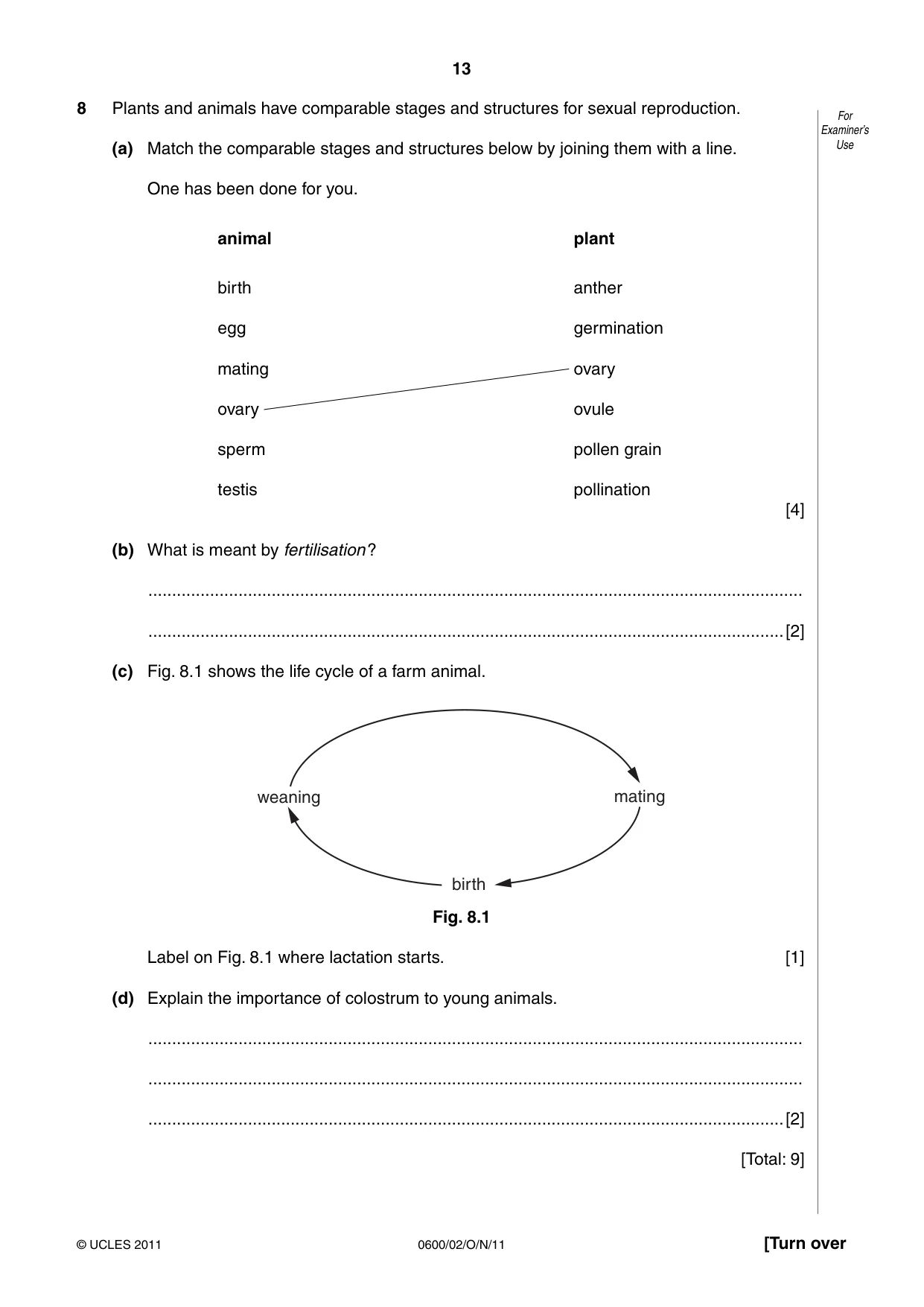
8 Plants and animals have comparable stages and structures for sexual reproduction. (a) Match the comparable stages and structures below by joining them with a line. One has been done for you. animal plant birth anther egg germination mating ovary ovary ovule sperm pollen grain testis pollination [4] (b) What is meant by fertilisation ? .......................................................................................................................................... ......................................................................................................................................[2] (c) Fig. 8.1 shows the life cycle of a farm animal. weaning mating birth Fig. 8.1 Label on Fig. 8.1 where lactation starts. [1] (d) Explain the importance of colostrum to young animals. .......................................................................................................................................... .......................................................................................................................................... ......................................................................................................................................[2] [Total: 9]
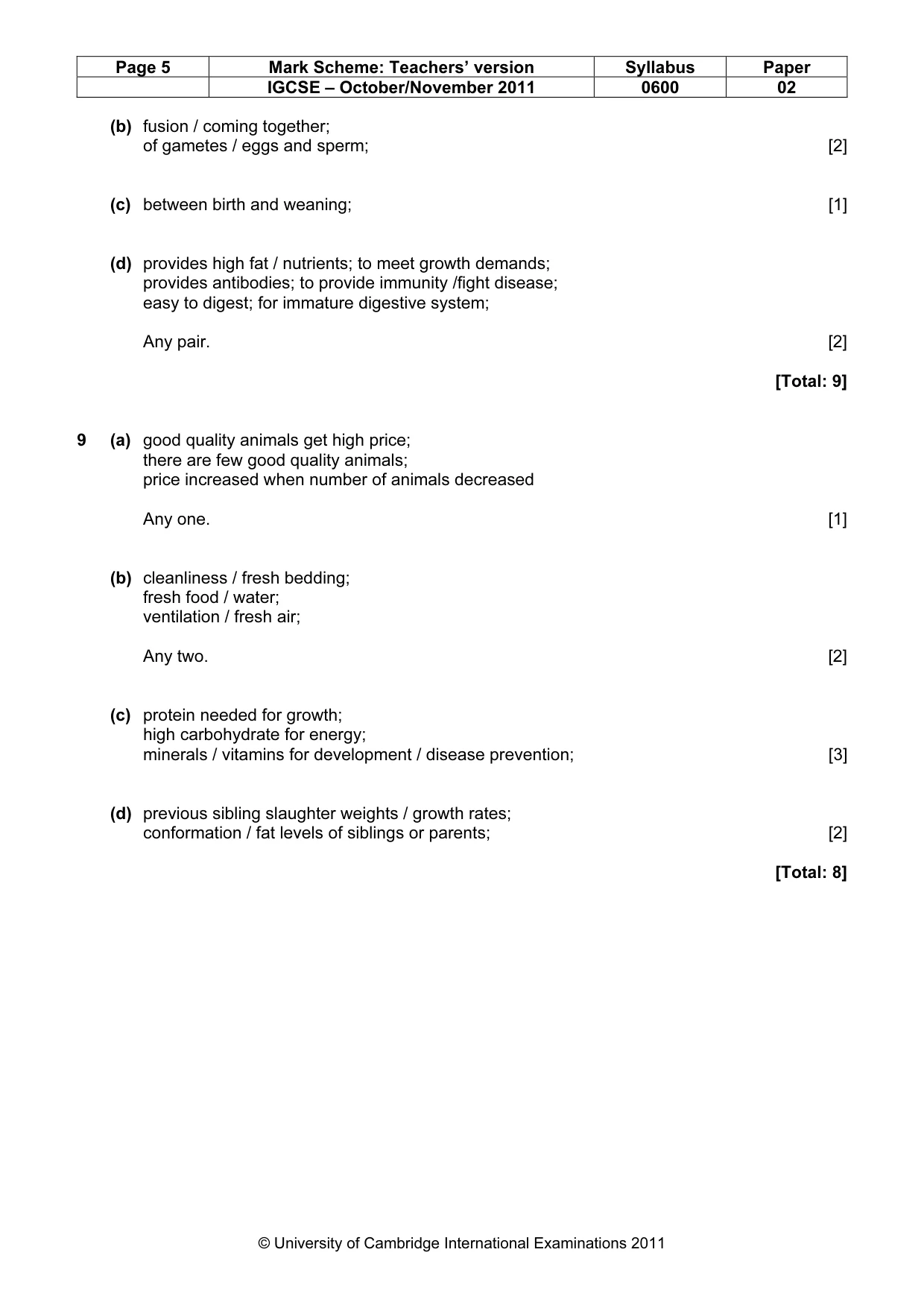
Mark scheme: 8 (a) birth anther egg germination mating ovary ovary ovule sperm pollen grain testis pollination 5 correct = 4 marks 3 or 4 correct = 3 marks 2 correct = 2 marks 1 correct= 1 mark [4] IGCSE – October/November 2011 0600 02 (b) fusion / coming together; of gametes / eggs and sperm; [2] (c) between birth and weaning; [1] (d) provides high fat / nutrients; to meet growth demands; provides antibodies; to provide immunity /fight disease; easy to digest; for immature digestive system; Any pair. [2] [Total: 9]
Q9 · Most farm animals are kept for meat
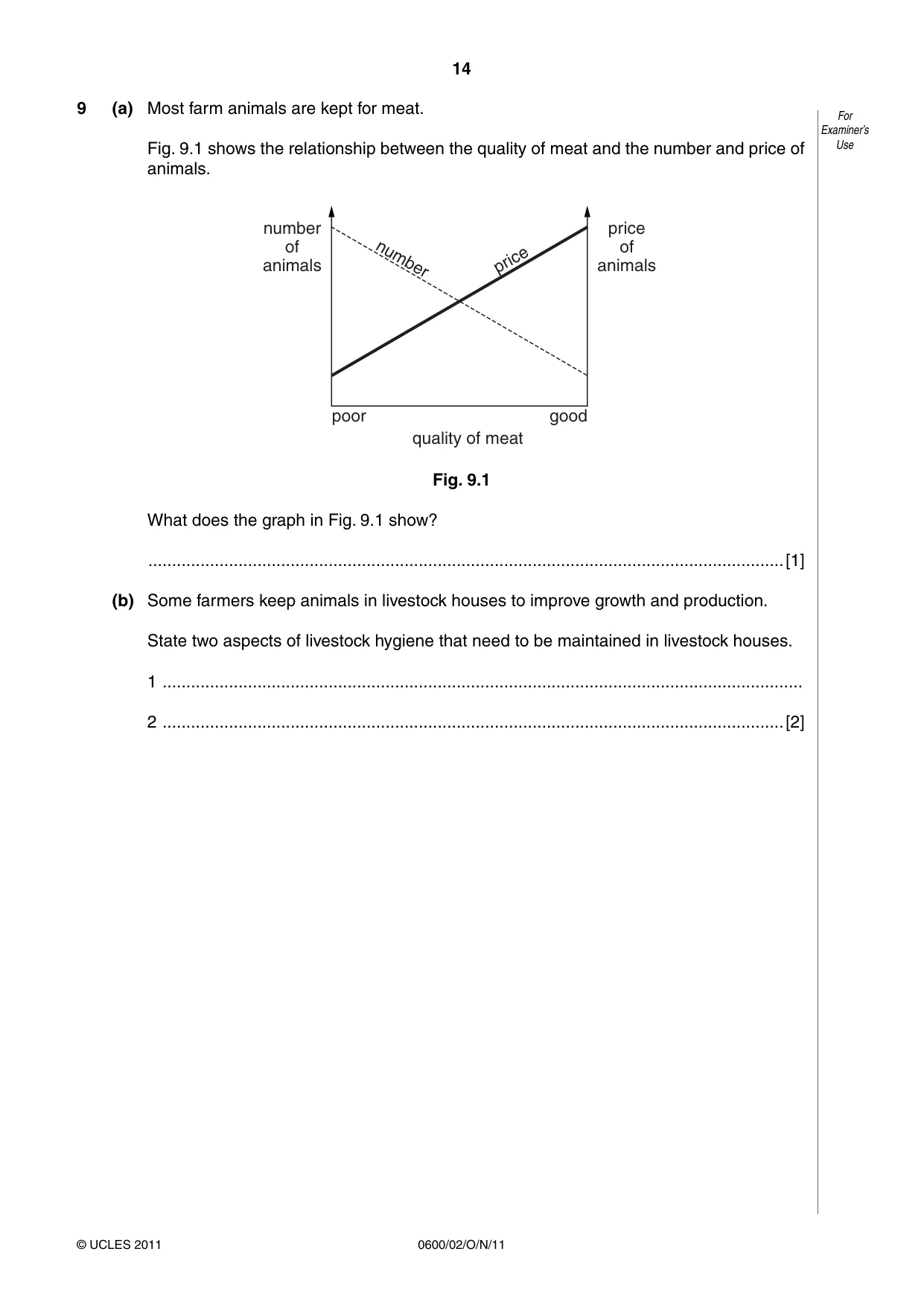
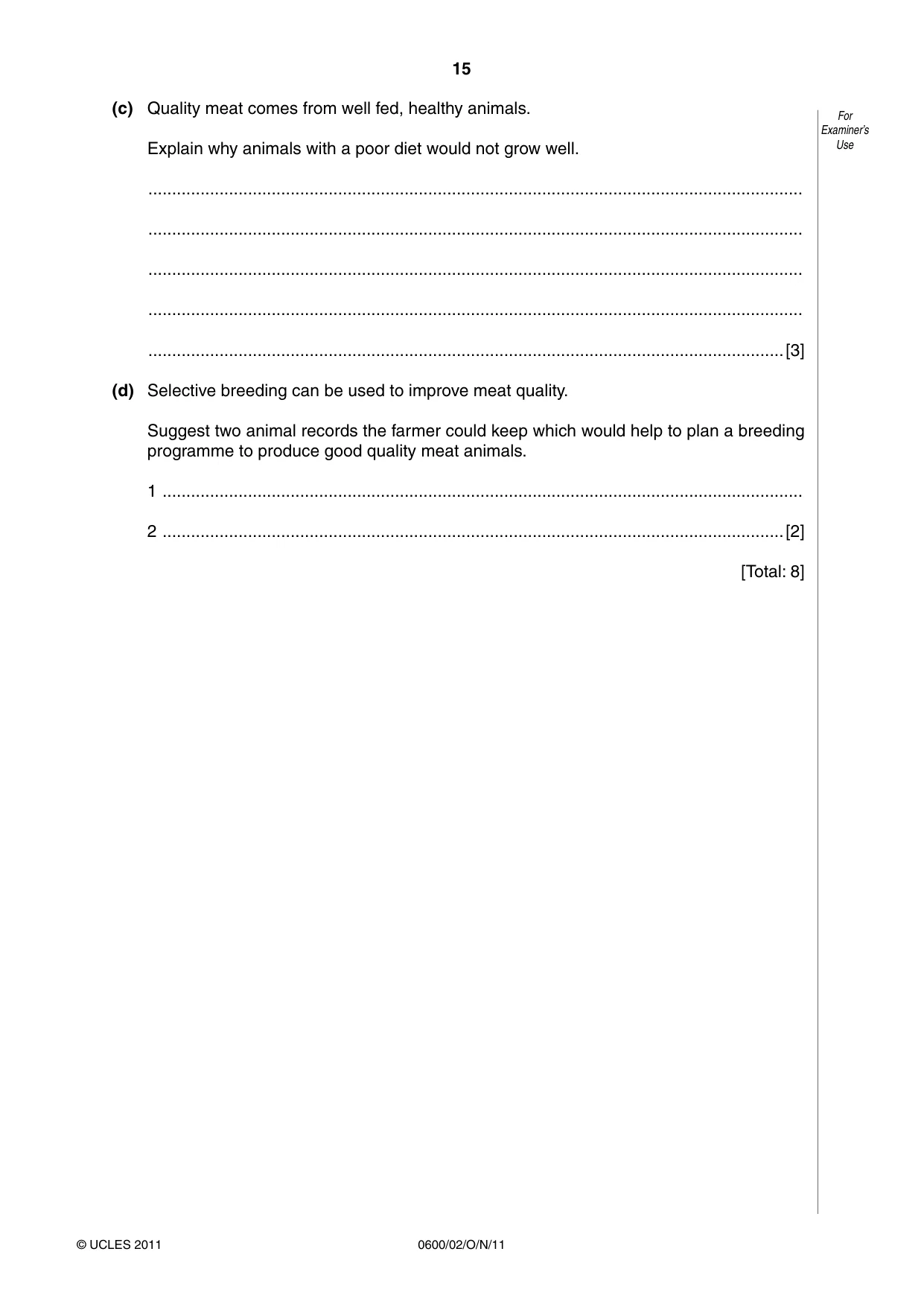
9 (a) Most farm animals are kept for meat. Fig. 9.1 shows the relationship between the quality of meat and the number and price of animals. number price of of animals price animals number poor good quality of meat Fig. 9.1 What does the graph in Fig. 9.1 show? ......................................................................................................................................[1] (b) Some farmers keep animals in livestock houses to improve growth and production. State two aspects of livestock hygiene that need to be maintained in livestock houses. 1 ....................................................................................................................................... 2 ...................................................................................................................................[2] (c) Quality meat comes from well fed, healthy animals. Explain why animals with a poor diet would not grow well. .......................................................................................................................................... .......................................................................................................................................... .......................................................................................................................................... .......................................................................................................................................... ......................................................................................................................................[3] (d) Selective breeding can be used to improve meat quality. Suggest two animal records the farmer could keep which would help to plan a breeding programme to produce good quality meat animals. 1 ....................................................................................................................................... 2 ...................................................................................................................................[2] [Total: 8]
Mark scheme: 9 (a) good quality animals get high price; there are few good quality animals; price increased when number of animals decreased Any one. [1] (b) cleanliness / fresh bedding; fresh food / water; ventilation / fresh air; Any two. [2] (c) protein needed for growth; high carbohydrate for energy; minerals / vitamins for development / disease prevention; [3] (d) previous sibling slaughter weights / growth rates; conformation / fat levels of siblings or parents; [2] [Total: 8]
What you needed in this session
Cambridge’s own grade thresholds for 2011 Oct/Nov, Paper 2 · Variant 1. A higher threshold means an easier paper — the bar moves with how the cohort did.