Cambridge IGCSE Agriculture 0600 — 2010 Oct/Nov Paper 2 · Variant 1
0600/21/O/N/10 · 9 questions · 80 marks · ≈90 min
The question paper and its mark scheme, free to read here and free to download. This is Cambridge’s own paper, exactly as it was sat.
Question paper16 pages


Mark scheme6 pages
Answers below. Sit the paper first if you are practising.
Questions as text
Q1 · A Zebu cow from Africa
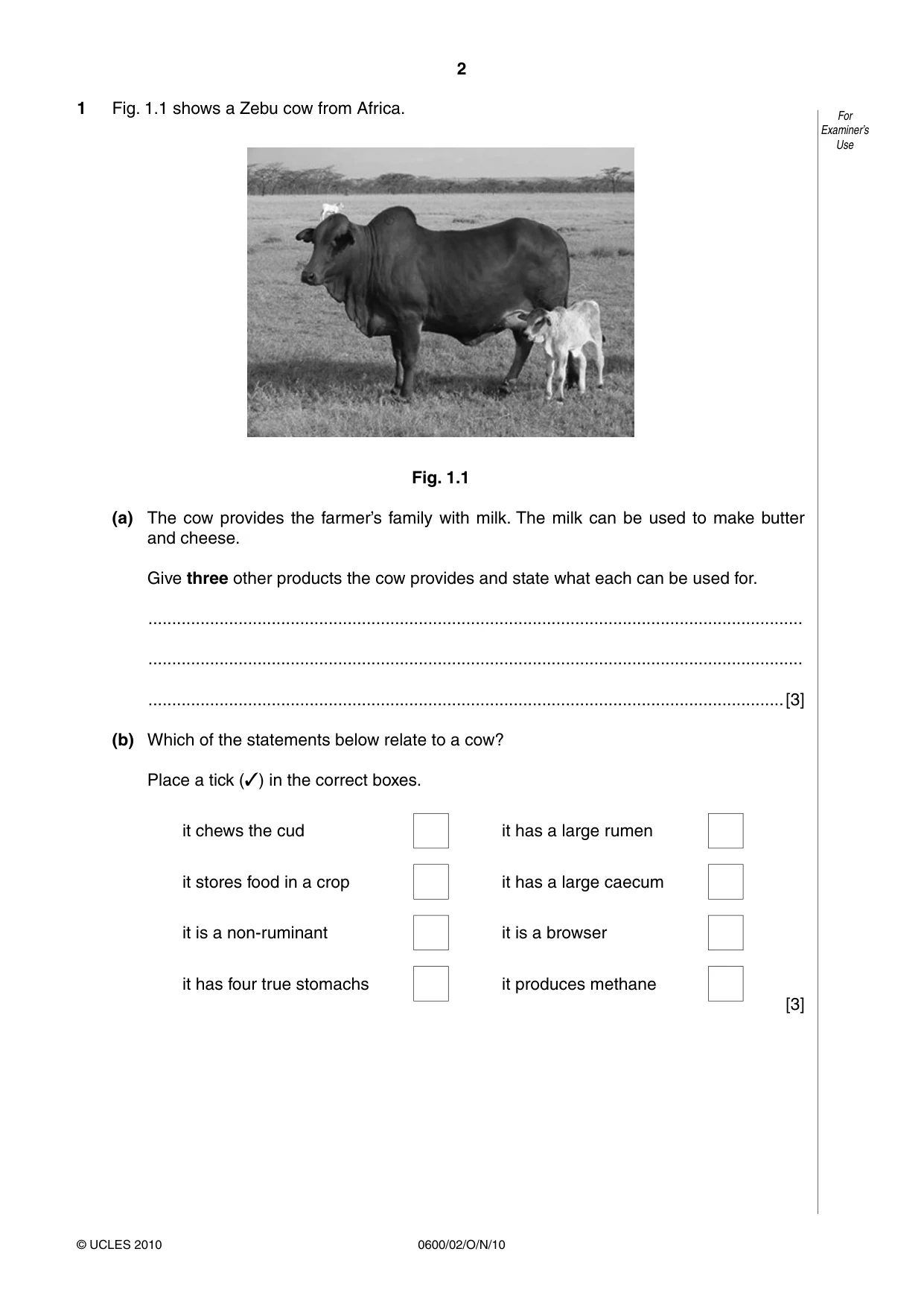
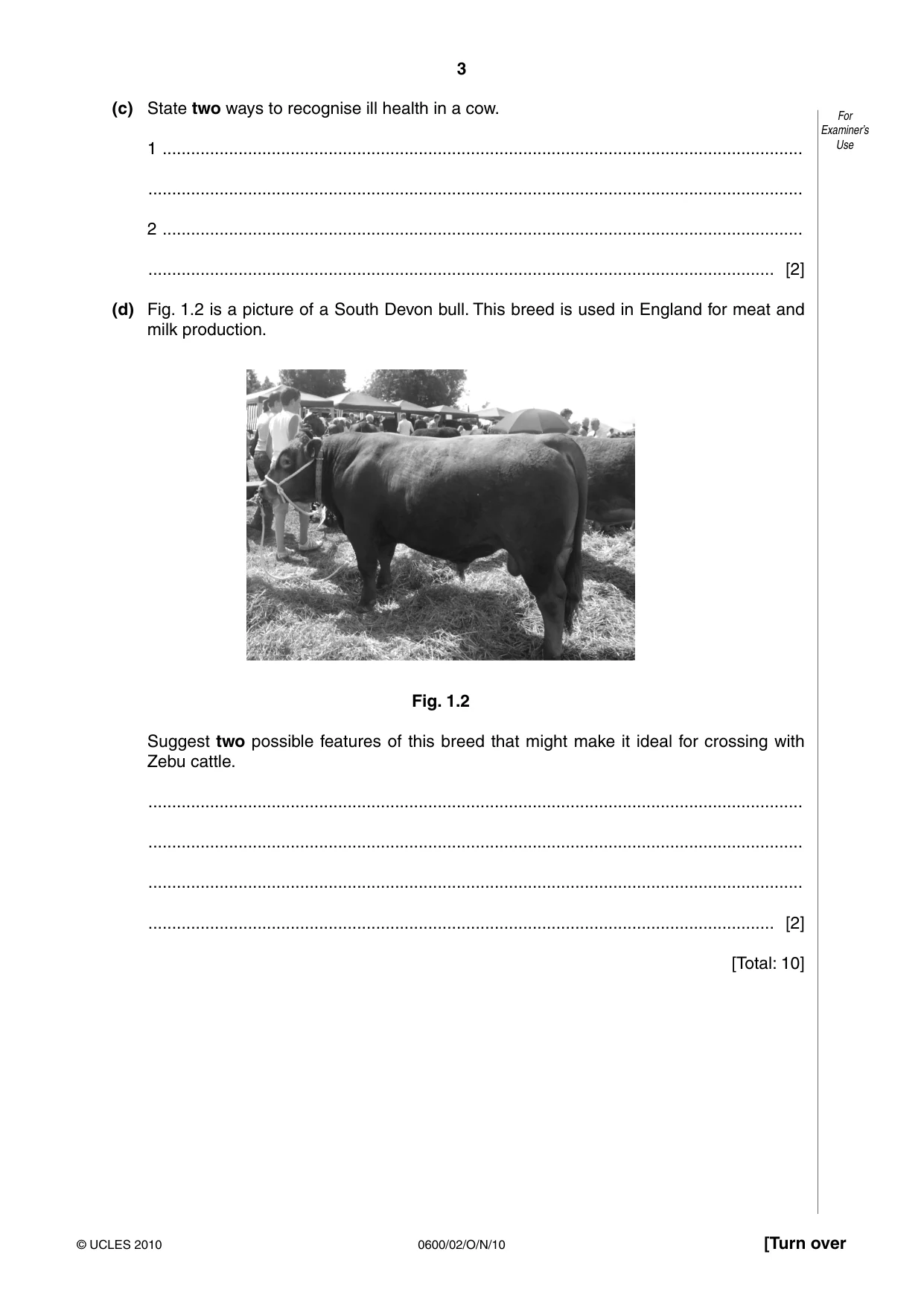
1 Fig. 1.1 shows a Zebu cow from Africa. Fig. 1.1 (a) The cow provides the farmer’s family with milk. The milk can be used to make butter and cheese. Give three other products the cow provides and state what each can be used for. .......................................................................................................................................... .......................................................................................................................................... ......................................................................................................................................[3] (b) Which of the statements below relate to a cow? Place a tick (✓) in the correct boxes. it chews the cud it has a large rumen it stores food in a crop it has a large caecum it is a non-ruminant it is a browser it has four true stomachs it produces methane [3] (c) State two ways to recognise ill health in a cow. 1 ....................................................................................................................................... .......................................................................................................................................... 2 ....................................................................................................................................... .................................................................................................................................... [2] (d) Fig. 1.2 is a picture of a South Devon bull. This breed is used in England for meat and milk production. Fig. 1.2 Suggest two possible features of this breed that might make it ideal for crossing with Zebu cattle. .......................................................................................................................................... .......................................................................................................................................... .......................................................................................................................................... .................................................................................................................................... [2] [Total: 10]
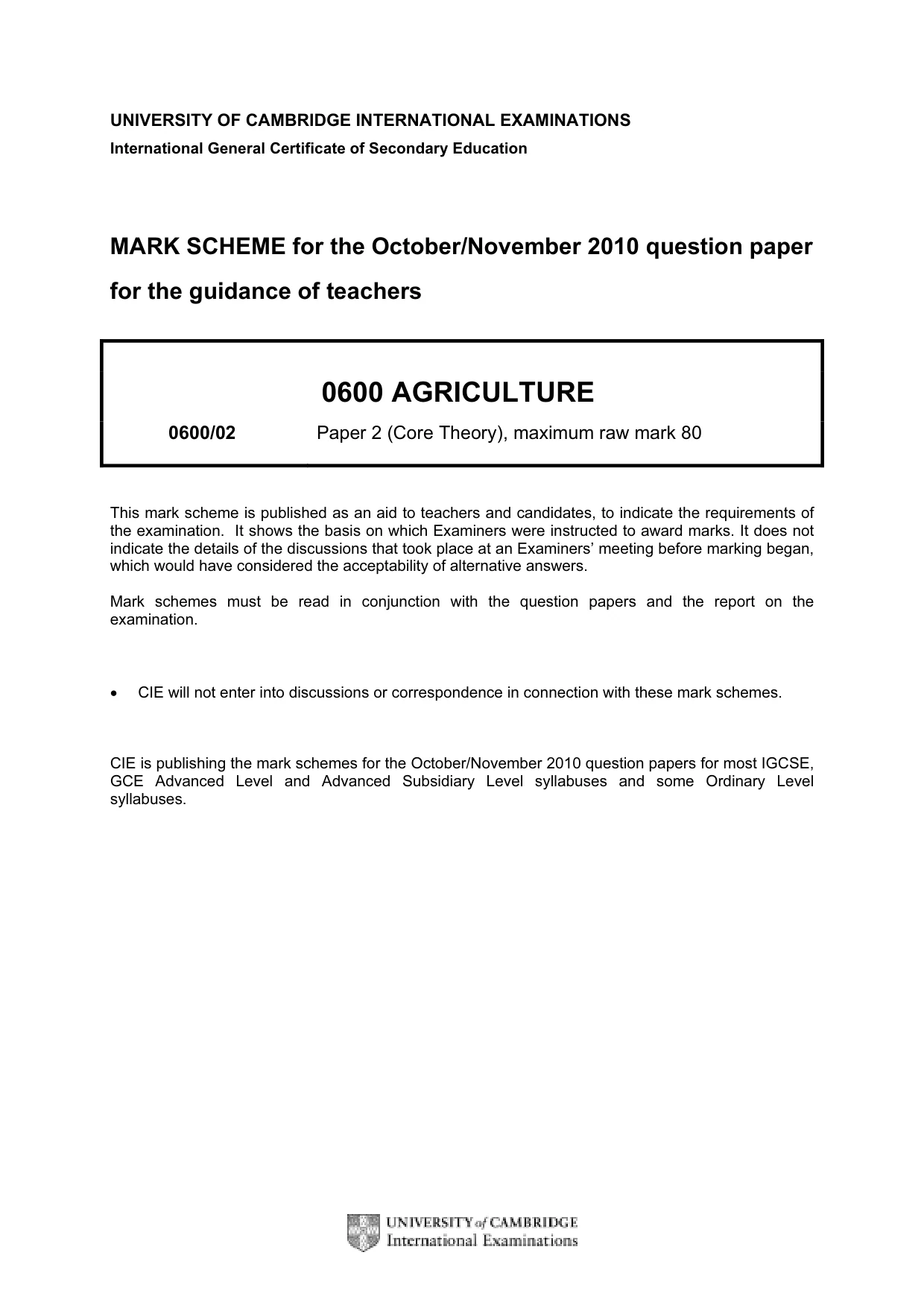
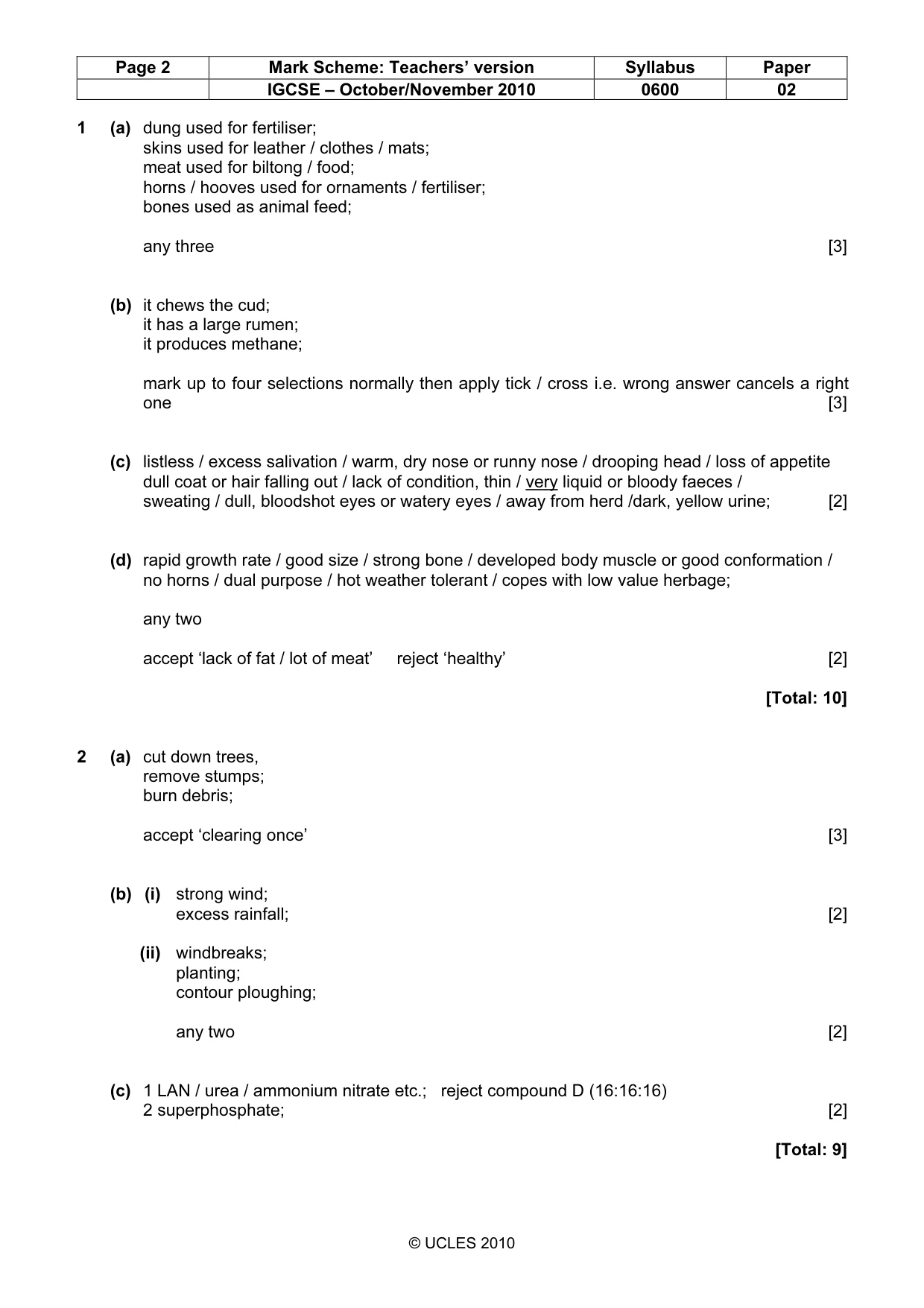
Mark scheme: 1 (a) dung used for fertiliser; skins used for leather / clothes / mats; meat used for biltong / food; horns / hooves used for ornaments / fertiliser; bones used as animal feed; any three [3] (b) it chews the cud; it has a large rumen; it produces methane; mark up to four selections normally then apply tick / cross i.e. wrong answer cancels a right one [3] (c) listless / excess salivation / warm, dry nose or runny nose / drooping head / loss of appetite dull coat or hair falling out / lack of condition, thin / very liquid or bloody faeces / sweating / dull, bloodshot eyes or watery eyes / away from herd /dark, yellow urine; [2] (d) rapid growth rate / good size / strong bone / developed body muscle or good conformation / no horns / dual purpose / hot weather tolerant / copes with low value herbage; any two accept ‘lack of fat / lot of meat’ reject ‘healthy’ [2] [Total: 10]
Q2 · List the tasks that need to be carried out to replace forest with land ready for…
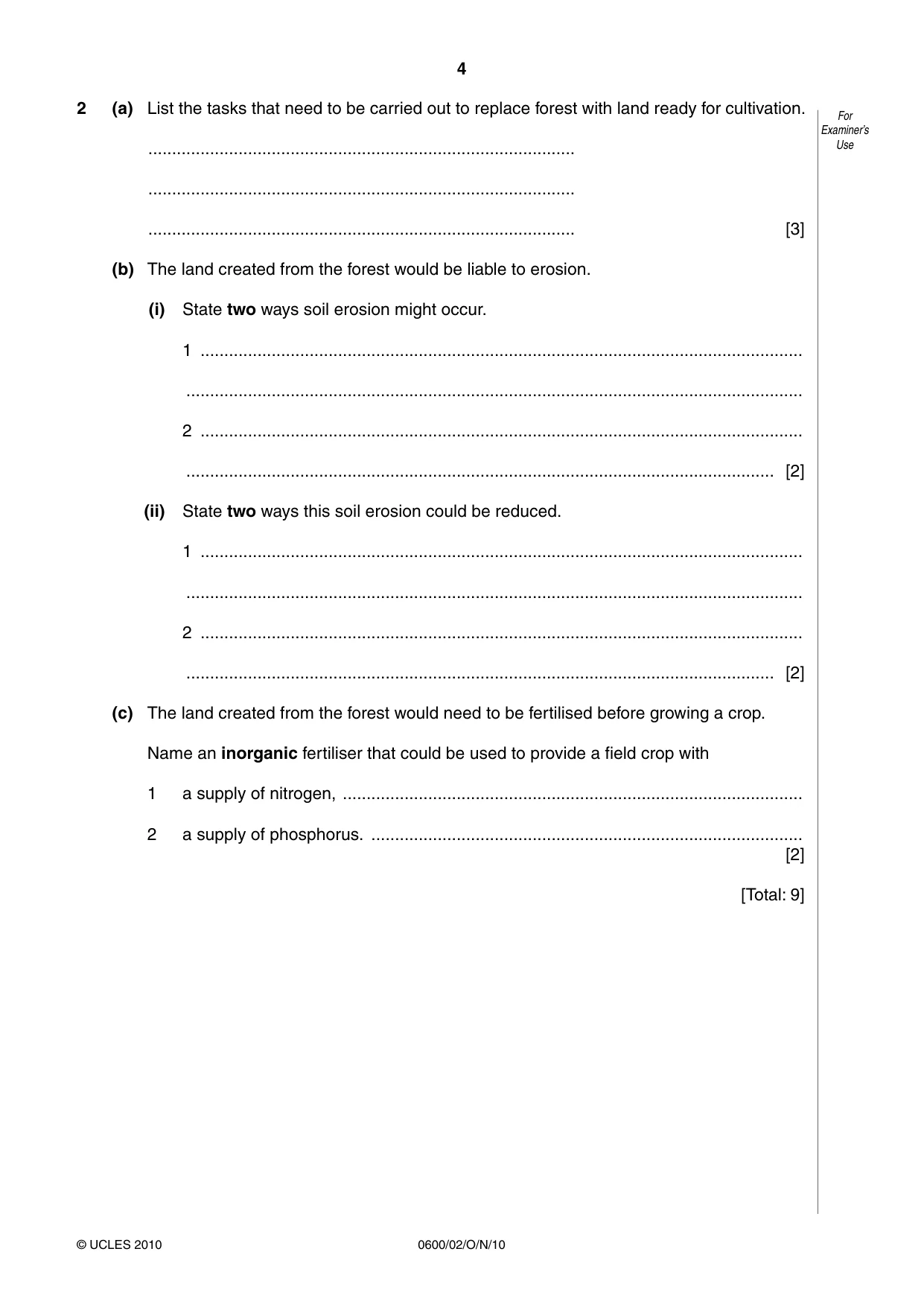
2 (a) List the tasks that need to be carried out to replace forest with land ready for cultivation. .......................................................................................... .......................................................................................... .......................................................................................... [3] (b) The land created from the forest would be liable to erosion. (i) State two ways soil erosion might occur. 1 ............................................................................................................................... .................................................................................................................................. 2 ............................................................................................................................... ............................................................................................................................ [2] (ii) State two ways this soil erosion could be reduced. 1 ............................................................................................................................... .................................................................................................................................. 2 ............................................................................................................................... ............................................................................................................................ [2] (c) The land created from the forest would need to be fertilised before growing a crop. Name an inorganic fertiliser that could be used to provide a field crop with 1 a supply of nitrogen, ................................................................................................. 2 a supply of phosphorus. ........................................................................................... [2] [Total: 9]
Mark scheme: 2 (a) cut down trees, remove stumps; burn debris; accept ‘clearing once’ [3] (b) (i) strong wind; excess rainfall; [2] (ii) windbreaks; planting; contour ploughing; any two [2] (c) 1 LAN / urea / ammonium nitrate etc.; reject compound D (16:16:16) 2 superphosphate; [2] [Total: 9] IGCSE – October/November 2010 0600 02
Q3 · Two farm implements that are used to cultivate the soil
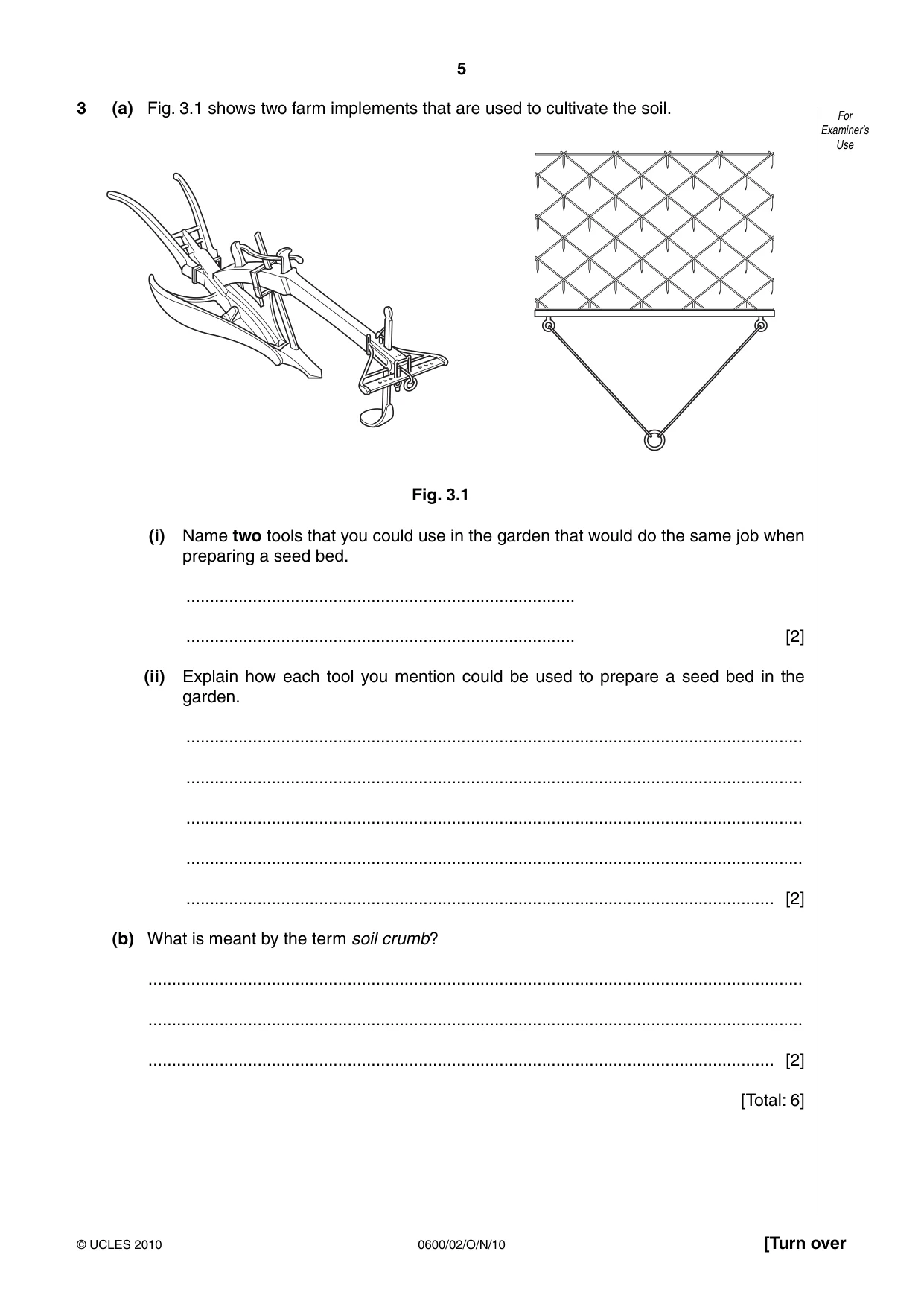
3 (a) Fig. 3.1 shows two farm implements that are used to cultivate the soil. Fig. 3.1 (i) Name two tools that you could use in the garden that would do the same job when preparing a seed bed. .................................................................................. .................................................................................. [2] (ii) Explain how each tool you mention could be used to prepare a seed bed in the garden. .................................................................................................................................. .................................................................................................................................. .................................................................................................................................. .................................................................................................................................. ............................................................................................................................ [2] (b) What is meant by the term soil crumb? .......................................................................................................................................... .......................................................................................................................................... .................................................................................................................................... [2] [Total: 6]
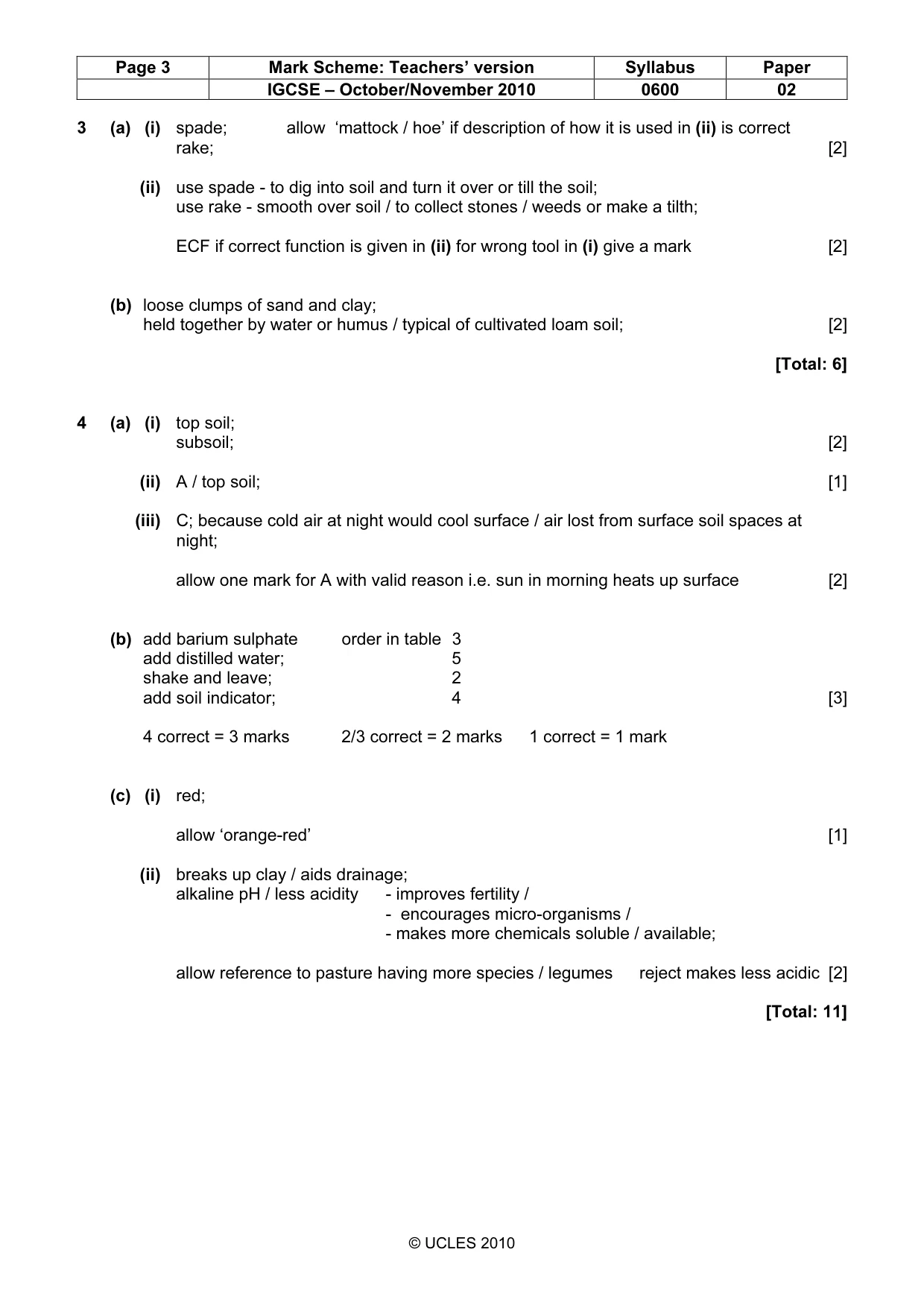
Mark scheme: 3 (a) (i) spade; allow ‘mattock / hoe’ if description of how it is used in (ii) is correct rake; [2] (ii) use spade - to dig into soil and turn it over or till the soil; use rake - smooth over soil / to collect stones / weeds or make a tilth; ECF if correct function is given in (ii) for wrong tool in (i) give a mark [2] (b) loose clumps of sand and clay; held together by water or humus / typical of cultivated loam soil; [2] [Total: 6]
Question 4
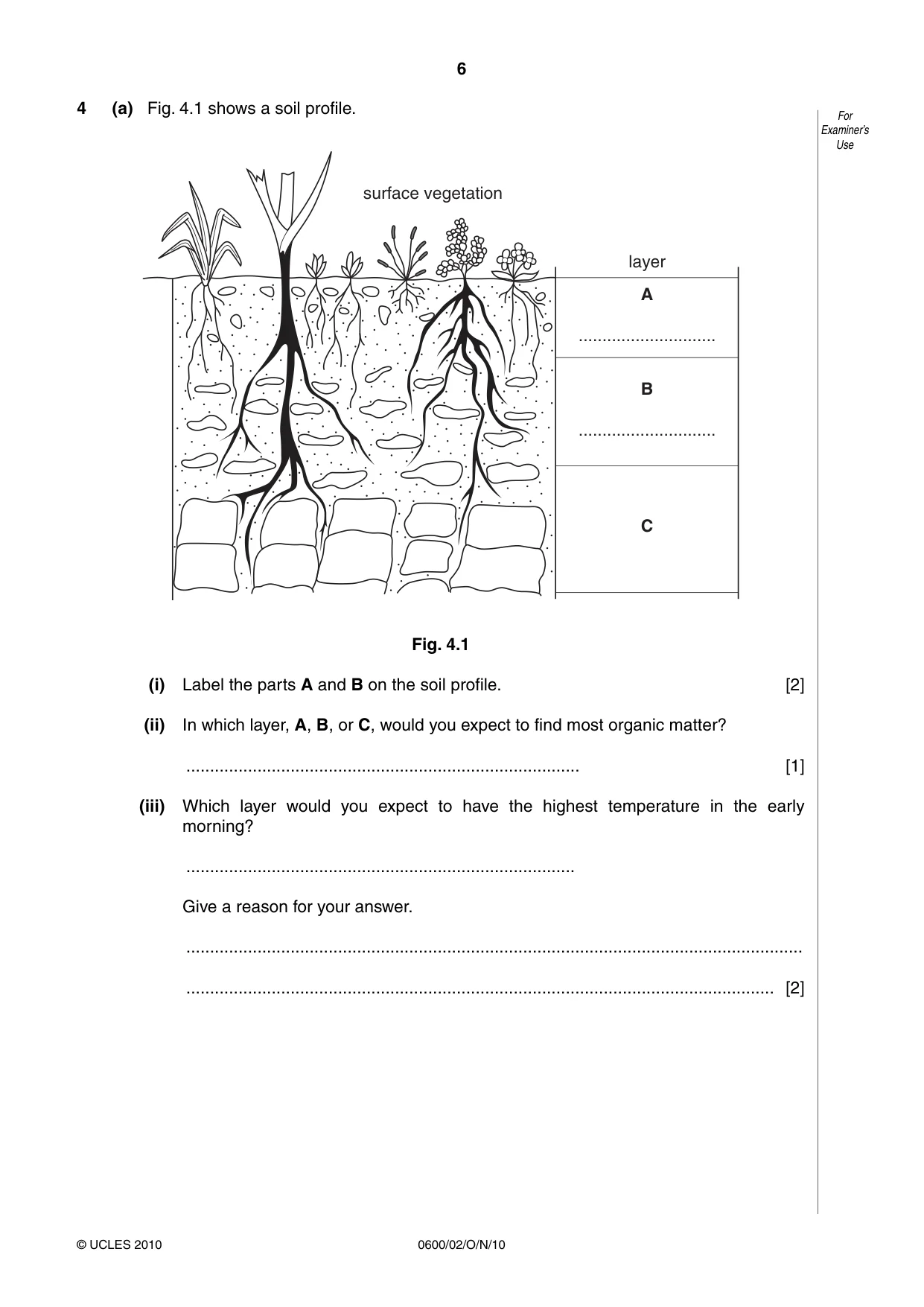
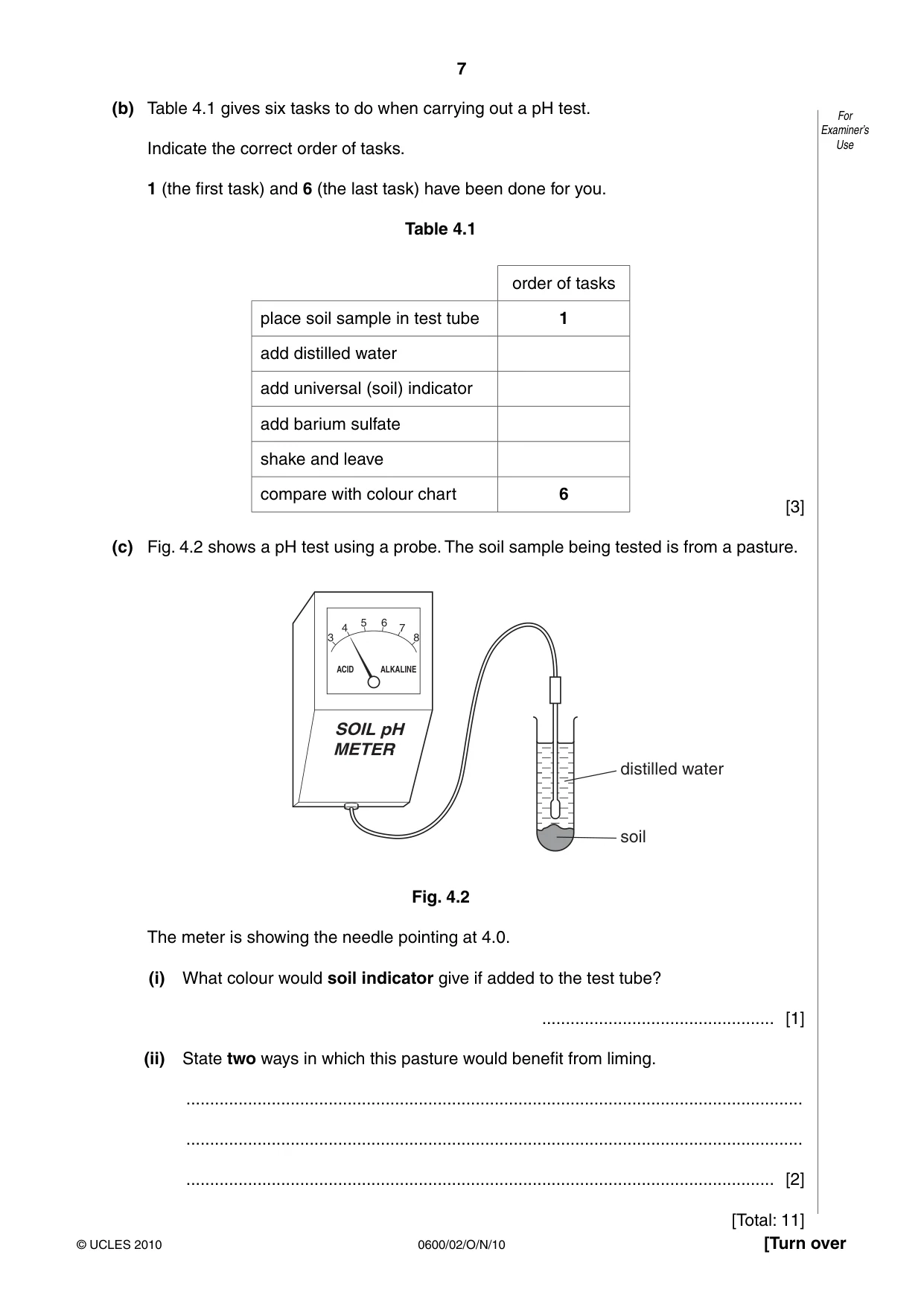
4 (a) Fig. 4.1 shows a soil profile. surface vegetation layer A ............................. B ............................. C Fig. 4.1 (i) Label the parts A and B on the soil profile. [2] (ii) In which layer, A, B, or C, would you expect to find most organic matter? ................................................................................... [1] (iii) Which layer would you expect to have the highest temperature in the early morning? .................................................................................. Give a reason for your answer. .................................................................................................................................. ............................................................................................................................ [2] (b) Table 4.1 gives six tasks to do when carrying out a pH test. Indicate the correct order of tasks. 1 (the first task) and 6 (the last task) have been done for you. Table 4.1 order of tasks place soil sample in test tube 1 add distilled water add universal (soil) indicator add barium sulfate shake and leave compare with colour chart 6 [3] (c) Fig. 4.2 shows a pH test using a probe. The soil sample being tested is from a pasture. 5 6 4 7 3 8 ACID ALKALINE SOIL pH METER distilled water soil Fig. 4.2 The meter is showing the needle pointing at 4.0. (i) What colour would soil indicator give if added to the test tube? ................................................. [1] (ii) State two ways in which this pasture would benefit from liming. .................................................................................................................................. .................................................................................................................................. ............................................................................................................................ [2] [Total: 11]
Mark scheme: 4 (a) (i) top soil; subsoil; [2] (ii) A / top soil; [1] (iii) C; because cold air at night would cool surface / air lost from surface soil spaces at night; allow one mark for A with valid reason i.e. sun in morning heats up surface [2] (b) add barium sulphate order in table 3 add distilled water; 5 shake and leave; 2 add soil indicator; 4 [3] 4 correct = 3 marks 2/3 correct = 2 marks 1 correct = 1 mark (c) (i) red; allow ‘orange-red’ [1] (ii) breaks up clay / aids drainage; alkaline pH / less acidity - improves fertility / - encourages micro-organisms / - makes more chemicals soluble / available; allow reference to pasture having more species / legumes reject makes less acidic [2] [Total: 11] IGCSE – October/November 2010 0600 02
Question 5
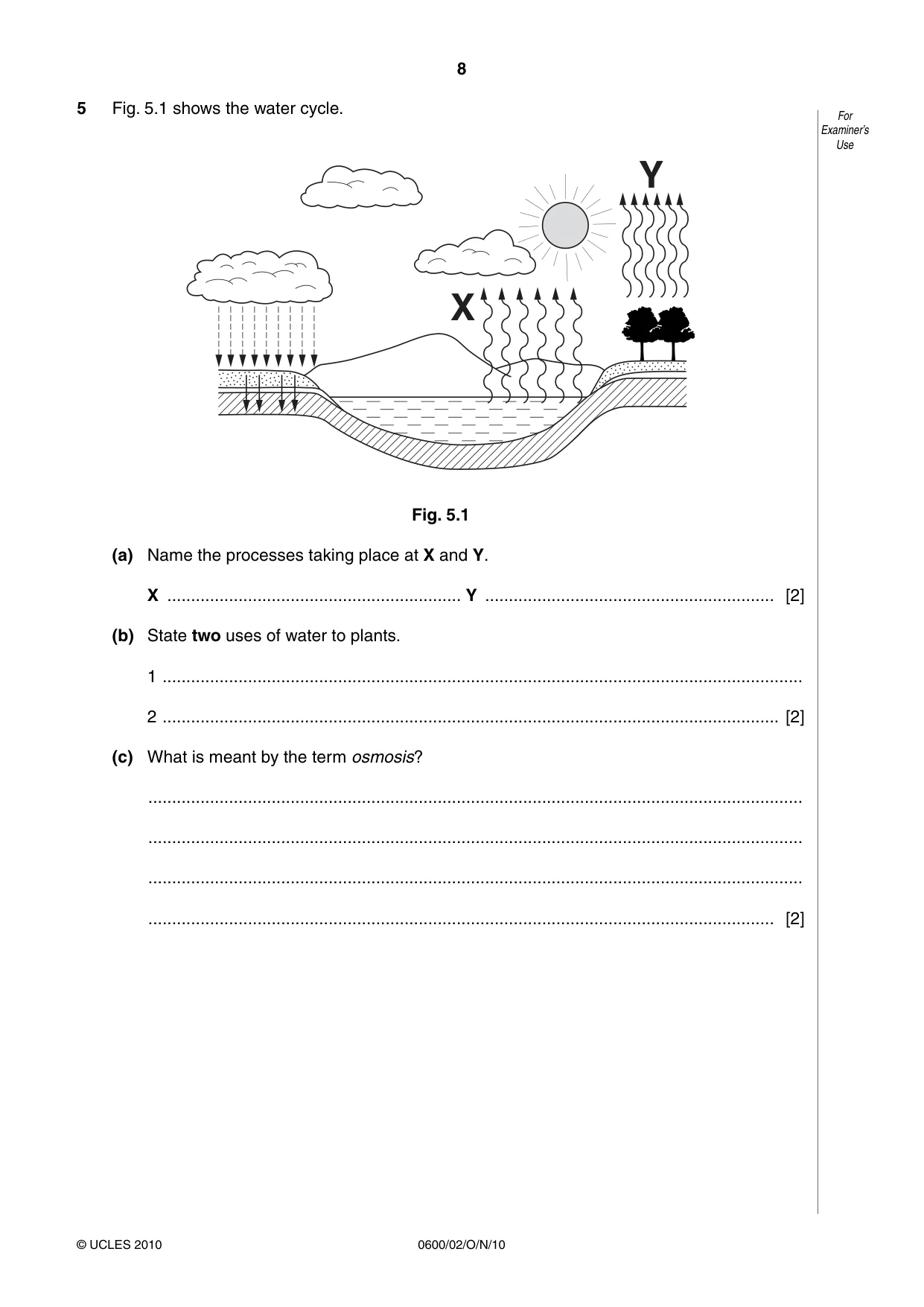
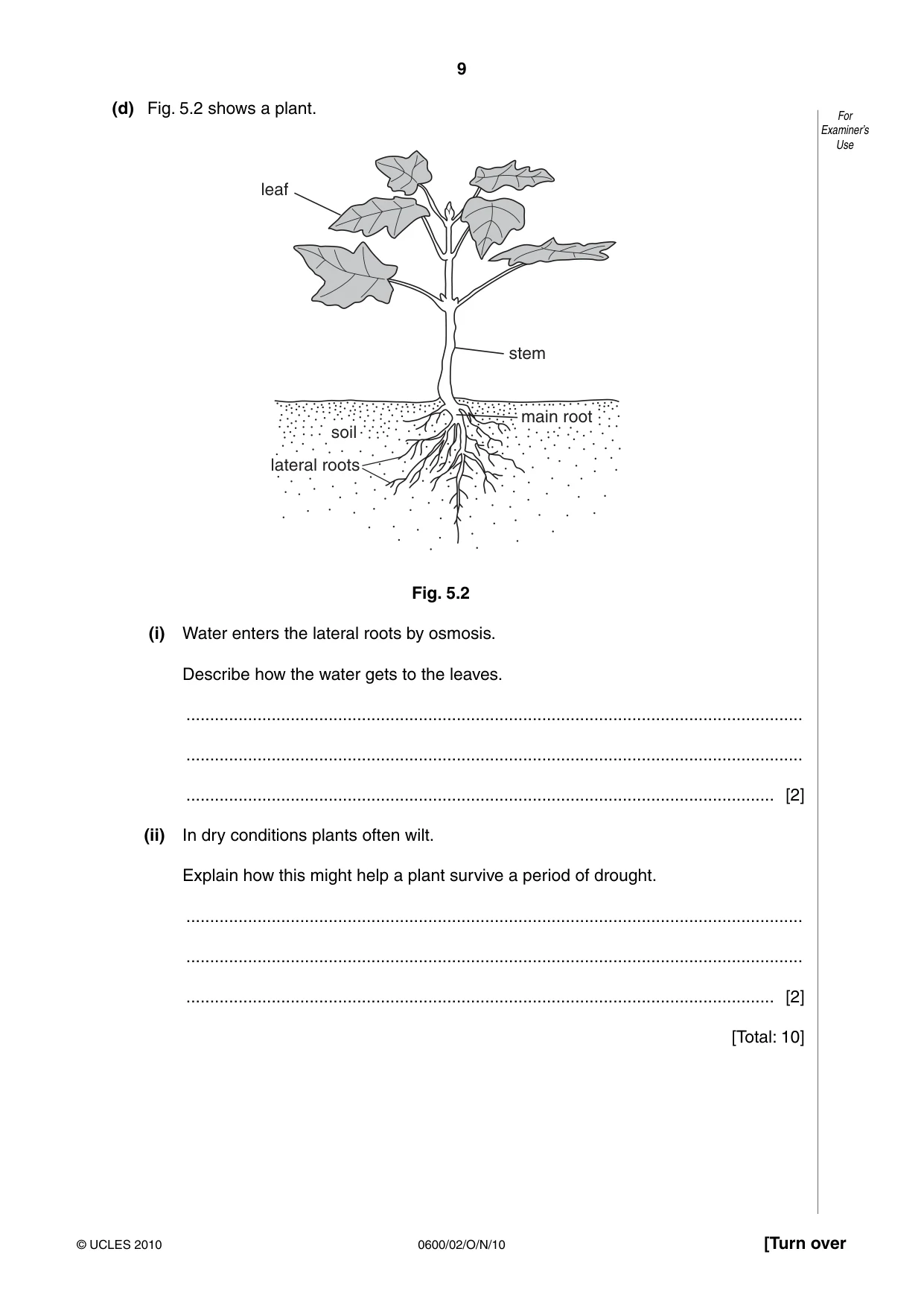
5 Fig. 5.1 shows the water cycle. Y X Fig. 5.1 (a) Name the processes taking place at X and Y. X .............................................................. Y ............................................................. [2] (b) State two uses of water to plants. 1 ....................................................................................................................................... 2 .................................................................................................................................. [2] (c) What is meant by the term osmosis? .......................................................................................................................................... .......................................................................................................................................... .......................................................................................................................................... .................................................................................................................................... [2] (d) Fig. 5.2 shows a plant. leaf stem main root soil lateral roots Fig. 5.2 (i) Water enters the lateral roots by osmosis. Describe how the water gets to the leaves. .................................................................................................................................. .................................................................................................................................. ............................................................................................................................ [2] (ii) In dry conditions plants often wilt. Explain how this might help a plant survive a period of drought. .................................................................................................................................. .................................................................................................................................. ............................................................................................................................ [2] [Total: 10]
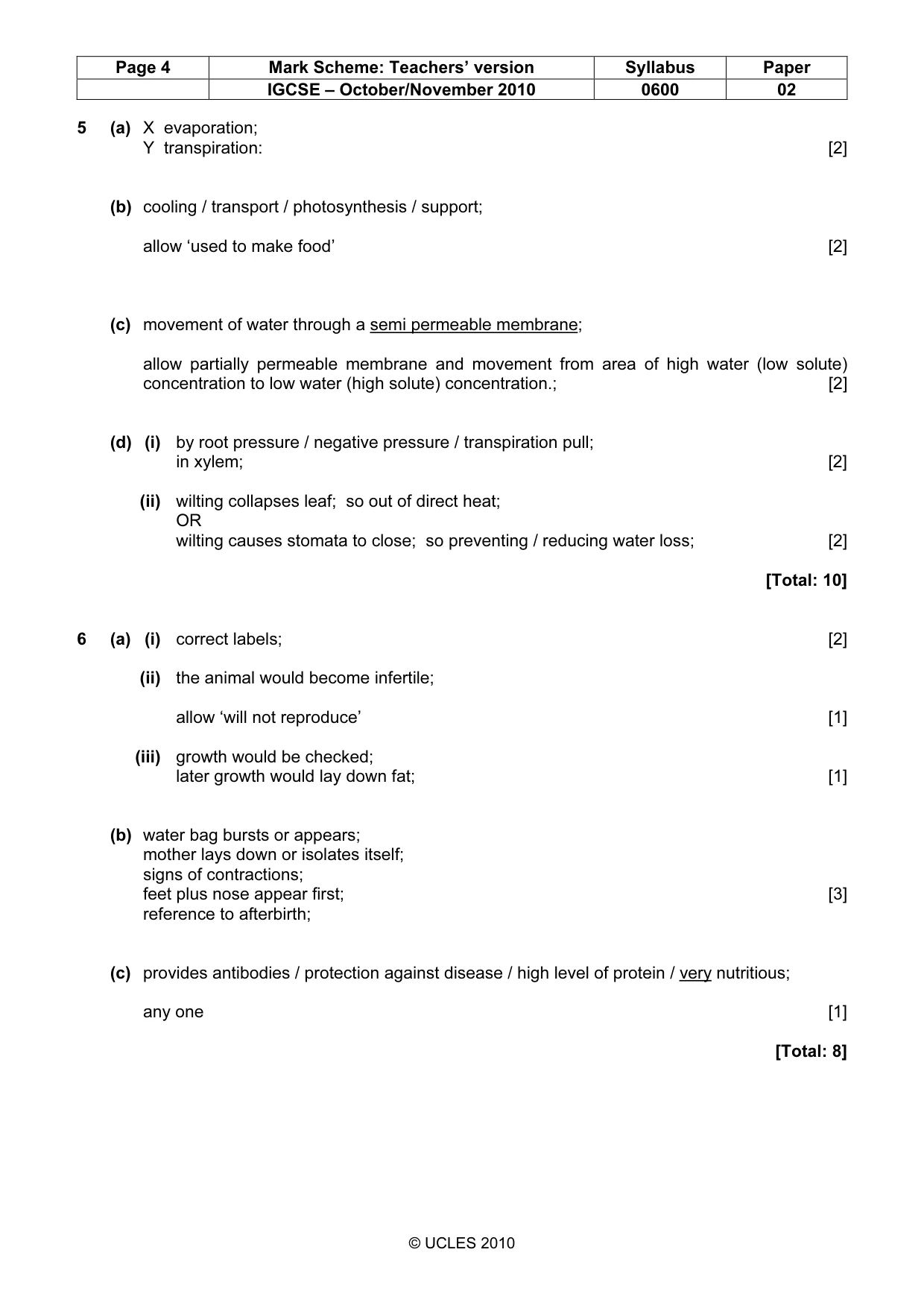
Mark scheme: 5 (a) X evaporation; Y transpiration: [2] (b) cooling / transport / photosynthesis / support; allow ‘used to make food’ [2] (c) movement of water through a semi permeable membrane; allow partially permeable membrane and movement from area of high water (low solute) concentration to low water (high solute) concentration.; [2] (d) (i) by root pressure / negative pressure / transpiration pull; in xylem; [2] (ii) wilting collapses leaf; so out of direct heat; OR wilting causes stomata to close; so preventing / reducing water loss; [2] [Total: 10]
Q6 · The reproductive system of a male farm animal
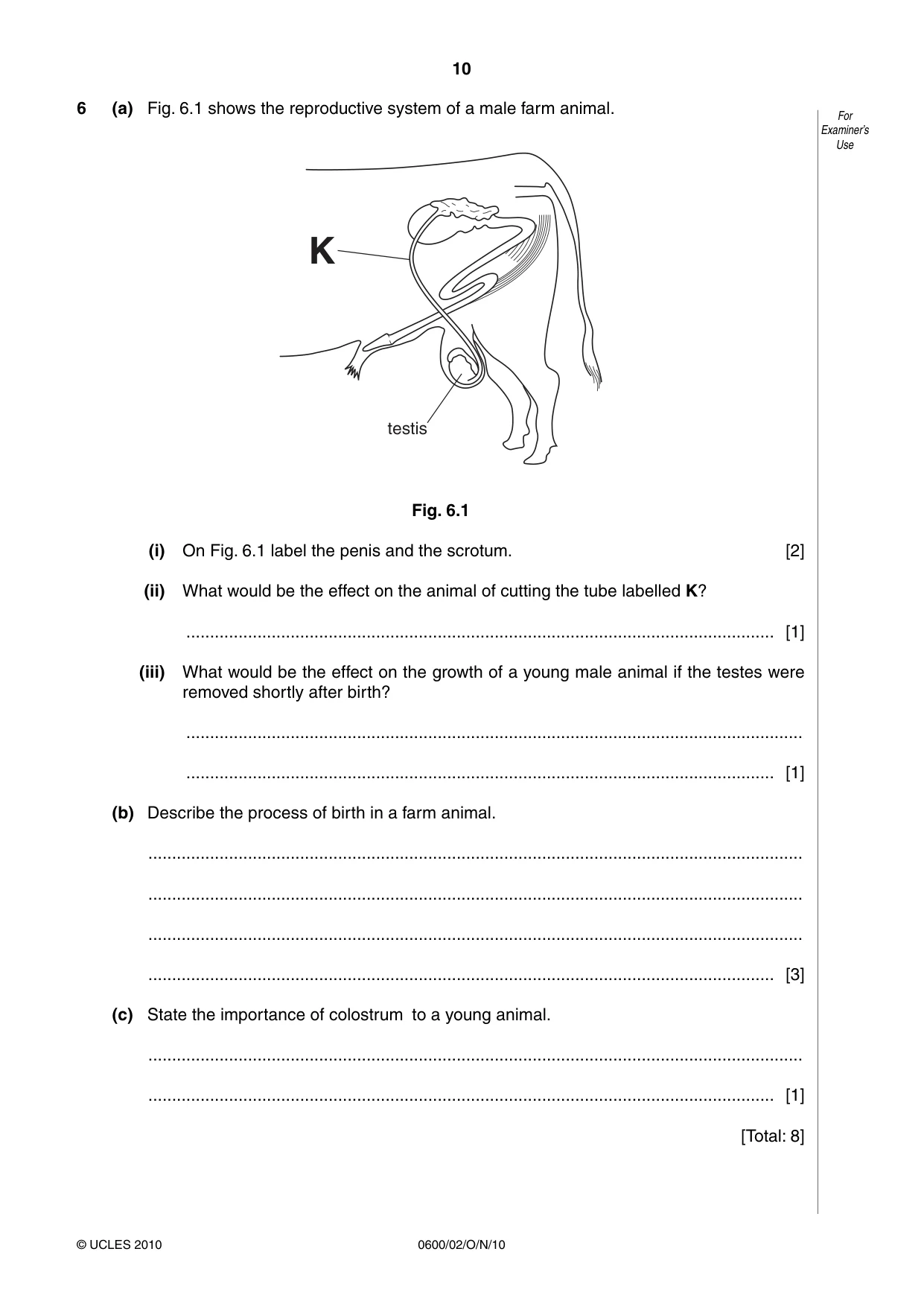
6 (a) Fig. 6.1 shows the reproductive system of a male farm animal. K testis Fig. 6.1 (i) On Fig. 6.1 label the penis and the scrotum. [2] (ii) What would be the effect on the animal of cutting the tube labelled K? ............................................................................................................................ [1] (iii) What would be the effect on the growth of a young male animal if the testes were removed shortly after birth? .................................................................................................................................. ............................................................................................................................ [1] (b) Describe the process of birth in a farm animal. .......................................................................................................................................... .......................................................................................................................................... .......................................................................................................................................... .................................................................................................................................... [3] (c) State the importance of colostrum to a young animal. .......................................................................................................................................... .................................................................................................................................... [1] [Total: 8]
Mark scheme: 6 (a) (i) correct labels; [2] (ii) the animal would become infertile; allow ‘will not reproduce’ [1] (iii) growth would be checked; later growth would lay down fat; [1] (b) water bag bursts or appears; mother lays down or isolates itself; signs of contractions; feet plus nose appear first; [3] reference to afterbirth; (c) provides antibodies / protection against disease / high level of protein / very nutritious; any one [1] [Total: 8] IGCSE – October/November 2010 0600 02
Q7 · A farm that is divided up into paddocks
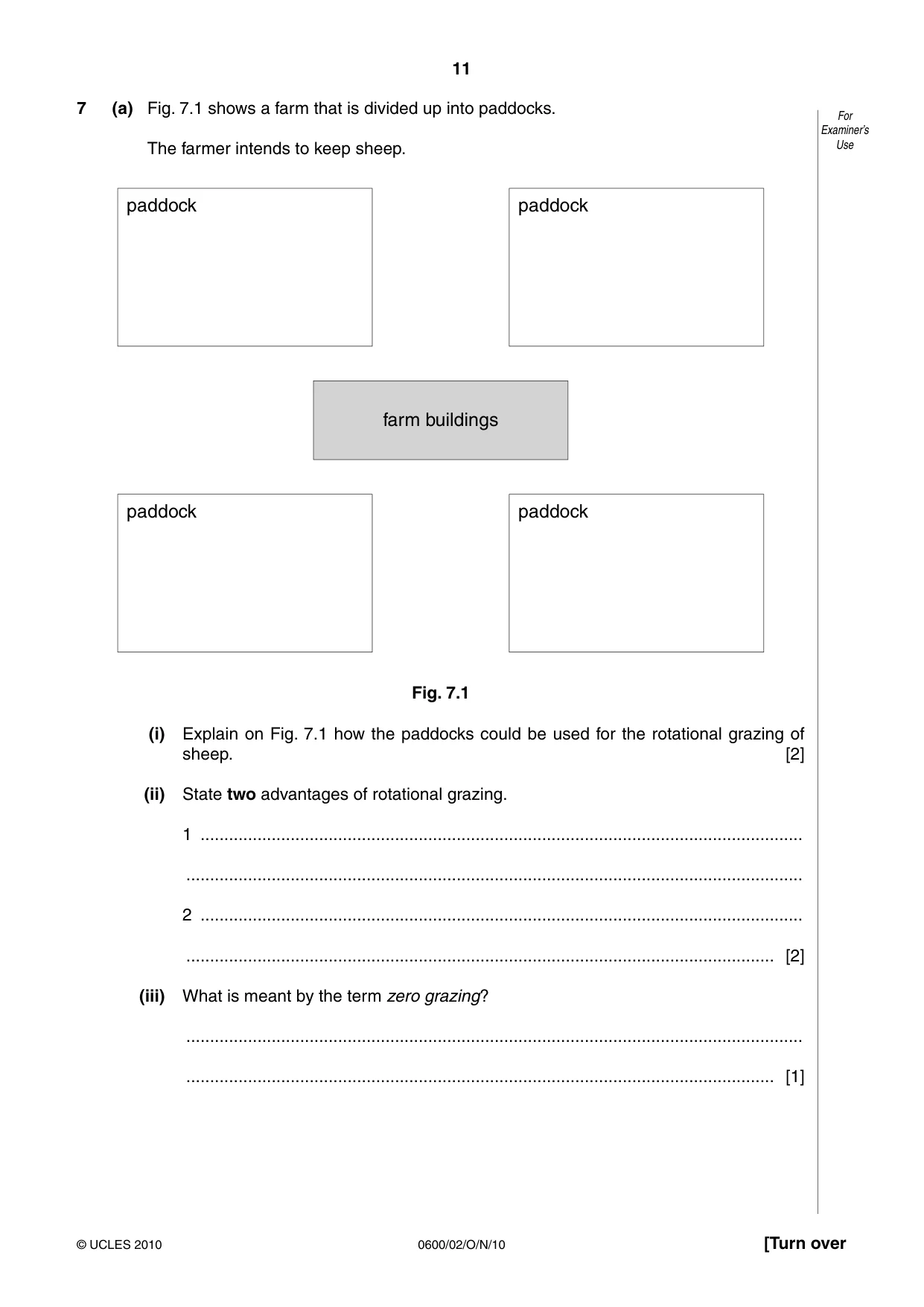
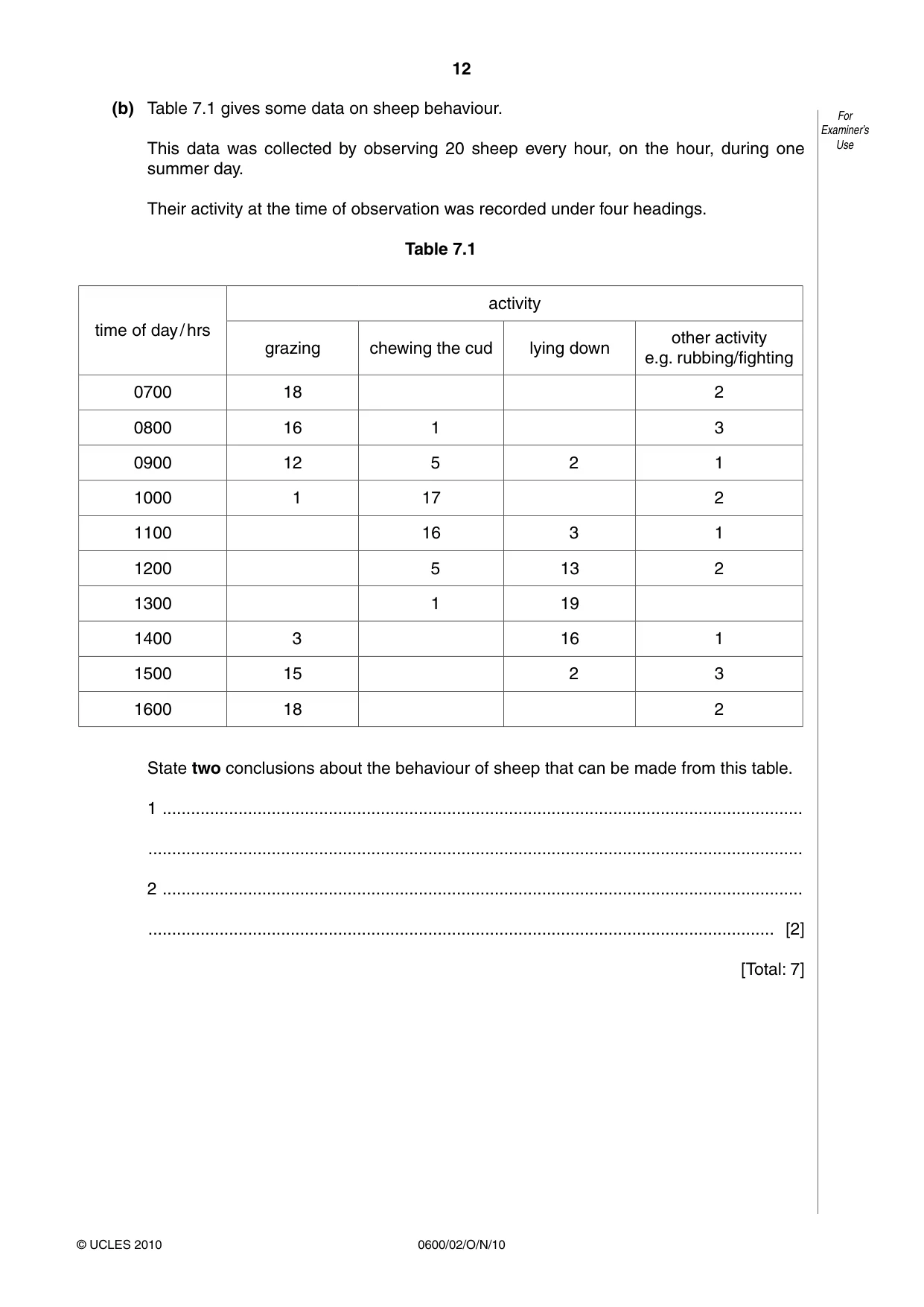
7 (a) Fig. 7.1 shows a farm that is divided up into paddocks. The farmer intends to keep sheep. paddock paddock farm buildings paddock paddock Fig. 7.1 (i) Explain on Fig. 7.1 how the paddocks could be used for the rotational grazing of sheep. [2] (ii) State two advantages of rotational grazing. 1 ............................................................................................................................... .................................................................................................................................. 2 ............................................................................................................................... ............................................................................................................................ [2] (iii) What is meant by the term zero grazing? .................................................................................................................................. ............................................................................................................................ [1] (b) Table 7.1 gives some data on sheep behaviour. This data was collected by observing 20 sheep every hour, on the hour, during one summer day. Their activity at the time of observation was recorded under four headings. Table 7.1 activity time of day / hrs other activity grazing chewing the cud lying down e.g. rubbing/fighting 0700 18 2 0800 16 1 3 0900 12 5 2 1 1000 1 17 2 1100 16 3 1 1200 5 13 2 1300 1 19 1400 3 16 1 1500 15 2 3 1600 18 2 State two conclusions about the behaviour of sheep that can be made from this table. 1 ....................................................................................................................................... .......................................................................................................................................... 2 ....................................................................................................................................... .................................................................................................................................... [2] [Total: 7]
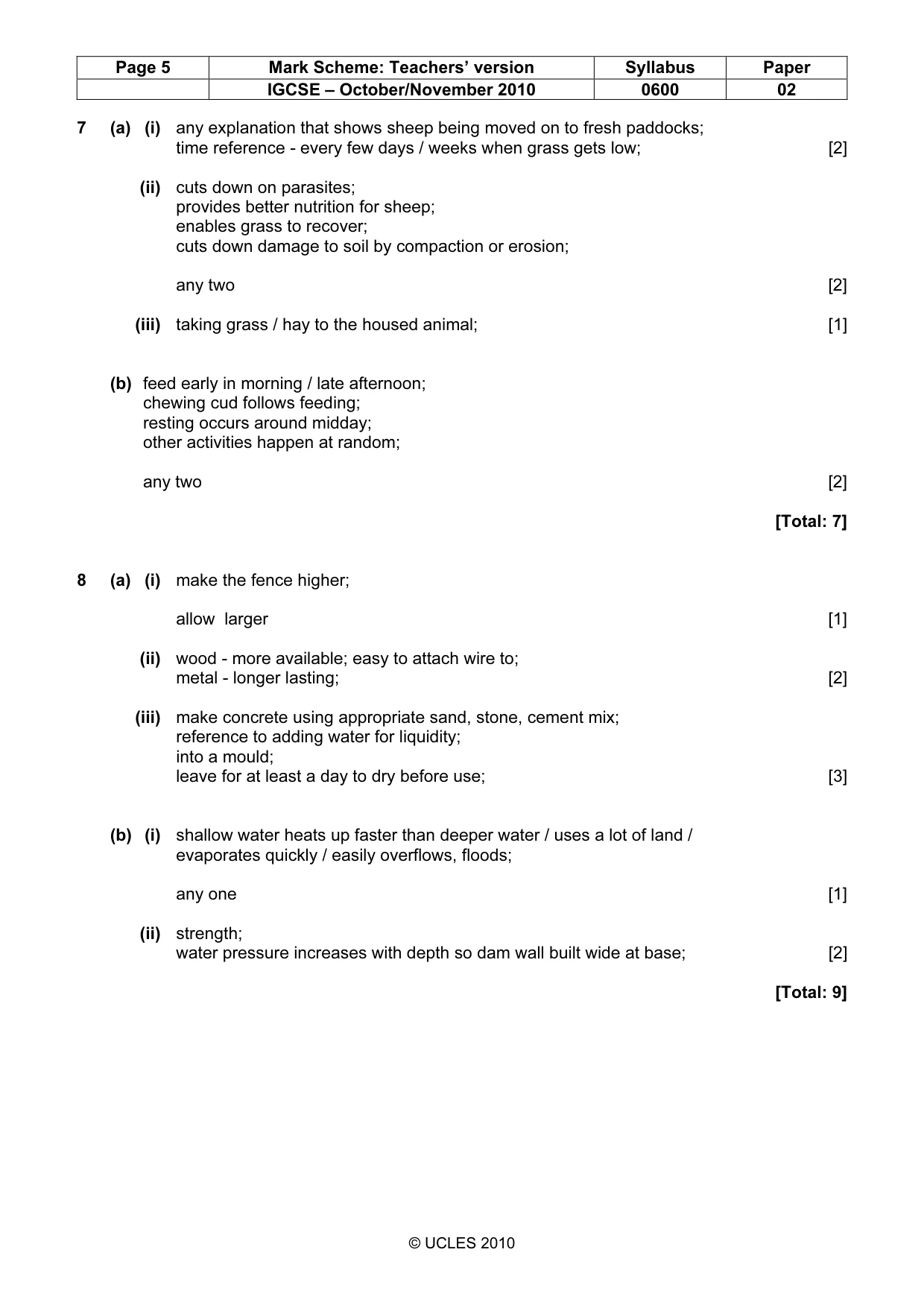
Mark scheme: 7 (a) (i) any explanation that shows sheep being moved on to fresh paddocks; time reference - every few days / weeks when grass gets low; [2] (ii) cuts down on parasites; provides better nutrition for sheep; enables grass to recover; cuts down damage to soil by compaction or erosion; any two [2] (iii) taking grass / hay to the housed animal; [1] (b) feed early in morning / late afternoon; chewing cud follows feeding; resting occurs around midday; other activities happen at random; any two [2] [Total: 7]
Q8 · A fence for enclosing cattle and sheep
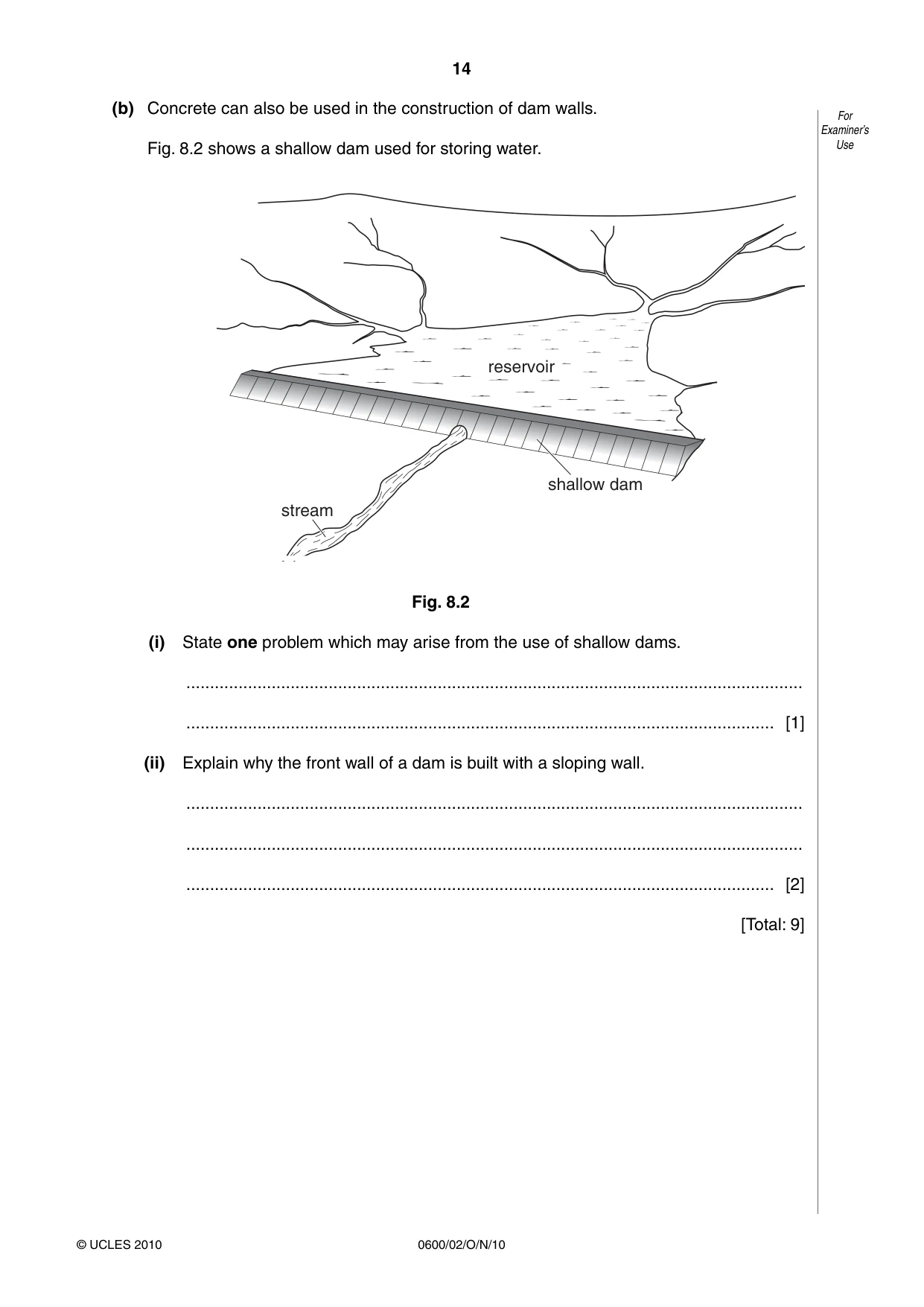
8 (a) Fig. 8.1 shows a fence for enclosing cattle and sheep. standard post dropper 20 cm 30 cm Fig. 8.1 (i) Suggest how this fence could be adapted to keep out wild game such as deer and antelopes. .................................................................................................................................. ............................................................................................................................ [1] Fence posts can be made of wood, metal and concrete. (ii) State one reason, other than cost, for using: wooden posts, .......................................................................................................... .................................................................................................................................. metal posts. .............................................................................................................. ............................................................................................................................ [2] (iii) Suggest how to make concrete fence posts. .................................................................................................................................. .................................................................................................................................. .................................................................................................................................. ............................................................................................................................ [3] (b) Concrete can also be used in the construction of dam walls. Fig. 8.2 shows a shallow dam used for storing water. reservoir shallow dam stream Fig. 8.2 (i) State one problem which may arise from the use of shallow dams. .................................................................................................................................. ............................................................................................................................ [1] (ii) Explain why the front wall of a dam is built with a sloping wall. .................................................................................................................................. .................................................................................................................................. ............................................................................................................................ [2] [Total: 9]
Mark scheme: 8 (a) (i) make the fence higher; allow larger [1] (ii) wood - more available; easy to attach wire to; metal - longer lasting; [2] (iii) make concrete using appropriate sand, stone, cement mix; reference to adding water for liquidity; into a mould; leave for at least a day to dry before use; [3] (b) (i) shallow water heats up faster than deeper water / uses a lot of land / evaporates quickly / easily overflows, floods; any one [1] (ii) strength; water pressure increases with depth so dam wall built wide at base; [2] [Total: 9] IGCSE – October/November 2010 0600 02
Q9 · The mouthparts of two insects which feed by biting and chewing
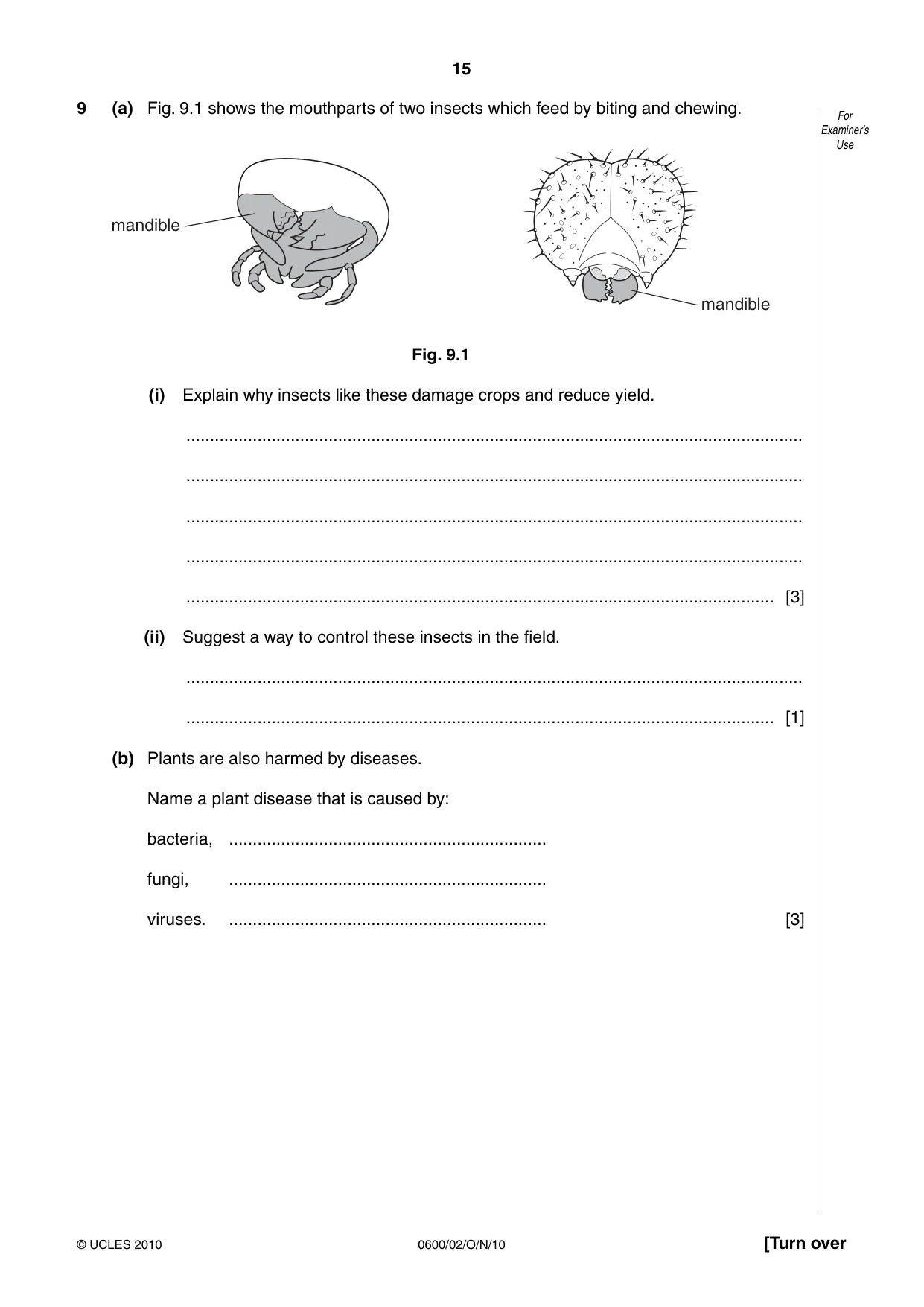
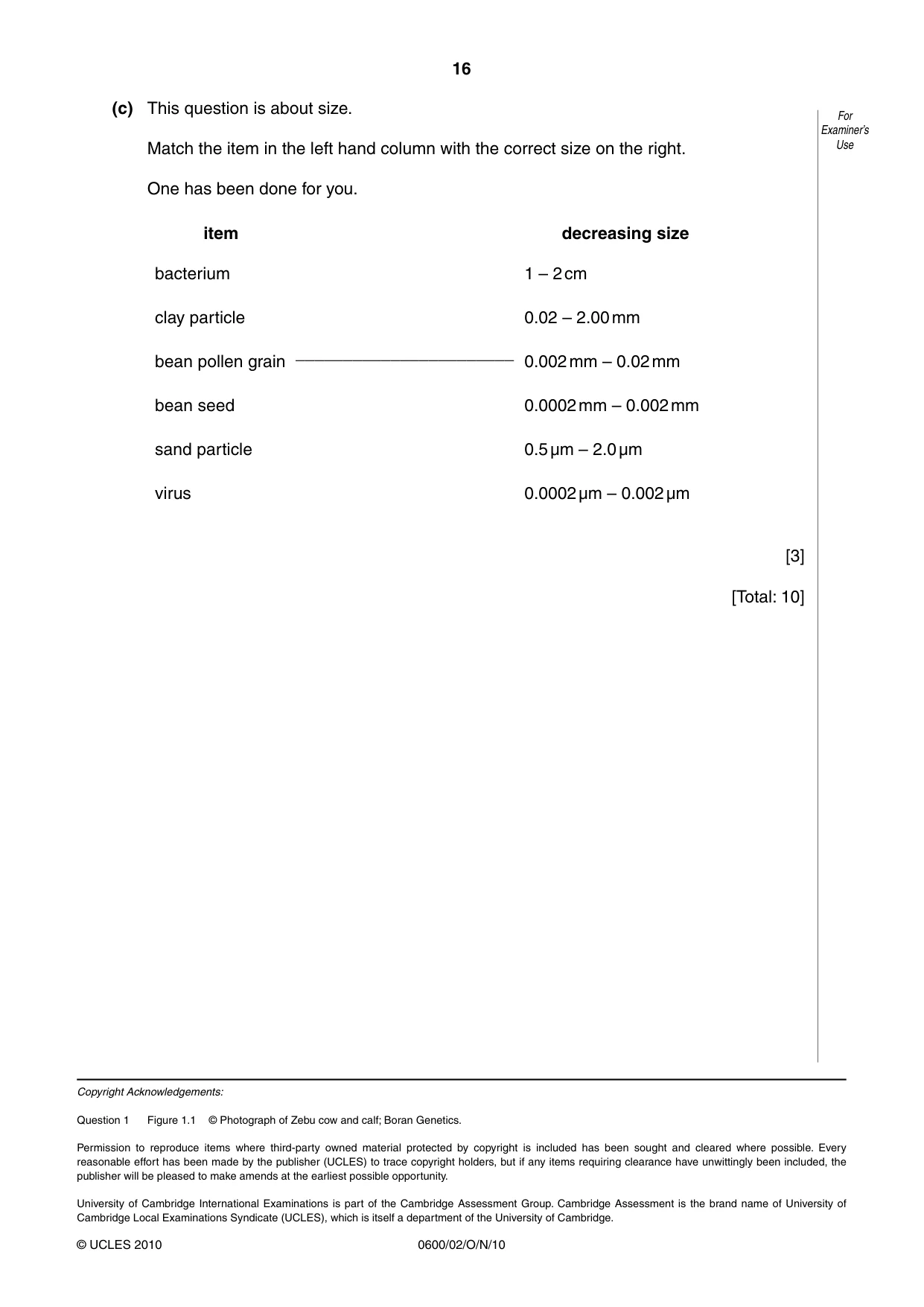
9 (a) Fig. 9.1 shows the mouthparts of two insects which feed by biting and chewing. mandible mandible Fig. 9.1 (i) Explain why insects like these damage crops and reduce yield. .................................................................................................................................. .................................................................................................................................. .................................................................................................................................. .................................................................................................................................. ............................................................................................................................ [3] (ii) Suggest a way to control these insects in the field. .................................................................................................................................. ............................................................................................................................ [1] (b) Plants are also harmed by diseases. Name a plant disease that is caused by: bacteria, ................................................................... fungi, ................................................................... viruses. ................................................................... [3] (c) This question is about size. Match the item in the left hand column with the correct size on the right. One has been done for you. item decreasing size bacterium 1 – 2 cm clay particle 0.02 – 2.00 mm _______________________ bean pollen grain 0.002 mm – 0.02 mm bean seed 0.0002 mm – 0.002 mm sand particle 0.5 µm – 2.0 µm virus 0.0002 µm – 0.002 µm [3] [Total: 10]
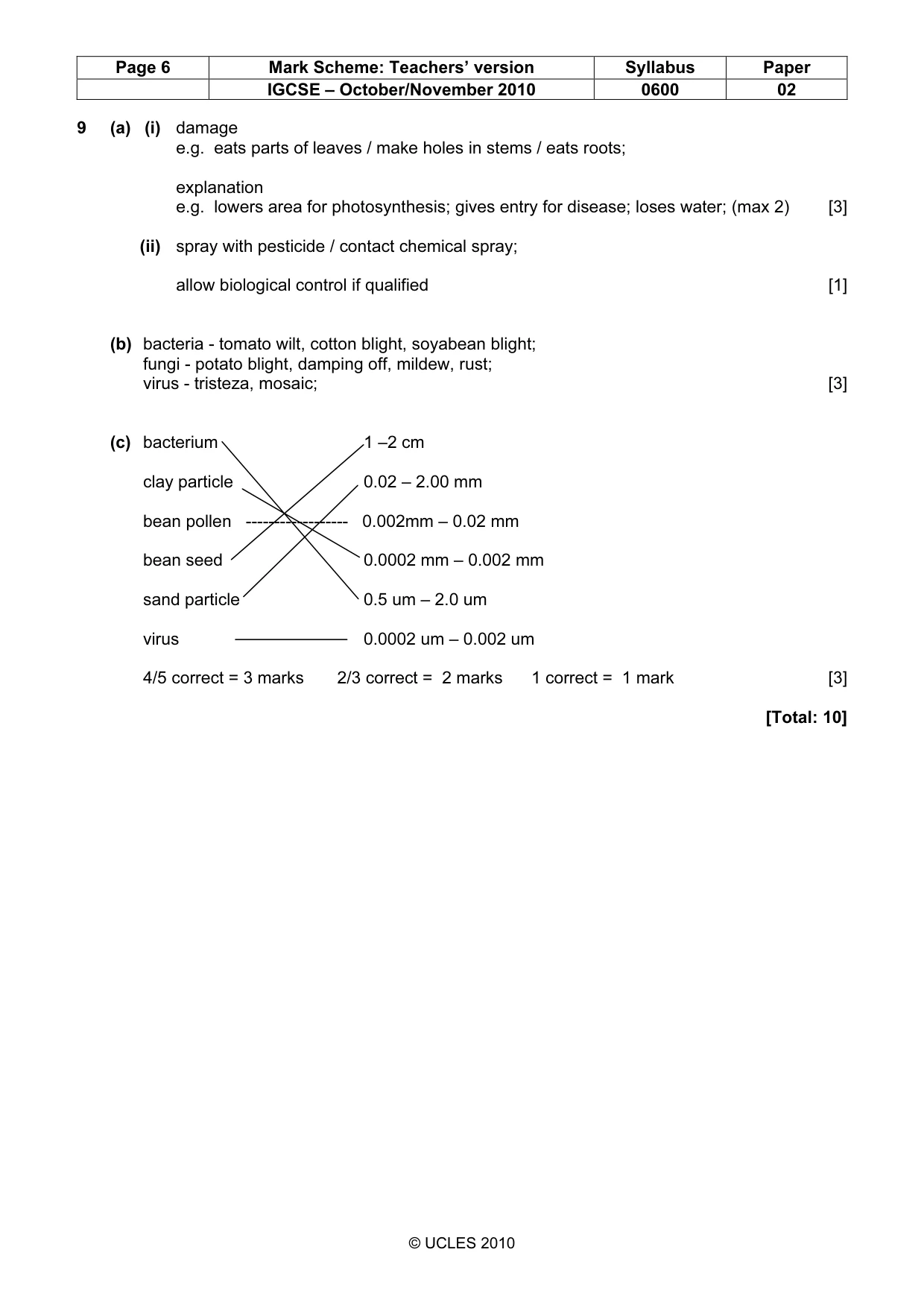
Mark scheme: 9 (a) (i) damage e.g. eats parts of leaves / make holes in stems / eats roots; explanation e.g. lowers area for photosynthesis; gives entry for disease; loses water; (max 2) [3] (ii) spray with pesticide / contact chemical spray; allow biological control if qualified [1] (b) bacteria - tomato wilt, cotton blight, soyabean blight; fungi - potato blight, damping off, mildew, rust; virus - tristeza, mosaic; [3] (c) bacterium 1 –2 cm clay particle 0.02 – 2.00 mm bean pollen ------------------ 0.002mm – 0.02 mm bean seed 0.0002 mm – 0.002 mm sand particle 0.5 um – 2.0 um virus 0.0002 um – 0.002 um 4/5 correct = 3 marks 2/3 correct = 2 marks 1 correct = 1 mark [3] [Total: 10]
What you needed in this session
Cambridge’s own grade thresholds for 2010 Oct/Nov, Paper 2 · Variant 1. A higher threshold means an easier paper — the bar moves with how the cohort did.