Cambridge A Level Thinking Skills 9694 — 2012 Oct/Nov Paper 2 · Variant 3
9694/23/O/N/12 · 45 marks · ≈51 min
The question paper and its mark scheme, free to read here and free to download. This is Cambridge’s own paper, exactly as it was sat.
Question paper8 pages

Mark scheme6 pages
Answers below. Sit the paper first if you are practising.
Paper as text
Question paper, page 1
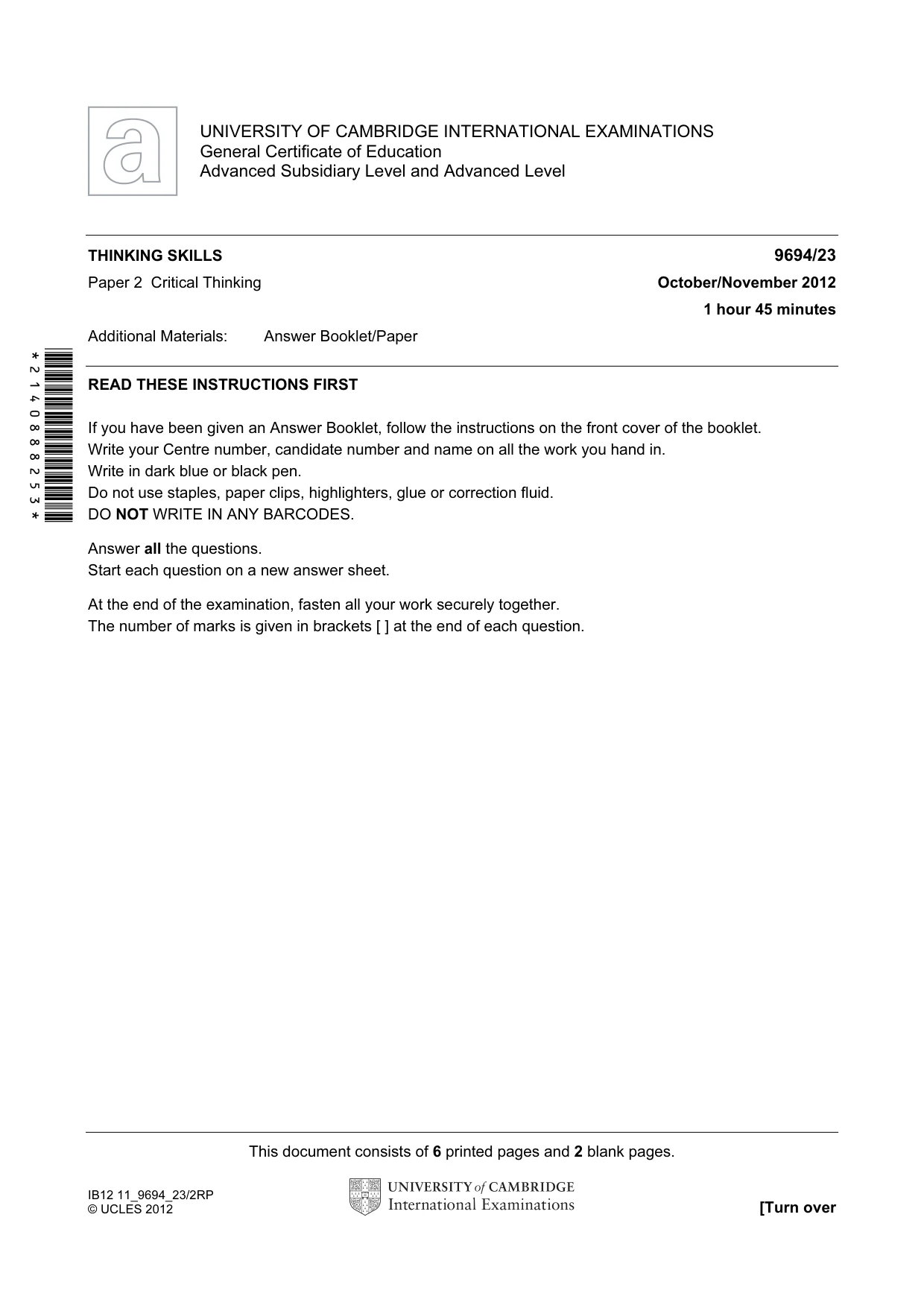
This document consists of 6 printed pages and 2 blank pages. IB12 11_9694_23/2RP © UCLES 2012 [Turn over *2140888253* UNIVERSITY OF CAMBRIDGE INTERNATIONAL EXAMINATIONS General Certificate of Education Advanced Subsidiary Level and Advanced Level THINKING SKILLS 9694/23 Paper 2 Critical Thinking October/November 2012 1 hour 45 minutes Additional Materials: Answer Booklet/Paper READ THESE INSTRUCTIONS FIRST If you have been given an Answer Booklet, follow the instructions on the front cover of the booklet. Write your Centre number, candidate number and name on all the work you hand in. Write in dark blue or black pen. Do not use staples, paper clips, highlighters, glue or correction fluid. DO NOT WRITE IN ANY BARCODES. Answer all the questions. Start each question on a new answer sheet. At the end of the examination, fasten all your work securely together. The number of marks is given in brackets [ ] at the end of each question.
Question paper, page 2
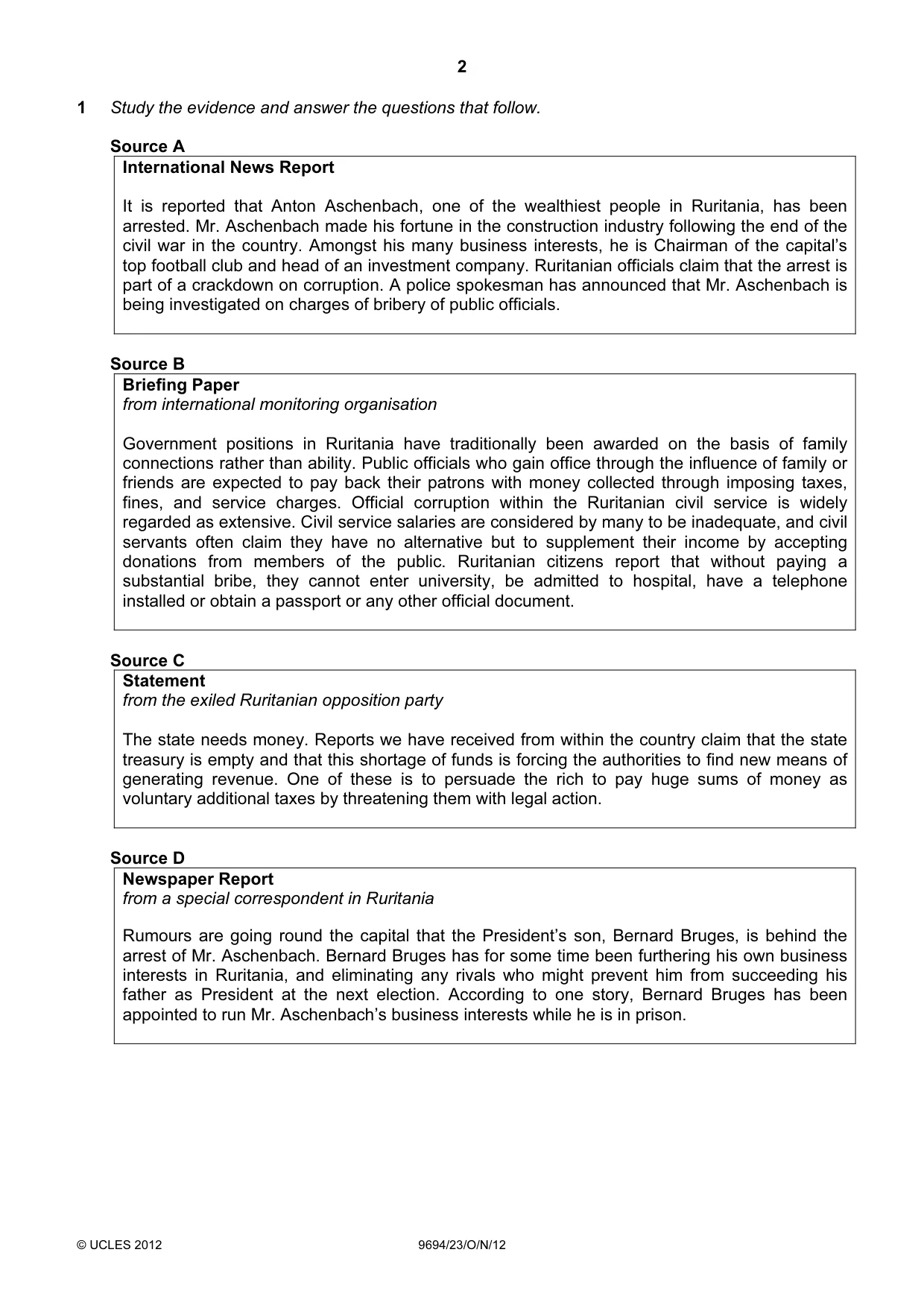
2 © UCLES 2012 9694/23/O/N/12 1 Study the evidence and answer the questions that follow. Source A International News Report It is reported that Anton Aschenbach, one of the wealthiest people in Ruritania, has been arrested. Mr. Aschenbach made his fortune in the construction industry following the end of the civil war in the country. Amongst his many business interests, he is Chairman of the capital’s top football club and head of an investment company. Ruritanian officials claim that the arrest is part of a crackdown on corruption. A police spokesman has announced that Mr. Aschenbach is being investigated on charges of bribery of public officials. Source B Briefing Paper from international monitoring organisation Government positions in Ruritania have traditionally been awarded on the basis of family connections rather than ability. Public officials who gain office through the influence of family or friends are expected to pay back their patrons with money collected through imposing taxes, fines, and service charges. Official corruption within the Ruritanian civil service is widely regarded as extensive. Civil service salaries are considered by many to be inadequate, and civil servants often claim they have no alternative but to supplement their income by accepting donations from members of the public. Ruritanian citizens report that without paying a substantial bribe, they cannot enter university, be admitted to hospital, have a telephone installed or obtain a passport or any other official document. Source C Statement from the exiled Ruritanian opposition party The state needs money. Reports we have received from within the country claim that the state treasury is empty and that this shortage of funds is forcing the authorities to find new means of generating revenue. One of these is to persuade the rich to pay huge sums of money as voluntary additional taxes by threatening them with legal action. Source D Newspaper Report from a special correspondent in Ruritania Rumours are going round the capital that the President’s son, Bernard Bruges, is behind the arrest of Mr. Aschenbach. Bernard Bruges has for some time been furthering his own business interests in Ruritania, and eliminating any rivals who might prevent him from succeeding his father as President at the next election. According to one story, Bernard Bruges has been appointed to run Mr. Aschenbach’s business interests while he is in prison.
Question paper, page 3
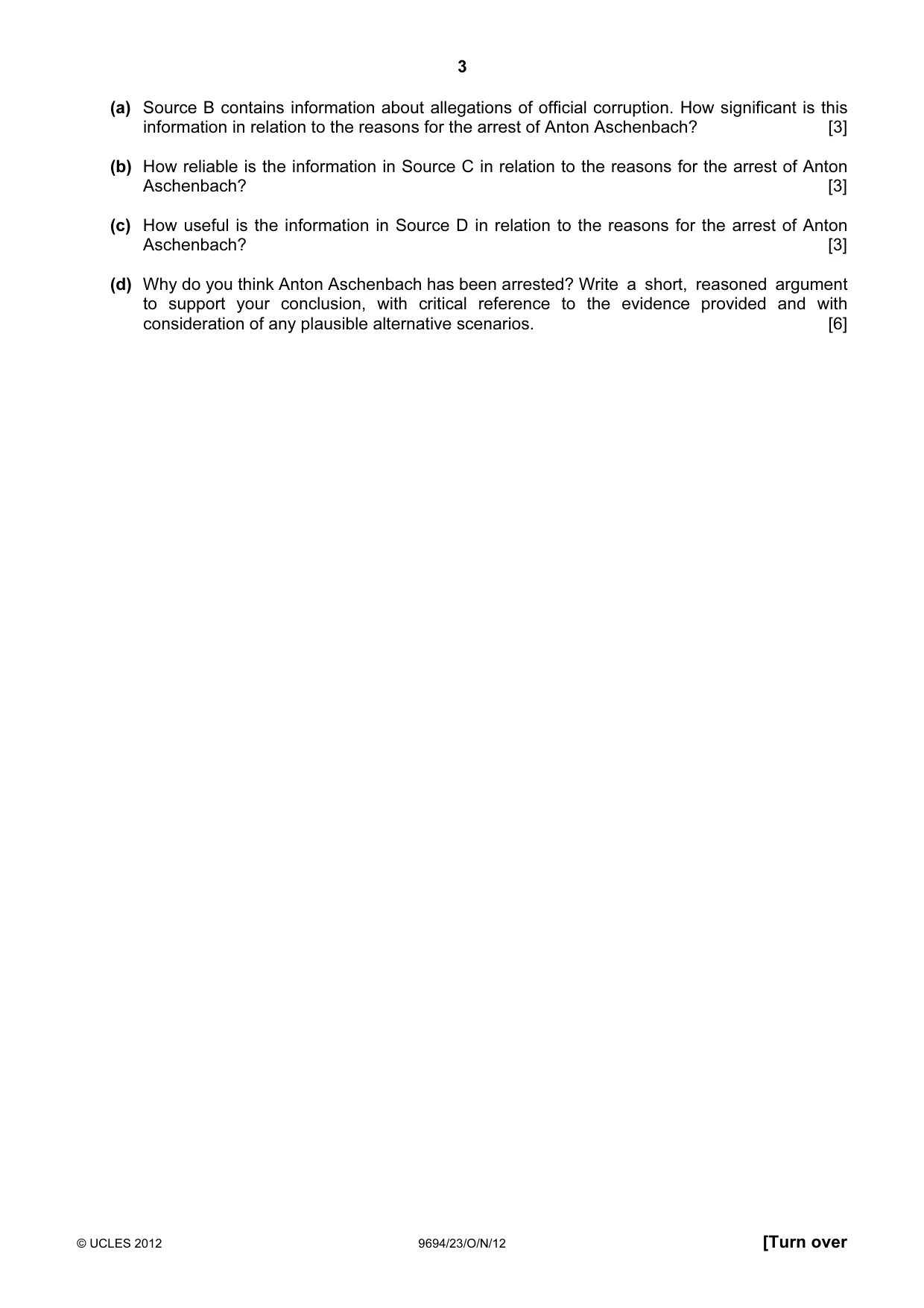
3 © UCLES 2012 9694/23/O/N/12 [Turn over (a) Source B contains information about allegations of official corruption. How significant is this information in relation to the reasons for the arrest of Anton Aschenbach? [3] (b) How reliable is the information in Source C in relation to the reasons for the arrest of Anton Aschenbach? [3] (c) How useful is the information in Source D in relation to the reasons for the arrest of Anton Aschenbach? [3] (d) Why do you think Anton Aschenbach has been arrested? Write a short, reasoned argument to support your conclusion, with critical reference to the evidence provided and with consideration of any plausible alternative scenarios. [6]
Question paper, page 4
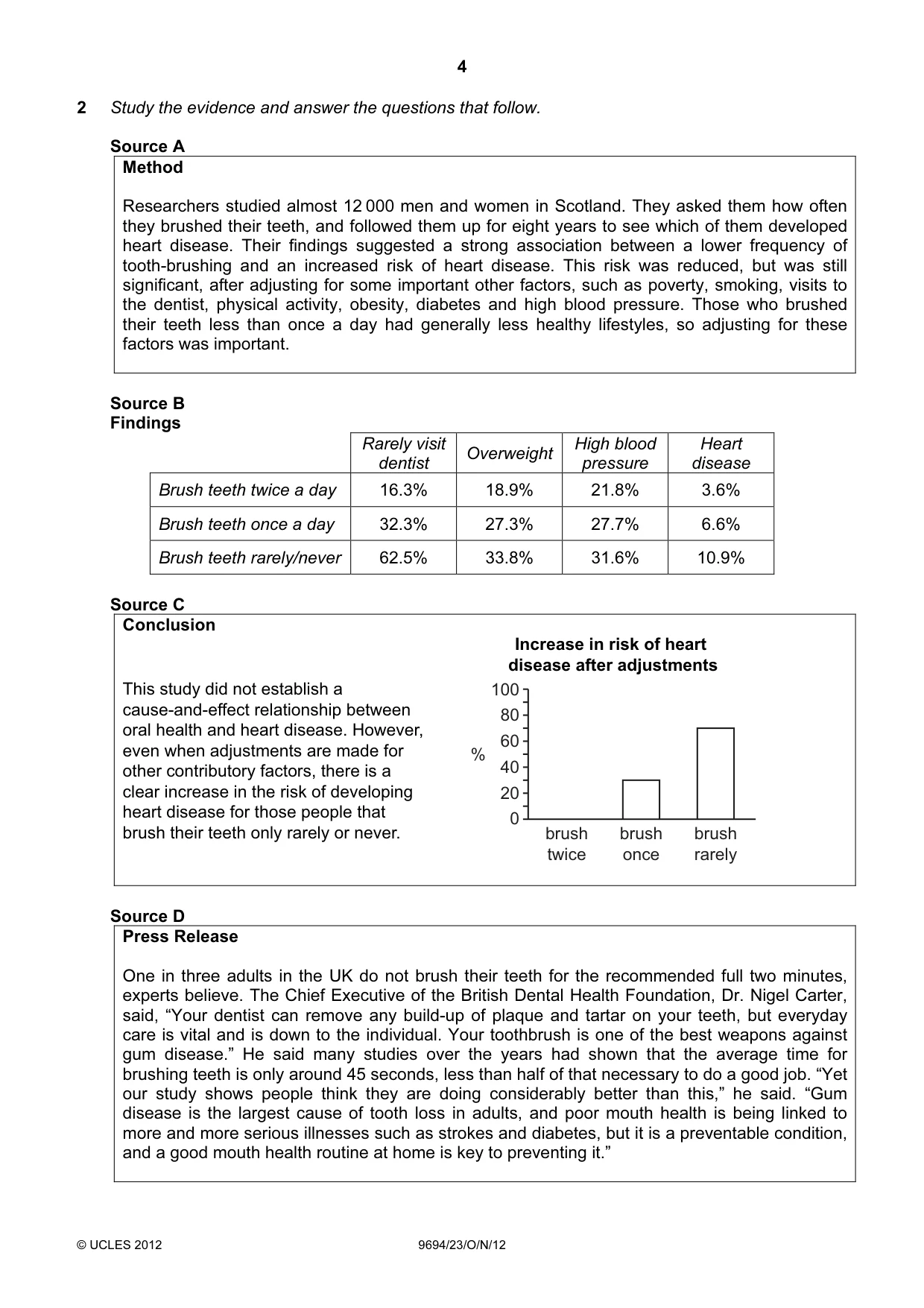
4 © UCLES 2012 9694/23/O/N/12 2 Study the evidence and answer the questions that follow. Source A Method Researchers studied almost 12 000 men and women in Scotland. They asked them how often they brushed their teeth, and followed them up for eight years to see which of them developed heart disease. Their findings suggested a strong association between a lower frequency of tooth-brushing and an increased risk of heart disease. This risk was reduced, but was still significant, after adjusting for some important other factors, such as poverty, smoking, visits to the dentist, physical activity, obesity, diabetes and high blood pressure. Those who brushed their teeth less than once a day had generally less healthy lifestyles, so adjusting for these factors was important. Source B Findings Rarely visit dentist Overweight High blood pressure Heart disease Brush teeth twice a day 16.3% 18.9% 21.8% 3.6% Brush teeth once a day 32.3% 27.3% 27.7% 6.6% Brush teeth rarely/never 62.5% 33.8% 31.6% 10.9% Source C Conclusion This study did not establish a cause-and-effect relationship between oral health and heart disease. However, even when adjustments are made for other contributory factors, there is a clear increase in the risk of developing heart disease for those people that brush their teeth only rarely or never. brush twice brush once brush rarely 100 80 60 40 20 0 % Increase in risk of heart disease after adjustments Source D Press Release One in three adults in the UK do not brush their teeth for the recommended full two minutes, experts believe. The Chief Executive of the British Dental Health Foundation, Dr. Nigel Carter, said, “Your dentist can remove any build-up of plaque and tartar on your teeth, but everyday care is vital and is down to the individual. Your toothbrush is one of the best weapons against gum disease.” He said many studies over the years had shown that the average time for brushing teeth is only around 45 seconds, less than half of that necessary to do a good job. “Yet our study shows people think they are doing considerably better than this,” he said. “Gum disease is the largest cause of tooth loss in adults, and poor mouth health is being linked to more and more serious illnesses such as strokes and diabetes, but it is a preventable condition, and a good mouth health routine at home is key to preventing it.”
Question paper, page 5
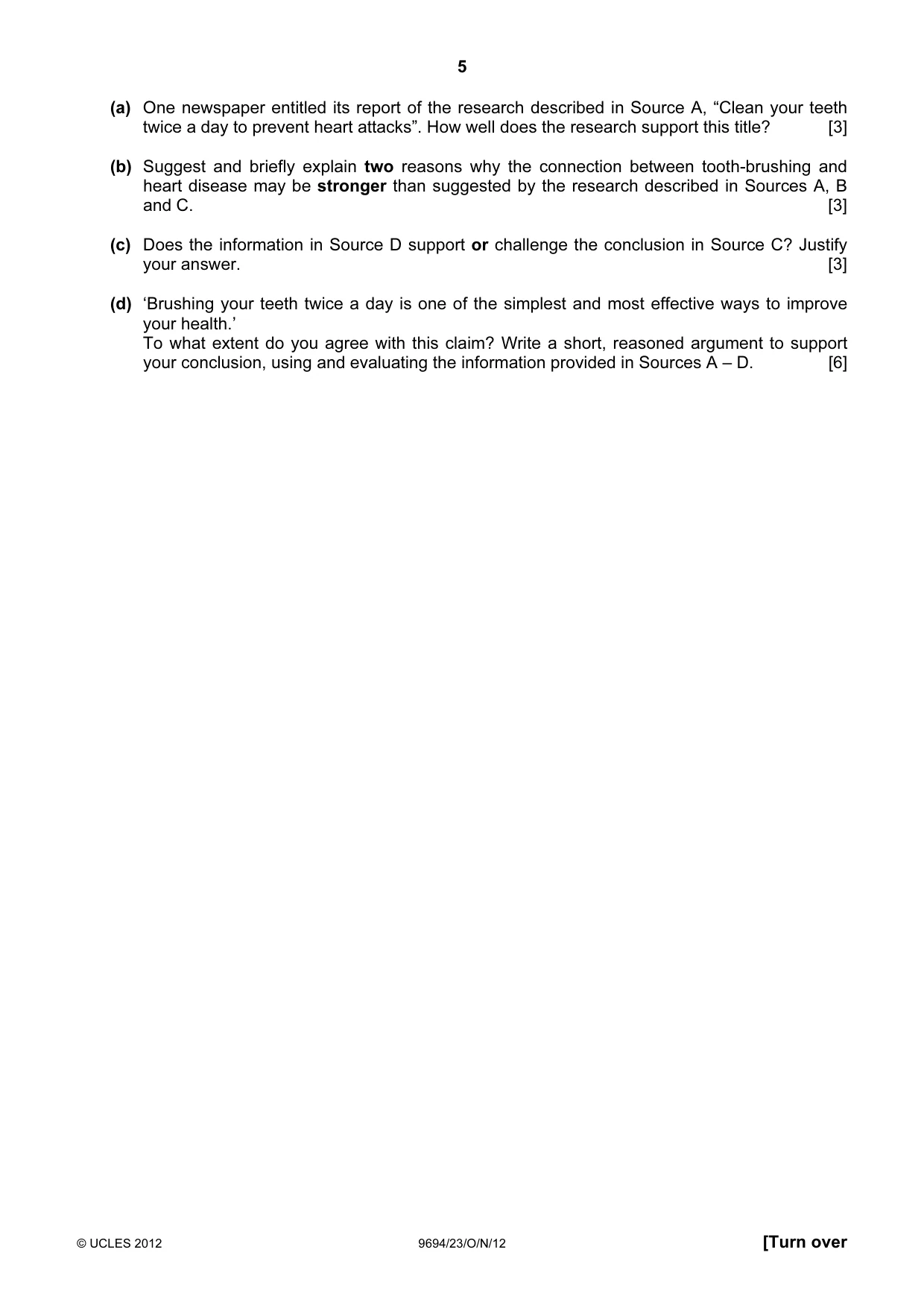
5 © UCLES 2012 9694/23/O/N/12 [Turn over (a) One newspaper entitled its report of the research described in Source A, “Clean your teeth twice a day to prevent heart attacks”. How well does the research support this title? [3] (b) Suggest and briefly explain two reasons why the connection between tooth-brushing and heart disease may be stronger than suggested by the research described in Sources A, B and C. [3] (c) Does the information in Source D support or challenge the conclusion in Source C? Justify your answer. [3] (d) ‘Brushing your teeth twice a day is one of the simplest and most effective ways to improve your health.’ To what extent do you agree with this claim? Write a short, reasoned argument to support your conclusion, using and evaluating the information provided in Sources A – D. [6]
Question paper, page 6
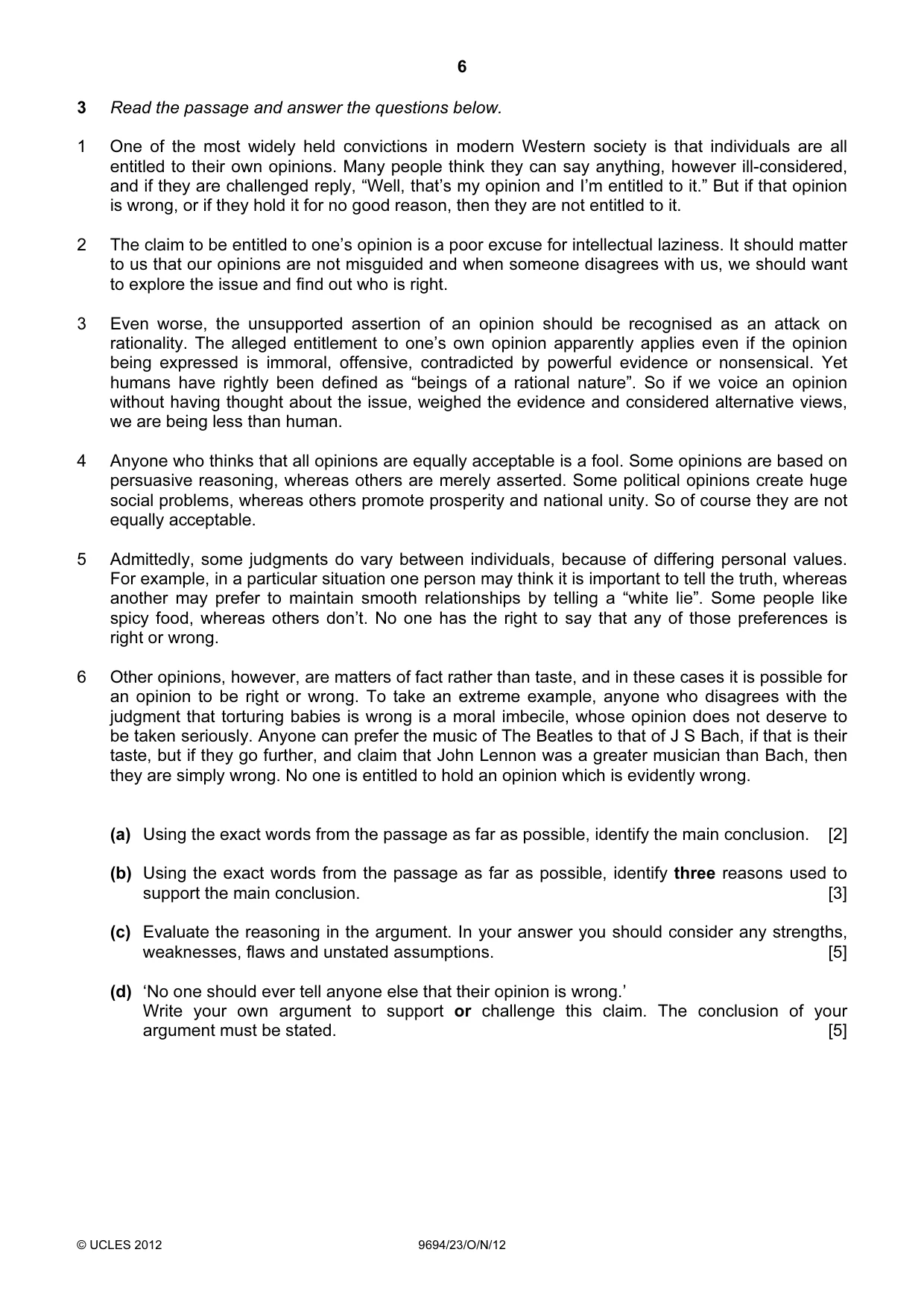
6 © UCLES 2012 9694/23/O/N/12 3 Read the passage and answer the questions below. 1 One of the most widely held convictions in modern Western society is that individuals are all entitled to their own opinions. Many people think they can say anything, however ill-considered, and if they are challenged reply, “Well, that’s my opinion and I’m entitled to it.” But if that opinion is wrong, or if they hold it for no good reason, then they are not entitled to it. 2 The claim to be entitled to one’s opinion is a poor excuse for intellectual laziness. It should matter to us that our opinions are not misguided and when someone disagrees with us, we should want to explore the issue and find out who is right. 3 Even worse, the unsupported assertion of an opinion should be recognised as an attack on rationality. The alleged entitlement to one’s own opinion apparently applies even if the opinion being expressed is immoral, offensive, contradicted by powerful evidence or nonsensical. Yet humans have rightly been defined as “beings of a rational nature”. So if we voice an opinion without having thought about the issue, weighed the evidence and considered alternative views, we are being less than human. 4 Anyone who thinks that all opinions are equally acceptable is a fool. Some opinions are based on persuasive reasoning, whereas others are merely asserted. Some political opinions create huge social problems, whereas others promote prosperity and national unity. So of course they are not equally acceptable. 5 Admittedly, some judgments do vary between individuals, because of differing personal values. For example, in a particular situation one person may think it is important to tell the truth, whereas another may prefer to maintain smooth relationships by telling a “white lie”. Some people like spicy food, whereas others don’t. No one has the right to say that any of those preferences is right or wrong. 6 Other opinions, however, are matters of fact rather than taste, and in these cases it is possible for an opinion to be right or wrong. To take an extreme example, anyone who disagrees with the judgment that torturing babies is wrong is a moral imbecile, whose opinion does not deserve to be taken seriously. Anyone can prefer the music of The Beatles to that of J S Bach, if that is their taste, but if they go further, and claim that John Lennon was a greater musician than Bach, then they are simply wrong. No one is entitled to hold an opinion which is evidently wrong. (a) Using the exact words from the passage as far as possible, identify the main conclusion. [2] (b) Using the exact words from the passage as far as possible, identify three reasons used to support the main conclusion. [3] (c) Evaluate the reasoning in the argument. In your answer you should consider any strengths, weaknesses, flaws and unstated assumptions. [5] (d) ‘No one should ever tell anyone else that their opinion is wrong.’ Write your own argument to support or challenge this claim. The conclusion of your argument must be stated. [5]
Question paper, page 7
7 © UCLES 2012 9694/23/O/N/12 BLANK PAGE
Question paper, page 8
8 Permission to reproduce items where third-party owned material protected by copyright is included has been sought and cleared where possible. Every reasonable effort has been made by the publisher (UCLES) to trace copyright holders, but if any items requiring clearance have unwittingly been included, the publisher will be pleased to make amends at the earliest possible opportunity. University of Cambridge International Examinations is part of the Cambridge Assessment Group. Cambridge Assessment is the brand name of University of Cambridge Local Examinations Syndicate (UCLES), which is itself a department of the University of Cambridge. © UCLES 2012 9694/23/O/N/12 BLANK PAGE
Mark scheme, page 1
CAMBRIDGE INTERNATIONAL EXAMINATIONS GCE Advanced Subsidiary Level and GCE Advanced Level MARK SCHEME for the October/November 2012 series 9694 THINKING SKILLS 9694/23 Paper 2 (Critical Thinking), maximum raw mark 45 This mark scheme is published as an aid to teachers and candidates, to indicate the requirements of the examination. It shows the basis on which Examiners were instructed to award marks. It does not indicate the details of the discussions that took place at an Examiners’ meeting before marking began, which would have considered the acceptability of alternative answers. Mark schemes should be read in conjunction with the question paper and the Principal Examiner Report for Teachers. Cambridge will not enter into discussions about these mark schemes. Cambridge is publishing the mark schemes for the October/November 2012 series for most IGCSE, GCE Advanced Level and Advanced Subsidiary Level components and some Ordinary Level components.
Mark scheme, page 2
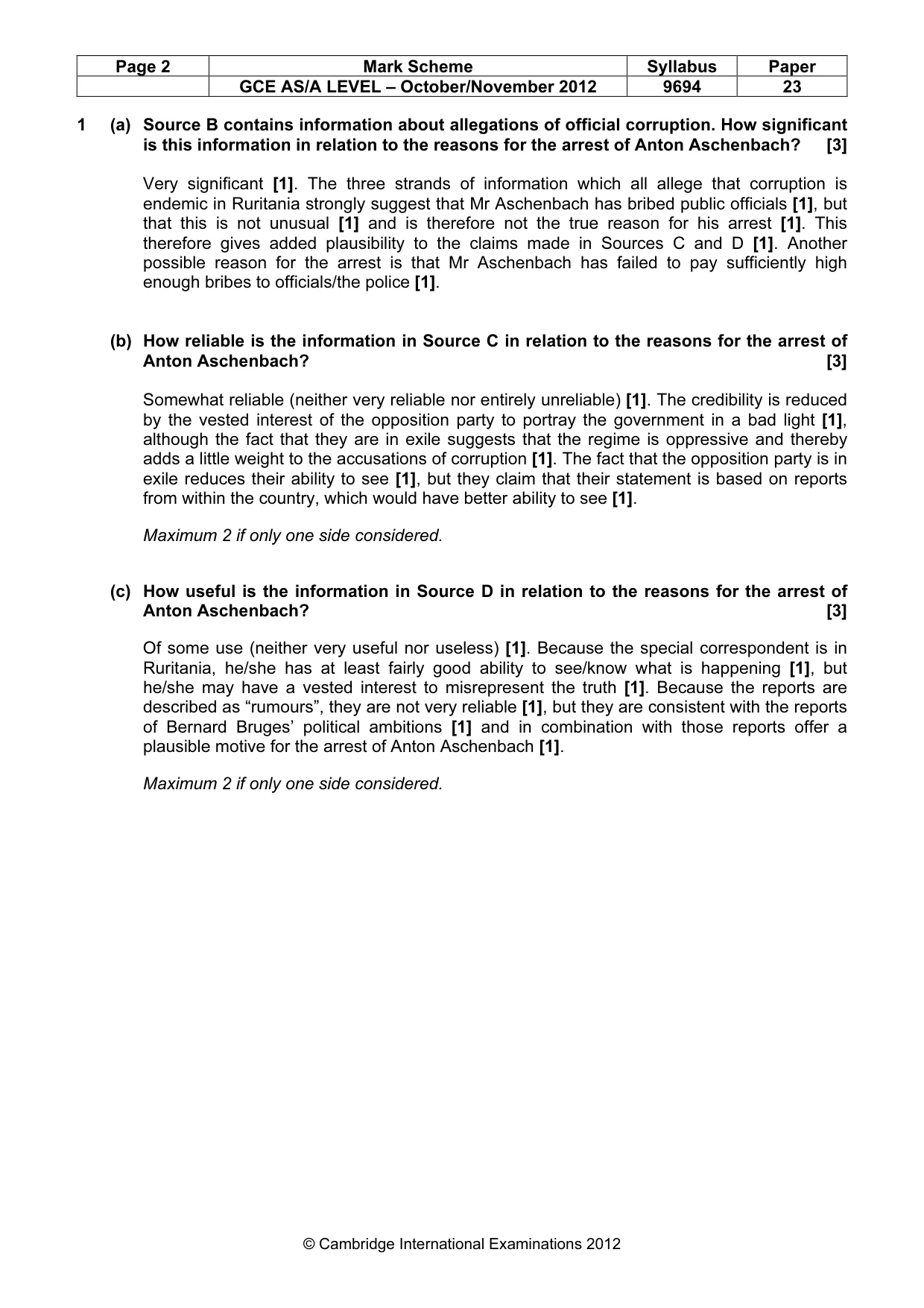
Page 2 Mark Scheme Syllabus Paper GCE AS/A LEVEL – October/November 2012 9694 23 © Cambridge International Examinations 2012 1 (a) Source B contains information about allegations of official corruption. How significant is this information in relation to the reasons for the arrest of Anton Aschenbach? [3] Very significant [1]. The three strands of information which all allege that corruption is endemic in Ruritania strongly suggest that Mr Aschenbach has bribed public officials [1], but that this is not unusual [1] and is therefore not the true reason for his arrest [1]. This therefore gives added plausibility to the claims made in Sources C and D [1]. Another possible reason for the arrest is that Mr Aschenbach has failed to pay sufficiently high enough bribes to officials/the police [1]. (b) How reliable is the information in Source C in relation to the reasons for the arrest of Anton Aschenbach? [3] Somewhat reliable (neither very reliable nor entirely unreliable) [1]. The credibility is reduced by the vested interest of the opposition party to portray the government in a bad light [1], although the fact that they are in exile suggests that the regime is oppressive and thereby adds a little weight to the accusations of corruption [1]. The fact that the opposition party is in exile reduces their ability to see [1], but they claim that their statement is based on reports from within the country, which would have better ability to see [1]. Maximum 2 if only one side considered. (c) How useful is the information in Source D in relation to the reasons for the arrest of Anton Aschenbach? [3] Of some use (neither very useful nor useless) [1]. Because the special correspondent is in Ruritania, he/she has at least fairly good ability to see/know what is happening [1], but he/she may have a vested interest to misrepresent the truth [1]. Because the reports are described as “rumours”, they are not very reliable [1], but they are consistent with the reports of Bernard Bruges’ political ambitions [1] and in combination with those reports offer a plausible motive for the arrest of Anton Aschenbach [1]. Maximum 2 if only one side considered.
Mark scheme, page 3
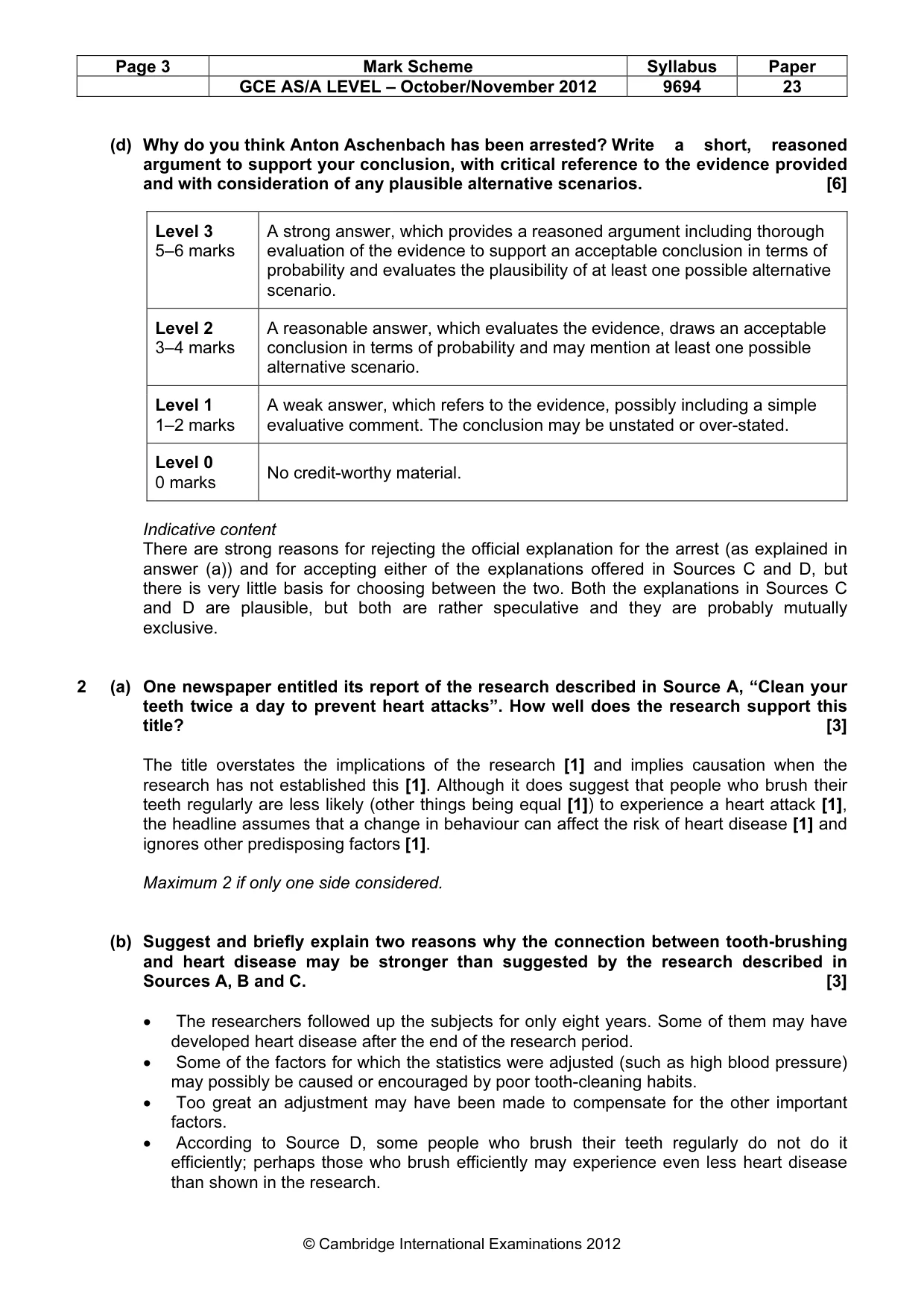
Page 3 Mark Scheme Syllabus Paper GCE AS/A LEVEL – October/November 2012 9694 23 © Cambridge International Examinations 2012 (d) Why do you think Anton Aschenbach has been arrested? Write a short, reasoned argument to support your conclusion, with critical reference to the evidence provided and with consideration of any plausible alternative scenarios. [6] Level 3 5–6 marks A strong answer, which provides a reasoned argument including thorough evaluation of the evidence to support an acceptable conclusion in terms of probability and evaluates the plausibility of at least one possible alternative scenario. Level 2 3–4 marks A reasonable answer, which evaluates the evidence, draws an acceptable conclusion in terms of probability and may mention at least one possible alternative scenario. Level 1 1–2 marks A weak answer, which refers to the evidence, possibly including a simple evaluative comment. The conclusion may be unstated or over-stated. Level 0 0 marks No credit-worthy material. Indicative content There are strong reasons for rejecting the official explanation for the arrest (as explained in answer (a)) and for accepting either of the explanations offered in Sources C and D, but there is very little basis for choosing between the two. Both the explanations in Sources C and D are plausible, but both are rather speculative and they are probably mutually exclusive. 2 (a) One newspaper entitled its report of the research described in Source A, “Clean your teeth twice a day to prevent heart attacks”. How well does the research support this title? [3] The title overstates the implications of the research [1] and implies causation when the research has not established this [1]. Although it does suggest that people who brush their teeth regularly are less likely (other things being equal [1]) to experience a heart attack [1], the headline assumes that a change in behaviour can affect the risk of heart disease [1] and ignores other predisposing factors [1]. Maximum 2 if only one side considered. (b) Suggest and briefly explain two reasons why the connection between tooth-brushing and heart disease may be stronger than suggested by the research described in Sources A, B and C. [3] • The researchers followed up the subjects for only eight years. Some of them may have developed heart disease after the end of the research period. • Some of the factors for which the statistics were adjusted (such as high blood pressure) may possibly be caused or encouraged by poor tooth-cleaning habits. • Too great an adjustment may have been made to compensate for the other important factors. • According to Source D, some people who brush their teeth regularly do not do it efficiently; perhaps those who brush efficiently may experience even less heart disease than shown in the research.
Mark scheme, page 4
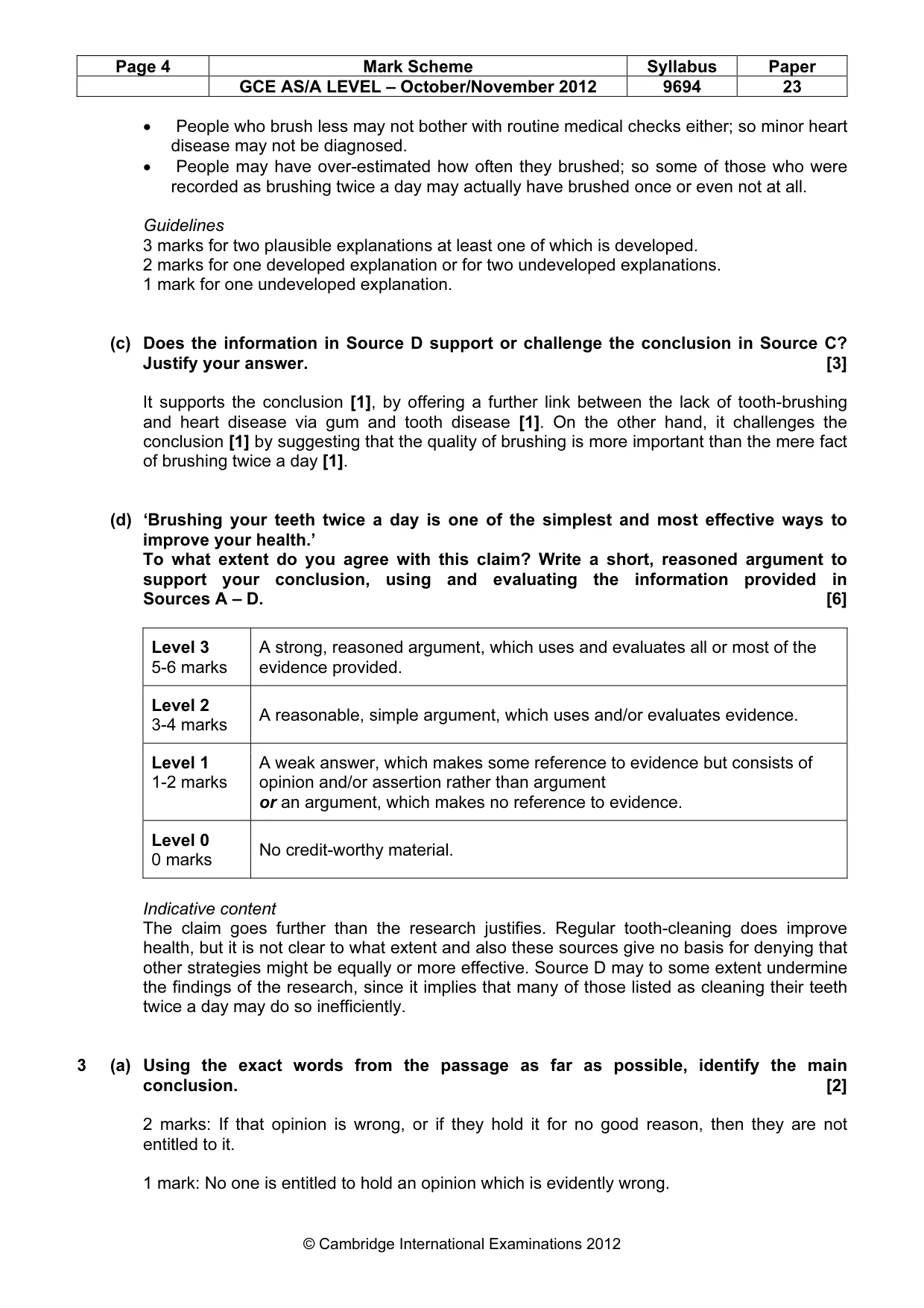
Page 4 Mark Scheme Syllabus Paper GCE AS/A LEVEL – October/November 2012 9694 23 © Cambridge International Examinations 2012 • People who brush less may not bother with routine medical checks either; so minor heart disease may not be diagnosed. • People may have over-estimated how often they brushed; so some of those who were recorded as brushing twice a day may actually have brushed once or even not at all. Guidelines 3 marks for two plausible explanations at least one of which is developed. 2 marks for one developed explanation or for two undeveloped explanations. 1 mark for one undeveloped explanation. (c) Does the information in Source D support or challenge the conclusion in Source C? Justify your answer. [3] It supports the conclusion [1], by offering a further link between the lack of tooth-brushing and heart disease via gum and tooth disease [1]. On the other hand, it challenges the conclusion [1] by suggesting that the quality of brushing is more important than the mere fact of brushing twice a day [1]. (d) ‘Brushing your teeth twice a day is one of the simplest and most effective ways to improve your health.’ To what extent do you agree with this claim? Write a short, reasoned argument to support your conclusion, using and evaluating the information provided in Sources A – D. [6] Level 3 5-6 marks A strong, reasoned argument, which uses and evaluates all or most of the evidence provided. Level 2 3-4 marks A reasonable, simple argument, which uses and/or evaluates evidence. Level 1 1-2 marks A weak answer, which makes some reference to evidence but consists of opinion and/or assertion rather than argument or an argument, which makes no reference to evidence. Level 0 0 marks No credit-worthy material. Indicative content The claim goes further than the research justifies. Regular tooth-cleaning does improve health, but it is not clear to what extent and also these sources give no basis for denying that other strategies might be equally or more effective. Source D may to some extent undermine the findings of the research, since it implies that many of those listed as cleaning their teeth twice a day may do so inefficiently. 3 (a) Using the exact words from the passage as far as possible, identify the main conclusion. [2] 2 marks: If that opinion is wrong, or if they hold it for no good reason, then they are not entitled to it. 1 mark: No one is entitled to hold an opinion which is evidently wrong.
Mark scheme, page 5
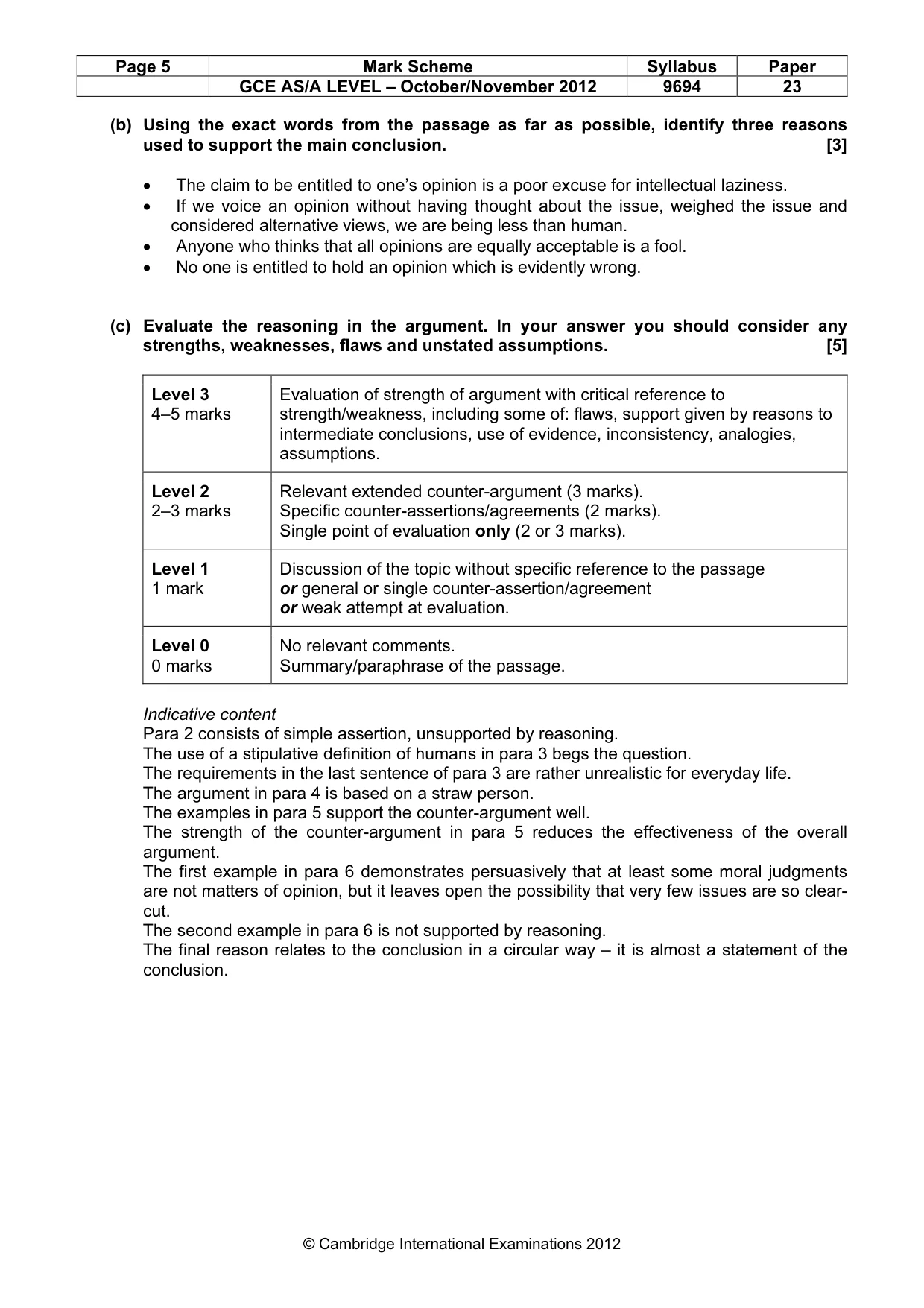
Page 5 Mark Scheme Syllabus Paper GCE AS/A LEVEL – October/November 2012 9694 23 © Cambridge International Examinations 2012 (b) Using the exact words from the passage as far as possible, identify three reasons used to support the main conclusion. [3] • The claim to be entitled to one’s opinion is a poor excuse for intellectual laziness. • If we voice an opinion without having thought about the issue, weighed the issue and considered alternative views, we are being less than human. • Anyone who thinks that all opinions are equally acceptable is a fool. • No one is entitled to hold an opinion which is evidently wrong. (c) Evaluate the reasoning in the argument. In your answer you should consider any strengths, weaknesses, flaws and unstated assumptions. [5] Level 3 4–5 marks Evaluation of strength of argument with critical reference to strength/weakness, including some of: flaws, support given by reasons to intermediate conclusions, use of evidence, inconsistency, analogies, assumptions. Level 2 2–3 marks Relevant extended counter-argument (3 marks). Specific counter-assertions/agreements (2 marks). Single point of evaluation only (2 or 3 marks). Level 1 1 mark Discussion of the topic without specific reference to the passage or general or single counter-assertion/agreement or weak attempt at evaluation. Level 0 0 marks No relevant comments. Summary/paraphrase of the passage. Indicative content Para 2 consists of simple assertion, unsupported by reasoning. The use of a stipulative definition of humans in para 3 begs the question. The requirements in the last sentence of para 3 are rather unrealistic for everyday life. The argument in para 4 is based on a straw person. The examples in para 5 support the counter-argument well. The strength of the counter-argument in para 5 reduces the effectiveness of the overall argument. The first example in para 6 demonstrates persuasively that at least some moral judgments are not matters of opinion, but it leaves open the possibility that very few issues are so clear- cut. The second example in para 6 is not supported by reasoning. The final reason relates to the conclusion in a circular way – it is almost a statement of the conclusion.
Mark scheme, page 6
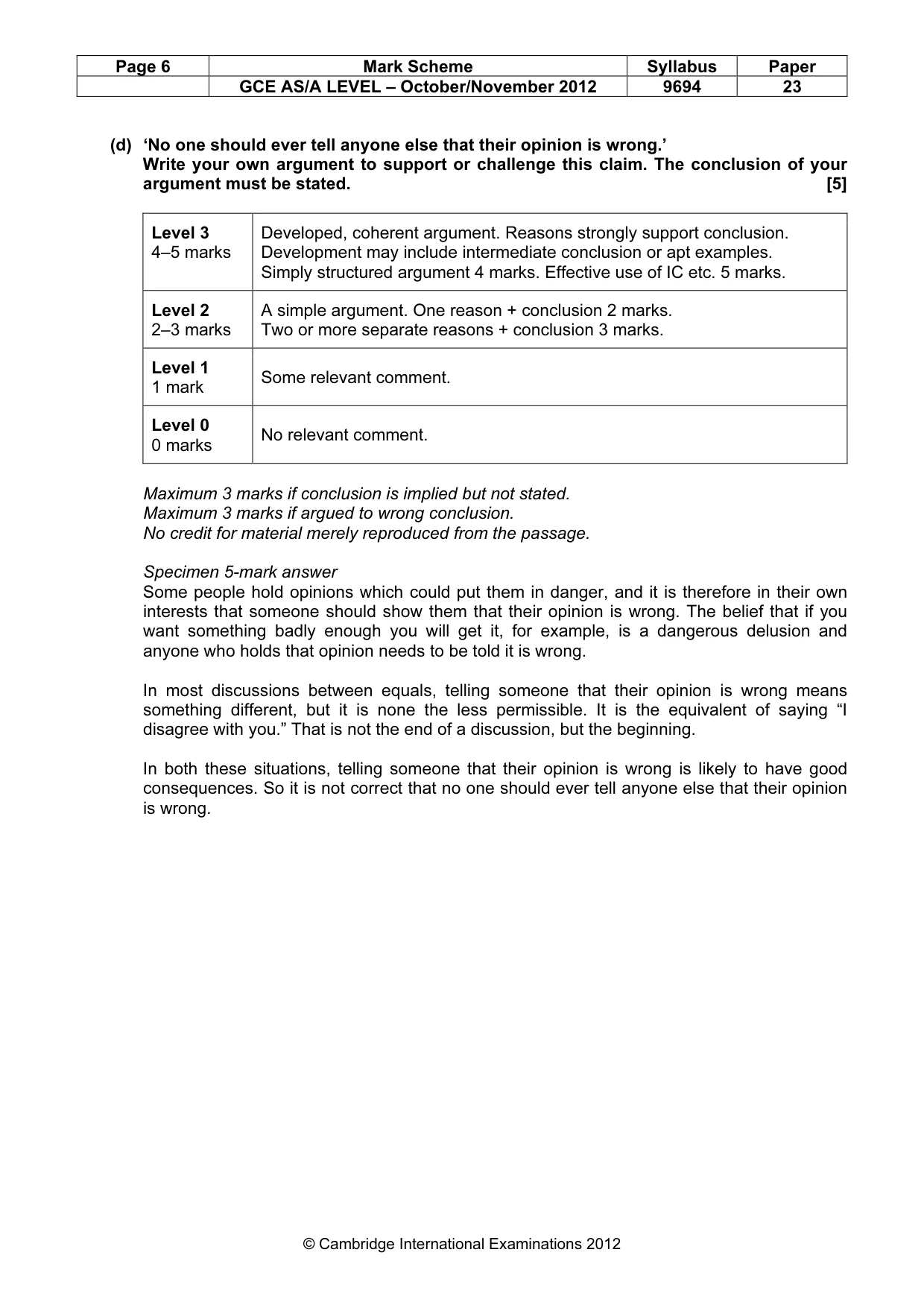
Page 6 Mark Scheme Syllabus Paper GCE AS/A LEVEL – October/November 2012 9694 23 © Cambridge International Examinations 2012 (d) ‘No one should ever tell anyone else that their opinion is wrong.’ Write your own argument to support or challenge this claim. The conclusion of your argument must be stated. [5] Level 3 4–5 marks Developed, coherent argument. Reasons strongly support conclusion. Development may include intermediate conclusion or apt examples. Simply structured argument 4 marks. Effective use of IC etc. 5 marks. Level 2 2–3 marks A simple argument. One reason + conclusion 2 marks. Two or more separate reasons + conclusion 3 marks. Level 1 1 mark Some relevant comment. Level 0 0 marks No relevant comment. Maximum 3 marks if conclusion is implied but not stated. Maximum 3 marks if argued to wrong conclusion. No credit for material merely reproduced from the passage. Specimen 5-mark answer Some people hold opinions which could put them in danger, and it is therefore in their own interests that someone should show them that their opinion is wrong. The belief that if you want something badly enough you will get it, for example, is a dangerous delusion and anyone who holds that opinion needs to be told it is wrong. In most discussions between equals, telling someone that their opinion is wrong means something different, but it is none the less permissible. It is the equivalent of saying “I disagree with you.” That is not the end of a discussion, but the beginning. In both these situations, telling someone that their opinion is wrong is likely to have good consequences. So it is not correct that no one should ever tell anyone else that their opinion is wrong.
What you needed in this session
Cambridge’s own grade thresholds for 2012 Oct/Nov, Paper 2 · Variant 3. A higher threshold means an easier paper — the bar moves with how the cohort did.