Cambridge A Level Tamil 9689 — 2020 Oct/Nov Paper 5 · Variant 2
9689/52/O/N/20 · 40 marks · ≈45 min
The question paper and its mark scheme, free to read here and free to download. This is Cambridge’s own paper, exactly as it was sat.
Question paper4 pages
Mark scheme5 pages
Answers below. Sit the paper first if you are practising.
Paper as text
Question paper, page 1
Cambridge International A Level This document has 4 pages. Blank pages are indicated. DC (LK) 208971 © UCLES 2020 [Turn over TAMIL 9689/52 Paper 5 Prose October/November 2020 45 minutes You must answer on the question paper. No additional materials are needed. INSTRUCTIONS ● Translate the passage overleaf into Tamil. ● Use a black or dark blue pen. Do not use an erasable pen or correction fluid. ● Write your name, centre number and candidate number in the boxes at the top of the page. ● Write your answer in the space provided. ● Do not write on any bar codes. ● Dictionaries are not allowed. INFORMATION ● The total mark for this paper is 40. ● The number of marks for each question or part question is shown in brackets [ ]. [ ] * 4 3 2 5 9 5 6 1 8 4 * ● அடுத்த பக்கத்ததில் க்கொடுத¢ள்ள பத்ததியை தமிழில் கMொழதிகபைொ்க்கவும். ● ● ● ● ● ● ● 40 [ ]
Question paper, page 2
2 9689/52/O/N/20 © UCLES 2020 Translate into Tamil: With the advance of technology, and an increasing number of books available on-line as e-books or downloads, many people are asking whether the traditional book has come to the end of its life. You have to make a point of remembering to take a book with you, but we carry our mobile phones everywhere. They’re already in our pockets and so readers travel lighter! Environmentalists argue that by not using paper to make books we will save thousands of trees and the environment will benefit. That is a strong argument. However, bookshops do still exist, the sale of books over the internet has grown, and it is clear that readers still like to feel a real book in their hands. A book can be a thing of beauty in itself, pleasing to the eye and lovely to hold. This is an aspect which is lost on screen. It has been said that you mustn’t judge a book by its cover. But how much does the physical appearance of a book influence our reaction to what the author has written? Has the experience of reading changed? And, if so, is it a change for the better or the worse? [40] … … … … … … … … … … … … … … … … … … … … …
Question paper, page 3
3 9689/52/O/N/20 © UCLES 2020 [Turn over … … … … … … … … … … … … … … … … … … … … … … … … … … … …
Question paper, page 4
4 9689/52/O/N/20 © UCLES 2020 Permission to reproduce items where third-party owned material protected by copyright is included has been sought and cleared where possible. Every reasonable effort has been made by the publisher (UCLES) to trace copyright holders, but if any items requiring clearance have unwittingly been included, the publisher will be pleased to make amends at the earliest possible opportunity. To avoid the issue of disclosure of answer-related information to candidates, all copyright acknowledgements are reproduced online in the Cambridge Assessment International Education Copyright Acknowledgements Booklet. This is produced for each series of examinations and is freely available to download at www.cambridgeinternational.org after the live examination series. Cambridge Assessment International Education is part of the Cambridge Assessment Group. Cambridge Assessment is the brand name of the University of Cambridge Local Examinations Syndicate (UCLES), which itself is a department of the University of Cambridge. … … … … … … … … … … … … … … … … … … … … … … … …
Mark scheme, page 1
This document consists of 5 printed pages. © UCLES 2020 [Turn over Cambridge International A Level TAMIL 9689/52 Paper 5 Prose October/November 2020 MARK SCHEME Maximum Mark: 40 Published This mark scheme is published as an aid to teachers and candidates, to indicate the requirements of the examination. It shows the basis on which Examiners were instructed to award marks. It does not indicate the details of the discussions that took place at an Examiners’ meeting before marking began, which would have considered the acceptability of alternative answers. Mark schemes should be read in conjunction with the question paper and the Principal Examiner Report for Teachers. Cambridge International will not enter into discussions about these mark schemes. Cambridge International is publishing the mark schemes for the October/November 2020 series for most Cambridge IGCSE™, Cambridge International A and AS Level and Cambridge Pre-U components, and some Cambridge O Level components.
Mark scheme, page 2
9689/52 Cambridge International A Level – Mark Scheme PUBLISHED October/November 2020 © UCLES 2020 Page 2 of 5 Generic Marking Principles These general marking principles must be applied by all examiners when marking candidate answers. They should be applied alongside the specific content of the mark scheme or generic level descriptors for a question. Each question paper and mark scheme will also comply with these marking principles. GENERIC MARKING PRINCIPLE 1: Marks must be awarded in line with: • the specific content of the mark scheme or the generic level descriptors for the question • the specific skills defined in the mark scheme or in the generic level descriptors for the question • the standard of response required by a candidate as exemplified by the standardisation scripts. GENERIC MARKING PRINCIPLE 2: Marks awarded are always whole marks (not half marks, or other fractions). GENERIC MARKING PRINCIPLE 3: Marks must be awarded positively: • marks are awarded for correct/valid answers, as defined in the mark scheme. However, credit is given for valid answers which go beyond the scope of the syllabus and mark scheme, referring to your Team Leader as appropriate • marks are awarded when candidates clearly demonstrate what they know and can do • marks are not deducted for errors • marks are not deducted for omissions • answers should only be judged on the quality of spelling, punctuation and grammar when these features are specifically assessed by the question as indicated by the mark scheme. The meaning, however, should be unambiguous. GENERIC MARKING PRINCIPLE 4: Rules must be applied consistently, e.g. in situations where candidates have not followed instructions or in the application of generic level descriptors. GENERIC MARKING PRINCIPLE 5: Marks should be awarded using the full range of marks defined in the mark scheme for the question (however; the use of the full mark range may be limited according to the quality of the candidate responses seen). GENERIC MARKING PRINCIPLE 6: Marks awarded are based solely on the requirements as defined in the mark scheme. Marks should not be awarded with grade thresholds or grade descriptors in mind.
Mark scheme, page 3
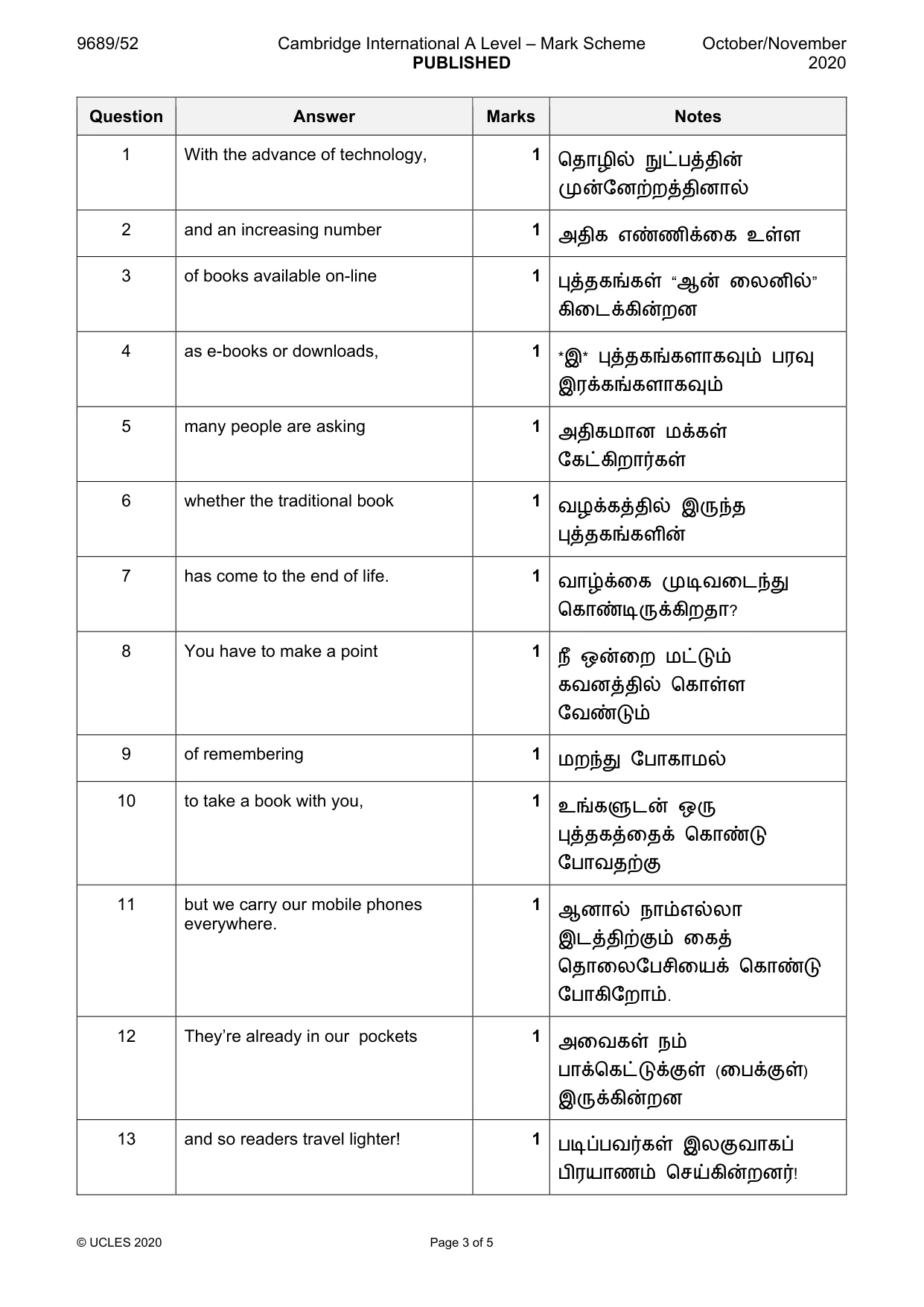
9689/52 Cambridge International A Level – Mark Scheme PUBLISHED October/November 2020 © UCLES 2020 Page 3 of 5 Question Answer Marks Notes 1 With the advance of technology, 1 ெதாழில் நுட்பத்தின் முன்ேனற்றத்தினால் 2 and an increasing number 1 அதிக எண்ணிக்ைக உள்ள 3 of books available on-line 1 புத்தகங்கள் “ஆன் ைலனில்” கிைடக்கின்றன 4 as e-books or downloads, 1 *இ* புத்தகங்களாகவும் பரவு இரக்கங்களாகவும் 5 many people are asking 1 அதிகமான மக்கள் ேகட்கிறார்கள் 6 whether the traditional book 1 வழக்கத்தில் இருந்த புத்தகங்களின் 7 has come to the end of life. 1 வாழ்க்ைக முடிவைடந்து ெகாண்டிருக்கிறதா? 8 You have to make a point 1 நீ ஒன்ைற மட்டும் கவனத்தில் ெகாள்ள ேவண்டும் 9 of remembering 1 மறந்து ேபாகாமல் 10 to take a book with you, 1 உங்களுடன் ஒரு புத்தகத்ைதக் ெகாண்டு ேபாவதற்கு 11 but we carry our mobile phones everywhere. 1 ஆனால் நாம்எல்லா இடத்திற்கும் ைகத் ெதாைலேபசிையக் ெகாண்டு ேபாகிேறாம். 12 They’re already in our pockets 1 அைவகள் நம் பாக்ெகட்டுக்குள் (ைபக்குள்) இருக்கின்றன 13 and so readers travel lighter! 1 படிப்பவர்கள் இலகுவாகப் பிரயாணம் ெசய்கின்றனர்!
Mark scheme, page 4
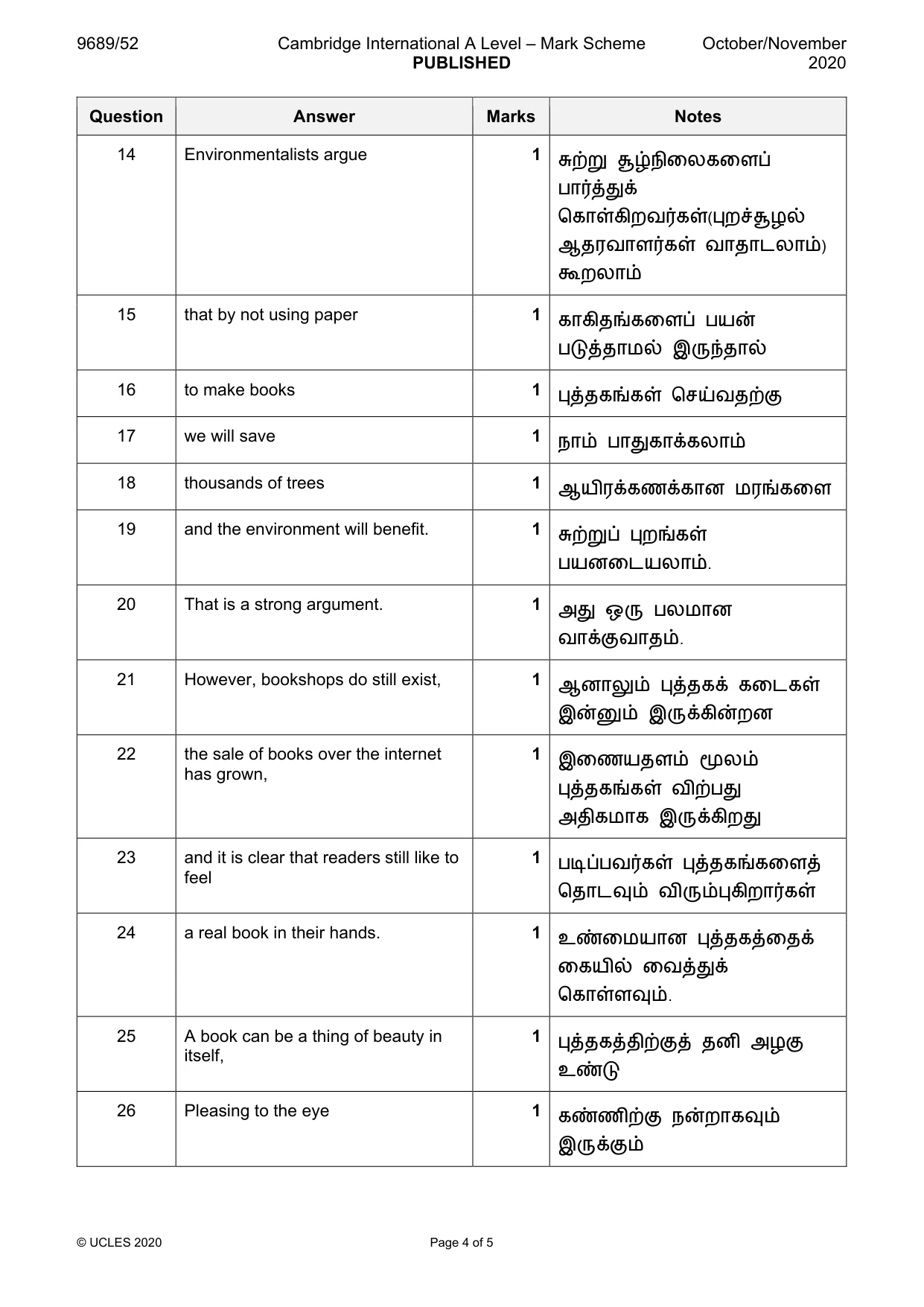
9689/52 Cambridge International A Level – Mark Scheme PUBLISHED October/November 2020 © UCLES 2020 Page 4 of 5 Question Answer Marks Notes 14 Environmentalists argue 1 சுற்று சூழ்நிைலகைளப் பார்த்துக் ெகாள்கிறவர்கள்(புறச்சூழல் ஆதரவாளர்கள் வாதாடலாம்) கூறலாம் 15 that by not using paper 1 காகிதங்கைளப் பயன் படுத்தாமல் இருந்தால் 16 to make books 1 புத்தகங்கள் ெசய்வதற்கு 17 we will save 1 நாம் பாதுகாக்கலாம் 18 thousands of trees 1 ஆயிரக்கணக்கான மரங்கைள 19 and the environment will benefit. 1 சுற்றுப் புறங்கள் பயனைடயலாம். 20 That is a strong argument. 1 அது ஒரு பலமான வாக்குவாதம். 21 However, bookshops do still exist, 1 ஆனாலும் புத்தகக் கைடகள் இன்னும் இருக்கின்றன 22 the sale of books over the internet has grown, 1 இைணயதளம் மூலம் புத்தகங்கள் விற்பது அதிகமாக இருக்கிறது 23 and it is clear that readers still like to feel 1 படிப்பவர்கள் புத்தகங்கைளத் ெதாடவும் விரும்புகிறார்கள் 24 a real book in their hands. 1 உண்ைமயான புத்தகத்ைதக் ைகயில் ைவத்துக் ெகாள்ளவும். 25 A book can be a thing of beauty in itself, 1 புத்தகத்திற்குத் தனி அழகு உண்டு 26 Pleasing to the eye 1 கண்ணிற்கு நன்றாகவும் இருக்கும்
Mark scheme, page 5
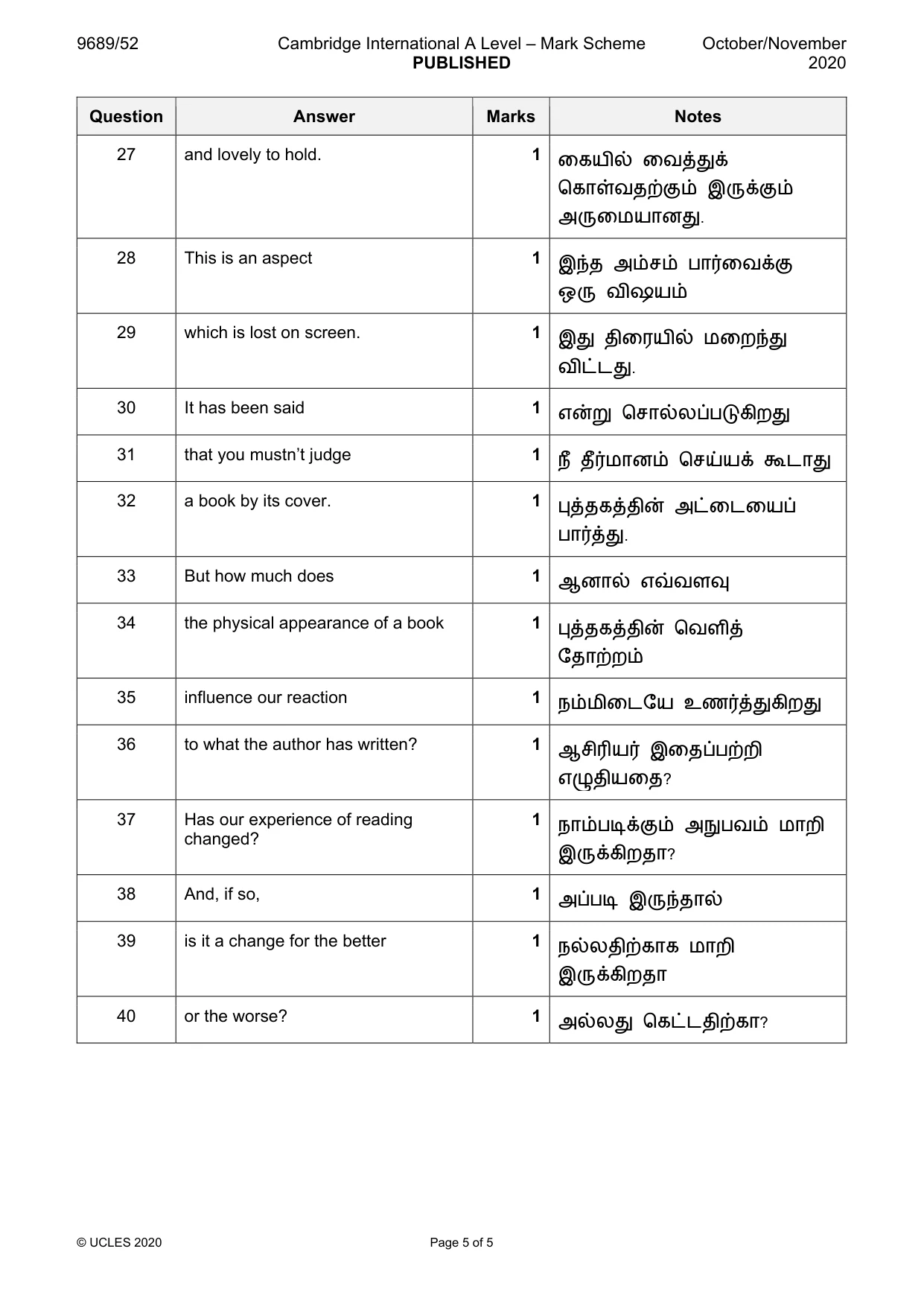
9689/52 Cambridge International A Level – Mark Scheme PUBLISHED October/November 2020 © UCLES 2020 Page 5 of 5 Question Answer Marks Notes 27 and lovely to hold. 1 ைகயில் ைவத்துக் ெகாள்வதற்கும் இருக்கும் அருைமயானது. 28 This is an aspect 1 இந்த அம்சம் பார்ைவக்கு ஒரு விஷயம் 29 which is lost on screen. 1 இது திைரயில் மைறந்து விட்டது. 30 It has been said 1 என்று ெசால்லப்படுகிறது 31 that you mustn’t judge 1 நீ தீர்மானம் ெசய்யக் கூடாது 32 a book by its cover. 1 புத்தகத்தின் அட்ைடையப் பார்த்து. 33 But how much does 1 ஆனால் எவ்வளவு 34 the physical appearance of a book 1 புத்தகத்தின் ெவளித் ேதாற்றம் 35 influence our reaction 1 நம்மிைடேய உணர்த்துகிறது 36 to what the author has written? 1 ஆசிrயர் இைதப்பற்றி எழுதியைத? 37 Has our experience of reading changed? 1 நாம்படிக்கும் அநுபவம் மாறி இருக்கிறதா? 38 And, if so, 1 அப்படி இருந்தால் 39 is it a change for the better 1 நல்லதிற்காக மாறி இருக்கிறதா 40 or the worse? 1 அல்லது ெகட்டதிற்கா?
What you needed in this session
Cambridge’s own grade thresholds for 2020 Oct/Nov, Paper 5 · Variant 2. A higher threshold means an easier paper — the bar moves with how the cohort did.