Cambridge A Level Food Studies 9336 — 2019 Oct/Nov Paper 2 · Variant 1
9336/21/O/N/19 · 1 question · 100 marks · ≈113 min
The question paper and its mark scheme, free to read here and free to download. This is Cambridge’s own paper, exactly as it was sat.
Question paper4 pages
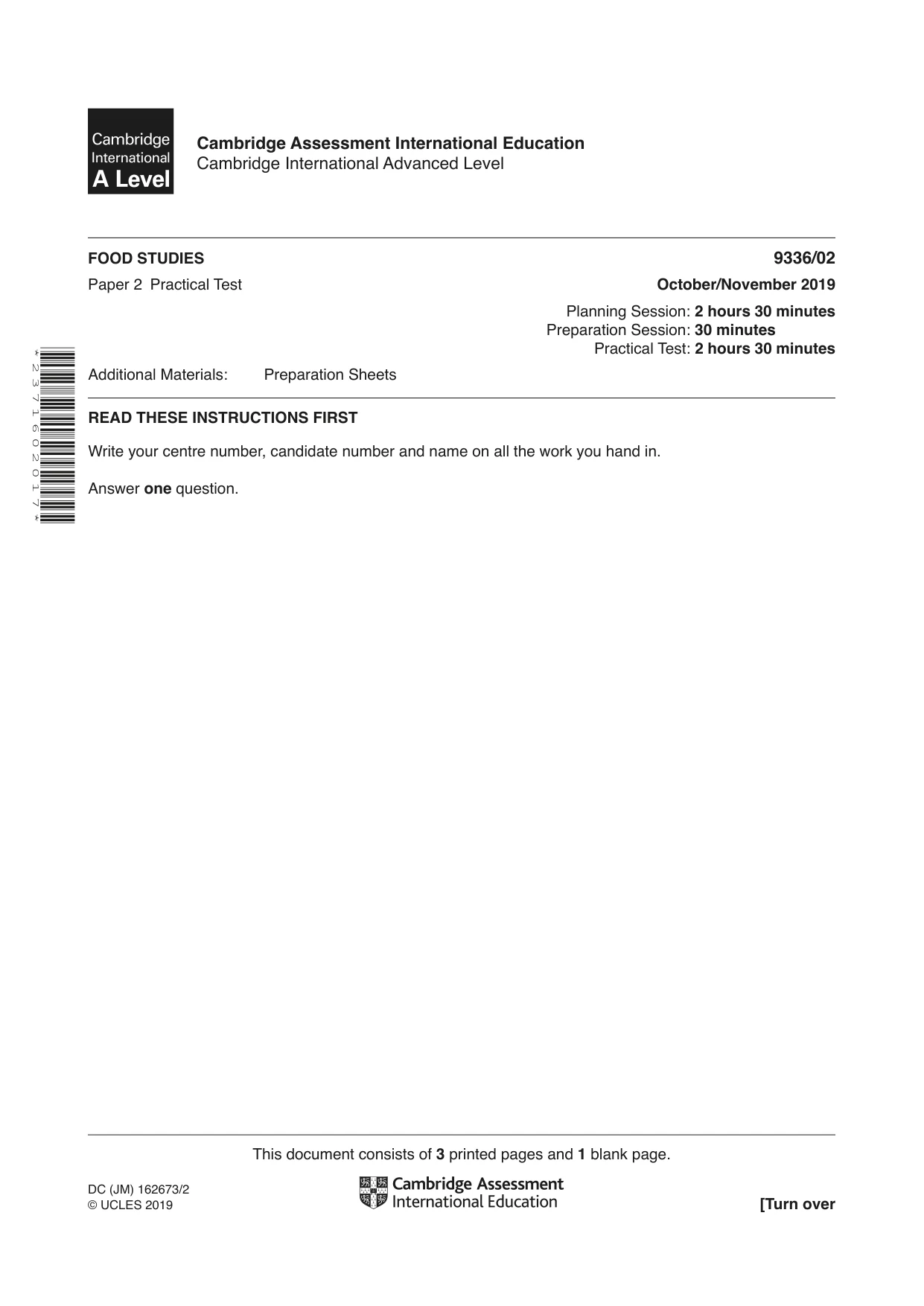
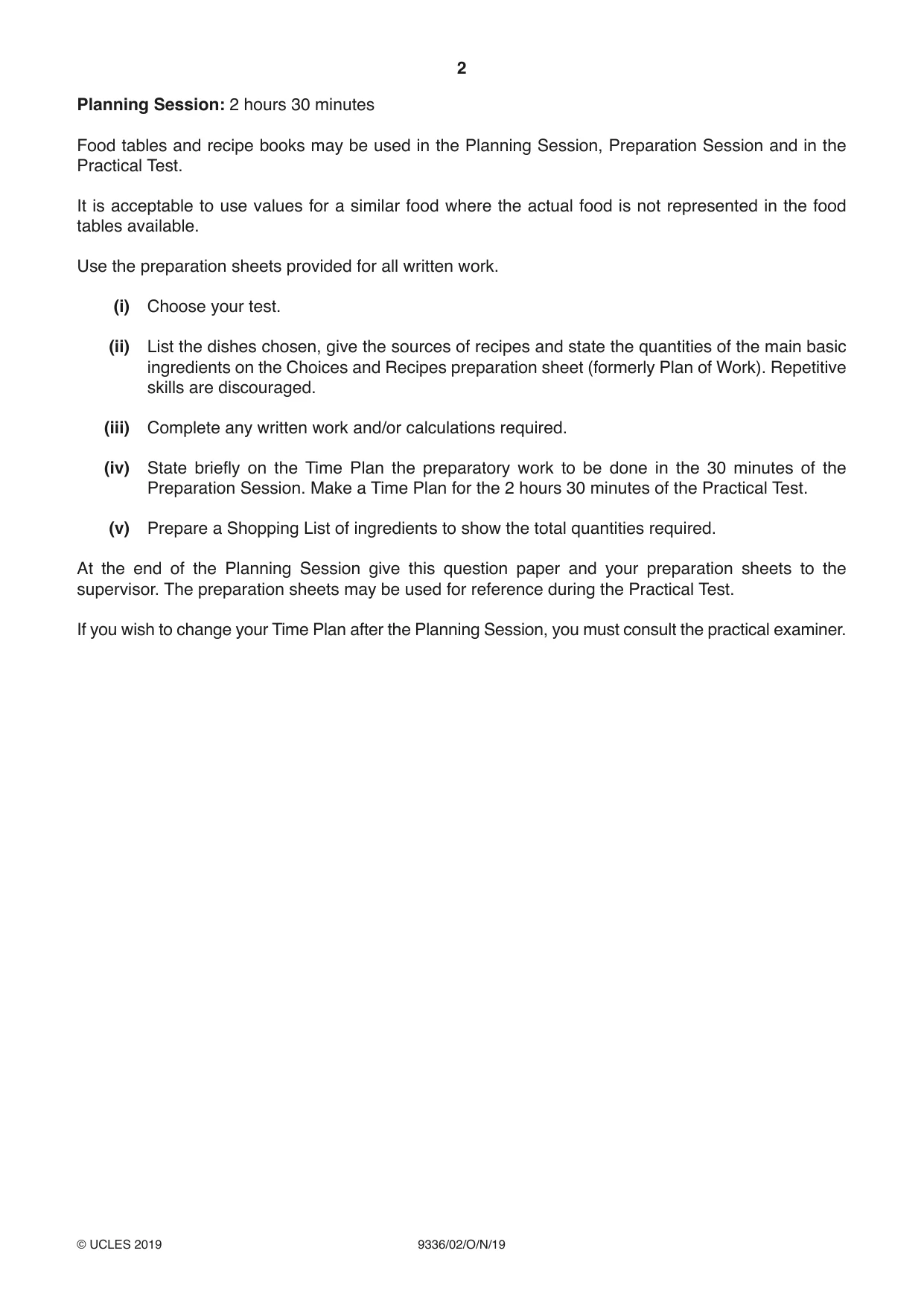
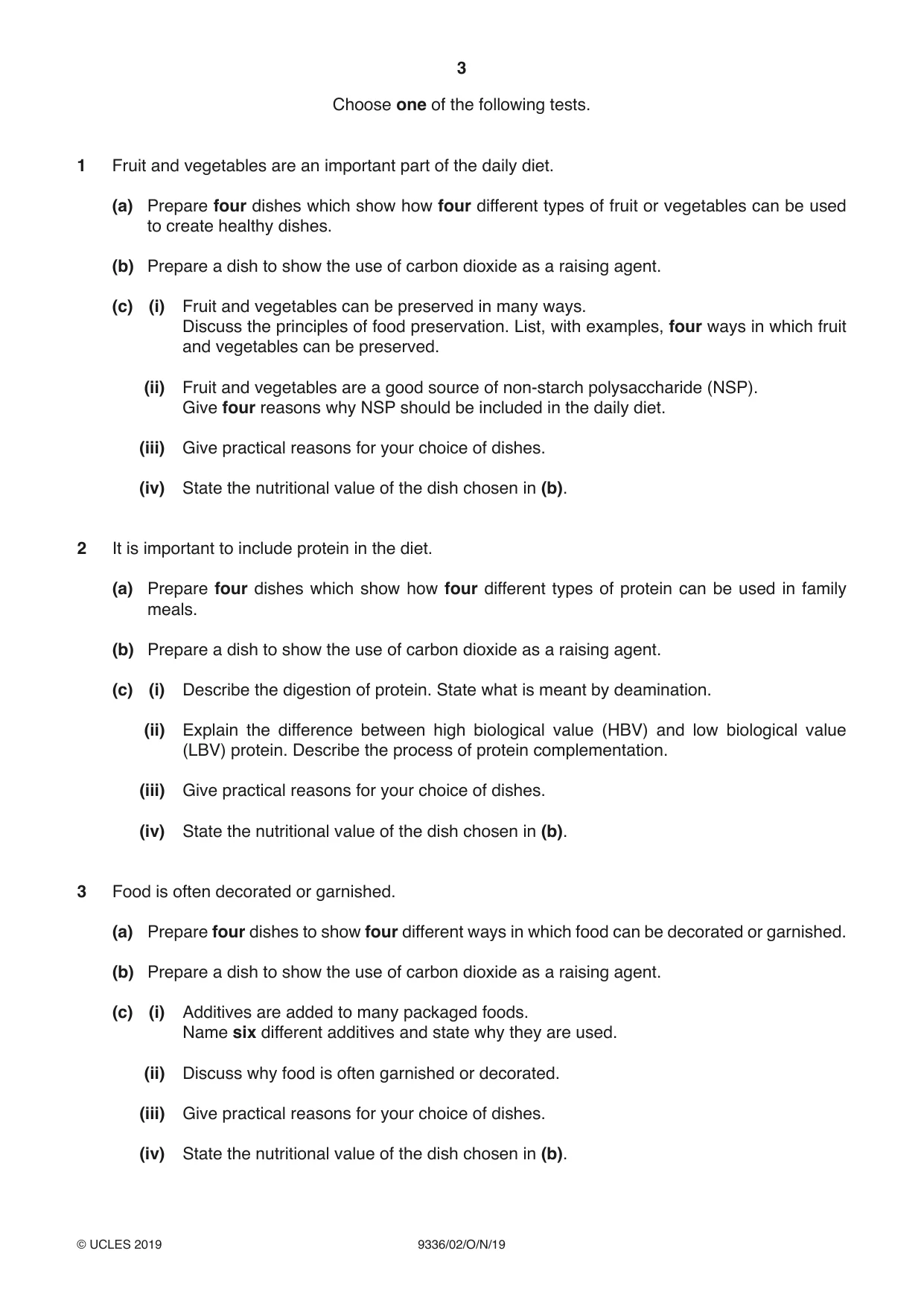

Mark scheme6 pages
Answers below. Sit the paper first if you are practising.
Questions as text
Q1 · Fruit and vegetables are an important part of the daily diet
1 Fruit and vegetables are an important part of the daily diet. (a) Prepare four dishes which show how four different types of fruit or vegetables can be used to create healthy dishes. (b) Prepare a dish to show the use of carbon dioxide as a raising agent. (c) (i) Fruit and vegetables can be preserved in many ways. Discuss the principles of food preservation. List, with examples, four ways in which fruit and vegetables can be preserved. (ii) Fruit and vegetables are a good source of non-starch polysaccharide (NSP). Give four reasons why NSP should be included in the daily diet. (iii) Give practical reasons for your choice of dishes. (iv) State the nutritional value of the dish chosen in (b). 2 It is important to include protein in the diet. (a) Prepare four dishes which show how four different types of protein can be used in family meals. (b) Prepare a dish to show the use of carbon dioxide as a raising agent. (c) (i) Describe the digestion of protein. State what is meant by deamination. (ii) Explain the difference between high biological value (HBV) and low biological value (LBV) protein. Describe the process of protein complementation. (iii) Give practical reasons for your choice of dishes. (iv) State the nutritional value of the dish chosen in (b). 3 Food is often decorated or garnished. (a) Prepare four dishes to show four different ways in which food can be decorated or garnished. (b) Prepare a dish to show the use of carbon dioxide as a raising agent. (c) (i) Additives are added to many packaged foods. Name six different additives and state why they are used. (ii) Discuss why food is often garnished or decorated. (iii) Give practical reasons for your choice of dishes. (iv) State the nutritional value of the dish chosen in (b).
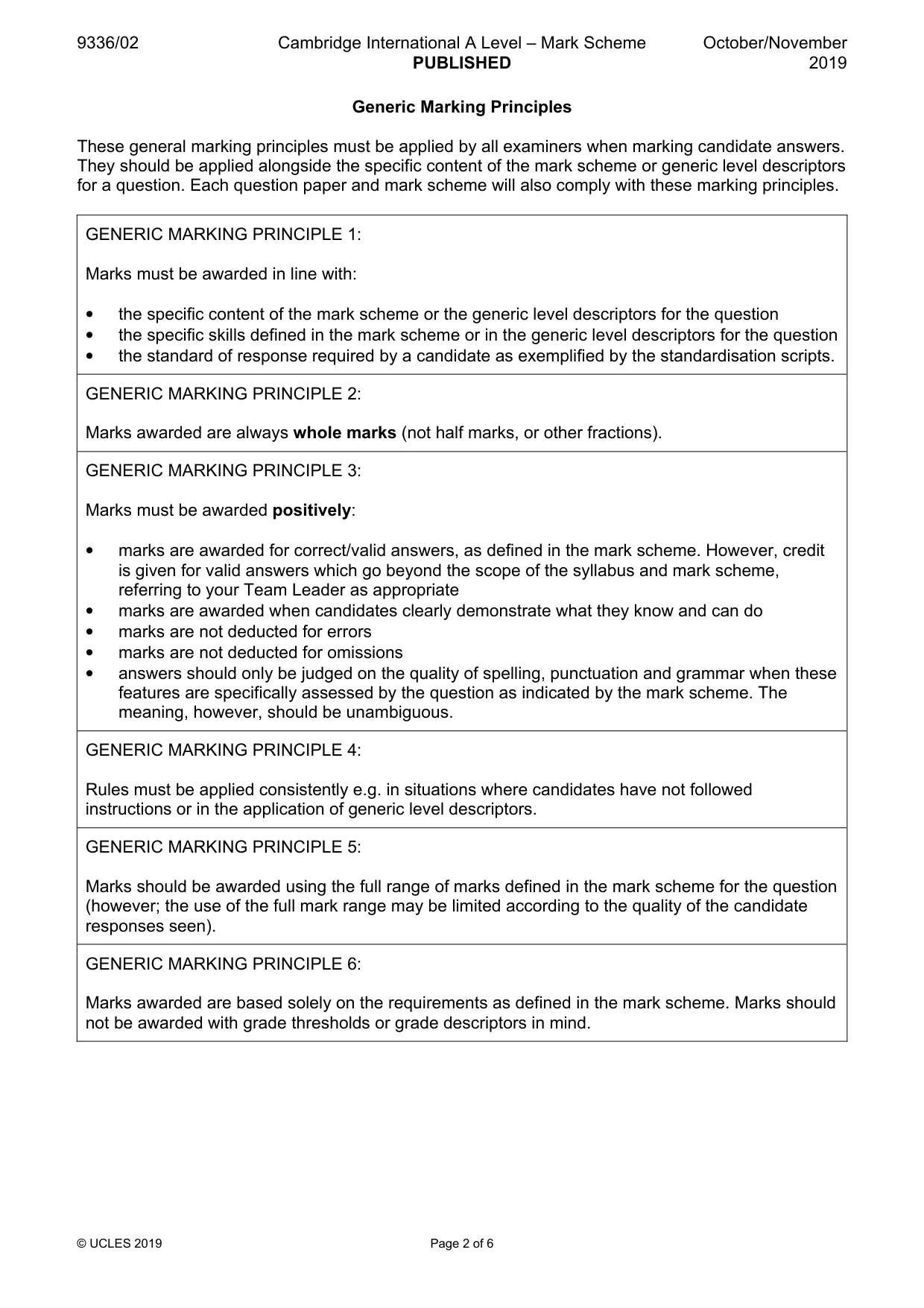
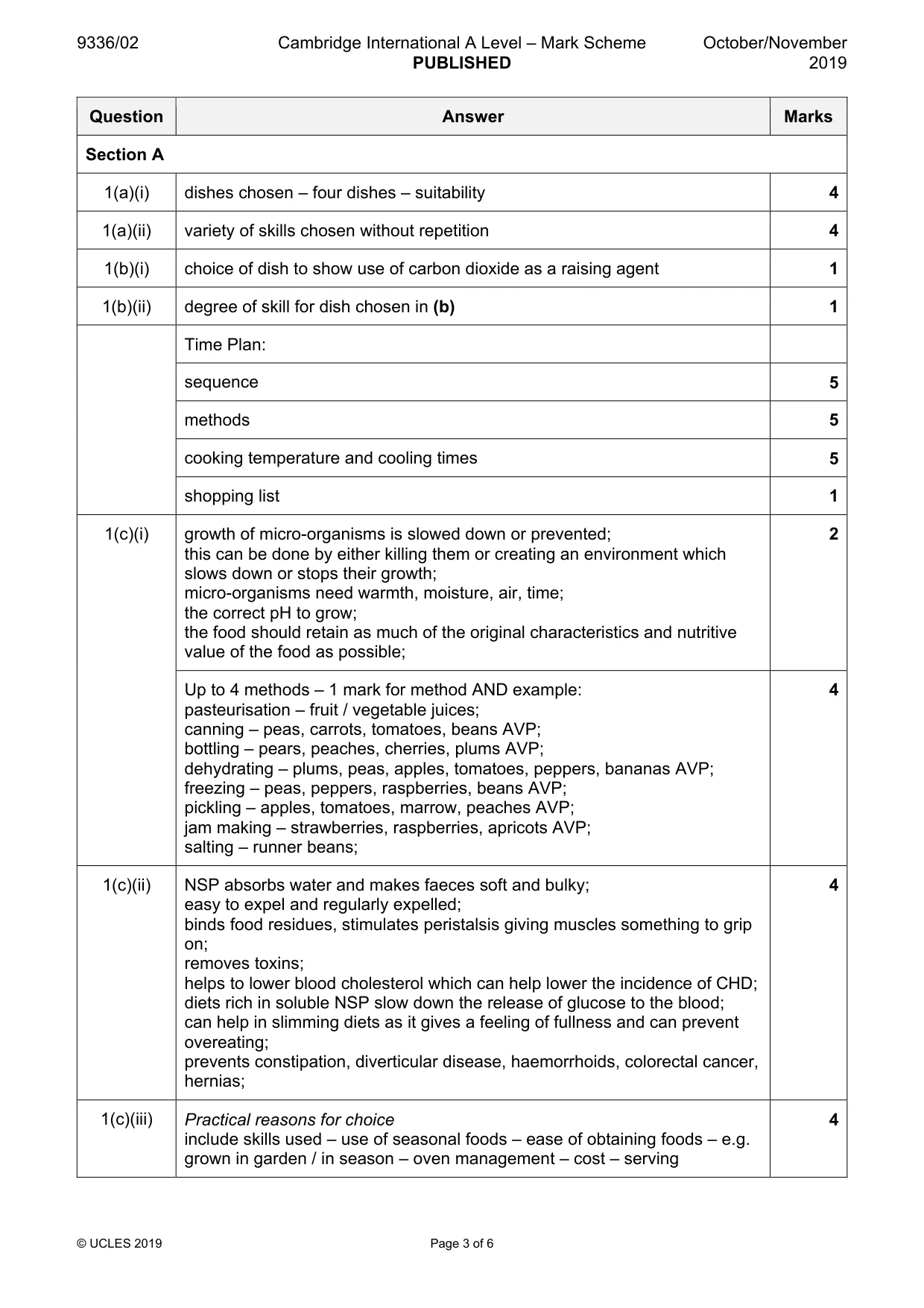
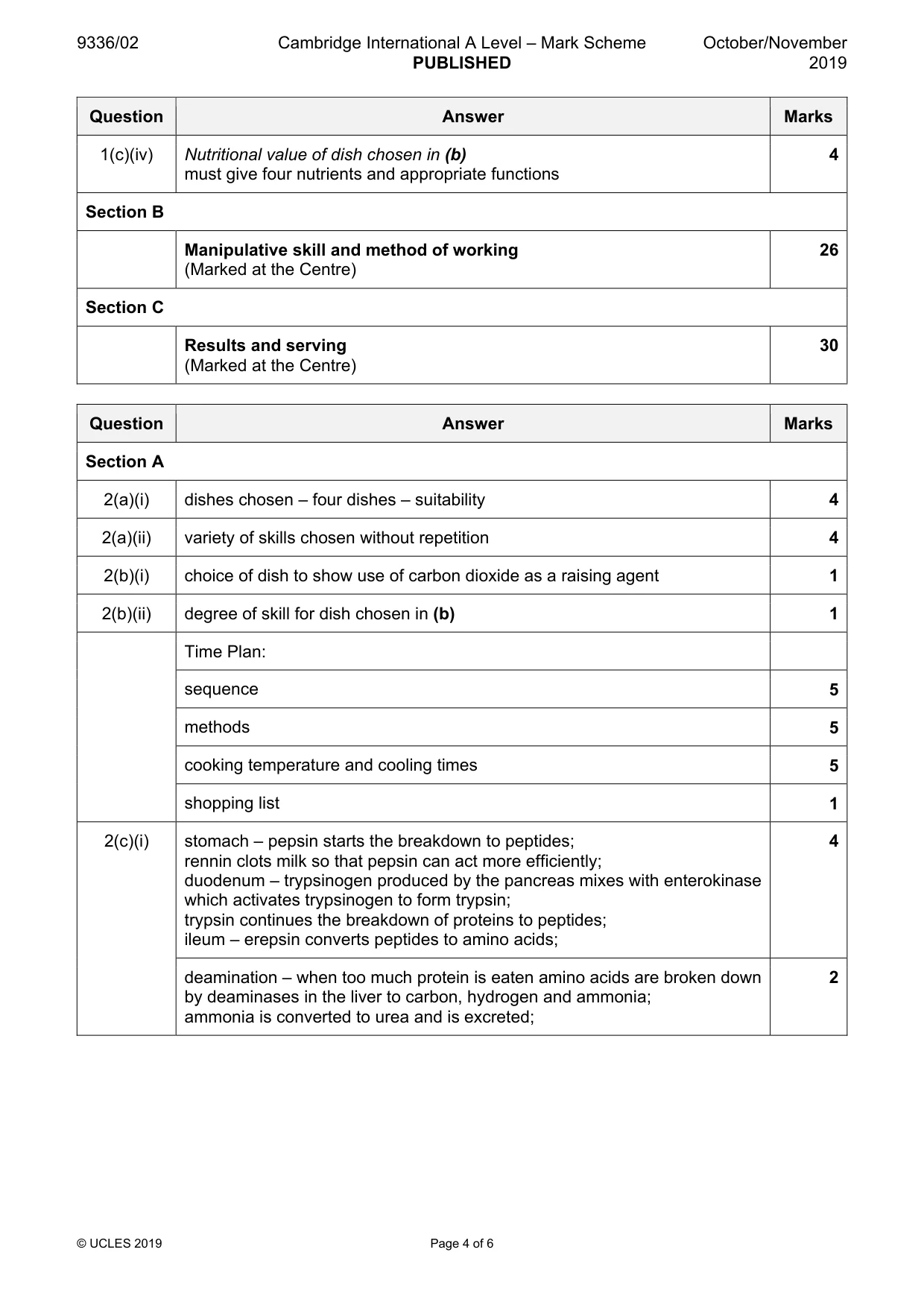
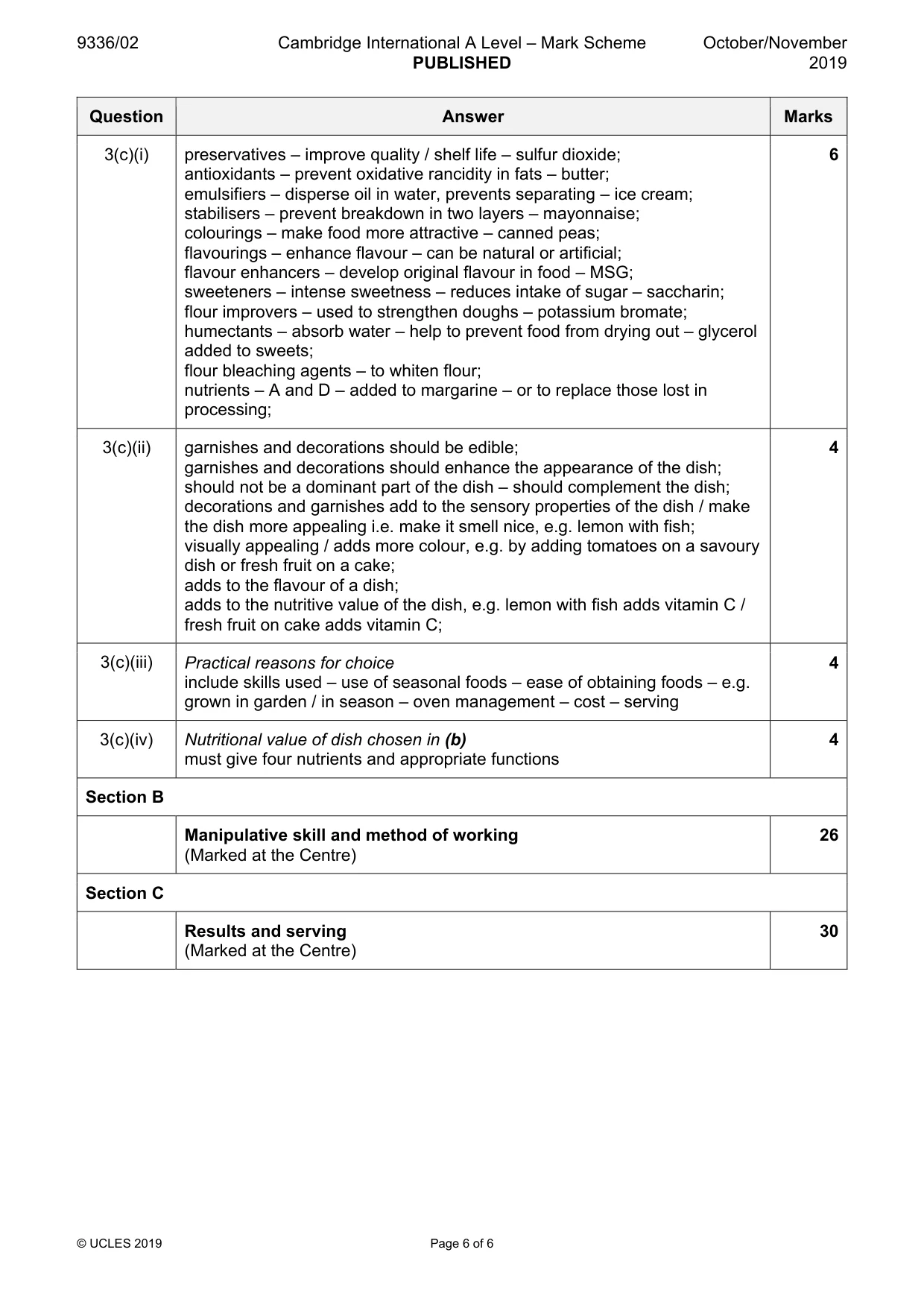
Mark scheme: Question Answer Marks Section A 1(a)(i) dishes chosen – four dishes – suitability 4 1(a)(ii) variety of skills chosen without repetition 4 1(b)(i) choice of dish to show use of carbon dioxide as a raising agent 1 1(b)(ii) degree of skill for dish chosen in (b) 1 Time Plan: sequence 5 methods 5 cooking temperature and cooling times 5 shopping list 1 1(c)(i) growth of micro-organisms is slowed down or prevented; 2 this can be done by either killing them or creating an environment which slows down or stops their growth; micro-organisms need warmth, moisture, air, time; the correct pH to grow; the food should retain as much of the original characteristics and nutritive value of the food as possible; Up to 4 methods – 1 mark for method AND example: 4 pasteurisation – fruit / vegetable juices; canning – peas, carrots, tomatoes, beans AVP; bottling – pears, peaches, cherries, plums AVP; dehydrating – plums, peas, apples, tomatoes, peppers, bananas AVP; freezing – peas, peppers, raspberries, beans AVP; pickling – apples, tomatoes, marrow, peaches AVP; jam making – strawberries, raspberries, apricots AVP; salting – runner beans; 1(c)(ii) NSP absorbs water and makes faeces soft and bulky; 4 easy to expel and regularly expelled; binds food residues, stimulates peristalsis giving muscles something to grip on; removes toxins; helps to lower blood cholesterol which can help lower the incidence of CHD; diets rich in soluble NSP slow down the release of glucose to the blood; can help in slimming diets as it gives a feeling of fullness and can prevent overeating; prevents constipation, diverticular disease, haemorrhoids, colorectal cancer, hernias; 1(c)(iii) Practical reasons for choice 4 include skills used – use of seasonal foods – ease of obtaining foods – e.g. grown in garden / in season – oven management – cost – serving 1(c)(iv) Nutritional value of dish chosen in (b) 4 must give four nutrients and appropriate functions Section B Manipulative skill and method of working 26 (Marked at the Centre) Section C Results and serving 30 (Marked at the Centre)
What you needed in this session
Cambridge’s own grade thresholds for 2019 Oct/Nov, Paper 2 · Variant 1. A higher threshold means an easier paper — the bar moves with how the cohort did.