Cambridge A Level Food Studies 9336 — 2014 Oct/Nov Paper 2 · Variant 1
9336/21/O/N/14 · 1 question · 100 marks · ≈113 min
The question paper and its mark scheme, free to read here and free to download. This is Cambridge’s own paper, exactly as it was sat.
Question paper4 pages
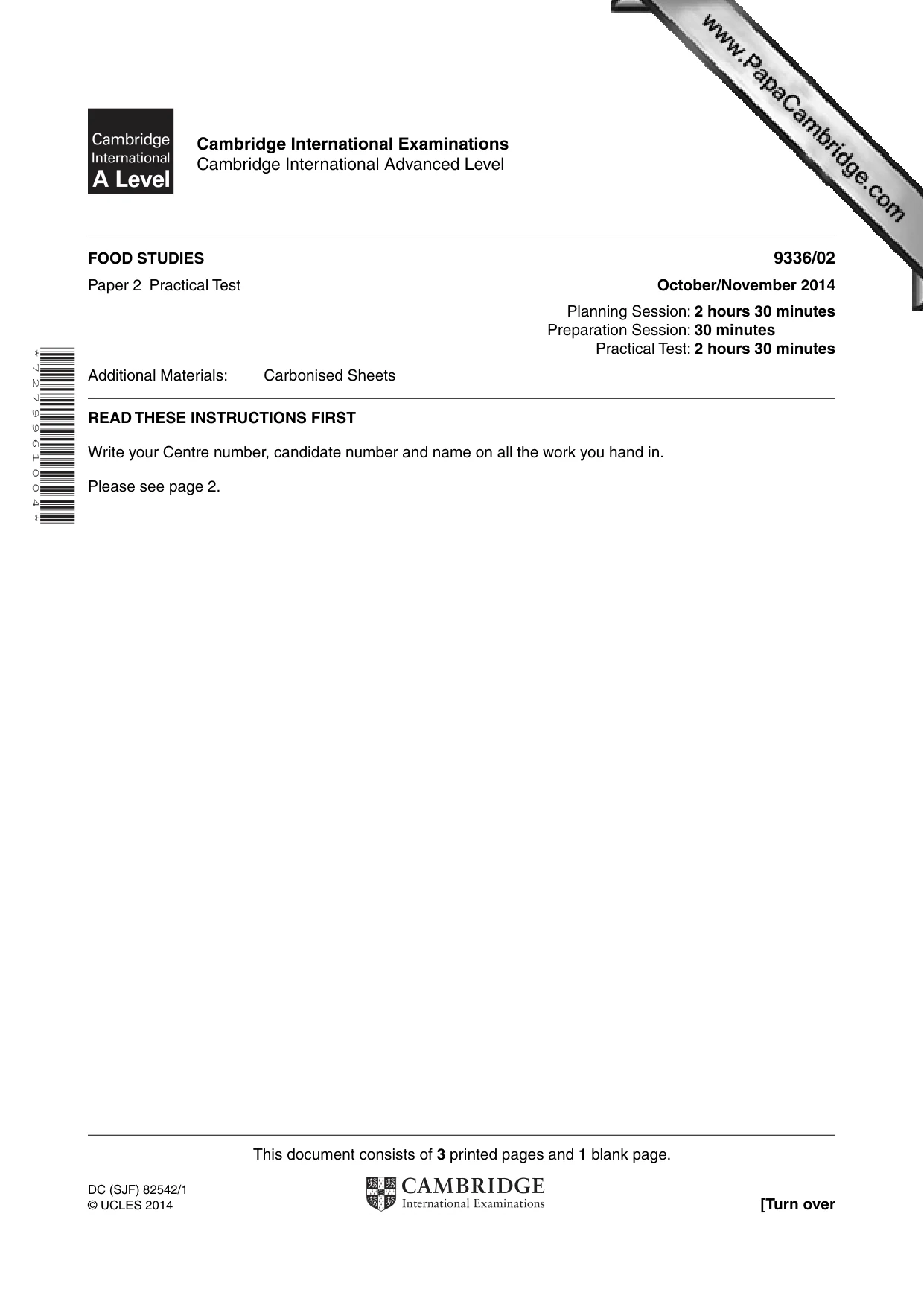
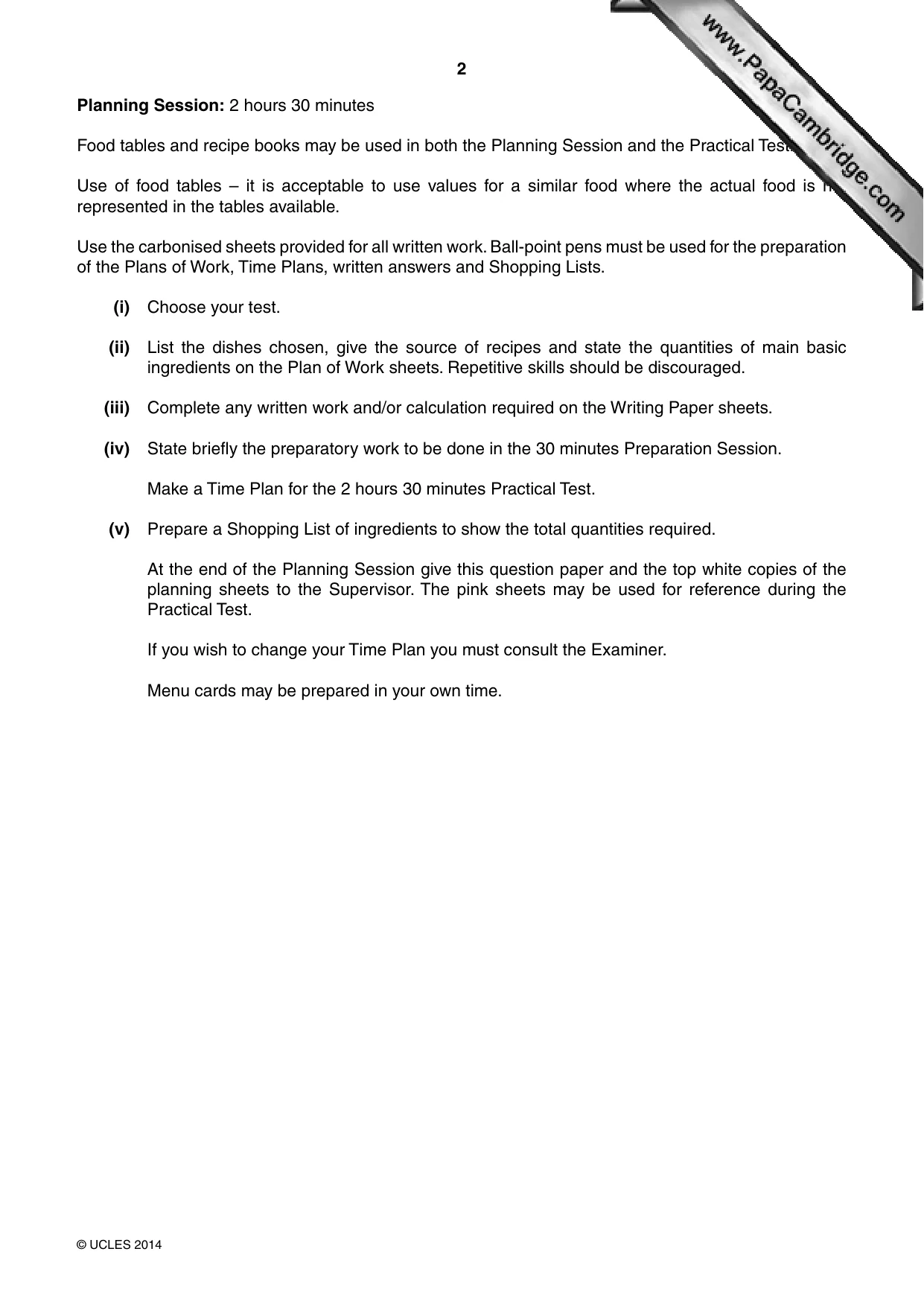
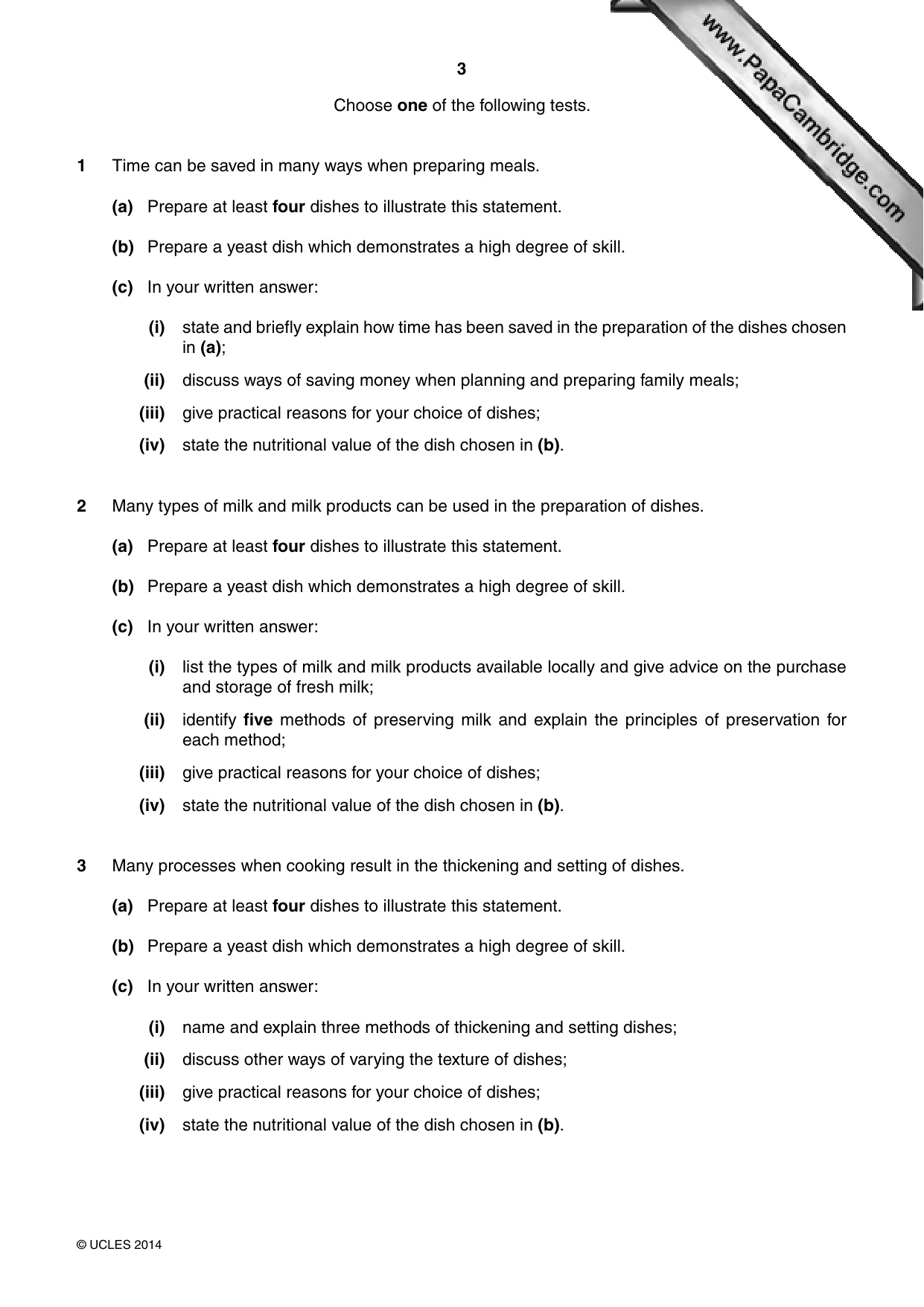

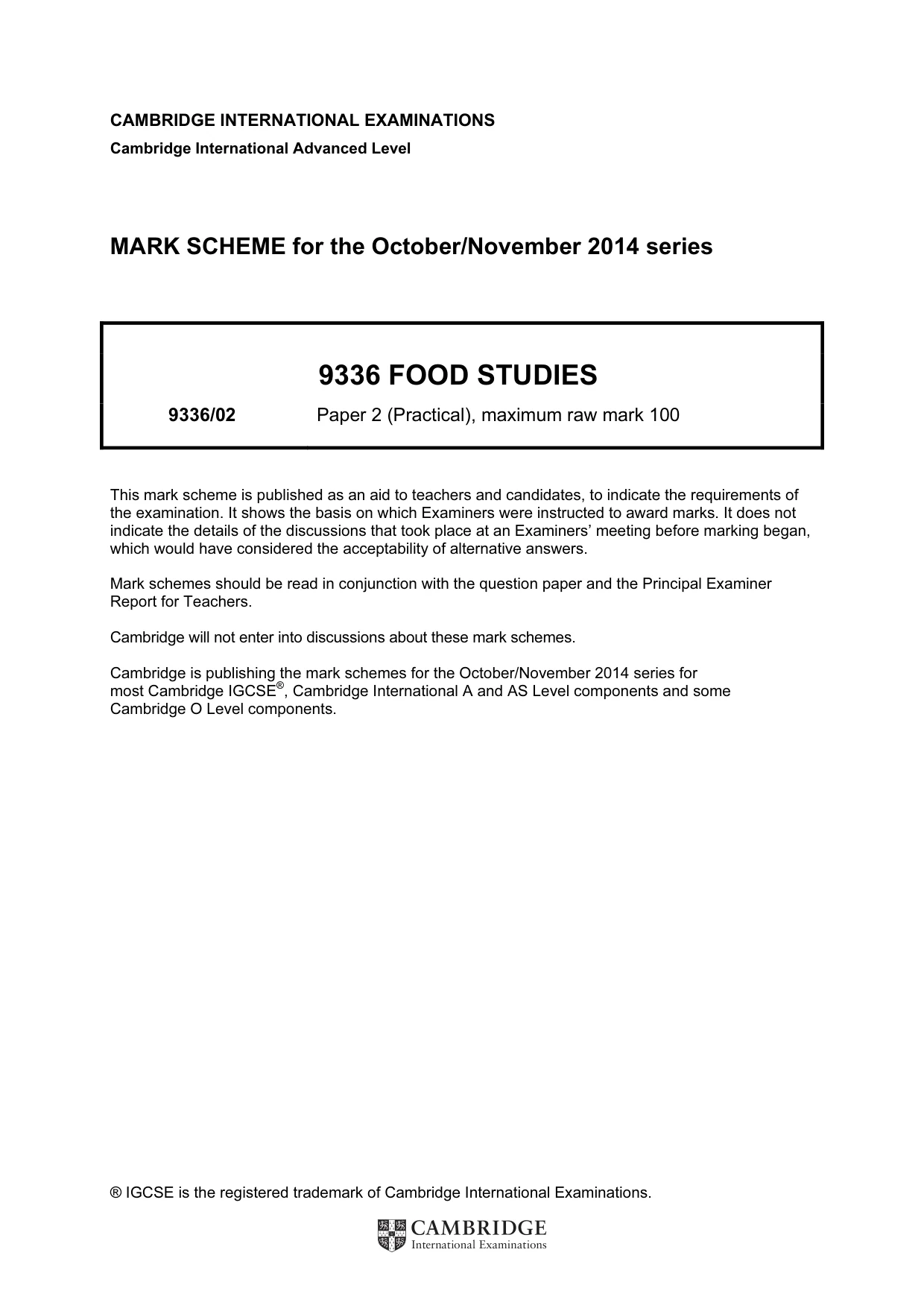
Mark scheme4 pages
Answers below. Sit the paper first if you are practising.
Questions as text
Q1 · Time can be saved in many ways when preparing meals
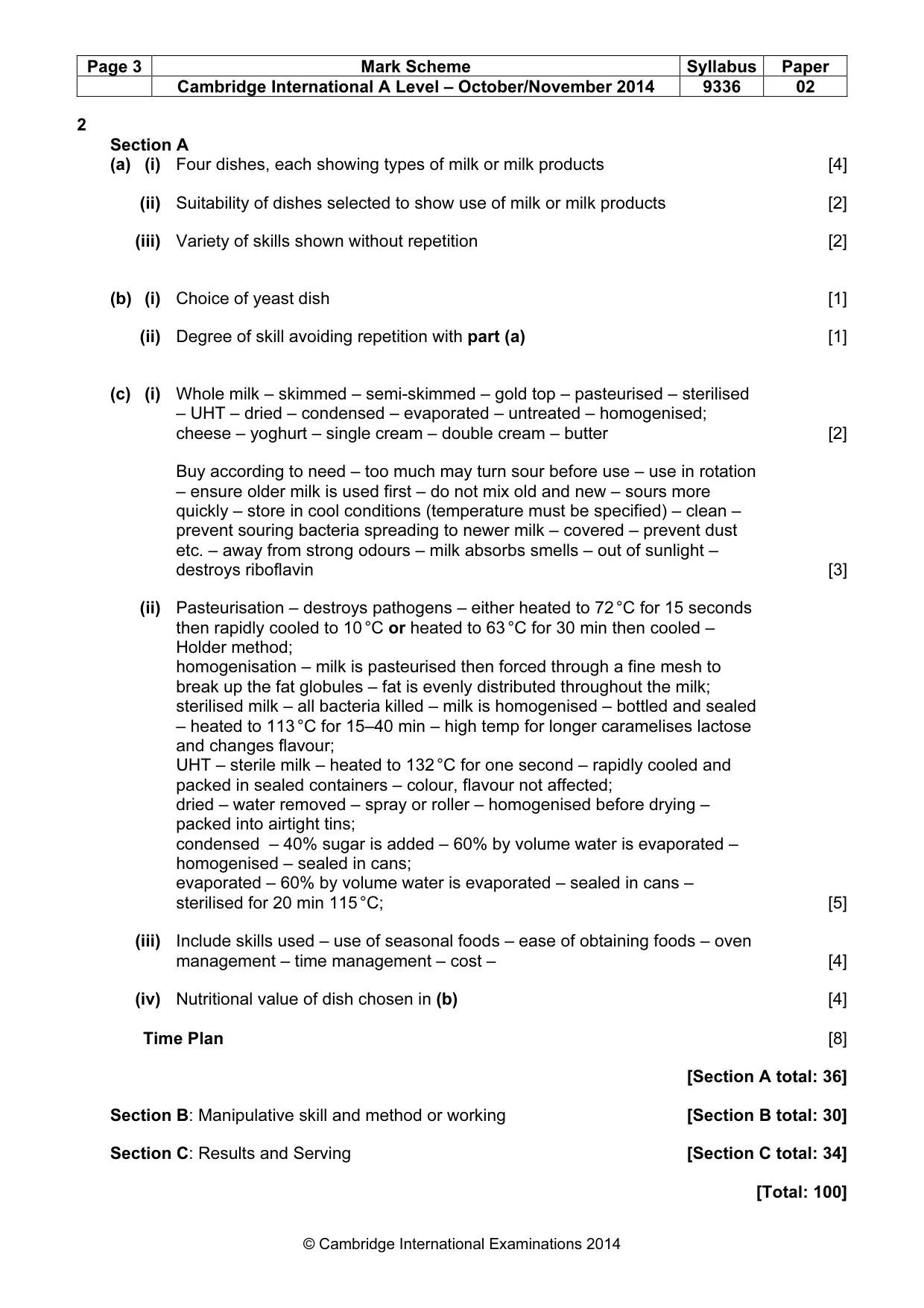
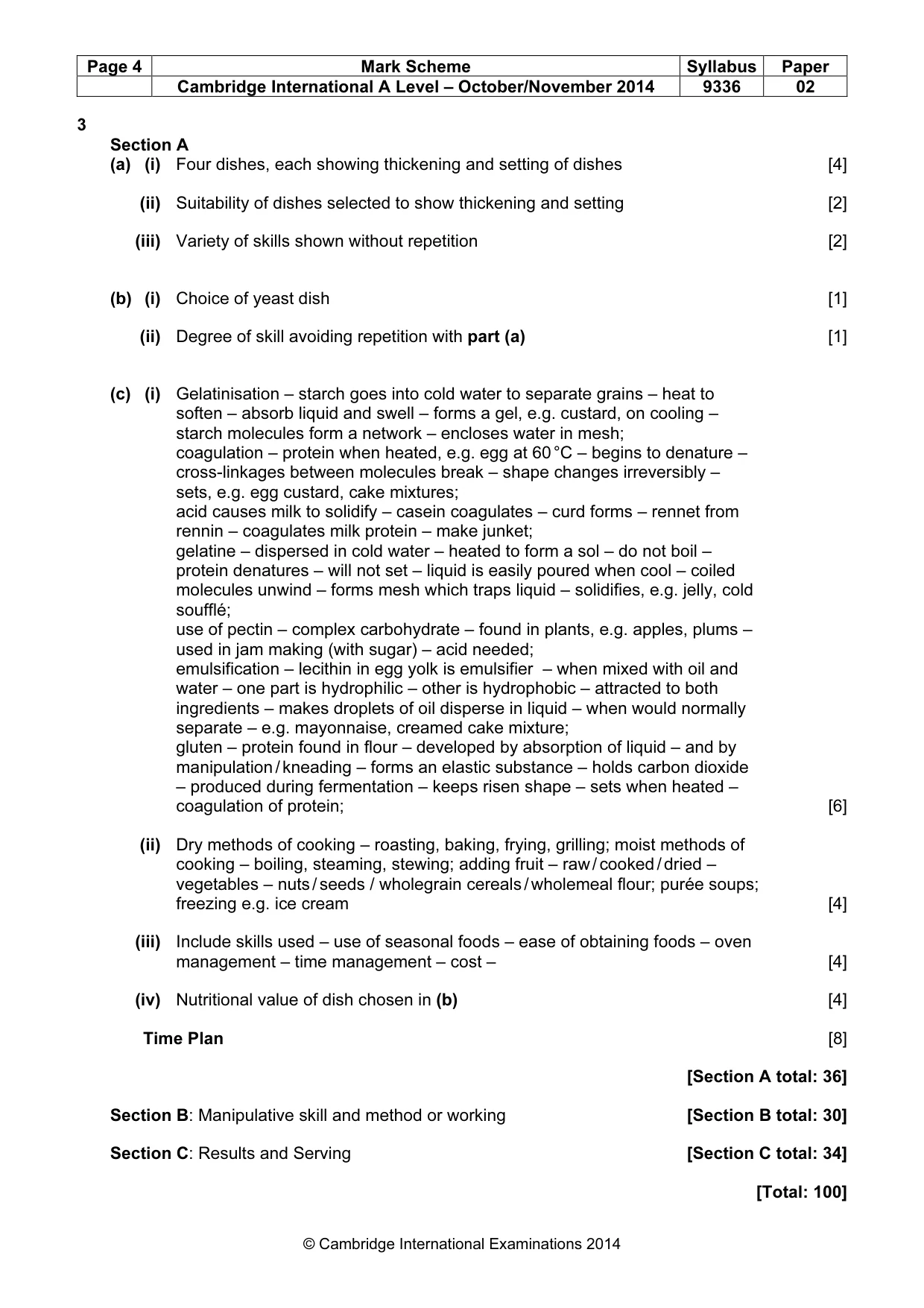
1 Time can be saved in many ways when preparing meals. (a) Prepare at least four dishes to illustrate this statement. (b) Prepare a yeast dish which demonstrates a high degree of skill. (c) In your written answer: (i) state and briefly explain how time has been saved in the preparation of the dishes chosen in (a); (ii) discuss ways of saving money when planning and preparing family meals; (iii) give practical reasons for your choice of dishes; (iv) state the nutritional value of the dish chosen in (b). 2 Many types of milk and milk products can be used in the preparation of dishes. (a) Prepare at least four dishes to illustrate this statement. (b) Prepare a yeast dish which demonstrates a high degree of skill. (c) In your written answer: (i) list the types of milk and milk products available locally and give advice on the purchase and storage of fresh milk; (ii) identify five methods of preserving milk and explain the principles of preservation for each method; (iii) give practical reasons for your choice of dishes; (iv) state the nutritional value of the dish chosen in (b). 3 Many processes when cooking result in the thickening and setting of dishes. (a) Prepare at least four dishes to illustrate this statement. (b) Prepare a yeast dish which demonstrates a high degree of skill. (c) In your written answer: (i) name and explain three methods of thickening and setting dishes; (ii) discuss other ways of varying the texture of dishes; (iii) give practical reasons for your choice of dishes; (iv) state the nutritional value of the dish chosen in (b).
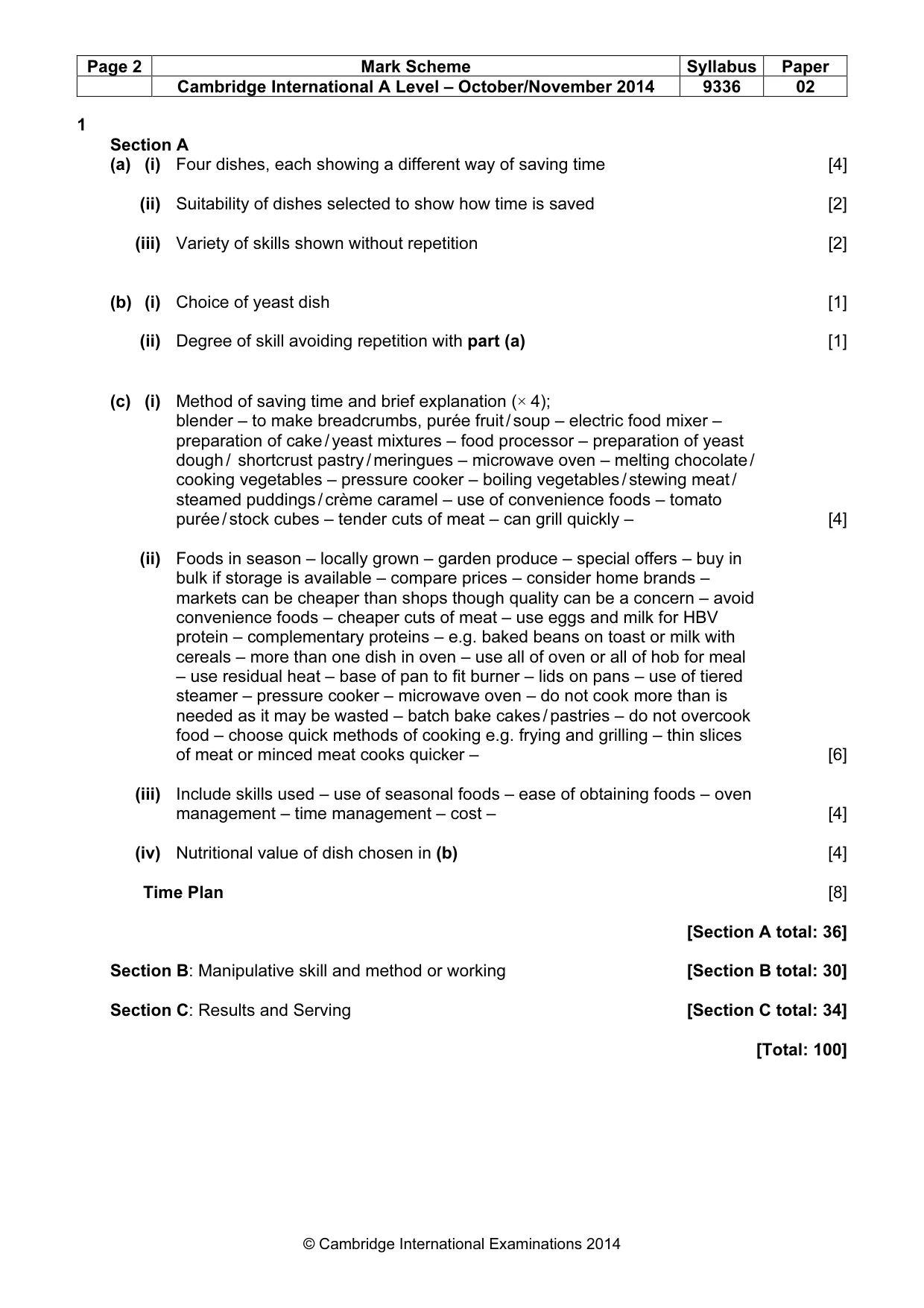
Mark scheme: 1 Section A (a) (i) Four dishes, each showing a different way of saving time [4] (ii) Suitability of dishes selected to show how time is saved [2] (iii) Variety of skills shown without repetition [2] (b) (i) Choice of yeast dish [1] (ii) Degree of skill avoiding repetition with part (a) [1] (c) (i) Method of saving time and brief explanation (× 4); blender – to make breadcrumbs, purée fruit / soup – electric food mixer – preparation of cake / yeast mixtures – food processor – preparation of yeast dough / shortcrust pastry / meringues – microwave oven – melting chocolate / cooking vegetables – pressure cooker – boiling vegetables / stewing meat / steamed puddings / crème caramel – use of convenience foods – tomato purée / stock cubes – tender cuts of meat – can grill quickly – [4] (ii) Foods in season – locally grown – garden produce – special offers – buy in bulk if storage is available – compare prices – consider home brands – markets can be cheaper than shops though quality can be a concern – avoid convenience foods – cheaper cuts of meat – use eggs and milk for HBV protein – complementary proteins – e.g. baked beans on toast or milk with cereals – more than one dish in oven – use all of oven or all of hob for meal – use residual heat – base of pan to fit burner – lids on pans – use of tiered steamer – pressure cooker – microwave oven – do not cook more than is needed as it may be wasted – batch bake cakes / pastries – do not overcook food – choose quick methods of cooking e.g. frying and grilling – thin slices of meat or minced meat cooks quicker – [6] (iii) Include skills used – use of seasonal foods – ease of obtaining foods – oven management – time management – cost – [4] (iv) Nutritional value of dish chosen in (b) [4] Time Plan [8] [Section A total: 36] Section B: Manipulative skill and method or working [Section B total: 30] Section C: Results and Serving [Section C total: 34] [Total: 100]
What you needed in this session
Cambridge’s own grade thresholds for 2014 Oct/Nov, Paper 2 · Variant 1. A higher threshold means an easier paper — the bar moves with how the cohort did.