Cambridge A Level Economics 9708 — 2021 May/June Paper 1 · Variant 2
9708/12/M/J/21 · 30 questions · 30 marks · ≈34 min
The question paper and its mark scheme, free to read here and free to download. This is Cambridge’s own paper, exactly as it was sat.
Question paper12 pages
Mark scheme3 pages
Answers below. Sit the paper first if you are practising.
Questions as text
Q1 · A tourist visits the coast for a holiday
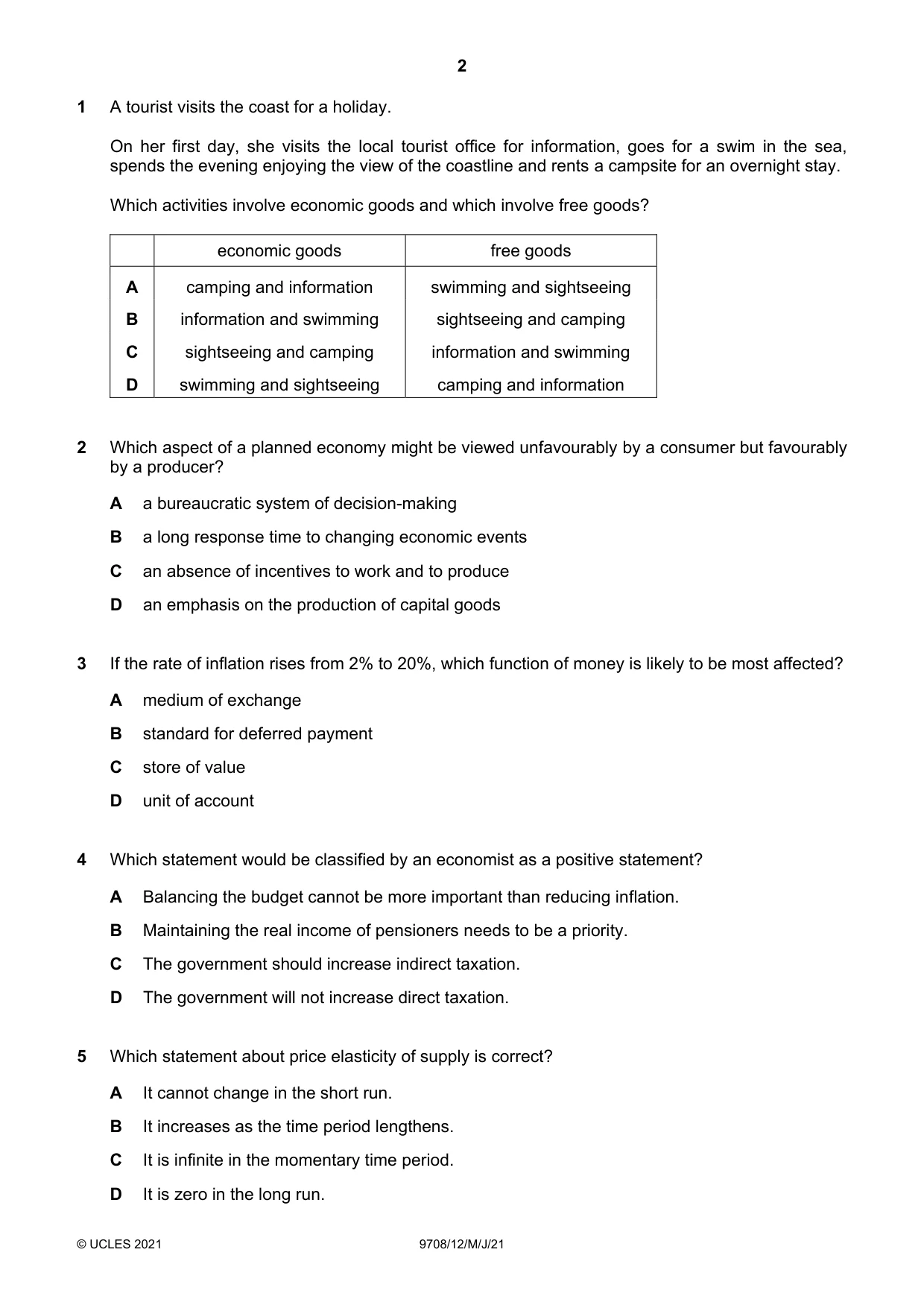
1 A tourist visits the coast for a holiday. On her first day, she visits the local tourist office for information, goes for a swim in the sea, spends the evening enjoying the view of the coastline and rents a campsite for an overnight stay. Which activities involve economic goods and which involve free goods? economic goods free goods A camping and information swimming and sightseeing B information and swimming sightseeing and camping C sightseeing and camping information and swimming D swimming and sightseeing camping and information
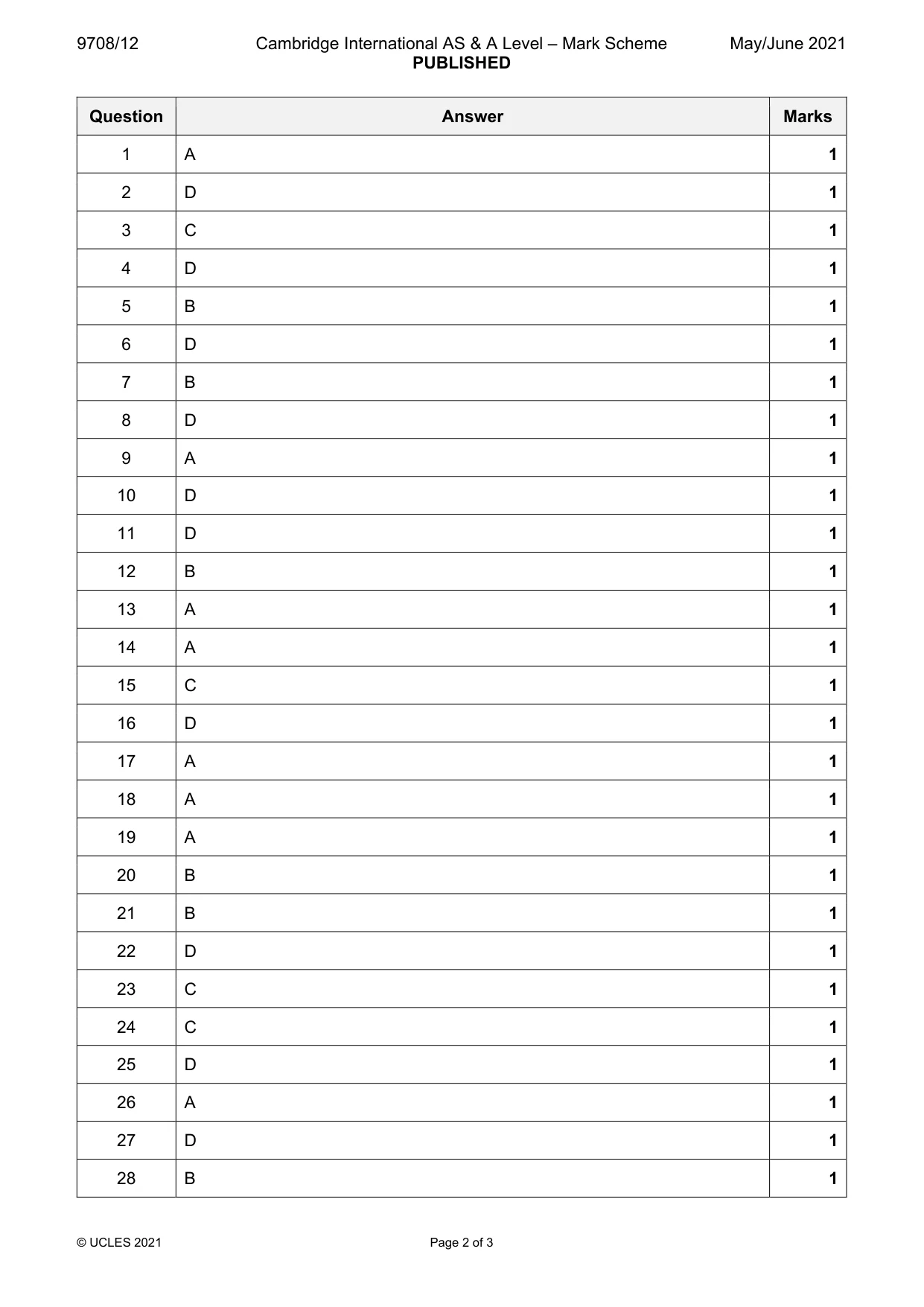
Mark scheme: A
Q2 · Which aspect of a planned economy might be viewed unfavourably by a consumer but…
2 Which aspect of a planned economy might be viewed unfavourably by a consumer but favourably by a producer? A a bureaucratic system of decision-making B a long response time to changing economic events C an absence of incentives to work and to produce D an emphasis on the production of capital goods
Mark scheme: D
More questions on Resource allocation in different economic systems
Q3 · If the rate of inflation rises from 2% to 20%, which function of money is likely to be…
3 If the rate of inflation rises from 2% to 20%, which function of money is likely to be most affected? A medium of exchange B standard for deferred payment C store of value D unit of account
Mark scheme: C
Q4 · Which statement would be classified by an economist as a positive statement?
4 Which statement would be classified by an economist as a positive statement? A Balancing the budget cannot be more important than reducing inflation. B Maintaining the real income of pensioners needs to be a priority. C The government should increase indirect taxation. D The government will not increase direct taxation.
Mark scheme: D
Q5 · Which statement about price elasticity of supply is correct?
5 Which statement about price elasticity of supply is correct? A It cannot change in the short run. B It increases as the time period lengthens. C It is infinite in the momentary time period. D It is zero in the long run.
Mark scheme: B
Q6 · The price elasticity of demand for a firm’s product is equal to one for all price changes
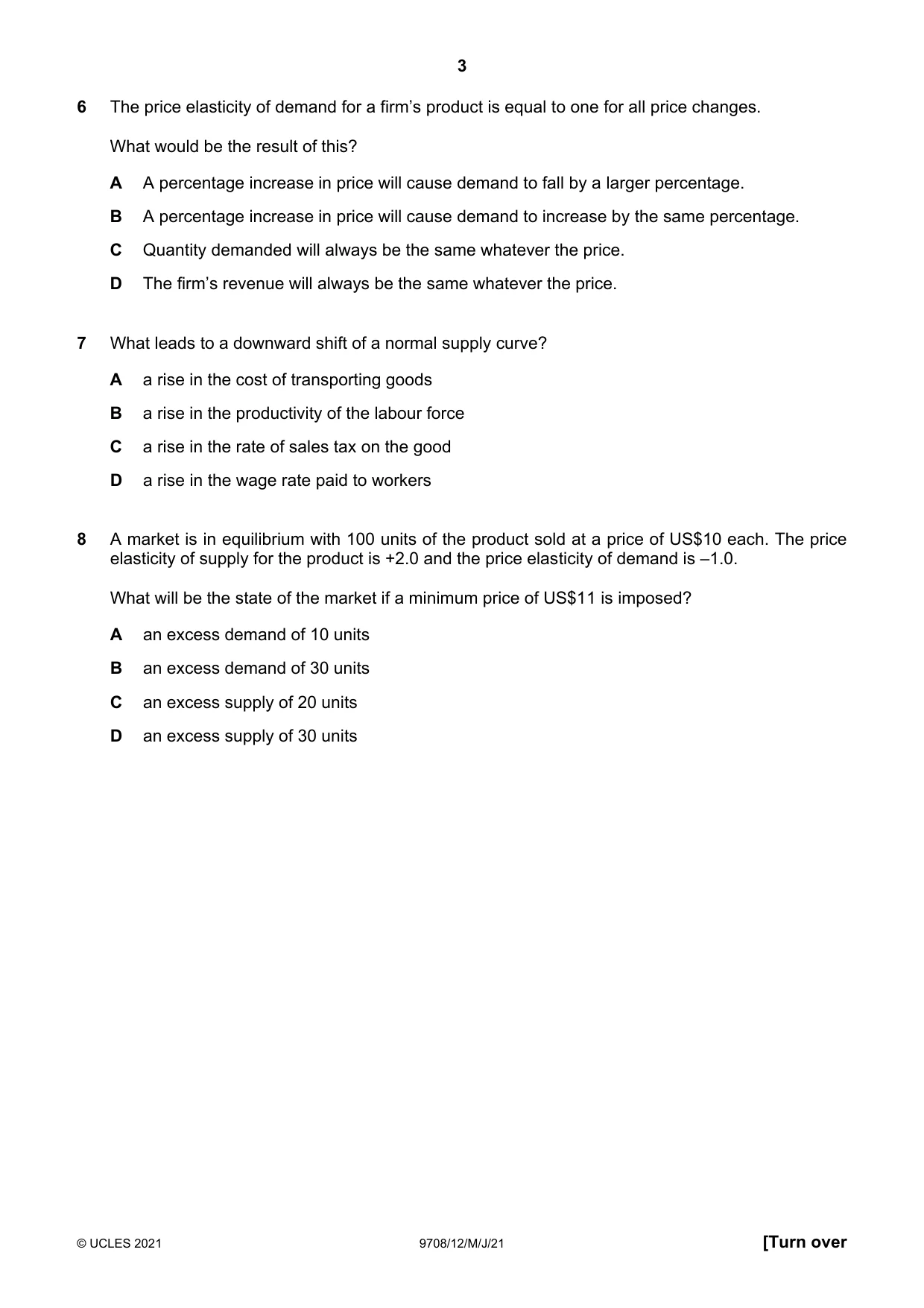
6 The price elasticity of demand for a firm’s product is equal to one for all price changes. What would be the result of this? A A percentage increase in price will cause demand to fall by a larger percentage. B A percentage increase in price will cause demand to increase by the same percentage. C Quantity demanded will always be the same whatever the price. D The firm’s revenue will always be the same whatever the price.
Mark scheme: D
More questions on Price elasticity, income elasticity and cross elasticity of demand
Q7 · What leads to a downward shift of a normal supply curve?
7 What leads to a downward shift of a normal supply curve? A a rise in the cost of transporting goods B a rise in the productivity of the labour force C a rise in the rate of sales tax on the good D a rise in the wage rate paid to workers
Mark scheme: B
Q8 · A market is in equilibrium with 100 units of the product sold at a price of US$10 each
8 A market is in equilibrium with 100 units of the product sold at a price of US$10 each. The price elasticity of supply for the product is +2.0 and the price elasticity of demand is –1.0. What will be the state of the market if a minimum price of US$11 is imposed? A an excess demand of 10 units B an excess demand of 30 units C an excess supply of 20 units D an excess supply of 30 units
Mark scheme: D
Q9 · The diagram shows the market for meat in equilibrium at X
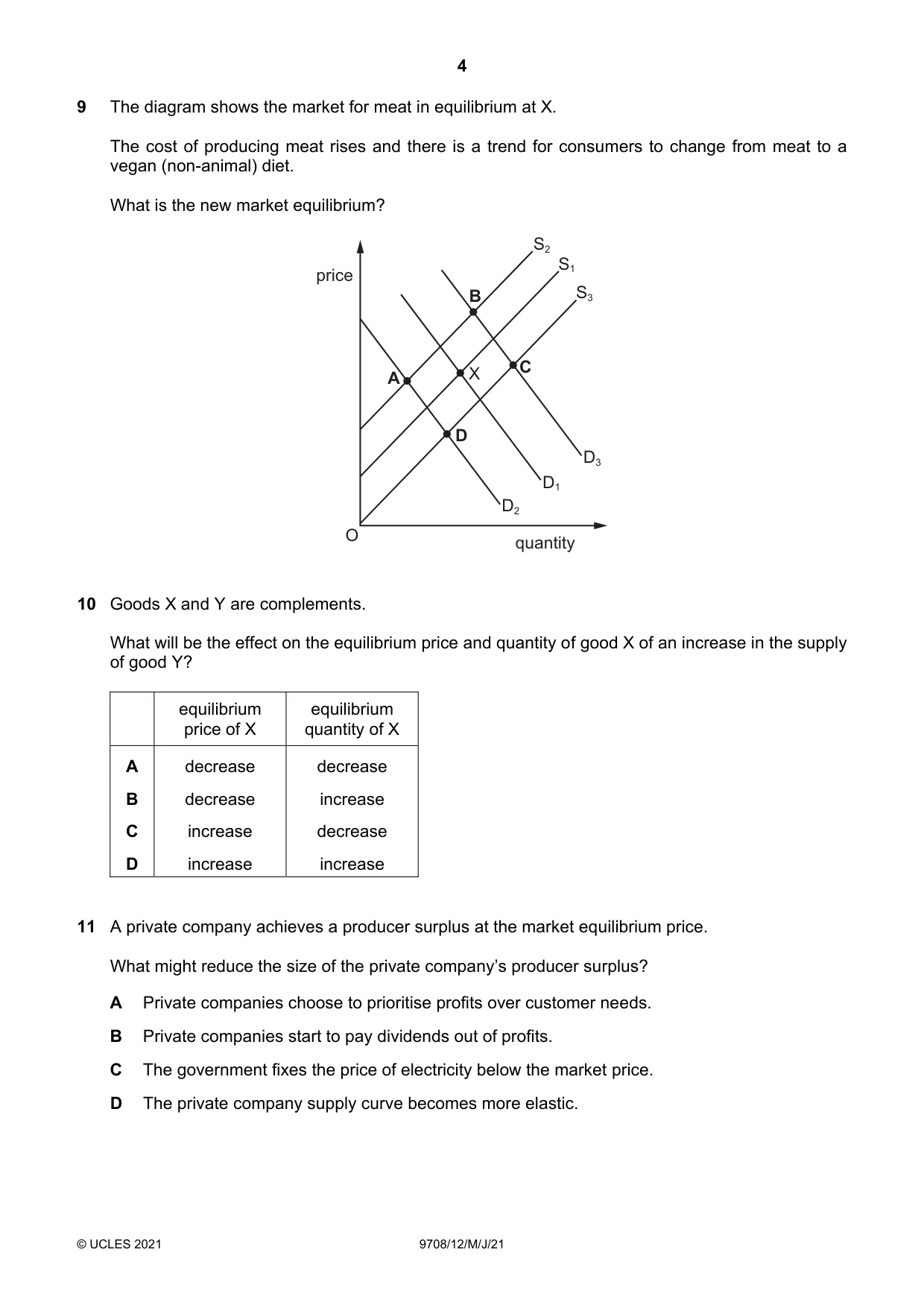
9 The diagram shows the market for meat in equilibrium at X. The cost of producing meat rises and there is a trend for consumers to change from meat to a vegan (non-animal) diet. What is the new market equilibrium? S2 S1 price B S3 X C A D D3 D1 D2 O quantity
Mark scheme: A
Q10 · Goods X and Y are complements
10 Goods X and Y are complements. What will be the effect on the equilibrium price and quantity of good X of an increase in the supply of good Y? equilibrium equilibrium price of X quantity of X A decrease decrease B decrease increase C increase decrease D increase increase
Mark scheme: D
Q11 · A private company achieves a producer surplus at the market equilibrium price
11 A private company achieves a producer surplus at the market equilibrium price. What might reduce the size of the private company’s producer surplus? A Private companies choose to prioritise profits over customer needs. B Private companies start to pay dividends out of profits. C The government fixes the price of electricity below the market price. D The private company supply curve becomes more elastic.
Mark scheme: D
Q12 · How would an economist establish the market demand curve for a private good?
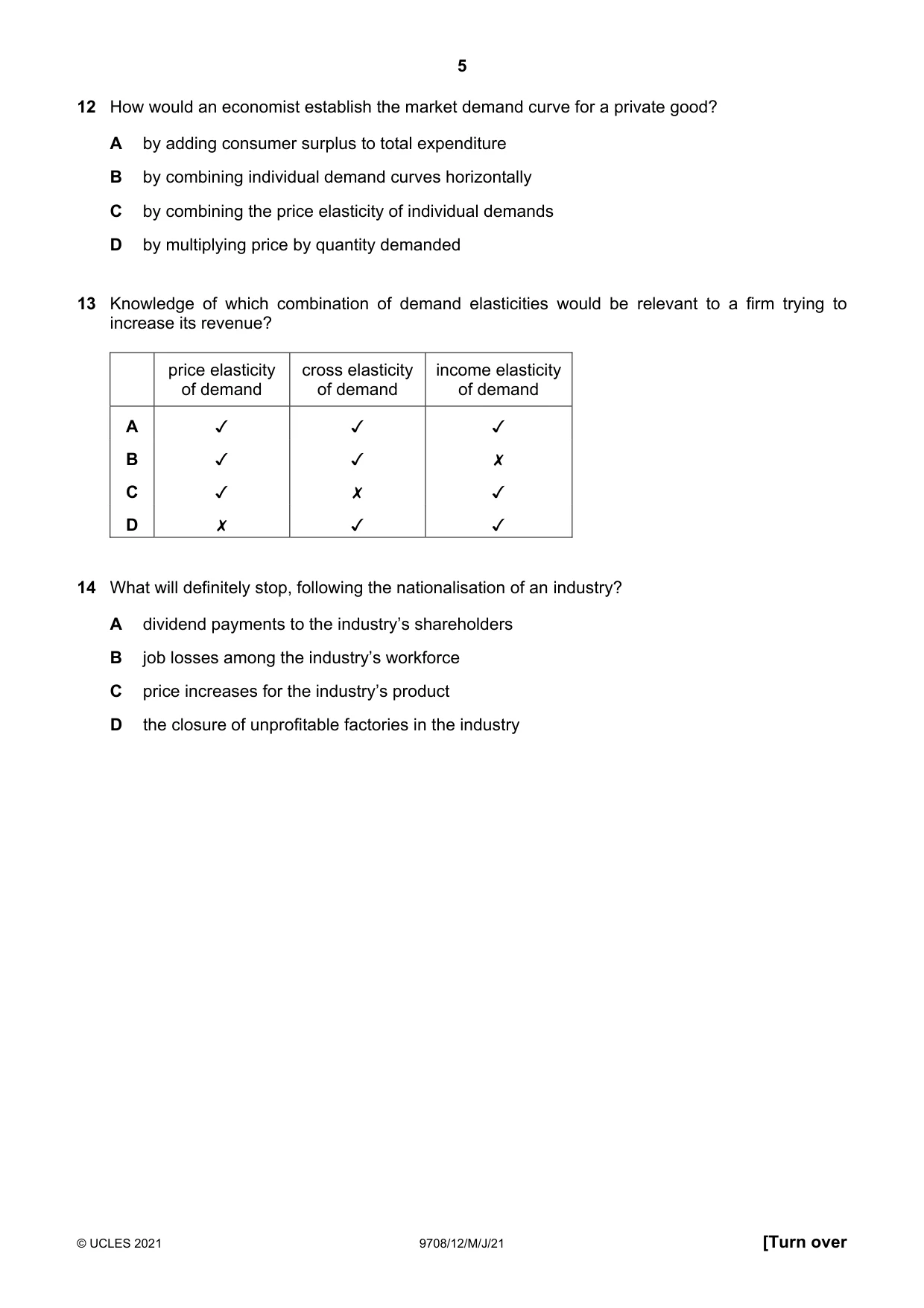
12 How would an economist establish the market demand curve for a private good? A by adding consumer surplus to total expenditure B by combining individual demand curves horizontally C by combining the price elasticity of individual demands D by multiplying price by quantity demanded
Mark scheme: B
Q13 · Knowledge of which combination of demand elasticities would be relevant to a firm trying…
13 Knowledge of which combination of demand elasticities would be relevant to a firm trying to increase its revenue? price elasticity | cross elasticity | income elasticity of demand of demand of demand v v v 0 0O WwW > v v x v x v x v v
Mark scheme: A
More questions on Price elasticity, income elasticity and cross elasticity of demand
Q14 · What will definitely stop, following the nationalisation of an industry?
14 What will definitely stop, following the nationalisation of an industry? A dividend payments to the industry’s shareholders B job losses among the industry’s workforce C price increases for the industry’s product D the closure of unprofitable factories in the industry
Mark scheme: A
More questions on Resource allocation in different economic systems
Q15 · The diagram shows the effect of the government introducing a subsidy on a product
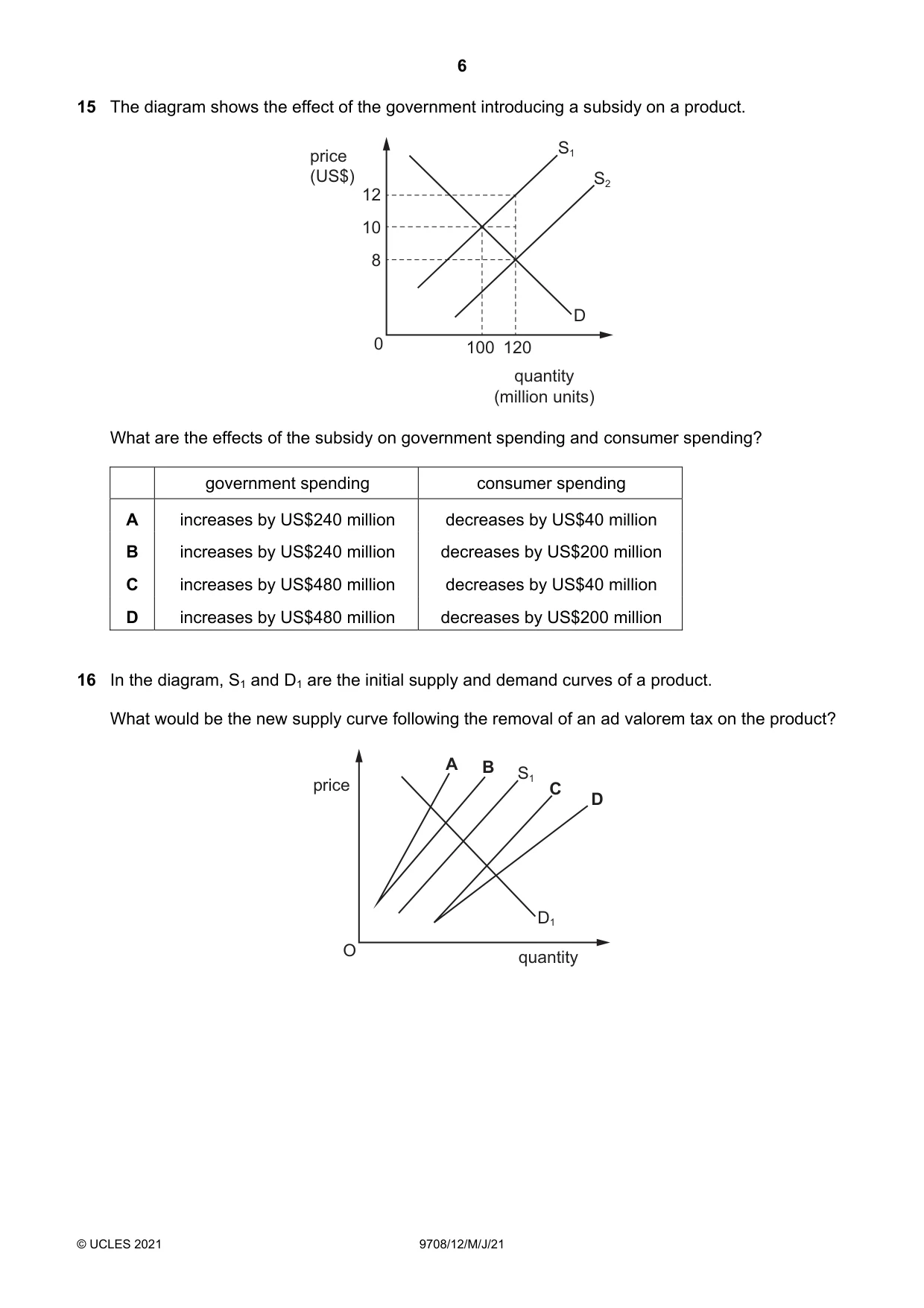
15 The diagram shows the effect of the government introducing a subsidy on a product. price S1 (US$) S2 12 10 8 D 0 100 120 quantity (million units) What are the effects of the subsidy on government spending and consumer spending? government spending consumer spending A increases by US$240 million decreases by US$40 million B increases by US$240 million decreases by US$200 million C increases by US$480 million decreases by US$40 million D increases by US$480 million decreases by US$200 million
Mark scheme: C
More questions on Methods and effects of government intervention in markets
Q16 · In the diagram, S1 and D1 are the initial supply and demand curves of a product
16 In the diagram, S1 and D1 are the initial supply and demand curves of a product. What would be the new supply curve following the removal of an ad valorem tax on the product? A B S1 price C D D1 O quantity
Mark scheme: D
More questions on Methods and effects of government intervention in markets
Q17 · The table shows sources of government revenue in a fiscal year for an economy
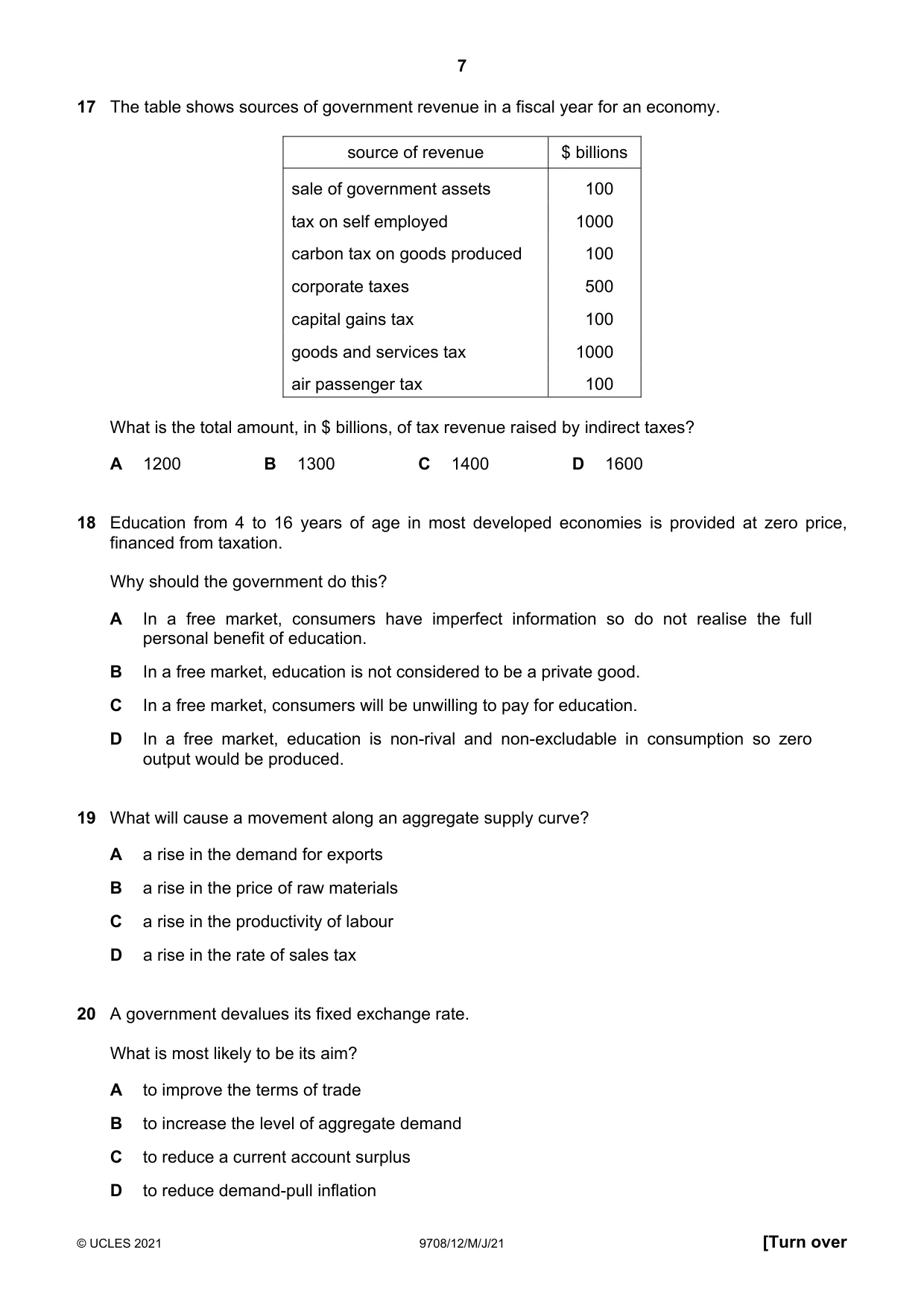
17 The table shows sources of government revenue in a fiscal year for an economy. source of revenue $ billions sale of government assets 100 tax on self employed 1000 carbon tax on goods produced 100 corporate taxes 500 capital gains tax 100 goods and services tax 1000 air passenger tax 100 What is the total amount, in $ billions, of tax revenue raised by indirect taxes? A 1200 B 1300 C 1400 D 1600
Mark scheme: A
More questions on Methods and effects of government intervention in markets
Q18 · Education from 4 to 16 years of age in most developed economies is provided at zero…
18 Education from 4 to 16 years of age in most developed economies is provided at zero price, financed from taxation. Why should the government do this? A In a free market, consumers have imperfect information so do not realise the full personal benefit of education. B In a free market, education is not considered to be a private good. C In a free market, consumers will be unwilling to pay for education. D In a free market, education is non-rival and non-excludable in consumption so zero output would be produced.
Mark scheme: A
More questions on Reasons for government intervention in markets
Q19 · What will cause a movement along an aggregate supply curve?
19 What will cause a movement along an aggregate supply curve? A a rise in the demand for exports B a rise in the price of raw materials C a rise in the productivity of labour D a rise in the rate of sales tax
Mark scheme: A
More questions on Aggregate Demand and Aggregate Supply analysis
Q20 · A government devalues its fixed exchange rate
20 A government devalues its fixed exchange rate. What is most likely to be its aim? A to improve the terms of trade B to increase the level of aggregate demand C to reduce a current account surplus D to reduce demand-pull inflation
Mark scheme: B
Q21 · As part of its trade policy, a government subsidises the cost of machinery used to…
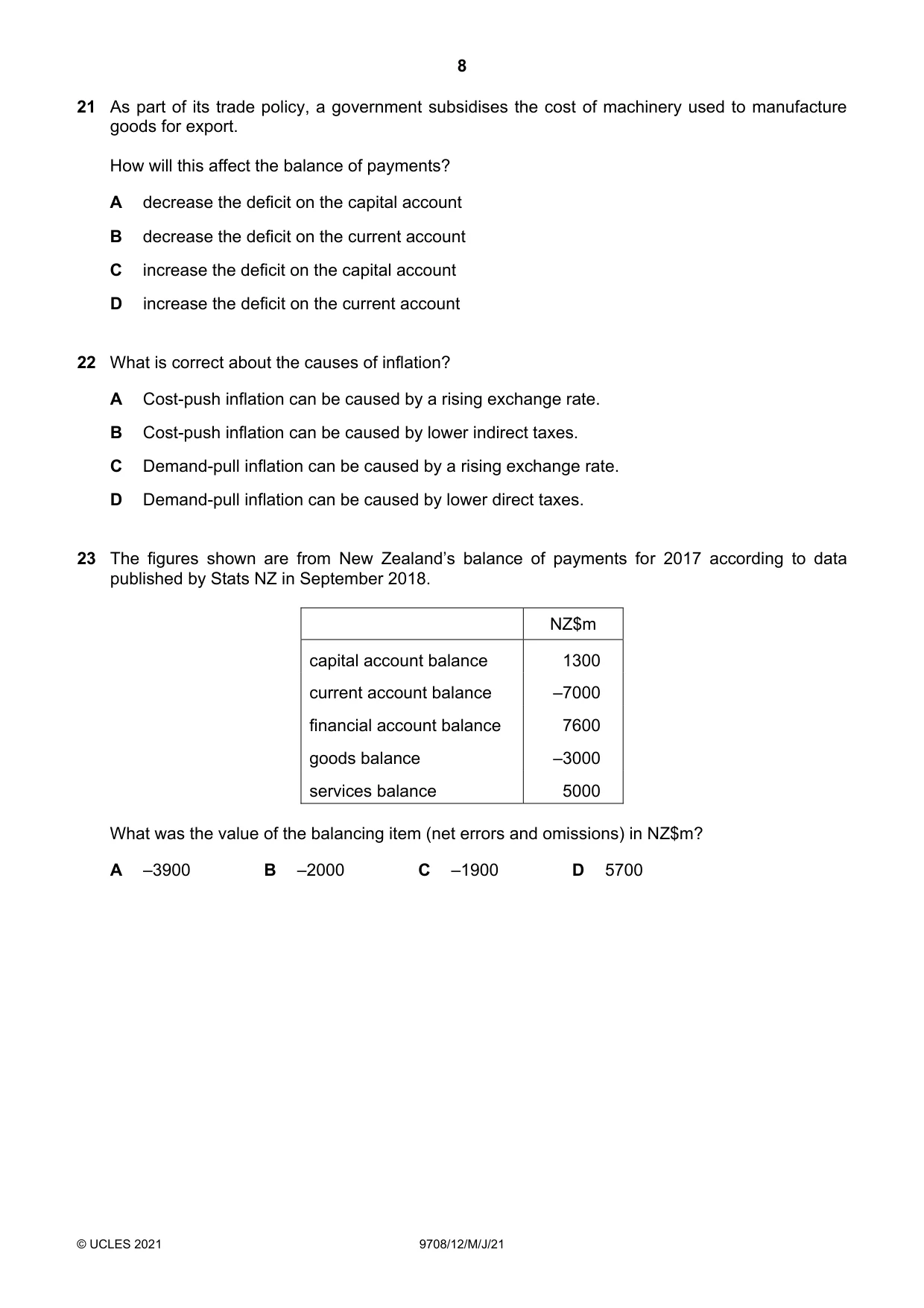
21 As part of its trade policy, a government subsidises the cost of machinery used to manufacture goods for export. How will this affect the balance of payments? A decrease the deficit on the capital account B decrease the deficit on the current account C increase the deficit on the capital account D increase the deficit on the current account
Mark scheme: B
More questions on Policies to correct imbalances in the current account of the balance of payments
Q22 · What is correct about the causes of inflation?
22 What is correct about the causes of inflation? A Cost-push inflation can be caused by a rising exchange rate. B Cost-push inflation can be caused by lower indirect taxes. C Demand-pull inflation can be caused by a rising exchange rate. D Demand-pull inflation can be caused by lower direct taxes.
Mark scheme: D
Q23 · The figures shown are from New Zealand’s balance of payments for 2017 according to data…
23 The figures shown are from New Zealand’s balance of payments for 2017 according to data published by Stats NZ in September 2018. NZ$m capital account balance 1300 current account balance –7000 financial account balance 7600 goods balance –3000 services balance 5000 What was the value of the balancing item (net errors and omissions) in NZ$m? A –3900 B –2000 C –1900 D 5700
Mark scheme: C
More questions on Current account of the balance of payments
Q24 · Two statements are shown
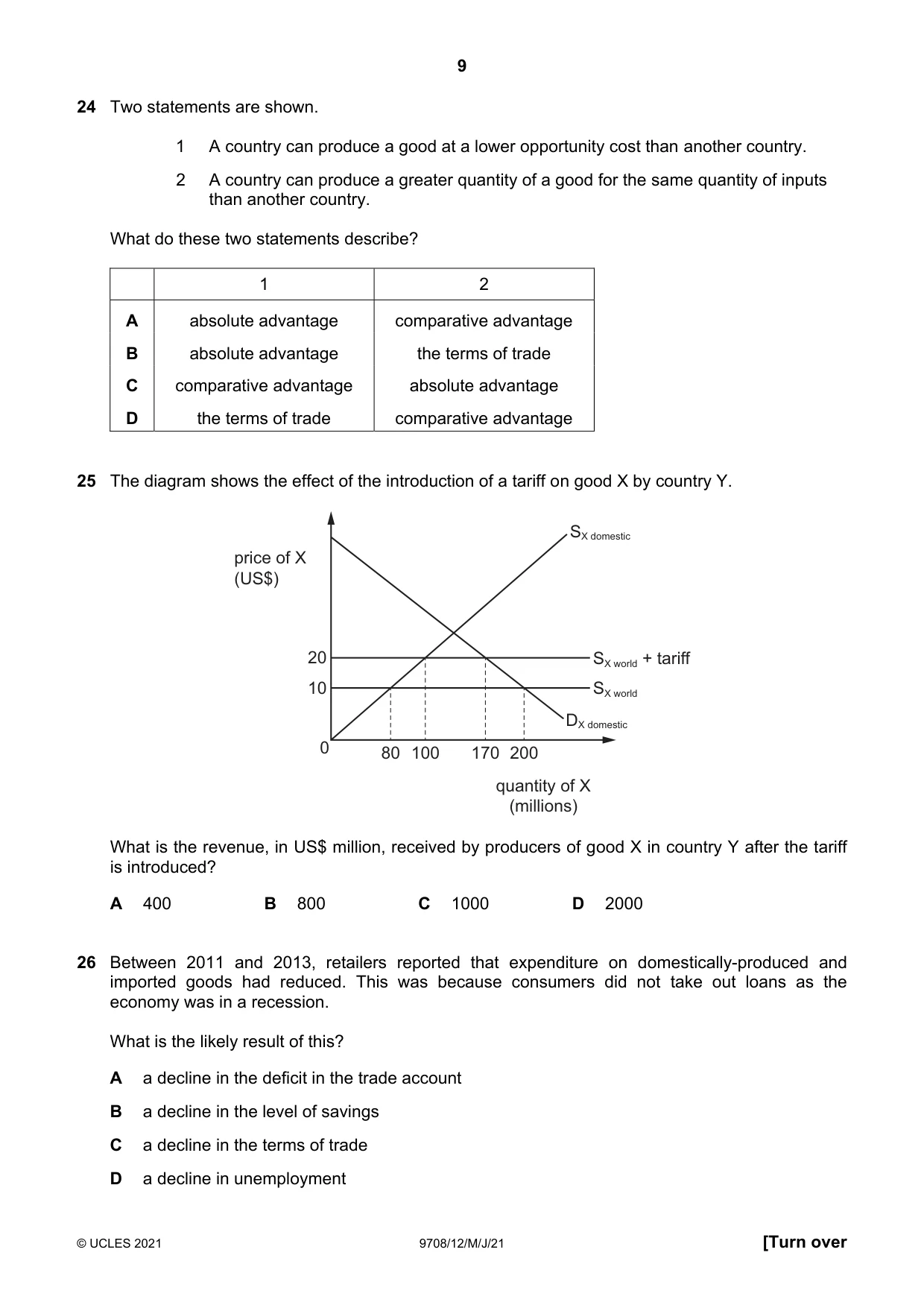
24 Two statements are shown. 1 A country can produce a good at a lower opportunity cost than another country. 2 A country can produce a greater quantity of a good for the same quantity of inputs than another country. What do these two statements describe? 1 2 A absolute advantage comparative advantage B absolute advantage the terms of trade C comparative advantage absolute advantage D the terms of trade comparative advantage
Mark scheme: C
Q25 · The diagram shows the effect of the introduction of a tariff on good X by country Y
25 The diagram shows the effect of the introduction of a tariff on good X by country Y. SX domestic price of X (US$) 20 SX world + tariff 10 SX world DX domestic 0 80 100 170 200 quantity of X (millions) What is the revenue, in US$ million, received by producers of good X in country Y after the tariff is introduced? A 400 B 800 C 1000 D 2000
Mark scheme: D
Q26 · Between 2011 and 2013, retailers reported that expenditure on domestically-produced and…
26 Between 2011 and 2013, retailers reported that expenditure on domestically-produced and imported goods had reduced. This was because consumers did not take out loans as the economy was in a recession. What is the likely result of this? A a decline in the deficit in the trade account B a decline in the level of savings C a decline in the terms of trade D a decline in unemployment
Mark scheme: A
More questions on Current account of the balance of payments
Q27 · Increased international competition leads to a worsening in a country’s current account…
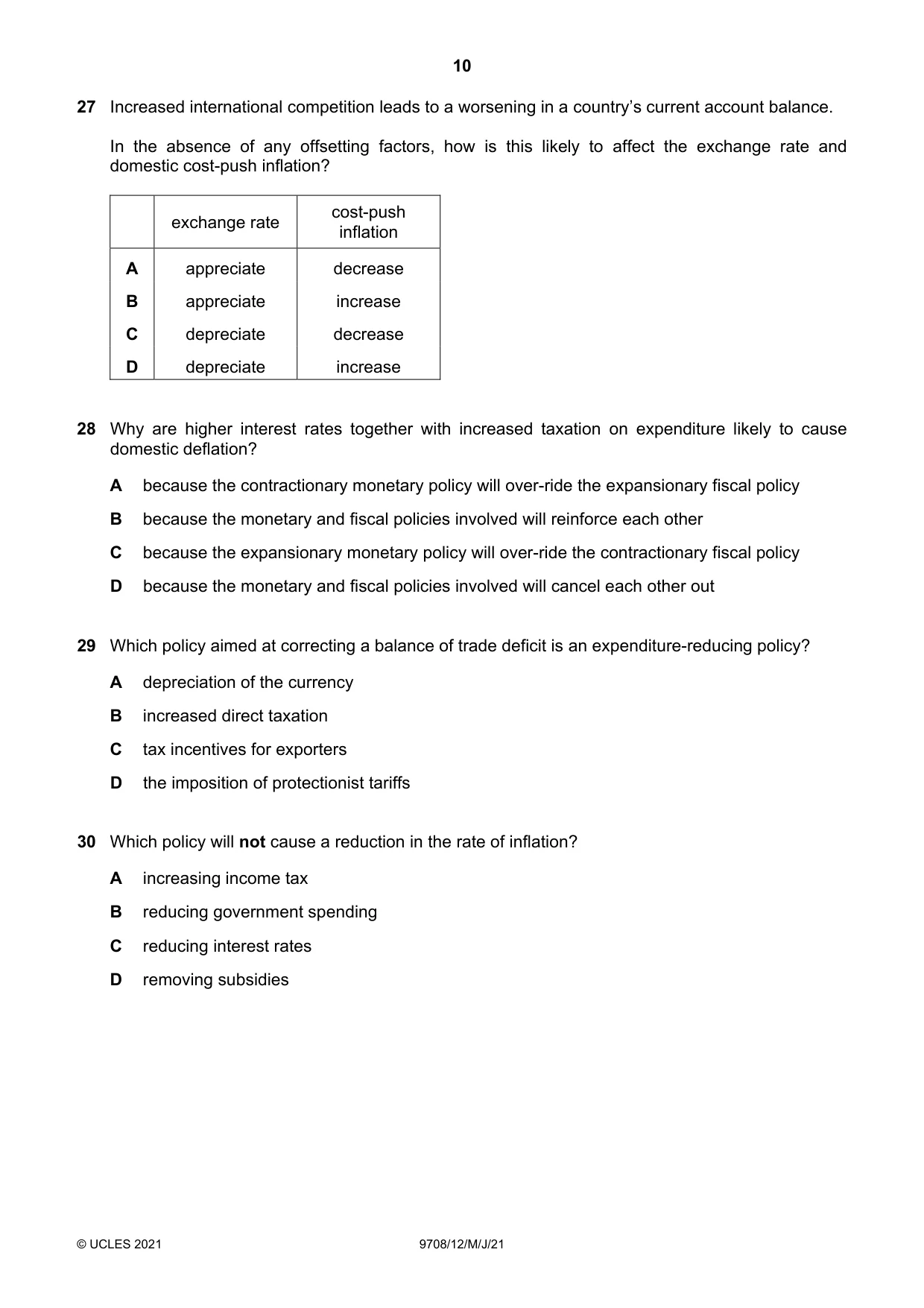
27 Increased international competition leads to a worsening in a country’s current account balance. In the absence of any offsetting factors, how is this likely to affect the exchange rate and domestic cost-push inflation? cost-push exchange rate inflation A appreciate decrease B appreciate increase C depreciate decrease D depreciate increase
Mark scheme: D
Q28 · Why are higher interest rates together with increased taxation on expenditure likely to…
28 Why are higher interest rates together with increased taxation on expenditure likely to cause domestic deflation? A because the contractionary monetary policy will over-ride the expansionary fiscal policy B because the monetary and fiscal policies involved will reinforce each other C because the expansionary monetary policy will over-ride the contractionary fiscal policy D because the monetary and fiscal policies involved will cancel each other out
Mark scheme: B
Q29 · Which policy aimed at correcting a balance of trade deficit is an expenditure-reducing…
29 Which policy aimed at correcting a balance of trade deficit is an expenditure-reducing policy? A depreciation of the currency B increased direct taxation C tax incentives for exporters D the imposition of protectionist tariffs
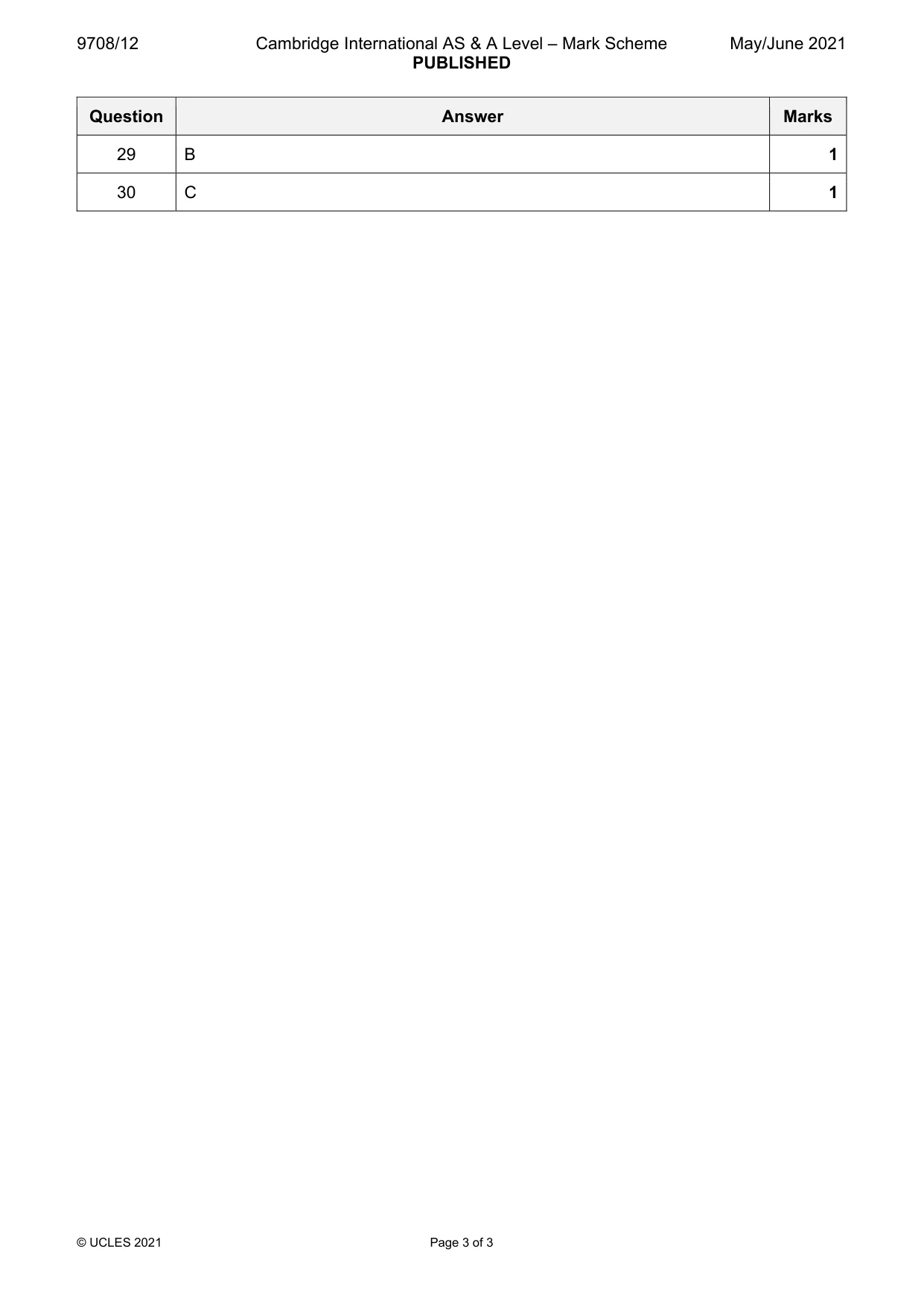
Mark scheme: B
More questions on Policies to correct imbalances in the current account of the balance of payments
Q30 · Which policy will not cause a reduction in the rate of inflation?
30 Which policy will not cause a reduction in the rate of inflation? A increasing income tax B reducing government spending C reducing interest rates D removing subsidies
Mark scheme: C
What was in this paper
The subtopics covered by these 30 questions, and how many questions each got. Open one in a new tab to see every Cambridge question on it.
3The interaction of demand and supply3Current account of the balance of payments2Demand and supply curves2Exchange rates2Monetary policy2Policies to correct imbalances in the current account of the balance of payments2Price elasticity, income elasticity and cross elasticity of demand2Price stability2Resource allocation in different economic systems2Aggregate Demand and Aggregate Supply analysis1Classification of goods and services1Consumer and producer surplus1Economic methodology1Price elasticity of supply1Protectionism1Reasons for government intervention in markets1The reasons for international trade1What you needed in this session
Cambridge’s own grade thresholds for 2021 May/June, Paper 1 · Variant 2. A higher threshold means an easier paper — the bar moves with how the cohort did.