Cambridge A Level Economics 9708 — 2021 Feb/March Paper 1 · Variant 2
9708/12/F/M/21 · 30 questions · 30 marks · ≈34 min
The question paper and its mark scheme, free to read here and free to download. This is Cambridge’s own paper, exactly as it was sat.
Question paper12 pages
Mark scheme3 pages
Answers below. Sit the paper first if you are practising.
Questions as text
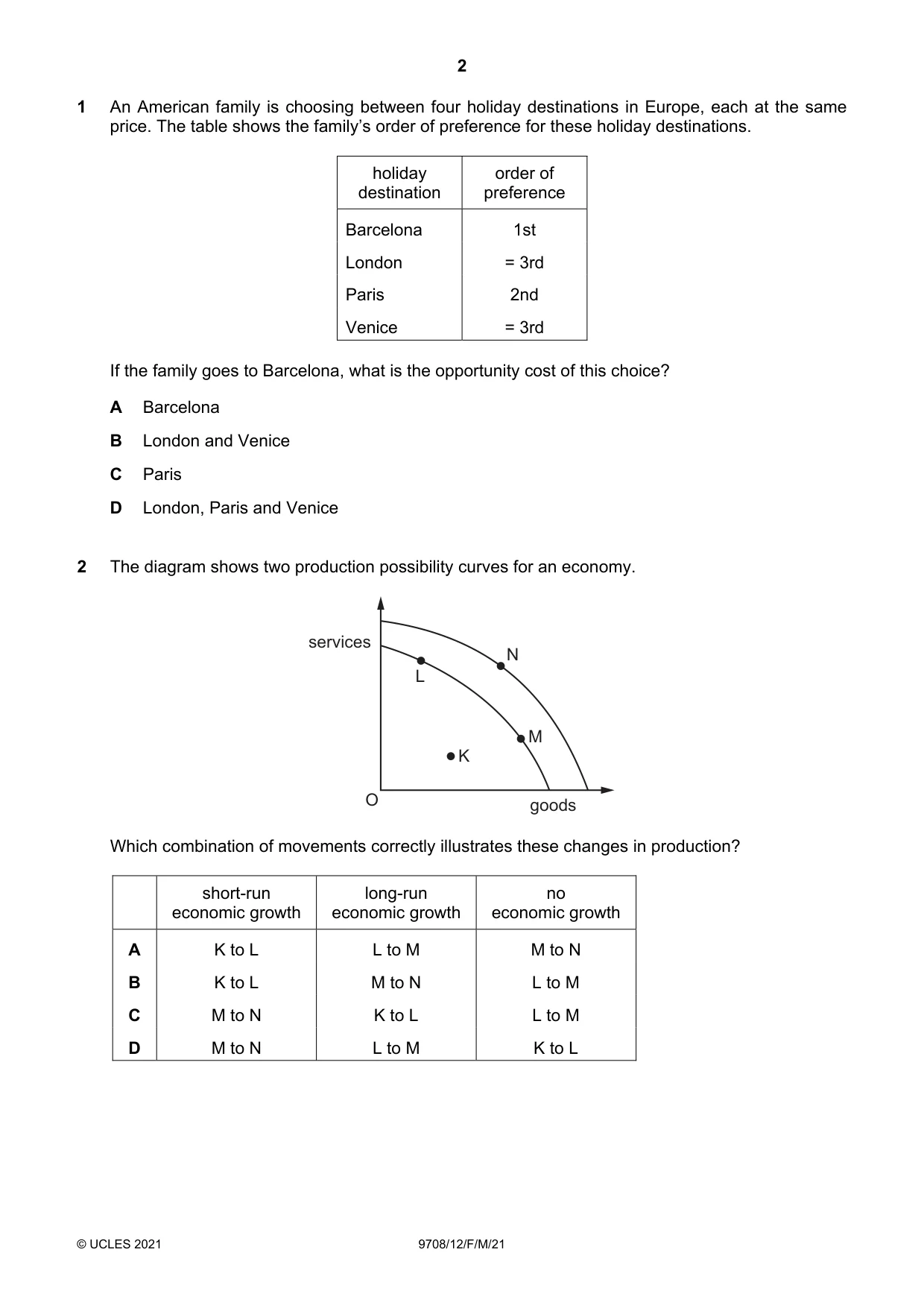
Q1 · An American family is choosing between four holiday destinations in Europe, each at the…
1 An American family is choosing between four holiday destinations in Europe, each at the same price. The table shows the family’s order of preference for these holiday destinations. holiday order of destination preference Barcelona 1st London = 3rd Paris 2nd Venice = 3rd If the family goes to Barcelona, what is the opportunity cost of this choice? A Barcelona B London and Venice C Paris D London, Paris and Venice
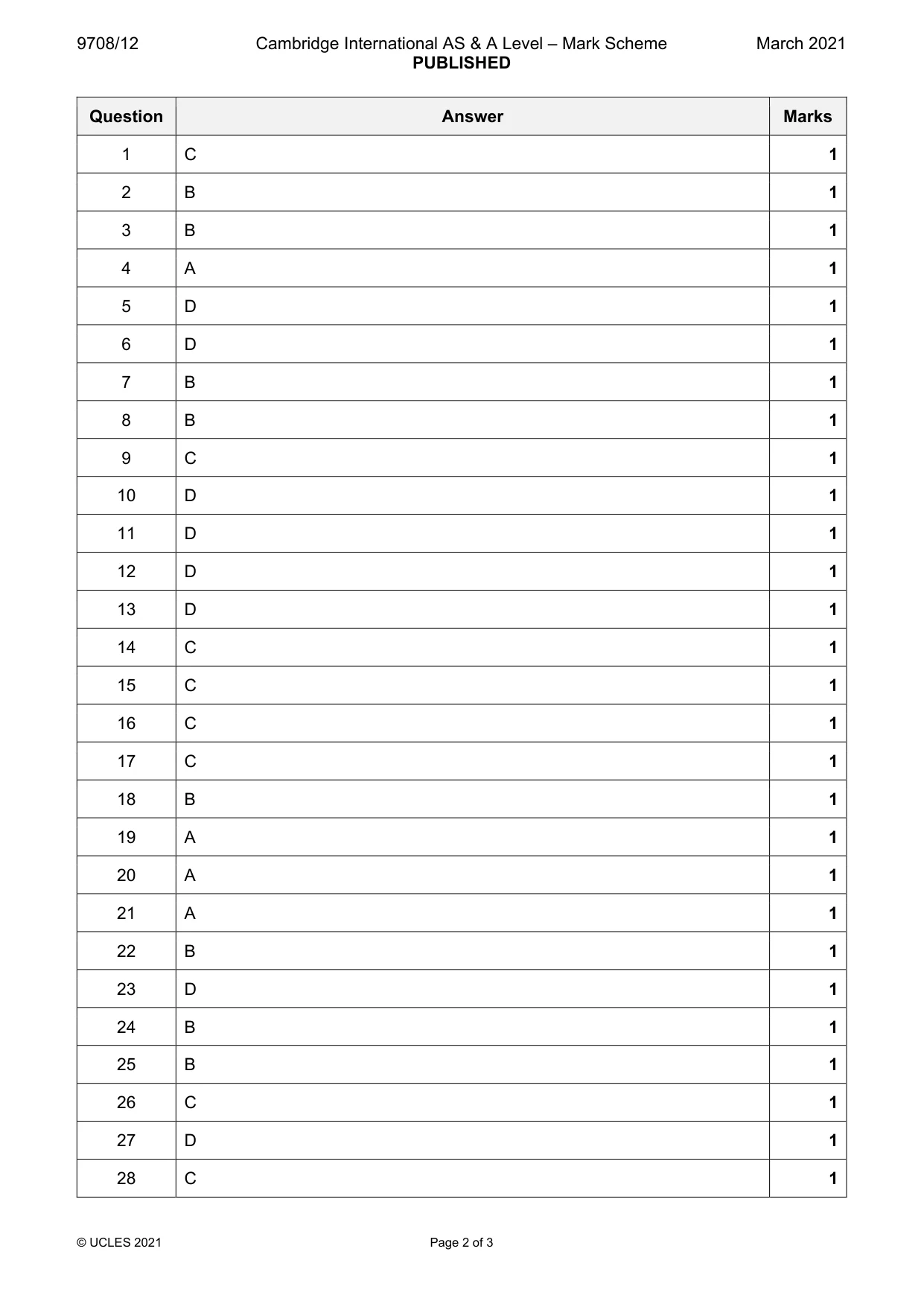
Mark scheme: C
Q2 · The diagram shows two production possibility curves for an economy
2 The diagram shows two production possibility curves for an economy. services N L M K O goods Which combination of movements correctly illustrates these changes in production? short-run long-run no economic growth economic growth economic growth A K to L L to M M to N B K to L M to N L to M C M to N K to L L to M D M to N L to M K to L
Mark scheme: B
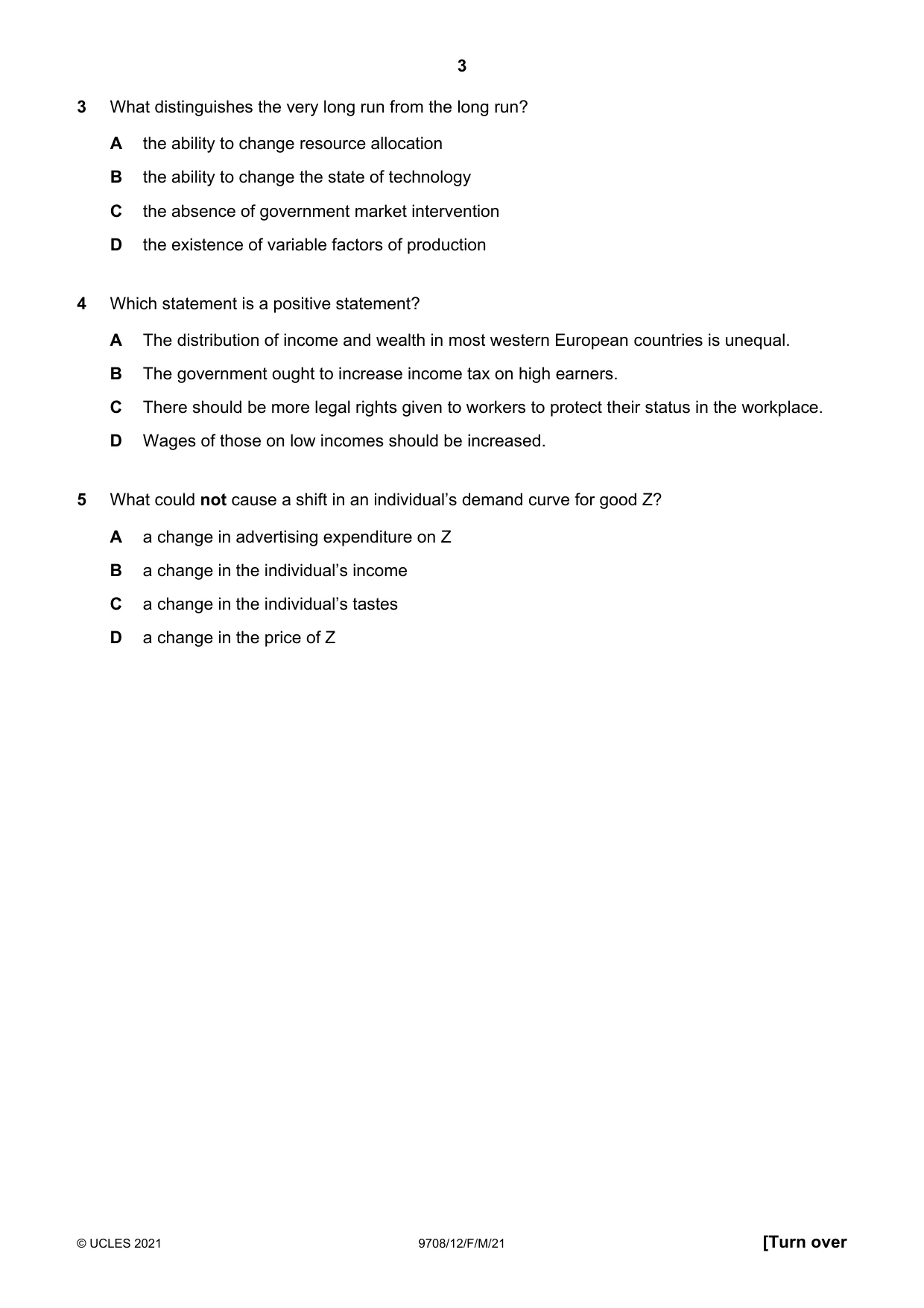
Q3 · What distinguishes the very long run from the long run?
3 What distinguishes the very long run from the long run? A the ability to change resource allocation B the ability to change the state of technology C the absence of government market intervention D the existence of variable factors of production
Mark scheme: B
More questions on Types of cost, revenue and profit, short-run and long-run production
Q4 · Which statement is a positive statement?
4 Which statement is a positive statement? A The distribution of income and wealth in most western European countries is unequal. B The government ought to increase income tax on high earners. C There should be more legal rights given to workers to protect their status in the workplace. D Wages of those on low incomes should be increased.
Mark scheme: A
Q5 · What could not cause a shift in an individual’s demand curve for good Z?
5 What could not cause a shift in an individual’s demand curve for good Z? A a change in advertising expenditure on Z B a change in the individual’s income C a change in the individual’s tastes D a change in the price of Z
Mark scheme: D
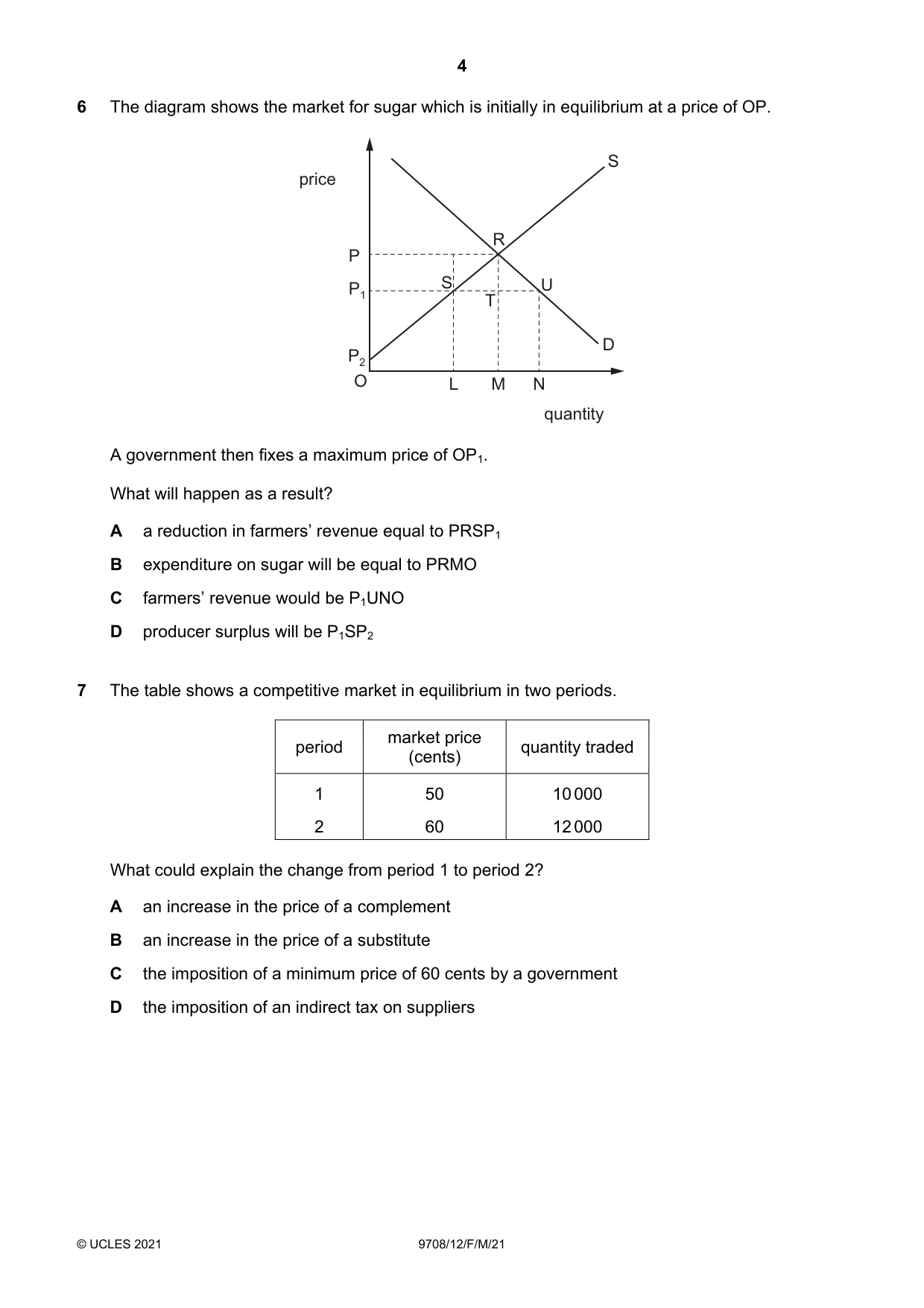
Q6 · The diagram shows the market for sugar which is initially in equilibrium at a price of OP
6 The diagram shows the market for sugar which is initially in equilibrium at a price of OP. S price R P P1 S U T D P2 O L M N quantity A government then fixes a maximum price of OP1. What will happen as a result? A a reduction in farmers’ revenue equal to PRSP1 B expenditure on sugar will be equal to PRMO C farmers’ revenue would be P1UNO D producer surplus will be P1SP2
Mark scheme: D
More questions on Methods and effects of government intervention in markets
Q7 · The table shows a competitive market in equilibrium in two periods
7 The table shows a competitive market in equilibrium in two periods. market price period quantity traded (cents) 1 50 10 000 2 60 12 000 What could explain the change from period 1 to period 2? A an increase in the price of a complement B an increase in the price of a substitute C the imposition of a minimum price of 60 cents by a government D the imposition of an indirect tax on suppliers
Mark scheme: B
Q8 · Which example of consumer behaviour would create consumer surplus?
8 Which example of consumer behaviour would create consumer surplus? A when a consumer does not spend all of her income each month B when a consumer pays less than they are willing to pay for a good C when a consumer throws away vegetables because they bought too much D when a good is purchased in order to resell it at a higher price
Mark scheme: B
Q9 · A manufacturer reduces the price of its goods after developing a more efficient…
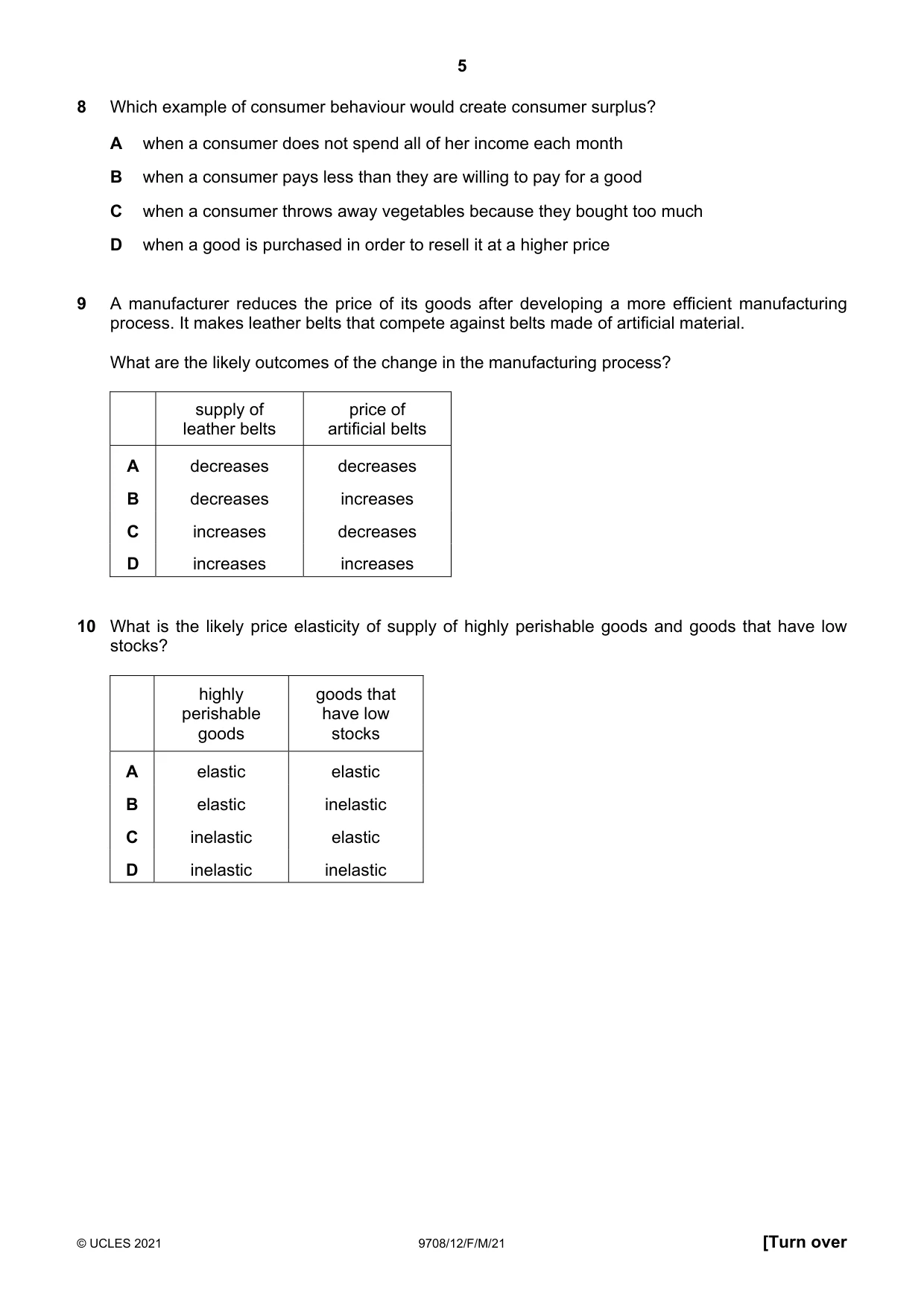
9 A manufacturer reduces the price of its goods after developing a more efficient manufacturing process. It makes leather belts that compete against belts made of artificial material. What are the likely outcomes of the change in the manufacturing process? supply of price of leather belts artificial belts A decreases decreases B decreases increases C increases decreases D increases increases
Mark scheme: C
Q10 · What is the likely price elasticity of supply of highly perishable goods and goods that…
10 What is the likely price elasticity of supply of highly perishable goods and goods that have low stocks? highly goods that perishable have low goods stocks A elastic elastic B elastic inelastic C inelastic elastic D inelastic inelastic
Mark scheme: D
Q11 · The diagrams show the initial demand curve D1 and supply curve S1 for steel in the…
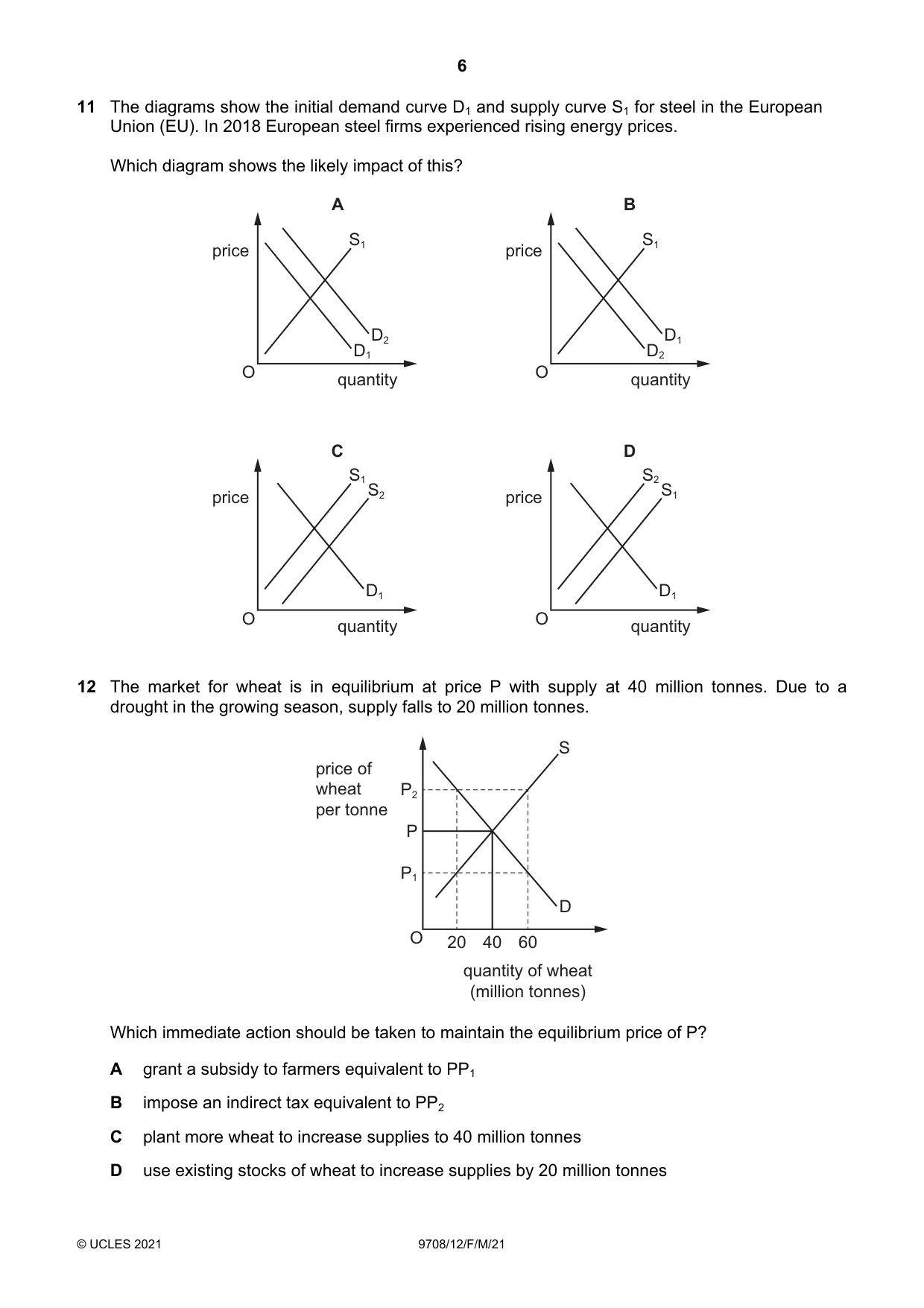
11 The diagrams show the initial demand curve D1 and supply curve S1 for steel in the European Union (EU). In 2018 European steel firms experienced rising energy prices. Which diagram shows the likely impact of this? A B S1 S1 price price D2 D1 D1 D2 O quantity O quantity C D S1S2 S2 price price S1 D1 D1 O quantity O quantity
Mark scheme: D
Q12 · The market for wheat is in equilibrium at price P with supply at 40 million tonnes
12 The market for wheat is in equilibrium at price P with supply at 40 million tonnes. Due to a drought in the growing season, supply falls to 20 million tonnes. S price of wheat P2 per tonne P P1 D O 20 40 60 quantity of wheat (million tonnes) Which immediate action should be taken to maintain the equilibrium price of P? A grant a subsidy to farmers equivalent to PP1 B impose an indirect tax equivalent to PP2 C plant more wheat to increase supplies to 40 million tonnes D use existing stocks of wheat to increase supplies by 20 million tonnes
Mark scheme: D
Q13 · What is used to calculate the price elasticity of demand?
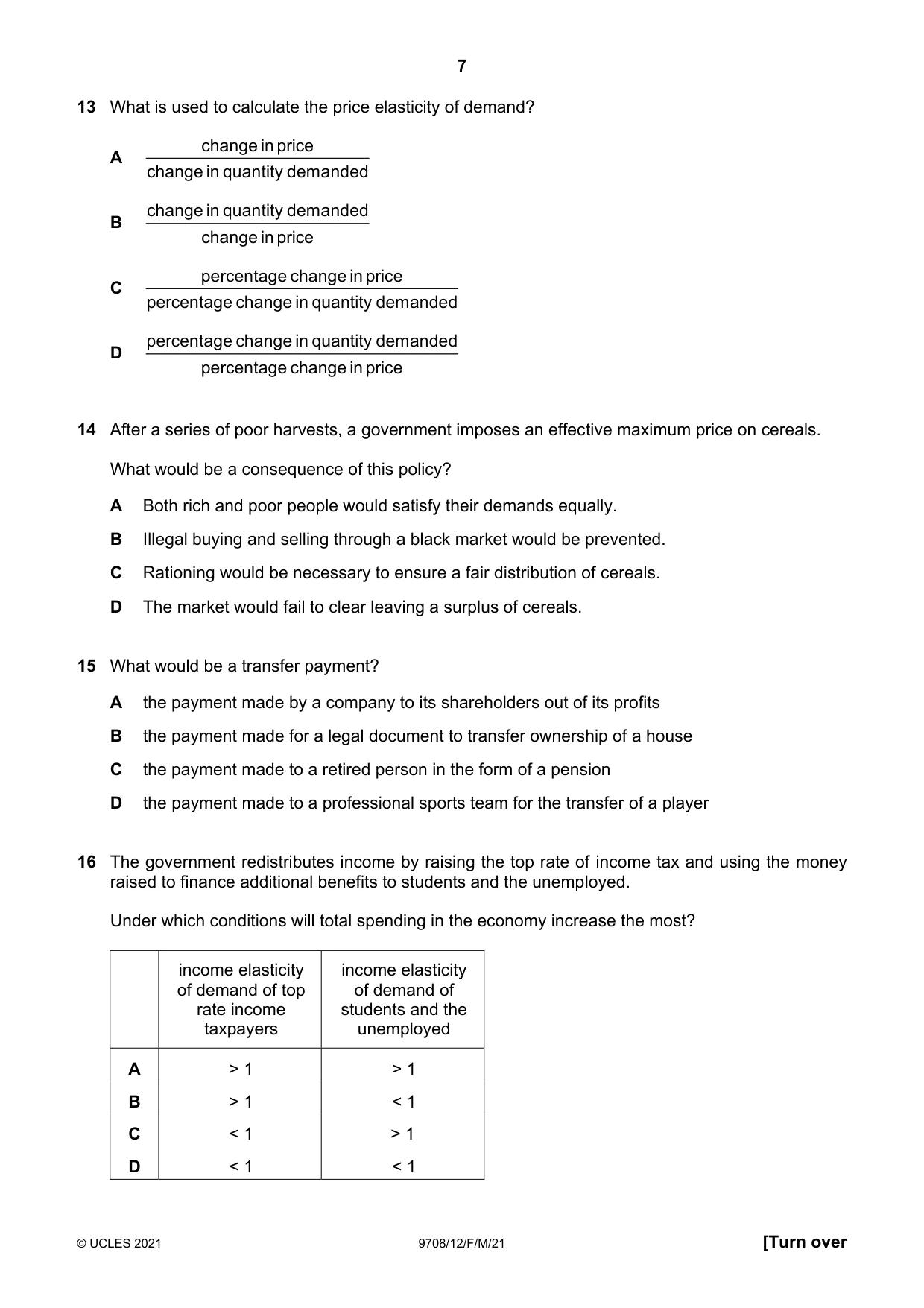
13 What is used to calculate the price elasticity of demand? change in price A change in quantity demanded change in quantity demanded B change in price percentage change in price C percentage change in quantity demanded percentage change in quantity demanded D percentage change in price
Mark scheme: D
More questions on Price elasticity, income elasticity and cross elasticity of demand
Q14 · After a series of poor harvests, a government imposes an effective maximum price on…
14 After a series of poor harvests, a government imposes an effective maximum price on cereals. What would be a consequence of this policy? A Both rich and poor people would satisfy their demands equally. B Illegal buying and selling through a black market would be prevented. C Rationing would be necessary to ensure a fair distribution of cereals. D The market would fail to clear leaving a surplus of cereals.
Mark scheme: C
More questions on Methods and effects of government intervention in markets
Q15 · What would be a transfer payment?
15 What would be a transfer payment? A the payment made by a company to its shareholders out of its profits B the payment made for a legal document to transfer ownership of a house C the payment made to a retired person in the form of a pension D the payment made to a professional sports team for the transfer of a player
Mark scheme: C
Q16 · The government redistributes income by raising the top rate of income tax and using the…
16 The government redistributes income by raising the top rate of income tax and using the money raised to finance additional benefits to students and the unemployed. Under which conditions will total spending in the economy increase the most? income elasticity income elasticity of demand of top of demand of rate income students and the taxpayers unemployed A > 1 > 1 B > 1 < 1 C < 1 > 1 D < 1 < 1
Mark scheme: C
Q17 · A government wishes to increase the supply of houses
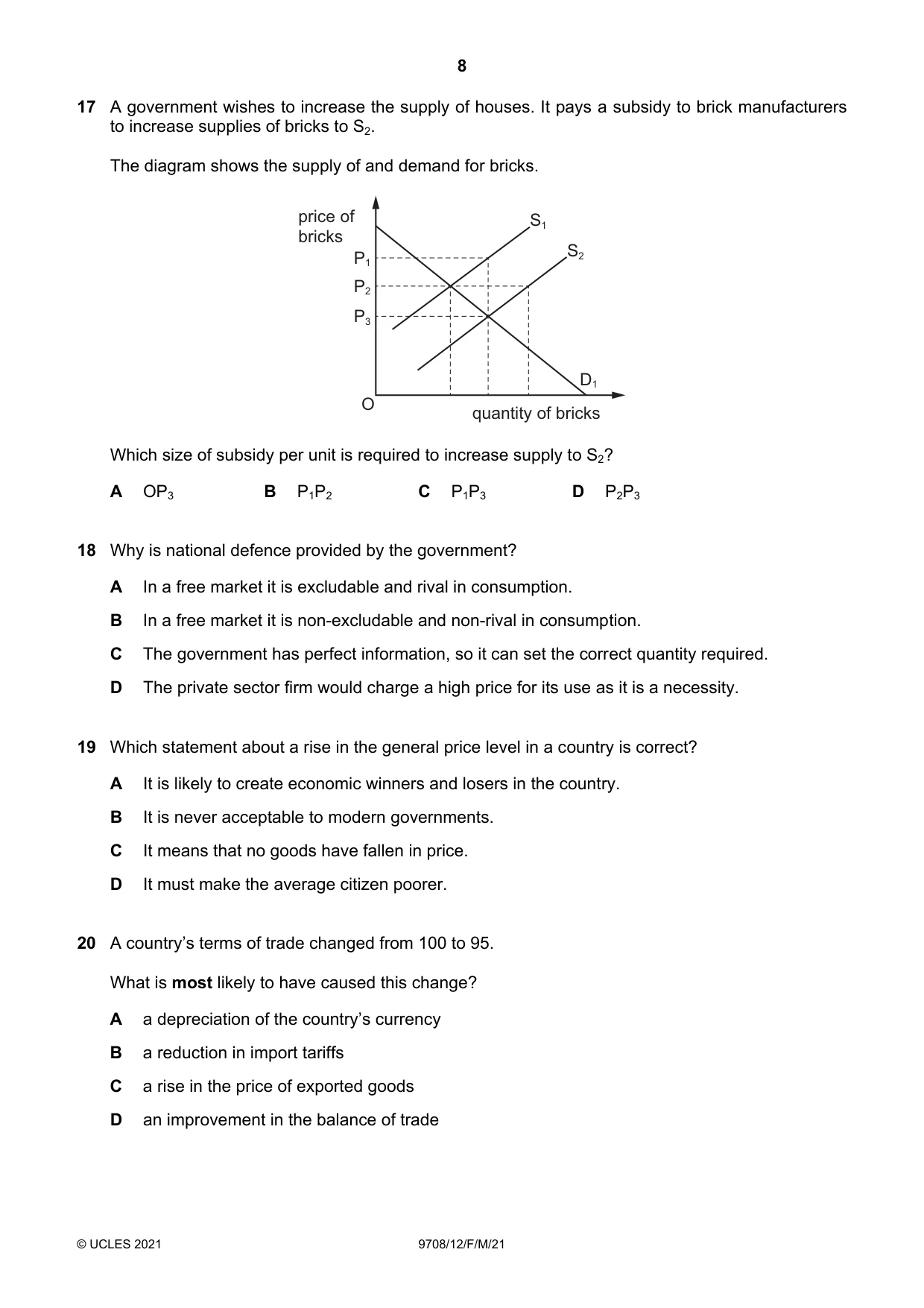
17 A government wishes to increase the supply of houses. It pays a subsidy to brick manufacturers to increase supplies of bricks to S2. The diagram shows the supply of and demand for bricks. price of S1 bricks P1 S2 P2 P3 D1 O quantity of bricks Which size of subsidy per unit is required to increase supply to S2? A OP3 B P1P2 C P1P3 D P2P3
Mark scheme: C
More questions on Methods and effects of government intervention in markets
Q18 · Why is national defence provided by the government?
18 Why is national defence provided by the government? A In a free market it is excludable and rival in consumption. B In a free market it is non-excludable and non-rival in consumption. C The government has perfect information, so it can set the correct quantity required. D The private sector firm would charge a high price for its use as it is a necessity.
Mark scheme: B
Q19 · Which statement about a rise in the general price level in a country is correct?
19 Which statement about a rise in the general price level in a country is correct? A It is likely to create economic winners and losers in the country. B It is never acceptable to modern governments. C It means that no goods have fallen in price. D It must make the average citizen poorer.
Mark scheme: A
Q20 · A country’s terms of trade changed from 100 to 95
20 A country’s terms of trade changed from 100 to 95. What is most likely to have caused this change? A a depreciation of the country’s currency B a reduction in import tariffs C a rise in the price of exported goods D an improvement in the balance of trade
Mark scheme: A
More questions on Current account of the balance of payments
Q21 · A country replaces a floating exchange rate system with a managed floating exchange rate…
21 A country replaces a floating exchange rate system with a managed floating exchange rate system. Which statement is correct? A Its central bank would have to intervene more frequently in the foreign exchange market. B Its central bank would need to hold fewer foreign currency reserves. C The value of its currency would be determined by its major trading partners. D The value of its currency would be determined by the value of the US dollar.
Mark scheme: A
Q22 · What will be the immediate effect of a devaluation of an economy’s foreign exchange rate?
22 What will be the immediate effect of a devaluation of an economy’s foreign exchange rate? A The price of imported goods in the domestic currency will fall. B The price of imported goods in the domestic currency will rise. C The price of imported goods in the foreign currency will fall. D The price of imported goods in the foreign currency will rise.
Mark scheme: B
Q23 · A country has a deficit on the current account of its balance of payments
23 A country has a deficit on the current account of its balance of payments. What might help the country to reduce its deficit? A a decrease in its rate of income tax B a decrease in its tariffs C an increase in its level of employment D an increase in its subsidies to exporters
Mark scheme: D
More questions on Policies to correct imbalances in the current account of the balance of payments
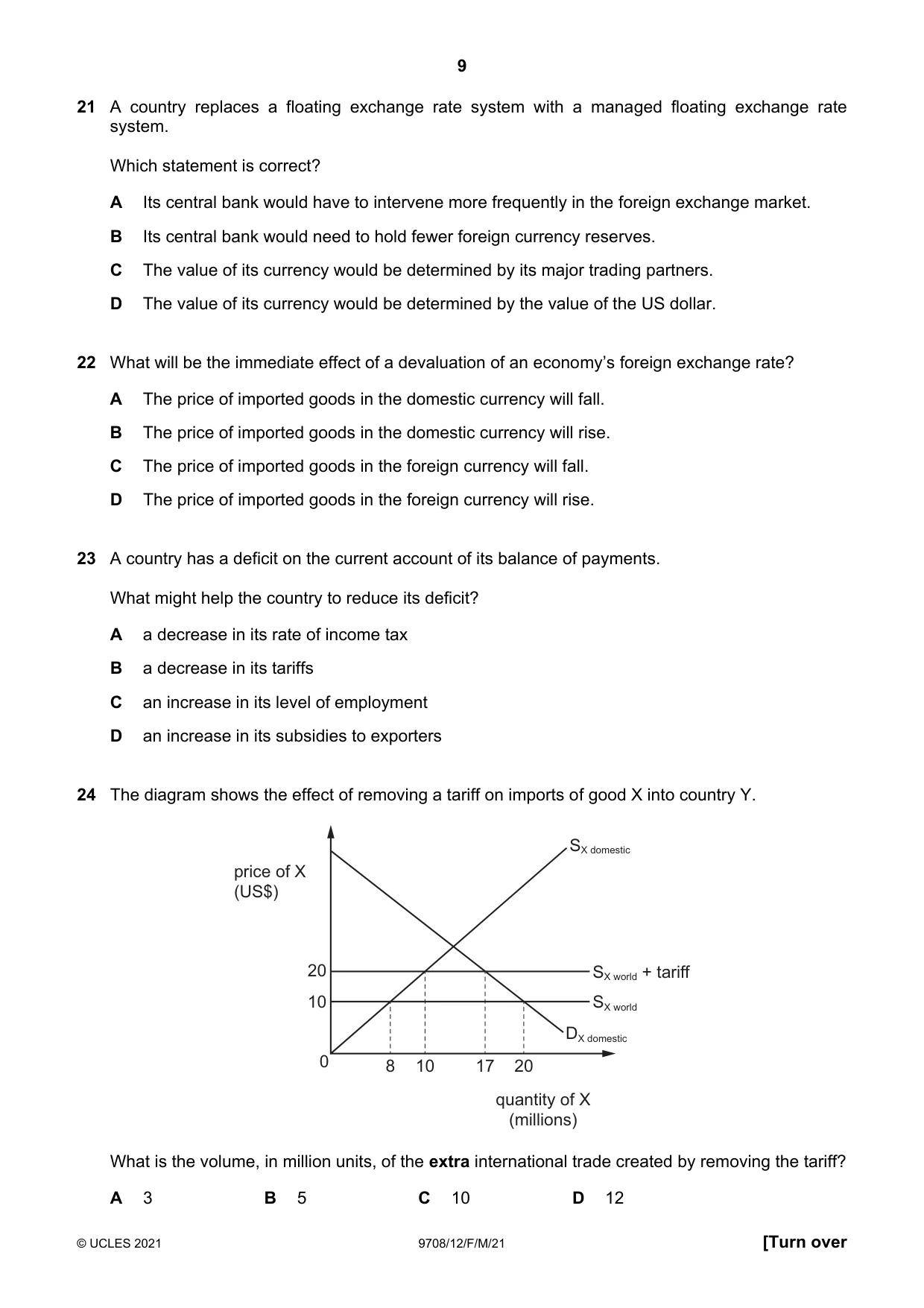
Q24 · The diagram shows the effect of removing a tariff on imports of good X into country Y
24 The diagram shows the effect of removing a tariff on imports of good X into country Y. SX domestic price of X (US$) 20 SX world + tariff 10 SX world DX domestic 0 8 10 17 20 quantity of X (millions) What is the volume, in million units, of the extra international trade created by removing the tariff? A 3 B 5 C 10 D 12
Mark scheme: B
Q25 · Which item should be recorded in the financial account of a country’s balance of payments?
25 Which item should be recorded in the financial account of a country’s balance of payments? A foreign aid by China to assist in infrastructure projects in African countries B investments by Middle Eastern oil producing countries through the purchase of land and property assets in Europe C payments by the USA to other countries which house American military bases D profits and dividends paid by multinational companies based in Indonesia to shareholders in Asia
Mark scheme: B
More questions on Current account of the balance of payments
Q26 · The table shows a country’s consumer prices index (CPI) for March and April 2018
26 The table shows a country’s consumer prices index (CPI) for March and April 2018. CPI March 2018 151.3 April 2018 148.6 Which statement correctly describes what happened between these two months? A There was a decrease in the annual rate of inflation. B There was a decrease in real interest rates. C There was an increase in the purchasing power of money. D There was an increase in the standard of living.
Mark scheme: C
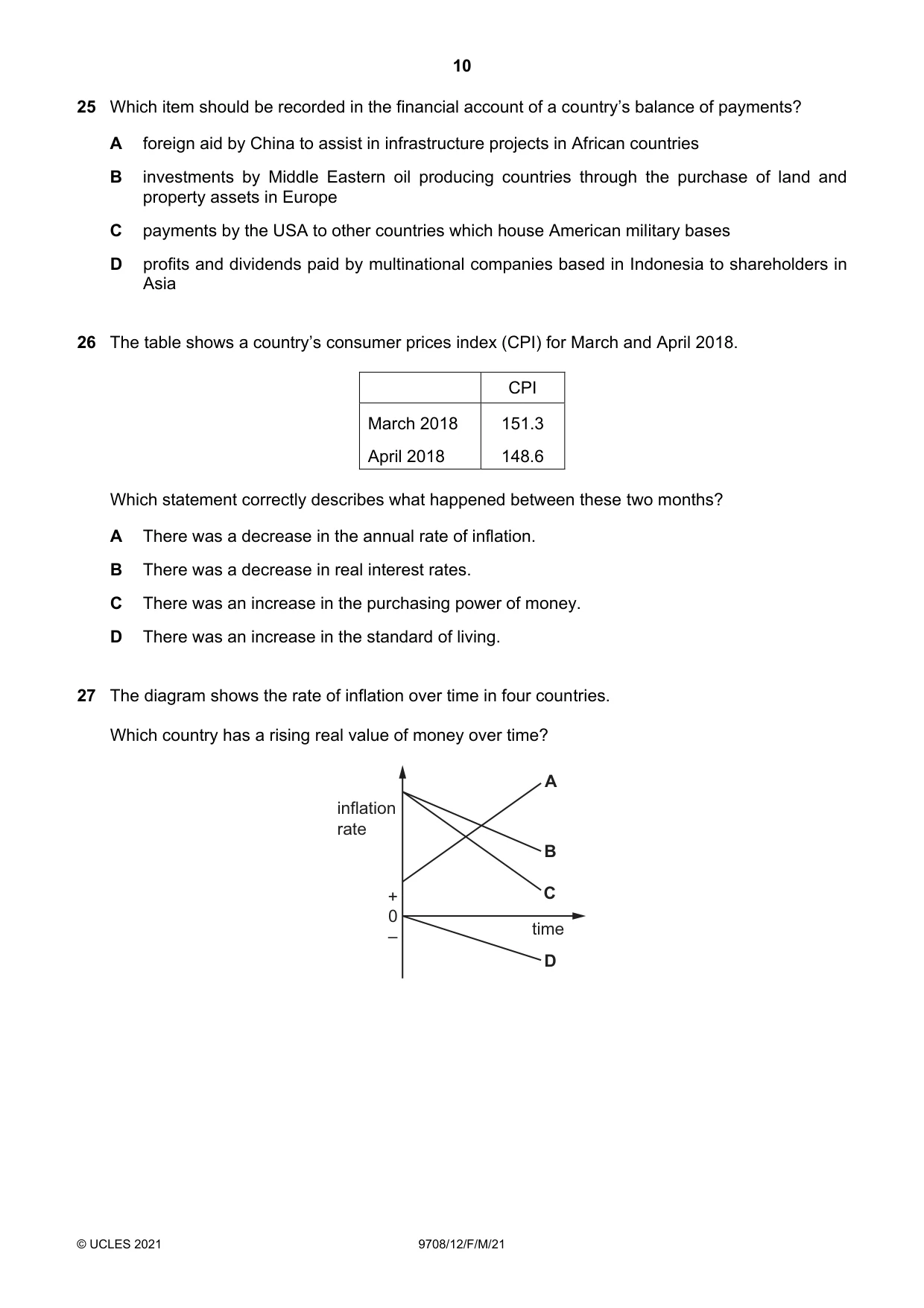
Q27 · The diagram shows the rate of inflation over time in four countries
27 The diagram shows the rate of inflation over time in four countries. Which country has a rising real value of money over time? A inflation rate B + C 0 – time D
Mark scheme: D
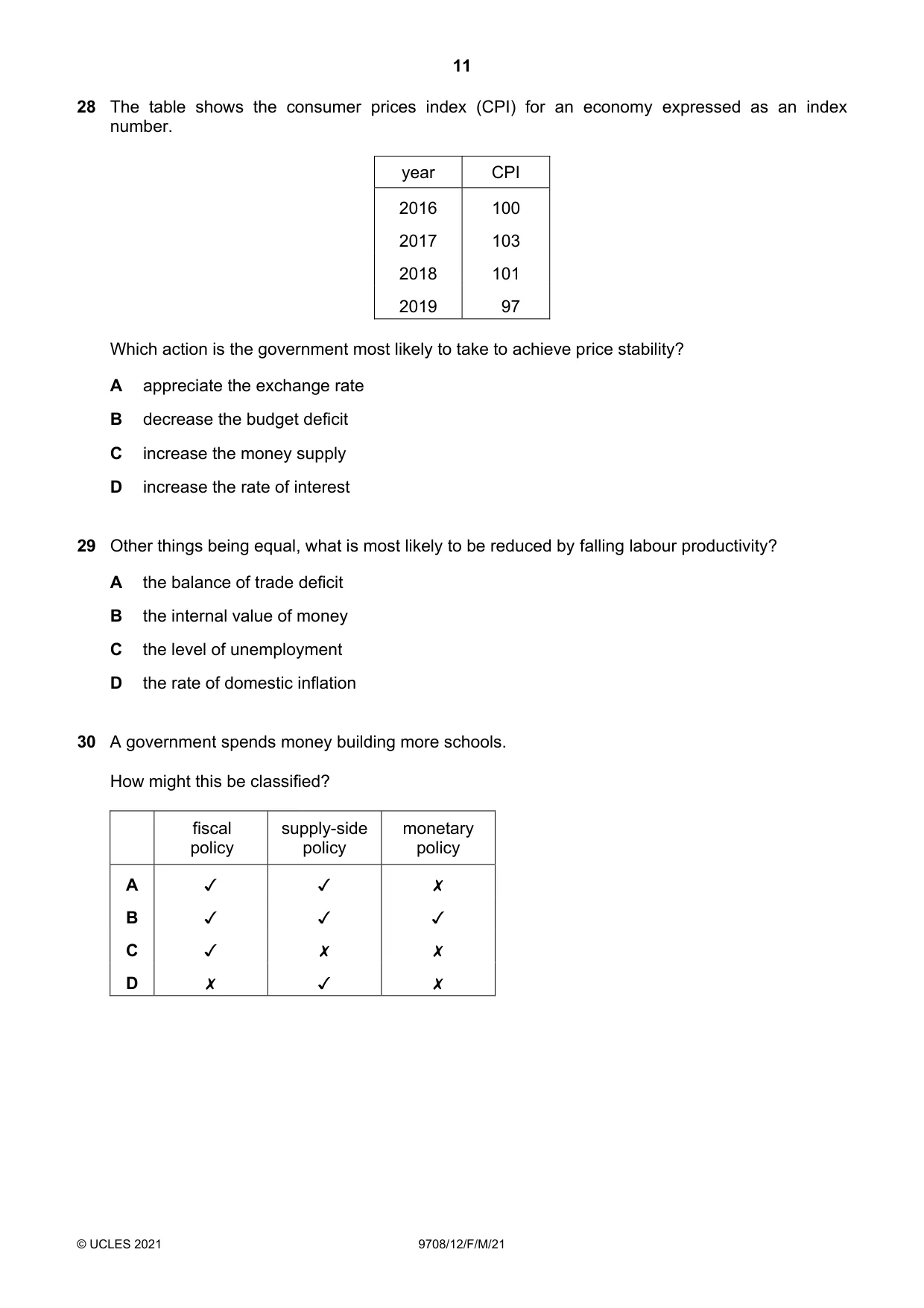
Q28 · The table shows the consumer prices index (CPI) for an economy expressed as an index…
28 The table shows the consumer prices index (CPI) for an economy expressed as an index number. year CPI 2016 100 2017 103 2018 101 2019 97 Which action is the government most likely to take to achieve price stability? A appreciate the exchange rate B decrease the budget deficit C increase the money supply D increase the rate of interest
Mark scheme: C
Q29 · Other things being equal, what is most likely to be reduced by falling labour…
29 Other things being equal, what is most likely to be reduced by falling labour productivity? A the balance of trade deficit B the internal value of money C the level of unemployment D the rate of domestic inflation
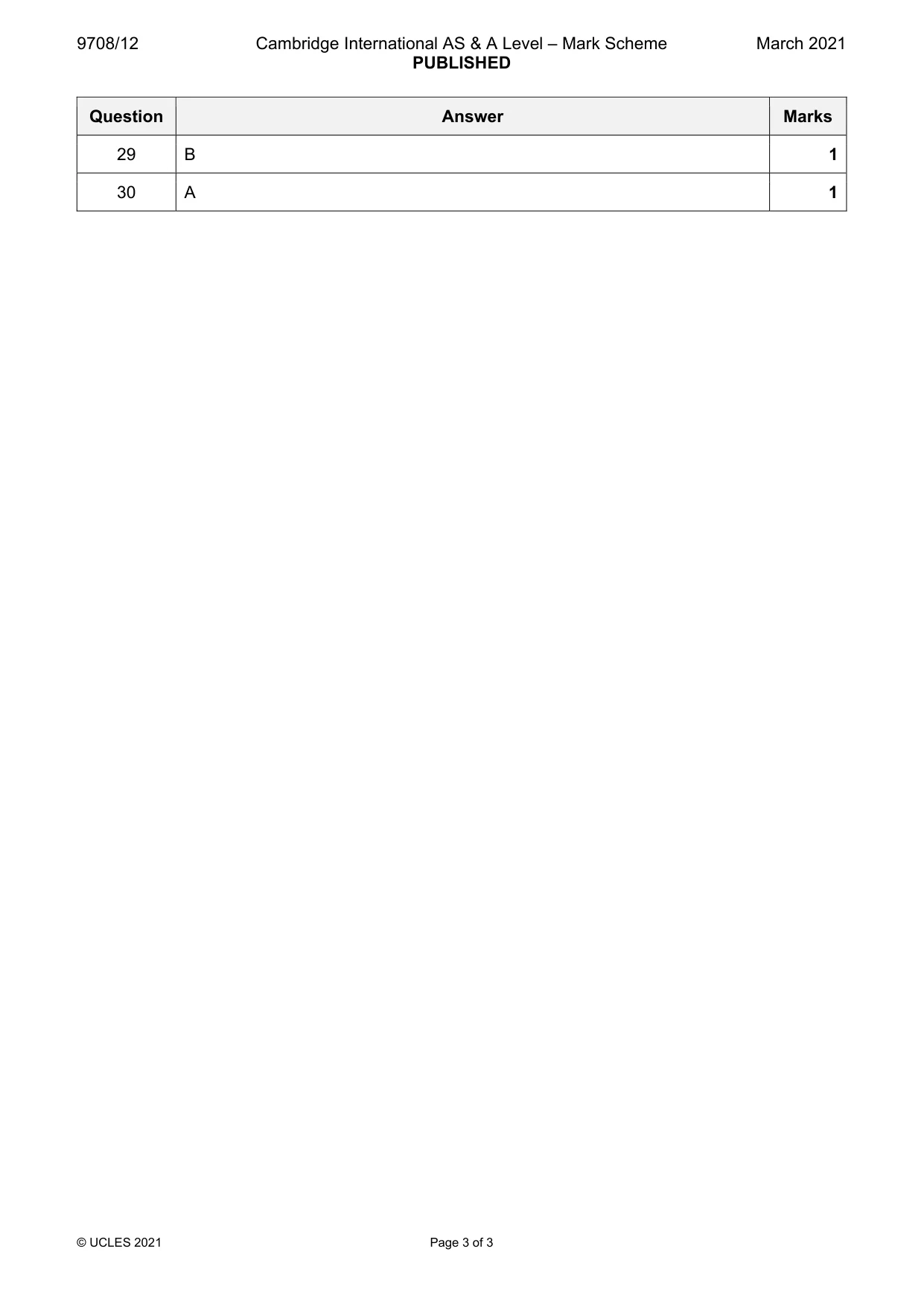
Mark scheme: B
Q30 · A government spends money building more schools
30 A government spends money building more schools. How might this be classified? fiscal supply-side monetary policy policy policy A J J x B J J Jv Cc J x x D x Jv x
Mark scheme: A
What was in this paper
The subtopics covered by these 30 questions, and how many questions each got. Open one in a new tab to see every Cambridge question on it.
4Methods and effects of government intervention in markets3The interaction of demand and supply3Addressing income and wealth inequality2Current account of the balance of payments2Demand and supply curves2Exchange rates2Classification of goods and services1Consumer and producer surplus1Economic methodology1Fiscal policy1Monetary policy1Policies to correct imbalances in the current account of the balance of payments1Price elasticity of supply1Price elasticity, income elasticity and cross elasticity of demand1Production possibility curves1Protectionism1Scarcity, choice and opportunity cost1Types of cost, revenue and profit, short-run and long-run production1What you needed in this session
Cambridge’s own grade thresholds for 2021 Feb/March, Paper 1 · Variant 2. A higher threshold means an easier paper — the bar moves with how the cohort did.