Cambridge A Level Chemistry 9701 — 2022 Oct/Nov Paper 5 · Variant 1
9701/51/O/N/22 · 3 questions · 30 marks · ≈34 min
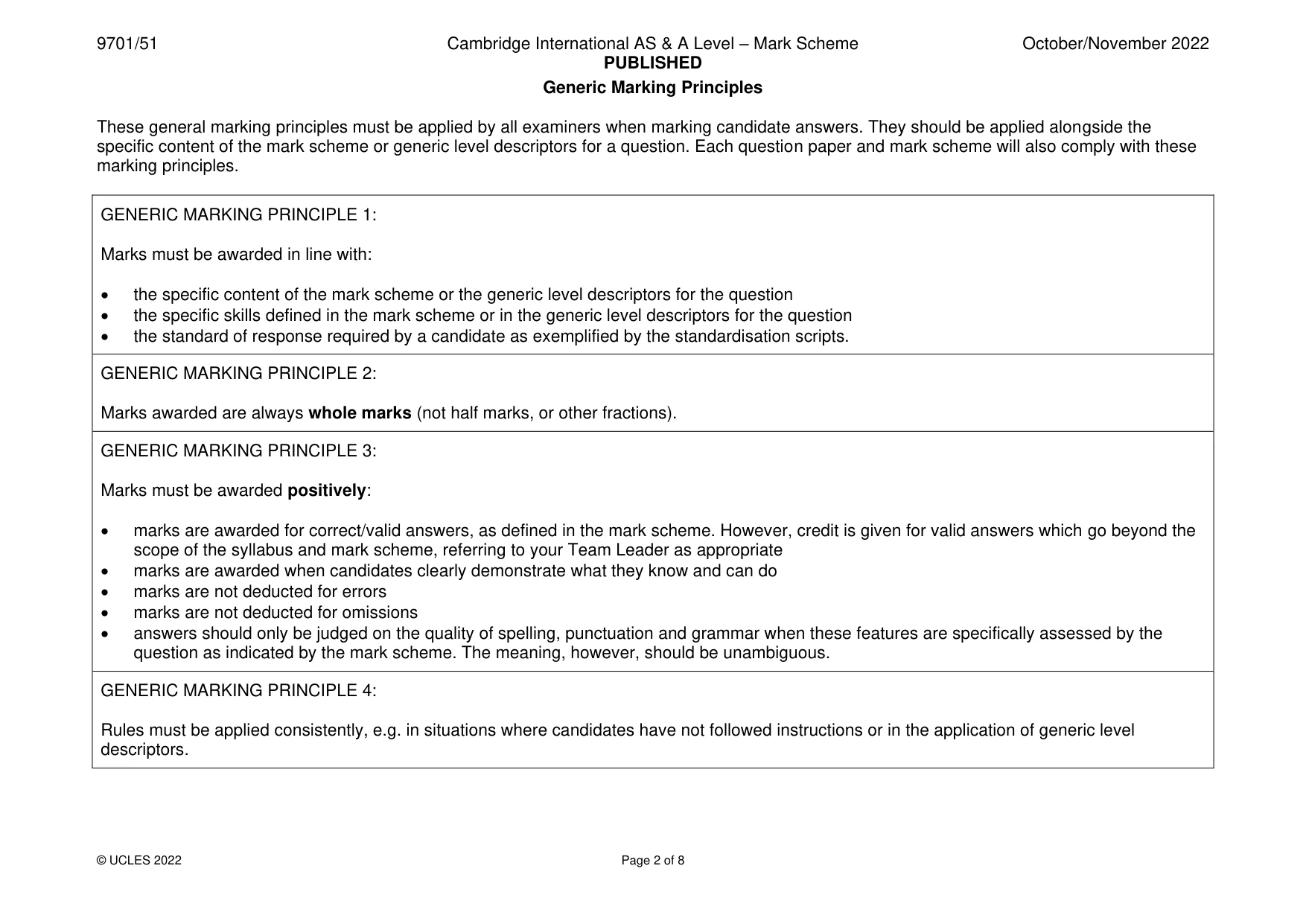
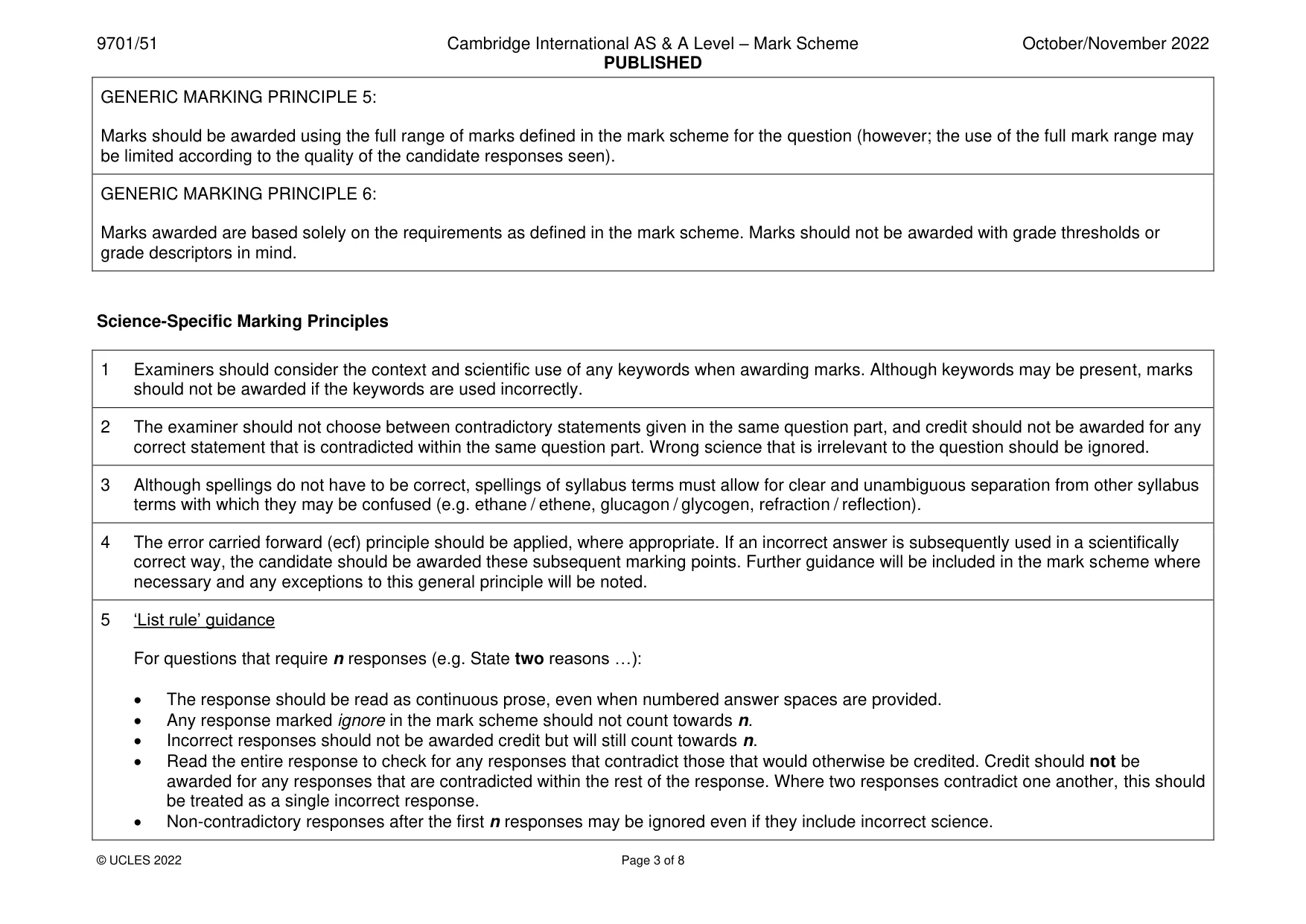
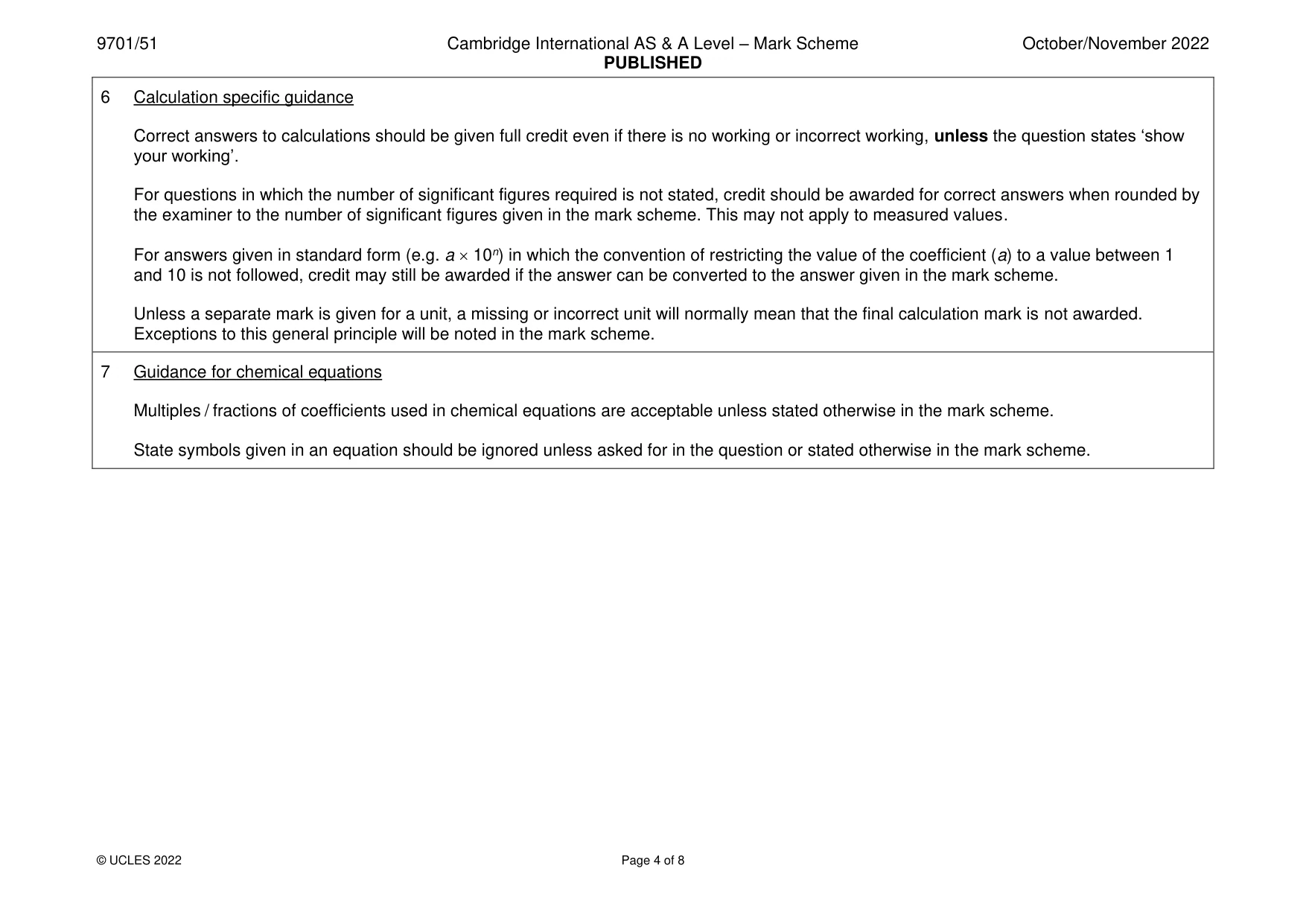
The question paper and its mark scheme, free to read here and free to download. This is Cambridge’s own paper, exactly as it was sat.
Question paper12 pages

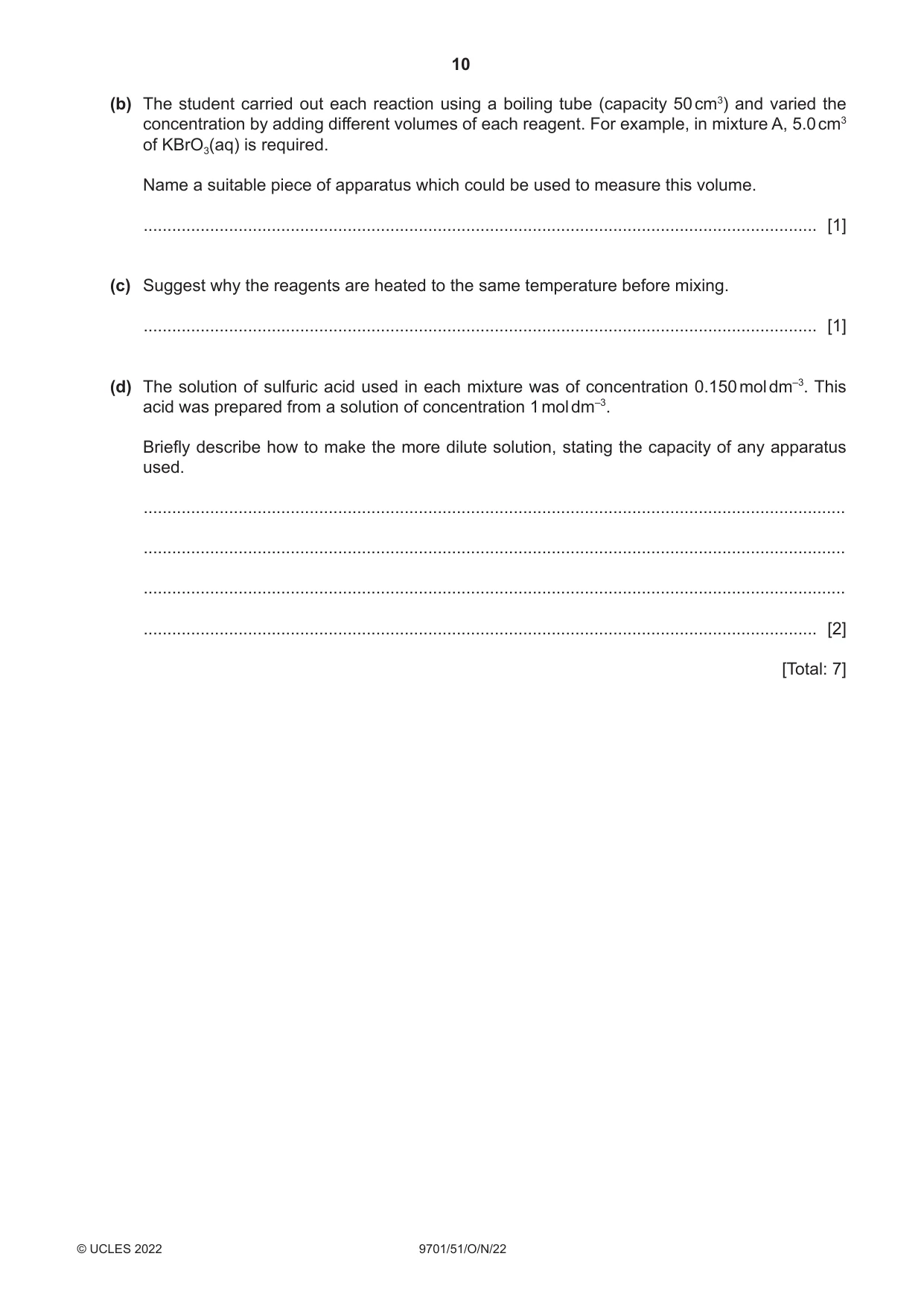
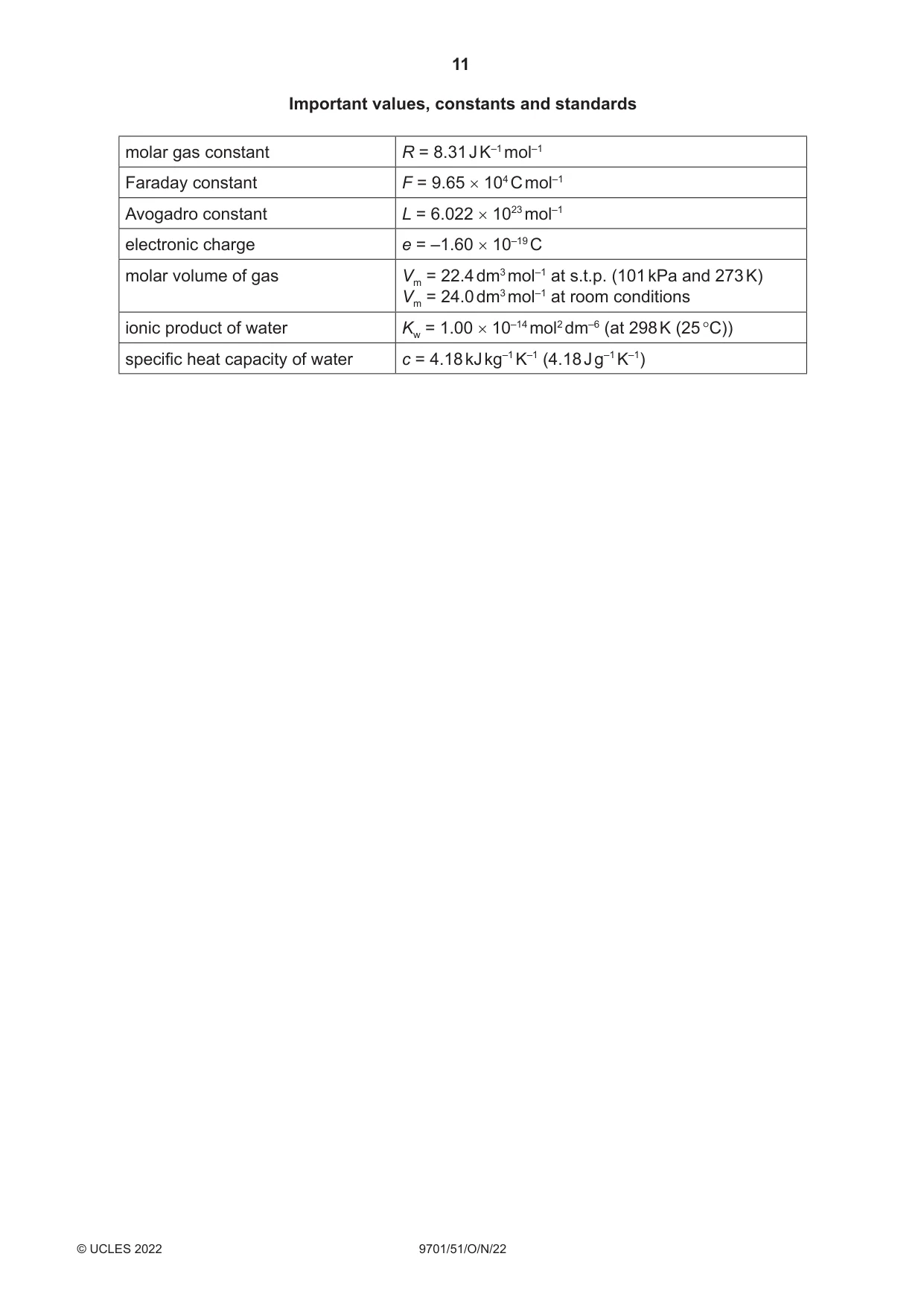
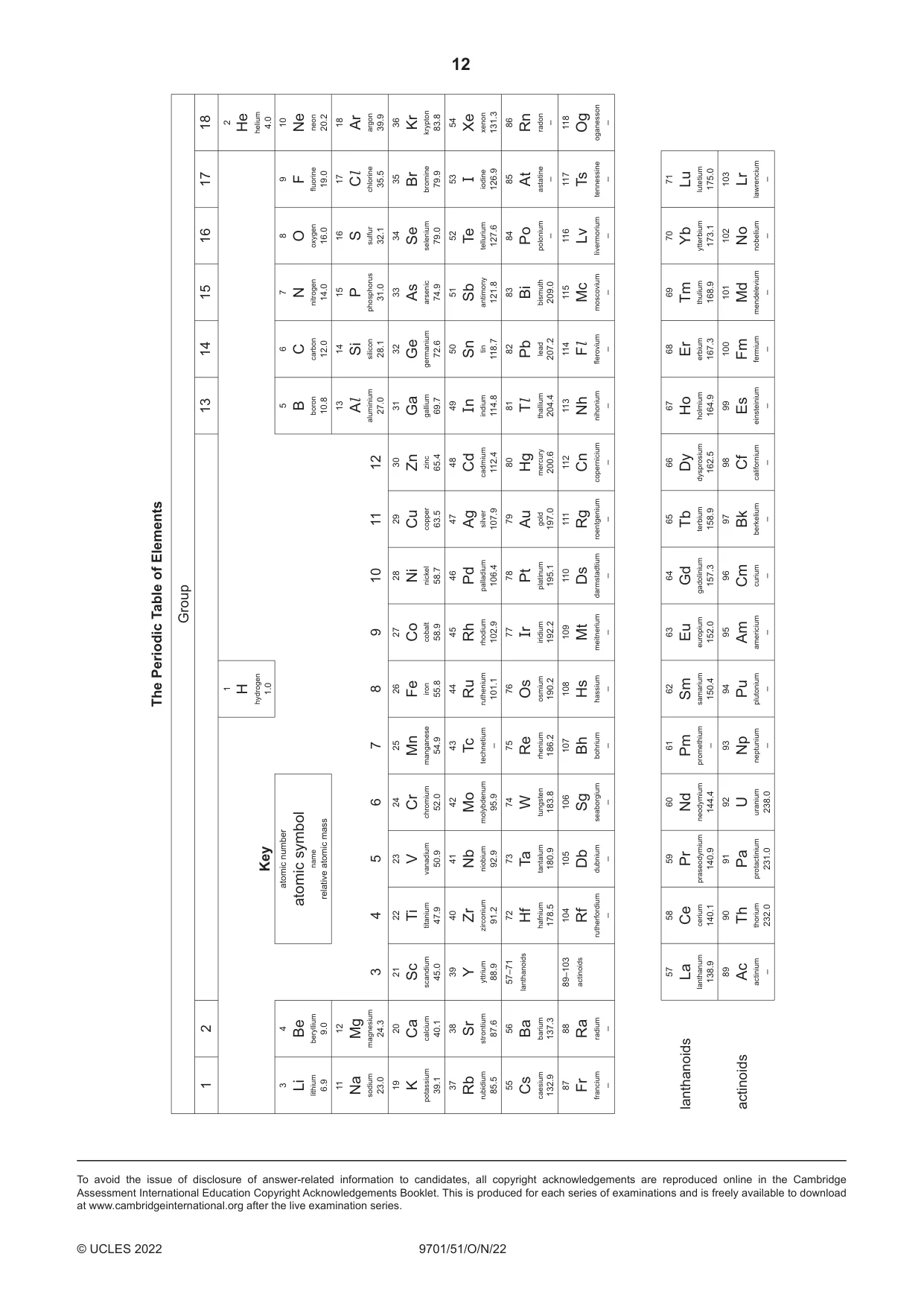
Mark scheme8 pages
Answers below. Sit the paper first if you are practising.
Questions as text
Q1 · A student attempts to determine the percentage by mass of magnesium chloride in the solid…
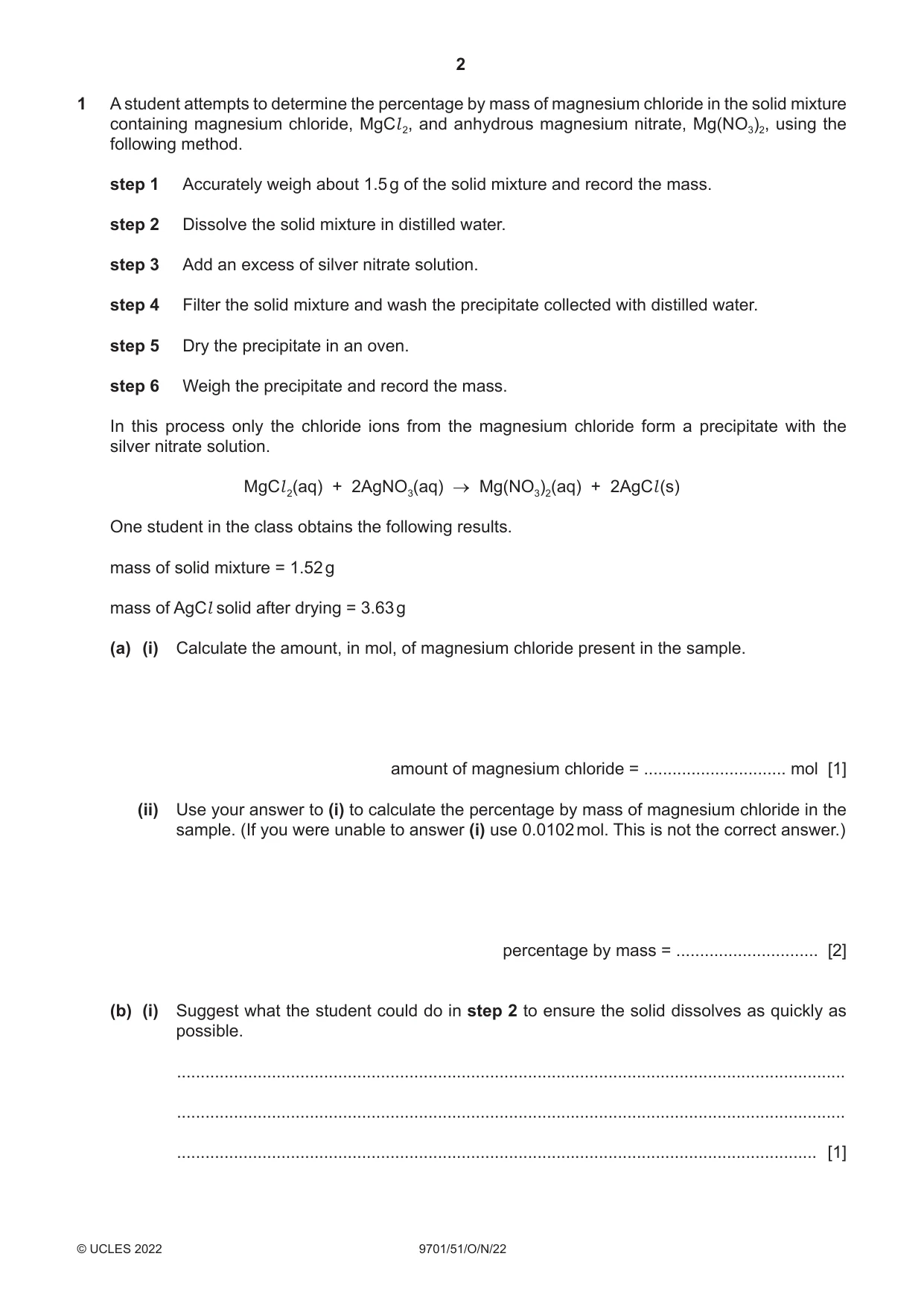
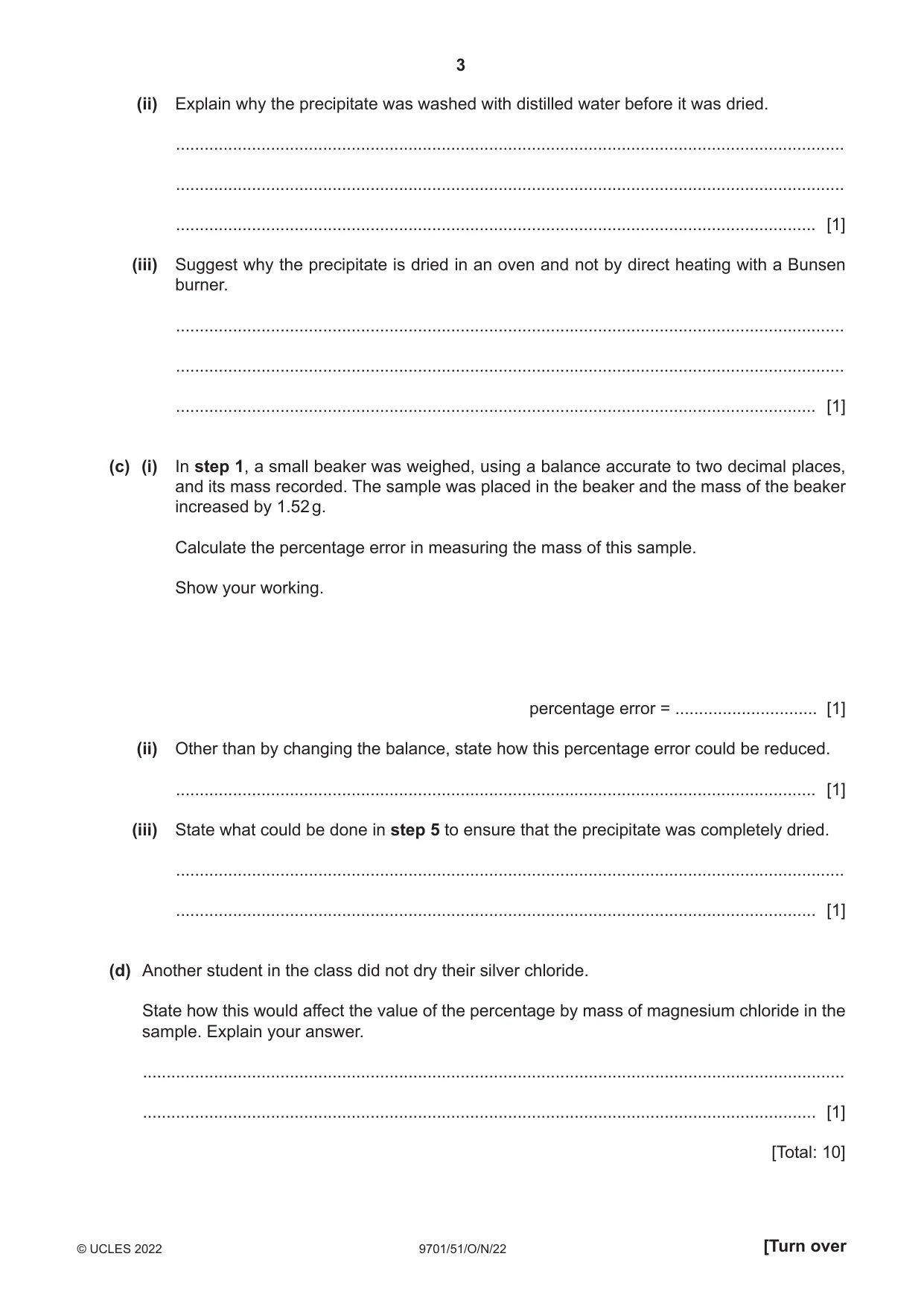
1 A student attempts to determine the percentage by mass of magnesium chloride in the solid mixture containing magnesium chloride, MgCl 2, and anhydrous magnesium nitrate, Mg(NO3)2, using the following method. step 1 Accurately weigh about 1.5 g of the solid mixture and record the mass. step 2 Dissolve the solid mixture in distilled water. step 3 Add an excess of silver nitrate solution. step 4 Filter the solid mixture and wash the precipitate collected with distilled water. step 5 Dry the precipitate in an oven. step 6 Weigh the precipitate and record the mass. In this process only the chloride ions from the magnesium chloride form a precipitate with the silver nitrate solution. MgCl 2(aq) + 2AgNO3(aq) → Mg(NO3)2(aq) + 2AgCl (s) One student in the class obtains the following results. mass of solid mixture = 1.52 g mass of AgCl solid after drying = 3.63 g (a) (i) Calculate the amount, in mol, of magnesium chloride present in the sample. amount of magnesium chloride = .............................. mol [1] (ii) Use your answer to (i) to calculate the percentage by mass of magnesium chloride in the sample. (If you were unable to answer (i) use 0.0102 mol. This is not the correct answer.) percentage by mass = .............................. [2] (b) (i) Suggest what the student could do in step 2 to ensure the solid dissolves as quickly as possible. ............................................................................................................................................. ............................................................................................................................................. ....................................................................................................................................... [1] (ii) Explain why the precipitate was washed with distilled water before it was dried. ............................................................................................................................................. ............................................................................................................................................. ....................................................................................................................................... [1] (iii) Suggest why the precipitate is dried in an oven and not by direct heating with a Bunsen burner. ............................................................................................................................................. ............................................................................................................................................. ....................................................................................................................................... [1] (c) (i) In step 1, a small beaker was weighed, using a balance accurate to two decimal places, and its mass recorded. The sample was placed in the beaker and the mass of the beaker increased by 1.52 g. Calculate the percentage error in measuring the mass of this sample. Show your working. percentage error = .............................. [1] (ii) Other than by changing the balance, state how this percentage error could be reduced. ....................................................................................................................................... [1] (iii) State what could be done in step 5 to ensure that the precipitate was completely dried. ............................................................................................................................................. ....................................................................................................................................... [1] (d) Another student in the class did not dry their silver chloride. State how this would affect the value of the percentage by mass of magnesium chloride in the sample. Explain your answer. .................................................................................................................................................... .............................................................................................................................................. [1] [Total: 10]
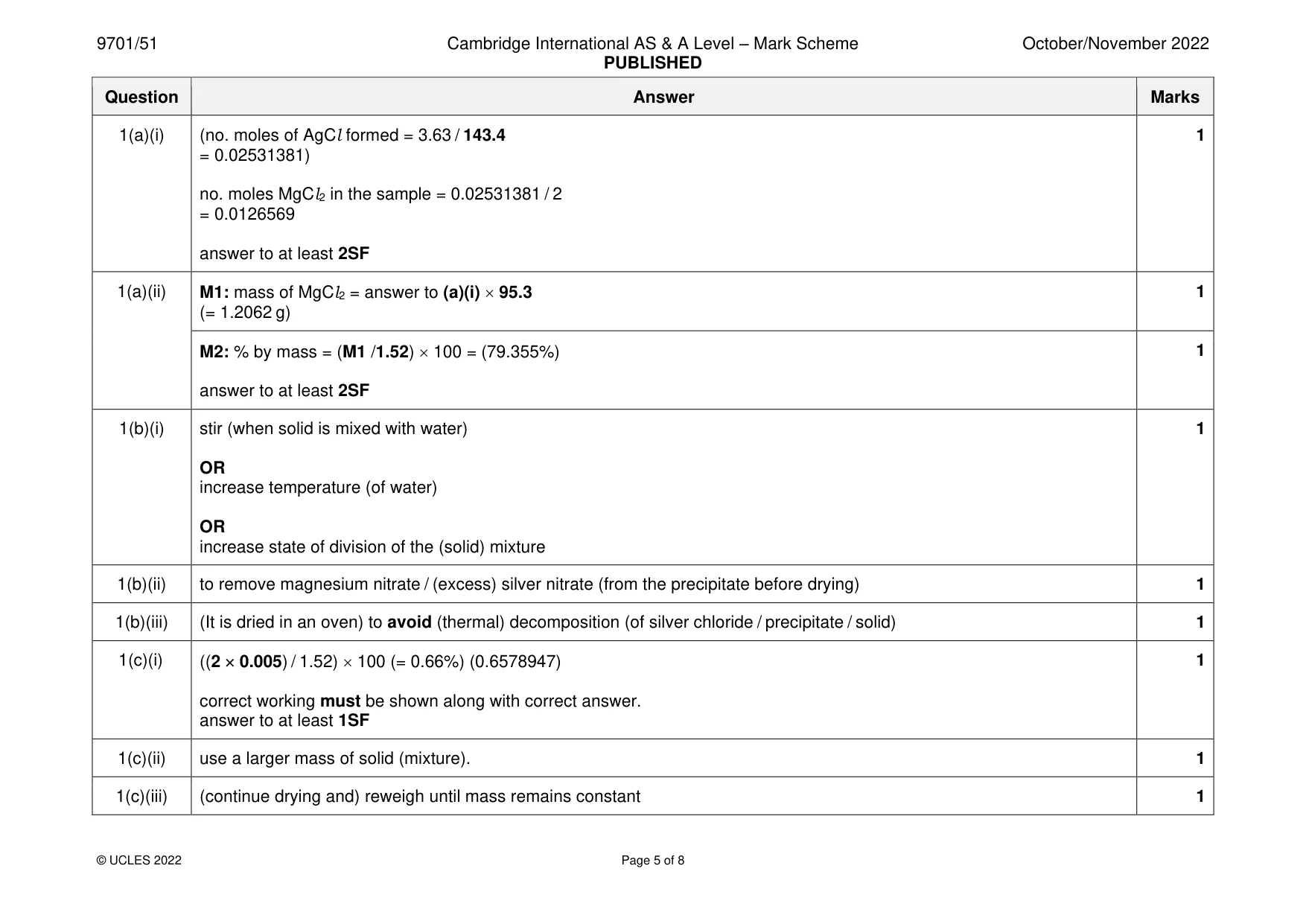
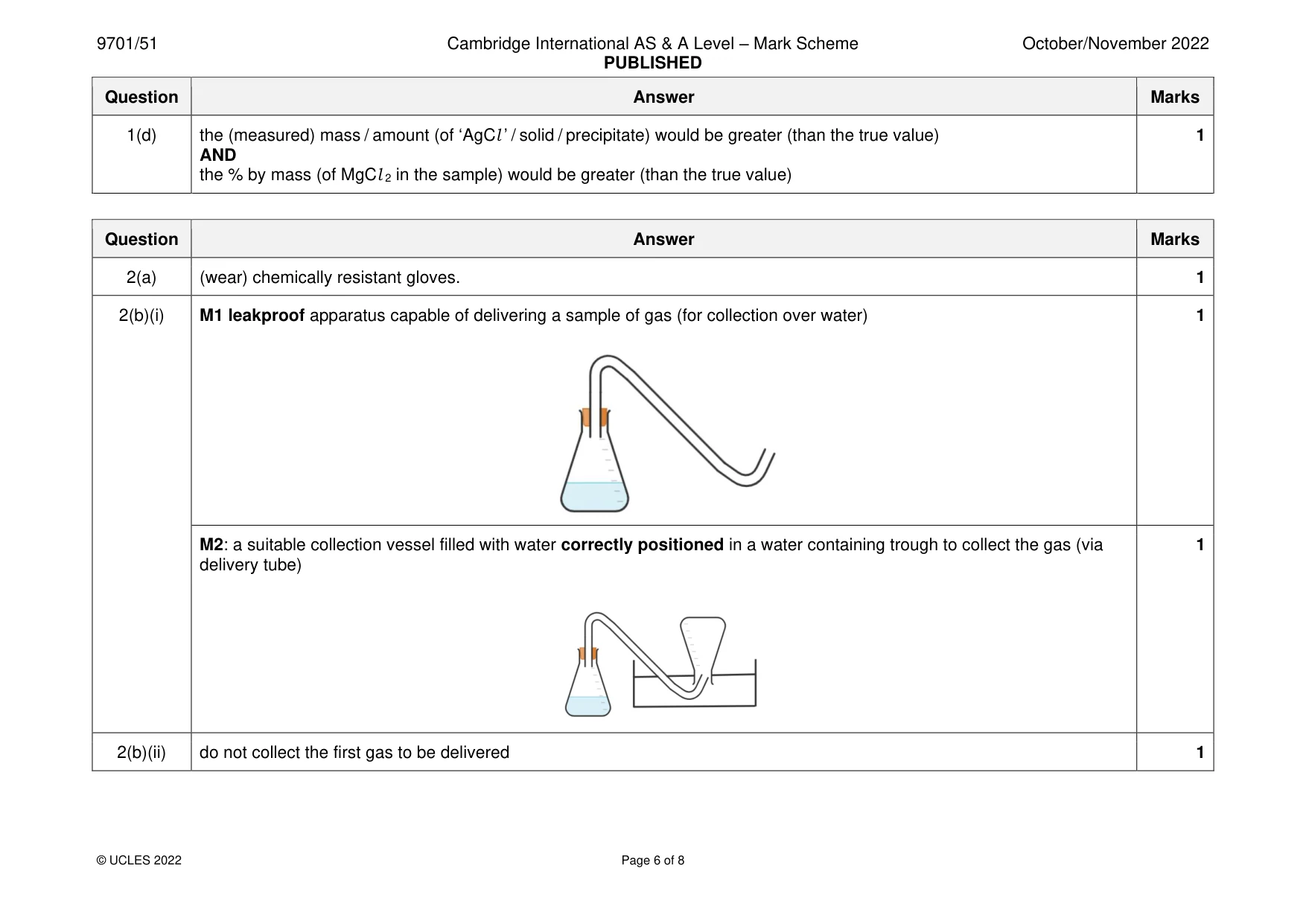
Mark scheme: Question Answer Marks 1(a)(i) (no. moles of AgCl formed = 3.63 / 143.4 1 = 0.02531381) no. moles MgCl2 in the sample = 0.02531381 / 2 = 0.0126569 answer to at least 2SF 1(a)(ii) M1: mass of MgCl2 = answer to (a)(i) 95.3 1 (= 1.2062 g) M2: % by mass = (M1 /1.52) 100 = (79.355%) 1 answer to at least 2SF 1(b)(i) stir (when solid is mixed with water) 1 OR increase temperature (of water) OR increase state of division of the (solid) mixture 1(b)(ii) to remove magnesium nitrate / (excess) silver nitrate (from the precipitate before drying) 1 1(b)(iii) (It is dried in an oven) to avoid (thermal) decomposition (of silver chloride / precipitate / solid) 1 1(c)(i) ((2 0.005) / 1.52) 100 (= 0.66%) (0.6578947) 1 correct working must be shown along with correct answer. answer to at least 1SF 1(c)(ii) use a larger mass of solid (mixture). 1 1(c)(iii) (continue drying and) reweigh until mass remains constant 1 1(d) the (measured) mass / amount (of ‘AgCl ’ / solid / precipitate) would be greater (than the true value) 1 AND the % by mass (of MgCl 2 in the sample) would be greater (than the true value)
More questions on Reacting masses and volumes (of solutions and gases)
Q2 · Charles’ law states that for a fixed mass of gas at constant pressure, its volume is…
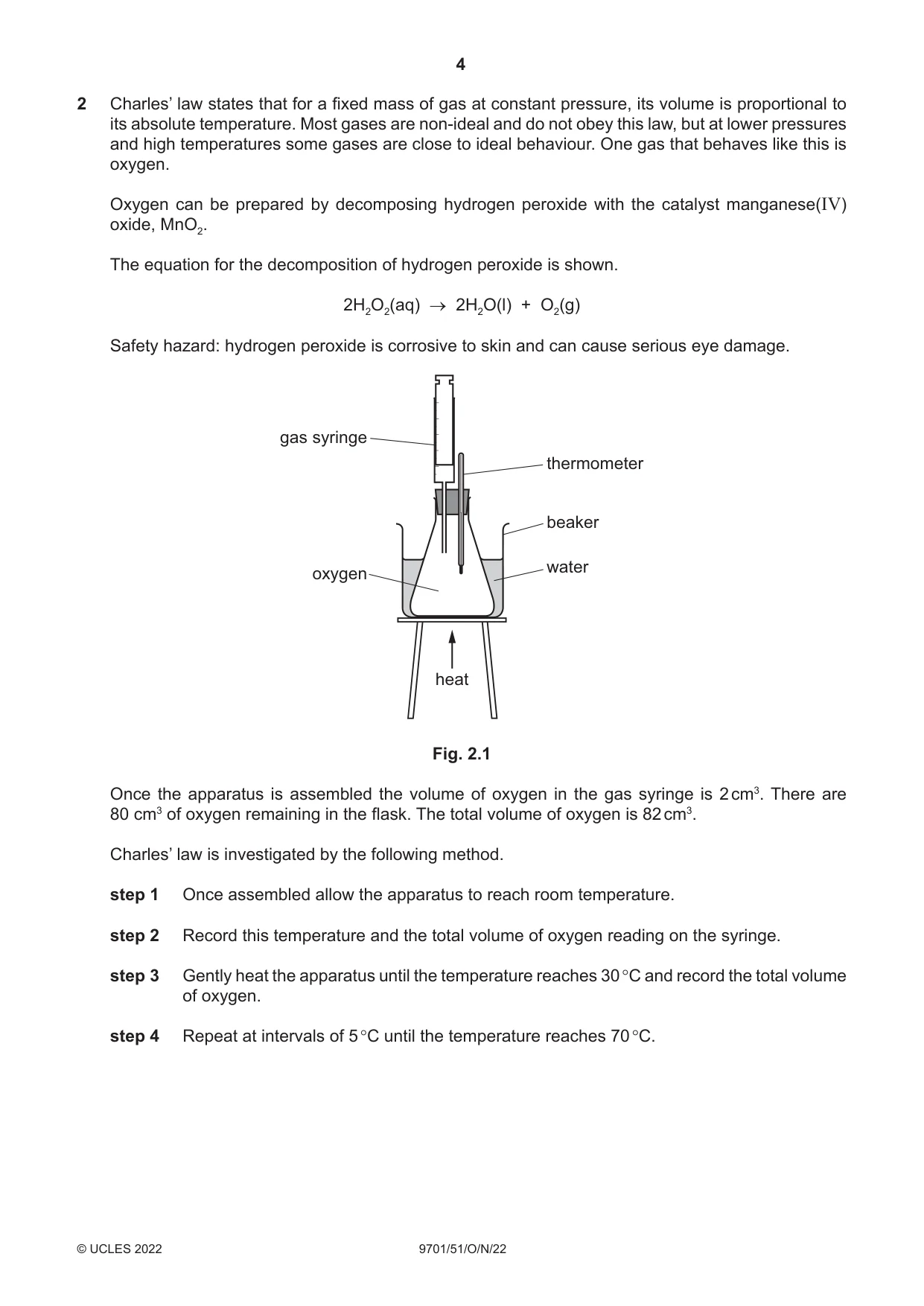
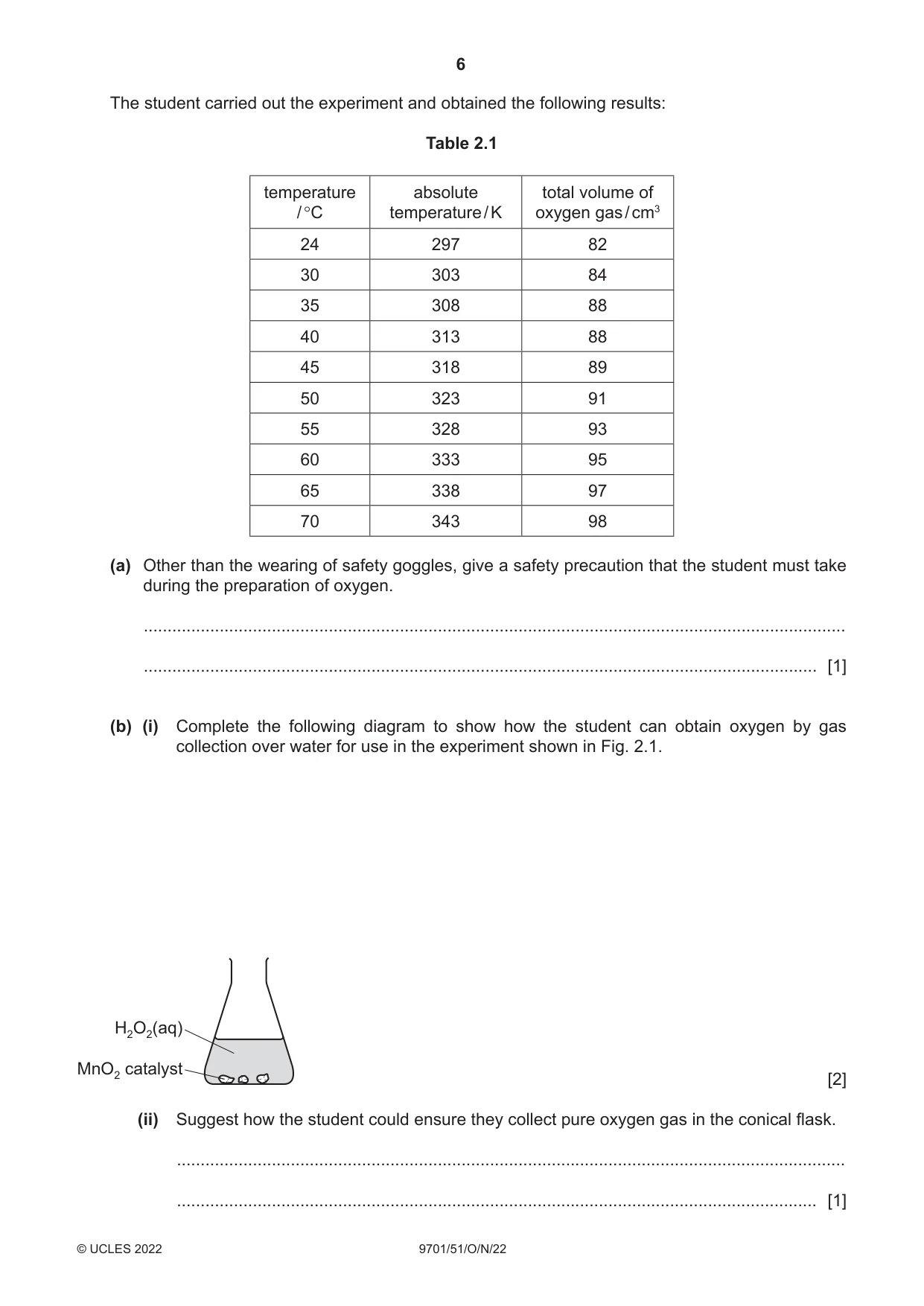
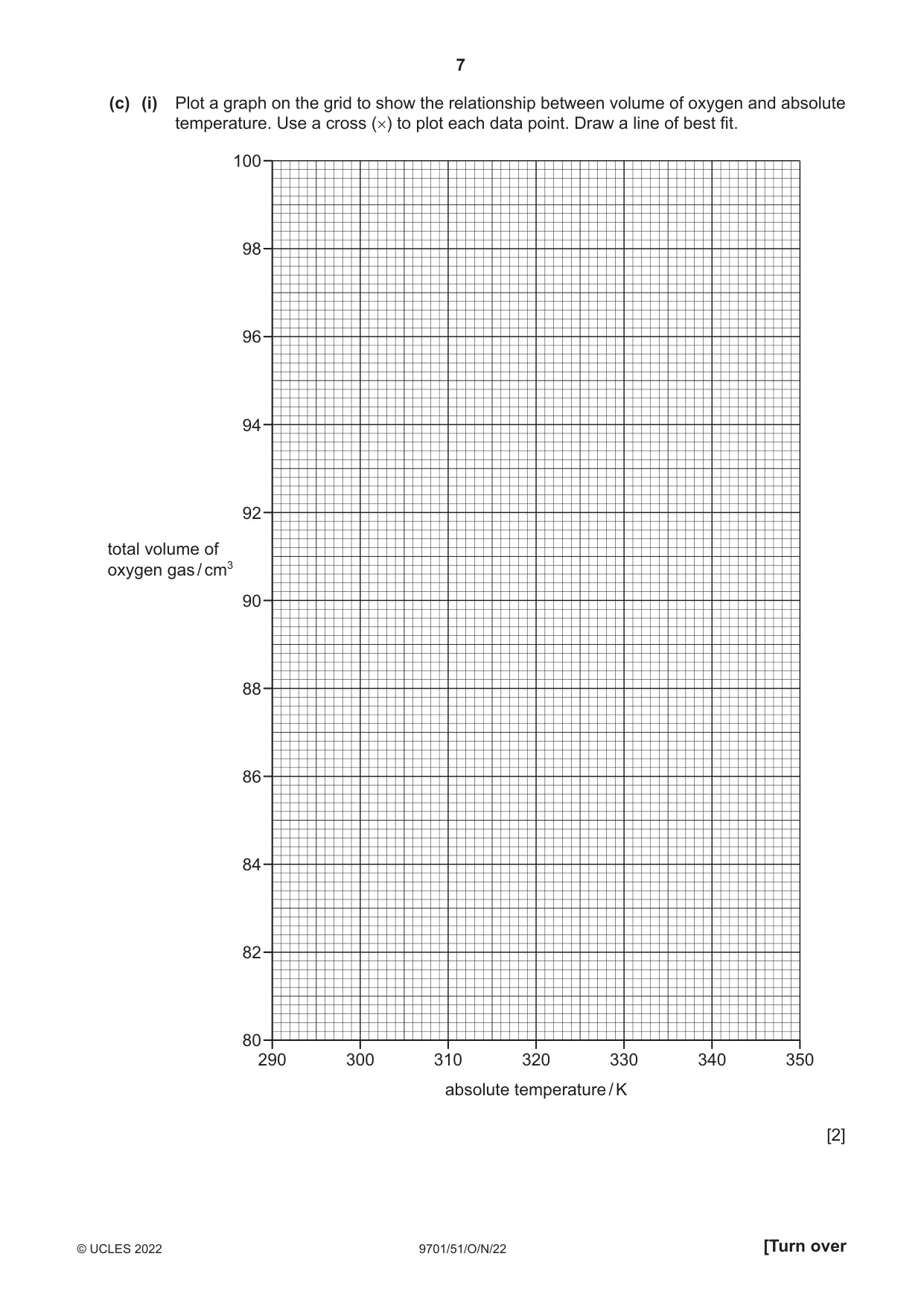
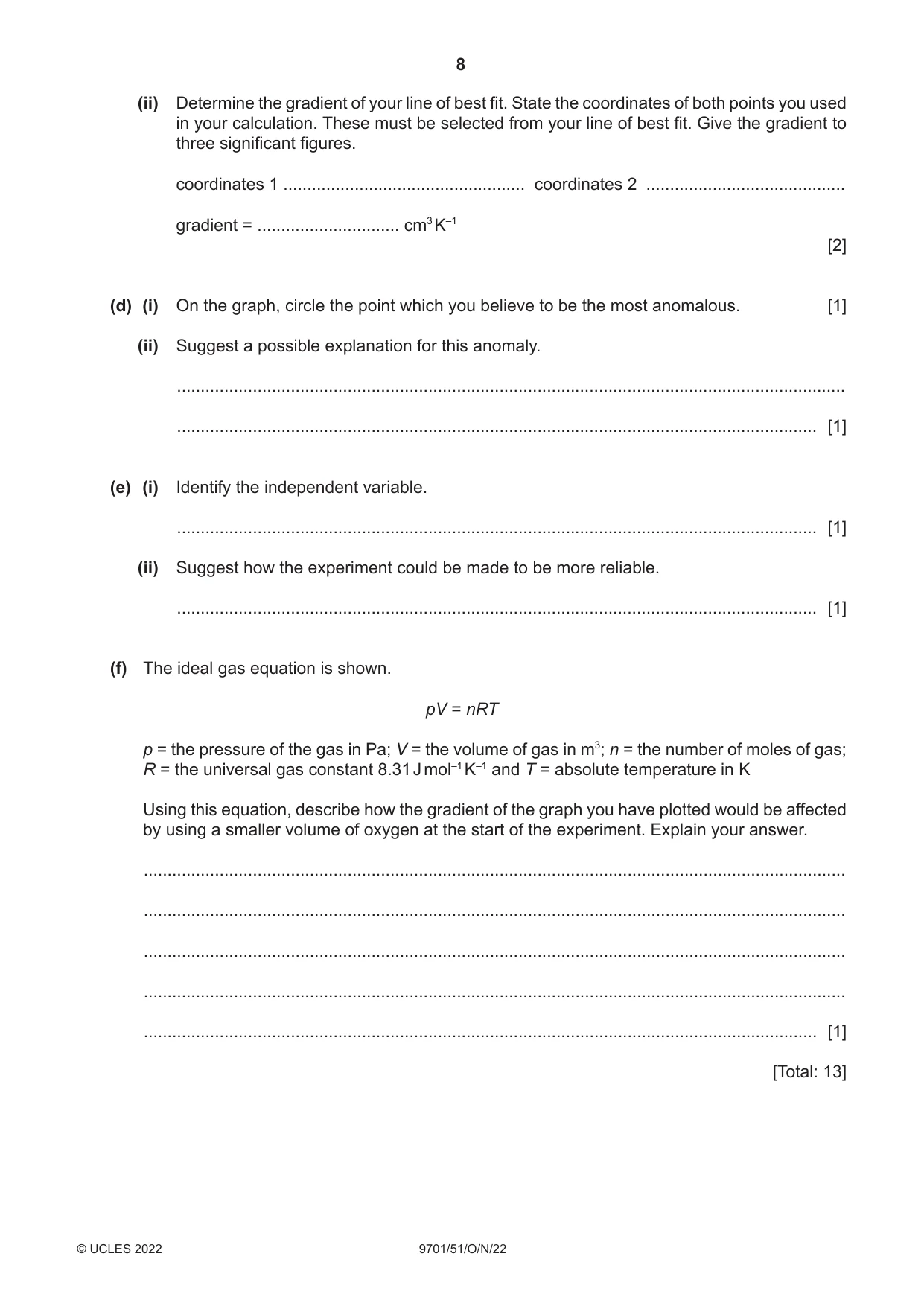
2 Charles’ law states that for a fixed mass of gas at constant pressure, its volume is proportional to its absolute temperature. Most gases are non-ideal and do not obey this law, but at lower pressures and high temperatures some gases are close to ideal behaviour. One gas that behaves like this is oxygen. Oxygen can be prepared by decomposing hydrogen peroxide with the catalyst manganese(IV) oxide, MnO2. The equation for the decomposition of hydrogen peroxide is shown. 2H2O2(aq) → 2H2O(l) + O2(g) Safety hazard: hydrogen peroxide is corrosive to skin and can cause serious eye damage. gas syringe thermometer beaker water oxygen heat Fig. 2.1 Once the apparatus is assembled the volume of oxygen in the gas syringe is 2 cm3. There are 80 cm3 of oxygen remaining in the flask. The total volume of oxygen is 82 cm3. Charles’ law is investigated by the following method. step 1 Once assembled allow the apparatus to reach room temperature. step 2 Record this temperature and the total volume of oxygen reading on the syringe. step 3 Gently heat the apparatus until the temperature reaches 30 °C and record the total volume of oxygen. step 4 Repeat at intervals of 5 °C until the temperature reaches 70 °C. Question 2 continues on the next page. The student carried out the experiment and obtained the following results: Table 2.1 temperature absolute total volume of / °C temperature / K oxygen gas / cm3 24 297 82 30 303 84 35 308 88 40 313 88 45 318 89 50 323 91 55 328 93 60 333 95 65 338 97 70 343 98 (a) Other than the wearing of safety goggles, give a safety precaution that the student must take during the preparation of oxygen. .................................................................................................................................................... .............................................................................................................................................. [1] (b) (i) Complete the following diagram to show how the student can obtain oxygen by gas collection over water for use in the experiment shown in Fig. 2.1. H2O2(aq) MnO2 catalyst [2] (ii) Suggest how the student could ensure they collect pure oxygen gas in the conical flask. ............................................................................................................................................. ....................................................................................................................................... [1] the relati plot each 310 absol (ii) Determine the gradient of your line of best fit. State the coordinates of both points you used in your calculation. These must be selected from your line of best fit. Give the gradient to three significant figures. coordinates 1 ................................................... coordinates 2 ........................................... gradient = .............................. cm3 K–1 [2] (d) (i) On the graph, circle the point which you believe to be the most anomalous. [1] (ii) Suggest a possible explanation for this anomaly. ............................................................................................................................................. ....................................................................................................................................... [1] (e) (i) Identify the independent variable. ....................................................................................................................................... [1] (ii) Suggest how the experiment could be made to be more reliable. ....................................................................................................................................... [1] (f) The ideal gas equation is shown. pV = nRT p = the pressure of the gas in Pa; V = the volume of gas in m3; n = the number of moles of gas; R = the universal gas constant 8.31 J mol–1 K–1 and T = absolute temperature in K Using this equation, describe how the gradient of the graph you have plotted would be affected by using a smaller volume of oxygen at the start of the experiment. Explain your answer. .................................................................................................................................................... .................................................................................................................................................... .................................................................................................................................................... .................................................................................................................................................... .............................................................................................................................................. [1] [Total: 13]
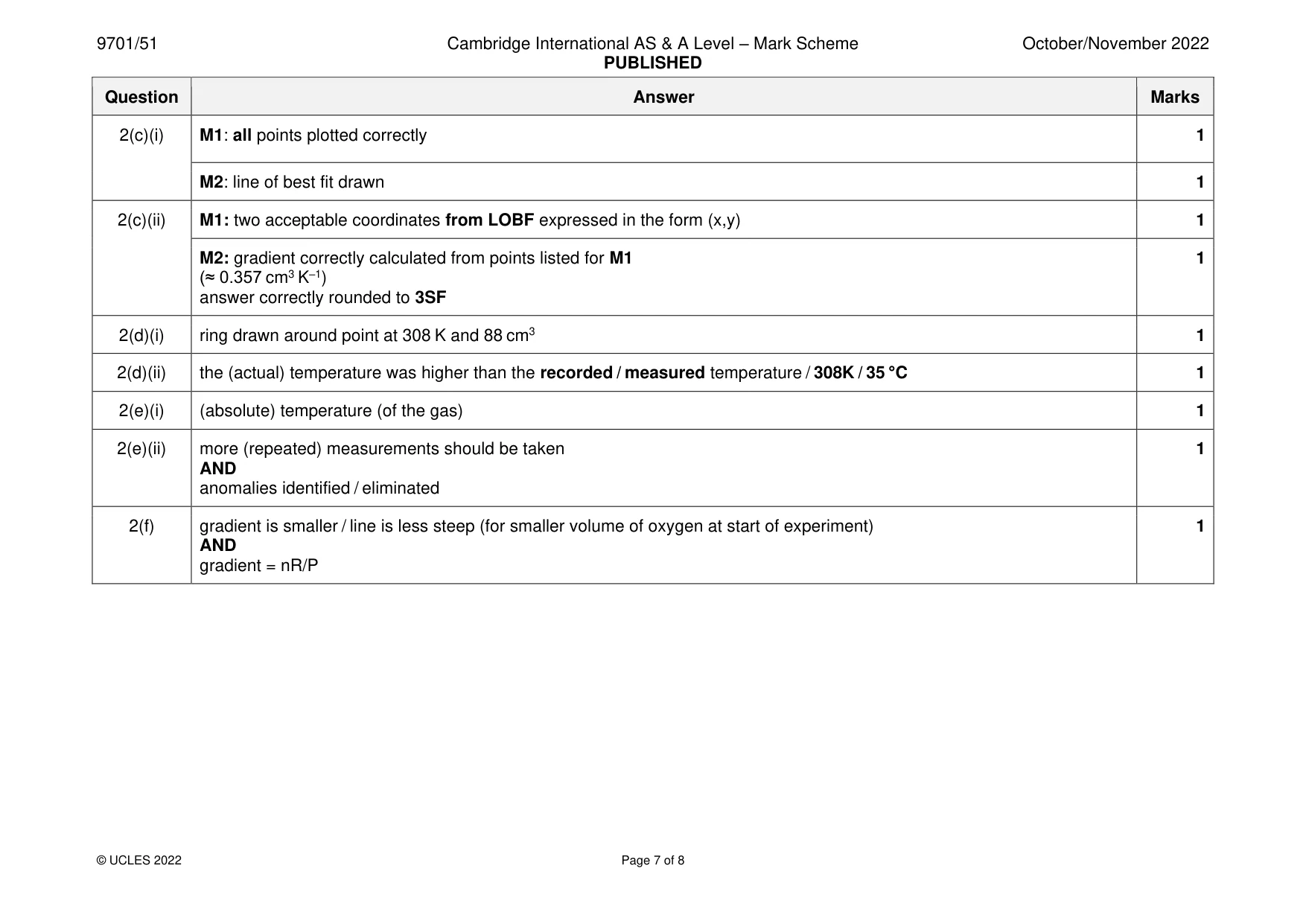
Mark scheme: 2(a) (wear) chemically resistant gloves. 1 2(b)(i) M1 leakproof apparatus capable of delivering a sample of gas (for collection over water) 1 M2: a suitable collection vessel filled with water correctly positioned in a water containing trough to collect the gas (via 1 delivery tube) 2(b)(ii) do not collect the first gas to be delivered 1 2(c)(i) M1: all points plotted correctly 1 M2: line of best fit drawn 1 2(c)(ii) M1: two acceptable coordinates from LOBF expressed in the form (x,y) 1 M2: gradient correctly calculated from points listed for M1 1 (≈ 0.357 cm3 K–1) answer correctly rounded to 3SF 2(d)(i) ring drawn around point at 308 K and 88 cm3 1 2(d)(ii) the (actual) temperature was higher than the recorded / measured temperature / 308K / 35 °C 1 2(e)(i) (absolute) temperature (of the gas) 1 2(e)(ii) more (repeated) measurements should be taken 1 AND anomalies identified / eliminated 2(f) gradient is smaller / line is less steep (for smaller volume of oxygen at start of experiment) 1 AND gradient = nR/P
More questions on Reacting masses and volumes (of solutions and gases)
Q3 · Potassium bromate(V) reacts with potassium bromide and sulfuric acid to form potassium…
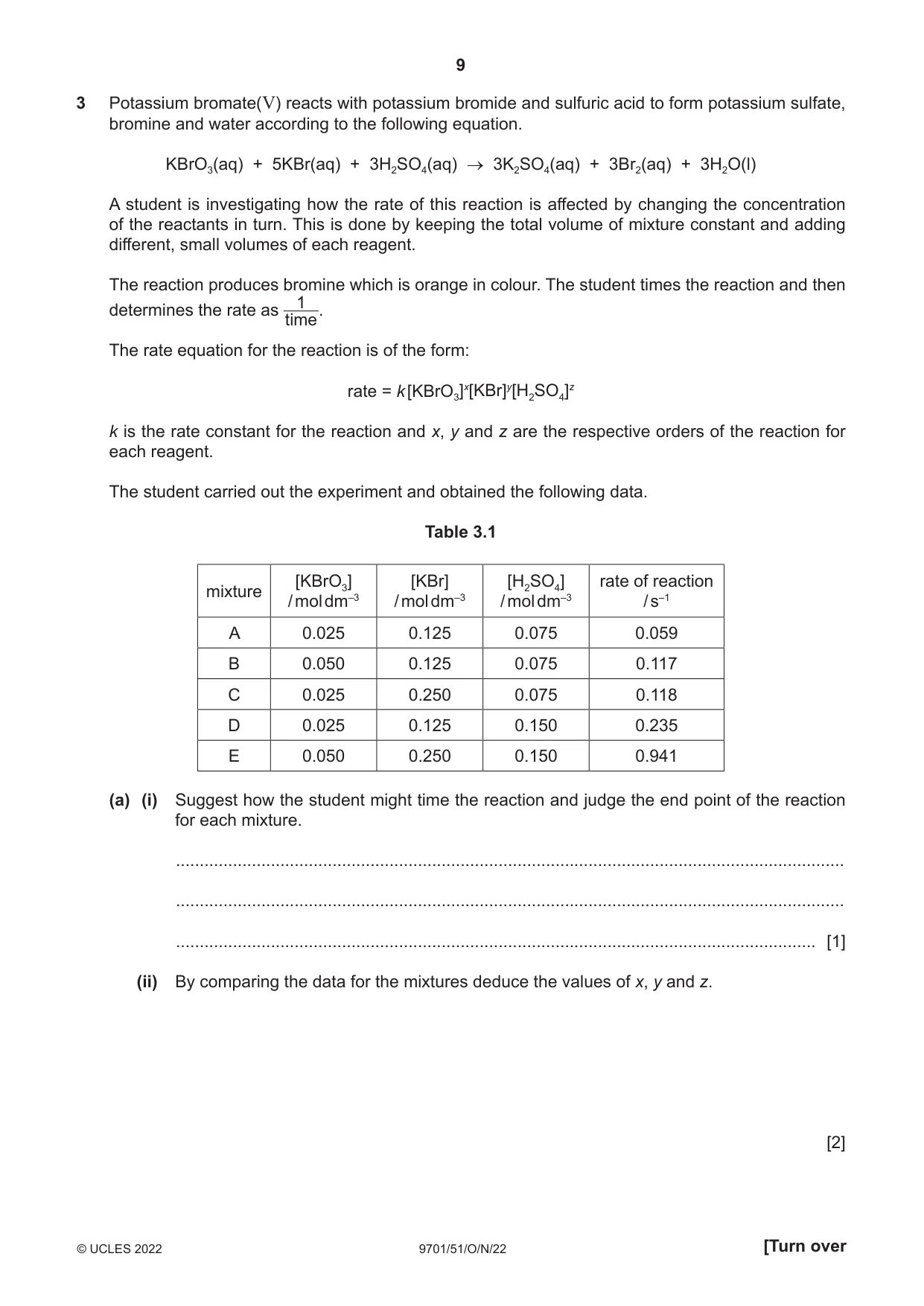
3 Potassium bromate(V) reacts with potassium bromide and sulfuric acid to form potassium sulfate, bromine and water according to the following equation. KBrO3(aq) + 5KBr(aq) + 3H2SO4(aq) → 3K2SO4(aq) + 3Br2(aq) + 3H2O(l) A student is investigating how the rate of this reaction is affected by changing the concentration of the reactants in turn. This is done by keeping the total volume of mixture constant and adding different, small volumes of each reagent. The reaction produces bromine which is orange in colour. The student times the reaction and then 1 determines the rate as time. The rate equation for the reaction is of the form: rate = k [KBrO3]x[KBr]y[H2SO4]z k is the rate constant for the reaction and x, y and z are the respective orders of the reaction for each reagent. The student carried out the experiment and obtained the following data. Table 3.1 [KBrO3] [KBr] [H2SO4] rate of reaction mixture / mol dm–3 / mol dm–3 / mol dm–3 / s–1 A 0.025 0.125 0.075 0.059 B 0.050 0.125 0.075 0.117 C 0.025 0.250 0.075 0.118 D 0.025 0.125 0.150 0.235 E 0.050 0.250 0.150 0.941 (a) (i) Suggest how the student might time the reaction and judge the end point of the reaction for each mixture. ............................................................................................................................................. ............................................................................................................................................. ....................................................................................................................................... [1] (ii) By comparing the data for the mixtures deduce the values of x, y and z. [2] (b) The student carried out each reaction using a boiling tube (capacity 50 cm3) and varied the concentration by adding different volumes of each reagent. For example, in mixture A, 5.0 cm3 of KBrO3(aq) is required. Name a suitable piece of apparatus which could be used to measure this volume. .............................................................................................................................................. [1] (c) Suggest why the reagents are heated to the same temperature before mixing. .............................................................................................................................................. [1] (d) The solution of sulfuric acid used in each mixture was of concentration 0.150 mol dm–3. This acid was prepared from a solution of concentration 1 mol dm–3. Briefly describe how to make the more dilute solution, stating the capacity of any apparatus used. .................................................................................................................................................... .................................................................................................................................................... .................................................................................................................................................... .............................................................................................................................................. [2] [Total: 7]
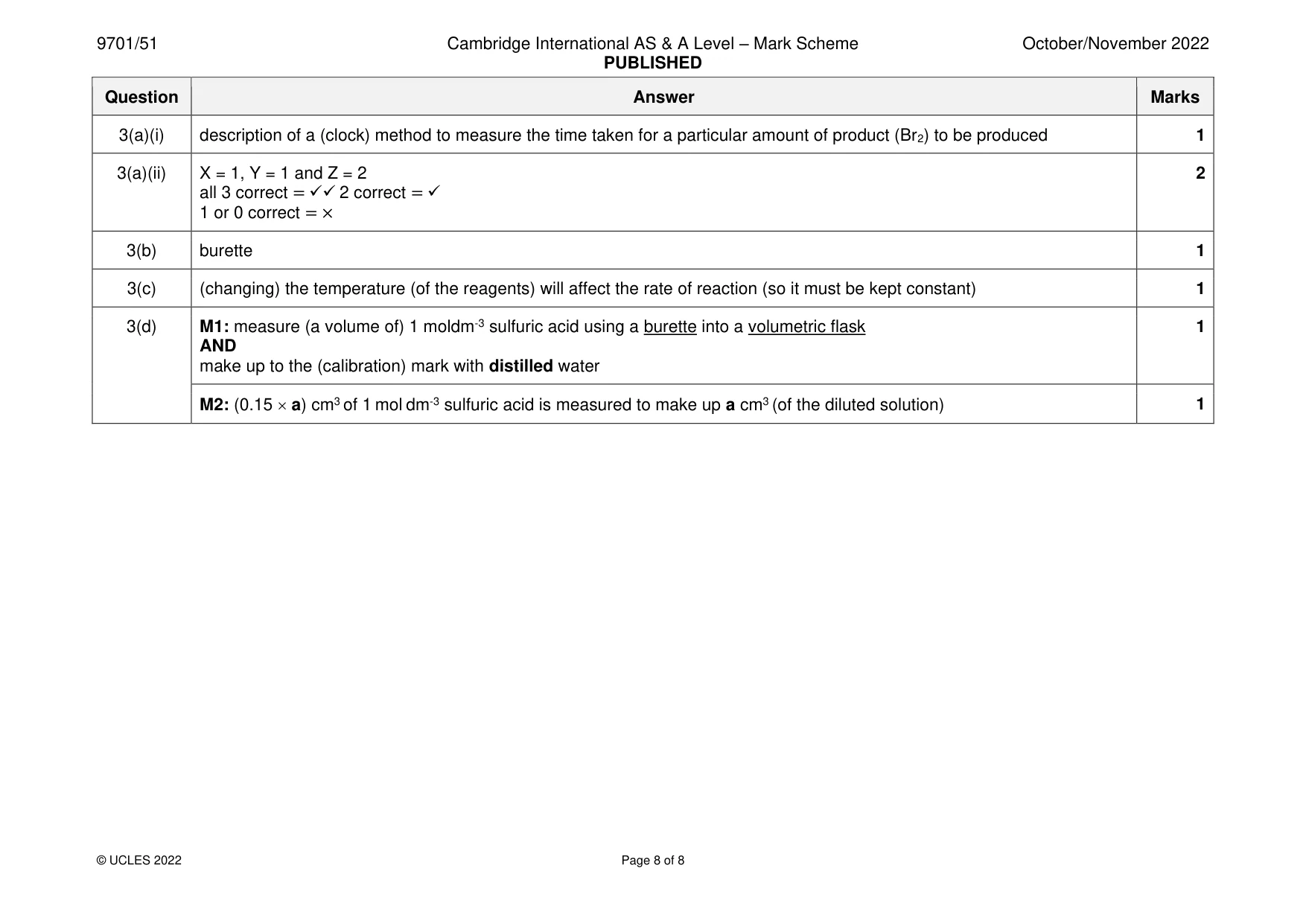
Mark scheme: 3(a)(i) description of a (clock) method to measure the time taken for a particular amount of product (Br2) to be produced 1 3(a)(ii) X = 1, Y = 1 and Z = 2 2 all 3 correct = ✓✓ 2 correct = ✓ 1 or 0 correct = × 3(b) burette 1 3(c) (changing) the temperature (of the reagents) will affect the rate of reaction (so it must be kept constant) 1 3(d) M1: measure (a volume of) 1 moldm-3 sulfuric acid using a burette into a volumetric flask 1 AND make up to the (calibration) mark with distilled water M2: (0.15 a) cm3 of 1 mol dm-3 sulfuric acid is measured to make up a cm3 (of the diluted solution) 1
What was in this paper
The subtopics covered by these 3 questions, and how many questions each got. Open one in a new tab to see every Cambridge question on it.
What you needed in this session
Cambridge’s own grade thresholds for 2022 Oct/Nov, Paper 5 · Variant 1. A higher threshold means an easier paper — the bar moves with how the cohort did.