Cambridge A Level Business (for first examination in 2016) 9609 — 2025 May/June Paper 4 · Variant 3
9609/43/M/J/25 · 1 question · 40 marks · ≈45 min
The question paper and its mark scheme, free to read here and free to download. This is Cambridge’s own paper, exactly as it was sat.
Question paper4 pages

Mark scheme19 pages
Answers below. Sit the paper first if you are practising.
Questions as text
Q1 · Evaluate how significant Enterprise Resource Planning (ERP) was to CH’s operations…
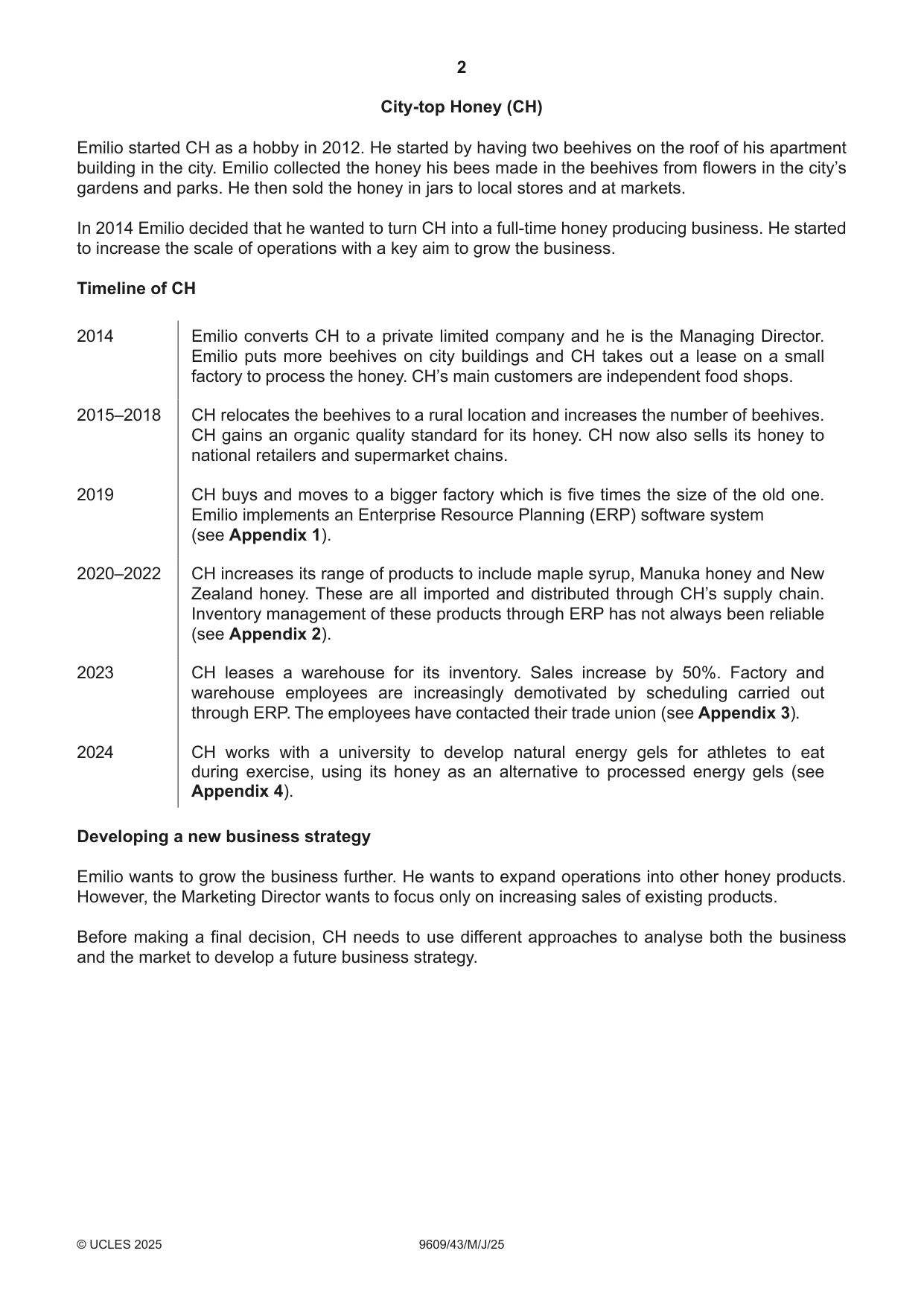
1 Evaluate how significant Enterprise Resource Planning (ERP) was to CH’s operations strategy between 2019 and 2024. [20]
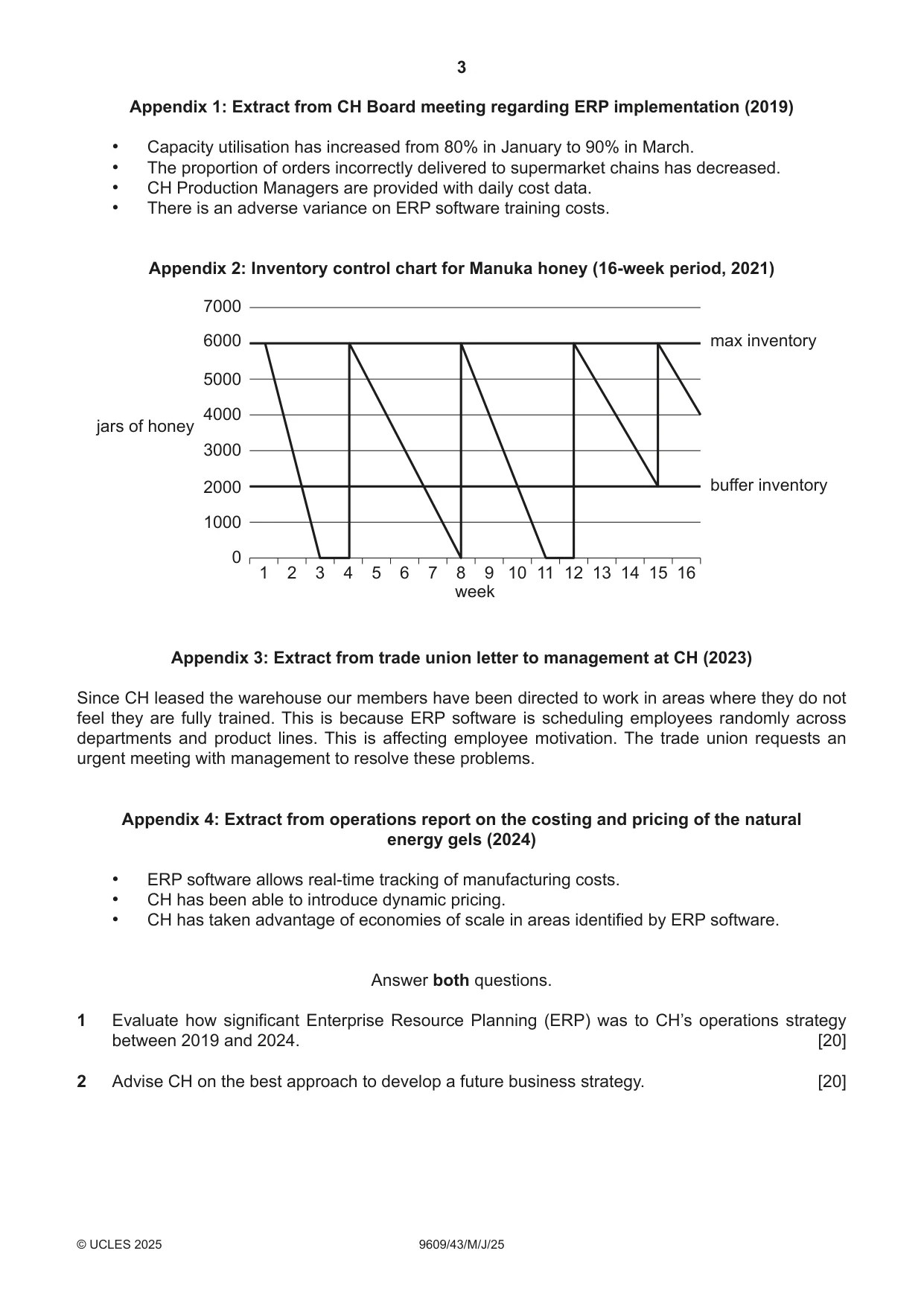
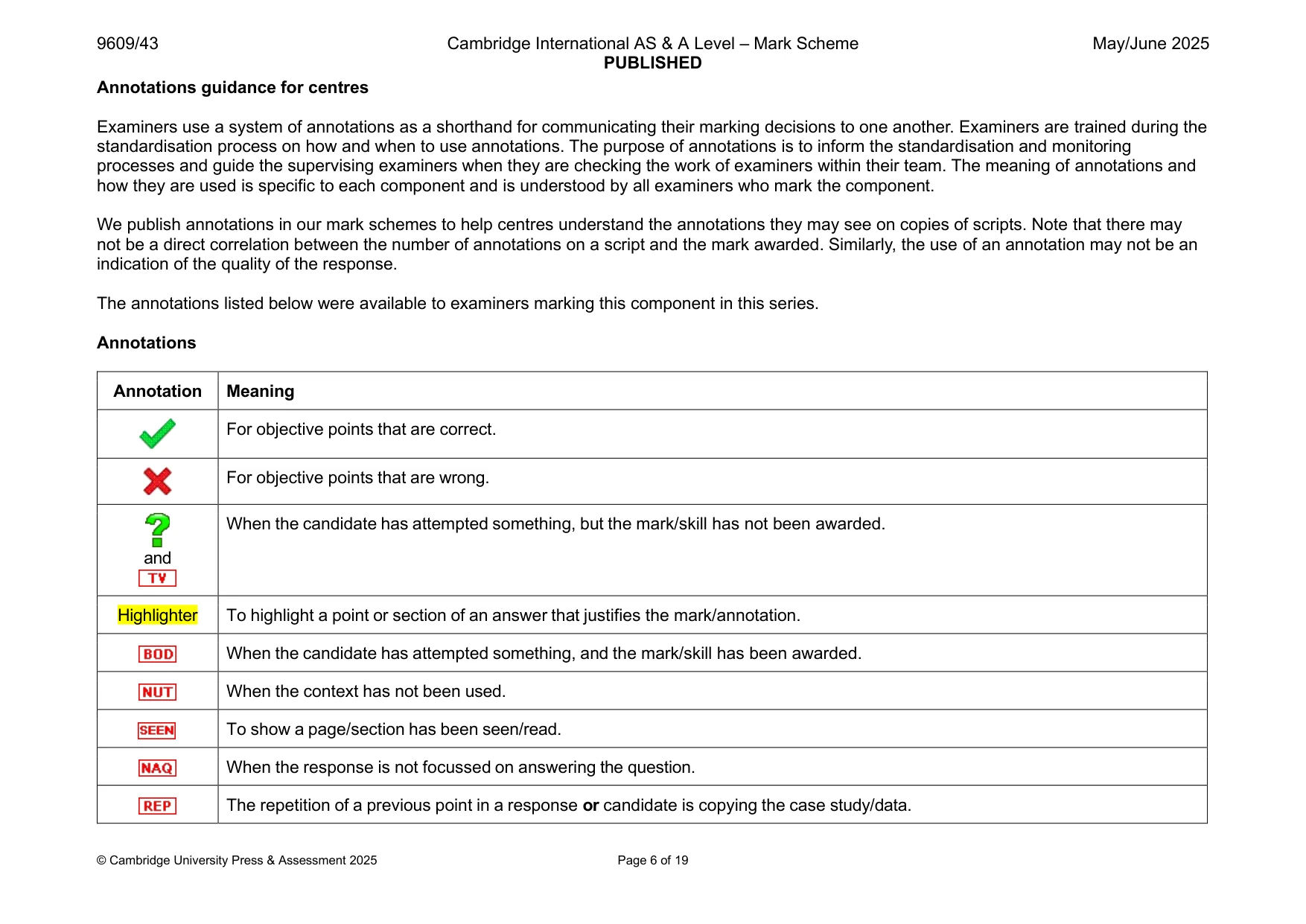
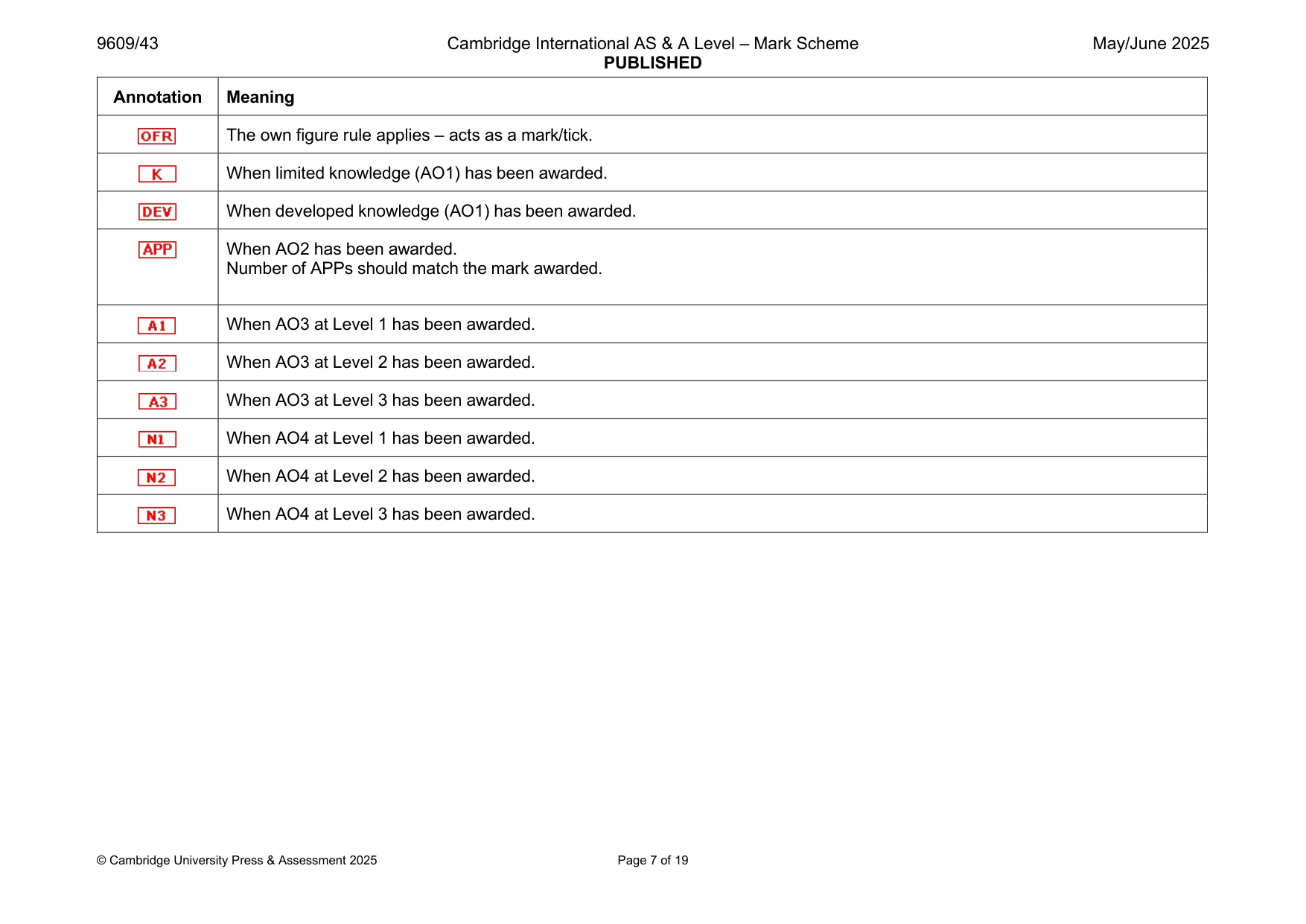
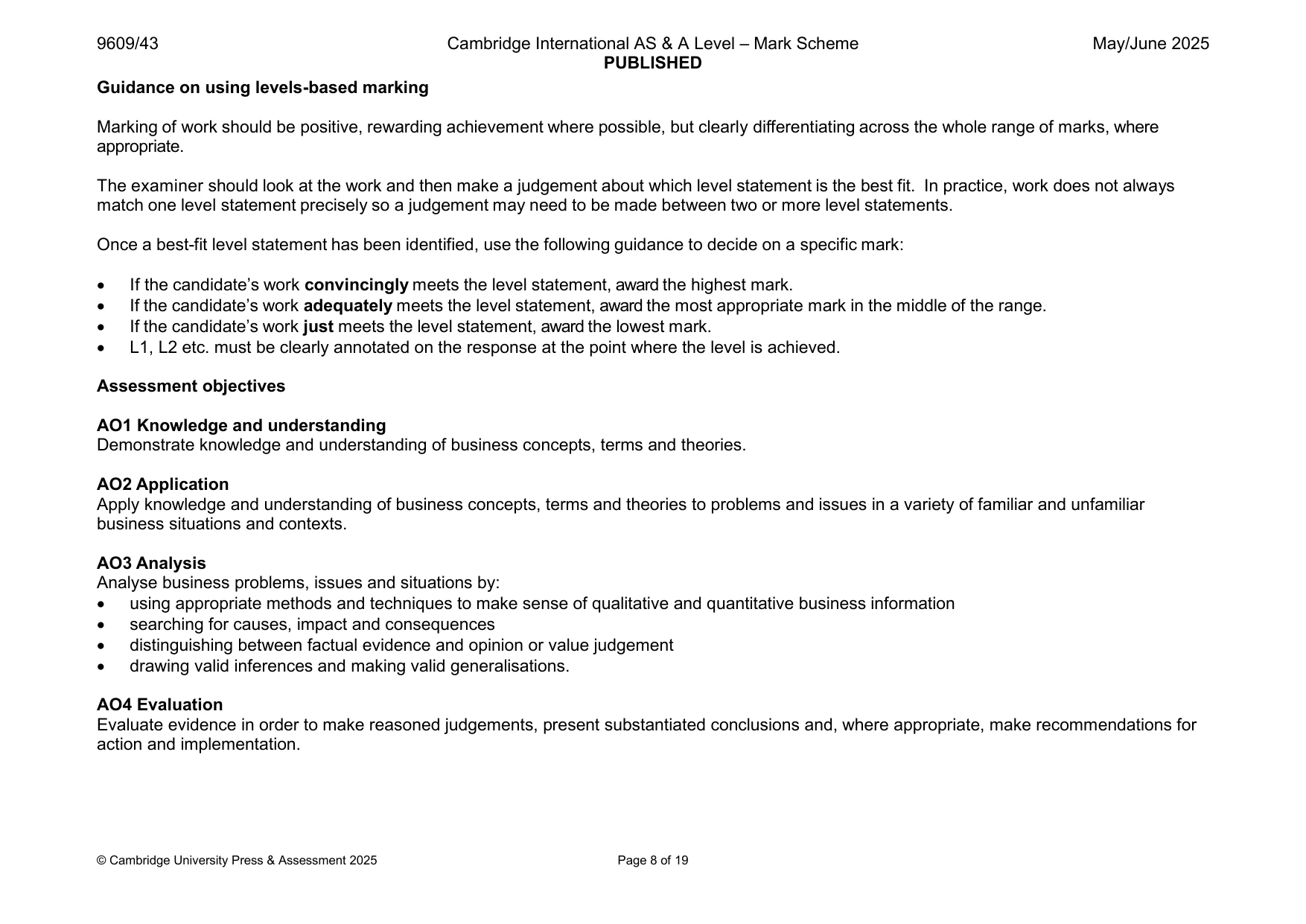
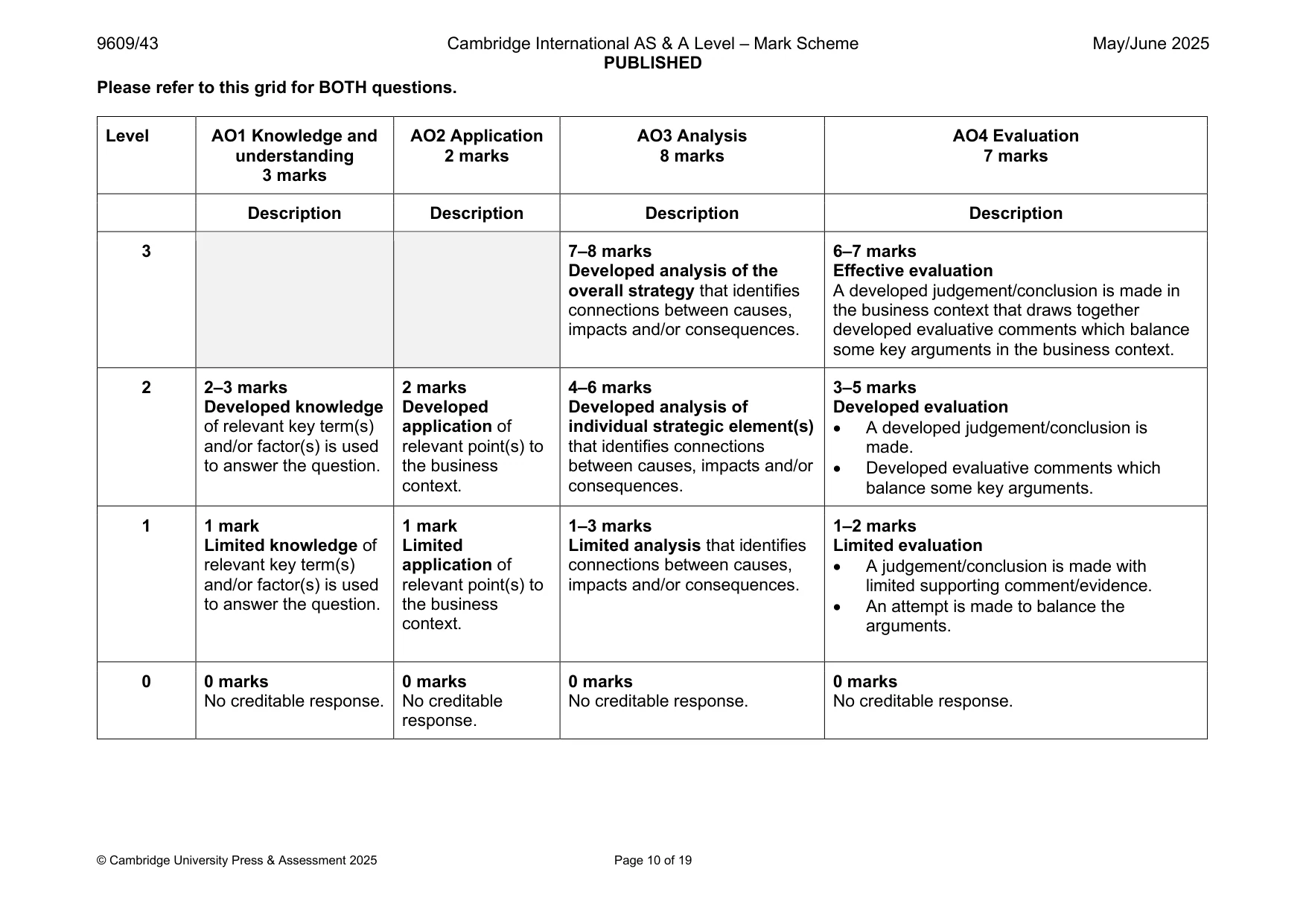
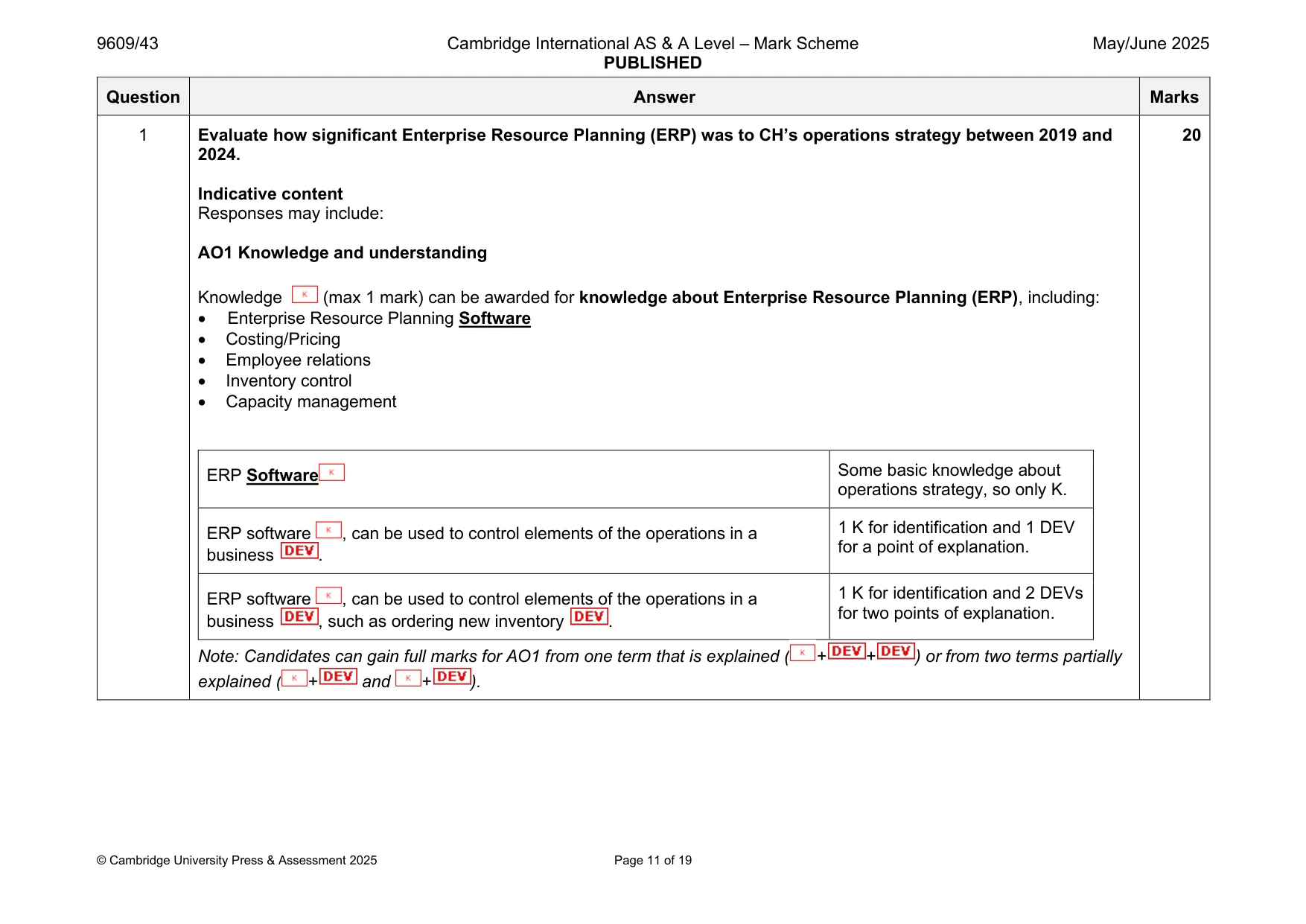
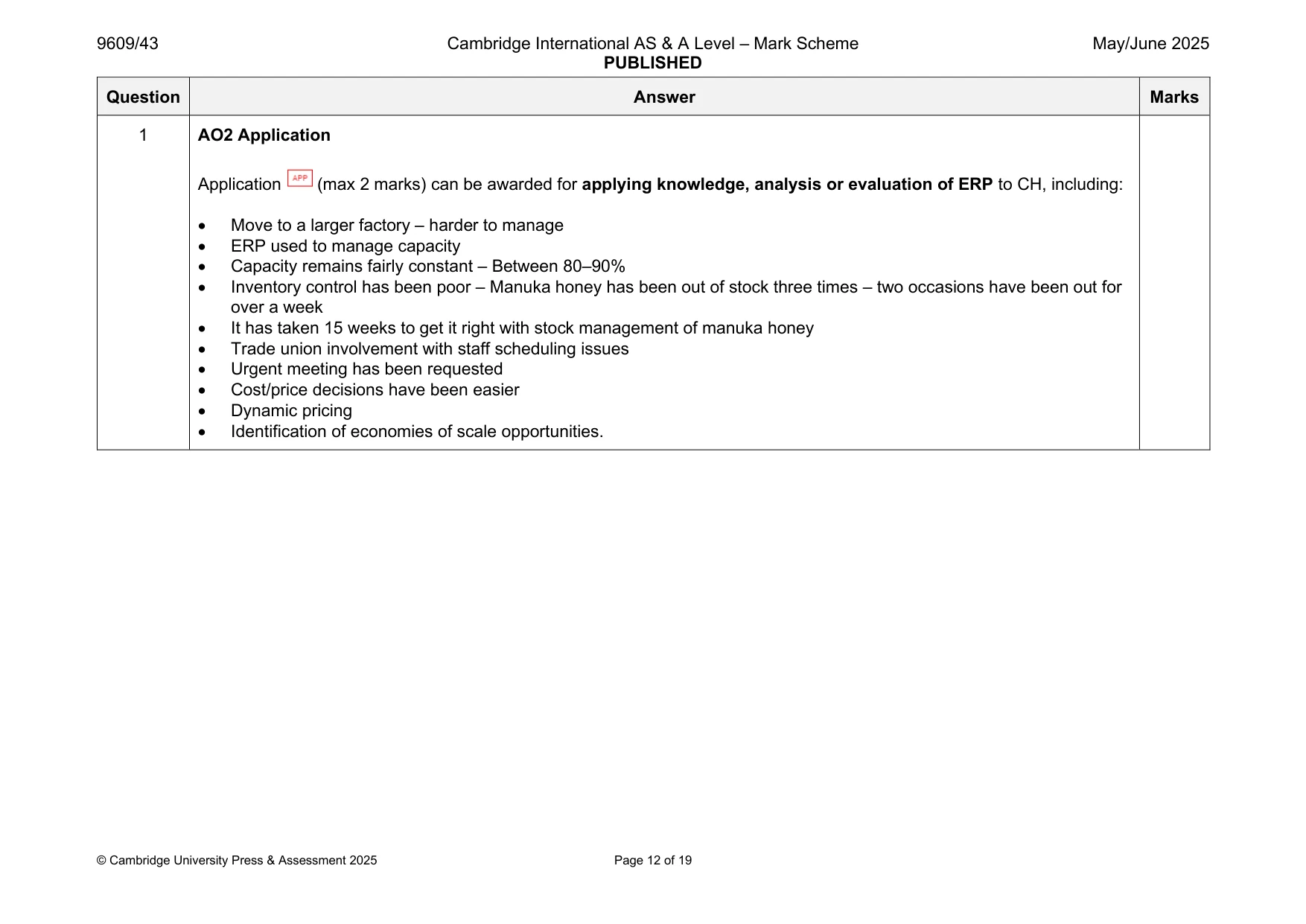
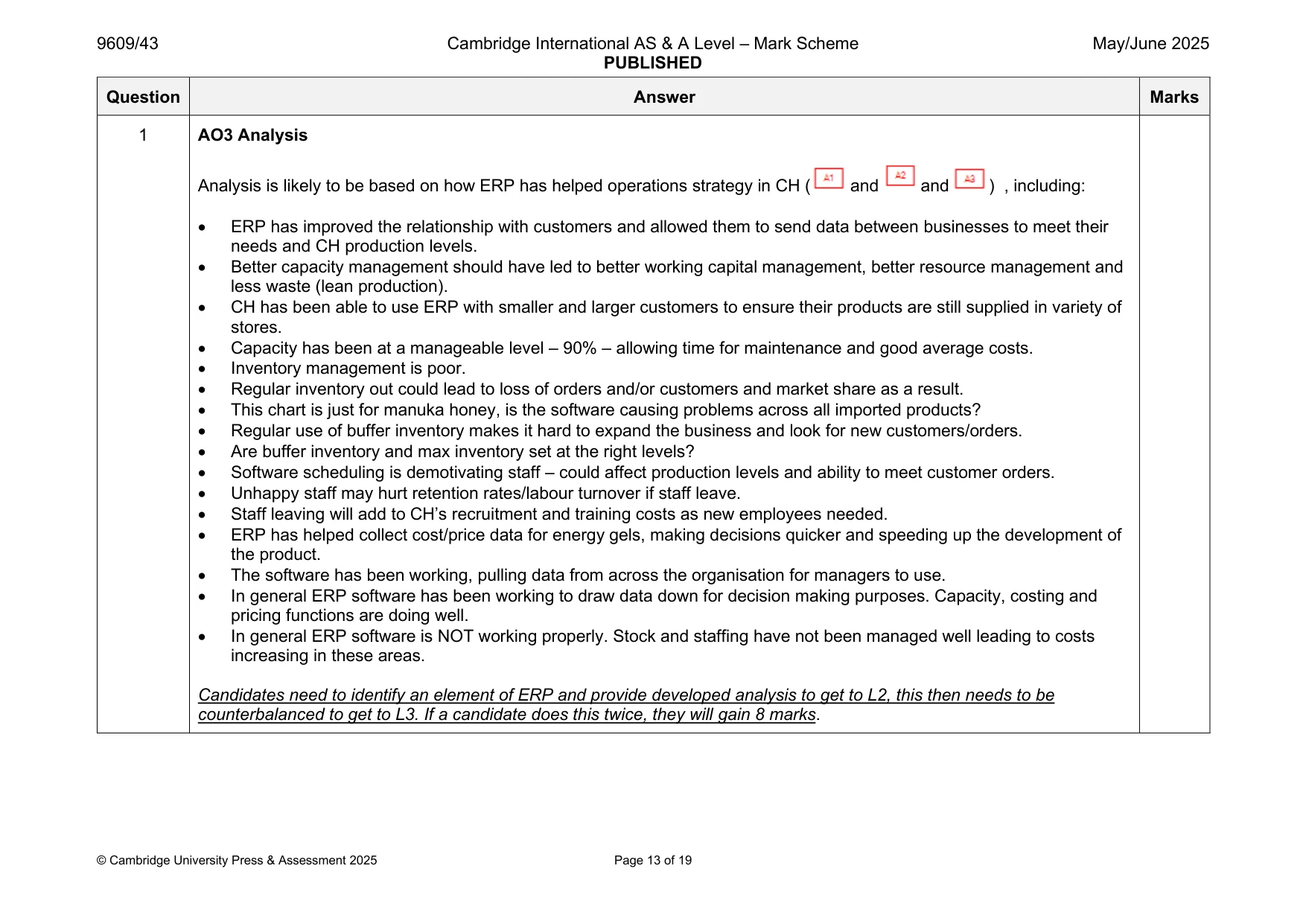
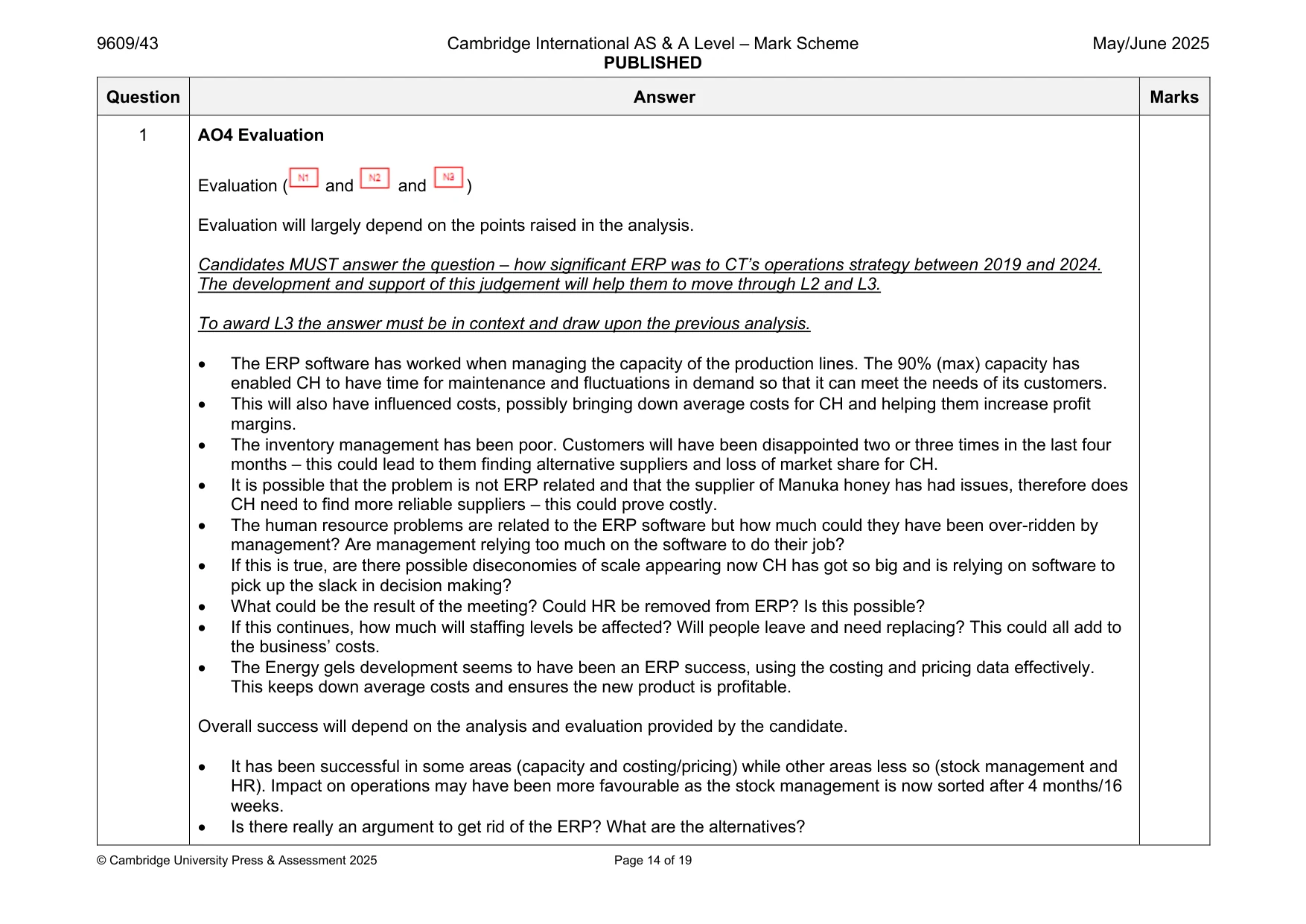
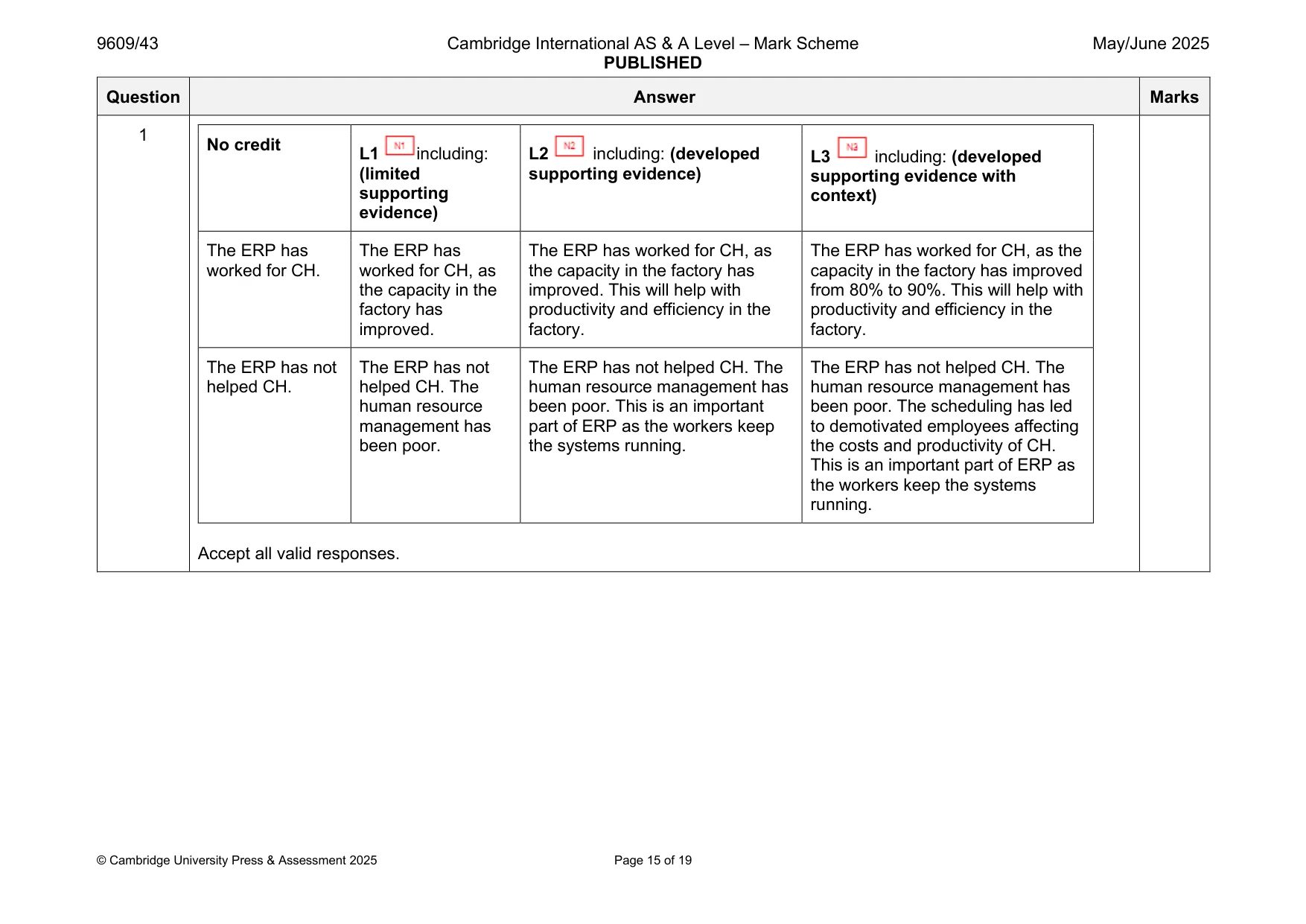
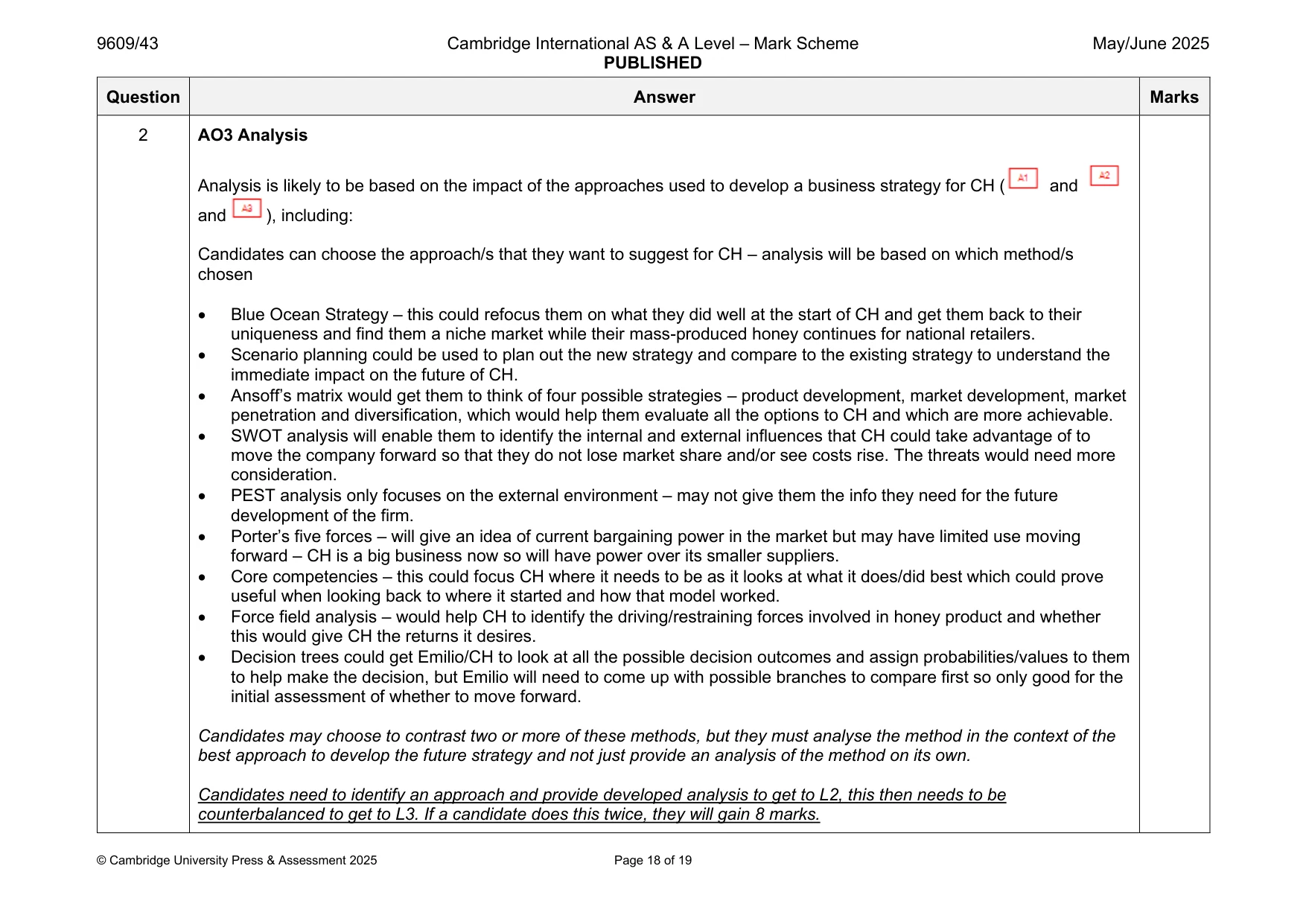
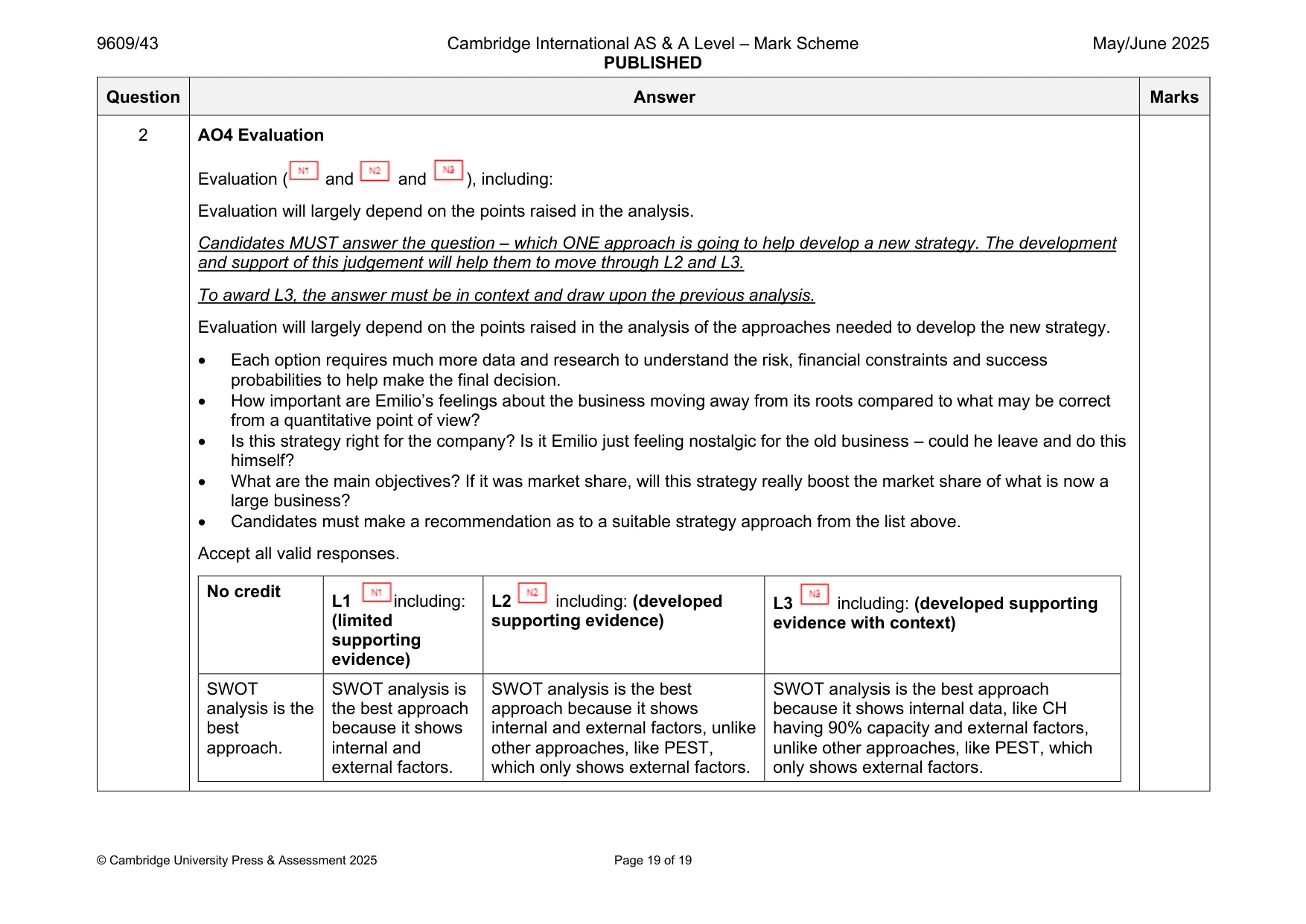
Mark scheme: Question Answer Marks 1 Evaluate how significant Enterprise Resource Planning (ERP) was to CH’s operations strategy between 2019 and 20 2024. Indicative content Responses may include: AO1 Knowledge and understanding Knowledge (max 1 mark) can be awarded for knowledge about Enterprise Resource Planning (ERP), including: • Enterprise Resource Planning Software • Costing/Pricing • Employee relations • Inventory control • Capacity management Some basic knowledge about ERP Software operations strategy, so only K. 1 K for identification and 1 DEV ERP software , can be used to control elements of the operations in a for a point of explanation. business . 1 K for identification and 2 DEVs ERP software , can be used to control elements of the operations in a for two points of explanation. business , such as ordering new inventory . Note: Candidates can gain full marks for AO1 from one term that is explained ( + + ) or from two terms partially explained ( + and + ). 1 AO2 Application Application (max 2 marks) can be awarded for applying knowledge, analysis or evaluation of ERP to CH, including: • Move to a larger factory – harder to manage • ERP used to manage capacity • Capacity remains fairly constant – Between 80–90% • Inventory control has been poor – Manuka honey has been out of stock three times – two occasions have been out for over a week • It has taken 15 weeks to get it right with stock management of manuka honey • Trade union involvement with staff scheduling issues • Urgent meeting has been requested • Cost/price decisions have been easier • Dynamic pricing • Identification of economies of scale opportunities. 1 AO3 Analysis Analysis is likely to be based on how ERP has helped operations strategy in CH ( and and ) , including: • ERP has improved the relationship with customers and allowed them to send data between businesses to meet their needs and CH production levels. • Better capacity management should have led to better working capital management, better resource management and less waste (lean production). • CH has been able to use ERP with smaller and larger customers to ensure their products are still supplied in variety of stores. • Capacity has been at a manageable level – 90% – allowing time for maintenance and good average costs. • Inventory management is poor. • Regular inventory out could lead to loss of orders and/or customers and market share as a result. • This chart is just for manuka honey, is the software causing problems across all imported products? • Regular use of buffer inventory makes it hard to expand the business and look for new customers/orders. • Are buffer inventory and max inventory set at the right levels? • Software scheduling is demotivating staff – could affect production levels and ability to meet customer orders. • Unhappy staff may hurt retention rates/labour turnover if staff leave. • Staff leaving will add to CH’s recruitment and training costs as new employees needed. • ERP has helped collect cost/price data for energy gels, making decisions quicker and speeding up the development of the product. • The software has been working, pulling data from across the organisation for managers to use. • In general ERP software has been working to draw data down for decision making purposes. Capacity, costing and pricing functions are doing well. • In general ERP software is NOT working properly. Stock and staffing have not been managed well leading to costs increasing in these areas. Candidates need to identify an element of ERP and provide developed analysis to get to L2, this then needs to be counterbalanced to get to L3. If a candidate does this twice, they will gain 8 marks. 1 AO4 Evaluation Evaluation ( and and ) Evaluation will largely depend on the points raised in the analysis. Candidates MUST answer the question – how significant ERP was to CT’s operations strategy between 2019 and 2024. The development and support of this judgement will help them to move through L2 and L3. To award L3 the answer must be in context and draw upon the previous analysis. • The ERP software has worked when managing the capacity of the production lines. The 90% (max) capacity has enabled CH to have time for maintenance and fluctuations in demand so that it can meet the needs of its customers. • This will also have influenced costs, possibly bringing down average costs for CH and helping them increase profit margins. • The inventory management has been poor. Customers will have been disappointed two or three times in the last four months – this could lead to them finding alternative suppliers and loss of market share for CH. • It is possible that the problem is not ERP related and that the supplier of Manuka honey has had issues, therefore does CH need to find more reliable suppliers – this could prove costly. • The human resource problems are related to the ERP software but how much could they have been over-ridden by management? Are management relying too much on the software to do their job? • If this is true, are there possible diseconomies of scale appearing now CH has got so big and is relying on software to pick up the slack in decision making? • What could be the result of the meeting? Could HR be removed from ERP? Is this possible? • If this continues, how much will staffing levels be affected? Will people leave and need replacing? This could all add to the business’ costs. • The Energy gels development seems to have been an ERP success, using the costing and pricing data effectively. This keeps down average costs and ensures the new product is profitable. Overall success will depend on the analysis and evaluation provided by the candidate. • It has been successful in some areas (capacity and costing/pricing) while other areas less so (stock management and HR). Impact on operations may have been more favourable as the stock management is now sorted after 4 months/16 weeks. • Is there really an argument to get rid of the ERP? What are the alternatives? 1 No credit L1 including: L2 including: (developed L3 including: (developed (limited supporting evidence) supporting evidence with supporting context) evidence) The ERP has The ERP has The ERP has worked for CH, as The ERP has worked for CH, as the worked for CH. worked for CH, as the capacity in the factory has capacity in the factory has improved the capacity in the improved. This will help with from 80% to 90%. This will help with factory has productivity and efficiency in the productivity and efficiency in the improved. factory. factory. The ERP has not The ERP has not The ERP has not helped CH. The The ERP has not helped CH. The helped CH. helped CH. The human resource management has human resource management has human resource been poor. This is an important been poor. The scheduling has led management has part of ERP as the workers keep to demotivated employees affecting been poor. the systems running. the costs and productivity of CH. This is an important part of ERP as the workers keep the systems running. Accept all valid responses.
What was in this paper
The subtopics covered by these 1 questions, and how many questions each got. Open one in a new tab to see every Cambridge question on it.
What you needed in this session
Cambridge’s own grade thresholds for 2025 May/June, Paper 4 · Variant 3. A higher threshold means an easier paper — the bar moves with how the cohort did.