Cambridge A Level Business (for first examination in 2016) 9609 — 2025 May/June Paper 4 · Variant 2
9609/42/M/J/25 · 1 question · 40 marks · ≈45 min
The question paper and its mark scheme, free to read here and free to download. This is Cambridge’s own paper, exactly as it was sat.
Question paper4 pages
Mark scheme19 pages
Answers below. Sit the paper first if you are practising.
Questions as text
Q1 · Evaluate the usefulness to QA of the approaches used to develop its business strategy…
1 Evaluate the usefulness to QA of the approaches used to develop its business strategy between 2021 and 2024. [20]
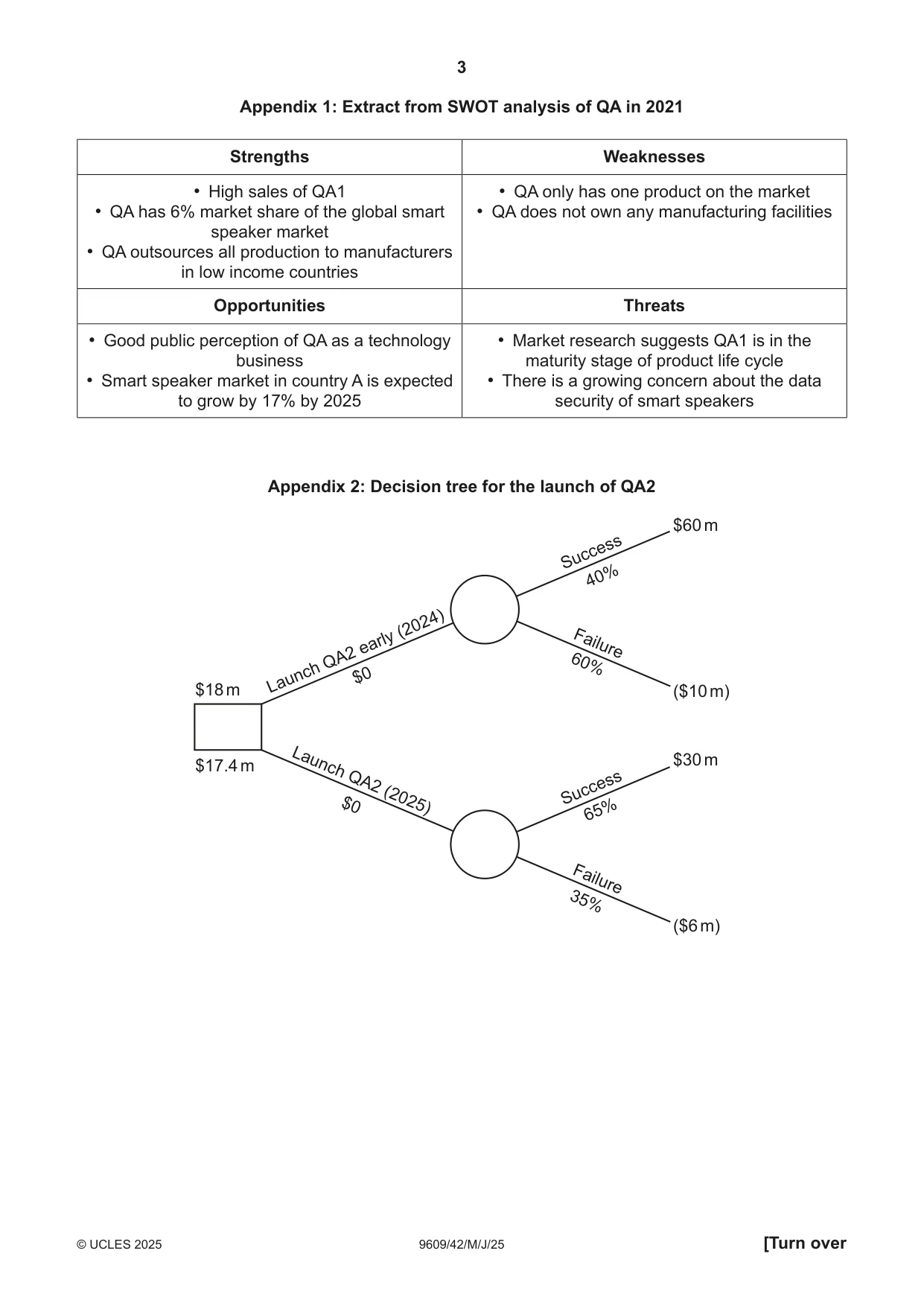
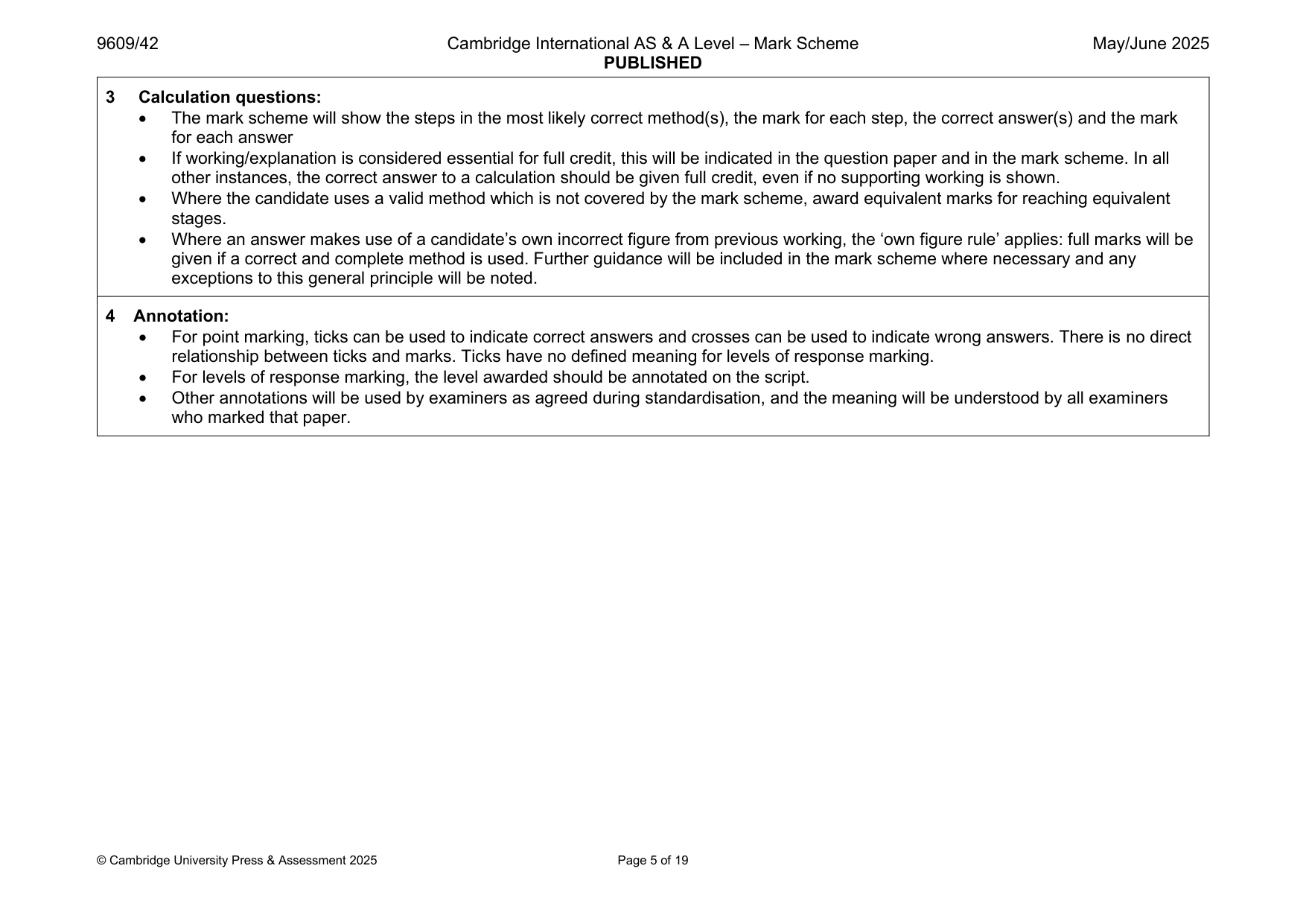
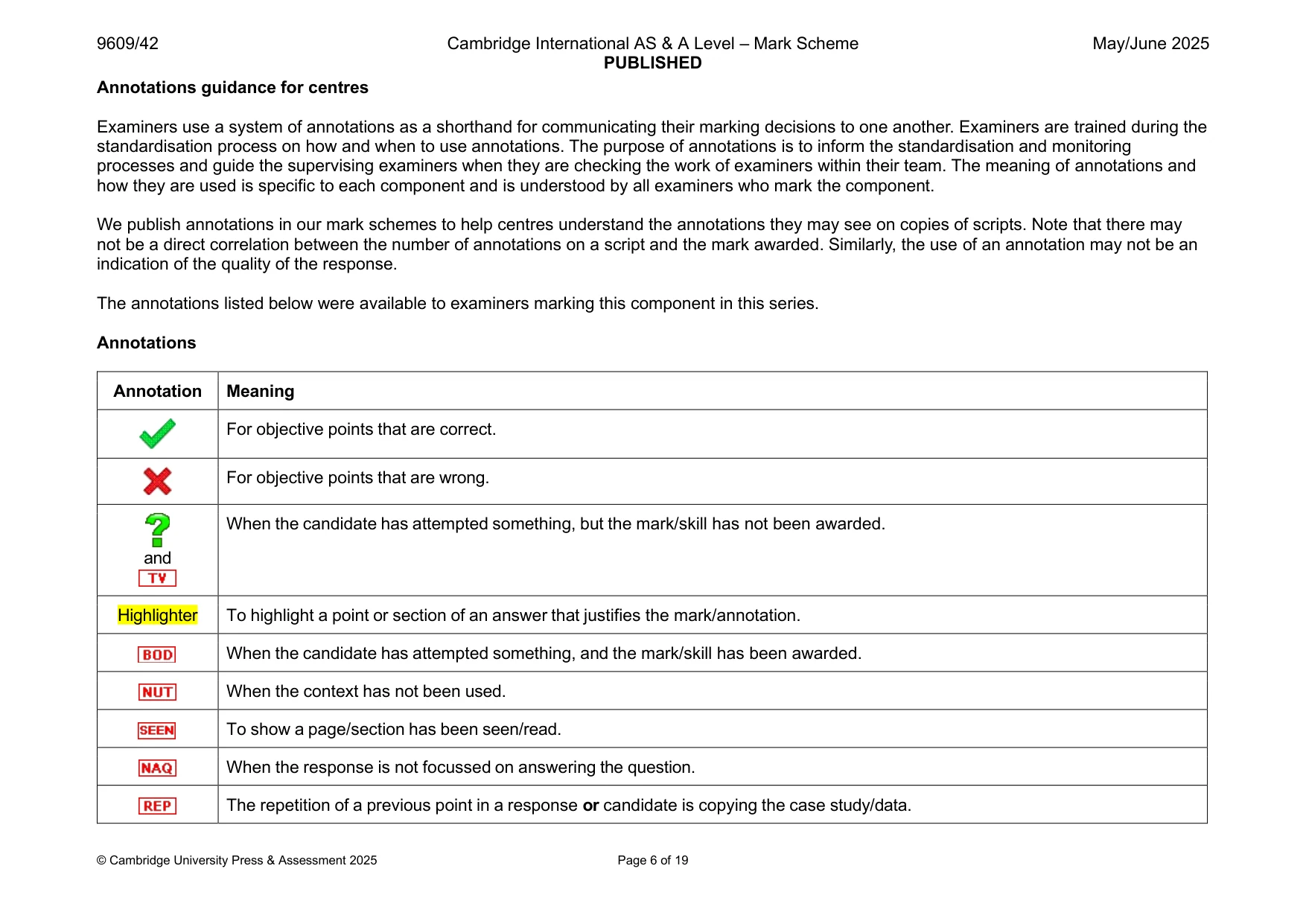
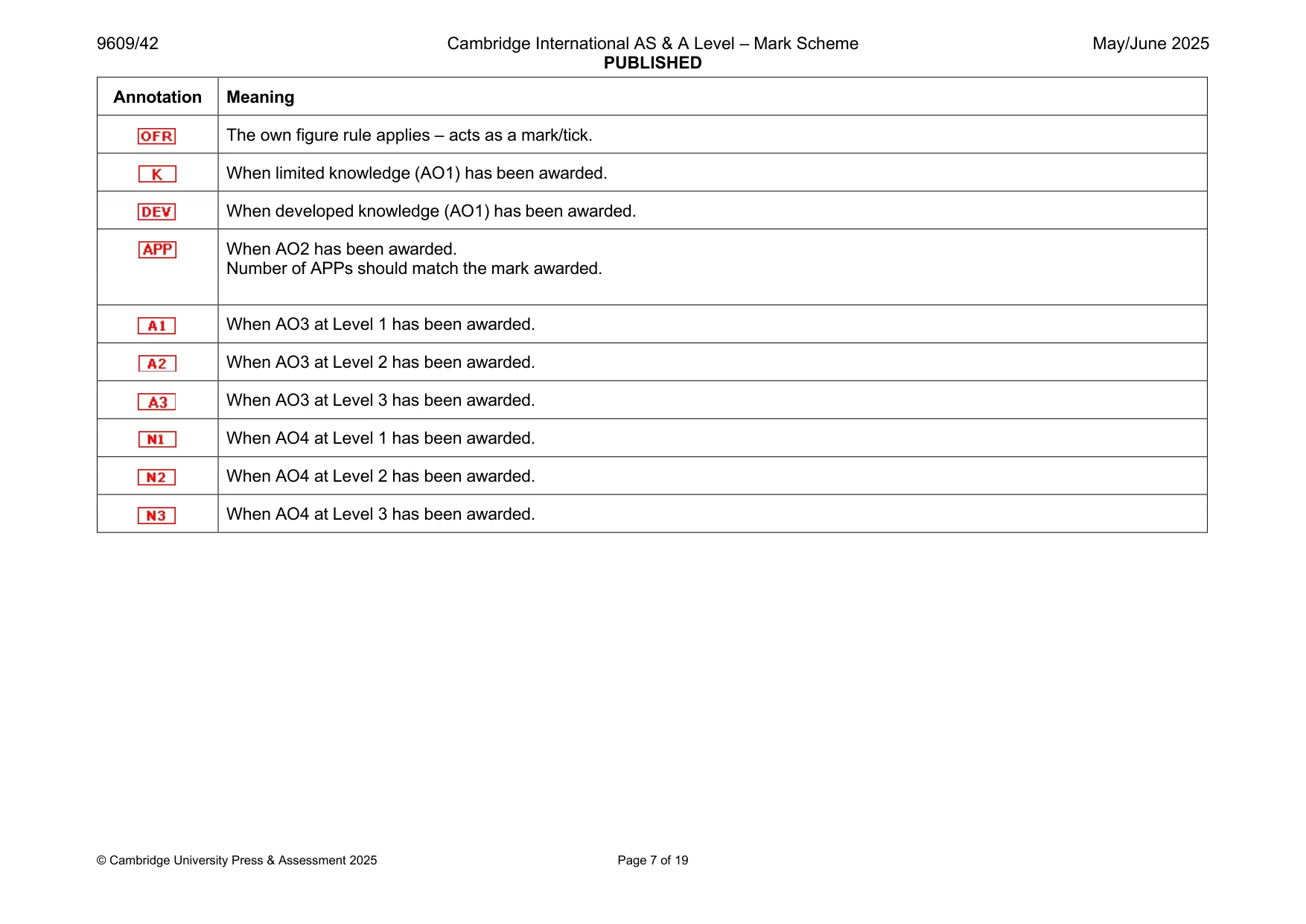
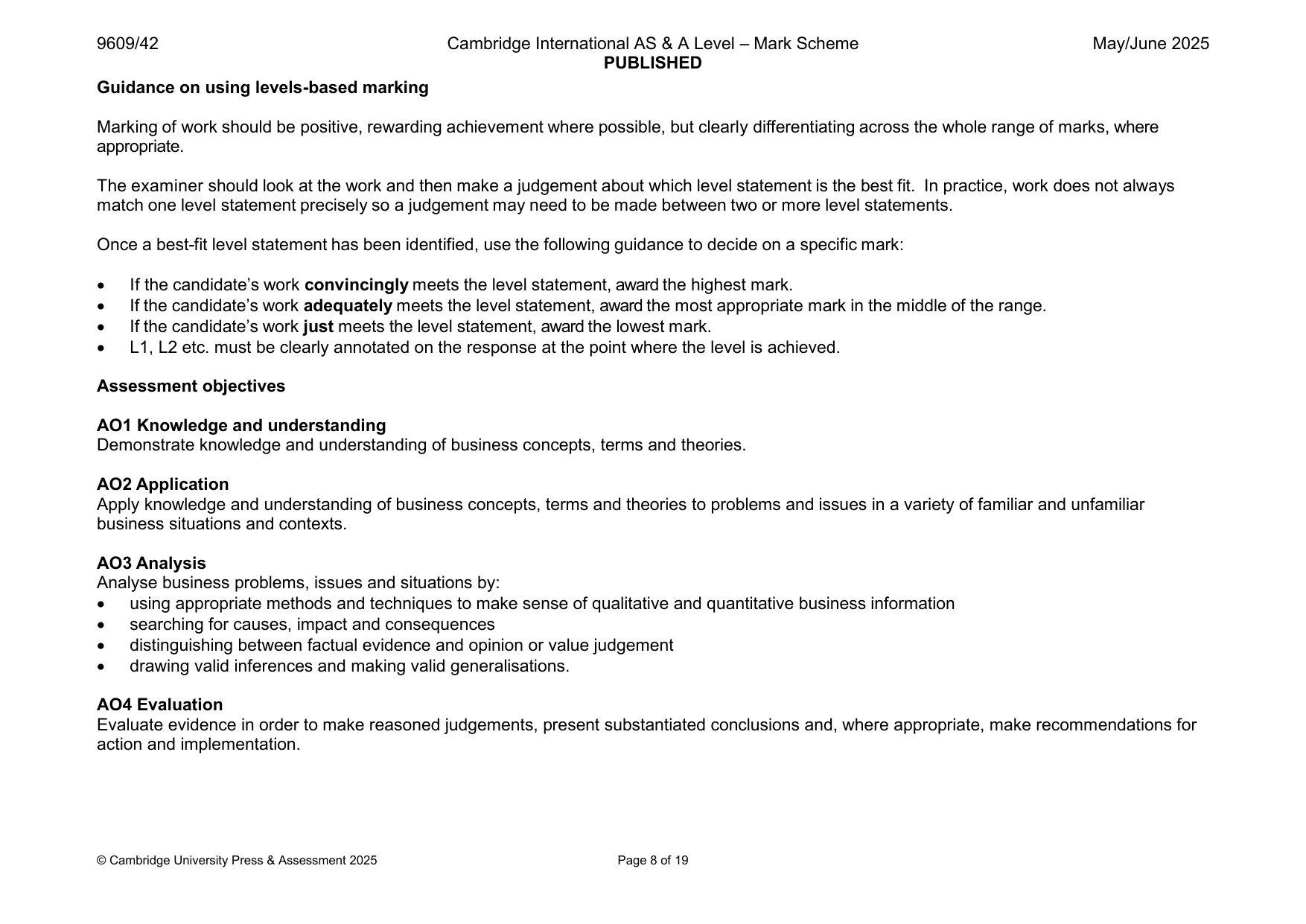
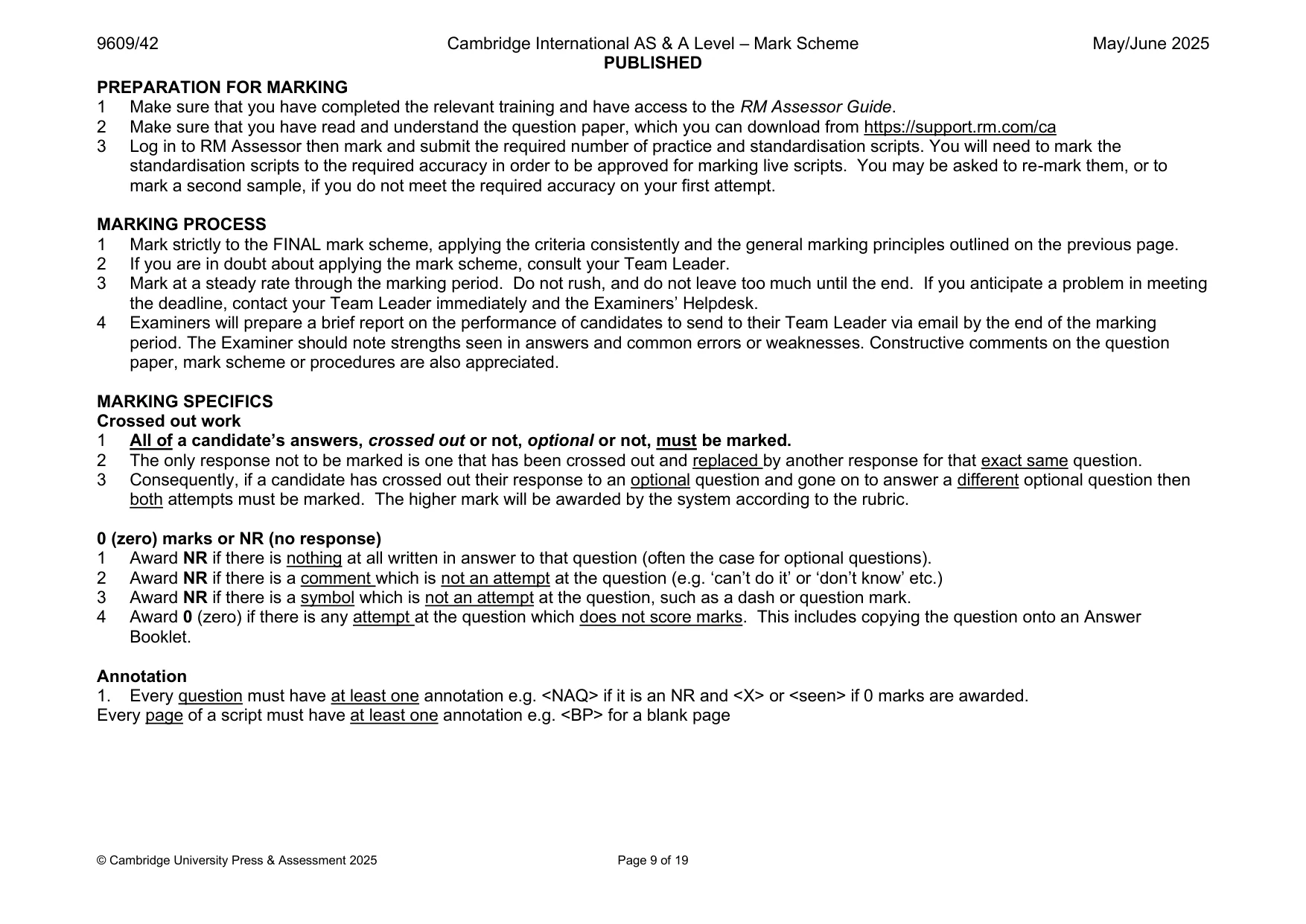
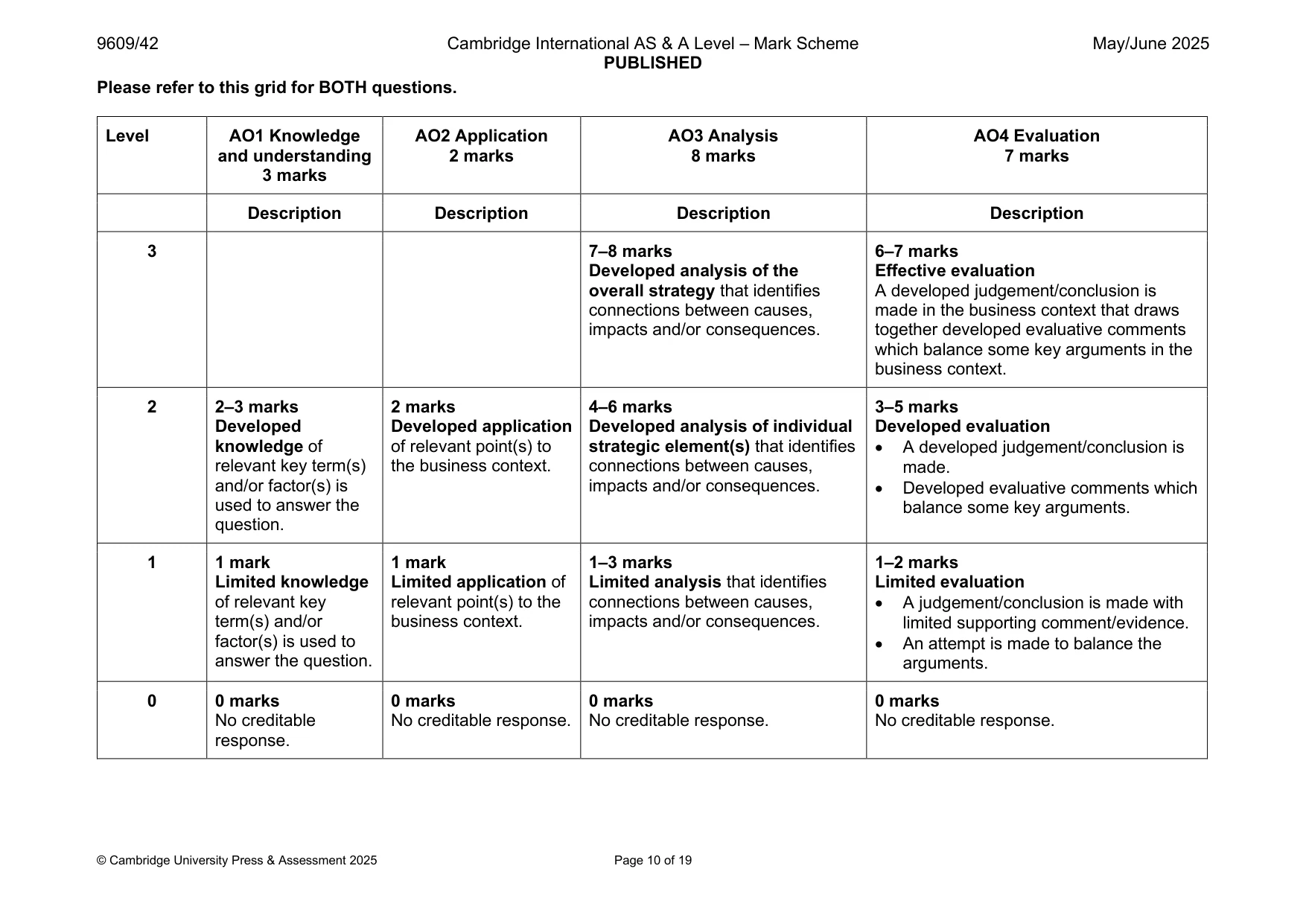
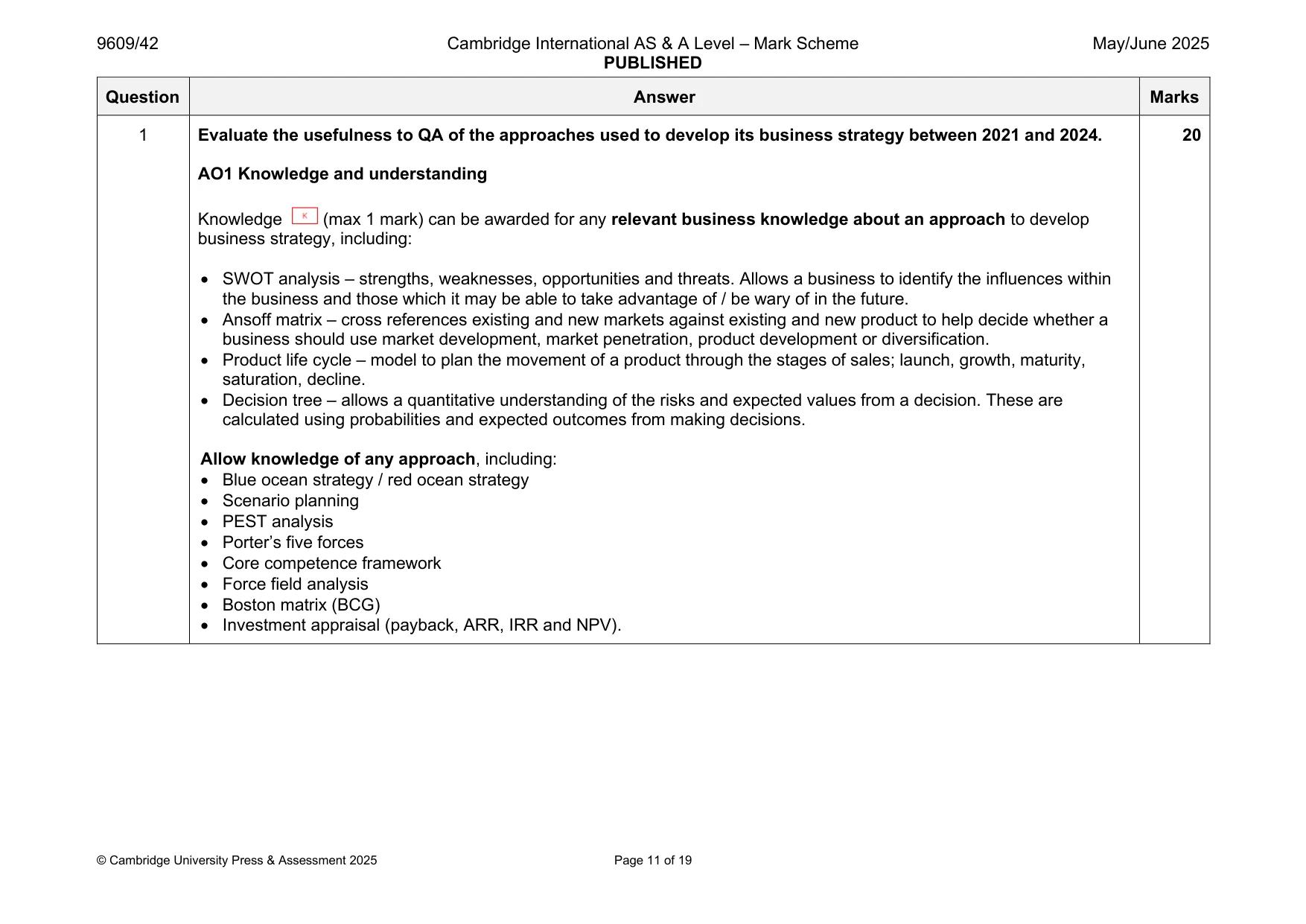
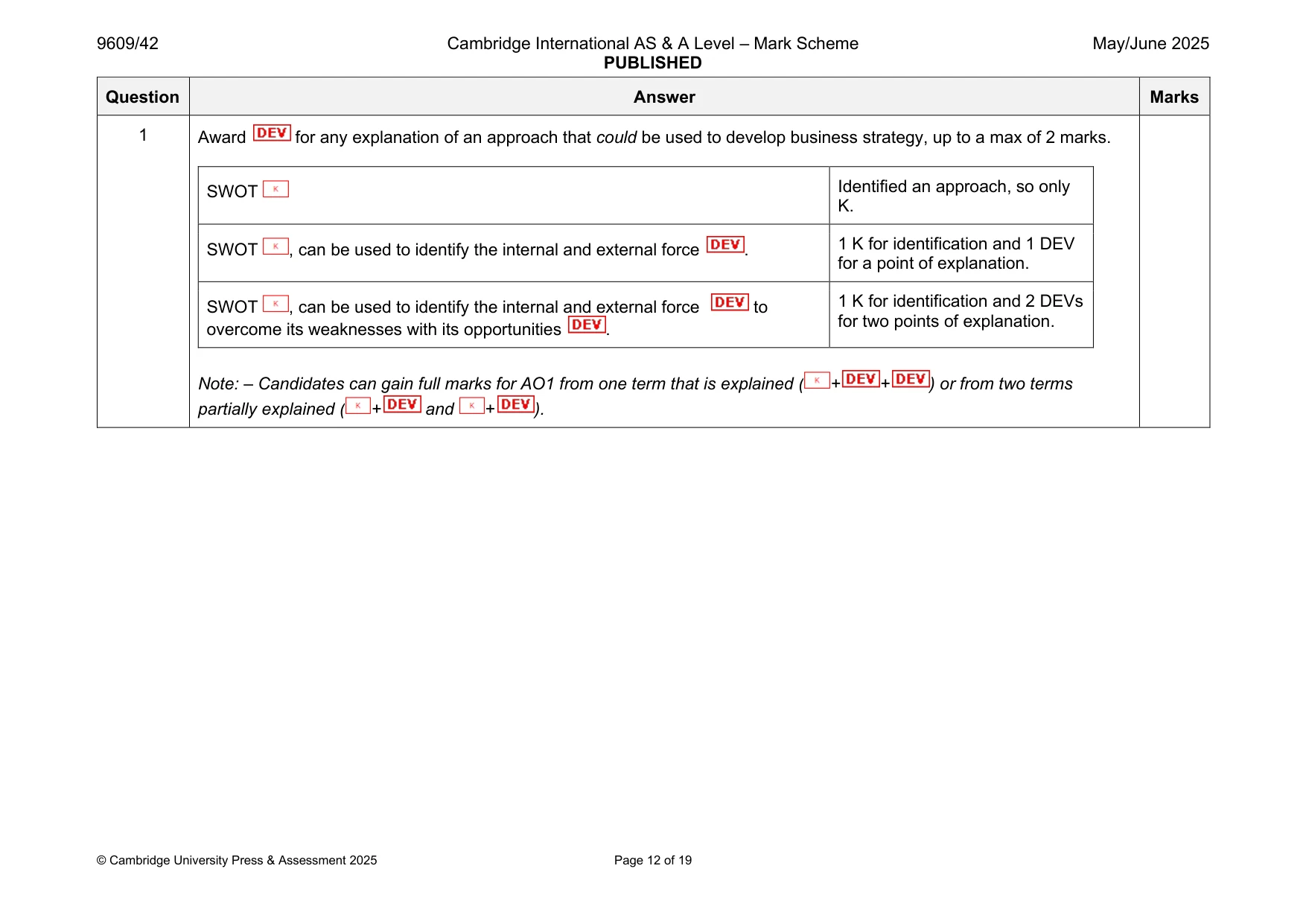
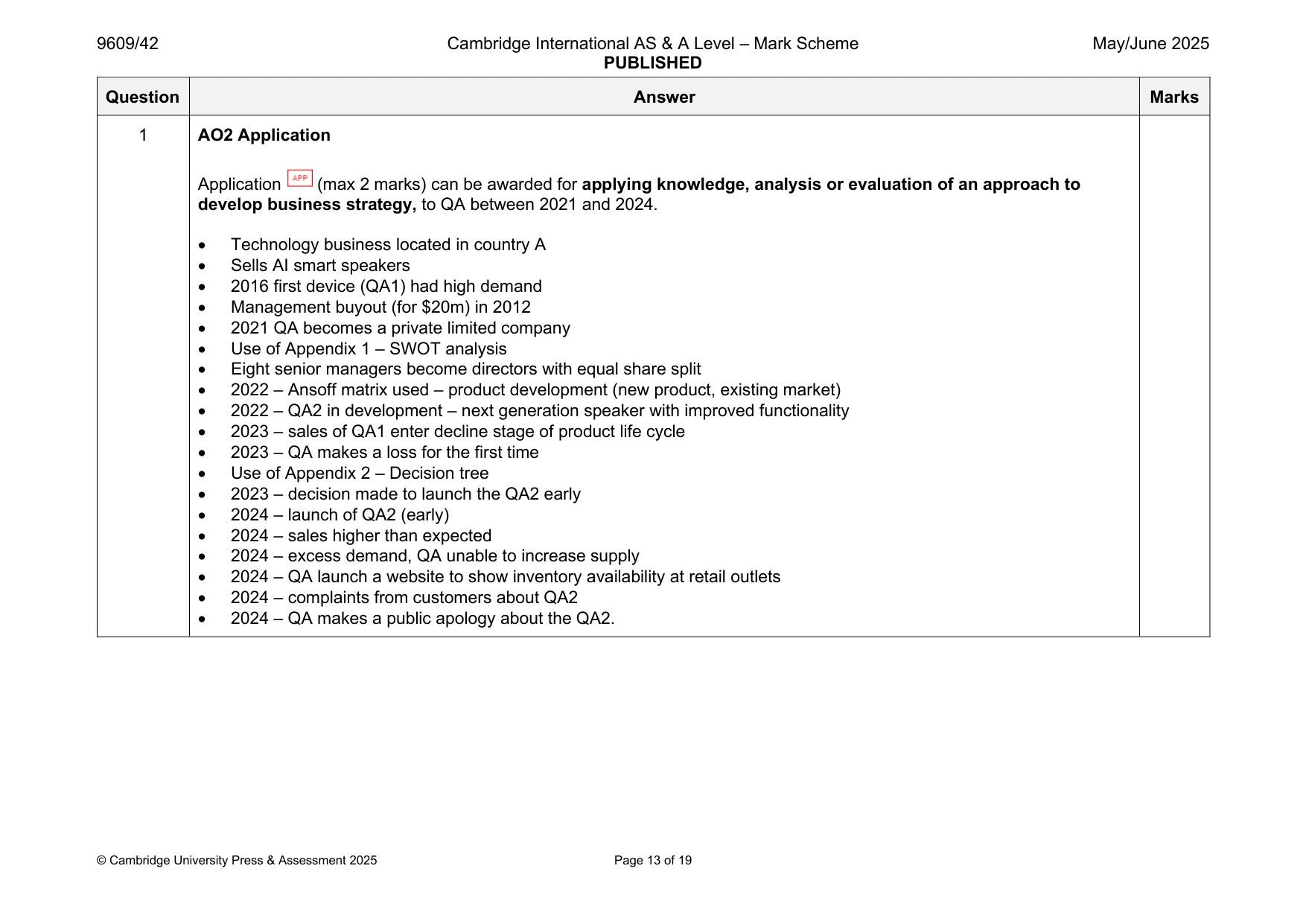
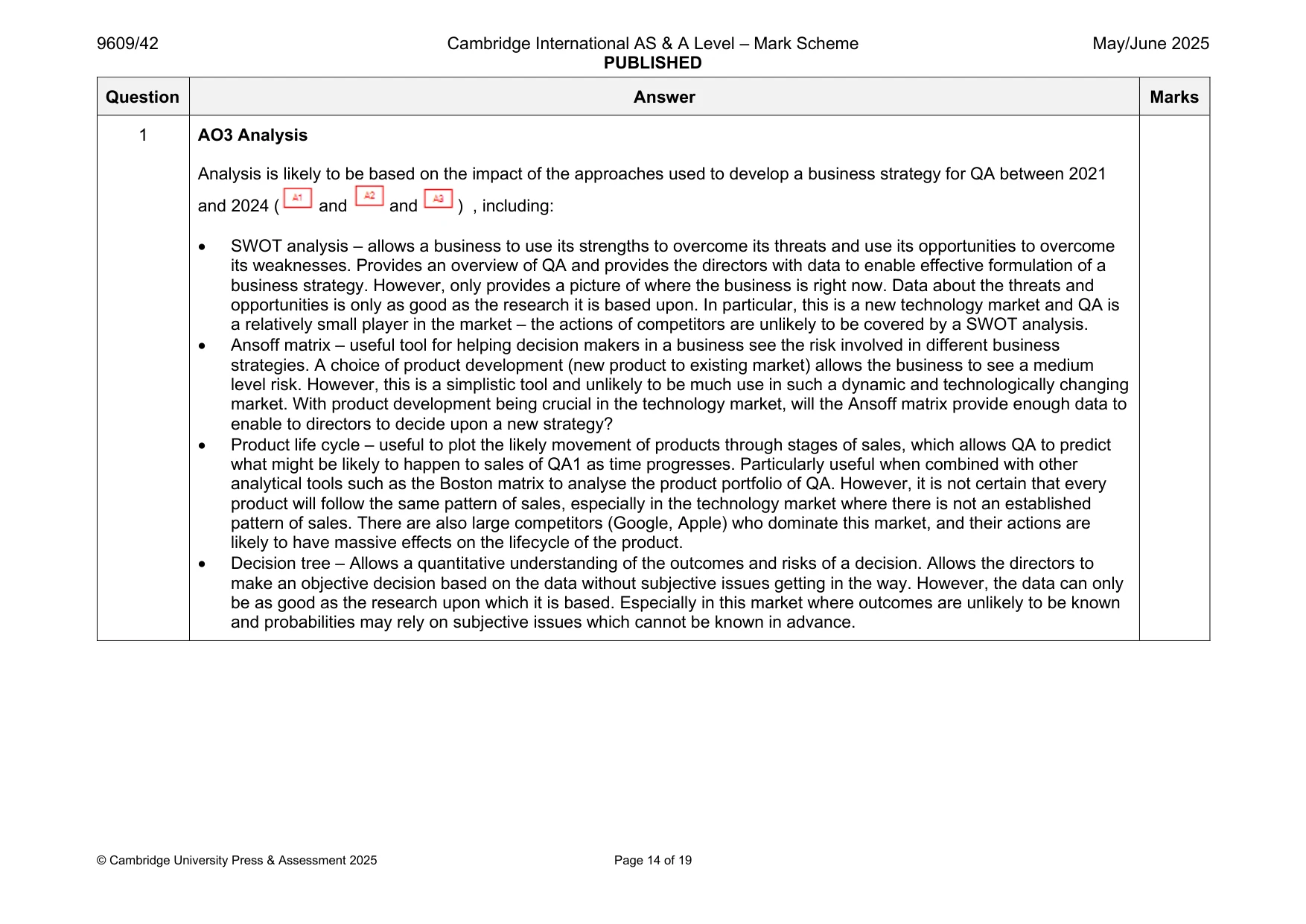
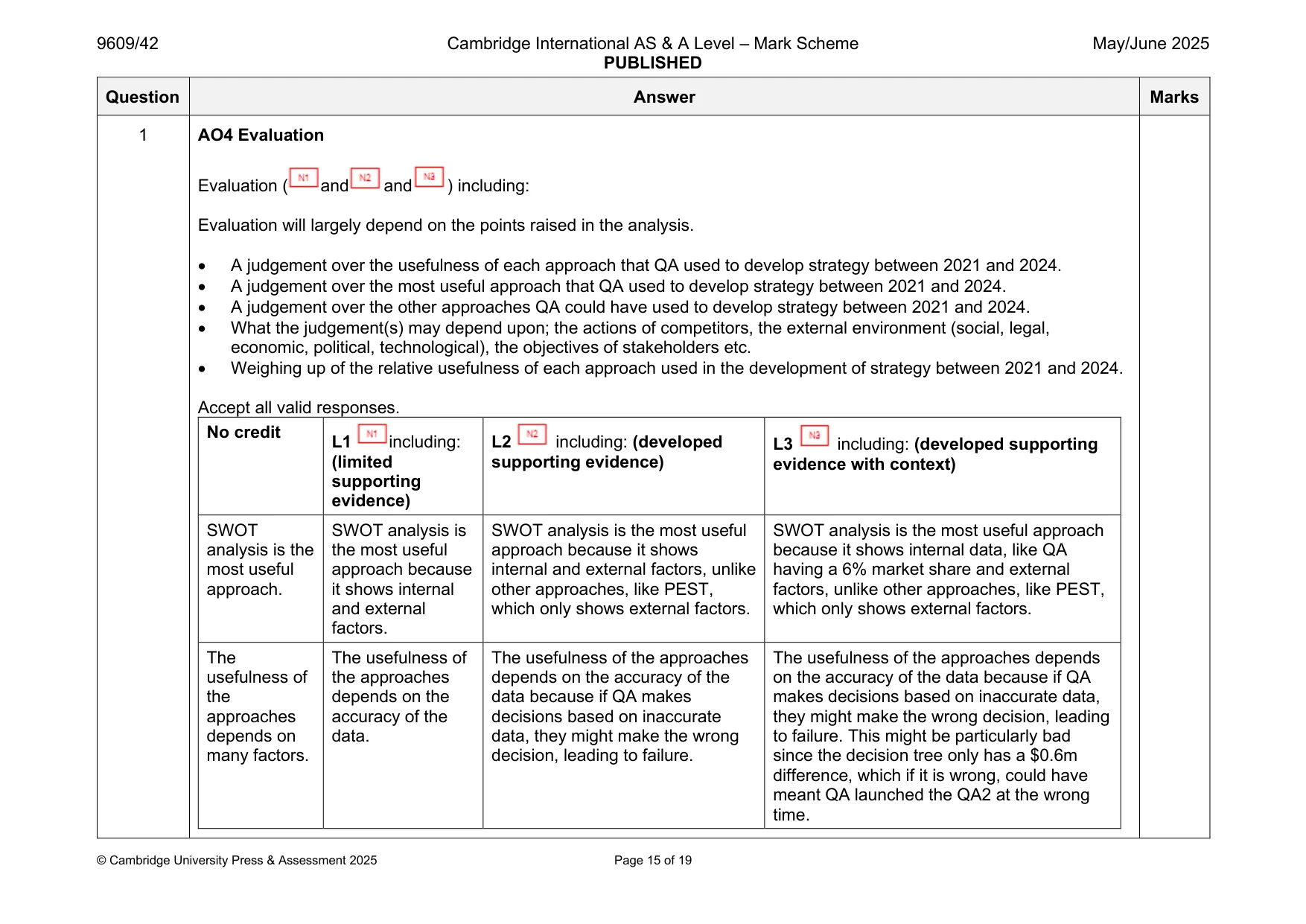
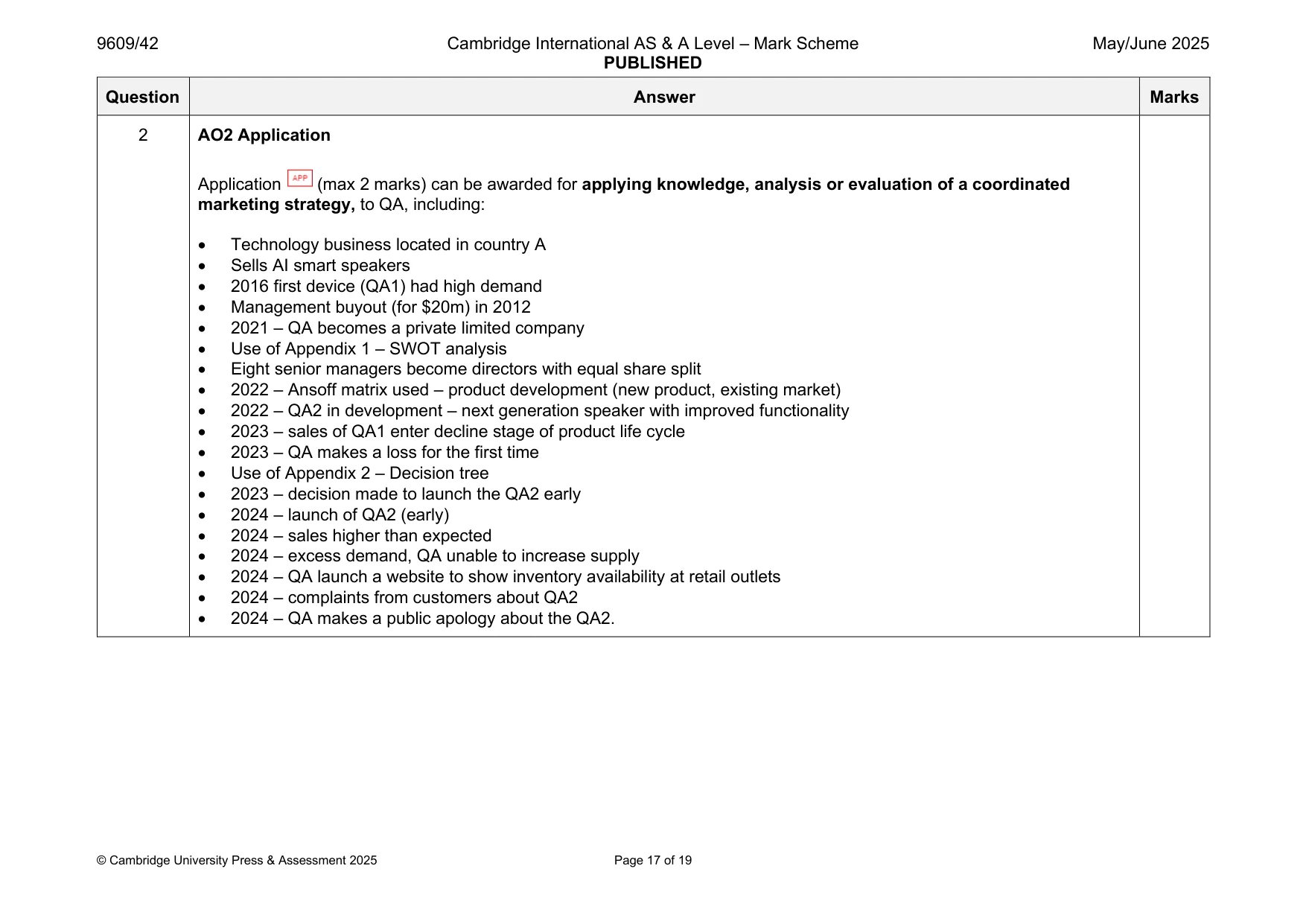
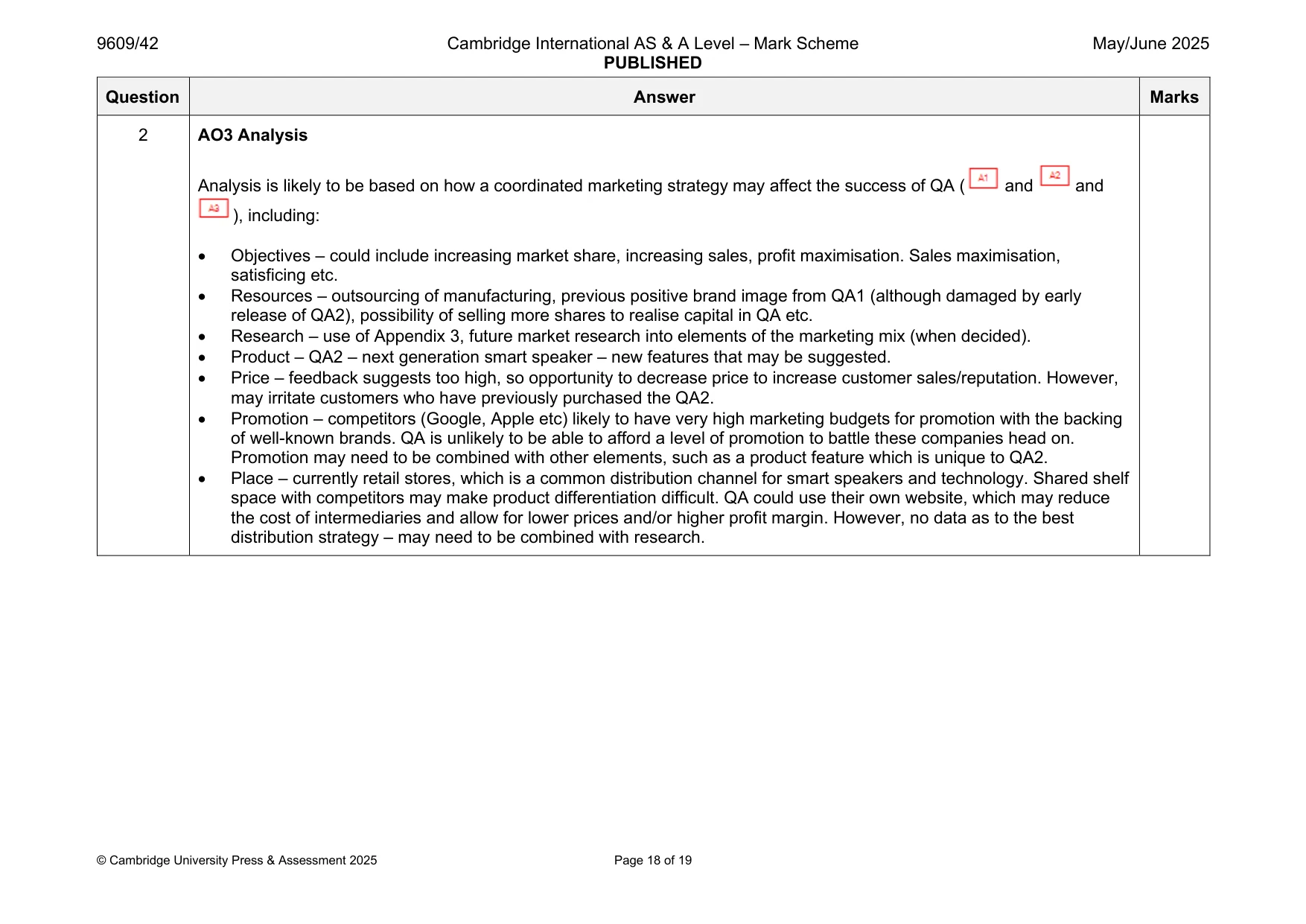
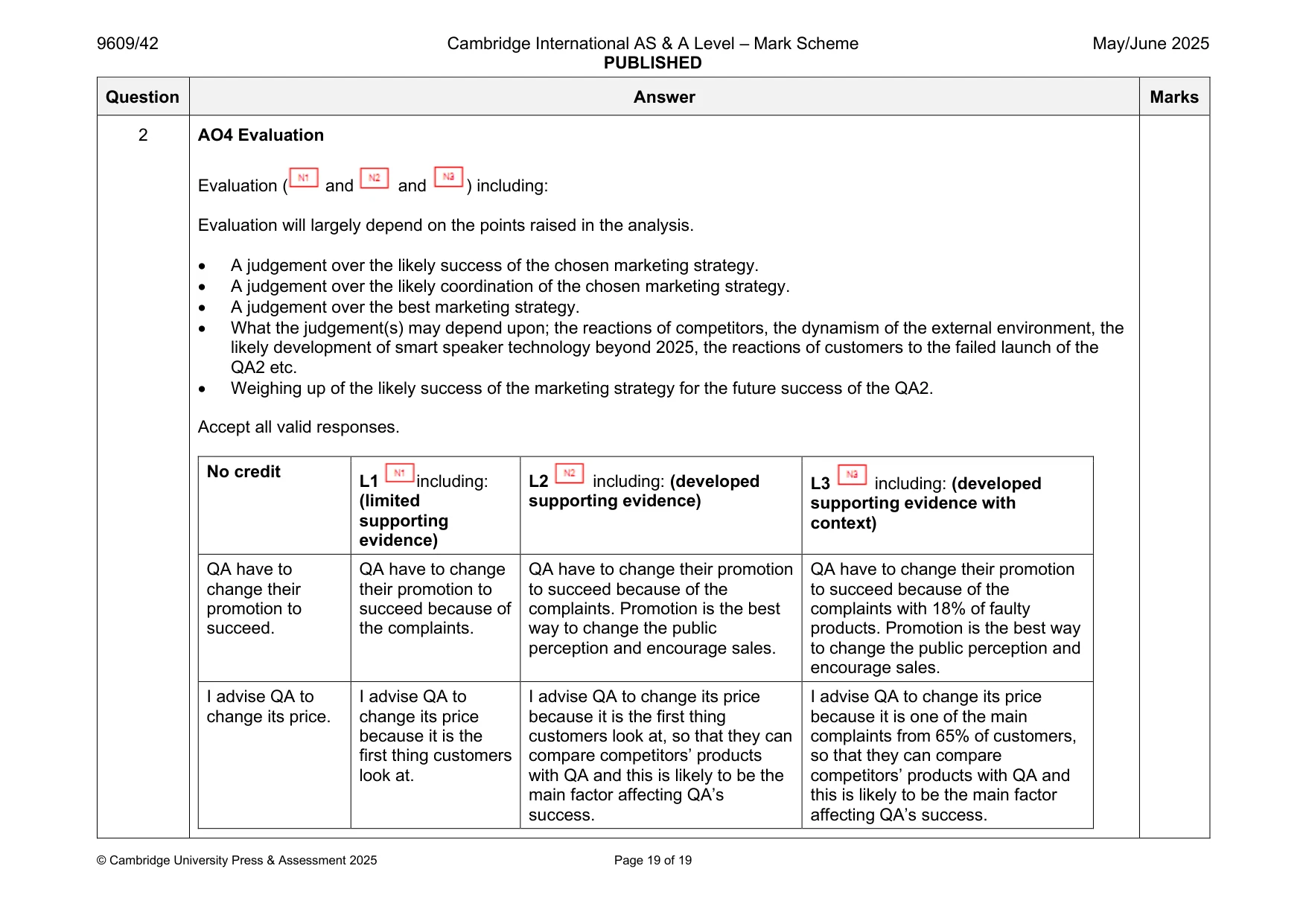
Mark scheme: Question Answer Marks 1 Evaluate the usefulness to QA of the approaches used to develop its business strategy between 2021 and 2024. 20 AO1 Knowledge and understanding Knowledge (max 1 mark) can be awarded for any relevant business knowledge about an approach to develop business strategy, including: • SWOT analysis – strengths, weaknesses, opportunities and threats. Allows a business to identify the influences within the business and those which it may be able to take advantage of / be wary of in the future. • Ansoff matrix – cross references existing and new markets against existing and new product to help decide whether a business should use market development, market penetration, product development or diversification. • Product life cycle – model to plan the movement of a product through the stages of sales; launch, growth, maturity, saturation, decline. • Decision tree – allows a quantitative understanding of the risks and expected values from a decision. These are calculated using probabilities and expected outcomes from making decisions. Allow knowledge of any approach, including: • Blue ocean strategy / red ocean strategy • Scenario planning • PEST analysis • Porter’s five forces • Core competence framework • Force field analysis • Boston matrix (BCG) • Investment appraisal (payback, ARR, IRR and NPV). 1 Award for any explanation of an approach that could be used to develop business strategy, up to a max of 2 marks. Identified an approach, so only SWOT K. 1 K for identification and 1 DEV SWOT , can be used to identify the internal and external force . for a point of explanation. 1 K for identification and 2 DEVs SWOT , can be used to identify the internal and external force to for two points of explanation. overcome its weaknesses with its opportunities . Note: – Candidates can gain full marks for AO1 from one term that is explained ( + + ) or from two terms partially explained ( + and + ). 1 AO2 Application Application (max 2 marks) can be awarded for applying knowledge, analysis or evaluation of an approach to develop business strategy, to QA between 2021 and 2024. • Technology business located in country A • Sells AI smart speakers • 2016 first device (QA1) had high demand • Management buyout (for $20m) in 2012 • 2021 QA becomes a private limited company • Use of Appendix 1 – SWOT analysis • Eight senior managers become directors with equal share split • 2022 – Ansoff matrix used – product development (new product, existing market) • 2022 – QA2 in development – next generation speaker with improved functionality • 2023 – sales of QA1 enter decline stage of product life cycle • 2023 – QA makes a loss for the first time • Use of Appendix 2 – Decision tree • 2023 – decision made to launch the QA2 early • 2024 – launch of QA2 (early) • 2024 – sales higher than expected • 2024 – excess demand, QA unable to increase supply • 2024 – QA launch a website to show inventory availability at retail outlets • 2024 – complaints from customers about QA2 • 2024 – QA makes a public apology about the QA2. 1 AO3 Analysis Analysis is likely to be based on the impact of the approaches used to develop a business strategy for QA between 2021 and 2024 ( and and ) , including: • SWOT analysis – allows a business to use its strengths to overcome its threats and use its opportunities to overcome its weaknesses. Provides an overview of QA and provides the directors with data to enable effective formulation of a business strategy. However, only provides a picture of where the business is right now. Data about the threats and opportunities is only as good as the research it is based upon. In particular, this is a new technology market and QA is a relatively small player in the market – the actions of competitors are unlikely to be covered by a SWOT analysis. • Ansoff matrix – useful tool for helping decision makers in a business see the risk involved in different business strategies. A choice of product development (new product to existing market) allows the business to see a medium level risk. However, this is a simplistic tool and unlikely to be much use in such a dynamic and technologically changing market. With product development being crucial in the technology market, will the Ansoff matrix provide enough data to enable to directors to decide upon a new strategy? • Product life cycle – useful to plot the likely movement of products through stages of sales, which allows QA to predict what might be likely to happen to sales of QA1 as time progresses. Particularly useful when combined with other analytical tools such as the Boston matrix to analyse the product portfolio of QA. However, it is not certain that every product will follow the same pattern of sales, especially in the technology market where there is not an established pattern of sales. There are also large competitors (Google, Apple) who dominate this market, and their actions are likely to have massive effects on the lifecycle of the product. • Decision tree – Allows a quantitative understanding of the outcomes and risks of a decision. Allows the directors to make an objective decision based on the data without subjective issues getting in the way. However, the data can only be as good as the research upon which it is based. Especially in this market where outcomes are unlikely to be known and probabilities may rely on subjective issues which cannot be known in advance. 1 AO4 Evaluation Evaluation ( and and ) including: Evaluation will largely depend on the points raised in the analysis. • A judgement over the usefulness of each approach that QA used to develop strategy between 2021 and 2024. • A judgement over the most useful approach that QA used to develop strategy between 2021 and 2024. • A judgement over the other approaches QA could have used to develop strategy between 2021 and 2024. • What the judgement(s) may depend upon; the actions of competitors, the external environment (social, legal, economic, political, technological), the objectives of stakeholders etc. • Weighing up of the relative usefulness of each approach used in the development of strategy between 2021 and 2024. Accept all valid responses. No credit L1 including: L2 including: (developed L3 including: (developed supporting (limited supporting evidence) evidence with context) supporting evidence) SWOT SWOT analysis is SWOT analysis is the most useful SWOT analysis is the most useful approach analysis is the the most useful approach because it shows because it shows internal data, like QA most useful approach because internal and external factors, unlike having a 6% market share and external approach. it shows internal other approaches, like PEST, factors, unlike other approaches, like PEST, and external which only shows external factors. which only shows external factors. factors. The The usefulness of The usefulness of the approaches The usefulness of the approaches depends usefulness of the approaches depends on the accuracy of the on the accuracy of the data because if QA the depends on the data because if QA makes makes decisions based on inaccurate data, approaches accuracy of the decisions based on inaccurate they might make the wrong decision, leading depends on data. data, they might make the wrong to failure. This might be particularly bad many factors. decision, leading to failure. since the decision tree only has a $0.6m difference, which if it is wrong, could have meant QA launched the QA2 at the wrong time.
What was in this paper
The subtopics covered by these 1 questions, and how many questions each got. Open one in a new tab to see every Cambridge question on it.
What you needed in this session
Cambridge’s own grade thresholds for 2025 May/June, Paper 4 · Variant 2. A higher threshold means an easier paper — the bar moves with how the cohort did.