Cambridge IGCSE Hindi as a Second Language 0549 — 2009 May/June Paper 1 · Variant 1
0549/11/M/J/09 · 60 marks · ≈68 min
The question paper and its mark scheme, free to read here and free to download. This is Cambridge’s own paper, exactly as it was sat.
Question paper12 pages
Mark scheme7 pages
Answers below. Sit the paper first if you are practising.
Paper as text
Question paper, page 1
This document consists of 12 printed pages. SP (LEO/TL) V00496/3 © UCLES 2009 [Turn over UNIVERSITY OF CAMBRIDGE INTERNATIONAL EXAMINATIONS International General Certificate of Secondary Education READ THESE INSTRUCTIONS FIRST Write your Centre number, candidate number and name on all the work you hand in. Write in dark blue or black pen. Do not use staples, paper clips, highlighters, glue or correction fluid. DO NOT WRITE IN ANY BARCODES. Answer all questions. At the end of the examination, fasten all your work securely together. The number of marks is given in brackets [ ] at the end of each question or part question. HINDI AS A SECOND LANGUAGE 0549/01 Paper 1 Reading and Writing May/June 2009 2 hours Candidates answer on the Question Paper. No Additional Materials are required. * 5 8 7 0 5 9 3 2 3 8 * For Examiner’s Use Section 1 Section 2 Total www.XtremePapers.com
Question paper, page 2
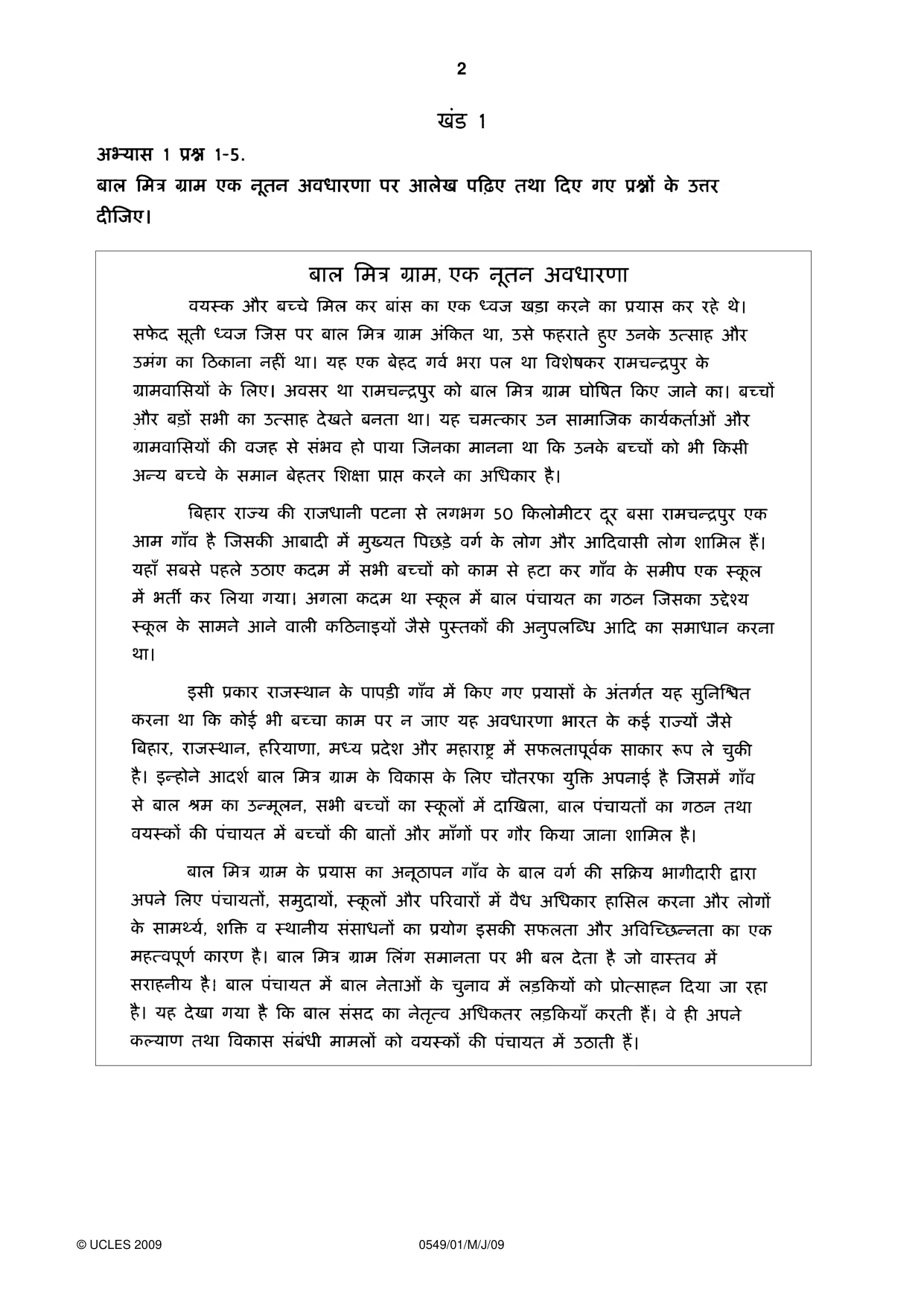
2 us 1 SFMT 1 Wat 1-5. are FAA Wa Ua Aeet HAUT UX aiere afew aan feu ae wat & sax aise are fat WTA, UH Ada HAMROT qaee Sik ged Hor a Oe HT Ua Cast UST A HT WA a FI we Eel cast Fars WL oer HF aa sifenct UT, SA HEAIA EU Sach ScaE 3H Sao opr fSearet ae UT! BE TH seq as ar vor aT falwne WaaIeayy Maraeat & fore) HAL UT WerIeAG aT are ra arat aiver fore srt atl geet HN ast aaft ar scale Aad Tea UW) Ae VACHN 3a TAH Hepat aie marae Ar ase S Bera et ora faa Area at fe sah aeat wr aft feat Hea aed & Bae age Vat wa at a aidan oI faen use ft cornet vee & arent 50 Preiser aX TH WIRY TH ara aia & foraéy srandt & aera foes af a ater ty anfarh ater anise F1 uel wad usd sow Haw A yah geal at ara a eer aX Tia & alo UH THA FH adh ae fora war aren Hea ot BRA FH ae Casa HT Toa rea seer Spe & Bae et arch HfSrsat Sa yest Hr xequeafey anfe ar wart aT aml sat var wereuea & ures) aia a fee oe vara & sila ae aaa erat of fm ws aff dea GA WL a oe ae Hau ana & HS Usa SV faer, Terenas, SRA, Ata veer stk HenTE aH Thora AER wT a TT 31 seela aregt aot fra ora & fare & far claws gfe sens & frat aia a Te FH Hi sea, Bae geal ar Eat A awn, aa casa #1 Ted aa aacat & cara Ft acat ft aat atk ato oy atk fear oat anata 21 oret THA Oa a Ware ar seforoa ala & art at A ala afta ant & wad, af a eater seawall ar var sacht wHcar sy sfafeeetar ar way Aecaget HR 31 Te Ha oa fet Baraay Wo at aa dare at aaa a ated 81 Te cad a ae Aart & garg F asfat at vicaect fear a ver S1 ae Ga aan & PH Te Fae aH Agqea sar ashhat ae #1 aS aad wear aa fares wah areal we aaeat At dearaa a sore 21 © UCLES 2009 0549/01/M/J/09
Question paper, page 3
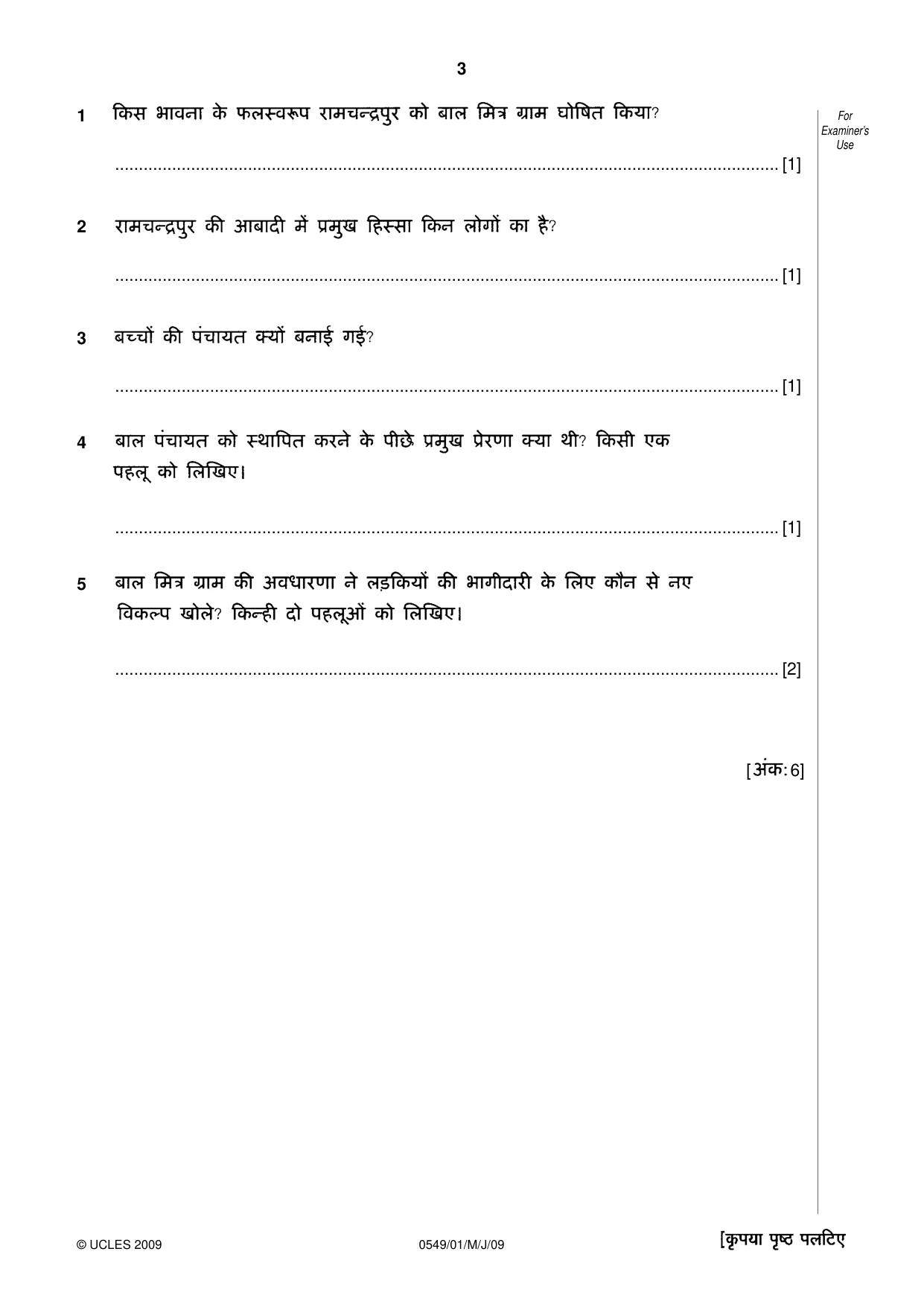
3 © UCLES 2009 For Examiner’s Use 0549/01/M/J/09 1 … [1] 2 … [1] 3 … [1] 4 … [1] 5 … [2] [ 6]
Question paper, page 4
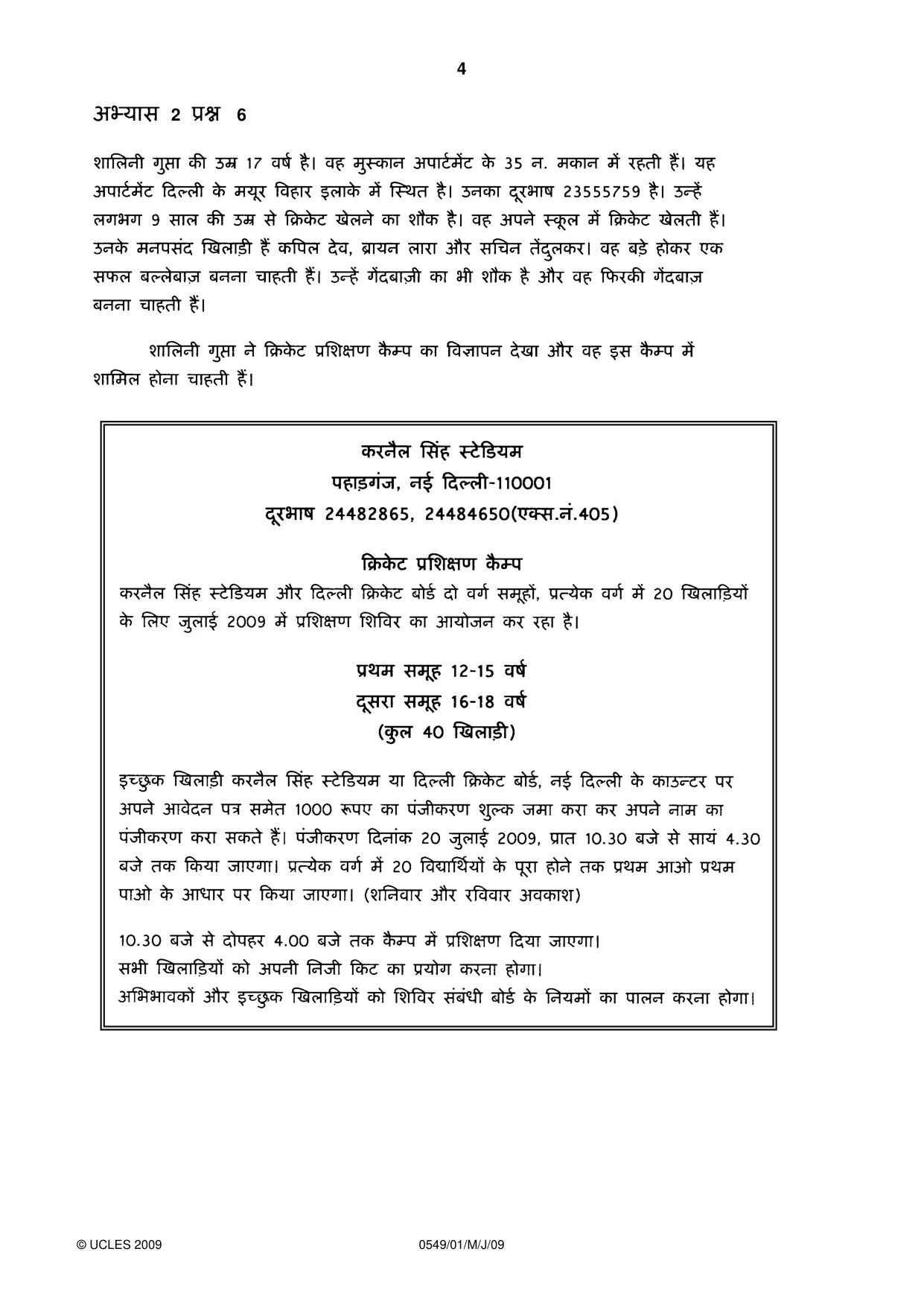
Hea 2 WH 6 afeet ser & sa 17 at 3) ae Rear sree & 35 a. Hae HF ech S1 ae wurde feeoh & aay fae sory H feat Sl Seep BLING 23555759 Bl See ATT 9 eT HT Sars Hae Vast or ait 31 ae HTA Epa A fae Vad 1 Aha GocasH Tete Tet 81 Ses Acar ar af ety S aie ag Pach tease aera aed FI afer ae a fre ofaror hea ar faa far sik ae ga theo Ft anferet teat Tech FI arta Rig eesat Ugisetst, as feeet-110001 @HTT 24482865, 24484650(UeH.a.405) forever her acta fae cefeaa sik fecch fre ats at at wagt, cede at a 20 Feonisat & fee Gers 2009 F wider fax ar sialotey HX TET FI Waa Bag 12-15 ah AT Bag 16-18 at (Hat 40 Feenst) scon fast acta fe rea a Rect fre aS, as Roch & woect W HT Hida VA AAA 1000 BIT HT Tay Yow HAT HUT HL HUA aA TT Gotercor ae BHA 8) Goltenrer feat 20 Aas 2009, Wa 10.30 at F A 4.30 ast an frat are vets af Ft 20 entat & aw sea aw vas HBT GUT Ut & Hae at fear sree (aia six waa Hare) 10.30 Fat SB alex 4.00 oat aw dea A Ofer fea sre waft Raenfsat at argeft fetoit fee ar valet wea eer © UCLES 2009 0549/01/M/J/09
Question paper, page 5
5 © UCLES 2009 For Examiner’s Use 0549/01/M/J/09 7
Question paper, page 6
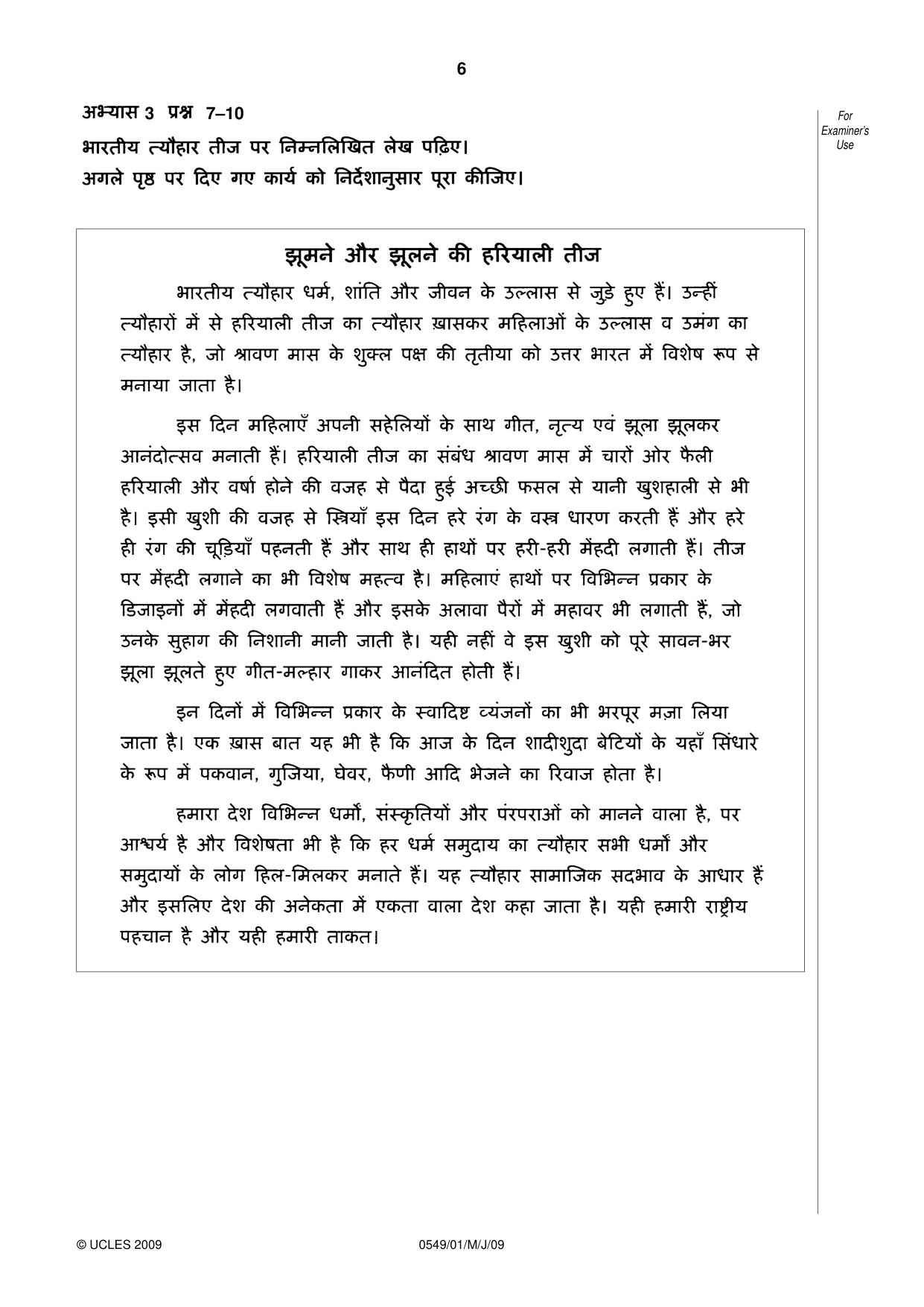
6 © UCLES 2009 For Examiner’s Use 0549/01/M/J/09 3 7–10
Question paper, page 7
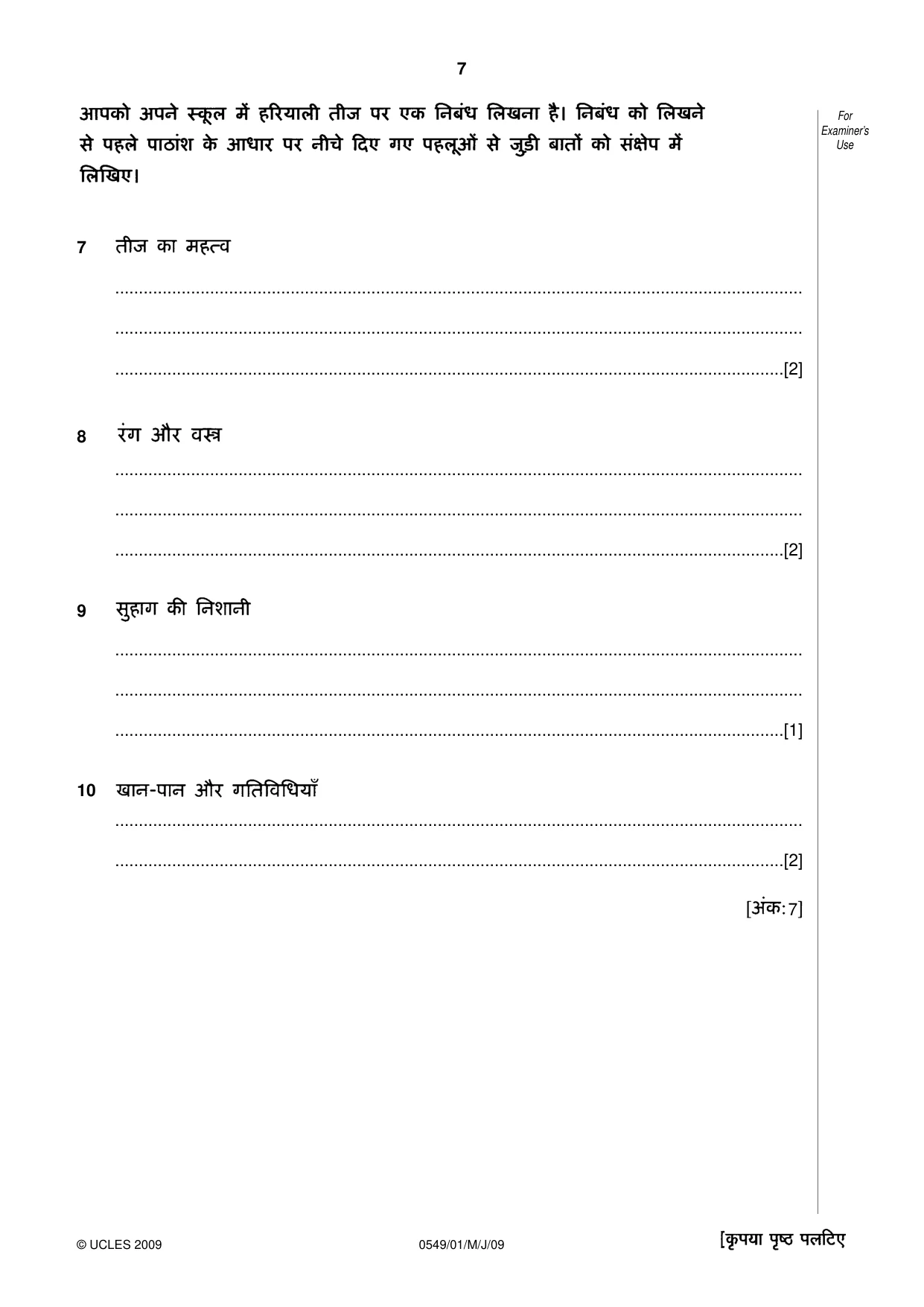
7 © UCLES 2009 For Examiner’s Use 0549/01/M/J/09 7 … … …[2] 8 … … …[2] 9 … … …[1] 10 … …[2] 7
Question paper, page 8
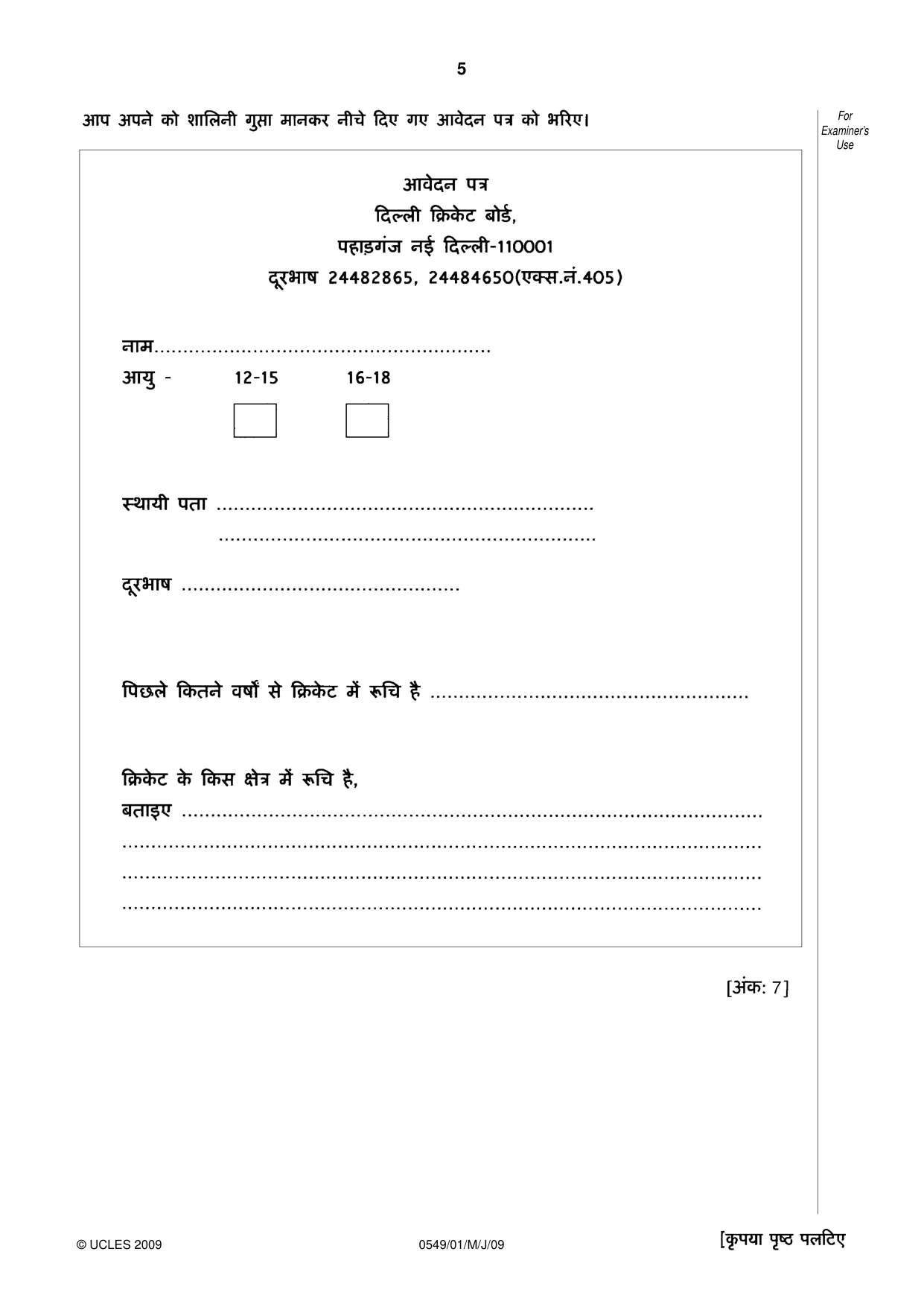
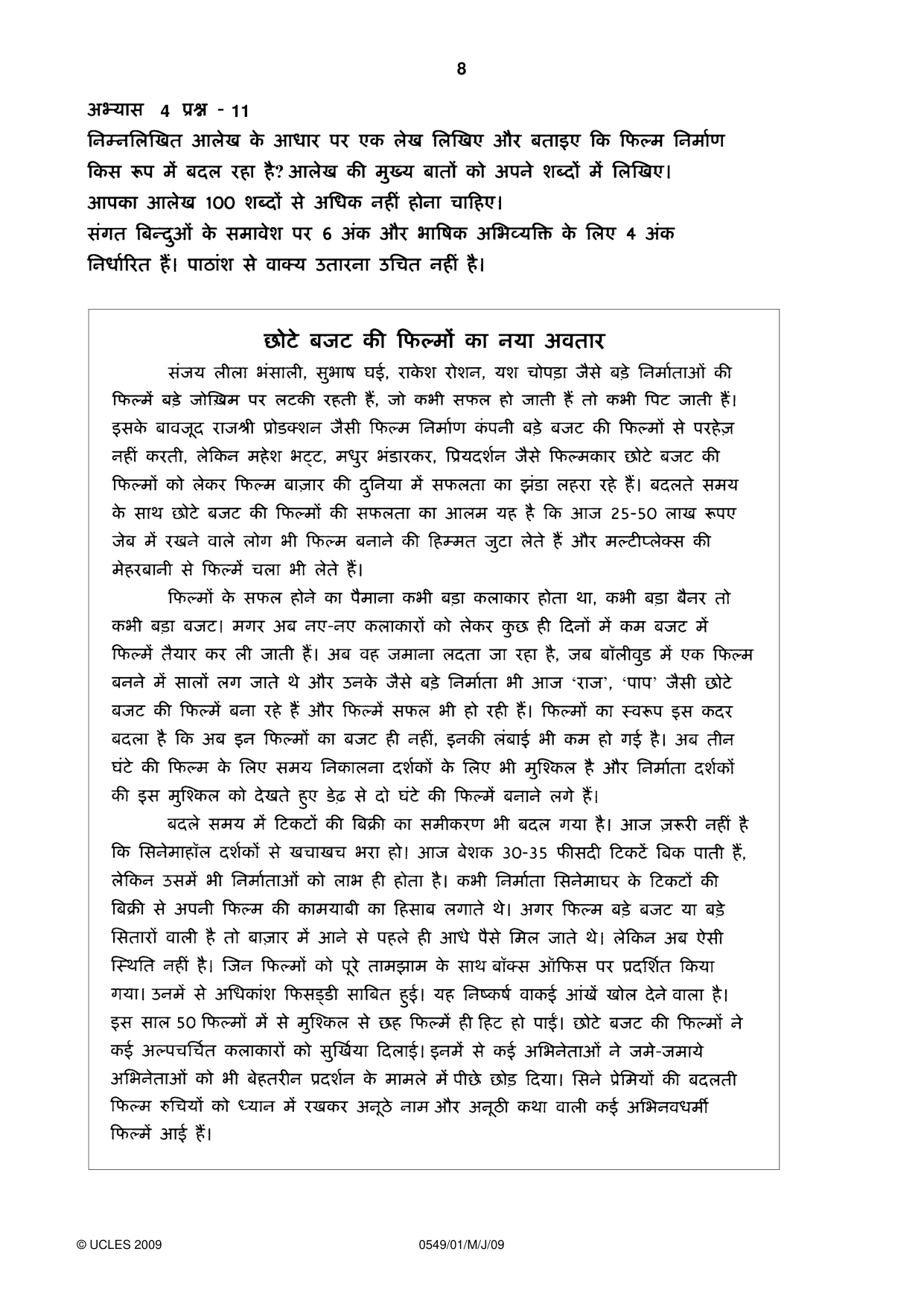
Hea 4 WH - 11 farafetaa sere & ar ut we ae fear atk gage fi rea Prater fra wo a dao tel 3? siete Gl Aer ae at aoe wed A fafa 3TH 3A 100 eect S aia ael ser afew ward faeqsit & wander ux 6 sien aie snitten afscaiey & fee 4 sip fautfta €1 ureter & arr Sanat 3faa aét 21 ole ase ht reat ar aa aa ara crear starch, yaw as, weer Vert, we dios te as feratarsi Ar fred ad sia wx ach vect & at eft ane et one & at waht Pe ont &1 Se TAGS West Meret Shy feos frator duet as ase hr freat 8 weer amet arch, afer Heer sree, AYX sere, Maal se Preaar ole sae Ft Roost ot cane row arsine Ht frat A Ahora HT BS Ae TW Bl Tadd FAT & ae ote aa ff reat ft awa a area ae & PH 3ret 25-50 are BUT sa F aed art otter aft Rhea aaret Ht fees Ger aa S SN AedicceRT Hr Aaa a reat ger at aa Fi feeat & ana eet a dara weft ast Horan Sal a, Heit ast day at waft Sl Tate | FIN HA AV-AT HGR Hi Hat HS eat A Ha gate F Prot dan ax ot ordi 81 Ha ae THAT Aaa OT el B, a aiehgs A wp Pear aact & ff xa ga ftroat ar aac & aél, sad dans ah Ha a aS B1 ata Hat ue a froa & few waa area actnt & fer aft aftna & HN fate atat a ga aftnc wt cad ev se S at ue at frost aera ot Fi) aaa waa A feenet Ar fash ar aefieeeor at aqet sear Bo aot steht ae & fer Reenetest aval J wares ay Mt! sot Age 30-35 Pred ewe faw oh F afer Saat aff feratarsit ar ara & ear 31 Heft faatar atarax & fect A Fash & suet reat ht ararardt a fara aed 3) 3 fees as ase aT as ant art 3 at aem F ara S ued & and W fa ae A afta Ha TH feafa aét 21 faa freat at QQ aasra & ure alee aie wx uefa fear wa Sera S Hier Prager aise eS ae frend ays aired ula 2A are FI 3a Oe 50 ftheat AS Ata a we fred A fee a us) oe aac M foal a as xouatda parent ar afer ars! saat A as aRAaait A aA-say afmaarait at oft agate vert & aaa adres os fear Ra oat F aaah Row vferat ot cara a Tat aed ara te HST Hen are Hs afPaauett fired amg 81 © UCLES 2009 0549/01/M/J/09
Question paper, page 9
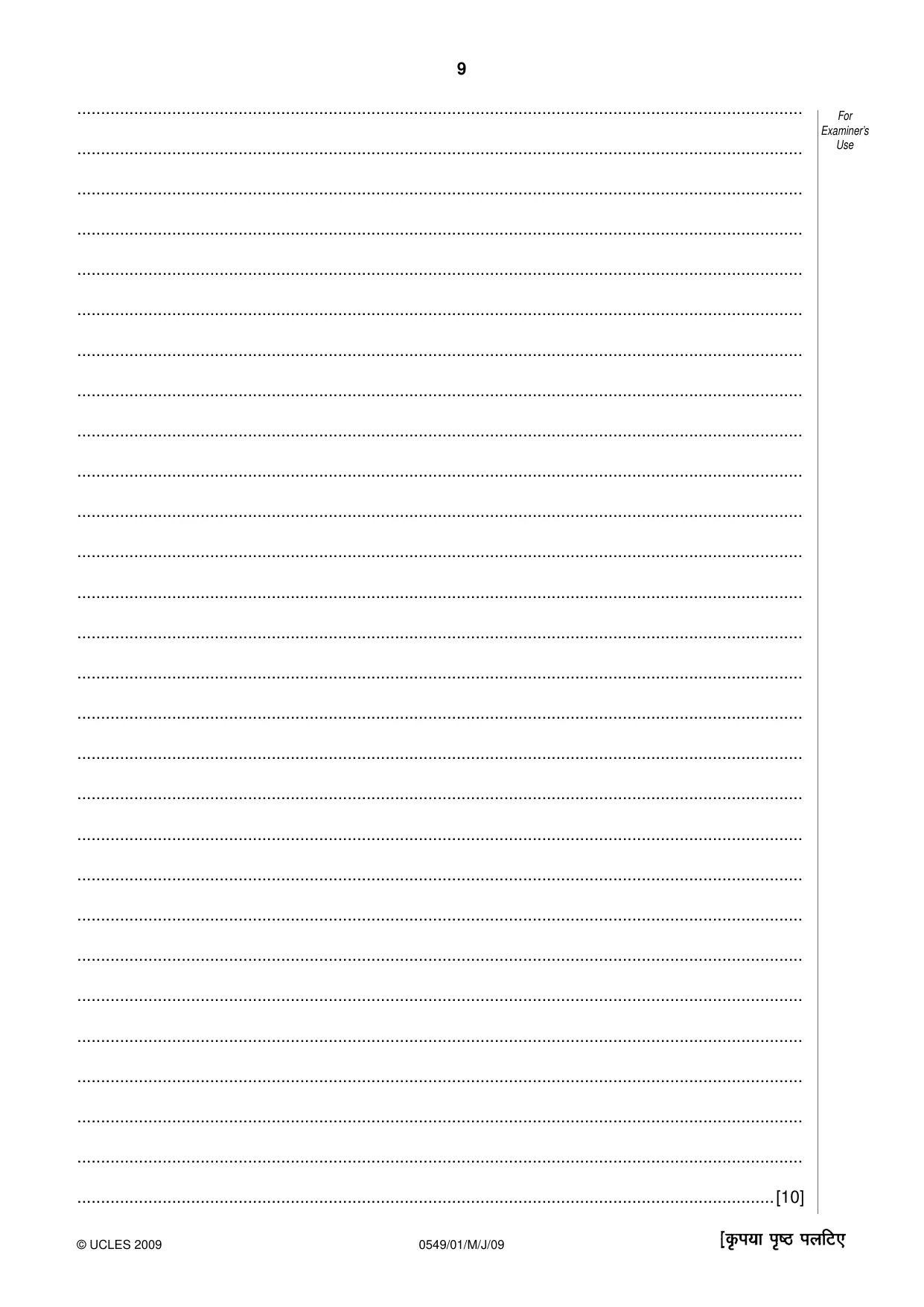
9 © UCLES 2009 For Examiner’s Use 0549/01/M/J/09 … … … … … … … … … … … … … … … … … … … … … … … … … … … …[10]
Question paper, page 10
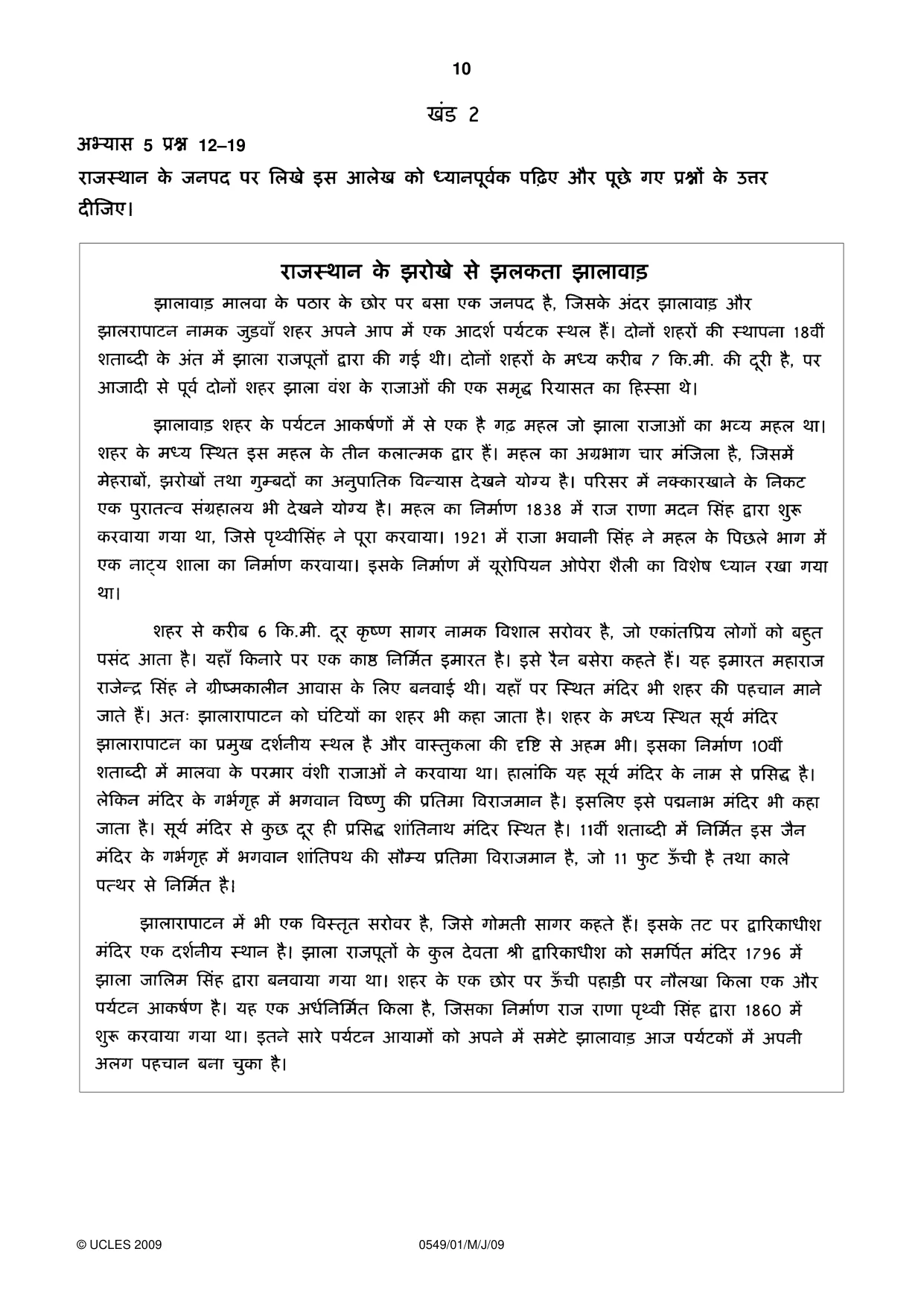
10 Ws 2 HPI 5 WH 12-19 Ware & sea Ww fra sa sew ar carergde afew ste YW aT wat H sax afar Weewa & SRA A Heh Heras SMS Area & GOR & ON W sa Va aaue &, free slat sreas Bik BNET aH Beat wet Hoar aa A vp sat wes eae 21 Aat vert A earcen ici garedt & sit A Sten Targa ent Hr ag atl alet erenl & Aca wa 7 fat. AM at d, a armel & od Aleit wex set ser & Tons FH wa agg Rarwa a RT 3 Beas ex & Utea srendut a S up & Te Hea SV Sen Worst wT Hey Ao ATI Wet & ary Rua sa Hea & ca Haleaw an tl Aga HT 3 UN aterm &, raat Agra, sxtat aa areal wr squid fica cea ave t1 oer & arena & fae WH Qded Hae ot Sad as 81 Aga ar aor 1838 Ff Tet Wo Aaa fe ant Ye ear sen or, ford yeas at OT Hara! 1921 A Won vat fe A Hea & aa ant Ft UH aes wen ar frat arava sees Faro a ahaa gree seh wr fale caret Tar aa am wet a wha 6 feat. ex POT AMR ara faert wlax 8, a venfafra stat a agar Uae Hay B1 Ae far We wa as fasta sana 2%) sa ta Tau Hed E1 Ge SANG AEN uetes fis a aerarcter sara & fae aaars oh) set ux era afax af rex AY usar art He Bl Ha: TTT HT Tear ar rex Al eT eT Sl MEX AeA Fea Bt afer SARs HT wep avelta cat s sik aeqaer Hh eB A Her af) saat ferater iodt waredt H area & uA ae Tons A warn al steifes we at Hex & ara a afte #1 Aferet Hex & mahyE F steravet Pawo Sr vfaat rata 81 safere sa asteny Hier aft Her ora 81 af afer 8 oS a & oe widens afex Raa Bo dt earedt A fasta sa star Fe & veyE H ora afar hr sites ofaen axtsrarat %, at 11 He Sete ae Hear veer & fafeta o1 Sanaa HF at vp fede atax ¢, fae stadt ae Hed &1 sah ae we aarier Fe ve agers Tart 81 Se Woy & Heat aaar A aearher at aaftla afer 1796 F aren omferat RAS ART GAA IA AT) Met w UH BN W Ft vest a ahora feoor vas sie user srantor $1 ae wea etfs Peo &, fSrrar frator wet wor yedt Re ant 1860 a YS ALARM WA Ul sae HX Wea seat wt Hod A We seas sat went F suet HAT Usa Tat Gat F1 © UCLES 2009 0549/01/M/J/09
Question paper, page 11
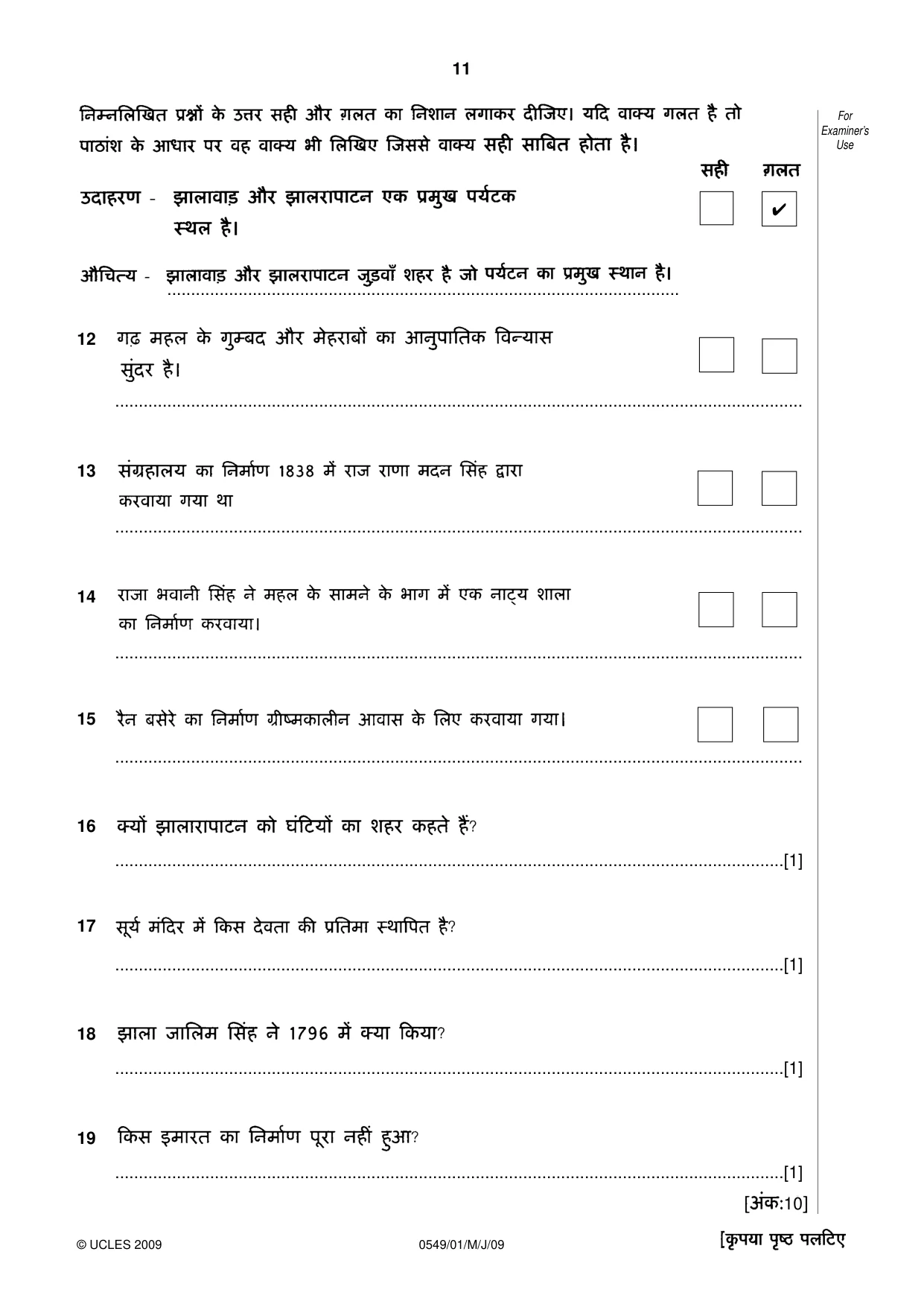
11 © UCLES 2009 For Examiner’s Use 0549/01/M/J/09 … 12 … 13 … 14 … 15 … 16 …[1] 17 …[1] 18 …[1] 19 …[1] 10
Question paper, page 12
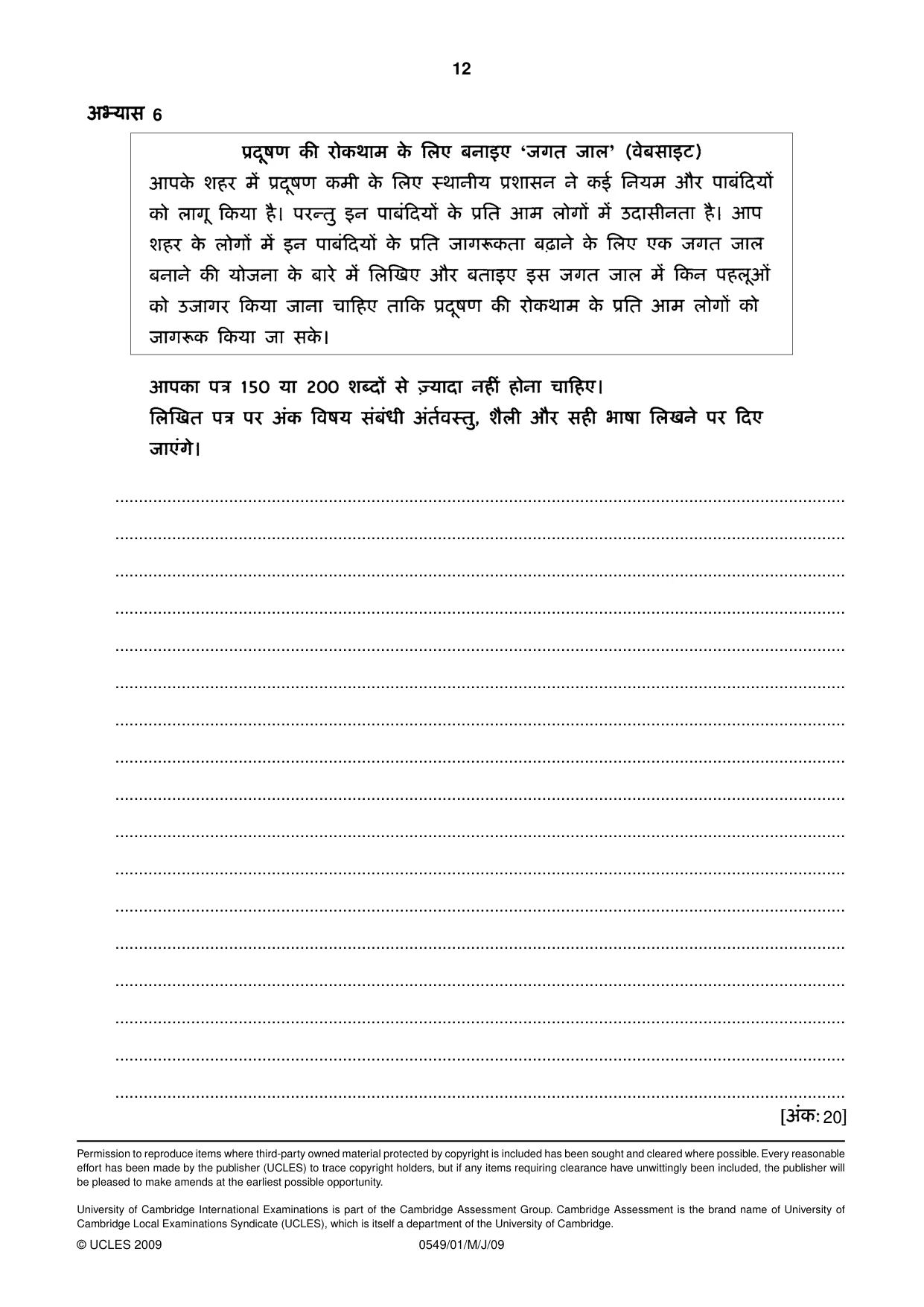
12 0549/01/M/J/09 © UCLES 2009 6 … … … … … … … … … … … … … … … … … Permission to reproduce items where third-party owned material protected by copyright is included has been sought and cleared where possible. Every reasonable effort has been made by the publisher (UCLES) to trace copyright holders, but if any items requiring clearance have unwittingly been included, the publisher will be pleased to make amends at the earliest possible opportunity. University of Cambridge International Examinations is part of the Cambridge Assessment Group. Cambridge Assessment is the brand name of University of Cambridge Local Examinations Syndicate (UCLES), which is itself a department of the University of Cambridge. 20
Mark scheme, page 1
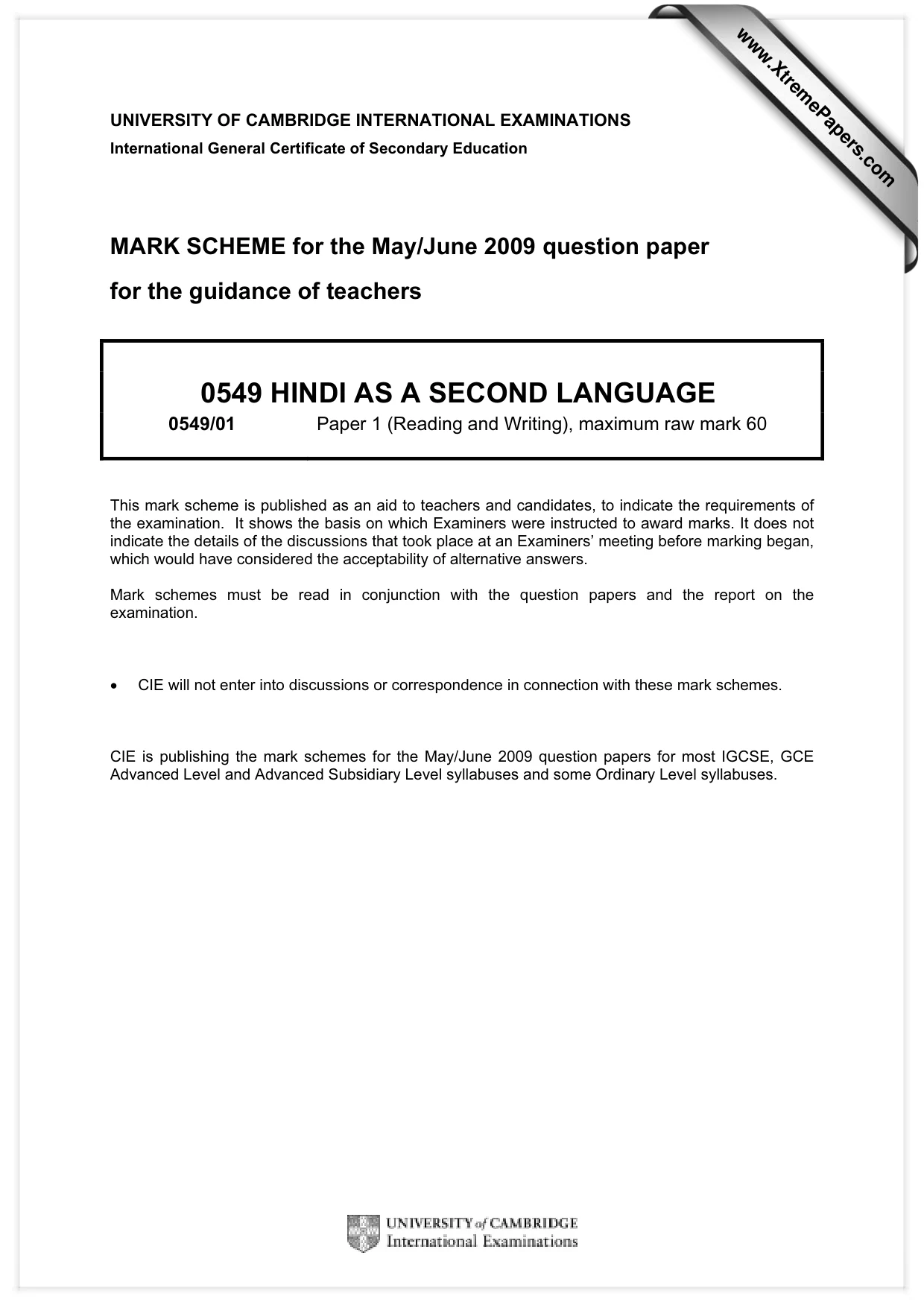
UNIVERSITY OF CAMBRIDGE INTERNATIONAL EXAMINATIONS International General Certificate of Secondary Education MARK SCHEME for the May/June 2009 question paper for the guidance of teachers 0549 HINDI AS A SECOND LANGUAGE 0549/01 Paper 1 (Reading and Writing), maximum raw mark 60 This mark scheme is published as an aid to teachers and candidates, to indicate the requirements of the examination. It shows the basis on which Examiners were instructed to award marks. It does not indicate the details of the discussions that took place at an Examiners’ meeting before marking began, which would have considered the acceptability of alternative answers. Mark schemes must be read in conjunction with the question papers and the report on the examination. • CIE will not enter into discussions or correspondence in connection with these mark schemes. CIE is publishing the mark schemes for the May/June 2009 question papers for most IGCSE, GCE Advanced Level and Advanced Subsidiary Level syllabuses and some Ordinary Level syllabuses. www.XtremePapers.com
Mark scheme, page 2
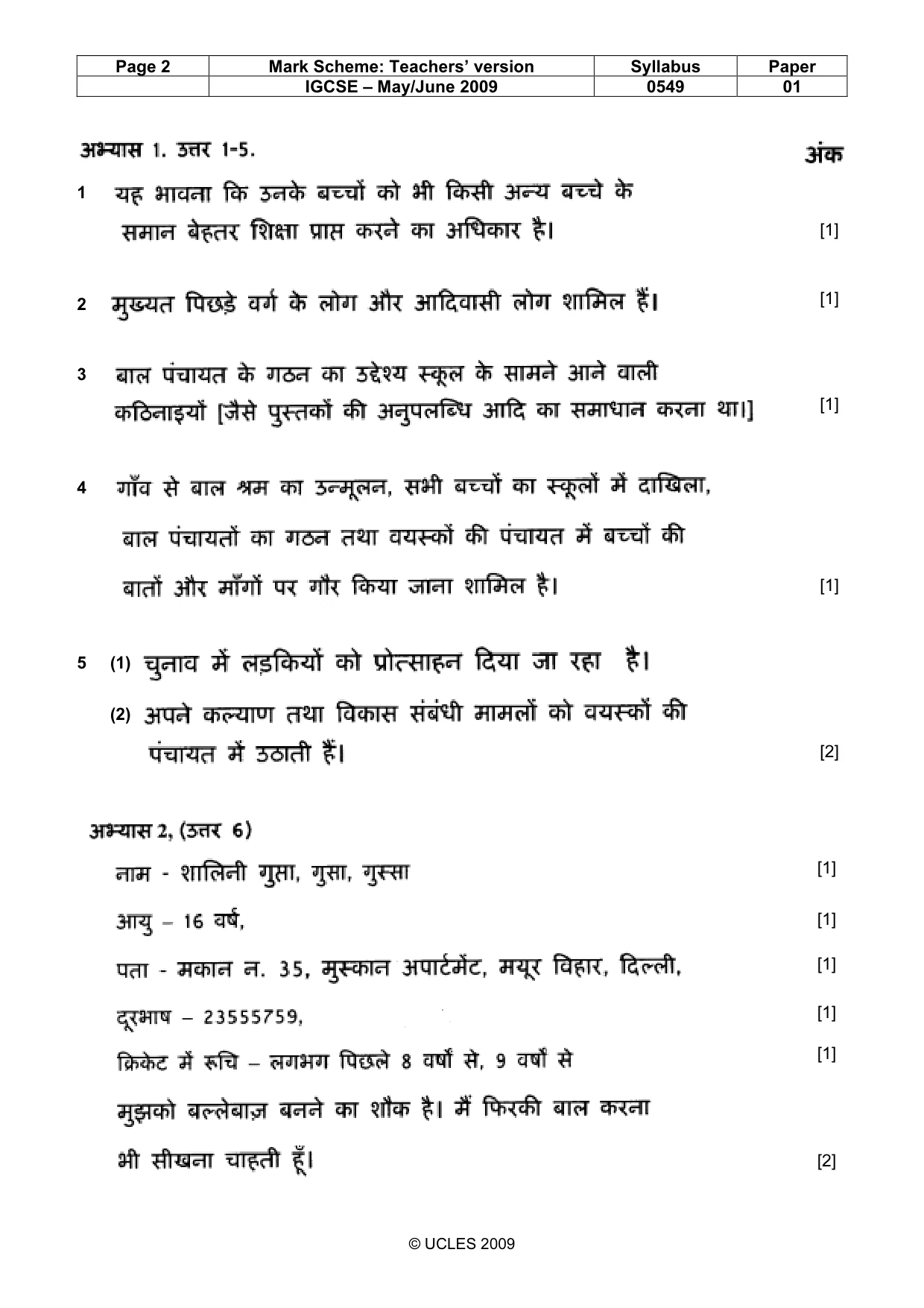
Page 2 Mark Scheme: Teachers’ version Syllabus Paper IGCSE – May/June 2009 0549 01 © UCLES 2009 1 [1] 2 [1] 3 [1] 4 [1] 5 (1) (2) [2] [1] [1] [1] [1] [1] [2]
Mark scheme, page 3
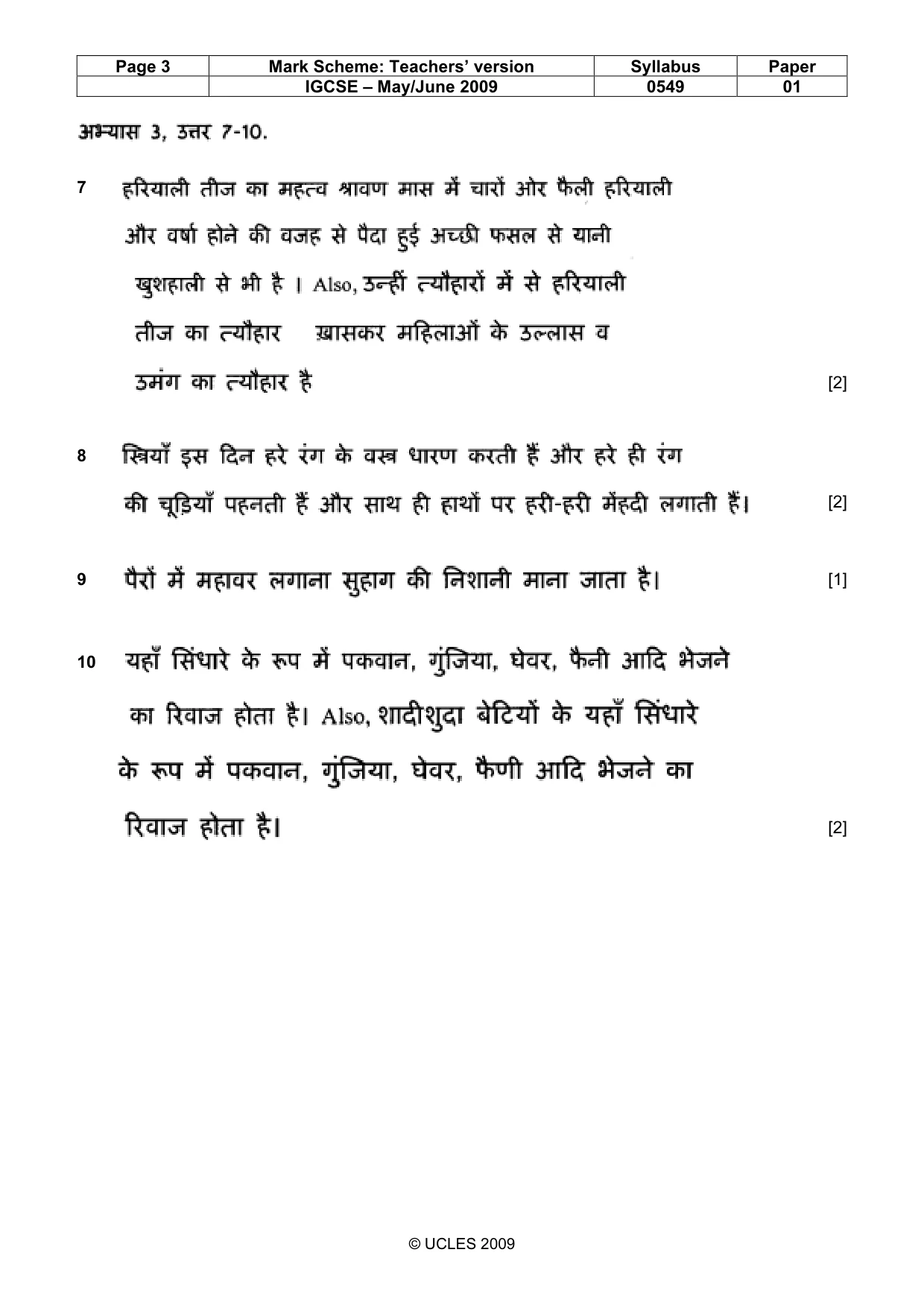
Page 3 Mark Scheme: Teachers’ version Syllabus Paper IGCSE – May/June 2009 0549 01 © UCLES 2009 7 [2] 8 [2] 9 [1] 10 [2]
Mark scheme, page 4
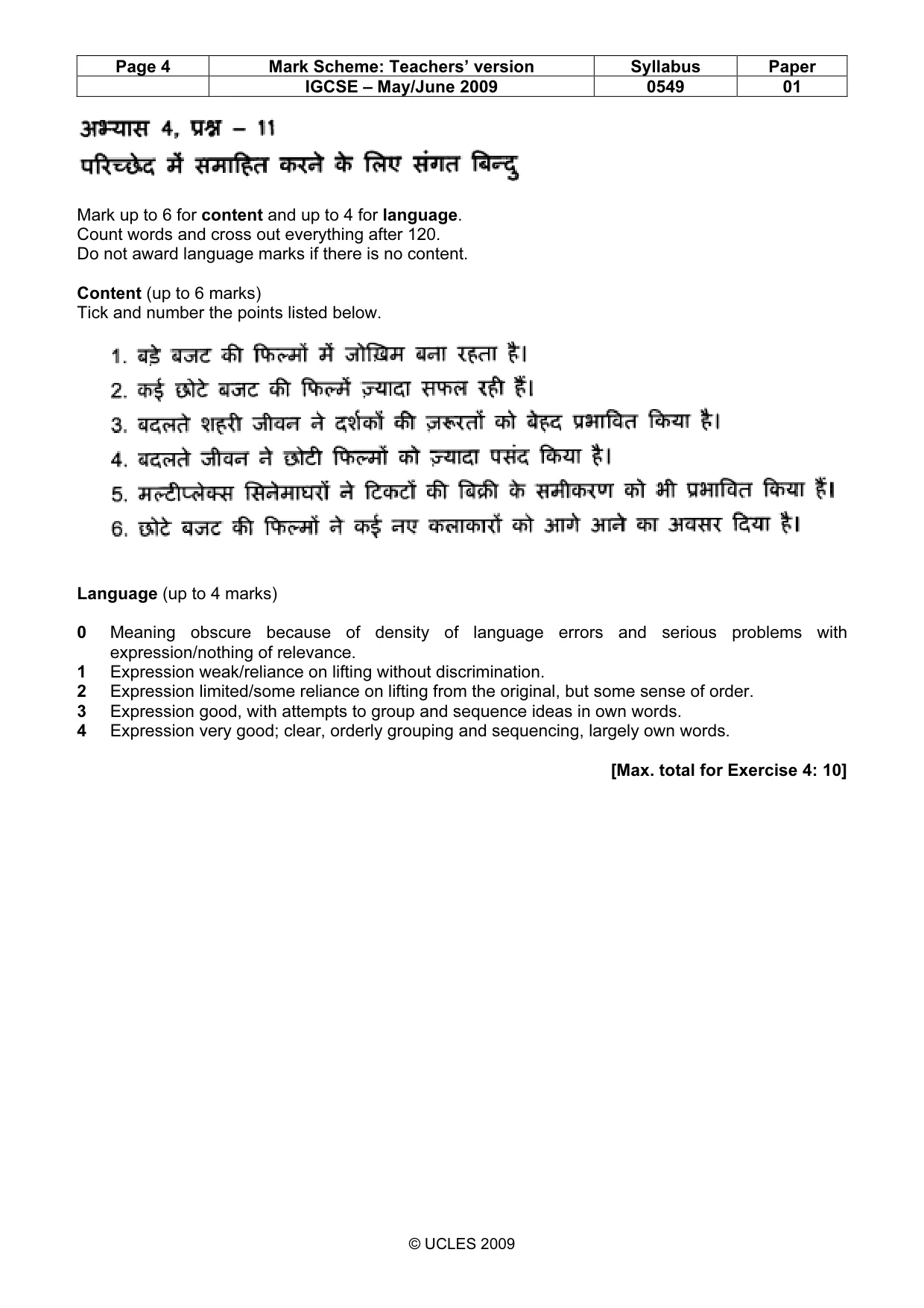
Page 4 Mark Scheme: Teachers’ version Syllabus Paper IGCSE – May/June 2009 0549 01 © UCLES 2009 Mark up to 6 for content and up to 4 for language. Count words and cross out everything after 120. Do not award language marks if there is no content. Content (up to 6 marks) Tick and number the points listed below. Language (up to 4 marks) 0 Meaning obscure because of density of language errors and serious problems with expression/nothing of relevance. 1 Expression weak/reliance on lifting without discrimination. 2 Expression limited/some reliance on lifting from the original, but some sense of order. 3 Expression good, with attempts to group and sequence ideas in own words. 4 Expression very good; clear, orderly grouping and sequencing, largely own words. [Max. total for Exercise 4: 10]
Mark scheme, page 5
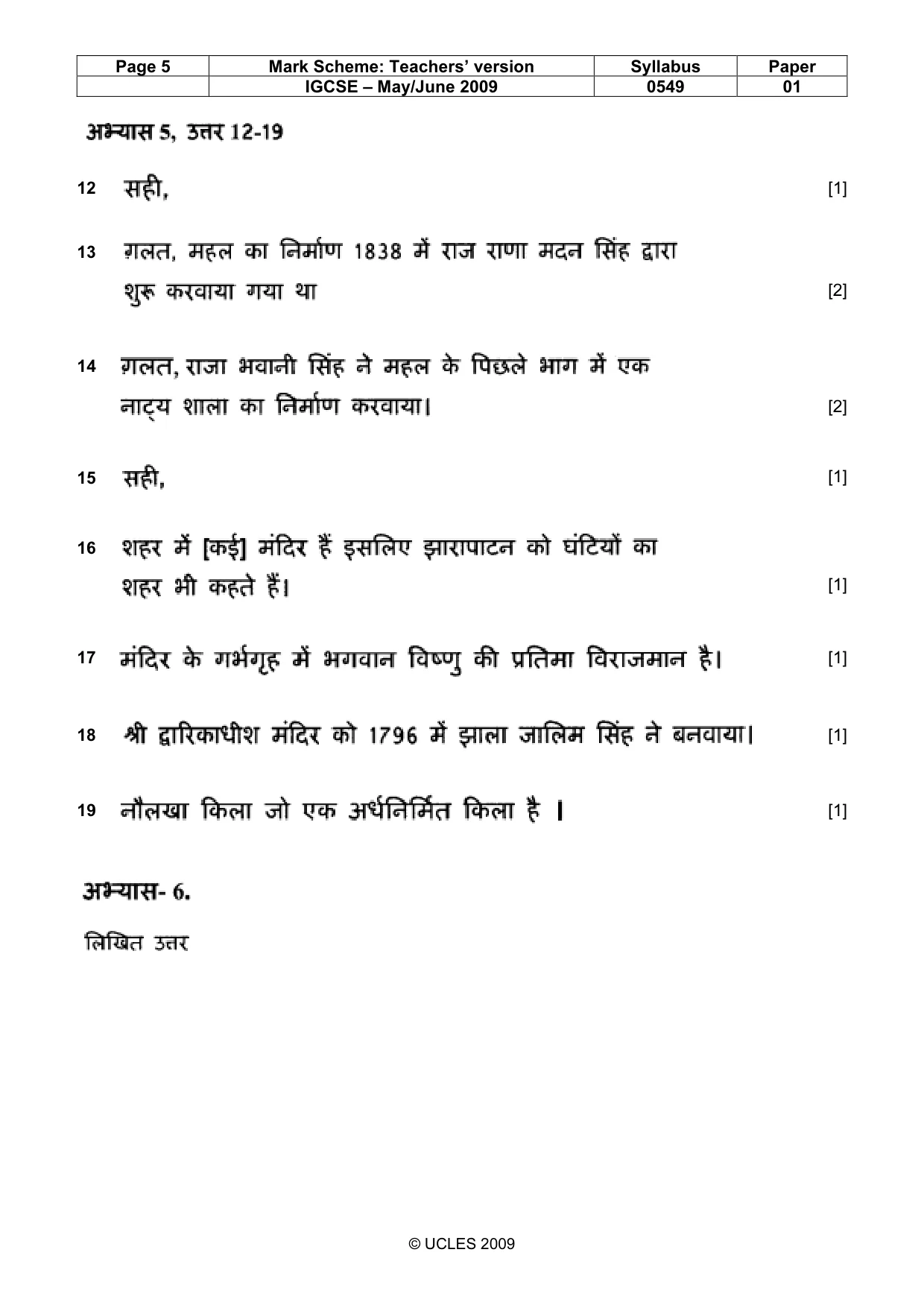
Page 5 Mark Scheme: Teachers’ version Syllabus Paper IGCSE – May/June 2009 0549 01 © UCLES 2009 12 [1] 13 [2] 14 [2] 15 [1] 16 [1] 17 [1] 18 [1] 19 [1]
Mark scheme, page 6
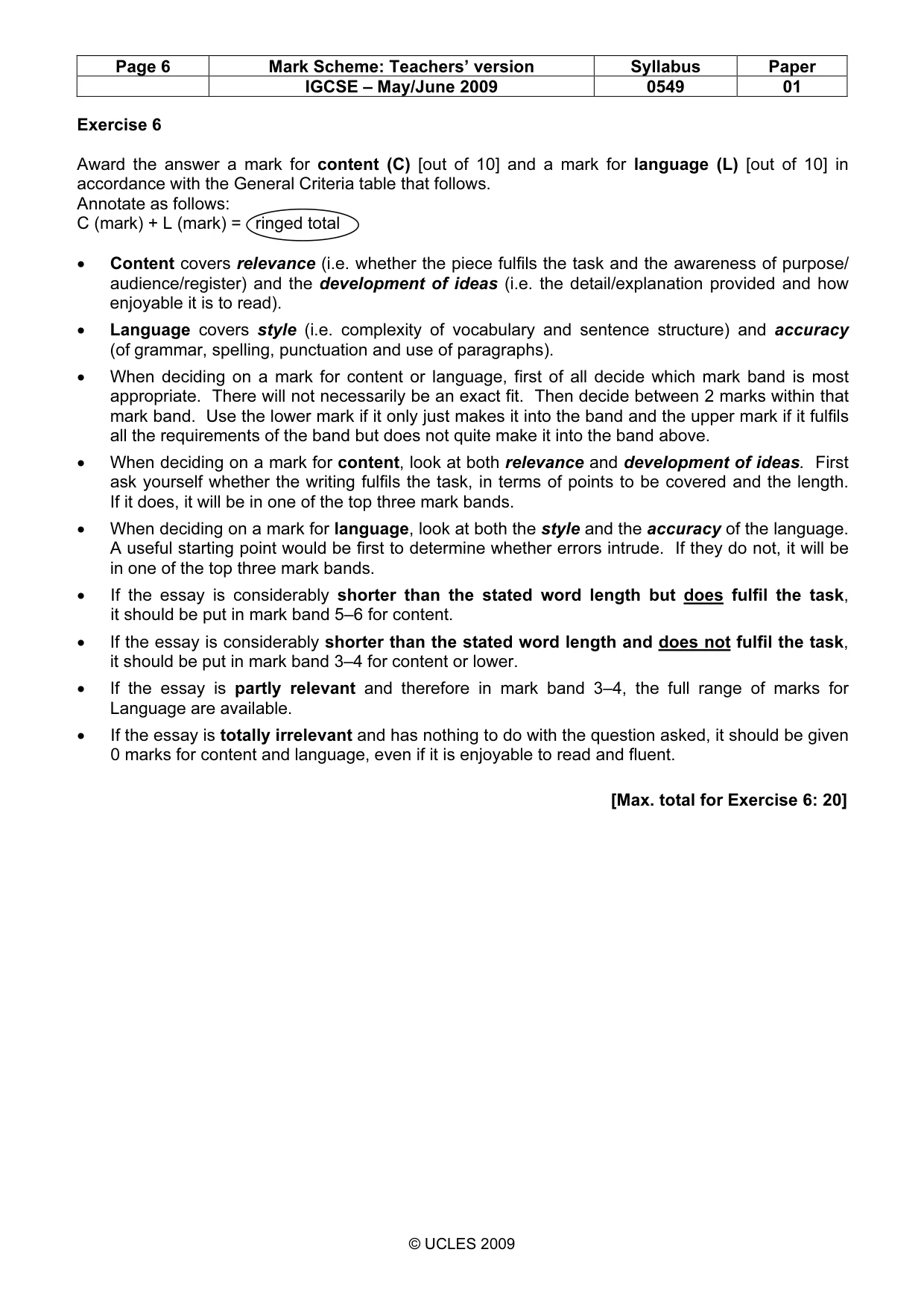
Page 6 Mark Scheme: Teachers’ version Syllabus Paper IGCSE – May/June 2009 0549 01 © UCLES 2009 Exercise 6 Award the answer a mark for content (C) [out of 10] and a mark for language (L) [out of 10] in accordance with the General Criteria table that follows. Annotate as follows: C (mark) + L (mark) = ringed total • Content covers relevance (i.e. whether the piece fulfils the task and the awareness of purpose/ audience/register) and the development of ideas (i.e. the detail/explanation provided and how enjoyable it is to read). • Language covers style (i.e. complexity of vocabulary and sentence structure) and accuracy (of grammar, spelling, punctuation and use of paragraphs). • When deciding on a mark for content or language, first of all decide which mark band is most appropriate. There will not necessarily be an exact fit. Then decide between 2 marks within that mark band. Use the lower mark if it only just makes it into the band and the upper mark if it fulfils all the requirements of the band but does not quite make it into the band above. • When deciding on a mark for content, look at both relevance and development of ideas. First ask yourself whether the writing fulfils the task, in terms of points to be covered and the length. If it does, it will be in one of the top three mark bands. • When deciding on a mark for language, look at both the style and the accuracy of the language. A useful starting point would be first to determine whether errors intrude. If they do not, it will be in one of the top three mark bands. • If the essay is considerably shorter than the stated word length but does fulfil the task, it should be put in mark band 5–6 for content. • If the essay is considerably shorter than the stated word length and does not fulfil the task, it should be put in mark band 3–4 for content or lower. • If the essay is partly relevant and therefore in mark band 3–4, the full range of marks for Language are available. • If the essay is totally irrelevant and has nothing to do with the question asked, it should be given 0 marks for content and language, even if it is enjoyable to read and fluent. [Max. total for Exercise 6: 20]
Mark scheme, page 7
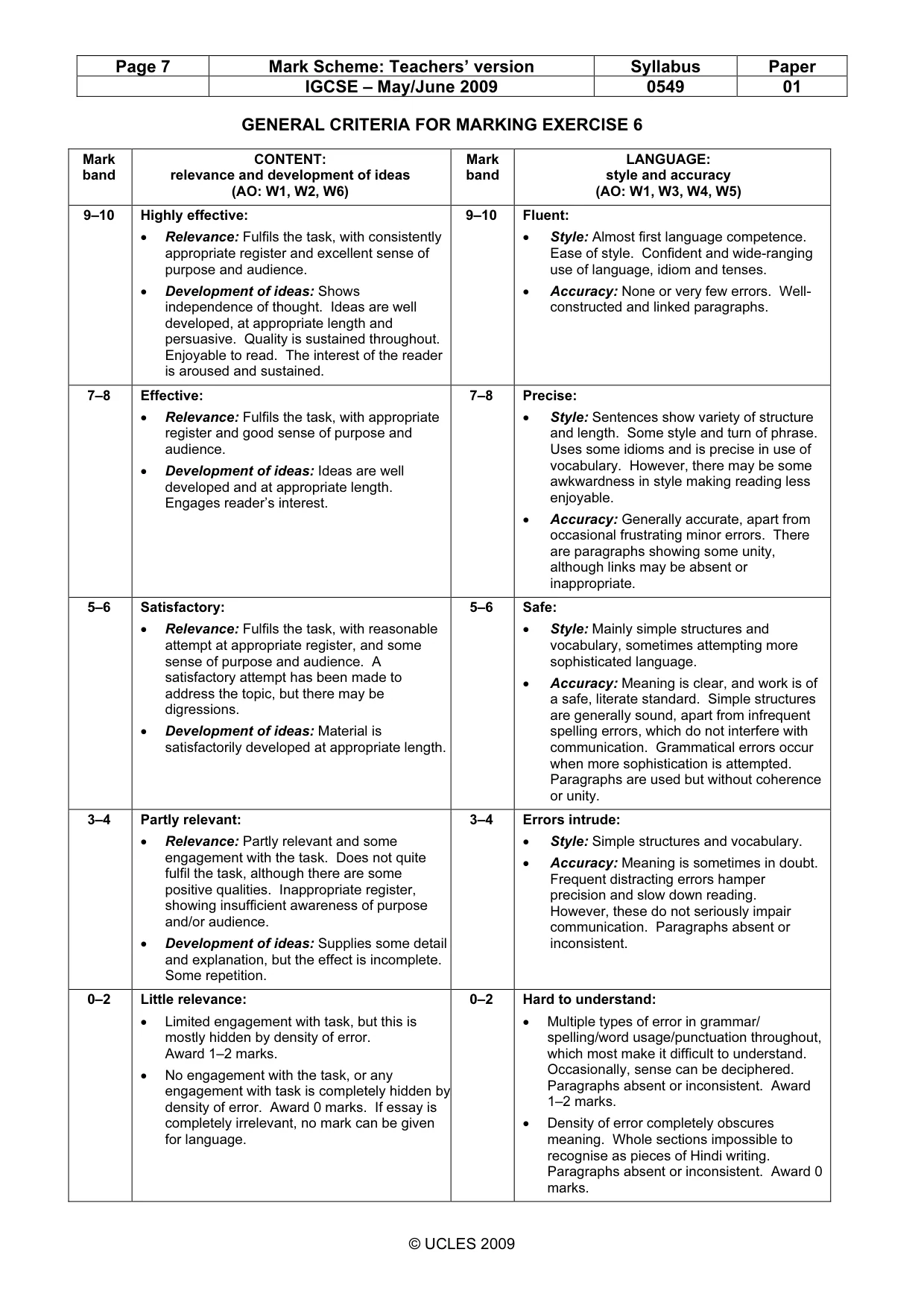
Page 7 Mark Scheme: Teachers’ version Syllabus Paper IGCSE – May/June 2009 0549 01 © UCLES 2009 GENERAL CRITERIA FOR MARKING EXERCISE 6 Mark band CONTENT: relevance and development of ideas (AO: W1, W2, W6) Mark band LANGUAGE: style and accuracy (AO: W1, W3, W4, W5) 9–10 Highly effective: • Relevance: Fulfils the task, with consistently appropriate register and excellent sense of purpose and audience. • Development of ideas: Shows independence of thought. Ideas are well developed, at appropriate length and persuasive. Quality is sustained throughout. Enjoyable to read. The interest of the reader is aroused and sustained. 9–10 Fluent: • Style: Almost first language competence. Ease of style. Confident and wide-ranging use of language, idiom and tenses. • Accuracy: None or very few errors. Well- constructed and linked paragraphs. 7–8 Effective: • Relevance: Fulfils the task, with appropriate register and good sense of purpose and audience. • Development of ideas: Ideas are well developed and at appropriate length. Engages reader’s interest. 7–8 Precise: • Style: Sentences show variety of structure and length. Some style and turn of phrase. Uses some idioms and is precise in use of vocabulary. However, there may be some awkwardness in style making reading less enjoyable. • Accuracy: Generally accurate, apart from occasional frustrating minor errors. There are paragraphs showing some unity, although links may be absent or inappropriate. 5–6 Satisfactory: • Relevance: Fulfils the task, with reasonable attempt at appropriate register, and some sense of purpose and audience. A satisfactory attempt has been made to address the topic, but there may be digressions. • Development of ideas: Material is satisfactorily developed at appropriate length. 5–6 Safe: • Style: Mainly simple structures and vocabulary, sometimes attempting more sophisticated language. • Accuracy: Meaning is clear, and work is of a safe, literate standard. Simple structures are generally sound, apart from infrequent spelling errors, which do not interfere with communication. Grammatical errors occur when more sophistication is attempted. Paragraphs are used but without coherence or unity. 3–4 Partly relevant: • Relevance: Partly relevant and some engagement with the task. Does not quite fulfil the task, although there are some positive qualities. Inappropriate register, showing insufficient awareness of purpose and/or audience. • Development of ideas: Supplies some detail and explanation, but the effect is incomplete. Some repetition. 3–4 Errors intrude: • Style: Simple structures and vocabulary. • Accuracy: Meaning is sometimes in doubt. Frequent distracting errors hamper precision and slow down reading. However, these do not seriously impair communication. Paragraphs absent or inconsistent. 0–2 Little relevance: • Limited engagement with task, but this is mostly hidden by density of error. Award 1–2 marks. • No engagement with the task, or any engagement with task is completely hidden by density of error. Award 0 marks. If essay is completely irrelevant, no mark can be given for language. 0–2 Hard to understand: • Multiple types of error in grammar/ spelling/word usage/punctuation throughout, which most make it difficult to understand. Occasionally, sense can be deciphered. Paragraphs absent or inconsistent. Award 1–2 marks. • Density of error completely obscures meaning. Whole sections impossible to recognise as pieces of Hindi writing. Paragraphs absent or inconsistent. Award 0 marks.
What you needed in this session
Cambridge’s own grade thresholds for 2009 May/June, Paper 1 · Variant 1. A higher threshold means an easier paper — the bar moves with how the cohort did.