Cambridge IGCSE Chemistry (9-1) 0971 — 2019 May/June Paper 5 · Variant 1
0971/51/M/J/19 · 3 questions · 40 marks · ≈45 min
The question paper and its mark scheme, free to read here and free to download. This is Cambridge’s own paper, exactly as it was sat.
Question paper12 pages



Mark scheme7 pages
Answers below. Sit the paper first if you are practising.
Questions as text
Q1 · You are going to investigate the reaction between aqueous sodium carbonate and aqueous…
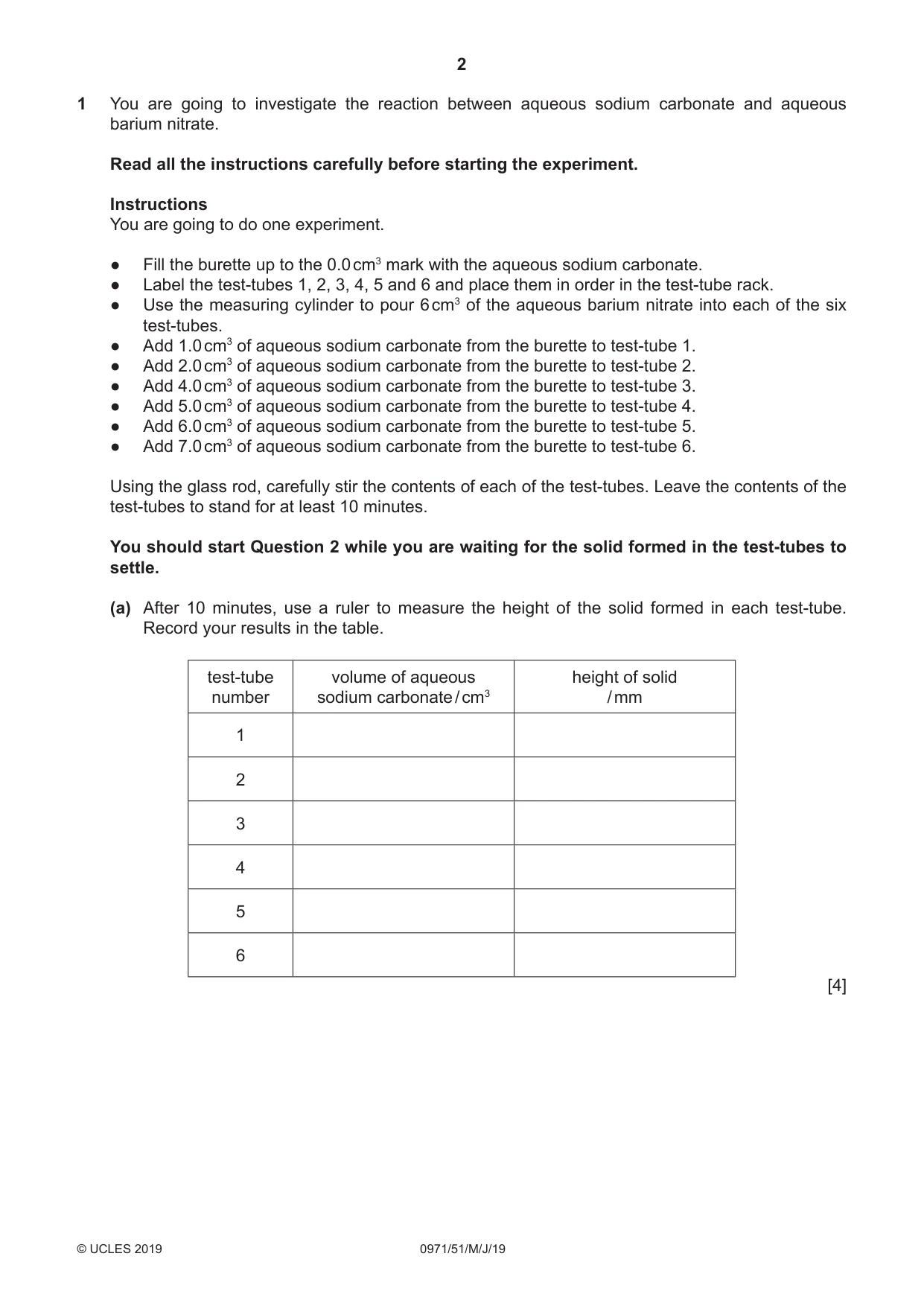
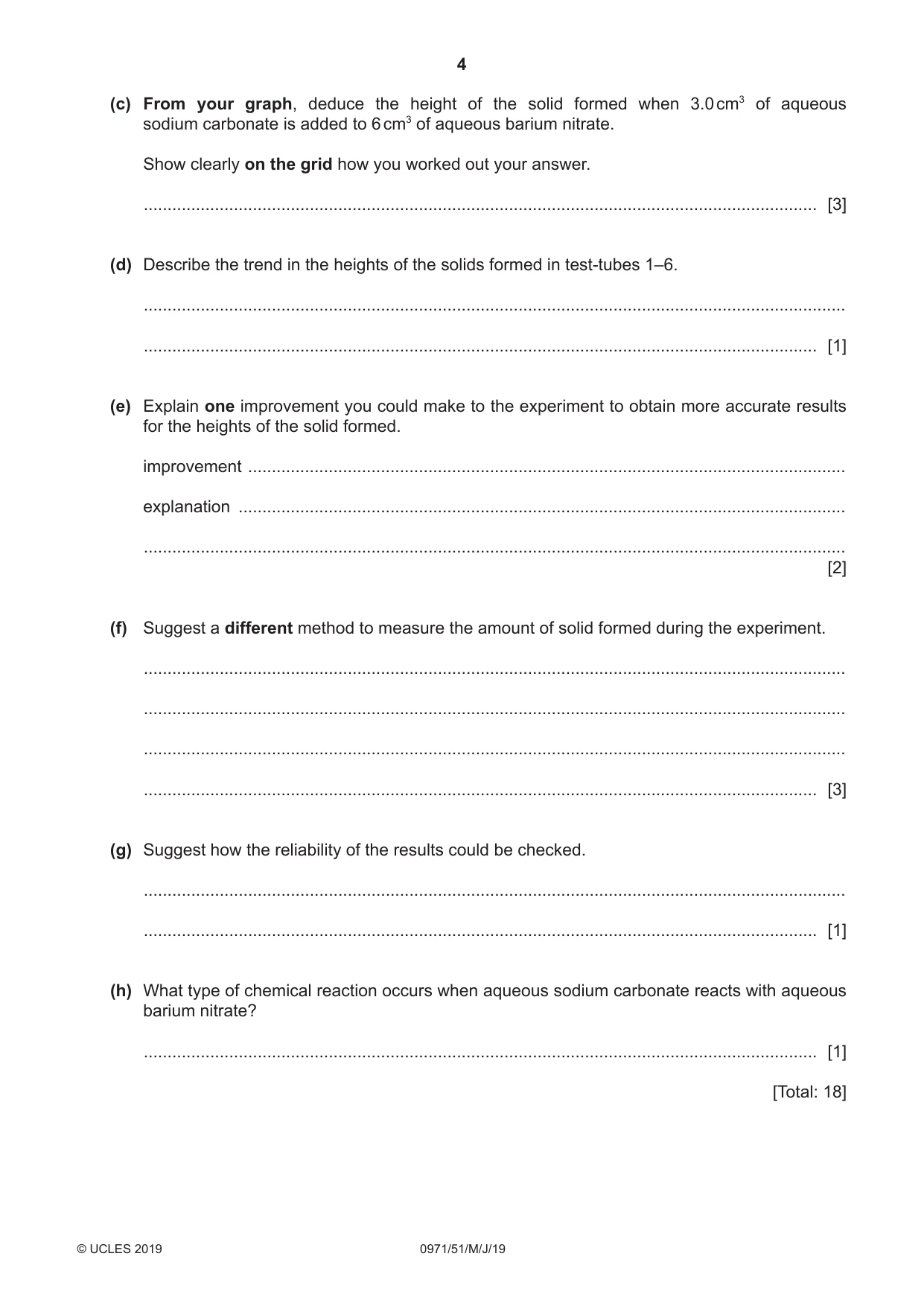
1 You are going to investigate the reaction between aqueous sodium carbonate and aqueous barium nitrate. Read all the instructions carefully before starting the experiment. Instructions You are going to do one experiment. ●● Fill the burette up to the 0.0 cm3 mark with the aqueous sodium carbonate. ●● Label the test-tubes 1, 2, 3, 4, 5 and 6 and place them in order in the test-tube rack. ●● Use the measuring cylinder to pour 6 cm3 of the aqueous barium nitrate into each of the six test-tubes. ●● Add 1.0 cm3 of aqueous sodium carbonate from the burette to test-tube 1. ●● Add 2.0 cm3 of aqueous sodium carbonate from the burette to test-tube 2. ●● Add 4.0 cm3 of aqueous sodium carbonate from the burette to test-tube 3. ●● Add 5.0 cm3 of aqueous sodium carbonate from the burette to test-tube 4. ●● Add 6.0 cm3 of aqueous sodium carbonate from the burette to test-tube 5. ●● Add 7.0 cm3 of aqueous sodium carbonate from the burette to test-tube 6. Using the glass rod, carefully stir the contents of each of the test-tubes. Leave the contents of the test-tubes to stand for at least 10 minutes. You should start Question 2 while you are waiting for the solid formed in the test‑tubes to settle. (a) After 10 minutes, use a ruler to measure the height of the solid formed in each test-tube. Record your results in the table. test-tube volume of aqueous height of solid number sodium carbonate / cm3 / mm 1 2 3 4 5 6 [4] (c) From your graph, deduce the height of the solid formed when 3.0 cm3 of aqueous sodium carbonate is added to 6 cm3 of aqueous barium nitrate. Show clearly on the grid how you worked out your answer. .............................................................................................................................................. [3] (d) Describe the trend in the heights of the solids formed in test-tubes 1–6. .................................................................................................................................................... .............................................................................................................................................. [1] (e) Explain one improvement you could make to the experiment to obtain more accurate results for the heights of the solid formed. improvement .............................................................................................................................. explanation ................................................................................................................................. .................................................................................................................................................... [2] (f) Suggest a different method to measure the amount of solid formed during the experiment. .................................................................................................................................................... .................................................................................................................................................... .................................................................................................................................................... .............................................................................................................................................. [3] (g) Suggest how the reliability of the results could be checked. .................................................................................................................................................... .............................................................................................................................................. [1] (h) What type of chemical reaction occurs when aqueous sodium carbonate reacts with aqueous barium nitrate? .............................................................................................................................................. [1] [Total: 18] Question 2 starts on the next page.
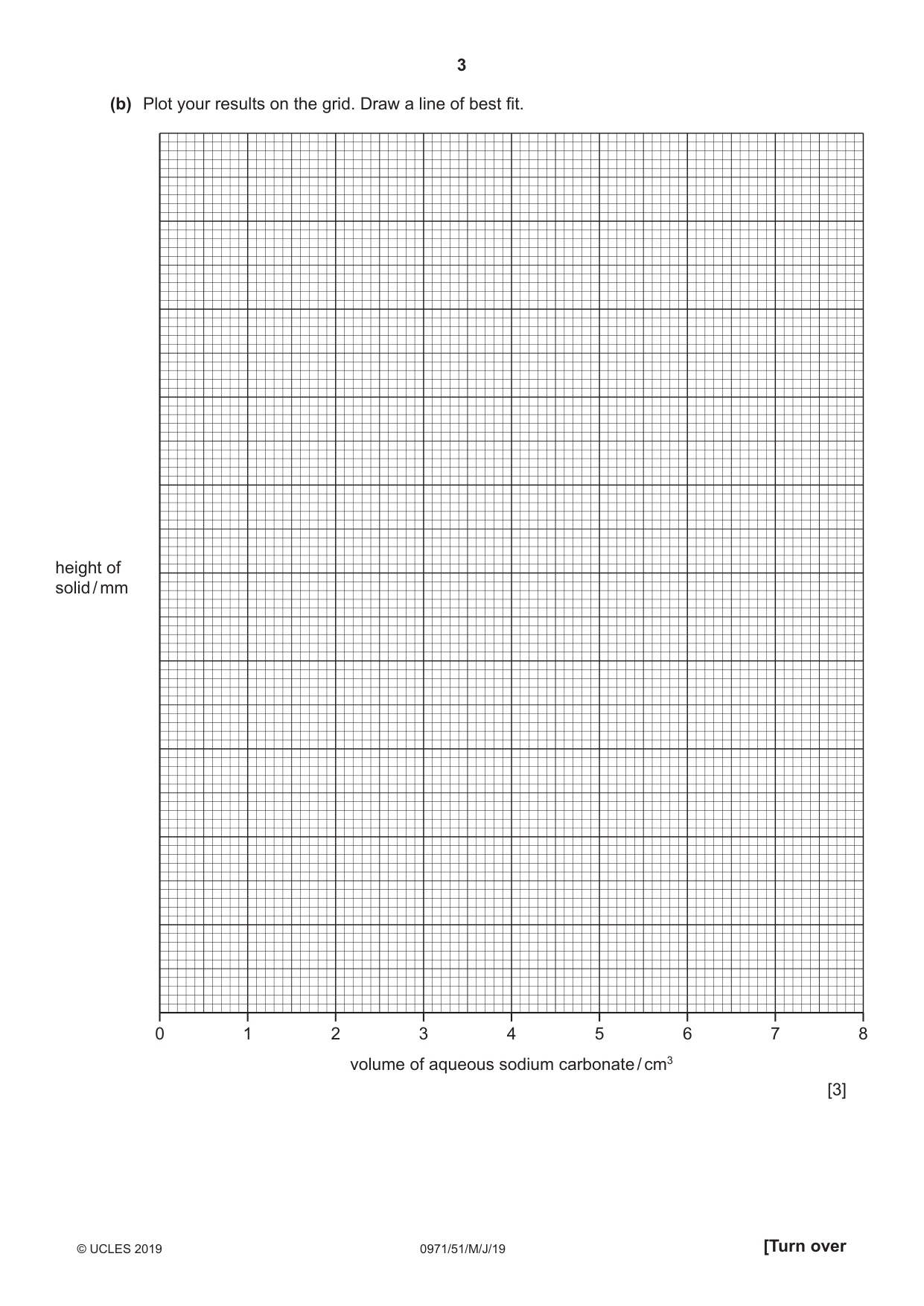
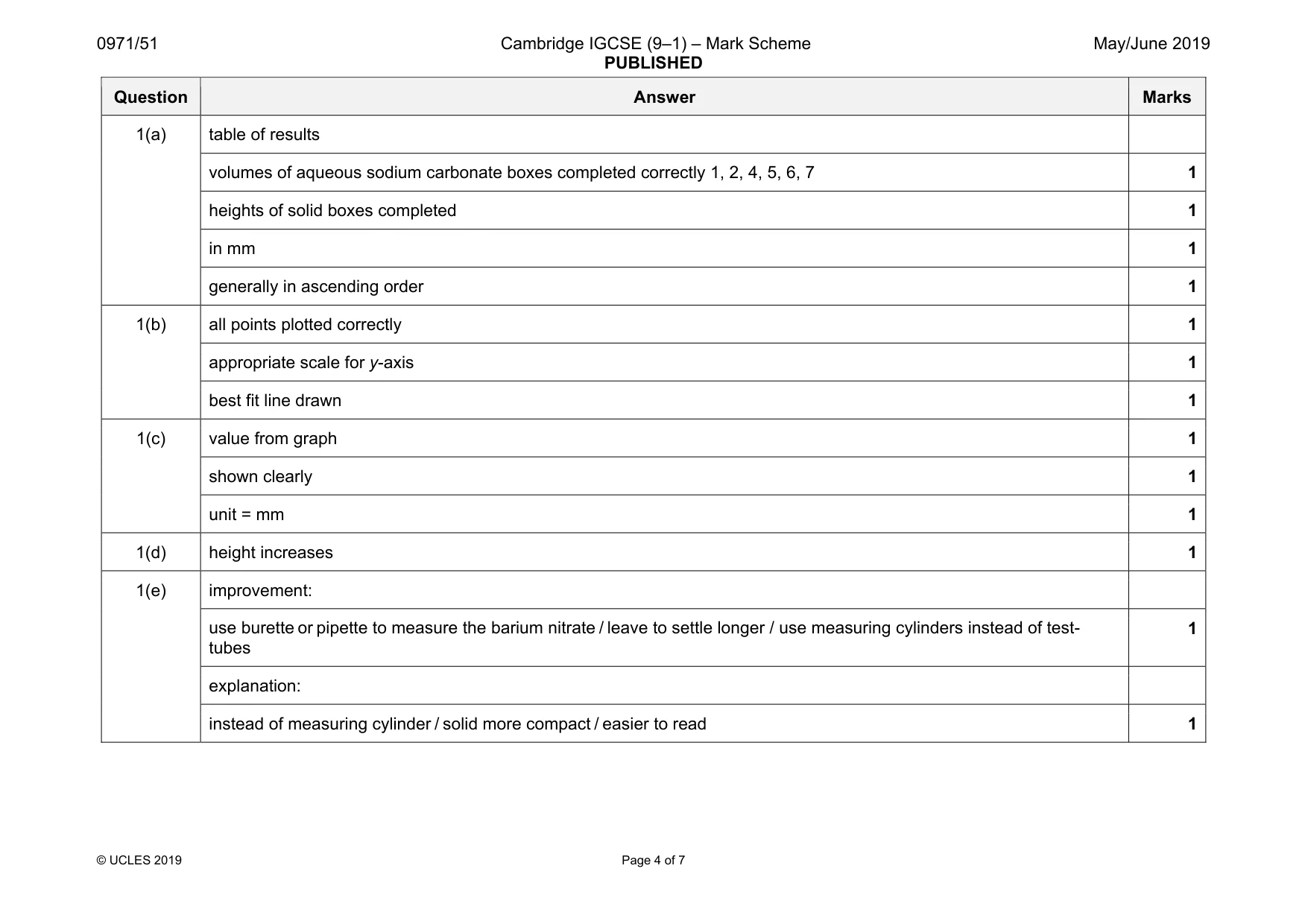
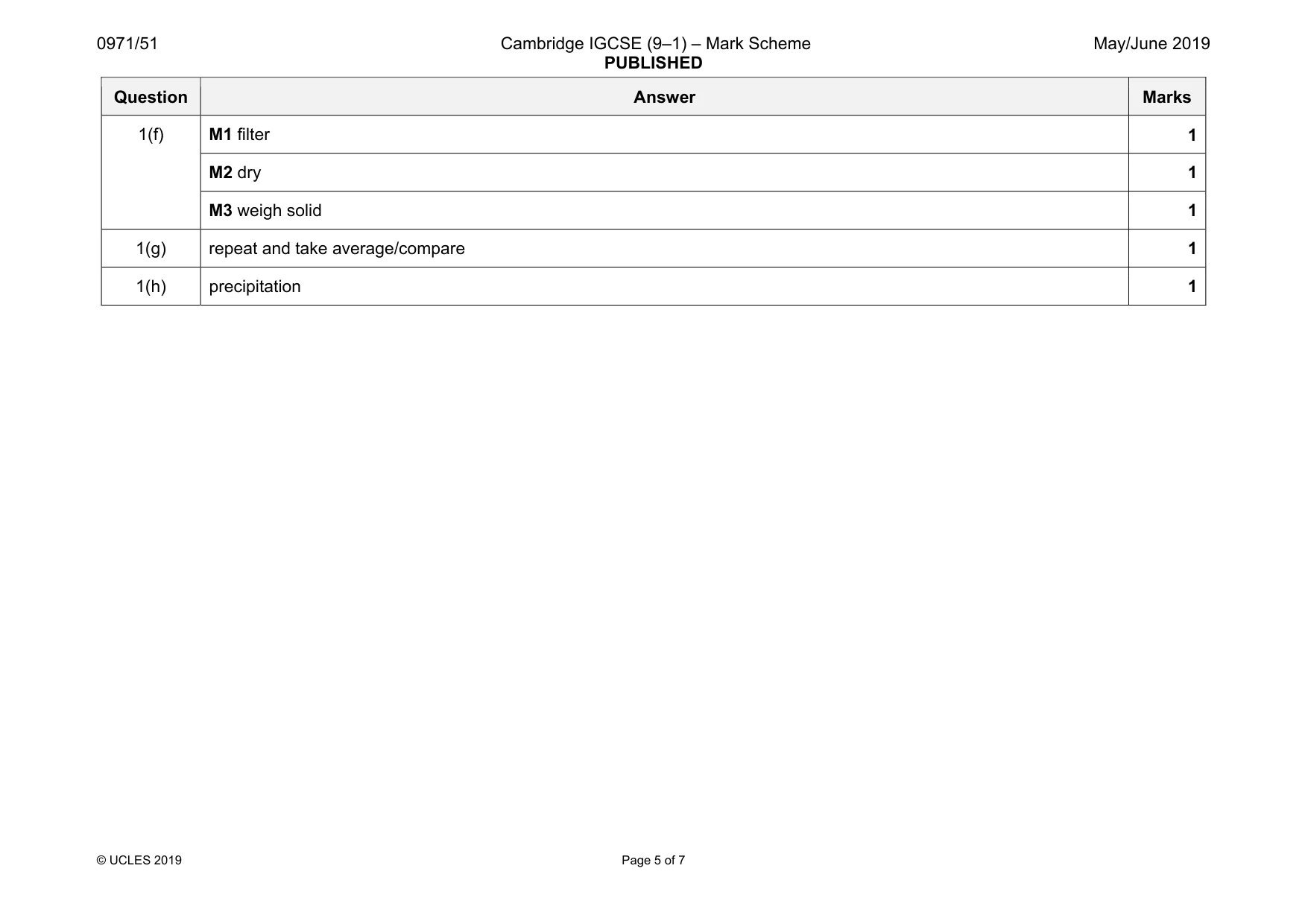
Mark scheme: 1(a) table of results volumes of aqueous sodium carbonate boxes completed correctly 1, 2, 4, 5, 6, 7 1 heights of solid boxes completed 1 in mm 1 generally in ascending order 1 1(b) all points plotted correctly 1 appropriate scale for y-axis 1 best fit line drawn 1 1(c) value from graph 1 shown clearly 1 unit = mm 1 1(d) height increases 1 1(e) improvement: use burette or pipette to measure the barium nitrate / leave to settle longer / use measuring cylinders instead of test- tubes 1 explanation: instead of measuring cylinder / solid more compact / easier to read 1 Question Answer Marks 1(f) M1 filter 1 M2 dry 1 M3 weigh solid 1 1(g) repeat and take average/compare 1 1(h) precipitation 1
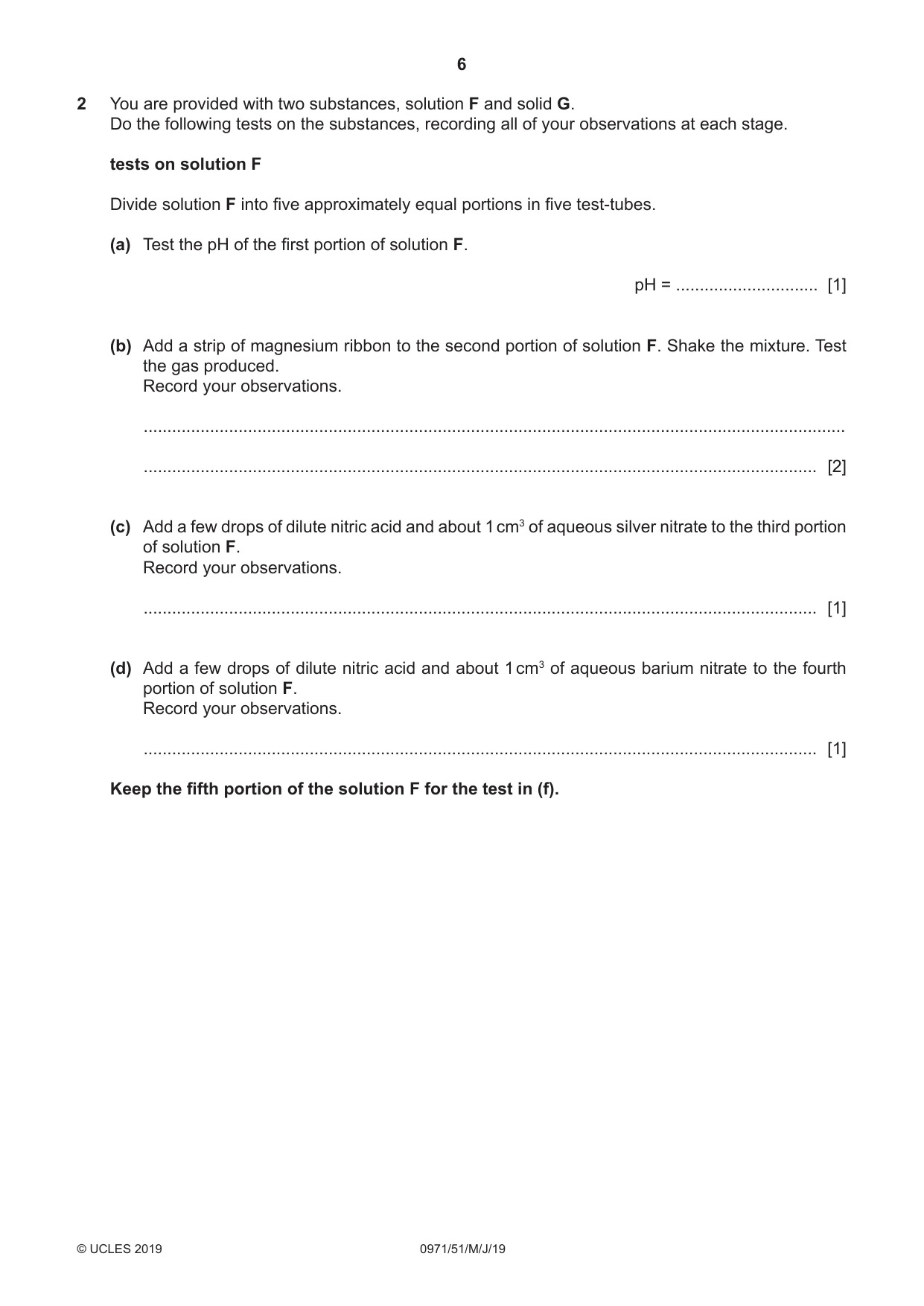
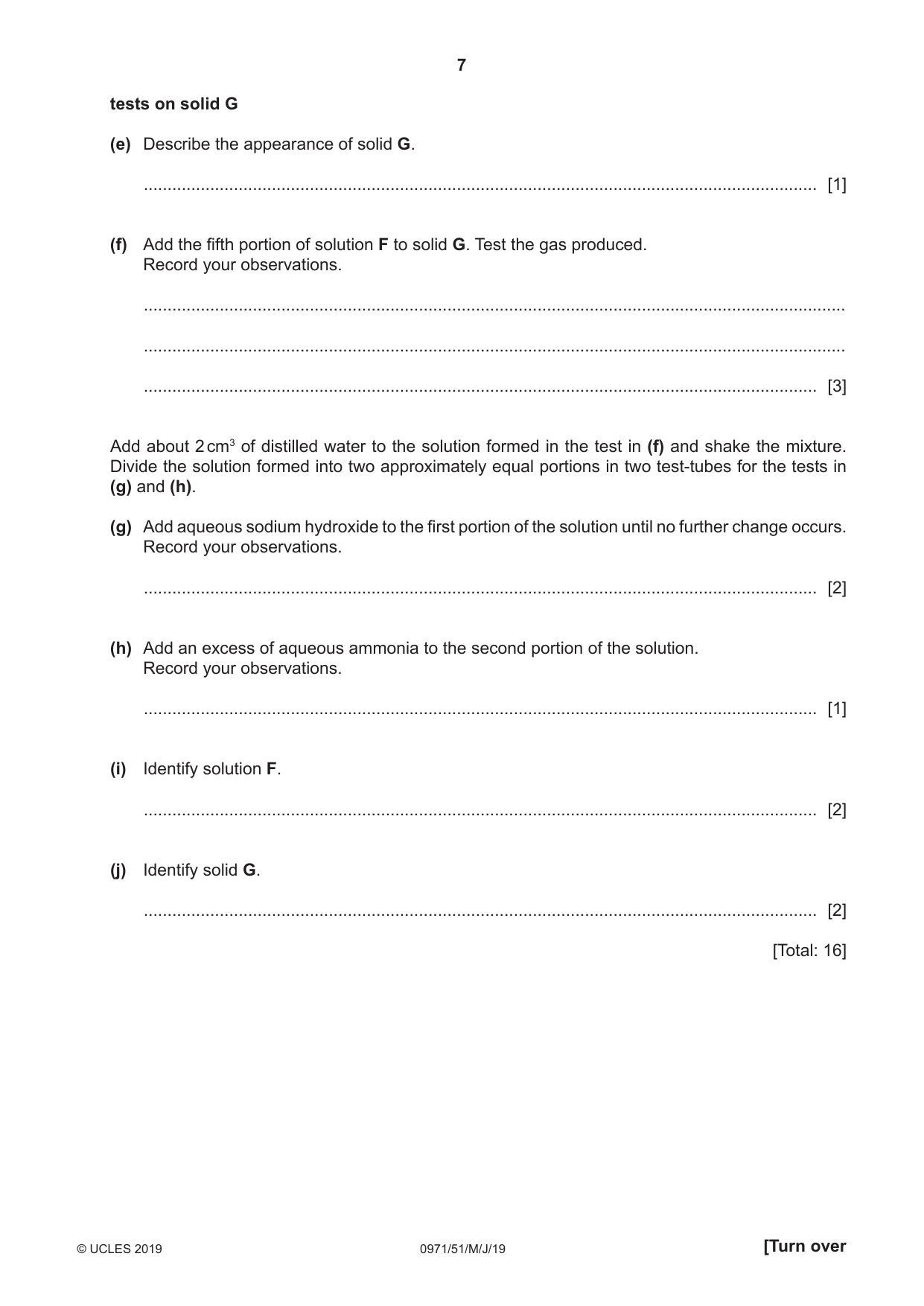
Q2 · You are provided with two substances, solution F and solid G
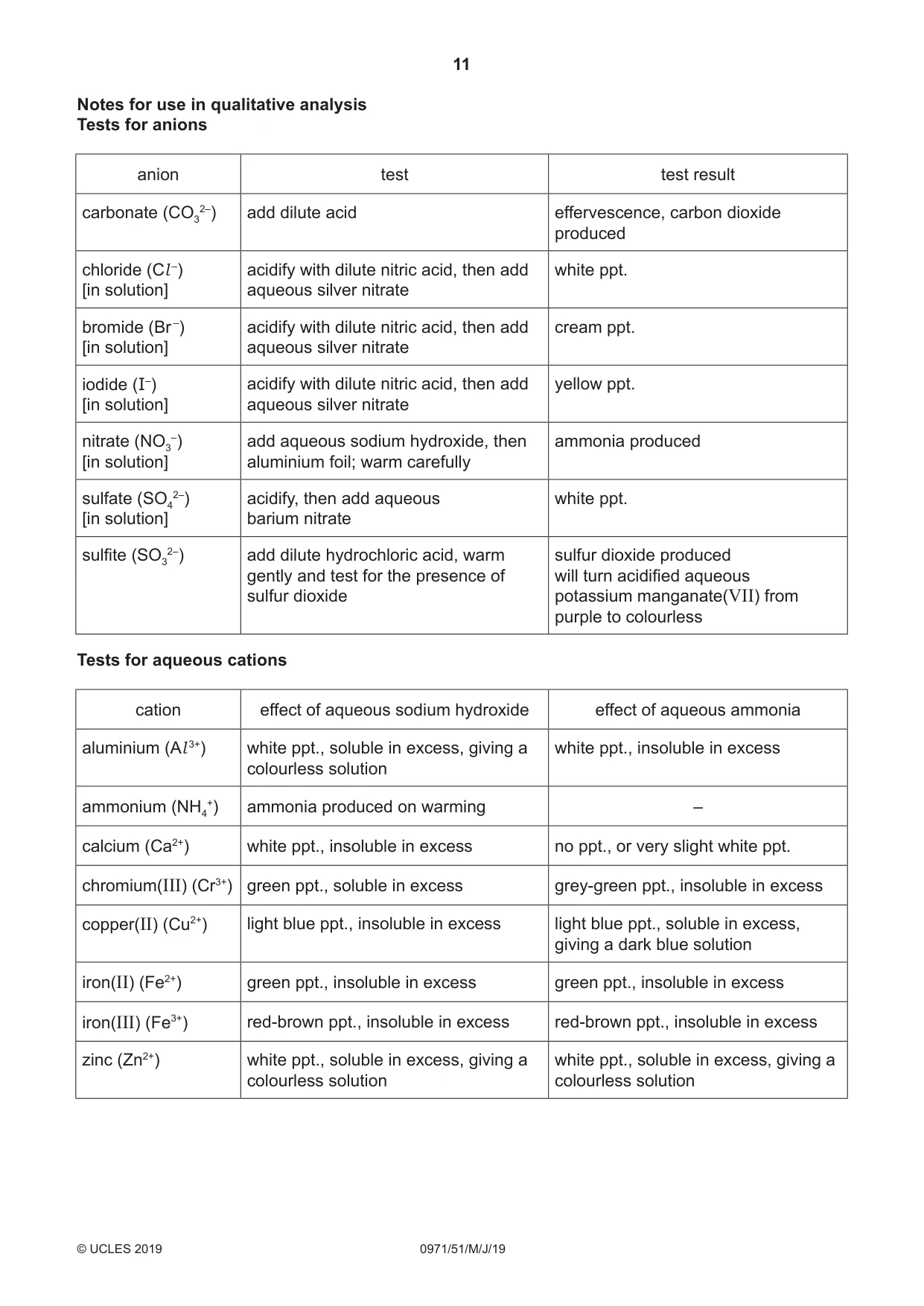
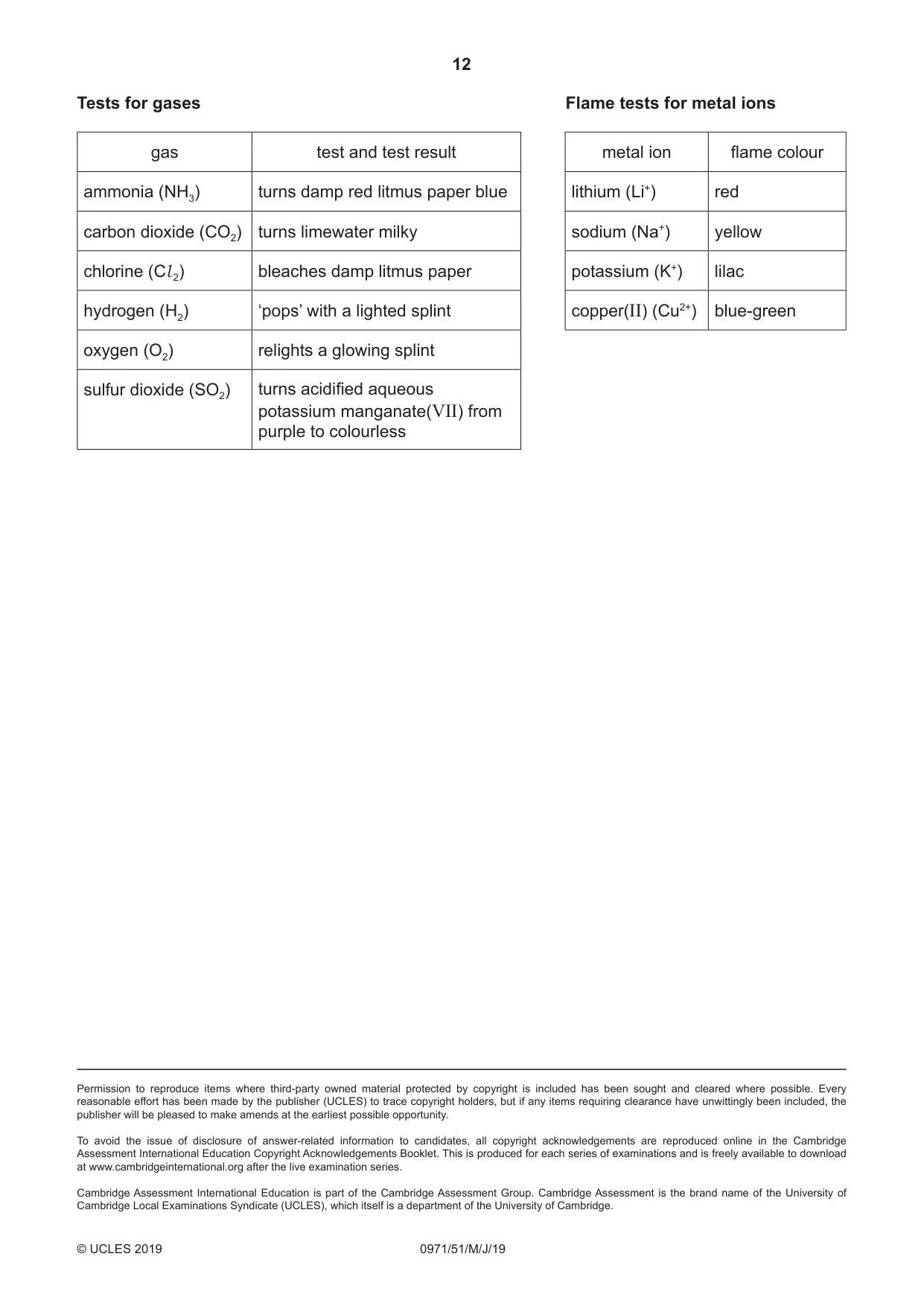
2 You are provided with two substances, solution F and solid G. Do the following tests on the substances, recording all of your observations at each stage. tests on solution F Divide solution F into five approximately equal portions in five test-tubes. (a) Test the pH of the first portion of solution F. pH = .............................. [1] (b) Add a strip of magnesium ribbon to the second portion of solution F. Shake the mixture. Test the gas produced. Record your observations. .................................................................................................................................................... .............................................................................................................................................. [2] (c) Add a few drops of dilute nitric acid and about 1 cm3 of aqueous silver nitrate to the third portion of solution F. Record your observations. .............................................................................................................................................. [1] (d) Add a few drops of dilute nitric acid and about 1 cm3 of aqueous barium nitrate to the fourth portion of solution F. Record your observations. .............................................................................................................................................. [1] Keep the fifth portion of the solution F for the test in (f). tests on solid G (e) Describe the appearance of solid G. .............................................................................................................................................. [1] (f) Add the fifth portion of solution F to solid G. Test the gas produced. Record your observations. .................................................................................................................................................... .................................................................................................................................................... .............................................................................................................................................. [3] Add about 2 cm3 of distilled water to the solution formed in the test in (f) and shake the mixture. Divide the solution formed into two approximately equal portions in two test-tubes for the tests in (g) and (h). (g) Add aqueous sodium hydroxide to the first portion of the solution until no further change occurs. Record your observations. .............................................................................................................................................. [2] (h) Add an excess of aqueous ammonia to the second portion of the solution. Record your observations. .............................................................................................................................................. [1] (i) Identify solution F. .............................................................................................................................................. [2] (j) Identify solid G. .............................................................................................................................................. [2] [Total: 16]
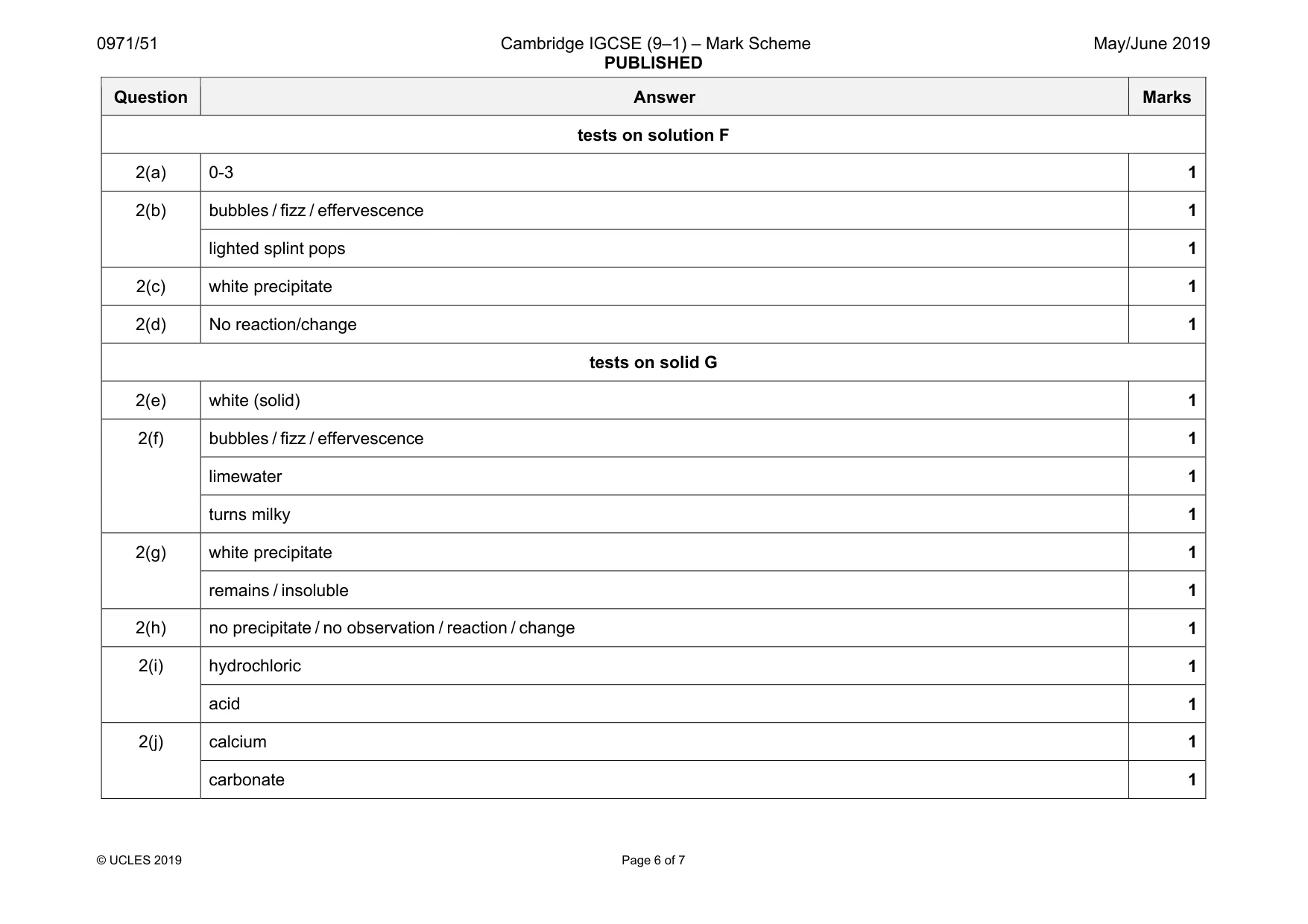
Mark scheme: 2(a) 0-3 1 2(b) bubbles / fizz / effervescence 1 lighted splint pops 1 2(c) white precipitate 1 2(d) No reaction/change 1 tests on solid G 2(e) white (solid) 1 2(f) bubbles / fizz / effervescence 1 limewater 1 turns milky 1 2(g) white precipitate 1 remains / insoluble 1 2(h) no precipitate / no observation / reaction / change 1 2(i) hydrochloric 1 acid 1 2(j) calcium 1 carbonate 1
Q3 · Steel nails rust in the presence of air and water
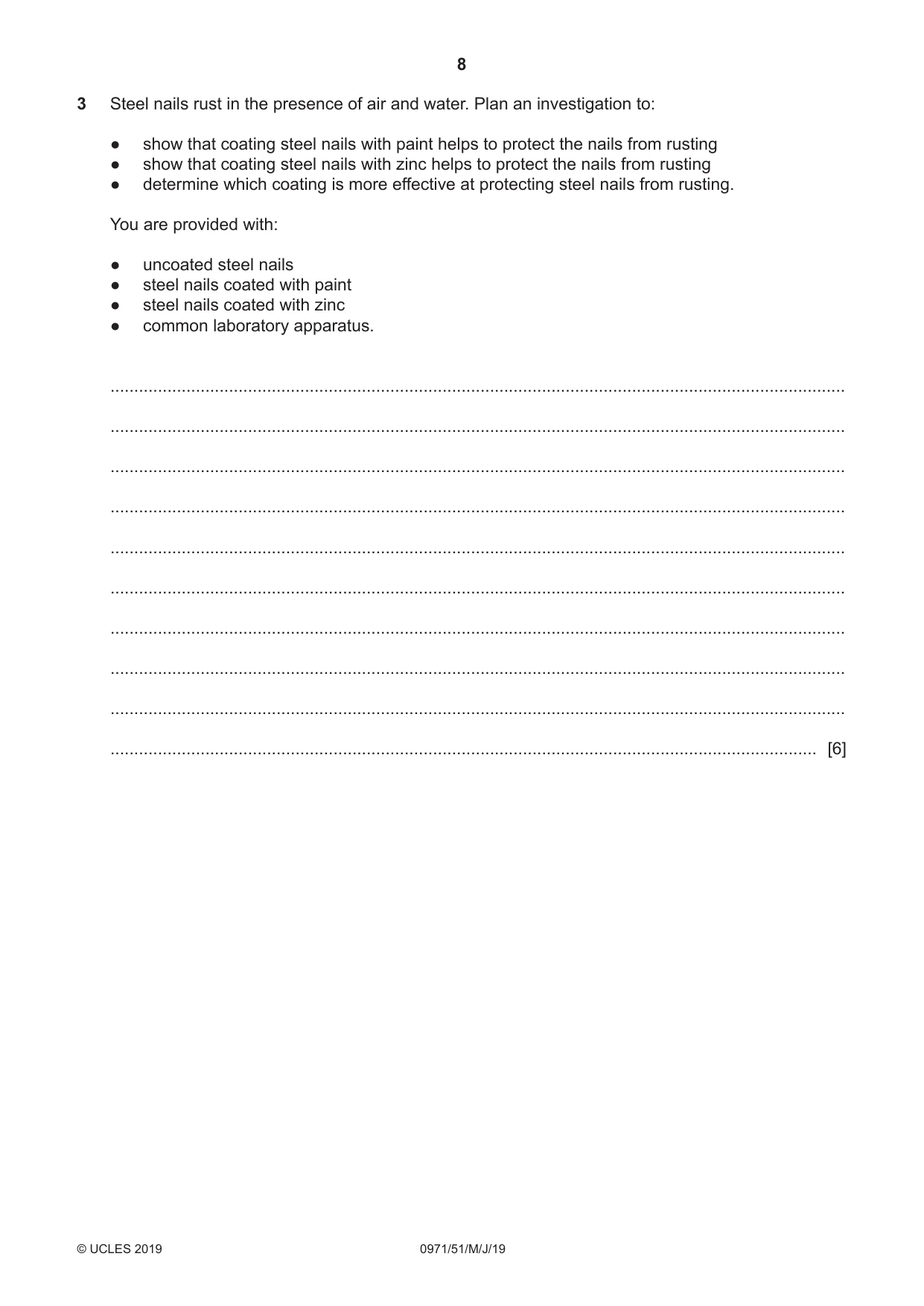
3 Steel nails rust in the presence of air and water. Plan an investigation to: ●● show that coating steel nails with paint helps to protect the nails from rusting ●● show that coating steel nails with zinc helps to protect the nails from rusting ●● determine which coating is more effective at protecting steel nails from rusting. You are provided with: ●● uncoated steel nails ●● steel nails coated with paint ●● steel nails coated with zinc ●● common laboratory apparatus. ........................................................................................................................................................... ........................................................................................................................................................... ........................................................................................................................................................... ........................................................................................................................................................... ........................................................................................................................................................... ........................................................................................................................................................... ........................................................................................................................................................... ........................................................................................................................................................... ........................................................................................................................................................... ..................................................................................................................................................... [6]
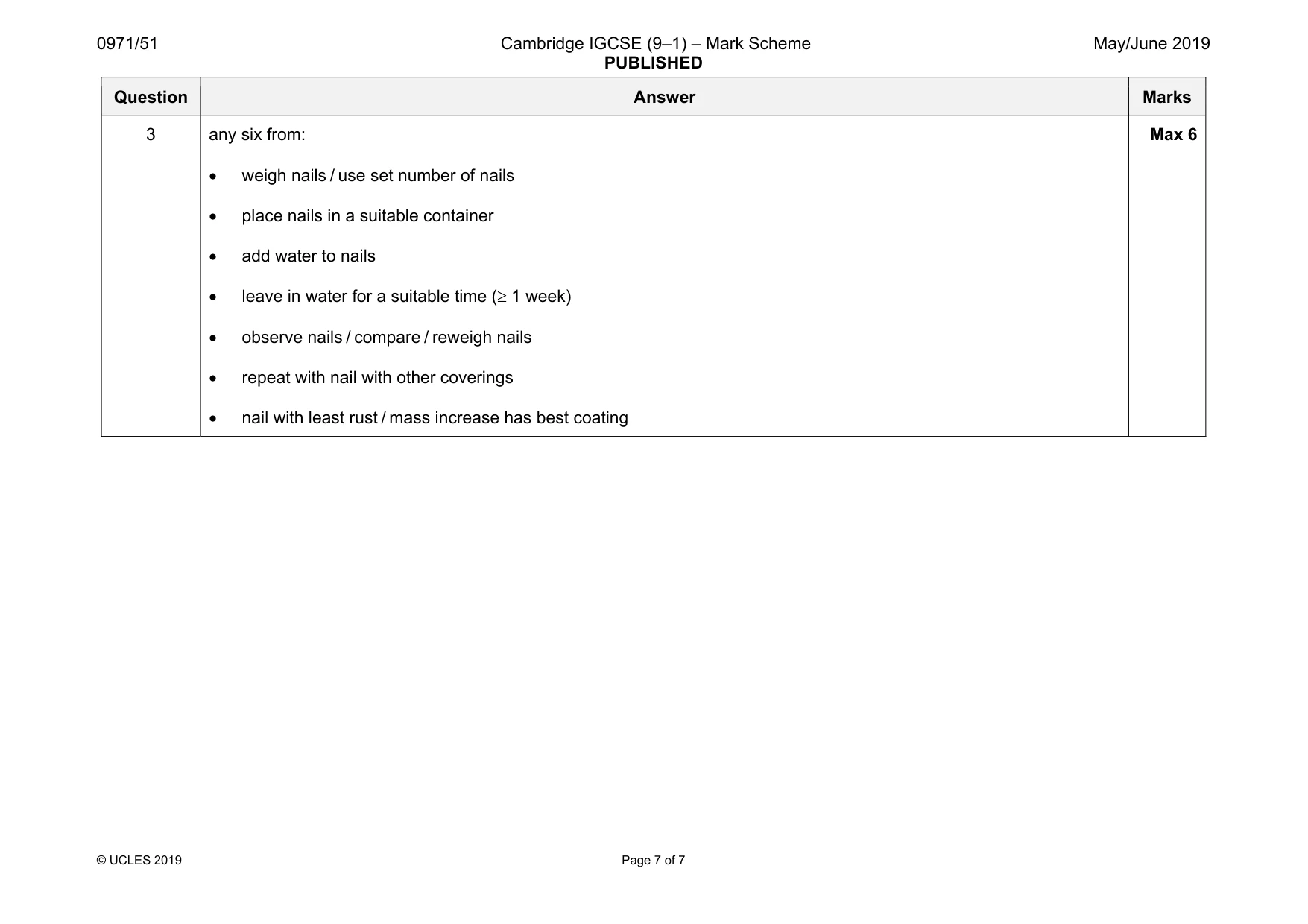
Mark scheme: 3 any six from: • weigh nails / use set number of nails • place nails in a suitable container • add water to nails • leave in water for a suitable time (≥ 1 week) • observe nails / compare / reweigh nails • repeat with nail with other coverings • nail with least rust / mass increase has best coating Max 6
What was in this paper
The subtopics covered by these 3 questions, and how many questions each got. Open one in a new tab to see every Cambridge question on it.
What you needed in this session
Cambridge’s own grade thresholds for 2019 May/June, Paper 5 · Variant 1. A higher threshold means an easier paper — the bar moves with how the cohort did.