Cambridge IGCSE Business Studies (9-1) 0986 — 2025 May/June Paper 2 · Variant 2
0986/22/M/J/25 · 4 questions · 80 marks · ≈90 min
The question paper and its mark scheme, free to read here and free to download. This is Cambridge’s own paper, exactly as it was sat.
Question paper12 pages
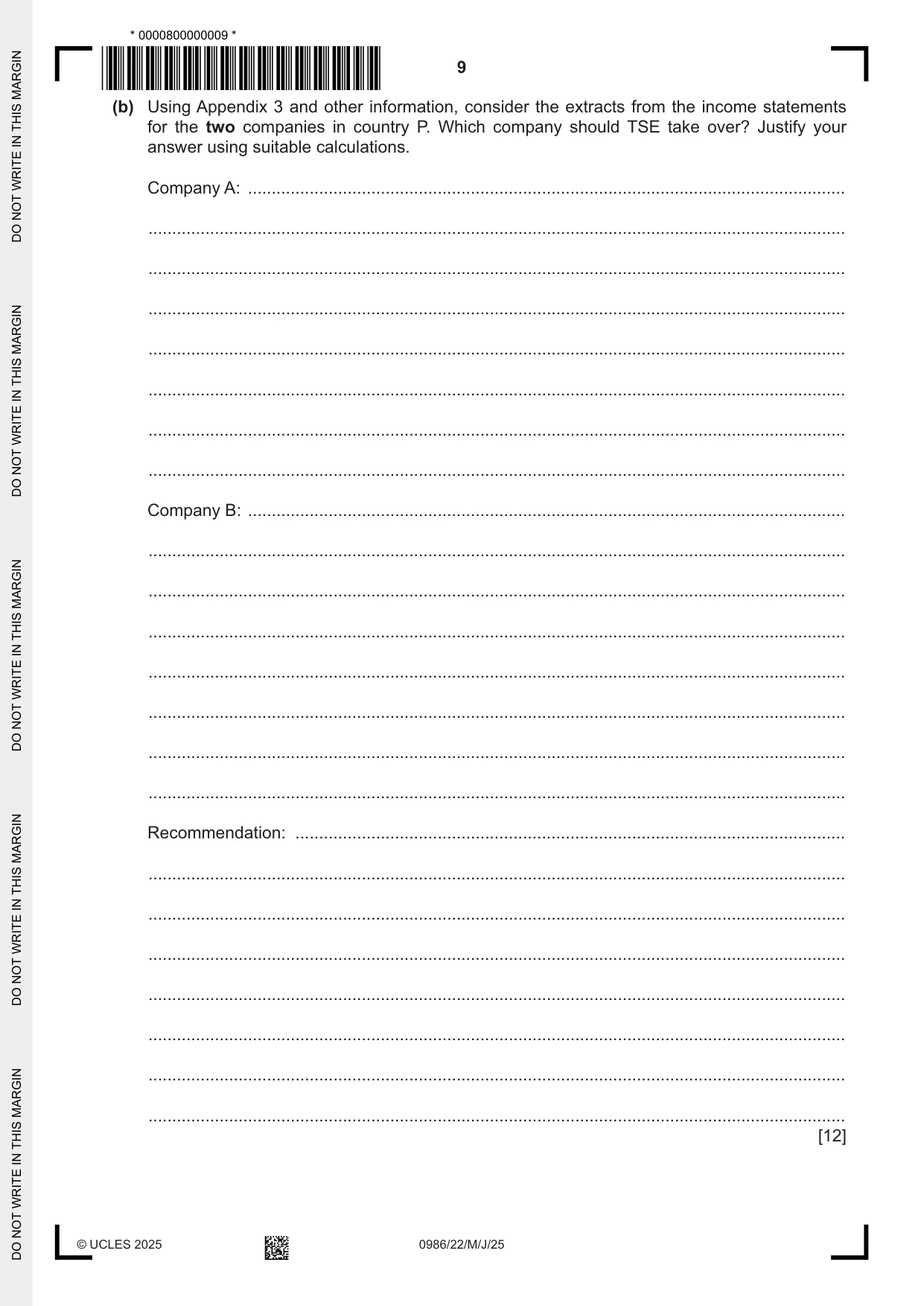



Mark scheme19 pages
Answers below. Sit the paper first if you are practising.



Questions as text
Q1 · Explain one way each of the following problems might affect TSE when entering a new…
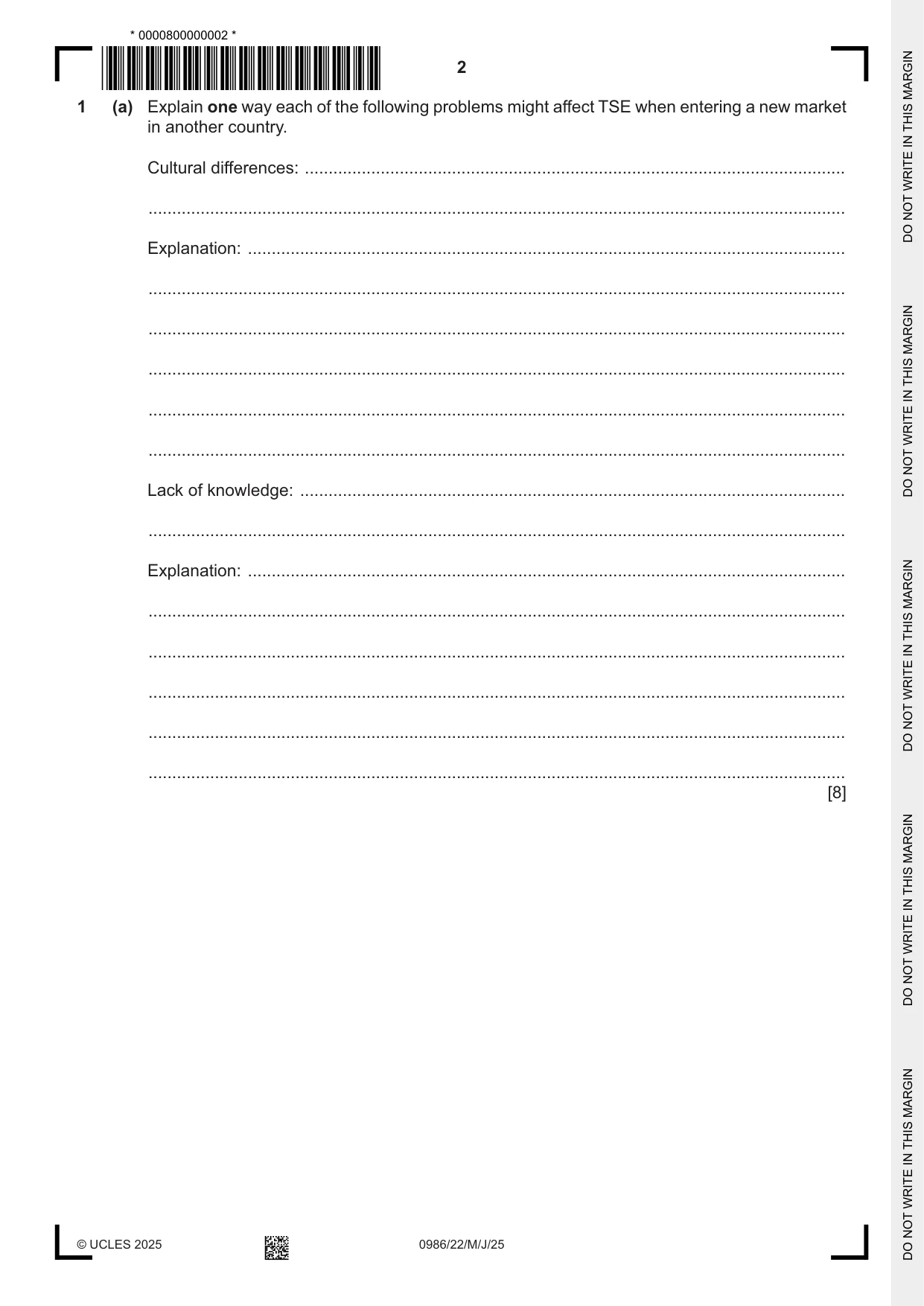
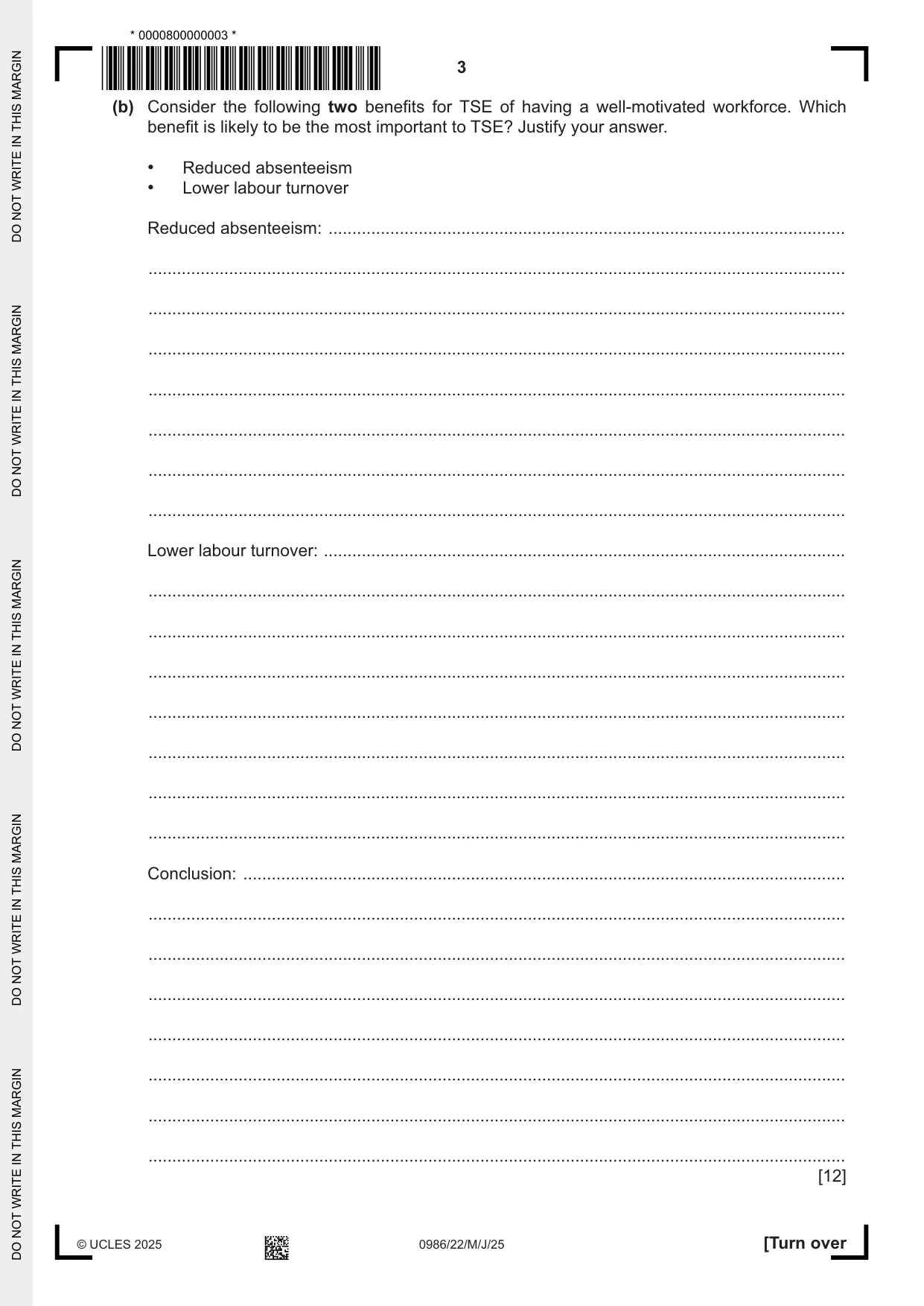
1 (a) Explain one way each of the following problems might affect TSE when entering a new market in another country. Cultural differences: .................................................................................................................. ................................................................................................................................................... Explanation: .............................................................................................................................. ................................................................................................................................................... ................................................................................................................................................... ................................................................................................................................................... ................................................................................................................................................... ................................................................................................................................................... Lack of knowledge: ................................................................................................................... ................................................................................................................................................... Explanation: .............................................................................................................................. ................................................................................................................................................... ................................................................................................................................................... ................................................................................................................................................... ................................................................................................................................................... ................................................................................................................................................... [8] (b) Consider the following two benefits for TSE of having a well-motivated workforce. Which benefit is likely to be the most important to TSE? Justify your answer. • Reduced absenteeism • Lower labour turnover Reduced absenteeism: ............................................................................................................. ................................................................................................................................................... ................................................................................................................................................... ................................................................................................................................................... ................................................................................................................................................... ................................................................................................................................................... ................................................................................................................................................... ................................................................................................................................................... Lower labour turnover: .............................................................................................................. ................................................................................................................................................... ................................................................................................................................................... ................................................................................................................................................... ................................................................................................................................................... ................................................................................................................................................... ................................................................................................................................................... ................................................................................................................................................... Conclusion: ............................................................................................................................... ................................................................................................................................................... ................................................................................................................................................... ................................................................................................................................................... ................................................................................................................................................... ................................................................................................................................................... ................................................................................................................................................... ................................................................................................................................................... [12]
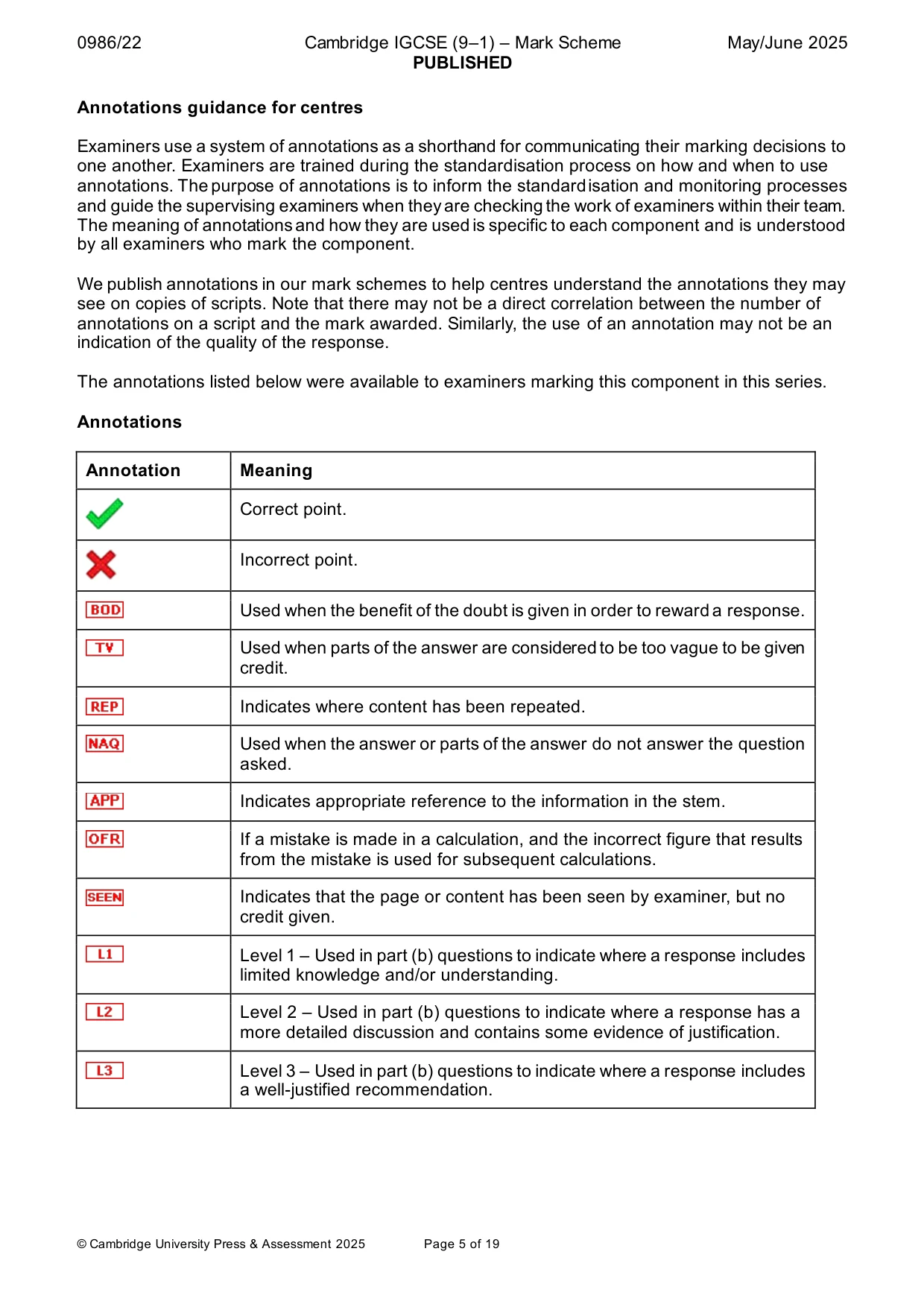
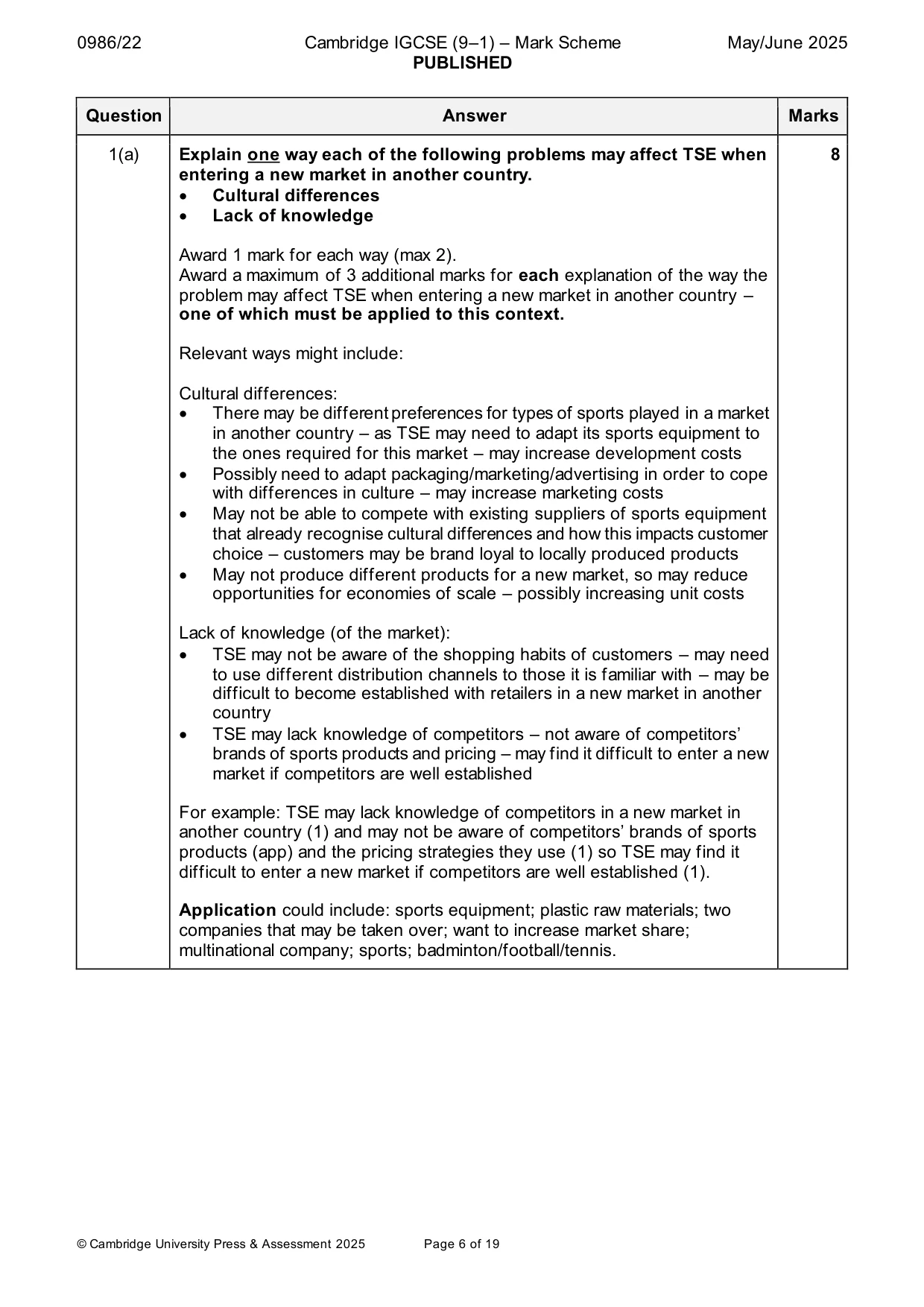
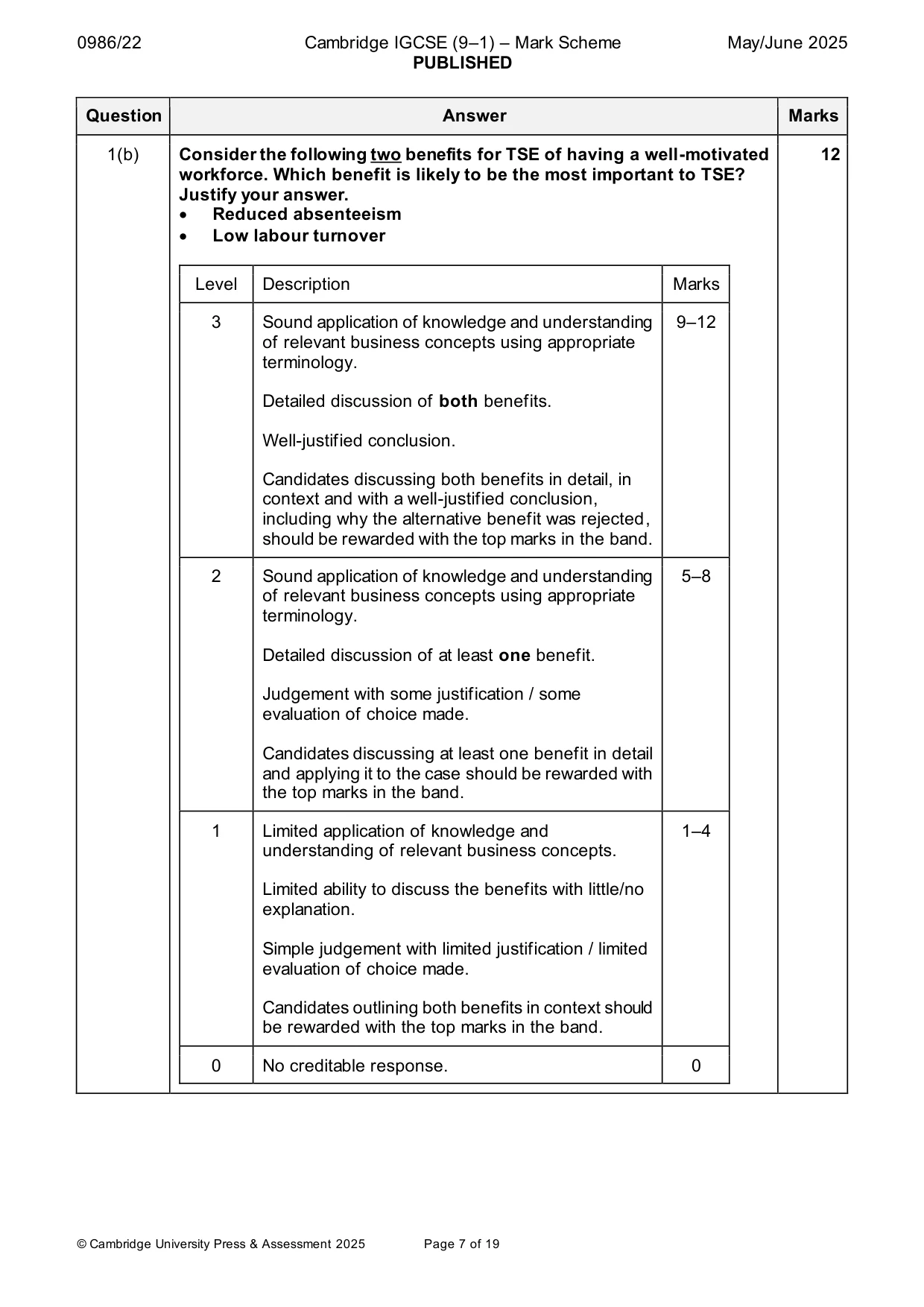
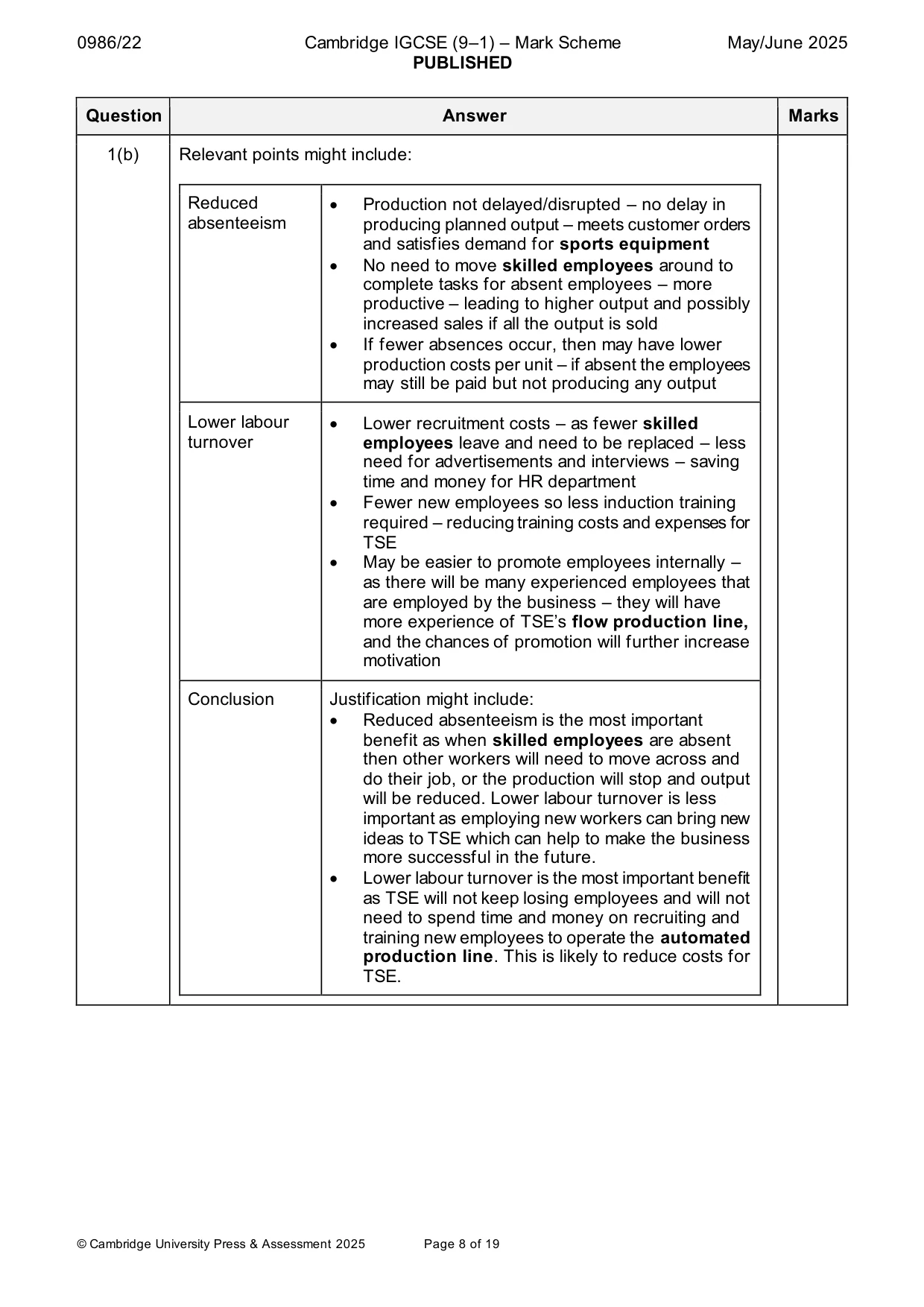
Mark scheme: Question Answer Marks 1(a) Explain one way each of the following problems may affect TSE when 8 entering a new market in another country. • Cultural differences • Lack of knowledge Award 1 mark for each way (max 2). Award a maximum of 3 additional marks for each explanation of the way the problem may affect TSE when entering a new market in another country – one of which must be applied to this context. Relevant ways might include: Cultural differences: • There may be different preferences for types of sports played in a market in another country – as TSE may need to adapt its sports equipment to the ones required for this market – may increase development costs • Possibly need to adapt packaging/marketing/advertising in order to cope with differences in culture – may increase marketing costs • May not be able to compete with existing suppliers of sports equipment that already recognise cultural differences and how this impacts customer choice – customers may be brand loyal to locally produced products • May not produce different products for a new market, so may reduce opportunities for economies of scale – possibly increasing unit costs Lack of knowledge (of the market): • TSE may not be aware of the shopping habits of customers – may need to use different distribution channels to those it is familiar with – may be difficult to become established with retailers in a new market in another country • TSE may lack knowledge of competitors – not aware of competitors’ brands of sports products and pricing – may find it difficult to enter a new market if competitors are well established For example: TSE may lack knowledge of competitors in a new market in another country (1) and may not be aware of competitors’ brands of sports products (app) and the pricing strategies they use (1) so TSE may find it difficult to enter a new market if competitors are well established (1). Application could include: sports equipment; plastic raw materials; two companies that may be taken over; want to increase market share; multinational company; sports; badminton/football/tennis. 1(b) Consider the following two benefits for TSE of having a well-motivated 12 workforce. Which benefit is likely to be the most important to TSE? Justify your answer. • Reduced absenteeism • Low labour turnover Level Description Marks 3 Sound application of knowledge and understanding 9–12 of relevant business concepts using appropriate terminology. Detailed discussion of both benefits. Well-justified conclusion. Candidates discussing both benefits in detail, in context and with a well-justified conclusion, including why the alternative benefit was rejected, should be rewarded with the top marks in the band. 2 Sound application of knowledge and understanding 5–8 of relevant business concepts using appropriate terminology. Detailed discussion of at least one benefit. Judgement with some justification / some evaluation of choice made. Candidates discussing at least one benefit in detail and applying it to the case should be rewarded with the top marks in the band. 1 Limited application of knowledge and 1–4 understanding of relevant business concepts. Limited ability to discuss the benefits with little/no explanation. Simple judgement with limited justification / limited evaluation of choice made. Candidates outlining both benefits in context should be rewarded with the top marks in the band. 0 No creditable response. 0 1(b) Relevant points might include: Reduced • Production not delayed/disrupted – no delay in absenteeism producing planned output – meets customer orders and satisfies demand for sports equipment • No need to move skilled employees around to complete tasks for absent employees – more productive – leading to higher output and possibly increased sales if all the output is sold • If fewer absences occur, then may have lower production costs per unit – if absent the employees may still be paid but not producing any output Lower labour • Lower recruitment costs – as fewer skilled turnover employees leave and need to be replaced – less need for advertisements and interviews – saving time and money for HR department • Fewer new employees so less induction training required – reducing training costs and expenses for TSE • May be easier to promote employees internally – as there will be many experienced employees that are employed by the business – they will have more experience of TSE’s flow production line, and the chances of promotion will further increase motivation Conclusion Justification might include: • Reduced absenteeism is the most important benefit as when skilled employees are absent then other workers will need to move across and do their job, or the production will stop and output will be reduced. Lower labour turnover is less important as employing new workers can bring new ideas to TSE which can help to make the business more successful in the future. • Lower labour turnover is the most important benefit as TSE will not keep losing employees and will not need to spend time and money on recruiting and training new employees to operate the automated production line. This is likely to reduce costs for TSE.
Q2 · Explain one objective each of the following TSE stakeholder groups might have
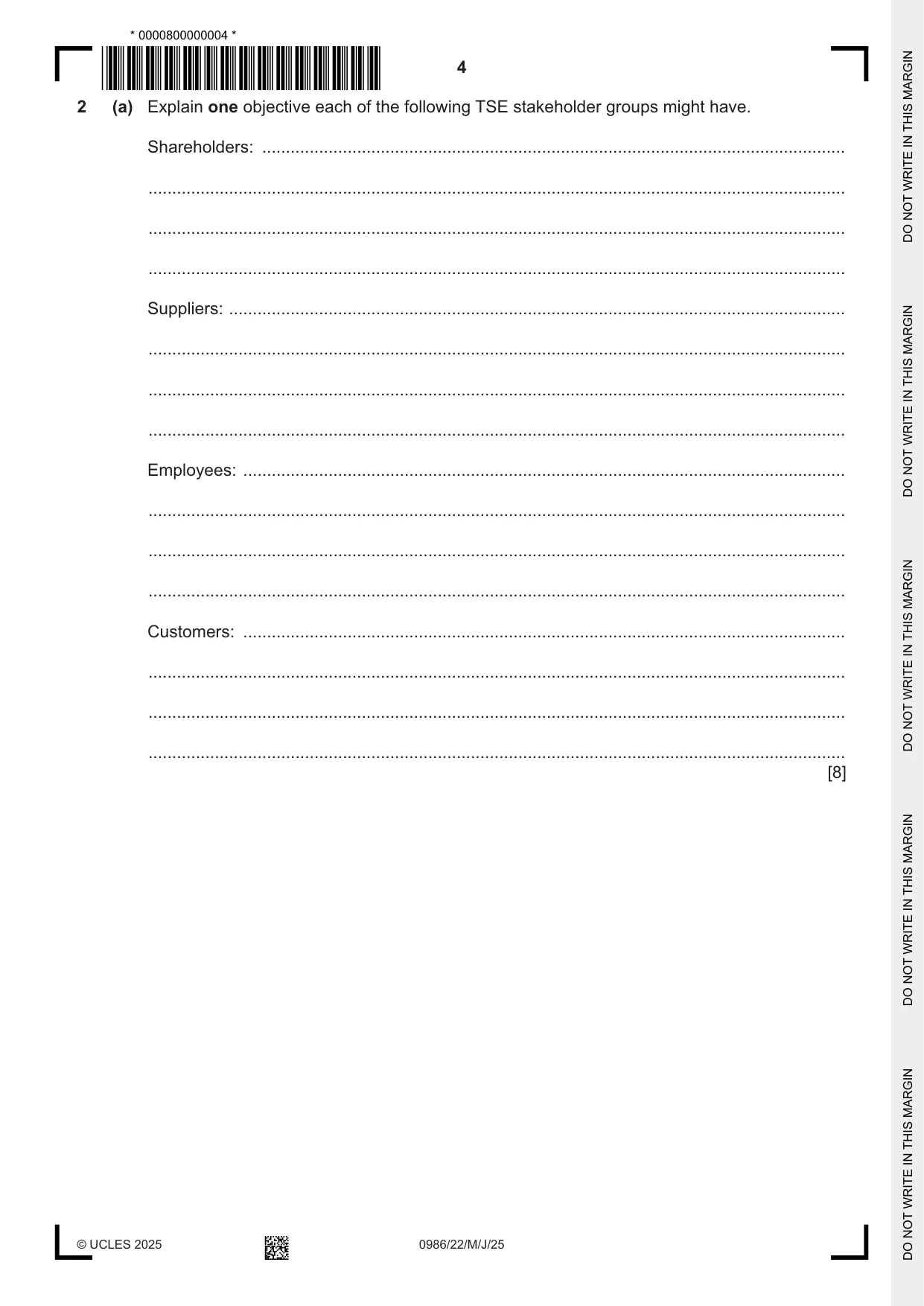
2 (a) Explain one objective each of the following TSE stakeholder groups might have. Shareholders: ........................................................................................................................... ................................................................................................................................................... ................................................................................................................................................... ................................................................................................................................................... Suppliers: .................................................................................................................................. ................................................................................................................................................... ................................................................................................................................................... ................................................................................................................................................... Employees: ............................................................................................................................... ................................................................................................................................................... ................................................................................................................................................... ................................................................................................................................................... Customers: ............................................................................................................................... ................................................................................................................................................... ................................................................................................................................................... ................................................................................................................................................... [8] (b) Consider the following two ways TSE could use to increase efficiency. Which way should TSE use? Justify your answer. • Improving labour skills • Increasing automation and technology Improving labour skills: ............................................................................................................. ................................................................................................................................................... ................................................................................................................................................... ................................................................................................................................................... ................................................................................................................................................... ................................................................................................................................................... ................................................................................................................................................... ................................................................................................................................................... Increasing automation and technology: .................................................................................... ................................................................................................................................................... ................................................................................................................................................... ................................................................................................................................................... ................................................................................................................................................... ................................................................................................................................................... ................................................................................................................................................... ................................................................................................................................................... Recommendation: .................................................................................................................... ................................................................................................................................................... ................................................................................................................................................... ................................................................................................................................................... ................................................................................................................................................... ................................................................................................................................................... ................................................................................................................................................... ................................................................................................................................................... [12]
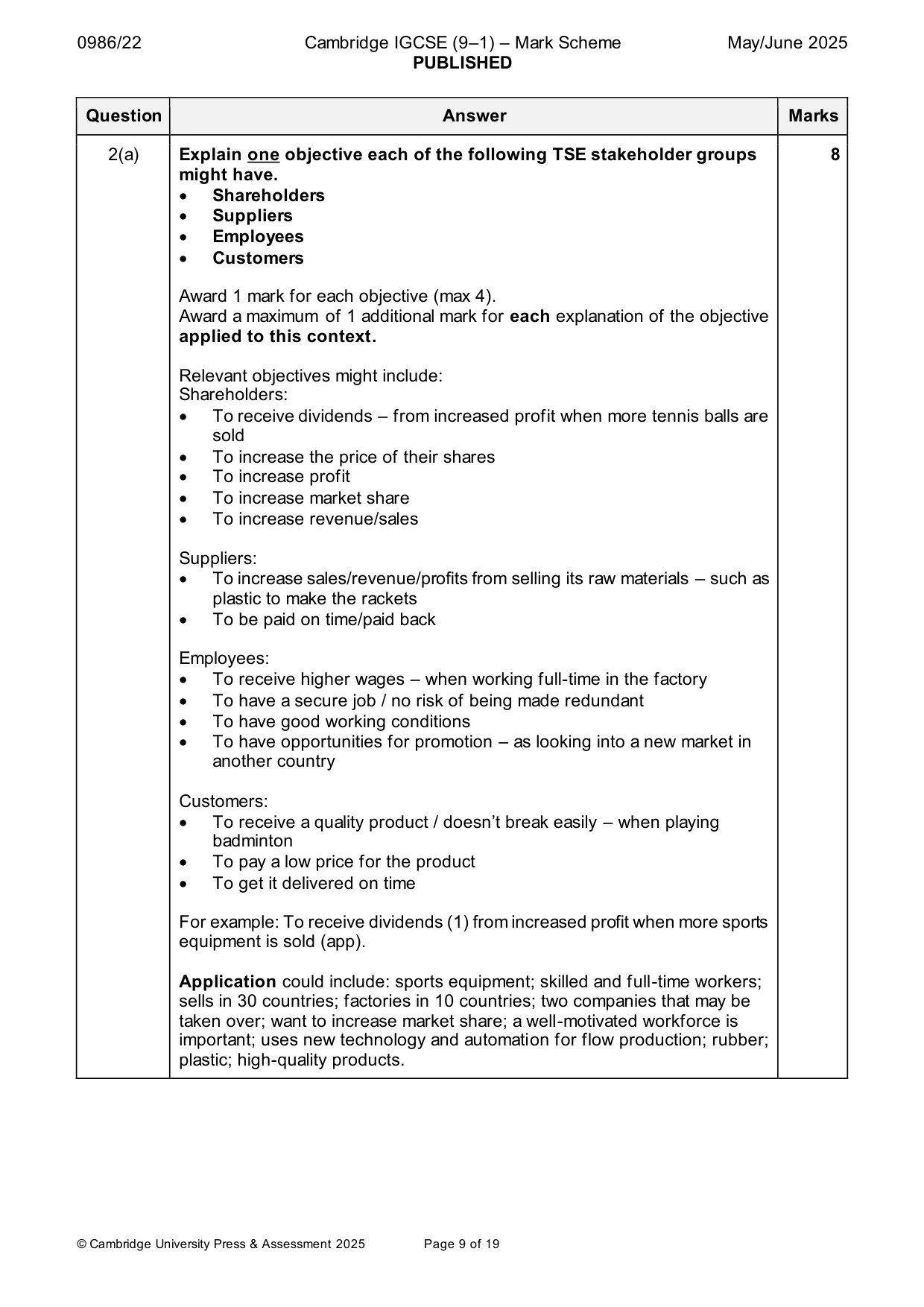
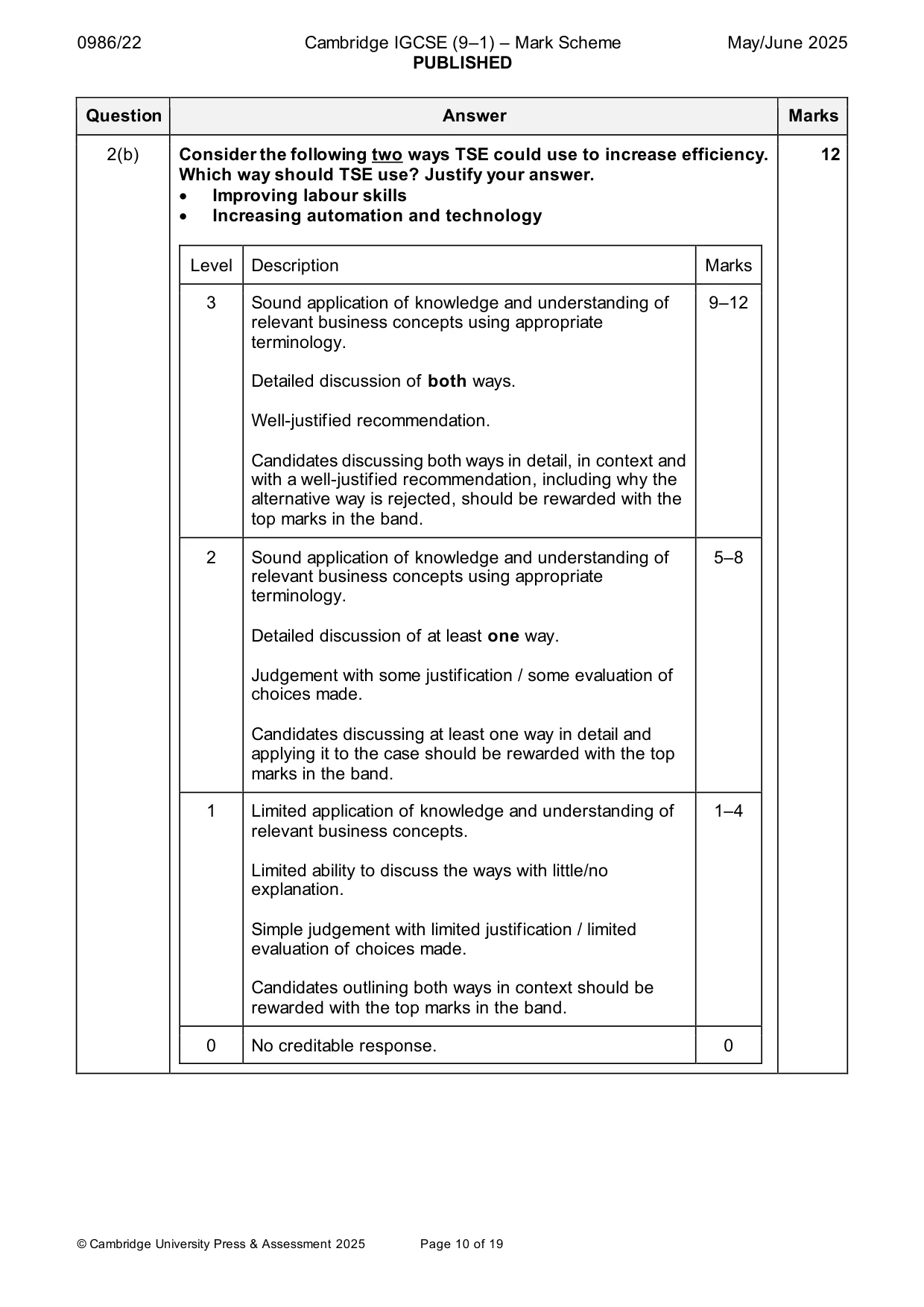
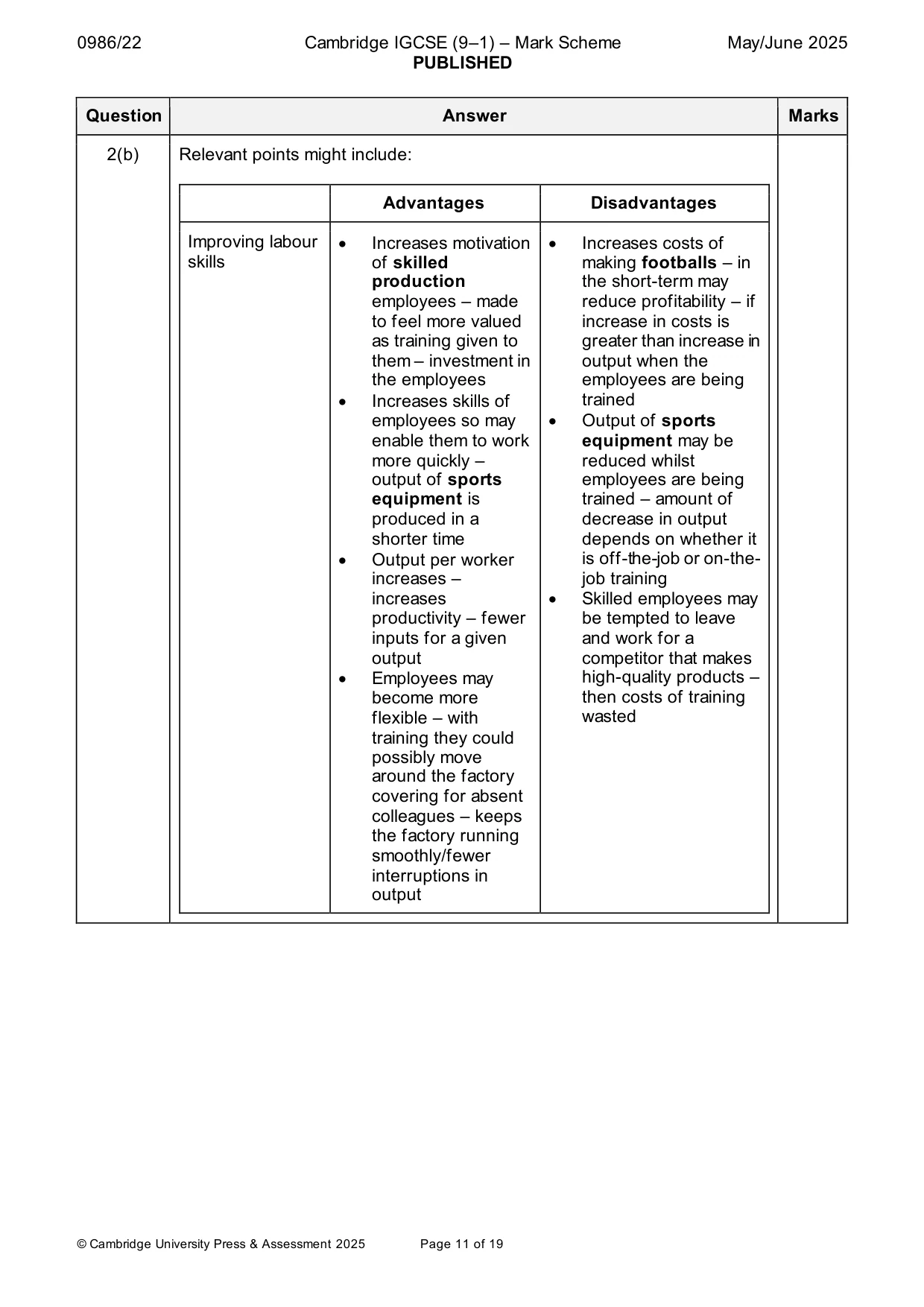
Mark scheme: 2(a) Explain one objective each of the following TSE stakeholder groups 8 might have. • Shareholders • Suppliers • Employees • Customers Award 1 mark for each objective (max 4). Award a maximum of 1 additional mark for each explanation of the objective applied to this context. Relevant objectives might include: Shareholders: • To receive dividends – from increased profit when more tennis balls are sold • To increase the price of their shares • To increase profit • To increase market share • To increase revenue/sales Suppliers: • To increase sales/revenue/profits from selling its raw materials – such as plastic to make the rackets • To be paid on time/paid back Employees: • To receive higher wages – when working full-time in the factory • To have a secure job / no risk of being made redundant • To have good working conditions • To have opportunities for promotion – as looking into a new market in another country Customers: • To receive a quality product / doesn’t break easily – when playing badminton • To pay a low price for the product • To get it delivered on time For example: To receive dividends (1) from increased profit when more sports equipment is sold (app). Application could include: sports equipment; skilled and full-time workers; sells in 30 countries; factories in 10 countries; two companies that may be taken over; want to increase market share; a well-motivated workforce is important; uses new technology and automation for flow production; rubber; plastic; high-quality products. 2(b) Consider the following two ways TSE could use to increase efficiency. 12 Which way should TSE use? Justify your answer. • Improving labour skills • Increasing automation and technology Level Description Marks 3 Sound application of knowledge and understanding of 9–12 relevant business concepts using appropriate terminology. Detailed discussion of both ways. Well-justified recommendation. Candidates discussing both ways in detail, in context and with a well-justified recommendation, including why the alternative way is rejected, should be rewarded with the top marks in the band. 2 Sound application of knowledge and understanding of 5–8 relevant business concepts using appropriate terminology. Detailed discussion of at least one way. Judgement with some justification / some evaluation of choices made. Candidates discussing at least one way in detail and applying it to the case should be rewarded with the top marks in the band. 1 Limited application of knowledge and understanding of 1–4 relevant business concepts. Limited ability to discuss the ways with little/no explanation. Simple judgement with limited justification / limited evaluation of choices made. Candidates outlining both ways in context should be rewarded with the top marks in the band. 0 No creditable response. 0 2(b) Relevant points might include: Advantages Disadvantages Improving labour • Increases motivation • Increases costs of skills of skilled making footballs – in production the short-term may employees – made reduce profitability – if to feel more valued increase in costs is as training given to greater than increase in them – investment in output when the the employees employees are being • Increases skills of trained employees so may • Output of sports enable them to work equipment may be more quickly – reduced whilst output of sports employees are being equipment is trained – amount of produced in a decrease in output shorter time depends on whether it • Output per worker is off-the-job or on-the- increases – job training increases • Skilled employees may productivity – fewer be tempted to leave inputs for a given and work for a output competitor that makes • Employees may high-quality products – become more then costs of training flexible – with wasted training they could possibly move around the factory covering for absent colleagues – keeps the factory running smoothly/fewer interruptions in output 2(b) Advantages Disadvantages Increasing • May require fewer • May result in automation and full-time employees redundancy payments technology on the production for the skilled line – reduces wage employees – costs increases costs in the • Output can be short-term – legal produced more requirements for quickly – reduces redundancy payments unit costs may be high • Changes in design • Maintenance costs of of badminton the technology may be equipment may be high – increases total made more quickly – costs of making tennis quicker to react to balls changes in customer • Increased training preferences costs if employees • Lower unit costs of need training how to footballs – may use the equipment allow prices to be • May need to employ reduced – price may new skilled workers to be more competitive operate the equipment – increases sales on the flow production line – increased recruitment costs Recommendation Justification might include: • Improving labour skills is the best way to increase efficiency at TSE’s factories. The skilled production employees will learn more skills which will enable them to produce more output per worker than previously. This will also motivate the workers to work harder and produce more output. Automation is very expensive to purchase the new equipment, and TSE may find it difficult to raise sufficient funds for the investment in many factories. • Introducing automation and technology in the factory to make tennis balls in the best way to increase efficiency. Technology will mean fewer production workers will be needed so saving on wage costs and greatly increasing output for each remaining employee in the factories.
Q3 · Explain four ways market research information can help a business
3 (a) Explain four ways market research information can help a business. Way 1: ....................................................................................................................................... ................................................................................................................................................... ................................................................................................................................................... ................................................................................................................................................... Way 2: ....................................................................................................................................... ................................................................................................................................................... ................................................................................................................................................... ................................................................................................................................................... Way 3: ....................................................................................................................................... ................................................................................................................................................... ................................................................................................................................................... ................................................................................................................................................... Way 4: ....................................................................................................................................... ................................................................................................................................................... ................................................................................................................................................... ................................................................................................................................................... [8] (b) Consider the following two ways TSE could purchase the raw materials for its factories. Which way should TSE use? Justify your answer. • Head office in country P continues to purchase the raw materials for all TSE factories • TSE’s factory managers in each country purchase raw materials locally Head office in country P continues to purchase the raw materials for all TSE factories: .......... ................................................................................................................................................... ................................................................................................................................................... ................................................................................................................................................... ................................................................................................................................................... ................................................................................................................................................... ................................................................................................................................................... ................................................................................................................................................... TSE’s factory managers in each country purchase raw materials locally: ................................ ................................................................................................................................................... ................................................................................................................................................... ................................................................................................................................................... ................................................................................................................................................... ................................................................................................................................................... ................................................................................................................................................... ................................................................................................................................................... Recommendation: .................................................................................................................... ................................................................................................................................................... ................................................................................................................................................... ................................................................................................................................................... ................................................................................................................................................... ................................................................................................................................................... ................................................................................................................................................... ................................................................................................................................................... [12]
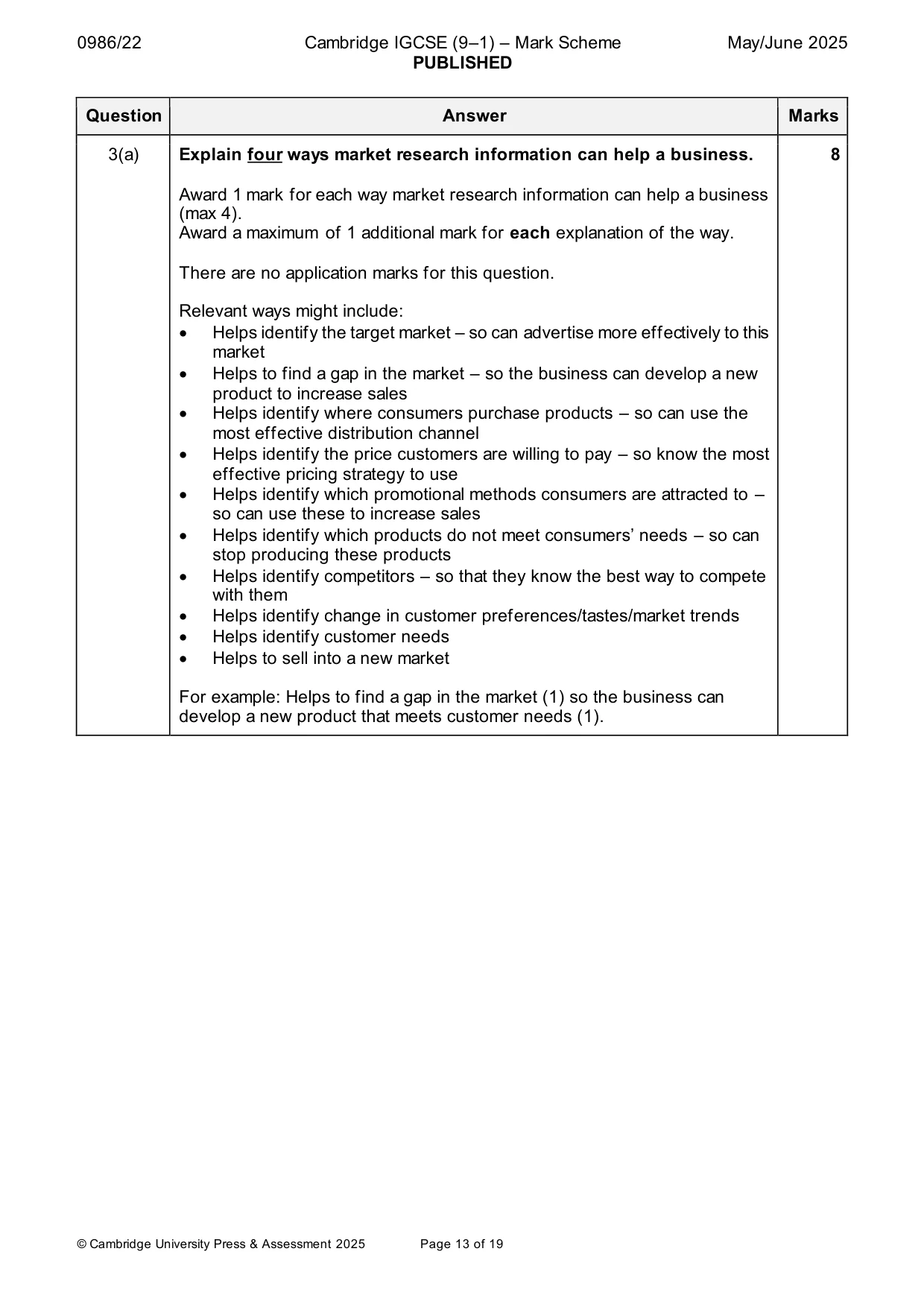
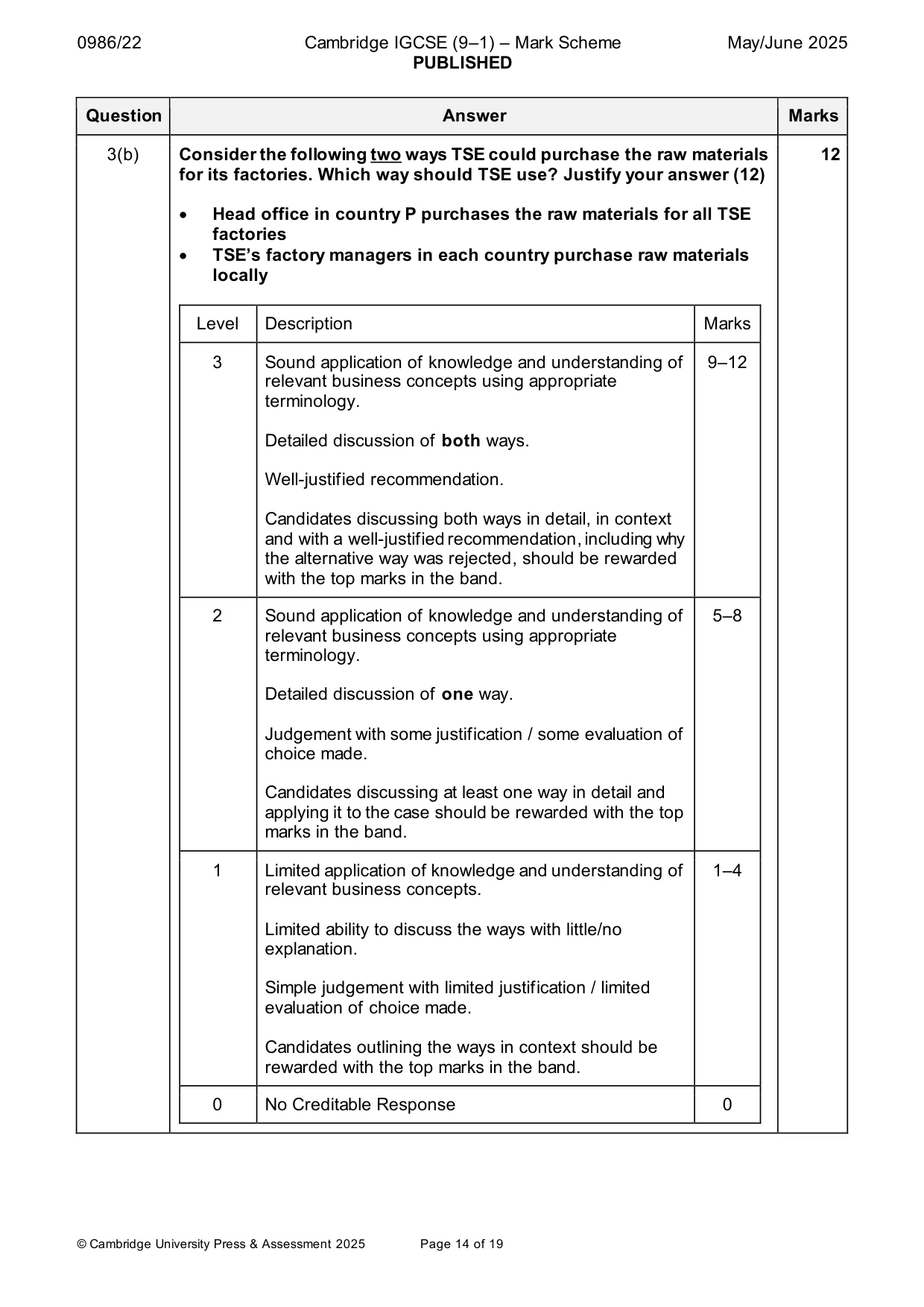
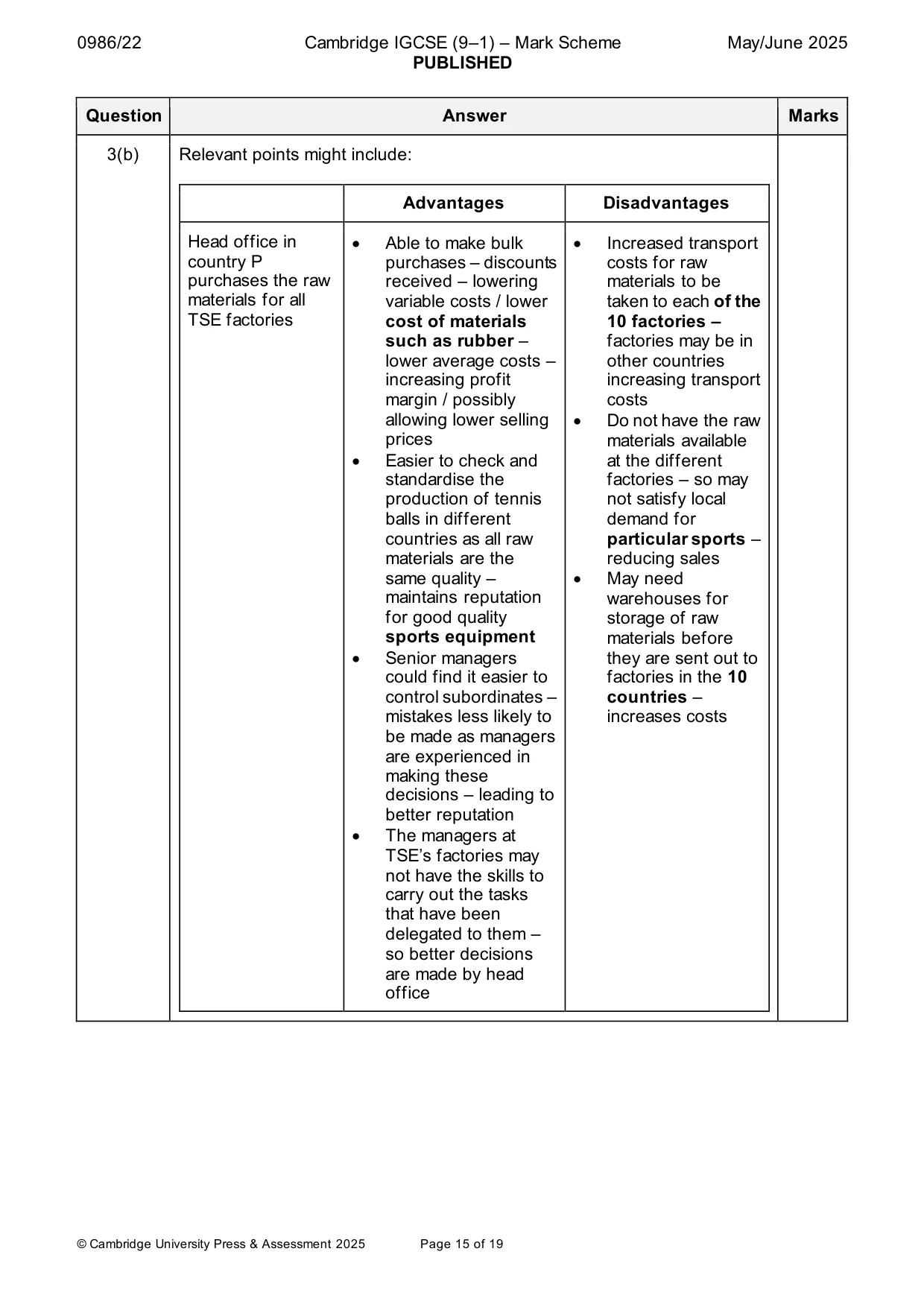
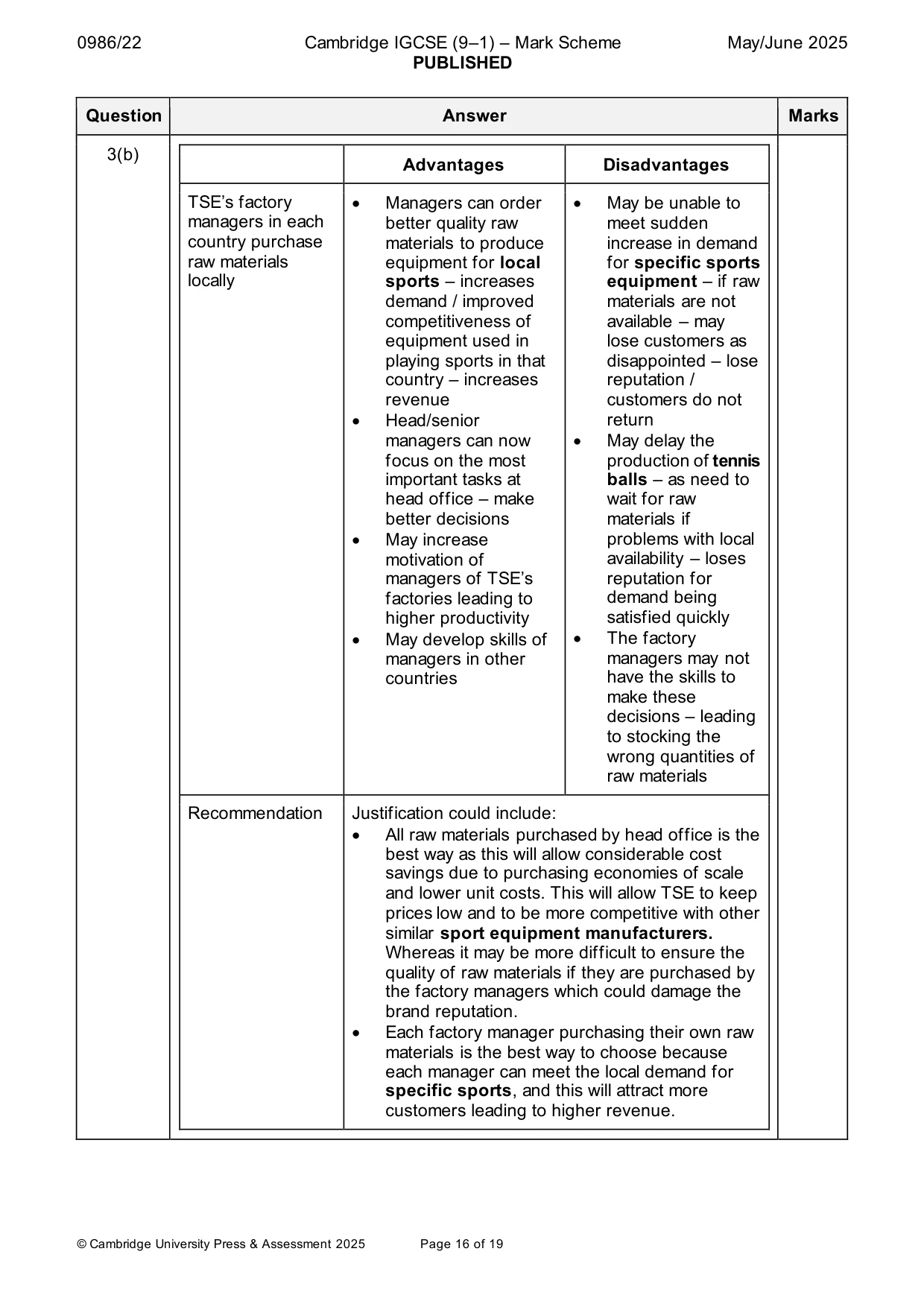
Mark scheme: 3(a) Explain four ways market research information can help a business. 8 Award 1 mark for each way market research information can help a business (max 4). Award a maximum of 1 additional mark for each explanation of the way. There are no application marks for this question. Relevant ways might include: • Helps identify the target market – so can advertise more effectively to this market • Helps to find a gap in the market – so the business can develop a new product to increase sales • Helps identify where consumers purchase products – so can use the most effective distribution channel • Helps identify the price customers are willing to pay – so know the most effective pricing strategy to use • Helps identify which promotional methods consumers are attracted to – so can use these to increase sales • Helps identify which products do not meet consumers’ needs – so can stop producing these products • Helps identify competitors – so that they know the best way to compete with them • Helps identify change in customer preferences/tastes/market trends • Helps identify customer needs • Helps to sell into a new market For example: Helps to find a gap in the market (1) so the business can develop a new product that meets customer needs (1). 3(b) Consider the following two ways TSE could purchase the raw materials 12 for its factories. Which way should TSE use? Justify your answer (12) • Head office in country P purchases the raw materials for all TSE factories • TSE’s factory managers in each country purchase raw materials locally Level Description Marks 3 Sound application of knowledge and understanding of 9–12 relevant business concepts using appropriate terminology. Detailed discussion of both ways. Well-justified recommendation. Candidates discussing both ways in detail, in context and with a well-justified recommendation, including why the alternative way was rejected, should be rewarded with the top marks in the band. 2 Sound application of knowledge and understanding of 5–8 relevant business concepts using appropriate terminology. Detailed discussion of one way. Judgement with some justification / some evaluation of choice made. Candidates discussing at least one way in detail and applying it to the case should be rewarded with the top marks in the band. 1 Limited application of knowledge and understanding of 1–4 relevant business concepts. Limited ability to discuss the ways with little/no explanation. Simple judgement with limited justification / limited evaluation of choice made. Candidates outlining the ways in context should be rewarded with the top marks in the band. 0 No Creditable Response 0 3(b) Relevant points might include: Advantages Disadvantages Head office in • Able to make bulk • Increased transport country P purchases – discounts costs for raw purchases the raw received – lowering materials to be materials for all variable costs / lower taken to each of the TSE factories cost of materials 10 factories – such as rubber – factories may be in lower average costs – other countries increasing profit increasing transport margin / possibly costs allowing lower selling • Do not have the raw prices materials available • Easier to check and at the different standardise the factories – so may production of tennis not satisfy local balls in different demand for countries as all raw particular sports – materials are the reducing sales same quality – • May need maintains reputation warehouses for for good quality storage of raw sports equipment materials before • Senior managers they are sent out to could find it easier to factories in the 10 control subordinates – countries – mistakes less likely to increases costs be made as managers are experienced in making these decisions – leading to better reputation • The managers at TSE’s factories may not have the skills to carry out the tasks that have been delegated to them – so better decisions are made by head office 3(b) Advantages Disadvantages TSE’s factory • Managers can order • May be unable to managers in each better quality raw meet sudden country purchase materials to produce increase in demand raw materials equipment for local for specific sports locally sports – increases equipment – if raw demand / improved materials are not competitiveness of available – may equipment used in lose customers as playing sports in that disappointed – lose country – increases reputation / revenue customers do not • Head/senior return managers can now • May delay the focus on the most production of tennis important tasks at balls – as need to head office – make wait for raw better decisions materials if • May increase problems with local motivation of availability – loses managers of TSE’s reputation for factories leading to demand being higher productivity satisfied quickly • May develop skills of • The factory managers in other managers may not countries have the skills to make these decisions – leading to stocking the wrong quantities of raw materials Recommendation Justification could include: • All raw materials purchased by head office is the best way as this will allow considerable cost savings due to purchasing economies of scale and lower unit costs. This will allow TSE to keep prices low and to be more competitive with other similar sport equipment manufacturers. Whereas it may be more difficult to ensure the quality of raw materials if they are purchased by the factory managers which could damage the brand reputation. • Each factory manager purchasing their own raw materials is the best way to choose because each manager can meet the local demand for specific sports, and this will attract more customers leading to higher revenue.
Q4 · Explain two possible effects on TSE of the business cycle in country P moving into the…
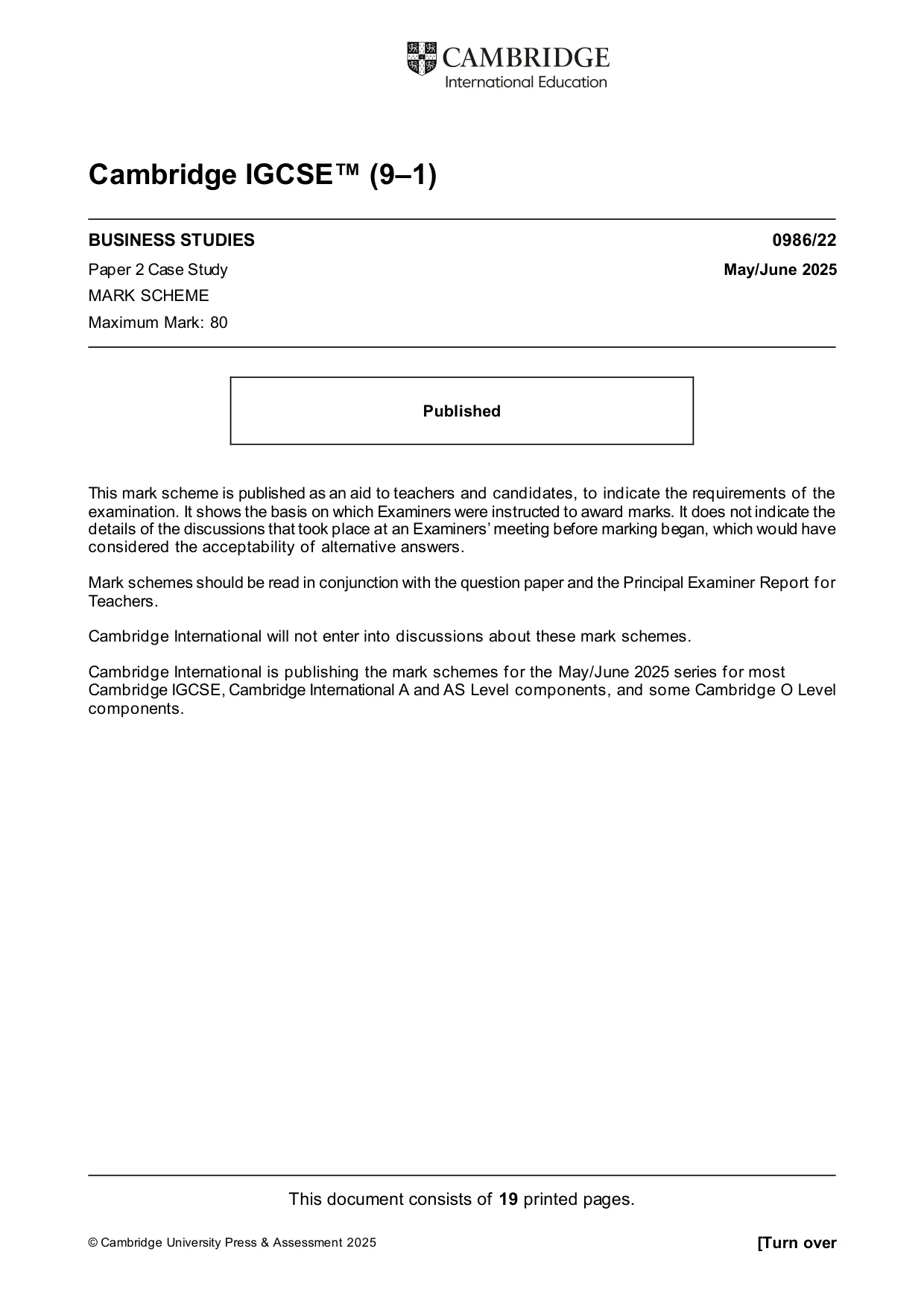
4 (a) Explain two possible effects on TSE of the business cycle in country P moving into the recession stage. Effect 1: ..................................................................................................................................... ................................................................................................................................................... Explanation: .............................................................................................................................. ................................................................................................................................................... ................................................................................................................................................... ................................................................................................................................................... ................................................................................................................................................... ................................................................................................................................................... Effect 2: ..................................................................................................................................... ................................................................................................................................................... Explanation: .............................................................................................................................. ................................................................................................................................................... ................................................................................................................................................... ................................................................................................................................................... ................................................................................................................................................... ................................................................................................................................................... [8] (b) Using Appendix 3 and other information, consider the extracts from the income statements for the two companies in country P. Which company should TSE take over? Justify your answer using suitable calculations. Company A: .............................................................................................................................. ................................................................................................................................................... ................................................................................................................................................... ................................................................................................................................................... ................................................................................................................................................... ................................................................................................................................................... ................................................................................................................................................... ................................................................................................................................................... Company B: .............................................................................................................................. ................................................................................................................................................... ................................................................................................................................................... ................................................................................................................................................... ................................................................................................................................................... ................................................................................................................................................... ................................................................................................................................................... ................................................................................................................................................... Recommendation: .................................................................................................................... ................................................................................................................................................... ................................................................................................................................................... ................................................................................................................................................... ................................................................................................................................................... ................................................................................................................................................... ................................................................................................................................................... ................................................................................................................................................... [12]
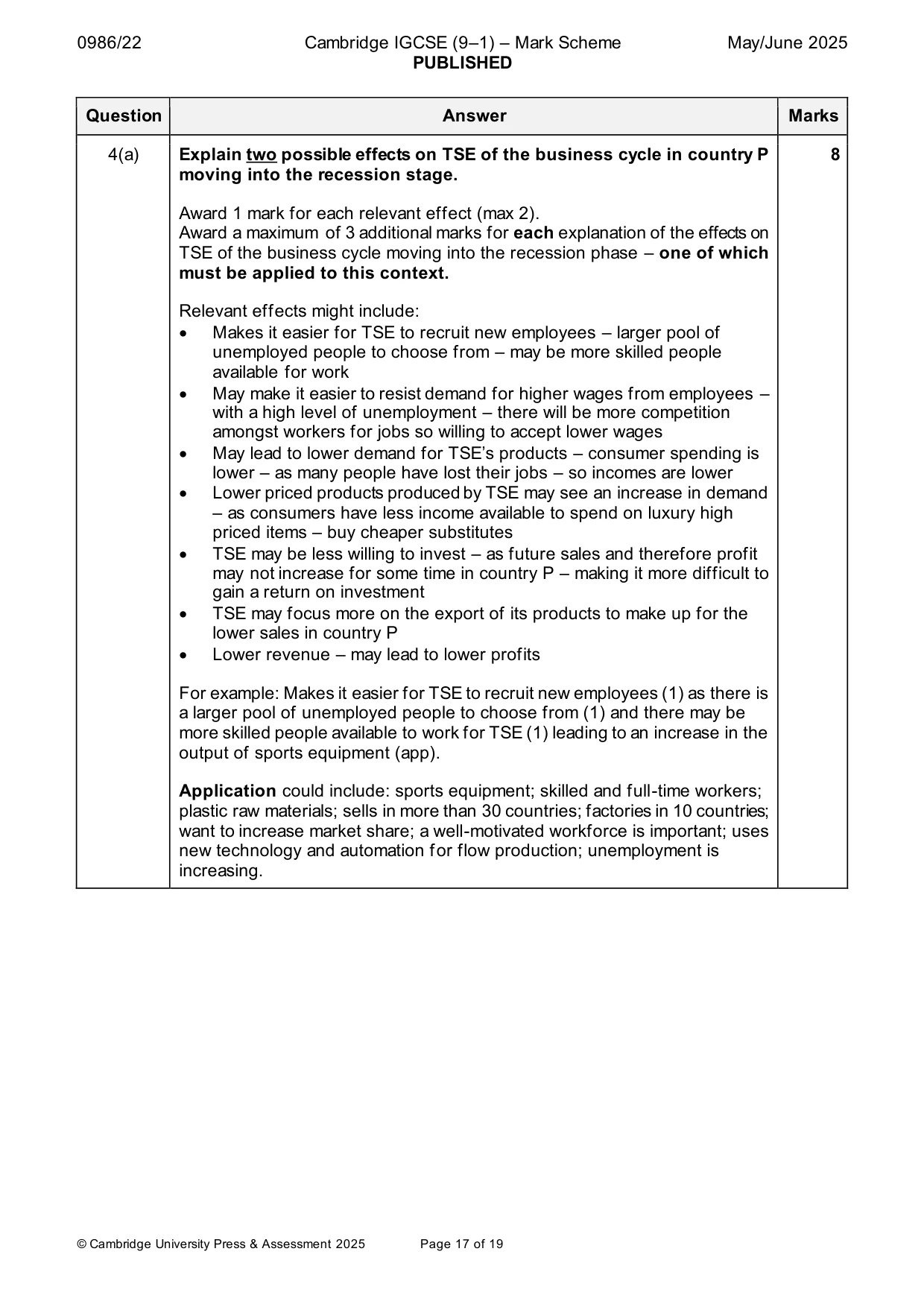
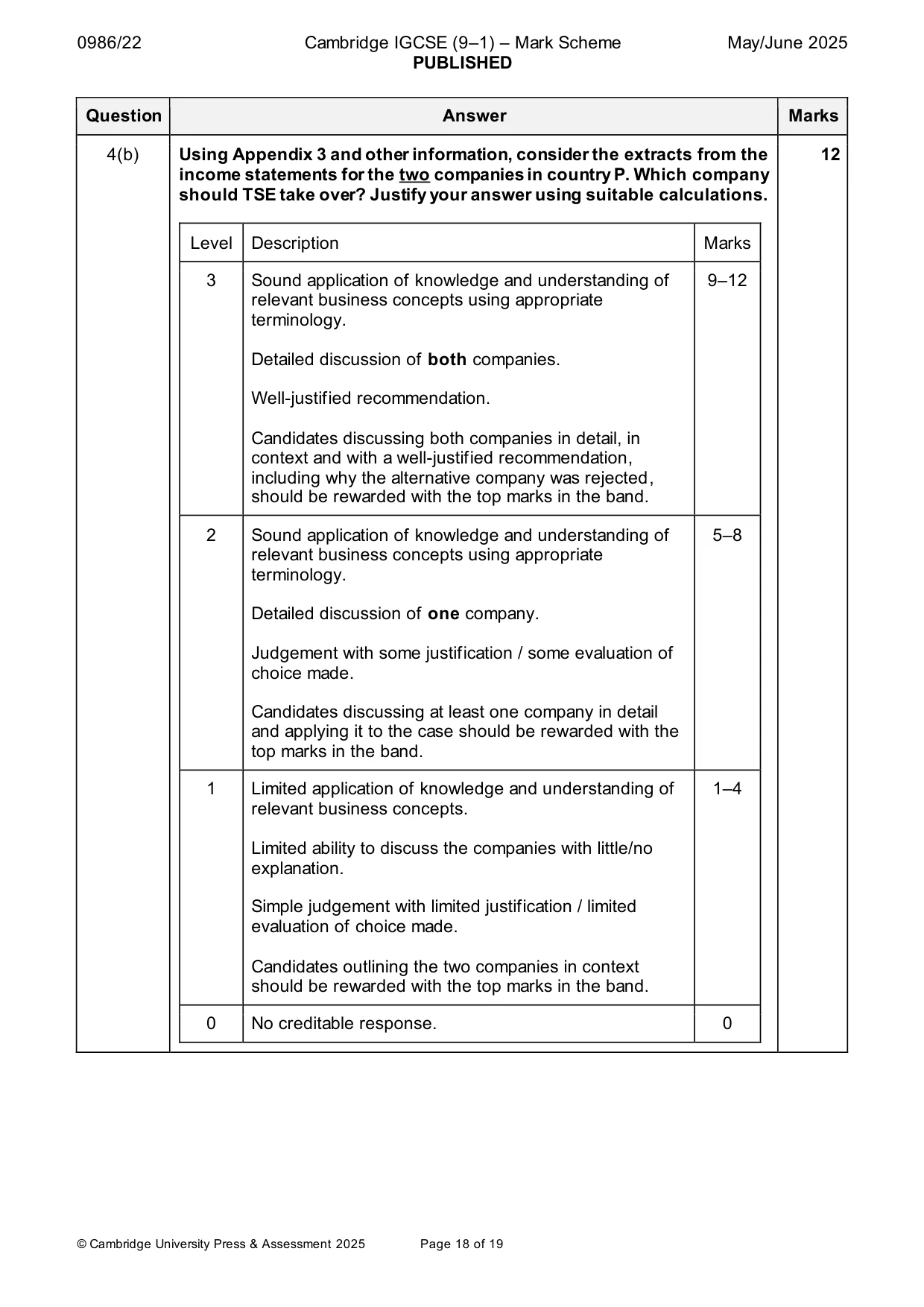
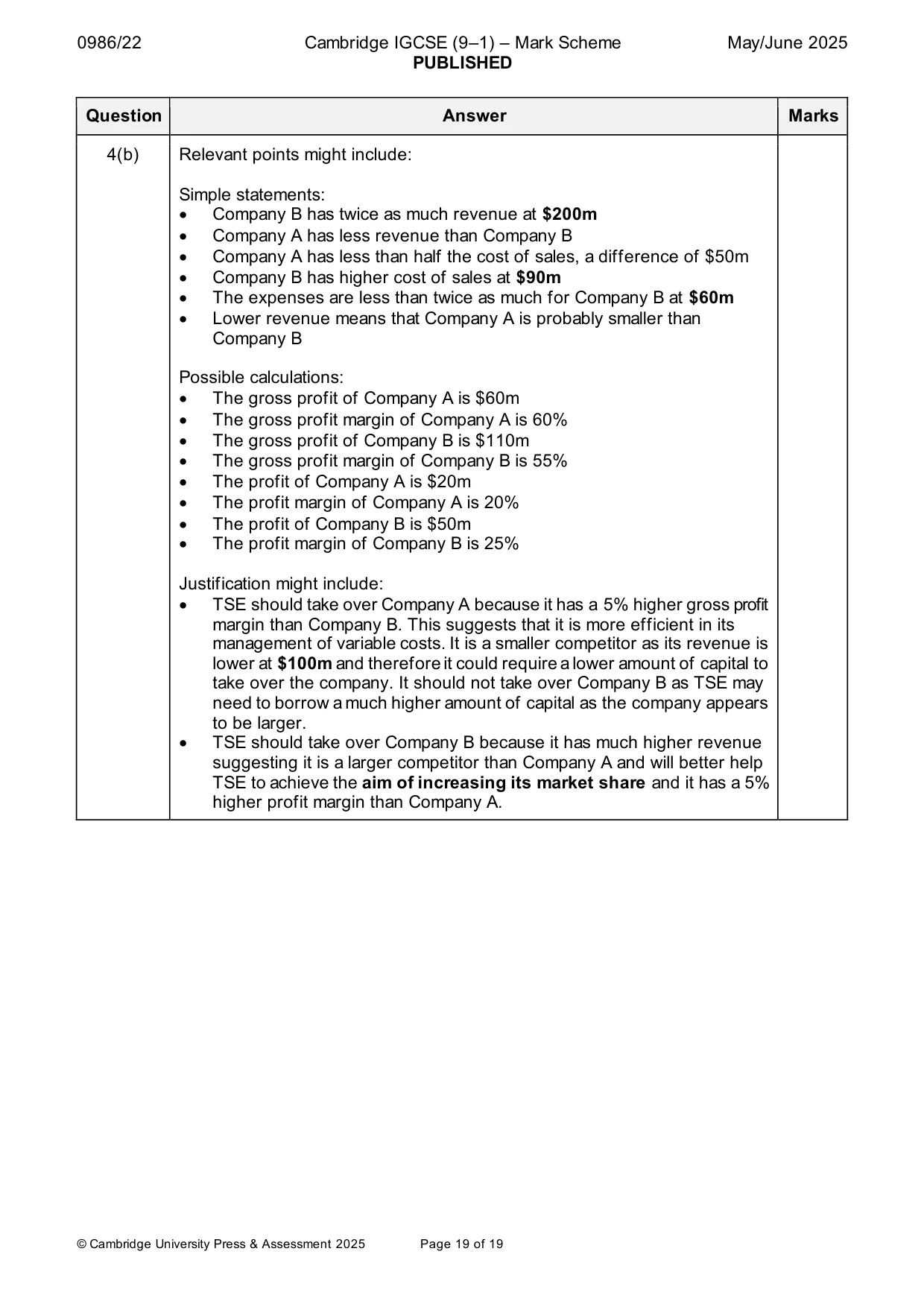
Mark scheme: 4(a) Explain two possible effects on TSE of the business cycle in country P 8 moving into the recession stage. Award 1 mark for each relevant effect (max 2). Award a maximum of 3 additional marks for each explanation of the effects on TSE of the business cycle moving into the recession phase – one of which must be applied to this context. Relevant effects might include: • Makes it easier for TSE to recruit new employees – larger pool of unemployed people to choose from – may be more skilled people available for work • May make it easier to resist demand for higher wages from employees – with a high level of unemployment – there will be more competition amongst workers for jobs so willing to accept lower wages • May lead to lower demand for TSE’s products – consumer spending is lower – as many people have lost their jobs – so incomes are lower • Lower priced products produced by TSE may see an increase in demand – as consumers have less income available to spend on luxury high priced items – buy cheaper substitutes • TSE may be less willing to invest – as future sales and therefore profit may not increase for some time in country P – making it more difficult to gain a return on investment • TSE may focus more on the export of its products to make up for the lower sales in country P • Lower revenue – may lead to lower profits For example: Makes it easier for TSE to recruit new employees (1) as there is a larger pool of unemployed people to choose from (1) and there may be more skilled people available to work for TSE (1) leading to an increase in the output of sports equipment (app). Application could include: sports equipment; skilled and full-time workers; plastic raw materials; sells in more than 30 countries; factories in 10 countries; want to increase market share; a well-motivated workforce is important; uses new technology and automation for flow production; unemployment is increasing. 4(b) Using Appendix 3 and other information, consider the extracts from the 12 income statements for the two companies in country P. Which company should TSE take over? Justify your answer using suitable calculations. Level Description Marks 3 Sound application of knowledge and understanding of 9–12 relevant business concepts using appropriate terminology. Detailed discussion of both companies. Well-justified recommendation. Candidates discussing both companies in detail, in context and with a well-justified recommendation, including why the alternative company was rejected, should be rewarded with the top marks in the band. 2 Sound application of knowledge and understanding of 5–8 relevant business concepts using appropriate terminology. Detailed discussion of one company. Judgement with some justification / some evaluation of choice made. Candidates discussing at least one company in detail and applying it to the case should be rewarded with the top marks in the band. 1 Limited application of knowledge and understanding of 1–4 relevant business concepts. Limited ability to discuss the companies with little/no explanation. Simple judgement with limited justification / limited evaluation of choice made. Candidates outlining the two companies in context should be rewarded with the top marks in the band. 0 No creditable response. 0 4(b) Relevant points might include: Simple statements: • Company B has twice as much revenue at $200m • Company A has less revenue than Company B • Company A has less than half the cost of sales, a difference of $50m • Company B has higher cost of sales at $90m • The expenses are less than twice as much for Company B at $60m • Lower revenue means that Company A is probably smaller than Company B Possible calculations: • The gross profit of Company A is $60m • The gross profit margin of Company A is 60% • The gross profit of Company B is $110m • The gross profit margin of Company B is 55% • The profit of Company A is $20m • The profit margin of Company A is 20% • The profit of Company B is $50m • The profit margin of Company B is 25% Justification might include: • TSE should take over Company A because it has a 5% higher gross profit margin than Company B. This suggests that it is more efficient in its management of variable costs. It is a smaller competitor as its revenue is lower at $100m and therefore it could require a lower amount of capital to take over the company. It should not take over Company B as TSE may need to borrow a much higher amount of capital as the company appears to be larger. • TSE should take over Company B because it has much higher revenue suggesting it is a larger competitor than Company A and will better help TSE to achieve the aim of increasing its market share and it has a 5% higher profit margin than Company A.
What was in this paper
The subtopics covered by these 4 questions, and how many questions each got. Open one in a new tab to see every Cambridge question on it.
What you needed in this session
Cambridge’s own grade thresholds for 2025 May/June, Paper 2 · Variant 2. A higher threshold means an easier paper — the bar moves with how the cohort did.