Cambridge IGCSE Business Studies (9-1) 0986 — 2023 May/June Paper 2 · Variant 2
0986/22/M/J/23 · 4 questions · 80 marks · ≈90 min
The question paper and its mark scheme, free to read here and free to download. This is Cambridge’s own paper, exactly as it was sat.
Question paper12 pages
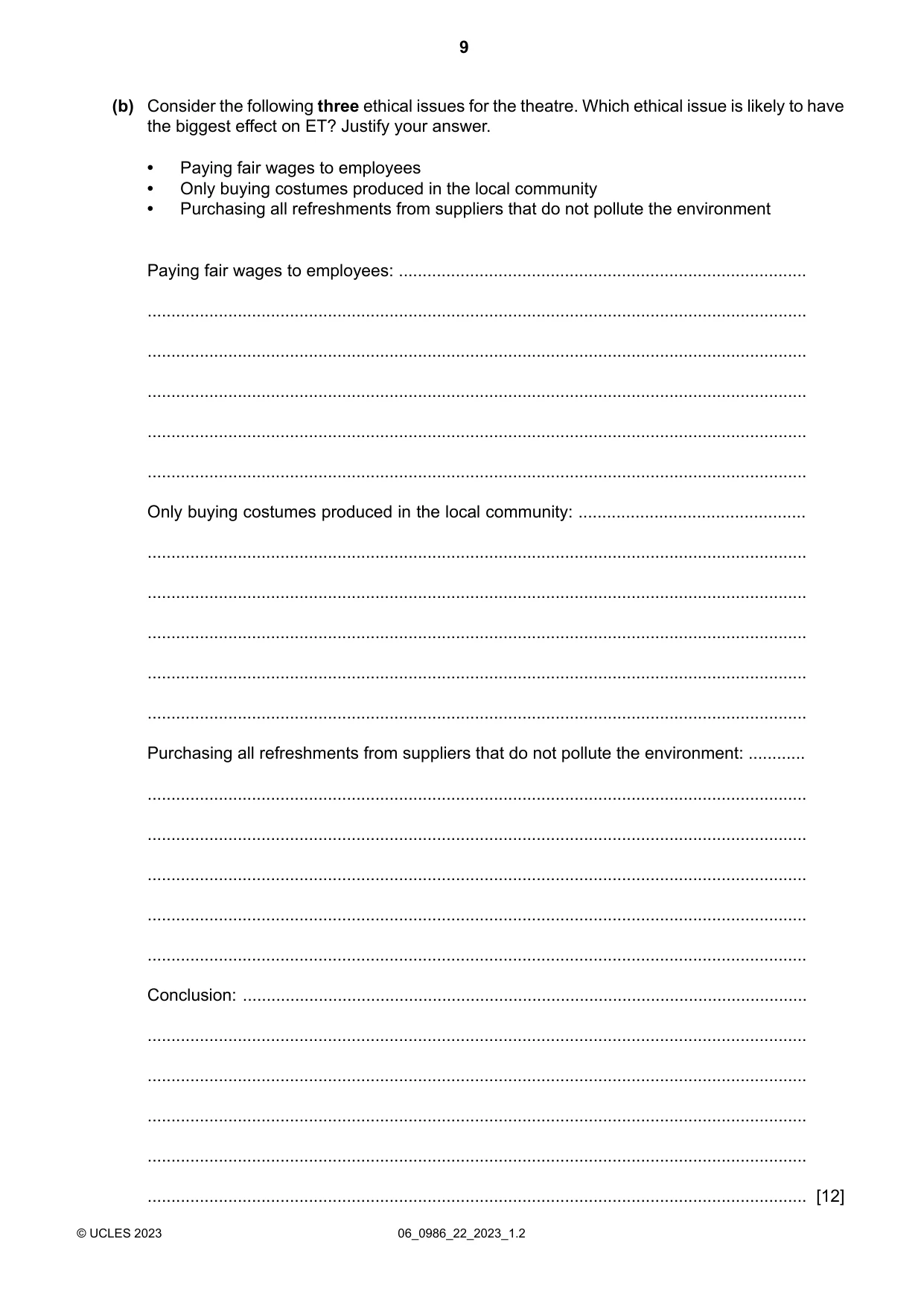


Mark scheme20 pages
Answers below. Sit the paper first if you are practising.
Questions as text
Q1 · Explain four characteristics needed for an entrepreneur to be successful
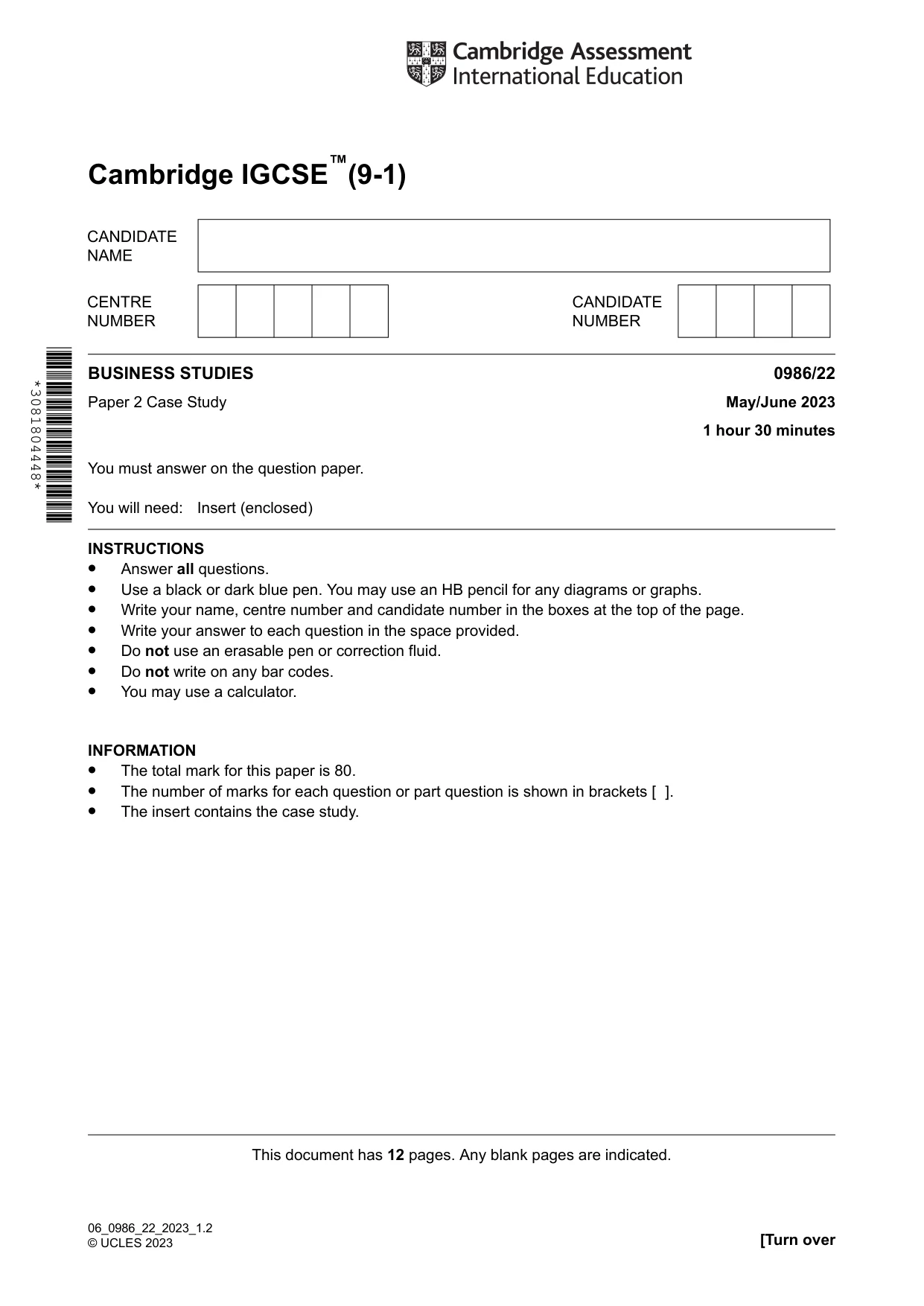
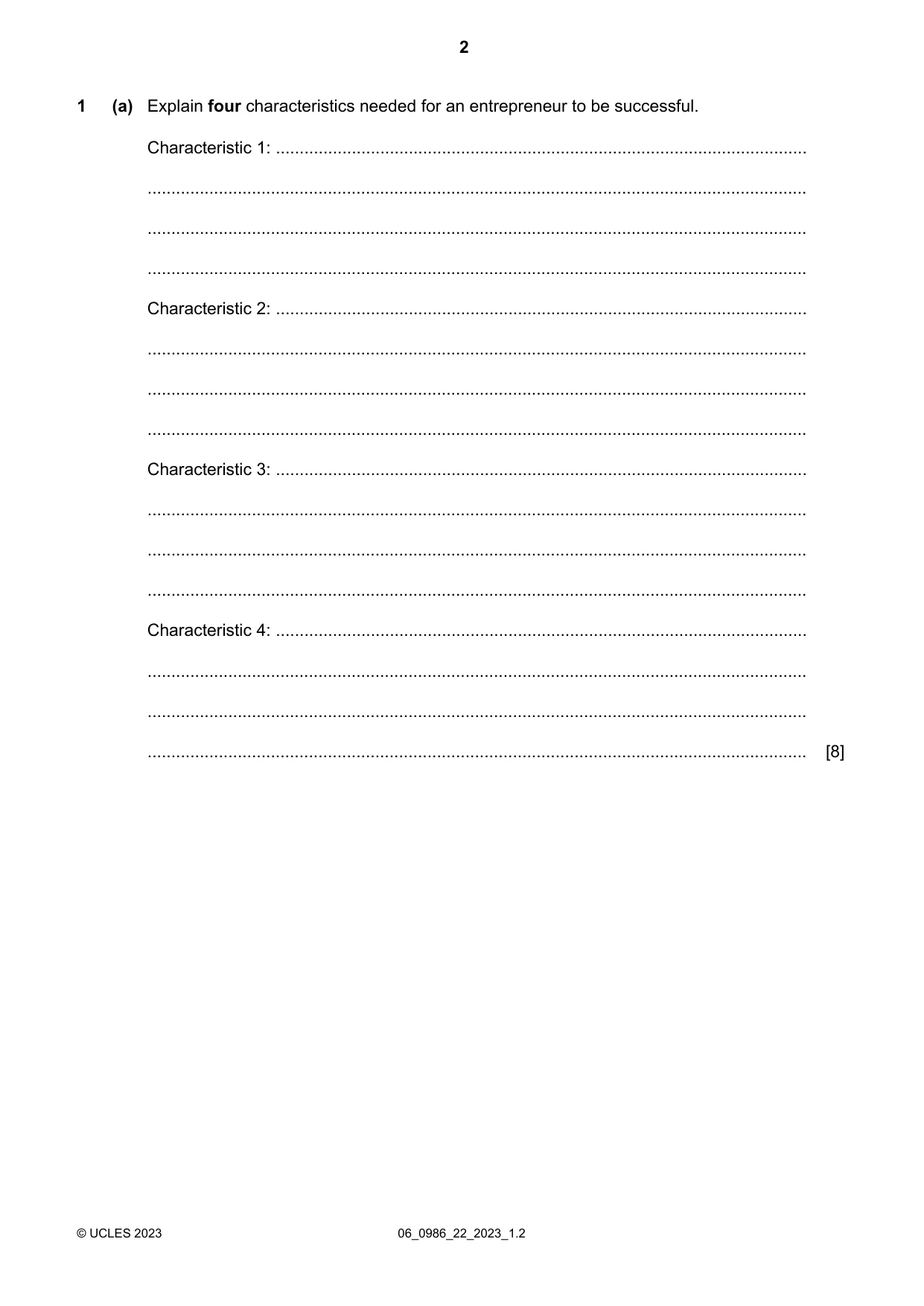
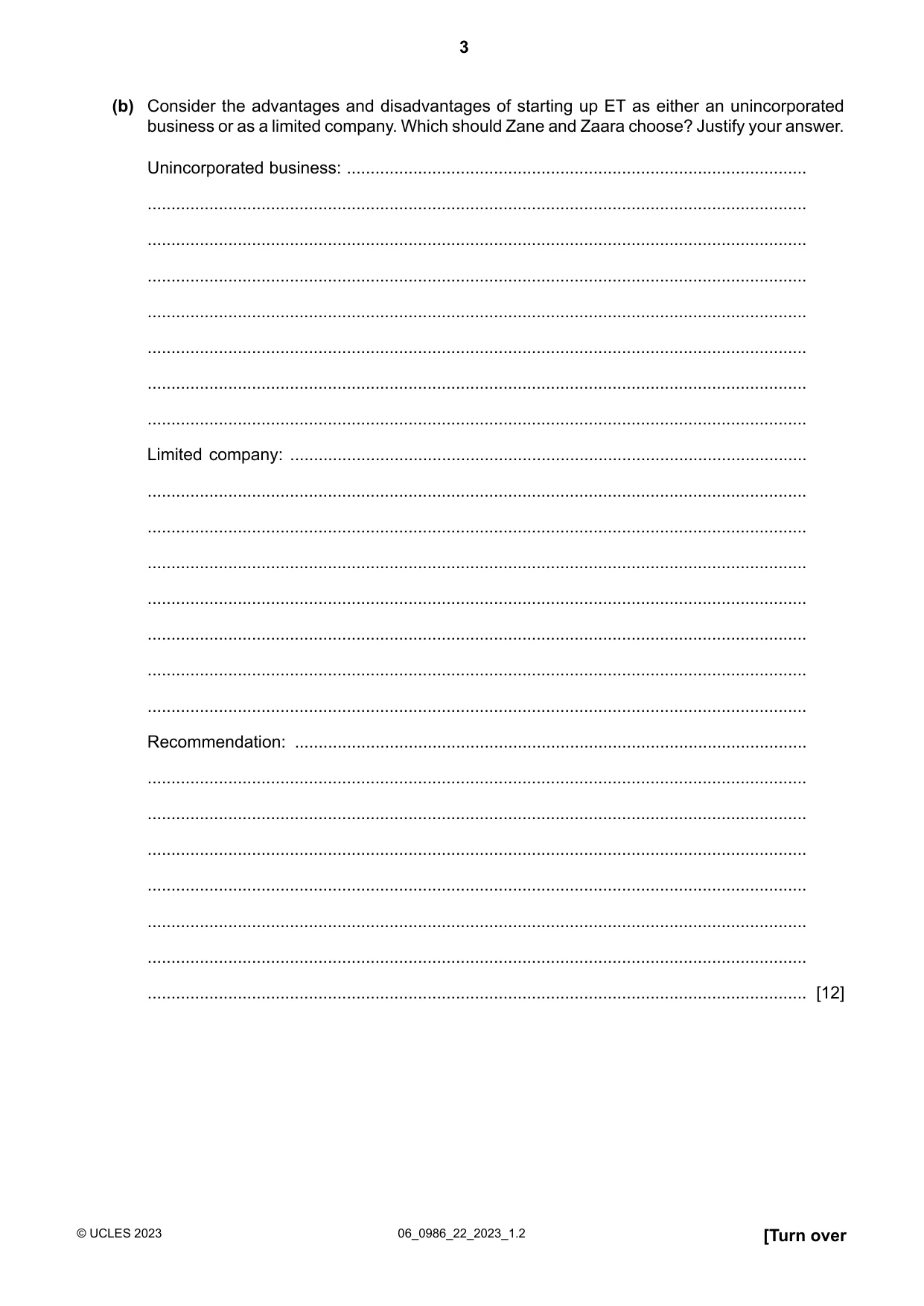
1 (a) Explain four characteristics needed for an entrepreneur to be successful. Characteristic 1: ................................................................................................................ ........................................................................................................................................... ........................................................................................................................................... ........................................................................................................................................... Characteristic 2: ................................................................................................................ ........................................................................................................................................... ........................................................................................................................................... ........................................................................................................................................... Characteristic 3: ................................................................................................................ ........................................................................................................................................... ........................................................................................................................................... ........................................................................................................................................... Characteristic 4: ................................................................................................................ ........................................................................................................................................... ........................................................................................................................................... ........................................................................................................................................... [8] (b) Consider the advantages and disadvantages of starting up ET as either an unincorporated business or as a limited company. Which should Zane and Zaara choose? Justify your answer. Unincorporated business: ................................................................................................. ........................................................................................................................................... ........................................................................................................................................... ........................................................................................................................................... ........................................................................................................................................... ........................................................................................................................................... ........................................................................................................................................... ........................................................................................................................................... Limited company: ............................................................................................................. ........................................................................................................................................... ........................................................................................................................................... ........................................................................................................................................... ........................................................................................................................................... ........................................................................................................................................... ........................................................................................................................................... ........................................................................................................................................... Recommendation: ............................................................................................................ ........................................................................................................................................... ........................................................................................................................................... ........................................................................................................................................... ........................................................................................................................................... ........................................................................................................................................... ........................................................................................................................................... ........................................................................................................................................... [12]
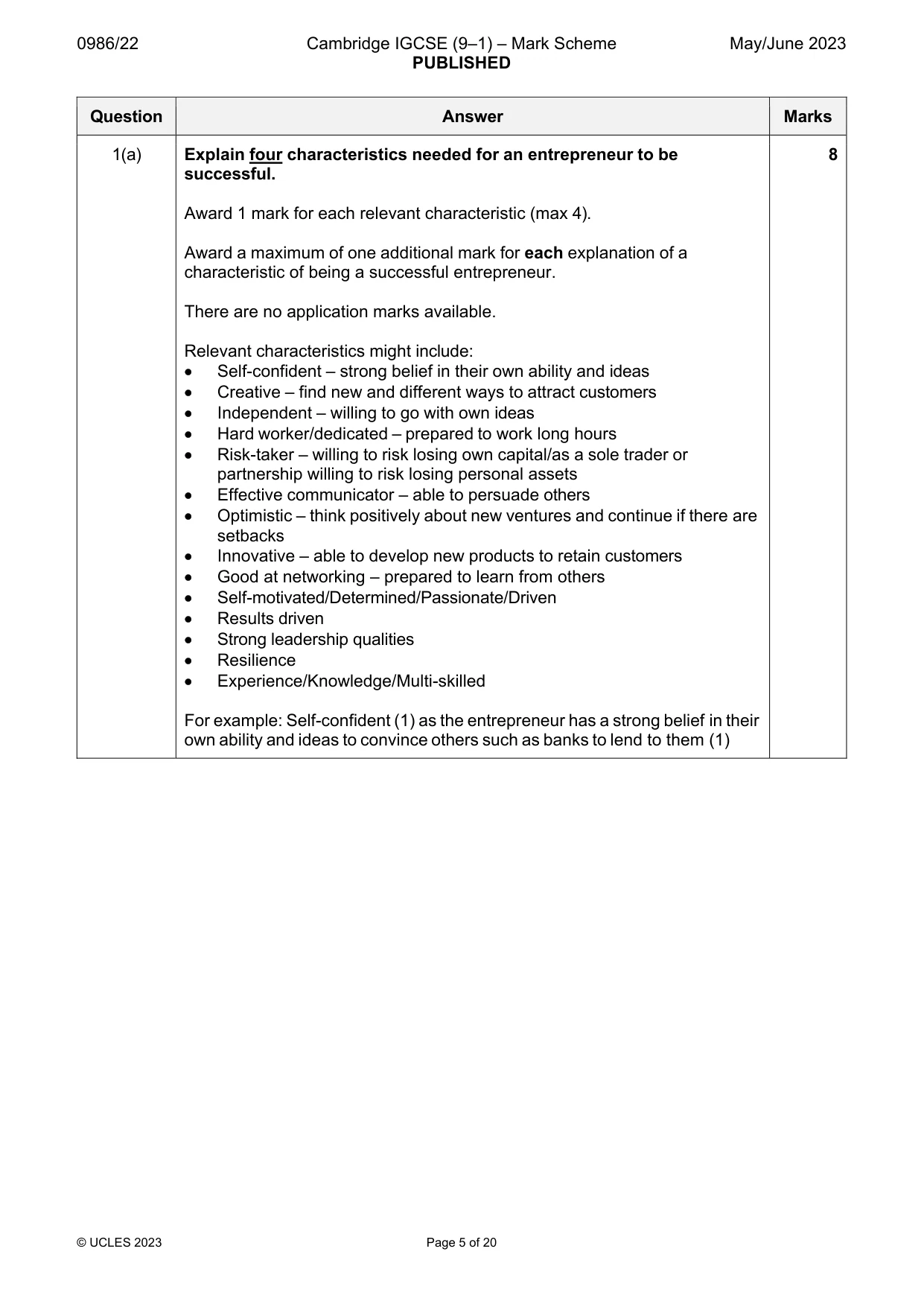
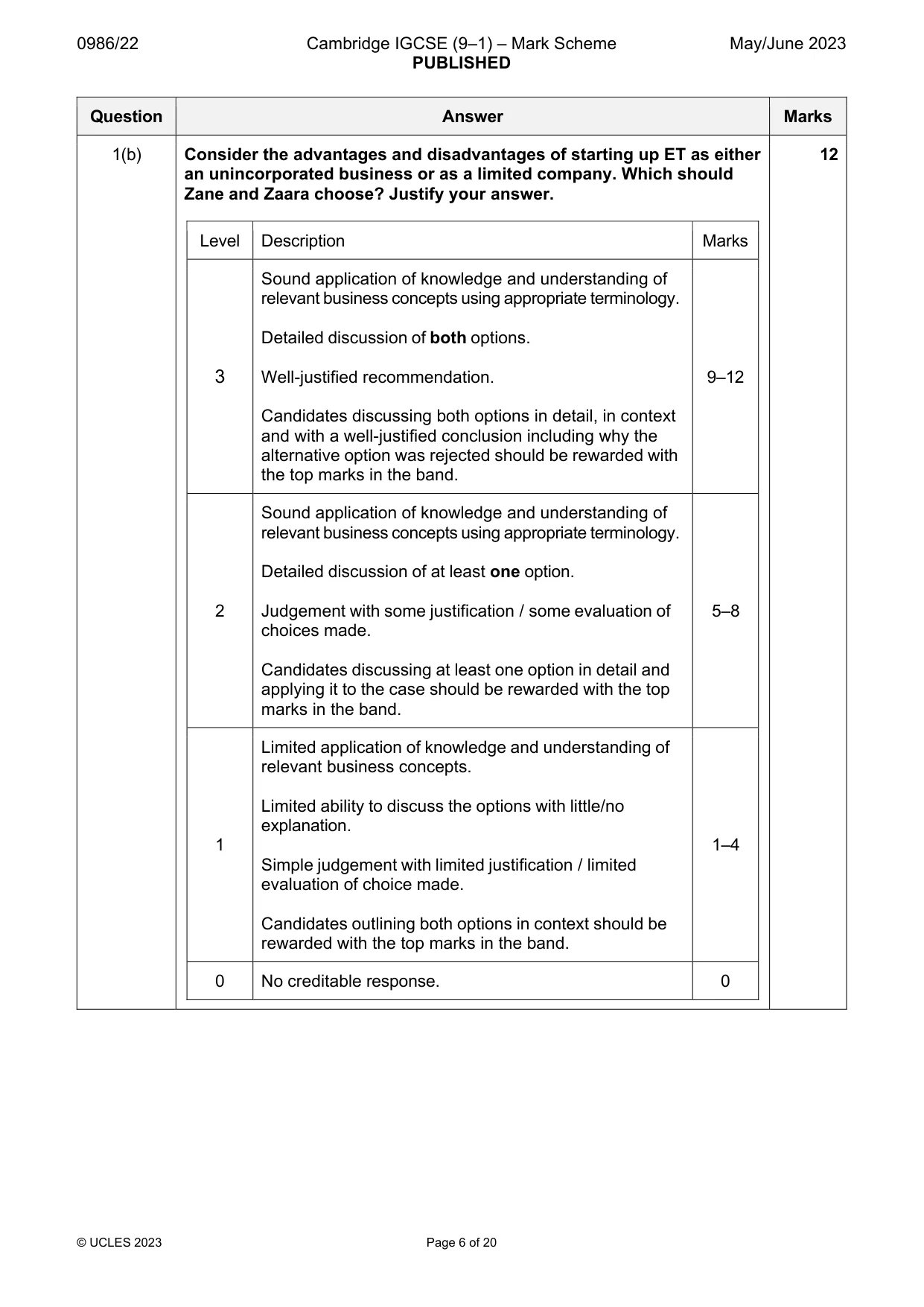
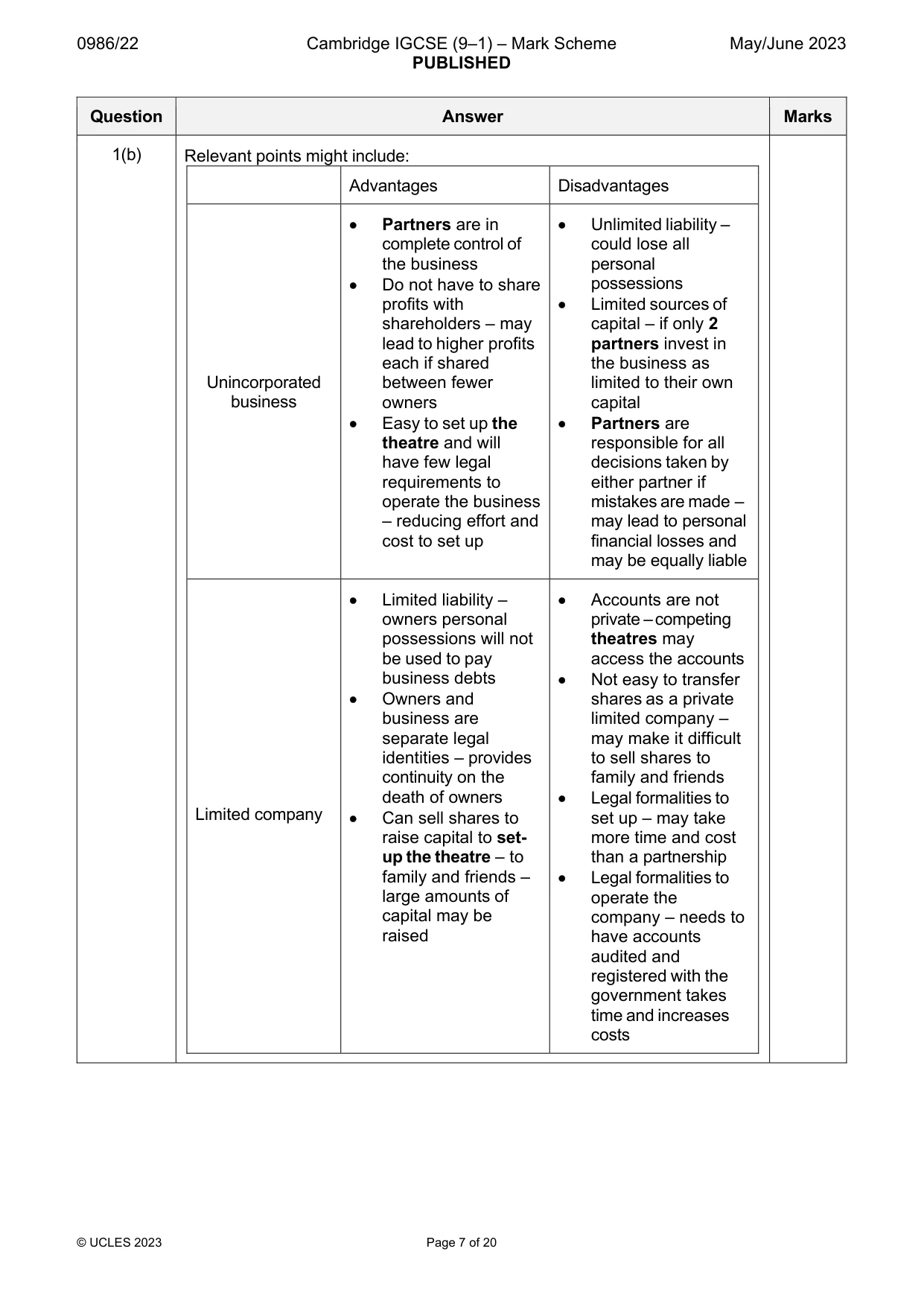
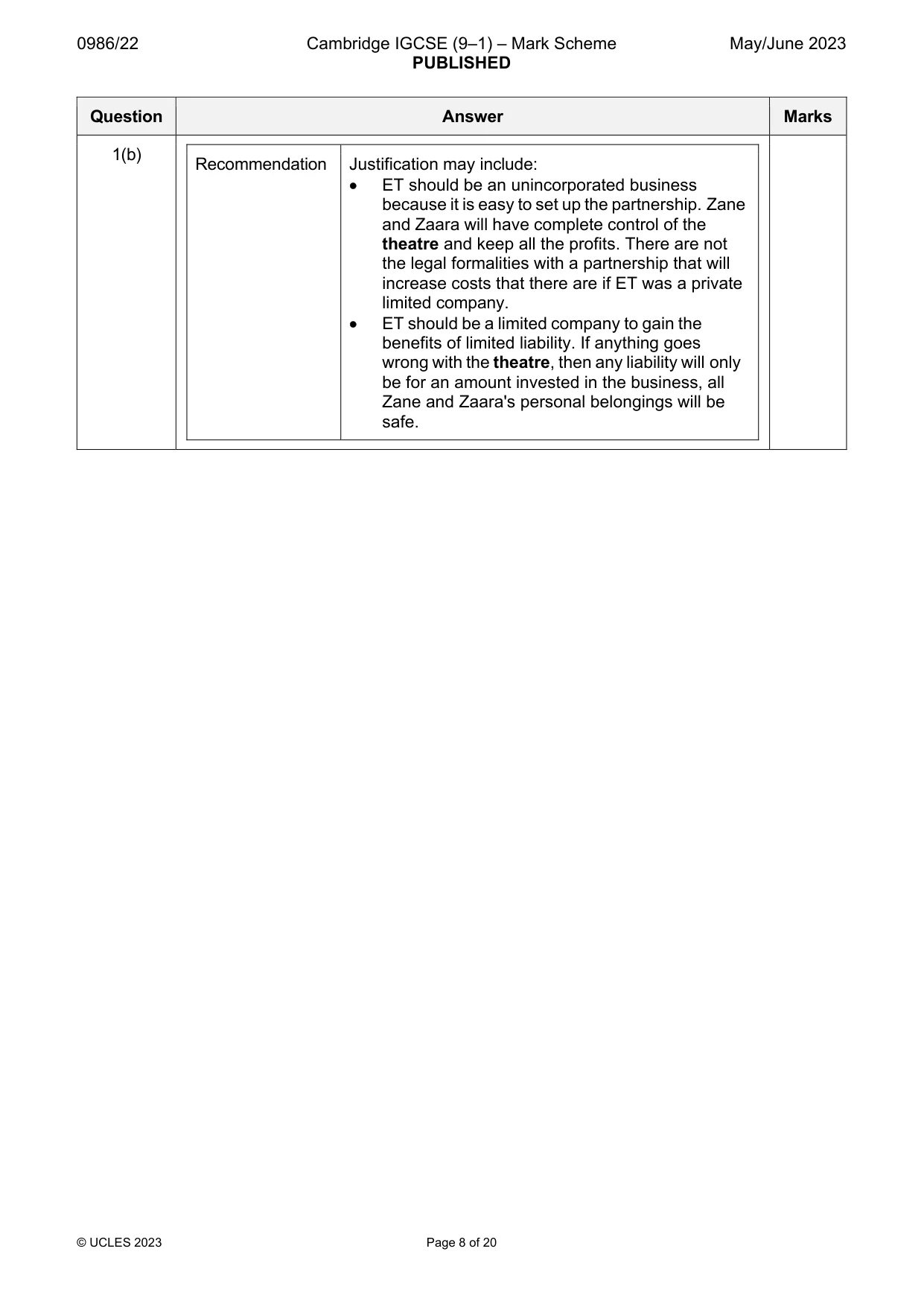
Mark scheme: Question Answer Marks 1(a) Explain four characteristics needed for an entrepreneur to be 8 successful. Award 1 mark for each relevant characteristic (max 4). Award a maximum of one additional mark for each explanation of a characteristic of being a successful entrepreneur. There are no application marks available. Relevant characteristics might include: Self-confident – strong belief in their own ability and ideas Creative – find new and different ways to attract customers Independent – willing to go with own ideas Hard worker/dedicated – prepared to work long hours Risk-taker – willing to risk losing own capital/as a sole trader or partnership willing to risk losing personal assets Effective communicator – able to persuade others Optimistic – think positively about new ventures and continue if there are setbacks Innovative – able to develop new products to retain customers Good at networking – prepared to learn from others Self-motivated/Determined/Passionate/Driven Results driven Strong leadership qualities Resilience Experience/Knowledge/Multi-skilled For example: Self-confident (1) as the entrepreneur has a strong belief in their own ability and ideas to convince others such as banks to lend to them (1) 1(b) Consider the advantages and disadvantages of starting up ET as either 12 an unincorporated business or as a limited company. Which should Zane and Zaara choose? Justify your answer. Level Description Marks Sound application of knowledge and understanding of relevant business concepts using appropriate terminology. Detailed discussion of both options. 3 Well-justified recommendation. 9–12 Candidates discussing both options in detail, in context and with a well-justified conclusion including why the alternative option was rejected should be rewarded with the top marks in the band. Sound application of knowledge and understanding of relevant business concepts using appropriate terminology. Detailed discussion of at least one option. 2 Judgement with some justification / some evaluation of 5–8 choices made. Candidates discussing at least one option in detail and applying it to the case should be rewarded with the top marks in the band. Limited application of knowledge and understanding of relevant business concepts. Limited ability to discuss the options with little/no explanation. 1 1–4 Simple judgement with limited justification / limited evaluation of choice made. Candidates outlining both options in context should be rewarded with the top marks in the band. 0 No creditable response. 0 1(b) Relevant points might include: Advantages Disadvantages Partners are in Unlimited liability – complete control of could lose all the business personal Do not have to share possessions profits with Limited sources of shareholders – may capital – if only 2 lead to higher profits partners invest in each if shared the business as Unincorporated between fewer limited to their own business owners capital Easy to set up the Partners are theatre and will responsible for all have few legal decisions taken by requirements to either partner if operate the business mistakes are made – – reducing effort and may lead to personal cost to set up financial losses and may be equally liable Limited liability – Accounts are not owners personal private – competing possessions will not theatres may be used to pay access the accounts business debts Not easy to transfer Owners and shares as a private business are limited company – separate legal may make it difficult identities – provides to sell shares to continuity on the family and friends death of owners Legal formalities to Limited company Can sell shares to set up – may take raise capital to set- more time and cost up the theatre – to than a partnership family and friends – Legal formalities to large amounts of operate the capital may be company – needs to raised have accounts audited and registered with the government takes time and increases costs 1(b) Recommendation Justification may include: ET should be an unincorporated business because it is easy to set up the partnership. Zane and Zaara will have complete control of the theatre and keep all the profits. There are not the legal formalities with a partnership that will increase costs that there are if ET was a private limited company. ET should be a limited company to gain the benefits of limited liability. If anything goes wrong with the theatre, then any liability will only be for an amount invested in the business, all Zane and Zaara's personal belongings will be safe.
Q2 · Explain one business objective for ET and one other objective that a social enterprise…
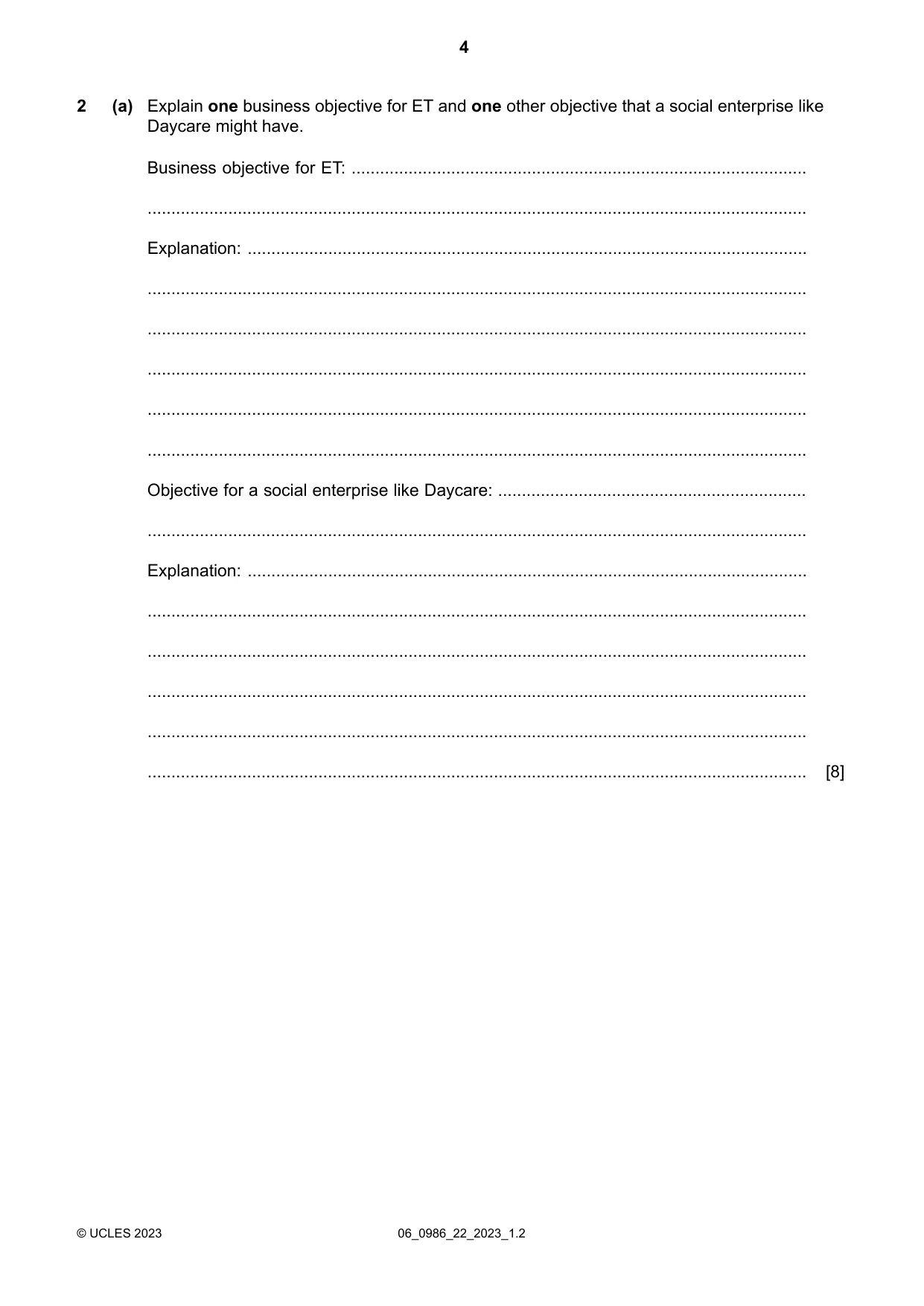
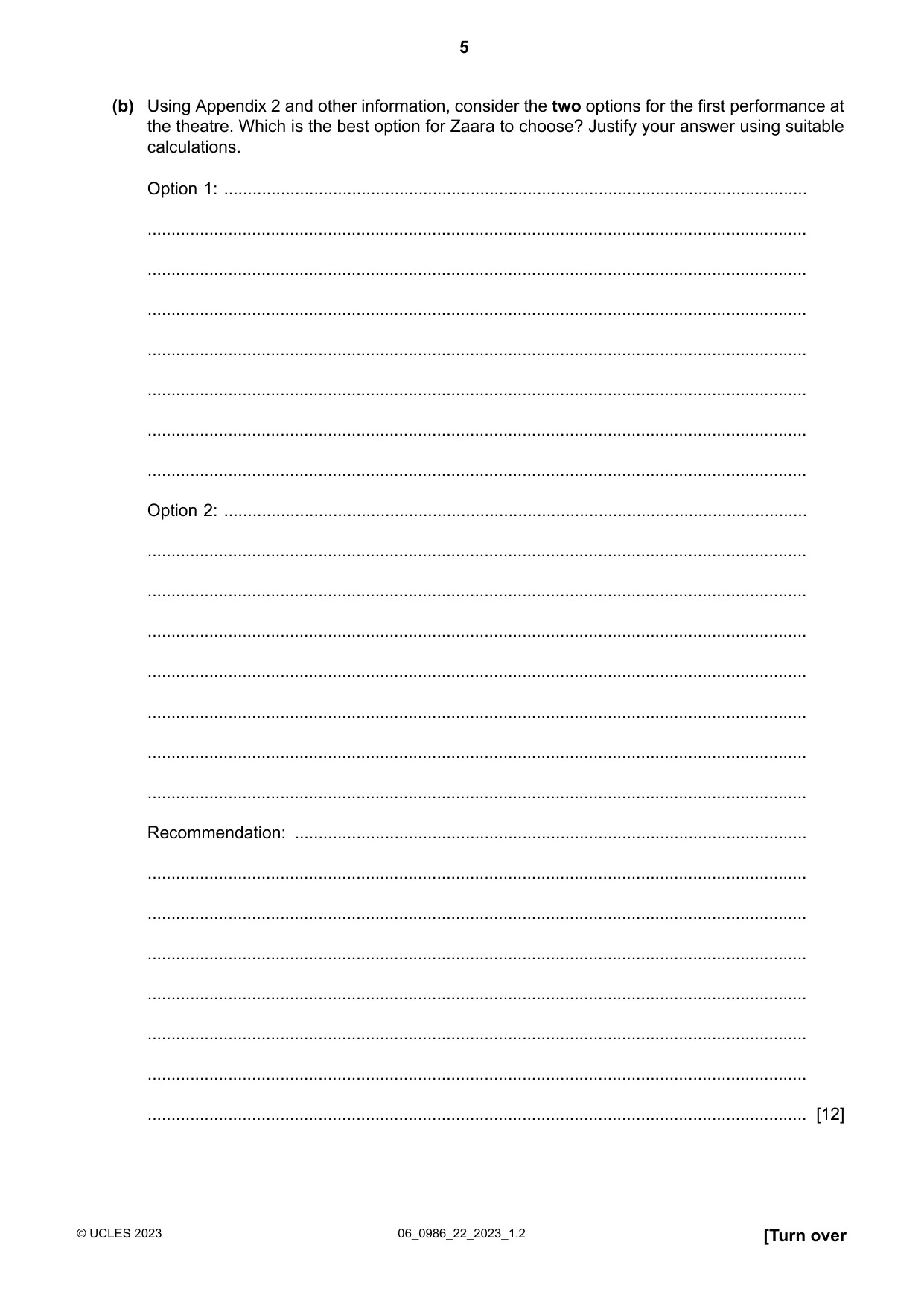
2 (a) Explain one business objective for ET and one other objective that a social enterprise like Daycare might have. Business objective for ET: ................................................................................................ ........................................................................................................................................... Explanation: ...................................................................................................................... ........................................................................................................................................... ........................................................................................................................................... ........................................................................................................................................... ........................................................................................................................................... ........................................................................................................................................... Objective for a social enterprise like Daycare: ................................................................. ........................................................................................................................................... Explanation: ...................................................................................................................... ........................................................................................................................................... ........................................................................................................................................... ........................................................................................................................................... ........................................................................................................................................... ........................................................................................................................................... [8] (b) Using Appendix 2 and other information, consider the two options for the first performance at the theatre. Which is the best option for Zaara to choose? Justify your answer using suitable calculations. Option 1: ........................................................................................................................... ........................................................................................................................................... ........................................................................................................................................... ........................................................................................................................................... ........................................................................................................................................... ........................................................................................................................................... ........................................................................................................................................... ........................................................................................................................................... Option 2: ........................................................................................................................... ........................................................................................................................................... ........................................................................................................................................... ........................................................................................................................................... ........................................................................................................................................... ........................................................................................................................................... ........................................................................................................................................... ........................................................................................................................................... Recommendation: ............................................................................................................ ........................................................................................................................................... ........................................................................................................................................... ........................................................................................................................................... ........................................................................................................................................... ........................................................................................................................................... ........................................................................................................................................... ........................................................................................................................................... [12]
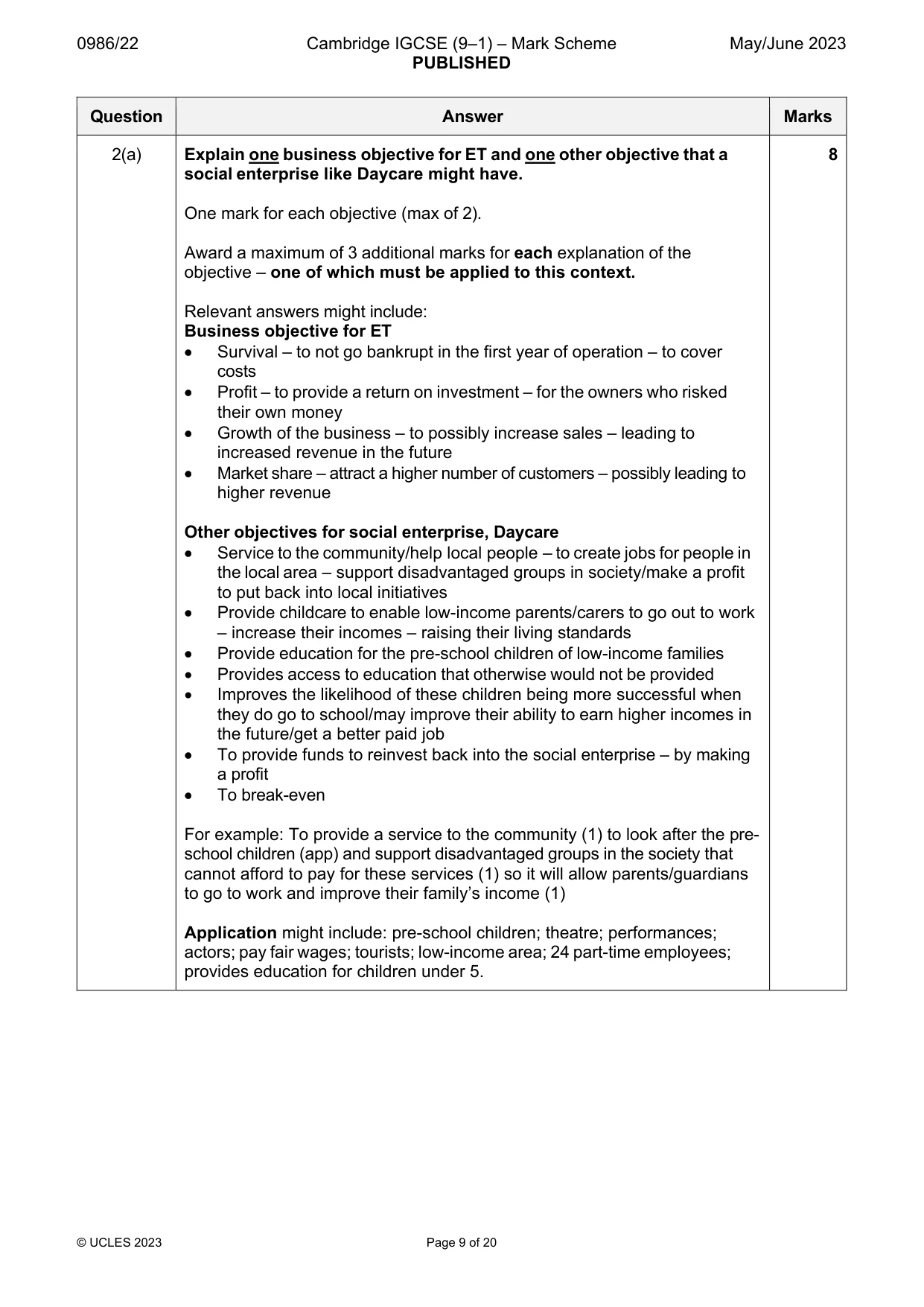
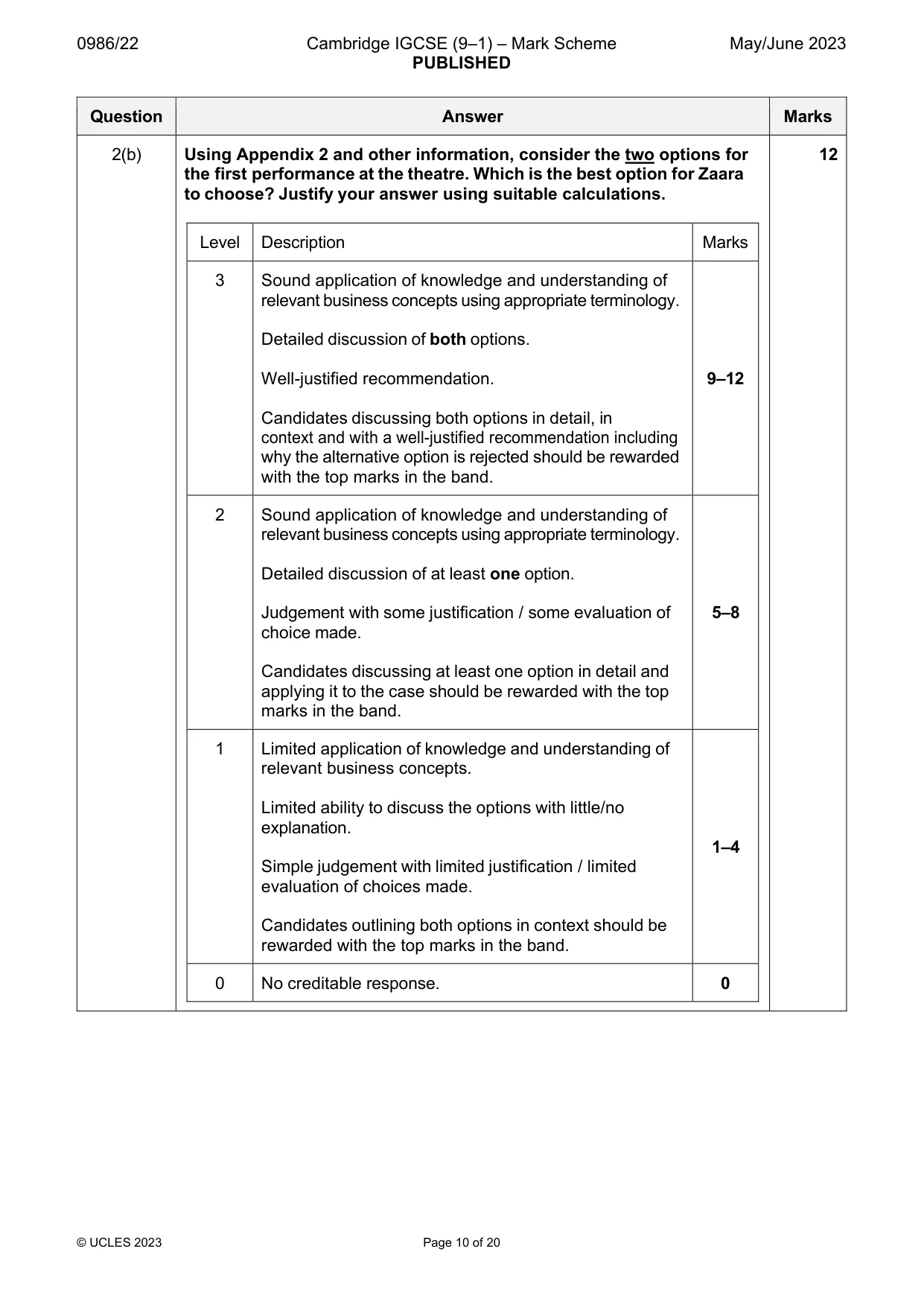
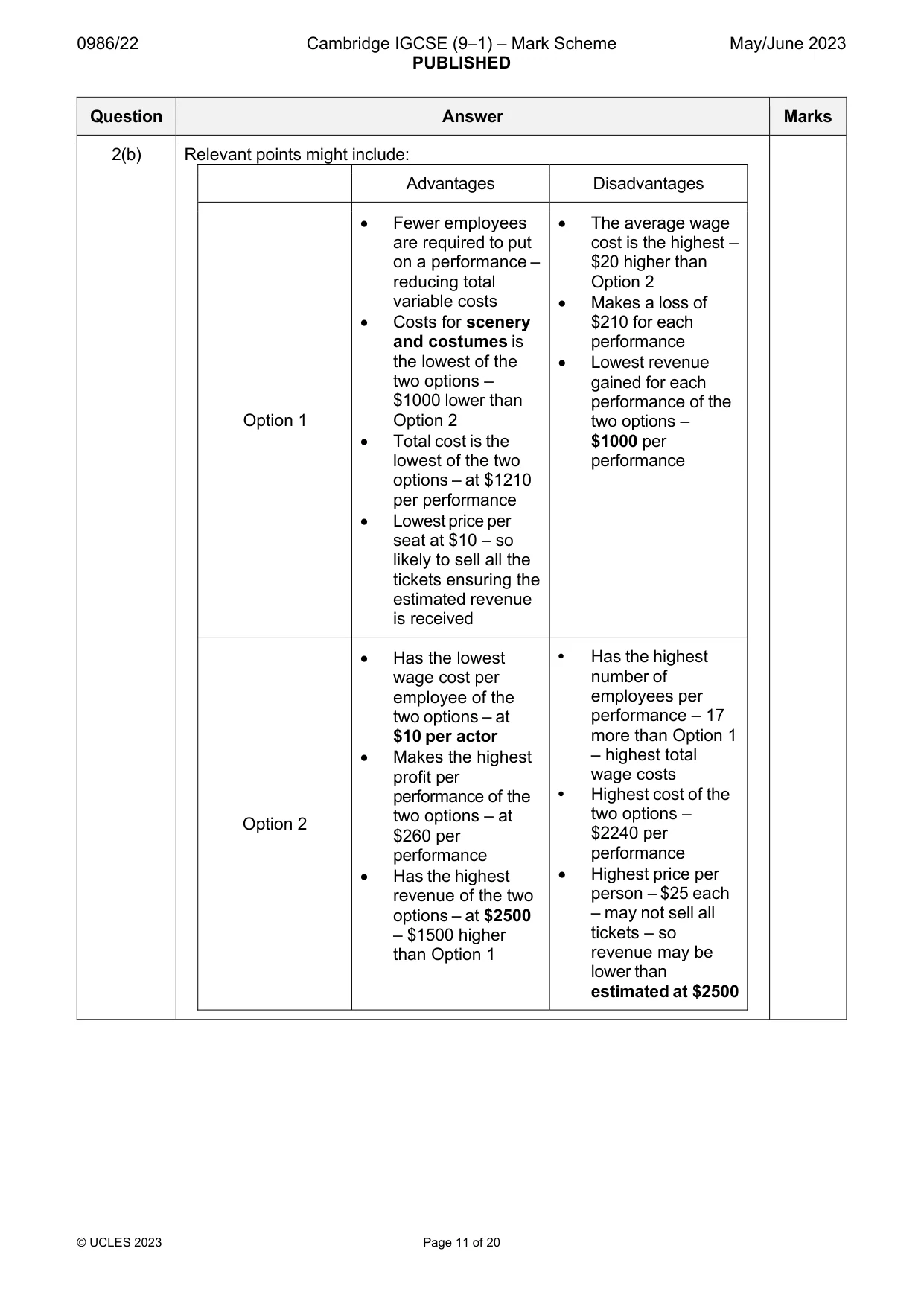
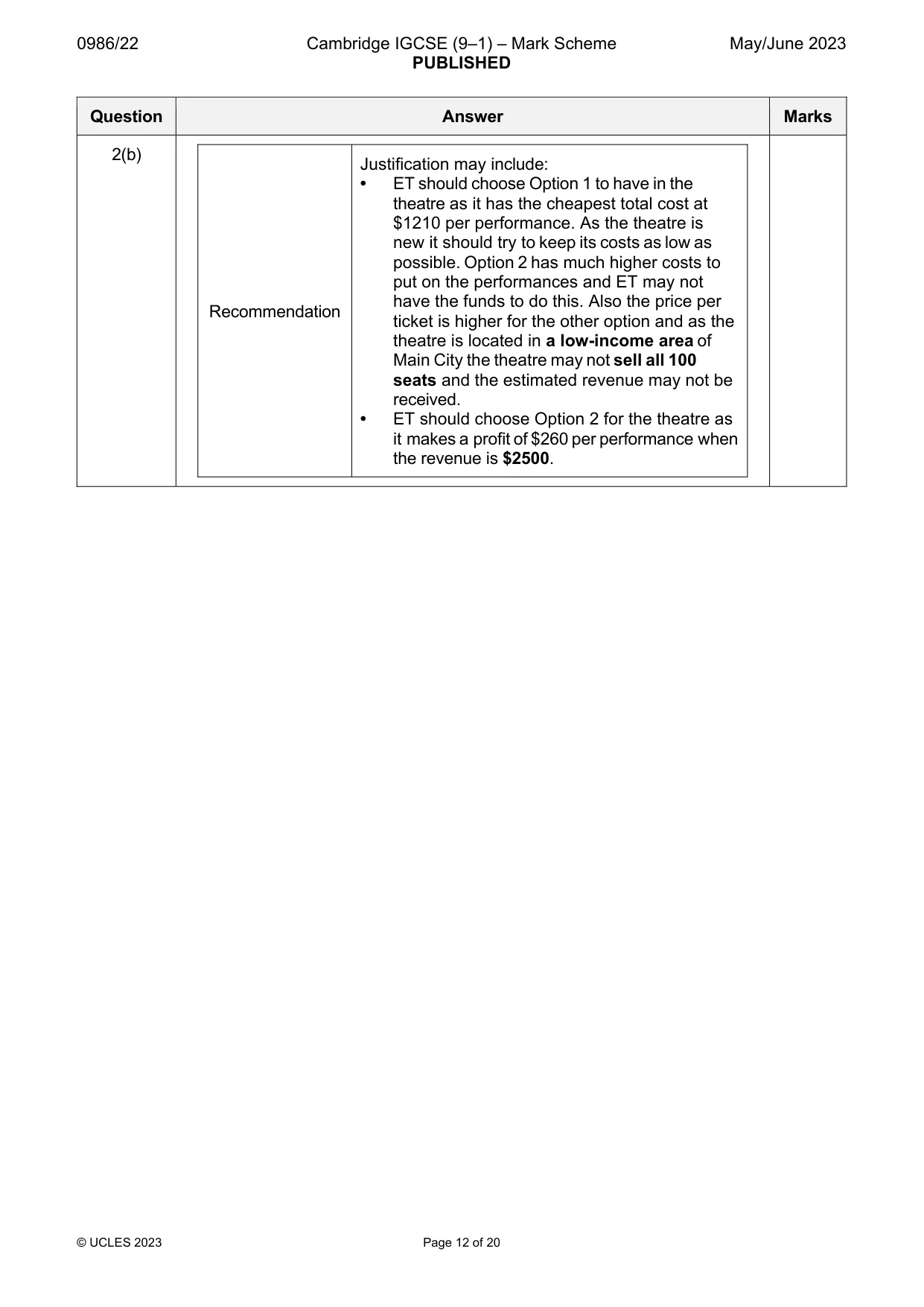
Mark scheme: 2(a) Explain one business objective for ET and one other objective that a 8 social enterprise like Daycare might have. One mark for each objective (max of 2). Award a maximum of 3 additional marks for each explanation of the objective – one of which must be applied to this context. Relevant answers might include: Business objective for ET Survival – to not go bankrupt in the first year of operation – to cover costs Profit – to provide a return on investment – for the owners who risked their own money Growth of the business – to possibly increase sales – leading to increased revenue in the future Market share – attract a higher number of customers – possibly leading to higher revenue Other objectives for social enterprise, Daycare Service to the community/help local people – to create jobs for people in the local area – support disadvantaged groups in society/make a profit to put back into local initiatives Provide childcare to enable low-income parents/carers to go out to work – increase their incomes – raising their living standards Provide education for the pre-school children of low-income families Provides access to education that otherwise would not be provided Improves the likelihood of these children being more successful when they do go to school/may improve their ability to earn higher incomes in the future/get a better paid job To provide funds to reinvest back into the social enterprise – by making a profit To break-even For example: To provide a service to the community (1) to look after the pre- school children (app) and support disadvantaged groups in the society that cannot afford to pay for these services (1) so it will allow parents/guardians to go to work and improve their family’s income (1) Application might include: pre-school children; theatre; performances; actors; pay fair wages; tourists; low-income area; 24 part-time employees; provides education for children under 5. 2(b) Using Appendix 2 and other information, consider the two options for 12 the first performance at the theatre. Which is the best option for Zaara to choose? Justify your answer using suitable calculations. Level Description Marks 3 Sound application of knowledge and understanding of relevant business concepts using appropriate terminology. Detailed discussion of both options. Well-justified recommendation. 9–12 Candidates discussing both options in detail, in context and with a well-justified recommendation including why the alternative option is rejected should be rewarded with the top marks in the band. 2 Sound application of knowledge and understanding of relevant business concepts using appropriate terminology. Detailed discussion of at least one option. Judgement with some justification / some evaluation of 5–8 choice made. Candidates discussing at least one option in detail and applying it to the case should be rewarded with the top marks in the band. 1 Limited application of knowledge and understanding of relevant business concepts. Limited ability to discuss the options with little/no explanation. 1–4 Simple judgement with limited justification / limited evaluation of choices made. Candidates outlining both options in context should be rewarded with the top marks in the band. 0 No creditable response. 0 2(b) Relevant points might include: Advantages Disadvantages Fewer employees The average wage are required to put cost is the highest – on a performance – $20 higher than reducing total Option 2 variable costs Makes a loss of Costs for scenery $210 for each and costumes is performance the lowest of the Lowest revenue two options – gained for each $1000 lower than performance of the Option 1 Option 2 two options – Total cost is the $1000 per lowest of the two performance options – at $1210 per performance Lowest price per seat at $10 – so likely to sell all the tickets ensuring the estimated revenue is received Has the lowest • Has the highest wage cost per number of employee of the employees per two options – at performance – 17 $10 per actor more than Option 1 Makes the highest – highest total profit per wage costs performance of the • Highest cost of the two options – at two options – Option 2 $260 per $2240 per performance performance Has the highest Highest price per revenue of the two person – $25 each options – at $2500 – may not sell all – $1500 higher tickets – so than Option 1 revenue may be lower than estimated at $2500 2(b) Justification may include: • ET should choose Option 1 to have in the theatre as it has the cheapest total cost at $1210 per performance. As the theatre is new it should try to keep its costs as low as possible. Option 2 has much higher costs to put on the performances and ET may not have the funds to do this. Also the price per Recommendation ticket is higher for the other option and as the theatre is located in a low-income area of Main City the theatre may not sell all 100 seats and the estimated revenue may not be received. • ET should choose Option 2 for the theatre as it makes a profit of $260 per performance when the revenue is $2500.
More questions on Costs, scale of production and break-even analysis
Q3 · Explain four reasons why it is important that Zane prepares a cash-flow forecast before…
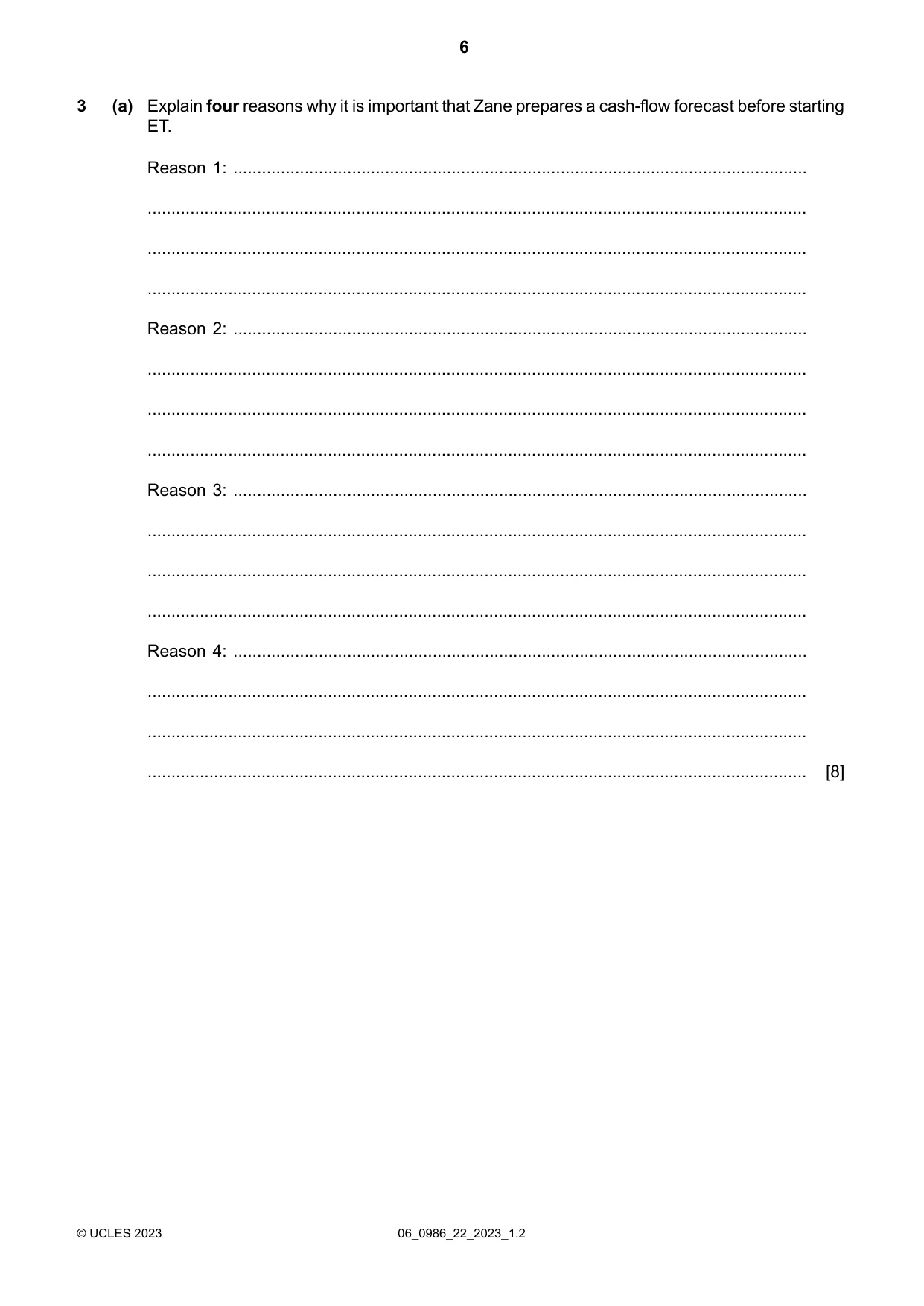
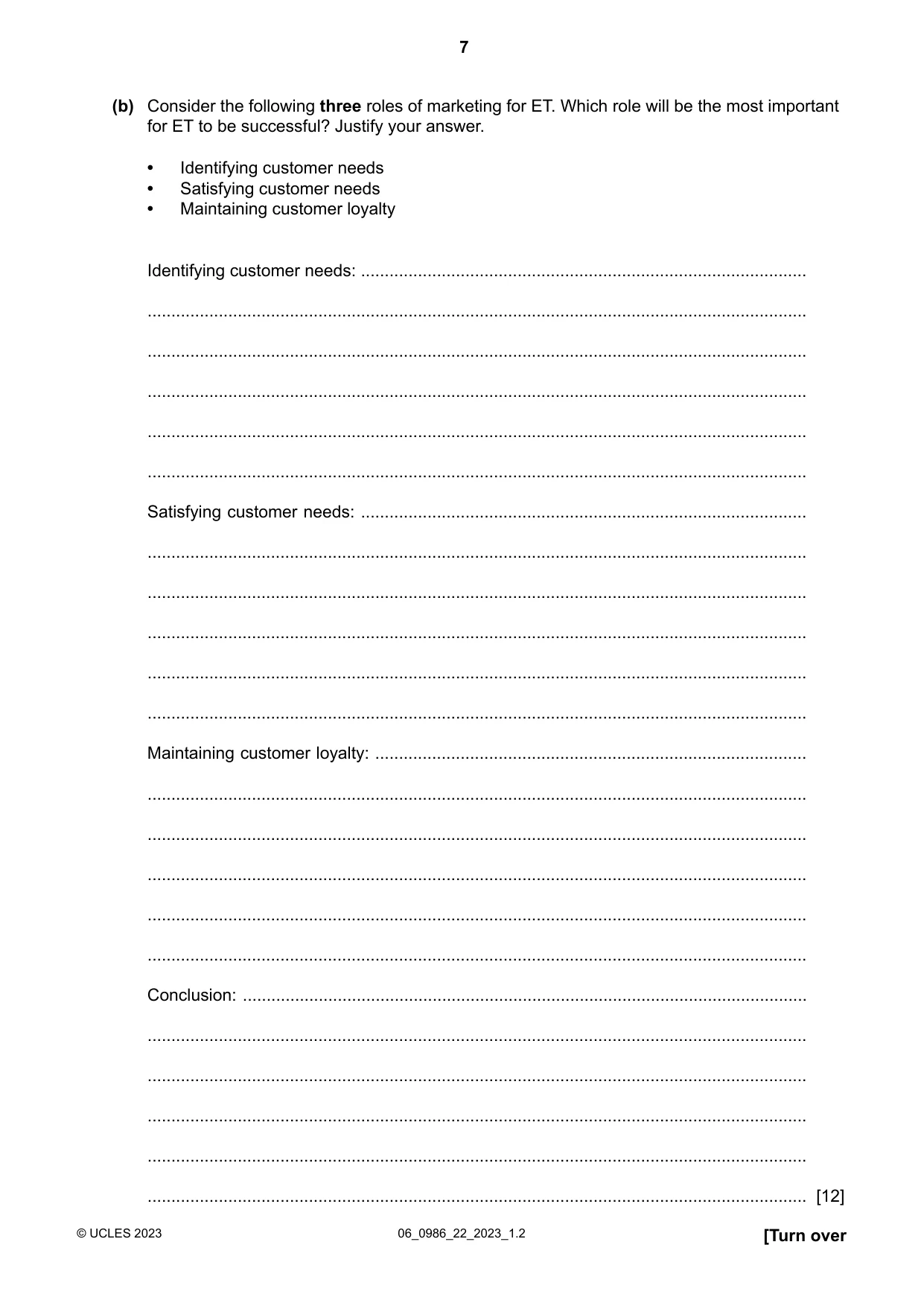
3 (a) Explain four reasons why it is important that Zane prepares a cash-flow forecast before starting ET. Reason 1: ......................................................................................................................... ........................................................................................................................................... ........................................................................................................................................... ........................................................................................................................................... Reason 2: ......................................................................................................................... ........................................................................................................................................... ........................................................................................................................................... ........................................................................................................................................... Reason 3: ......................................................................................................................... ........................................................................................................................................... ........................................................................................................................................... ........................................................................................................................................... Reason 4: ......................................................................................................................... ........................................................................................................................................... ........................................................................................................................................... ........................................................................................................................................... [8] (b) Consider the following three roles of marketing for ET. Which role will be the most important for ET to be successful? Justify your answer. • Identifying customer needs • Satisfying customer needs • Maintaining customer loyalty Identifying customer needs: .............................................................................................. ........................................................................................................................................... ........................................................................................................................................... ........................................................................................................................................... ........................................................................................................................................... ........................................................................................................................................... Satisfying customer needs: .............................................................................................. ........................................................................................................................................... ........................................................................................................................................... ........................................................................................................................................... ........................................................................................................................................... ........................................................................................................................................... Maintaining customer loyalty: ........................................................................................... ........................................................................................................................................... ........................................................................................................................................... ........................................................................................................................................... ........................................................................................................................................... ........................................................................................................................................... Conclusion: ....................................................................................................................... ........................................................................................................................................... ........................................................................................................................................... ........................................................................................................................................... ........................................................................................................................................... ........................................................................................................................................... [12]
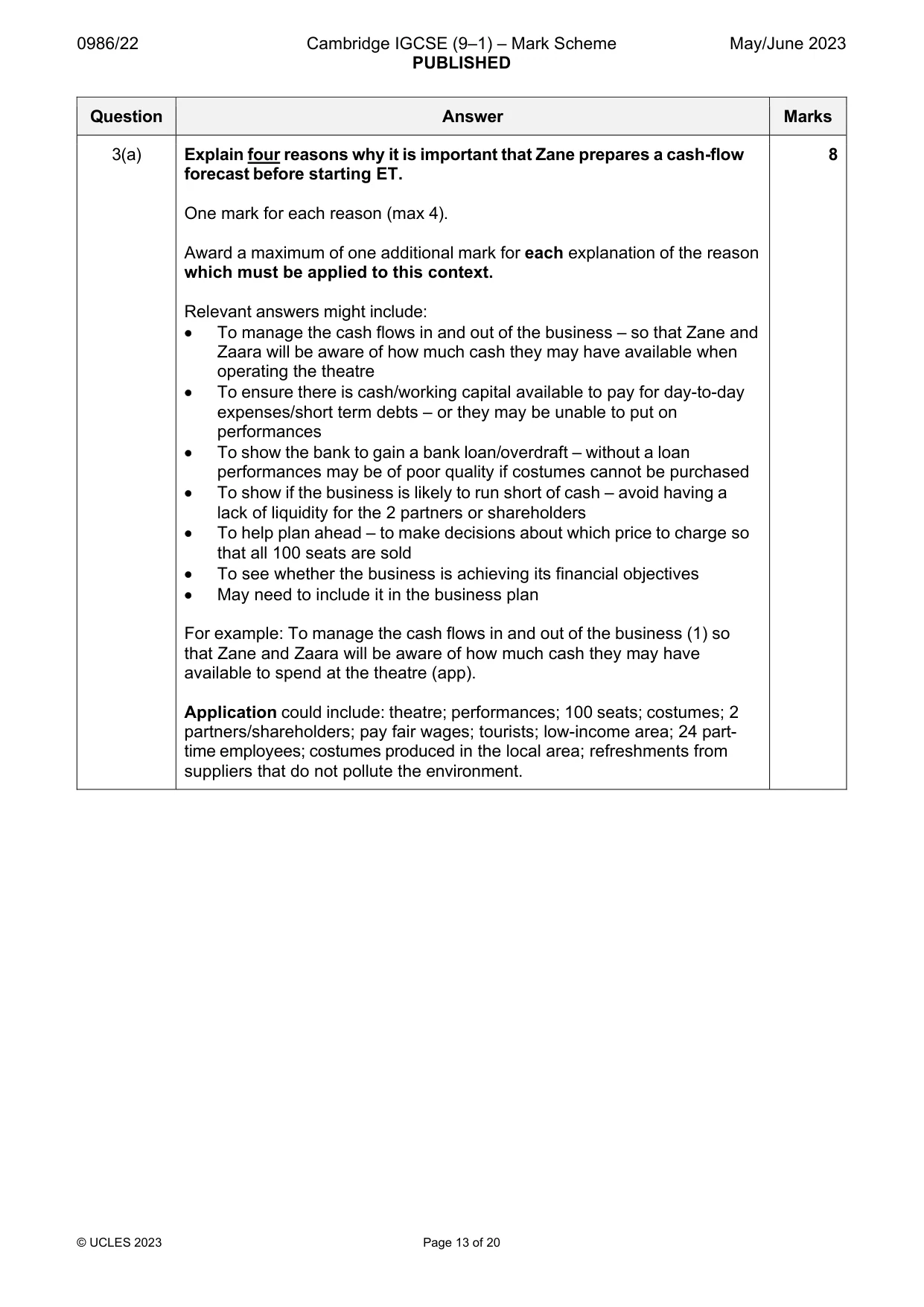
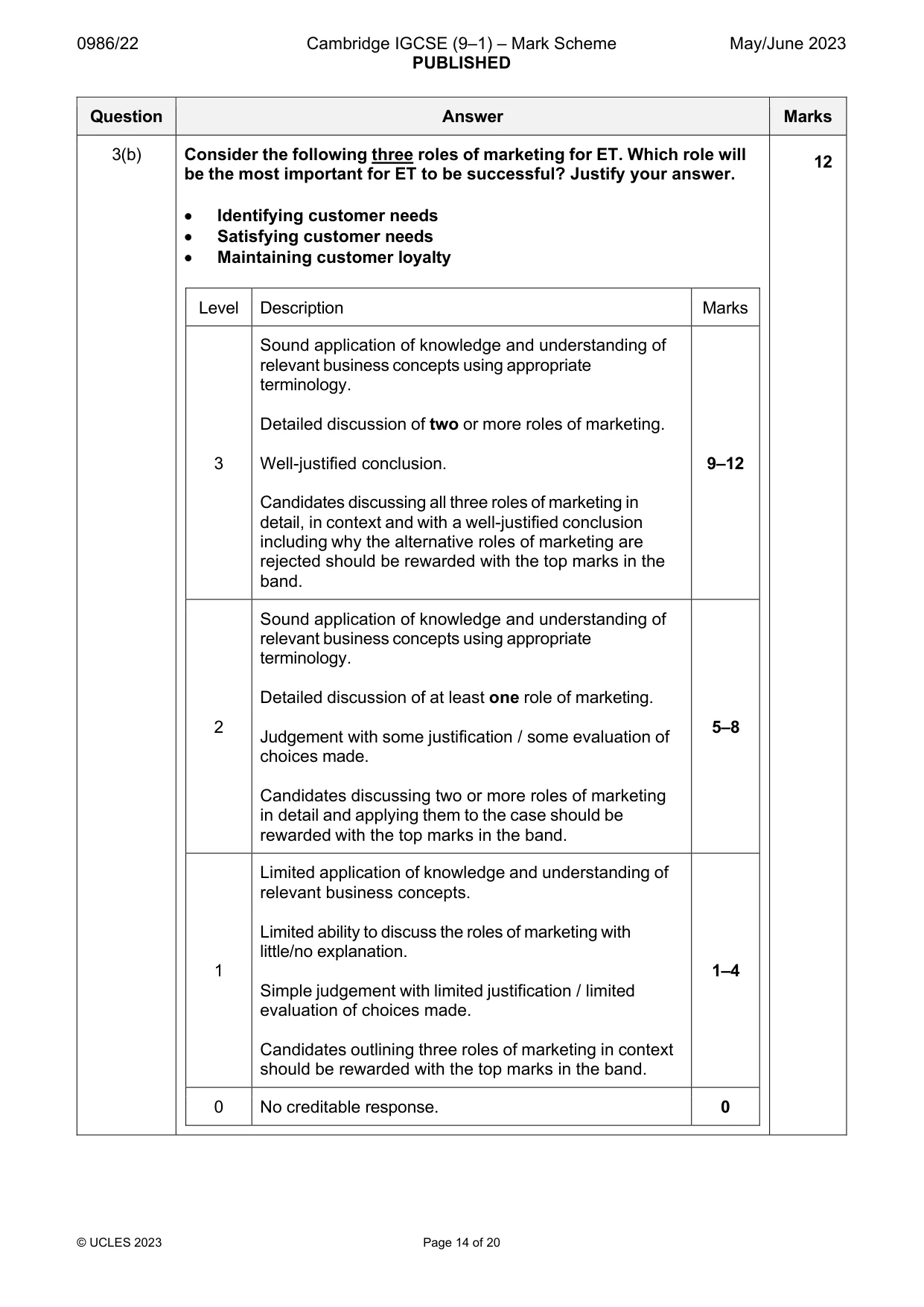
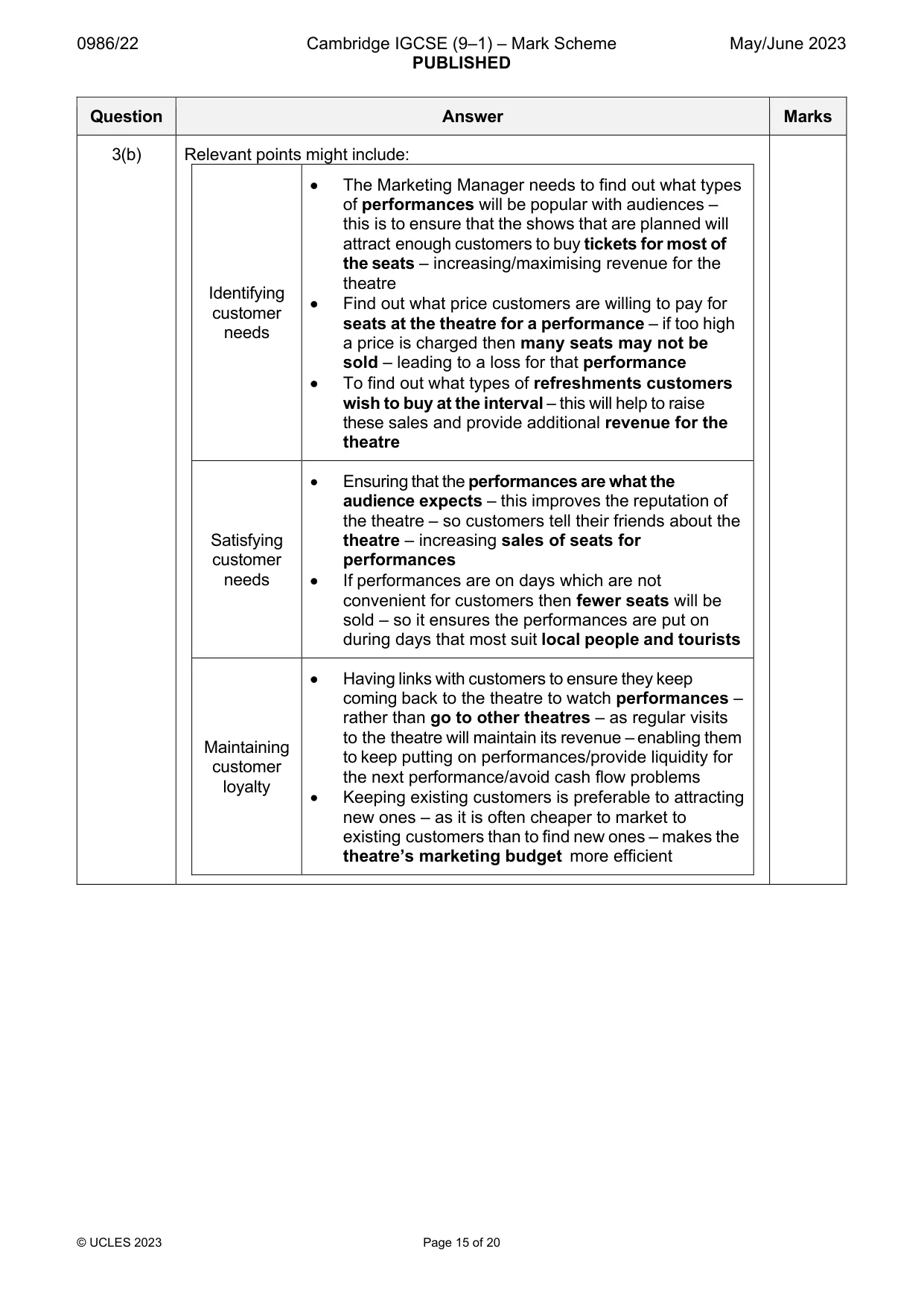
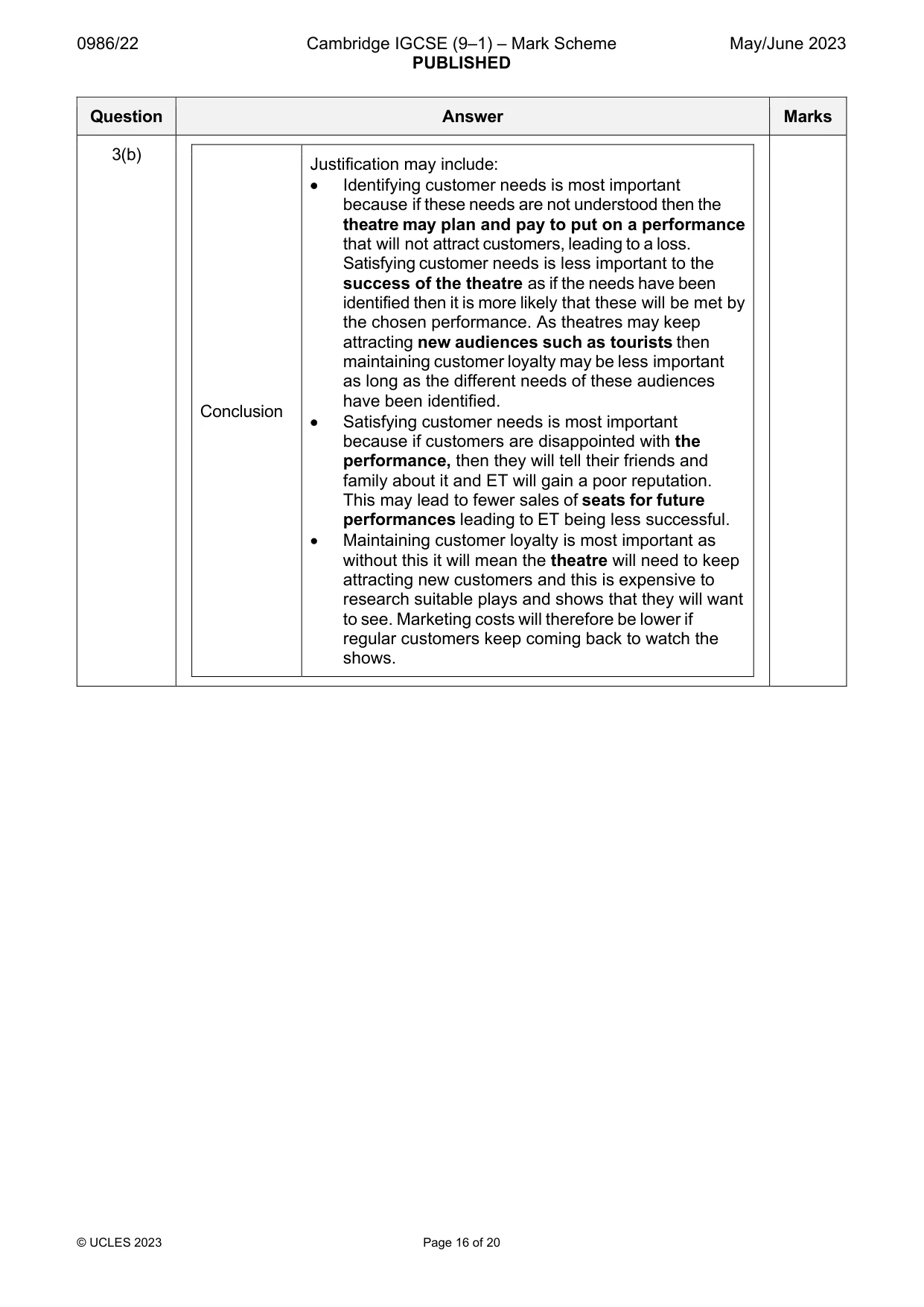
Mark scheme: 3(a) Explain four reasons why it is important that Zane prepares a cash-flow 8 forecast before starting ET. One mark for each reason (max 4). Award a maximum of one additional mark for each explanation of the reason which must be applied to this context. Relevant answers might include: To manage the cash flows in and out of the business – so that Zane and Zaara will be aware of how much cash they may have available when operating the theatre To ensure there is cash/working capital available to pay for day-to-day expenses/short term debts – or they may be unable to put on performances To show the bank to gain a bank loan/overdraft – without a loan performances may be of poor quality if costumes cannot be purchased To show if the business is likely to run short of cash – avoid having a lack of liquidity for the 2 partners or shareholders To help plan ahead – to make decisions about which price to charge so that all 100 seats are sold To see whether the business is achieving its financial objectives May need to include it in the business plan For example: To manage the cash flows in and out of the business (1) so that Zane and Zaara will be aware of how much cash they may have available to spend at the theatre (app). Application could include: theatre; performances; 100 seats; costumes; 2 partners/shareholders; pay fair wages; tourists; low-income area; 24 part- time employees; costumes produced in the local area; refreshments from suppliers that do not pollute the environment. 3(b) Consider the following three roles of marketing for ET. Which role will 12 be the most important for ET to be successful? Justify your answer. Identifying customer needs Satisfying customer needs Maintaining customer loyalty Level Description Marks Sound application of knowledge and understanding of relevant business concepts using appropriate terminology. Detailed discussion of two or more roles of marketing. 3 Well-justified conclusion. 9–12 Candidates discussing all three roles of marketing in detail, in context and with a well-justified conclusion including why the alternative roles of marketing are rejected should be rewarded with the top marks in the band. Sound application of knowledge and understanding of relevant business concepts using appropriate terminology. Detailed discussion of at least one role of marketing. 2 5–8 Judgement with some justification / some evaluation of choices made. Candidates discussing two or more roles of marketing in detail and applying them to the case should be rewarded with the top marks in the band. Limited application of knowledge and understanding of relevant business concepts. Limited ability to discuss the roles of marketing with little/no explanation. 1 1–4 Simple judgement with limited justification / limited evaluation of choices made. Candidates outlining three roles of marketing in context should be rewarded with the top marks in the band. 0 No creditable response. 0 3(b) Relevant points might include: The Marketing Manager needs to find out what types of performances will be popular with audiences – this is to ensure that the shows that are planned will attract enough customers to buy tickets for most of the seats – increasing/maximising revenue for the theatre Identifying Find out what price customers are willing to pay for customer seats at the theatre for a performance – if too high needs a price is charged then many seats may not be sold – leading to a loss for that performance To find out what types of refreshments customers wish to buy at the interval – this will help to raise these sales and provide additional revenue for the theatre Ensuring that the performances are what the audience expects – this improves the reputation of the theatre – so customers tell their friends about the Satisfying theatre – increasing sales of seats for customer performances needs If performances are on days which are not convenient for customers then fewer seats will be sold – so it ensures the performances are put on during days that most suit local people and tourists Having links with customers to ensure they keep coming back to the theatre to watch performances – rather than go to other theatres – as regular visits to the theatre will maintain its revenue – enabling them Maintaining to keep putting on performances/provide liquidity for customer the next performance/avoid cash flow problems loyalty Keeping existing customers is preferable to attracting new ones – as it is often cheaper to market to existing customers than to find new ones – makes the theatre’s marketing budget more efficient 3(b) Justification may include: Identifying customer needs is most important because if these needs are not understood then the theatre may plan and pay to put on a performance that will not attract customers, leading to a loss. Satisfying customer needs is less important to the success of the theatre as if the needs have been identified then it is more likely that these will be met by the chosen performance. As theatres may keep attracting new audiences such as tourists then maintaining customer loyalty may be less important as long as the different needs of these audiences have been identified. Conclusion Satisfying customer needs is most important because if customers are disappointed with the performance, then they will tell their friends and family about it and ET will gain a poor reputation. This may lead to fewer sales of seats for future performances leading to ET being less successful. Maintaining customer loyalty is most important as without this it will mean the theatre will need to keep attracting new customers and this is expensive to research suitable plays and shows that they will want to see. Marketing costs will therefore be lower if regular customers keep coming back to watch the shows.
Q4 · Explain two leadership styles that Zane and Zaara could use when managing ET’s employees
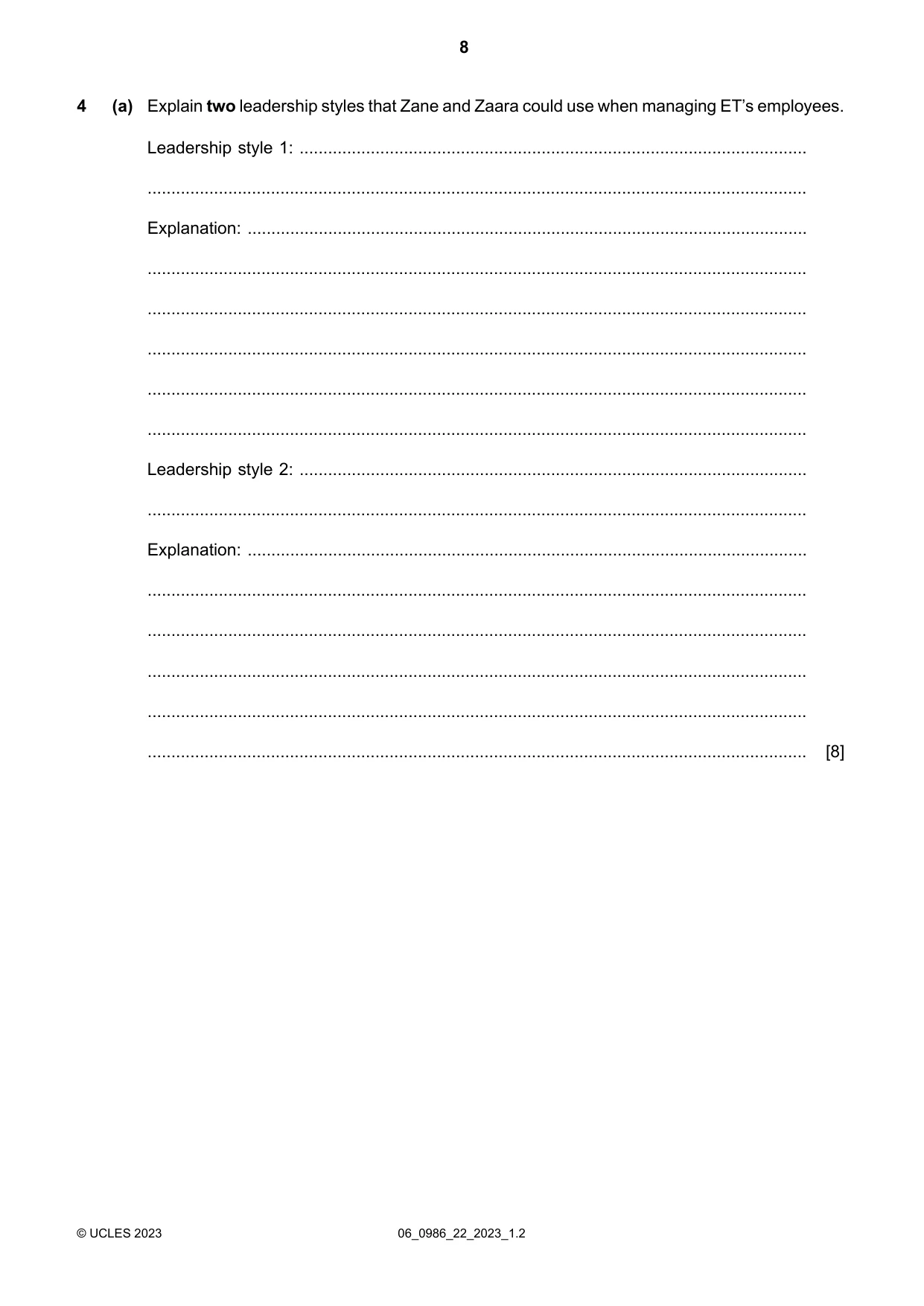
4 (a) Explain two leadership styles that Zane and Zaara could use when managing ET’s employees. Leadership style 1: ........................................................................................................... ........................................................................................................................................... Explanation: ...................................................................................................................... ........................................................................................................................................... ........................................................................................................................................... ........................................................................................................................................... ........................................................................................................................................... ........................................................................................................................................... Leadership style 2: ........................................................................................................... ........................................................................................................................................... Explanation: ...................................................................................................................... ........................................................................................................................................... ........................................................................................................................................... ........................................................................................................................................... ........................................................................................................................................... ........................................................................................................................................... [8] (b) Consider the following three ethical issues for the theatre. Which ethical issue is likely to have the biggest effect on ET? Justify your answer. • Paying fair wages to employees • Only buying costumes produced in the local community • Purchasing all refreshments from suppliers that do not pollute the environment Paying fair wages to employees: ...................................................................................... ........................................................................................................................................... ........................................................................................................................................... ........................................................................................................................................... ........................................................................................................................................... ........................................................................................................................................... Only buying costumes produced in the local community: ................................................ ........................................................................................................................................... ........................................................................................................................................... ........................................................................................................................................... ........................................................................................................................................... ........................................................................................................................................... Purchasing all refreshments from suppliers that do not pollute the environment: ............ ........................................................................................................................................... ........................................................................................................................................... ........................................................................................................................................... ........................................................................................................................................... ........................................................................................................................................... Conclusion: ....................................................................................................................... ........................................................................................................................................... ........................................................................................................................................... ........................................................................................................................................... ........................................................................................................................................... ........................................................................................................................................... [12]
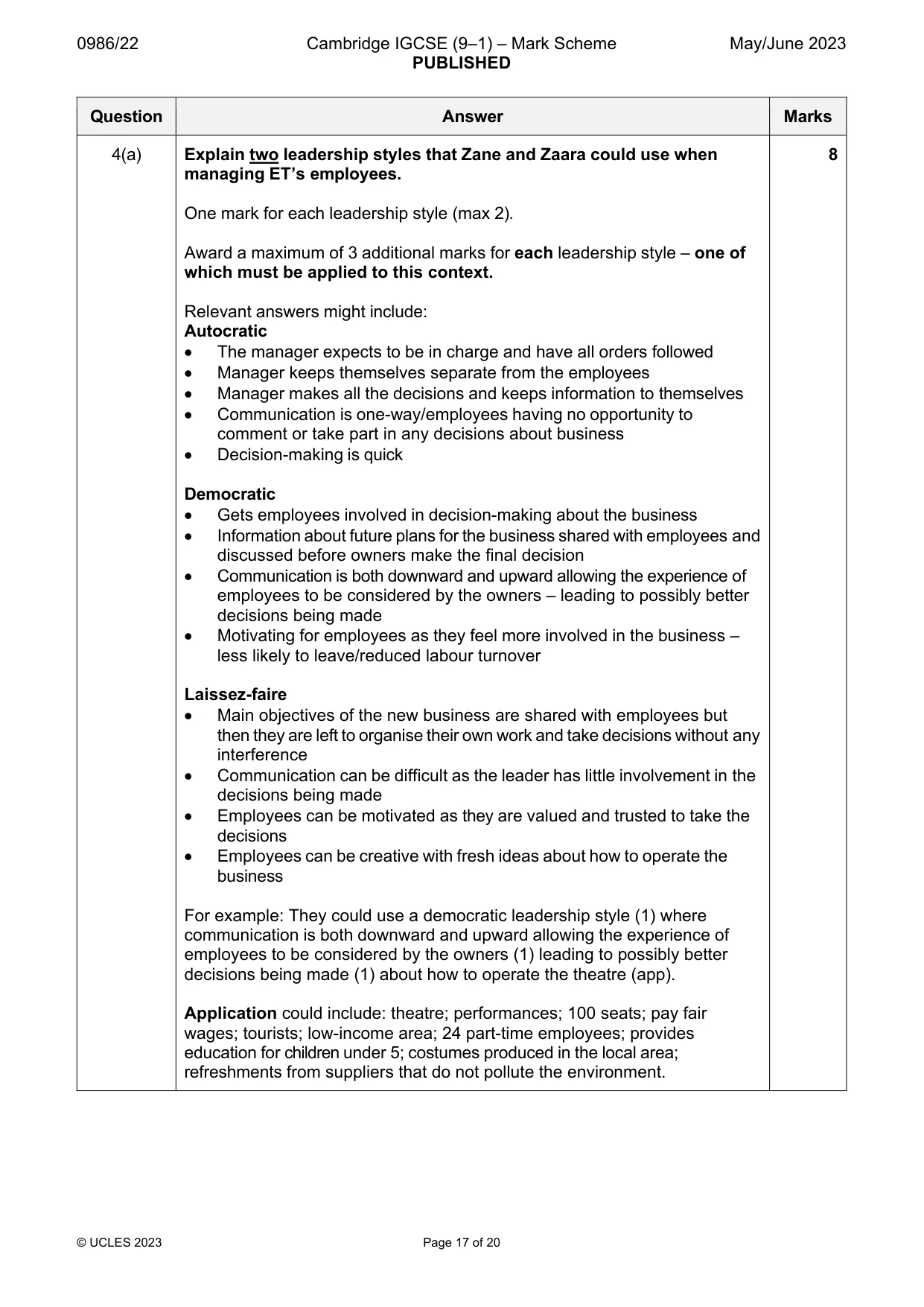
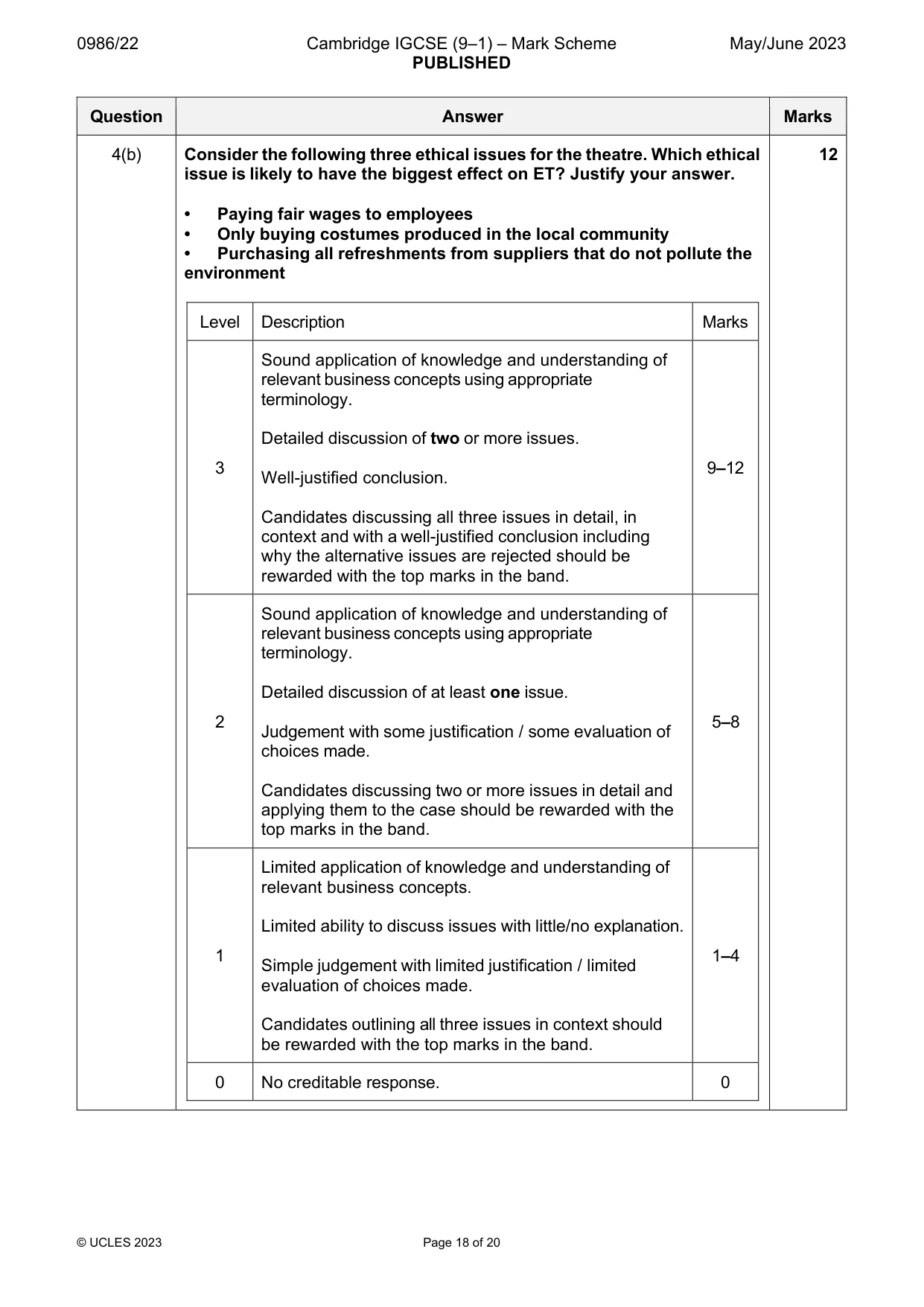
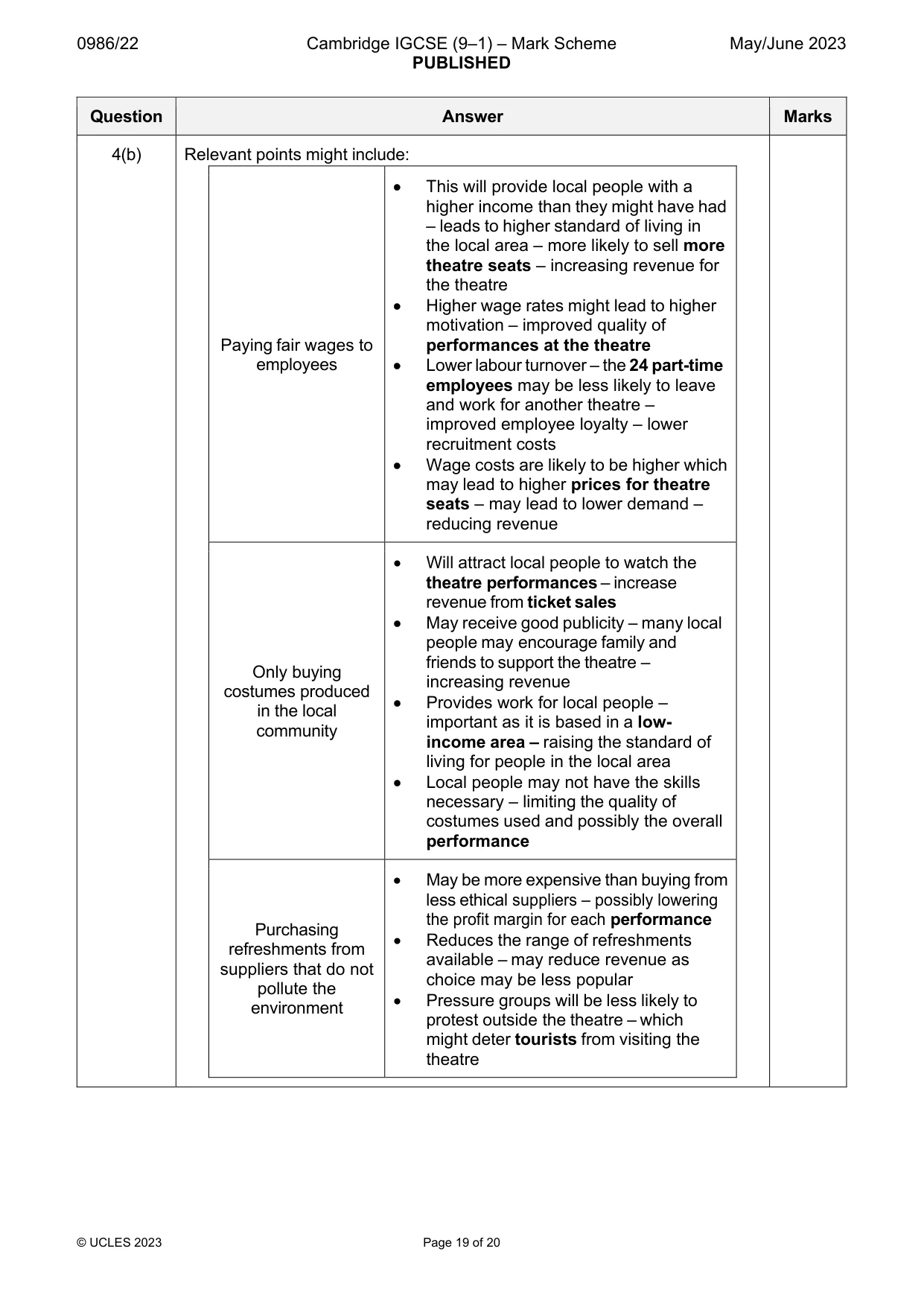
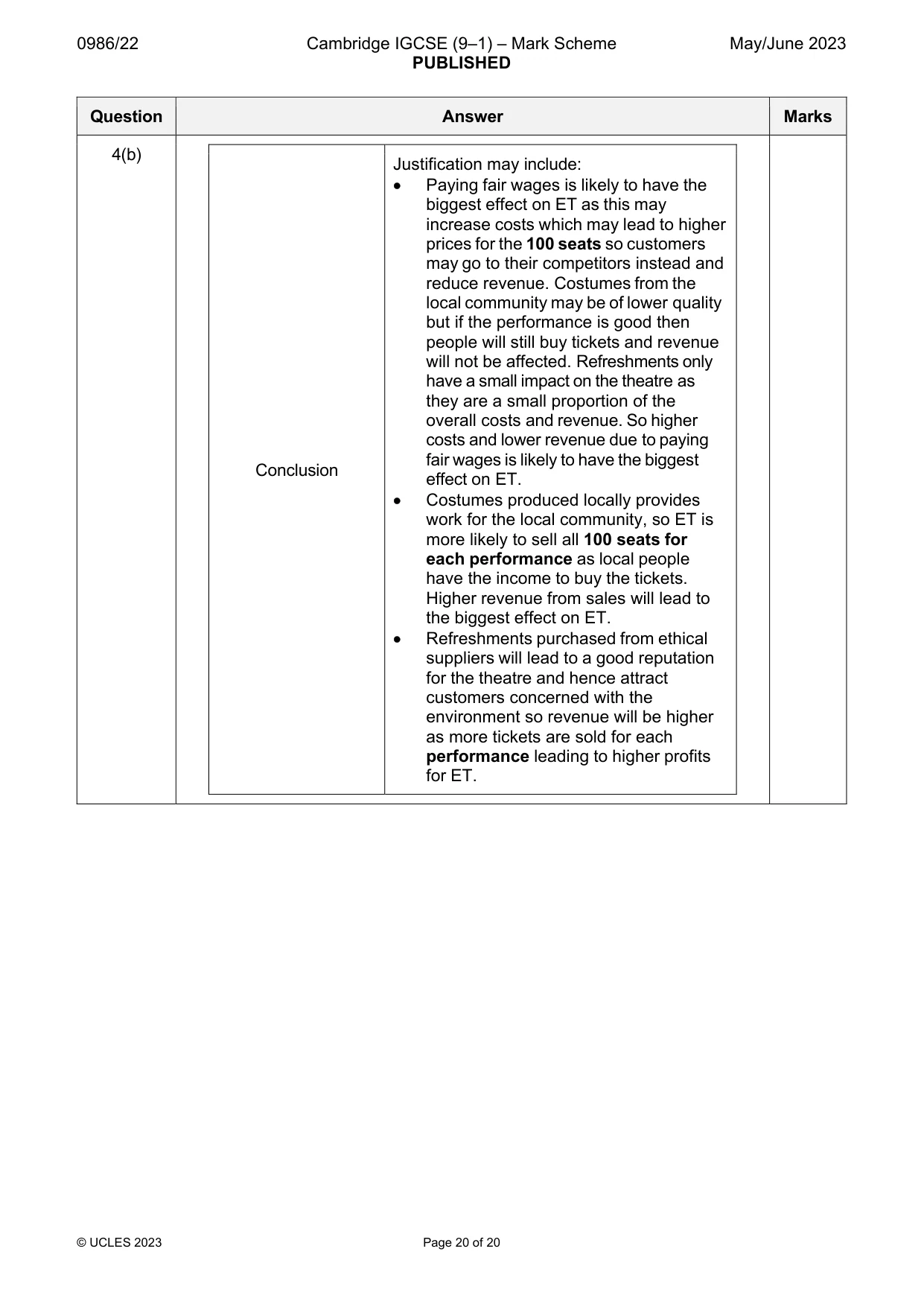
Mark scheme: 4(a) Explain two leadership styles that Zane and Zaara could use when 8 managing ET’s employees. One mark for each leadership style (max 2). Award a maximum of 3 additional marks for each leadership style – one of which must be applied to this context. Relevant answers might include: Autocratic The manager expects to be in charge and have all orders followed Manager keeps themselves separate from the employees Manager makes all the decisions and keeps information to themselves Communication is one-way/employees having no opportunity to comment or take part in any decisions about business Decision-making is quick Democratic Gets employees involved in decision-making about the business Information about future plans for the business shared with employees and discussed before owners make the final decision Communication is both downward and upward allowing the experience of employees to be considered by the owners – leading to possibly better decisions being made Motivating for employees as they feel more involved in the business – less likely to leave/reduced labour turnover Laissez-faire Main objectives of the new business are shared with employees but then they are left to organise their own work and take decisions without any interference Communication can be difficult as the leader has little involvement in the decisions being made Employees can be motivated as they are valued and trusted to take the decisions Employees can be creative with fresh ideas about how to operate the business For example: They could use a democratic leadership style (1) where communication is both downward and upward allowing the experience of employees to be considered by the owners (1) leading to possibly better decisions being made (1) about how to operate the theatre (app). Application could include: theatre; performances; 100 seats; pay fair wages; tourists; low-income area; 24 part-time employees; provides education for children under 5; costumes produced in the local area; refreshments from suppliers that do not pollute the environment. 4(b) Consider the following three ethical issues for the theatre. Which ethical 12 issue is likely to have the biggest effect on ET? Justify your answer. • Paying fair wages to employees • Only buying costumes produced in the local community • Purchasing all refreshments from suppliers that do not pollute the environment Level Description Marks Sound application of knowledge and understanding of relevant business concepts using appropriate terminology. Detailed discussion of two or more issues. 3 9–12 Well-justified conclusion. Candidates discussing all three issues in detail, in context and with a well-justified conclusion including why the alternative issues are rejected should be rewarded with the top marks in the band. Sound application of knowledge and understanding of relevant business concepts using appropriate terminology. Detailed discussion of at least one issue. 2 5–8 Judgement with some justification / some evaluation of choices made. Candidates discussing two or more issues in detail and applying them to the case should be rewarded with the top marks in the band. Limited application of knowledge and understanding of relevant business concepts. Limited ability to discuss issues with little/no explanation. 1 1–4 Simple judgement with limited justification / limited evaluation of choices made. Candidates outlining all three issues in context should be rewarded with the top marks in the band. 0 No creditable response. 0 4(b) Relevant points might include: This will provide local people with a higher income than they might have had – leads to higher standard of living in the local area – more likely to sell more theatre seats – increasing revenue for the theatre Higher wage rates might lead to higher motivation – improved quality of Paying fair wages to performances at the theatre employees Lower labour turnover – the 24 part-time employees may be less likely to leave and work for another theatre – improved employee loyalty – lower recruitment costs Wage costs are likely to be higher which may lead to higher prices for theatre seats – may lead to lower demand – reducing revenue Will attract local people to watch the theatre performances – increase revenue from ticket sales May receive good publicity – many local people may encourage family and friends to support the theatre – Only buying increasing revenue costumes produced Provides work for local people – in the local important as it is based in a low- community income area – raising the standard of living for people in the local area Local people may not have the skills necessary – limiting the quality of costumes used and possibly the overall performance May be more expensive than buying from less ethical suppliers – possibly lowering the profit margin for each performance Purchasing Reduces the range of refreshments refreshments from available – may reduce revenue as suppliers that do not choice may be less popular pollute the Pressure groups will be less likely to environment protest outside the theatre – which might deter tourists from visiting the theatre 4(b) Justification may include: Paying fair wages is likely to have the biggest effect on ET as this may increase costs which may lead to higher prices for the 100 seats so customers may go to their competitors instead and reduce revenue. Costumes from the local community may be of lower quality but if the performance is good then people will still buy tickets and revenue will not be affected. Refreshments only have a small impact on the theatre as they are a small proportion of the overall costs and revenue. So higher costs and lower revenue due to paying fair wages is likely to have the biggest Conclusion effect on ET. Costumes produced locally provides work for the local community, so ET is more likely to sell all 100 seats for each performance as local people have the income to buy the tickets. Higher revenue from sales will lead to the biggest effect on ET. Refreshments purchased from ethical suppliers will lead to a good reputation for the theatre and hence attract customers concerned with the environment so revenue will be higher as more tickets are sold for each performance leading to higher profits for ET.
What was in this paper
The subtopics covered by these 4 questions, and how many questions each got. Open one in a new tab to see every Cambridge question on it.
What you needed in this session
Cambridge’s own grade thresholds for 2023 May/June, Paper 2 · Variant 2. A higher threshold means an easier paper — the bar moves with how the cohort did.