Cambridge IGCSE Biology (BES) 0438 — 2012 May/June Paper 3 · Variant 3
0438/33/M/J/12 · 80 marks · ≈90 min
The question paper and its mark scheme, free to read here and free to download. This is Cambridge’s own paper, exactly as it was sat.
Question paper24 pages


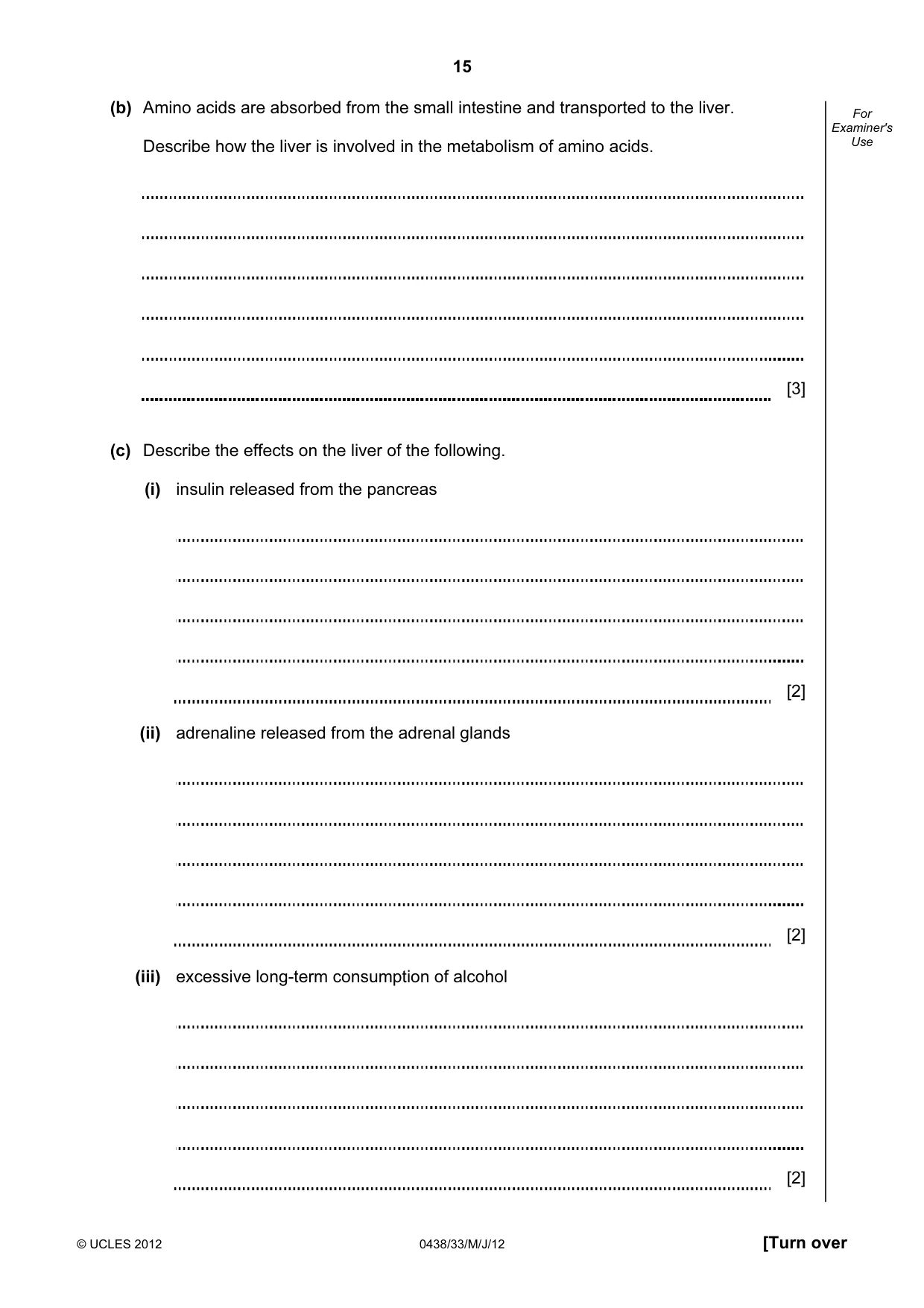
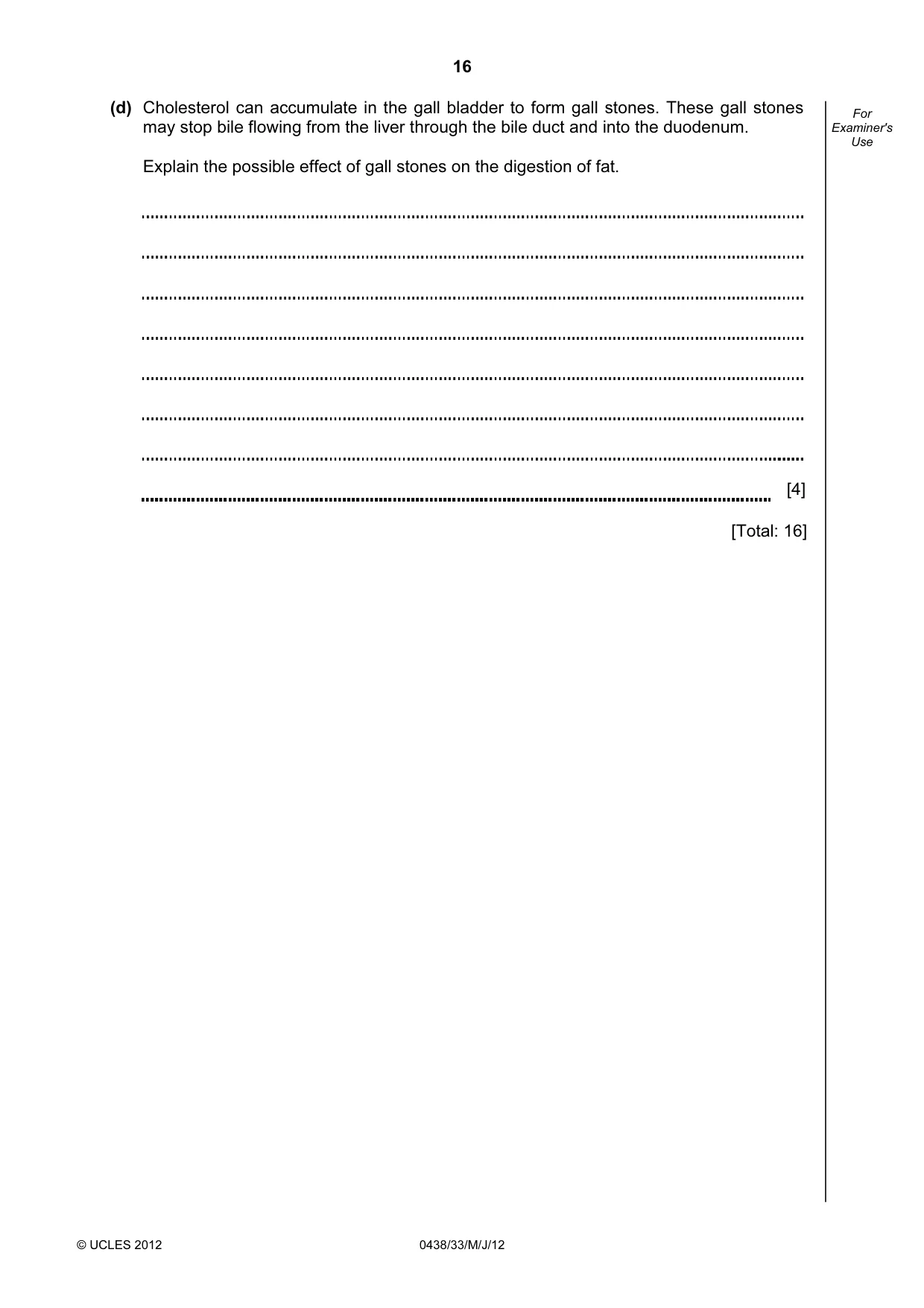
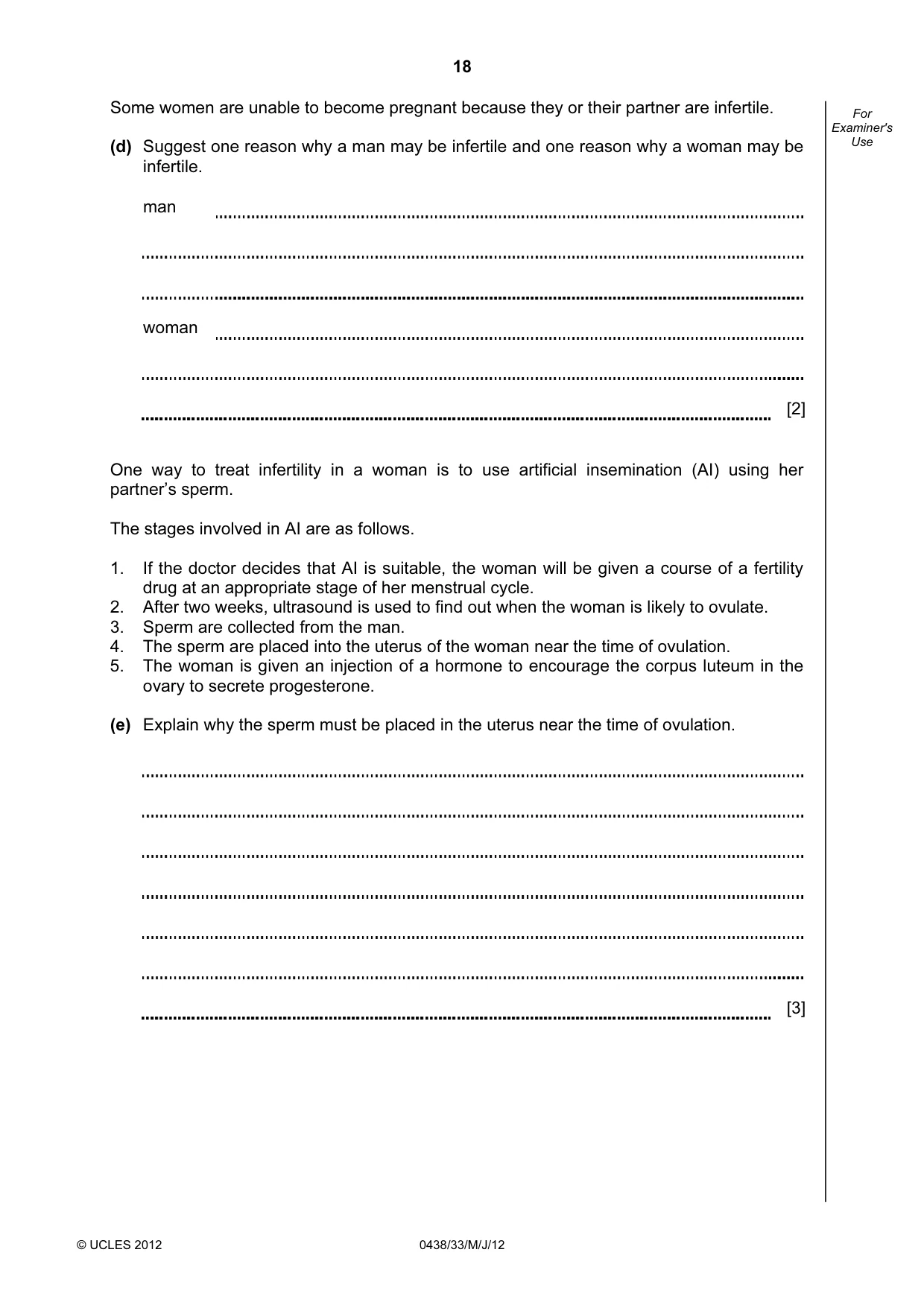



Mark scheme10 pages
Answers below. Sit the paper first if you are practising.
Paper as text
Question paper, page 1
This document consists of 19 printed pages and 5 blank pages. IB12 06_0438_33/RP © UCLES 2012 [Turn over *6658078699* For Examiner's Use 1 2 3 4 5 6 Total UNIVERSITY OF CAMBRIDGE INTERNATIONAL EXAMINATIONS International General Certificate of Secondary Education BIOLOGY (US) 0438/33 Paper 3 Extended May/June 2012 1 hour 15 minutes Candidates answer on the Question Paper. No Additional Materials are required. READ THESE INSTRUCTIONS FIRST Write your Center number, candidate number and name on all the work you hand in. Write in dark blue or black pen. You may use a pencil for any diagrams or graphs. Do not use staples, paper clips, highlighters, glue or correction fluid. DO NOT WRITE IN ANY BARCODES. Answer all questions. At the end of the examination, fasten all your work securely together. The number of marks is given in brackets [ ] at the end of each question or part question.
Question paper, page 2
2 © UCLES 2012 0438/33/M/J/12 BLANK PAGE
Question paper, page 3
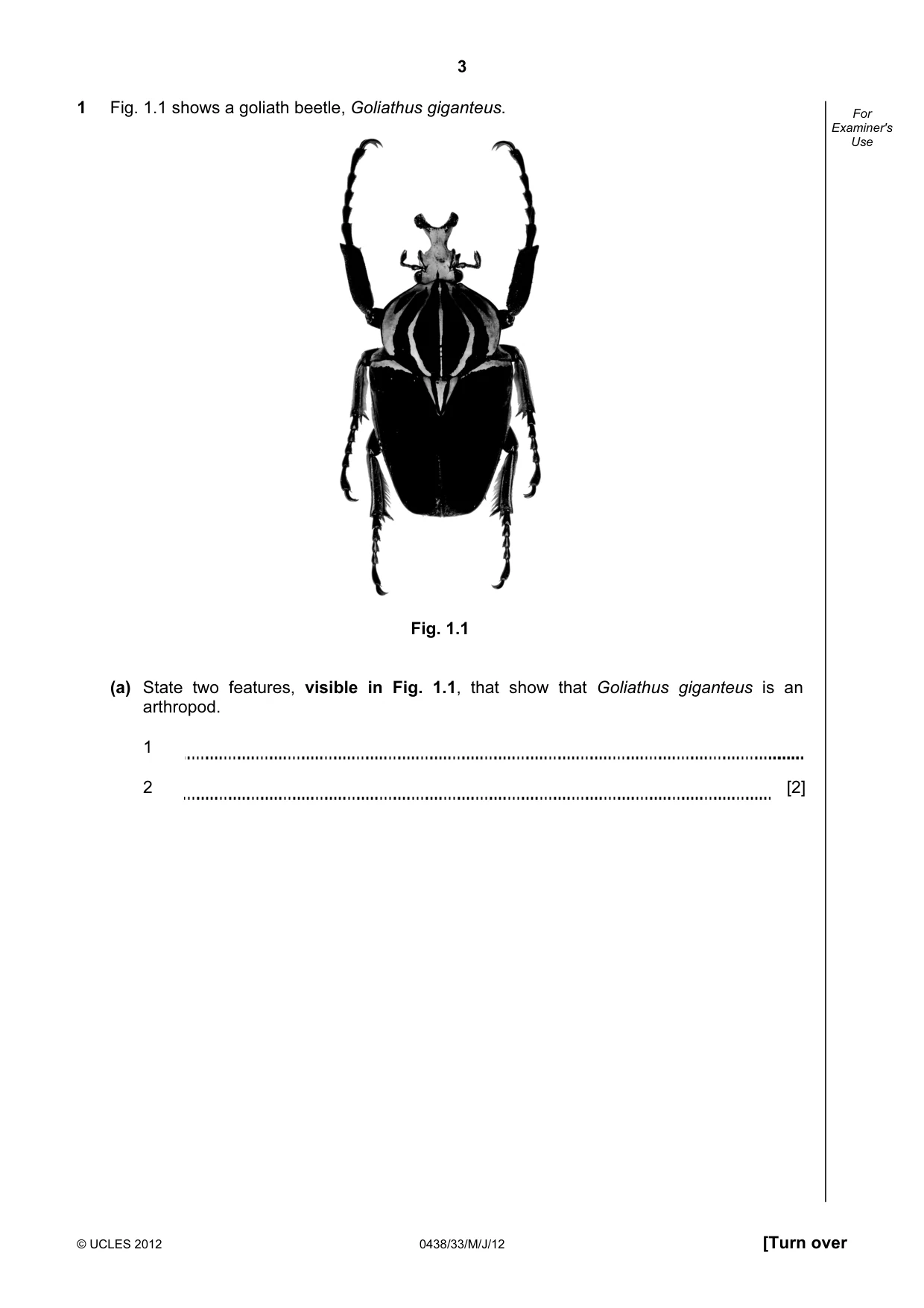
3 © UCLES 2012 0438/33/M/J/12 [Turn over For Examiner's Use 1 Fig. 1.1 shows a goliath beetle, Goliathus giganteus. Fig. 1.1 (a) State two features, visible in Fig. 1.1, that show that Goliathus giganteus is an arthropod. 1 2 [2]
Question paper, page 4
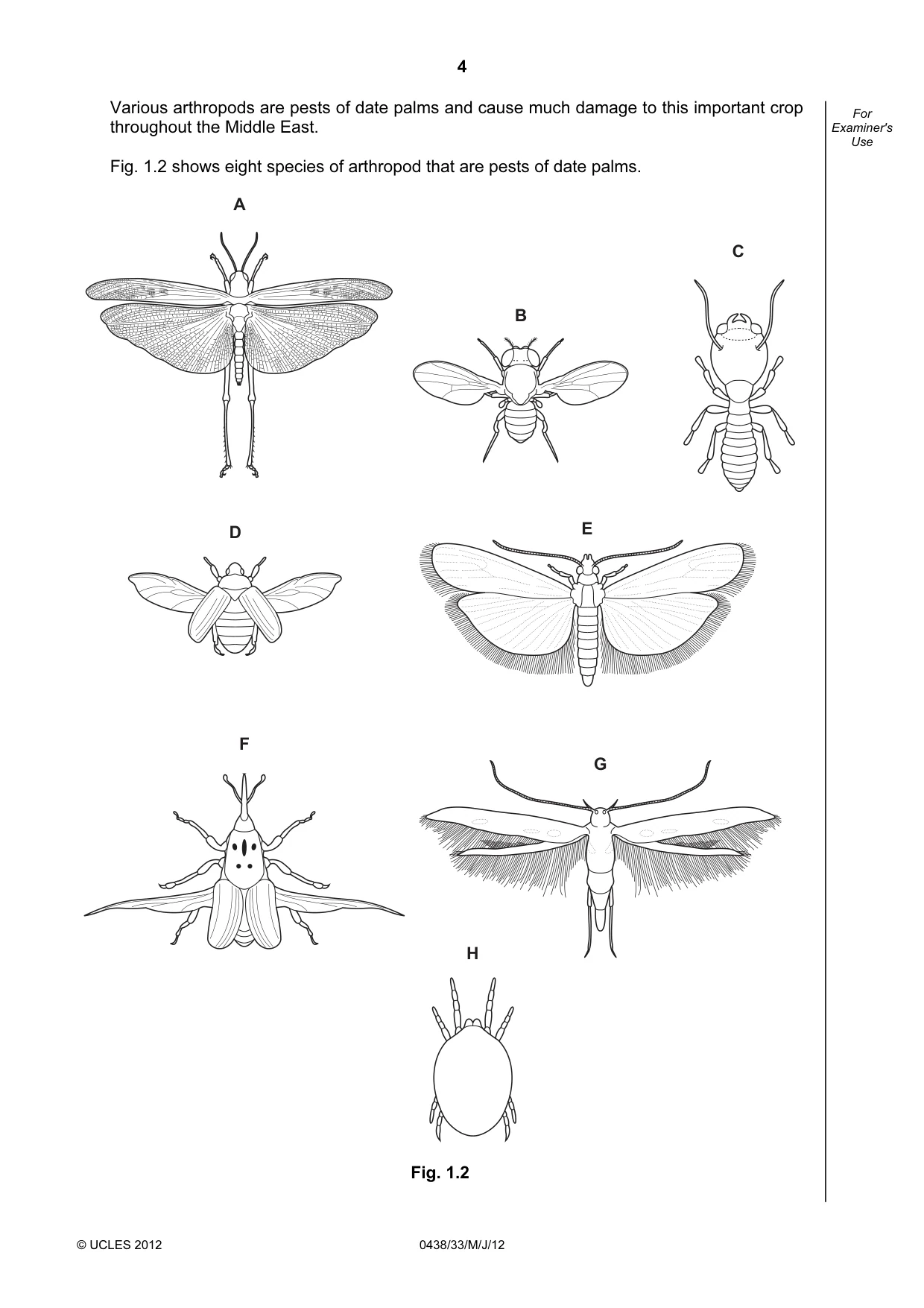
4 © UCLES 2012 0438/33/M/J/12 For Examiner's Use Various arthropods are pests of date palms and cause much damage to this important crop throughout the Middle East. Fig. 1.2 shows eight species of arthropod that are pests of date palms. A B D E C G H F Fig. 1.2
Question paper, page 5
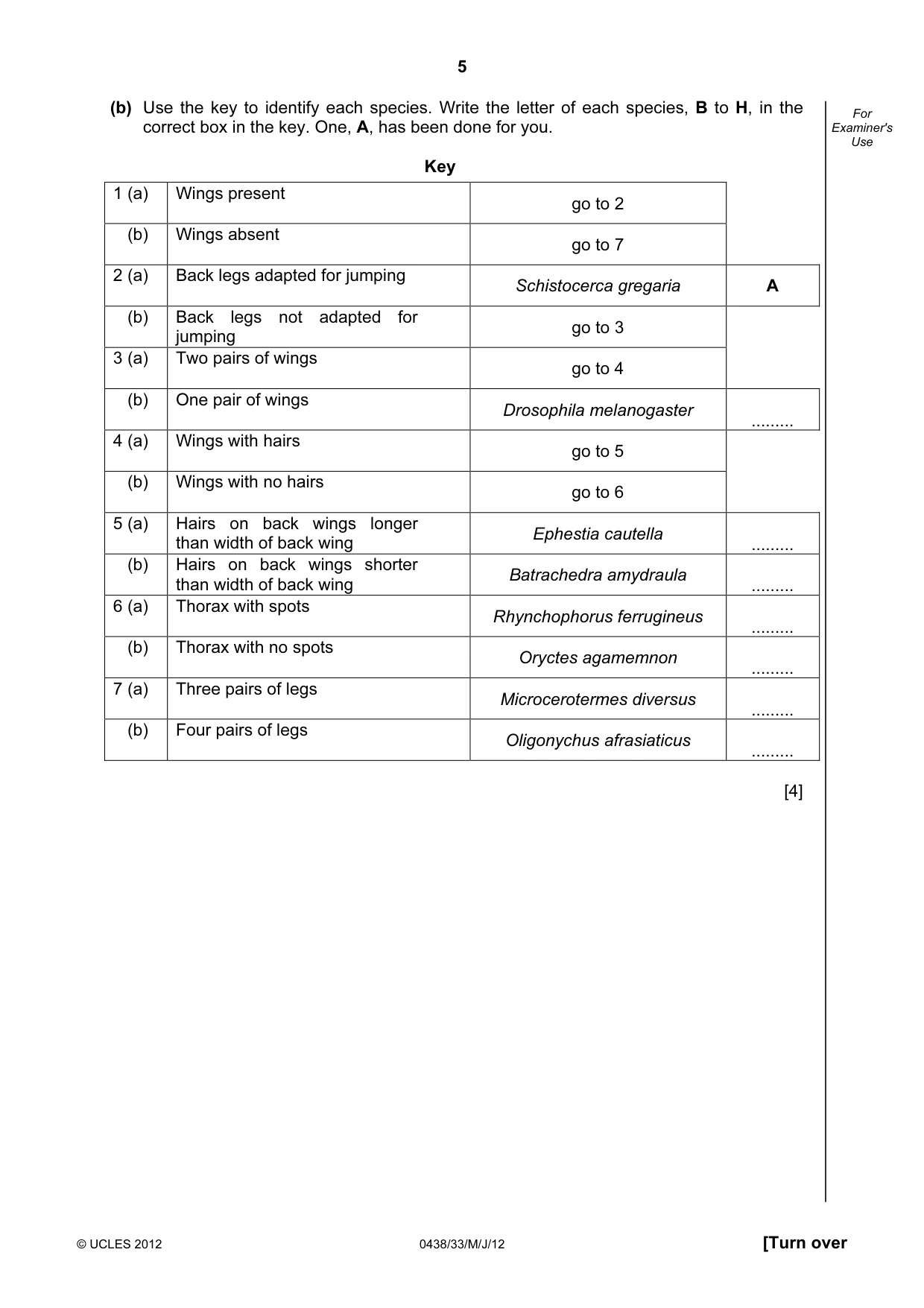
5 © UCLES 2012 0438/33/M/J/12 [Turn over For Examiner's Use (b) Use the key to identify each species. Write the letter of each species, B to H, in the correct box in the key. One, A, has been done for you. Key [4] 1 (a) Wings present go to 2 (b) Wings absent go to 7 2 (a) Back legs adapted for jumping Schistocerca gregaria A (b) Back legs not adapted for jumping go to 3 3 (a) Two pairs of wings go to 4 (b) One pair of wings Drosophila melanogaster … 4 (a) Wings with hairs go to 5 (b) Wings with no hairs go to 6 5 (a) Hairs on back wings longer than width of back wing Ephestia cautella … (b) Hairs on back wings shorter than width of back wing Batrachedra amydraula … 6 (a) Thorax with spots Rhynchophorus ferrugineus … (b) Thorax with no spots Oryctes agamemnon … 7 (a) Three pairs of legs Microcerotermes diversus … (b) Four pairs of legs Oligonychus afrasiaticus …
Question paper, page 6
6 © UCLES 2012 0438/33/M/J/12 BLANK PAGE
Question paper, page 7
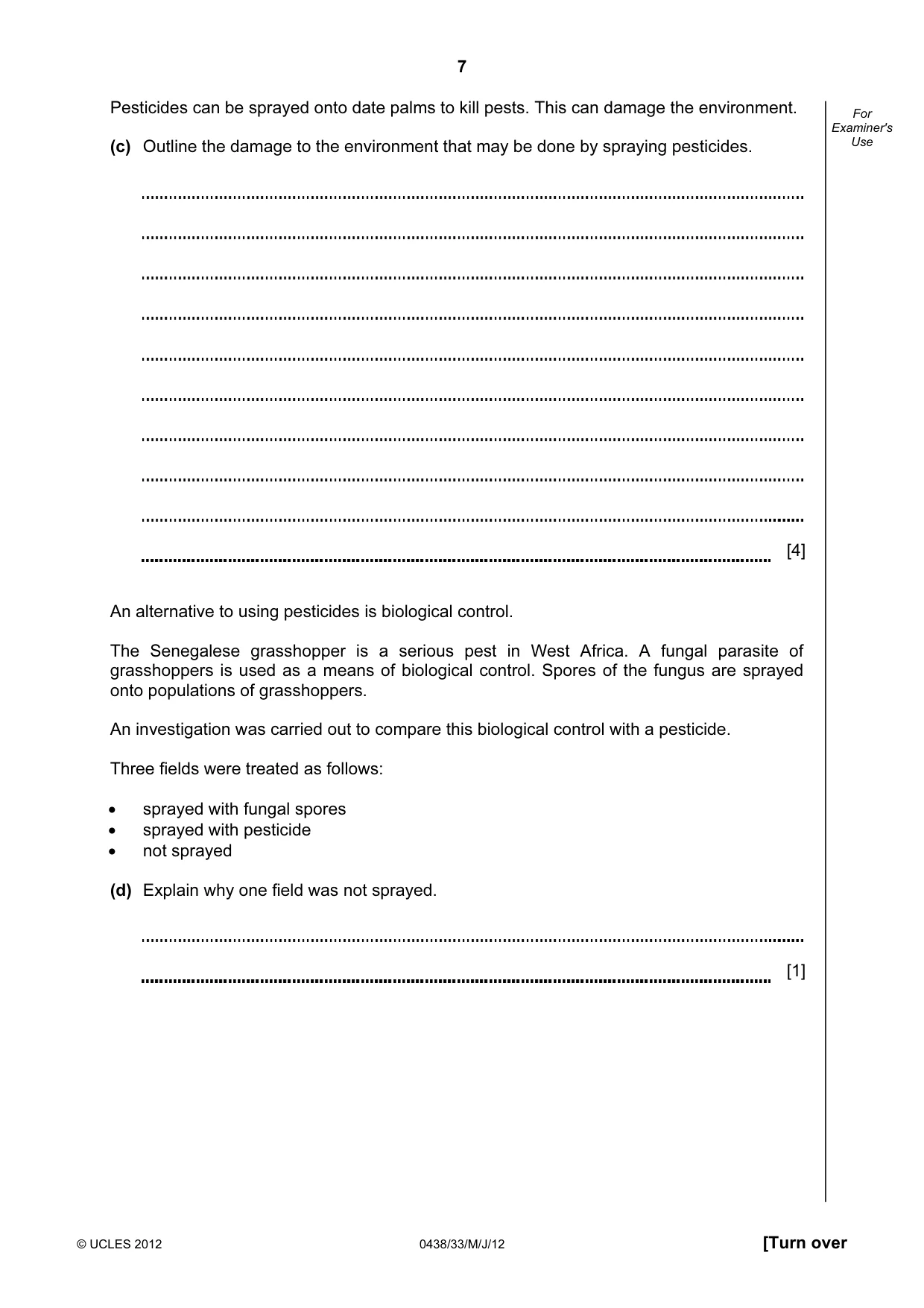
7 © UCLES 2012 0438/33/M/J/12 [Turn over For Examiner's Use Pesticides can be sprayed onto date palms to kill pests. This can damage the environment. (c) Outline the damage to the environment that may be done by spraying pesticides. [4] An alternative to using pesticides is biological control. The Senegalese grasshopper is a serious pest in West Africa. A fungal parasite of grasshoppers is used as a means of biological control. Spores of the fungus are sprayed onto populations of grasshoppers. An investigation was carried out to compare this biological control with a pesticide. Three fields were treated as follows: • sprayed with fungal spores • sprayed with pesticide • not sprayed (d) Explain why one field was not sprayed. [1]
Question paper, page 8
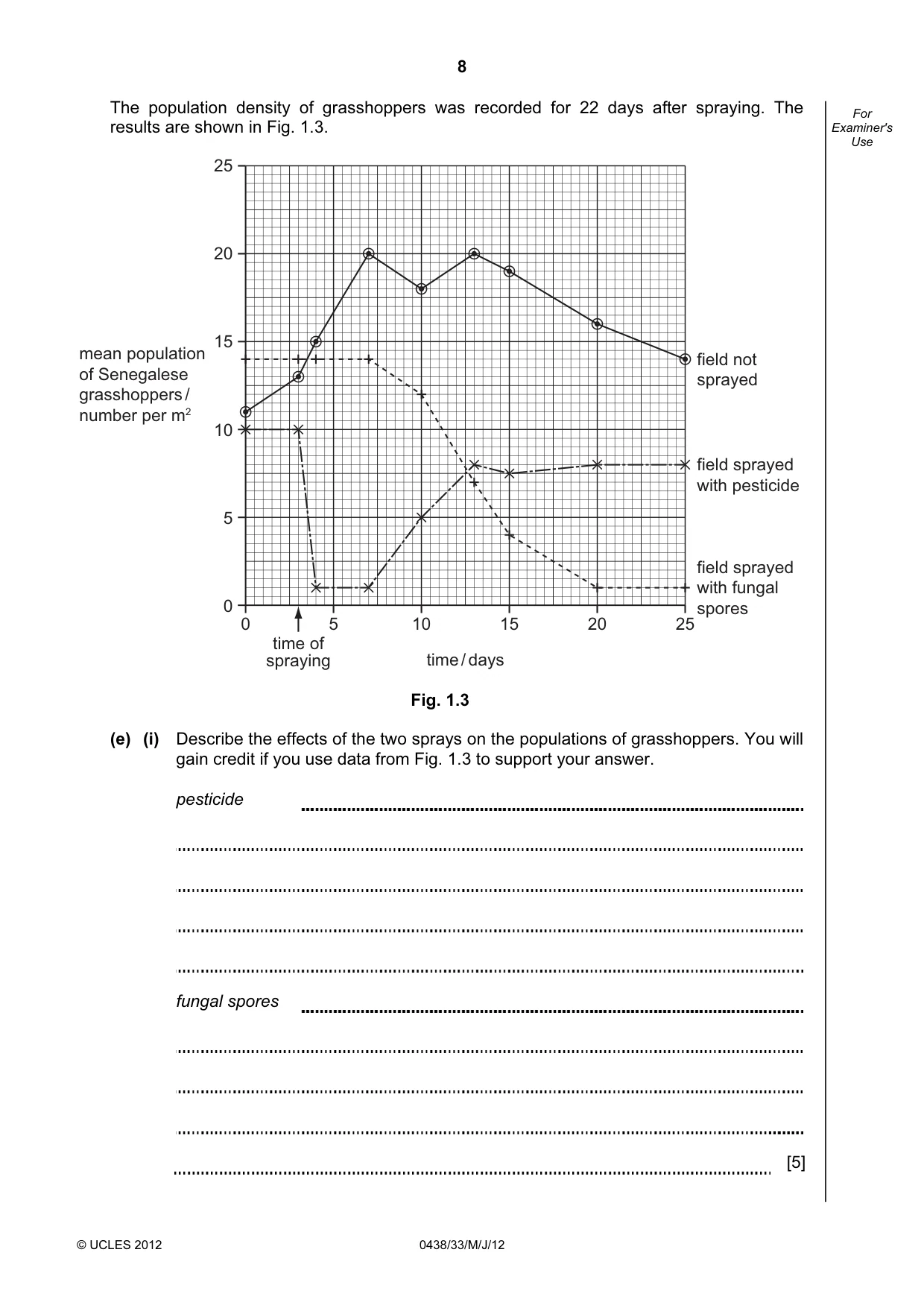
8 © UCLES 2012 0438/33/M/J/12 For Examiner's Use The population density of grasshoppers was recorded for 22 days after spraying. The results are shown in Fig. 1.3. 0 5 10 15 20 25 25 20 15 10 5 0 mean population of Senegalese grasshoppers / number per m2 time / days time of spraying field not sprayed field sprayed with pesticide field sprayed with fungal spores Fig. 1.3 (e) (i) Describe the effects of the two sprays on the populations of grasshoppers. You will gain credit if you use data from Fig. 1.3 to support your answer. pesticide fungal spores [5]
Question paper, page 9
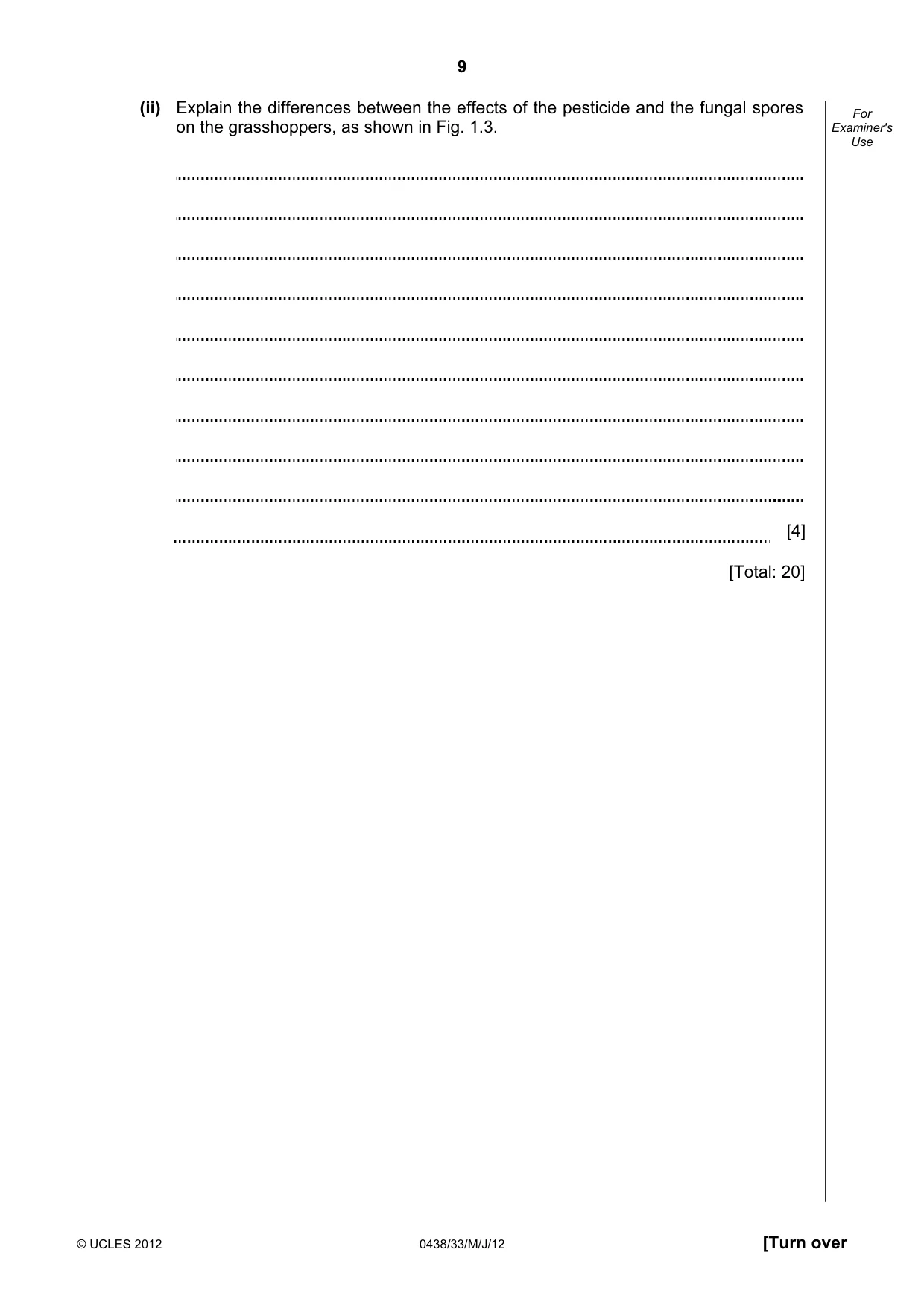
9 © UCLES 2012 0438/33/M/J/12 [Turn over For Examiner's Use (ii) Explain the differences between the effects of the pesticide and the fungal spores on the grasshoppers, as shown in Fig. 1.3. [4] [Total: 20]
Question paper, page 10
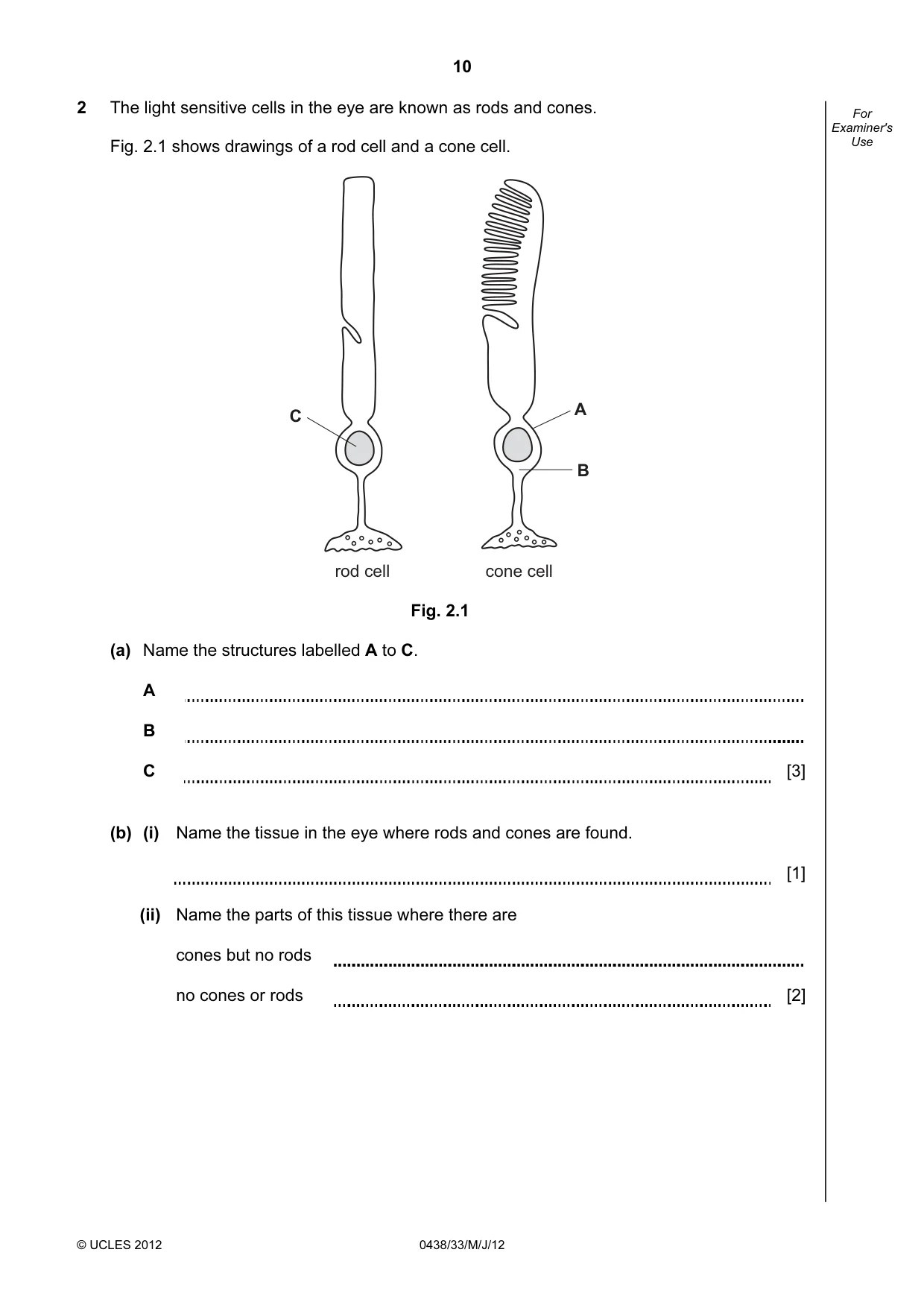
10 © UCLES 2012 0438/33/M/J/12 For Examiner's Use 2 The light sensitive cells in the eye are known as rods and cones. Fig. 2.1 shows drawings of a rod cell and a cone cell. rod cell cone cell C B A Fig. 2.1 (a) Name the structures labelled A to C. A B C [3] (b) (i) Name the tissue in the eye where rods and cones are found. [1] (ii) Name the parts of this tissue where there are cones but no rods no cones or rods [2]
Question paper, page 11
11 © UCLES 2012 0438/33/M/J/12 [Turn over For Examiner's Use (c) Describe how rods and cones function. [4] [Total: 10]
Question paper, page 12
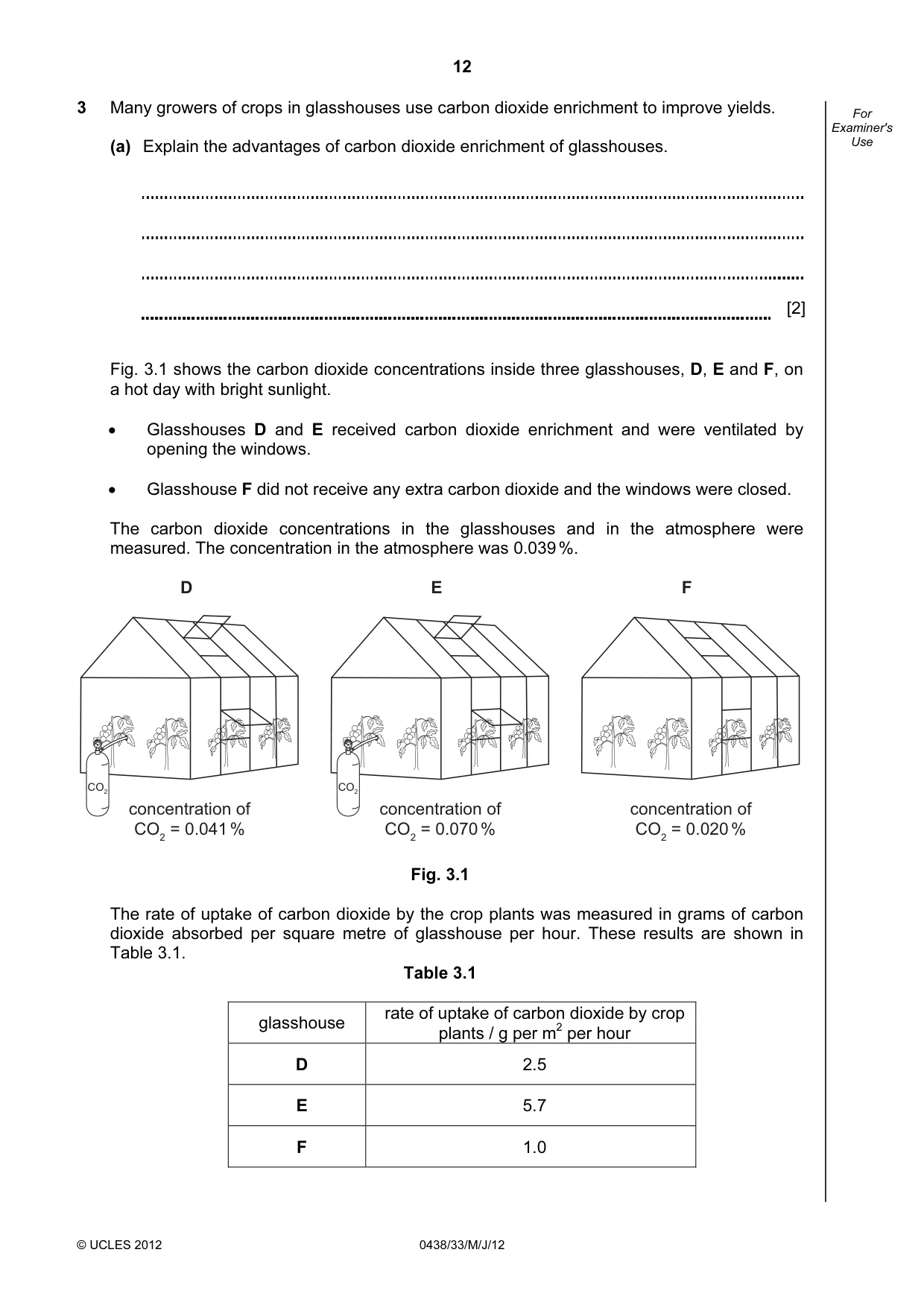
12 © UCLES 2012 0438/33/M/J/12 For Examiner's Use 3 Many growers of crops in glasshouses use carbon dioxide enrichment to improve yields. (a) Explain the advantages of carbon dioxide enrichment of glasshouses. [2] Fig. 3.1 shows the carbon dioxide concentrations inside three glasshouses, D, E and F, on a hot day with bright sunlight. • Glasshouses D and E received carbon dioxide enrichment and were ventilated by opening the windows. • Glasshouse F did not receive any extra carbon dioxide and the windows were closed. The carbon dioxide concentrations in the glasshouses and in the atmosphere were measured. The concentration in the atmosphere was 0.039 %. D concentration of CO2 = 0.041 % CO2 E concentration of CO2 = 0.070 % F concentration of CO2 = 0.020 % CO2 Fig. 3.1 The rate of uptake of carbon dioxide by the crop plants was measured in grams of carbon dioxide absorbed per square metre of glasshouse per hour. These results are shown in Table 3.1. Table 3.1 glasshouse rate of uptake of carbon dioxide by crop plants / g per m2 per hour D 2.5 E 5.7 F 1.0
Question paper, page 13
13 © UCLES 2012 0438/33/M/J/12 [Turn over For Examiner's Use (b) Suggest why it may not be cost effective to maintain a high concentration of carbon dioxide in glasshouse E compared to the concentration of carbon dioxide in the atmosphere. [2] (c) (i) Concentrations of carbon dioxide in all three glasshouses in Fig. 3.1 increased at night. State why this happened. [1] (ii) Explain why it is important to ventilate glasshouses by opening the windows. [4] [Total: 9]
Question paper, page 14
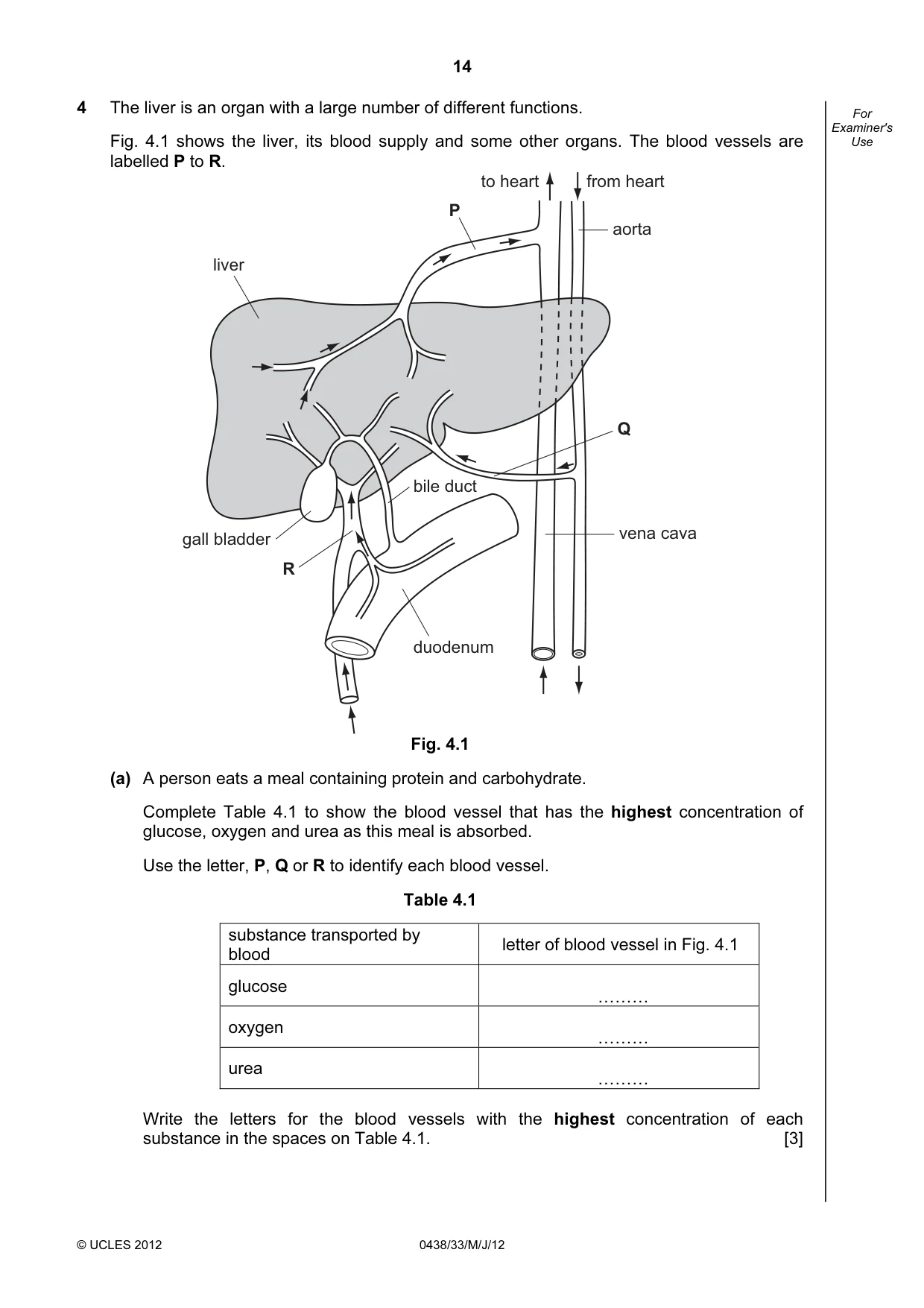
14 © UCLES 2012 0438/33/M/J/12 For Examiner's Use 4 The liver is an organ with a large number of different functions. Fig. 4.1 shows the liver, its blood supply and some other organs. The blood vessels are labelled P to R. liver aorta vena cava duodenum bile duct gall bladder R P Q from heart to heart Fig. 4.1 (a) A person eats a meal containing protein and carbohydrate. Complete Table 4.1 to show the blood vessel that has the highest concentration of glucose, oxygen and urea as this meal is absorbed. Use the letter, P, Q or R to identify each blood vessel. Table 4.1 substance transported by blood letter of blood vessel in Fig. 4.1 glucose ……… oxygen ……… urea ……… Write the letters for the blood vessels with the highest concentration of each substance in the spaces on Table 4.1. [3]
Question paper, page 15
15 © UCLES 2012 0438/33/M/J/12 [Turn over For Examiner's Use (b) Amino acids are absorbed from the small intestine and transported to the liver. Describe how the liver is involved in the metabolism of amino acids. [3] (c) Describe the effects on the liver of the following. (i) insulin released from the pancreas [2] (ii) adrenaline released from the adrenal glands [2] (iii) excessive long-term consumption of alcohol [2]
Question paper, page 16
16 © UCLES 2012 0438/33/M/J/12 For Examiner's Use (d) Cholesterol can accumulate in the gall bladder to form gall stones. These gall stones may stop bile flowing from the liver through the bile duct and into the duodenum. Explain the possible effect of gall stones on the digestion of fat. [4] [Total: 16]
Question paper, page 17
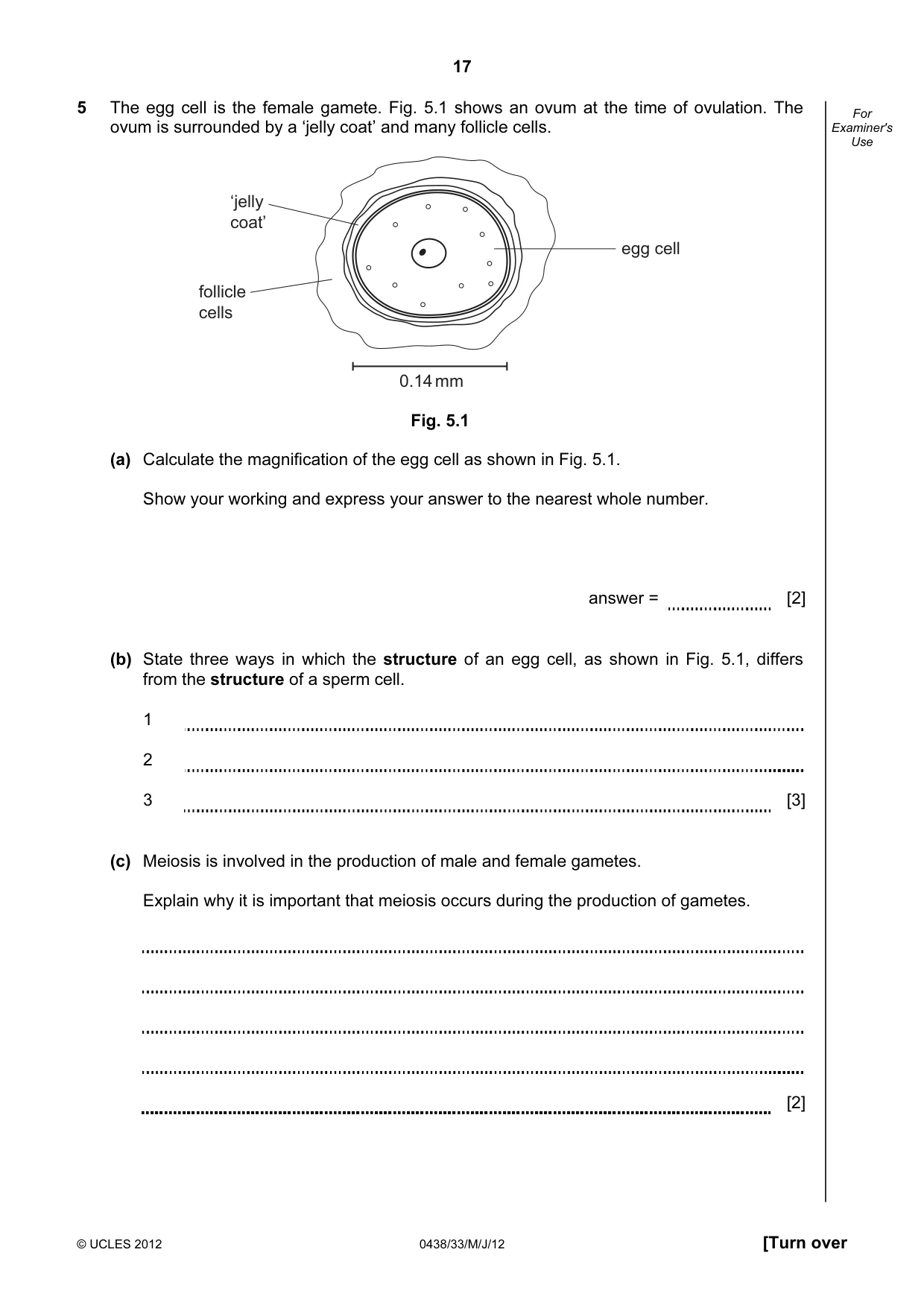
17 © UCLES 2012 0438/33/M/J/12 [Turn over For Examiner's Use 5 The egg cell is the female gamete. Fig. 5.1 shows an ovum at the time of ovulation. The ovum is surrounded by a ‘jelly coat’ and many follicle cells. 0.14 mm egg cell ‘jelly coat’ follicle cells Fig. 5.1 (a) Calculate the magnification of the egg cell as shown in Fig. 5.1. Show your working and express your answer to the nearest whole number. answer = [2] (b) State three ways in which the structure of an egg cell, as shown in Fig. 5.1, differs from the structure of a sperm cell. 1 2 3 [3] (c) Meiosis is involved in the production of male and female gametes. Explain why it is important that meiosis occurs during the production of gametes. [2]
Question paper, page 18
18 © UCLES 2012 0438/33/M/J/12 For Examiner's Use Some women are unable to become pregnant because they or their partner are infertile. (d) Suggest one reason why a man may be infertile and one reason why a woman may be infertile. man woman [2] One way to treat infertility in a woman is to use artificial insemination (AI) using her partner’s sperm. The stages involved in AI are as follows. 1. If the doctor decides that AI is suitable, the woman will be given a course of a fertility drug at an appropriate stage of her menstrual cycle. 2. After two weeks, ultrasound is used to find out when the woman is likely to ovulate. 3. Sperm are collected from the man. 4. The sperm are placed into the uterus of the woman near the time of ovulation. 5. The woman is given an injection of a hormone to encourage the corpus luteum in the ovary to secrete progesterone. (e) Explain why the sperm must be placed in the uterus near the time of ovulation. [3]
Question paper, page 19
19 © UCLES 2012 0438/33/M/J/12 [Turn over For Examiner's Use (f) Explain why it is important that progesterone is secreted after ovulation. [3] (g) The success rate of AI is about 16 %. Suggest how the success rate of AI is calculated. [2] [Total: 17]
Question paper, page 20
20 © UCLES 2012 0438/33/M/J/12 For Examiner's Use 6 (a) Explain why it is important to recycle paper rather than burn it. [3] When paper is recycled printing ink has to be removed. Printing ink contains lipid-based compounds. The ink is removed by making the paper into a pulp and mixing it with lipase for several hours. Scientists in India discovered that the marine bacterium, Vibrio alginolyticus, produces lipase. They carried out an investigation to find out whether using V. alginolyticus to remove ink from paper pulp was as effective as mixing it with a solution of lipase. (b) The bacteria were found to be more effective at removing the ink from the paper pulp than using the solution of lipase. Suggest why. [3]
Question paper, page 21
21 © UCLES 2012 0438/33/M/J/12 For Examiner's Use (c) The scientists also investigated the effect of temperature on the ability of the bacteria to remove ink from paper pulp. They found that bacteria kept at high temperatures did not remove ink from the paper pulp. Explain why. [2] [Total: 8]
Question paper, page 22
22 © UCLES 2012 0438/33/M/J/12 BLANK PAGE
Question paper, page 23
23 © UCLES 2012 0438/33/M/J/12 BLANK PAGE
Question paper, page 24
24 Copyright Acknowledgements: Figure 1.1 Photograph Figure 1.2 Question 6 © Maura Fermariella; Mounted goliath beetle, Ref: H465/0284; Sciencve Photo Library. © The Biological Control of Grasshoppers and Locusts Programme; http://www.lubilosa.org. © Mohandass, C & Chandralata Raghukumar; Biological deinking of inket-printed-paper using Vibrio alginolyticus and its enzymes; National Institute of Oceanography; Journal of Industrial Microbiology and Biotechnology; 2005. Permission to reproduce items where third-party owned material protected by copyright is included has been sought and cleared where possible. Every reasonable effort has been made by the publisher (UCLES) to trace copyright holders, but if any items requiring clearance have unwittingly been included, the publisher will be pleased to make amends at the earliest possible opportunity. University of Cambridge International Examinations is part of the Cambridge Assessment Group. Cambridge Assessment is the brand name of University of Cambridge Local Examinations Syndicate (UCLES), which is itself a department of the University of Cambridge. © UCLES 2012 0438/33/M/J/12 BLANK PAGE
Mark scheme, page 1
UNIVERSITY OF CAMBRIDGE INTERNATIONAL EXAMINATIONS International General Certificate of Secondary Education MARK SCHEME for the May/June 2012 question paper for the guidance of teachers 0438 BIOLOGY (US) 0438/33 Paper 3 (Extended Theory), maximum raw mark 80 This mark scheme is published as an aid to teachers and candidates, to indicate the requirements of the examination. It shows the basis on which Examiners were instructed to award marks. It does not indicate the details of the discussions that took place at an Examiners’ meeting before marking began, which would have considered the acceptability of alternative answers. Mark schemes must be read in conjunction with the question papers and the report on the examination. • Cambridge will not enter into discussions or correspondence in connection with these mark schemes. Cambridge is publishing the mark schemes for the May/June 2012 question papers for most IGCSE, GCE Advanced Level and Advanced Subsidiary Level syllabuses and some Ordinary Level syllabuses.
Mark scheme, page 2
Page 2 Mark Scheme: Teachers’ version Syllabus Paper IGCSE – May/June 2012 0438 33 © University of Cambridge International Examinations 2012 General notes Symbols used in mark scheme and guidance notes. / separates alternatives for a marking point ; separates points for the award of a mark A accept – as a correct response R reject – this is marked with a cross and any following correct statements do not gain any marks I ignore / irrelevant / inadequate – this response gains no mark, but any following correct answers can gain marks. ( ) the word / phrase in brackets is not required to gain marks but sets context of response for credit. e.g. (waxy) cuticle. Waxy not needed but if it was described as a cellulose cuticle then no mark. Small underlined words – this word only / must be spelled correctly ORA or reverse argument / answer ref answer makes appropriate reference to AVP additional valid point (e.g. in comments) AW alternative words of equivalent meaning MP marking point (number)
Mark scheme, page 3
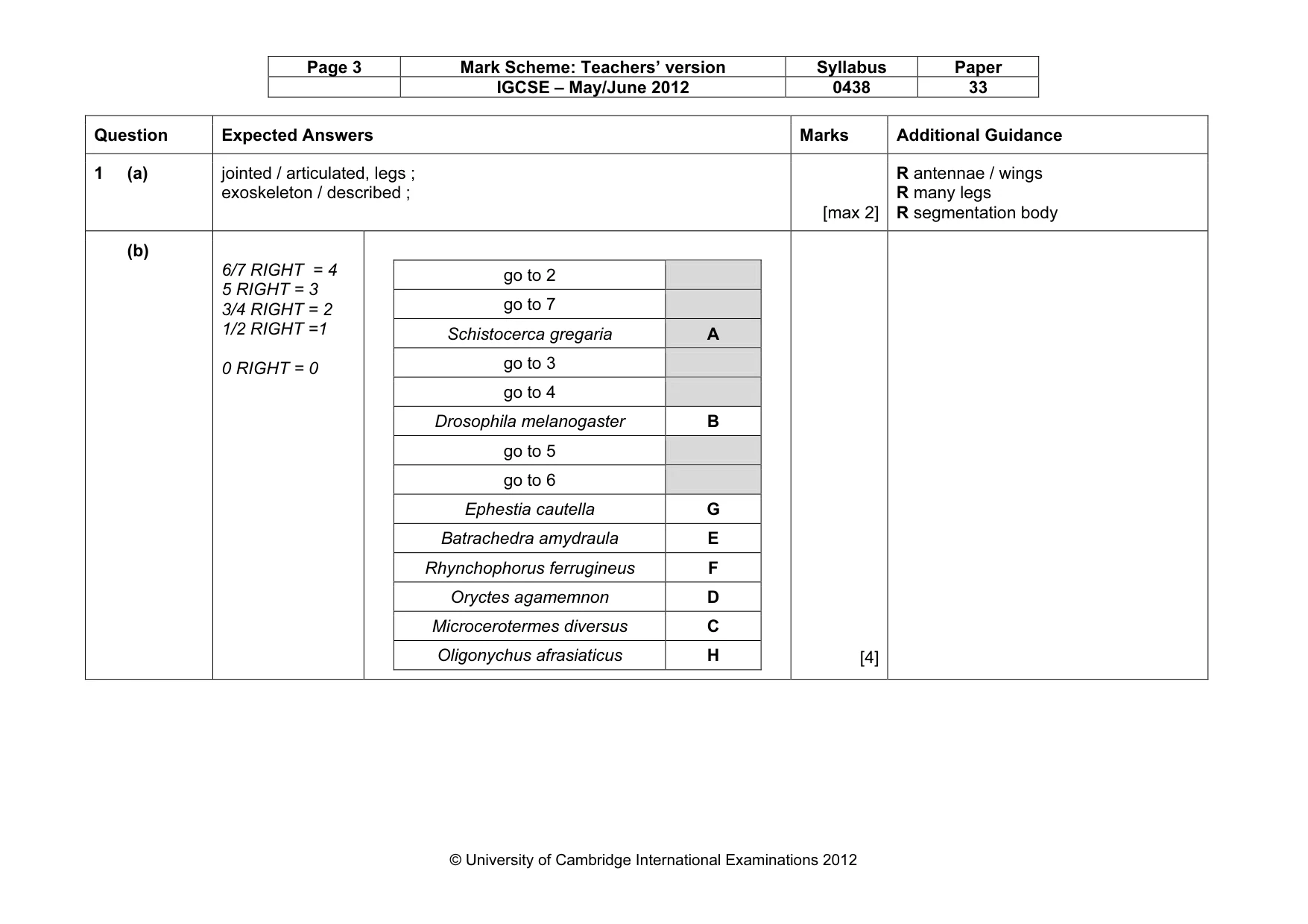
Page 3 Mark Scheme: Teachers’ version Syllabus Paper IGCSE – May/June 2012 0438 33 © University of Cambridge International Examinations 2012 Question Expected Answers Marks Additional Guidance 1 (a) jointed / articulated, legs ; exoskeleton / described ; [max 2] R antennae / wings R many legs R segmentation body (b) 6/7 RIGHT = 4 5 RIGHT = 3 3/4 RIGHT = 2 1/2 RIGHT =1 0 RIGHT = 0 go to 2 go to 7 Schistocerca gregaria A go to 3 go to 4 Drosophila melanogaster B go to 5 go to 6 Ephestia cautella G Batrachedra amydraula E Rhynchophorus ferrugineus F Oryctes agamemnon D Microcerotermes diversus C Oligonychus afrasiaticus H [4]
Mark scheme, page 4
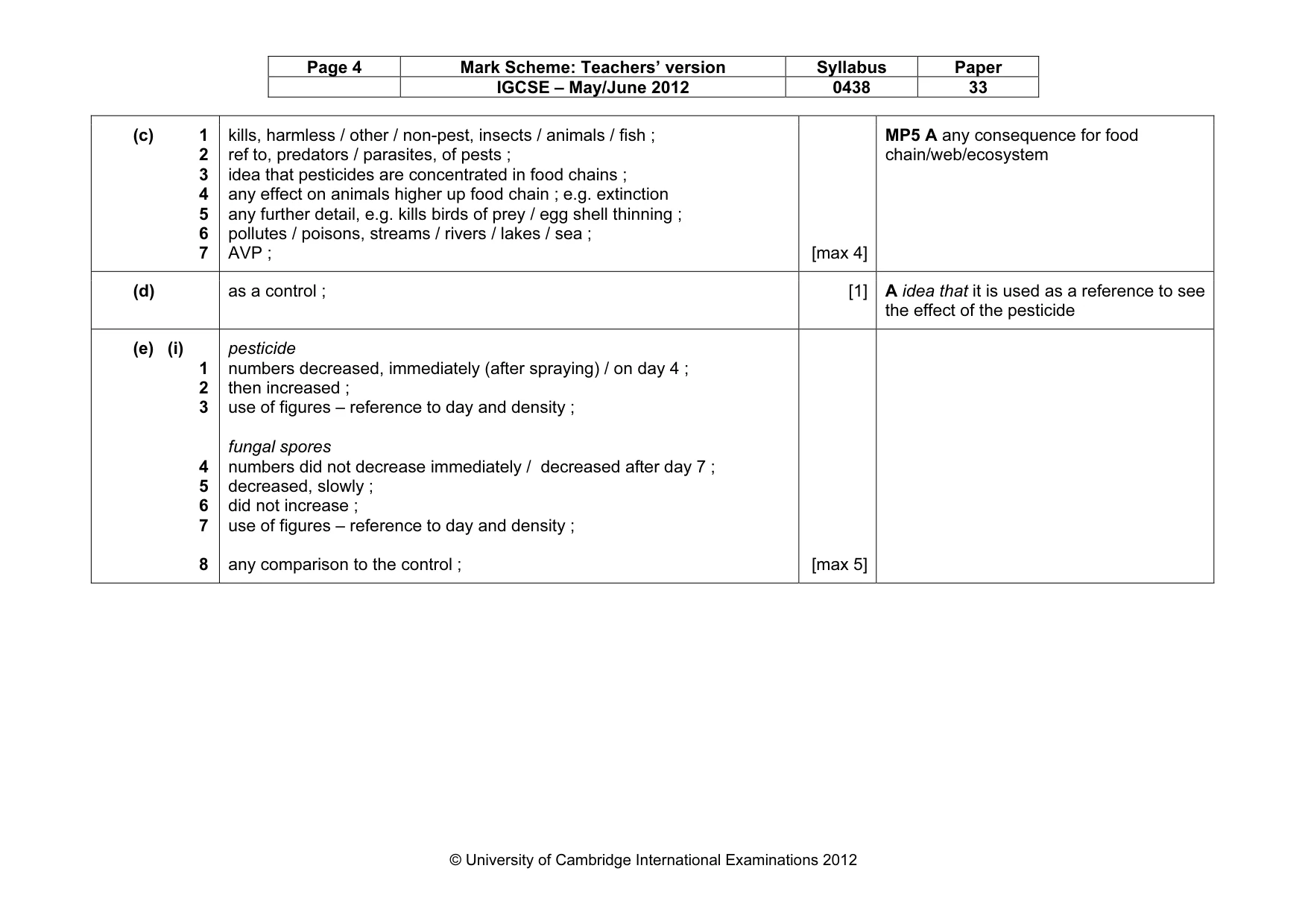
Page 4 Mark Scheme: Teachers’ version Syllabus Paper IGCSE – May/June 2012 0438 33 © University of Cambridge International Examinations 2012 (c) 1 2 3 4 5 6 7 kills, harmless / other / non-pest, insects / animals / fish ; ref to, predators / parasites, of pests ; idea that pesticides are concentrated in food chains ; any effect on animals higher up food chain ; e.g. extinction any further detail, e.g. kills birds of prey / egg shell thinning ; pollutes / poisons, streams / rivers / lakes / sea ; AVP ; [max 4] MP5 A any consequence for food chain/web/ecosystem (d) as a control ; [1] A idea that it is used as a reference to see the effect of the pesticide (e) (i) 1 2 3 4 5 6 7 8 pesticide numbers decreased, immediately (after spraying) / on day 4 ; then increased ; use of figures – reference to day and density ; fungal spores numbers did not decrease immediately / decreased after day 7 ; decreased, slowly ; did not increase ; use of figures – reference to day and density ; any comparison to the control ; [max 5]
Mark scheme, page 5
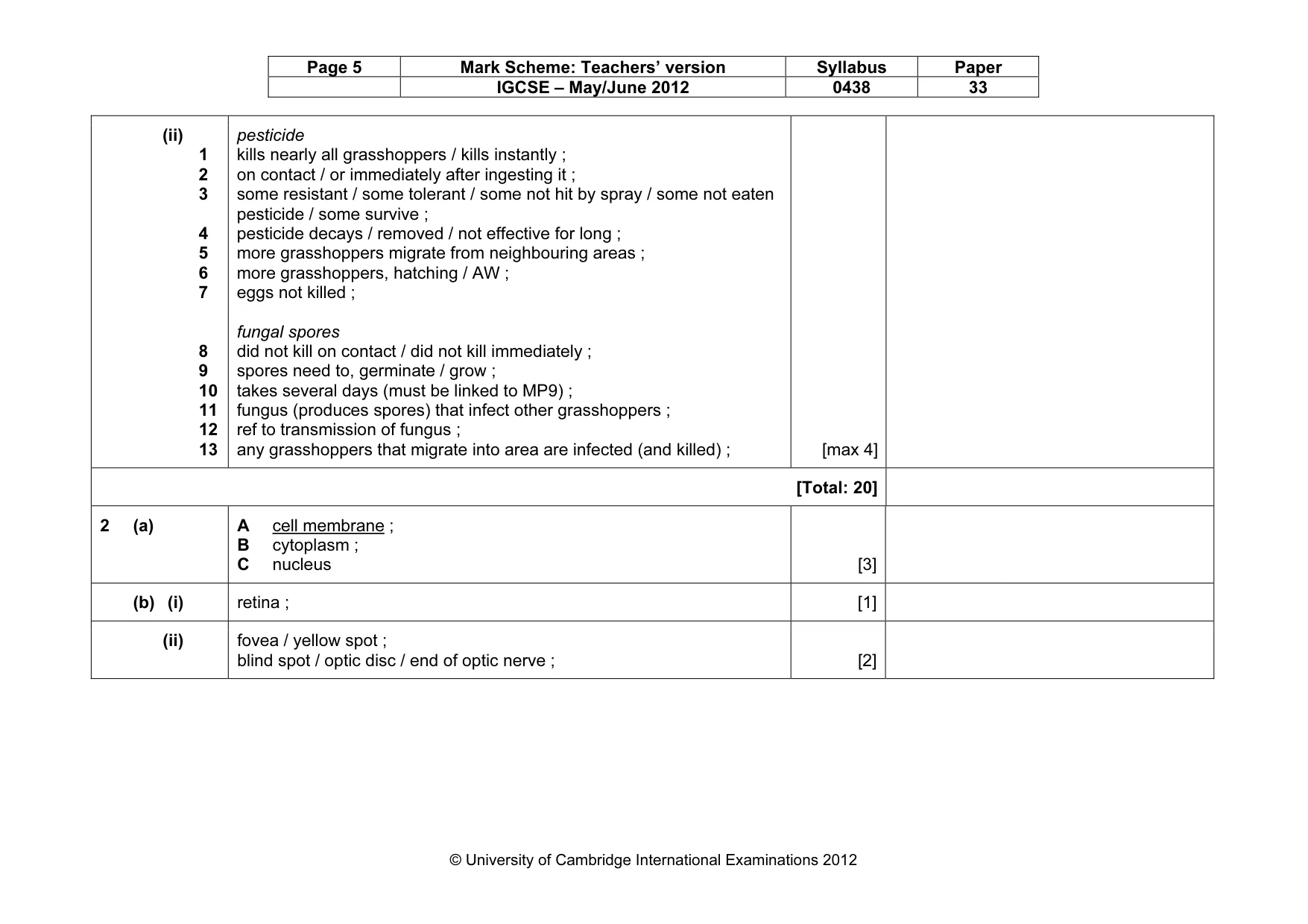
Page 5 Mark Scheme: Teachers’ version Syllabus Paper IGCSE – May/June 2012 0438 33 © University of Cambridge International Examinations 2012 (ii) 1 2 3 4 5 6 7 8 9 10 11 12 13 pesticide kills nearly all grasshoppers / kills instantly ; on contact / or immediately after ingesting it ; some resistant / some tolerant / some not hit by spray / some not eaten pesticide / some survive ; pesticide decays / removed / not effective for long ; more grasshoppers migrate from neighbouring areas ; more grasshoppers, hatching / AW ; eggs not killed ; fungal spores did not kill on contact / did not kill immediately ; spores need to, germinate / grow ; takes several days (must be linked to MP9) ; fungus (produces spores) that infect other grasshoppers ; ref to transmission of fungus ; any grasshoppers that migrate into area are infected (and killed) ; [max 4] [Total: 20] 2 (a) A cell membrane ; B cytoplasm ; C nucleus [3] (b) (i) retina ; [1] (ii) fovea / yellow spot ; blind spot / optic disc / end of optic nerve ; [2]
Mark scheme, page 6
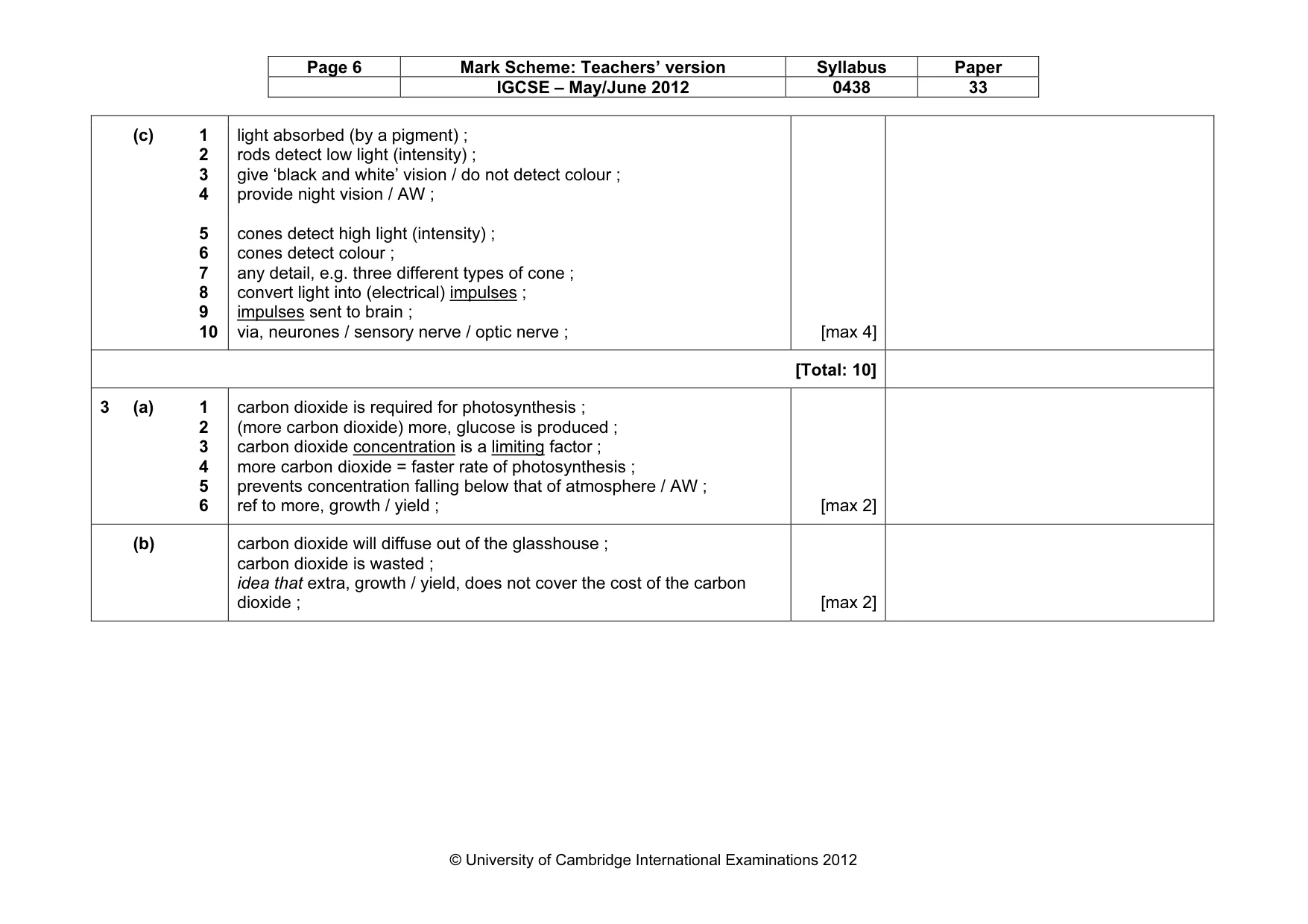
Page 6 Mark Scheme: Teachers’ version Syllabus Paper IGCSE – May/June 2012 0438 33 © University of Cambridge International Examinations 2012 (c) 1 2 3 4 5 6 7 8 9 10 light absorbed (by a pigment) ; rods detect low light (intensity) ; give ‘black and white’ vision / do not detect colour ; provide night vision / AW ; cones detect high light (intensity) ; cones detect colour ; any detail, e.g. three different types of cone ; convert light into (electrical) impulses ; impulses sent to brain ; via, neurones / sensory nerve / optic nerve ; [max 4] [Total: 10] 3 (a) 1 2 3 4 5 6 carbon dioxide is required for photosynthesis ; (more carbon dioxide) more, glucose is produced ; carbon dioxide concentration is a limiting factor ; more carbon dioxide = faster rate of photosynthesis ; prevents concentration falling below that of atmosphere / AW ; ref to more, growth / yield ; [max 2] (b) carbon dioxide will diffuse out of the glasshouse ; carbon dioxide is wasted ; idea that extra, growth / yield, does not cover the cost of the carbon dioxide ; [max 2]
Mark scheme, page 7
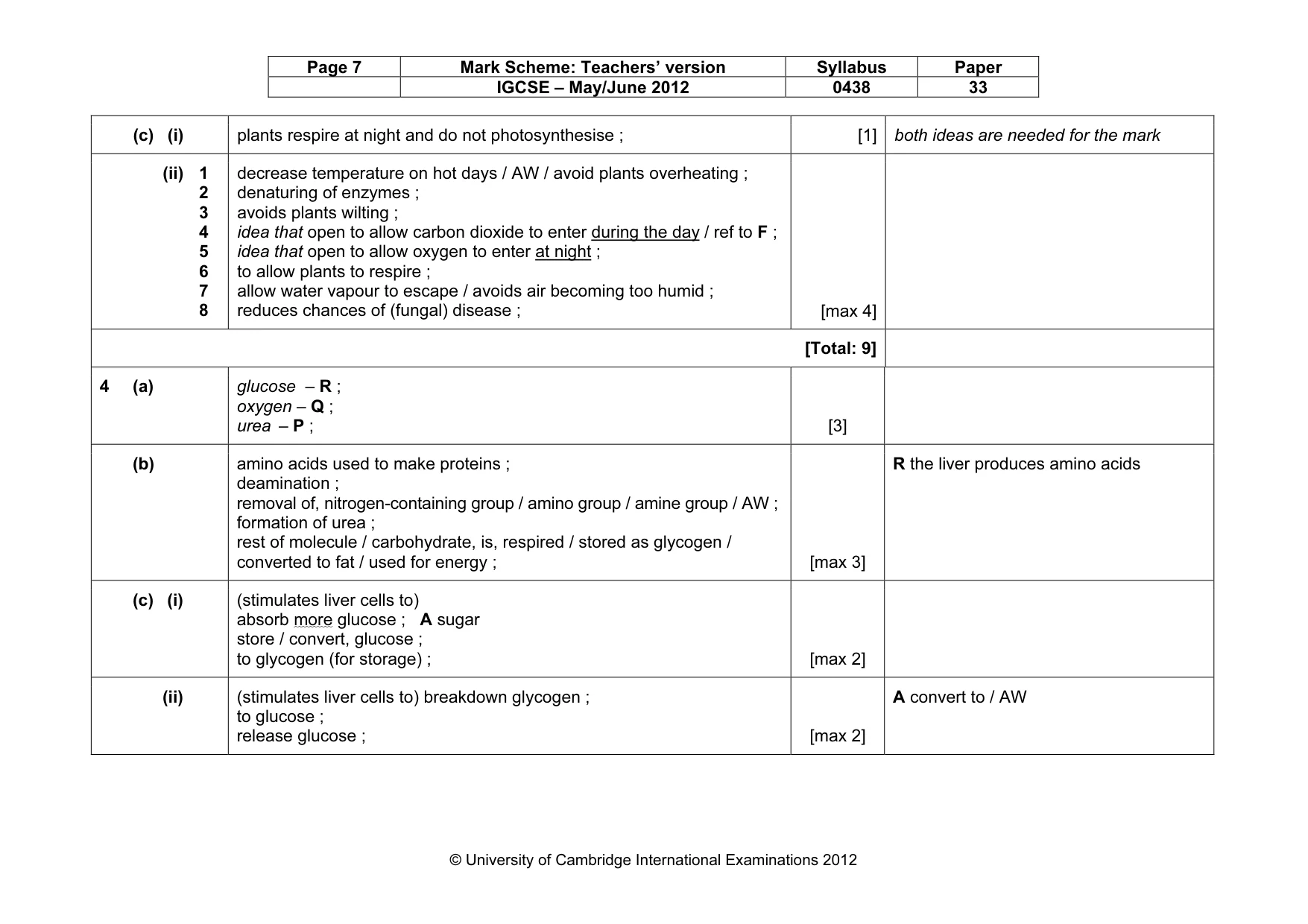
Page 7 Mark Scheme: Teachers’ version Syllabus Paper IGCSE – May/June 2012 0438 33 © University of Cambridge International Examinations 2012 (c) (i) plants respire at night and do not photosynthesise ; [1] both ideas are needed for the mark (ii) 1 2 3 4 5 6 7 8 decrease temperature on hot days / AW / avoid plants overheating ; denaturing of enzymes ; avoids plants wilting ; idea that open to allow carbon dioxide to enter during the day / ref to F ; idea that open to allow oxygen to enter at night ; to allow plants to respire ; allow water vapour to escape / avoids air becoming too humid ; reduces chances of (fungal) disease ; [max 4] [Total: 9] 4 (a) glucose – R ; oxygen – Q ; urea – P ; [3] (b) amino acids used to make proteins ; deamination ; removal of, nitrogen-containing group / amino group / amine group / AW ; formation of urea ; rest of molecule / carbohydrate, is, respired / stored as glycogen / converted to fat / used for energy ; [max 3] R the liver produces amino acids (c) (i) (stimulates liver cells to) absorb more glucose ; A sugar store / convert, glucose ; to glycogen (for storage) ; [max 2] (ii) (stimulates liver cells to) breakdown glycogen ; to glucose ; release glucose ; [max 2] A convert to / AW
Mark scheme, page 8
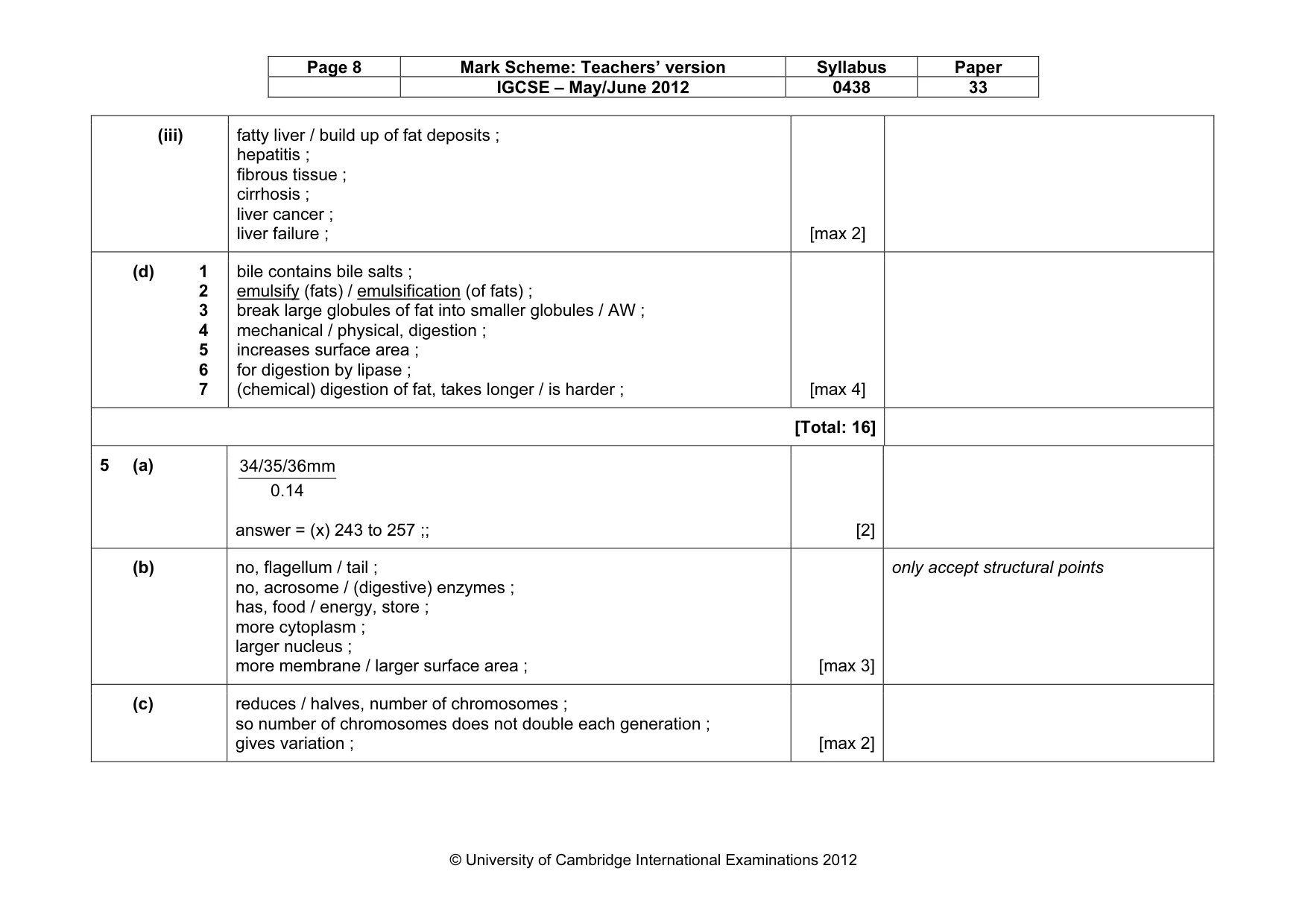
Page 8 Mark Scheme: Teachers’ version Syllabus Paper IGCSE – May/June 2012 0438 33 © University of Cambridge International Examinations 2012 (iii) fatty liver / build up of fat deposits ; hepatitis ; fibrous tissue ; cirrhosis ; liver cancer ; liver failure ; [max 2] (d) 1 2 3 4 5 6 7 bile contains bile salts ; emulsify (fats) / emulsification (of fats) ; break large globules of fat into smaller globules / AW ; mechanical / physical, digestion ; increases surface area ; for digestion by lipase ; (chemical) digestion of fat, takes longer / is harder ; [max 4] [Total: 16] 5 (a) 34/35/36mm 0.14 answer = (x) 243 to 257 ;; [2] (b) no, flagellum / tail ; no, acrosome / (digestive) enzymes ; has, food / energy, store ; more cytoplasm ; larger nucleus ; more membrane / larger surface area ; [max 3] only accept structural points (c) reduces / halves, number of chromosomes ; so number of chromosomes does not double each generation ; gives variation ; [max 2]
Mark scheme, page 9
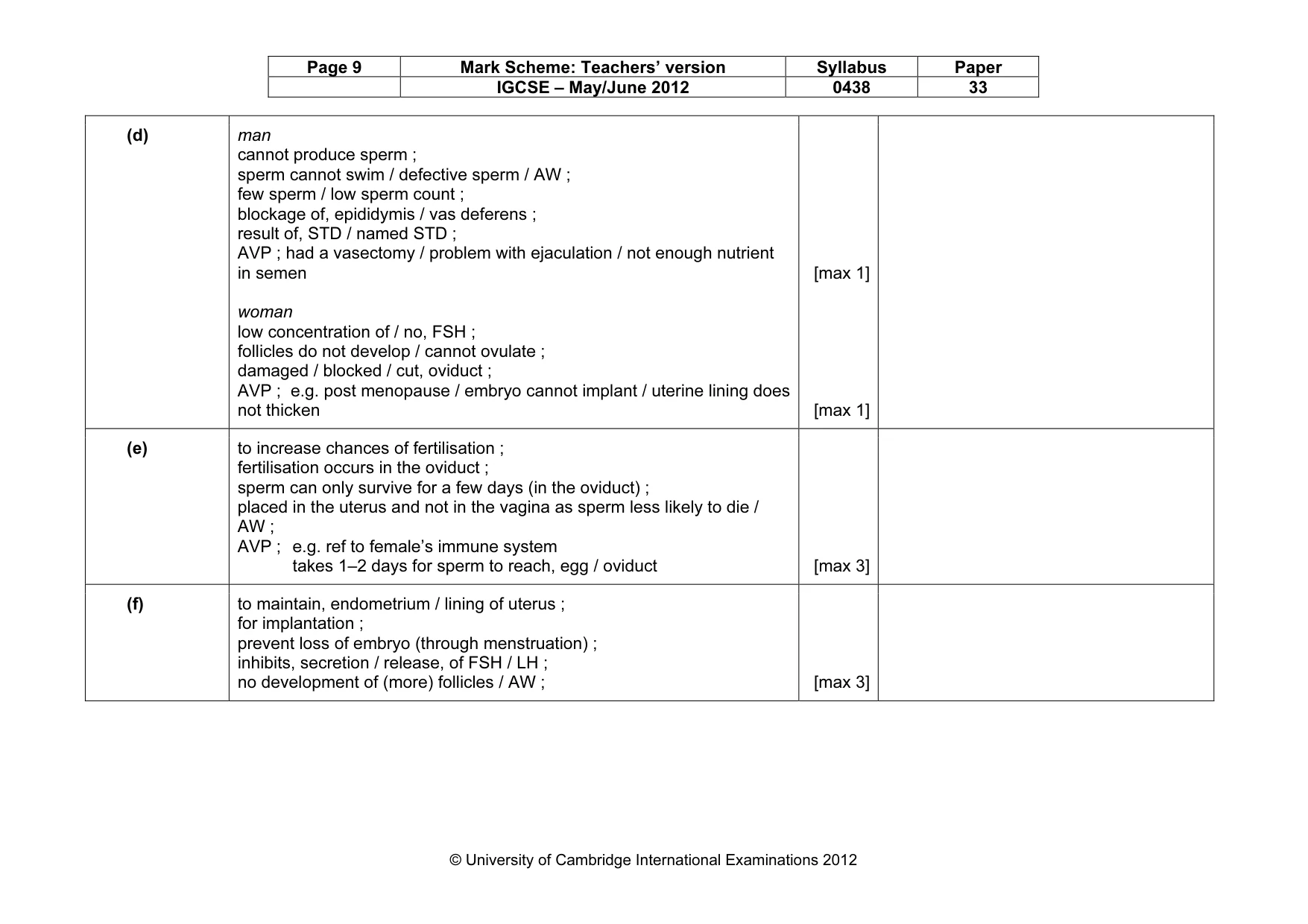
Page 9 Mark Scheme: Teachers’ version Syllabus Paper IGCSE – May/June 2012 0438 33 © University of Cambridge International Examinations 2012 (d) man cannot produce sperm ; sperm cannot swim / defective sperm / AW ; few sperm / low sperm count ; blockage of, epididymis / vas deferens ; result of, STD / named STD ; AVP ; had a vasectomy / problem with ejaculation / not enough nutrient in semen woman low concentration of / no, FSH ; follicles do not develop / cannot ovulate ; damaged / blocked / cut, oviduct ; AVP ; e.g. post menopause / embryo cannot implant / uterine lining does not thicken [max 1] [max 1] (e) to increase chances of fertilisation ; fertilisation occurs in the oviduct ; sperm can only survive for a few days (in the oviduct) ; placed in the uterus and not in the vagina as sperm less likely to die / AW ; AVP ; e.g. ref to female’s immune system takes 1–2 days for sperm to reach, egg / oviduct [max 3] (f) to maintain, endometrium / lining of uterus ; for implantation ; prevent loss of embryo (through menstruation) ; inhibits, secretion / release, of FSH / LH ; no development of (more) follicles / AW ; [max 3]
Mark scheme, page 10
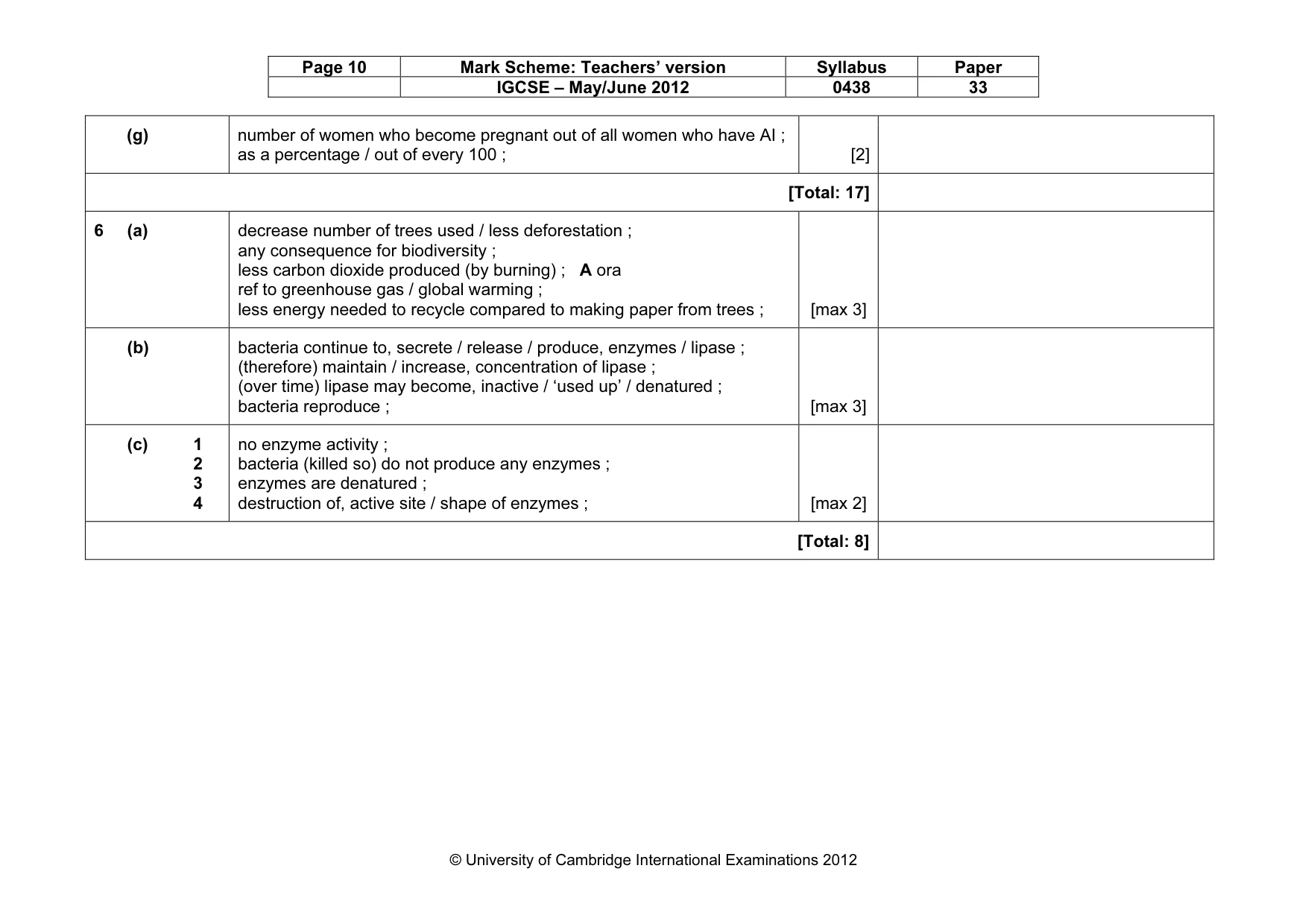
Page 10 Mark Scheme: Teachers’ version Syllabus Paper IGCSE – May/June 2012 0438 33 © University of Cambridge International Examinations 2012 (g) number of women who become pregnant out of all women who have AI ; as a percentage / out of every 100 ; [2] [Total: 17] 6 (a) decrease number of trees used / less deforestation ; any consequence for biodiversity ; less carbon dioxide produced (by burning) ; A ora ref to greenhouse gas / global warming ; less energy needed to recycle compared to making paper from trees ; [max 3] (b) bacteria continue to, secrete / release / produce, enzymes / lipase ; (therefore) maintain / increase, concentration of lipase ; (over time) lipase may become, inactive / ‘used up’ / denatured ; bacteria reproduce ; [max 3] (c) 1 2 3 4 no enzyme activity ; bacteria (killed so) do not produce any enzymes ; enzymes are denatured ; destruction of, active site / shape of enzymes ; [max 2] [Total: 8]
What you needed in this session
Cambridge’s own grade thresholds for 2012 May/June, Paper 3 · Variant 3. A higher threshold means an easier paper — the bar moves with how the cohort did.