Cambridge IGCSE Biology (9-1) 0970 — 2024 May/June Paper 2 · Variant 2
0970/22/M/J/24 · 40 marks · ≈45 min
The question paper and its mark scheme, free to read here and free to download. This is Cambridge’s own paper, exactly as it was sat.
Question paper16 pages
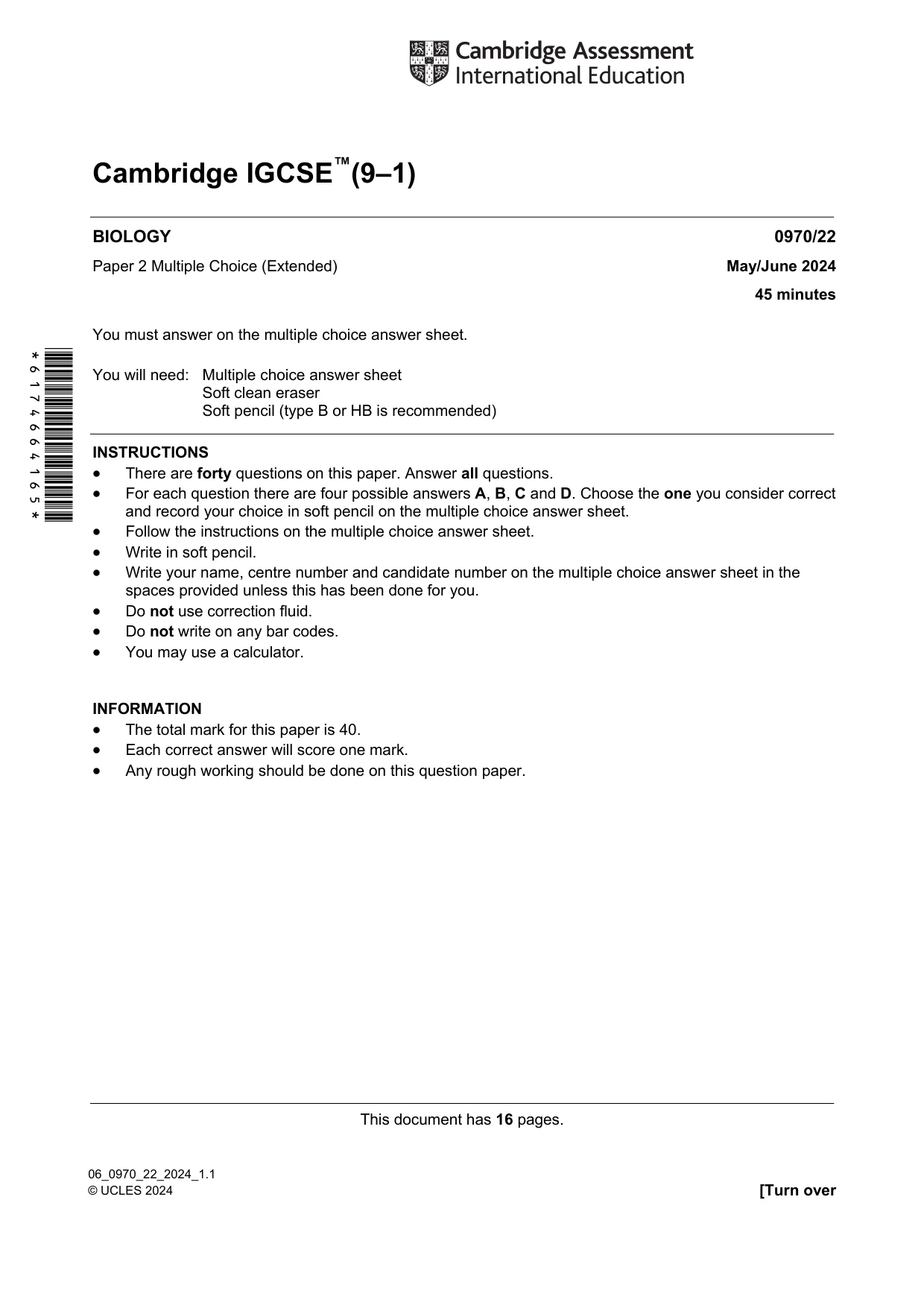
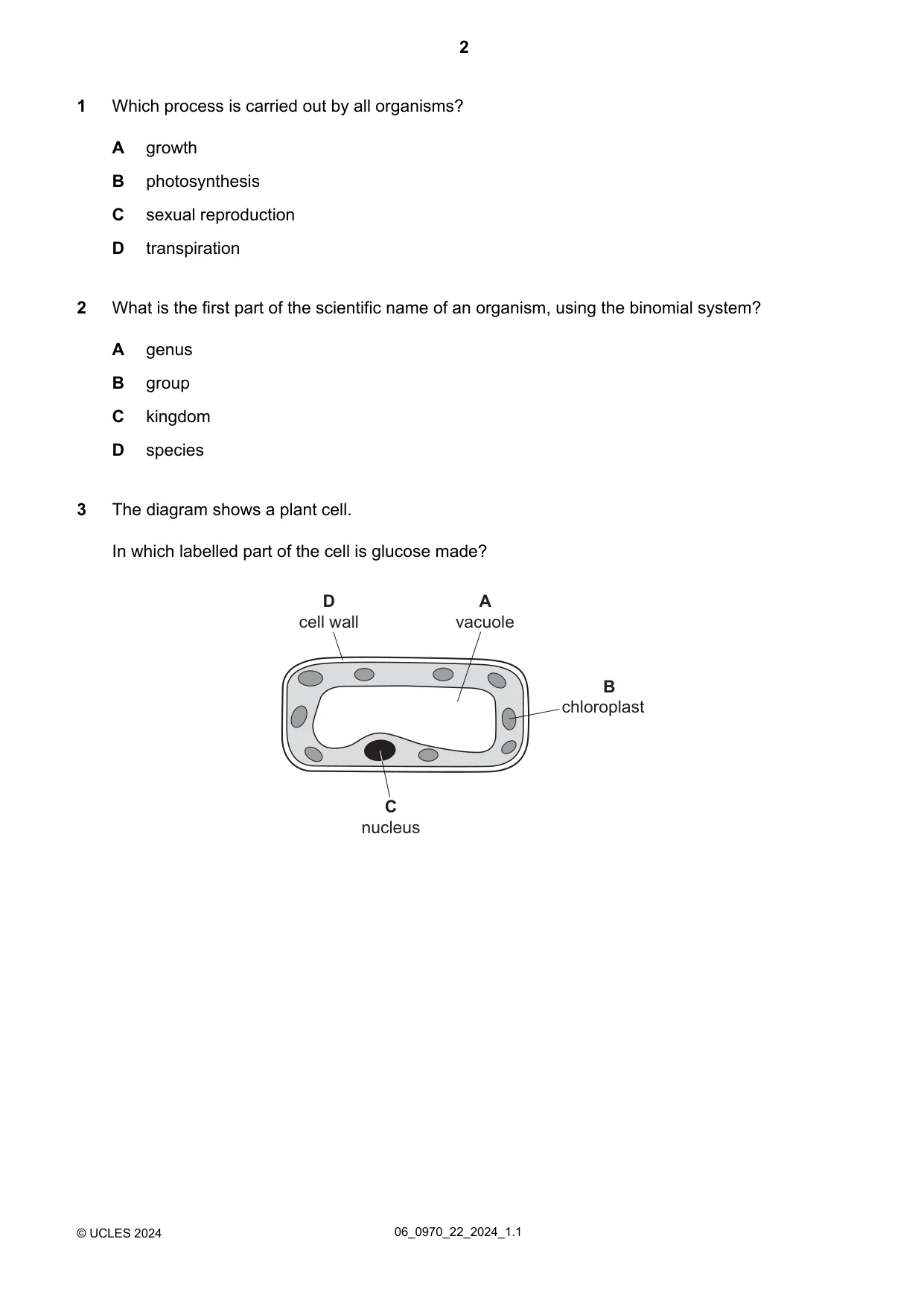
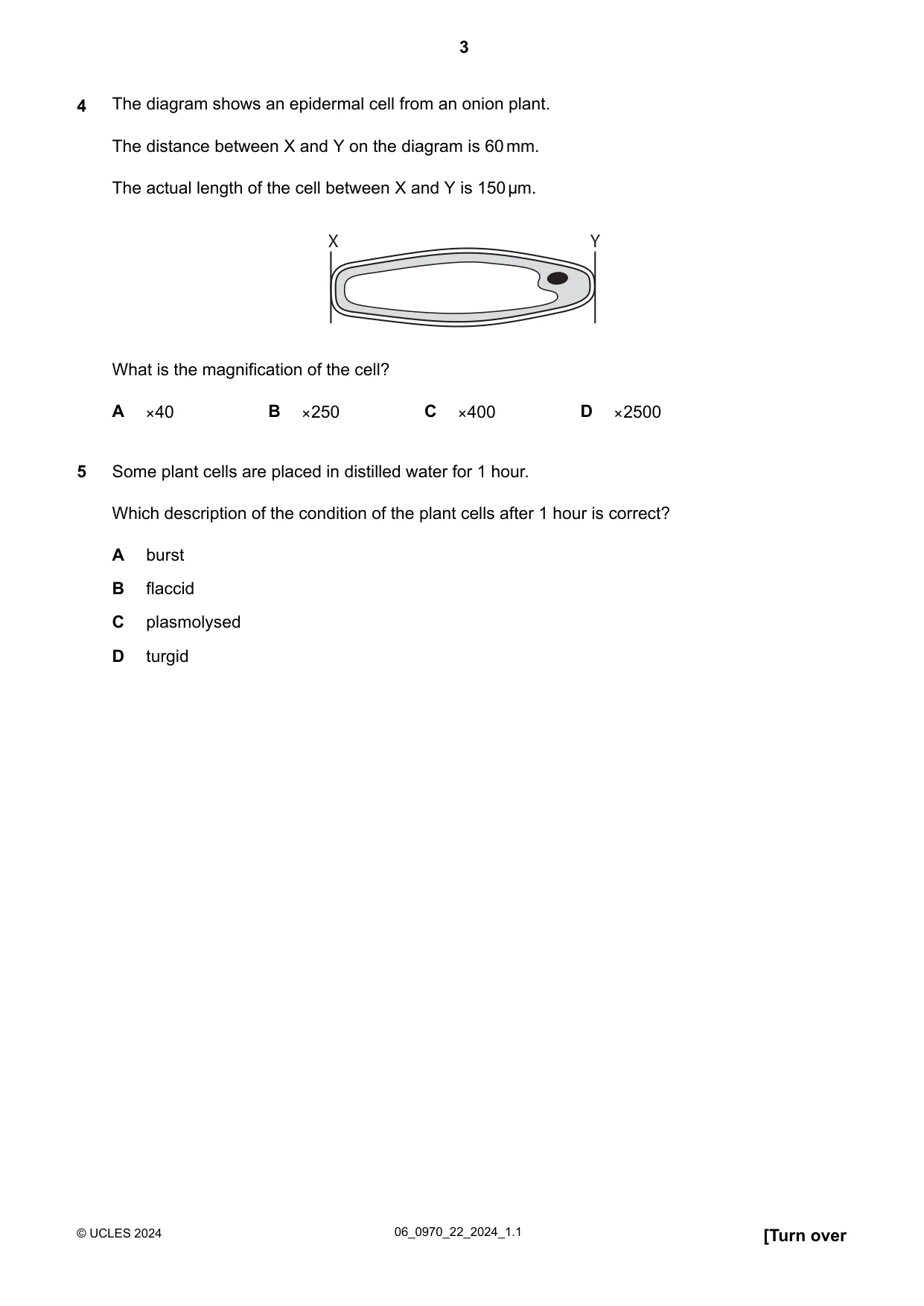
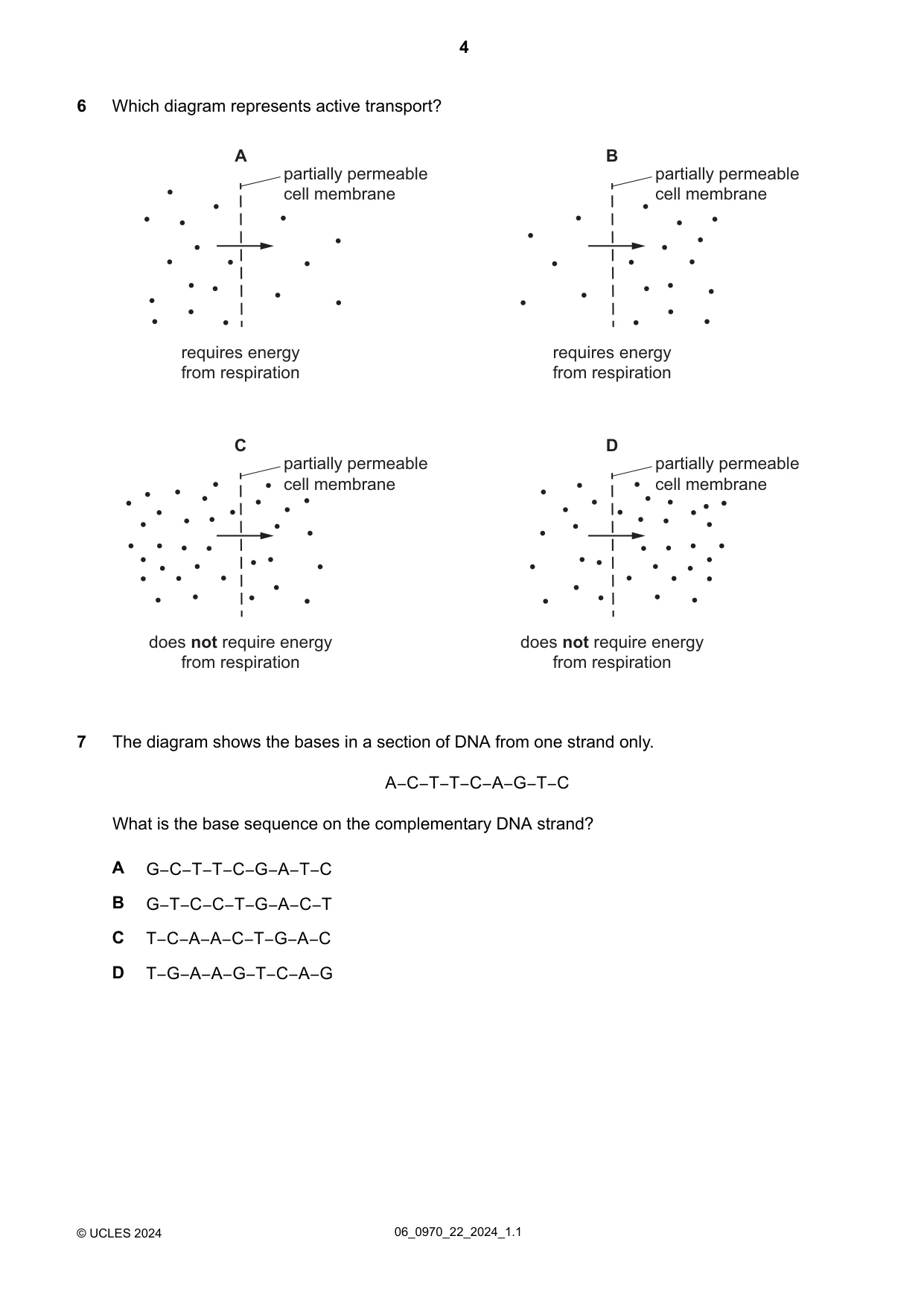
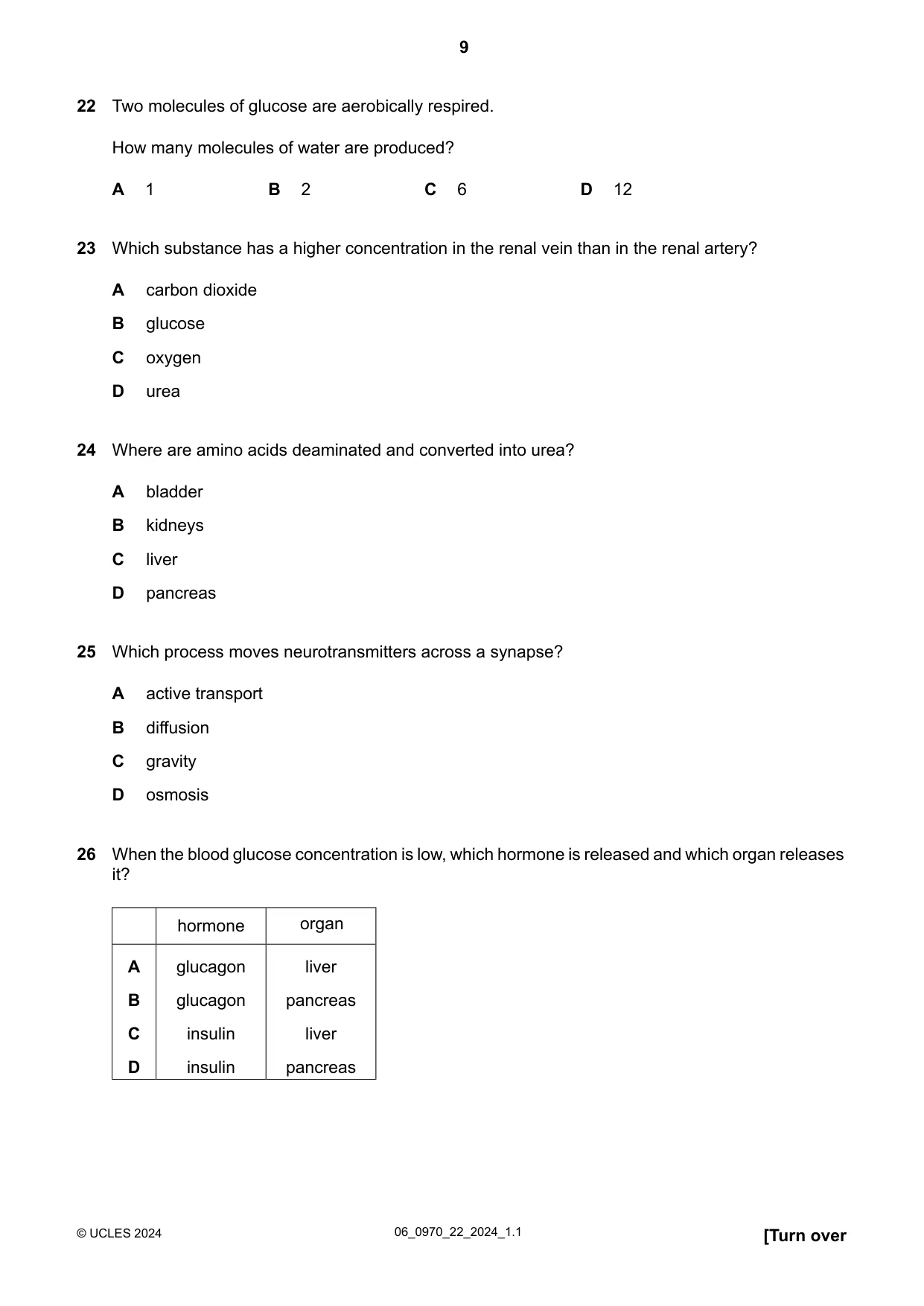
Mark scheme3 pages
Answers below. Sit the paper first if you are practising.
Paper as text
Question paper, page 1
This document has 16 pages. 06_0970_22_2024_1.1 © UCLES 2024 [Turn over *6174664165* Cambridge IGCSE™(9–1) BIOLOGY 0970/22 Paper 2 Multiple Choice (Extended) May/June 2024 45 minutes You must answer on the multiple choice answer sheet. You will need: Multiple choice answer sheet Soft clean eraser Soft pencil (type B or HB is recommended) INSTRUCTIONS There are forty questions on this paper. Answer all questions. For each question there are four possible answers A, B, C and D. Choose the one you consider correct and record your choice in soft pencil on the multiple choice answer sheet. Follow the instructions on the multiple choice answer sheet. Write in soft pencil. Write your name, centre number and candidate number on the multiple choice answer sheet in the spaces provided unless this has been done for you. Do not use correction fluid. Do not write on any bar codes. You may use a calculator. INFORMATION The total mark for this paper is 40. Each correct answer will score one mark. Any rough working should be done on this question paper.
Question paper, page 2
Which process is carried out by all organisms? 1 growth A photosynthesis B sexual reproduction C transpiration D What is the first part of the scientific name of an organism, using the binomial system? 2 genus A group B kingdom C species D The diagram shows a plant cell. In which labelled part of the cell is glucose made? 3 D cell wall A vacuole B chloroplast C nucleus 06_0970_22_2024_1.1 © UCLES 2024 2
Question paper, page 3
4 Y The diagram shows an epidermal cell from an onion plant. The distance between X and Y on the diagram is 60 mm. The actual length of the cell between X and Y is 150 μm. X What is the magnification of the cell? ×2500 D ×400 C ×250 B ×40 A Some plant cells are placed in distilled water for 1 hour. Which description of the condition of the plant cells after 1 hour is correct? 5 burst A flaccid B plasmolysed C turgid D [Turn over 06_0970_22_2024_1.1 © UCLES 2024 3
Question paper, page 4
Which diagram represents active transport? 6 partially permeable cell membrane A partially permeable cell membrane B partially permeable cell membrane C partially permeable cell membrane D requires energy from respiration requires energy from respiration does not require energy from respiration does not require energy from respiration The diagram shows the bases in a section of DNA from one strand only. A−C−T−T−C−A−G−T−C What is the base sequence on the complementary DNA strand? 7 G−C−T−T−C−G−A−T−C A G−T−C−C−T−G−A−C−T B T−C−A−A−C−T−G−A−C C T−G−A−A−G−T−C−A−G D 06_0970_22_2024_1.1 © UCLES 2024 4
Question paper, page 5
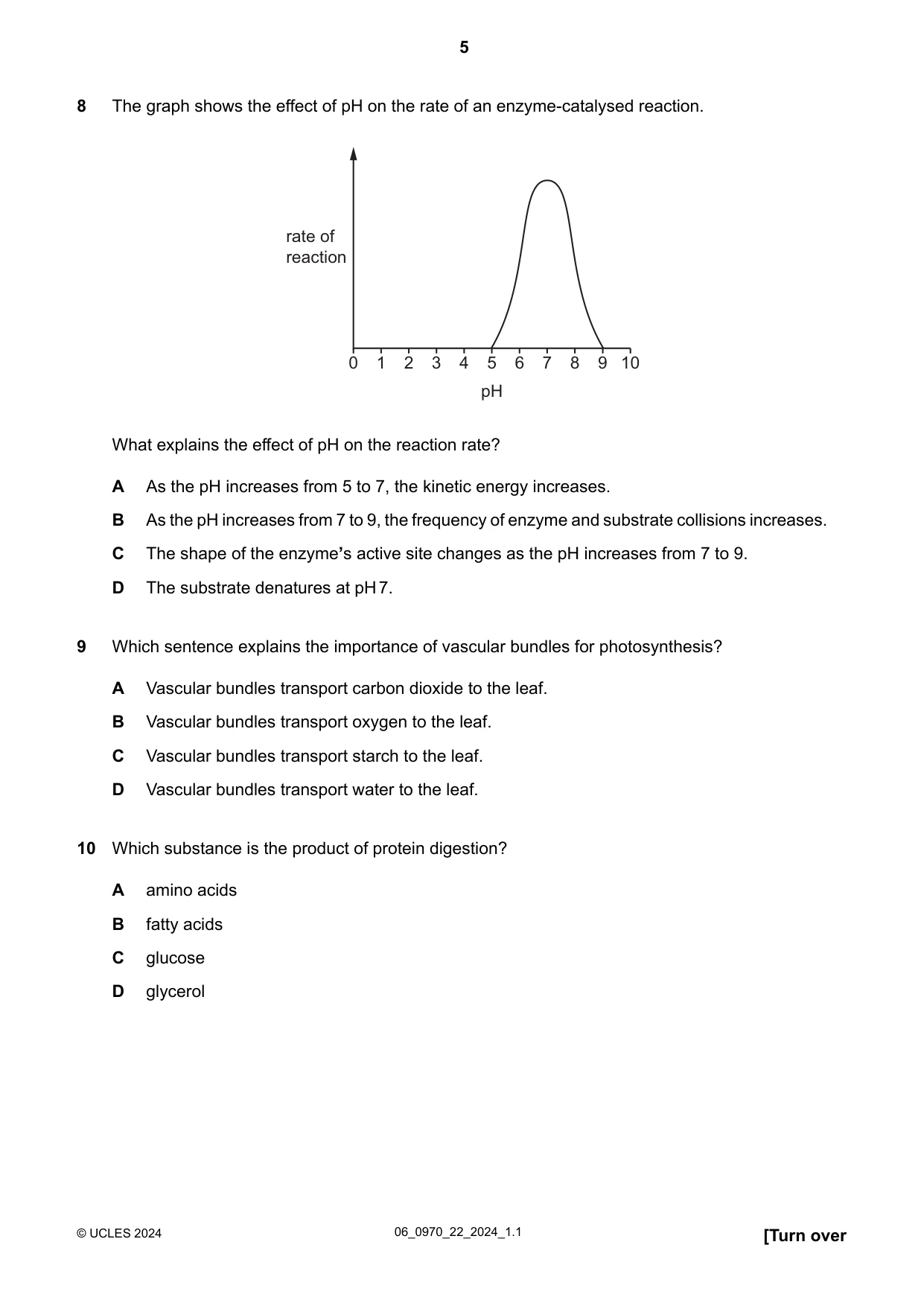
The graph shows the effect of pH on the rate of an enzyme-catalysed reaction. 8 rate of reaction pH 0 1 2 3 4 5 6 7 8 9 10 What explains the effect of pH on the reaction rate? As the pH increases from 5 to 7, the kinetic energy increases. A As the pH increases from 7 to 9, the frequency of enzyme and substrate collisions increases. B The shape of the enzyme’s active site changes as the pH increases from 7 to 9. C The substrate denatures at pH 7. D Which sentence explains the importance of vascular bundles for photosynthesis? 9 Vascular bundles transport carbon dioxide to the leaf. A Vascular bundles transport oxygen to the leaf. B Vascular bundles transport starch to the leaf. C Vascular bundles transport water to the leaf. D Which substance is the product of protein digestion? 10 amino acids A fatty acids B glucose C glycerol D [Turn over 06_0970_22_2024_1.1 © UCLES 2024 5
Question paper, page 6
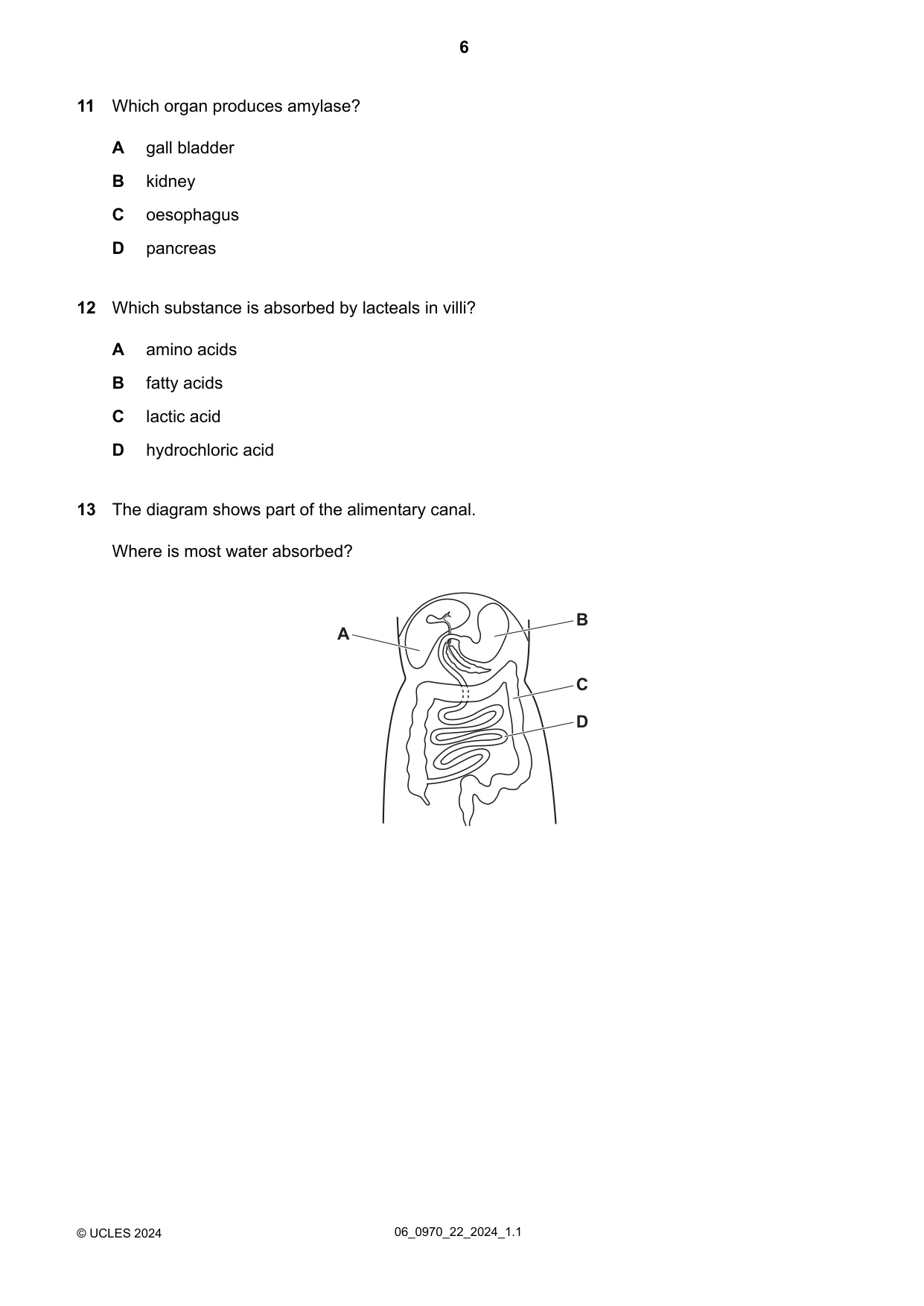
Which organ produces amylase? 11 gall bladder A kidney B oesophagus C pancreas D Which substance is absorbed by lacteals in villi? 12 amino acids A fatty acids B lactic acid C hydrochloric acid D The diagram shows part of the alimentary canal. Where is most water absorbed? 13 A B C D 06_0970_22_2024_1.1 © UCLES 2024 6
Question paper, page 7
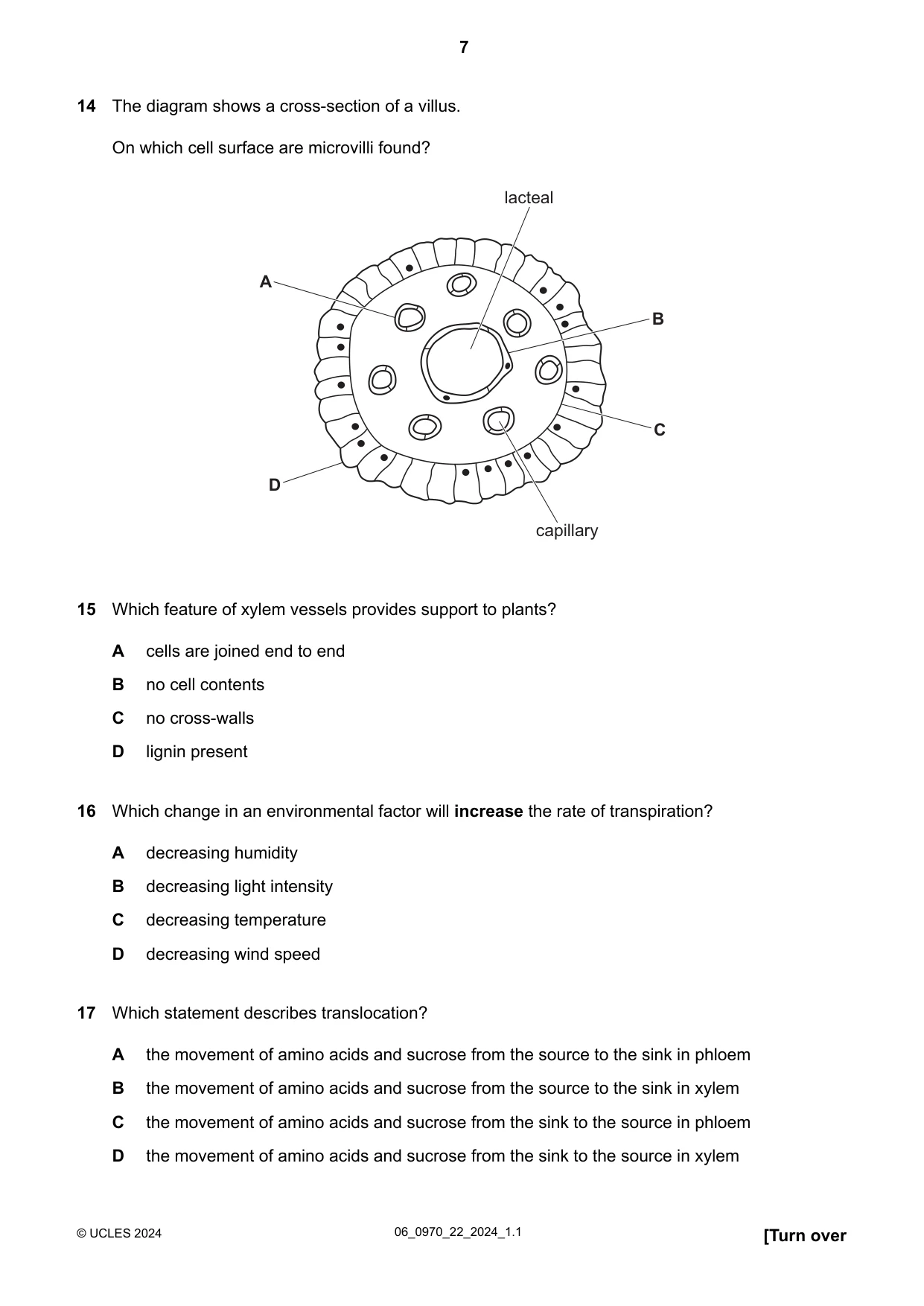
The diagram shows a cross-section of a villus. On which cell surface are microvilli found? 14 A B C D lacteal capillary Which feature of xylem vessels provides support to plants? 15 cells are joined end to end A no cell contents B no cross-walls C lignin present D Which change in an environmental factor will increase the rate of transpiration? 16 decreasing humidity A decreasing light intensity B decreasing temperature C decreasing wind speed D Which statement describes translocation? 17 the movement of amino acids and sucrose from the source to the sink in phloem A the movement of amino acids and sucrose from the source to the sink in xylem B the movement of amino acids and sucrose from the sink to the source in phloem C the movement of amino acids and sucrose from the sink to the source in xylem D [Turn over 06_0970_22_2024_1.1 © UCLES 2024 7
Question paper, page 8
Which pathway is taken by blood in a fish? 18 gills →heart →body →gills A body →gills →heart →body B heart →gills →body →heart C heart →body →gills →body D Which component of blood produces antibodies? 19 plasma A platelets B red blood cells C white blood cells D The cholera bacterium produces a toxin which affects humans. What is an effect of this toxin on the human body? 20 the secretion of chloride ions from the blood into the lumen of the large intestine A the secretion of chloride ions from the blood into the lumen of the small intestine B the secretion of chloride ions from the lumen of the large intestine into the blood C the secretion of chloride ions from the lumen of the small intestine into the blood D These changes occur in the human body during exercise. 21 breathing rate increases 1 the rate of respiration increases 2 nerve impulses sent from the brain to the intercostal muscles and diaphragm 3 receptors in the brain detect increased concentration of carbon dioxide in the blood 4 What is the correct order for these changes? 1 →2 →4 →3 A 1 →3 →4 →2 B 2 →1 →4 →3 C 2 →4 →3 →1 D 06_0970_22_2024_1.1 © UCLES 2024 8
Question paper, page 9
Two molecules of glucose are aerobically respired. How many molecules of water are produced? 22 12 D 6 C 2 B 1 A Which substance has a higher concentration in the renal vein than in the renal artery? 23 carbon dioxide A glucose B oxygen C urea D Where are amino acids deaminated and converted into urea? 24 bladder A kidneys B liver C pancreas D Which process moves neurotransmitters across a synapse? 25 active transport A diffusion B gravity C osmosis D When the blood glucose concentration is low, which hormone is released and which organ releases it? 26 organ hormone liver glucagon A pancreas glucagon B liver insulin C pancreas insulin D [Turn over 06_0970_22_2024_1.1 © UCLES 2024 9
Question paper, page 10
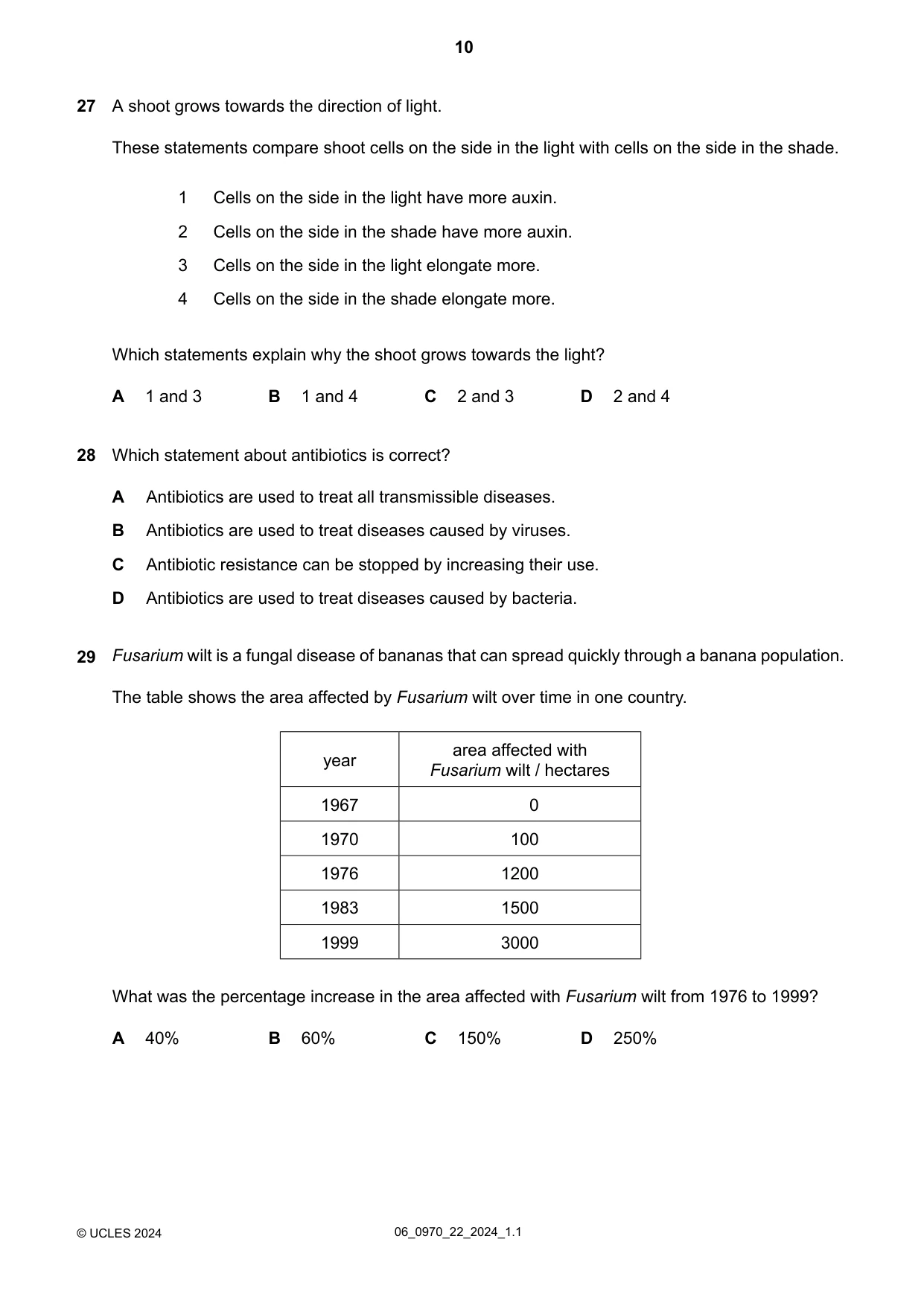
A shoot grows towards the direction of light. These statements compare shoot cells on the side in the light with cells on the side in the shade. 27 Cells on the side in the light have more auxin. 1 Cells on the side in the shade have more auxin. 2 Cells on the side in the light elongate more. 3 Cells on the side in the shade elongate more. 4 Which statements explain why the shoot grows towards the light? 2 and 4 D 2 and 3 C 1 and 4 B 1 and 3 A Which statement about antibiotics is correct? 28 Antibiotics are used to treat all transmissible diseases. A Antibiotics are used to treat diseases caused by viruses. B Antibiotic resistance can be stopped by increasing their use. C Antibiotics are used to treat diseases caused by bacteria. D Fusarium wilt is a fungal disease of bananas that can spread quickly through a banana population. The table shows the area affected by Fusarium wilt over time in one country. 29 area affected with Fusarium wilt / hectares year 0 1967 100 1970 1200 1976 1500 1983 3000 1999 What was the percentage increase in the area affected with Fusarium wilt from 1976 to 1999? A 40% B 60% C 150% D 250% 06_0970_22_2024_1.1 © UCLES 2024 10
Question paper, page 11
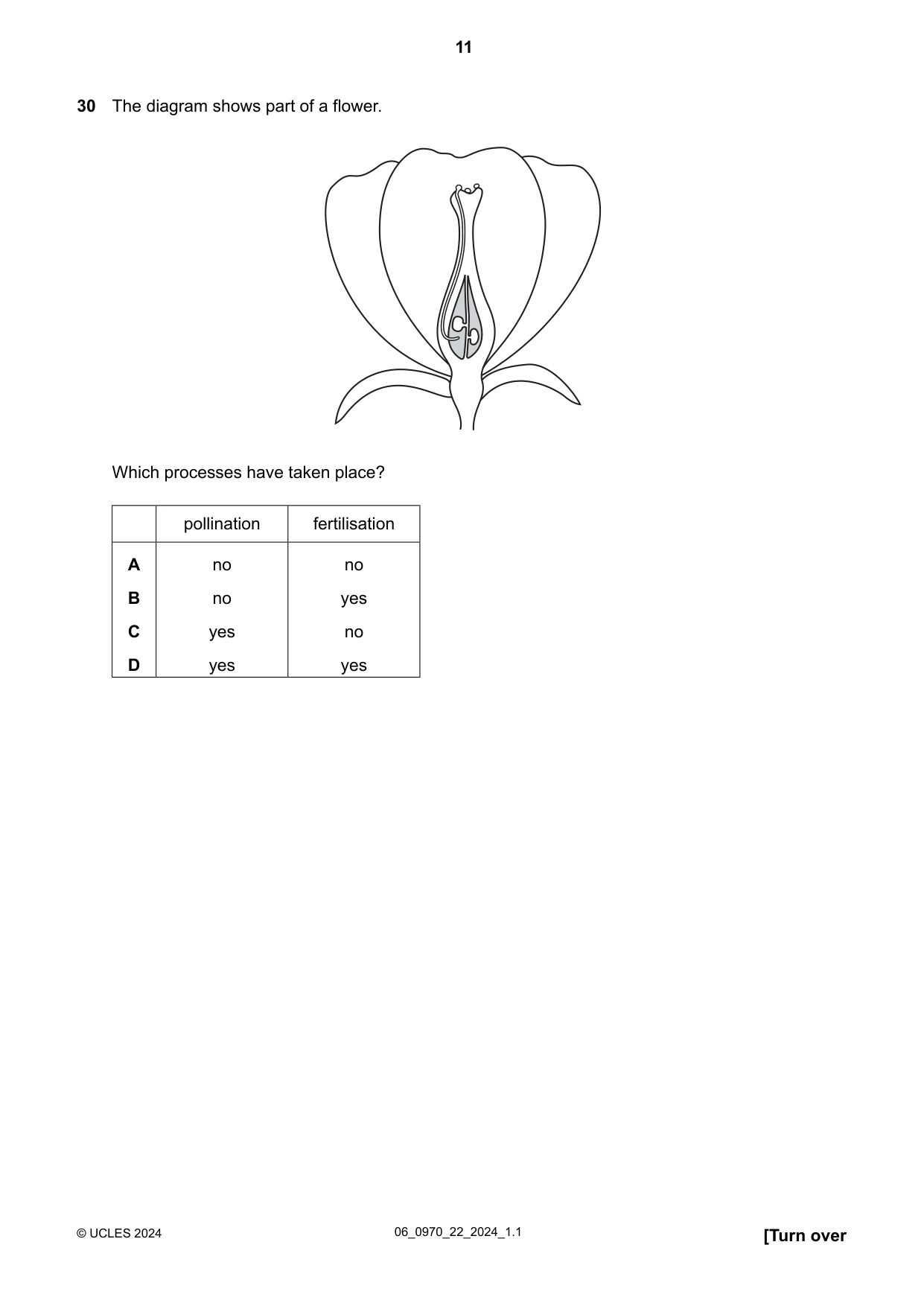
The diagram shows part of a flower. 30 Which processes have taken place? fertilisation pollination no no A yes no B no yes C yes yes D [Turn over 06_0970_22_2024_1.1 © UCLES 2024 11
Question paper, page 12
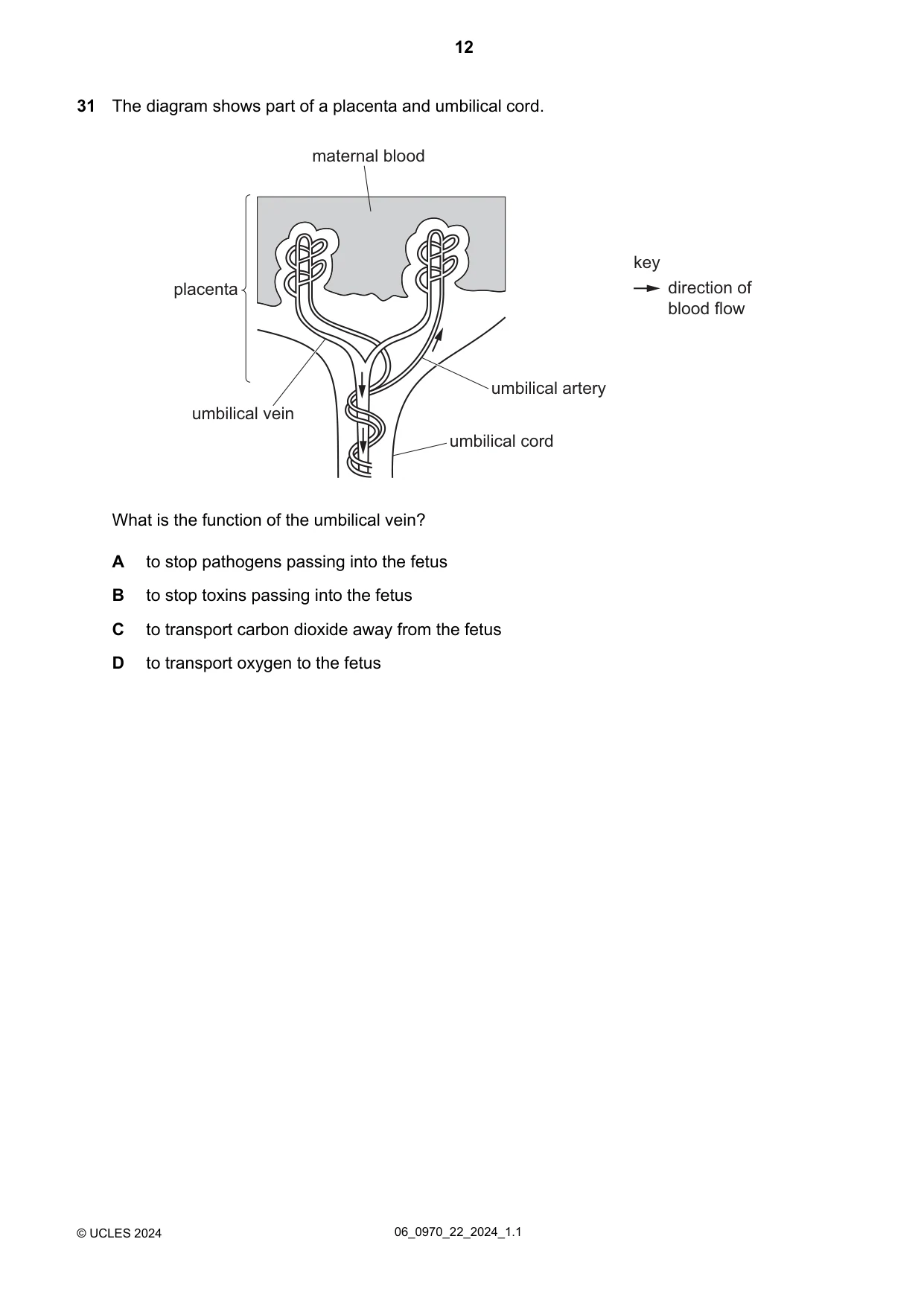
The diagram shows part of a placenta and umbilical cord. 31 maternal blood umbilical artery umbilical vein umbilical cord key direction of blood flow placenta What is the function of the umbilical vein? to stop pathogens passing into the fetus A to stop toxins passing into the fetus B to transport carbon dioxide away from the fetus C to transport oxygen to the fetus D 06_0970_22_2024_1.1 © UCLES 2024 12
Question paper, page 13
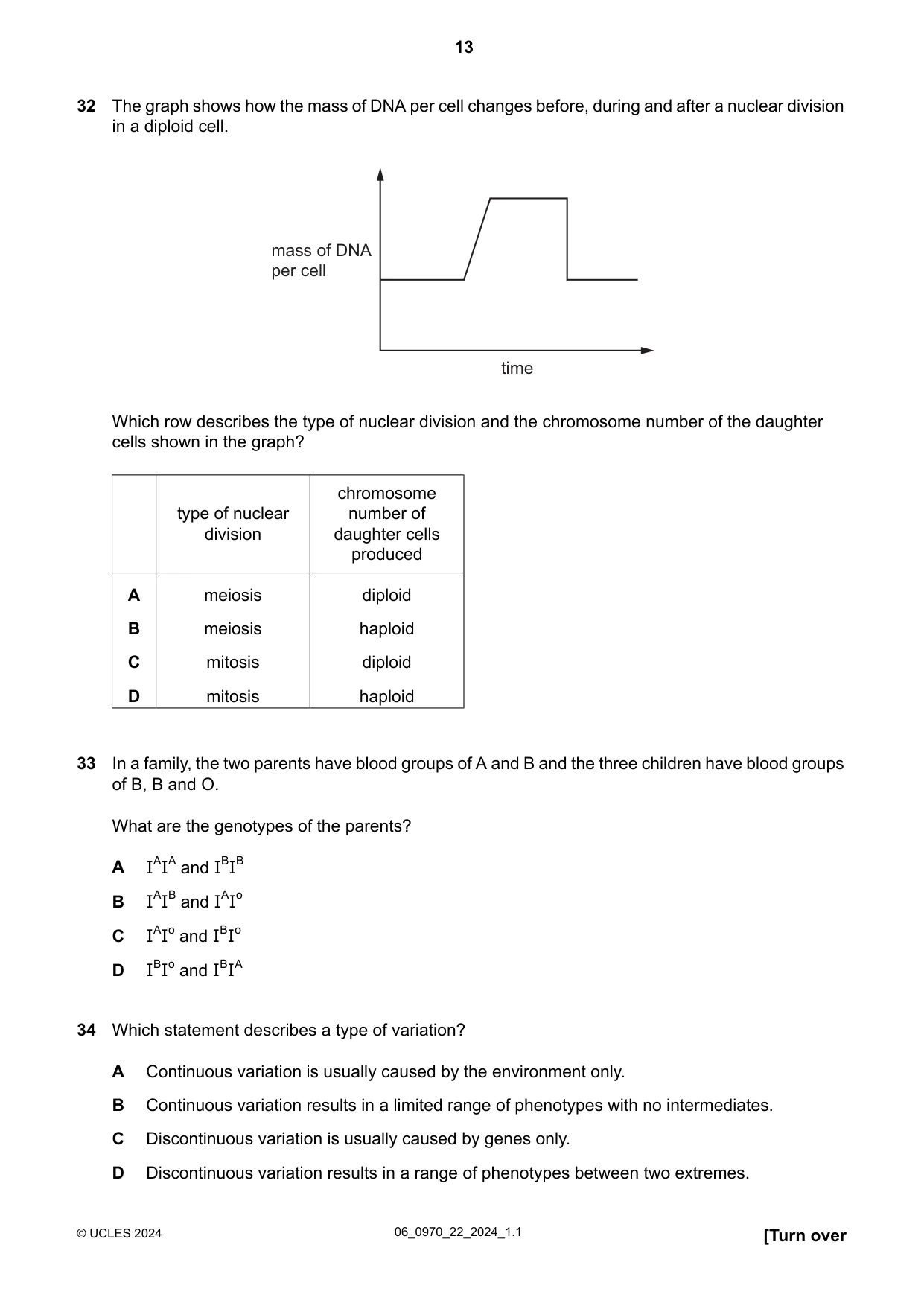
The graph shows how the mass of DNA per cell changes before, during and after a nuclear division in a diploid cell. 32 time mass of DNA per cell Which row describes the type of nuclear division and the chromosome number of the daughter cells shown in the graph? chromosome number of daughter cells produced type of nuclear division diploid meiosis A haploid meiosis B diploid mitosis C haploid mitosis D In a family, the two parents have blood groups of A and B and the three children have blood groups of B, B and O. What are the genotypes of the parents? 33 IAIA and IBIB A IAIB and IAIo B IAIo and IBIo C IBIo and IBIA D Which statement describes a type of variation? 34 Continuous variation is usually caused by the environment only. A Continuous variation results in a limited range of phenotypes with no intermediates. B Discontinuous variation is usually caused by genes only. C Discontinuous variation results in a range of phenotypes between two extremes. D [Turn over 06_0970_22_2024_1.1 © UCLES 2024 13
Question paper, page 14
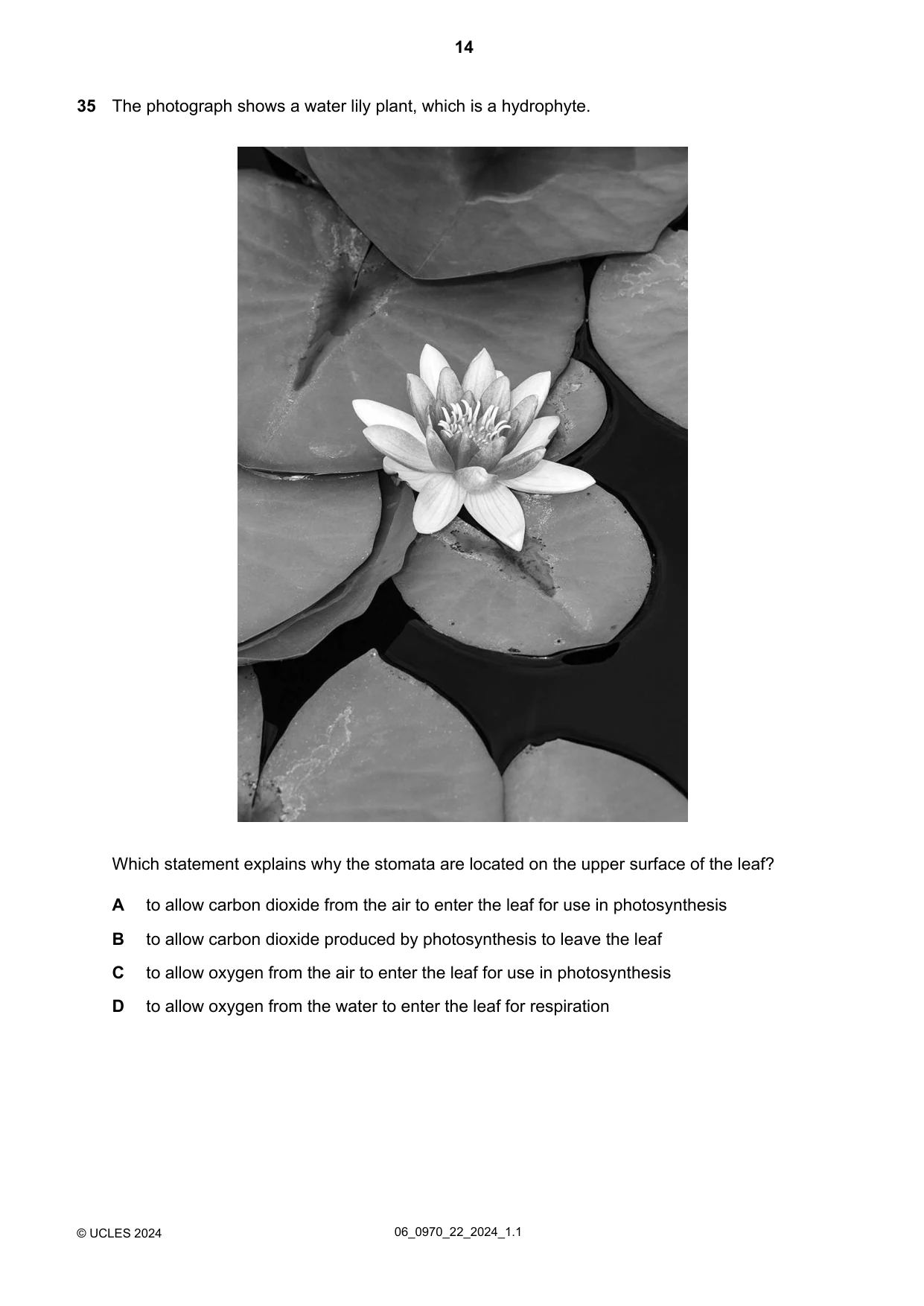
The photograph shows a water lily plant, which is a hydrophyte. 35 Which statement explains why the stomata are located on the upper surface of the leaf? to allow carbon dioxide from the air to enter the leaf for use in photosynthesis A to allow carbon dioxide produced by photosynthesis to leave the leaf B to allow oxygen from the air to enter the leaf for use in photosynthesis C to allow oxygen from the water to enter the leaf for respiration D 06_0970_22_2024_1.1 © UCLES 2024 14
Question paper, page 15
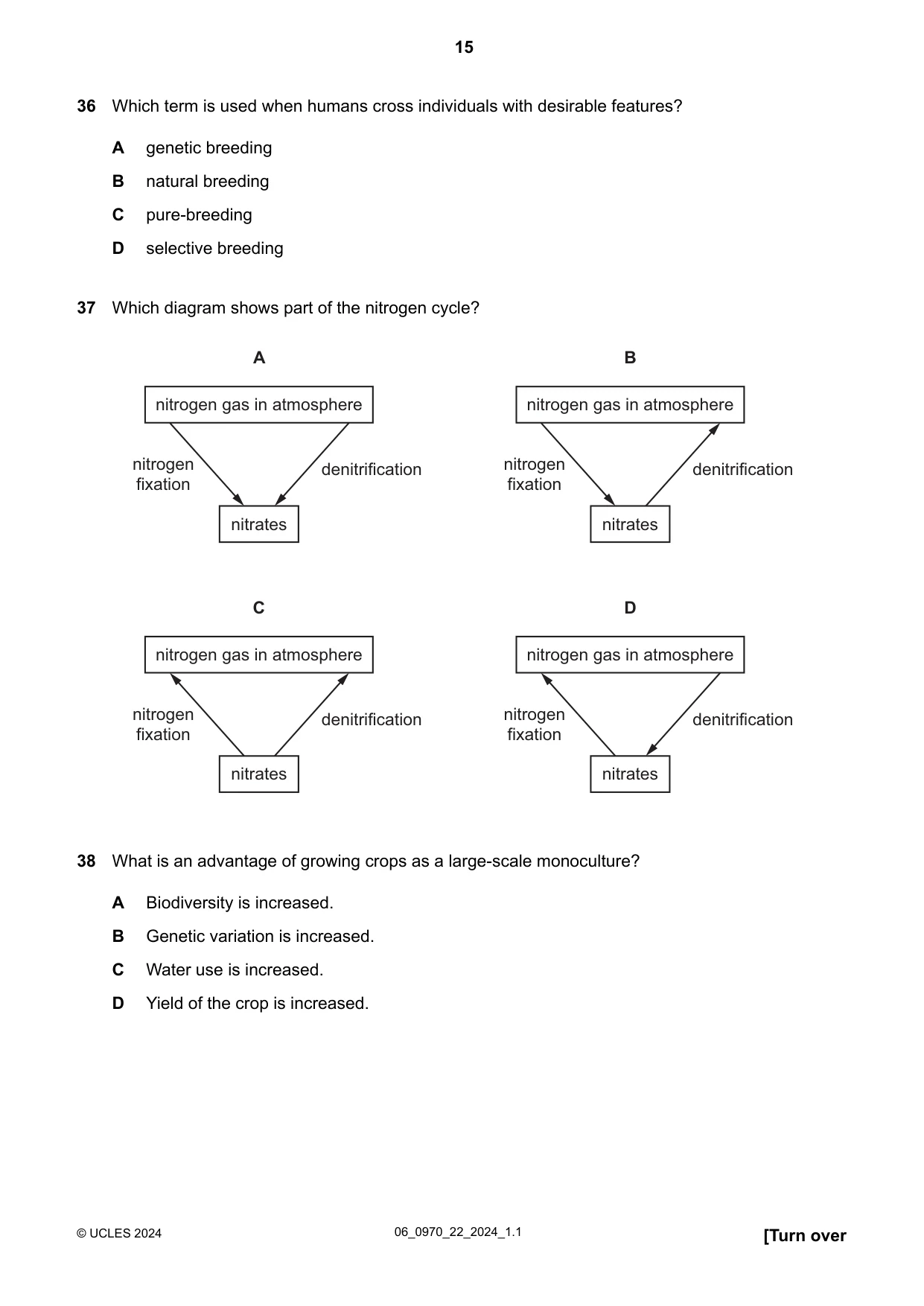
Which term is used when humans cross individuals with desirable features? 36 genetic breeding A natural breeding B pure-breeding C selective breeding D Which diagram shows part of the nitrogen cycle? 37 nitrogen gas in atmosphere A nitrates nitrogen fixation denitrification nitrogen gas in atmosphere B nitrates nitrogen fixation denitrification nitrogen gas in atmosphere C nitrates nitrogen fixation denitrification nitrogen gas in atmosphere D nitrates nitrogen fixation denitrification What is an advantage of growing crops as a large-scale monoculture? 38 Biodiversity is increased. A Genetic variation is increased. B Water use is increased. C Yield of the crop is increased. D [Turn over 06_0970_22_2024_1.1 © UCLES 2024 15
Question paper, page 16
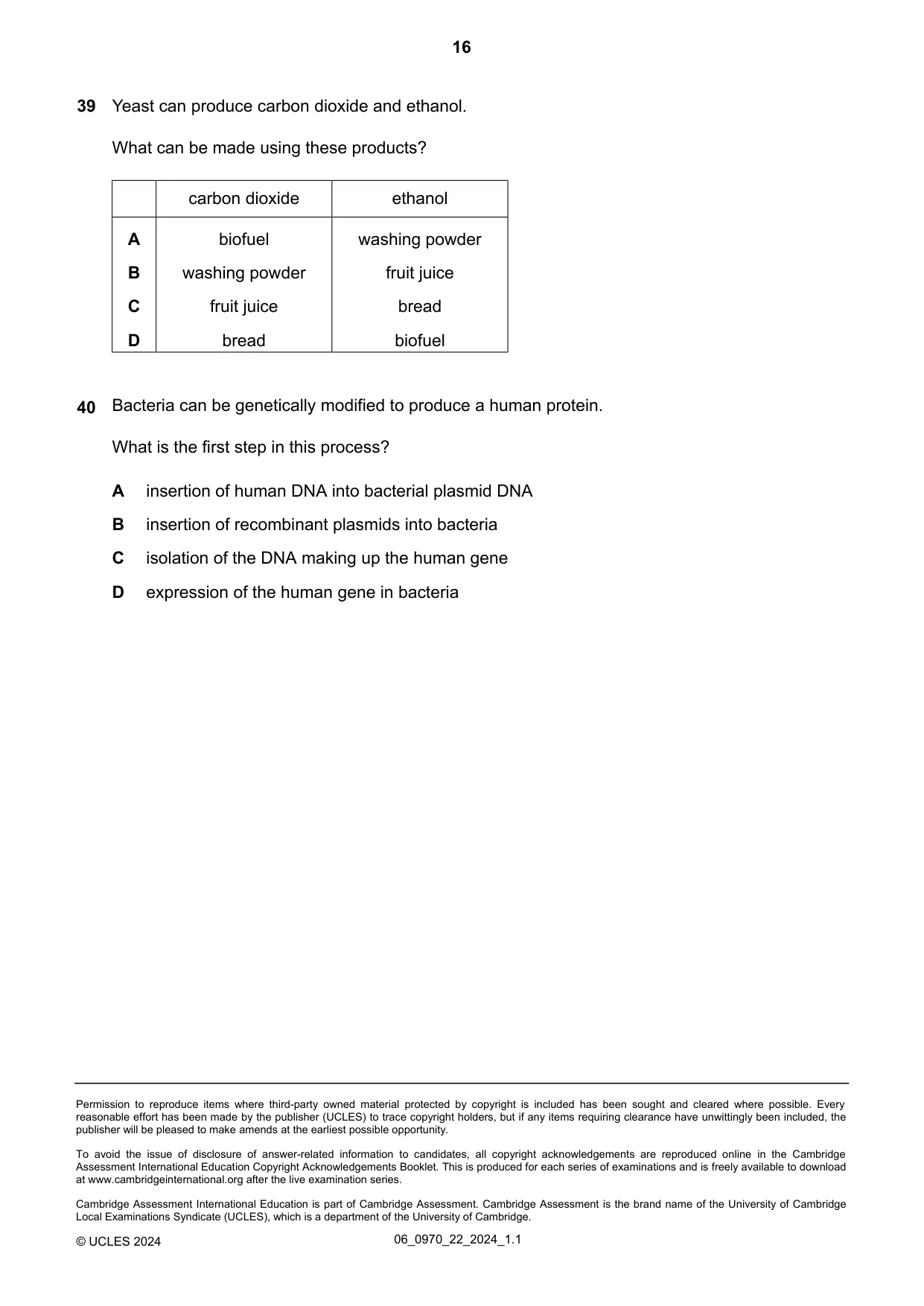
Yeast can produce carbon dioxide and ethanol. What can be made using these products? 39 ethanol carbon dioxide washing powder biofuel A fruit juice washing powder B bread fruit juice C biofuel bread D Bacteria can be genetically modified to produce a human protein. What is the first step in this process? 40 insertion of human DNA into bacterial plasmid DNA A insertion of recombinant plasmids into bacteria B isolation of the DNA making up the human gene C expression of the human gene in bacteria D 06_0970_22_2024_1.1 © UCLES 2024 16 Permission to reproduce items where third-party owned material protected by copyright is included has been sought and cleared where possible. Every reasonable effort has been made by the publisher (UCLES) to trace copyright holders, but if any items requiring clearance have unwittingly been included, the publisher will be pleased to make amends at the earliest possible opportunity. To avoid the issue of disclosure of answer-related information to candidates, all copyright acknowledgements are reproduced online in the Cambridge Assessment International Education Copyright Acknowledgements Booklet. This is produced for each series of examinations and is freely available to download at www.cambridgeinternational.org after the live examination series. Cambridge Assessment International Education is part of Cambridge Assessment. Cambridge Assessment is the brand name of the University of Cambridge Local Examinations Syndicate (UCLES), which is a department of the University of Cambridge.
Mark scheme, page 1
This document consists of 3 printed pages. © Cambridge University Press & Assessment 2024 [Turn over Cambridge IGCSE™ (9–1) BIOLOGY (9–1) 0970/22 Paper 2 Multiple Choice (Extended) May/June 2024 MARK SCHEME Maximum Mark: 40 Published This mark scheme is published as an aid to teachers and candidates, to indicate the requirements of the examination. Mark schemes should be read in conjunction with the question paper and the Principal Examiner Report for Teachers. Cambridge International will not enter into discussions about these mark schemes. Cambridge International is publishing the mark schemes for the May/June 2024 series for most Cambridge IGCSE, Cambridge International A and AS Level and Cambridge Pre-U components, and some Cambridge O Level components.
Mark scheme, page 2
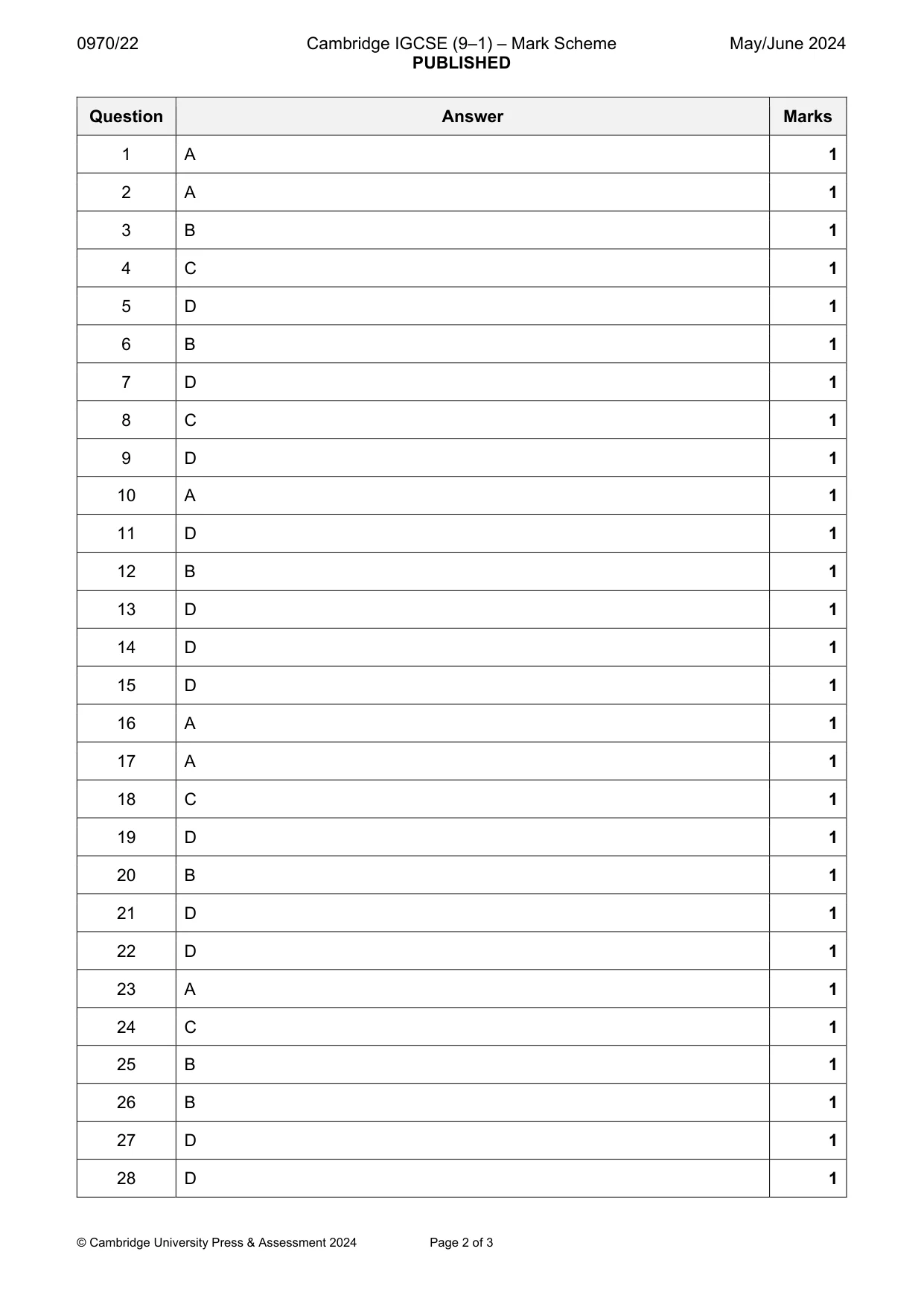
0970/22 Cambridge IGCSE (9–1) – Mark Scheme PUBLISHED May/June 2024 © Cambridge University Press & Assessment 2024 Page 2 of 3 Question Answer Marks 1 A 1 2 A 1 3 B 1 4 C 1 5 D 1 6 B 1 7 D 1 8 C 1 9 D 1 10 A 1 11 D 1 12 B 1 13 D 1 14 D 1 15 D 1 16 A 1 17 A 1 18 C 1 19 D 1 20 B 1 21 D 1 22 D 1 23 A 1 24 C 1 25 B 1 26 B 1 27 D 1 28 D 1
Mark scheme, page 3
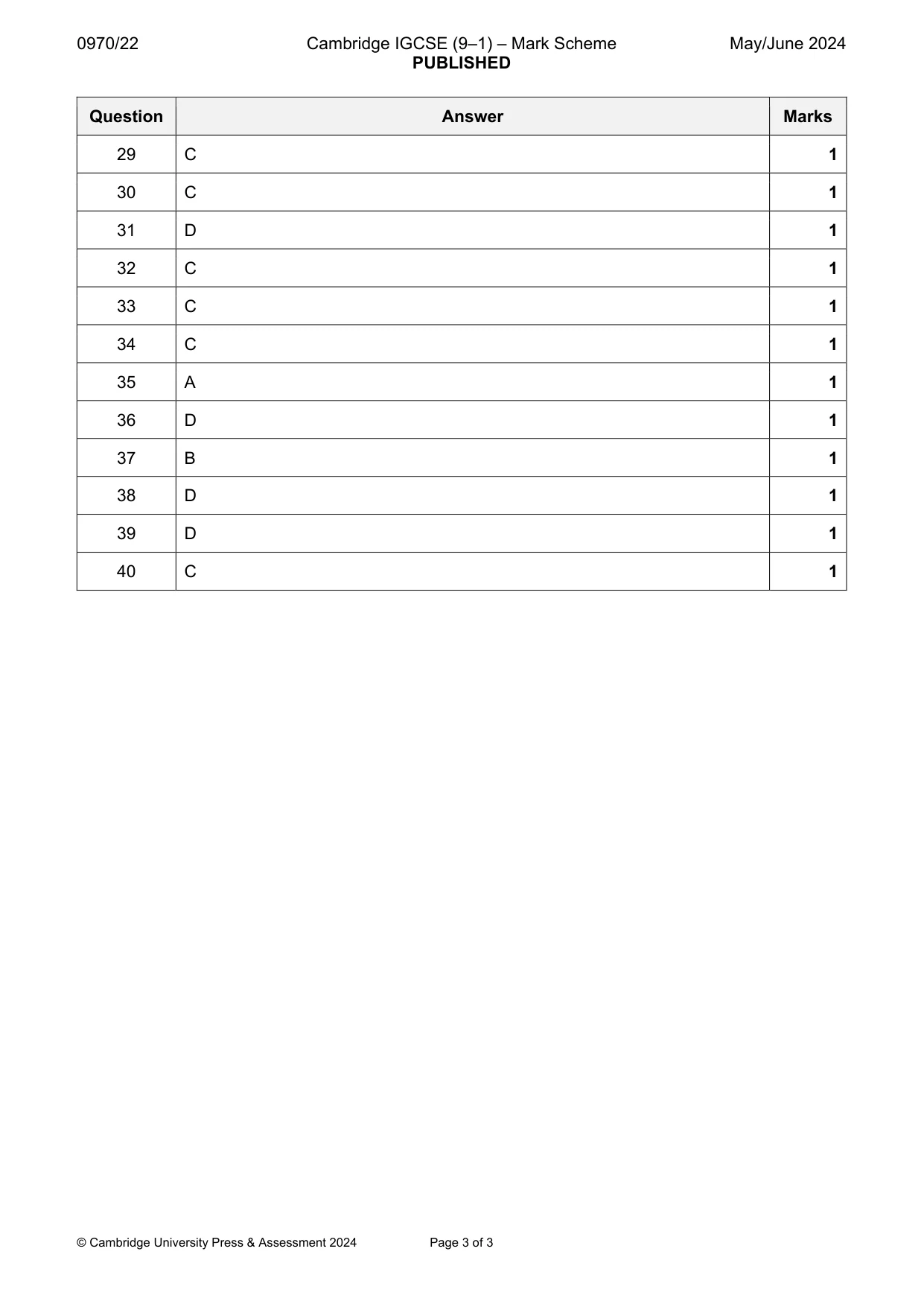
0970/22 Cambridge IGCSE (9–1) – Mark Scheme PUBLISHED May/June 2024 © Cambridge University Press & Assessment 2024 Page 3 of 3 Question Answer Marks 29 C 1 30 C 1 31 D 1 32 C 1 33 C 1 34 C 1 35 A 1 36 D 1 37 B 1 38 D 1 39 D 1 40 C 1
What you needed in this session
Cambridge’s own grade thresholds for 2024 May/June, Paper 2 · Variant 2. A higher threshold means an easier paper — the bar moves with how the cohort did.