Cambridge IGCSE Biology (9-1) 0970 — 2020 May/June Paper 2 · Variant 2
0970/22/M/J/20 · 40 questions · 40 marks · ≈45 min
The question paper and its mark scheme, free to read here and free to download. This is Cambridge’s own paper, exactly as it was sat.
Question paper16 pages

Mark scheme3 pages
Answers below. Sit the paper first if you are practising.
Questions as text
Q1 · The diagram shows what happened in an experiment with plant seedlings
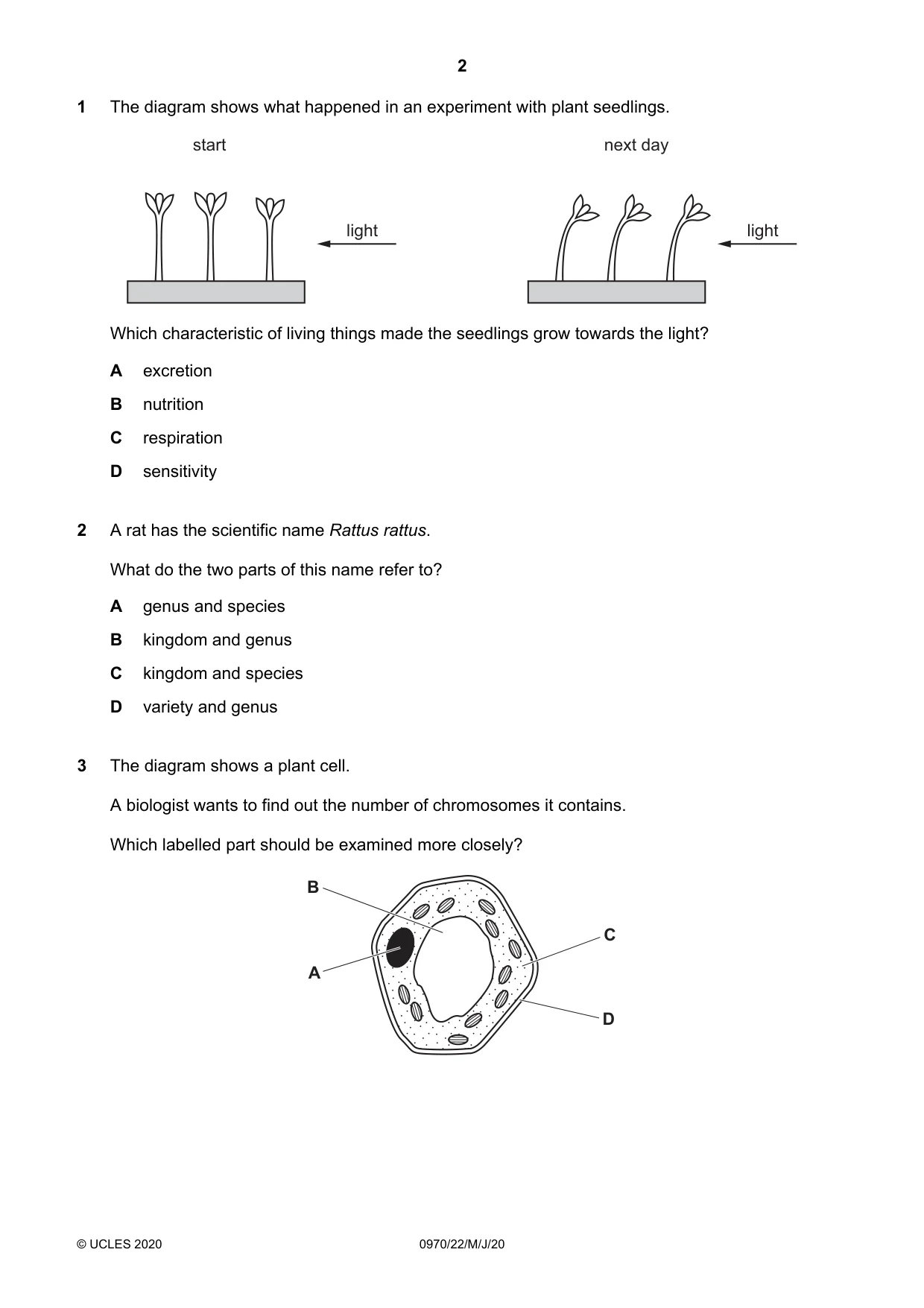
1 The diagram shows what happened in an experiment with plant seedlings. start next day light light Which characteristic of living things made the seedlings grow towards the light? A excretion B nutrition C respiration D sensitivity
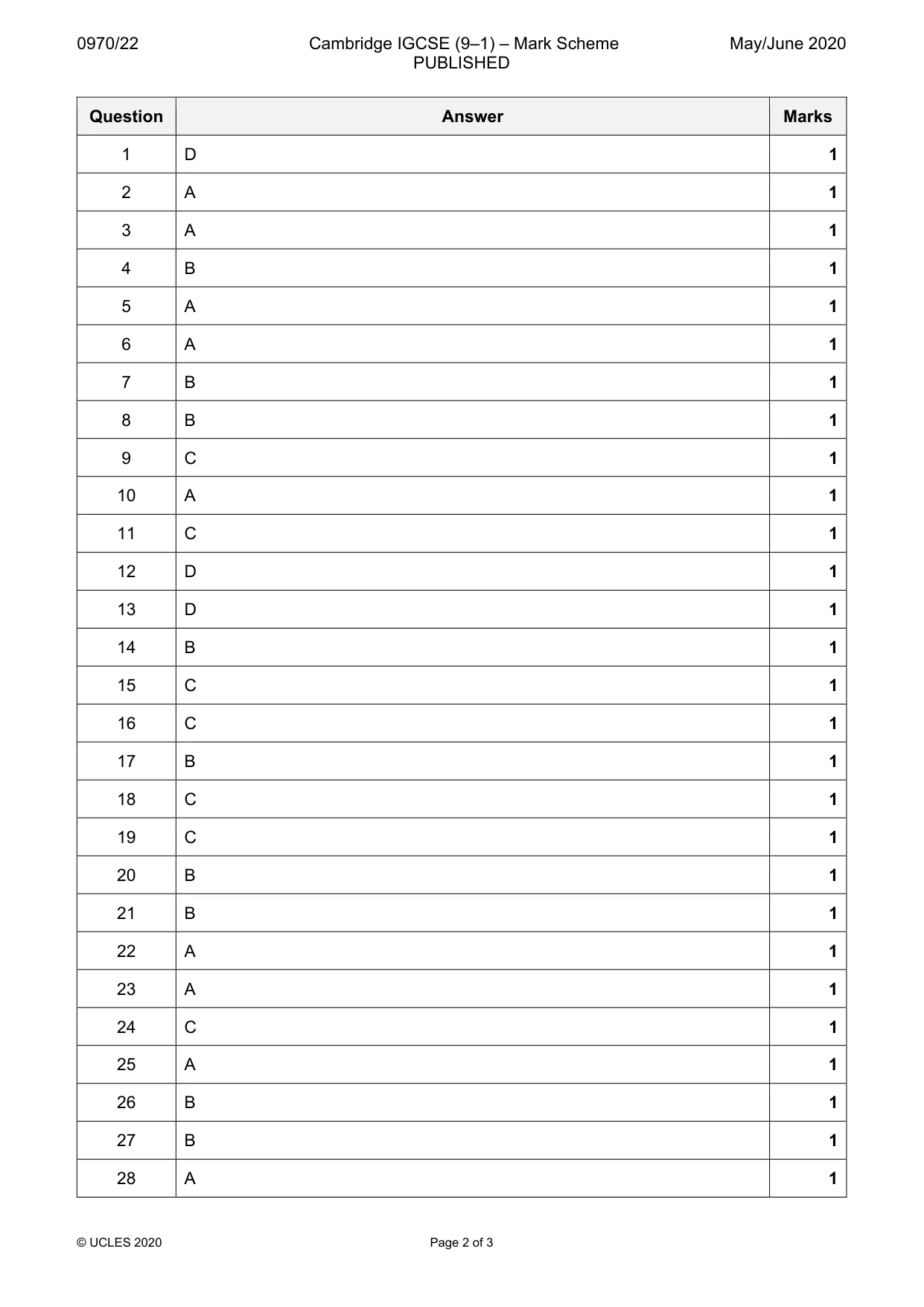
Mark scheme: D
Q2 · A rat has the scientific name Rattus rattus
2 A rat has the scientific name Rattus rattus. What do the two parts of this name refer to? A genus and species B kingdom and genus C kingdom and species D variety and genus
Mark scheme: A
More questions on Concept and uses of classification systems
Q3 · The diagram shows a plant cell
3 The diagram shows a plant cell. A biologist wants to find out the number of chromosomes it contains. Which labelled part should be examined more closely? B C A D
Mark scheme: A
Q4 · The diagram shows a human liver cell
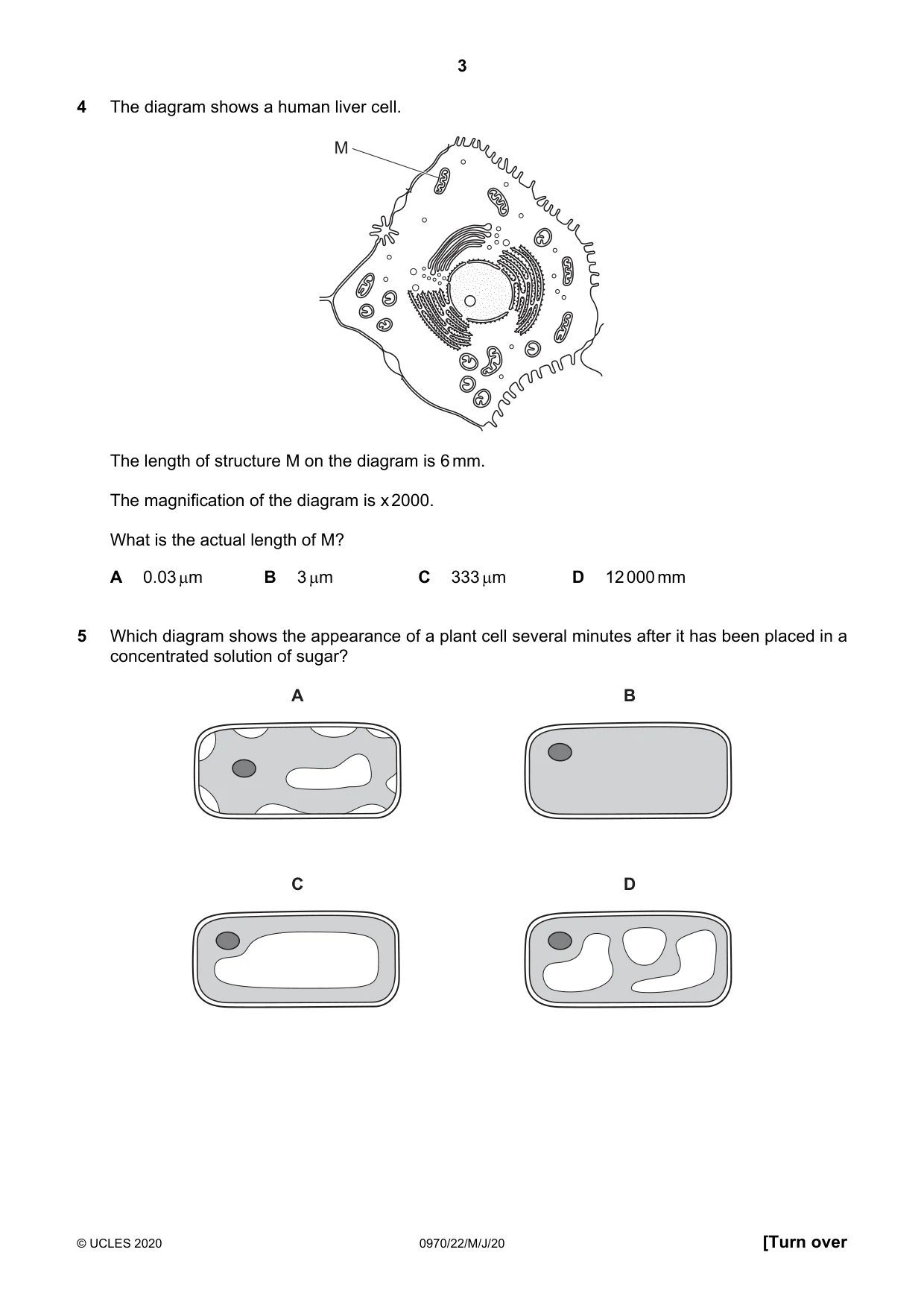
4 The diagram shows a human liver cell. M The length of structure M on the diagram is 6 mm. The magnification of the diagram is x 2000. What is the actual length of M? A 0.03 µm B 3 µm C 333 µm D 12 000 mm
Mark scheme: B
Q5 · Which diagram shows the appearance of a plant cell several minutes after it has been…
5 Which diagram shows the appearance of a plant cell several minutes after it has been placed in a concentrated solution of sugar? A B C D
Mark scheme: A
Q6 · An uncooked piece of potato was placed in a solution
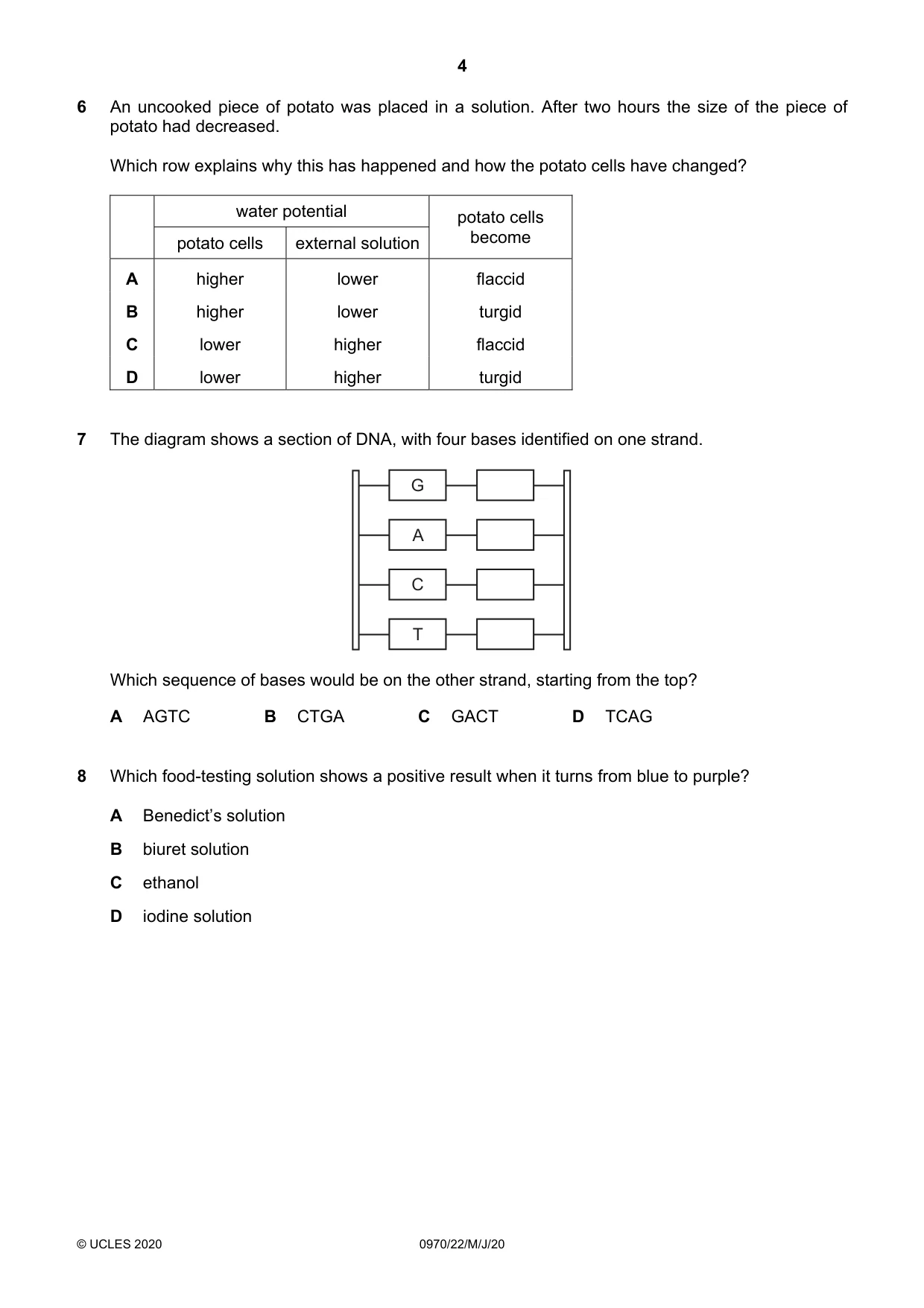
6 An uncooked piece of potato was placed in a solution. After two hours the size of the piece of potato had decreased. Which row explains why this has happened and how the potato cells have changed? water potential potato cells potato cells external solution become A higher lower flaccid B higher lower turgid C lower higher flaccid D lower higher turgid
Mark scheme: A
Q7 · The diagram shows a section of DNA, with four bases identified on one strand
7 The diagram shows a section of DNA, with four bases identified on one strand. G A C T Which sequence of bases would be on the other strand, starting from the top? A AGTC B CTGA C GACT D TCAG
Mark scheme: B
Q8 · Which food-testing solution shows a positive result when it turns from blue to purple?
8 Which food-testing solution shows a positive result when it turns from blue to purple? A Benedict’s solution B biuret solution C ethanol D iodine solution
Mark scheme: B
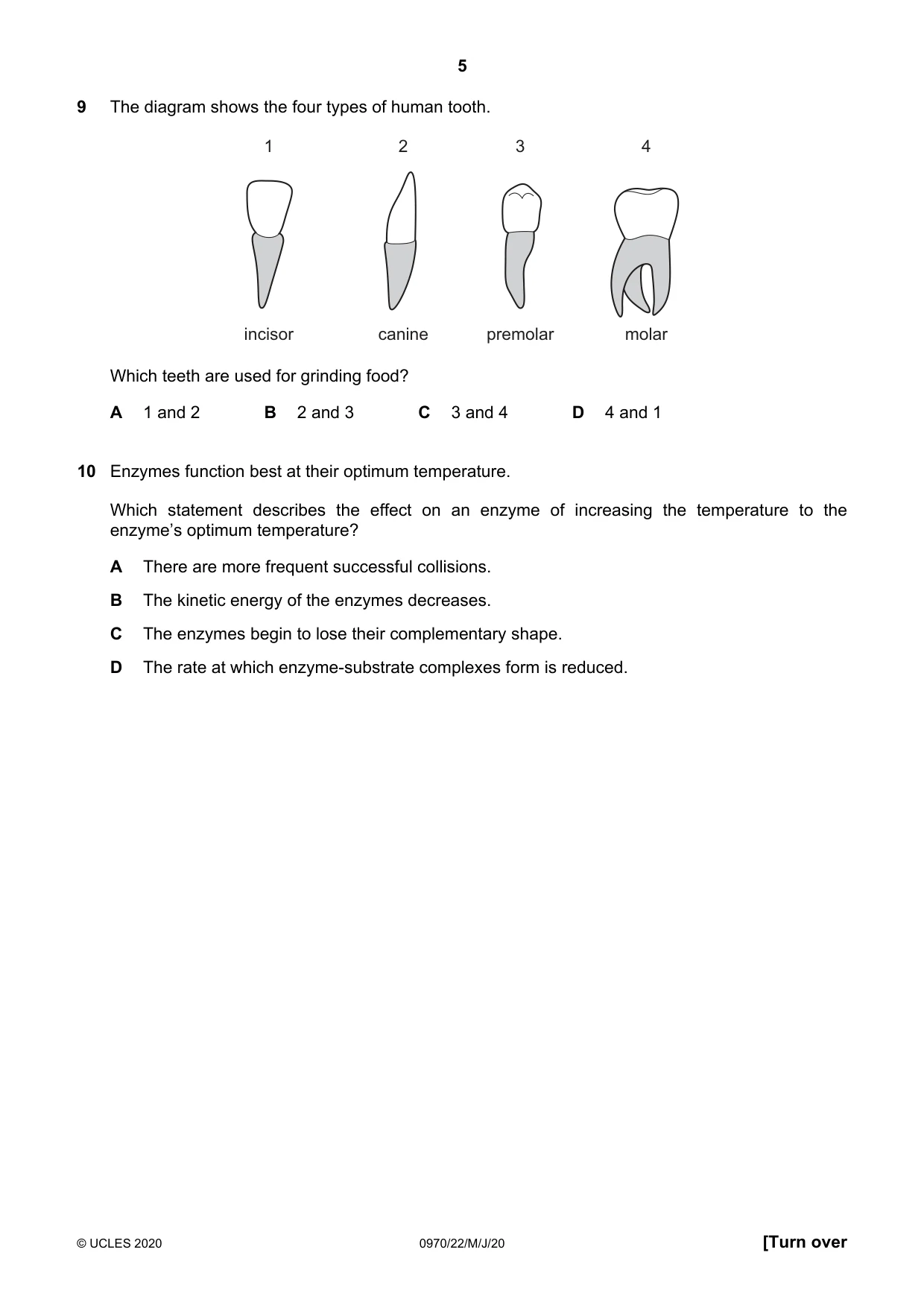
Q9 · The diagram shows the four types of human tooth
9 The diagram shows the four types of human tooth. 1 2 3 4 incisor canine premolar molar Which teeth are used for grinding food? A 1 and 2 B 2 and 3 C 3 and 4 D 4 and 1
Mark scheme: C
Q10 · Enzymes function best at their optimum temperature
10 Enzymes function best at their optimum temperature. Which statement describes the effect on an enzyme of increasing the temperature to the enzyme’s optimum temperature? A There are more frequent successful collisions. B The kinetic energy of the enzymes decreases. C The enzymes begin to lose their complementary shape. D The rate at which enzyme-substrate complexes form is reduced.
Mark scheme: A
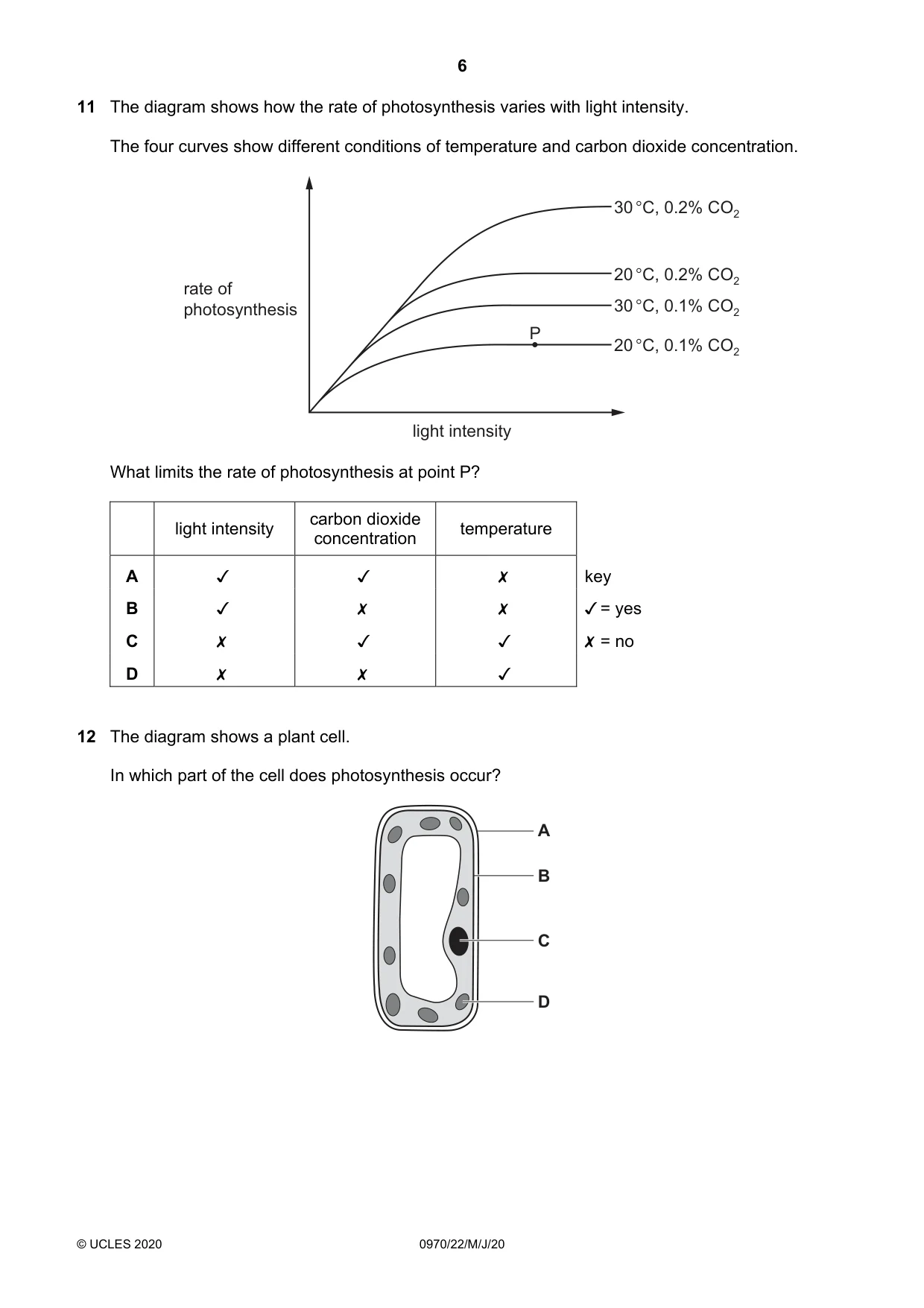
Q11 · The diagram shows how the rate of photosynthesis varies with light intensity
11 The diagram shows how the rate of photosynthesis varies with light intensity. The four curves show different conditions of temperature and carbon dioxide concentration. 30°C, 0.2% CO, te ot 20°C, 0.2% CO, rate o photosynthesis 30°C, 0.1% CO, 20°C, 0.1% CO, light intensity What limits the rate of photosynthesis at point P? ar . carbon dioxide light intensity ; temperature concentration A Jv v x key B J x x v=yes Cc x v v X =no D x x v
Mark scheme: C
Q12 · The diagram shows a plant cell
12 The diagram shows a plant cell. In which part of the cell does photosynthesis occur? A B C D
Mark scheme: D
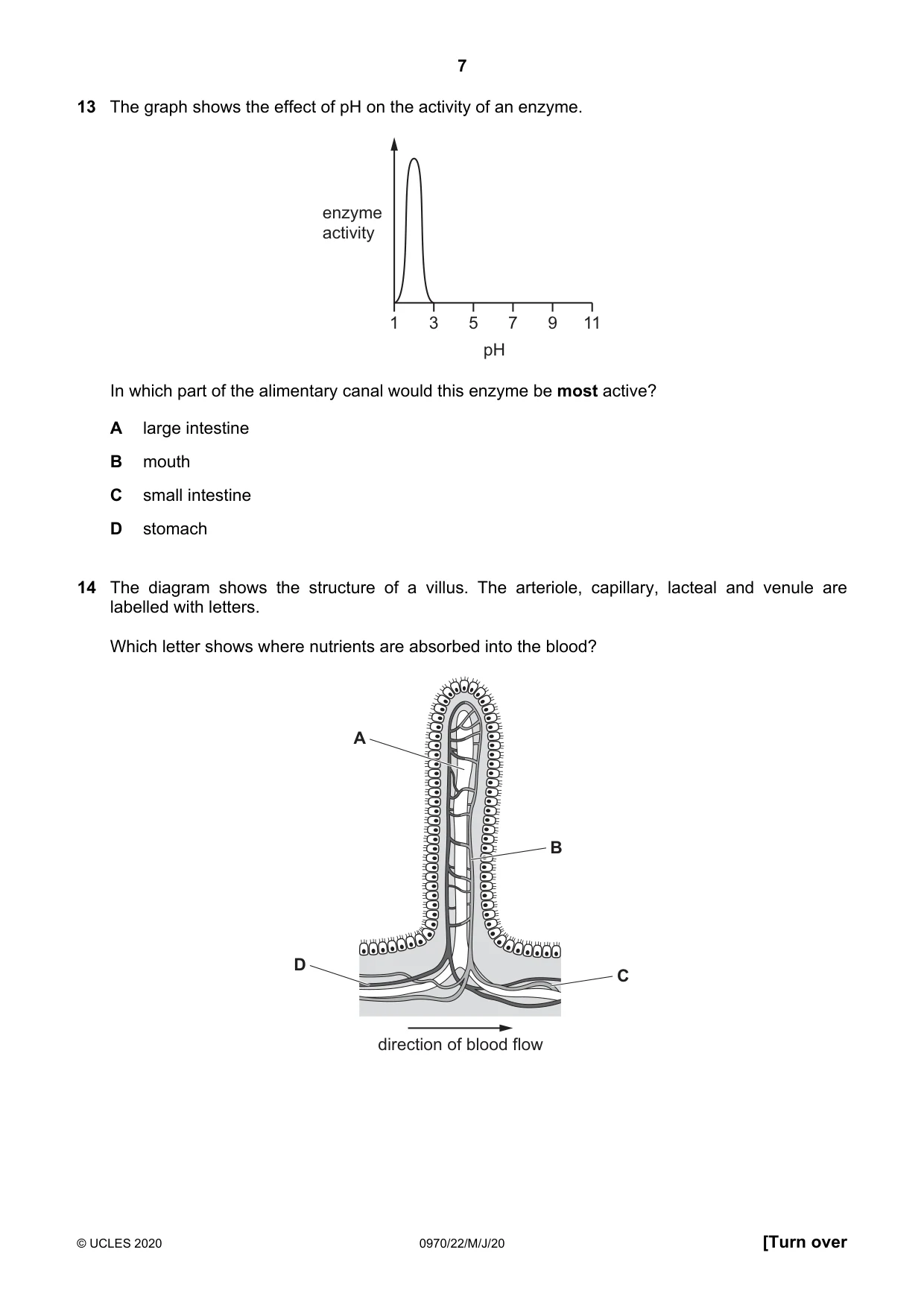
Q13 · The graph shows the effect of pH on the activity of an enzyme
13 The graph shows the effect of pH on the activity of an enzyme. enzyme activity 1 3 5 7 9 11 pH In which part of the alimentary canal would this enzyme be most active? A large intestine B mouth C small intestine D stomach
Mark scheme: D
Q14 · The diagram shows the structure of a villus
14 The diagram shows the structure of a villus. The arteriole, capillary, lacteal and venule are labelled with letters. Which letter shows where nutrients are absorbed into the blood? A B D C direction of blood flow
Mark scheme: B
Q15 · Which change increases the rate of water uptake by the roots of a plant?
15 Which change increases the rate of water uptake by the roots of a plant? A decrease in evaporation of water from mesophyll cells B decrease in length of root hairs C decrease in water potential of root hair cells D decrease in water potential of soil water
Mark scheme: C
Q16 · Dodder is a plant that grows on other plants called the hosts
16 Dodder is a plant that grows on other plants called the hosts. The dodder plant connects to the host’s vascular bundles. The dodder plant does not have green leaves or roots. What correctly describes the regions for translocation? host leaves dodder A sink sink B sink source C source sink D source source
Mark scheme: C
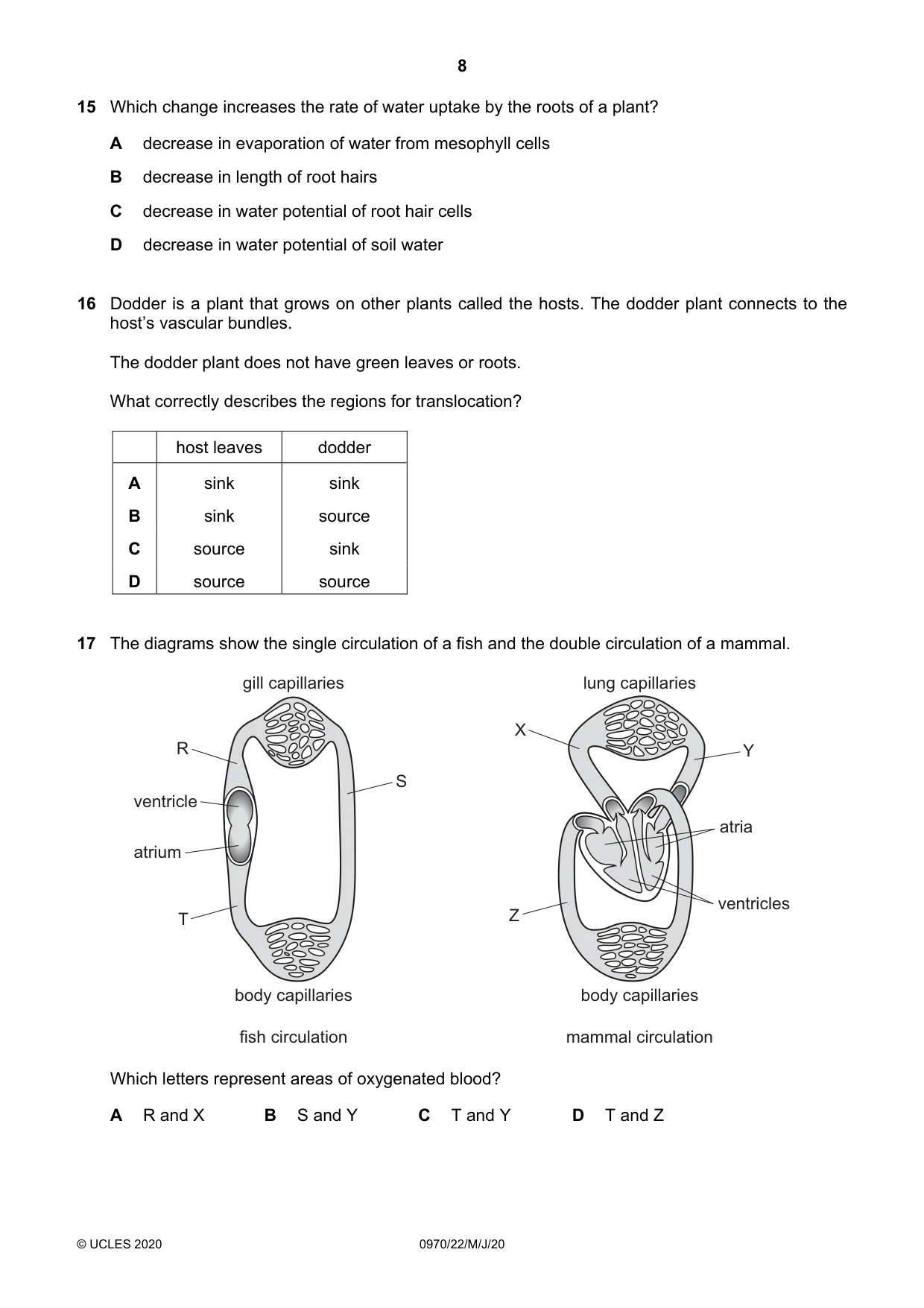
Q17 · The diagrams show the single circulation of a fish and the double circulation of a mammal
17 The diagrams show the single circulation of a fish and the double circulation of a mammal. gill capillaries lung capillaries X R Y S ventricle atria atrium ventricles T Z body capillaries body capillaries fish circulation mammal circulation Which letters represent areas of oxygenated blood? A R and X B S and Y C T and Y D T and Z
Mark scheme: B
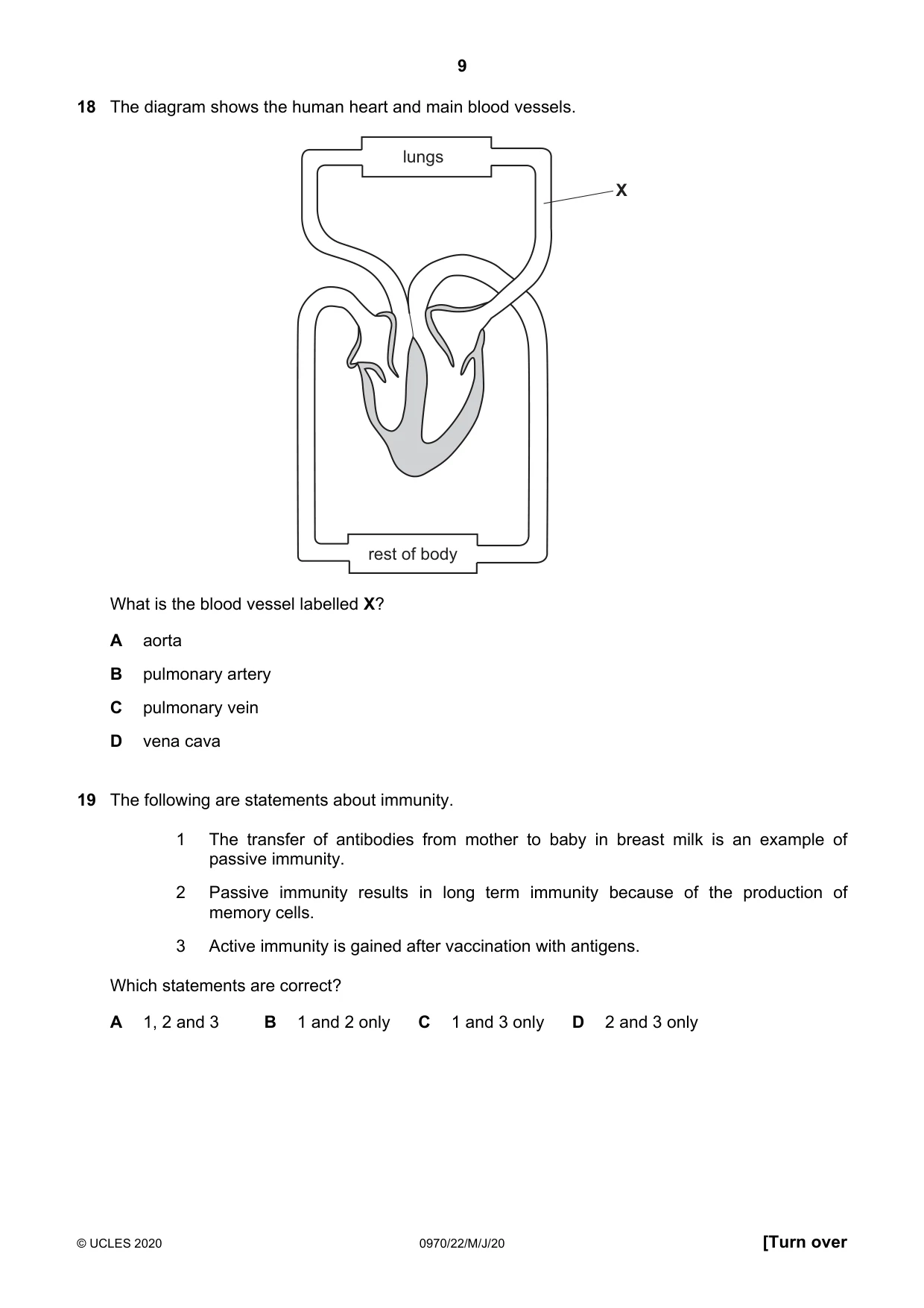
Q18 · The diagram shows the human heart and main blood vessels
18 The diagram shows the human heart and main blood vessels. lungs X rest of body What is the blood vessel labelled X? A aorta B pulmonary artery C pulmonary vein D vena cava
Mark scheme: C
Q19 · The following are statements about immunity
19 The following are statements about immunity. 1 The transfer of antibodies from mother to baby in breast milk is an example of passive immunity. 2 Passive immunity results in long term immunity because of the production of memory cells. 3 Active immunity is gained after vaccination with antigens. Which statements are correct? A 1, 2 and 3 B 1 and 2 only C 1 and 3 only D 2 and 3 only
Mark scheme: C
Q20 · What is the site of gas exchange in humans?
20 What is the site of gas exchange in humans? A nose B alveoli C bronchus D trachea
Mark scheme: B
Q21 · The substances listed are associated with aerobic respiration
21 The substances listed are associated with aerobic respiration. 1 carbon dioxide 2 glucose 3 oxygen 4 water Which substances are the products of aerobic respiration? A 1 and 3 B 1 and 4 C 2 and 3 D 3 and 4
Mark scheme: B
Q22 · The formula C2H5OH represents a chemical produced during anaerobic respiration
22 The formula C2H5OH represents a chemical produced during anaerobic respiration. What is this chemical? A alcohol B glucose C glycogen D lactic acid
Mark scheme: A
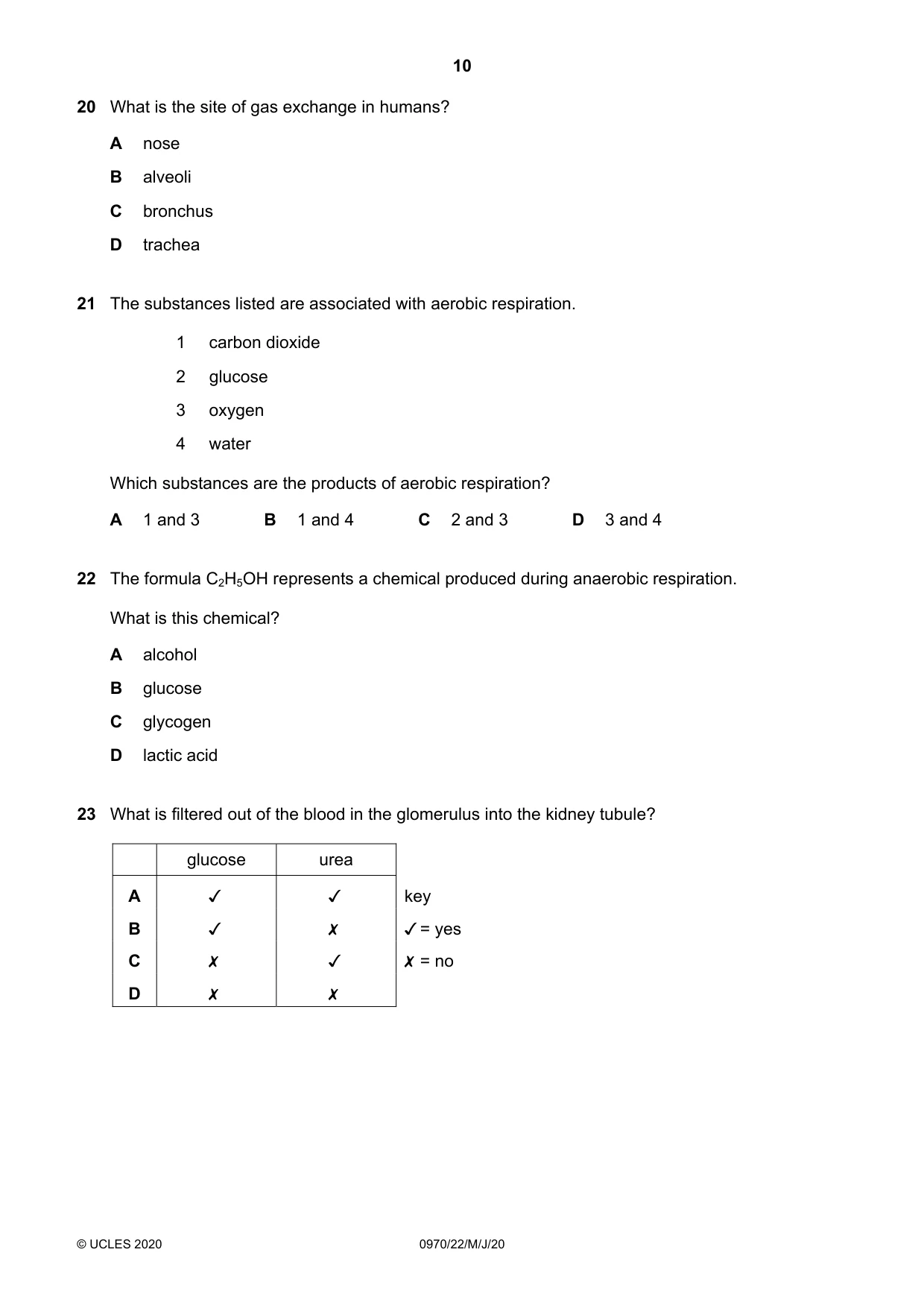
Q23 · What is filtered out of the blood in the glomerulus into the kidney tubule?
23 What is filtered out of the blood in the glomerulus into the kidney tubule? glucose urea A v v key B Jv x J/ = yes Cc x v X =no D x x
Mark scheme: A
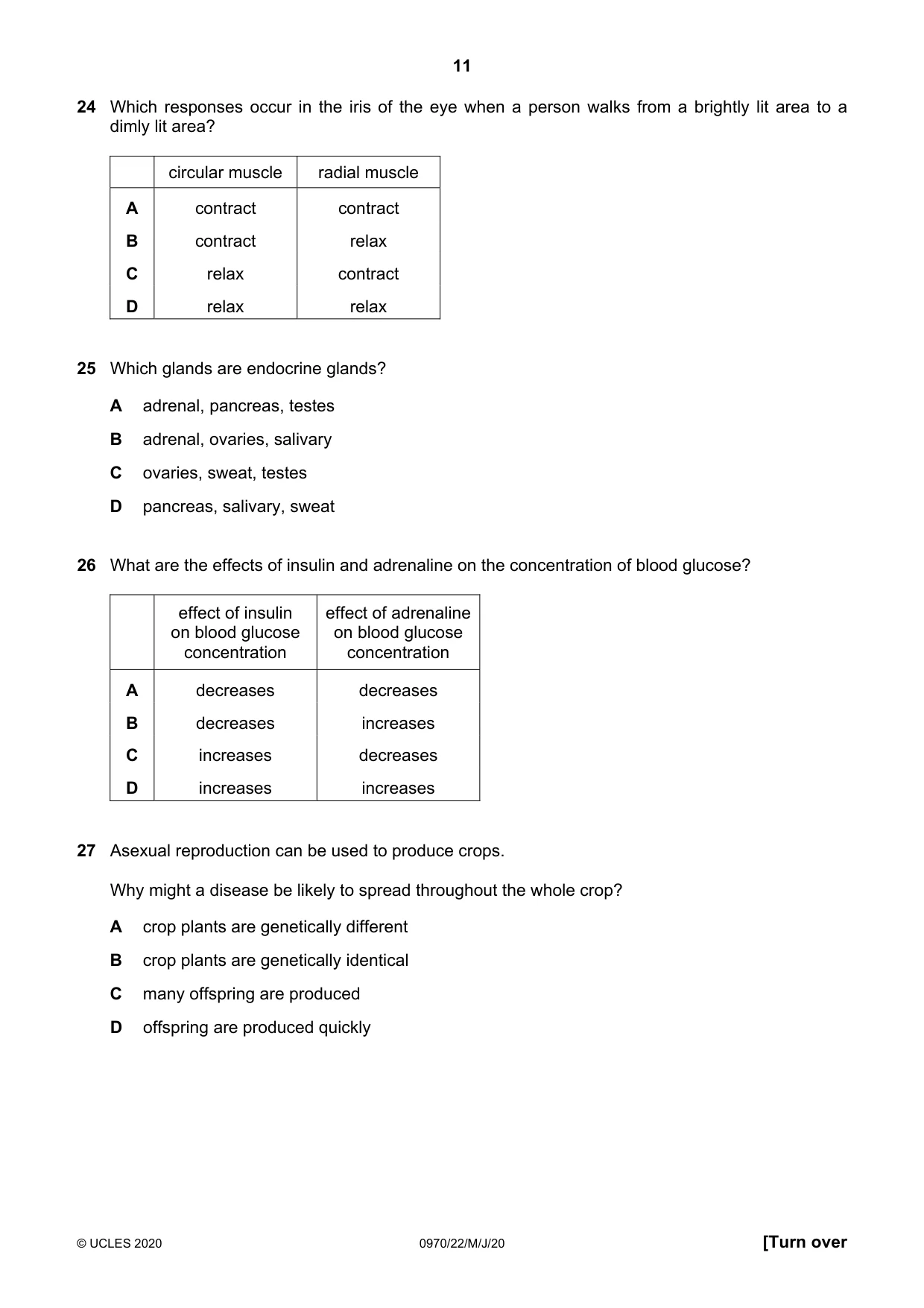
Q24 · Which responses occur in the iris of the eye when a person walks from a brightly lit area…
24 Which responses occur in the iris of the eye when a person walks from a brightly lit area to a dimly lit area? circular muscle radial muscle A contract contract B contract relax C relax contract D relax relax
Mark scheme: C
Q25 · Which glands are endocrine glands?
25 Which glands are endocrine glands? A adrenal, pancreas, testes B adrenal, ovaries, salivary C ovaries, sweat, testes D pancreas, salivary, sweat
Mark scheme: A
Q26 · What are the effects of insulin and adrenaline on the concentration of blood glucose?
26 What are the effects of insulin and adrenaline on the concentration of blood glucose? effect of insulin effect of adrenaline on blood glucose on blood glucose concentration concentration A decreases decreases B decreases increases C increases decreases D increases increases
Mark scheme: B
Q27 · Asexual reproduction can be used to produce crops
27 Asexual reproduction can be used to produce crops. Why might a disease be likely to spread throughout the whole crop? A crop plants are genetically different B crop plants are genetically identical C many offspring are produced D offspring are produced quickly
Mark scheme: B
Q28 · In a comparison between the processes of artificial insemination (AI) and in vitro…
28 In a comparison between the processes of artificial insemination (AI) and in vitro fertilisation (IVF), which statement applies to IVF only? A Human egg cells are harvested from the ovary. B Donated sperm cells are used to fertilise the egg cells. C Childless couples are given the opportunity to have a child of their own. D Fertilisation occurs inside the body of the female.
Mark scheme: A
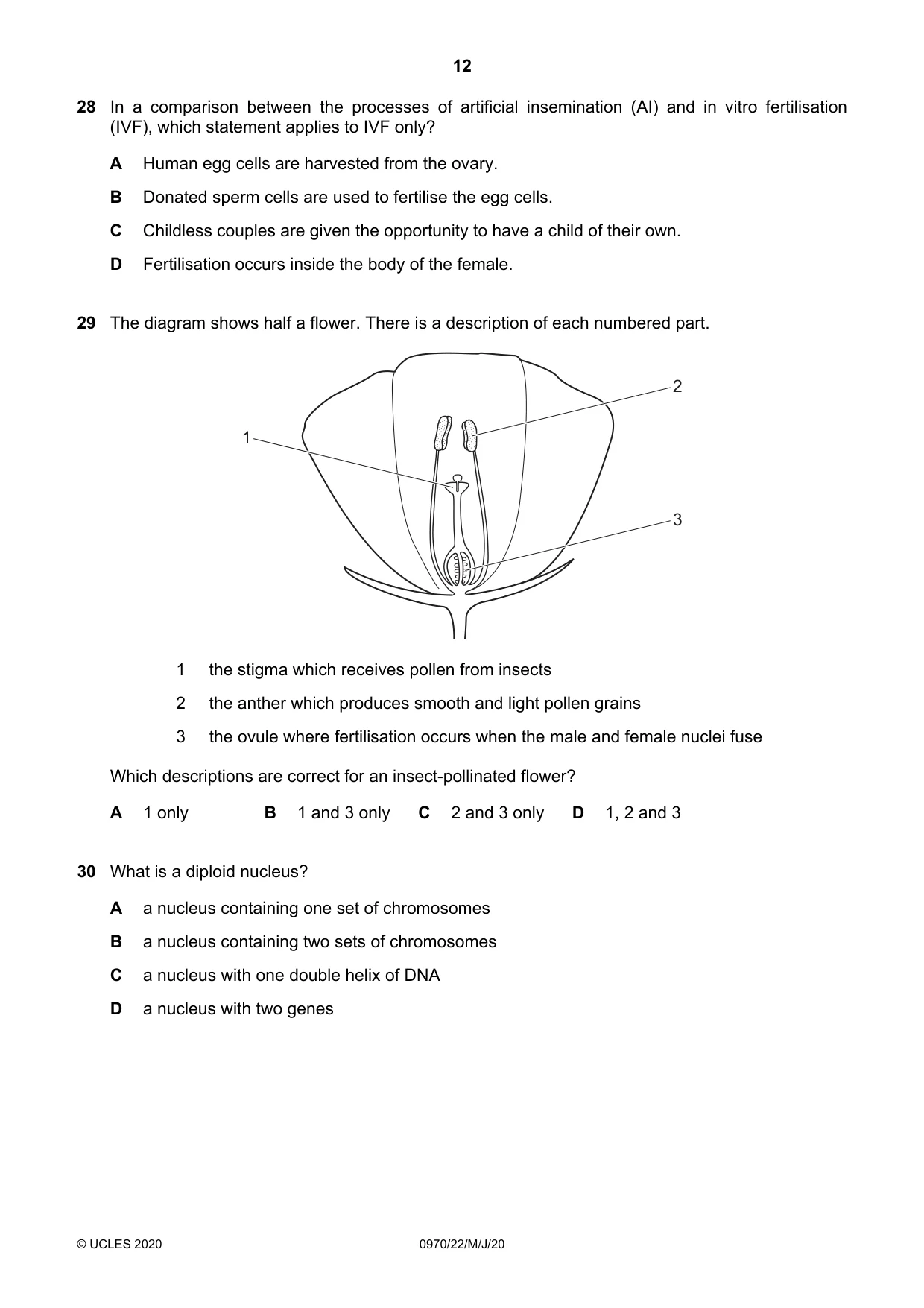
Q29 · The diagram shows half a flower
29 The diagram shows half a flower. There is a description of each numbered part. 2 1 3 1 the stigma which receives pollen from insects 2 the anther which produces smooth and light pollen grains 3 the ovule where fertilisation occurs when the male and female nuclei fuse Which descriptions are correct for an insect-pollinated flower? A 1 only B 1 and 3 only C 2 and 3 only D 1, 2 and 3
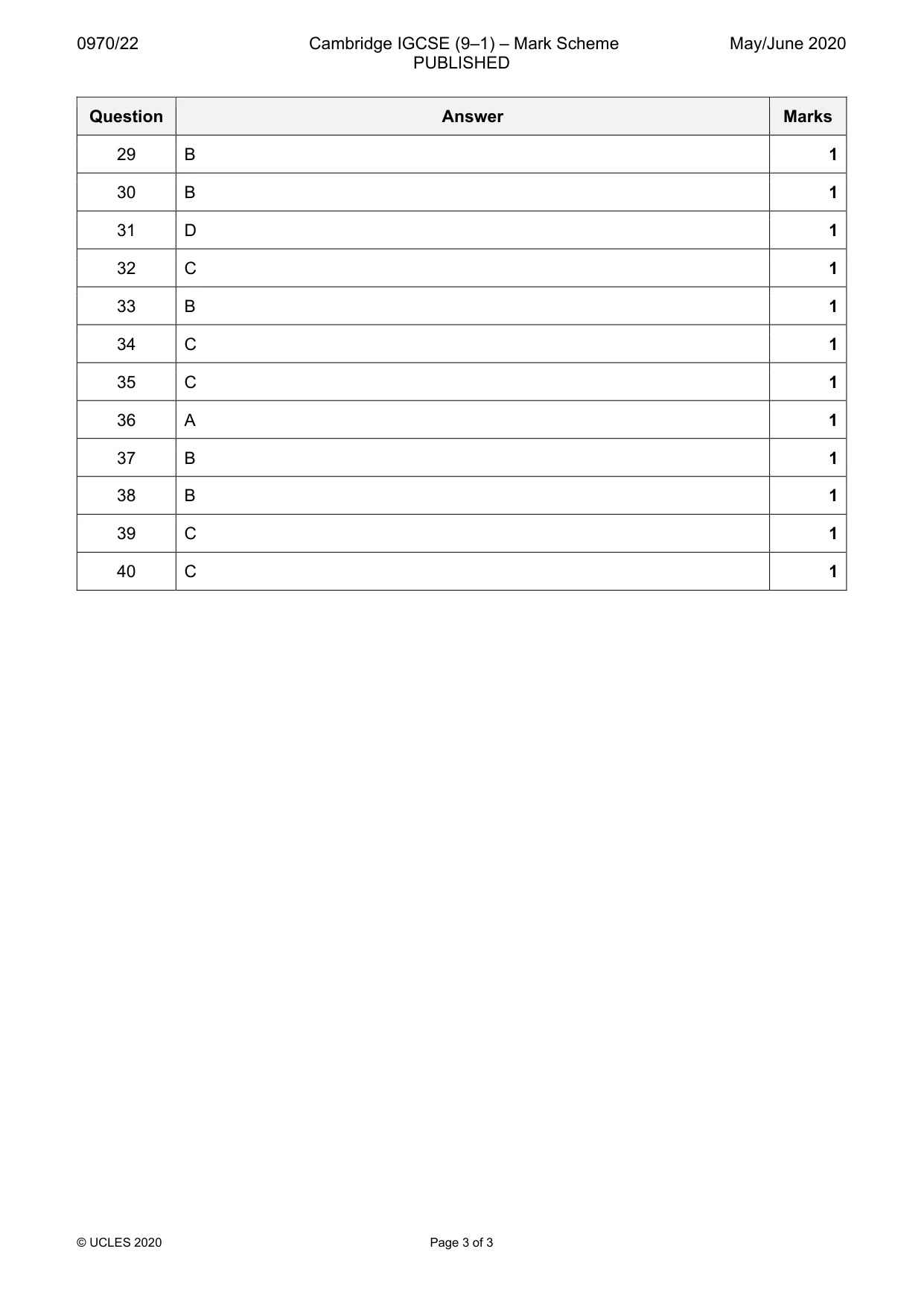
Mark scheme: B
Q30 · What is a diploid nucleus?
30 What is a diploid nucleus? A a nucleus containing one set of chromosomes B a nucleus containing two sets of chromosomes C a nucleus with one double helix of DNA D a nucleus with two genes
Mark scheme: B
Q31 · Which statement about meiosis is correct?
31 Which statement about meiosis is correct? A At the end of meiosis a zygote has been produced. B During meiosis the haploid number is halved in the daughter cells. C Meiosis is reduction division in which diploid daughter cells are produced. D The parent cell contains twice as many chromosomes as each daughter cell.
Mark scheme: D
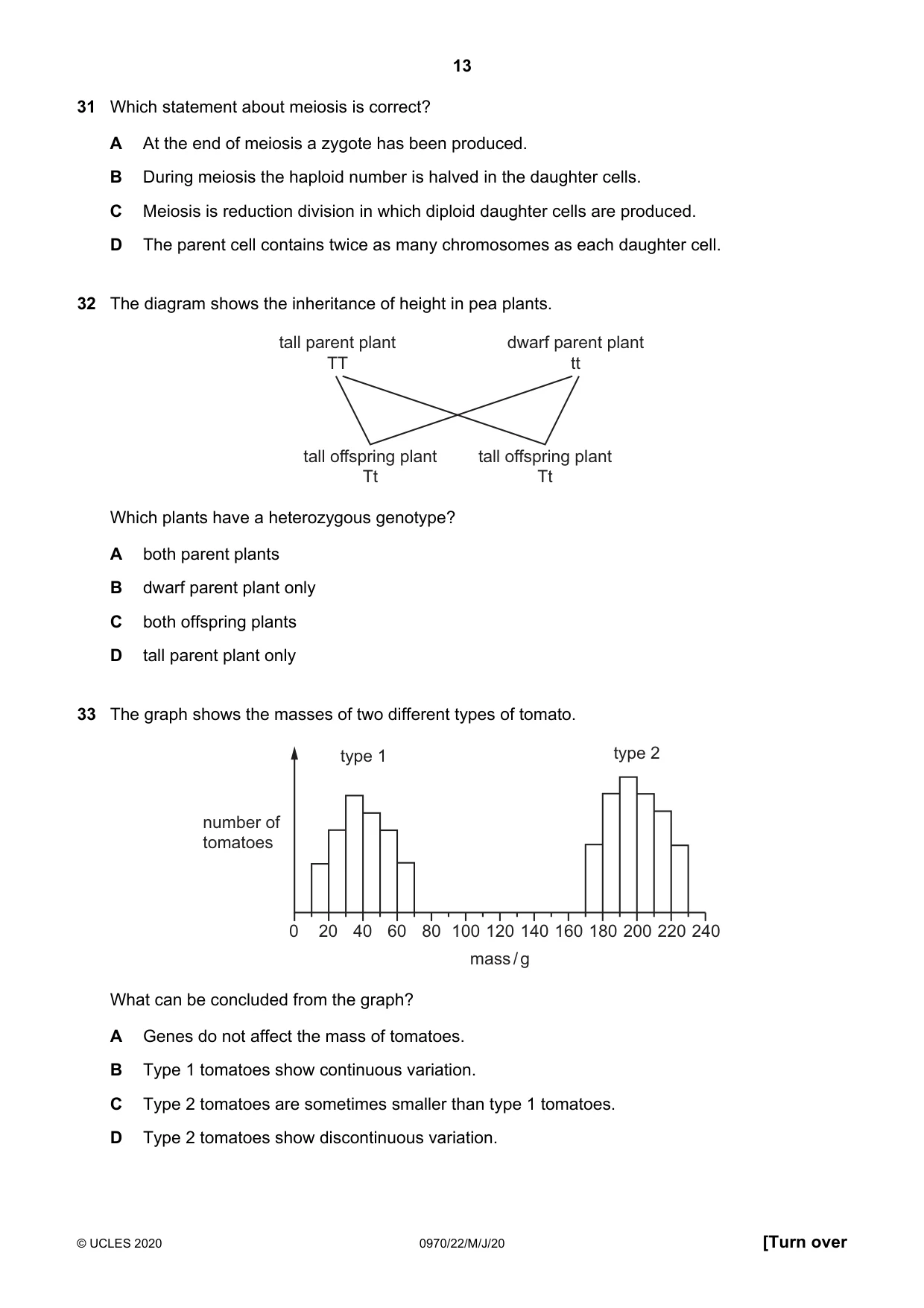
Q32 · The diagram shows the inheritance of height in pea plants
32 The diagram shows the inheritance of height in pea plants. tall parent plant dwarf parent plant TT tt tall offspring plant tall offspring plant Tt Tt Which plants have a heterozygous genotype? A both parent plants B dwarf parent plant only C both offspring plants D tall parent plant only
Mark scheme: C
Q33 · The graph shows the masses of two different types of tomato
33 The graph shows the masses of two different types of tomato. type 1 type 2 number of tomatoes 0 20 40 60 80 100 120 140 160 180 200 220 240 mass / g What can be concluded from the graph? A Genes do not affect the mass of tomatoes. B Type 1 tomatoes show continuous variation. C Type 2 tomatoes are sometimes smaller than type 1 tomatoes. D Type 2 tomatoes show discontinuous variation.
Mark scheme: B
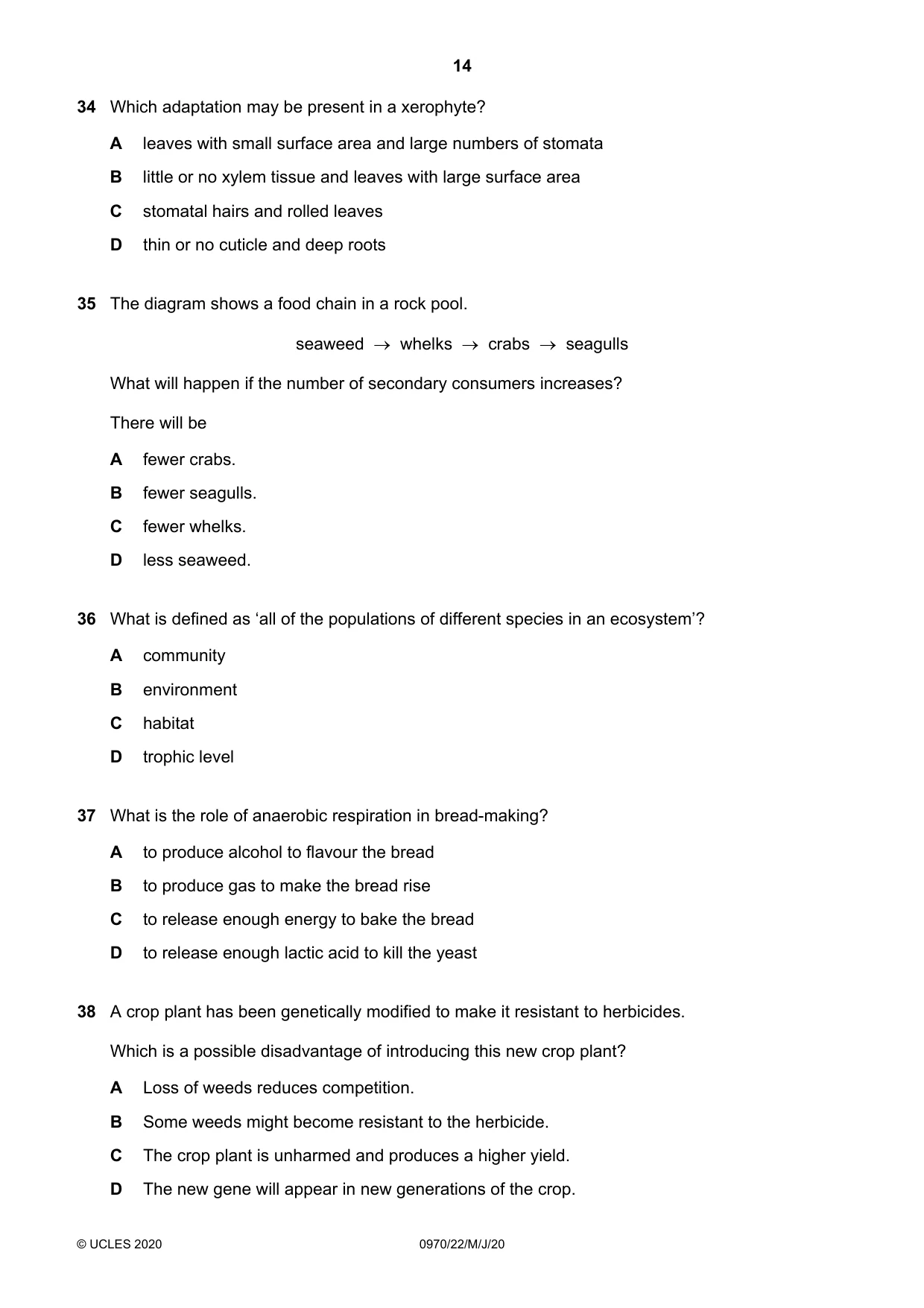
Q34 · Which adaptation may be present in a xerophyte?
34 Which adaptation may be present in a xerophyte? A leaves with small surface area and large numbers of stomata B little or no xylem tissue and leaves with large surface area C stomatal hairs and rolled leaves D thin or no cuticle and deep roots
Mark scheme: C
Q35 · The diagram shows a food chain in a rock pool
35 The diagram shows a food chain in a rock pool. seaweed → whelks → crabs → seagulls What will happen if the number of secondary consumers increases? There will be A fewer crabs. B fewer seagulls. C fewer whelks. D less seaweed.
Mark scheme: C
Q36 · What is defined as ‘all of the populations of different species in an ecosystem’?
36 What is defined as ‘all of the populations of different species in an ecosystem’? A community B environment C habitat D trophic level
Mark scheme: A
Q37 · What is the role of anaerobic respiration in bread-making?
37 What is the role of anaerobic respiration in bread-making? A to produce alcohol to flavour the bread B to produce gas to make the bread rise C to release enough energy to bake the bread D to release enough lactic acid to kill the yeast
Mark scheme: B
Q38 · A crop plant has been genetically modified to make it resistant to herbicides
38 A crop plant has been genetically modified to make it resistant to herbicides. Which is a possible disadvantage of introducing this new crop plant? A Loss of weeds reduces competition. B Some weeds might become resistant to the herbicide. C The crop plant is unharmed and produces a higher yield. D The new gene will appear in new generations of the crop.
Mark scheme: B
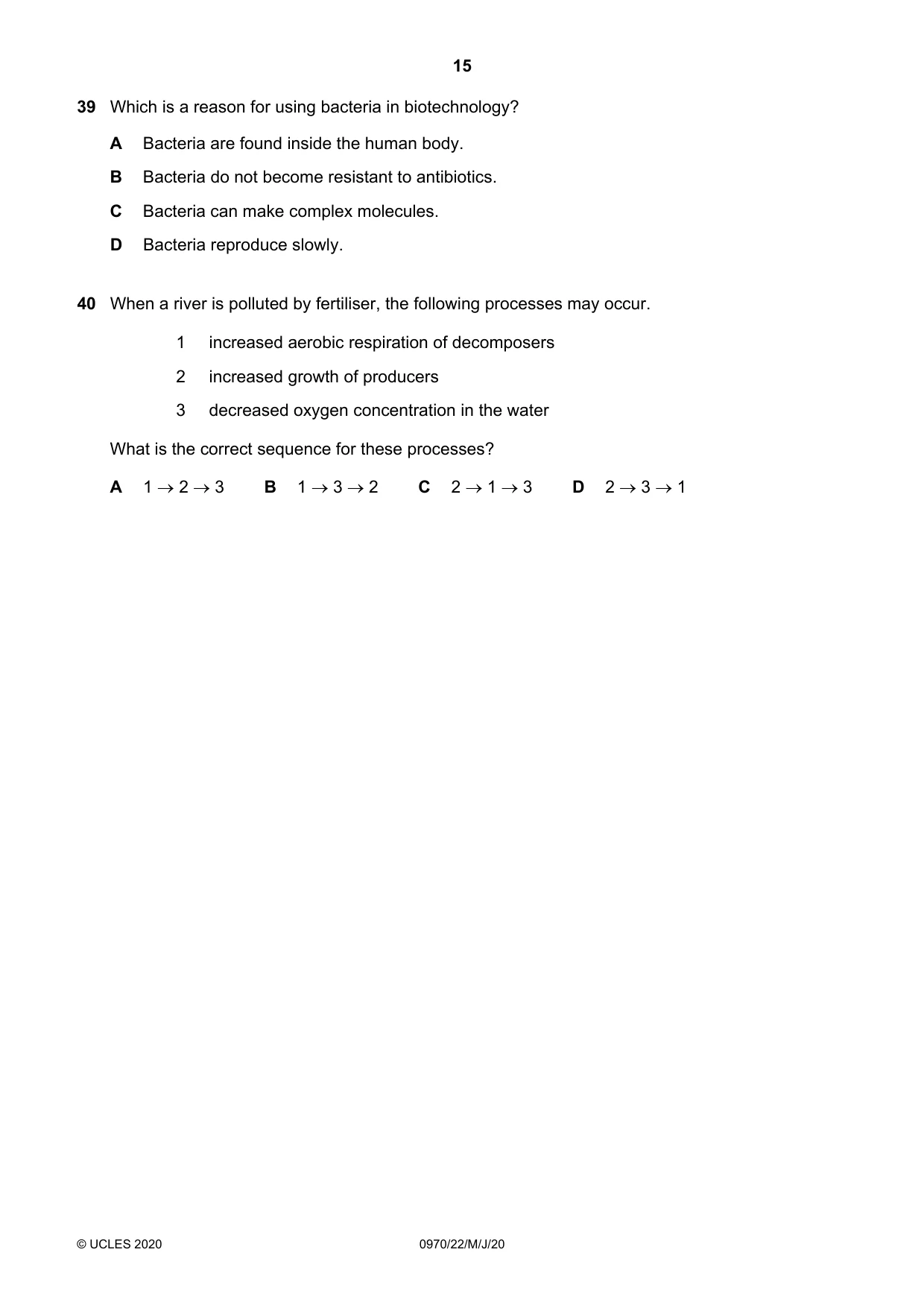
Q39 · Which is a reason for using bacteria in biotechnology?
39 Which is a reason for using bacteria in biotechnology? A Bacteria are found inside the human body. B Bacteria do not become resistant to antibiotics. C Bacteria can make complex molecules. D Bacteria reproduce slowly.
Mark scheme: C
Q40 · When a river is polluted by fertiliser, the following processes may occur
40 When a river is polluted by fertiliser, the following processes may occur. 1 increased aerobic respiration of decomposers 2 increased growth of producers 3 decreased oxygen concentration in the water What is the correct sequence for these processes? A 1 → 2 → 3 B 1 → 3 → 2 C 2 → 1 → 3 D 2 → 3 → 1
Mark scheme: C
What was in this paper
The subtopics covered by these 40 questions, and how many questions each got. Open one in a new tab to see every Cambridge question on it.
2Enzymes2Hormones2Osmosis2Photosynthesis2Absorption1Adaptive features1Aerobic respiration1Anaerobic respiration1Asexual reproduction1Biological molecules1Biotechnology1Biotechnology and genetic modification1Cell structure1Circulatory systems1Concept and uses of classification systems1Coordination and response1Digestive system1Diseases and immunity1Excretion in humans1Food chains and food webs1Gas exchange in humans1Genetic modification1Heart1Meiosis1Monohybrid inheritance1Pollution1Populations1Sexual reproduction in humans1Sexual reproduction in plants1Size of specimens1Translocation1Tropic responses1Variation1Water uptake1