Cambridge A Level Travel and Tourism 9395 — 2015 May/June Paper 3 · Variant 1
9395/31/M/J/15 · 100 marks · ≈113 min
The question paper and its mark scheme, free to read here and free to download. This is Cambridge’s own paper, exactly as it was sat.
Question paper16 pages



Mark scheme8 pages
Answers below. Sit the paper first if you are practising.
Paper as text
Question paper, page 1
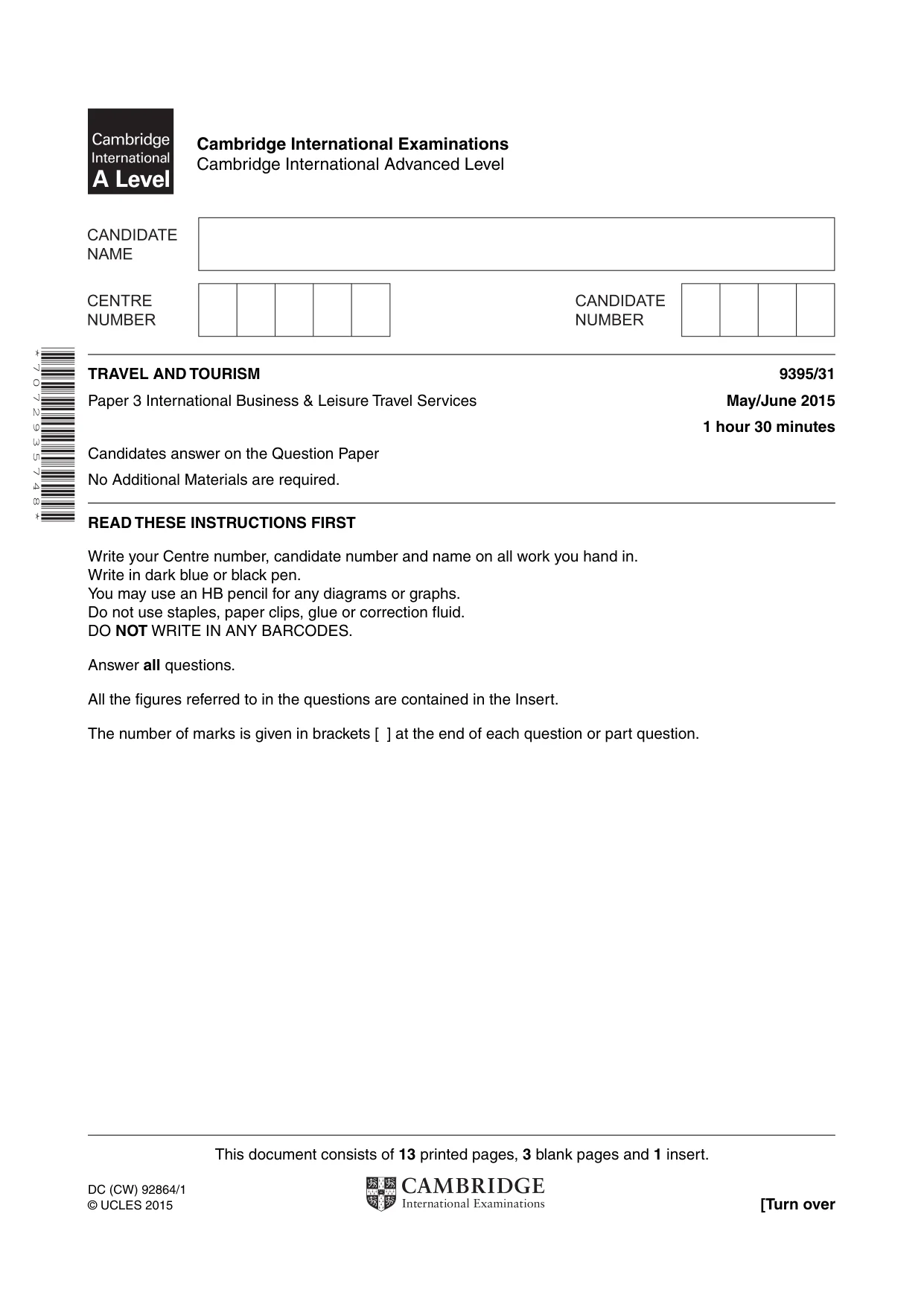
This document consists of 13 printed pages, 3 blank pages and 1 insert. DC (CW) 92864/1 © UCLES 2015 [Turn over Cambridge International Examinations Cambridge International Advanced Level * 7 0 7 2 9 3 5 7 4 8 * TRAVEL AND TOURISM 9395/31 Paper 3 International Business & Leisure Travel Services May/June 2015 1 hour 30 minutes Candidates answer on the Question Paper No Additional Materials are required. READ THESE INSTRUCTIONS FIRST Write your Centre number, candidate number and name on all work you hand in. Write in dark blue or black pen. You may use an HB pencil for any diagrams or graphs. Do not use staples, paper clips, glue or correction fluid. DO NOT WRITE IN ANY BARCODES. Answer all questions. All the figures referred to in the questions are contained in the Insert. The number of marks is given in brackets [ ] at the end of each question or part question.
Question paper, page 2
2 9395/31/M/J/15 © UCLES 2015 Question 1 Refer to Fig. 1 (Insert), information about Belfast Harbour, a port in Northern Ireland. (a) (i) Define the term carrying capacity. … …[2] (ii) Identify two reasons why Belfast Harbour may become more popular with cruise companies in the future. 1 … … 2 … …[2] (b) Explain briefly three reasons why cruise tourism is important to destinations such as Belfast. 1 … … … 2 … … … 3 … … …[6]
Question paper, page 3
3 9395/31/M/J/15 © UCLES 2015 [Turn over (c) Explain fully two likely roles of Belfast Harbour’s port authority, in supporting tourism development in Northern Ireland. … … … … … … … … … … … …[6]
Question paper, page 4
4 9395/31/M/J/15 © UCLES 2015 (d) The Titanic Quarter, home to the Titanic Belfast visitor attraction, is an important destination venue. Evaluate the extent to which the needs of business and leisure tourists are likely to be met by this destination venue. … … … … … … … … … … … … … … … … … … … … … … … …[9] [Total: 25]
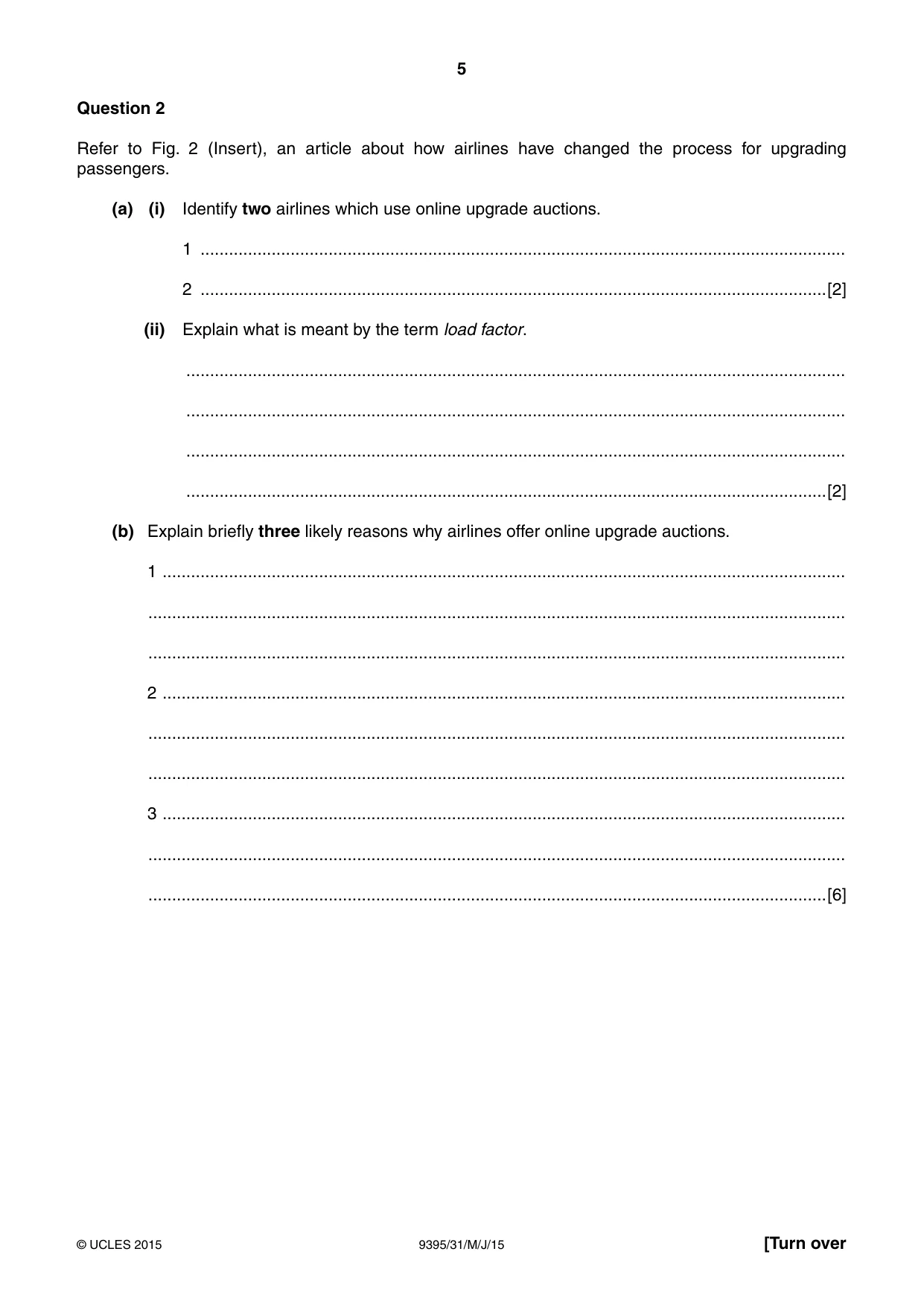
Question paper, page 5
5 9395/31/M/J/15 © UCLES 2015 [Turn over Question 2 Refer to Fig. 2 (Insert), an article about how airlines have changed the process for upgrading passengers. (a) (i) Identify two airlines which use online upgrade auctions. 1 … 2 …[2] (ii) Explain what is meant by the term load factor. … … … …[2] (b) Explain briefly three likely reasons why airlines offer online upgrade auctions. 1 … … … 2 … … … 3 … … …[6]
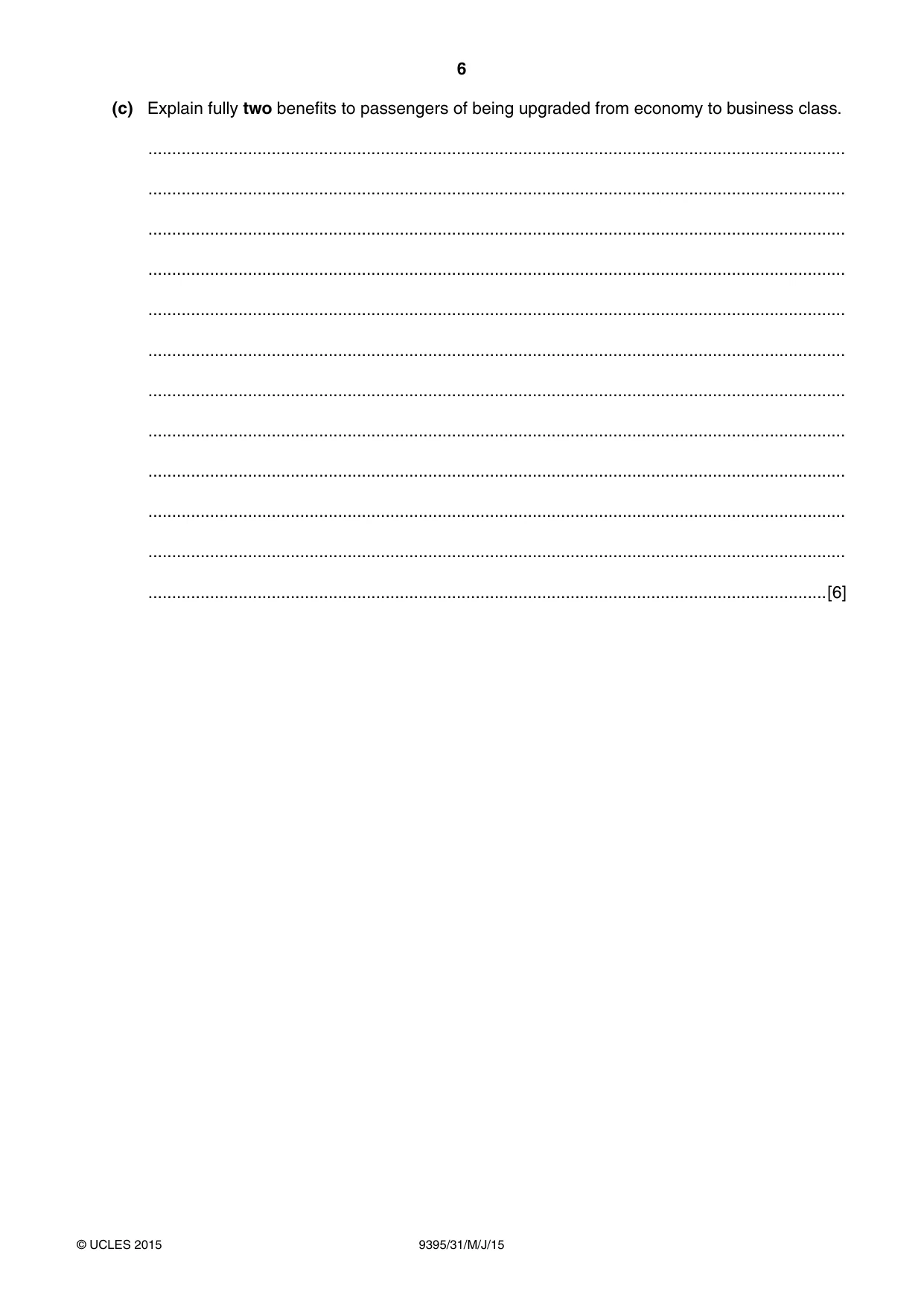
Question paper, page 6
6 9395/31/M/J/15 © UCLES 2015 (c) Explain fully two benefits to passengers of being upgraded from economy to business class. … … … … … … … … … … … …[6]
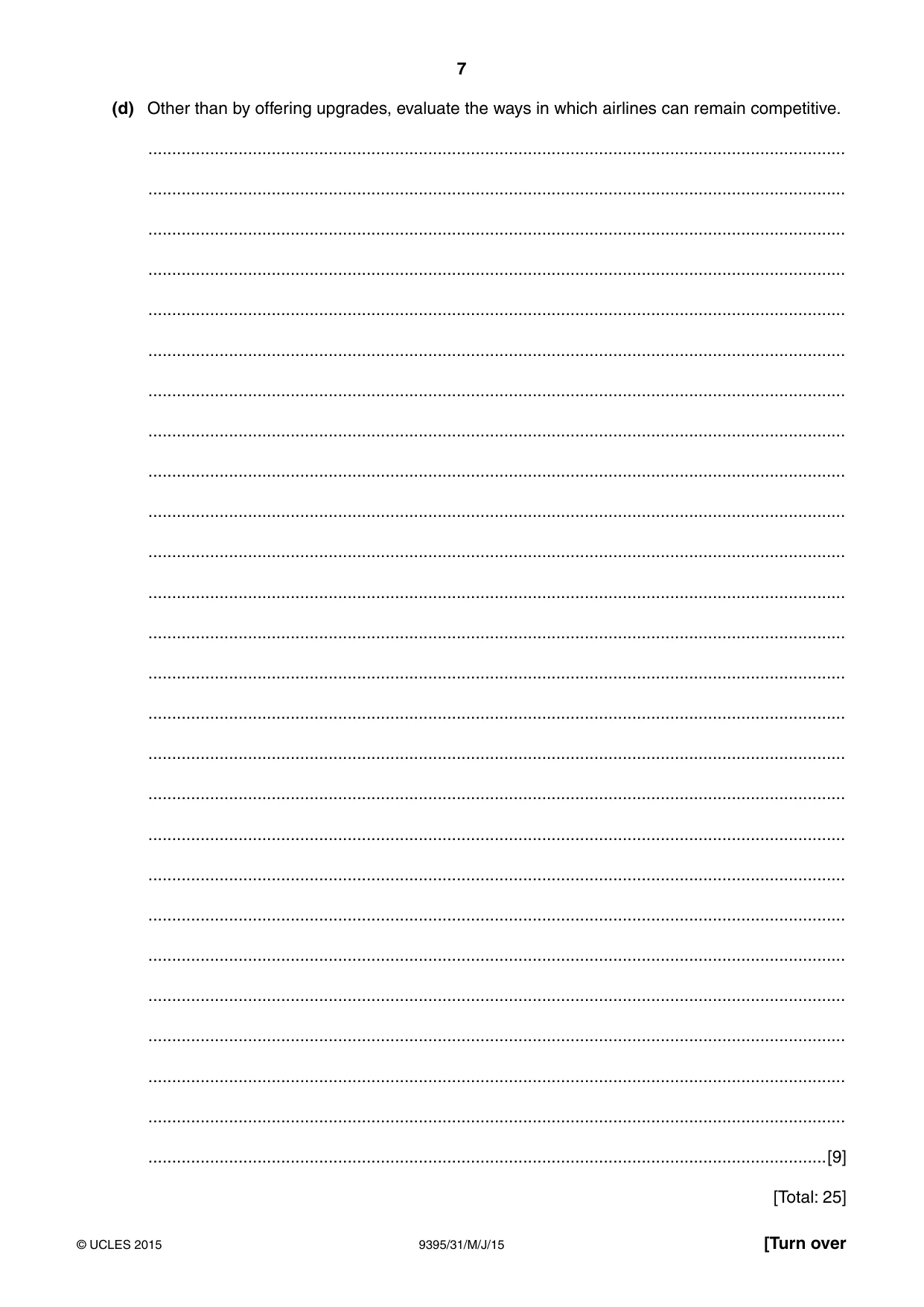
Question paper, page 7
7 9395/31/M/J/15 © UCLES 2015 [Turn over (d) Other than by offering upgrades, evaluate the ways in which airlines can remain competitive. … … … … … … … … … … … … … … … … … … … … … … … … … …[9] [Total: 25]
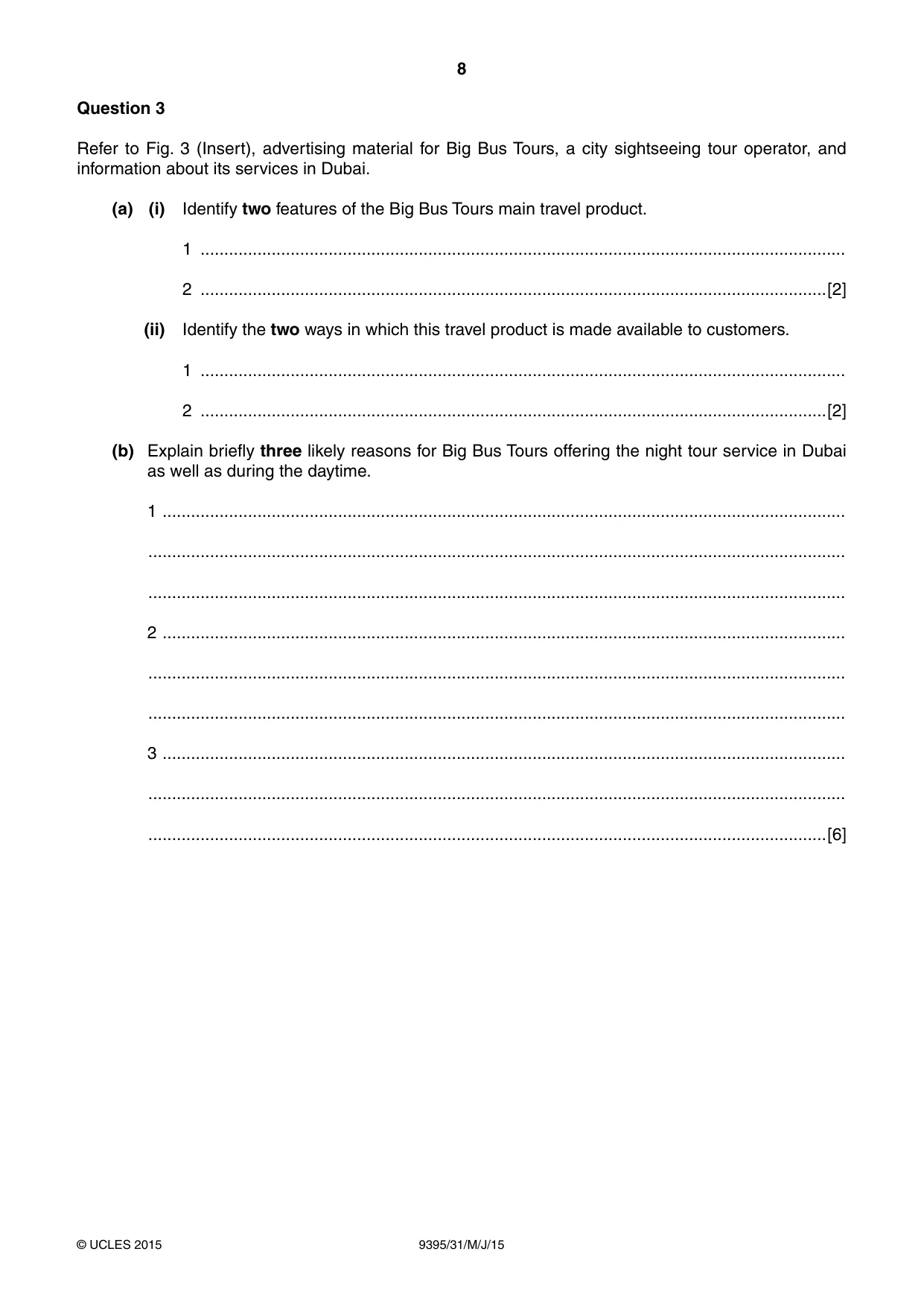
Question paper, page 8
8 9395/31/M/J/15 © UCLES 2015 Question 3 Refer to Fig. 3 (Insert), advertising material for Big Bus Tours, a city sightseeing tour operator, and information about its services in Dubai. (a) (i) Identify two features of the Big Bus Tours main travel product. 1 … 2 …[2] (ii) Identify the two ways in which this travel product is made available to customers. 1 … 2 …[2] (b) Explain briefly three likely reasons for Big Bus Tours offering the night tour service in Dubai as well as during the daytime. 1 … … … 2 … … … 3 … … …[6]
Question paper, page 9
9 9395/31/M/J/15 © UCLES 2015 [Turn over (c) Explain fully two ways in which Big Bus Tours uses new technology to benefit its customers. … … … … … … … … … … … …[6]
Question paper, page 10
10 9395/31/M/J/15 © UCLES 2015 (d) Big Bus Tours won a Certificate of Excellence in 2013 based on its customers’ feedback. Analyse the importance to travel organisations, such as Big Bus Tours, of winning such awards. … … … … … … … … … … … … … … … … … … … … … … … … …[9] [Total: 25]
Question paper, page 11
11 9395/31/M/J/15 © UCLES 2015 [Turn over Question 4 Refer to Fig. 4 (Insert), information about business tourism in Malta and the International Congress and Convention Association (ICCA). (a) (i) Identify two types of venue which are available for conferences in Malta. 1 … 2 …[2] (ii) Identify what is meant by the initials MICE in relation to business tourism. M … I … C … E …[2] (b) Explain briefly three ways in which Malta’s Destination Management Companies (DMCs) can assist business tourism organisers. 1 … … … 2 … … … 3 … … …[6]
Question paper, page 12
12 9395/31/M/J/15 © UCLES 2015 (c) Explain fully two reasons for the appeal of Malta as a business tourism destination, other than the range of venues it offers. … … … … … … … … … … … …[6]
Question paper, page 13
13 9395/31/M/J/15 © UCLES 2015 (d) Evaluate the benefits to organisations, such as the Malta Tourism Authority, of membership of the International Congress and Convention Association (ICCA). … … … … … … … … … … … … … … … … … … … … … … … … … …[9] [Total: 25]
Question paper, page 14
14 9395/31/M/J/15 © UCLES 2015 BLANK PAGE
Question paper, page 15
15 9395/31/M/J/15 © UCLES 2015 BLANK PAGE
Question paper, page 16
16 9395/31/M/J/15 © UCLES 2015 BLANK PAGE Permission to reproduce items where third-party owned material protected by copyright is included has been sought and cleared where possible. Every reasonable effort has been made by the publisher (UCLES) to trace copyright holders, but if any items requiring clearance have unwittingly been included, the publisher will be pleased to make amends at the earliest possible opportunity. To avoid the issue of disclosure of answer-related information to candidates, all copyright acknowledgements are reproduced online in the Cambridge International Examinations Copyright Acknowledgements Booklet. This is produced for each series of examinations and is freely available to download at www.cie.org.uk after the live examination series. Cambridge International Examinations is part of the Cambridge Assessment Group. Cambridge Assessment is the brand name of University of Cambridge Local Examinations Syndicate (UCLES), which is itself a department of the University of Cambridge.
Mark scheme, page 1
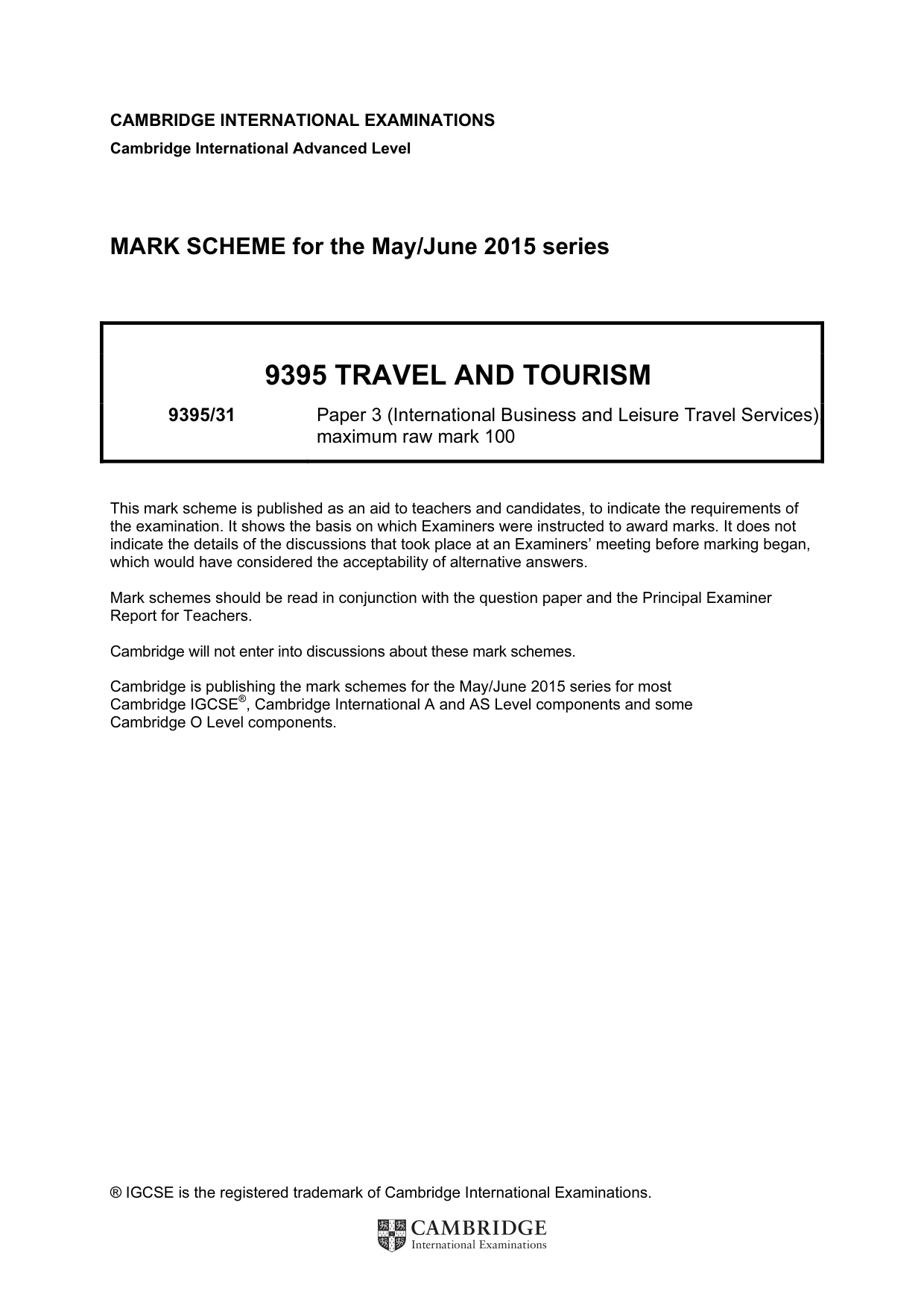
® IGCSE is the registered trademark of Cambridge International Examinations. CAMBRIDGE INTERNATIONAL EXAMINATIONS Cambridge International Advanced Level MARK SCHEME for the May/June 2015 series 9395 TRAVEL AND TOURISM 9395/31 Paper 3 (International Business and Leisure Travel Services), maximum raw mark 100 This mark scheme is published as an aid to teachers and candidates, to indicate the requirements of the examination. It shows the basis on which Examiners were instructed to award marks. It does not indicate the details of the discussions that took place at an Examiners’ meeting before marking began, which would have considered the acceptability of alternative answers. Mark schemes should be read in conjunction with the question paper and the Principal Examiner Report for Teachers. Cambridge will not enter into discussions about these mark schemes. Cambridge is publishing the mark schemes for the May/June 2015 series for most Cambridge IGCSE®, Cambridge International A and AS Level components and some Cambridge O Level components.
Mark scheme, page 2
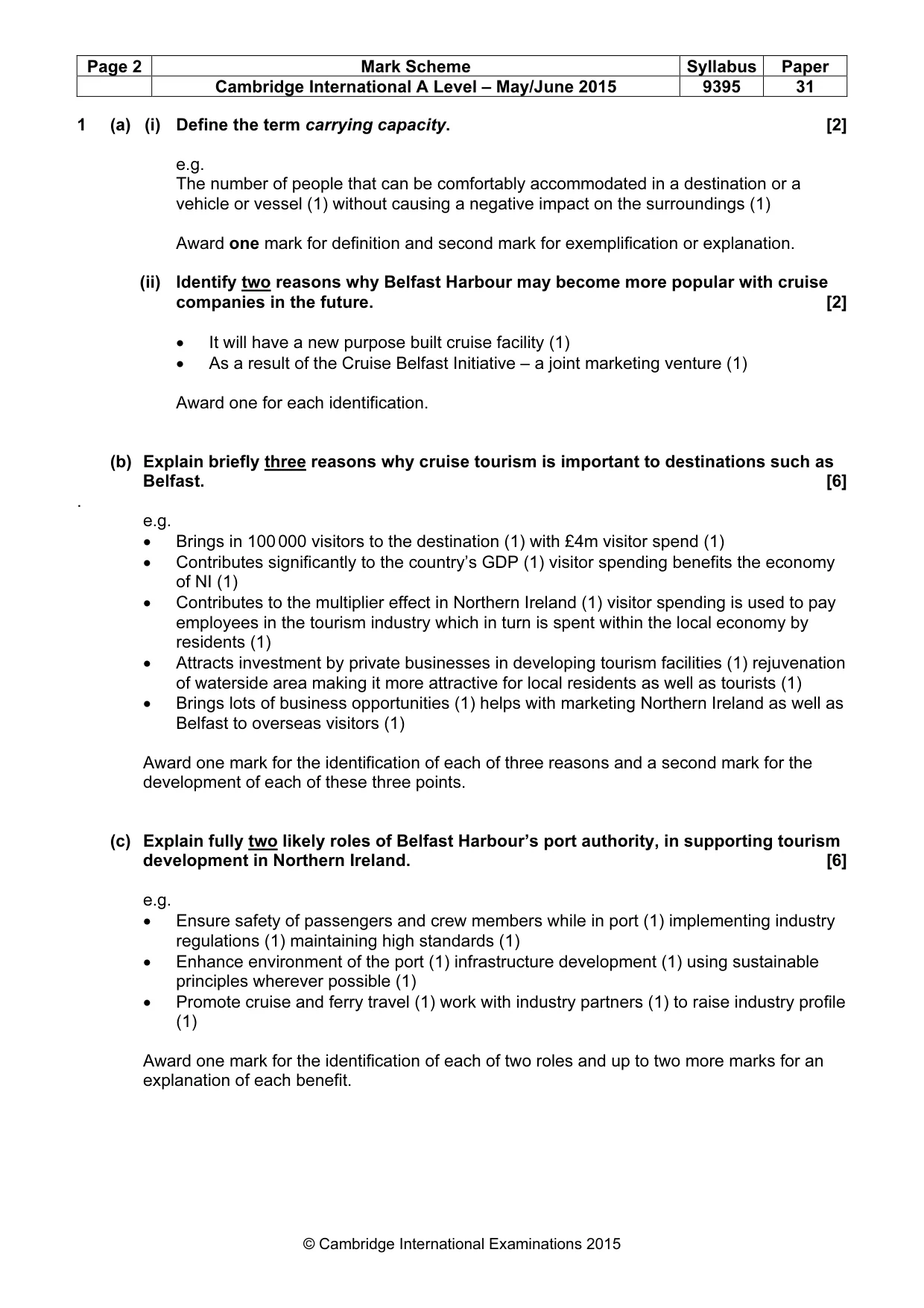
Page 2 Mark Scheme Syllabus Paper Cambridge International A Level – May/June 2015 9395 31 © Cambridge International Examinations 2015 1 (a) (i) Define the term carrying capacity. [2] e.g. The number of people that can be comfortably accommodated in a destination or a vehicle or vessel (1) without causing a negative impact on the surroundings (1) Award one mark for definition and second mark for exemplification or explanation. (ii) Identify two reasons why Belfast Harbour may become more popular with cruise companies in the future. [2] • It will have a new purpose built cruise facility (1) • As a result of the Cruise Belfast Initiative – a joint marketing venture (1) Award one for each identification. (b) Explain briefly three reasons why cruise tourism is important to destinations such as Belfast. [6] . e.g. • Brings in 100 000 visitors to the destination (1) with £4m visitor spend (1) • Contributes significantly to the country’s GDP (1) visitor spending benefits the economy of NI (1) • Contributes to the multiplier effect in Northern Ireland (1) visitor spending is used to pay employees in the tourism industry which in turn is spent within the local economy by residents (1) • Attracts investment by private businesses in developing tourism facilities (1) rejuvenation of waterside area making it more attractive for local residents as well as tourists (1) • Brings lots of business opportunities (1) helps with marketing Northern Ireland as well as Belfast to overseas visitors (1) Award one mark for the identification of each of three reasons and a second mark for the development of each of these three points. (c) Explain fully two likely roles of Belfast Harbour’s port authority, in supporting tourism development in Northern Ireland. [6] e.g. • Ensure safety of passengers and crew members while in port (1) implementing industry regulations (1) maintaining high standards (1) • Enhance environment of the port (1) infrastructure development (1) using sustainable principles wherever possible (1) • Promote cruise and ferry travel (1) work with industry partners (1) to raise industry profile (1) Award one mark for the identification of each of two roles and up to two more marks for an explanation of each benefit.
Mark scheme, page 3
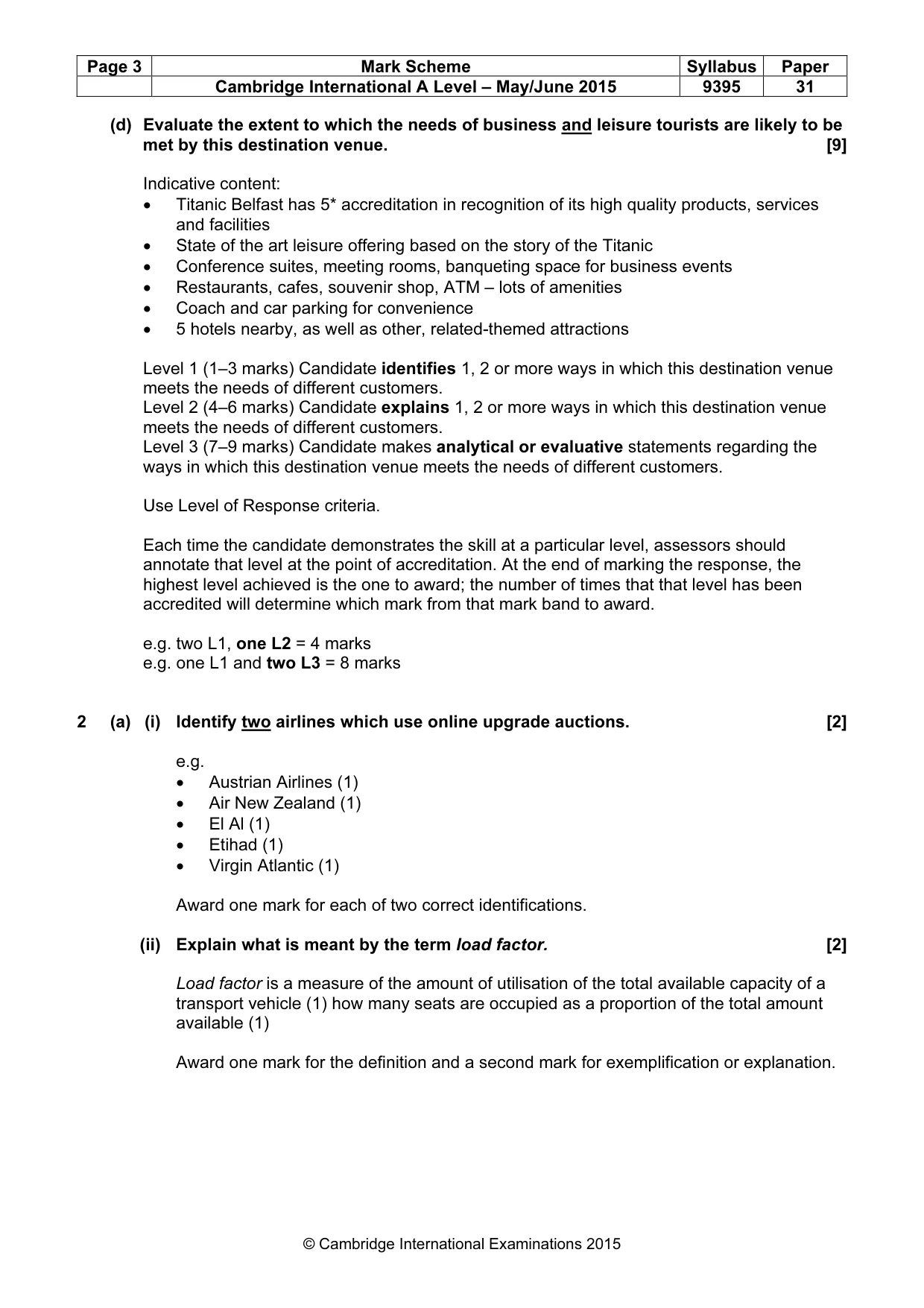
Page 3 Mark Scheme Syllabus Paper Cambridge International A Level – May/June 2015 9395 31 © Cambridge International Examinations 2015 (d) Evaluate the extent to which the needs of business and leisure tourists are likely to be met by this destination venue. [9] Indicative content: • Titanic Belfast has 5* accreditation in recognition of its high quality products, services and facilities • State of the art leisure offering based on the story of the Titanic • Conference suites, meeting rooms, banqueting space for business events • Restaurants, cafes, souvenir shop, ATM – lots of amenities • Coach and car parking for convenience • 5 hotels nearby, as well as other, related-themed attractions Level 1 (1–3 marks) Candidate identifies 1, 2 or more ways in which this destination venue meets the needs of different customers. Level 2 (4–6 marks) Candidate explains 1, 2 or more ways in which this destination venue meets the needs of different customers. Level 3 (7–9 marks) Candidate makes analytical or evaluative statements regarding the ways in which this destination venue meets the needs of different customers. Use Level of Response criteria. Each time the candidate demonstrates the skill at a particular level, assessors should annotate that level at the point of accreditation. At the end of marking the response, the highest level achieved is the one to award; the number of times that that level has been accredited will determine which mark from that mark band to award. e.g. two L1, one L2 = 4 marks e.g. one L1 and two L3 = 8 marks 2 (a) (i) Identify two airlines which use online upgrade auctions. [2] e.g. • Austrian Airlines (1) • Air New Zealand (1) • El Al (1) • Etihad (1) • Virgin Atlantic (1) Award one mark for each of two correct identifications. (ii) Explain what is meant by the term load factor. [2] Load factor is a measure of the amount of utilisation of the total available capacity of a transport vehicle (1) how many seats are occupied as a proportion of the total amount available (1) Award one mark for the definition and a second mark for exemplification or explanation.
Mark scheme, page 4
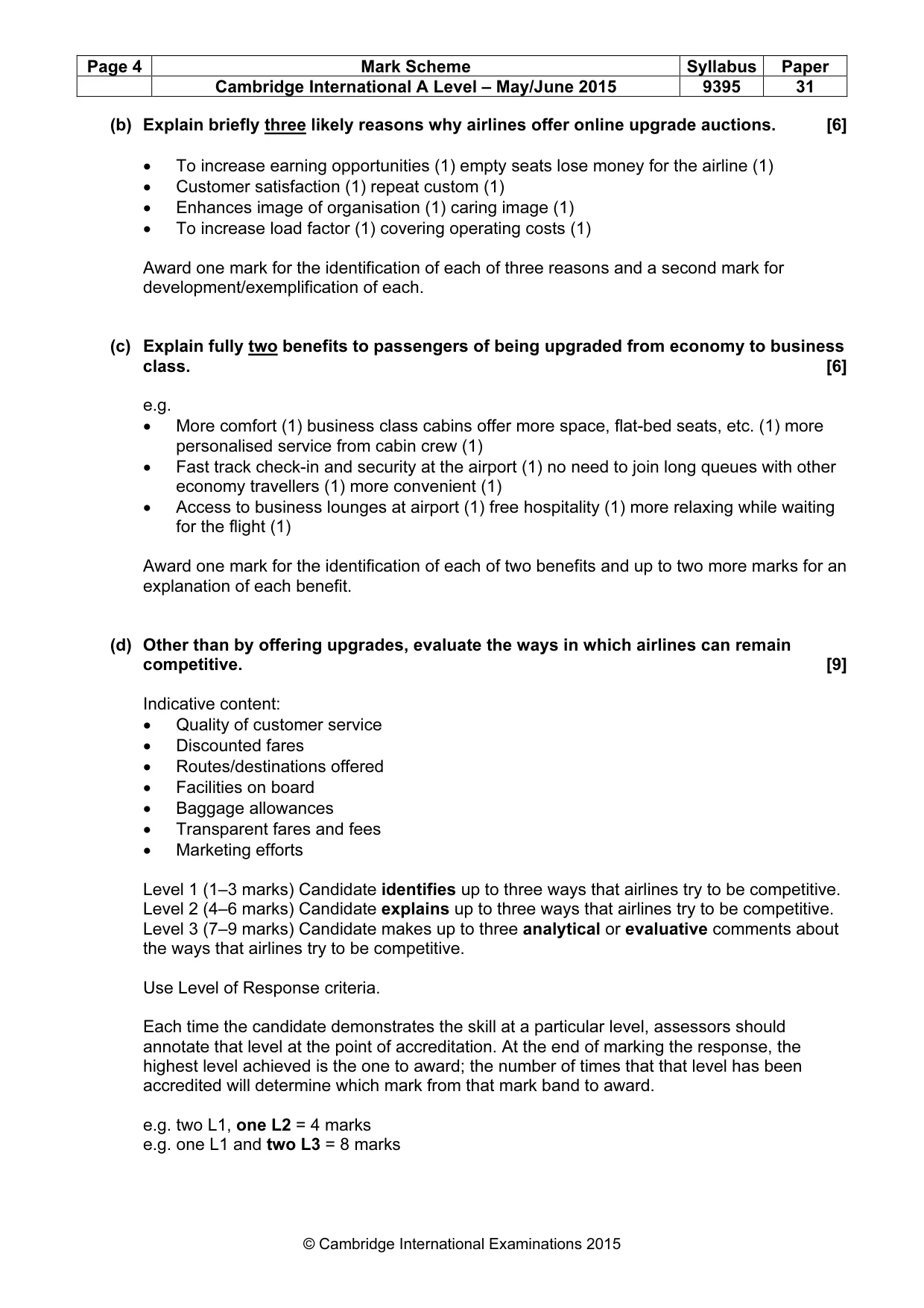
Page 4 Mark Scheme Syllabus Paper Cambridge International A Level – May/June 2015 9395 31 © Cambridge International Examinations 2015 (b) Explain briefly three likely reasons why airlines offer online upgrade auctions. [6] • To increase earning opportunities (1) empty seats lose money for the airline (1) • Customer satisfaction (1) repeat custom (1) • Enhances image of organisation (1) caring image (1) • To increase load factor (1) covering operating costs (1) Award one mark for the identification of each of three reasons and a second mark for development/exemplification of each. (c) Explain fully two benefits to passengers of being upgraded from economy to business class. [6] e.g. • More comfort (1) business class cabins offer more space, flat-bed seats, etc. (1) more personalised service from cabin crew (1) • Fast track check-in and security at the airport (1) no need to join long queues with other economy travellers (1) more convenient (1) • Access to business lounges at airport (1) free hospitality (1) more relaxing while waiting for the flight (1) Award one mark for the identification of each of two benefits and up to two more marks for an explanation of each benefit. (d) Other than by offering upgrades, evaluate the ways in which airlines can remain competitive. [9] Indicative content: • Quality of customer service • Discounted fares • Routes/destinations offered • Facilities on board • Baggage allowances • Transparent fares and fees • Marketing efforts Level 1 (1–3 marks) Candidate identifies up to three ways that airlines try to be competitive. Level 2 (4–6 marks) Candidate explains up to three ways that airlines try to be competitive. Level 3 (7–9 marks) Candidate makes up to three analytical or evaluative comments about the ways that airlines try to be competitive. Use Level of Response criteria. Each time the candidate demonstrates the skill at a particular level, assessors should annotate that level at the point of accreditation. At the end of marking the response, the highest level achieved is the one to award; the number of times that that level has been accredited will determine which mark from that mark band to award. e.g. two L1, one L2 = 4 marks e.g. one L1 and two L3 = 8 marks
Mark scheme, page 5
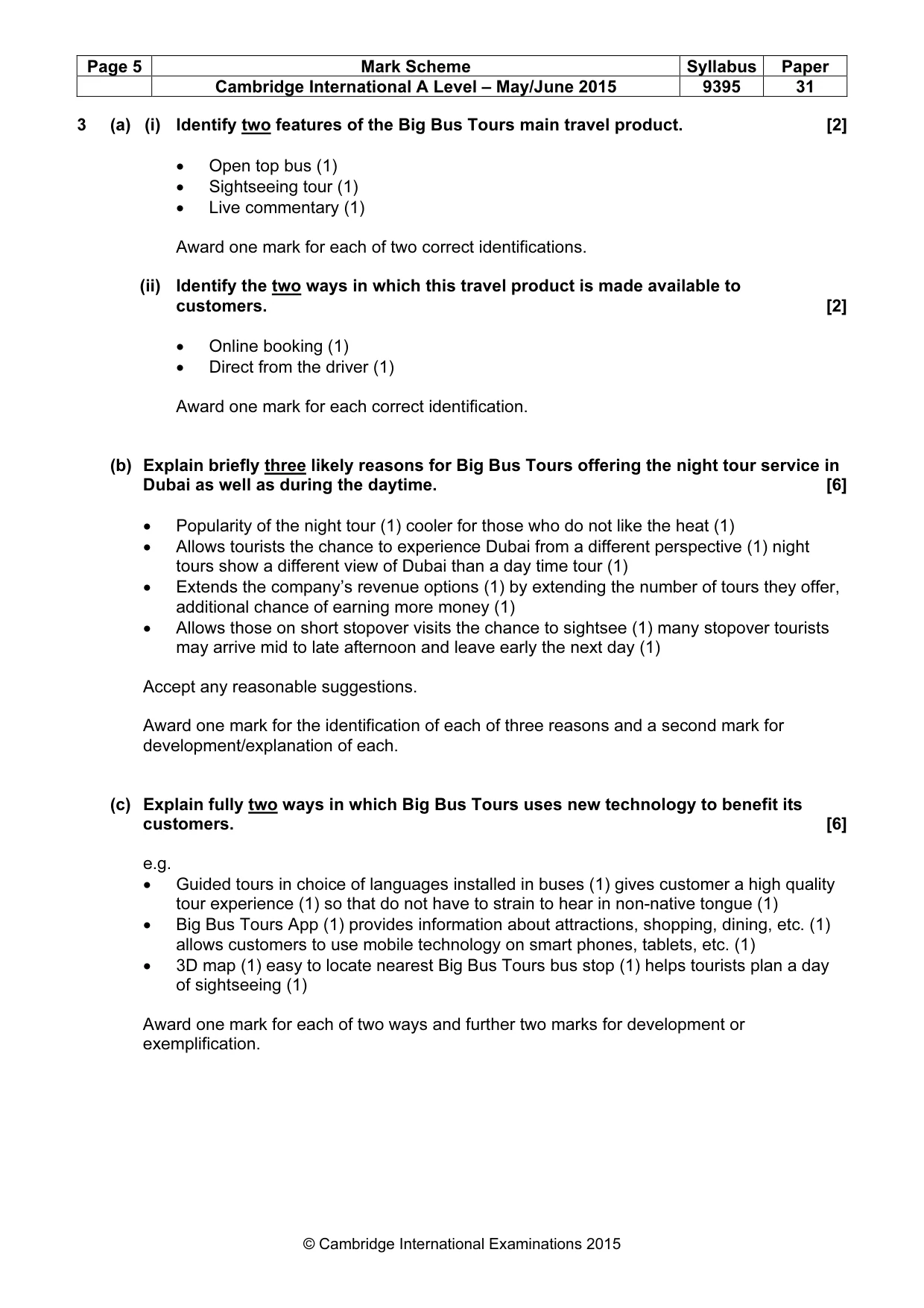
Page 5 Mark Scheme Syllabus Paper Cambridge International A Level – May/June 2015 9395 31 © Cambridge International Examinations 2015 3 (a) (i) Identify two features of the Big Bus Tours main travel product. [2] • Open top bus (1) • Sightseeing tour (1) • Live commentary (1) Award one mark for each of two correct identifications. (ii) Identify the two ways in which this travel product is made available to customers. [2] • Online booking (1) • Direct from the driver (1) Award one mark for each correct identification. (b) Explain briefly three likely reasons for Big Bus Tours offering the night tour service in Dubai as well as during the daytime. [6] • Popularity of the night tour (1) cooler for those who do not like the heat (1) • Allows tourists the chance to experience Dubai from a different perspective (1) night tours show a different view of Dubai than a day time tour (1) • Extends the company’s revenue options (1) by extending the number of tours they offer, additional chance of earning more money (1) • Allows those on short stopover visits the chance to sightsee (1) many stopover tourists may arrive mid to late afternoon and leave early the next day (1) Accept any reasonable suggestions. Award one mark for the identification of each of three reasons and a second mark for development/explanation of each. (c) Explain fully two ways in which Big Bus Tours uses new technology to benefit its customers. [6] e.g. • Guided tours in choice of languages installed in buses (1) gives customer a high quality tour experience (1) so that do not have to strain to hear in non-native tongue (1) • Big Bus Tours App (1) provides information about attractions, shopping, dining, etc. (1) allows customers to use mobile technology on smart phones, tablets, etc. (1) • 3D map (1) easy to locate nearest Big Bus Tours bus stop (1) helps tourists plan a day of sightseeing (1) Award one mark for each of two ways and further two marks for development or exemplification.
Mark scheme, page 6
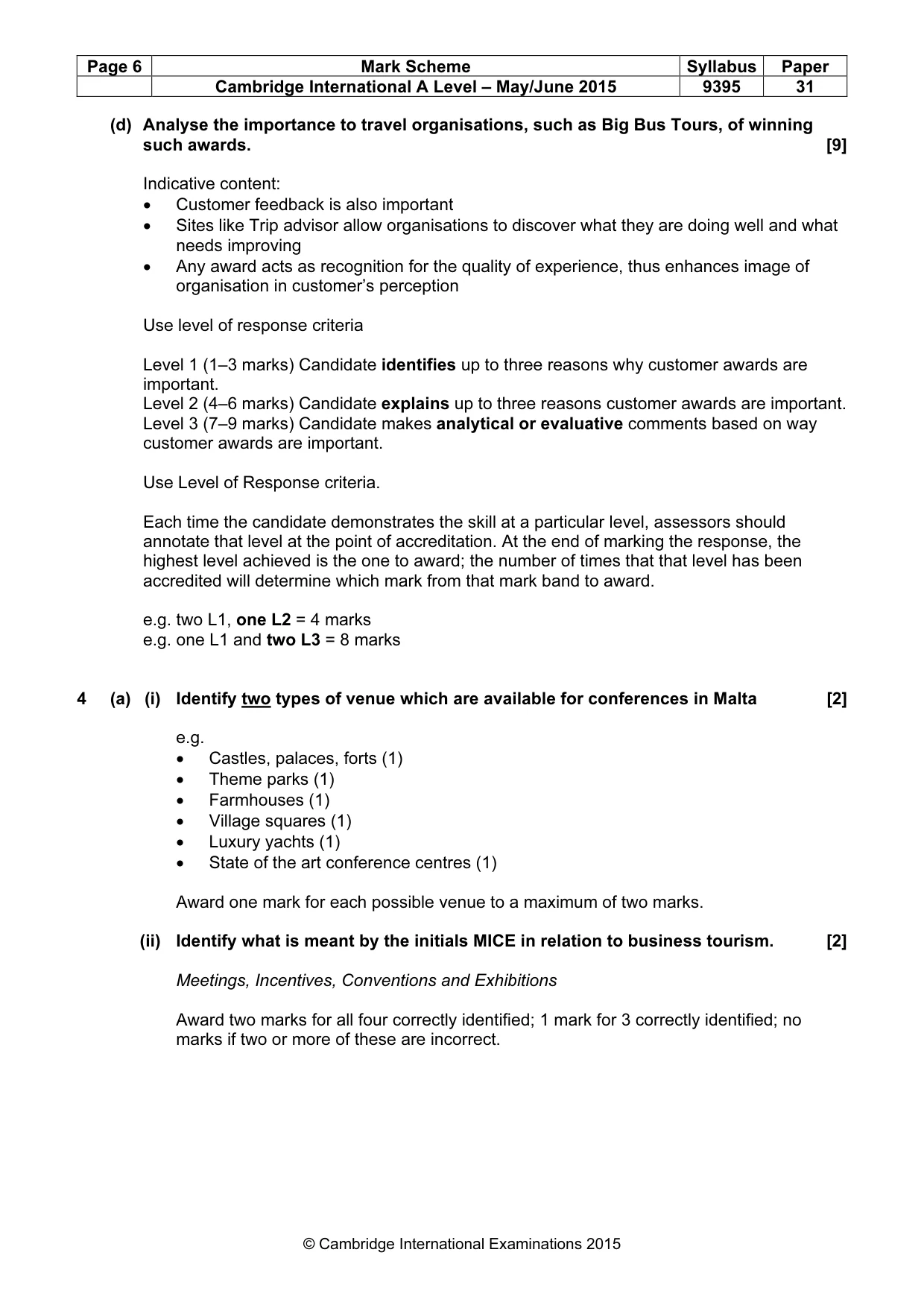
Page 6 Mark Scheme Syllabus Paper Cambridge International A Level – May/June 2015 9395 31 © Cambridge International Examinations 2015 (d) Analyse the importance to travel organisations, such as Big Bus Tours, of winning such awards. [9] Indicative content: • Customer feedback is also important • Sites like Trip advisor allow organisations to discover what they are doing well and what needs improving • Any award acts as recognition for the quality of experience, thus enhances image of organisation in customer’s perception Use level of response criteria Level 1 (1–3 marks) Candidate identifies up to three reasons why customer awards are important. Level 2 (4–6 marks) Candidate explains up to three reasons customer awards are important. Level 3 (7–9 marks) Candidate makes analytical or evaluative comments based on way customer awards are important. Use Level of Response criteria. Each time the candidate demonstrates the skill at a particular level, assessors should annotate that level at the point of accreditation. At the end of marking the response, the highest level achieved is the one to award; the number of times that that level has been accredited will determine which mark from that mark band to award. e.g. two L1, one L2 = 4 marks e.g. one L1 and two L3 = 8 marks 4 (a) (i) Identify two types of venue which are available for conferences in Malta [2] e.g. • Castles, palaces, forts (1) • Theme parks (1) • Farmhouses (1) • Village squares (1) • Luxury yachts (1) • State of the art conference centres (1) Award one mark for each possible venue to a maximum of two marks. (ii) Identify what is meant by the initials MICE in relation to business tourism. [2] Meetings, Incentives, Conventions and Exhibitions Award two marks for all four correctly identified; 1 mark for 3 correctly identified; no marks if two or more of these are incorrect.
Mark scheme, page 7
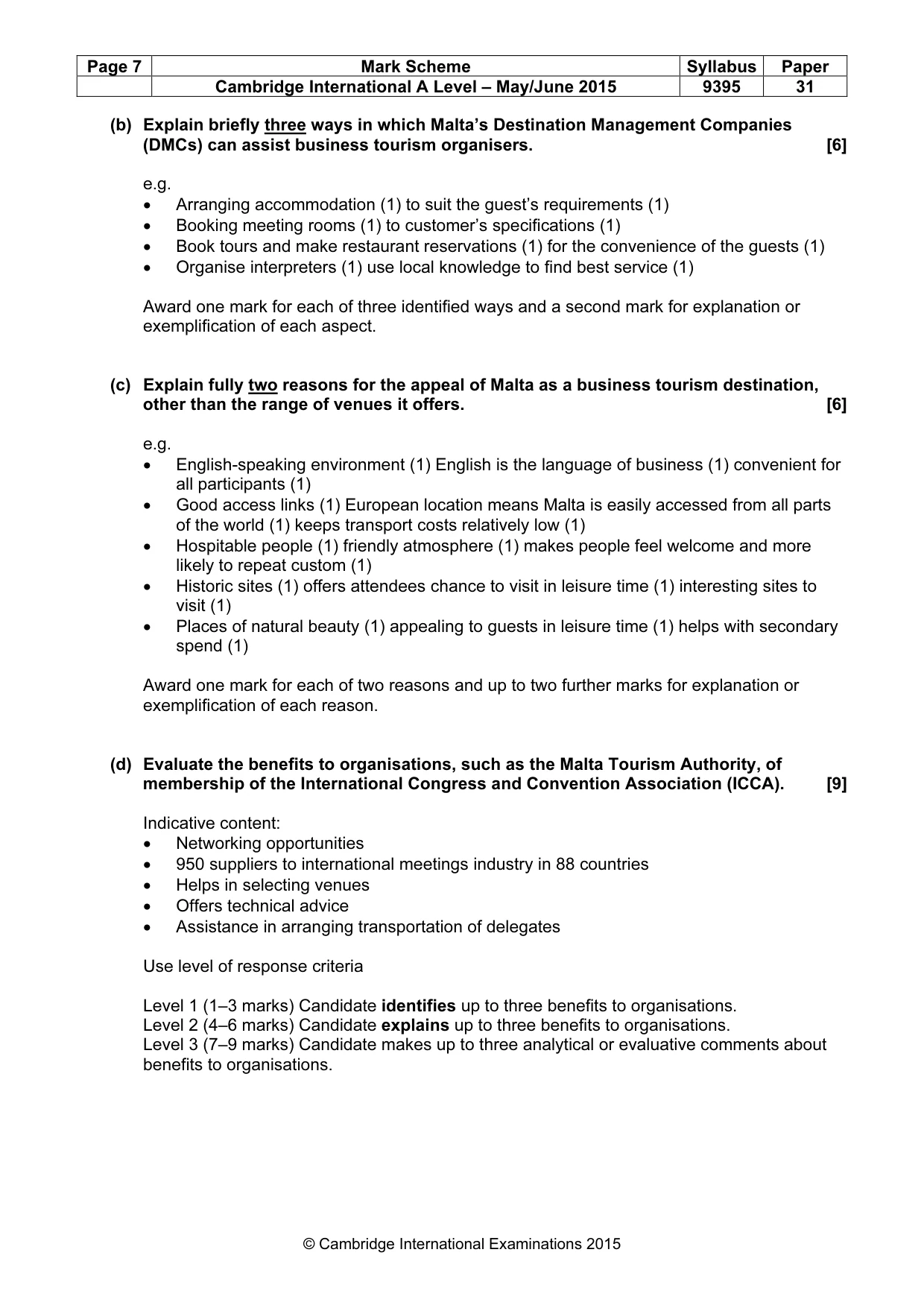
Page 7 Mark Scheme Syllabus Paper Cambridge International A Level – May/June 2015 9395 31 © Cambridge International Examinations 2015 (b) Explain briefly three ways in which Malta’s Destination Management Companies (DMCs) can assist business tourism organisers. [6] e.g. • Arranging accommodation (1) to suit the guest’s requirements (1) • Booking meeting rooms (1) to customer’s specifications (1) • Book tours and make restaurant reservations (1) for the convenience of the guests (1) • Organise interpreters (1) use local knowledge to find best service (1) Award one mark for each of three identified ways and a second mark for explanation or exemplification of each aspect. (c) Explain fully two reasons for the appeal of Malta as a business tourism destination, other than the range of venues it offers. [6] e.g. • English-speaking environment (1) English is the language of business (1) convenient for all participants (1) • Good access links (1) European location means Malta is easily accessed from all parts of the world (1) keeps transport costs relatively low (1) • Hospitable people (1) friendly atmosphere (1) makes people feel welcome and more likely to repeat custom (1) • Historic sites (1) offers attendees chance to visit in leisure time (1) interesting sites to visit (1) • Places of natural beauty (1) appealing to guests in leisure time (1) helps with secondary spend (1) Award one mark for each of two reasons and up to two further marks for explanation or exemplification of each reason. (d) Evaluate the benefits to organisations, such as the Malta Tourism Authority, of membership of the International Congress and Convention Association (ICCA). [9] Indicative content: • Networking opportunities • 950 suppliers to international meetings industry in 88 countries • Helps in selecting venues • Offers technical advice • Assistance in arranging transportation of delegates Use level of response criteria Level 1 (1–3 marks) Candidate identifies up to three benefits to organisations. Level 2 (4–6 marks) Candidate explains up to three benefits to organisations. Level 3 (7–9 marks) Candidate makes up to three analytical or evaluative comments about benefits to organisations.
Mark scheme, page 8
Page 8 Mark Scheme Syllabus Paper Cambridge International A Level – May/June 2015 9395 31 © Cambridge International Examinations 2015 Use Level of Response criteria. Each time the candidate demonstrates the skill at a particular level, assessors should annotate that level at the point of accreditation. At the end of marking the response, the highest level achieved is the one to award; the number of times that that level has been accredited will determine which mark from that mark band to award. e.g. two L1, one L2 = 4 marks e.g. one L1 and two L3 = 8 marks
What you needed in this session
Cambridge’s own grade thresholds for 2015 May/June, Paper 3 · Variant 1. A higher threshold means an easier paper — the bar moves with how the cohort did.