Cambridge A Level Portuguese - Literature (AS Level only) 8672 — 2017 May/June Paper 4 · Variant 1
8672/41/M/J/17 · 75 marks · ≈84 min
The question paper and its mark scheme, free to read here and free to download. This is Cambridge’s own paper, exactly as it was sat.
Question paper8 pages


Mark scheme3 pages
Answers below. Sit the paper first if you are practising.
Paper as text
Question paper, page 1
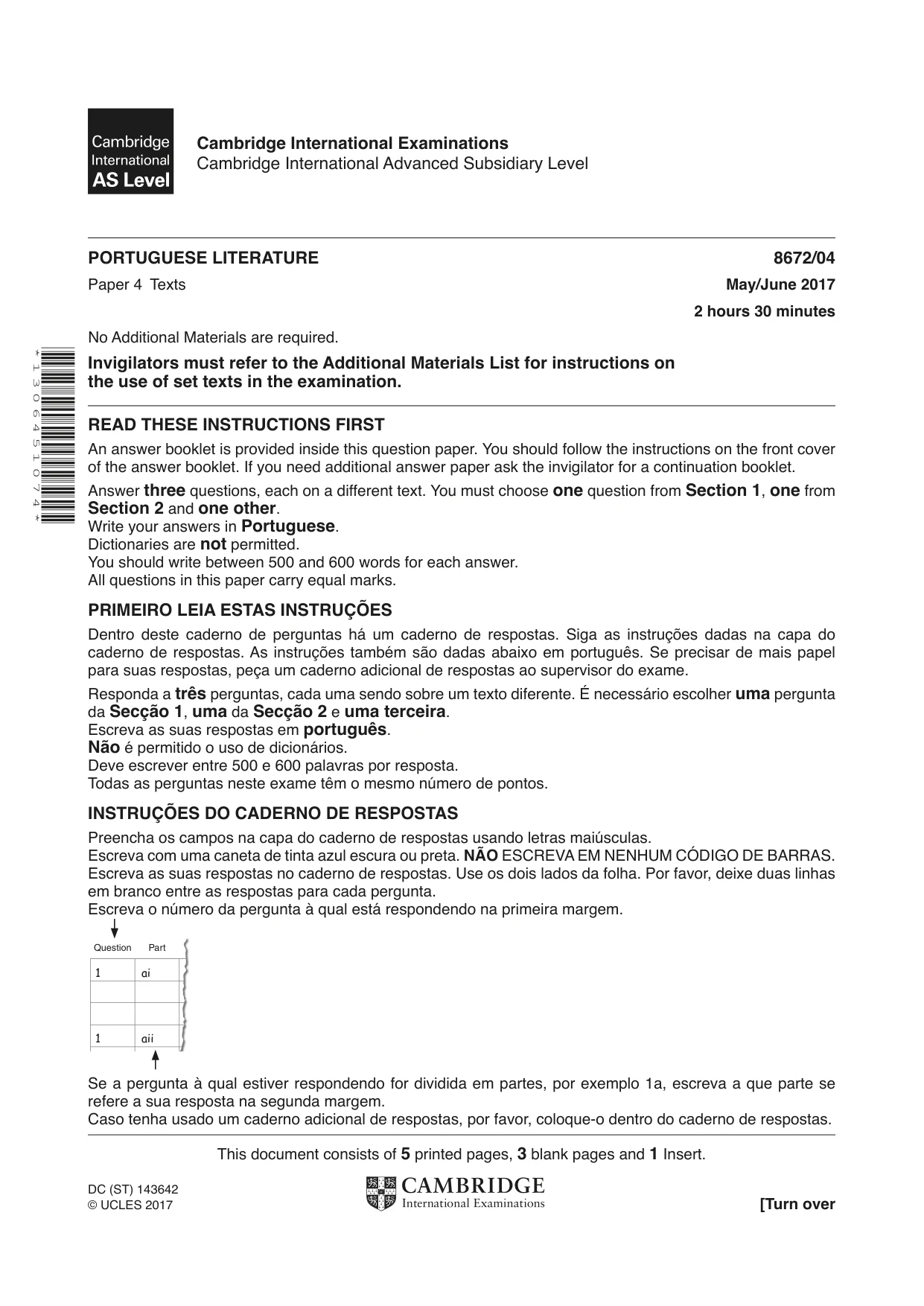
This document consists of 5 printed pages, 3 blank pages and 1 Insert. DC (ST) 143642 © UCLES 2017 [Turn over * 1 3 0 6 4 5 1 0 7 4 * PORTUGUESE LITERATURE 8672/04 Paper 4 Texts May/June 2017 2 hours 30 minutes No Additional Materials are required. Invigilators must refer to the Additional Materials List for instructions on the use of set texts in the examination. READ THESE INSTRUCTIONS FIRST An answer booklet is provided inside this question paper. You should follow the instructions on the front cover of the answer booklet. If you need additional answer paper ask the invigilator for a continuation booklet. Answer three questions, each on a different text. You must choose one question from Section 1, one from Section 2 and one other. Write your answers in Portuguese. Dictionaries are not permitted. You should write between 500 and 600 words for each answer. All questions in this paper carry equal marks. PRIMEIRO LEIA ESTAS INSTRUÇÕES Dentro deste caderno de perguntas há um caderno de respostas. Siga as instruções dadas na capa do caderno de respostas. As instruções também são dadas abaixo em português. Se precisar de mais papel para suas respostas, peça um caderno adicional de respostas ao supervisor do exame. Responda a três perguntas, cada uma sendo sobre um texto diferente. É necessário escolher uma pergunta da Secção 1, uma da Secção 2 e uma terceira. Escreva as suas respostas em português. Não é permitido o uso de dicionários. Deve escrever entre 500 e 600 palavras por resposta. Todas as perguntas neste exame têm o mesmo número de pontos. INSTRUÇÕES DO CADERNO DE RESPOSTAS Preencha os campos na capa do caderno de respostas usando letras maiúsculas. Escreva com uma caneta de tinta azul escura ou preta. NÃO ESCREVA EM NENHUM CÓDIGO DE BARRAS. Escreva as suas respostas no caderno de respostas. Use os dois lados da folha. Por favor, deixe duas linhas em branco entre as respostas para cada pergunta. Escreva o número da pergunta à qual está respondendo na primeira margem. Question Part 1 1 ai aii Se a pergunta à qual estiver respondendo for dividida em partes, por exemplo 1a, escreva a que parte se refere a sua resposta na segunda margem. Caso tenha usado um caderno adicional de respostas, por favor, coloque-o dentro do caderno de respostas. Cambridge International Examinations Cambridge International Advanced Subsidiary Level
Question paper, page 2
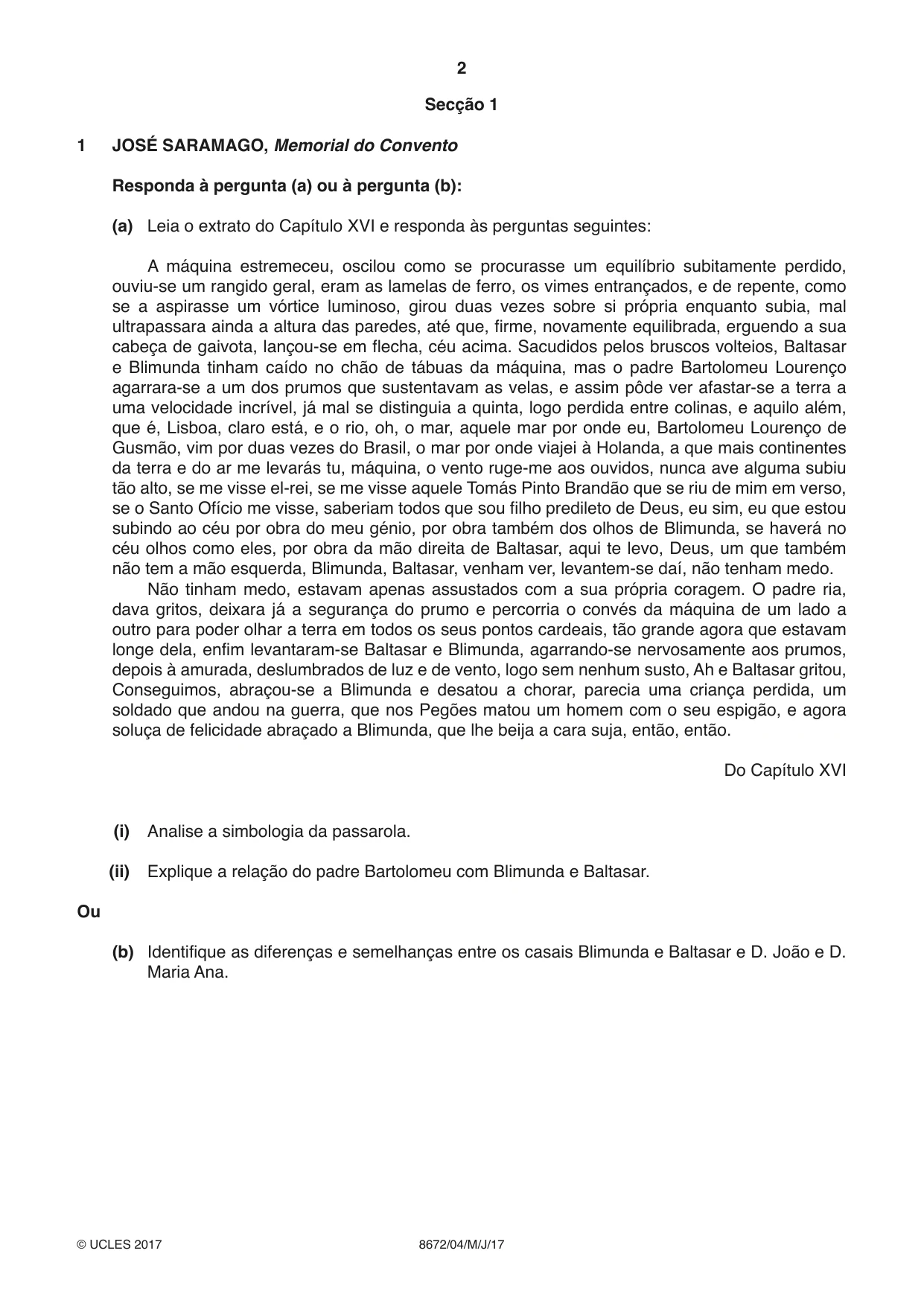
2 8672/04/M/J/17 © UCLES 2017 Secção 1 1 JOSÉ SARAMAGO, Memorial do Convento Responda à pergunta (a) ou à pergunta (b): (a) Leia o extrato do Capítulo XVI e responda às perguntas seguintes: A máquina estremeceu, oscilou como se procurasse um equilíbrio subitamente perdido, ouviu-se um rangido geral, eram as lamelas de ferro, os vimes entrançados, e de repente, como se a aspirasse um vórtice luminoso, girou duas vezes sobre si própria enquanto subia, mal ultrapassara ainda a altura das paredes, até que, firme, novamente equilibrada, erguendo a sua cabeça de gaivota, lançou-se em flecha, céu acima. Sacudidos pelos bruscos volteios, Baltasar e Blimunda tinham caído no chão de tábuas da máquina, mas o padre Bartolomeu Lourenço agarrara-se a um dos prumos que sustentavam as velas, e assim pôde ver afastar-se a terra a uma velocidade incrível, já mal se distinguia a quinta, logo perdida entre colinas, e aquilo além, que é, Lisboa, claro está, e o rio, oh, o mar, aquele mar por onde eu, Bartolomeu Lourenço de Gusmão, vim por duas vezes do Brasil, o mar por onde viajei à Holanda, a que mais continentes da terra e do ar me levarás tu, máquina, o vento ruge-me aos ouvidos, nunca ave alguma subiu tão alto, se me visse el-rei, se me visse aquele Tomás Pinto Brandão que se riu de mim em verso, se o Santo Ofício me visse, saberiam todos que sou filho predileto de Deus, eu sim, eu que estou subindo ao céu por obra do meu génio, por obra também dos olhos de Blimunda, se haverá no céu olhos como eles, por obra da mão direita de Baltasar, aqui te levo, Deus, um que também não tem a mão esquerda, Blimunda, Baltasar, venham ver, levantem-se daí, não tenham medo. Não tinham medo, estavam apenas assustados com a sua própria coragem. O padre ria, dava gritos, deixara já a segurança do prumo e percorria o convés da máquina de um lado a outro para poder olhar a terra em todos os seus pontos cardeais, tão grande agora que estavam longe dela, enfim levantaram-se Baltasar e Blimunda, agarrando-se nervosamente aos prumos, depois à amurada, deslumbrados de luz e de vento, logo sem nenhum susto, Ah e Baltasar gritou, Conseguimos, abraçou-se a Blimunda e desatou a chorar, parecia uma criança perdida, um soldado que andou na guerra, que nos Pegões matou um homem com o seu espigão, e agora soluça de felicidade abraçado a Blimunda, que lhe beija a cara suja, então, então. Do Capítulo XVI (i) Analise a simbologia da passarola. (ii) Explique a relação do padre Bartolomeu com Blimunda e Baltasar. Ou (b) Identifique as diferenças e semelhanças entre os casais Blimunda e Baltasar e D. João e D. Maria Ana.
Question paper, page 3
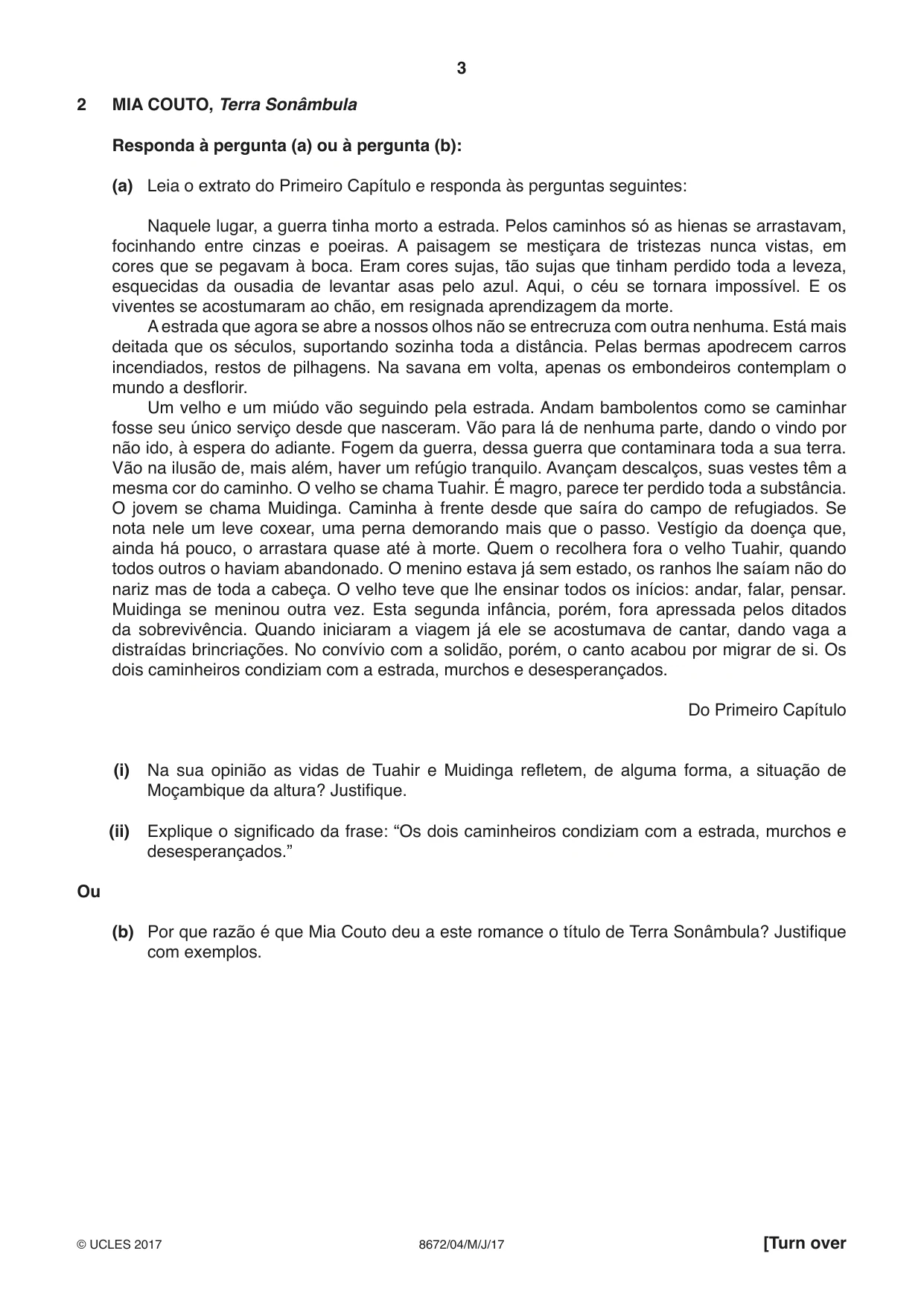
3 8672/04/M/J/17 © UCLES 2017 [Turn over 2 MIA COUTO, Terra Sonâmbula Responda à pergunta (a) ou à pergunta (b): (a) Leia o extrato do Primeiro Capítulo e responda às perguntas seguintes: Naquele lugar, a guerra tinha morto a estrada. Pelos caminhos só as hienas se arrastavam, focinhando entre cinzas e poeiras. A paisagem se mestiçara de tristezas nunca vistas, em cores que se pegavam à boca. Eram cores sujas, tão sujas que tinham perdido toda a leveza, esquecidas da ousadia de levantar asas pelo azul. Aqui, o céu se tornara impossível. E os viventes se acostumaram ao chão, em resignada aprendizagem da morte. A estrada que agora se abre a nossos olhos não se entrecruza com outra nenhuma. Está mais deitada que os séculos, suportando sozinha toda a distância. Pelas bermas apodrecem carros incendiados, restos de pilhagens. Na savana em volta, apenas os embondeiros contemplam o mundo a desflorir. Um velho e um miúdo vão seguindo pela estrada. Andam bambolentos como se caminhar fosse seu único serviço desde que nasceram. Vão para lá de nenhuma parte, dando o vindo por não ido, à espera do adiante. Fogem da guerra, dessa guerra que contaminara toda a sua terra. Vão na ilusão de, mais além, haver um refúgio tranquilo. Avançam descalços, suas vestes têm a mesma cor do caminho. O velho se chama Tuahir. É magro, parece ter perdido toda a substância. O jovem se chama Muidinga. Caminha à frente desde que saíra do campo de refugiados. Se nota nele um leve coxear, uma perna demorando mais que o passo. Vestígio da doença que, ainda há pouco, o arrastara quase até à morte. Quem o recolhera fora o velho Tuahir, quando todos outros o haviam abandonado. O menino estava já sem estado, os ranhos lhe saíam não do nariz mas de toda a cabeça. O velho teve que lhe ensinar todos os inícios: andar, falar, pensar. Muidinga se meninou outra vez. Esta segunda infância, porém, fora apressada pelos ditados da sobrevivência. Quando iniciaram a viagem já ele se acostumava de cantar, dando vaga a distraídas brincriações. No convívio com a solidão, porém, o canto acabou por migrar de si. Os dois caminheiros condiziam com a estrada, murchos e desesperançados. Do Primeiro Capítulo (i) Na sua opinião as vidas de Tuahir e Muidinga refletem, de alguma forma, a situação de Moçambique da altura? Justifique. (ii) Explique o significado da frase: “Os dois caminheiros condiziam com a estrada, murchos e desesperançados.” Ou (b) Por que razão é que Mia Couto deu a este romance o título de Terra Sonâmbula? Justifique com exemplos.
Question paper, page 4
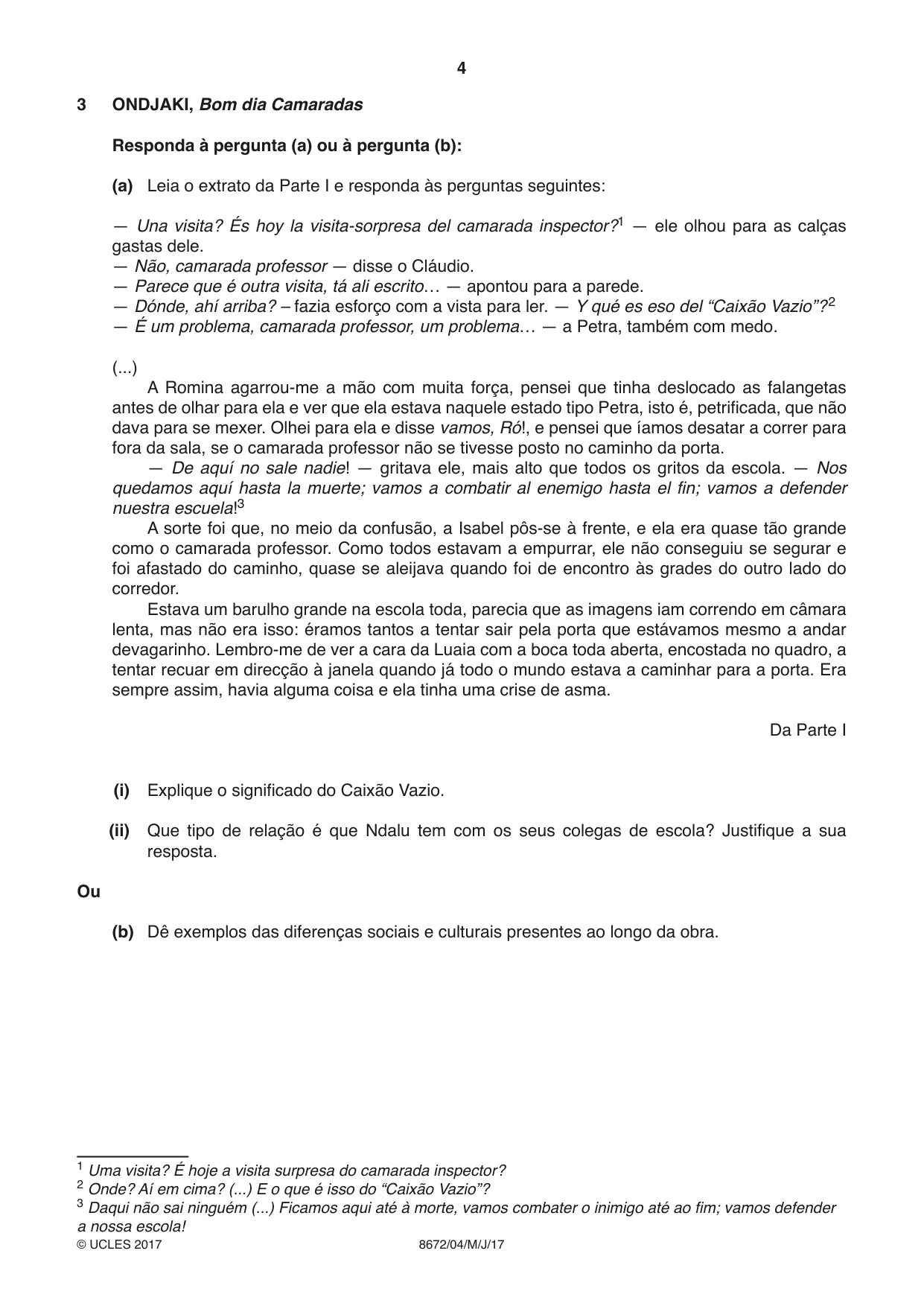
4 8672/04/M/J/17 © UCLES 2017 3 ONDJAKI, Bom dia Camaradas Responda à pergunta (a) ou à pergunta (b): (a) Leia o extrato da Parte I e responda às perguntas seguintes: — Una visita? És hoy la visita-sorpresa del camarada inspector?1 — ele olhou para as calças gastas dele. — Não, camarada professor — disse o Cláudio. — Parece que é outra visita, tá ali escrito… — apontou para a parede. — Dónde, ahí arriba? – fazia esforço com a vista para ler. — Y qué es eso del “Caixão Vazio”?2 — É um problema, camarada professor, um problema… — a Petra, também com medo. (...) A Romina agarrou-me a mão com muita força, pensei que tinha deslocado as falangetas antes de olhar para ela e ver que ela estava naquele estado tipo Petra, isto é, petrificada, que não dava para se mexer. Olhei para ela e disse vamos, Ró!, e pensei que íamos desatar a correr para fora da sala, se o camarada professor não se tivesse posto no caminho da porta. — De aquí no sale nadie! — gritava ele, mais alto que todos os gritos da escola. — Nos quedamos aquí hasta la muerte; vamos a combatir al enemigo hasta el fin; vamos a defender nuestra escuela!3 A sorte foi que, no meio da confusão, a Isabel pôs-se à frente, e ela era quase tão grande como o camarada professor. Como todos estavam a empurrar, ele não conseguiu se segurar e foi afastado do caminho, quase se aleijava quando foi de encontro às grades do outro lado do corredor. Estava um barulho grande na escola toda, parecia que as imagens iam correndo em câmara lenta, mas não era isso: éramos tantos a tentar sair pela porta que estávamos mesmo a andar devagarinho. Lembro-me de ver a cara da Luaia com a boca toda aberta, encostada no quadro, a tentar recuar em direcção à janela quando já todo o mundo estava a caminhar para a porta. Era sempre assim, havia alguma coisa e ela tinha uma crise de asma. Da Parte I (i) Explique o significado do Caixão Vazio. (ii) Que tipo de relação é que Ndalu tem com os seus colegas de escola? Justifique a sua resposta. Ou (b) Dê exemplos das diferenças sociais e culturais presentes ao longo da obra. 1 Uma visita? É hoje a visita surpresa do camarada inspector? 2 Onde? Aí em cima? (...) E o que é isso do “Caixão Vazio”? 3 Daqui não sai ninguém (...) Ficamos aqui até à morte, vamos combater o inimigo até ao fim; vamos defender a nossa escola!
Question paper, page 5
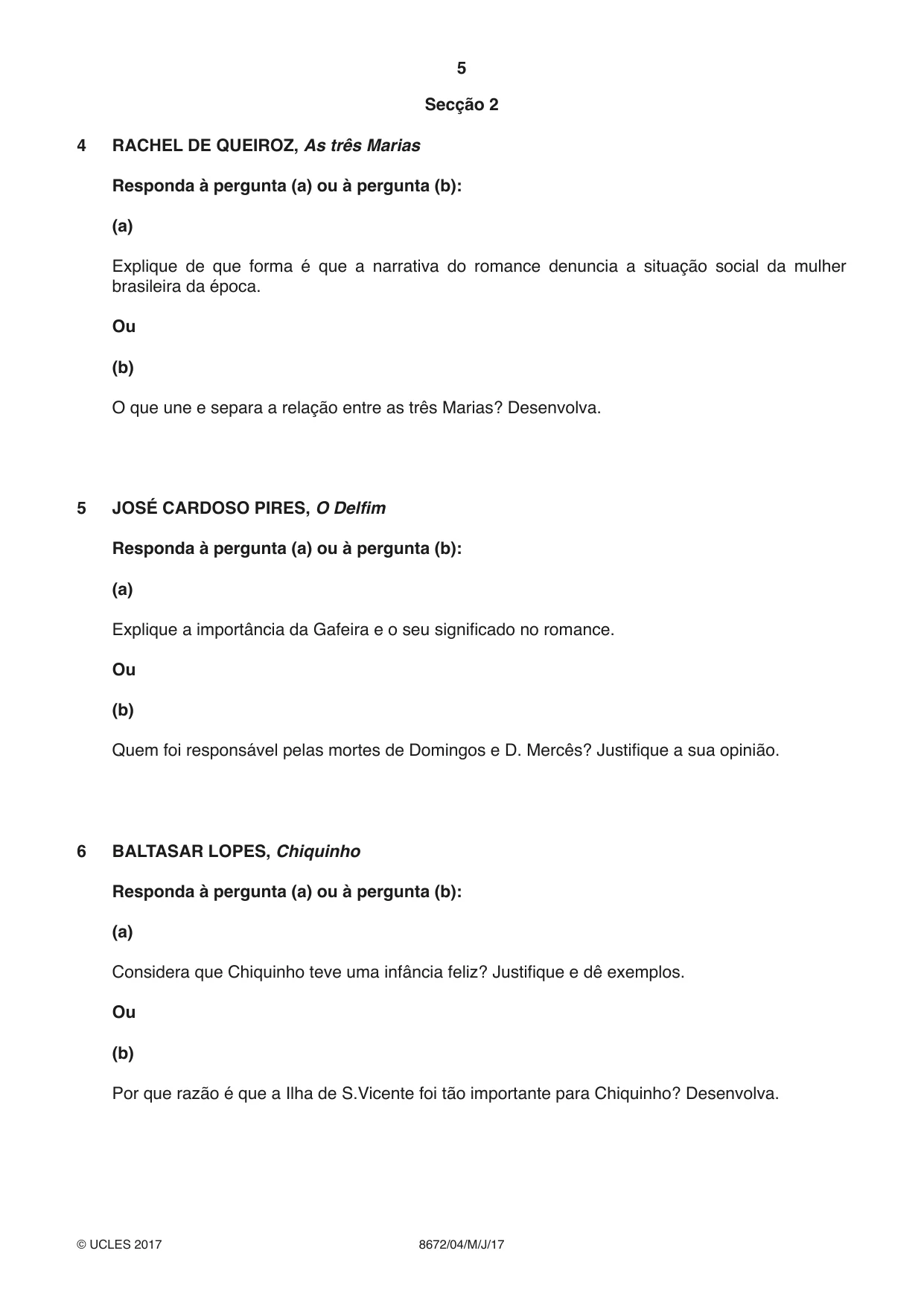
5 8672/04/M/J/17 © UCLES 2017 Secção 2 4 RACHEL DE QUEIROZ, As três Marias Responda à pergunta (a) ou à pergunta (b): (a) Explique de que forma é que a narrativa do romance denuncia a situação social da mulher brasileira da época. Ou (b) O que une e separa a relação entre as três Marias? Desenvolva. 5 JOSÉ CARDOSO PIRES, O Delfim Responda à pergunta (a) ou à pergunta (b): (a) Explique a importância da Gafeira e o seu significado no romance. Ou (b) Quem foi responsável pelas mortes de Domingos e D. Mercês? Justifique a sua opinião. 6 BALTASAR LOPES, Chiquinho Responda à pergunta (a) ou à pergunta (b): (a) Considera que Chiquinho teve uma infância feliz? Justifique e dê exemplos. Ou (b) Por que razão é que a Ilha de S.Vicente foi tão importante para Chiquinho? Desenvolva.
Question paper, page 6
6 8672/04/M/J/17 © UCLES 2017 BLANK PAGE
Question paper, page 7
7 8672/04/M/J/17 © UCLES 2017 BLANK PAGE
Question paper, page 8
8 8672/04/M/J/17 © UCLES 2017 BLANK PAGE Permission to reproduce items where third-party owned material protected by copyright is included has been sought and cleared where possible. Every reasonable effort has been made by the publisher (UCLES) to trace copyright holders, but if any items requiring clearance have unwittingly been included, the publisher will be pleased to make amends at the earliest possible opportunity. To avoid the issue of disclosure of answer-related information to candidates, all copyright acknowledgements are reproduced online in the Cambridge International Examinations Copyright Acknowledgements Booklet. This is produced for each series of examinations and is freely available to download at www.cie.org.uk after the live examination series. Cambridge International Examinations is part of the Cambridge Assessment Group. Cambridge Assessment is the brand name of University of Cambridge Local Examinations Syndicate (UCLES), which is itself a department of the University of Cambridge.
Mark scheme, page 1
® IGCSE is a registered trademark. This document consists of 3 printed pages. © UCLES 2017 [Turn over Cambridge International Examinations Cambridge International Advanced Subsidiary Level PORTUGUESE 8672/04 Paper 4 Texts May/June 2017 MARK SCHEME Maximum Mark: 75 Published This mark scheme is published as an aid to teachers and candidates, to indicate the requirements of the examination. It shows the basis on which Examiners were instructed to award marks. It does not indicate the details of the discussions that took place at an Examiners’ meeting before marking began, which would have considered the acceptability of alternative answers. Mark schemes should be read in conjunction with the question paper and the Principal Examiner Report for Teachers. Cambridge will not enter into discussions about these mark schemes. Cambridge is publishing the mark schemes for the May/June 2017 series for most Cambridge IGCSE®, Cambridge International A and AS Level and Cambridge Pre-U components, and some Cambridge O Level components.
Mark scheme, page 2
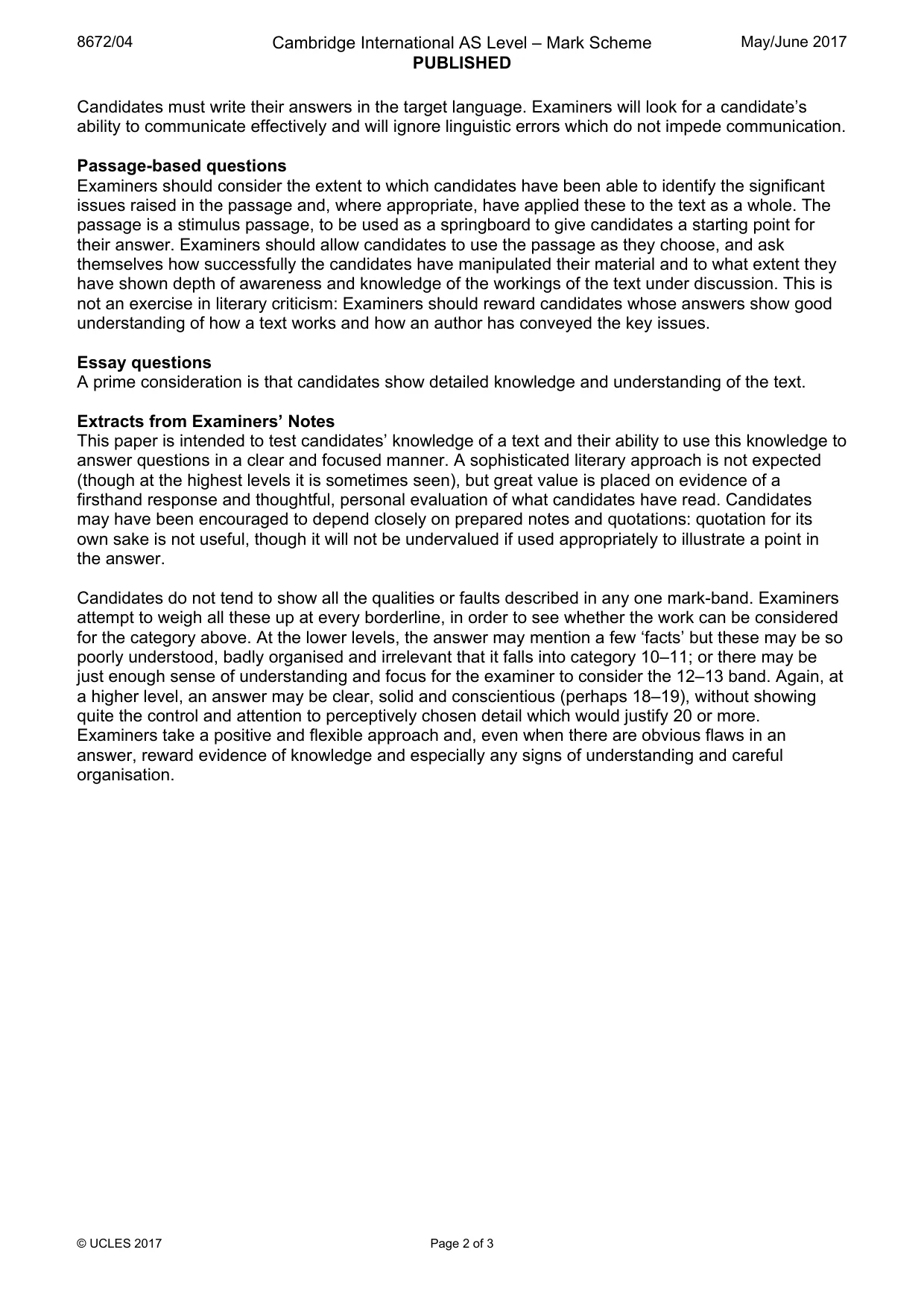
8672/04 Cambridge International AS Level – Mark Scheme PUBLISHED May/June 2017 © UCLES 2017 Page 2 of 3 Candidates must write their answers in the target language. Examiners will look for a candidate’s ability to communicate effectively and will ignore linguistic errors which do not impede communication. Passage-based questions Examiners should consider the extent to which candidates have been able to identify the significant issues raised in the passage and, where appropriate, have applied these to the text as a whole. The passage is a stimulus passage, to be used as a springboard to give candidates a starting point for their answer. Examiners should allow candidates to use the passage as they choose, and ask themselves how successfully the candidates have manipulated their material and to what extent they have shown depth of awareness and knowledge of the workings of the text under discussion. This is not an exercise in literary criticism: Examiners should reward candidates whose answers show good understanding of how a text works and how an author has conveyed the key issues. Essay questions A prime consideration is that candidates show detailed knowledge and understanding of the text. Extracts from Examiners’ Notes This paper is intended to test candidates’ knowledge of a text and their ability to use this knowledge to answer questions in a clear and focused manner. A sophisticated literary approach is not expected (though at the highest levels it is sometimes seen), but great value is placed on evidence of a firsthand response and thoughtful, personal evaluation of what candidates have read. Candidates may have been encouraged to depend closely on prepared notes and quotations: quotation for its own sake is not useful, though it will not be undervalued if used appropriately to illustrate a point in the answer. Candidates do not tend to show all the qualities or faults described in any one mark-band. Examiners attempt to weigh all these up at every borderline, in order to see whether the work can be considered for the category above. At the lower levels, the answer may mention a few ‘facts’ but these may be so poorly understood, badly organised and irrelevant that it falls into category 10–11; or there may be just enough sense of understanding and focus for the examiner to consider the 12–13 band. Again, at a higher level, an answer may be clear, solid and conscientious (perhaps 18–19), without showing quite the control and attention to perceptively chosen detail which would justify 20 or more. Examiners take a positive and flexible approach and, even when there are obvious flaws in an answer, reward evidence of knowledge and especially any signs of understanding and careful organisation.
Mark scheme, page 3
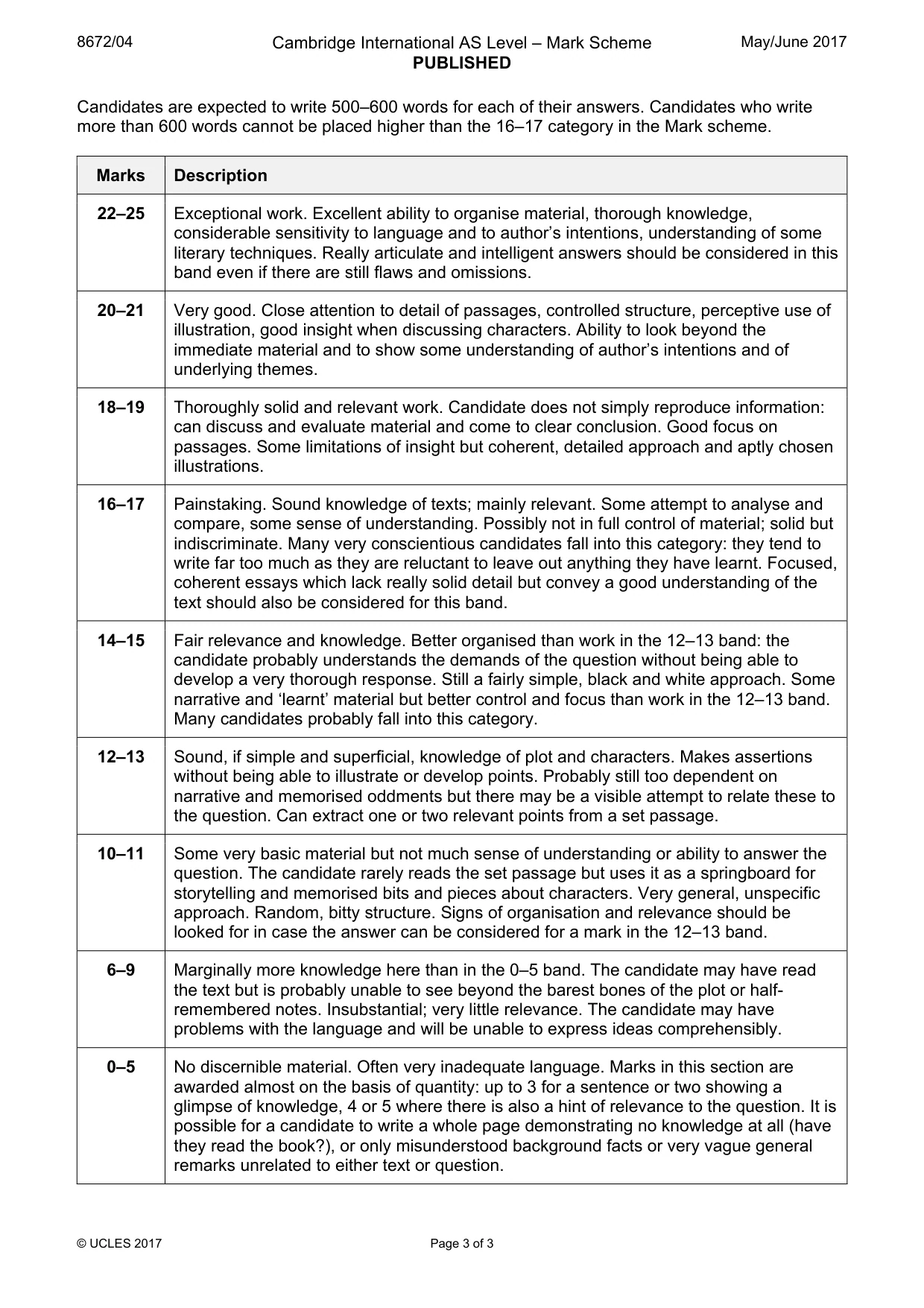
8672/04 Cambridge International AS Level – Mark Scheme PUBLISHED May/June 2017 © UCLES 2017 Page 3 of 3 Candidates are expected to write 500–600 words for each of their answers. Candidates who write more than 600 words cannot be placed higher than the 16–17 category in the Mark scheme. Marks Description 22–25 Exceptional work. Excellent ability to organise material, thorough knowledge, considerable sensitivity to language and to author’s intentions, understanding of some literary techniques. Really articulate and intelligent answers should be considered in this band even if there are still flaws and omissions. 20–21 Very good. Close attention to detail of passages, controlled structure, perceptive use of illustration, good insight when discussing characters. Ability to look beyond the immediate material and to show some understanding of author’s intentions and of underlying themes. 18–19 Thoroughly solid and relevant work. Candidate does not simply reproduce information: can discuss and evaluate material and come to clear conclusion. Good focus on passages. Some limitations of insight but coherent, detailed approach and aptly chosen illustrations. 16–17 Painstaking. Sound knowledge of texts; mainly relevant. Some attempt to analyse and compare, some sense of understanding. Possibly not in full control of material; solid but indiscriminate. Many very conscientious candidates fall into this category: they tend to write far too much as they are reluctant to leave out anything they have learnt. Focused, coherent essays which lack really solid detail but convey a good understanding of the text should also be considered for this band. 14–15 Fair relevance and knowledge. Better organised than work in the 12–13 band: the candidate probably understands the demands of the question without being able to develop a very thorough response. Still a fairly simple, black and white approach. Some narrative and ‘learnt’ material but better control and focus than work in the 12–13 band. Many candidates probably fall into this category. 12–13 Sound, if simple and superficial, knowledge of plot and characters. Makes assertions without being able to illustrate or develop points. Probably still too dependent on narrative and memorised oddments but there may be a visible attempt to relate these to the question. Can extract one or two relevant points from a set passage. 10–11 Some very basic material but not much sense of understanding or ability to answer the question. The candidate rarely reads the set passage but uses it as a springboard for storytelling and memorised bits and pieces about characters. Very general, unspecific approach. Random, bitty structure. Signs of organisation and relevance should be looked for in case the answer can be considered for a mark in the 12–13 band. 6–9 Marginally more knowledge here than in the 0–5 band. The candidate may have read the text but is probably unable to see beyond the barest bones of the plot or half- remembered notes. Insubstantial; very little relevance. The candidate may have problems with the language and will be unable to express ideas comprehensibly. 0–5 No discernible material. Often very inadequate language. Marks in this section are awarded almost on the basis of quantity: up to 3 for a sentence or two showing a glimpse of knowledge, 4 or 5 where there is also a hint of relevance to the question. It is possible for a candidate to write a whole page demonstrating no knowledge at all (have they read the book?), or only misunderstood background facts or very vague general remarks unrelated to either text or question.
What you needed in this session
Cambridge’s own grade thresholds for 2017 May/June, Paper 4 · Variant 1. A higher threshold means an easier paper — the bar moves with how the cohort did.