Cambridge A Level Mathematics 9709 — 2023 May/June Paper 4 · Variant 1
9709/41/M/J/23 · 7 questions · 50 marks · ≈56 min
The question paper and its mark scheme, free to read here and free to download. This is Cambridge’s own paper, exactly as it was sat.
Question paper16 pages
Mark scheme13 pages
Answers below. Sit the paper first if you are practising.
Questions as text
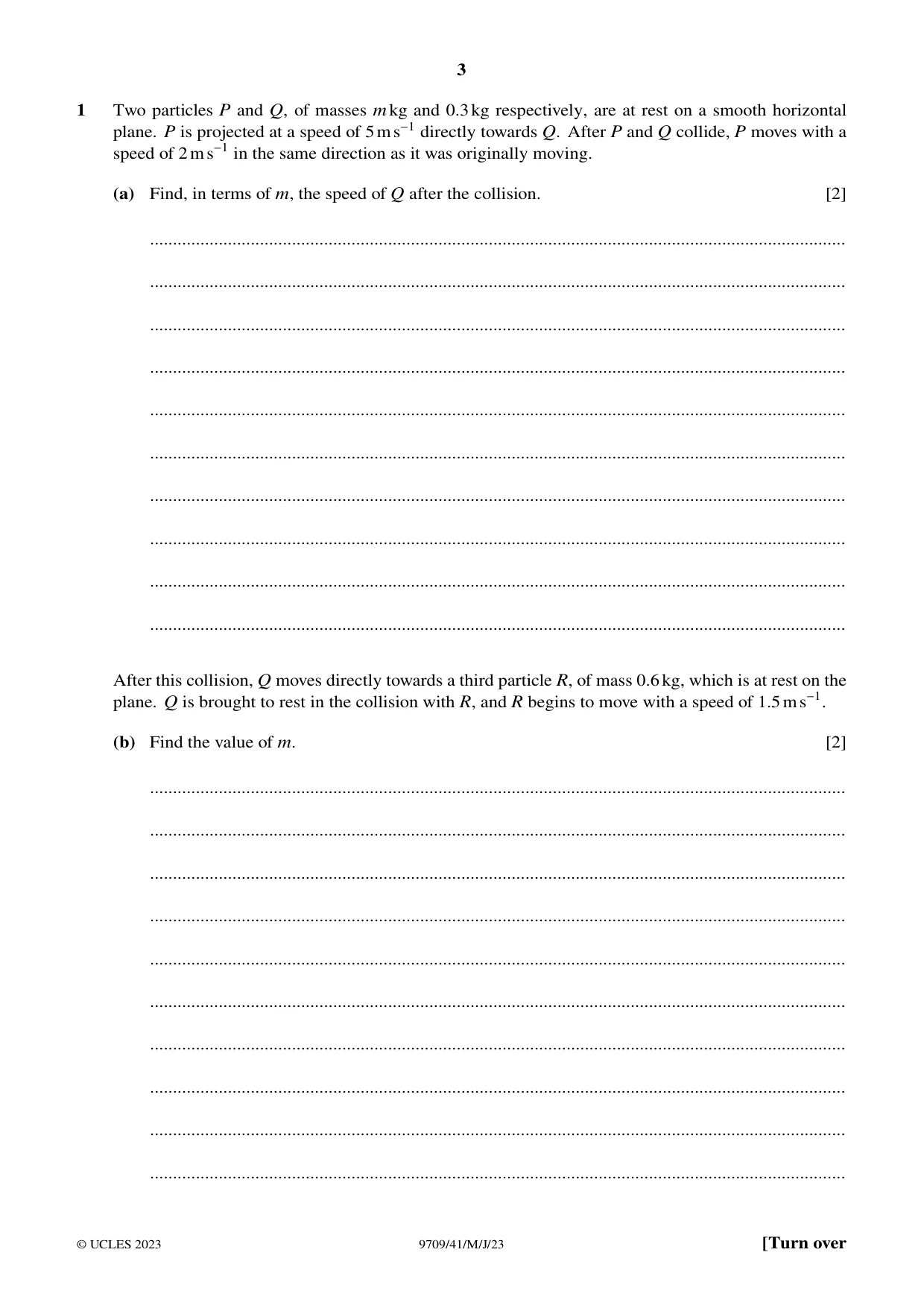
Q1 · Two particles P and Q, of masses mkg and 0.3kg respectively, are at rest on a smooth…
1 Two particles P and Q, of masses mkg and 0.3kg respectively, are at rest on a smooth horizontal plane. P is projected at a speed of 5ms−1 directly towards Q. After P and Q collide, P moves with a speed of 2ms−1 in the same direction as it was originally moving. (a) Find, in terms of m, the speed of Q after the collision. [2] ........................................................................................................................................................ ........................................................................................................................................................ ........................................................................................................................................................ ........................................................................................................................................................ ........................................................................................................................................................ ........................................................................................................................................................ ........................................................................................................................................................ ........................................................................................................................................................ ........................................................................................................................................................ ........................................................................................................................................................ After this collision, Q moves directly towards a third particle R, of mass 0.6kg, which is at rest on the plane. Q is brought to rest in the collision with R, and R begins to move with a speed of 1.5ms−1. (b) Find the value of m. [2] ........................................................................................................................................................ ........................................................................................................................................................ ........................................................................................................................................................ ........................................................................................................................................................ ........................................................................................................................................................ ........................................................................................................................................................ ........................................................................................................................................................ ........................................................................................................................................................ ........................................................................................................................................................ ........................................................................................................................................................
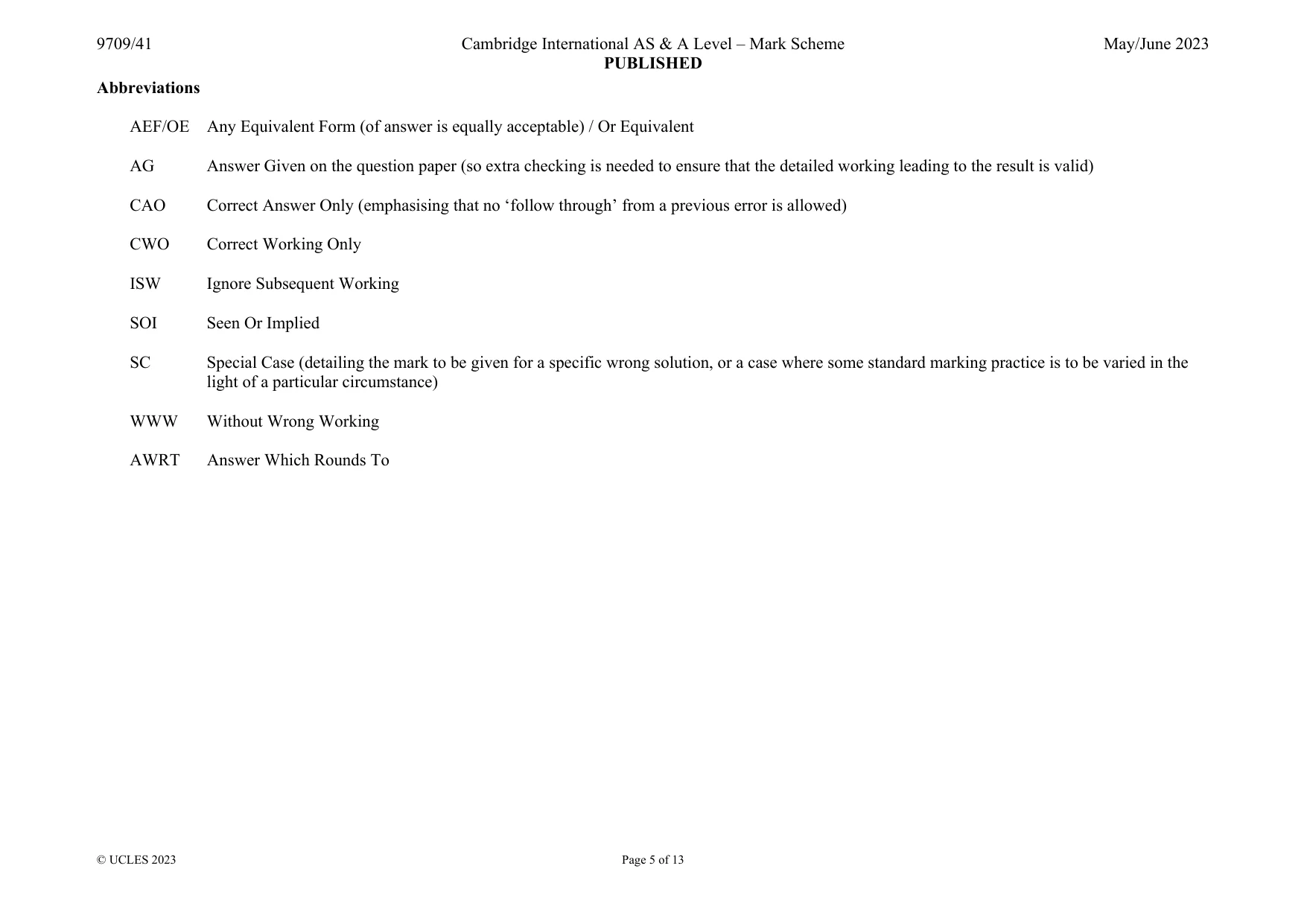
Mark scheme: 1(a) M1 Attempt at conservation of momentum; 3 non-zero terms (with m appearing in two terms); allow sign errors. Speed 10 m (m s–1) A1 M1A0 if using g in momentum terms. 10 v m is A0. 2 1(b) 0.3 10 0 0 0.6 1.5 [3 0.9] m m M1 Attempt at conservation of momentum between Q and R (so must be using correct masses of 0.3 and 0.6) to form a linear equation in m using their answer from (a); 2 non-zero terms; allow sign errors. m = 0.3 A1FT FT 3 +ve coefficient of from their m (a) Condone including kg in answer. 2
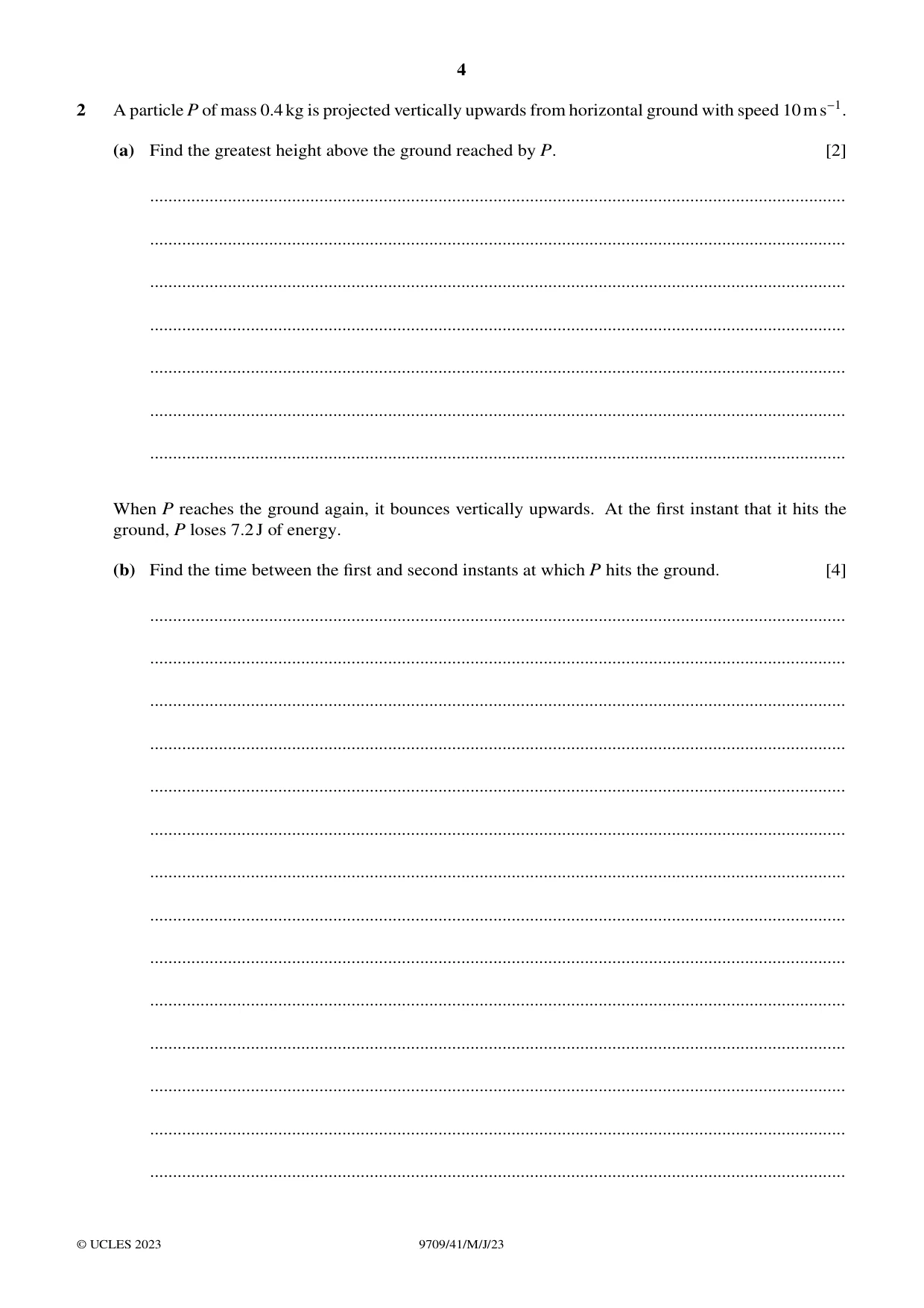
Q2 · A particle P of mass 0.4kg is projected vertically upwards from horizontal ground with…
2 A particle P of mass 0.4kg is projected vertically upwards from horizontal ground with speed 10ms−1. (a) Find the greatest height above the ground reached by P. [2] ........................................................................................................................................................ ........................................................................................................................................................ ........................................................................................................................................................ ........................................................................................................................................................ ........................................................................................................................................................ ........................................................................................................................................................ ........................................................................................................................................................ When P reaches the ground again, it bounces vertically upwards. At the first instant that it hits the ground, P loses 7.2J of energy. (b) Find the time between the first and second instants at which P hits the ground. [4] ........................................................................................................................................................ ........................................................................................................................................................ ........................................................................................................................................................ ........................................................................................................................................................ ........................................................................................................................................................ ........................................................................................................................................................ ........................................................................................................................................................ ........................................................................................................................................................ ........................................................................................................................................................ ........................................................................................................................................................ ........................................................................................................................................................ ........................................................................................................................................................ ........................................................................................................................................................ ........................................................................................................................................................
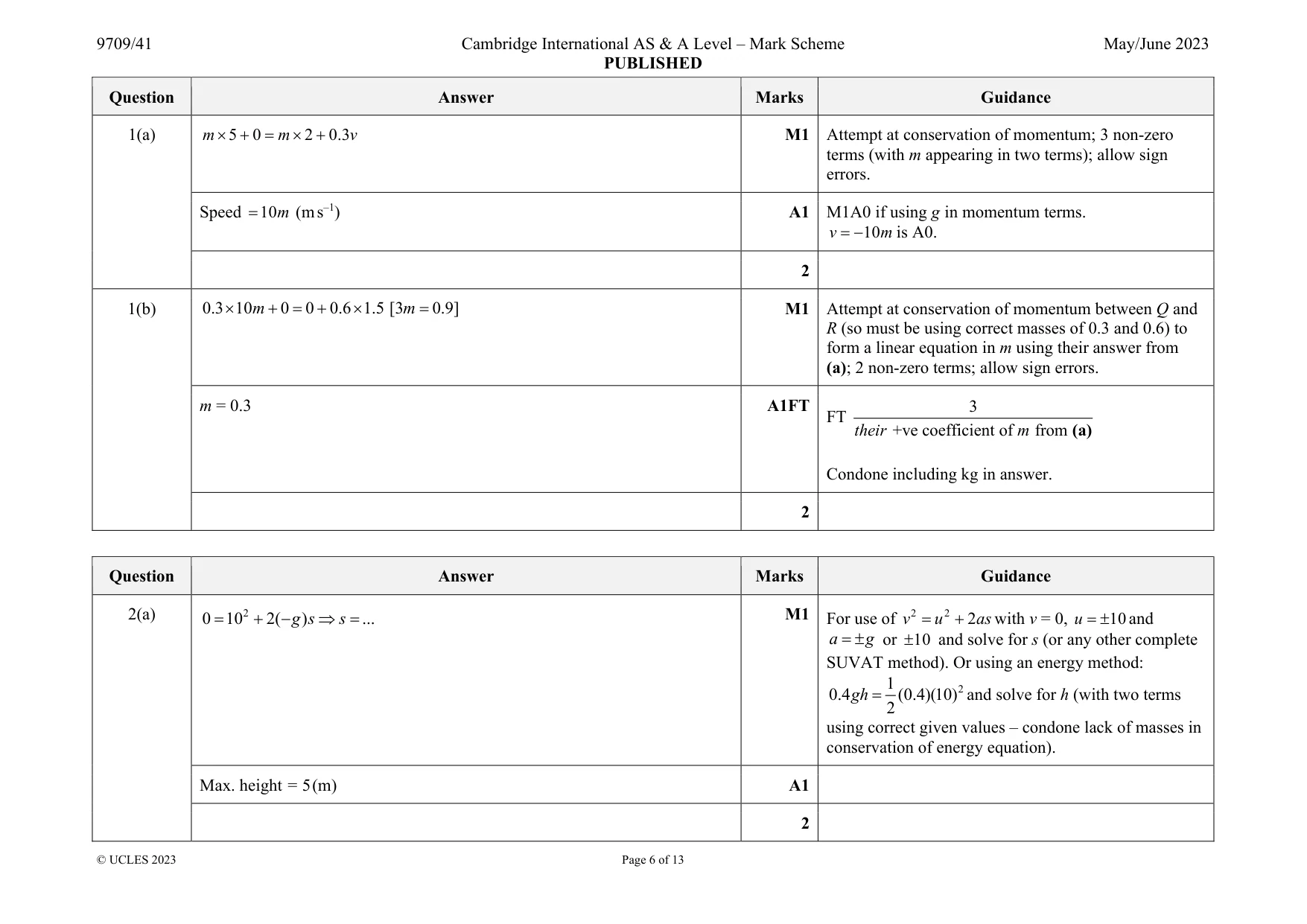
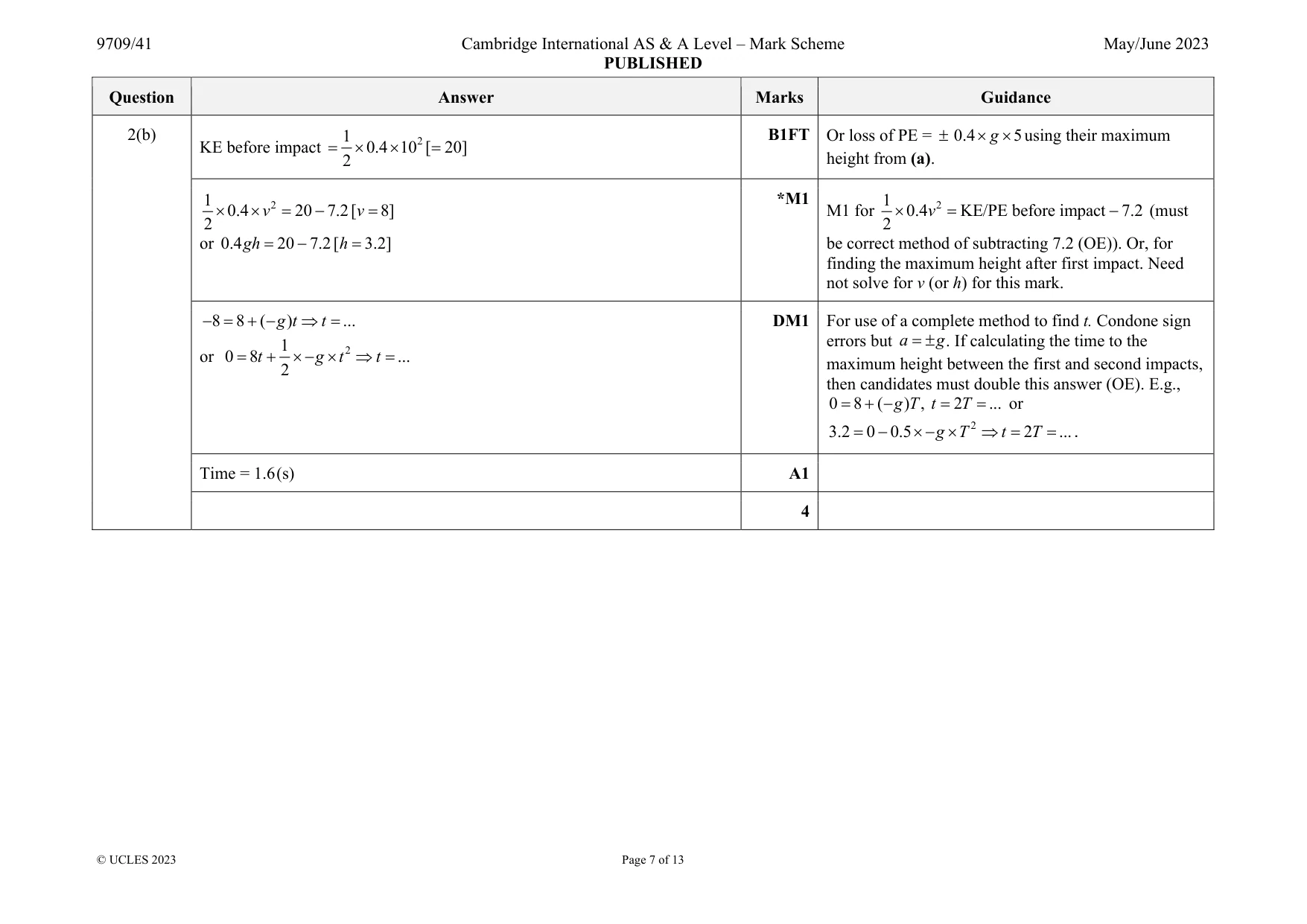
Mark scheme: 2(a) 2 0 10 2( ) ... g s s 2 2 2 v u as with v = 0, 10 u and a g or 10 and solve for s (or any other complete SUVAT method). Or using an energy method: 2 1 0.4 (0.4)(10) 2 gh and solve for h (with two terms using correct given values – condone lack of masses in conservation of energy equation). Max. height = 5(m) A1 2 Question Answer Marks Guidance 2(b) KE before impact 2 1 0.4 10 [ 20] 2 B1FT Or loss of PE = 0.4 5 g using their maximum height from (a). 2 1 0.4 20 7.2[ 8] 2 v v or 0.4 20 7.2[ 3.2] gh h *M1 M1 for 2 1 0.4 KE/PE before impact 7.2 2 v (must be correct method of subtracting 7.2 (OE)). Or, for finding the maximum height after first impact. Need not solve for v (or h) for this mark. 8 8 ( ) ... g t t or 2 1 0 8 ... 2 t g t t DM1 For use of a complete method to find t. Condone sign errors but a g. If calculating the time to the maximum height between the first and second impacts, then candidates must double this answer (OE). E.g., 0 8 ( ) , 2 ... g T t T or 2 3.2 0 0.5 2 ... g T t T . Time = 1.6(s) A1 4
Q3 · A particle moves in a straight line starting from rest
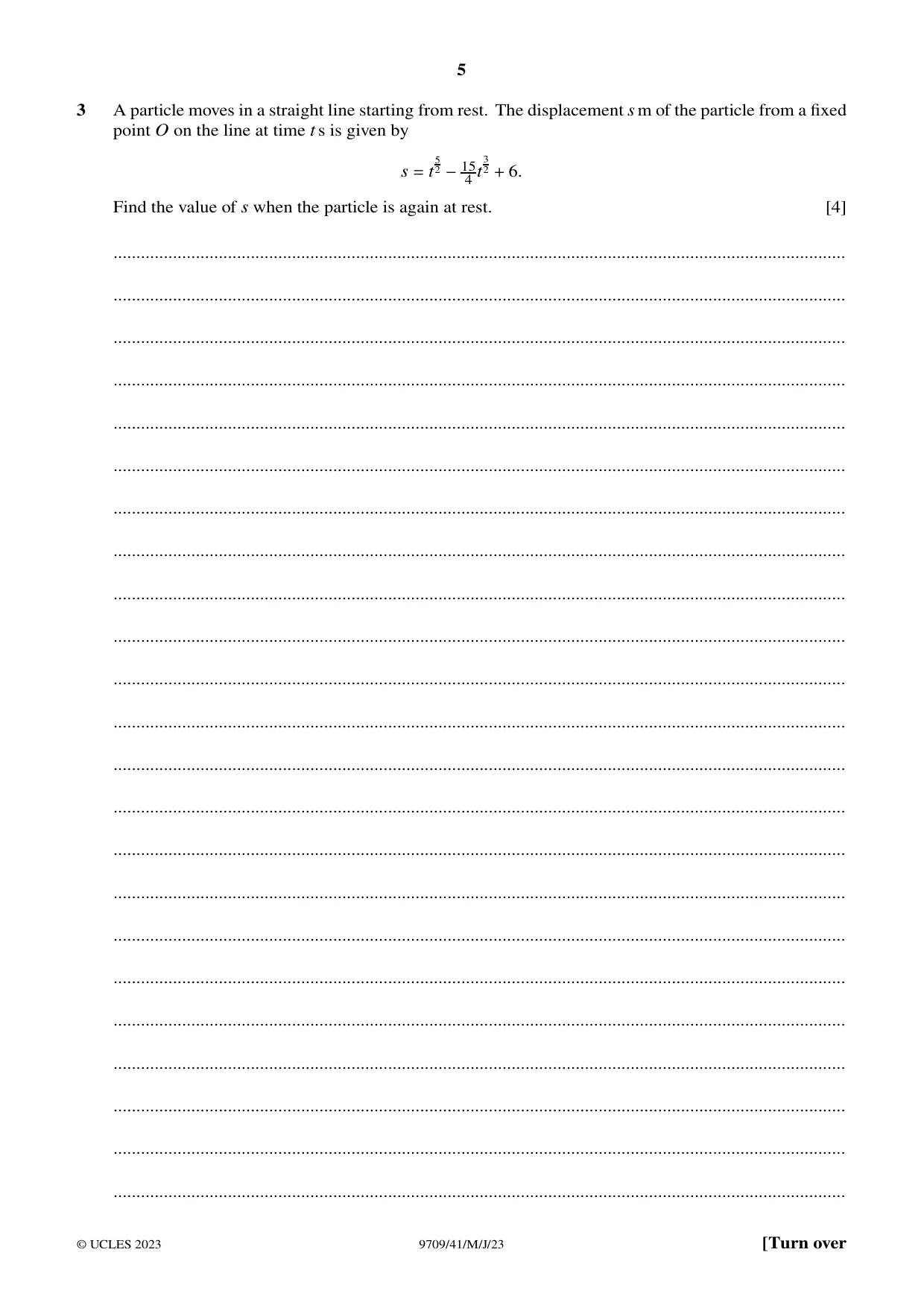
3 A particle moves in a straight line starting from rest. The displacement sm of the particle from a fixed point O on the line at time t s is given by 5 3 2 + 6. s = t 2 −15 t 4 Find the value of s when the particle is again at rest. [4] ................................................................................................................................................................ ................................................................................................................................................................ ................................................................................................................................................................ ................................................................................................................................................................ ................................................................................................................................................................ ................................................................................................................................................................ ................................................................................................................................................................ ................................................................................................................................................................ ................................................................................................................................................................ ................................................................................................................................................................ ................................................................................................................................................................ ................................................................................................................................................................ ................................................................................................................................................................ ................................................................................................................................................................ ................................................................................................................................................................ ................................................................................................................................................................ ................................................................................................................................................................ ................................................................................................................................................................ ................................................................................................................................................................ ................................................................................................................................................................ ................................................................................................................................................................ ................................................................................................................................................................ ................................................................................................................................................................
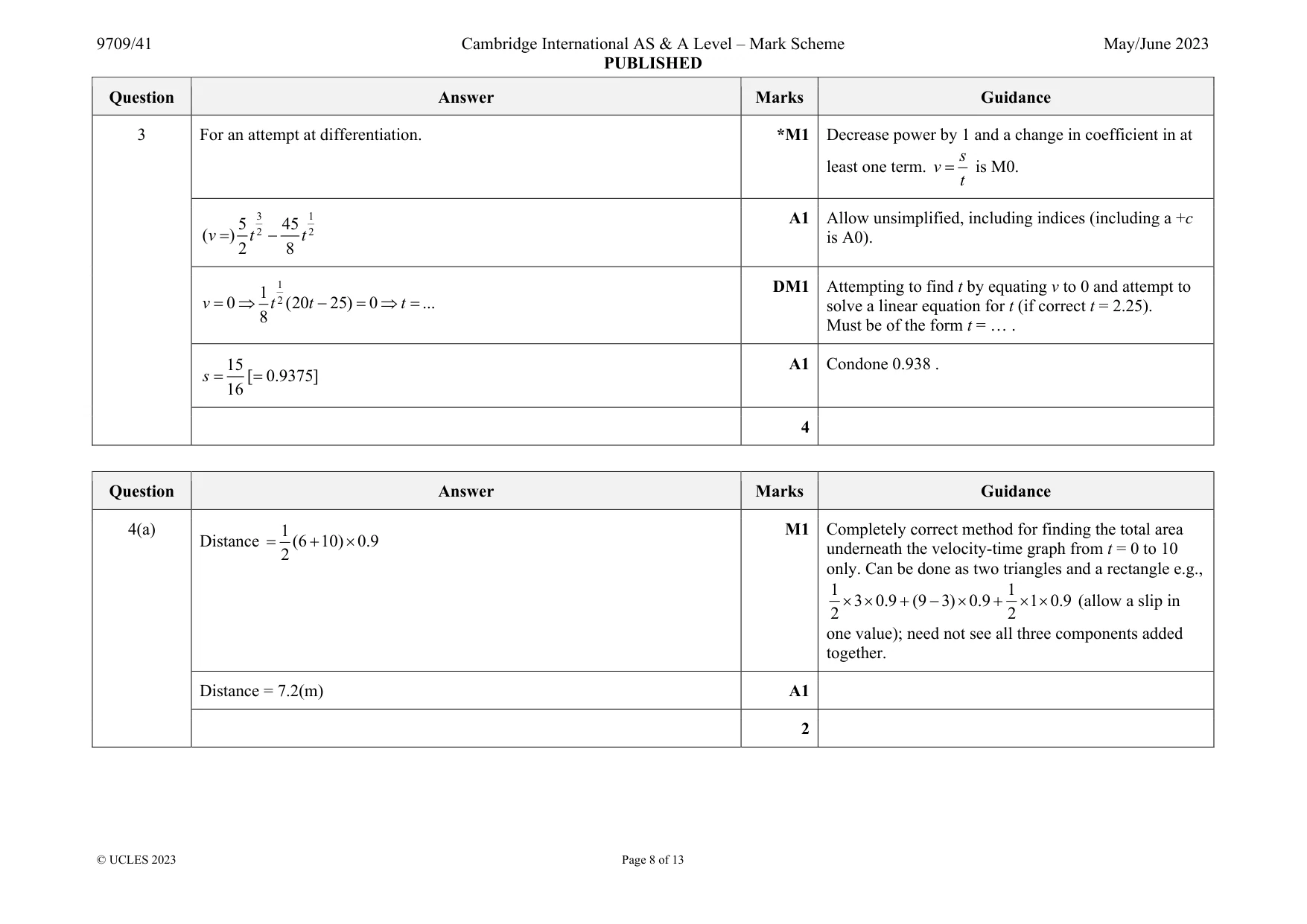
Mark scheme: 3 *M1 Decrease power by 1 and a change in coefficient in at least one term. s v t is M0. 3 1 2 2 5 45 ( ) 2 8 v t t A1 Allow unsimplified, including indices (including a +c is A0). 1 2 1 0 (20 25) 0 ... 8 v t t t DM1 Attempting to find t by equating v to 0 and attempt to solve a linear equation for t (if correct t = 2.25). Must be of the form t = … . 15 [ 0.9375] 16 s A1 Condone 0.938 . 4
Q4 · V (m s−1) 0.9 0 t (s) 0 3 9 10 T The velocity of a particle at time t s after leaving a…
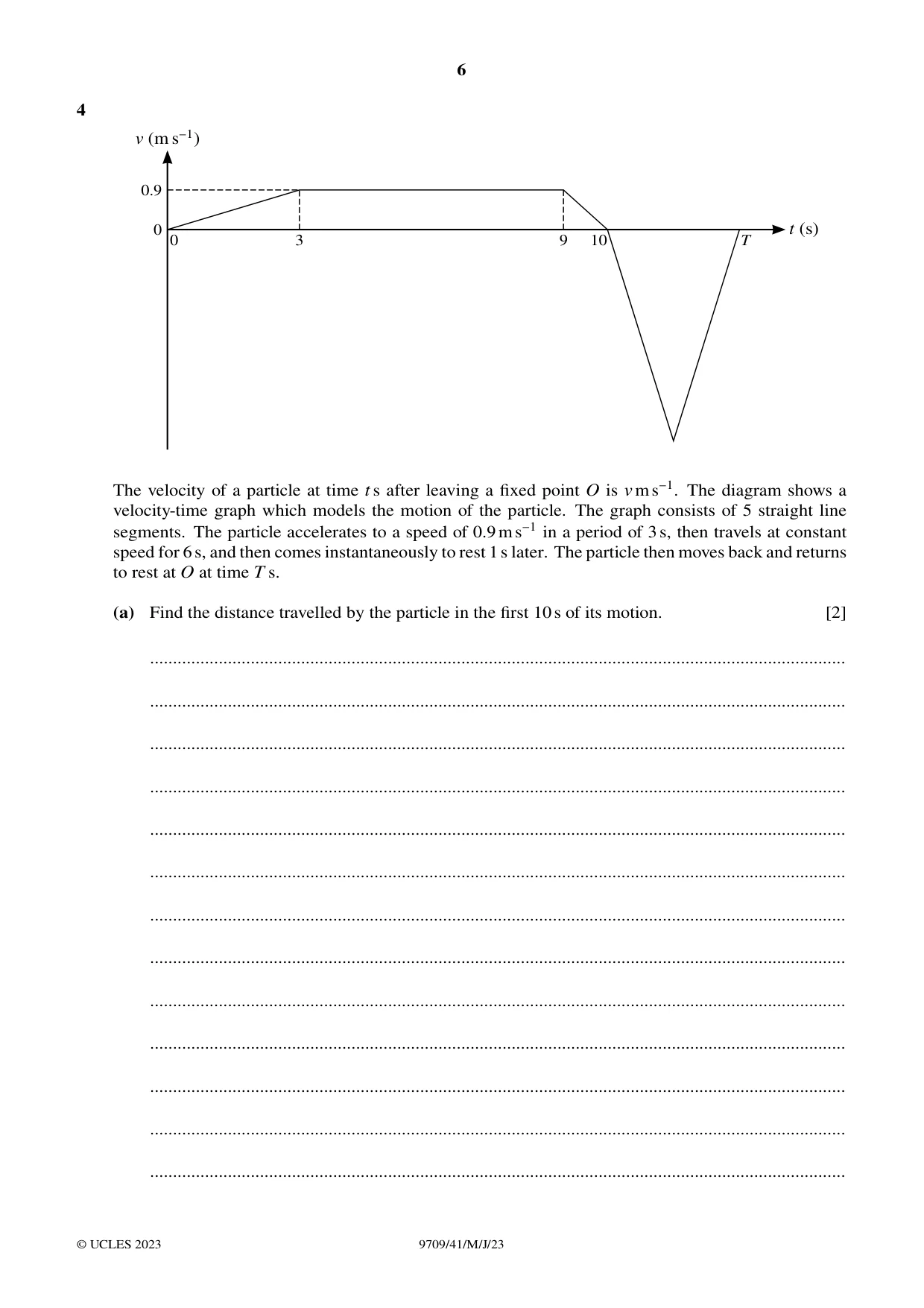
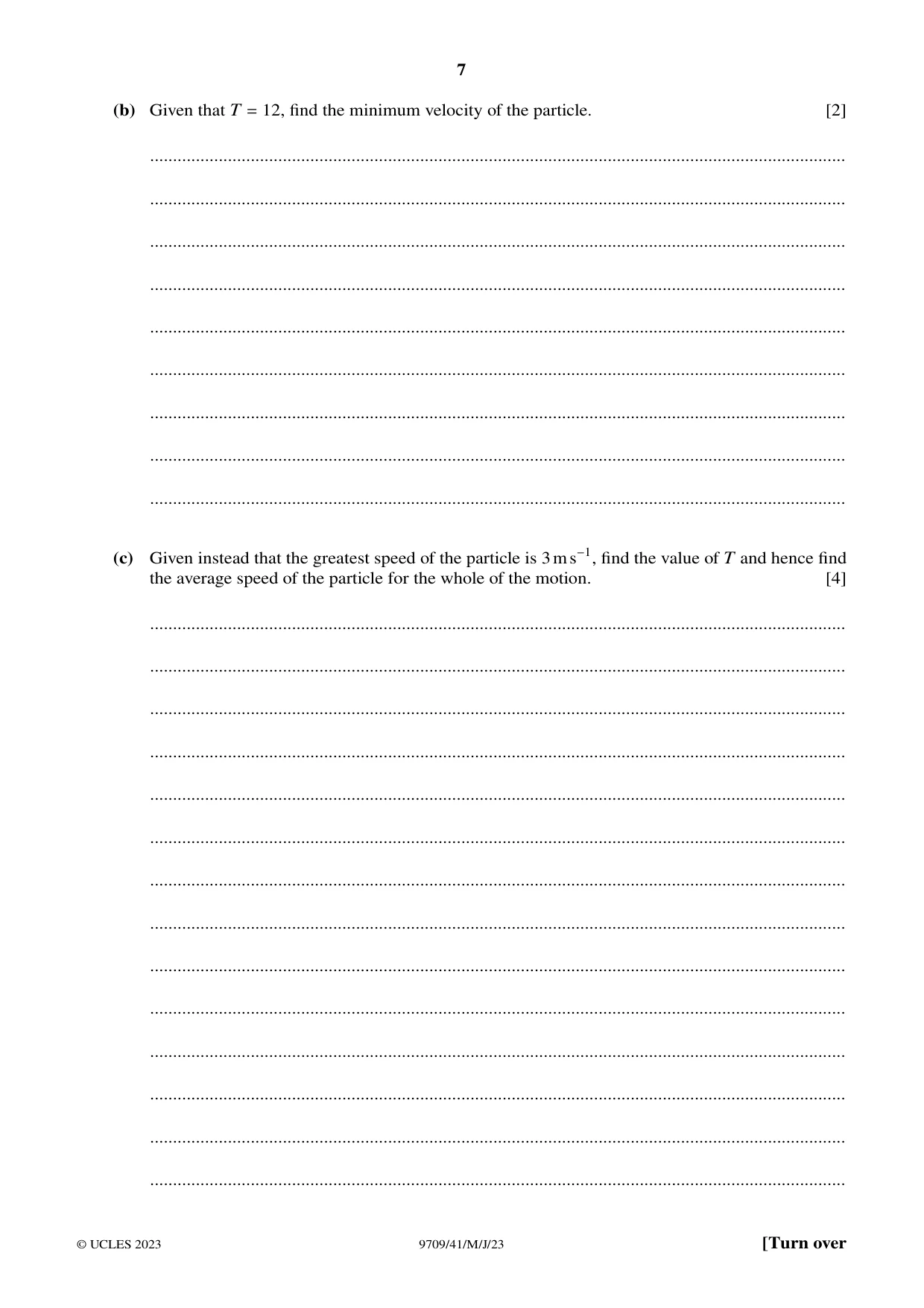
4 v (m s−1) 0.9 0 t (s) 0 3 9 10 T The velocity of a particle at time t s after leaving a fixed point O is vms−1. The diagram shows a velocity-time graph which models the motion of the particle. The graph consists of 5 straight line segments. The particle accelerates to a speed of 0.9ms−1 in a period of 3s, then travels at constant speed for 6s, and then comes instantaneously to rest 1s later. The particle then moves back and returns to rest at O at time T s. (a) Find the distance travelled by the particle in the first 10s of its motion. [2] ........................................................................................................................................................ ........................................................................................................................................................ ........................................................................................................................................................ ........................................................................................................................................................ ........................................................................................................................................................ ........................................................................................................................................................ ........................................................................................................................................................ ........................................................................................................................................................ ........................................................................................................................................................ ........................................................................................................................................................ ........................................................................................................................................................ ........................................................................................................................................................ ........................................................................................................................................................ (b) Given that T = 12, find the minimum velocity of the particle. [2] ........................................................................................................................................................ ........................................................................................................................................................ ........................................................................................................................................................ ........................................................................................................................................................ ........................................................................................................................................................ ........................................................................................................................................................ ........................................................................................................................................................ ........................................................................................................................................................ ........................................................................................................................................................ (c) Given instead that the greatest speed of the particle is 3ms−1, find the value of T and hence find the average speed of the particle for the whole of the motion. [4] ........................................................................................................................................................ ........................................................................................................................................................ ........................................................................................................................................................ ........................................................................................................................................................ ........................................................................................................................................................ ........................................................................................................................................................ ........................................................................................................................................................ ........................................................................................................................................................ ........................................................................................................................................................ ........................................................................................................................................................ ........................................................................................................................................................ ........................................................................................................................................................ ........................................................................................................................................................ ........................................................................................................................................................
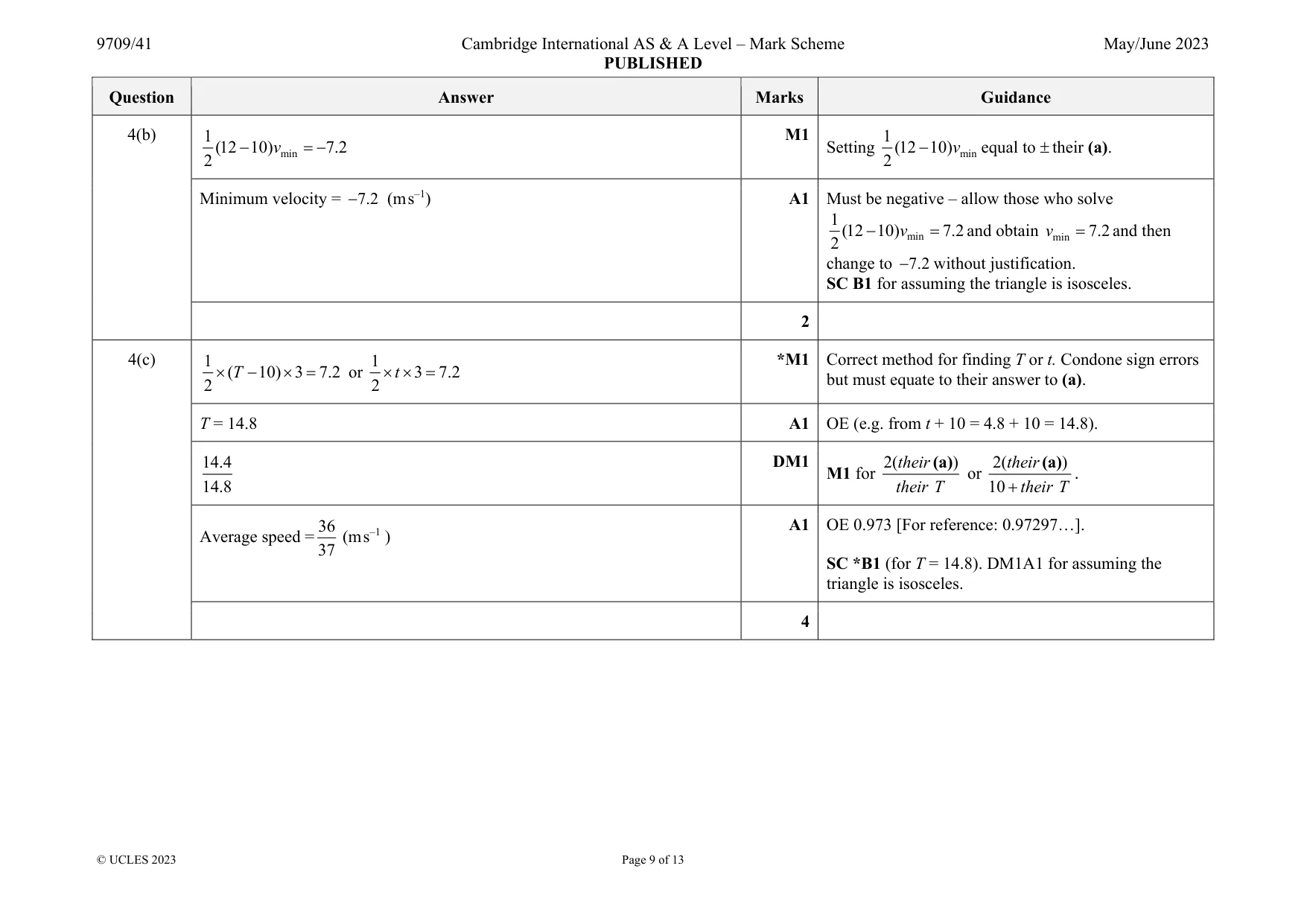
Mark scheme: 4(a) Distance 1 (6 10) 0.9 2 M1 Completely correct method for finding the total area underneath the velocity-time graph from t = 0 to 10 only. Can be done as two triangles and a rectangle e.g., 1 1 3 0.9 (9 3) 0.9 1 0.9 2 2 (allow a slip in one value); need not see all three components added together. Distance = 7.2(m) A1 2 Question Answer Marks Guidance 4(b) min 1 (12 10) 7.2 2 v M1 Setting min 1 (12 10) 2 v equal to their (a). Minimum velocity = 7.2 (m s–1) A1 Must be negative – allow those who solve min 1 (12 10) 7.2 2 v and obtain min 7.2 v and then change to 7.2 without justification. SC B1 for assuming the triangle is isosceles. 2 4(c) 1 ( 10) 3 7.2 2 T or 1 3 7.2 2 t *M1 Correct method for finding T or t. Condone sign errors but must equate to their answer to (a). T = 14.8 A1 OE (e.g. from t + 10 = 4.8 + 10 = 14.8). 14.4 14.8 DM1 M1 for 2( ) their their T (a) or 2( ) 10 their their T (a) . Average speed = 36 37 (m s–1 ) A1 OE 0.973 [For reference: 0.97297…]. SC *B1 (for T = 14.8). DM1A1 for assuming the triangle is isosceles. 4
Q5 · 40 N F N 60Å 1Å 10 N 50 N Four coplanar forces act at a point
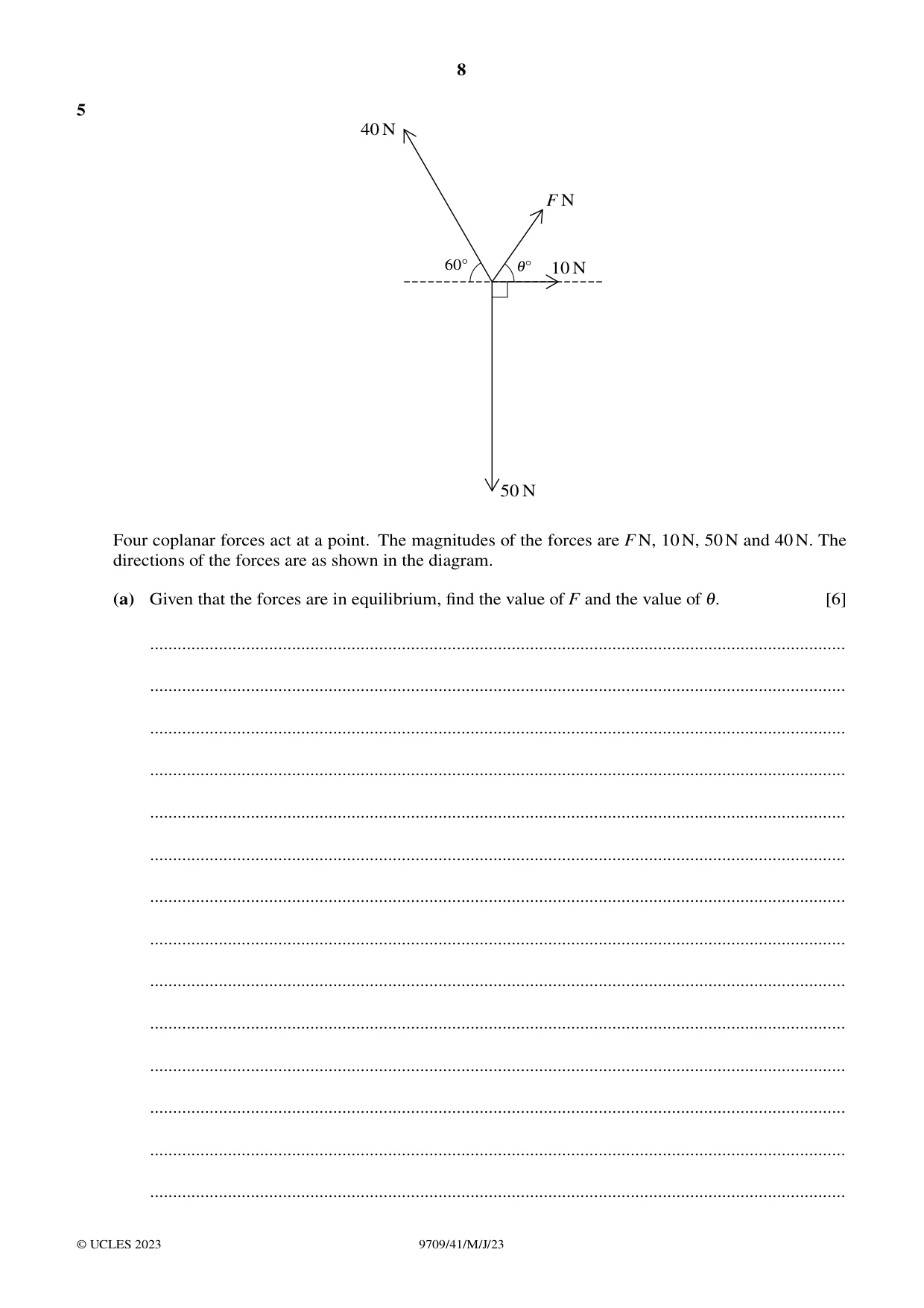
5 40 N F N 60Å 1Å 10 N 50 N Four coplanar forces act at a point. The magnitudes of the forces are FN, 10N, 50N and 40N. The directions of the forces are as shown in the diagram. (a) Given that the forces are in equilibrium, find the value of F and the value of 1. [6] ........................................................................................................................................................ ........................................................................................................................................................ ........................................................................................................................................................ ........................................................................................................................................................ ........................................................................................................................................................ ........................................................................................................................................................ ........................................................................................................................................................ ........................................................................................................................................................ ........................................................................................................................................................ ........................................................................................................................................................ ........................................................................................................................................................ ........................................................................................................................................................ ........................................................................................................................................................ ........................................................................................................................................................ ........................................................................................................................................................ ........................................................................................................................................................ ........................................................................................................................................................ ........................................................................................................................................................ ........................................................................................................................................................ ........................................................................................................................................................ ........................................................................................................................................................ ........................................................................................................................................................ ........................................................................................................................................................ (b) Given instead that F = 10 2 and 1 = 45, find the direction and the exact magnitude the resultant force. [3] ........................................................................................................................................................ ........................................................................................................................................................ ........................................................................................................................................................ ........................................................................................................................................................ ........................................................................................................................................................ ........................................................................................................................................................ ........................................................................................................................................................ ........................................................................................................................................................ ........................................................................................................................................................ ........................................................................................................................................................ ........................................................................................................................................................ ........................................................................................................................................................ ........................................................................................................................................................ ........................................................................................................................................................
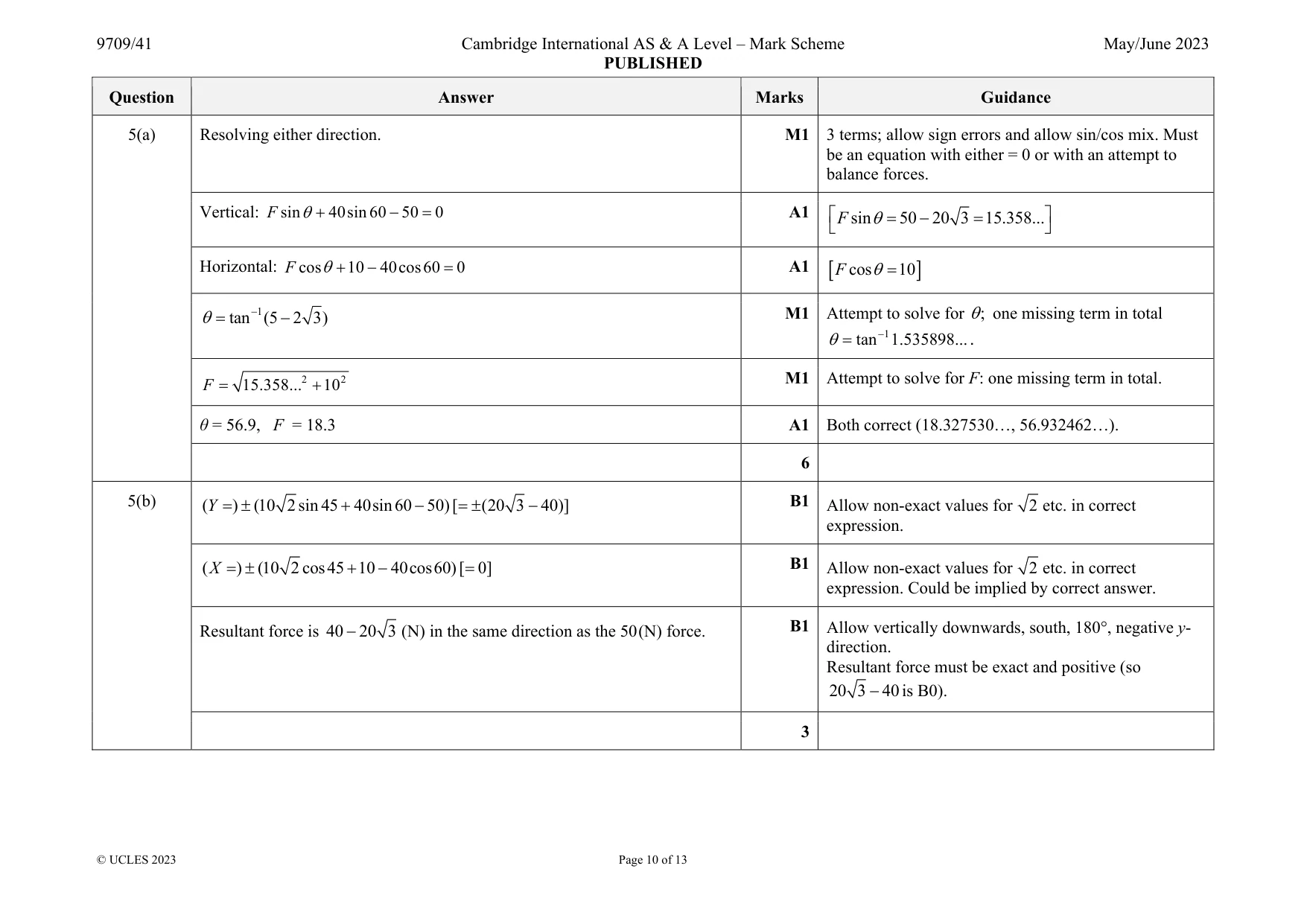
Mark scheme: 5(a) Resolving either direction. M1 3 terms; allow sign errors and allow sin/cos mix. Must be an equation with either = 0 or with an attempt to balance forces. Vertical: sin 40sin 60 50 0 F A1 sin 50 20 3 15.358... F Horizontal: cos 10 40cos60 0 F A1 cos 10 F 1 tan (5 2 3) M1 Attempt to solve for ; one missing term in total 1 tan 1.535898... . 2 2 15.358... 10 F M1 Attempt to solve for F: one missing term in total. θ = 56.9, F = 18.3 A1 Both correct (18.327530…, 56.932462…). 6 5(b) ( ) (10 2 sin 45 40sin60 50)[ (20 3 40)] Y B1 Allow non-exact values for 2 etc. in correct expression. ( ) (10 2 cos45 10 40cos60)[ 0] X B1 Allow non-exact values for 2 etc. in correct expression. Could be implied by correct answer. Resultant force is 40 20 3 (N) in the same direction as the 50 (N) force. B1 Allow vertically downwards, south, 180, negative y- direction. Resultant force must be exact and positive (so 20 3 40 is B0). 3
Q6 · B P 0.2 kg Q 0.1 kg 60Å 1Å A C Two particles P and Q, of masses 0.2kg and 0.1kg…
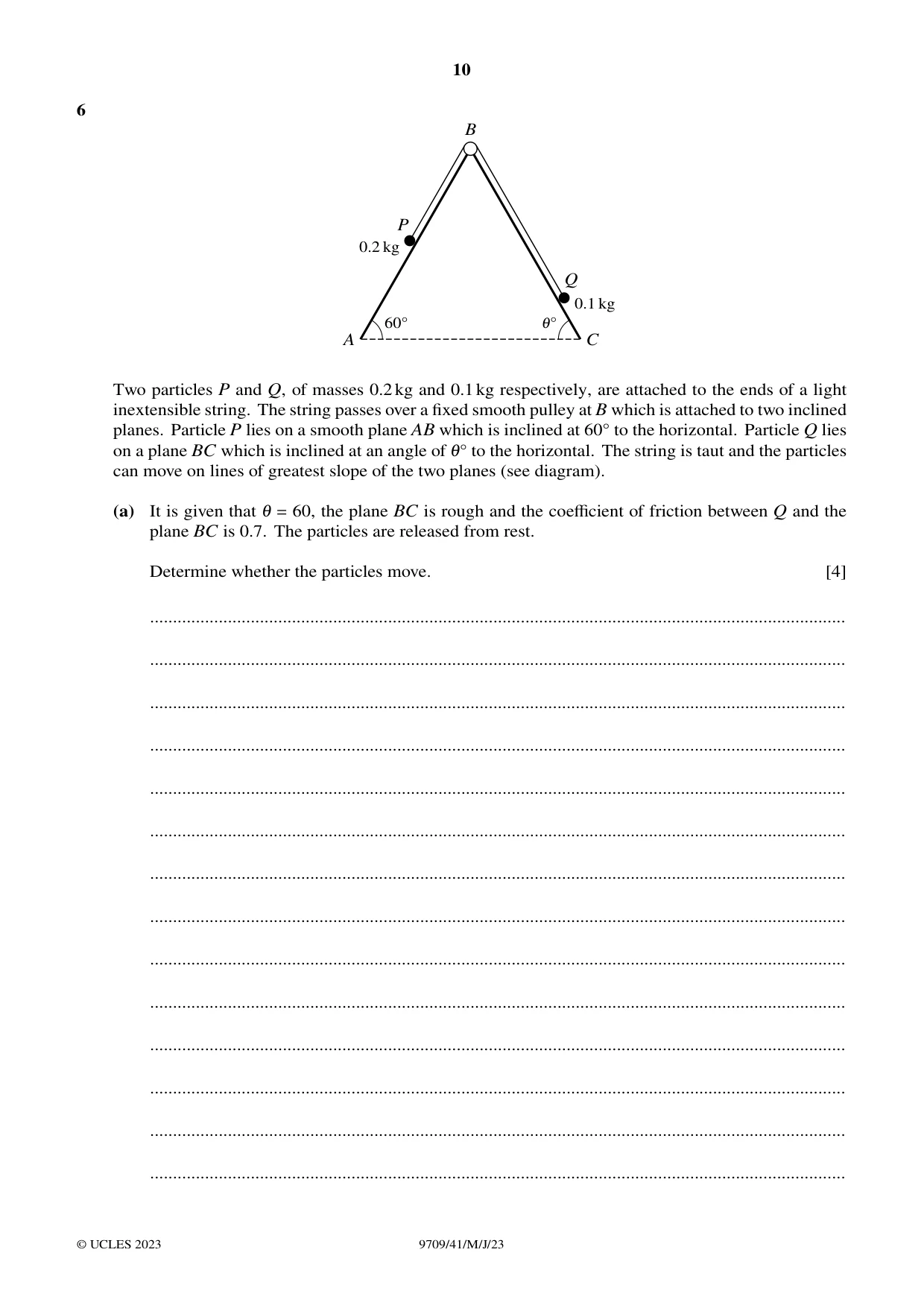
6 B P 0.2 kg Q 0.1 kg 60Å 1Å A C Two particles P and Q, of masses 0.2kg and 0.1kg respectively, are attached to the ends of a light inextensible string. The string passes over a fixed smooth pulley at B which is attached to two inclined planes. Particle P lies on a smooth plane AB which is inclined at 60Å to the horizontal. Particle Q lies on a plane BC which is inclined at an angle of 1Å to the horizontal. The string is taut and the particles can move on lines of greatest slope of the two planes (see diagram). (a) It is given that 1 = 60, the plane BC is rough and the coefficient of friction between Q and the plane BC is 0.7. The particles are released from rest. Determine whether the particles move. [4] ........................................................................................................................................................ ........................................................................................................................................................ ........................................................................................................................................................ ........................................................................................................................................................ ........................................................................................................................................................ ........................................................................................................................................................ ........................................................................................................................................................ ........................................................................................................................................................ ........................................................................................................................................................ ........................................................................................................................................................ ........................................................................................................................................................ ........................................................................................................................................................ ........................................................................................................................................................ ........................................................................................................................................................ (b) It is given instead that the plane BC is smooth. The particles are released from rest and in the subsequent motion the tension in the string is 3 −1 N. Find the magnitude of the acceleration of P as it moves on the plane, and find the value of 1. [4] ........................................................................................................................................................ ........................................................................................................................................................ ........................................................................................................................................................ ........................................................................................................................................................ ........................................................................................................................................................ ........................................................................................................................................................ ........................................................................................................................................................ ........................................................................................................................................................ ........................................................................................................................................................ ........................................................................................................................................................ ........................................................................................................................................................ ........................................................................................................................................................ ........................................................................................................................................................ ........................................................................................................................................................ ........................................................................................................................................................ ........................................................................................................................................................ ........................................................................................................................................................ ........................................................................................................................................................ ........................................................................................................................................................ ........................................................................................................................................................ ........................................................................................................................................................ ........................................................................................................................................................ ........................................................................................................................................................ ........................................................................................................................................................
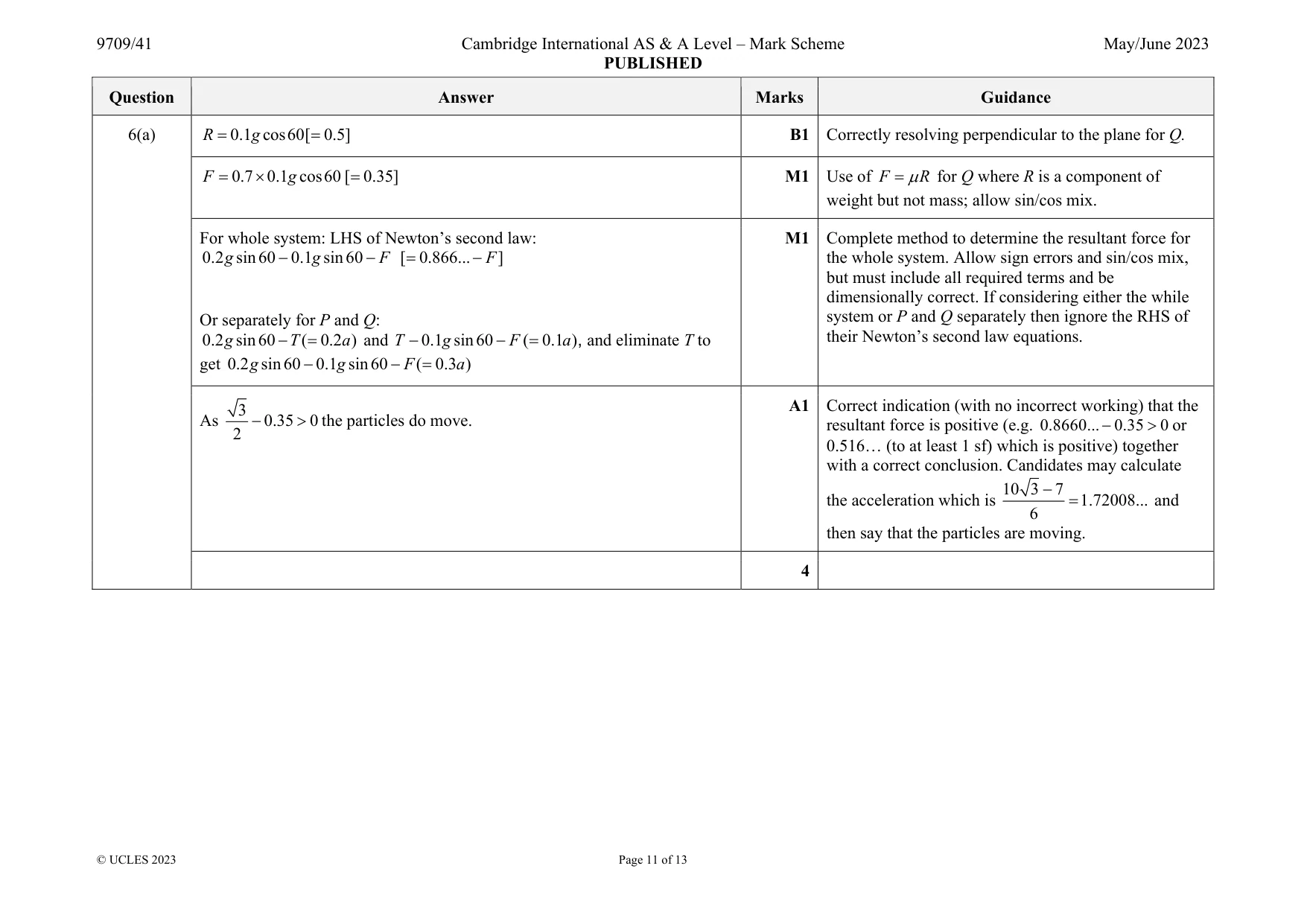
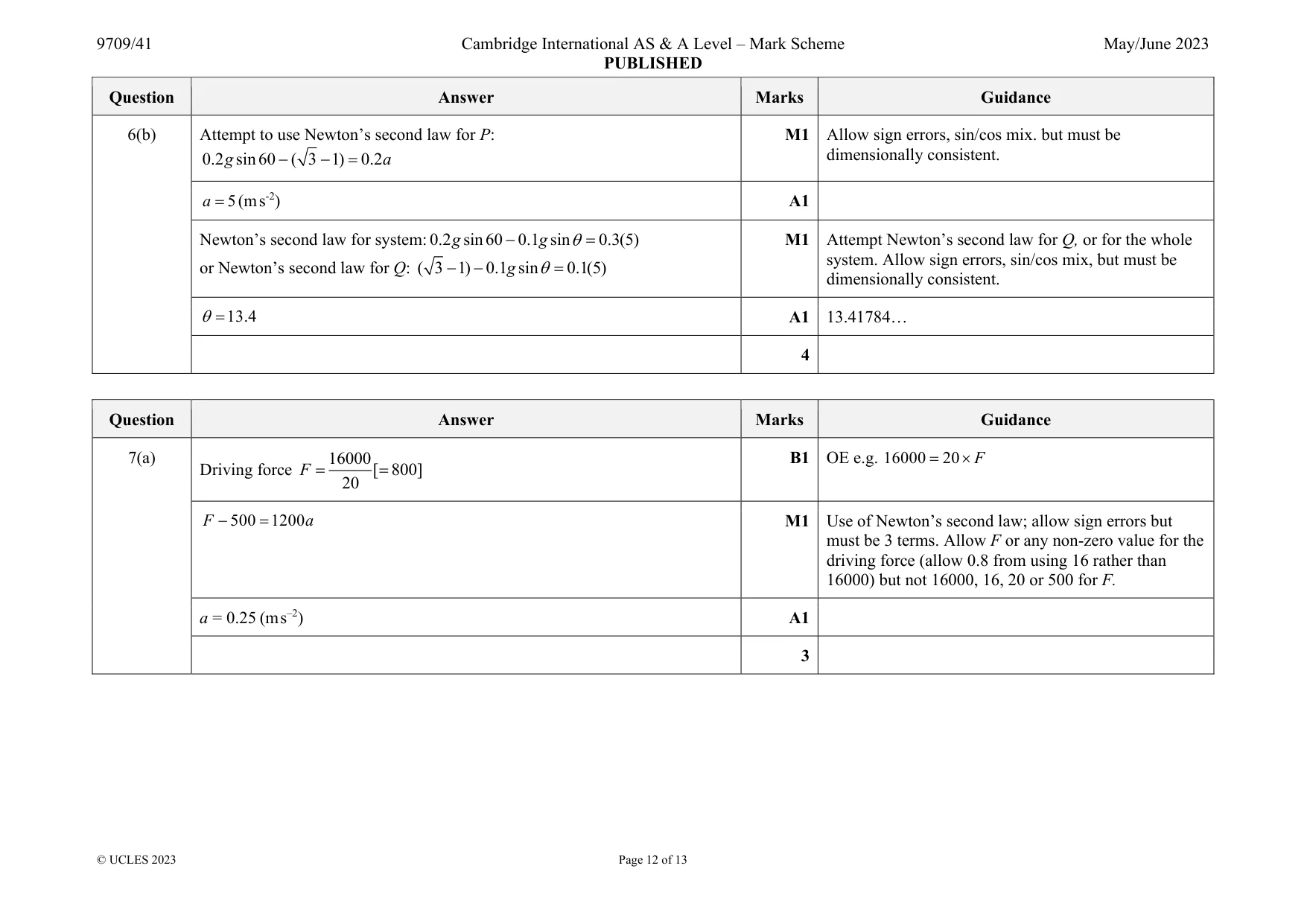
Mark scheme: 6(a) B1 Correctly resolving perpendicular to the plane for Q. 0.7 0.1 cos60 [ 0.35] F g M1 Use of F R for Q where R is a component of weight but not mass; allow sin/cos mix. For whole system: LHS of Newton’s second law: 0.2 sin60 0.1 sin60 g g F [ 0.866... ] F Or separately for P and Q: 0.2 sin60 ( 0.2 ) g T a and 0.1 sin60 ( 0.1 ) T g F a , and eliminate T to get 0.2 sin60 0.1 sin60 ( 0.3 ) g g F a M1 Complete method to determine the resultant force for the whole system. Allow sign errors and sin/cos mix, but must include all required terms and be dimensionally correct. If considering either the while system or P and Q separately then ignore the RHS of their Newton’s second law equations. As 3 0.35 0 2 the particles do move. A1 Correct indication (with no incorrect working) that the resultant force is positive (e.g. 0.8660... 0.35 0 or 0.516… (to at least 1 sf) which is positive) together with a correct conclusion. Candidates may calculate the acceleration which is 10 3 7 1.72008... 6 and then say that the particles are moving. 4 Question Answer Marks Guidance 6(b) Attempt to use Newton’s second law for P: 0.2 sin60 ( 3 1) 0.2 g a M1 Allow sign errors, sin/cos mix. but must be dimensionally consistent. 5 a (m s-2) A1 Newton’s second law for system: 0.2 sin60 0.1 sin 0.3(5) g g or Newton’s second law for Q: ( 3 1) 0.1 sin 0.1(5) g M1 Attempt Newton’s second law for Q, or for the whole system. Allow sign errors, sin/cos mix, but must be dimensionally consistent. 13.4 A1 13.41784… 4
Q7 · A car of mass 1200kg is travelling along a straight horizontal road
7 A car of mass 1200kg is travelling along a straight horizontal road. The power of the car’s engine is constant and is equal to 16kW. There is a constant resistance to motion of magnitude 500N. (a) Find the acceleration of the car at an instant when its speed is 20ms−1. [3] ........................................................................................................................................................ ........................................................................................................................................................ ........................................................................................................................................................ ........................................................................................................................................................ ........................................................................................................................................................ ........................................................................................................................................................ ........................................................................................................................................................ ........................................................................................................................................................ ........................................................................................................................................................ ........................................................................................................................................................ ........................................................................................................................................................ (b) Assuming that the power and the resistance forces remain unchanged, find the steady speed at which the car can travel. [2] ........................................................................................................................................................ ........................................................................................................................................................ ........................................................................................................................................................ ........................................................................................................................................................ ........................................................................................................................................................ ........................................................................................................................................................ ........................................................................................................................................................ ........................................................................................................................................................ ........................................................................................................................................................ ........................................................................................................................................................ ........................................................................................................................................................ The car comes to the bottom of a straight hill of length 316m, inclined at an angle to the horizontal of sin−1 1 . The power remains constant at 16kW, but the magnitude of the resistance force is no 60 longer constant and changes such that the work done against the resistance force in ascending the hill is 128400J. The time taken to ascend the hill is 15s. (c) Given that the car is travelling at a speed of 20ms−1 at the bottom of the hill, find its speed at the top of the hill. [6] ........................................................................................................................................................ ........................................................................................................................................................ ........................................................................................................................................................ ........................................................................................................................................................ ........................................................................................................................................................ ........................................................................................................................................................ ........................................................................................................................................................ ........................................................................................................................................................ ........................................................................................................................................................ ........................................................................................................................................................ ........................................................................................................................................................ ........................................................................................................................................................ ........................................................................................................................................................ ........................................................................................................................................................ ........................................................................................................................................................ ........................................................................................................................................................ ........................................................................................................................................................ ........................................................................................................................................................ ........................................................................................................................................................ ........................................................................................................................................................ ........................................................................................................................................................ ........................................................................................................................................................
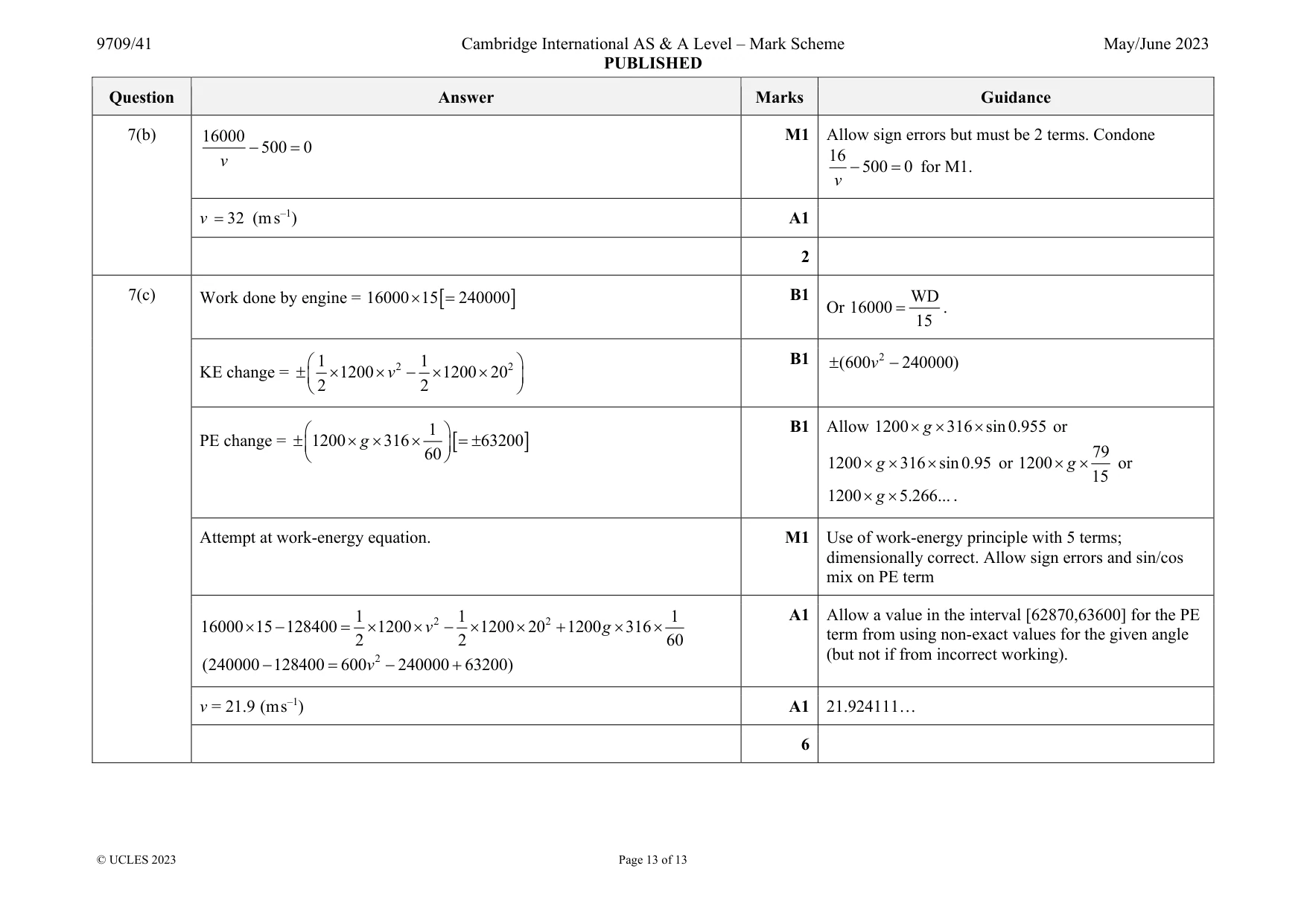
Mark scheme: 7(a) Driving force 16000[ 800] 20 F B1 OE e.g. 16000 20 500 1200 F a M1 Use of Newton’s second law; allow sign errors but must be 3 terms. Allow F or any non-zero value for the driving force (allow 0.8 from using 16 rather than 16000) but not 16000, 16, 20 or 500 for F. a = 0.25 (m s–2) A1 3 Question Answer Marks Guidance 7(b) 16000 500 0 v M1 Allow sign errors but must be 2 terms. Condone 16 500 0 v for M1. v 32 (m s–1) A1 2 7(c) Work done by engine = 16000 15 240000 B1 Or WD 16000 15 . KE change = 2 2 1 1 1200 1200 20 2 2 v B1 2 (600 240000) v PE change = 1 1200 316 63200 60 g B1 Allow 1200 316 sin0.955 g or 1200 316 sin0.95 g or 79 1200 15 g or 1200 5.266... g . Attempt at work-energy equation. M1 Use of work-energy principle with 5 terms; dimensionally correct. Allow sign errors and sin/cos mix on PE term 2 2 1 1 1 16000 15 128400 1200 1200 20 1200 316 2 2 60 v g 2 (240000 128400 600 240000 63200) v A1 Allow a value in the interval [62870,63600] for the PE term from using non-exact values for the given angle (but not if from incorrect working). v = 21.9 (m s–1) A1 21.924111… 6
What was in this paper
The subtopics covered by these 7 questions, and how many questions each got. Open one in a new tab to see every Cambridge question on it.
What you needed in this session
Cambridge’s own grade thresholds for 2023 May/June, Paper 4 · Variant 1. A higher threshold means an easier paper — the bar moves with how the cohort did.