Cambridge A Level Mathematics 9709 — 2022 May/June Paper 4 · Variant 3
9709/43/M/J/22 · 7 questions · 50 marks · ≈56 min
The question paper and its mark scheme, free to read here and free to download. This is Cambridge’s own paper, exactly as it was sat.
Question paper16 pages
Mark scheme11 pages
Answers below. Sit the paper first if you are practising.
Questions as text
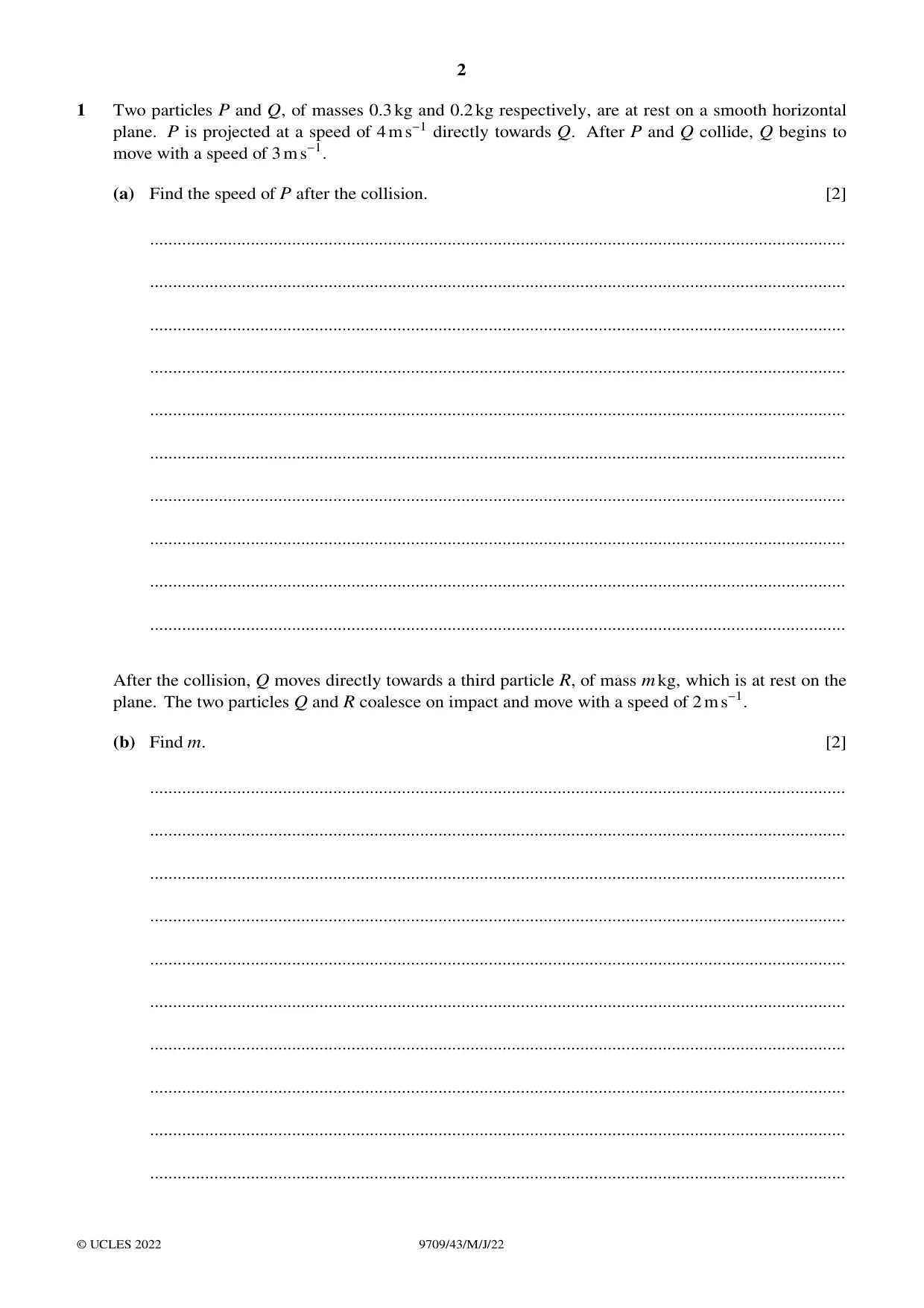
Q1 · Two particles P and Q, of masses 0.3kg and 0.2kg respectively, are at rest on a smooth…
1 Two particles P and Q, of masses 0.3kg and 0.2kg respectively, are at rest on a smooth horizontal plane. P is projected at a speed of 4ms−1 directly towards Q. After P and Q collide, Q begins to move with a speed of 3ms−1. (a) Find the speed of P after the collision. [2] ........................................................................................................................................................ ........................................................................................................................................................ ........................................................................................................................................................ ........................................................................................................................................................ ........................................................................................................................................................ ........................................................................................................................................................ ........................................................................................................................................................ ........................................................................................................................................................ ........................................................................................................................................................ ........................................................................................................................................................ After the collision, Q moves directly towards a third particle R, of mass mkg, which is at rest on the plane. The two particles Q and R coalesce on impact and move with a speed of 2ms−1. (b) Find m. [2] ........................................................................................................................................................ ........................................................................................................................................................ ........................................................................................................................................................ ........................................................................................................................................................ ........................................................................................................................................................ ........................................................................................................................................................ ........................................................................................................................................................ ........................................................................................................................................................ ........................................................................................................................................................ ........................................................................................................................................................
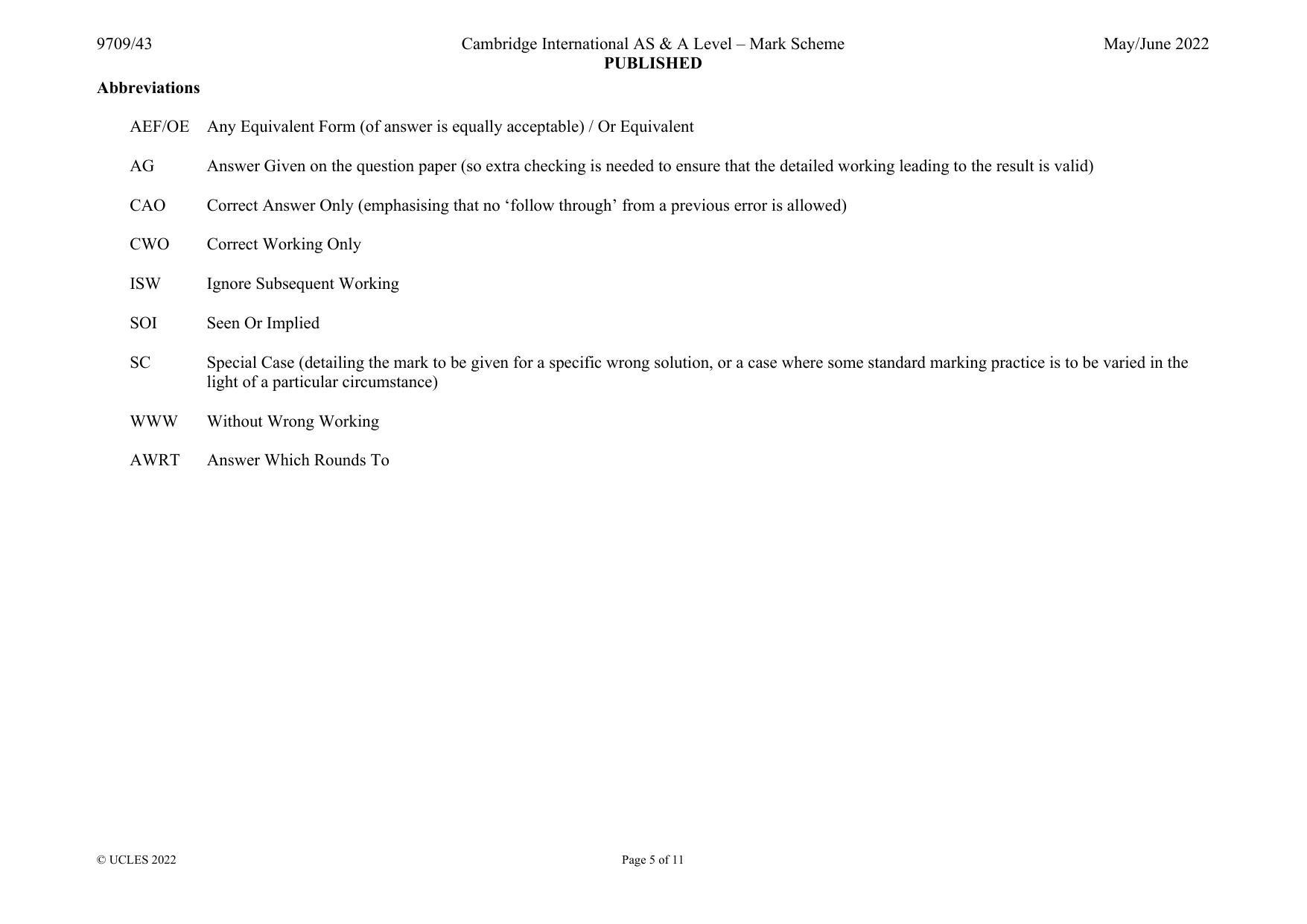
Mark scheme: 1(a) M1 For attempt at use of conservation of momentum Speed = 2 ms−1 A1 2 1(b) 0.2 3 0 0.2 2 m M1 For attempt at use of conservation of momentum m = 0.1 A1 2
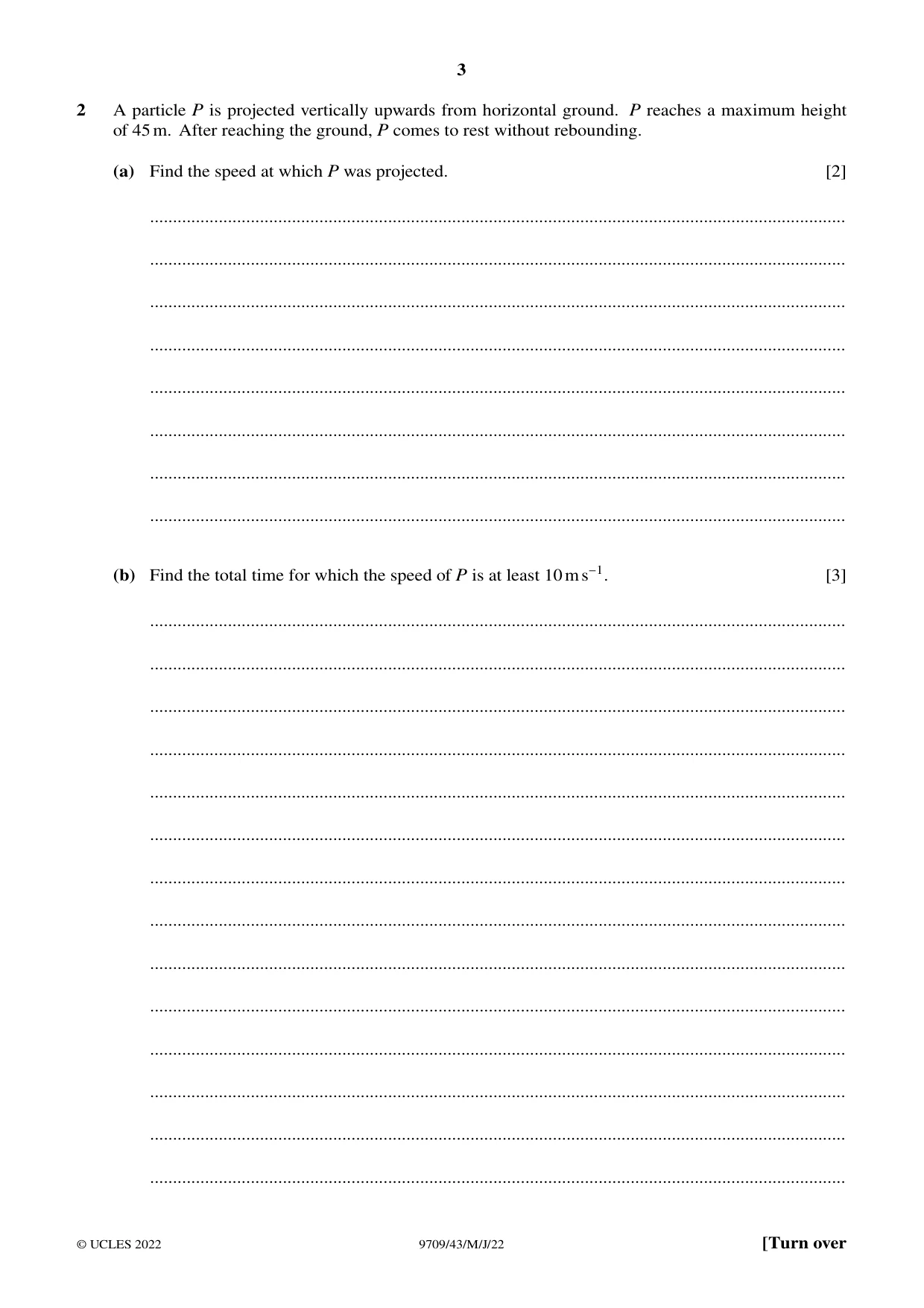
Q2 · A particle P is projected vertically upwards from horizontal ground
2 A particle P is projected vertically upwards from horizontal ground. P reaches a maximum height of 45m. After reaching the ground, P comes to rest without rebounding. (a) Find the speed at which P was projected. [2] ........................................................................................................................................................ ........................................................................................................................................................ ........................................................................................................................................................ ........................................................................................................................................................ ........................................................................................................................................................ ........................................................................................................................................................ ........................................................................................................................................................ ........................................................................................................................................................ (b) Find the total time for which the speed of P is at least 10ms−1. [3] ........................................................................................................................................................ ........................................................................................................................................................ ........................................................................................................................................................ ........................................................................................................................................................ ........................................................................................................................................................ ........................................................................................................................................................ ........................................................................................................................................................ ........................................................................................................................................................ ........................................................................................................................................................ ........................................................................................................................................................ ........................................................................................................................................................ ........................................................................................................................................................ ........................................................................................................................................................ ........................................................................................................................................................
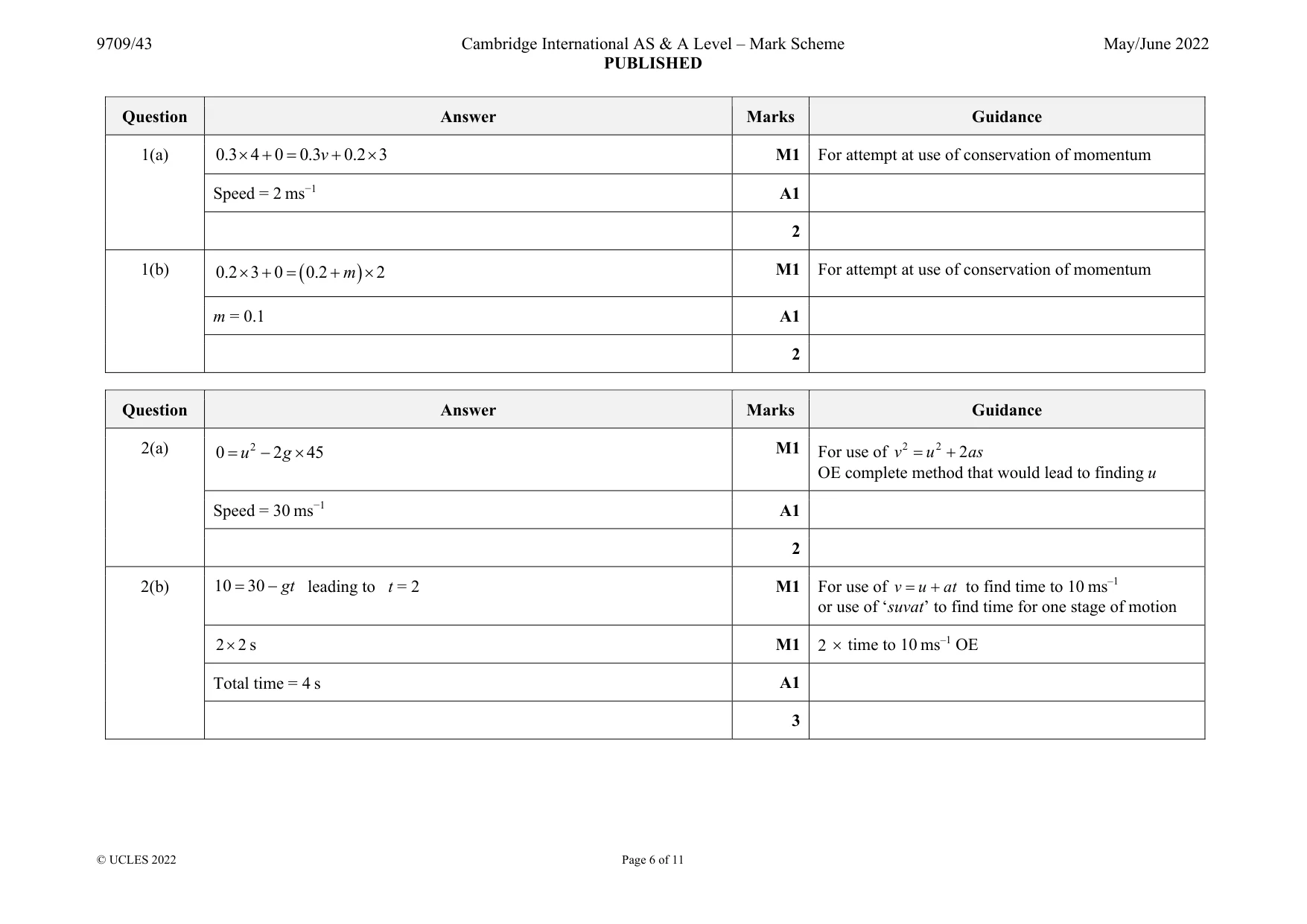
Mark scheme: 2(a) 2 0 2 45 u g M1 For use of 2 2 2 v u as OE complete method that would lead to finding u Speed = 30 ms−1 A1 2 2(b) 10 30 gt leading to t = 2 M1 For use of v u at to find time to 10 ms–1 or use of ‘suvat’ to find time for one stage of motion 2 2 s M1 2 time to 10 ms–1 OE Total time = 4 s A1 3
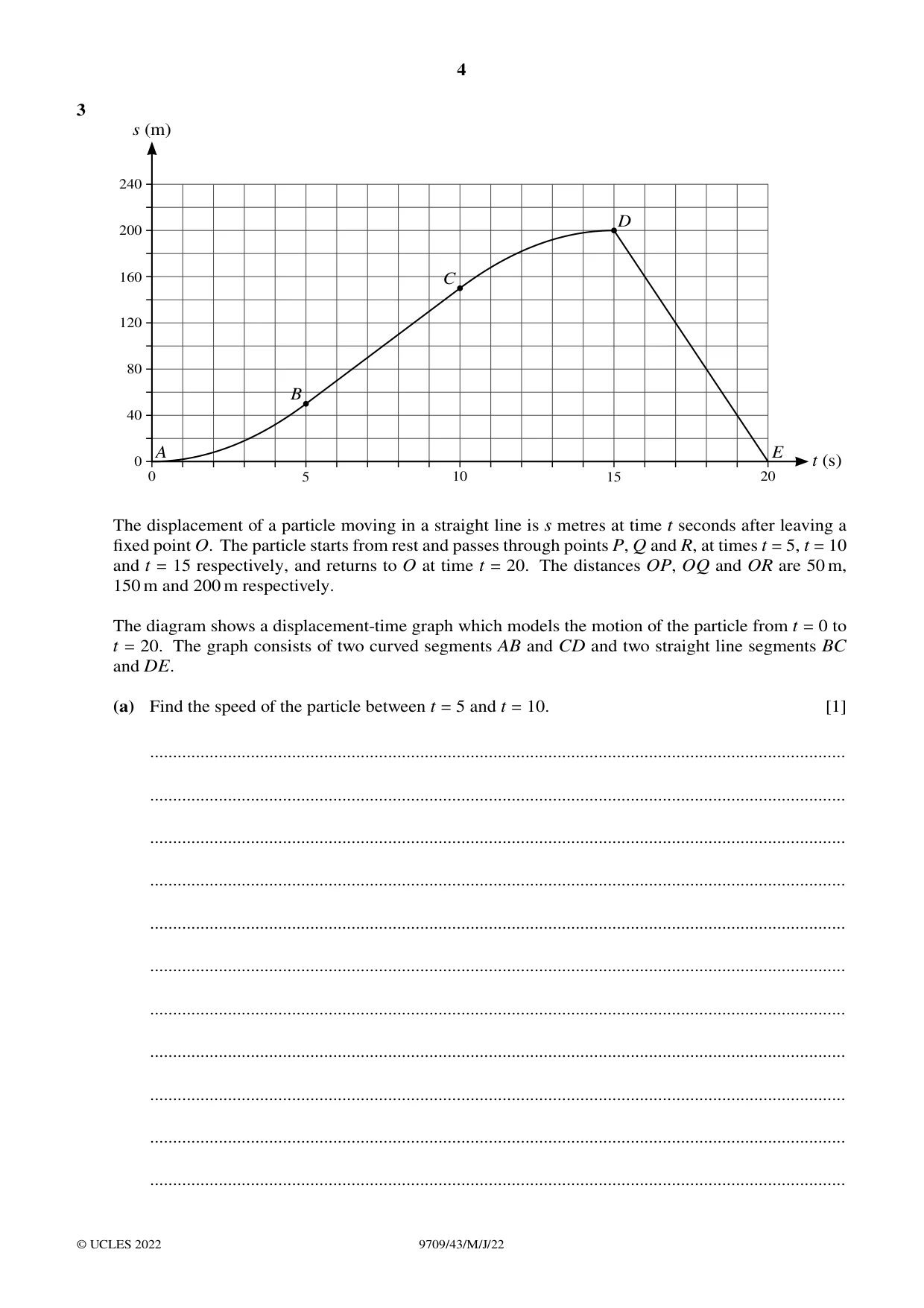
Q3 · S (m) 240 D 200 160 C 120 80 B 40 A E 0 t (s) 0 5 10 15 20 The displacement of a particle…
3 s (m) 240 D 200 160 C 120 80 B 40 A E 0 t (s) 0 5 10 15 20 The displacement of a particle moving in a straight line is s metres at time t seconds after leaving a fixed point O. The particle starts from rest and passes through points P, Q and R, at times t = 5, t = 10 and t = 15 respectively, and returns to O at time t = 20. The distances OP, OQ and OR are 50 m, 150 m and 200 m respectively. The diagram shows a displacement-time graph which models the motion of the particle from t = 0 to t = 20. The graph consists of two curved segments AB and CD and two straight line segments BC and DE. (a) Find the speed of the particle between t = 5 and t = 10. [1] ........................................................................................................................................................ ........................................................................................................................................................ ........................................................................................................................................................ ........................................................................................................................................................ ........................................................................................................................................................ ........................................................................................................................................................ ........................................................................................................................................................ ........................................................................................................................................................ ........................................................................................................................................................ ........................................................................................................................................................ ........................................................................................................................................................ (b) Find the acceleration of the particle between t = 0 and t = 5, given that it is constant. [2] ........................................................................................................................................................ ........................................................................................................................................................ ........................................................................................................................................................ ........................................................................................................................................................ ........................................................................................................................................................ ........................................................................................................................................................ ........................................................................................................................................................ ........................................................................................................................................................ ........................................................................................................................................................ ........................................................................................................................................................ ........................................................................................................................................................ ........................................................................................................................................................ (c) Find the average speed of the particle during its motion. [2] ........................................................................................................................................................ ........................................................................................................................................................ ........................................................................................................................................................ ........................................................................................................................................................ ........................................................................................................................................................ ........................................................................................................................................................ ........................................................................................................................................................ ........................................................................................................................................................ ........................................................................................................................................................ ........................................................................................................................................................ ........................................................................................................................................................ ........................................................................................................................................................
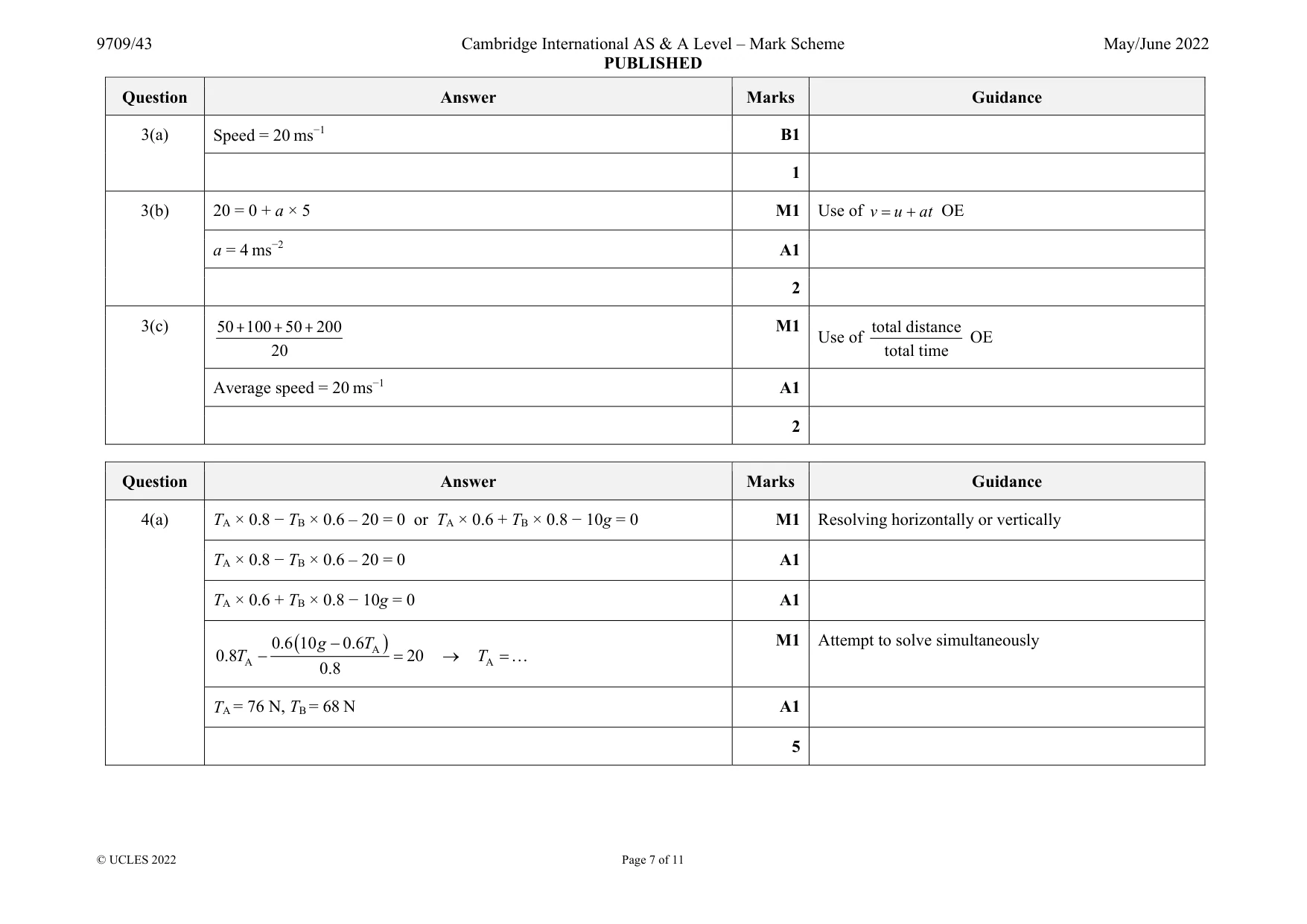
Mark scheme: 3(a) B1 1 3(b) 20 = 0 + a × 5 M1 Use of v u at OE a = 4 ms−2 A1 2 3(c) 50 100 50 200 20 + + + M1 Use of total distance total time OE Average speed = 20 ms−1 A1 2
Q4 · The diagram shows a block of mass 10kg suspended below a horizontal ceiling by two…
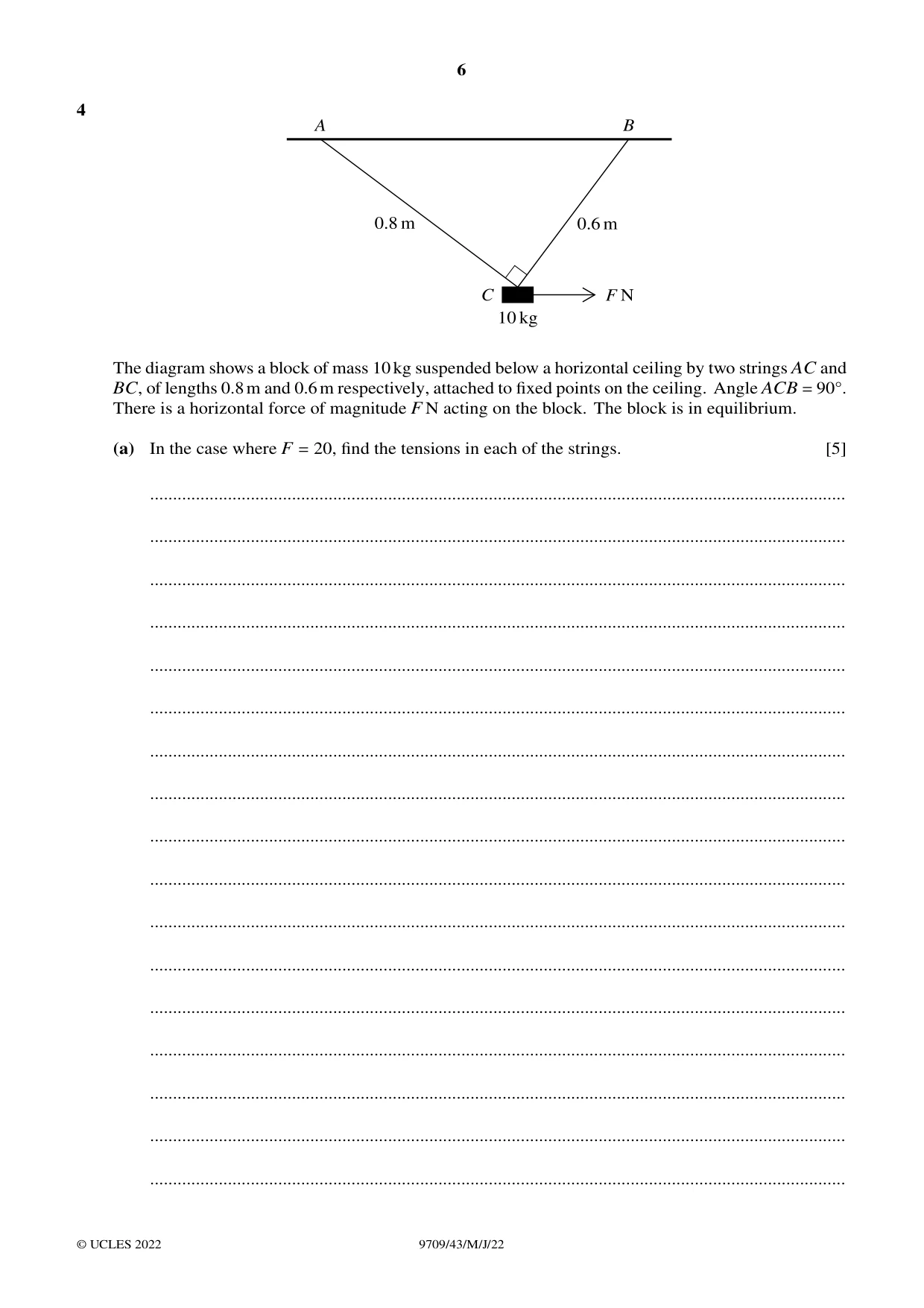
4 The diagram shows a block of mass 10kg suspended below a horizontal ceiling by two strings AC and BC, of lengths 0.8m and 0.6m respectively, attached to fixed points on the ceiling. Angle ACB = 90Å. There is a horizontal force of magnitude F N acting on the block. The block is in equilibrium. (a) In the case where F = 20, find the tensions in each of the strings. [5] ........................................................................................................................................................ ........................................................................................................................................................ ........................................................................................................................................................ ........................................................................................................................................................ ........................................................................................................................................................ ........................................................................................................................................................ ........................................................................................................................................................ ........................................................................................................................................................ ........................................................................................................................................................ ........................................................................................................................................................ ........................................................................................................................................................ ........................................................................................................................................................ ........................................................................................................................................................ ........................................................................................................................................................ ........................................................................................................................................................ ........................................................................................................................................................ ........................................................................................................................................................ (b) Find the greatest value of F for which the block remains in equilibrium in the position shown. [3] ........................................................................................................................................................ ........................................................................................................................................................ ........................................................................................................................................................ ........................................................................................................................................................ ........................................................................................................................................................ ........................................................................................................................................................ ........................................................................................................................................................ ........................................................................................................................................................ ........................................................................................................................................................ ........................................................................................................................................................ ........................................................................................................................................................ ........................................................................................................................................................ ........................................................................................................................................................ ........................................................................................................................................................ ........................................................................................................................................................ ........................................................................................................................................................ ........................................................................................................................................................ ........................................................................................................................................................ ........................................................................................................................................................ ........................................................................................................................................................ ........................................................................................................................................................ ........................................................................................................................................................ ........................................................................................................................................................ ........................................................................................................................................................ ........................................................................................................................................................
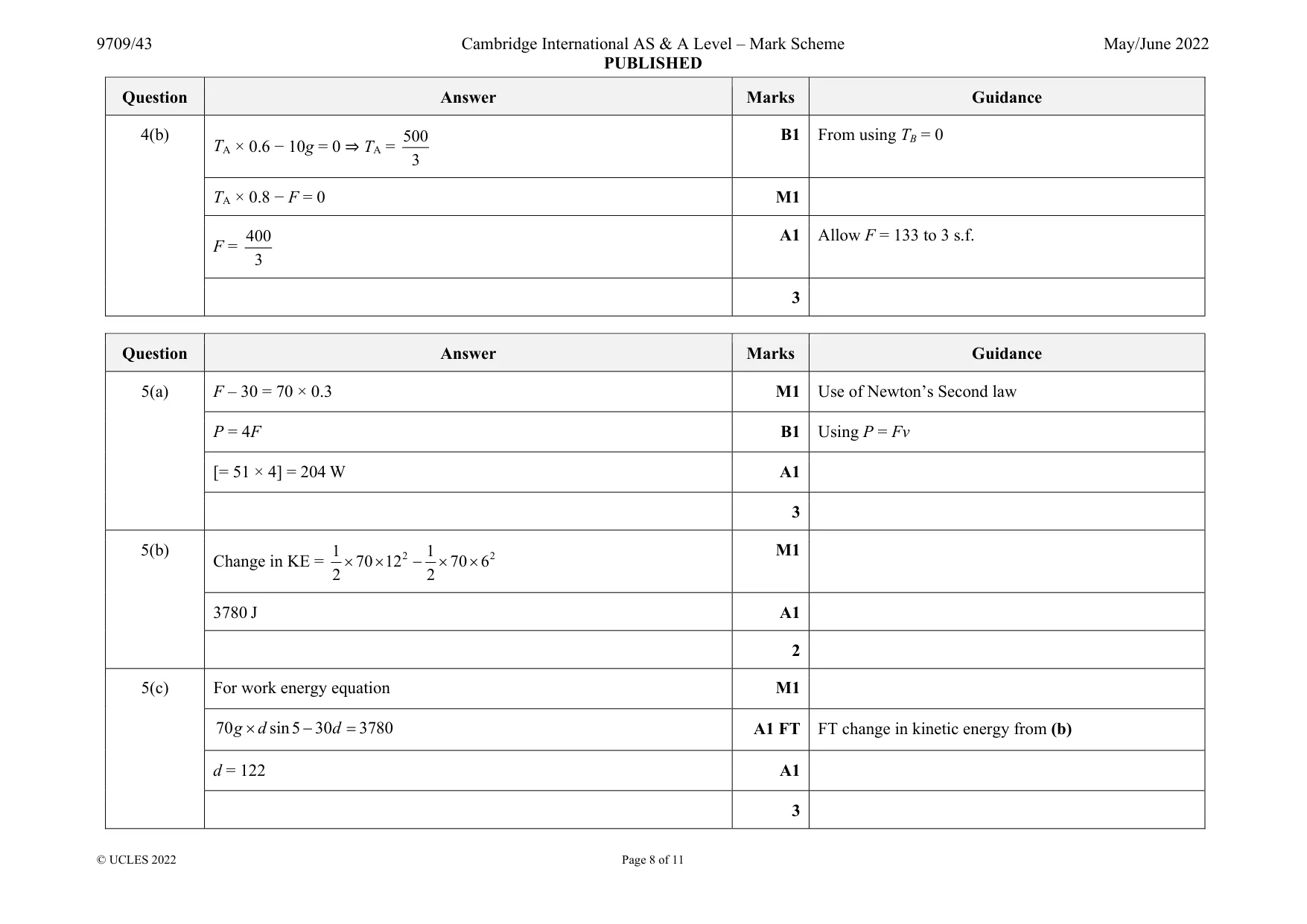
Mark scheme: 4(a) TA × 0.8 − TB × 0.6 – 20 = 0 or TA × 0.6 + TB × 0.8 − 10g = 0 M1 Resolving horizontally or vertically TA × 0.8 − TB × 0.6 – 20 = 0 A1 TA × 0.6 + TB × 0.8 − 10g = 0 A1 A A A 0.6 10 0.6 0.8 20 0.8 g T T T M1 Attempt to solve simultaneously TA = 76 N, TB = 68 N A1 5 Question Answer Marks Guidance 4(b) TA × 0.6 − 10g = 0 ⇒ TA = 500 3 B1 From using TB = 0 TA × 0.8 − F = 0 M1 F = 400 3 A1 Allow F = 133 to 3 s.f. 3
Q5 · A cyclist is riding along a straight horizontal road
5 A cyclist is riding along a straight horizontal road. The total mass of the cyclist and her bicycle is 70kg. At an instant when the cyclist’s speed is 4ms−1, her acceleration is 0.3ms−2. There is a constant resistance to motion of magnitude 30N. (a) Find the power developed by the cyclist. [3] ........................................................................................................................................................ ........................................................................................................................................................ ........................................................................................................................................................ ........................................................................................................................................................ ........................................................................................................................................................ ........................................................................................................................................................ ........................................................................................................................................................ ........................................................................................................................................................ ........................................................................................................................................................ ........................................................................................................................................................ ........................................................................................................................................................ ........................................................................................................................................................ ........................................................................................................................................................ ........................................................................................................................................................ ........................................................................................................................................................ ........................................................................................................................................................ ........................................................................................................................................................ ........................................................................................................................................................ ........................................................................................................................................................ ........................................................................................................................................................ ........................................................................................................................................................ ........................................................................................................................................................ ........................................................................................................................................................ The cyclist comes to the top of a hill inclined at 5Å to the horizontal. The cyclist stops pedalling and freewheels down the hill (so that the cyclist is no longer supplying any power). The magnitude of the resistance force remains at 30N. Over a distance of d m, the speed of the cyclist increases from 6ms−1 to 12ms−1. (b) Find the change in kinetic energy. [2] ........................................................................................................................................................ ........................................................................................................................................................ ........................................................................................................................................................ ........................................................................................................................................................ ........................................................................................................................................................ ........................................................................................................................................................ ........................................................................................................................................................ ........................................................................................................................................................ (c) Use an energy method to find d. [3] ........................................................................................................................................................ ........................................................................................................................................................ ........................................................................................................................................................ ........................................................................................................................................................ ........................................................................................................................................................ ........................................................................................................................................................ ........................................................................................................................................................ ........................................................................................................................................................ ........................................................................................................................................................ ........................................................................................................................................................ ........................................................................................................................................................ ........................................................................................................................................................ ........................................................................................................................................................
Mark scheme: 5(a) F – 30 = 70 × 0.3 M1 Use of Newton’s Second law P = 4F B1 Using P = Fv [= 51 × 4] = 204 W A1 3 5(b) Change in KE = 2 2 1 1 70 12 70 6 2 2 M1 3780 J A1 2 5(c) For work energy equation M1 70 sin5 30 3780 g d d A1 FT FT change in kinetic energy from (b) d = 122 A1 3
Q6 · Two particles P and Q, of masses 0.3kg and 0.2kg respectively, are attached to the ends…
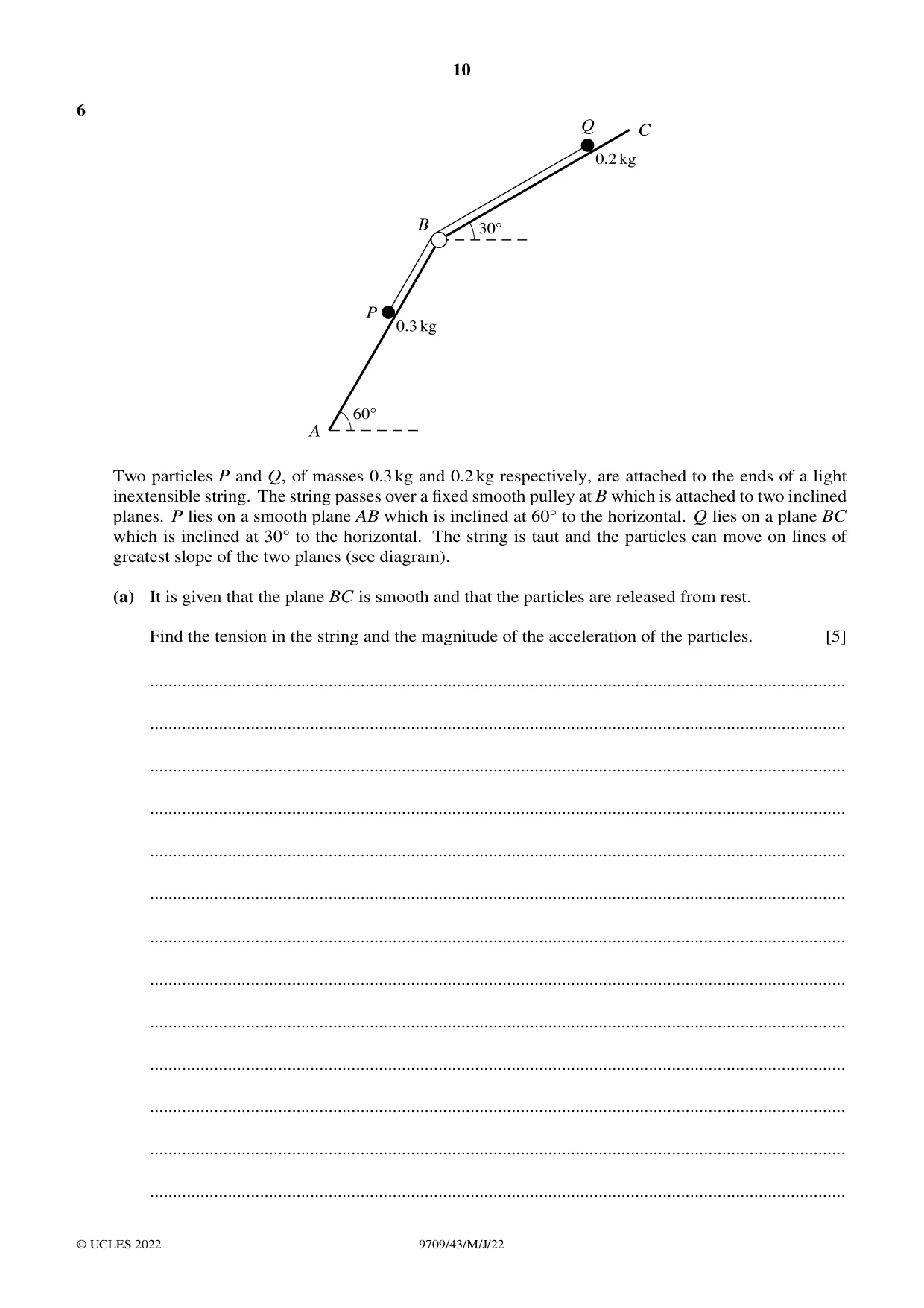
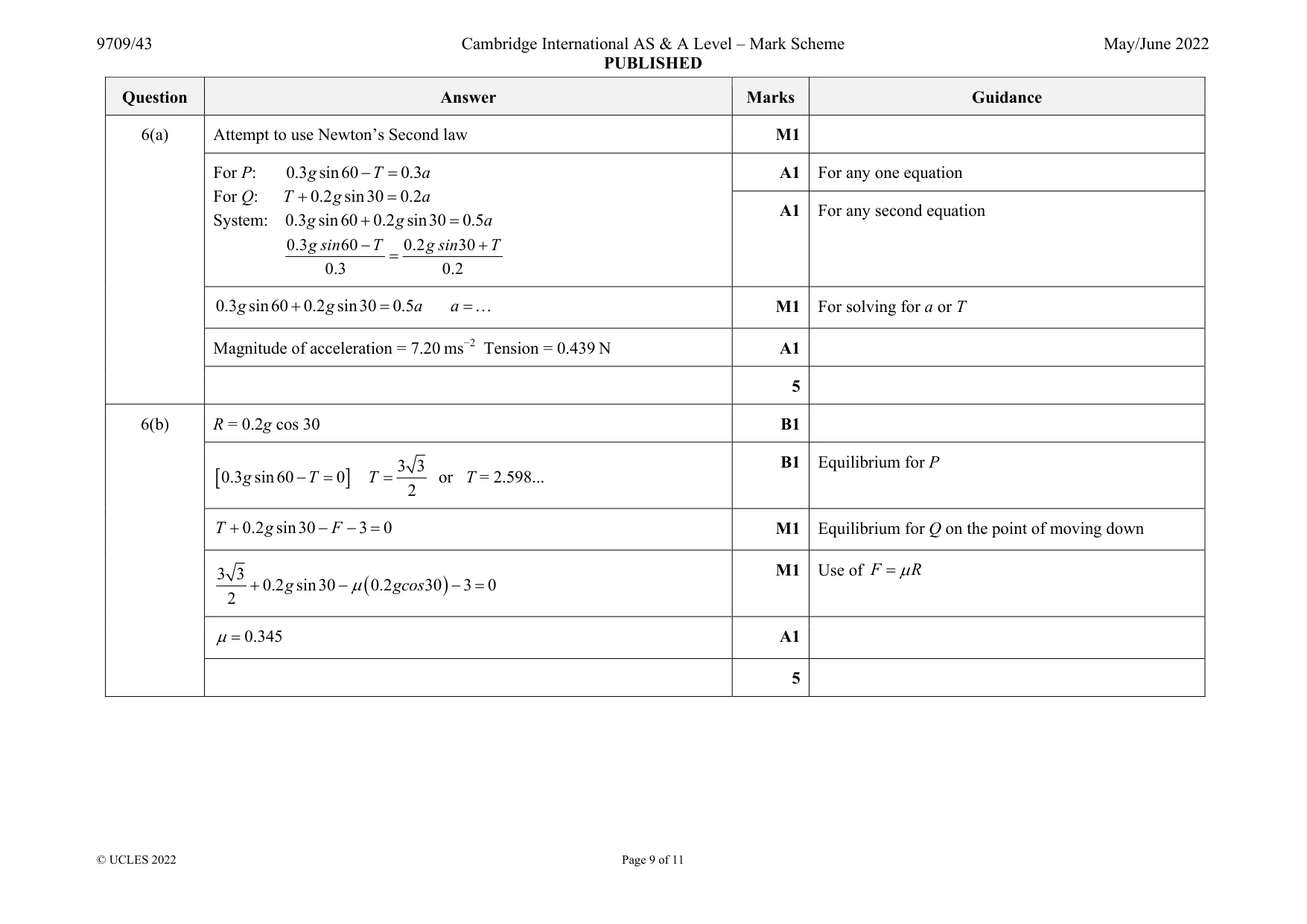
6 Two particles P and Q, of masses 0.3kg and 0.2kg respectively, are attached to the ends of a light inextensible string. The string passes over a fixed smooth pulley at B which is attached to two inclined planes. P lies on a smooth plane AB which is inclined at 60Å to the horizontal. Q lies on a plane BC which is inclined at 30Å to the horizontal. The string is taut and the particles can move on lines of greatest slope of the two planes (see diagram). (a) It is given that the plane BC is smooth and that the particles are released from rest. Find the tension in the string and the magnitude of the acceleration of the particles. [5] ........................................................................................................................................................ ........................................................................................................................................................ ........................................................................................................................................................ ........................................................................................................................................................ ........................................................................................................................................................ ........................................................................................................................................................ ........................................................................................................................................................ ........................................................................................................................................................ ........................................................................................................................................................ ........................................................................................................................................................ ........................................................................................................................................................ ........................................................................................................................................................ ........................................................................................................................................................ ........................................................................................................................................................ ........................................................................................................................................................ ........................................................................................................................................................ ........................................................................................................................................................ ........................................................................................................................................................ ........................................................................................................................................................ ........................................................................................................................................................ (b) It is given instead that the plane BC is rough. A force of magnitude 3N is applied to Q directly up the plane along a line of greatest slope of the plane. Find the least value of the coefficient of friction between Q and the plane BC for which the particles remain at rest. [5] ........................................................................................................................................................ ........................................................................................................................................................ ........................................................................................................................................................ ........................................................................................................................................................ ........................................................................................................................................................ ........................................................................................................................................................ ........................................................................................................................................................ ........................................................................................................................................................ ........................................................................................................................................................ ........................................................................................................................................................ ........................................................................................................................................................ ........................................................................................................................................................ ........................................................................................................................................................ ........................................................................................................................................................ ........................................................................................................................................................
Mark scheme: 6(a) Attempt to use Newton’s Second law M1 For P: 0.3 sin60 0.3 g T a For Q: 0.2 sin30 0.2 T g a System: 0.3 sin60 0.2 sin30 0.5 g g a 0.3 60 0.2 30 0.3 0.2 g sin T g sin T A1 For any one equation A1 For any second equation 0.3 sin60 0.2 sin30 0.5 g g a a M1 For solving for a or T Magnitude of acceleration = 7.20 ms−2 Tension = 0.439 N A1 5 6(b) R = 0.2g cos 30 B1 3 3 0.3 sin60 0 2 g T T or T = 2.598... B1 Equilibrium for P 0.2 sin30 3 0 T g F M1 Equilibrium for Q on the point of moving down 3 3 0.2 sin30 0.2 30 3 0 2 g gcos M1 Use of F R 0.345 A1 5
Q7 · A particle P moves in a straight line through a point O
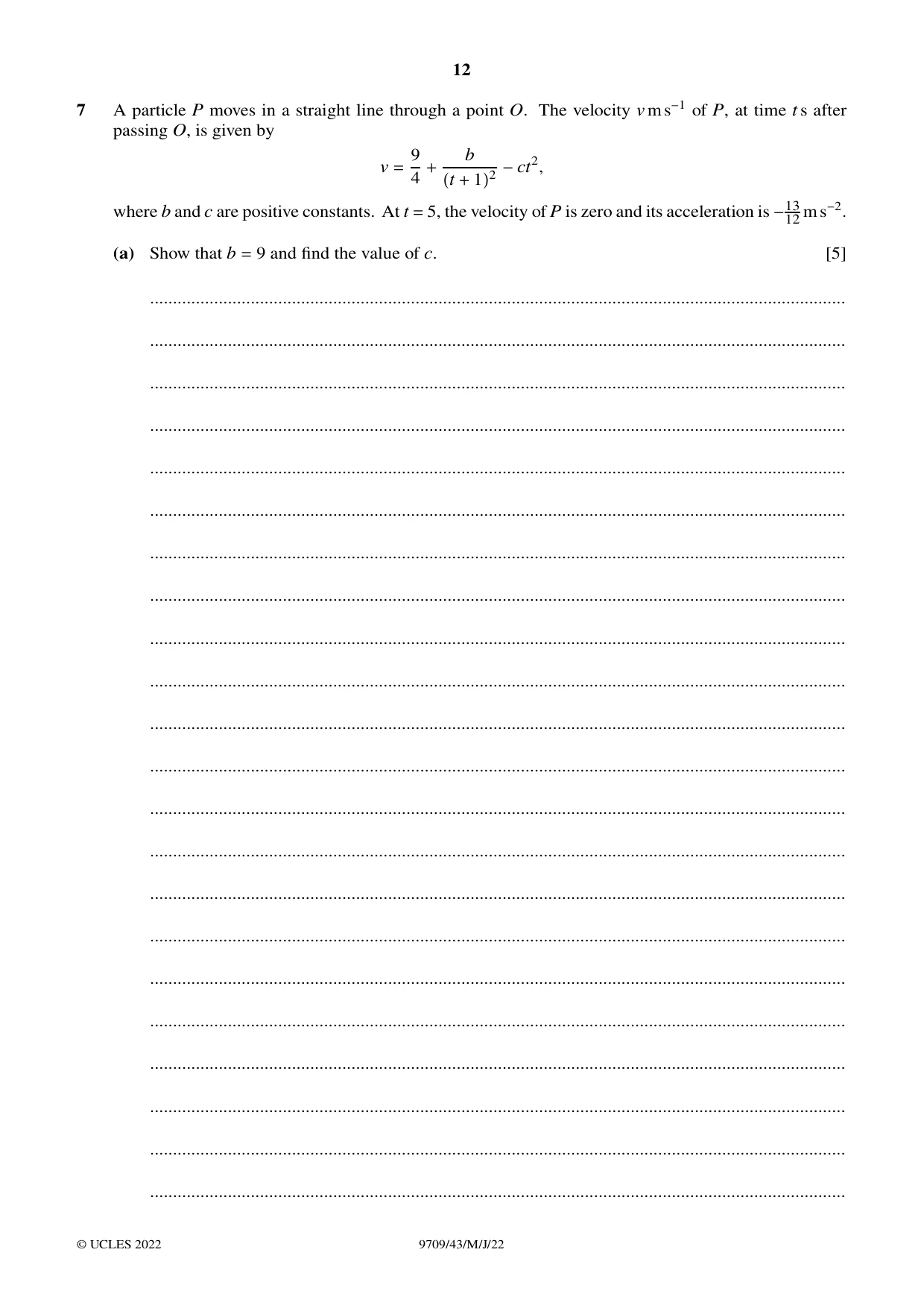
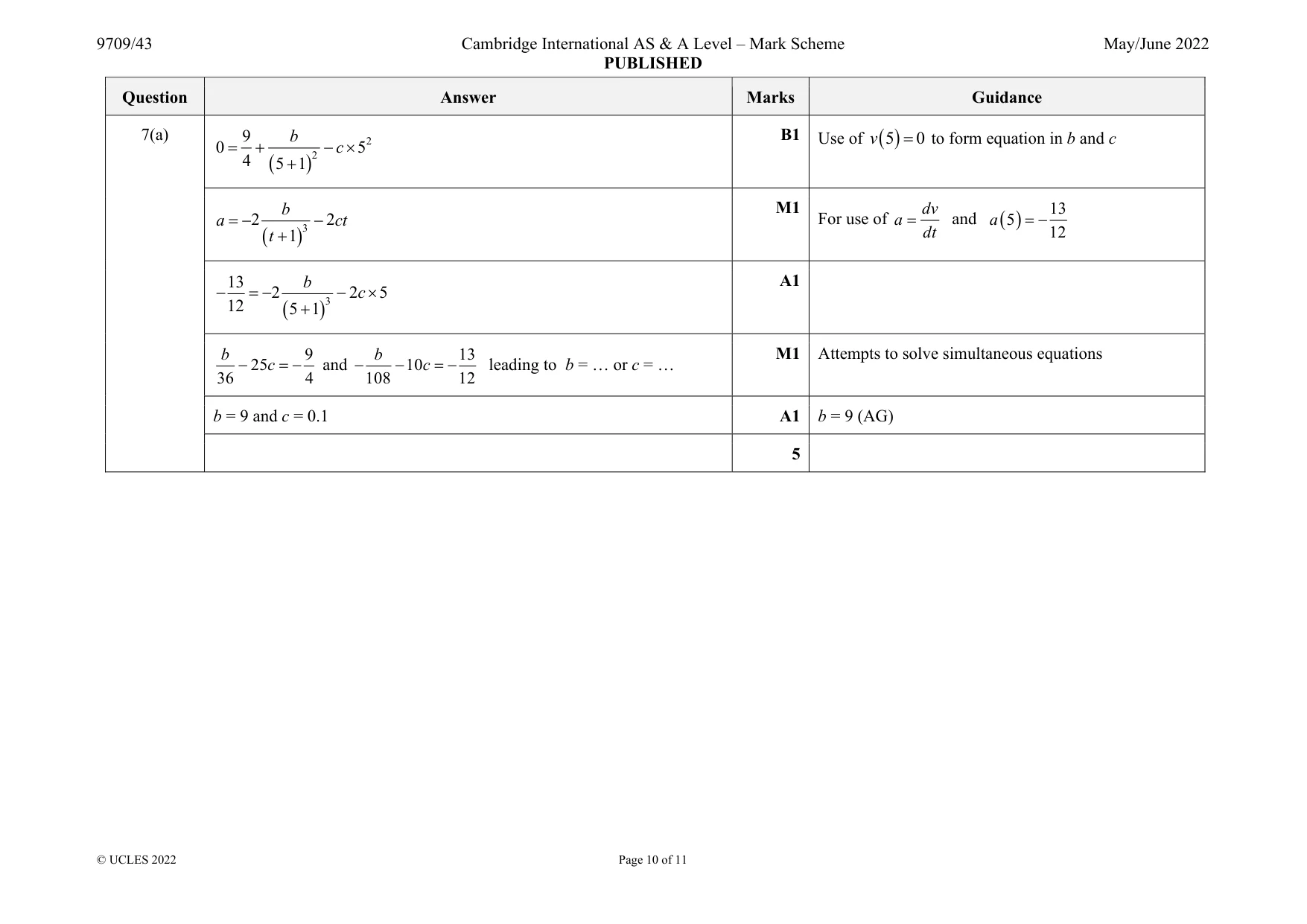
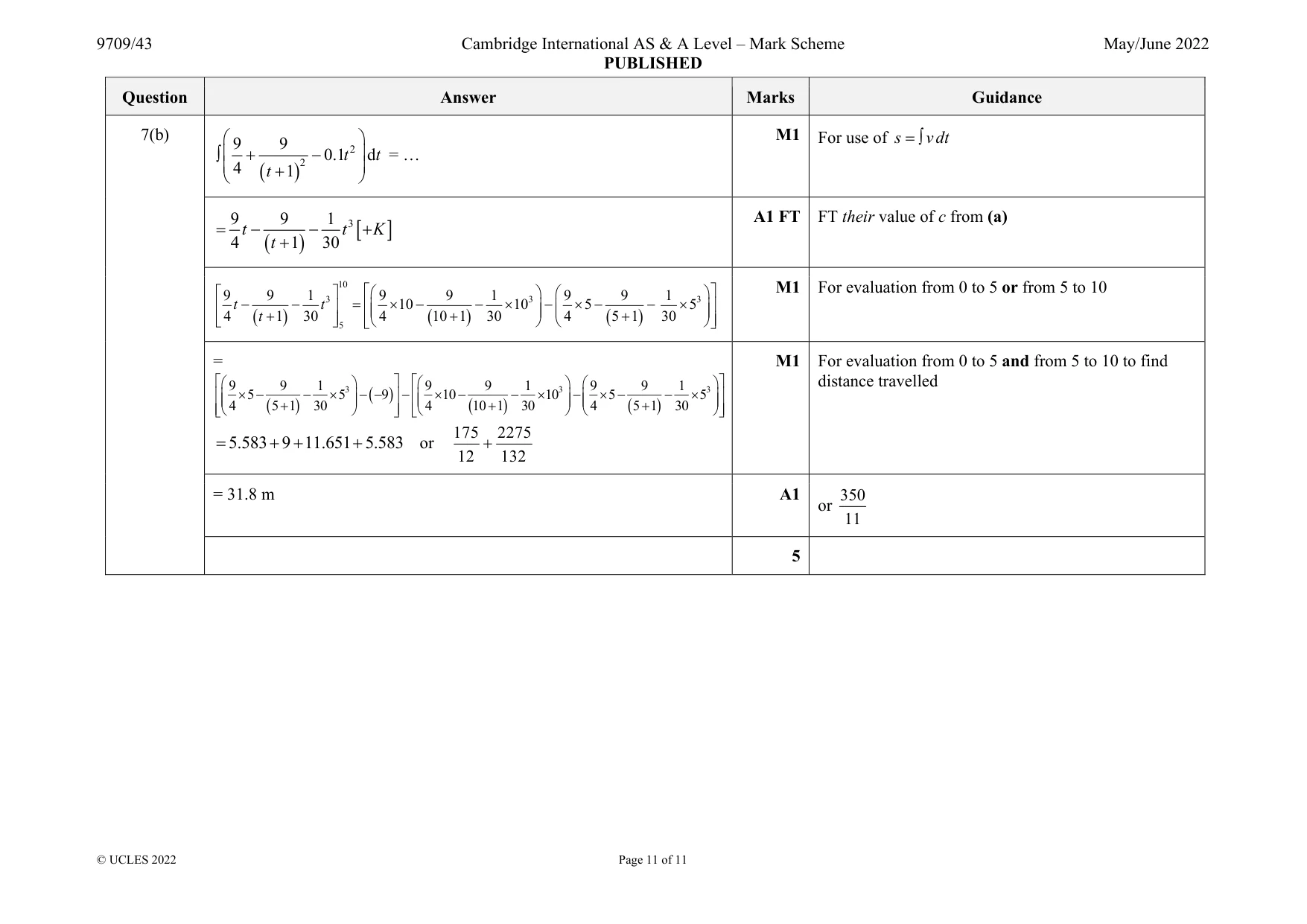
7 A particle P moves in a straight line through a point O. The velocity vms−1 of P, at time t s after passing O, is given by 9 b v = + −ct2, 4 t + 1 2 where b and c are positive constants. At t = 5, the velocity of P is zero and its acceleration is −13 ms−2. 12 (a) Show that b = 9 and find the value of c. [5] ........................................................................................................................................................ ........................................................................................................................................................ ........................................................................................................................................................ ........................................................................................................................................................ ........................................................................................................................................................ ........................................................................................................................................................ ........................................................................................................................................................ ........................................................................................................................................................ ........................................................................................................................................................ ........................................................................................................................................................ ........................................................................................................................................................ ........................................................................................................................................................ ........................................................................................................................................................ ........................................................................................................................................................ ........................................................................................................................................................ ........................................................................................................................................................ ........................................................................................................................................................ ........................................................................................................................................................ ........................................................................................................................................................ ........................................................................................................................................................ ........................................................................................................................................................ ........................................................................................................................................................ (b) Given that the velocity of P is zero only at t = 5, find the distance travelled in the first 10 seconds of motion. [5] ........................................................................................................................................................ ........................................................................................................................................................ ........................................................................................................................................................ ........................................................................................................................................................ ........................................................................................................................................................ ........................................................................................................................................................ ........................................................................................................................................................ ........................................................................................................................................................ ........................................................................................................................................................ ........................................................................................................................................................ ........................................................................................................................................................ ........................................................................................................................................................ ........................................................................................................................................................ ........................................................................................................................................................ ........................................................................................................................................................ ........................................................................................................................................................ ........................................................................................................................................................ ........................................................................................................................................................ ........................................................................................................................................................ ........................................................................................................................................................ ........................................................................................................................................................ ........................................................................................................................................................ ........................................................................................................................................................ ........................................................................................................................................................ ........................................................................................................................................................
Mark scheme: 7(a) 2 2 9 0 5 4 5 1 b c 5 0 v to form equation in b and c 3 2 2 1 b a ct t M1 For use of dv a dt and 13 5 12 a 3 13 2 2 5 12 5 1 b c A1 9 25 36 4 b c and 13 10 108 12 b c leading to b = … or c = … M1 Attempts to solve simultaneous equations b = 9 and c = 0.1 A1 b = 9 (AG) 5 Question Answer Marks Guidance 7(b) 2 2 9 9 0.1 d 4 1 t t t = … M1 For use of s vdt 3 9 9 1 4 1 30 t t K t A1 FT FT their value of c from (a) 10 3 3 3 5 9 9 1 9 9 1 9 9 1 10 10 5 5 4 1 30 4 10 1 30 4 5 1 30 t t t M1 For evaluation from 0 to 5 or from 5 to 10 = 3 3 3 9 9 1 9 9 1 9 9 1 5 5 9 10 10 5 5 4 5 1 30 4 10 1 30 4 5 1 30 5.583 9 11.651 5.583 or 175 2275 12 132 M1 For evaluation from 0 to 5 and from 5 to 10 to find distance travelled = 31.8 m A1 or 350 11 5
What was in this paper
The subtopics covered by these 7 questions, and how many questions each got. Open one in a new tab to see every Cambridge question on it.
What you needed in this session
Cambridge’s own grade thresholds for 2022 May/June, Paper 4 · Variant 3. A higher threshold means an easier paper — the bar moves with how the cohort did.