Cambridge A Level Mathematics 9709 — 2019 May/June Paper 4 · Variant 1
9709/41/M/J/19 · 6 questions · 50 marks · ≈56 min
The question paper and its mark scheme, free to read here and free to download. This is Cambridge’s own paper, exactly as it was sat.
Question paper16 pages


Mark scheme11 pages
Answers below. Sit the paper first if you are practising.
Questions as text
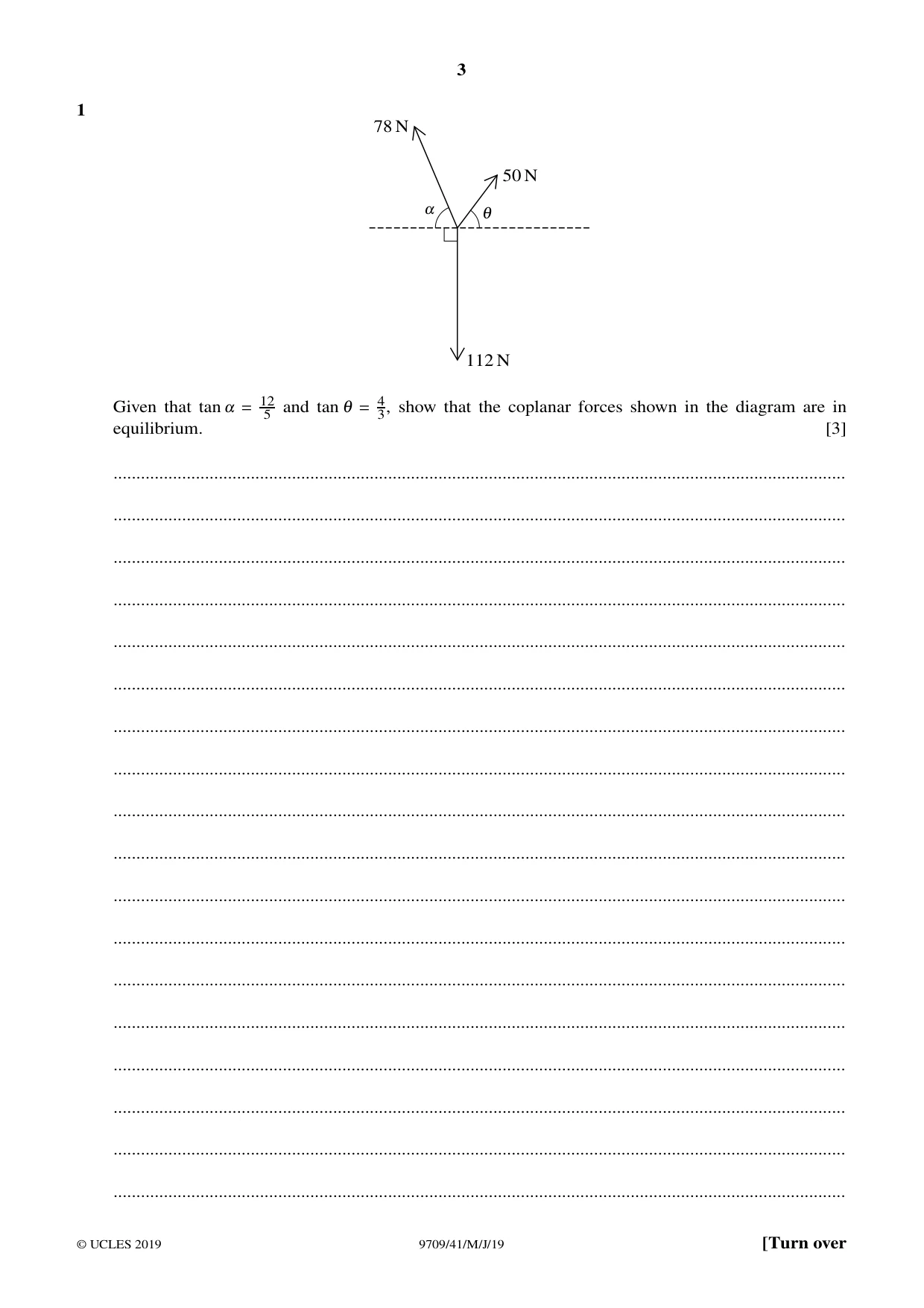
Q1 · 78 N 50 N !
1 78 N 50 N ! 1 112 N Given that tan ! = 12 and tan 1 = 43, show that the coplanar forces shown in the diagram are in 5 equilibrium. [3] ................................................................................................................................................................ ................................................................................................................................................................ ................................................................................................................................................................ ................................................................................................................................................................ ................................................................................................................................................................ ................................................................................................................................................................ ................................................................................................................................................................ ................................................................................................................................................................ ................................................................................................................................................................ ................................................................................................................................................................ ................................................................................................................................................................ ................................................................................................................................................................ ................................................................................................................................................................ ................................................................................................................................................................ ................................................................................................................................................................ ................................................................................................................................................................ ................................................................................................................................................................ ................................................................................................................................................................
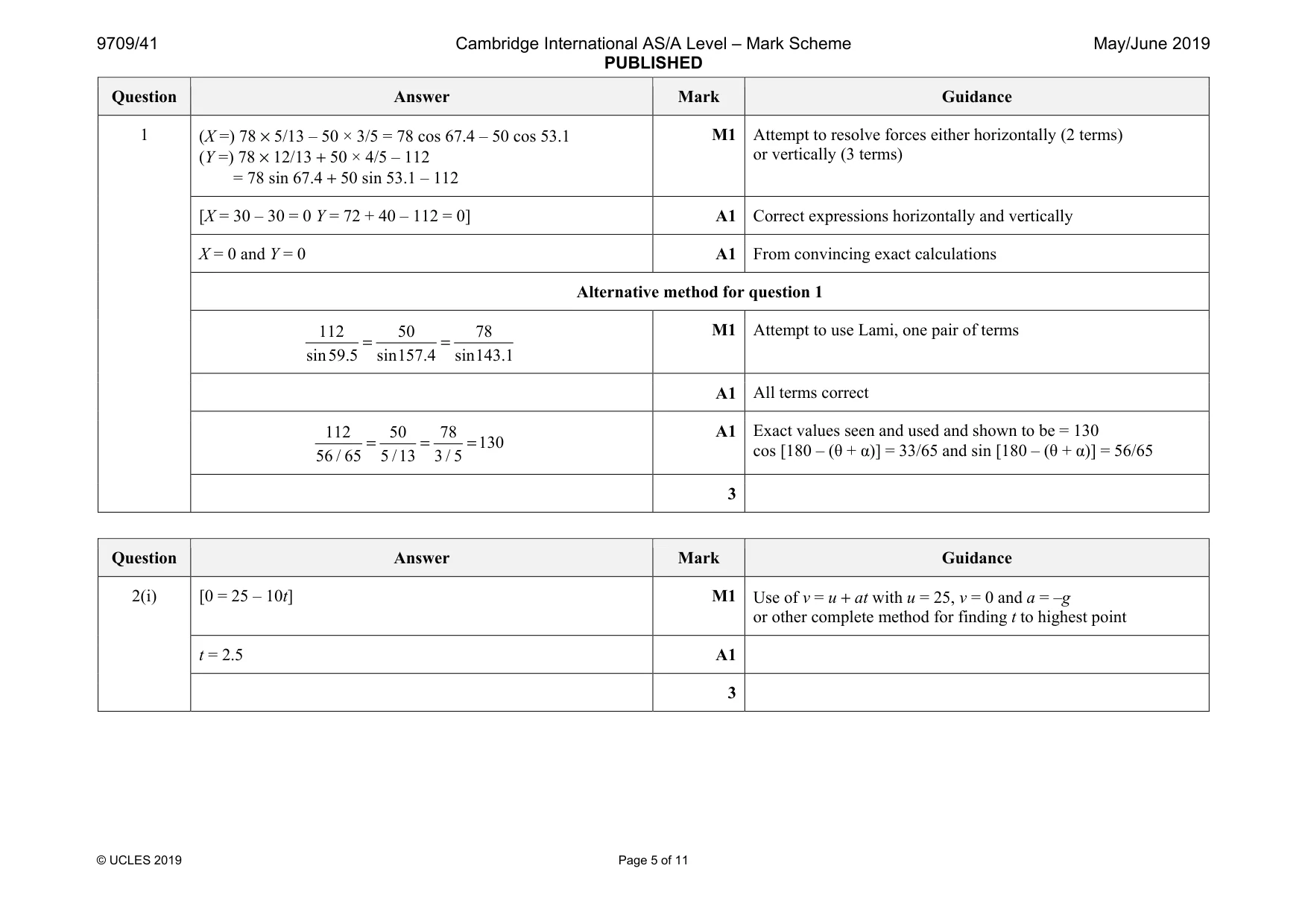
Mark scheme: 1 (Y =) 78 × 12/13 + 50 × 4/5 – 112 = 78 sin 67.4 + 50 sin 53.1 – 112 or vertically (3 terms) [X = 30 – 30 = 0 Y = 72 + 40 – 112 = 0] A1 Correct expressions horizontally and vertically X = 0 and Y = 0 A1 From convincing exact calculations Alternative method for question 1 112 50 78 sin59.5 sin157.4 sin143.1 = = M1 Attempt to use Lami, one pair of terms A1 All terms correct 112 50 78 130 56 / 65 5 /13 3 / 5 = = = A1 Exact values seen and used and shown to be = 130 cos [180 – (θ + α)] = 33/65 and sin [180 – (θ + α)] = 56/65 3
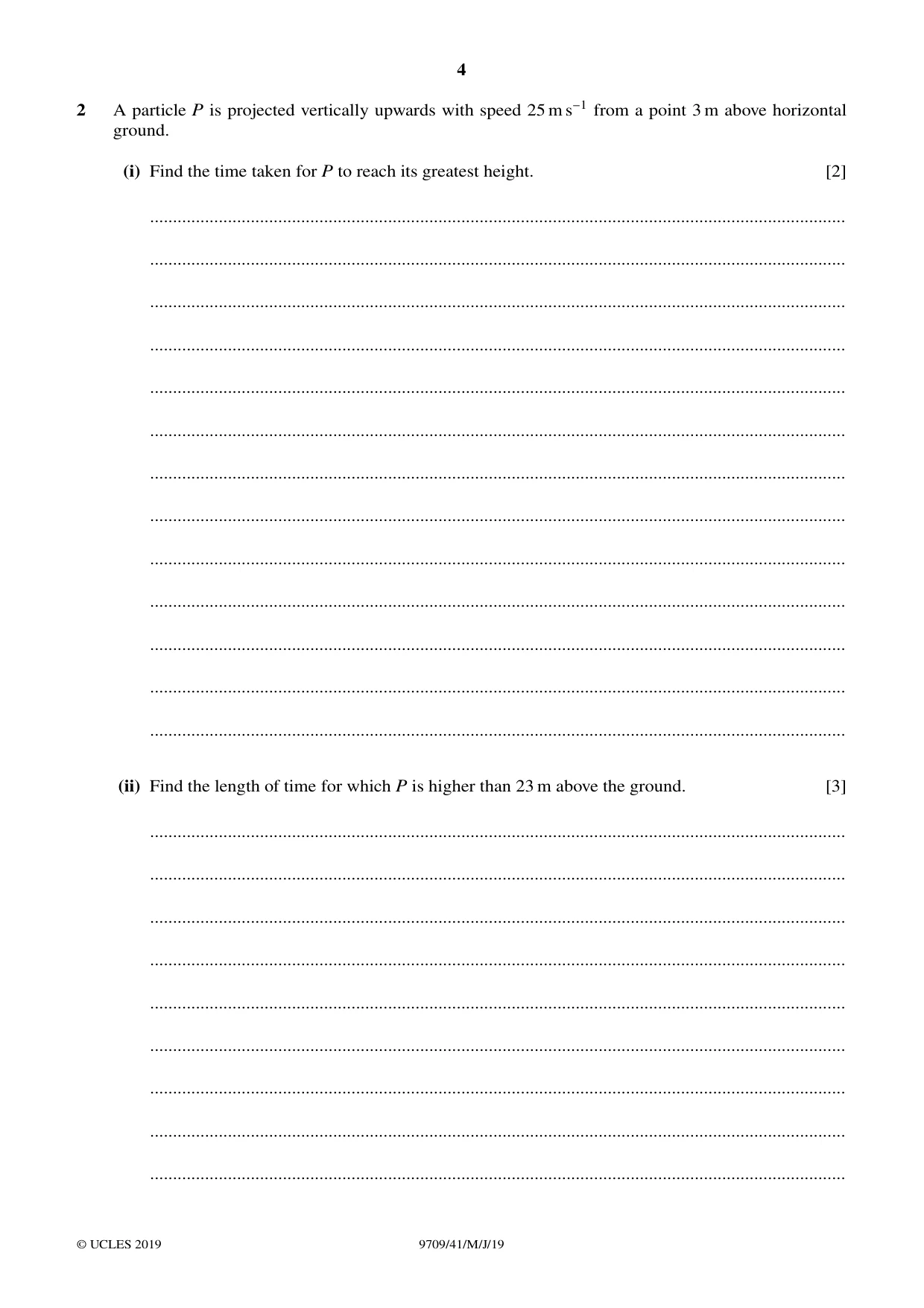
Q2 · A particle P is projected vertically upwards with speed 25 m s−1 from a point 3 m above…
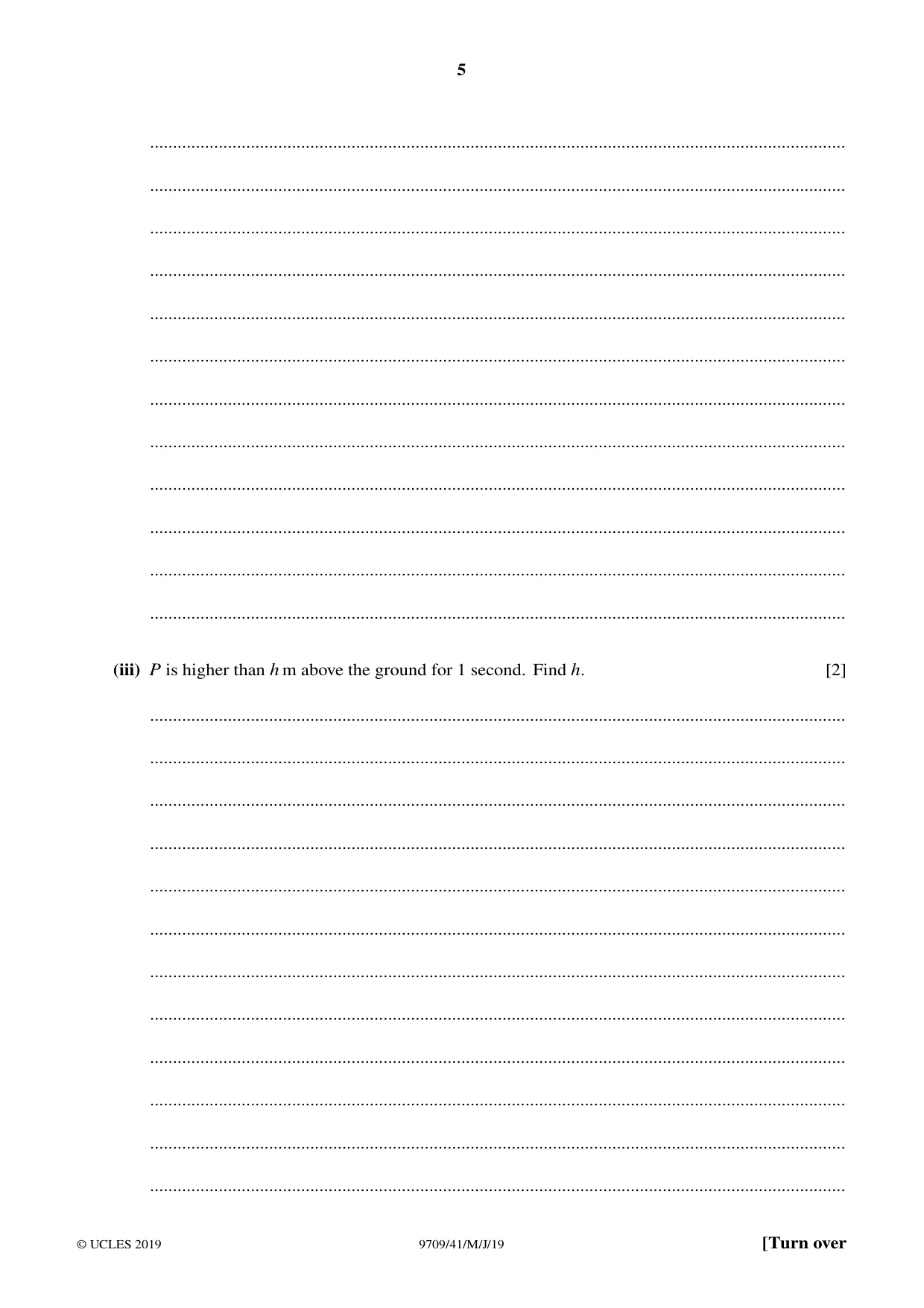
2 A particle P is projected vertically upwards with speed 25 m s−1 from a point 3 m above horizontal ground. (i) Find the time taken for P to reach its greatest height. [2] ........................................................................................................................................................ ........................................................................................................................................................ ........................................................................................................................................................ ........................................................................................................................................................ ........................................................................................................................................................ ........................................................................................................................................................ ........................................................................................................................................................ ........................................................................................................................................................ ........................................................................................................................................................ ........................................................................................................................................................ ........................................................................................................................................................ ........................................................................................................................................................ ........................................................................................................................................................ (ii) Find the length of time for which P is higher than 23 m above the ground. [3] ........................................................................................................................................................ ........................................................................................................................................................ ........................................................................................................................................................ ........................................................................................................................................................ ........................................................................................................................................................ ........................................................................................................................................................ ........................................................................................................................................................ ........................................................................................................................................................ ........................................................................................................................................................ ........................................................................................................................................................ ........................................................................................................................................................ ........................................................................................................................................................ ........................................................................................................................................................ ........................................................................................................................................................ ........................................................................................................................................................ ........................................................................................................................................................ ........................................................................................................................................................ ........................................................................................................................................................ ........................................................................................................................................................ ........................................................................................................................................................ ........................................................................................................................................................ (iii) P is higher than h m above the ground for 1 second. Find h. [2] ........................................................................................................................................................ ........................................................................................................................................................ ........................................................................................................................................................ ........................................................................................................................................................ ........................................................................................................................................................ ........................................................................................................................................................ ........................................................................................................................................................ ........................................................................................................................................................ ........................................................................................................................................................ ........................................................................................................................................................ ........................................................................................................................................................ ........................................................................................................................................................
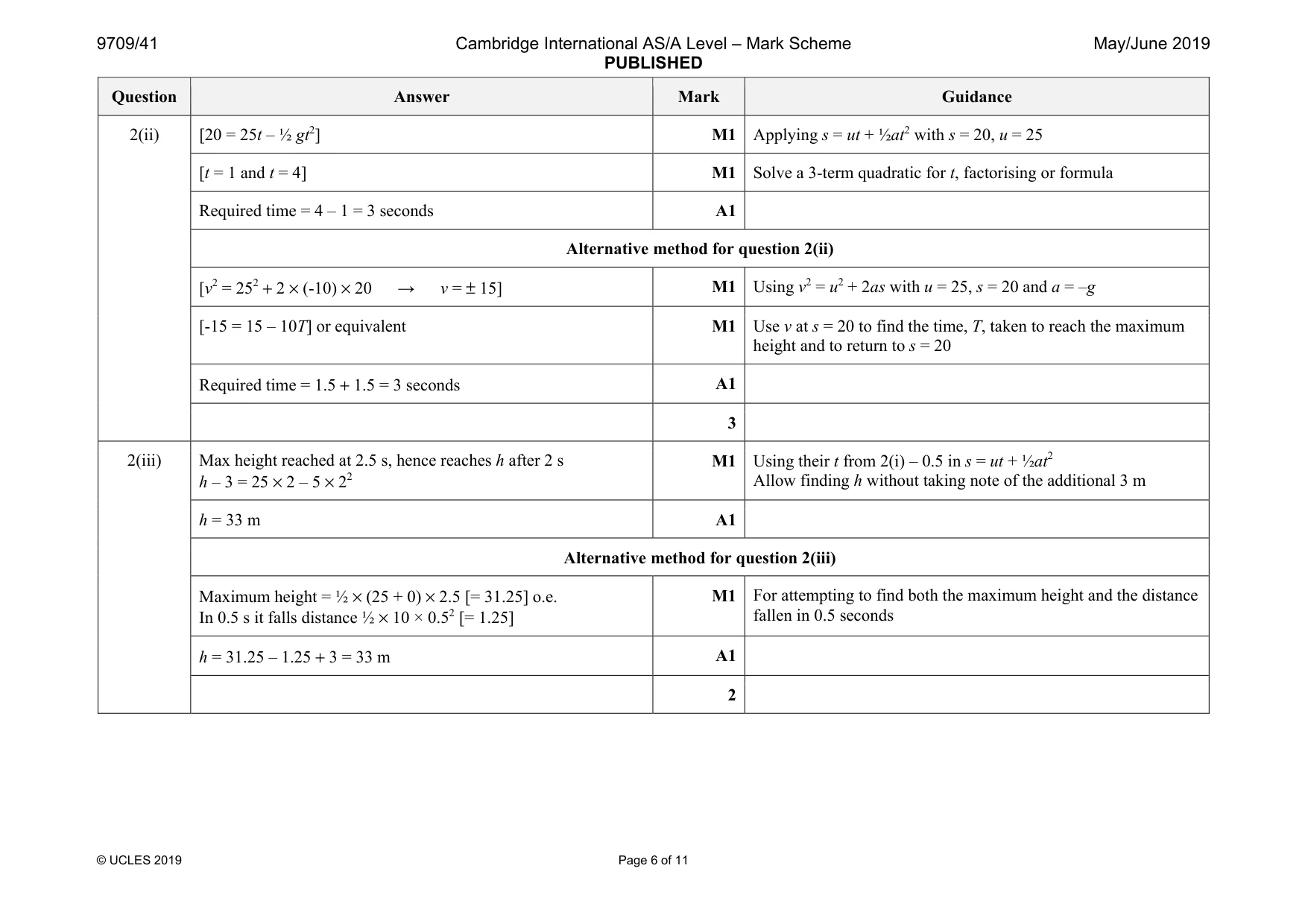
Mark scheme: 2(i) [0 = 25 – 10t] or other complete method for finding t to highest point t = 2.5 A1 3 Question Answer Mark Guidance 2(ii) [20 = 25t – ½ gt2] M1 Applying s = ut + ½at2 with s = 20, u = 25 [t = 1 and t = 4] M1 Solve a 3-term quadratic for t, factorising or formula Required time = 4 – 1 = 3 seconds A1 Alternative method for question 2(ii) [v2 = 252 + 2 × (-10) × 20 → v = ± 15] M1 Using v2 = u2 + 2as with u = 25, s = 20 and a = –g [-15 = 15 – 10T] or equivalent M1 Use v at s = 20 to find the time, T, taken to reach the maximum height and to return to s = 20 Required time = 1.5 + 1.5 = 3 seconds A1 3 2(iii) Max height reached at 2.5 s, hence reaches h after 2 s h – 3 = 25 × 2 – 5 × 22 M1 Using their t from 2(i) – 0.5 in s = ut + ½at2 Allow finding h without taking note of the additional 3 m h = 33 m A1 Alternative method for question 2(iii) Maximum height = ½ × (25 + 0) × 2.5 [= 31.25] o.e. In 0.5 s it falls distance ½ × 10 × 0.52 [= 1.25] M1 For attempting to find both the maximum height and the distance fallen in 0.5 seconds h = 31.25 – 1.25 + 3 = 33 m A1 2
Q3 · A lorry has mass 12 000 kg
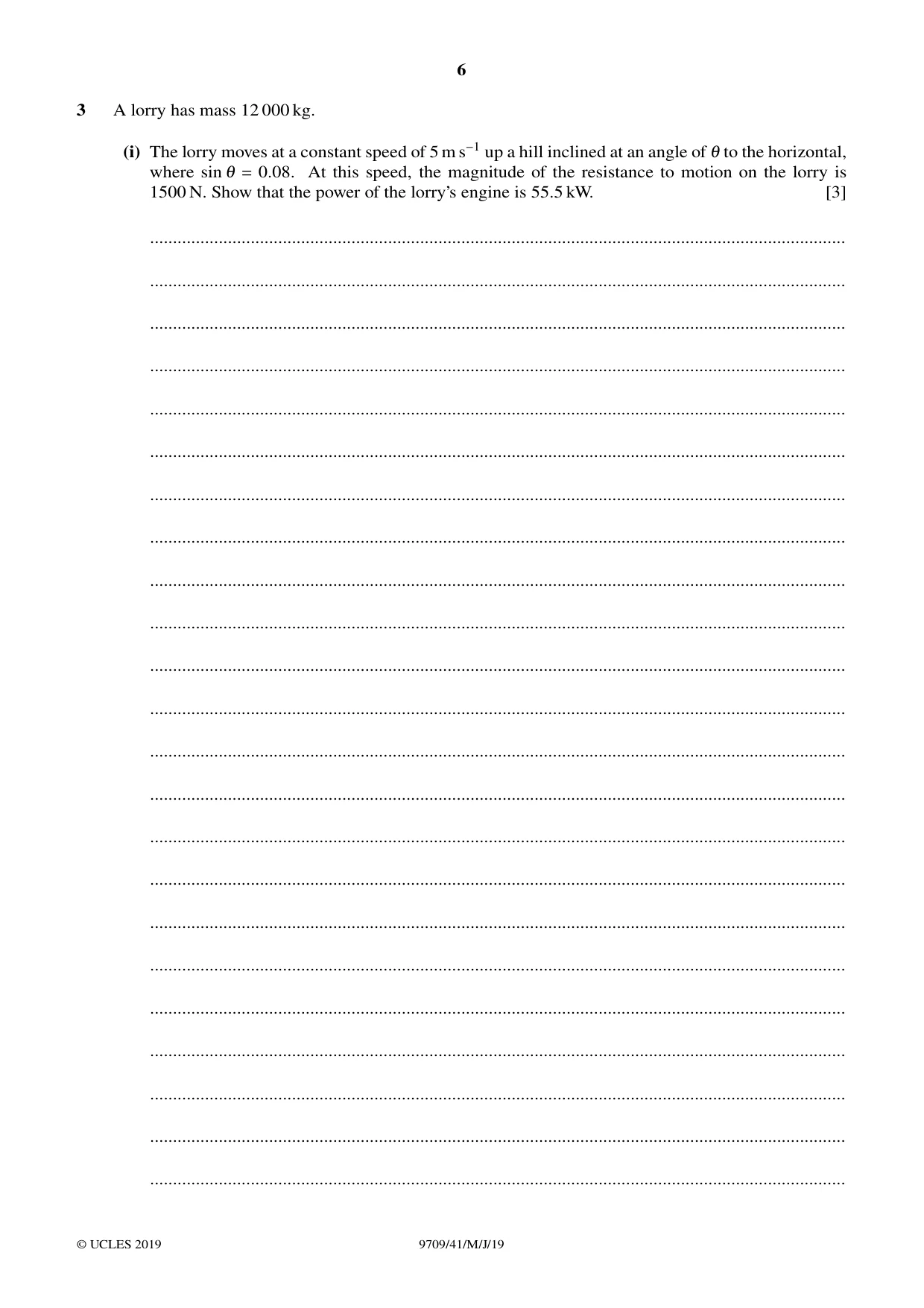
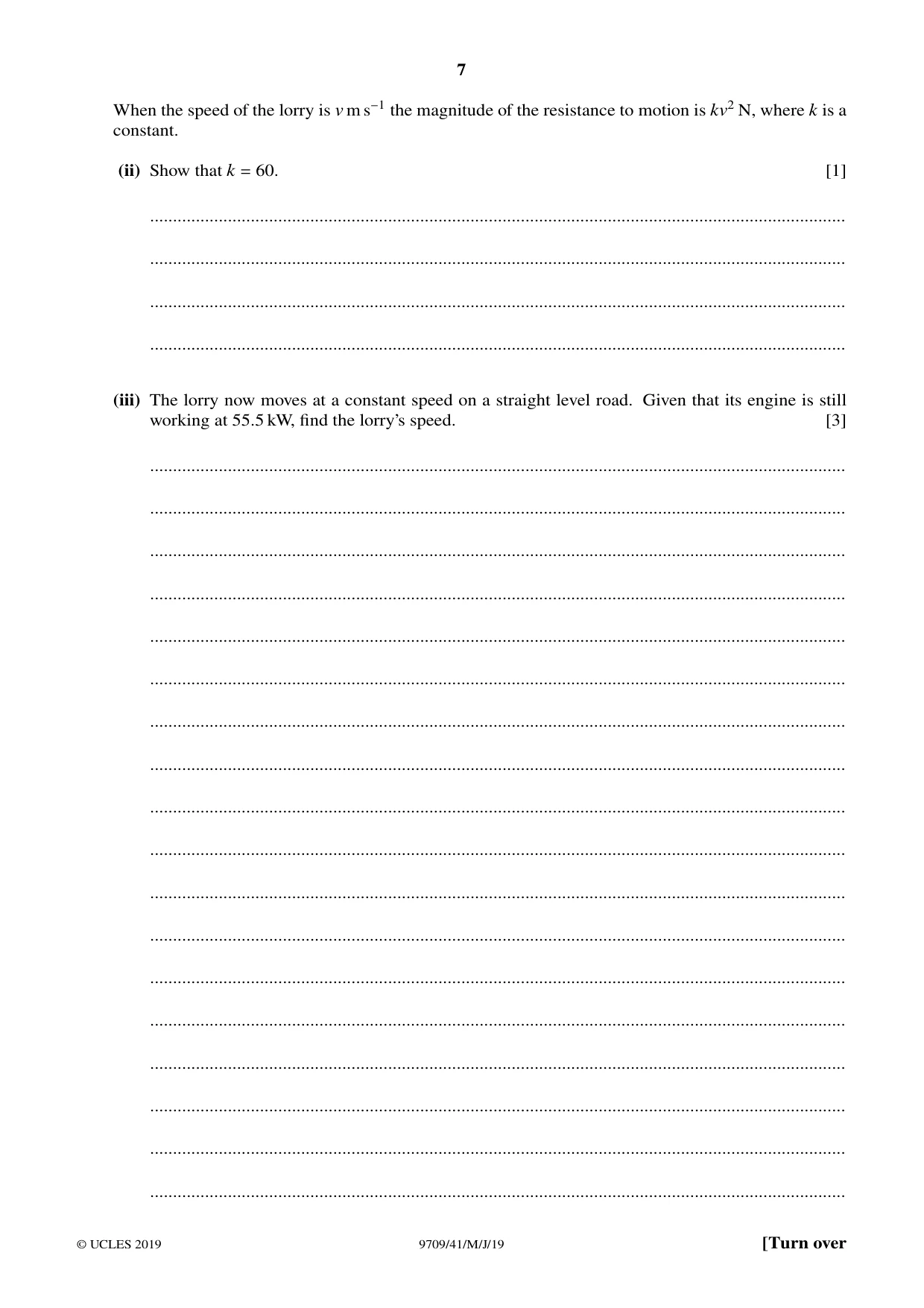
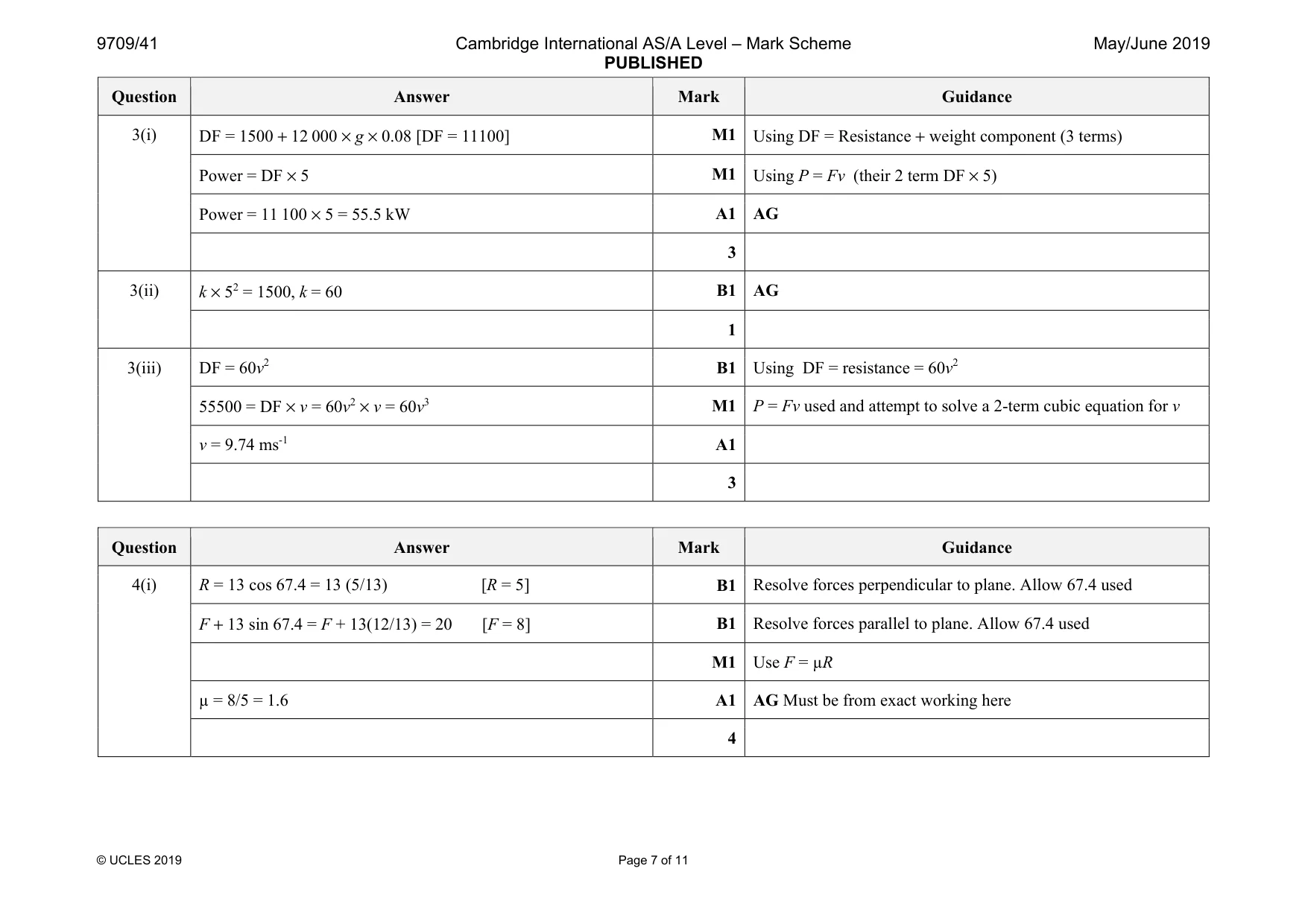
3 A lorry has mass 12 000 kg. (i) The lorry moves at a constant speed of 5 m s−1 up a hill inclined at an angle of 1 to the horizontal, where sin 1 = 0.08. At this speed, the magnitude of the resistance to motion on the lorry is 1500 N. Show that the power of the lorry’s engine is 55.5 kW. [3] ........................................................................................................................................................ ........................................................................................................................................................ ........................................................................................................................................................ ........................................................................................................................................................ ........................................................................................................................................................ ........................................................................................................................................................ ........................................................................................................................................................ ........................................................................................................................................................ ........................................................................................................................................................ ........................................................................................................................................................ ........................................................................................................................................................ ........................................................................................................................................................ ........................................................................................................................................................ ........................................................................................................................................................ ........................................................................................................................................................ ........................................................................................................................................................ ........................................................................................................................................................ ........................................................................................................................................................ ........................................................................................................................................................ ........................................................................................................................................................ ........................................................................................................................................................ ........................................................................................................................................................ ........................................................................................................................................................ When the speed of the lorry is v m s−1 the magnitude of the resistance to motion is kv2 N, where k is a constant. (ii) Show that k = 60. [1] ........................................................................................................................................................ ........................................................................................................................................................ ........................................................................................................................................................ ........................................................................................................................................................ (iii) The lorry now moves at a constant speed on a straight level road. Given that its engine is still working at 55.5 kW, find the lorry’s speed. [3] ........................................................................................................................................................ ........................................................................................................................................................ ........................................................................................................................................................ ........................................................................................................................................................ ........................................................................................................................................................ ........................................................................................................................................................ ........................................................................................................................................................ ........................................................................................................................................................ ........................................................................................................................................................ ........................................................................................................................................................ ........................................................................................................................................................ ........................................................................................................................................................ ........................................................................................................................................................ ........................................................................................................................................................ ........................................................................................................................................................ ........................................................................................................................................................ ........................................................................................................................................................ ........................................................................................................................................................
Mark scheme: 3(i) Power = DF × 5 M1 Using P = Fv (their 2 term DF × 5) Power = 11 100 × 5 = 55.5 kW A1 AG 3 3(ii) k × 52 = 1500, k = 60 B1 AG 1 3(iii) DF = 60v2 B1 Using DF = resistance = 60v2 55500 = DF × v = 60v2 × v = 60v3 M1 P = Fv used and attempt to solve a 2-term cubic equation for v v = 9.74 ms-1 A1 3
Q4 · A particle of mass 1.3 kg rests on a rough plane inclined at an angle 1 to the…
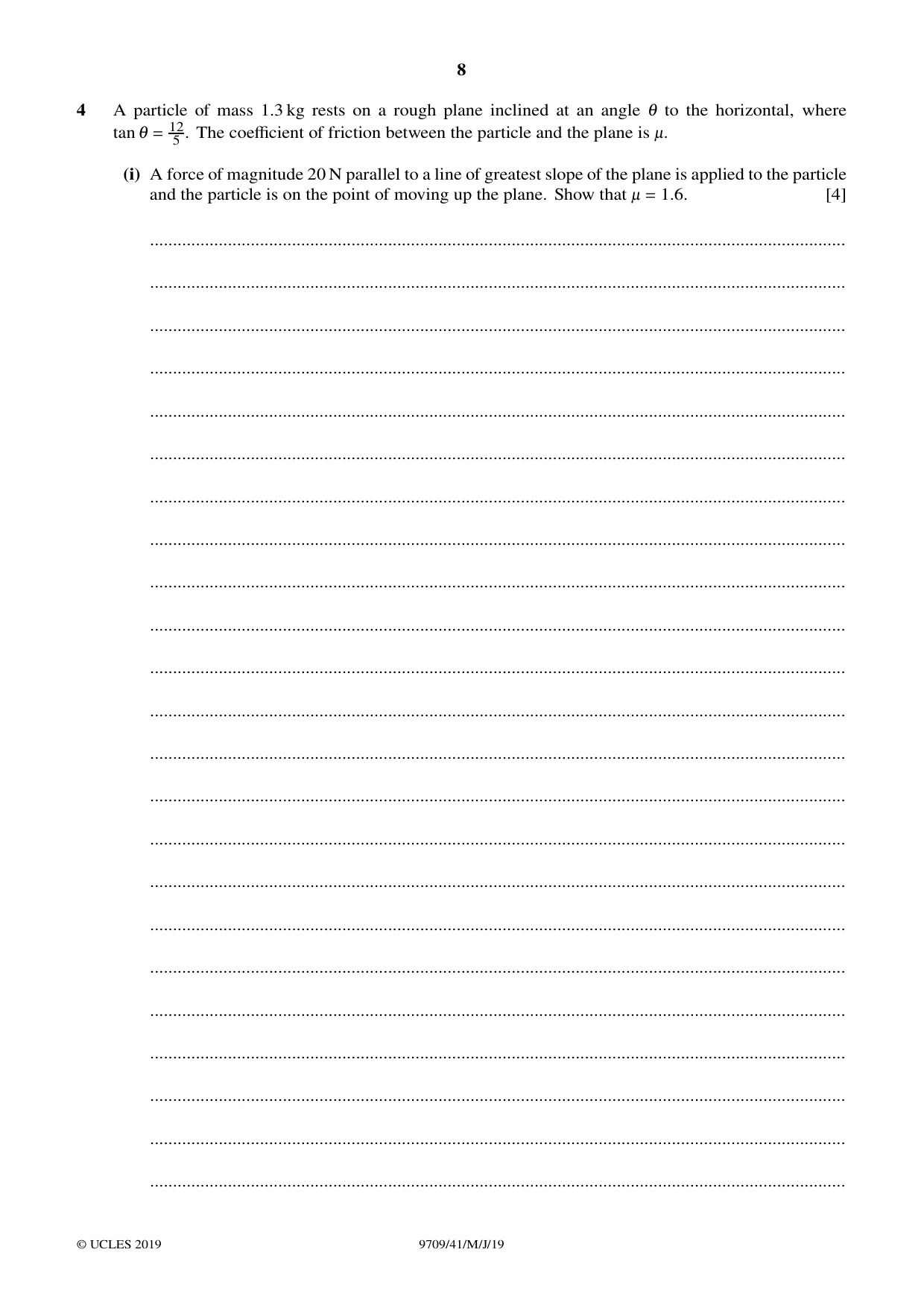
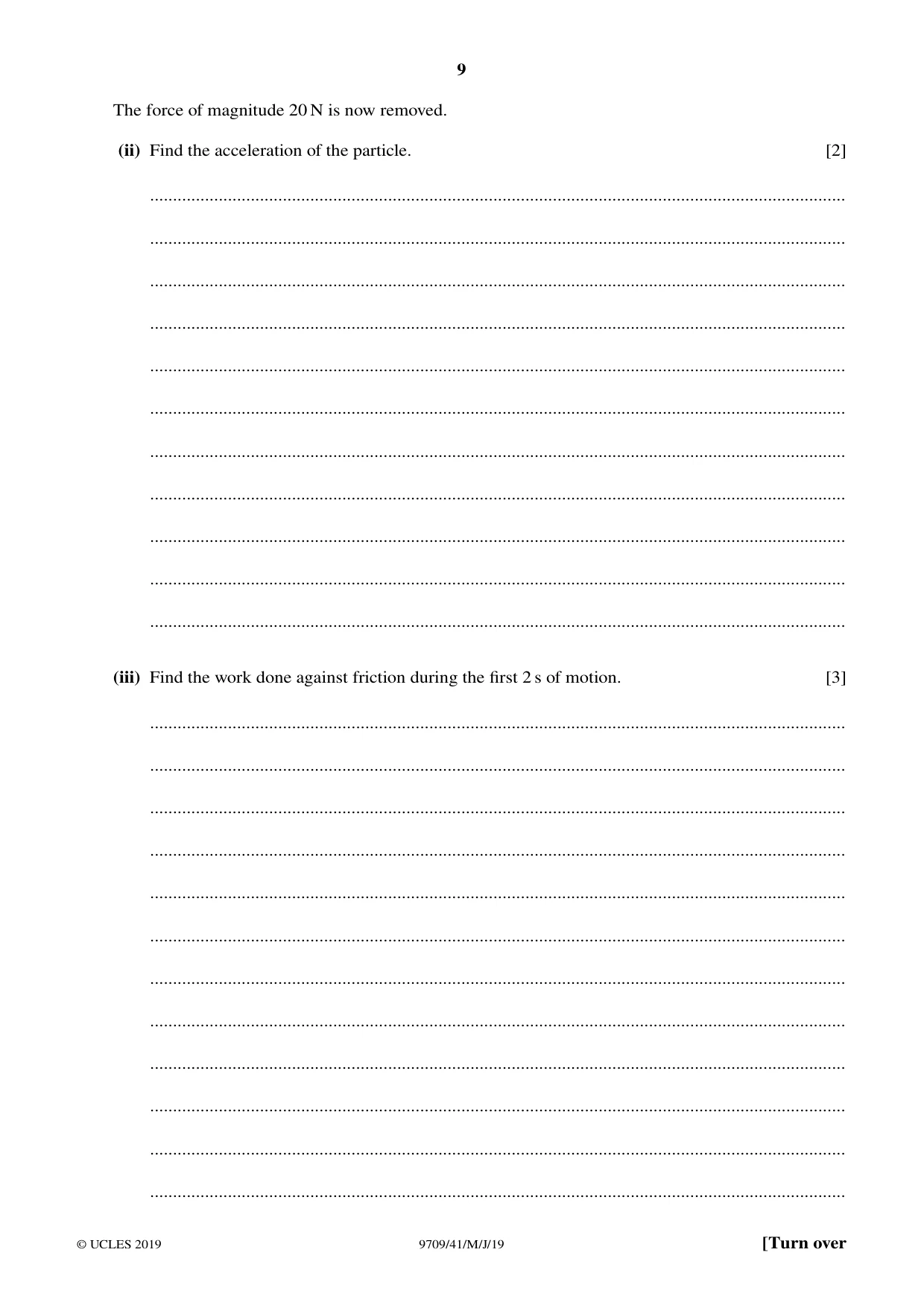
4 A particle of mass 1.3 kg rests on a rough plane inclined at an angle 1 to the horizontal, where tan 1 = 12 . The coefficient of friction between the particle and the plane is -. 5 (i) A force of magnitude 20 N parallel to a line of greatest slope of the plane is applied to the particle and the particle is on the point of moving up the plane. Show that - = 1.6. [4] ........................................................................................................................................................ ........................................................................................................................................................ ........................................................................................................................................................ ........................................................................................................................................................ ........................................................................................................................................................ ........................................................................................................................................................ ........................................................................................................................................................ ........................................................................................................................................................ ........................................................................................................................................................ ........................................................................................................................................................ ........................................................................................................................................................ ........................................................................................................................................................ ........................................................................................................................................................ ........................................................................................................................................................ ........................................................................................................................................................ ........................................................................................................................................................ ........................................................................................................................................................ ........................................................................................................................................................ ........................................................................................................................................................ ........................................................................................................................................................ ........................................................................................................................................................ ........................................................................................................................................................ ........................................................................................................................................................ The force of magnitude 20 N is now removed. (ii) Find the acceleration of the particle. [2] ........................................................................................................................................................ ........................................................................................................................................................ ........................................................................................................................................................ ........................................................................................................................................................ ........................................................................................................................................................ ........................................................................................................................................................ ........................................................................................................................................................ ........................................................................................................................................................ ........................................................................................................................................................ ........................................................................................................................................................ ........................................................................................................................................................ (iii) Find the work done against friction during the first 2 s of motion. [3] ........................................................................................................................................................ ........................................................................................................................................................ ........................................................................................................................................................ ........................................................................................................................................................ ........................................................................................................................................................ ........................................................................................................................................................ ........................................................................................................................................................ ........................................................................................................................................................ ........................................................................................................................................................ ........................................................................................................................................................ ........................................................................................................................................................ ........................................................................................................................................................
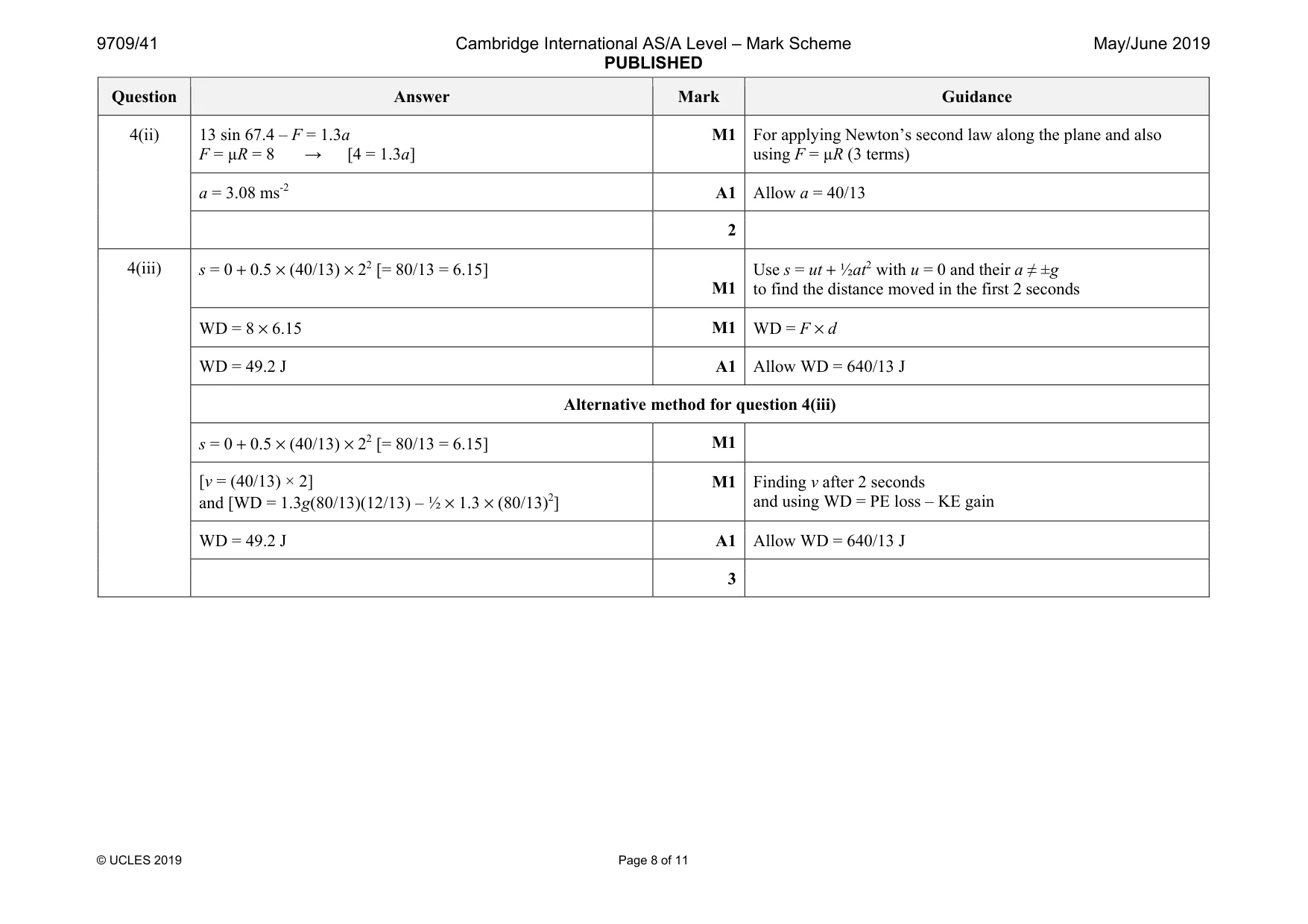
Mark scheme: 4(i) R = 13 cos 67.4 = 13 (5/13) [R = 5] B1 Resolve forces perpendicular to plane. Allow 67.4 used F + 13 sin 67.4 = F + 13(12/13) = 20 [F = 8] B1 Resolve forces parallel to plane. Allow 67.4 used M1 Use F = µR µ = 8/5 = 1.6 A1 AG Must be from exact working here 4 Question Answer Mark Guidance 4(ii) 13 sin 67.4 – F = 1.3a F = µR = 8 → [4 = 1.3a] M1 For applying Newton’s second law along the plane and also using F = µR (3 terms) a = 3.08 ms-2 A1 Allow a = 40/13 2 4(iii) s = 0 + 0.5 × (40/13) × 22 [= 80/13 = 6.15] M1 Use s = ut + ½at2 with u = 0 and their a ≠ ±g to find the distance moved in the first 2 seconds WD = 8 × 6.15 M1 WD = F × d WD = 49.2 J A1 Allow WD = 640/13 J Alternative method for question 4(iii) s = 0 + 0.5 × (40/13) × 22 [= 80/13 = 6.15] M1 [v = (40/13) × 2] and [WD = 1.3g(80/13)(12/13) – ½ × 1.3 × (80/13)2] M1 Finding v after 2 seconds and using WD = PE loss – KE gain WD = 49.2 J A1 Allow WD = 640/13 J 3
Q5 · A particle P moves in a straight line from a fixed point O
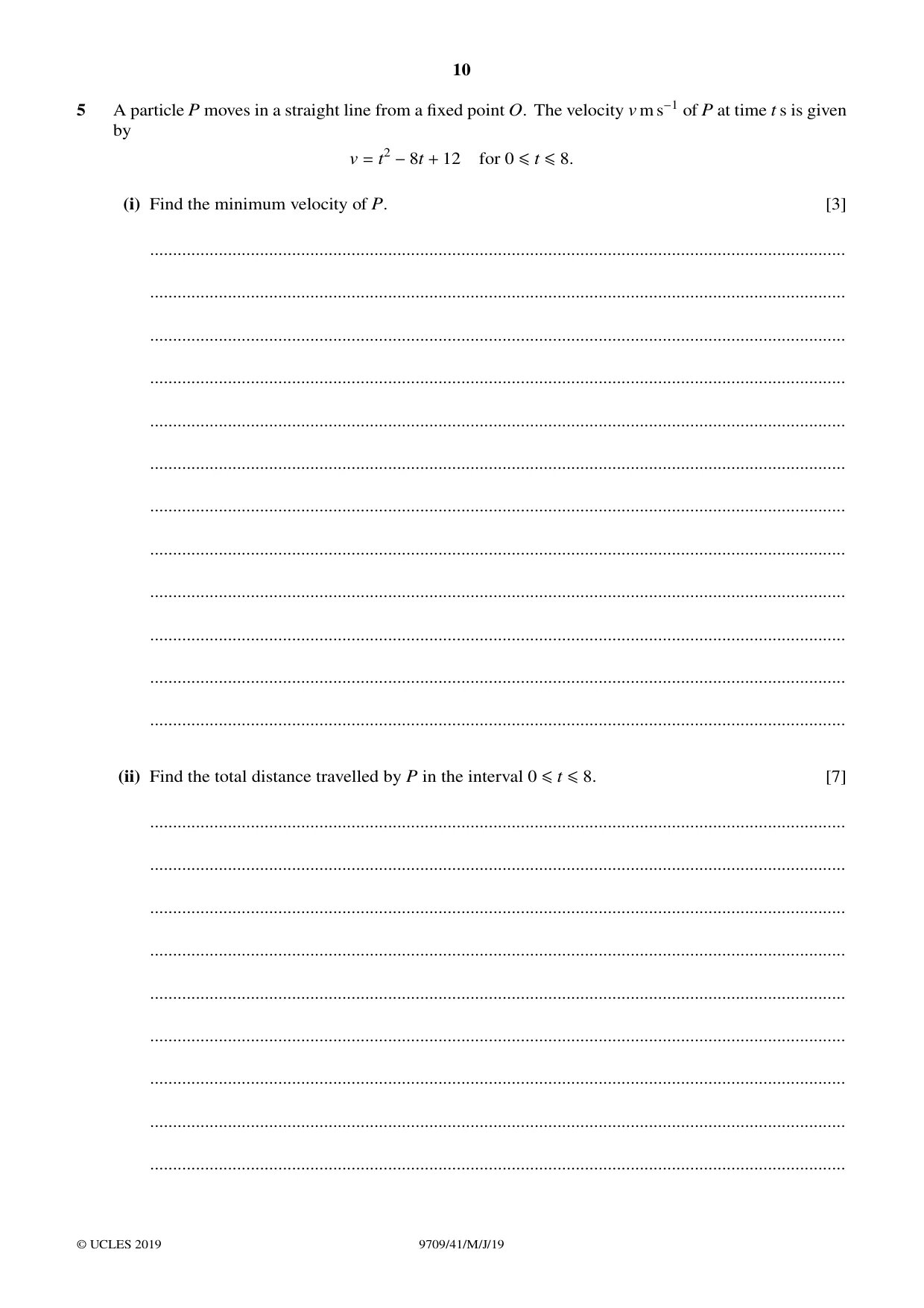
5 A particle P moves in a straight line from a fixed point O. The velocity v m s−1 of P at time t s is given by v = t2 −8t + 12 for 0 ≤t ≤8. (i) Find the minimum velocity of P. [3] ........................................................................................................................................................ ........................................................................................................................................................ ........................................................................................................................................................ ........................................................................................................................................................ ........................................................................................................................................................ ........................................................................................................................................................ ........................................................................................................................................................ ........................................................................................................................................................ ........................................................................................................................................................ ........................................................................................................................................................ ........................................................................................................................................................ ........................................................................................................................................................ (ii) Find the total distance travelled by P in the interval 0 ≤t ≤8. [7] ........................................................................................................................................................ ........................................................................................................................................................ ........................................................................................................................................................ ........................................................................................................................................................ ........................................................................................................................................................ ........................................................................................................................................................ ........................................................................................................................................................ ........................................................................................................................................................ ........................................................................................................................................................ ........................................................................................................................................................ ........................................................................................................................................................ ........................................................................................................................................................ ........................................................................................................................................................ ........................................................................................................................................................ ........................................................................................................................................................ ........................................................................................................................................................ ........................................................................................................................................................ ........................................................................................................................................................ ........................................................................................................................................................ ........................................................................................................................................................ ........................................................................................................................................................ ........................................................................................................................................................ ........................................................................................................................................................ ........................................................................................................................................................ ........................................................................................................................................................ ........................................................................................................................................................ ........................................................................................................................................................ ........................................................................................................................................................ ........................................................................................................................................................ ........................................................................................................................................................ ........................................................................................................................................................ ........................................................................................................................................................ ........................................................................................................................................................ ........................................................................................................................................................
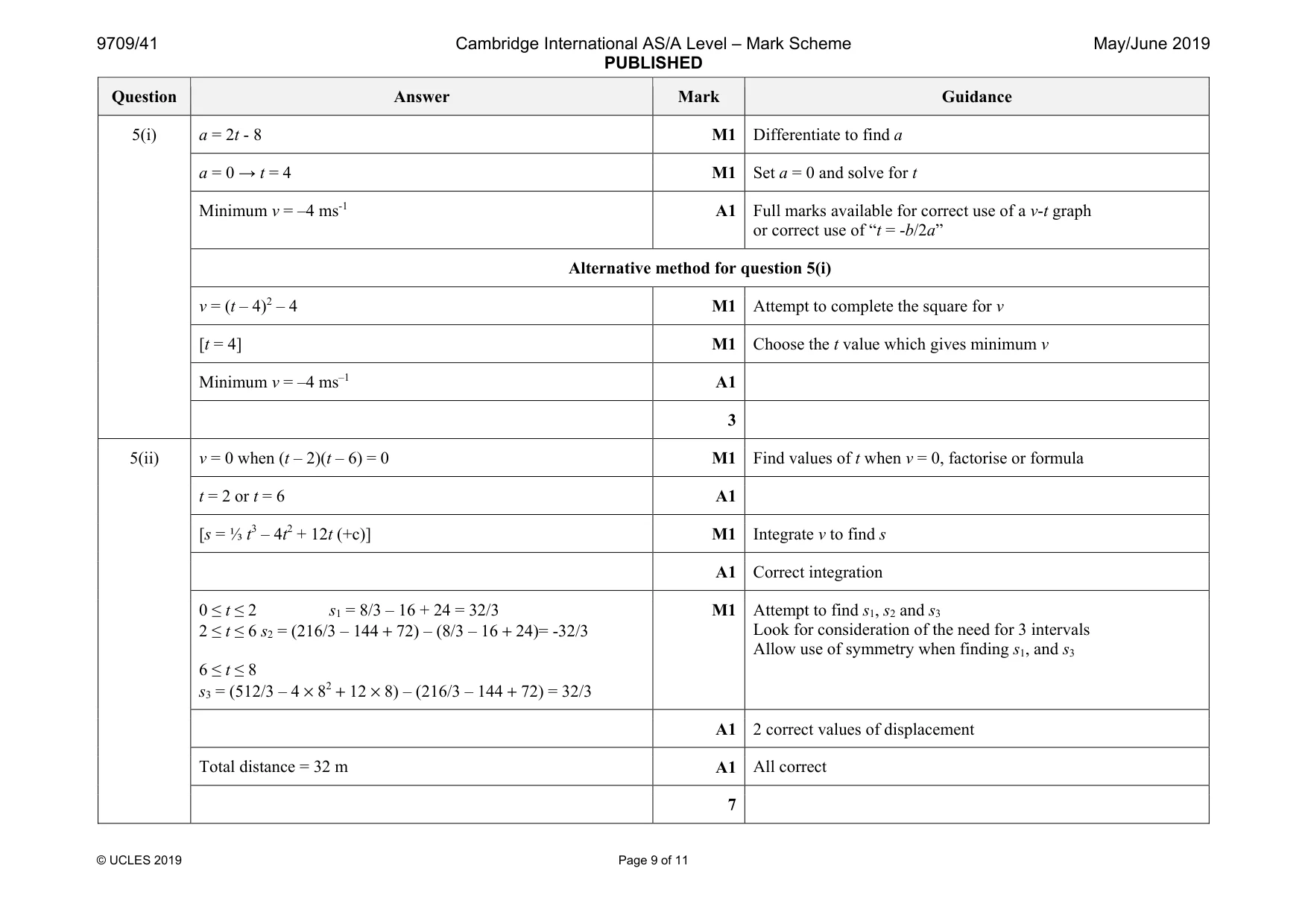
Mark scheme: 5(i) a = 2t - 8 M1 Differentiate to find a a = 0 → t = 4 M1 Set a = 0 and solve for t Minimum v = –4 ms-1 A1 Full marks available for correct use of a v-t graph or correct use of “t = -b/2a” Alternative method for question 5(i) v = (t – 4)2 – 4 M1 Attempt to complete the square for v [t = 4] M1 Choose the t value which gives minimum v Minimum v = –4 ms–1 A1 3 5(ii) v = 0 when (t – 2)(t – 6) = 0 M1 Find values of t when v = 0, factorise or formula t = 2 or t = 6 A1 [s = ⅓ t3 – 4t2 + 12t (+c)] M1 Integrate v to find s A1 Correct integration 0 ≤ t ≤ 2 s1 = 8/3 – 16 + 24 = 32/3 2 ≤ t ≤ 6 s2 = (216/3 – 144 + 72) – (8/3 – 16 + 24)= -32/3 6 ≤ t ≤ 8 s3 = (512/3 – 4 × 82 + 12 × 8) – (216/3 – 144 + 72) = 32/3 M1 Attempt to find s1, s2 and s3 Look for consideration of the need for 3 intervals Allow use of symmetry when finding s1, and s3 A1 2 correct values of displacement Total distance = 32 m A1 All correct 7
Q6 · P A 0.2 kg B 0.4 kg 0.5 m 1Å Two particles A and B, of masses 0.4 kg and 0.2 kg…
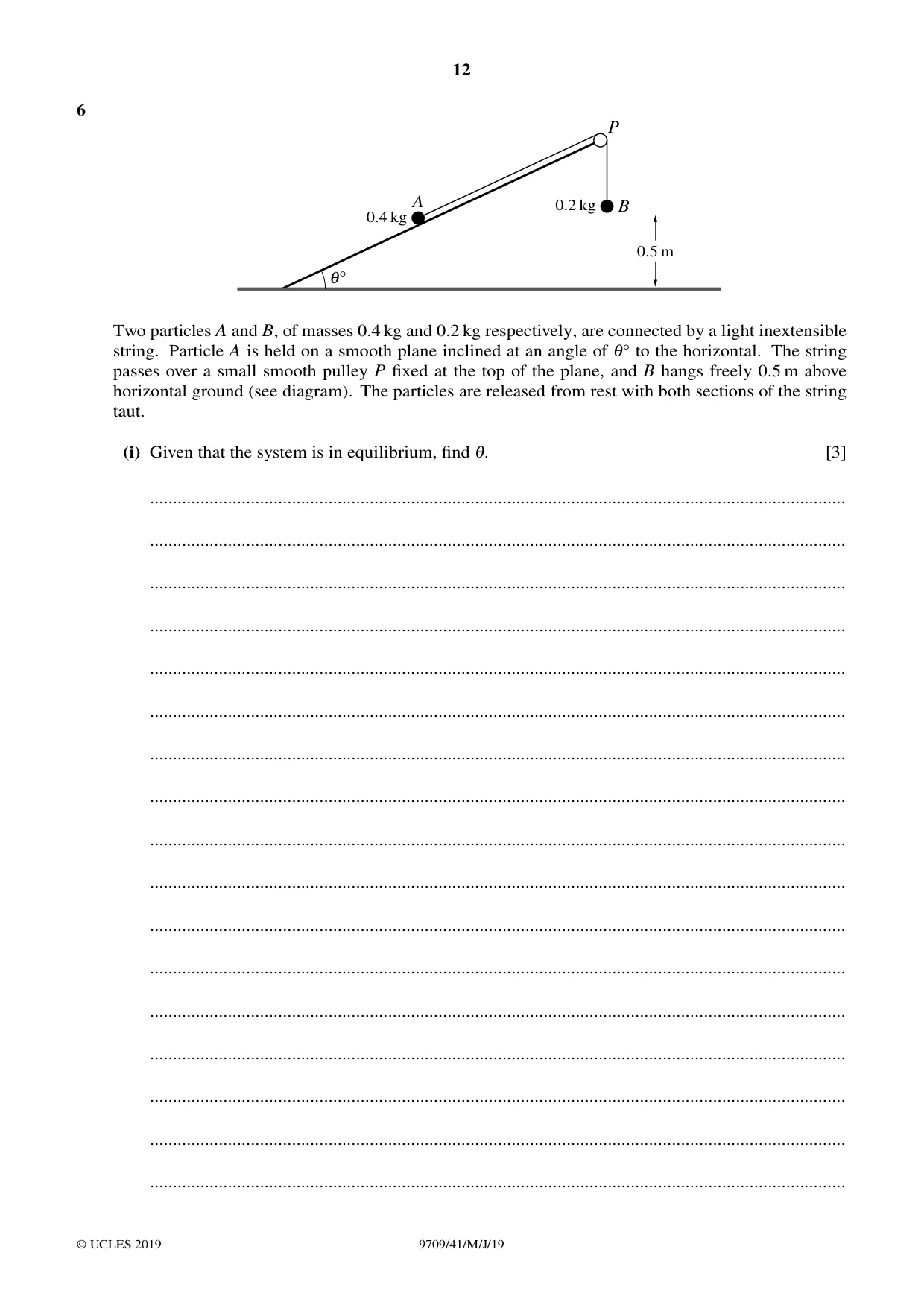
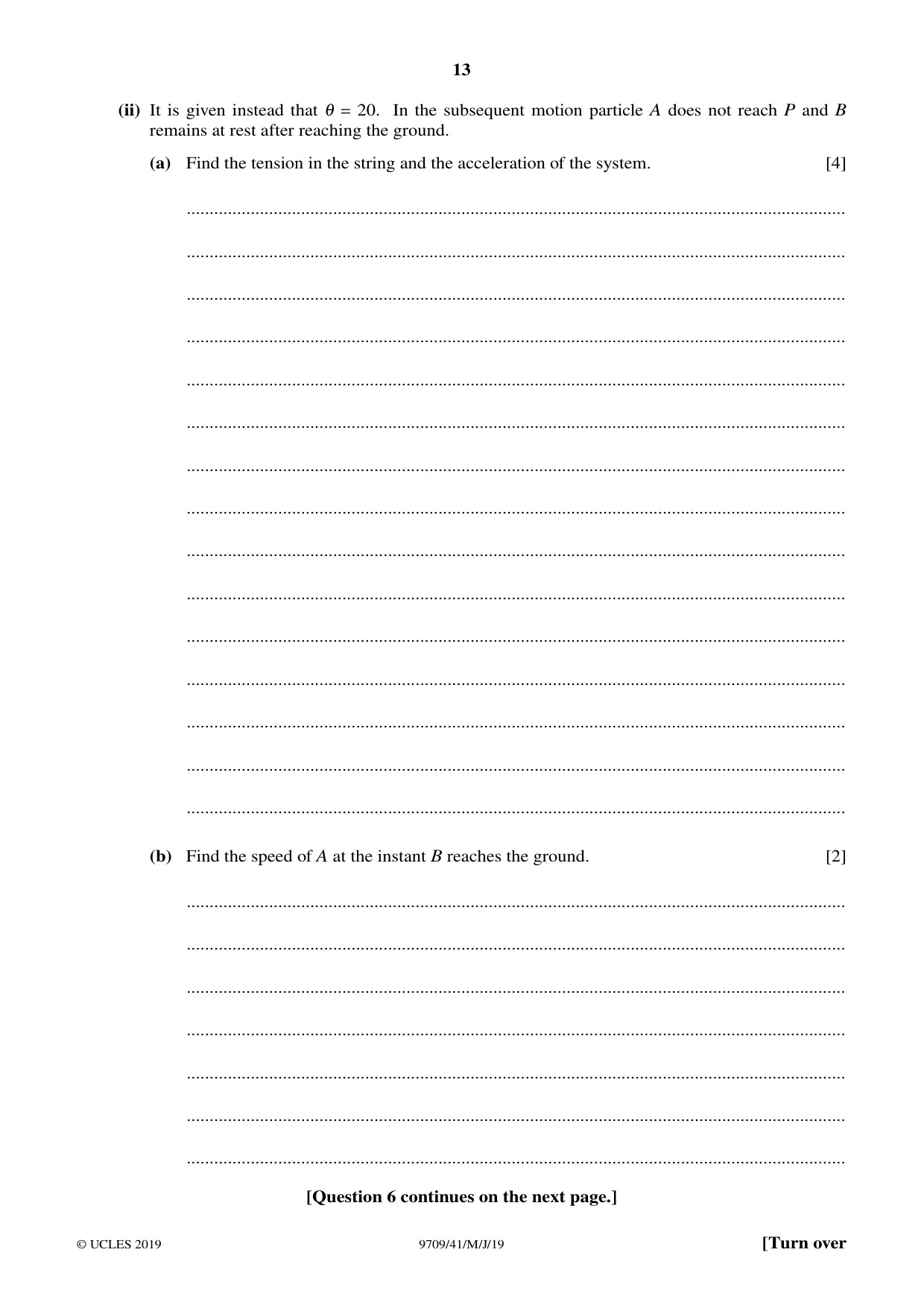
6 P A 0.2 kg B 0.4 kg 0.5 m 1Å Two particles A and B, of masses 0.4 kg and 0.2 kg respectively, are connected by a light inextensible string. Particle A is held on a smooth plane inclined at an angle of 1Å to the horizontal. The string passes over a small smooth pulley P fixed at the top of the plane, and B hangs freely 0.5 m above horizontal ground (see diagram). The particles are released from rest with both sections of the string taut. (i) Given that the system is in equilibrium, find 1. [3] ........................................................................................................................................................ ........................................................................................................................................................ ........................................................................................................................................................ ........................................................................................................................................................ ........................................................................................................................................................ ........................................................................................................................................................ ........................................................................................................................................................ ........................................................................................................................................................ ........................................................................................................................................................ ........................................................................................................................................................ ........................................................................................................................................................ ........................................................................................................................................................ ........................................................................................................................................................ ........................................................................................................................................................ ........................................................................................................................................................ ........................................................................................................................................................ ........................................................................................................................................................ (ii) It is given instead that 1 = 20. In the subsequent motion particle A does not reach P and B remains at rest after reaching the ground. (a) Find the tension in the string and the acceleration of the system. [4] ................................................................................................................................................ ................................................................................................................................................ ................................................................................................................................................ ................................................................................................................................................ ................................................................................................................................................ ................................................................................................................................................ ................................................................................................................................................ ................................................................................................................................................ ................................................................................................................................................ ................................................................................................................................................ ................................................................................................................................................ ................................................................................................................................................ ................................................................................................................................................ ................................................................................................................................................ ................................................................................................................................................ (b) Find the speed of A at the instant B reaches the ground. [2] ................................................................................................................................................ ................................................................................................................................................ ................................................................................................................................................ ................................................................................................................................................ ................................................................................................................................................ ................................................................................................................................................ ................................................................................................................................................ [Question 6 continues on the next page.] (c) Use an energy method to find the total distance A moves up the plane before coming to instantaneous rest. [5] ................................................................................................................................................ ................................................................................................................................................ ................................................................................................................................................ ................................................................................................................................................ ................................................................................................................................................ ................................................................................................................................................ ................................................................................................................................................ ................................................................................................................................................ ................................................................................................................................................ ................................................................................................................................................ ................................................................................................................................................ ................................................................................................................................................ ................................................................................................................................................ ................................................................................................................................................ ................................................................................................................................................ ................................................................................................................................................ ................................................................................................................................................ ................................................................................................................................................ ................................................................................................................................................ ................................................................................................................................................ ................................................................................................................................................ ................................................................................................................................................ ................................................................................................................................................ ................................................................................................................................................ ................................................................................................................................................
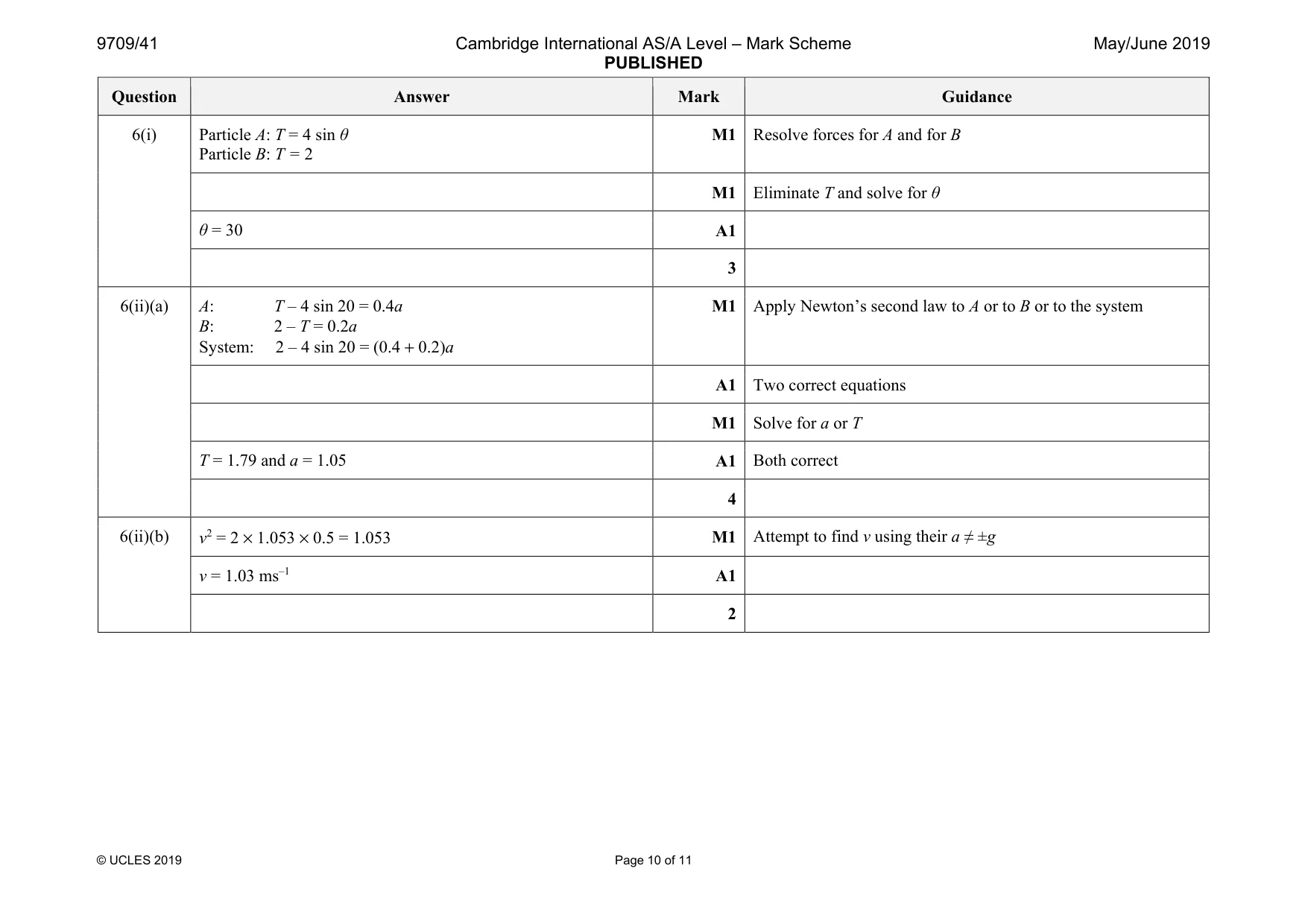
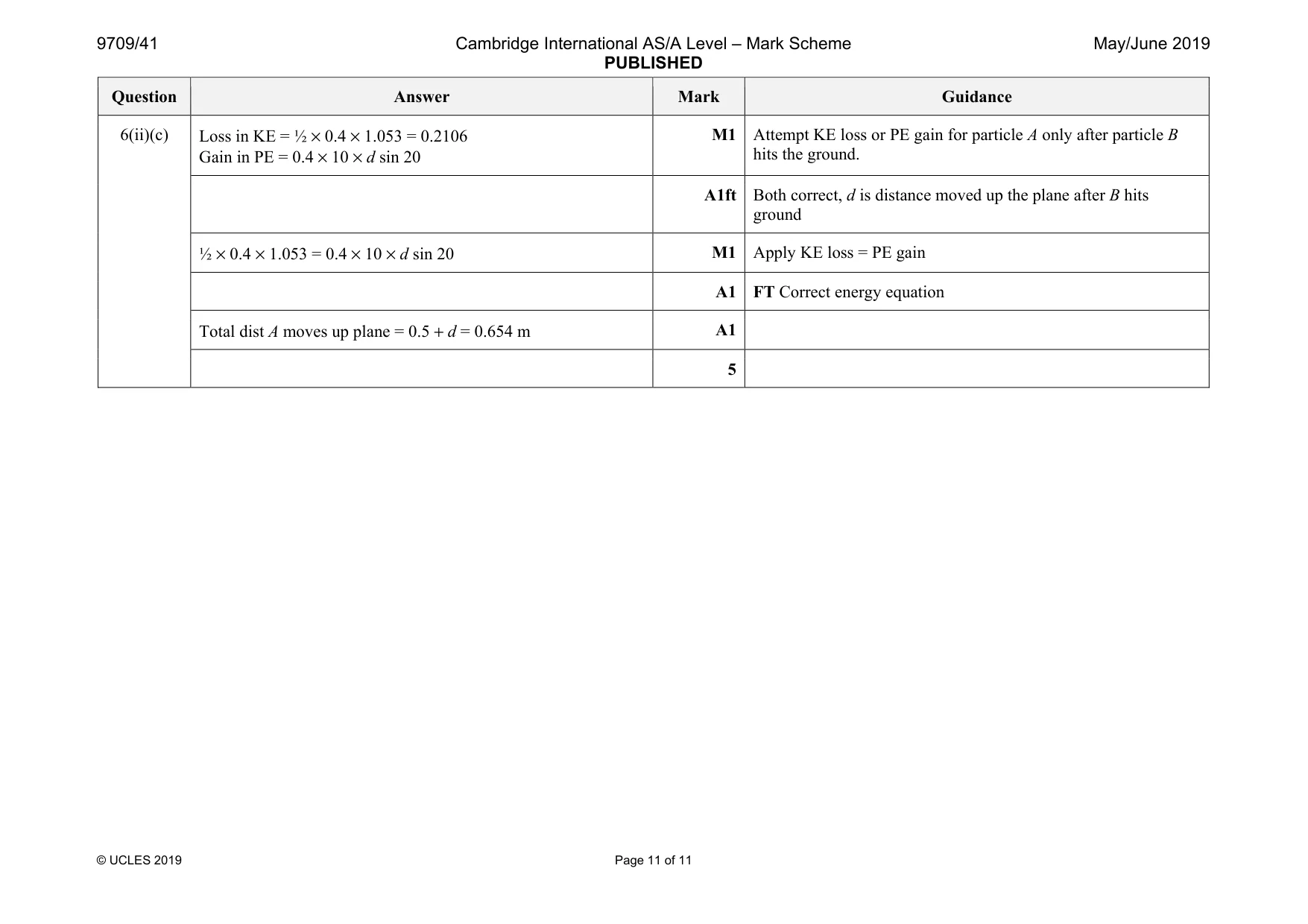
Mark scheme: 6(i) Particle A: T = 4 sin θ Particle B: T = 2 M1 Eliminate T and solve for θ θ = 30 A1 3 6(ii)(a) A: T – 4 sin 20 = 0.4a B: 2 – T = 0.2a System: 2 – 4 sin 20 = (0.4 + 0.2)a M1 Apply Newton’s second law to A or to B or to the system A1 Two correct equations M1 Solve for a or T T = 1.79 and a = 1.05 A1 Both correct 4 6(ii)(b) v2 = 2 × 1.053 × 0.5 = 1.053 M1 Attempt to find v using their a ≠ ±g v = 1.03 ms–1 A1 2 Question Answer Mark Guidance 6(ii)(c) Loss in KE = ½ × 0.4 × 1.053 = 0.2106 Gain in PE = 0.4 × 10 × d sin 20 M1 Attempt KE loss or PE gain for particle A only after particle B hits the ground. A1ft Both correct, d is distance moved up the plane after B hits ground ½ × 0.4 × 1.053 = 0.4 × 10 × d sin 20 M1 Apply KE loss = PE gain A1 FT Correct energy equation Total dist A moves up plane = 0.5 + d = 0.654 m A1 5
What was in this paper
The subtopics covered by these 6 questions, and how many questions each got. Open one in a new tab to see every Cambridge question on it.
What you needed in this session
Cambridge’s own grade thresholds for 2019 May/June, Paper 4 · Variant 1. A higher threshold means an easier paper — the bar moves with how the cohort did.