Cambridge A Level Mathematics 9709 — 2018 Oct/Nov Paper 4 · Variant 2
9709/42/O/N/18 · 7 questions · 50 marks · ≈56 min
The question paper and its mark scheme, free to read here and free to download. This is Cambridge’s own paper, exactly as it was sat.
Question paper16 pages
Mark scheme16 pages
Answers below. Sit the paper first if you are practising.
Questions as text
Q1 · A 45Å 2.5 N R B A smooth ring R of mass m kg is threaded on a light inextensible string…
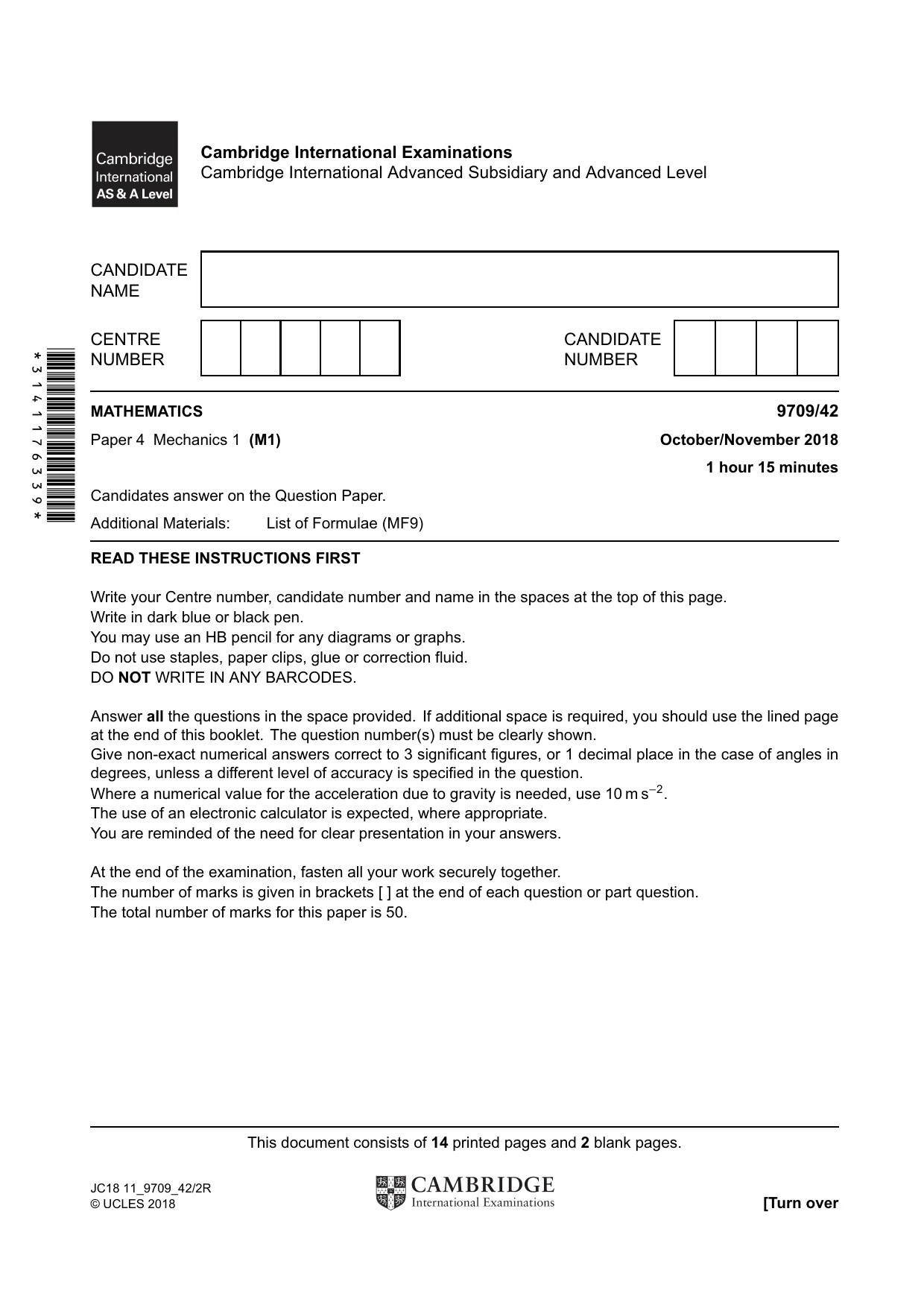
1 A 45Å 2.5 N R B A smooth ring R of mass m kg is threaded on a light inextensible string ARB. The ends of the string are attached to fixed points A and B with A vertically above B. The string is taut and angle ARB = 90Å. The angle between the part AR of the string and the vertical is 45Å. The ring is held in equilibrium in this position by a force of magnitude 2.5 N, acting on the ring in the direction BR (see diagram). Calculate the tension in the string and the mass of the ring. [4] ................................................................................................................................................................ ................................................................................................................................................................ ................................................................................................................................................................ ................................................................................................................................................................ ................................................................................................................................................................ ................................................................................................................................................................ ................................................................................................................................................................ ................................................................................................................................................................ ................................................................................................................................................................ ................................................................................................................................................................ ................................................................................................................................................................ ................................................................................................................................................................ ................................................................................................................................................................ ................................................................................................................................................................ ................................................................................................................................................................ ................................................................................................................................................................ ................................................................................................................................................................ ................................................................................................................................................................
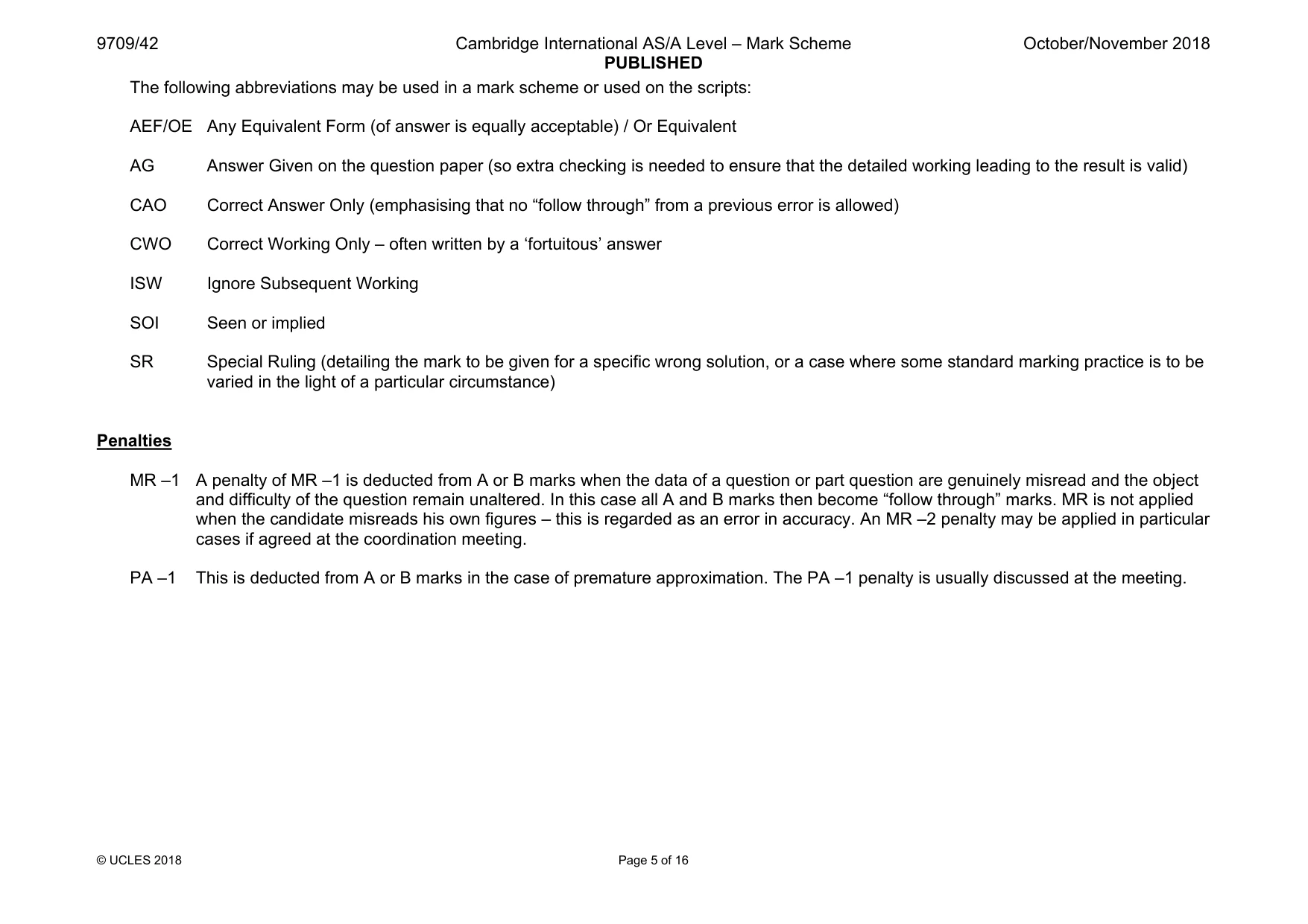
Mark scheme: 1 M1 T = 1.25 N A1 [2.5 sin 45 = mg] M1 For resolving vertically Mass of ring = 0.177 kg A1 Allow m = √2/8 First alternative method for Q1 [2.5 = T + mg cos 45] M1 Resolve forces along BR [T = mg cos 45] M1 Resolve forces perpendicular to BR and eliminate T or m T = 1.25 N A1 Mass of ring = 0.177 kg A1 Allow m = √2/8 Second alternative method for Q1 2 cos45 2.5 sin135 sin90 sin135 = = T mg or 2.5 sin135 sin135 sin90 − = = T T mg M1 Attempt to apply Lami’s theorem, M1 All three terms of Lami attempted T = 1.25 N A1 Mass of ring = 0.177 kg A1 Allow m = √2/8 4
Q2 · A block of mass 5 kg is being pulled by a rope up a rough plane inclined at 6Å to the…
2 A block of mass 5 kg is being pulled by a rope up a rough plane inclined at 6Å to the horizontal. The rope is parallel to a line of greatest slope of the plane and the block is moving at constant speed. The coefficient of friction between the block and the plane is 0.3. Find the tension in the rope. [4] ................................................................................................................................................................ ................................................................................................................................................................ ................................................................................................................................................................ ................................................................................................................................................................ ................................................................................................................................................................ ................................................................................................................................................................ ................................................................................................................................................................ ................................................................................................................................................................ ................................................................................................................................................................ ................................................................................................................................................................ ................................................................................................................................................................ ................................................................................................................................................................ ................................................................................................................................................................ ................................................................................................................................................................ ................................................................................................................................................................ ................................................................................................................................................................ ................................................................................................................................................................ ................................................................................................................................................................ ................................................................................................................................................................ ................................................................................................................................................................ ................................................................................................................................................................ ................................................................................................................................................................ ................................................................................................................................................................ ................................................................................................................................................................
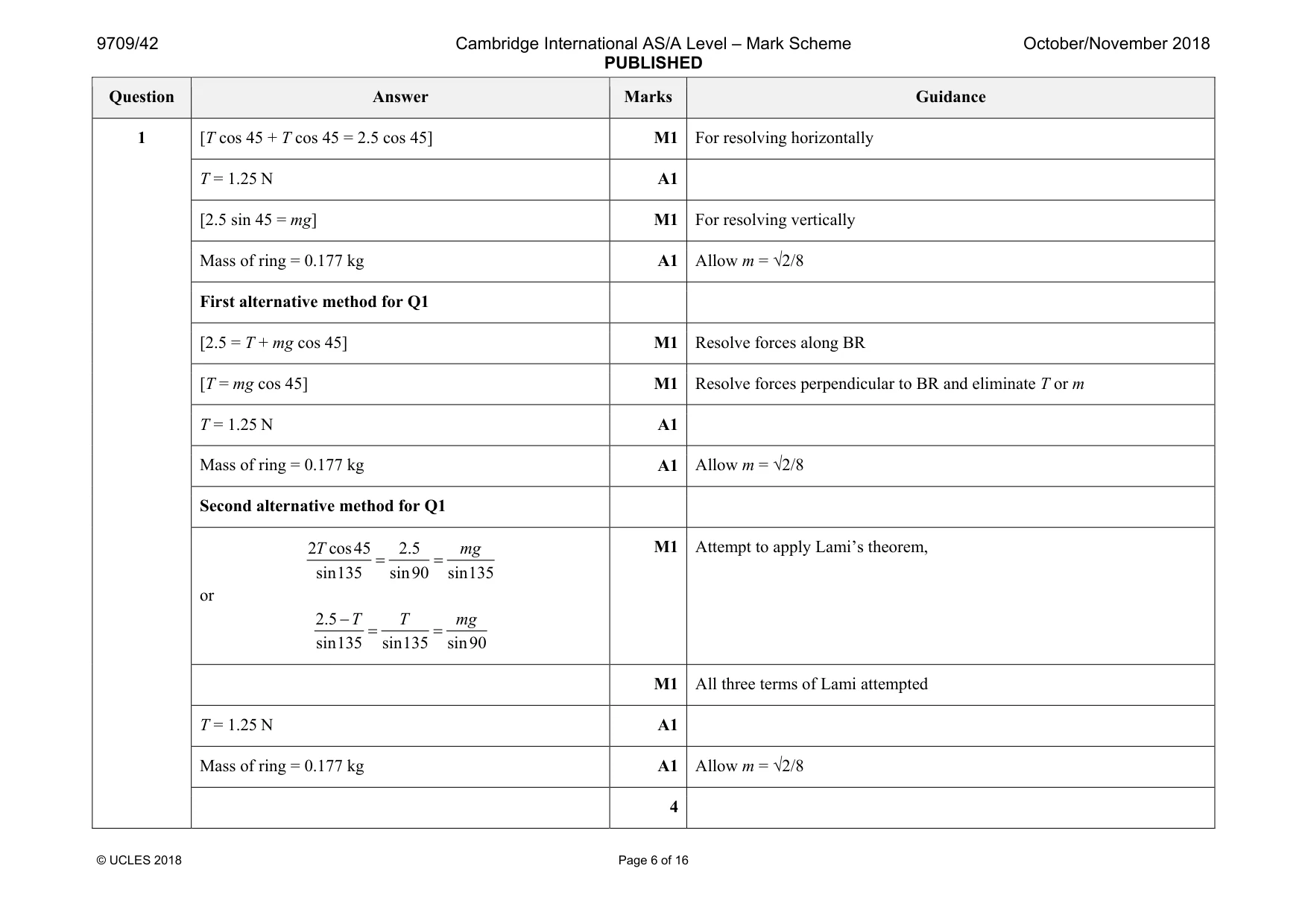
Mark scheme: 2 R = 5g cos 6 B1 [F = 0.3 × 5g cos 6] M1 Use of F = µR [T = 5g sin 6 + F] M1 For resolving along the plane T = 20.1 N (20.14425...) A1 4
Q3 · V m s−1 V t s 0 2 4 6 10 T −2 The velocity of a particle moving in a straight line is v m…
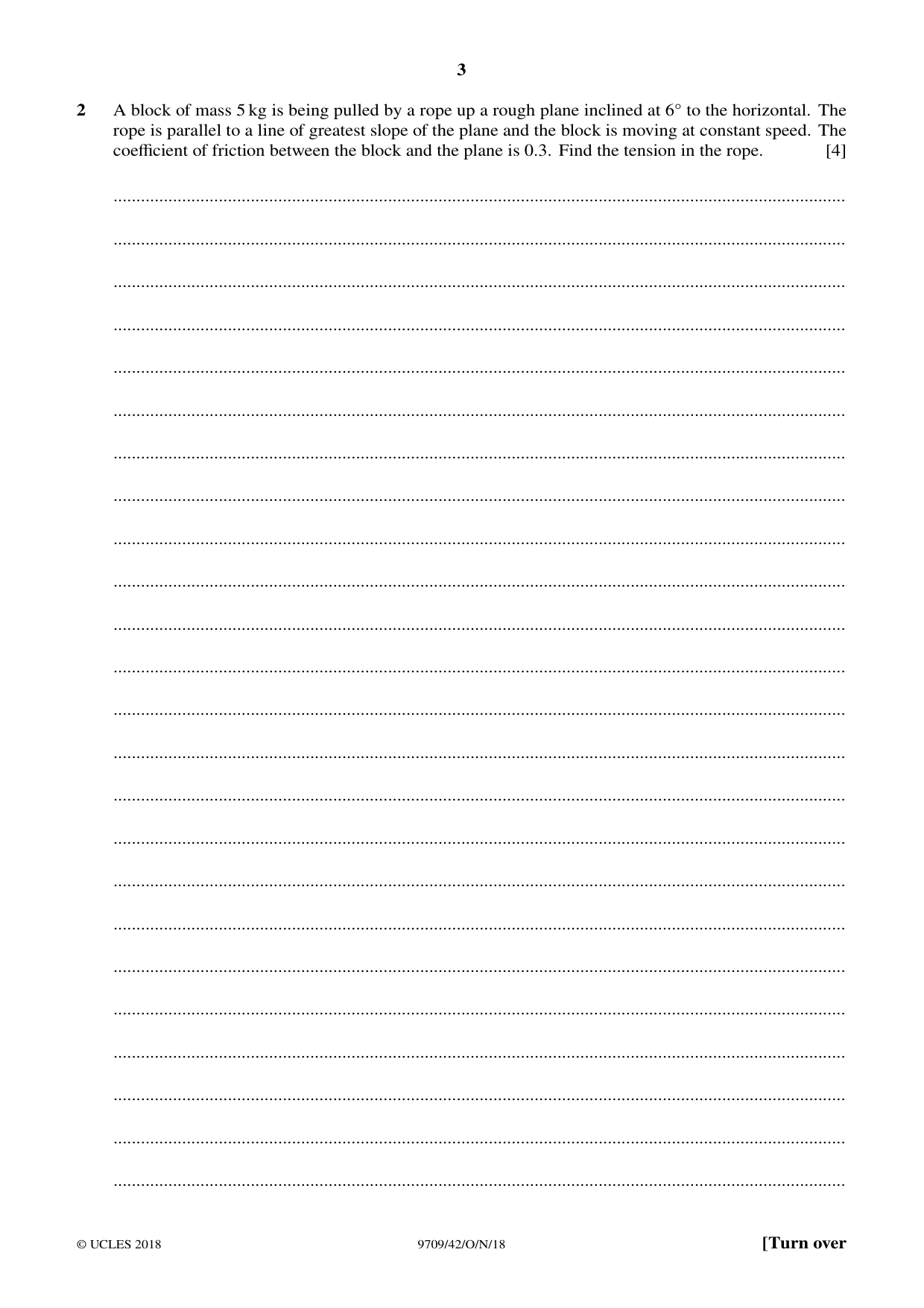
3 v m s−1 V t s 0 2 4 6 10 T −2 The velocity of a particle moving in a straight line is v m s−1 at time t seconds. The diagram shows a velocity-time graph which models the motion of the particle from t = 0 to t = T. The graph consists of four straight line segments. The particle reaches its maximum velocity V m s−1 at t = 10. (i) Find the acceleration of the particle during the first 2 seconds. [1] ........................................................................................................................................................ ........................................................................................................................................................ ........................................................................................................................................................ ........................................................................................................................................................ (ii) Find the value of V. [2] ........................................................................................................................................................ ........................................................................................................................................................ ........................................................................................................................................................ ........................................................................................................................................................ ........................................................................................................................................................ ........................................................................................................................................................ ........................................................................................................................................................ ........................................................................................................................................................ ........................................................................................................................................................ At t = 6, the particle is instantaneously at rest at the point A. At t = T, the particle comes to rest at the point B. At t = 0 the particle starts from rest at a point one third of the way from A to B. (iii) Find the distance AB and hence find the value of T. [4] ........................................................................................................................................................ ........................................................................................................................................................ ........................................................................................................................................................ ........................................................................................................................................................ ........................................................................................................................................................ ........................................................................................................................................................ ........................................................................................................................................................ ........................................................................................................................................................ ........................................................................................................................................................ ........................................................................................................................................................ ........................................................................................................................................................ ........................................................................................................................................................ ........................................................................................................................................................ ........................................................................................................................................................ ........................................................................................................................................................ ........................................................................................................................................................ ........................................................................................................................................................ ........................................................................................................................................................ ........................................................................................................................................................ ........................................................................................................................................................ ........................................................................................................................................................ ........................................................................................................................................................ ........................................................................................................................................................ ........................................................................................................................................................
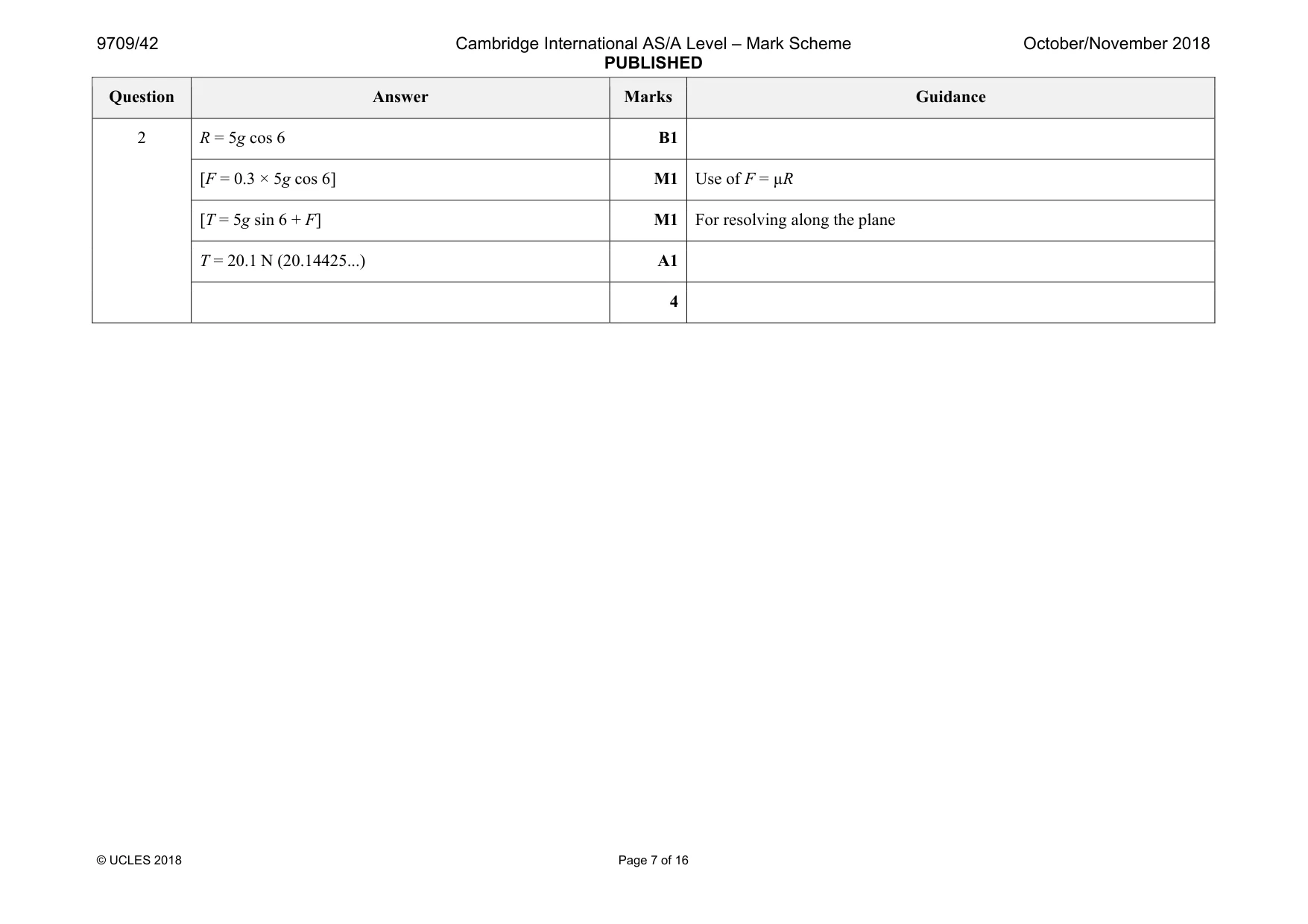
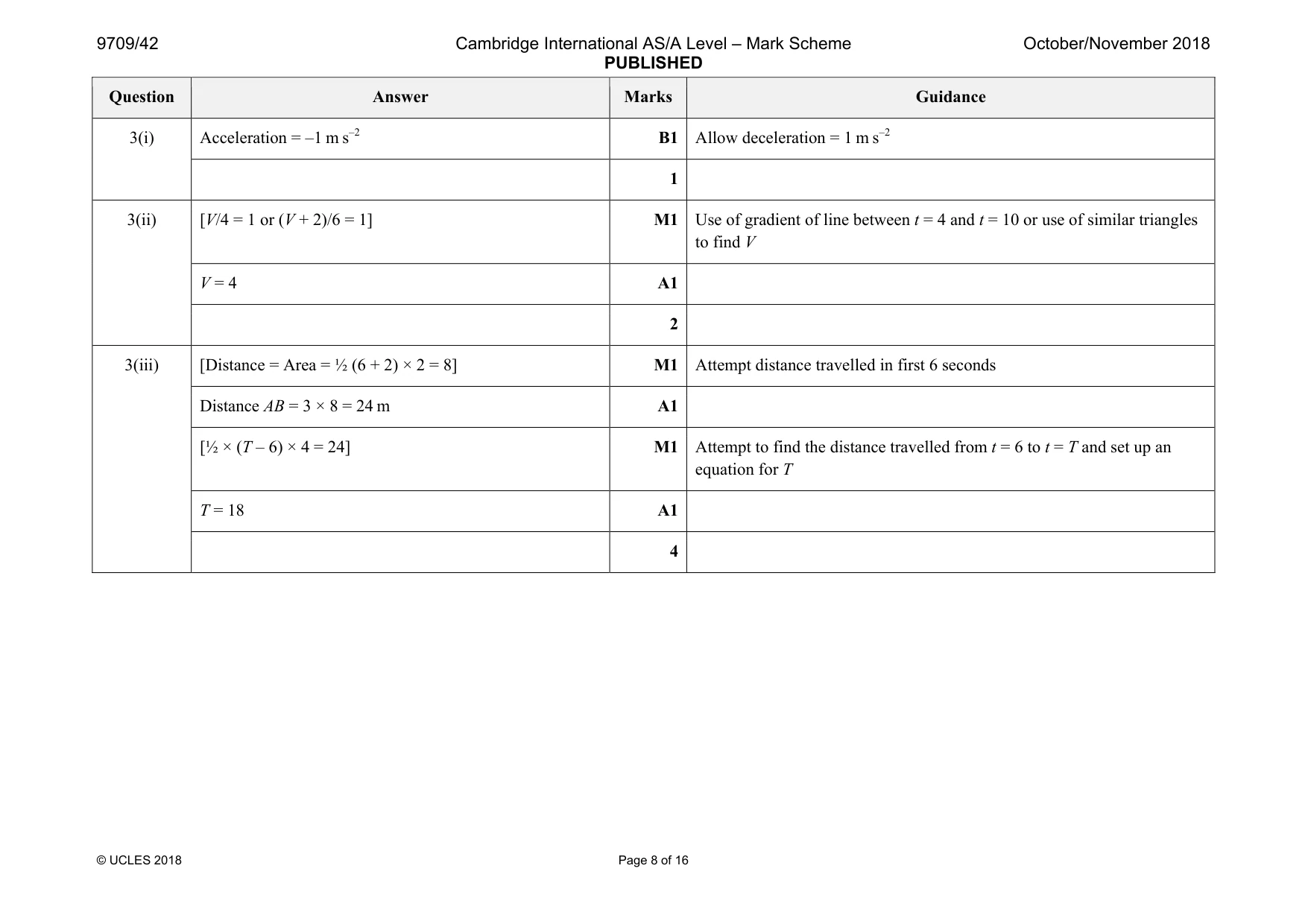
Mark scheme: 3(i) B1 1 3(ii) [V/4 = 1 or (V + 2)/6 = 1] M1 Use of gradient of line between t = 4 and t = 10 or use of similar triangles to find V V = 4 A1 2 3(iii) [Distance = Area = ½ (6 + 2) × 2 = 8] M1 Attempt distance travelled in first 6 seconds Distance AB = 3 × 8 = 24 m A1 [½ × (T – 6) × 4 = 24] M1 Attempt to find the distance travelled from t = 6 to t = T and set up an equation for T T = 18 A1 4
Q4 · P 0.4 kg Q 0.7 kg !
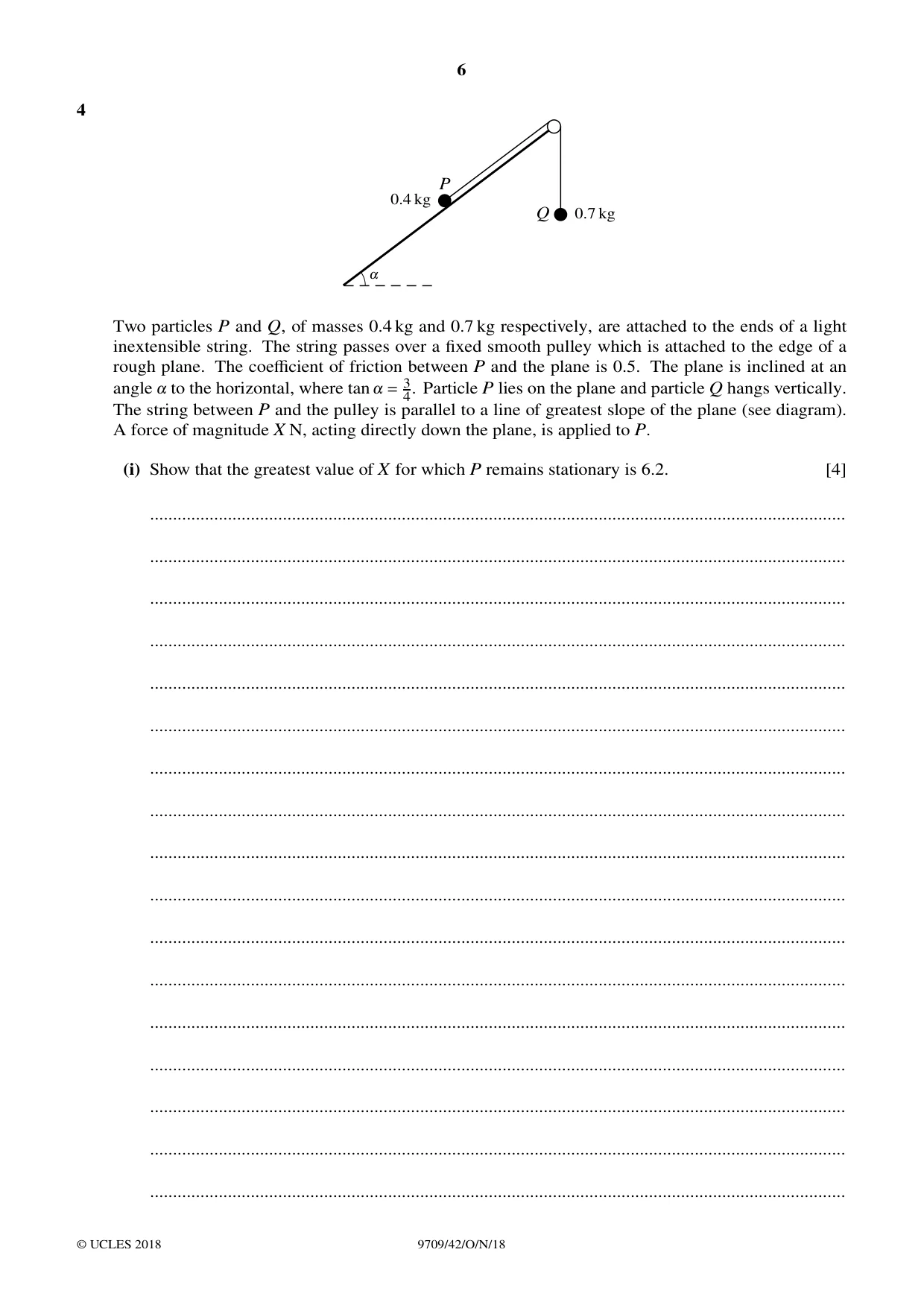
4 P 0.4 kg Q 0.7 kg ! Two particles P and Q, of masses 0.4 kg and 0.7 kg respectively, are attached to the ends of a light inextensible string. The string passes over a fixed smooth pulley which is attached to the edge of a rough plane. The coefficient of friction between P and the plane is 0.5. The plane is inclined at an angle ! to the horizontal, where tan ! = 34. Particle P lies on the plane and particle Q hangs vertically. The string between P and the pulley is parallel to a line of greatest slope of the plane (see diagram). A force of magnitude X N, acting directly down the plane, is applied to P. (i) Show that the greatest value of X for which P remains stationary is 6.2. [4] ........................................................................................................................................................ ........................................................................................................................................................ ........................................................................................................................................................ ........................................................................................................................................................ ........................................................................................................................................................ ........................................................................................................................................................ ........................................................................................................................................................ ........................................................................................................................................................ ........................................................................................................................................................ ........................................................................................................................................................ ........................................................................................................................................................ ........................................................................................................................................................ ........................................................................................................................................................ ........................................................................................................................................................ ........................................................................................................................................................ ........................................................................................................................................................ ........................................................................................................................................................ (ii) Given instead that X = 0.8, find the acceleration of P. [4] ........................................................................................................................................................ ........................................................................................................................................................ ........................................................................................................................................................ ........................................................................................................................................................ ........................................................................................................................................................ ........................................................................................................................................................ ........................................................................................................................................................ ........................................................................................................................................................ ........................................................................................................................................................ ........................................................................................................................................................ ........................................................................................................................................................ ........................................................................................................................................................ ........................................................................................................................................................ ........................................................................................................................................................ ........................................................................................................................................................ ........................................................................................................................................................ ........................................................................................................................................................ ........................................................................................................................................................ ........................................................................................................................................................ ........................................................................................................................................................ ........................................................................................................................................................ ........................................................................................................................................................ ........................................................................................................................................................ ........................................................................................................................................................ ........................................................................................................................................................
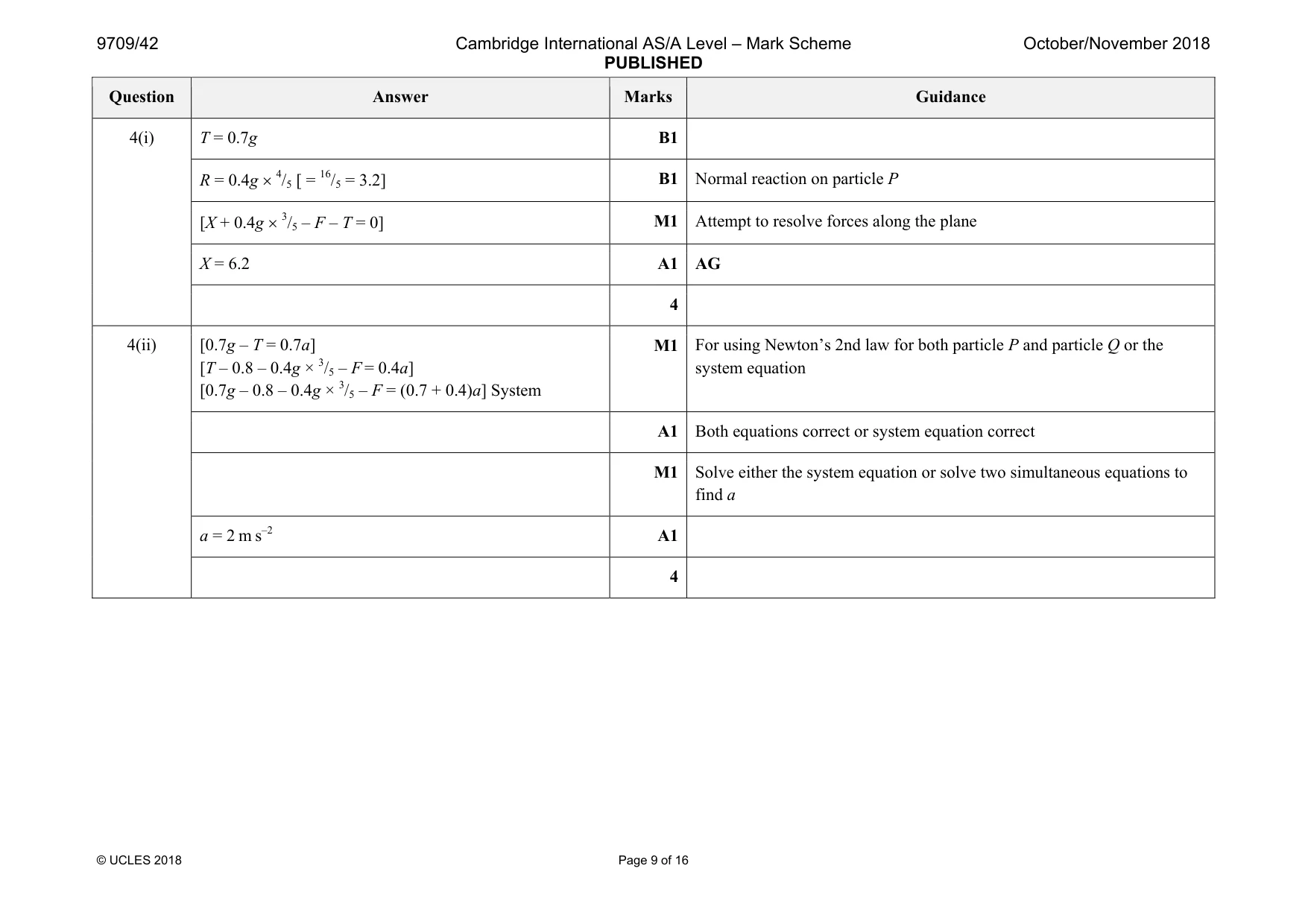
Mark scheme: 4(i) T = 0.7g B1 R = 0.4g × 4/5 [ = 16/5 = 3.2] B1 Normal reaction on particle P [X + 0.4g × 3/5 – F – T = 0] M1 Attempt to resolve forces along the plane X = 6.2 A1 AG 4 4(ii) [0.7g – T = 0.7a] [T – 0.8 – 0.4g × 3/5 – F = 0.4a] [0.7g – 0.8 – 0.4g × 3/5 – F = (0.7 + 0.4)a] System M1 For using Newton’s 2nd law for both particle P and particle Q or the system equation A1 Both equations correct or system equation correct M1 Solve either the system equation or solve two simultaneous equations to find a a = 2 m s–2 A1 4
Q5 · A particle moves in a straight line starting from a point O with initial velocity 1 m s−1
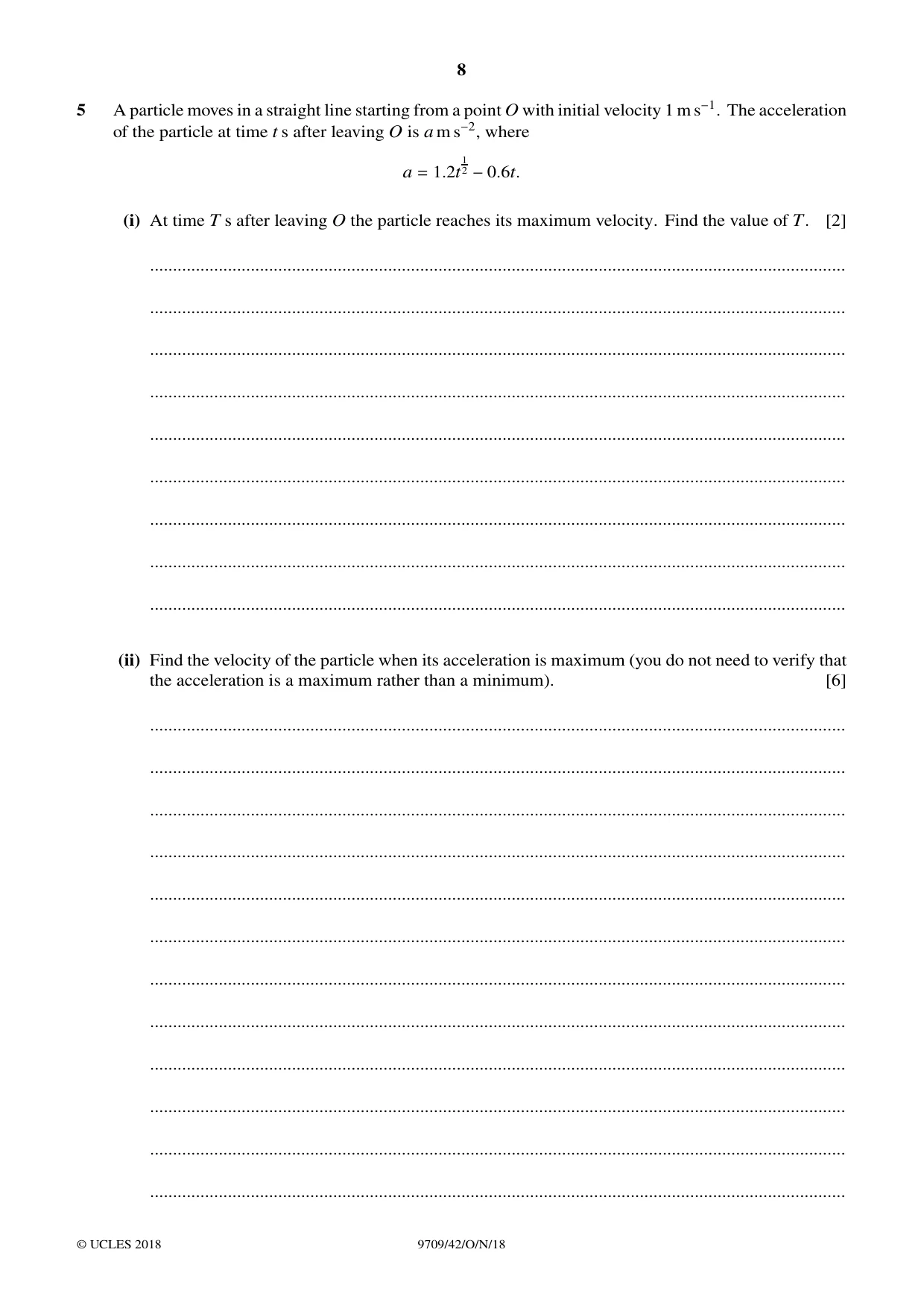
5 A particle moves in a straight line starting from a point O with initial velocity 1 m s−1. The acceleration of the particle at time t s after leaving O is a m s−2, where 1 a = 1.2t 2 −0.6t. (i) At time T s after leaving O the particle reaches its maximum velocity. Find the value of T. [2] ........................................................................................................................................................ ........................................................................................................................................................ ........................................................................................................................................................ ........................................................................................................................................................ ........................................................................................................................................................ ........................................................................................................................................................ ........................................................................................................................................................ ........................................................................................................................................................ ........................................................................................................................................................ (ii) Find the velocity of the particle when its acceleration is maximum (you do not need to verify that the acceleration is a maximum rather than a minimum). [6] ........................................................................................................................................................ ........................................................................................................................................................ ........................................................................................................................................................ ........................................................................................................................................................ ........................................................................................................................................................ ........................................................................................................................................................ ........................................................................................................................................................ ........................................................................................................................................................ ........................................................................................................................................................ ........................................................................................................................................................ ........................................................................................................................................................ ........................................................................................................................................................ ........................................................................................................................................................ ........................................................................................................................................................ ........................................................................................................................................................ ........................................................................................................................................................ ........................................................................................................................................................ ........................................................................................................................................................ ........................................................................................................................................................ ........................................................................................................................................................ ........................................................................................................................................................ ........................................................................................................................................................ ........................................................................................................................................................ ........................................................................................................................................................ ........................................................................................................................................................ ........................................................................................................................................................ ........................................................................................................................................................ ........................................................................................................................................................ ........................................................................................................................................................ ........................................................................................................................................................ ........................................................................................................................................................ ........................................................................................................................................................ ........................................................................................................................................................ ........................................................................................................................................................ ........................................................................................................................................................ ........................................................................................................................................................ ........................................................................................................................................................
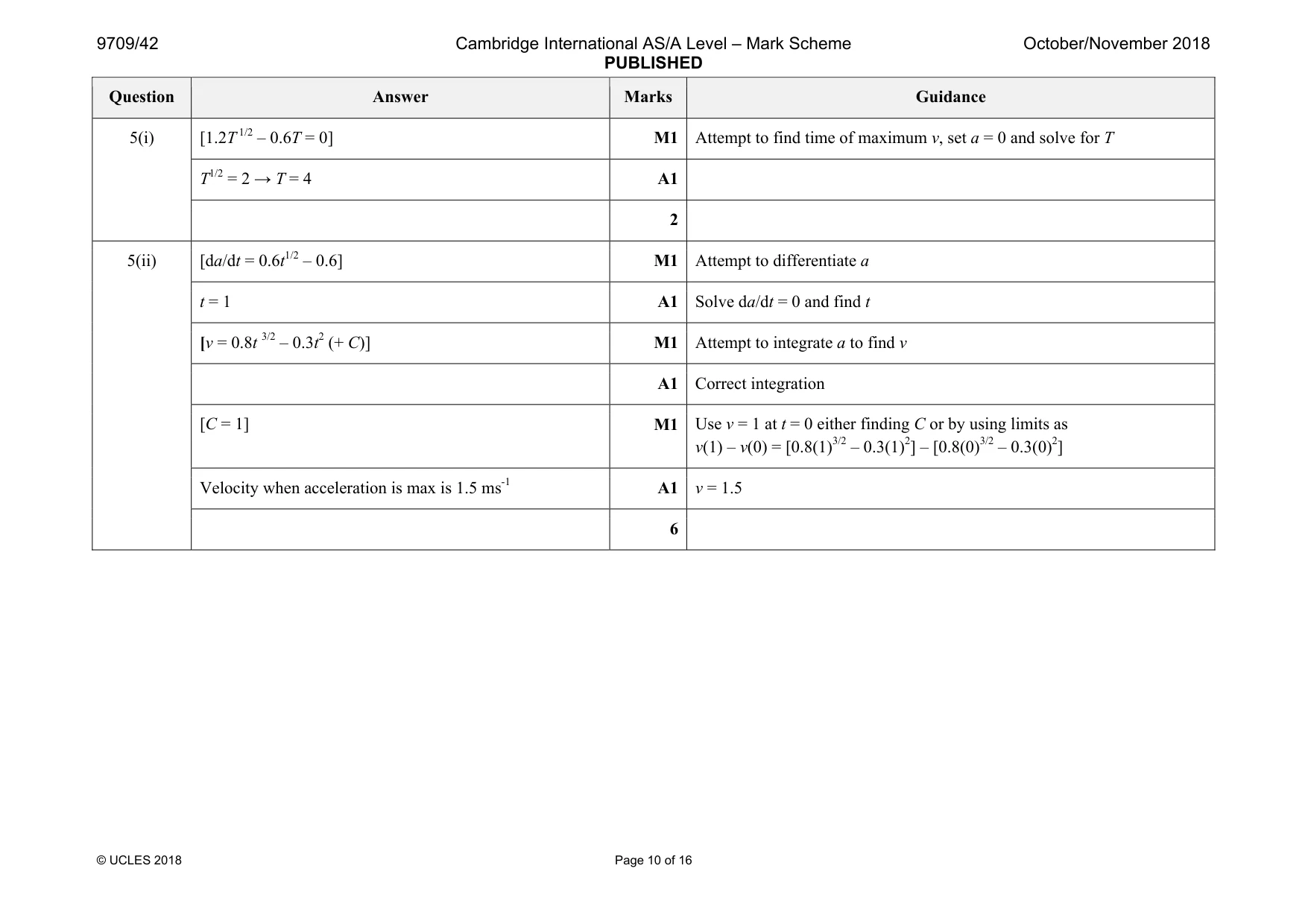
Mark scheme: 5(i) M1 Attempt to find time of maximum v, set a = 0 and solve for T T1/2 = 2 → T = 4 A1 2 5(ii) [da/dt = 0.6t1/2 – 0.6] M1 Attempt to differentiate a t = 1 A1 Solve da/dt = 0 and find t [v = 0.8t 3/2 – 0.3t2 (+ C)] M1 Attempt to integrate a to find v A1 Correct integration [C = 1] M1 Use v = 1 at t = 0 either finding C or by using limits as v(1) – v(0) = [0.8(1)3/2 – 0.3(1)2] – [0.8(0)3/2 – 0.3(0)2] Velocity when acceleration is max is 1.5 ms-1 A1 v = 1.5 6
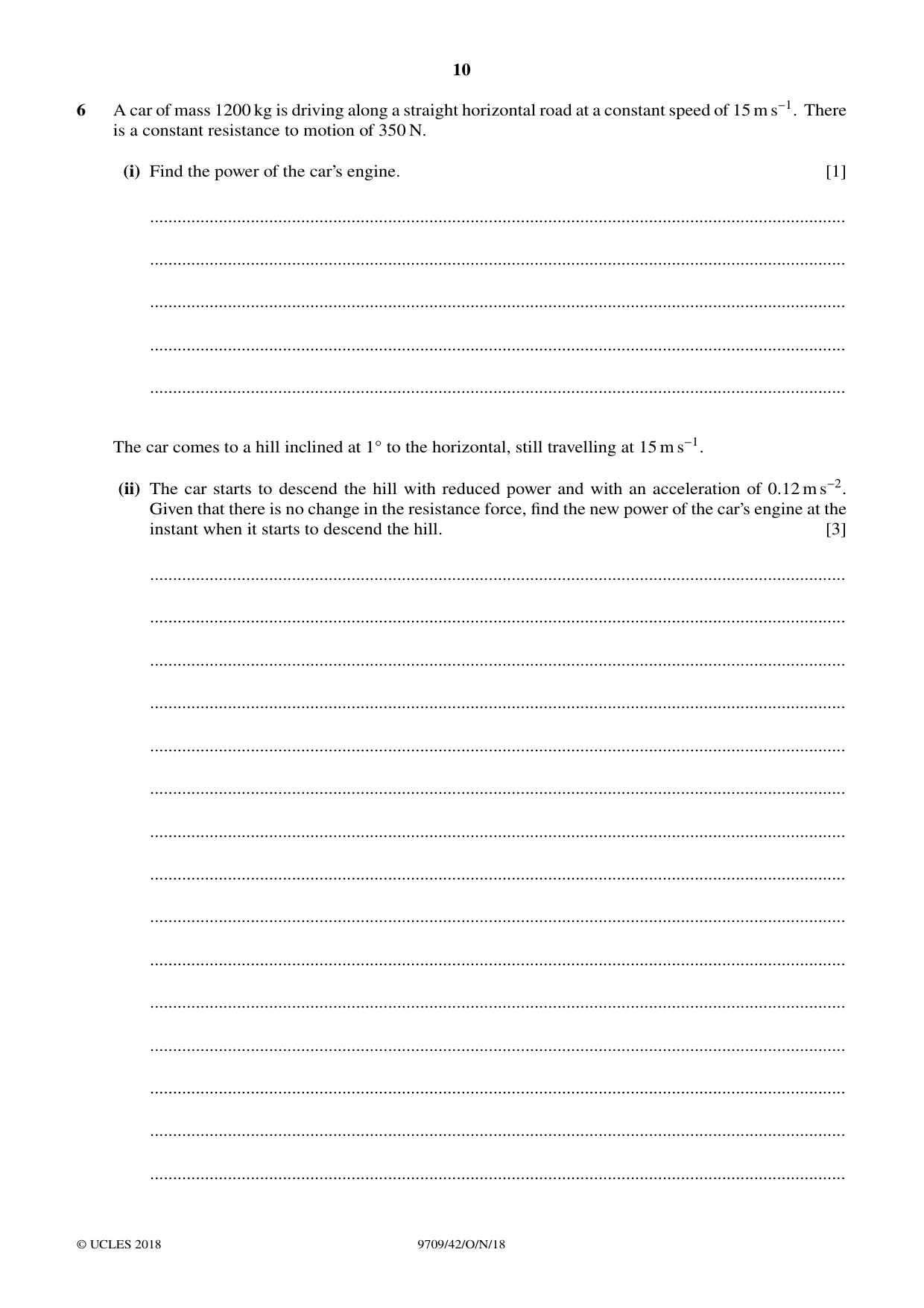
Q6 · A car of mass 1200 kg is driving along a straight horizontal road at a constant speed of…
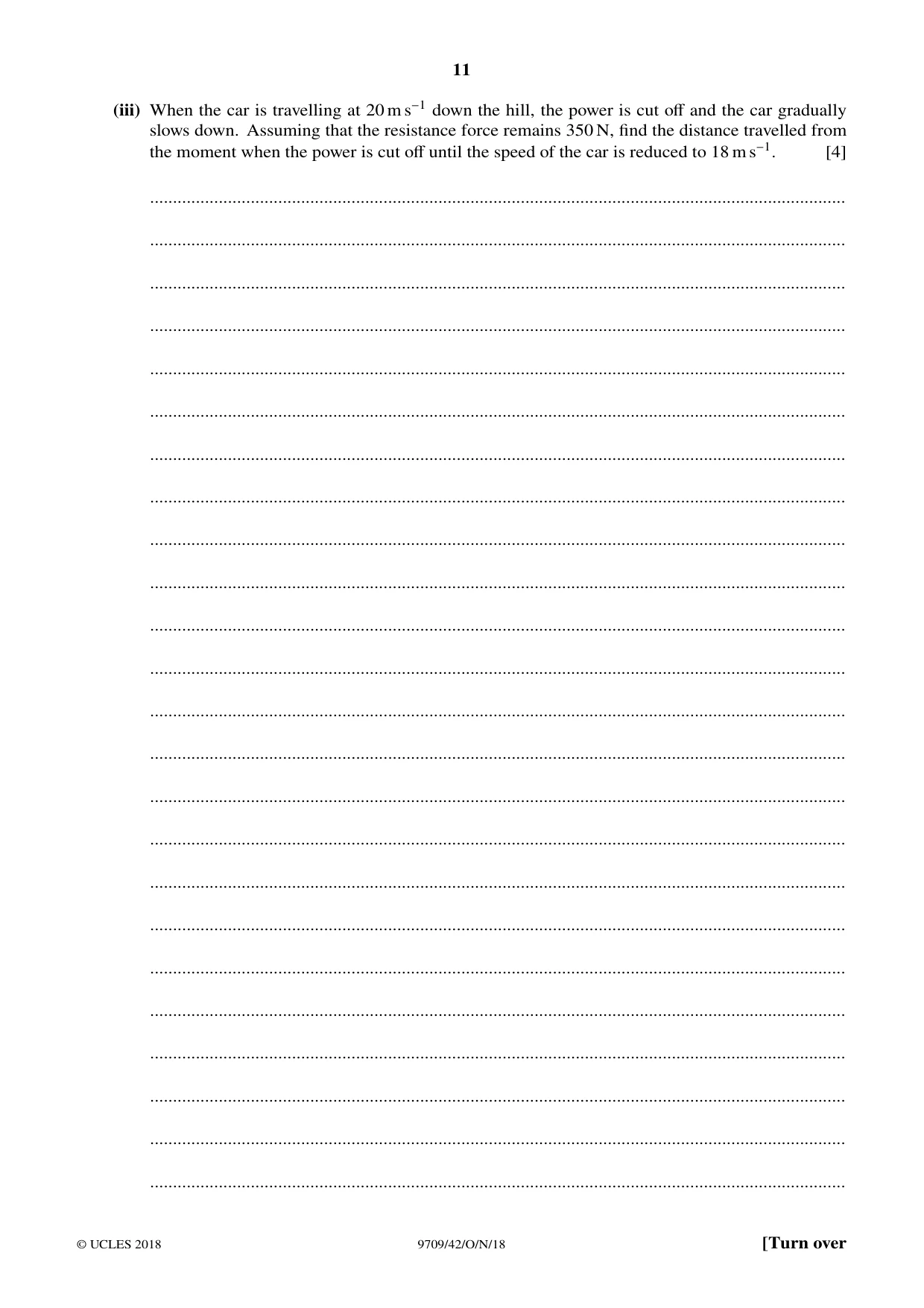
6 A car of mass 1200 kg is driving along a straight horizontal road at a constant speed of 15 m s−1. There is a constant resistance to motion of 350 N. (i) Find the power of the car’s engine. [1] ........................................................................................................................................................ ........................................................................................................................................................ ........................................................................................................................................................ ........................................................................................................................................................ ........................................................................................................................................................ The car comes to a hill inclined at 1Å to the horizontal, still travelling at 15 m s−1. (ii) The car starts to descend the hill with reduced power and with an acceleration of 0.12 m s−2. Given that there is no change in the resistance force, find the new power of the car’s engine at the instant when it starts to descend the hill. [3] ........................................................................................................................................................ ........................................................................................................................................................ ........................................................................................................................................................ ........................................................................................................................................................ ........................................................................................................................................................ ........................................................................................................................................................ ........................................................................................................................................................ ........................................................................................................................................................ ........................................................................................................................................................ ........................................................................................................................................................ ........................................................................................................................................................ ........................................................................................................................................................ ........................................................................................................................................................ ........................................................................................................................................................ ........................................................................................................................................................ (iii) When the car is travelling at 20 m s−1 down the hill, the power is cut offand the car gradually slows down. Assuming that the resistance force remains 350 N, find the distance travelled from the moment when the power is cut offuntil the speed of the car is reduced to 18 m s−1. [4] ........................................................................................................................................................ ........................................................................................................................................................ ........................................................................................................................................................ ........................................................................................................................................................ ........................................................................................................................................................ ........................................................................................................................................................ ........................................................................................................................................................ ........................................................................................................................................................ ........................................................................................................................................................ ........................................................................................................................................................ ........................................................................................................................................................ ........................................................................................................................................................ ........................................................................................................................................................ ........................................................................................................................................................ ........................................................................................................................................................ ........................................................................................................................................................ ........................................................................................................................................................ ........................................................................................................................................................ ........................................................................................................................................................ ........................................................................................................................................................ ........................................................................................................................................................ ........................................................................................................................................................ ........................................................................................................................................................ ........................................................................................................................................................
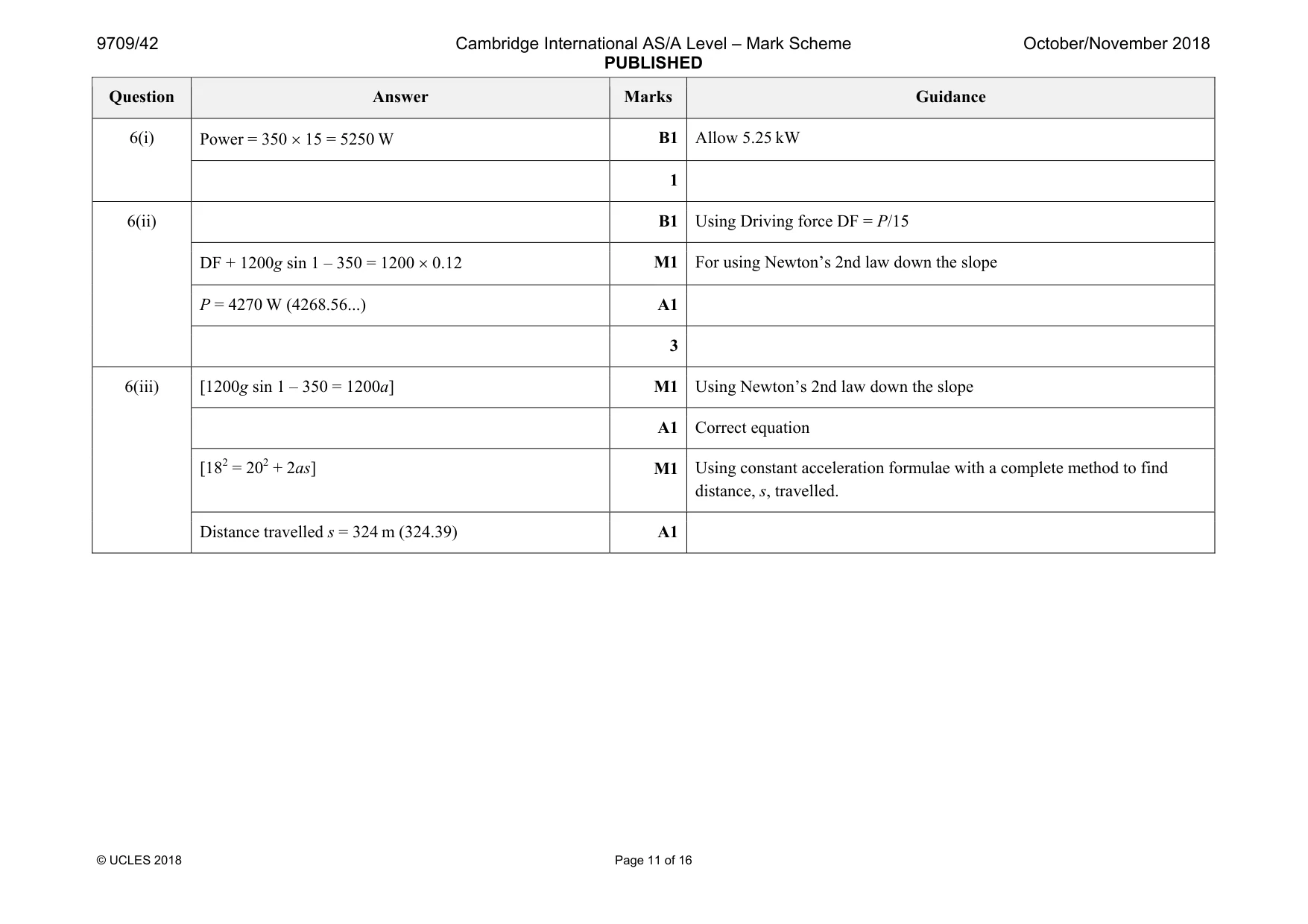
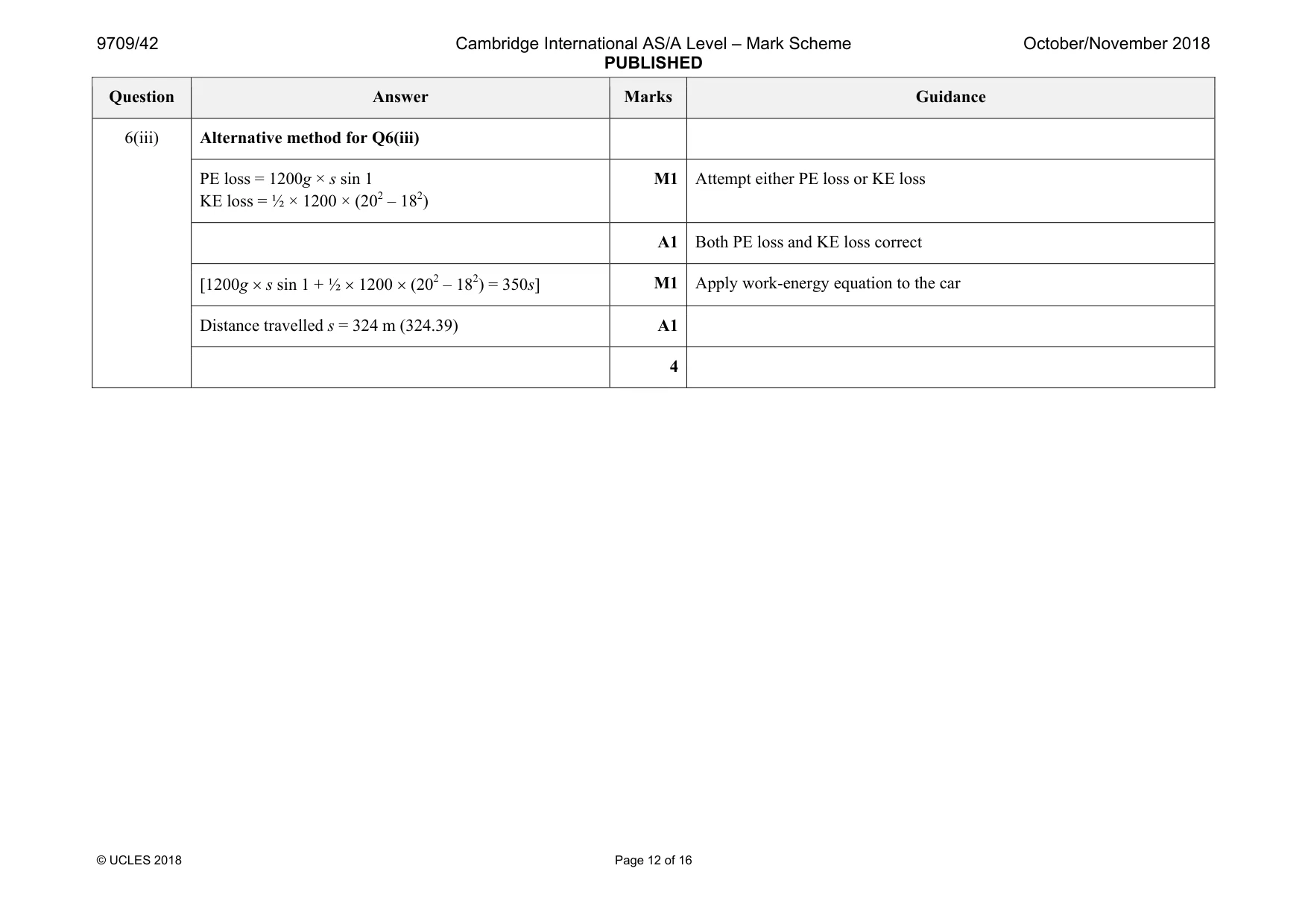
Mark scheme: 6(i) B1 1 6(ii) B1 Using Driving force DF = P/15 DF + 1200g sin 1 – 350 = 1200 × 0.12 M1 For using Newton’s 2nd law down the slope P = 4270 W (4268.56...) A1 3 6(iii) [1200g sin 1 – 350 = 1200a] M1 Using Newton’s 2nd law down the slope A1 Correct equation [182 = 202 + 2as] M1 Using constant acceleration formulae with a complete method to find distance, s, travelled. Distance travelled s = 324 m (324.39) A1 Question Answer Marks Guidance 6(iii) Alternative method for Q6(iii) PE loss = 1200g × s sin 1 KE loss = ½ × 1200 × (202 – 182) M1 Attempt either PE loss or KE loss A1 Both PE loss and KE loss correct [1200g × s sin 1 + ½ × 1200 × (202 – 182) = 350s] M1 Apply work-energy equation to the car Distance travelled s = 324 m (324.39) A1 4
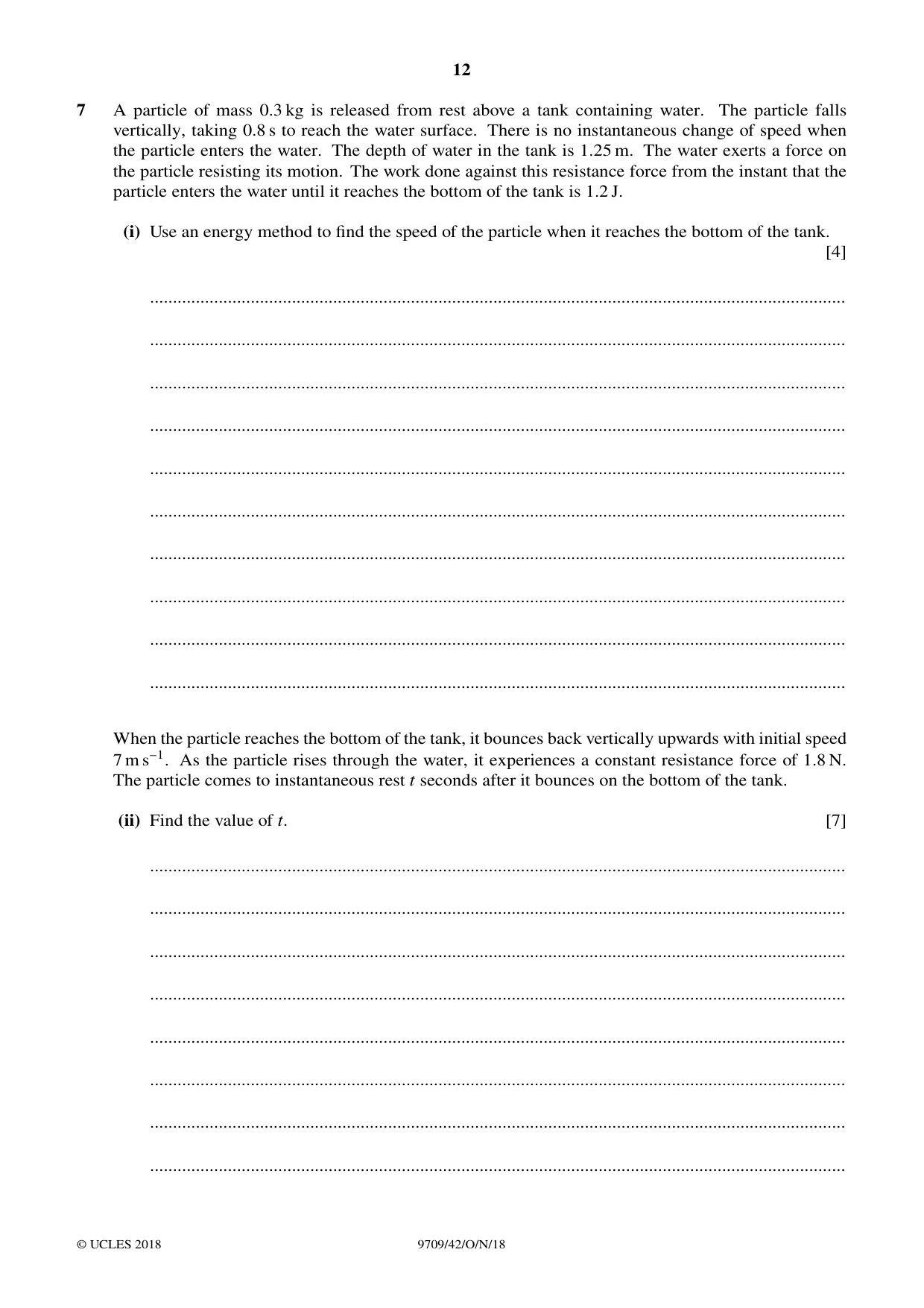
Q7 · A particle of mass 0.3 kg is released from rest above a tank containing water
7 A particle of mass 0.3 kg is released from rest above a tank containing water. The particle falls vertically, taking 0.8 s to reach the water surface. There is no instantaneous change of speed when the particle enters the water. The depth of water in the tank is 1.25 m. The water exerts a force on the particle resisting its motion. The work done against this resistance force from the instant that the particle enters the water until it reaches the bottom of the tank is 1.2 J. (i) Use an energy method to find the speed of the particle when it reaches the bottom of the tank. [4] ........................................................................................................................................................ ........................................................................................................................................................ ........................................................................................................................................................ ........................................................................................................................................................ ........................................................................................................................................................ ........................................................................................................................................................ ........................................................................................................................................................ ........................................................................................................................................................ ........................................................................................................................................................ ........................................................................................................................................................ When the particle reaches the bottom of the tank, it bounces back vertically upwards with initial speed 7 m s−1. As the particle rises through the water, it experiences a constant resistance force of 1.8 N. The particle comes to instantaneous rest t seconds after it bounces on the bottom of the tank. (ii) Find the value of t. [7] ........................................................................................................................................................ ........................................................................................................................................................ ........................................................................................................................................................ ........................................................................................................................................................ ........................................................................................................................................................ ........................................................................................................................................................ ........................................................................................................................................................ ........................................................................................................................................................ ........................................................................................................................................................ ........................................................................................................................................................ ........................................................................................................................................................ ........................................................................................................................................................ ........................................................................................................................................................ ........................................................................................................................................................ ........................................................................................................................................................ ........................................................................................................................................................ ........................................................................................................................................................ ........................................................................................................................................................ ........................................................................................................................................................ ........................................................................................................................................................ ........................................................................................................................................................ ........................................................................................................................................................ ........................................................................................................................................................ ........................................................................................................................................................ ........................................................................................................................................................ ........................................................................................................................................................ ........................................................................................................................................................ ........................................................................................................................................................ ........................................................................................................................................................ ........................................................................................................................................................ ........................................................................................................................................................ ........................................................................................................................................................ ........................................................................................................................................................
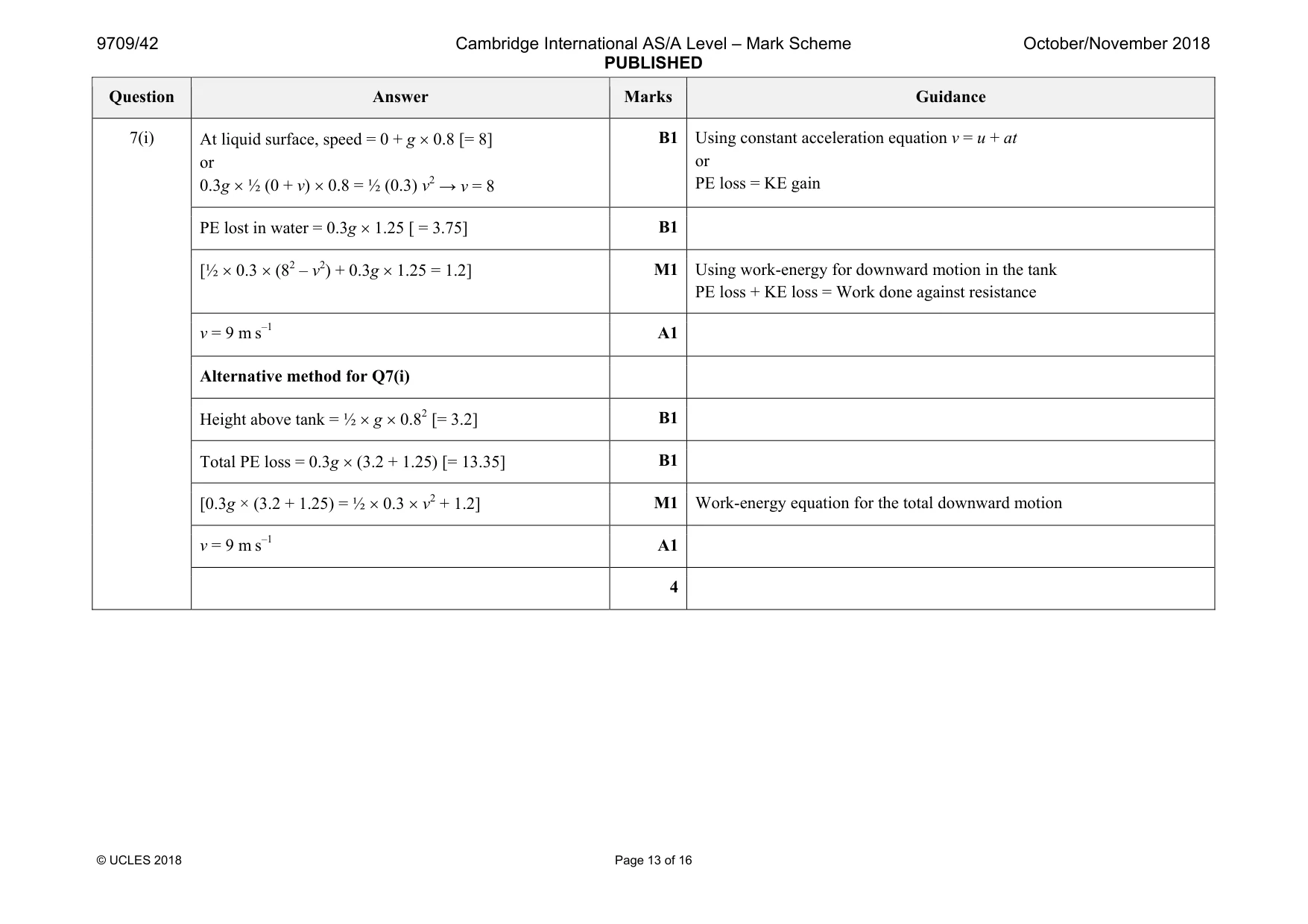
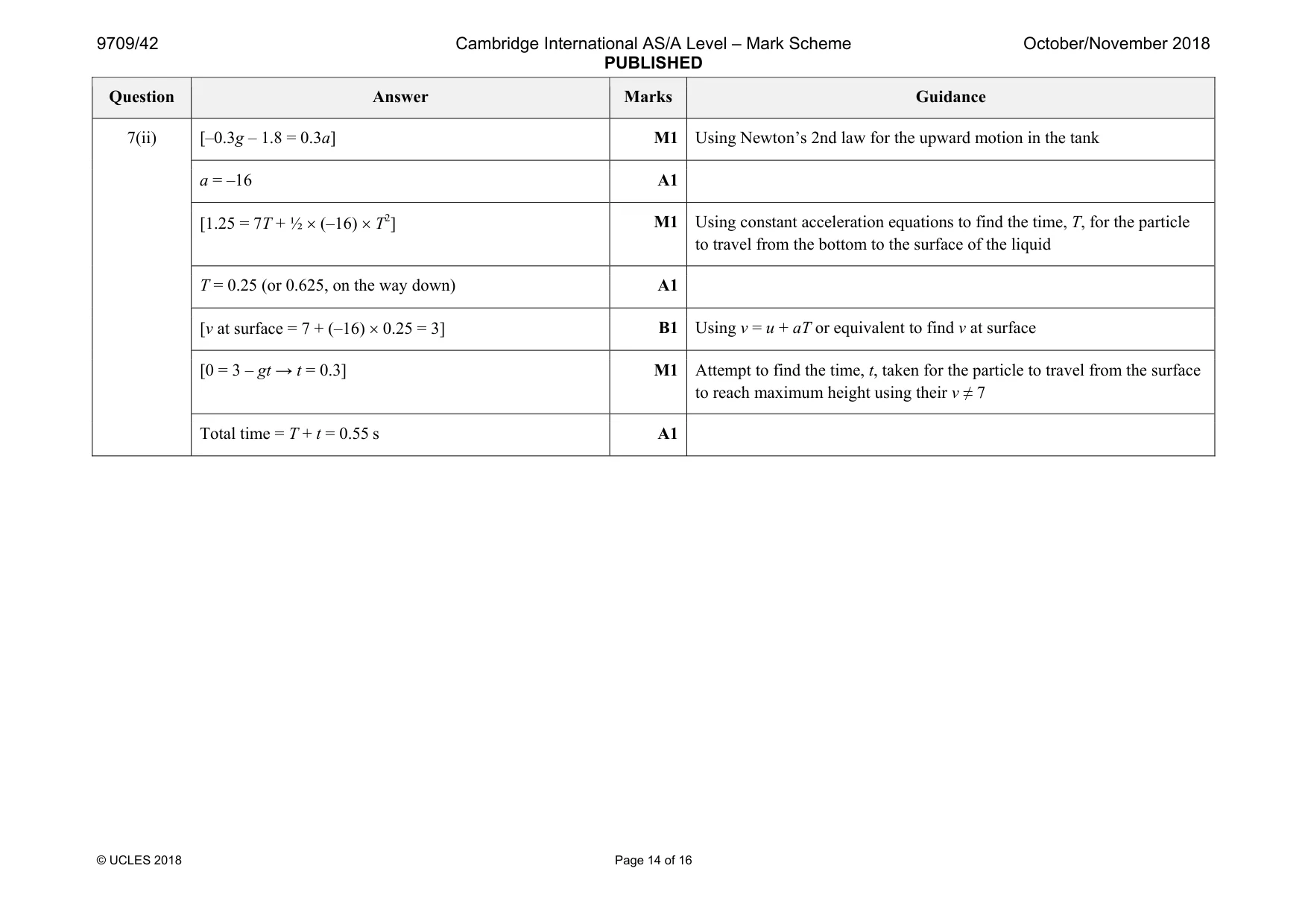
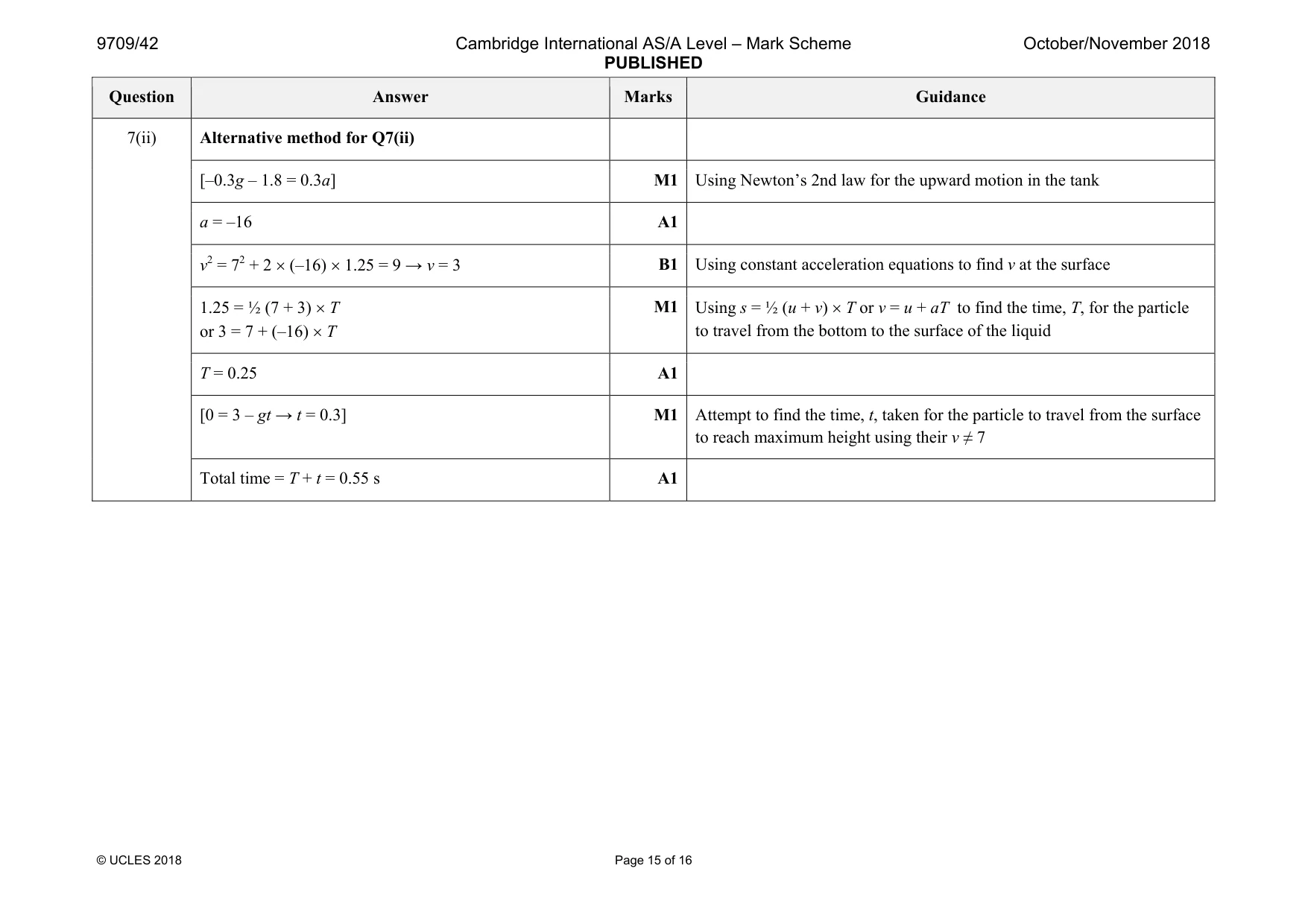
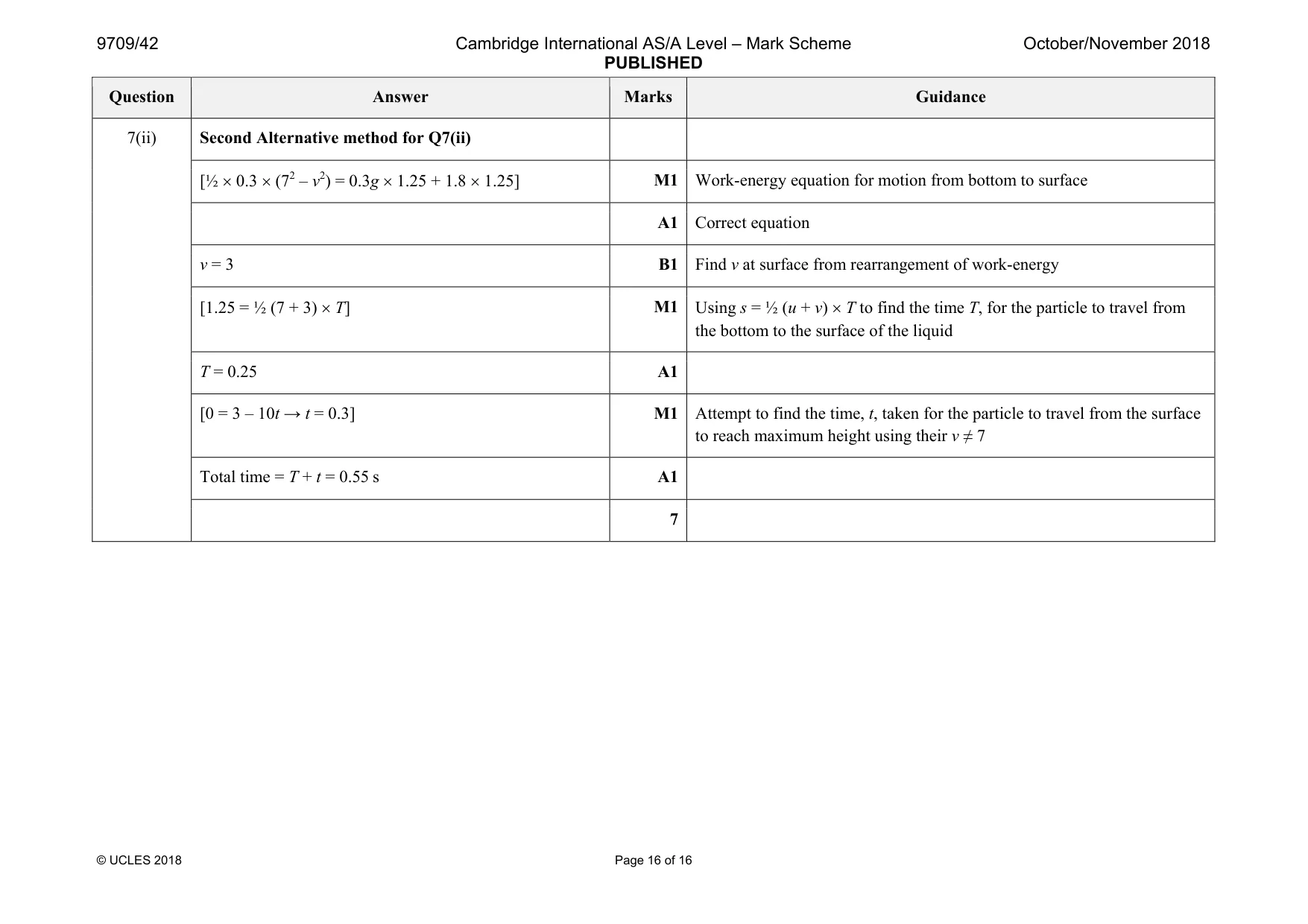
Mark scheme: 7(i) or 0.3g × ½ (0 + v) × 0.8 = ½ (0.3) v2 → v = 8 B1 Using constant acceleration equation v = u + at or PE loss = KE gain PE lost in water = 0.3g × 1.25 [ = 3.75] B1 [½ × 0.3 × (82 – v2) + 0.3g × 1.25 = 1.2] M1 Using work-energy for downward motion in the tank PE loss + KE loss = Work done against resistance v = 9 m s–1 A1 Alternative method for Q7(i) Height above tank = ½ × g × 0.82 [= 3.2] B1 Total PE loss = 0.3g × (3.2 + 1.25) [= 13.35] B1 [0.3g × (3.2 + 1.25) = ½ × 0.3 × v2 + 1.2] M1 Work-energy equation for the total downward motion v = 9 m s–1 A1 4 Question Answer Marks Guidance 7(ii) [–0.3g – 1.8 = 0.3a] M1 Using Newton’s 2nd law for the upward motion in the tank a = –16 A1 [1.25 = 7T + ½ × (–16) × T2] M1 Using constant acceleration equations to find the time, T, for the particle to travel from the bottom to the surface of the liquid T = 0.25 (or 0.625, on the way down) A1 [v at surface = 7 + (–16) × 0.25 = 3] B1 Using v = u + aT or equivalent to find v at surface [0 = 3 – gt → t = 0.3] M1 Attempt to find the time, t, taken for the particle to travel from the surface to reach maximum height using their v ≠ 7 Total time = T + t = 0.55 s A1 Question Answer Marks Guidance 7(ii) Alternative method for Q7(ii) [–0.3g – 1.8 = 0.3a] M1 Using Newton’s 2nd law for the upward motion in the tank a = –16 A1 v2 = 72 + 2 × (–16) × 1.25 = 9 → v = 3 B1 Using constant acceleration equations to find v at the surface 1.25 = ½ (7 + 3) × T or 3 = 7 + (–16) × T M1 Using s = ½ (u + v) × T or v = u + aT to find the time, T, for the particle to travel from the bottom to the surface of the liquid T = 0.25 A1 [0 = 3 – gt → t = 0.3] M1 Attempt to find the time, t, taken for the particle to travel from the surface to reach maximum height using their v ≠ 7 Total time = T + t = 0.55 s A1 Question Answer Marks Guidance 7(ii) Second Alternative method for Q7(ii) [½ × 0.3 × (72 – v2) = 0.3g × 1.25 + 1.8 × 1.25] M1 Work-energy equation for motion from bottom to surface A1 Correct equation v = 3 B1 Find v at surface from rearrangement of work-energy [1.25 = ½ (7 + 3) × T] M1 Using s = ½ (u + v) × T to find the time T, for the particle to travel from the bottom to the surface of the liquid T = 0.25 A1 [0 = 3 – 10t → t = 0.3] M1 Attempt to find the time, t, taken for the particle to travel from the surface to reach maximum height using their v ≠ 7 Total time = T + t = 0.55 s A1 7
What was in this paper
The subtopics covered by these 7 questions, and how many questions each got. Open one in a new tab to see every Cambridge question on it.
What you needed in this session
Cambridge’s own grade thresholds for 2018 Oct/Nov, Paper 4 · Variant 2. A higher threshold means an easier paper — the bar moves with how the cohort did.