Cambridge A Level Mathematics 9709 — 2025 May/June Paper 4 · Variant 2
9709/42/M/J/25 · 6 questions · 50 marks · ≈56 min
The question paper and its mark scheme, free to read here and free to download. This is Cambridge’s own paper, exactly as it was sat.
Question paper16 pages
Mark scheme21 pages
Answers below. Sit the paper first if you are practising.
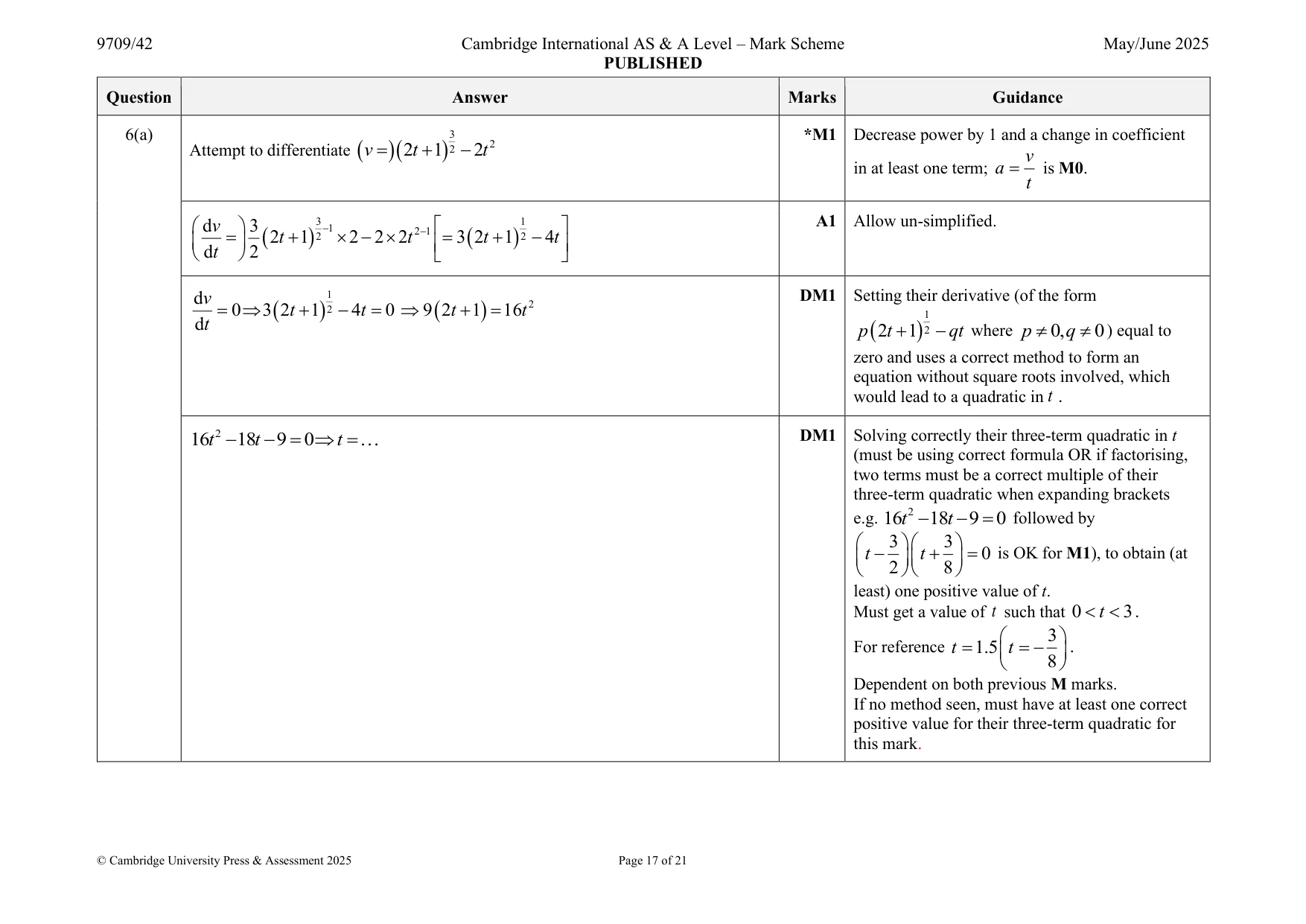
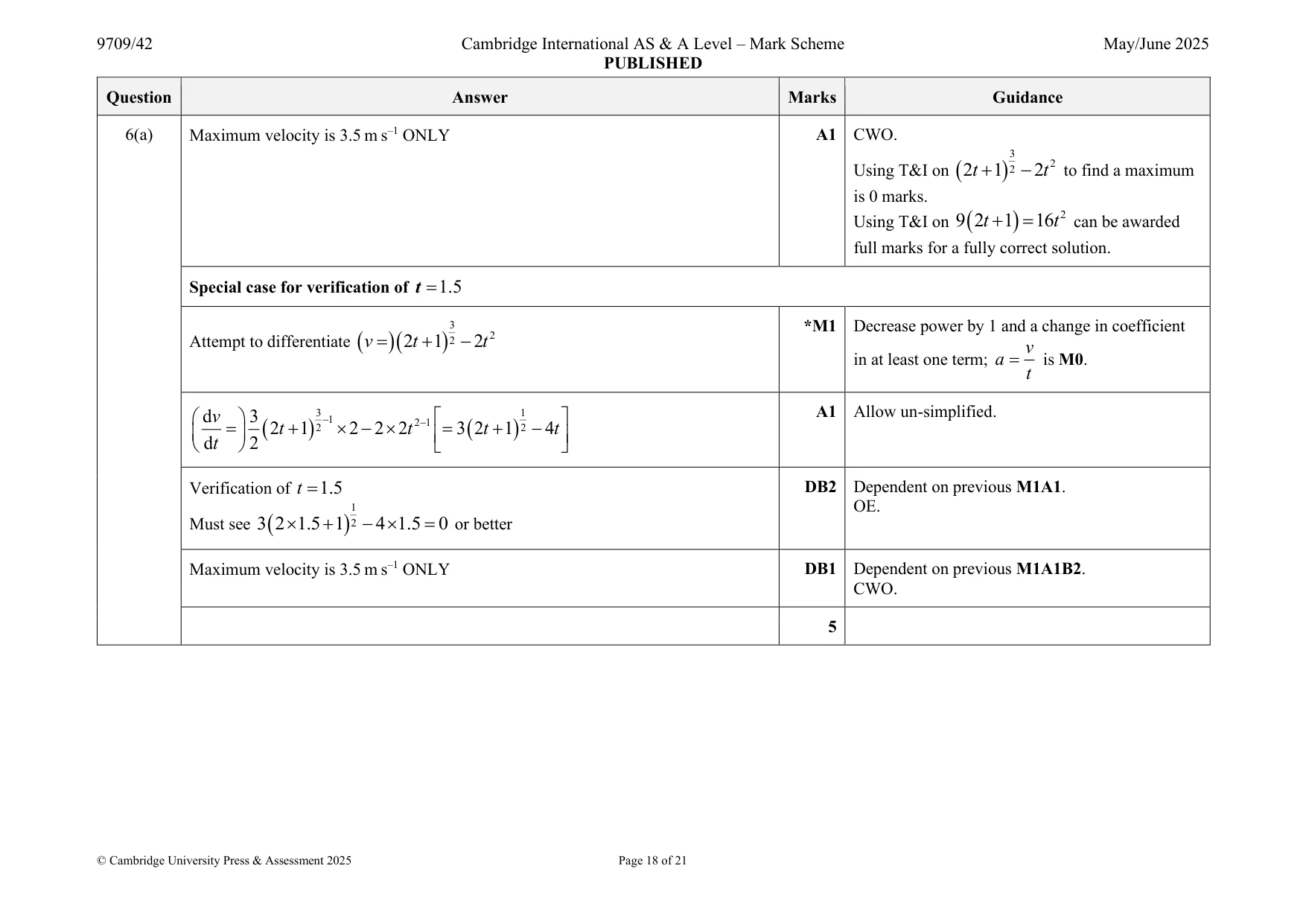
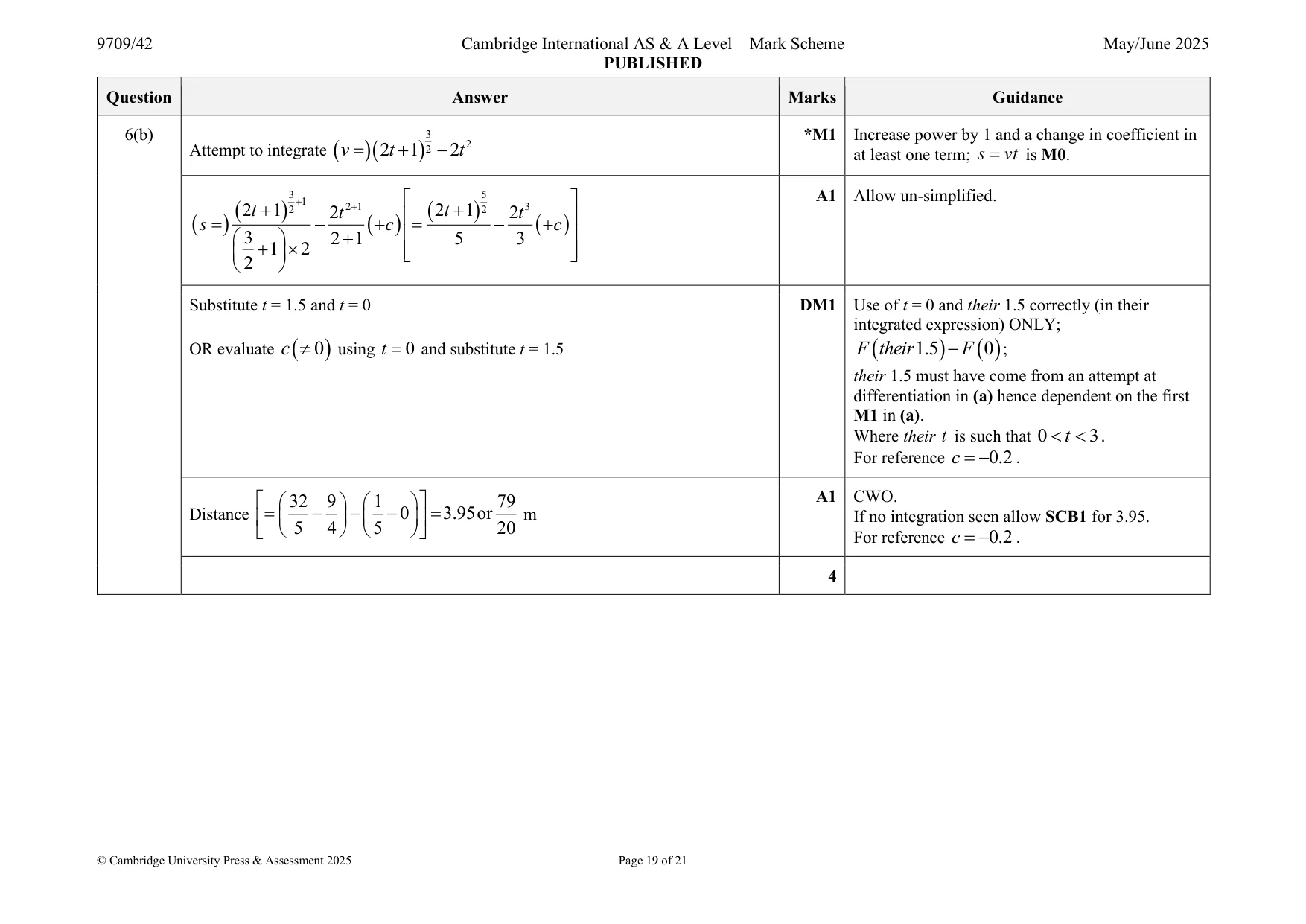
Questions as text
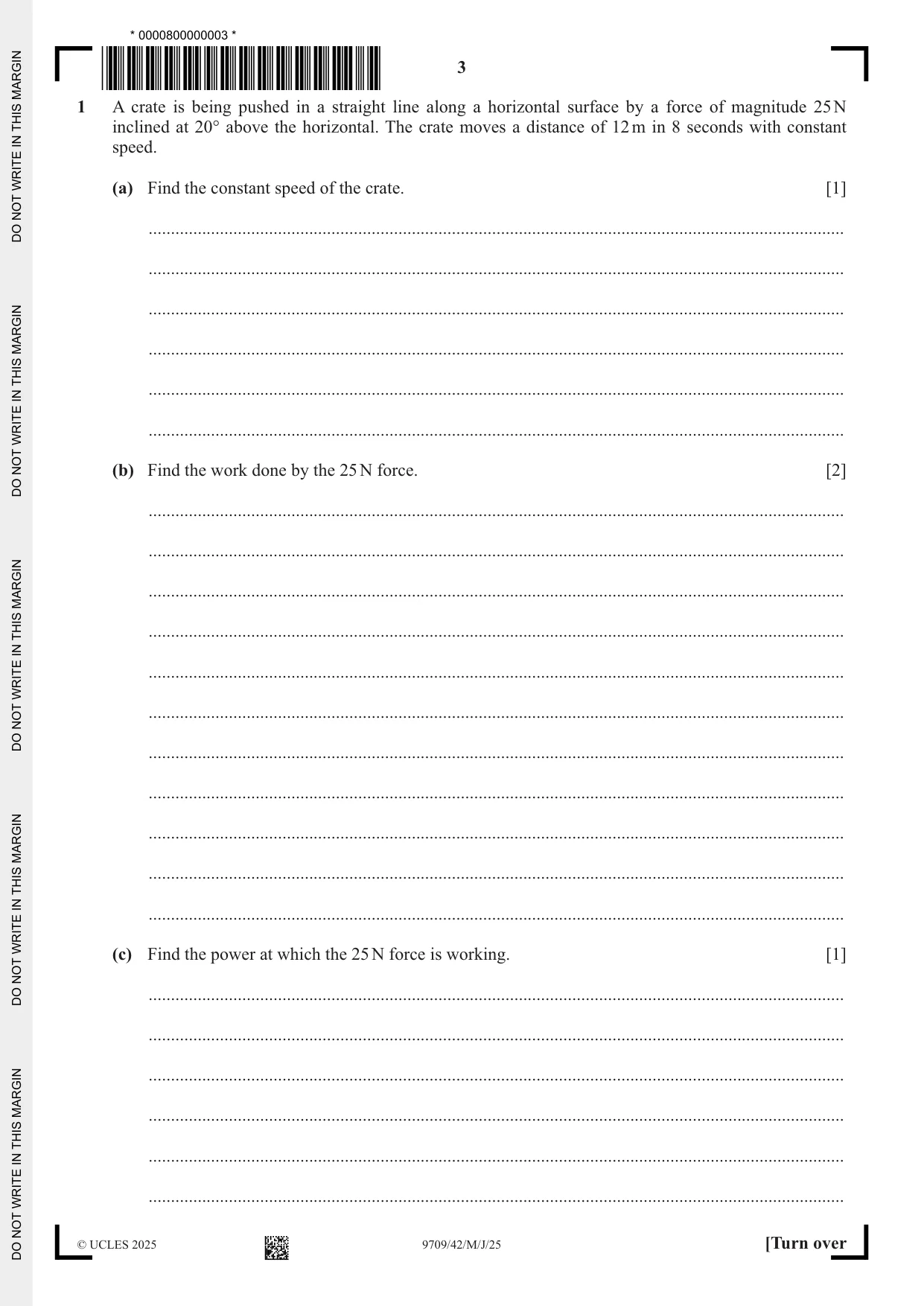
Q1 · A crate is being pushed in a straight line along a horizontal surface by a force of…
1 A crate is being pushed in a straight line along a horizontal surface by a force of magnitude 25 N inclined at 20° above the horizontal. The crate moves a distance of 12 m in 8 seconds with constant speed. (a) Find the constant speed of the crate. [1] ............................................................................................................................................................ ............................................................................................................................................................ ............................................................................................................................................................ ............................................................................................................................................................ ............................................................................................................................................................ ............................................................................................................................................................ (b) Find the work done by the 25 N force. [2] ............................................................................................................................................................ ............................................................................................................................................................ ............................................................................................................................................................ ............................................................................................................................................................ ............................................................................................................................................................ ............................................................................................................................................................ ............................................................................................................................................................ ............................................................................................................................................................ ............................................................................................................................................................ ............................................................................................................................................................ ............................................................................................................................................................ (c) Find the power at which the 25 N force is working. [1] ............................................................................................................................................................ ............................................................................................................................................................ ............................................................................................................................................................ ............................................................................................................................................................ ............................................................................................................................................................ ............................................................................................................................................................
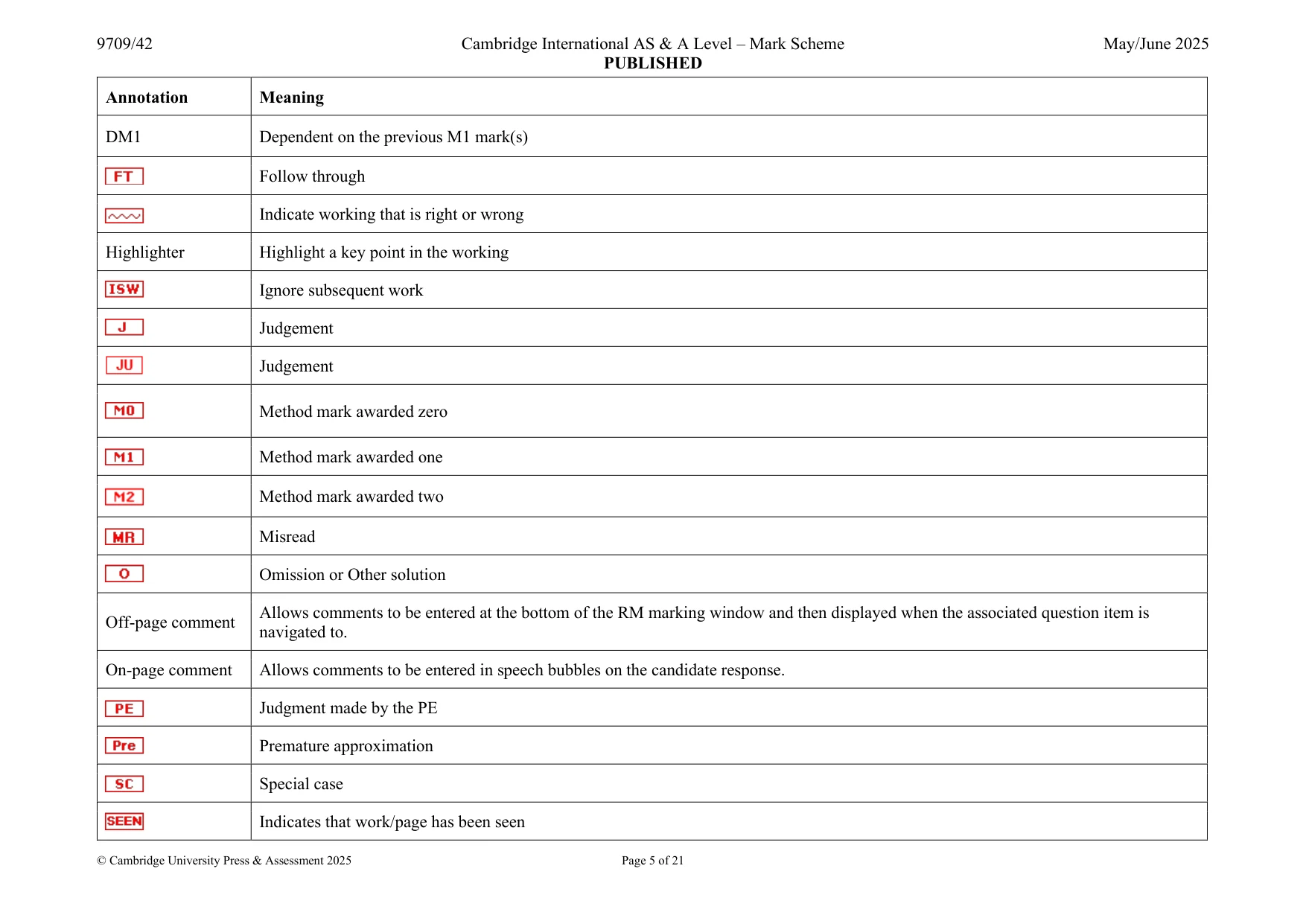
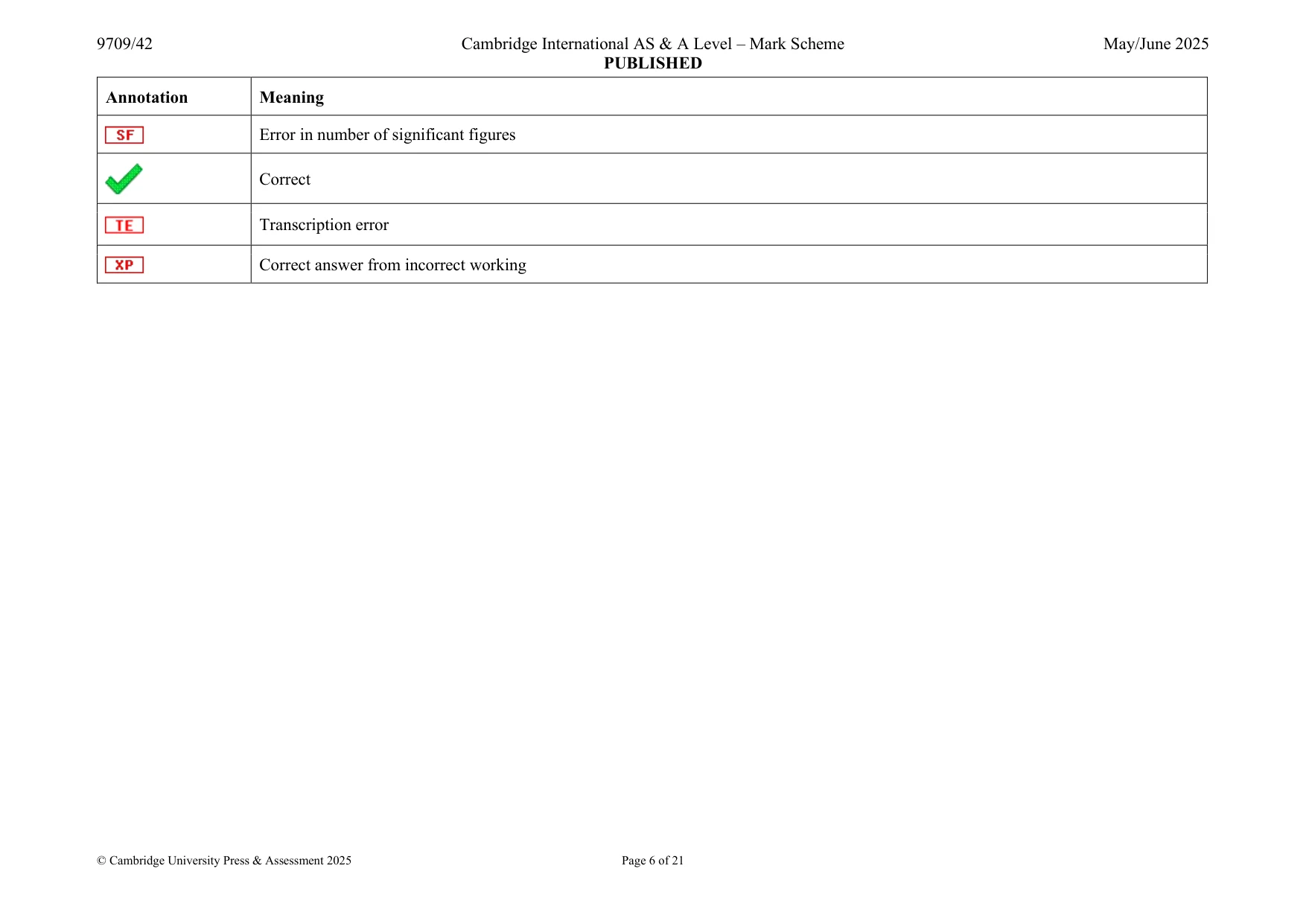
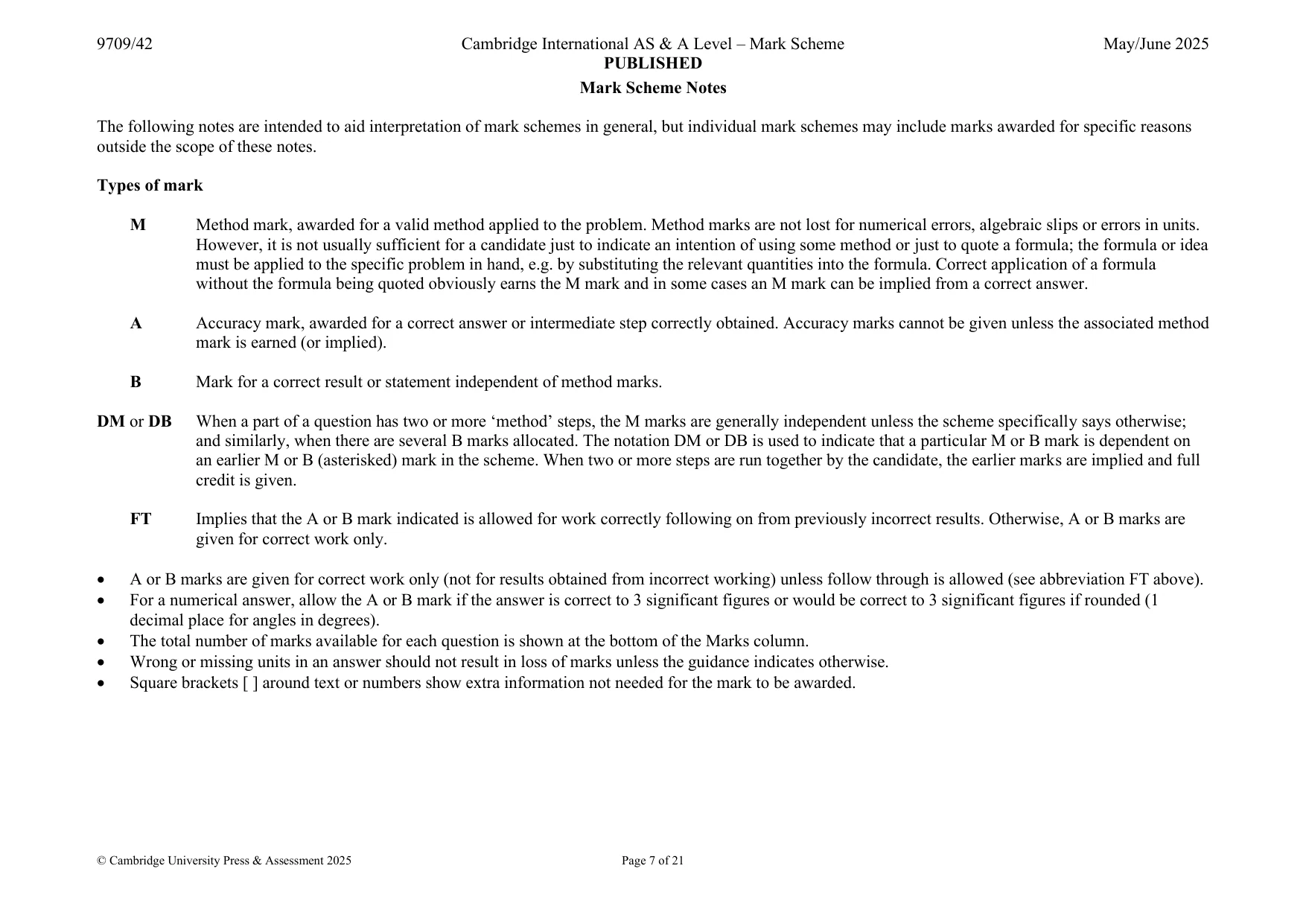
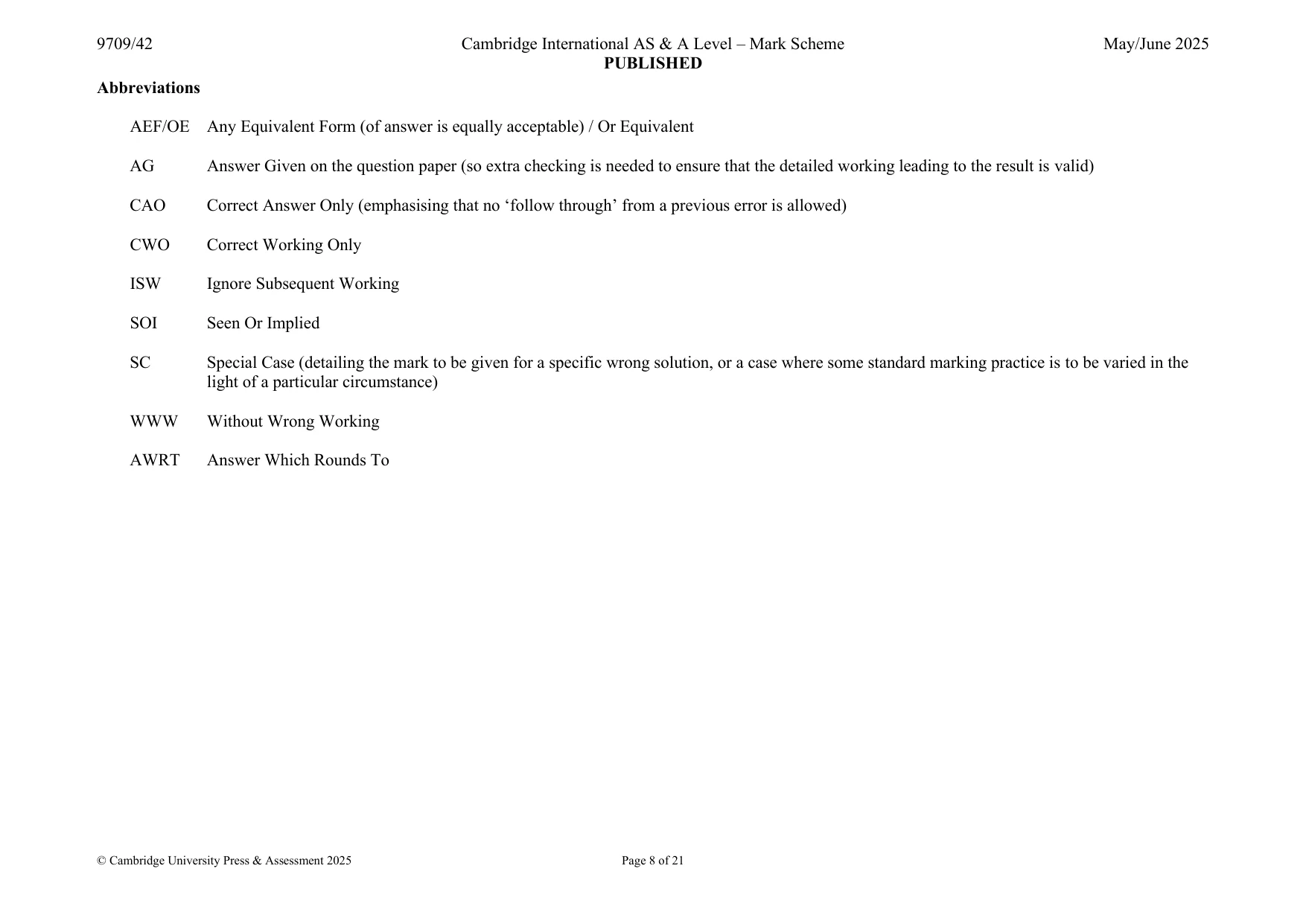
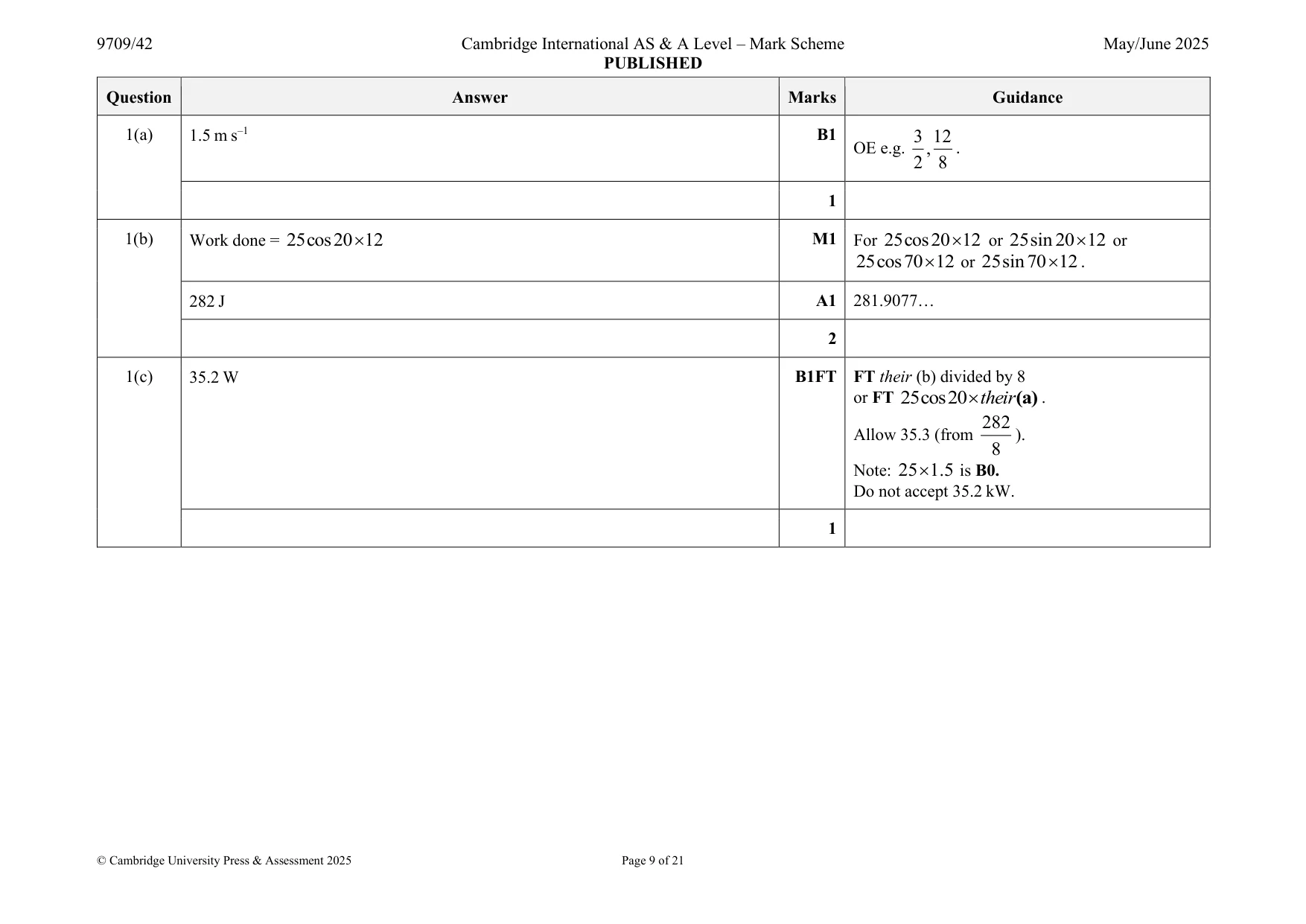
Mark scheme: Question Answer Marks Guidance 1(a) 1.5 m s–1 B1 3 12 OE e.g. , . 2 8 1 1(b) Work done = 25cos20 12 M1 For 25cos20 12 or 25sin 20 12 or 25cos70 12 or 25sin70 12 . 282 J A1 281.9077… 2 1(c) 35.2 W B1FT FT their (b) divided by 8 or FT 25cos20their(a) . 282 Allow 35.3 (from ). 8 Note: 25 1.5 is B0. Do not accept 35.2 kW. 1
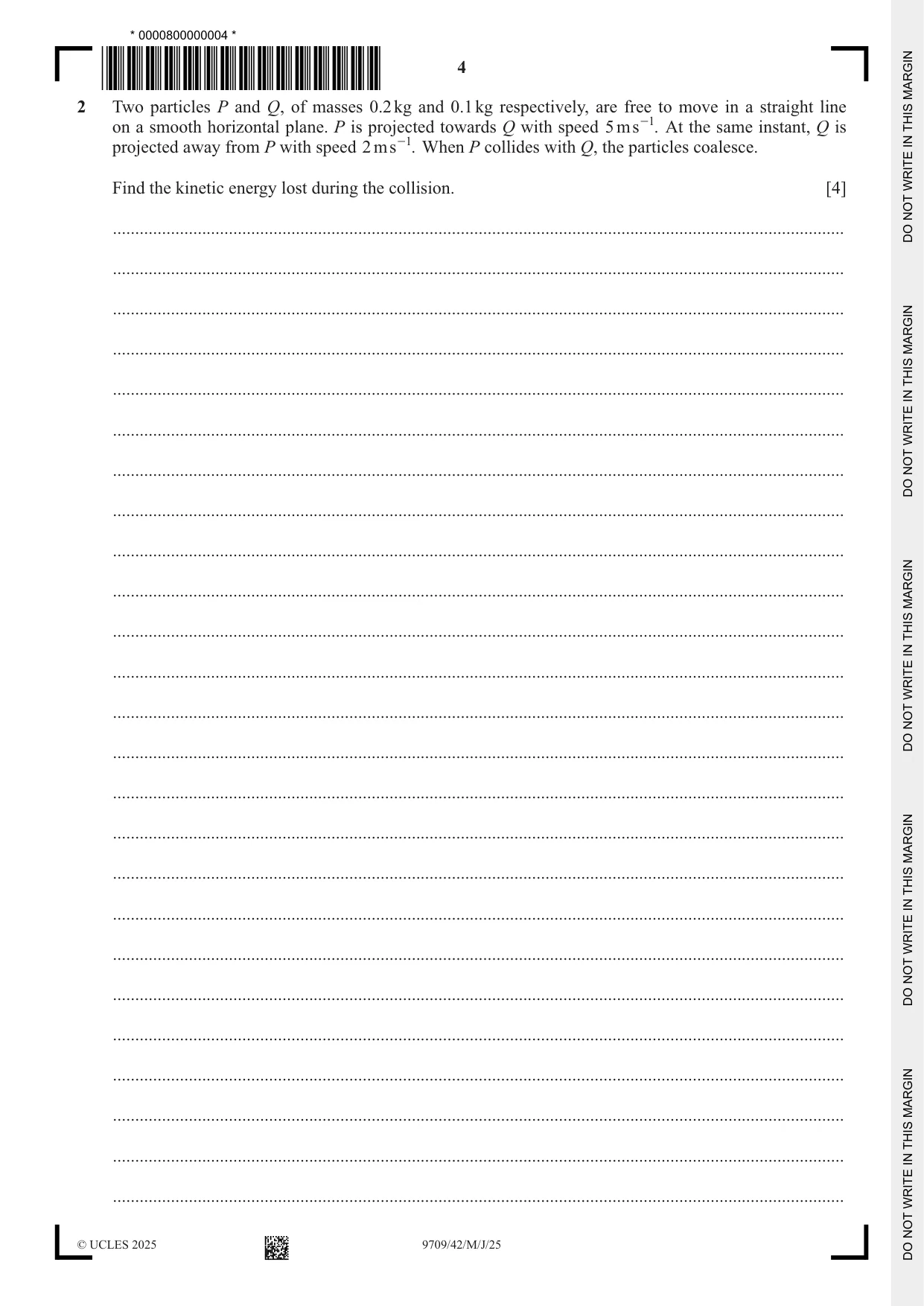
Q2 · Two particles P and Q, of masses 0.2 kg and 0.1 kg respectively, are free to move in a…
2 Two particles P and Q, of masses 0.2 kg and 0.1 kg respectively, are free to move in a straight line on a smooth horizontal plane. P is projected towards Q with speed 5 ms -1. At the same instant, Q is projected away from P with speed 2 ms -1. When P collides with Q, the particles coalesce. Find the kinetic energy lost during the collision. [4] .................................................................................................................................................................... .................................................................................................................................................................... .................................................................................................................................................................... .................................................................................................................................................................... .................................................................................................................................................................... .................................................................................................................................................................... .................................................................................................................................................................... .................................................................................................................................................................... .................................................................................................................................................................... .................................................................................................................................................................... .................................................................................................................................................................... .................................................................................................................................................................... .................................................................................................................................................................... .................................................................................................................................................................... .................................................................................................................................................................... .................................................................................................................................................................... .................................................................................................................................................................... .................................................................................................................................................................... .................................................................................................................................................................... .................................................................................................................................................................... .................................................................................................................................................................... .................................................................................................................................................................... .................................................................................................................................................................... .................................................................................................................................................................... ....................................................................................................................................................................
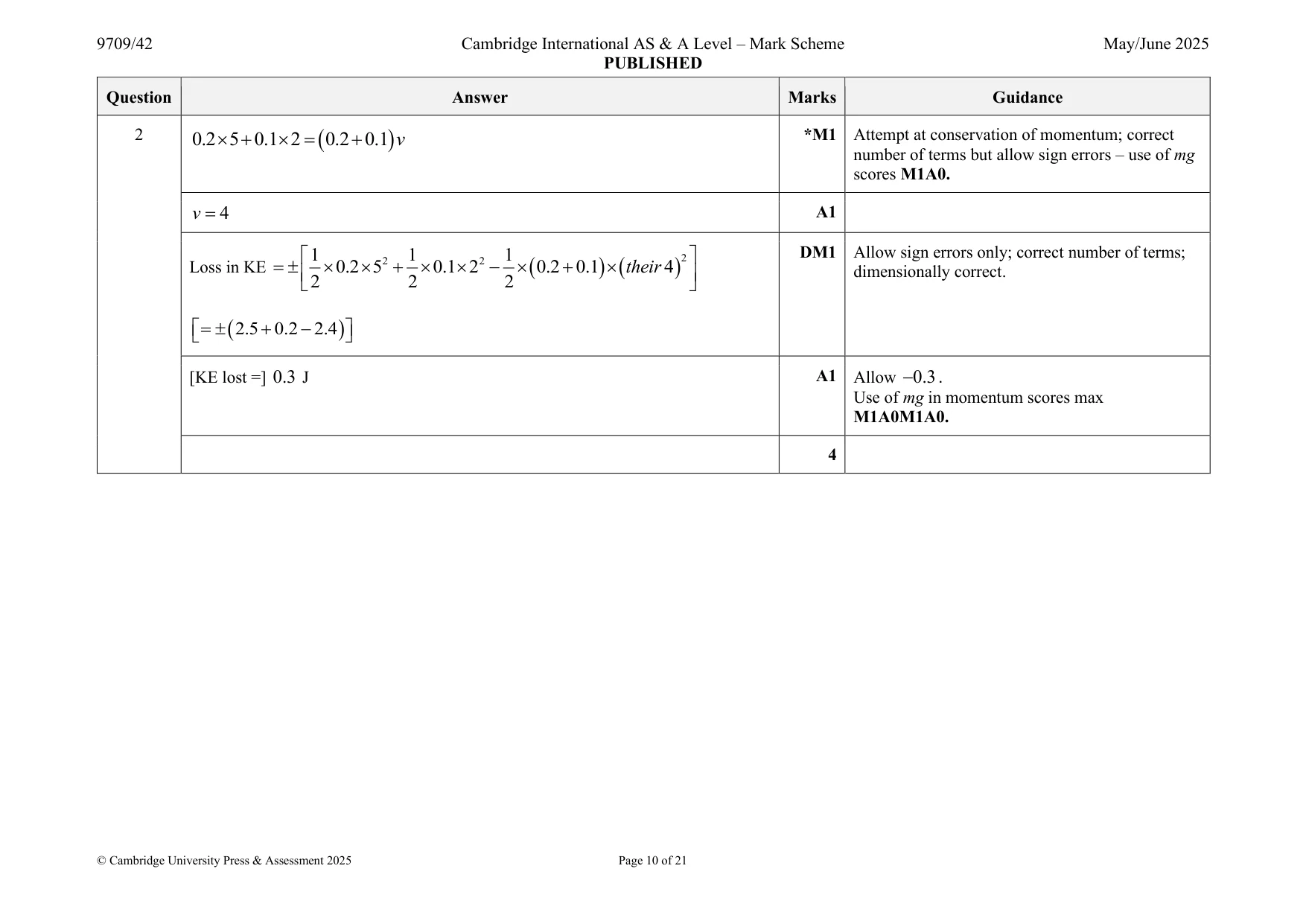
Mark scheme: 2 0.2 +5 0.1=2 ( 0.2 + 0.1) v *M1 Attempt at conservation of momentum; correct number of terms but allow sign errors – use of mg scores M1A0. v = 4 A1 1 2 1 2 1 2 DM1 Allow sign errors only; correct number of terms; Loss in KE = 0.2 5 + 0.1 2 − ( 0.2 + 0.1) ( their 4 ) dimensionally correct. 2 2 2 = ( 2.5 + 0.2 − 2.4 ) [KE lost =] 0.3 J A1 Allow −0.3 . Use of mg in momentum scores max M1A0M1A0. 4
Q3 · 2.6 m 35 N 2.4 m P A particle P of mass m kg is attached to one end of a light…
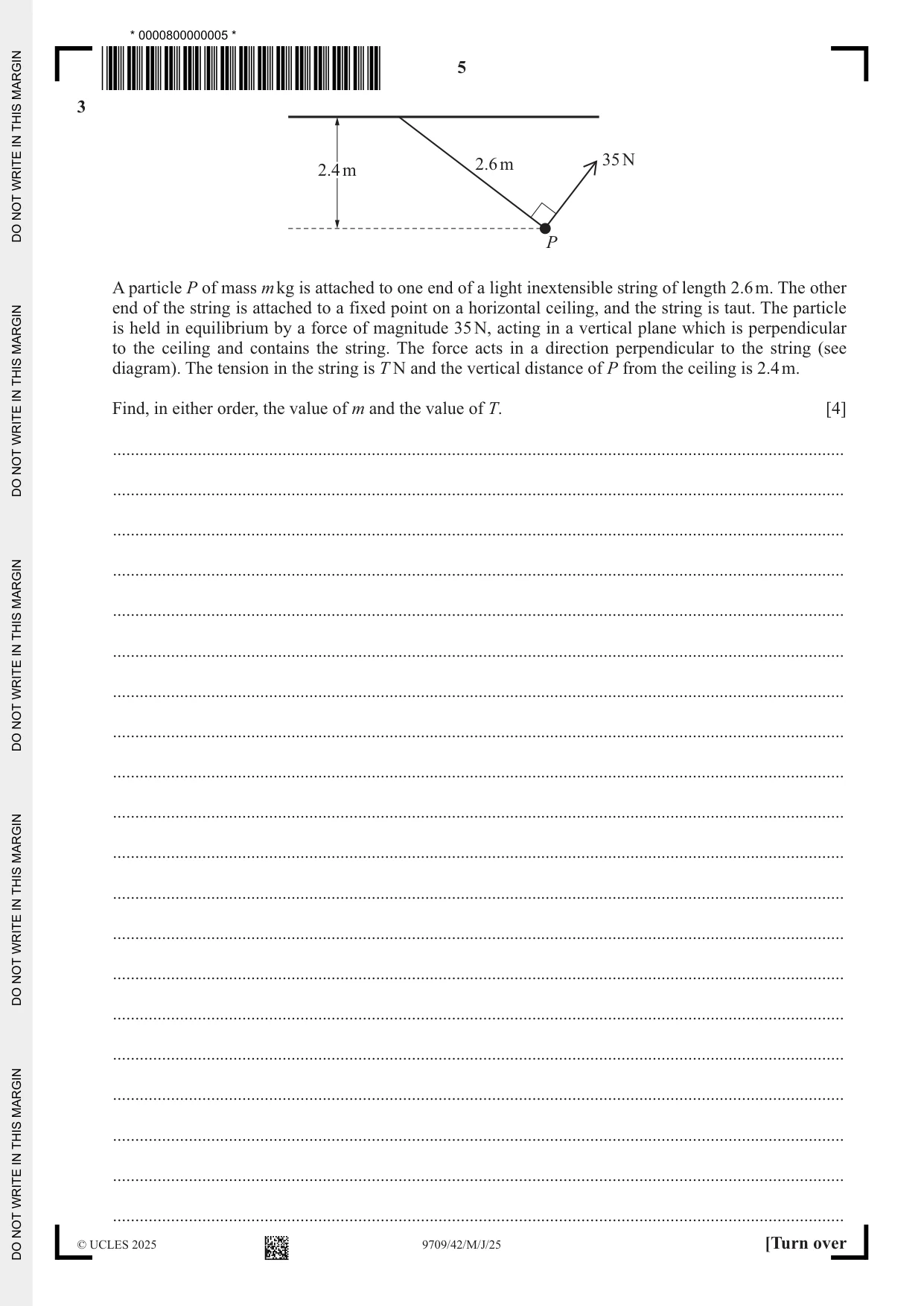
3 2.6 m 35 N 2.4 m P A particle P of mass m kg is attached to one end of a light inextensible string of length 2.6 m. The other end of the string is attached to a fixed point on a horizontal ceiling, and the string is taut. The particle is held in equilibrium by a force of magnitude 35 N, acting in a vertical plane which is perpendicular to the ceiling and contains the string. The force acts in a direction perpendicular to the string (see diagram). The tension in the string is T N and the vertical distance of P from the ceiling is 2.4 m. Find, in either order, the value of m and the value of T. [4] .................................................................................................................................................................... .................................................................................................................................................................... .................................................................................................................................................................... .................................................................................................................................................................... .................................................................................................................................................................... .................................................................................................................................................................... .................................................................................................................................................................... .................................................................................................................................................................... .................................................................................................................................................................... .................................................................................................................................................................... .................................................................................................................................................................... .................................................................................................................................................................... .................................................................................................................................................................... .................................................................................................................................................................... .................................................................................................................................................................... .................................................................................................................................................................... .................................................................................................................................................................... .................................................................................................................................................................... .................................................................................................................................................................... ....................................................................................................................................................................
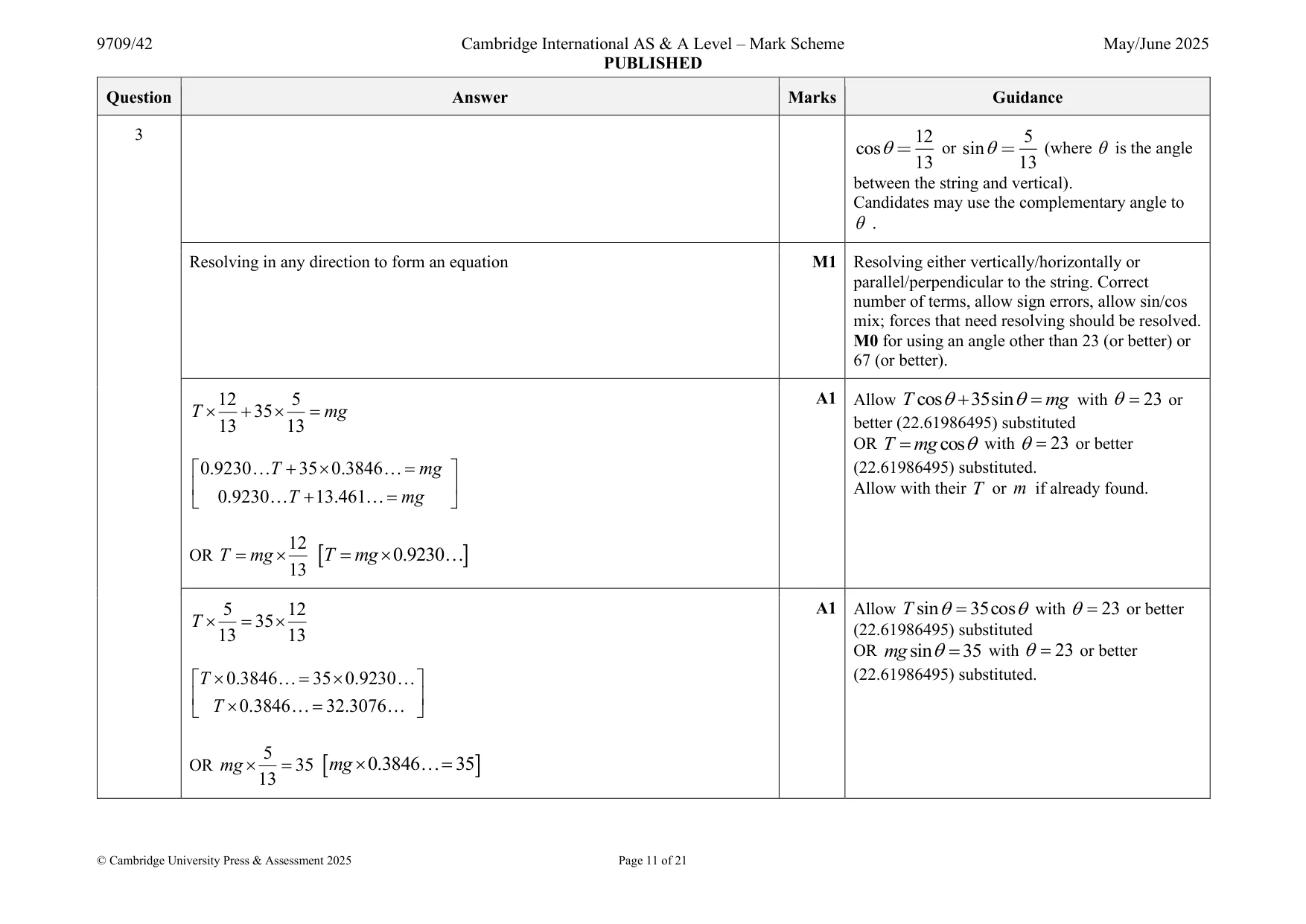
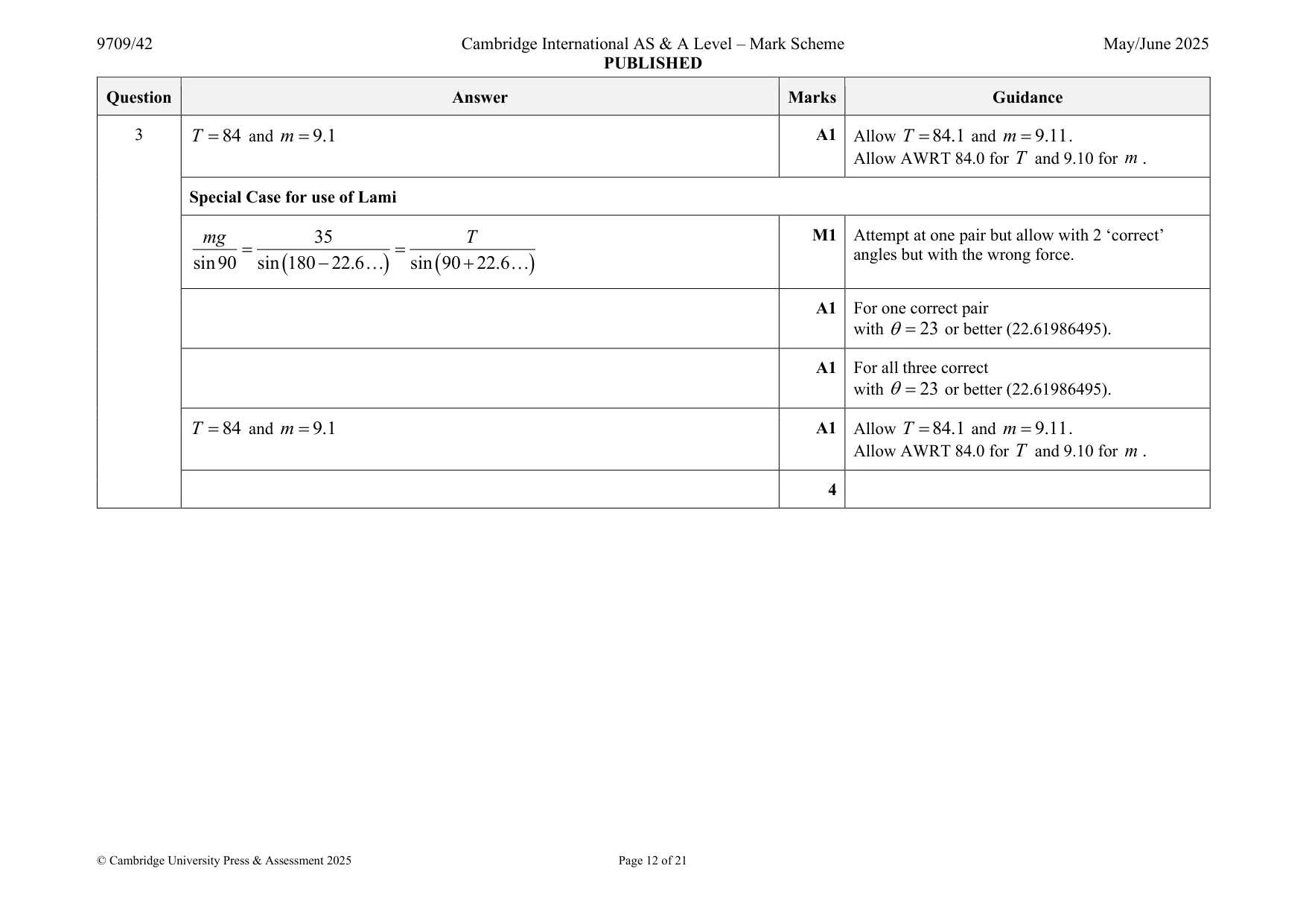
Mark scheme: 3 12 5 cos or sin (where is the angle 13 13 between the string and vertical). Candidates may use the complementary angle to . Resolving in any direction to form an equation M1 Resolving either vertically/horizontally or parallel/perpendicular to the string. Correct number of terms, allow sign errors, allow sin/cos mix; forces that need resolving should be resolved. M0 for using an angle other than 23 (or better) or 67 (or better). 12 5 A1 Allow T cos+ 35sin= mg with = 23 or T + 35 = mg 13 13 better (22.61986495) substituted OR T = mg cos with = 23 or better 0.9230 T + 35 0.3846 = mg (22.61986495) substituted. Allow with their T or m if already found. 0.9230 T + 13.461= mg 12 OR T = mg T = mg 0.9230 13 5 12 A1 Allow T sin= 35cos with = 23 or better T = 35 (22.61986495) substituted 13 13 OR mg sin= 35 with = 23 or better T 0.3846 = 35 0.9230 (22.61986495) substituted. T 0.3846 = 32.3076 5 OR mg = 35 mg 0.3846 = 35 13 3 T = 84 and m = 9.1 A1 Allow T = 84.1 and m = 9.11 . Allow AWRT 84.0 for T and 9.10 for m . Special Case for use of Lami mg 35 T M1 Attempt at one pair but allow with 2 ‘correct’ = = angles but with the wrong force. sin90 sin (180 − 22.6 ) sin ( 90 + 22.6 ) A1 For one correct pair with = 23 or better (22.61986495). A1 For all three correct with = 23 or better (22.61986495). T = 84 and m = 9.1 A1 Allow T = 84.1 and m = 9.11 . Allow AWRT 84.0 for T and 9.10 for m . 4
Q4 · A car is travelling along a straight horizontal road
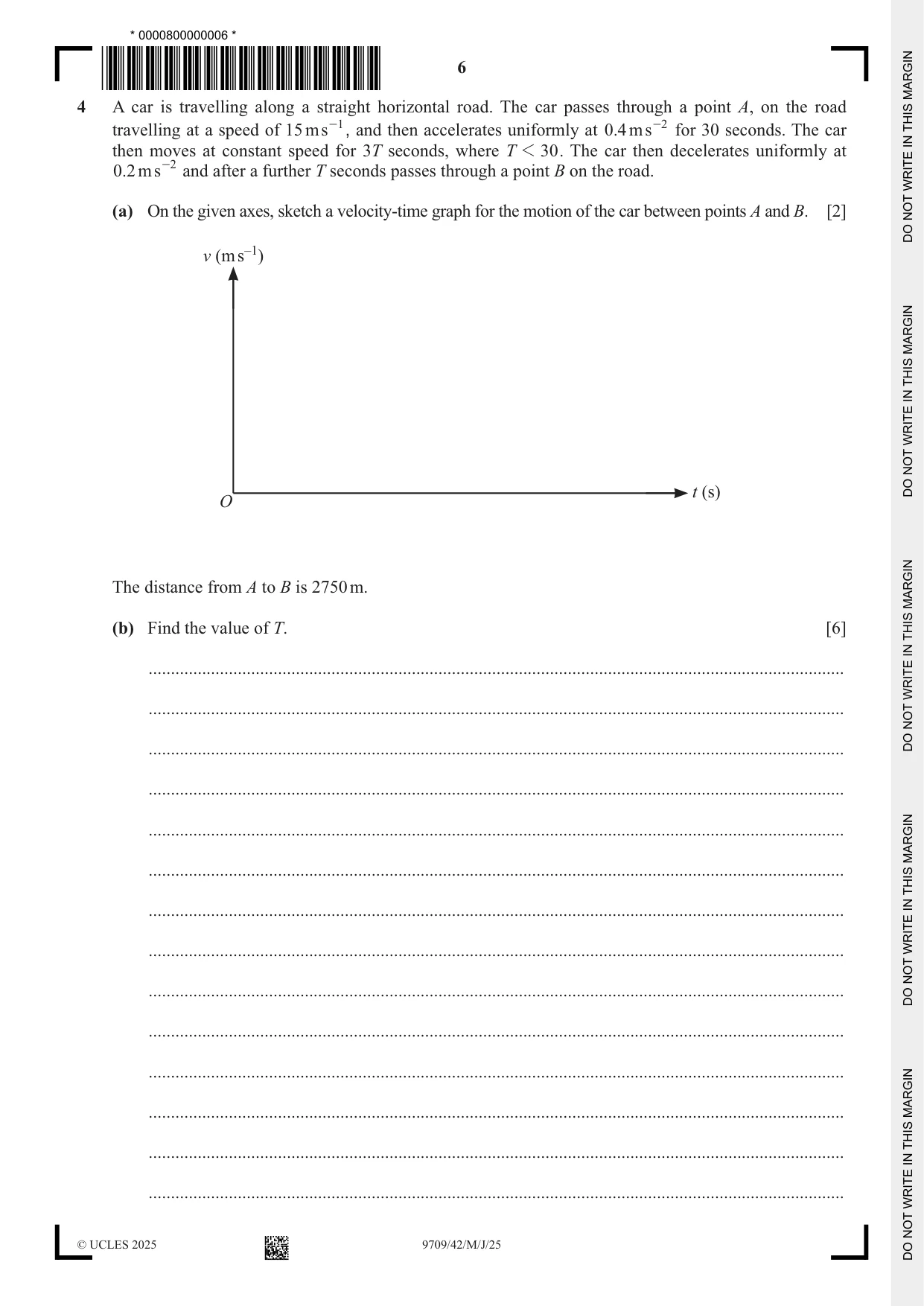
4 A car is travelling along a straight horizontal road. The car passes through a point A, on the road travelling at a speed of 15 ms -1 , and then accelerates uniformly at 0.4 ms -2 for 30 seconds. The car then moves at constant speed for 3T seconds, where T 1 30 . The car then decelerates uniformly at 0.2 ms -2 and after a further T seconds passes through a point B on the road. (a) On the given axes, sketch a velocity-time graph for the motion of the car between points A and B. [2] v (m s–1) t (s) O The distance from A to B is 2750 m. (b) Find the value of T. [6] ............................................................................................................................................................ ............................................................................................................................................................ ............................................................................................................................................................ ............................................................................................................................................................ ............................................................................................................................................................ ............................................................................................................................................................ ............................................................................................................................................................ ............................................................................................................................................................ ............................................................................................................................................................ ............................................................................................................................................................ ............................................................................................................................................................ ............................................................................................................................................................ ............................................................................................................................................................ ............................................................................................................................................................ ............................................................................................................................................................ ............................................................................................................................................................ ............................................................................................................................................................ ............................................................................................................................................................ ............................................................................................................................................................ ............................................................................................................................................................ ............................................................................................................................................................ ............................................................................................................................................................ ............................................................................................................................................................ ............................................................................................................................................................ ............................................................................................................................................................ ............................................................................................................................................................ ............................................................................................................................................................ The car continues its journey from B, decelerating uniformly at 0.5 ms -2 until it comes to rest at a point C on the road. (c) Find the total distance from A to C. [3] ............................................................................................................................................................ ............................................................................................................................................................ ............................................................................................................................................................ ............................................................................................................................................................ ............................................................................................................................................................ ............................................................................................................................................................ ............................................................................................................................................................ ............................................................................................................................................................ ............................................................................................................................................................ ............................................................................................................................................................ ............................................................................................................................................................ ............................................................................................................................................................ ............................................................................................................................................................
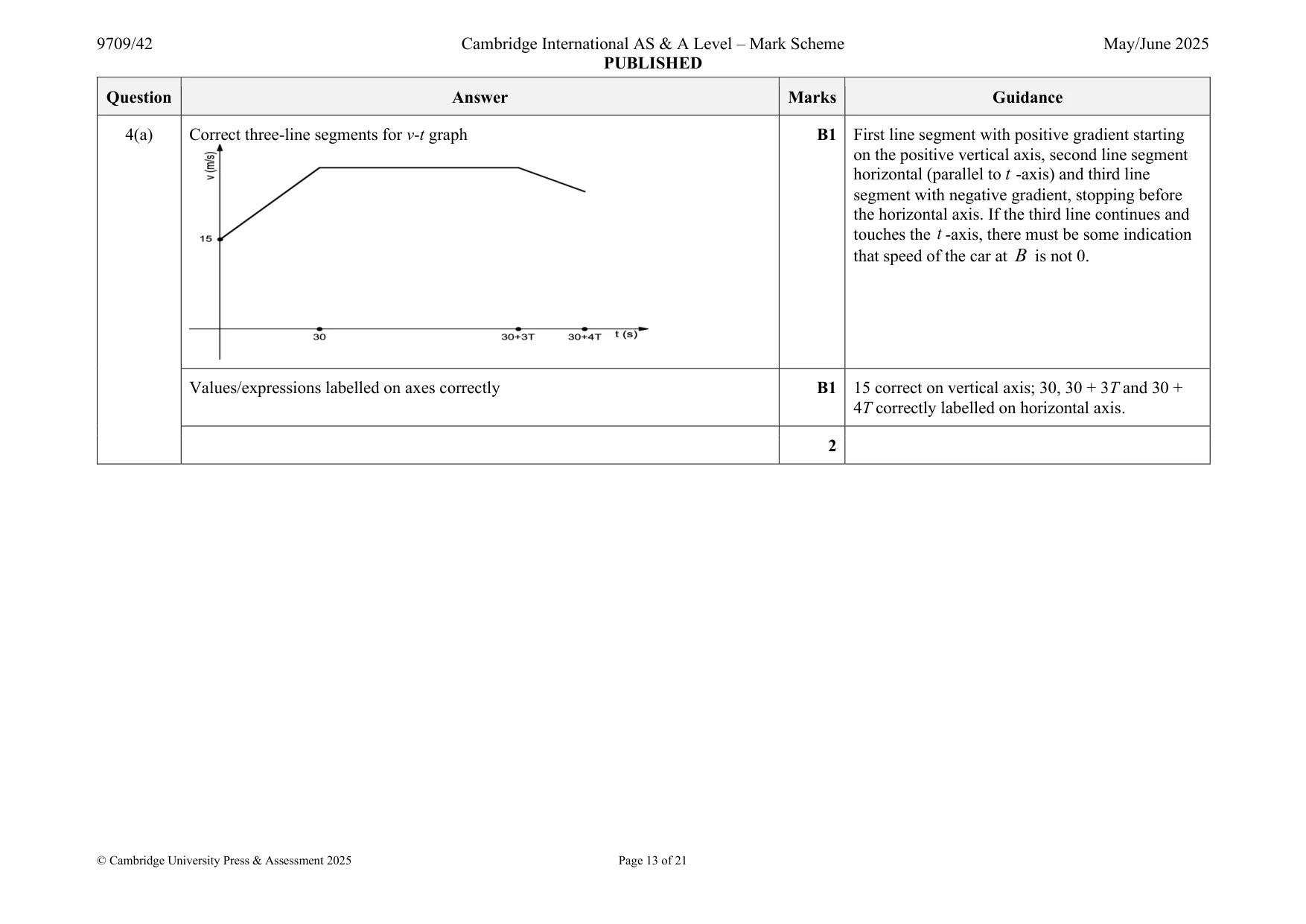
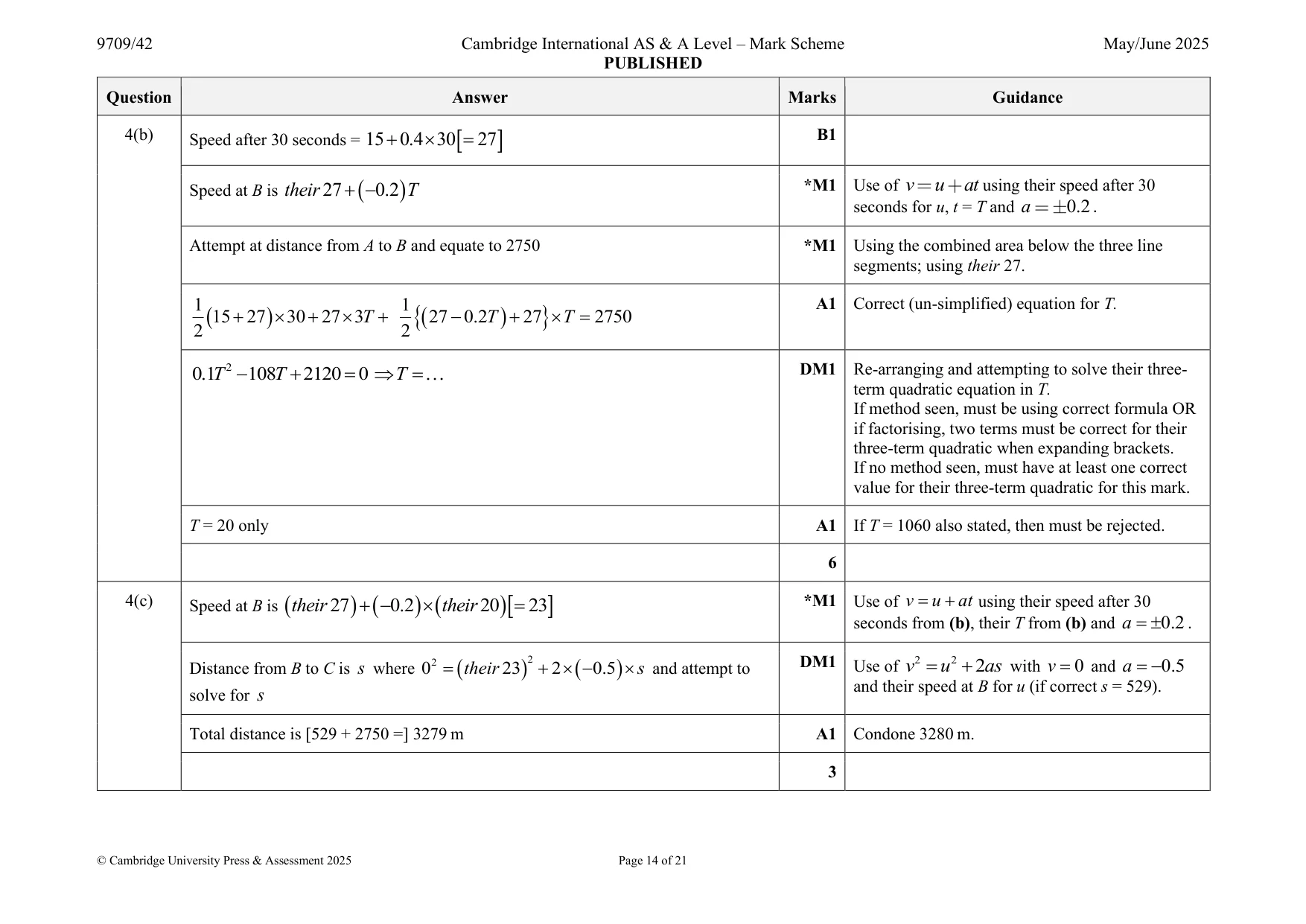
Mark scheme: 4(a) Correct three-line segments for v-t graph B1 First line segment with positive gradient starting on the positive vertical axis, second line segment horizontal (parallel to t -axis) and third line segment with negative gradient, stopping before the horizontal axis. If the third line continues and touches the t -axis, there must be some indication that speed of the car at B is not 0. Values/expressions labelled on axes correctly B1 15 correct on vertical axis; 30, 30 + 3T and 30 + 4T correctly labelled on horizontal axis. 2 4(b) B1 Speed after 30 seconds = 15 + 0.4 30 = 27 Speed at B is their 27 + ( −0.2 ) T *M1 Use of v u at using their speed after 30 seconds for u, t = T and a 0.2 . Attempt at distance from A to B and equate to 2750 *M1 Using the combined area below the three line segments; using their 27. 1 1 A1 Correct (un-simplified) equation for T. (15 + 27 ) 30 + 27 3T + ( 27 − 0.2T ) + 27 T = 2750 2 2 0.1T 2 − 108T + 2120 = 0 T = DM1 Re-arranging and attempting to solve their three- term quadratic equation in T. If method seen, must be using correct formula OR if factorising, two terms must be correct for their three-term quadratic when expanding brackets. If no method seen, must have at least one correct value for their three-term quadratic for this mark. T = 20 only A1 If T = 1060 also stated, then must be rejected. 6 4(c) *M1 Use of v = u + at using their speed after 30 Speed at B is ( their 27 ) + ( −0.2 ) ( their 20 ) = 23 seconds from (b), their T from (b) and a = 0.2 . Use of v 2 = u 2 + 2as with v = 0 and a = −0.5 Distance from B to C is s where 0 2 = ( their 23 ) 2 + 2 −( 0.5 ) s and attempt to DM1 and their speed at B for u (if correct s = 529). solve for s Total distance is [529 + 2750 =] 3279 m A1 Condone 3280 m. 3
Q5 · B 4 kg 5 kg C A 3 kg 30° One end of a light inextensible string is attached to a particle…
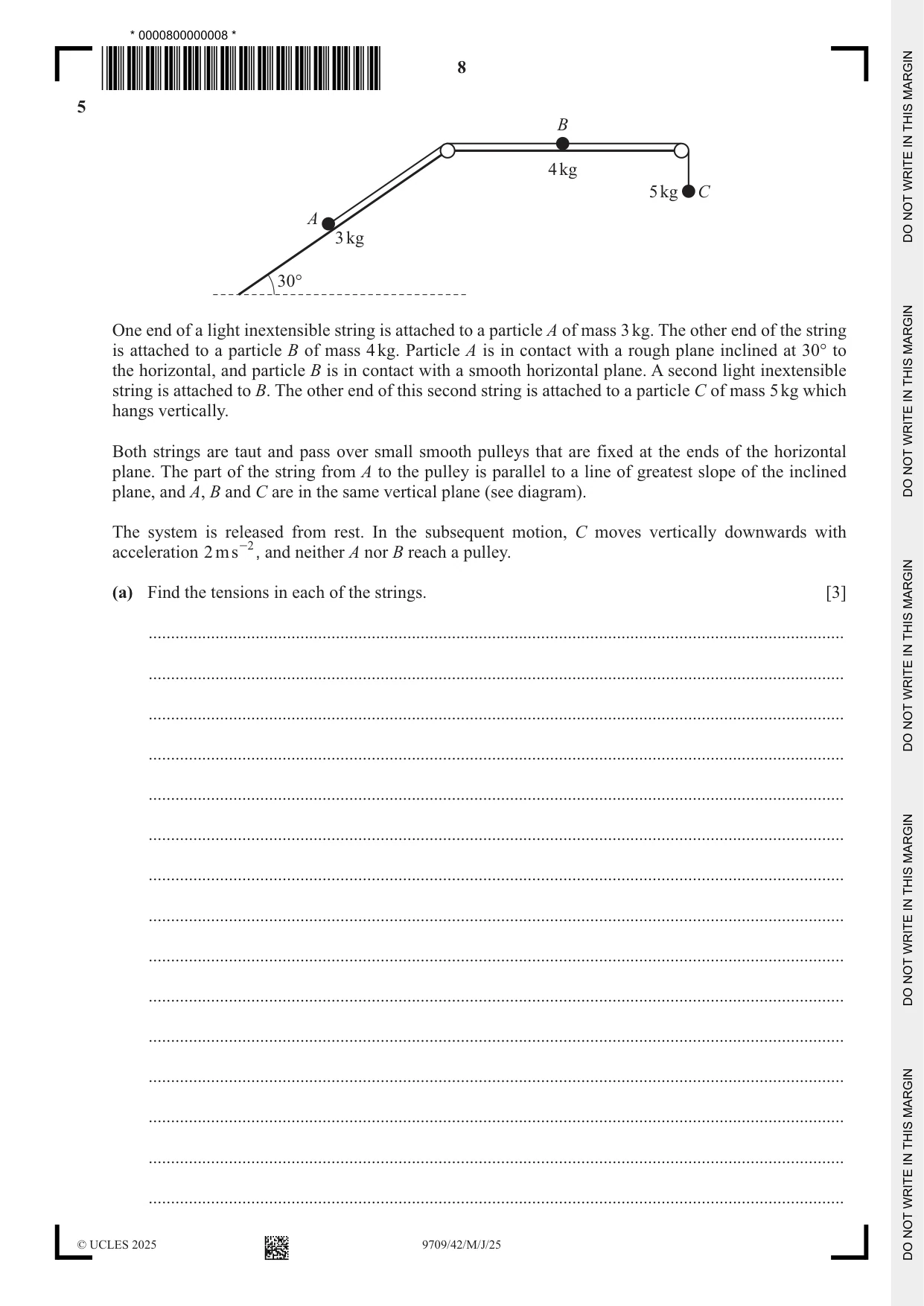
5 B 4 kg 5 kg C A 3 kg 30° One end of a light inextensible string is attached to a particle A of mass 3 kg. The other end of the string is attached to a particle B of mass 4 kg. Particle A is in contact with a rough plane inclined at 30° to the horizontal, and particle B is in contact with a smooth horizontal plane. A second light inextensible string is attached to B. The other end of this second string is attached to a particle C of mass 5 kg which hangs vertically. Both strings are taut and pass over small smooth pulleys that are fixed at the ends of the horizontal plane. The part of the string from A to the pulley is parallel to a line of greatest slope of the inclined plane, and A, B and C are in the same vertical plane (see diagram). The system is released from rest. In the subsequent motion, C moves vertically downwards with acceleration 2 ms -2 , and neither A nor B reach a pulley. (a) Find the tensions in each of the strings. [3] ............................................................................................................................................................ ............................................................................................................................................................ ............................................................................................................................................................ ............................................................................................................................................................ ............................................................................................................................................................ ............................................................................................................................................................ ............................................................................................................................................................ ............................................................................................................................................................ ............................................................................................................................................................ ............................................................................................................................................................ ............................................................................................................................................................ ............................................................................................................................................................ ............................................................................................................................................................ ............................................................................................................................................................ ............................................................................................................................................................ (b) Find the coefficient of friction between A and the inclined plane. [4] ............................................................................................................................................................ ............................................................................................................................................................ ............................................................................................................................................................ ............................................................................................................................................................ ............................................................................................................................................................ ............................................................................................................................................................ ............................................................................................................................................................ ............................................................................................................................................................ When the system has been in motion for 1.5 s, the string attached to A breaks. (c) Find the total distance that A travels up the plane from the instant that the system is released from rest to the instant that A comes to instantaneous rest. [5] ............................................................................................................................................................ ............................................................................................................................................................ ............................................................................................................................................................ ............................................................................................................................................................ ............................................................................................................................................................ ............................................................................................................................................................ ............................................................................................................................................................ ............................................................................................................................................................ ............................................................................................................................................................ ............................................................................................................................................................ ............................................................................................................................................................ ............................................................................................................................................................ ............................................................................................................................................................ ............................................................................................................................................................ ............................................................................................................................................................ ............................................................................................................................................................ ............................................................................................................................................................
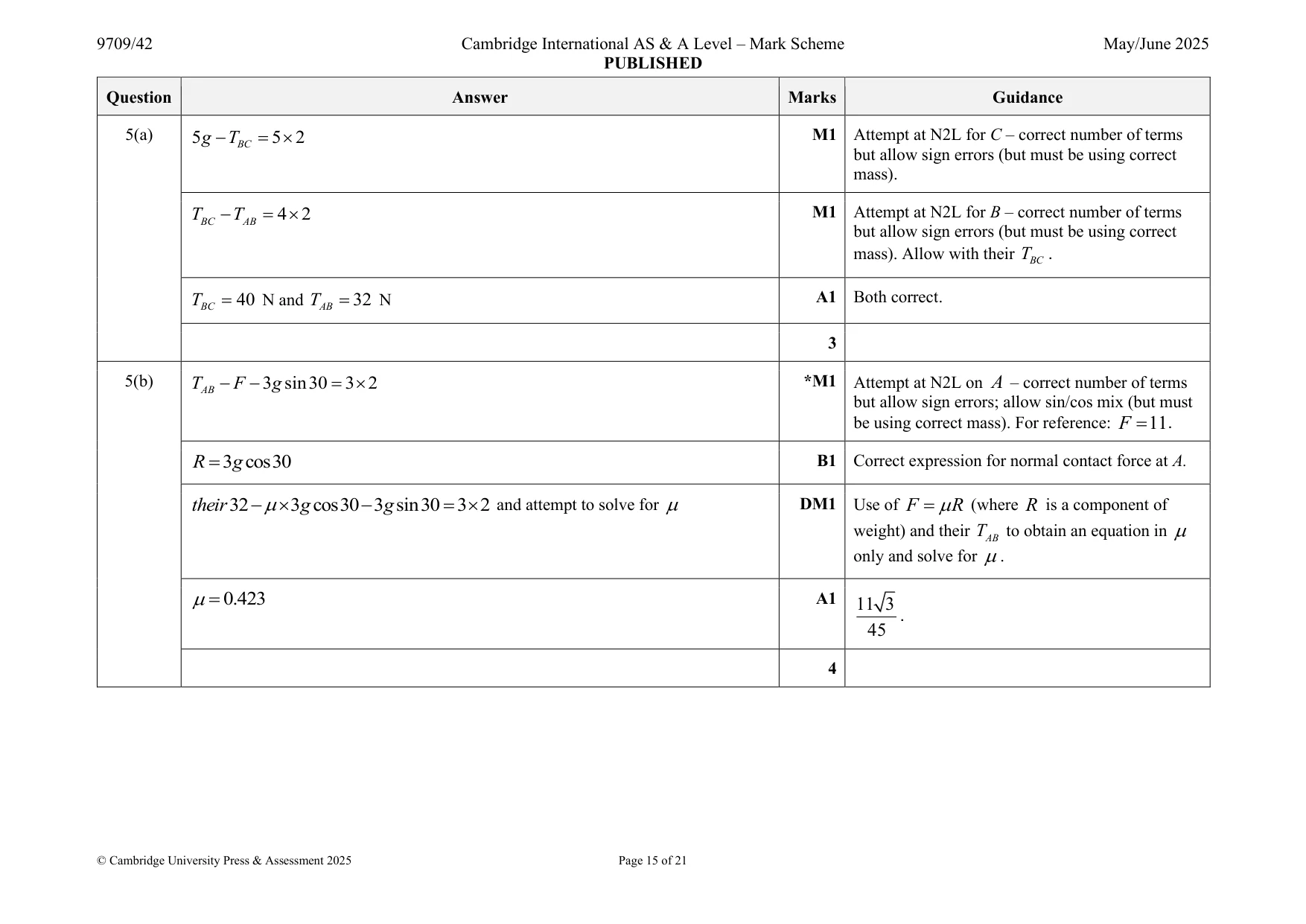
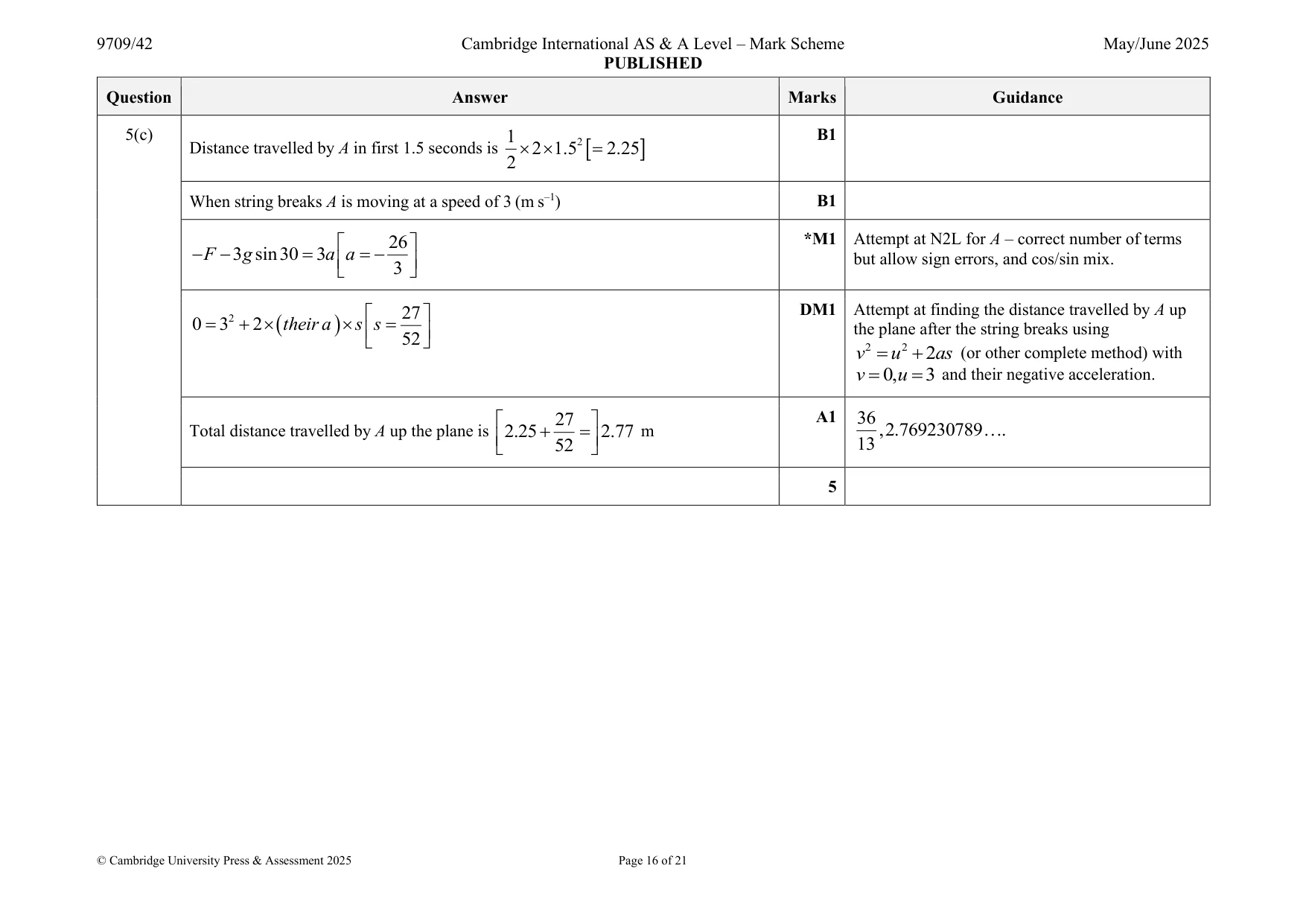
Mark scheme: 5(a) 5 g − TBC = 5 2 M1 Attempt at N2L for C – correct number of terms but allow sign errors (but must be using correct mass). TBC − TAB = 4 2 M1 Attempt at N2L for B – correct number of terms but allow sign errors (but must be using correct mass). Allow with their TBC . TBC = 40 N and TAB = 32 N A1 Both correct. 3 5(b) TAB − F − 3 g sin30 = 3 2 *M1 Attempt at N2L on A – correct number of terms but allow sign errors; allow sin/cos mix (but must be using correct mass). For reference: F = 11. R = 3g cos30 B1 Correct expression for normal contact force at A. their 32 − 3g cos30 − 3g sin30 = 3 2 and attempt to solve for DM1 Use of F = R (where R is a component of weight) and their TAB to obtain an equation in only and solve for . = 0.423 A1 11 3 . 45 4 5(c) 1 2 B1 Distance travelled by A in first 1.5 seconds is 2 1.5 = 2.25 2 When string breaks A is moving at a speed of 3 (m s–1) B1 26 *M1 Attempt at N2L for A – correct number of terms − F − 3 g sin30 = 3a a = − but allow sign errors, and cos/sin mix. 3 2 27 DM1 Attempt at finding the distance travelled by A up s = 0 = 3 + 2 ( their a ) s the plane after the string breaks using 52 2 2 v = u + 2as (or other complete method) with v = 0, u = 3 and their negative acceleration. 27 A1 36 Total distance travelled by A up the plane is 2.25 + = 2.77 m , 2.769230789 . 52 13 5
Q7 · A particle P of mass 3 kg is projected with a speed of 8 ms -1 up a line of greatest…
7 A particle P of mass 3 kg is projected with a speed of 8 ms -1 up a line of greatest slope of a rough plane inclined at 30° to the horizontal. P is projected from a point A on the plane and comes to instantaneous rest at a point B on the plane. P then slides back down the plane. The coefficient of friction between P and the plane is 1 3 . 12 Using an energy method throughout, find the speed of P at the instant it returns to A. [6] .................................................................................................................................................................... .................................................................................................................................................................... .................................................................................................................................................................... .................................................................................................................................................................... .................................................................................................................................................................... .................................................................................................................................................................... .................................................................................................................................................................... .................................................................................................................................................................... .................................................................................................................................................................... .................................................................................................................................................................... .................................................................................................................................................................... .................................................................................................................................................................... .................................................................................................................................................................... .................................................................................................................................................................... .................................................................................................................................................................... .................................................................................................................................................................... .................................................................................................................................................................... .................................................................................................................................................................... .................................................................................................................................................................... .................................................................................................................................................................... .................................................................................................................................................................... .................................................................................................................................................................... .................................................................................................................................................................... ....................................................................................................................................................................
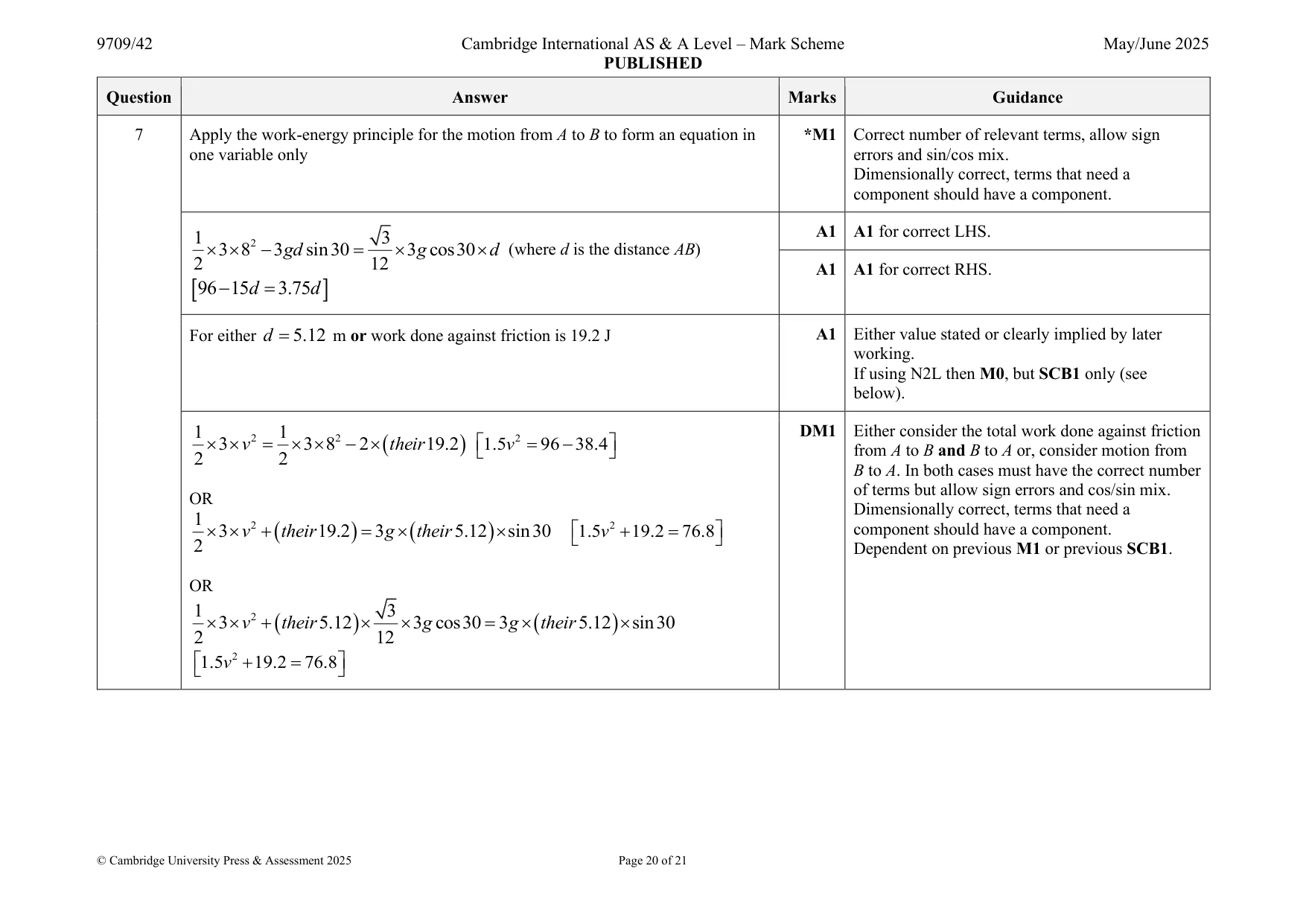
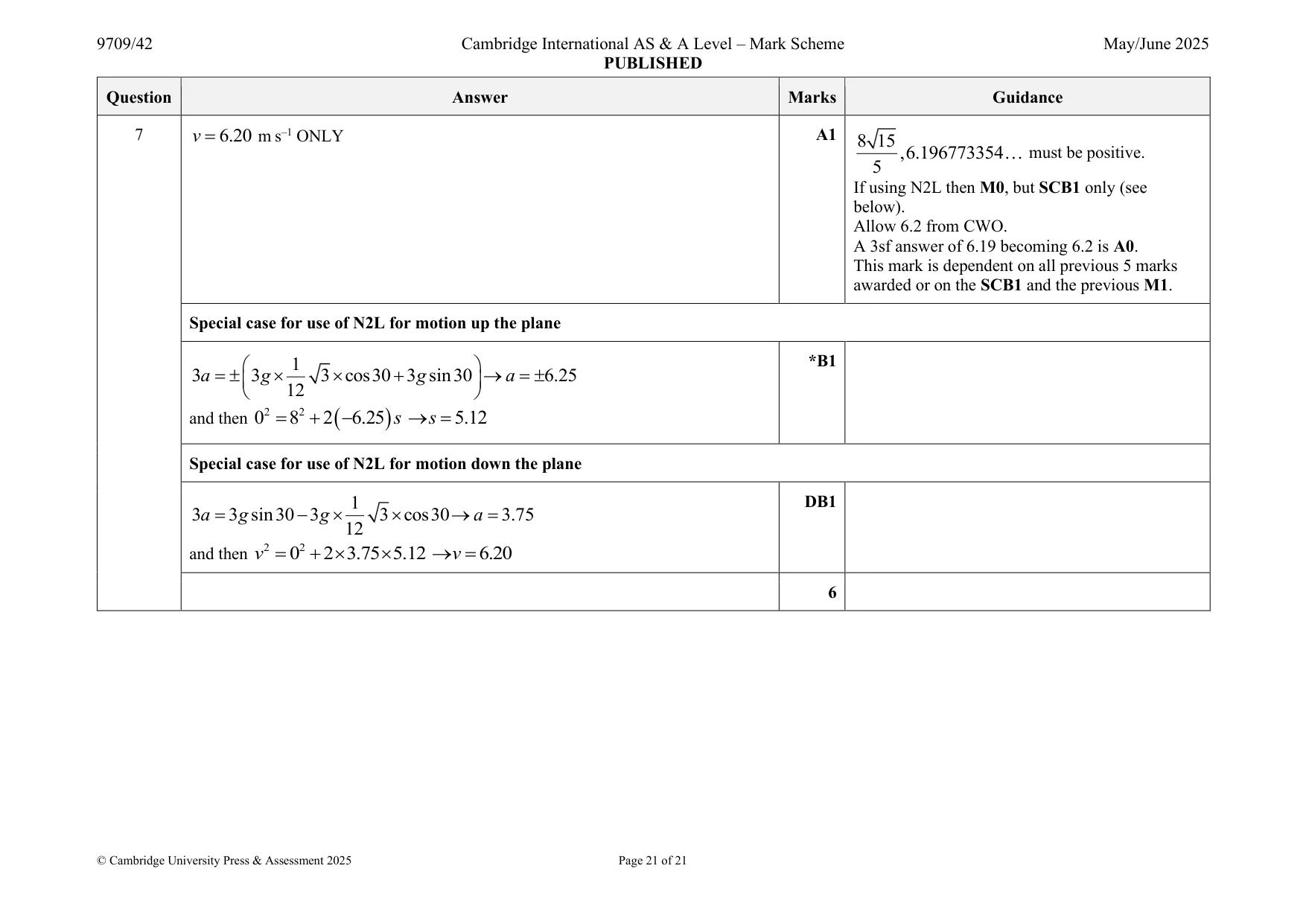
Mark scheme: 7 Apply the work-energy principle for the motion from A to B to form an equation in *M1 Correct number of relevant terms, allow sign one variable only errors and sin/cos mix. Dimensionally correct, terms that need a component should have a component. A1 A1 for correct LHS. 1 2 3 3 8 − 3 gd sin30 = 3 g cos30 d (where d is the distance AB) 2 12 A1 A1 for correct RHS. 96 − 15d = 3.75d For either d = 5.12 m or work done against friction is 19.2 J A1 Either value stated or clearly implied by later working. If using N2L then M0, but SCB1 only (see below). 1 2 1 2 2 DM1 Either consider the total work done against friction 1.5v = 96 − 38.4 3 v = 3 8 −2 ( their 19.2 ) from A to B and B to A or, consider motion from 2 2 B to A. In both cases must have the correct number of terms but allow sign errors and cos/sin mix. OR Dimensionally correct, terms that need a 1 2 2 component should have a component. 1.5v + 19.2 = 76.8 3 v + ( their 19.2 ) = 3 g ( their 5.12 ) sin30 2 Dependent on previous M1 or previous SCB1. OR 1 2 3 3 v + ( their 5.12 ) 3 g cos30 = 3 g ( their 5.12 ) sin30 2 12 1.5v 2 + 19.2 = 76.8 7 v = 6.20 m s–1 ONLY A1 8 15 , 6.196773354 must be positive. 5 If using N2L then M0, but SCB1 only (see below). Allow 6.2 from CWO. A 3sf answer of 6.19 becoming 6.2 is A0. This mark is dependent on all previous 5 marks awarded or on the SCB1 and the previous M1. Special case for use of N2L for motion up the plane 1 *B1 3a = 3 g 3 cos30 + 3 g sin30 → a = 6.25 12 and then 02 = 82 + 2 ( −6.25 ) s →=s 5.12 Special case for use of N2L for motion down the plane 1 DB1 3a = 3 g sin30 − 3 g 3 cos30 → a = 3.75 12 and then v 2 = 20 + 2 3.75 5.12 →=v 6.20 6
What was in this paper
The subtopics covered by these 6 questions, and how many questions each got. Open one in a new tab to see every Cambridge question on it.
What you needed in this session
Cambridge’s own grade thresholds for 2025 May/June, Paper 4 · Variant 2. A higher threshold means an easier paper — the bar moves with how the cohort did.