Cambridge A Level Mathematics 9709 — 2017 Oct/Nov Paper 4 · Variant 3
9709/43/O/N/17 · 6 questions · 50 marks · ≈56 min
The question paper and its mark scheme, free to read here and free to download. This is Cambridge’s own paper, exactly as it was sat.
Question paper12 pages
Mark scheme7 pages
Answers below. Sit the paper first if you are practising.
Questions as text
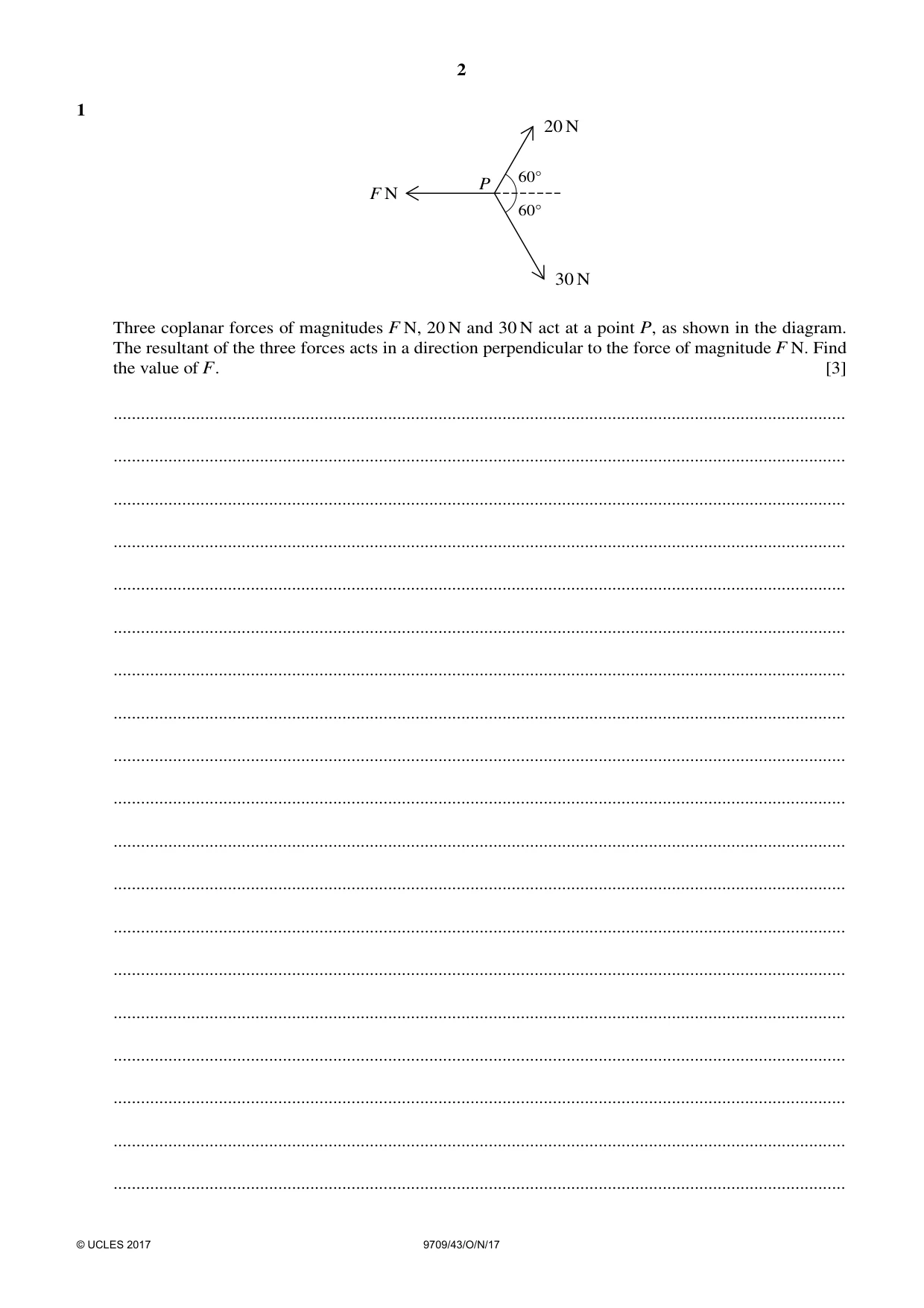
Q1 · 20 N 60Å P F N 60Å 30 N Three coplanar forces of magnitudes F N, 20 N and 30 N act at a…
1 20 N 60Å P F N 60Å 30 N Three coplanar forces of magnitudes F N, 20 N and 30 N act at a point P, as shown in the diagram. The resultant of the three forces acts in a direction perpendicular to the force of magnitude F N. Find the value of F. [3] ................................................................................................................................................................ ................................................................................................................................................................ ................................................................................................................................................................ ................................................................................................................................................................ ................................................................................................................................................................ ................................................................................................................................................................ ................................................................................................................................................................ ................................................................................................................................................................ ................................................................................................................................................................ ................................................................................................................................................................ ................................................................................................................................................................ ................................................................................................................................................................ ................................................................................................................................................................ ................................................................................................................................................................ ................................................................................................................................................................ ................................................................................................................................................................ ................................................................................................................................................................ ................................................................................................................................................................ ................................................................................................................................................................
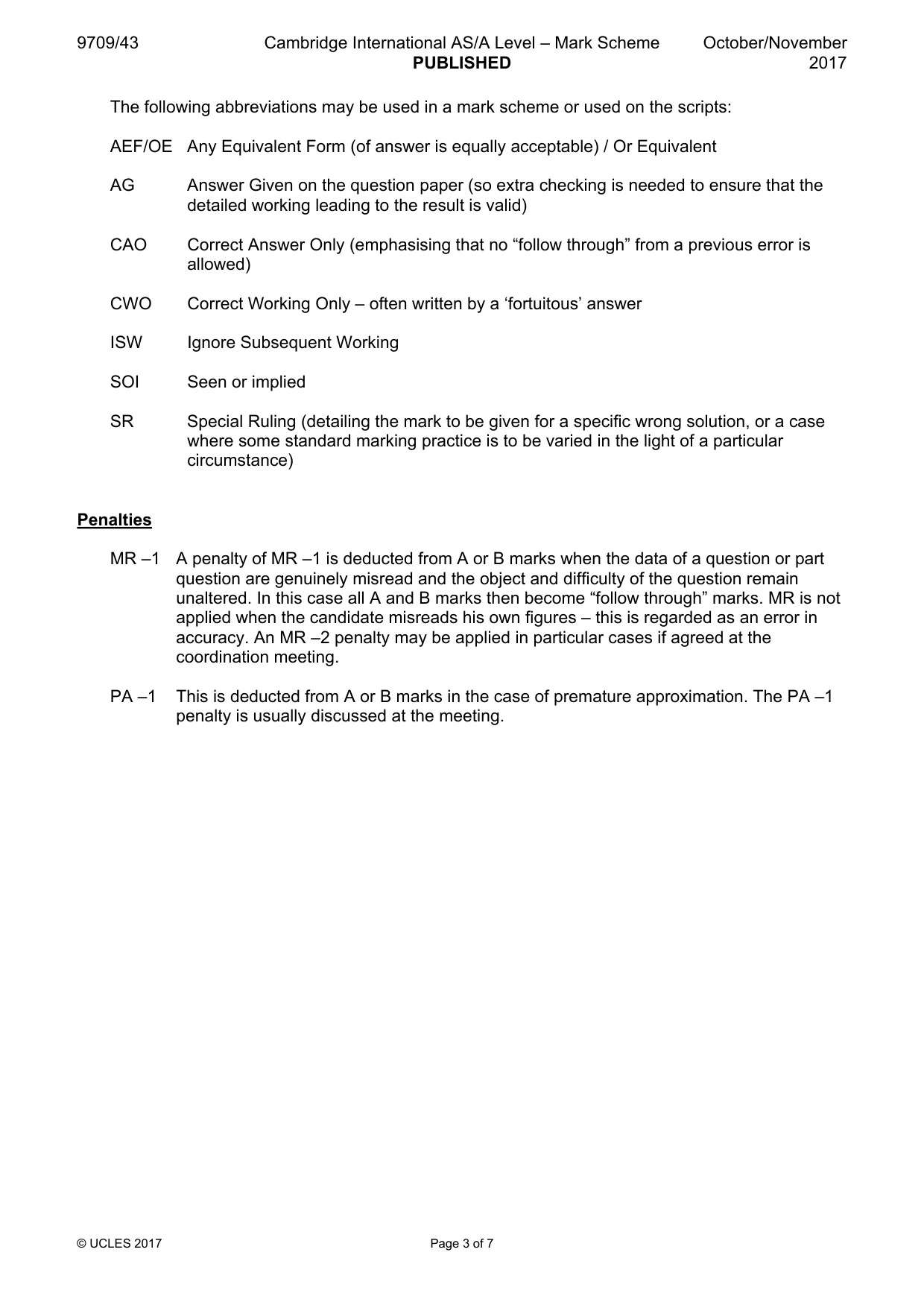
Mark scheme: Question Answer Marks Guidance 1 (X=) 20 cos 60 + 30 cos 60 – F B1 [F = 20 cos 60 + 30 cos 60] M1 Use of horizontal component of resultant = 0 F = 25 A1 3
Q2 · A lorry of mass 7850 kg travels on a straight hill which is inclined at an angle of 3Å to…
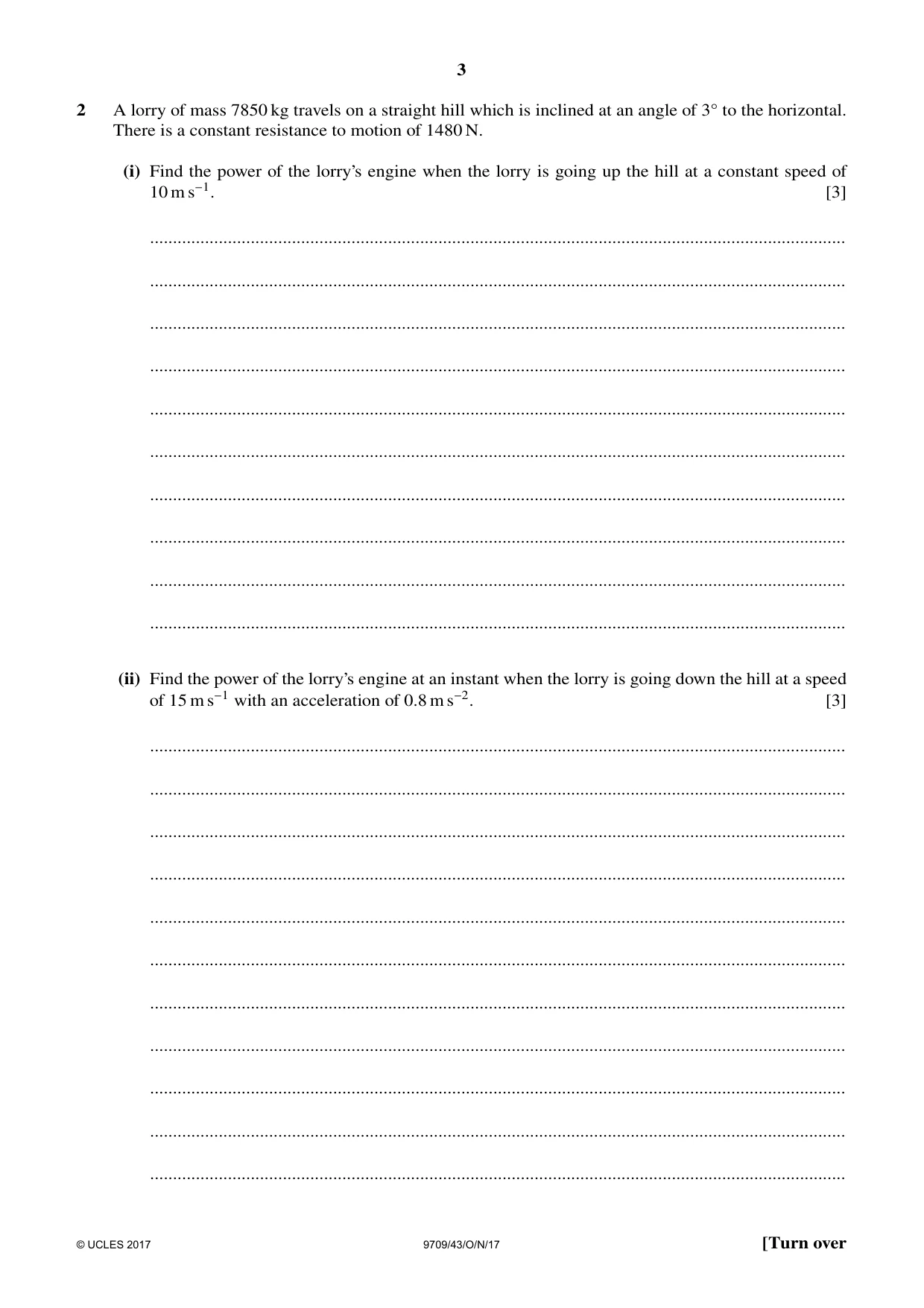
2 A lorry of mass 7850 kg travels on a straight hill which is inclined at an angle of 3Å to the horizontal. There is a constant resistance to motion of 1480 N. (i) Find the power of the lorry’s engine when the lorry is going up the hill at a constant speed of 10 m s−1. [3] ........................................................................................................................................................ ........................................................................................................................................................ ........................................................................................................................................................ ........................................................................................................................................................ ........................................................................................................................................................ ........................................................................................................................................................ ........................................................................................................................................................ ........................................................................................................................................................ ........................................................................................................................................................ ........................................................................................................................................................ (ii) Find the power of the lorry’s engine at an instant when the lorry is going down the hill at a speed of 15 m s−1 with an acceleration of 0.8 m s−2. [3] ........................................................................................................................................................ ........................................................................................................................................................ ........................................................................................................................................................ ........................................................................................................................................................ ........................................................................................................................................................ ........................................................................................................................................................ ........................................................................................................................................................ ........................................................................................................................................................ ........................................................................................................................................................ ........................................................................................................................................................ ........................................................................................................................................................
Mark scheme: 2(i) [F = 1480 + 7850g sin 3] ( = 5588) M1 P M1 Using P = Fv and solving for P [10 = 1480 + 7850g sin 3] →P = … Power = 55 900 W A1 3 2(ii) [F + 7850g sin 3 – 1480 = 7850 × 0.8] M1 Use of Newton’s Second Law (F = 3652) P M1 Using P = Fv and solving for P [15 + 7850g sin 3 – 1480 = 7850 × 0.8] →P = … Power = 54800 W A1 3
Q4 · Two particles A and B have masses 0.35 kg and 0.45 kg respectively
4 Two particles A and B have masses 0.35 kg and 0.45 kg respectively. The particles are attached to the ends of a light inextensible string which passes over a small fixed smooth pulley which is 1 m above horizontal ground. Initially particle A is held at rest on the ground vertically below the pulley, with the string taut. Particle B hangs vertically below the pulley at a height of 0.64 m above the ground. Particle A is released. (i) Find the speed of A at the instant that B reaches the ground. [5] ........................................................................................................................................................ ........................................................................................................................................................ ........................................................................................................................................................ ........................................................................................................................................................ ........................................................................................................................................................ ........................................................................................................................................................ ........................................................................................................................................................ ........................................................................................................................................................ ........................................................................................................................................................ ........................................................................................................................................................ ........................................................................................................................................................ ........................................................................................................................................................ ........................................................................................................................................................ ........................................................................................................................................................ (ii) Assuming that B does not bounce after it reaches the ground, find the total distance travelled by A between the instant that B reaches the ground and the instant when the string becomes taut again. [2] ........................................................................................................................................................ ........................................................................................................................................................ ........................................................................................................................................................ ........................................................................................................................................................ ........................................................................................................................................................ ........................................................................................................................................................
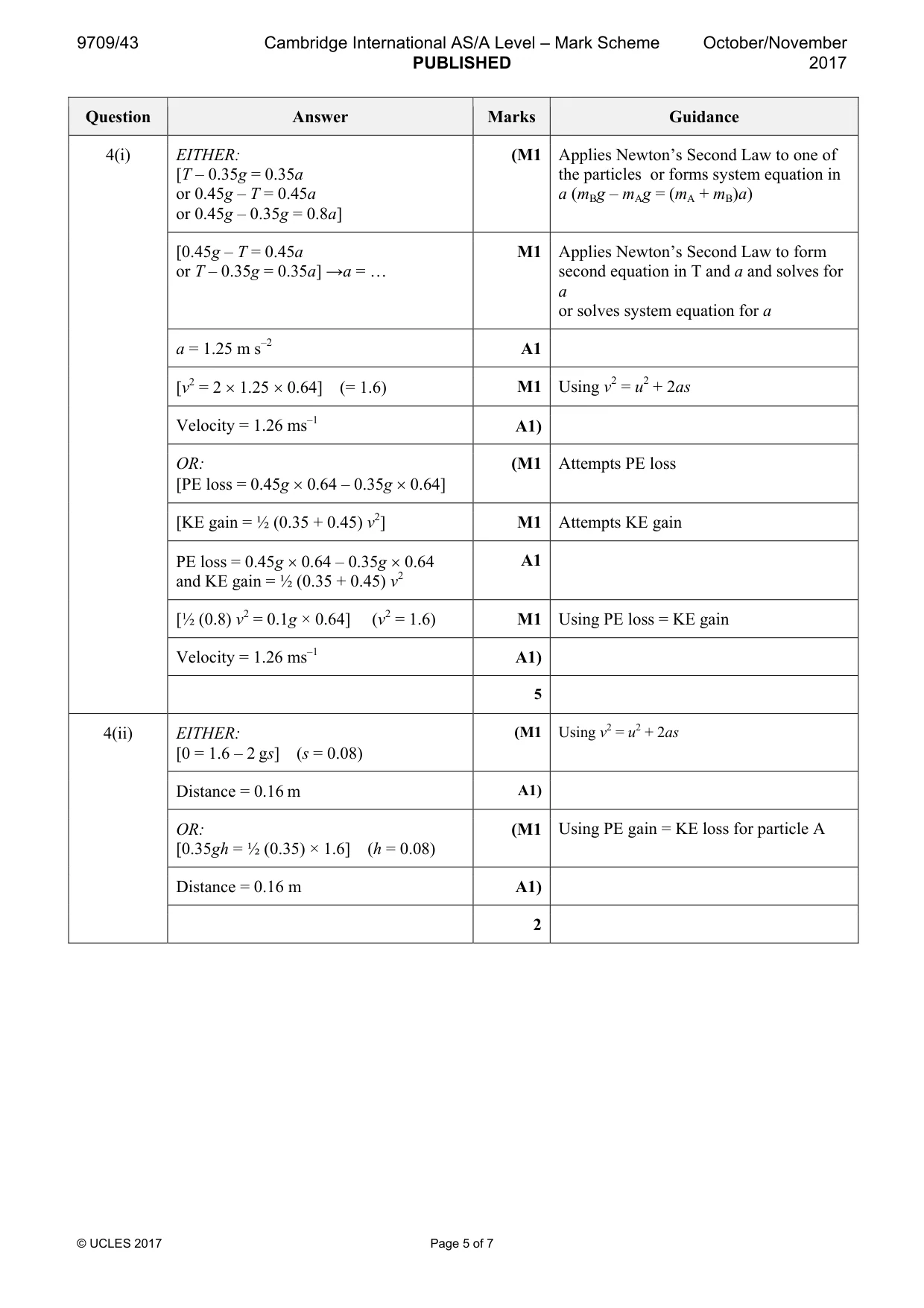
Mark scheme: 4(i) EITHER: (M1 Applies Newton’s Second Law to one of [T – 0.35g = 0.35a the particles or forms system equation in or 0.45g – T = 0.45a a (mBg – mAg = (mA + mB)a) or 0.45g – 0.35g = 0.8a] [0.45g – T = 0.45a M1 Applies Newton’s Second Law to form or T – 0.35g = 0.35a] →a = … second equation in T and a and solves for a or solves system equation for a a = 1.25 m s–2 A1 [v2 = 2 × 1.25 × 0.64] (= 1.6) M1 Using v2 = u2 + 2as Velocity = 1.26 ms–1 A1) OR: (M1 Attempts PE loss [PE loss = 0.45g × 0.64 – 0.35g × 0.64] [KE gain = ½ (0.35 + 0.45) v2] M1 Attempts KE gain PE loss = 0.45g × 0.64 – 0.35g × 0.64 A1 and KE gain = ½ (0.35 + 0.45) v2 [½ (0.8) v2 = 0.1g × 0.64] (v2 = 1.6) M1 Using PE loss = KE gain Velocity = 1.26 ms–1 A1) 5 4(ii) EITHER: (M1 Using v2 = u2 + 2as [0 = 1.6 – 2 gs] (s = 0.08) Distance = 0.16 m A1) OR: (M1 Using PE gain = KE loss for particle A [0.35gh = ½ (0.35) × 1.6] (h = 0.08) Distance = 0.16 m A1) 2
Q5 · A particle starts from a fixed origin with velocity 0.4 m s−1 and moves in a straight line
5 A particle starts from a fixed origin with velocity 0.4 m s−1 and moves in a straight line. The acceleration a m s−2 of the particle t s after it leaves the origin is given by a = k 3t2 −12t + 2 , where k is a constant. When t = 1, the velocity of P is 0.1 m s−1. (i) Show that the value of k is 0.1. [5] ........................................................................................................................................................ ........................................................................................................................................................ ........................................................................................................................................................ ........................................................................................................................................................ ........................................................................................................................................................ ........................................................................................................................................................ ........................................................................................................................................................ ........................................................................................................................................................ ........................................................................................................................................................ ........................................................................................................................................................ ........................................................................................................................................................ ........................................................................................................................................................ ........................................................................................................................................................ ........................................................................................................................................................ ........................................................................................................................................................ ........................................................................................................................................................ ........................................................................................................................................................ ........................................................................................................................................................ ........................................................................................................................................................ ........................................................................................................................................................ ........................................................................................................................................................ ........................................................................................................................................................ ........................................................................................................................................................ (ii) Find an expression for the displacement of the particle from the origin in terms of t. [2] ........................................................................................................................................................ ........................................................................................................................................................ ........................................................................................................................................................ ........................................................................................................................................................ ........................................................................................................................................................ ........................................................................................................................................................ ........................................................................................................................................................ ........................................................................................................................................................ ........................................................................................................................................................ ........................................................................................................................................................ ........................................................................................................................................................ ........................................................................................................................................................ ........................................................................................................................................................ ........................................................................................................................................................ ........................................................................................................................................................ (iii) Hence verify that the particle is again at the origin at t = 2. [1] ........................................................................................................................................................ ........................................................................................................................................................ ........................................................................................................................................................ ........................................................................................................................................................ ........................................................................................................................................................ ........................................................................................................................................................ ........................................................................................................................................................ ........................................................................................................................................................ ........................................................................................................................................................
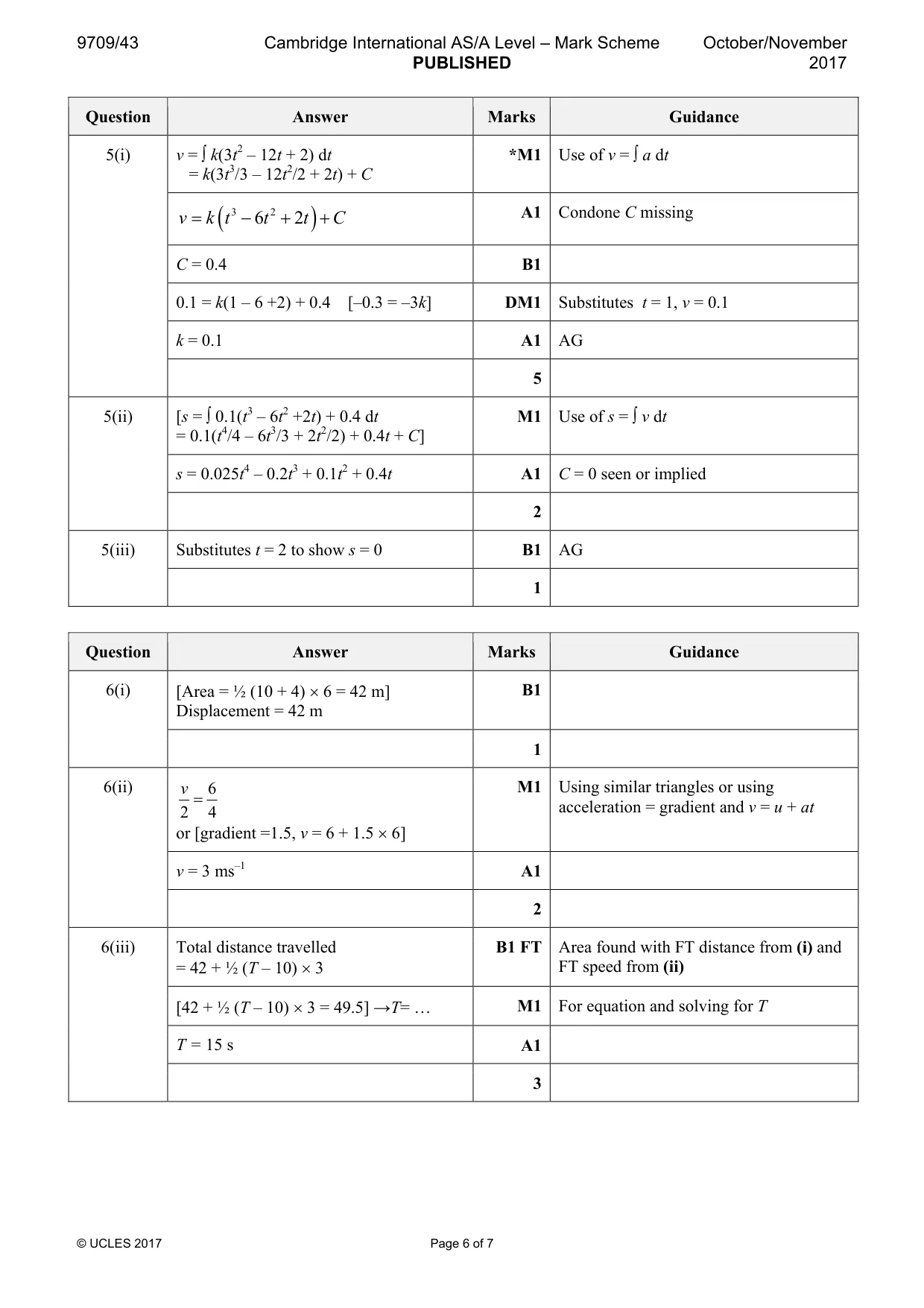
Mark scheme: 5(i) v = ∫ k(3t2 – 12t + 2) dt *M1 Use of v = ∫ a dt = k(3t3/3 – 12t2/2 + 2t) + C v = k t 3 − 6t 2 + 2t + C A1 Condone C missing ( ) C = 0.4 B1 0.1 = k(1 – 6 +2) + 0.4 [–0.3 = –3k] DM1 Substitutes t = 1, v = 0.1 k = 0.1 A1 AG 5 5(ii) [s = ∫ 0.1(t3 – 6t2 +2t) + 0.4 dt M1 Use of s = ∫ v dt = 0.1(t4/4 – 6t3/3 + 2t2/2) + 0.4t + C] s = 0.025t4 – 0.2t3 + 0.1t2 + 0.4t A1 C = 0 seen or implied 2 5(iii) Substitutes t = 2 to show s = 0 B1 AG 1
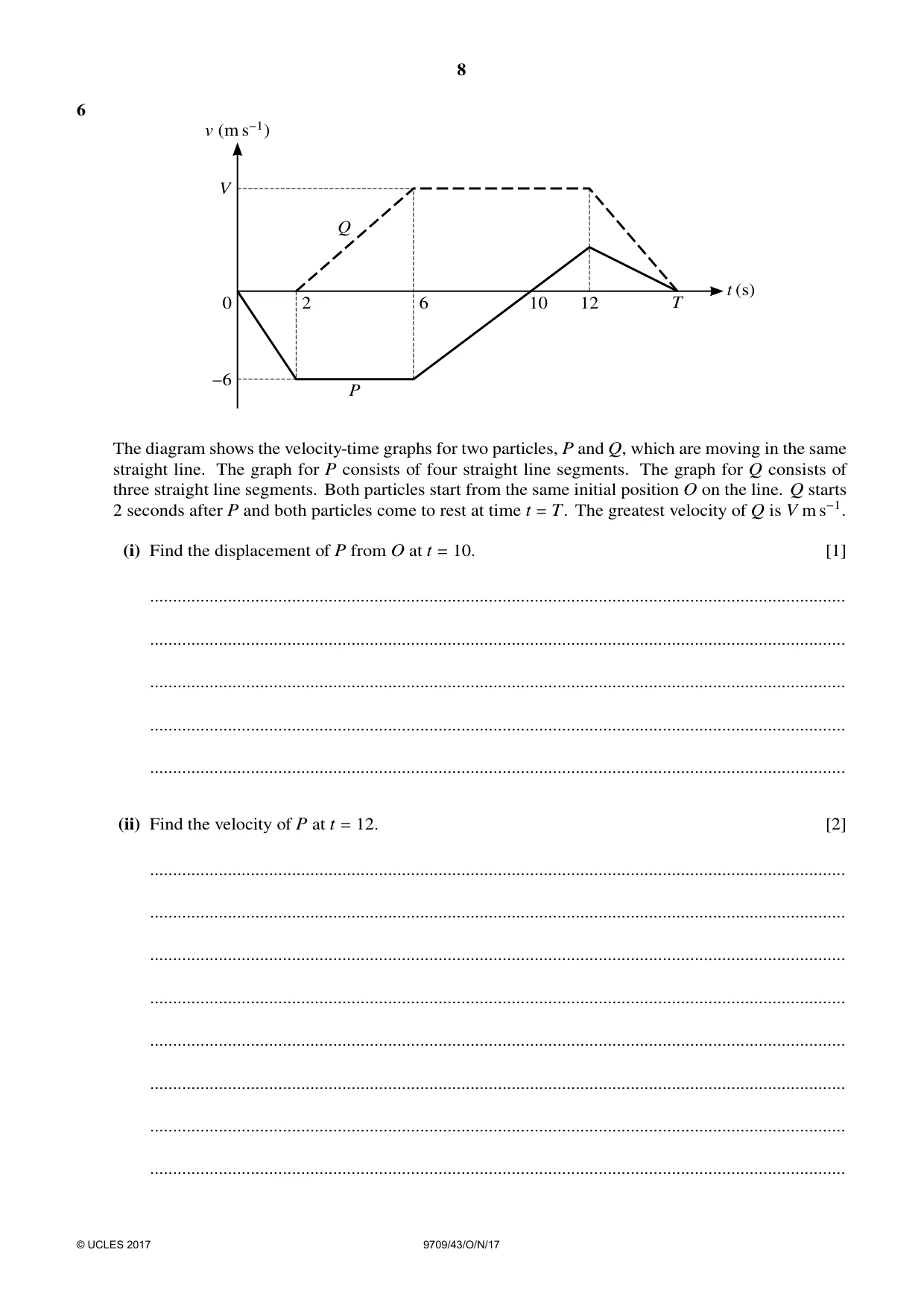
Q6 · V (m s−1) V Q t (s) 0 2 6 10 12 T −6 P The diagram shows the velocity-time graphs for two…
6 v (m s−1) V Q t (s) 0 2 6 10 12 T −6 P The diagram shows the velocity-time graphs for two particles, P and Q, which are moving in the same straight line. The graph for P consists of four straight line segments. The graph for Q consists of three straight line segments. Both particles start from the same initial position O on the line. Q starts 2 seconds after P and both particles come to rest at time t = T. The greatest velocity of Q is V m s−1. (i) Find the displacement of P from O at t = 10. [1] ........................................................................................................................................................ ........................................................................................................................................................ ........................................................................................................................................................ ........................................................................................................................................................ ........................................................................................................................................................ (ii) Find the velocity of P at t = 12. [2] ........................................................................................................................................................ ........................................................................................................................................................ ........................................................................................................................................................ ........................................................................................................................................................ ........................................................................................................................................................ ........................................................................................................................................................ ........................................................................................................................................................ ........................................................................................................................................................ (iii) Given that the total distance covered by P during the T seconds of its motion is 49.5 m, find the value of T. [3] ........................................................................................................................................................ ........................................................................................................................................................ ........................................................................................................................................................ ........................................................................................................................................................ ........................................................................................................................................................ ........................................................................................................................................................ ........................................................................................................................................................ ........................................................................................................................................................ ........................................................................................................................................................ ........................................................................................................................................................ ........................................................................................................................................................ ........................................................................................................................................................ (iv) Given also that the acceleration of Q from t = 2 to t = 6 is 1.75 m s−2, find the value of V and hence find the distance between the two particles when they both come to rest at t = T. [3] ........................................................................................................................................................ ........................................................................................................................................................ ........................................................................................................................................................ ........................................................................................................................................................ ........................................................................................................................................................ ........................................................................................................................................................ ........................................................................................................................................................ ........................................................................................................................................................ ........................................................................................................................................................ ........................................................................................................................................................ ........................................................................................................................................................
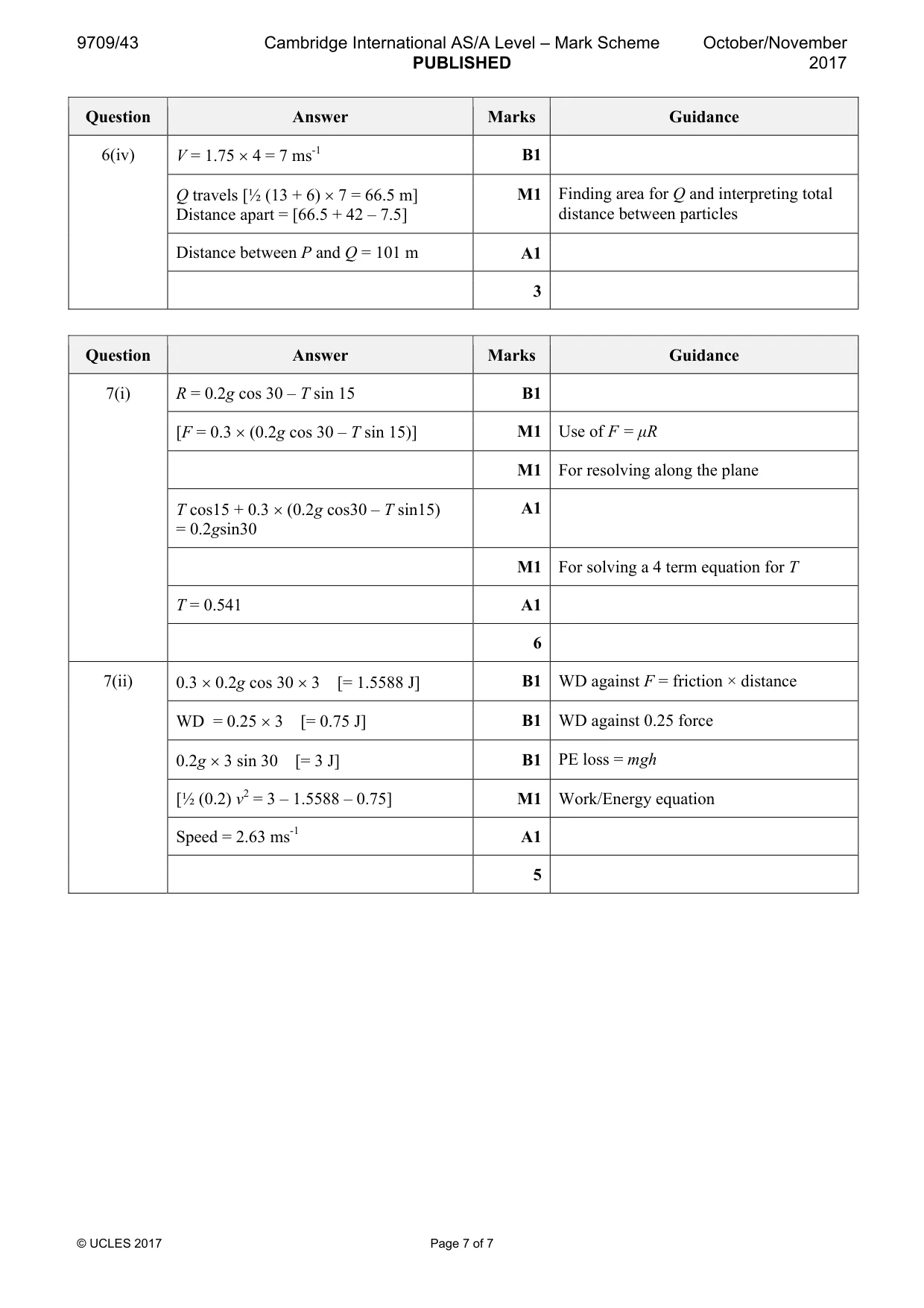
Mark scheme: 6(i) [Area = ½ (10 + 4) × 6 = 42 m] B1 Displacement = 42 m 1 6(ii) v 6 M1 Using similar triangles or using = acceleration = gradient and v = u + at 2 4 or [gradient =1.5, v = 6 + 1.5 × 6] v = 3 ms–1 A1 2 6(iii) Total distance travelled B1 FT Area found with FT distance from (i) and = 42 + ½ (T – 10) × 3 FT speed from (ii) [42 + ½ (T – 10) × 3 = 49.5] →T= … M1 For equation and solving for T T = 15 s A1 3 6(iv) V = 1.75 × 4 = 7 ms-1 B1 Q travels [½ (13 + 6) × 7 = 66.5 m] M1 Finding area for Q and interpreting total Distance apart = [66.5 + 42 – 7.5] distance between particles Distance between P and Q = 101 m A1 3
Q7 · T N 15Å P 30Å A particle P of mass 0.2 kg rests on a rough plane inclined at 30Å to the…
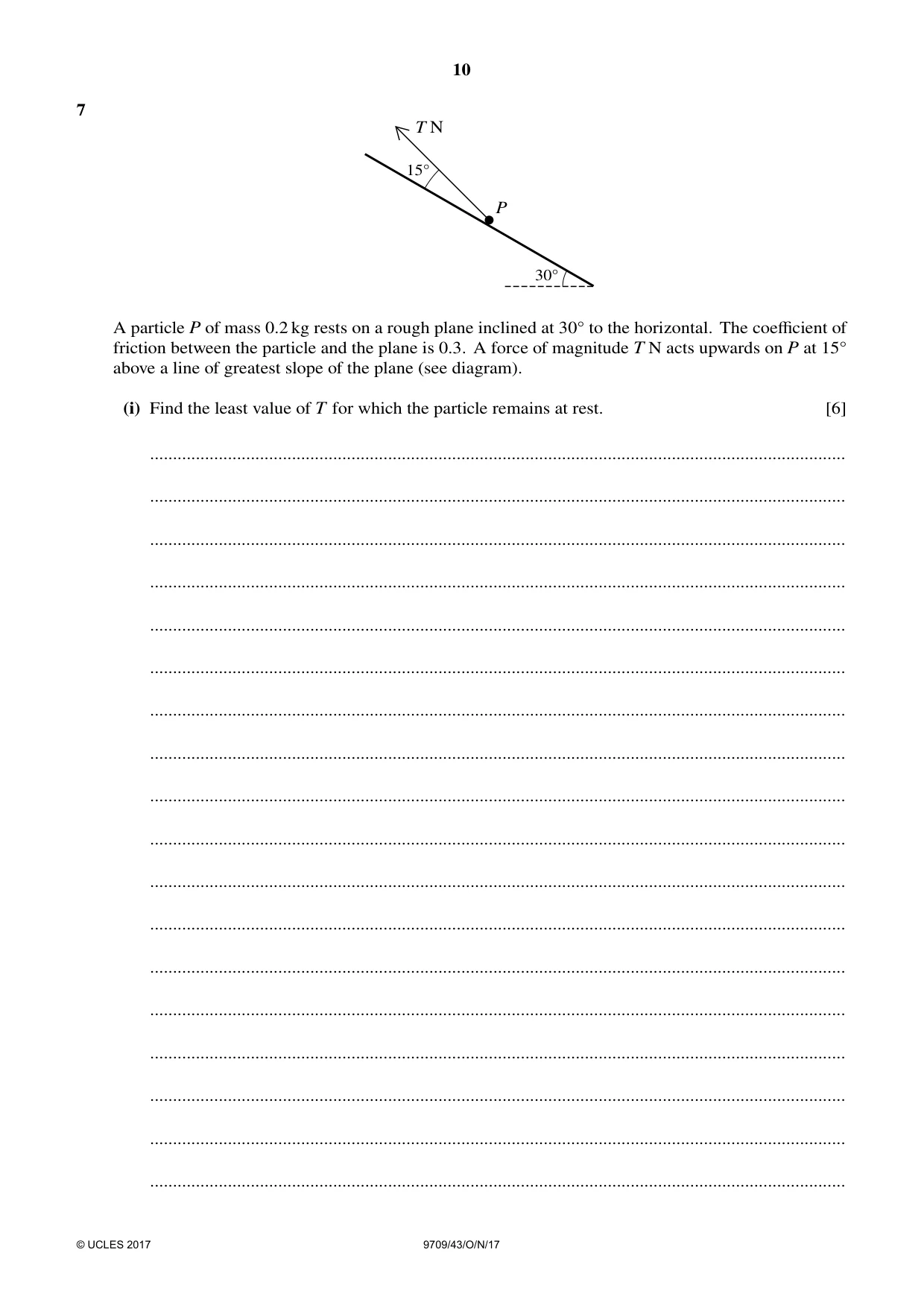
7 T N 15Å P 30Å A particle P of mass 0.2 kg rests on a rough plane inclined at 30Å to the horizontal. The coefficient of friction between the particle and the plane is 0.3. A force of magnitude T N acts upwards on P at 15Å above a line of greatest slope of the plane (see diagram). (i) Find the least value of T for which the particle remains at rest. [6] ........................................................................................................................................................ ........................................................................................................................................................ ........................................................................................................................................................ ........................................................................................................................................................ ........................................................................................................................................................ ........................................................................................................................................................ ........................................................................................................................................................ ........................................................................................................................................................ ........................................................................................................................................................ ........................................................................................................................................................ ........................................................................................................................................................ ........................................................................................................................................................ ........................................................................................................................................................ ........................................................................................................................................................ ........................................................................................................................................................ ........................................................................................................................................................ ........................................................................................................................................................ ........................................................................................................................................................ The force of magnitude T N is now removed. A new force of magnitude 0.25 N acts on P up the plane, parallel to a line of greatest slope of the plane. Starting from rest, P slides down the plane. After moving a distance of 3 m, P passes through the point A. (ii) Use an energy method to find the speed of P at A. [5] ........................................................................................................................................................ ........................................................................................................................................................ ........................................................................................................................................................ ........................................................................................................................................................ ........................................................................................................................................................ ........................................................................................................................................................ ........................................................................................................................................................ ........................................................................................................................................................ ........................................................................................................................................................ ........................................................................................................................................................ ........................................................................................................................................................ ........................................................................................................................................................ ........................................................................................................................................................ ........................................................................................................................................................ ........................................................................................................................................................ ........................................................................................................................................................ ........................................................................................................................................................ ........................................................................................................................................................ ........................................................................................................................................................ ........................................................................................................................................................ ........................................................................................................................................................ ........................................................................................................................................................ ........................................................................................................................................................
Mark scheme: 7(i) R = 0.2g cos 30 – T sin 15 B1 [F = 0.3 × (0.2g cos 30 – T sin 15)] M1 Use of F = µR M1 For resolving along the plane T cos15 + 0.3 × (0.2g cos30 – T sin15) A1 = 0.2gsin30 M1 For solving a 4 term equation for T T = 0.541 A1 6 7(ii) 0.3 × 0.2g cos 30 × 3 [= 1.5588 J] B1 WD against F = friction × distance WD = 0.25 × 3 [= 0.75 J] B1 WD against 0.25 force 0.2g × 3 sin 30 [= 3 J] B1 PE loss = mgh [½ (0.2) v2 = 3 – 1.5588 – 0.75] M1 Work/Energy equation Speed = 2.63 ms-1 A1 5
What was in this paper
The subtopics covered by these 6 questions, and how many questions each got. Open one in a new tab to see every Cambridge question on it.
What you needed in this session
Cambridge’s own grade thresholds for 2017 Oct/Nov, Paper 4 · Variant 3. A higher threshold means an easier paper — the bar moves with how the cohort did.