Cambridge A Level Marine Science 9693 — 2020 Oct/Nov Paper 2 · Variant 0
9693/20/O/N/20 · 4 questions · 50 marks · ≈56 min
The question paper and its mark scheme, free to read here and free to download. This is Cambridge’s own paper, exactly as it was sat.
Question paper12 pages


Mark scheme
No mark scheme is in the library for this paper.
Questions as text
Q1 · Green shore crabs are predators of the common periwinkle, a herbivorous intertidal snail
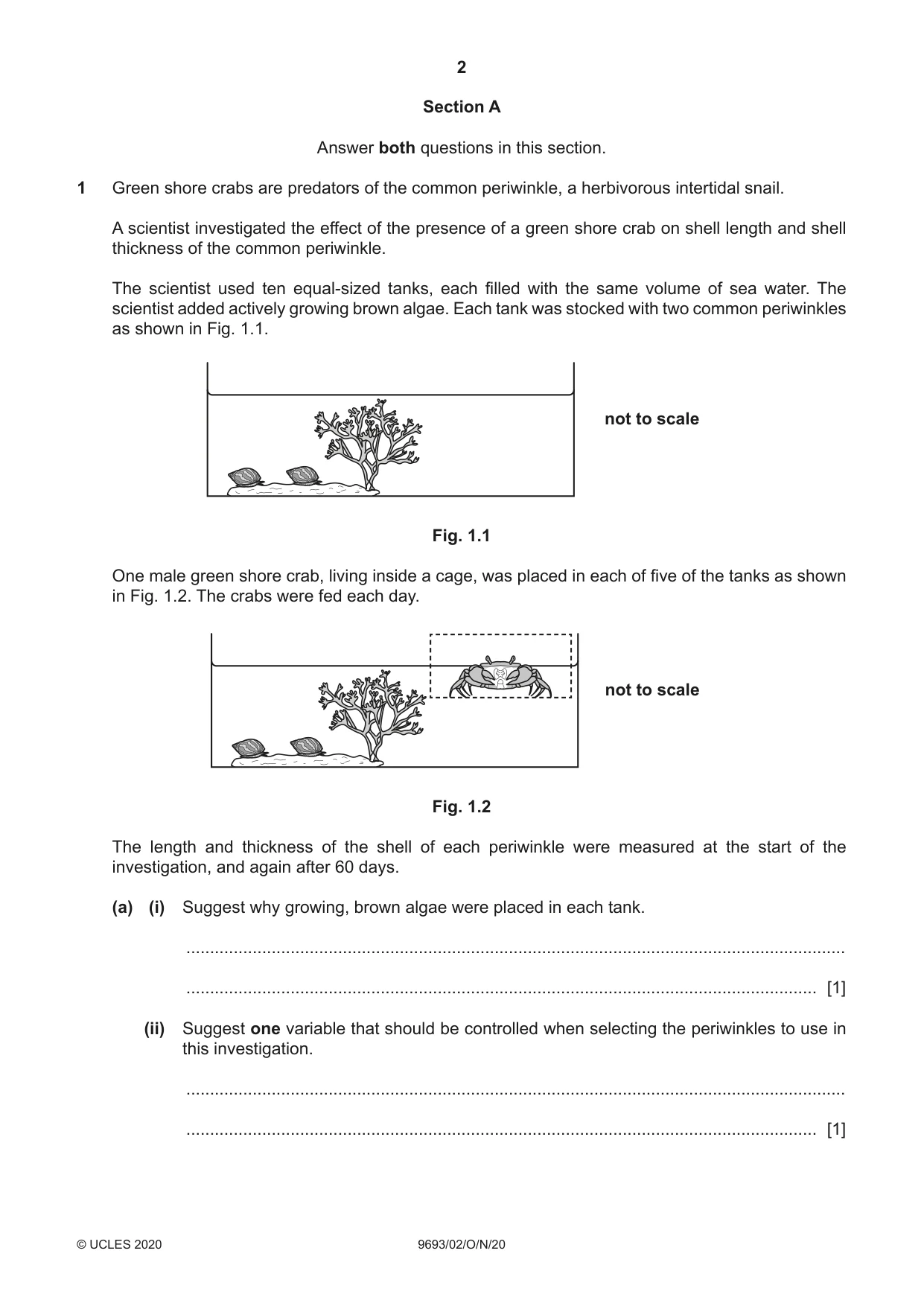
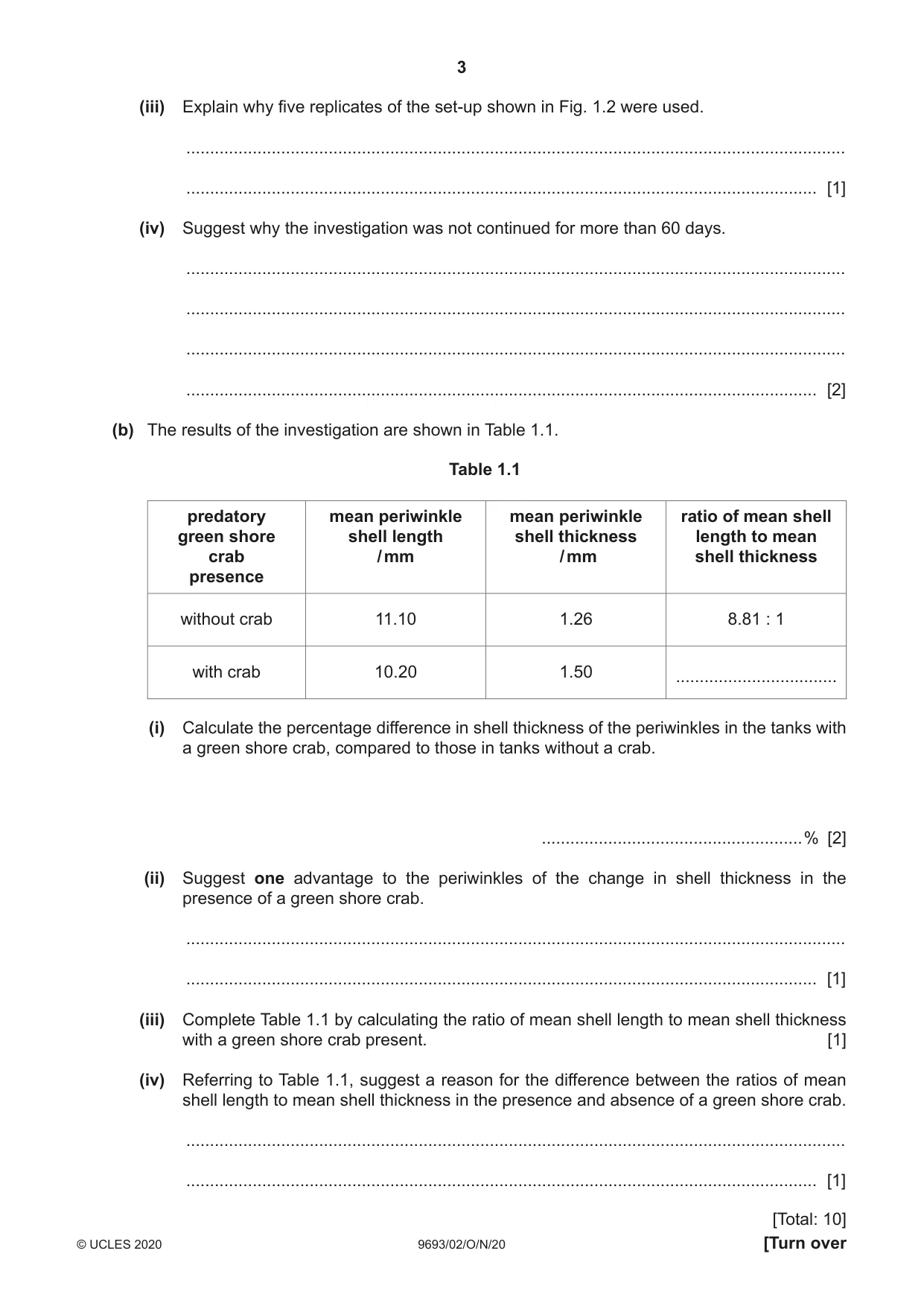
1 Green shore crabs are predators of the common periwinkle, a herbivorous intertidal snail. A scientist investigated the effect of the presence of a green shore crab on shell length and shell thickness of the common periwinkle. The scientist used ten equal-sized tanks, each filled with the same volume of sea water. The scientist added actively growing brown algae. Each tank was stocked with two common periwinkles as shown in Fig. 1.1. not to scale Fig. 1.1 One male green shore crab, living inside a cage, was placed in each of five of the tanks as shown in Fig. 1.2. The crabs were fed each day. not to scale Fig. 1.2 The length and thickness of the shell of each periwinkle were measured at the start of the investigation, and again after 60 days. (a) (i) Suggest why growing, brown algae were placed in each tank. ........................................................................................................................................... ..................................................................................................................................... [1] (ii) Suggest one variable that should be controlled when selecting the periwinkles to use in this investigation. ........................................................................................................................................... ..................................................................................................................................... [1] (iii) Explain why five replicates of the set-up shown in Fig. 1.2 were used. ........................................................................................................................................... ..................................................................................................................................... [1] (iv) Suggest why the investigation was not continued for more than 60 days. ........................................................................................................................................... ........................................................................................................................................... ........................................................................................................................................... ..................................................................................................................................... [2] (b) The results of the investigation are shown in Table 1.1. Table 1.1 predatory mean periwinkle mean periwinkle ratio of mean shell green shore shell length shell thickness length to mean crab / mm / mm shell thickness presence without crab 11.10 1.26 8.81 : 1 with crab 10.20 1.50 .................................. (i) Calculate the percentage difference in shell thickness of the periwinkles in the tanks with a green shore crab, compared to those in tanks without a crab. .......................................................% [2] (ii) Suggest one advantage to the periwinkles of the change in shell thickness in the presence of a green shore crab. ........................................................................................................................................... ..................................................................................................................................... [1] (iii) Complete Table 1.1 by calculating the ratio of mean shell length to mean shell thickness with a green shore crab present. [1] (iv) Referring to Table 1.1, suggest a reason for the difference between the ratios of mean shell length to mean shell thickness in the presence and absence of a green shore crab. ........................................................................................................................................... ..................................................................................................................................... [1] [Total: 10]
Q2 · Zostera marina is a species of seagrass
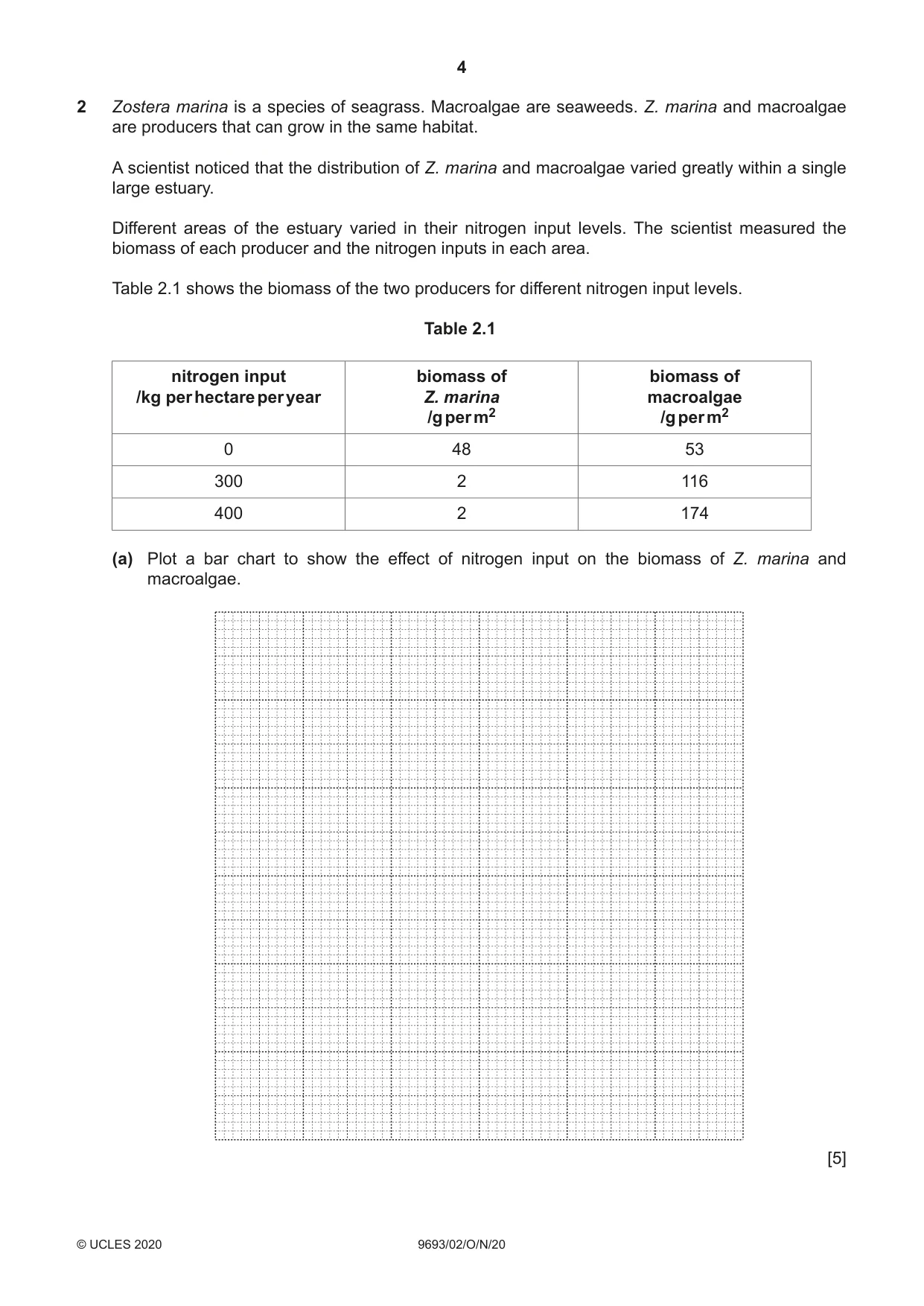
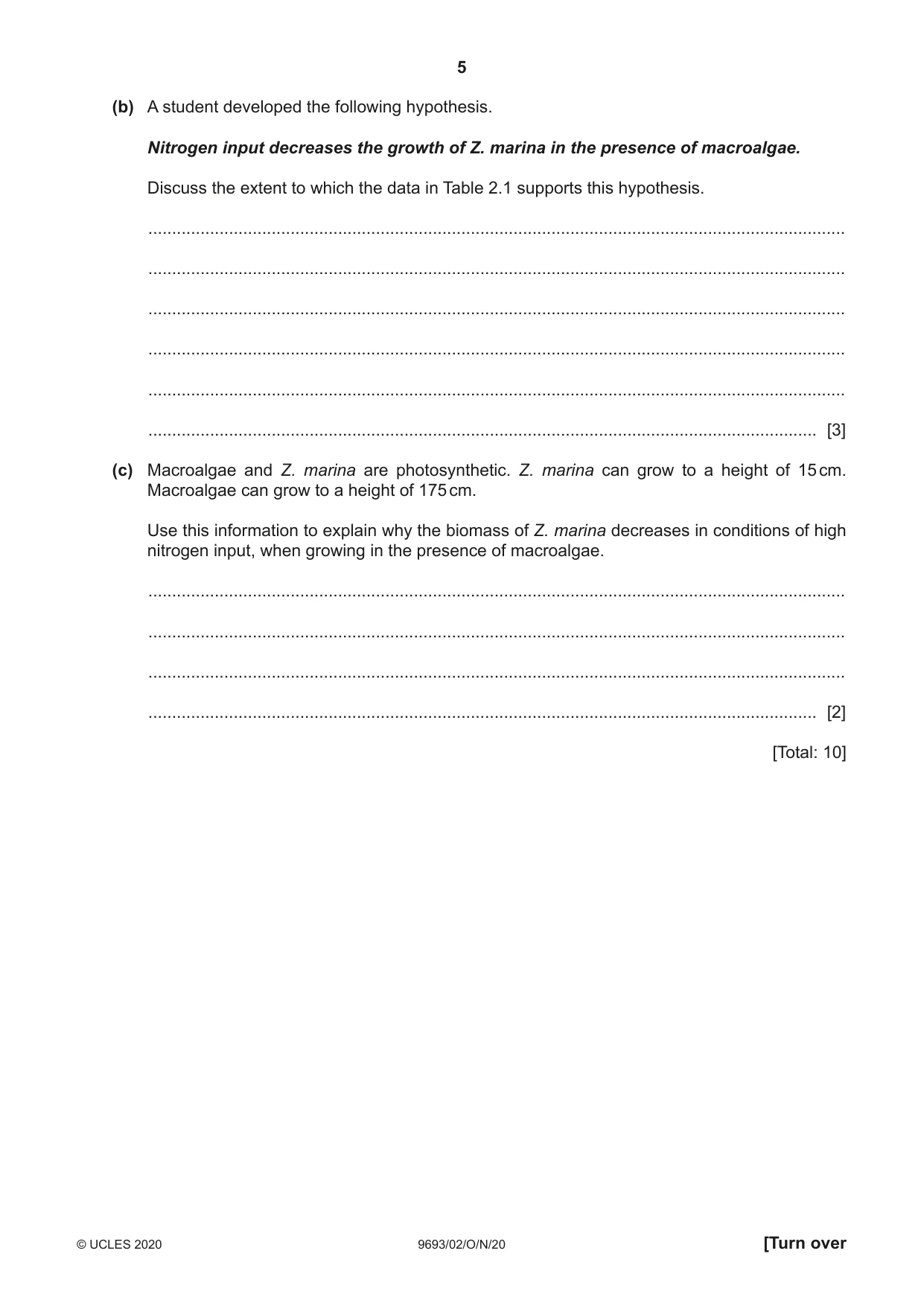
2 Zostera marina is a species of seagrass. Macroalgae are seaweeds. Z. marina and macroalgae are producers that can grow in the same habitat. A scientist noticed that the distribution of Z. marina and macroalgae varied greatly within a single large estuary. Different areas of the estuary varied in their nitrogen input levels. The scientist measured the biomass of each producer and the nitrogen inputs in each area. Table 2.1 shows the biomass of the two producers for different nitrogen input levels. Table 2.1 nitrogen input biomass of biomass of /kg per hectare per year Z. marina macroalgae /g per m2 /g per m2 0 48 53 300 2 116 400 2 174 (a) Plot a bar chart to show the effect of nitrogen input on the biomass of Z. marina and macroalgae. [5] (b) A student developed the following hypothesis. Nitrogen input decreases the growth of Z. marina in the presence of macroalgae. Discuss the extent to which the data in Table 2.1 supports this hypothesis. ................................................................................................................................................... ................................................................................................................................................... ................................................................................................................................................... ................................................................................................................................................... ................................................................................................................................................... ............................................................................................................................................. [3] (c) Macroalgae and Z. marina are photosynthetic. Z. marina can grow to a height of 15 cm. Macroalgae can grow to a height of 175 cm. Use this information to explain why the biomass of Z. marina decreases in conditions of high nitrogen input, when growing in the presence of macroalgae. ................................................................................................................................................... ................................................................................................................................................... ................................................................................................................................................... ............................................................................................................................................. [2] [Total: 10]
Q3 · Discuss the causes and effects of El-Niño events in the Pacific Ocean
3 (a) Discuss the causes and effects of El-Niño events in the Pacific Ocean. ................................................................................................................................................... ................................................................................................................................................... ................................................................................................................................................... ................................................................................................................................................... ................................................................................................................................................... ................................................................................................................................................... ................................................................................................................................................... ................................................................................................................................................... ................................................................................................................................................... ................................................................................................................................................... ................................................................................................................................................... ................................................................................................................................................... ................................................................................................................................................... ............................................................................................................................................. [7] (b) Tropical cyclones (hurricanes or typhoons) can have severe impacts on coral reefs. Discuss the effects of tropical cyclones on coral reefs and on local coastal human communities. ................................................................................................................................................... ................................................................................................................................................... ................................................................................................................................................... ................................................................................................................................................... ................................................................................................................................................... ................................................................................................................................................... ................................................................................................................................................... ................................................................................................................................................... ................................................................................................................................................... ................................................................................................................................................... ................................................................................................................................................... ................................................................................................................................................... ................................................................................................................................................... ................................................................................................................................................... ................................................................................................................................................... ............................................................................................................................................. [8] [Total: 15]
Q4 · Explain why volcanoes occur along plate boundaries that are spreading apart (divergent…
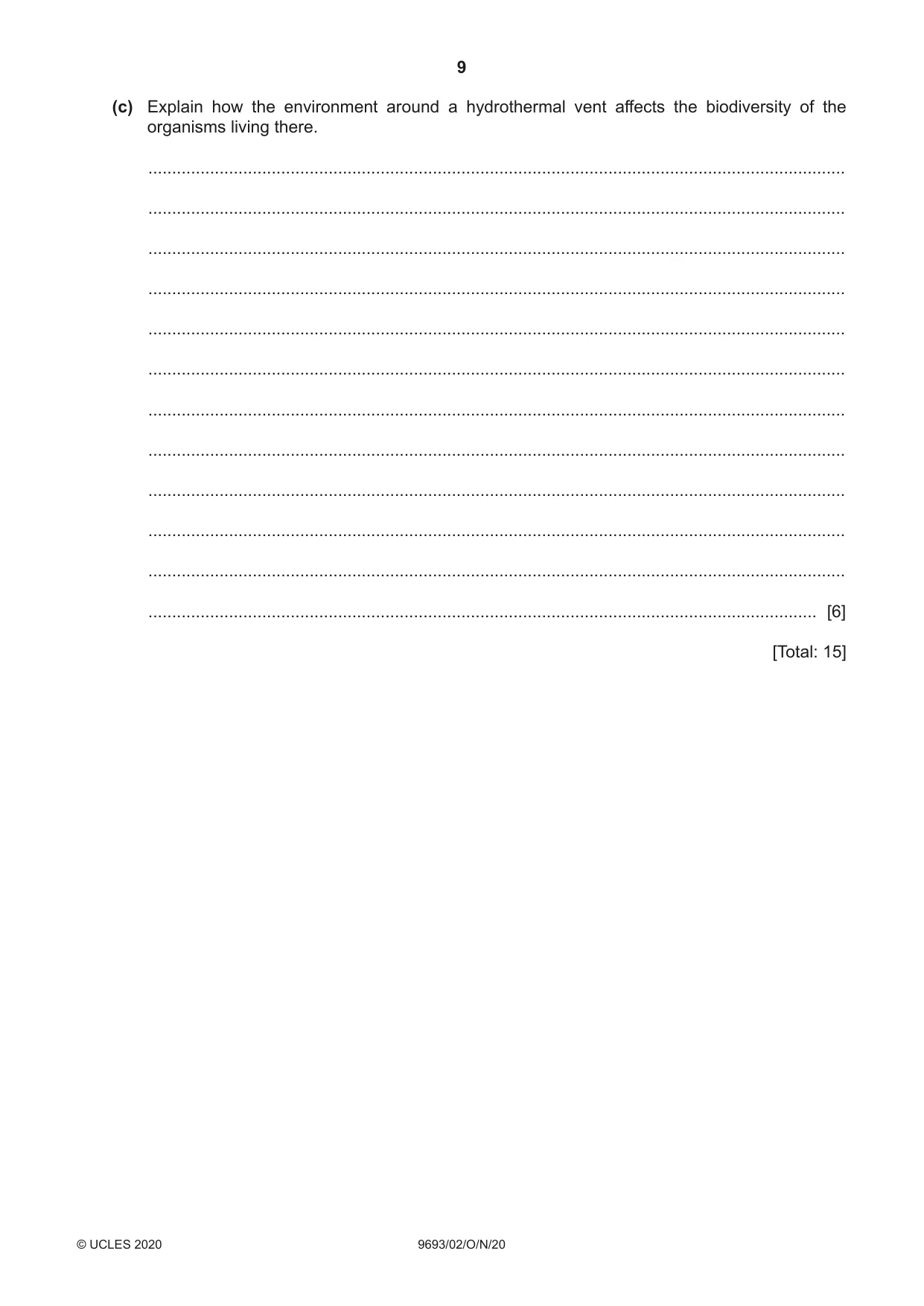
4 (a) Explain why volcanoes occur along plate boundaries that are spreading apart (divergent plate boundaries) but not usually along plate boundaries that slide past each other (transform boundaries). ................................................................................................................................................... ................................................................................................................................................... ................................................................................................................................................... ................................................................................................................................................... ................................................................................................................................................... ................................................................................................................................................... ................................................................................................................................................... ............................................................................................................................................. [4] (b) Describe how volcanic activity can affect the chemical composition of sea water. ................................................................................................................................................... ................................................................................................................................................... ................................................................................................................................................... ................................................................................................................................................... ................................................................................................................................................... ................................................................................................................................................... ................................................................................................................................................... ................................................................................................................................................... ................................................................................................................................................... ............................................................................................................................................. [5] (c) Explain how the environment around a hydrothermal vent affects the biodiversity of the organisms living there. ................................................................................................................................................... ................................................................................................................................................... ................................................................................................................................................... ................................................................................................................................................... ................................................................................................................................................... ................................................................................................................................................... ................................................................................................................................................... ................................................................................................................................................... ................................................................................................................................................... ................................................................................................................................................... ................................................................................................................................................... ............................................................................................................................................. [6] [Total: 15]
What was in this paper
The subtopics covered by these 4 questions, and how many questions each got. Open one in a new tab to see every Cambridge question on it.