Cambridge A Level Marine Science 9693 — 2019 Oct/Nov Paper 2 · Variant 0
9693/20/O/N/19 · 4 questions · 50 marks · ≈56 min
The question paper and its mark scheme, free to read here and free to download. This is Cambridge’s own paper, exactly as it was sat.
Question paper12 pages


Mark scheme
No mark scheme is in the library for this paper.
Questions as text
Q1 · A student investigated the substrate (surface) that barnacle larvae preferred to settle on
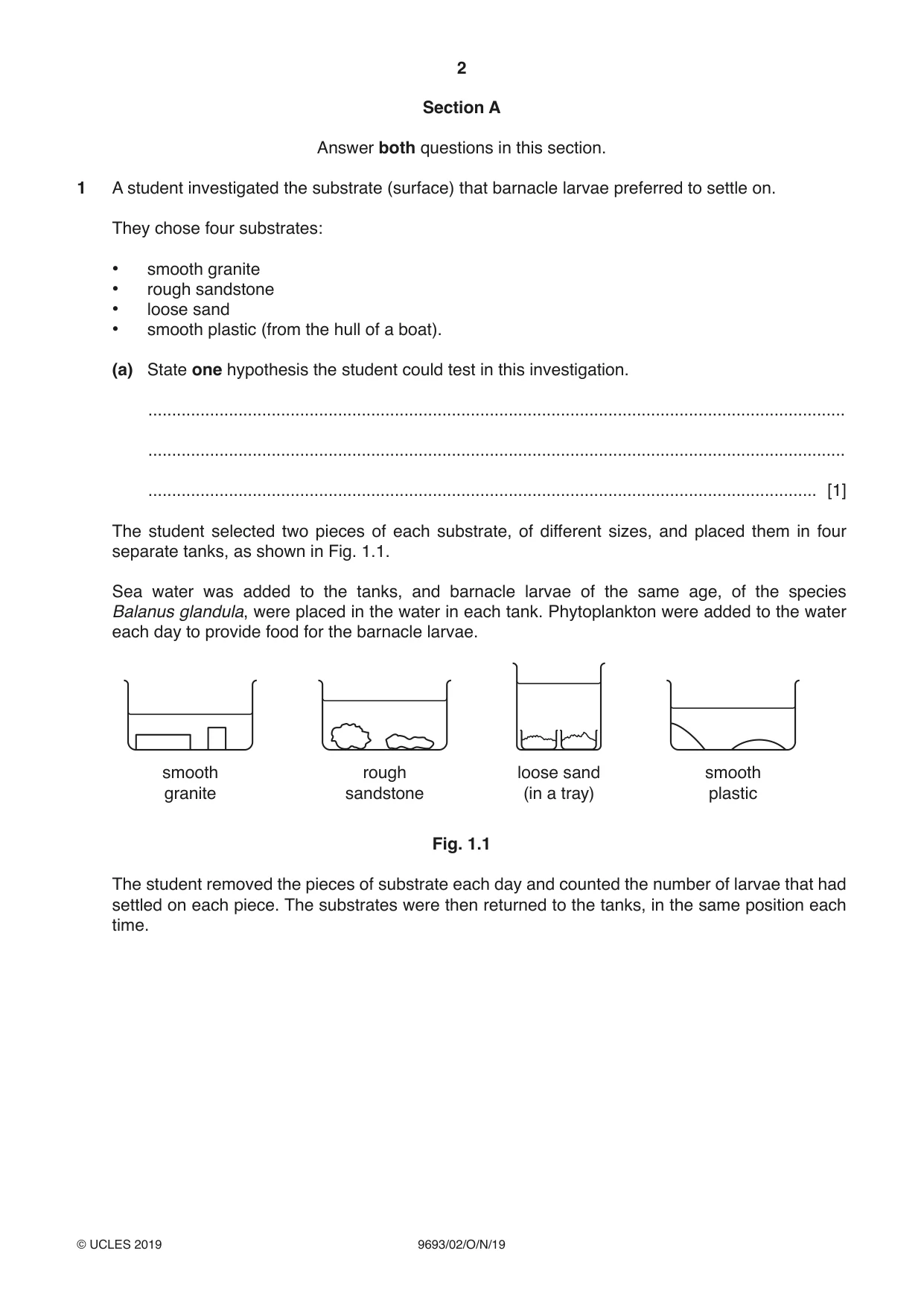
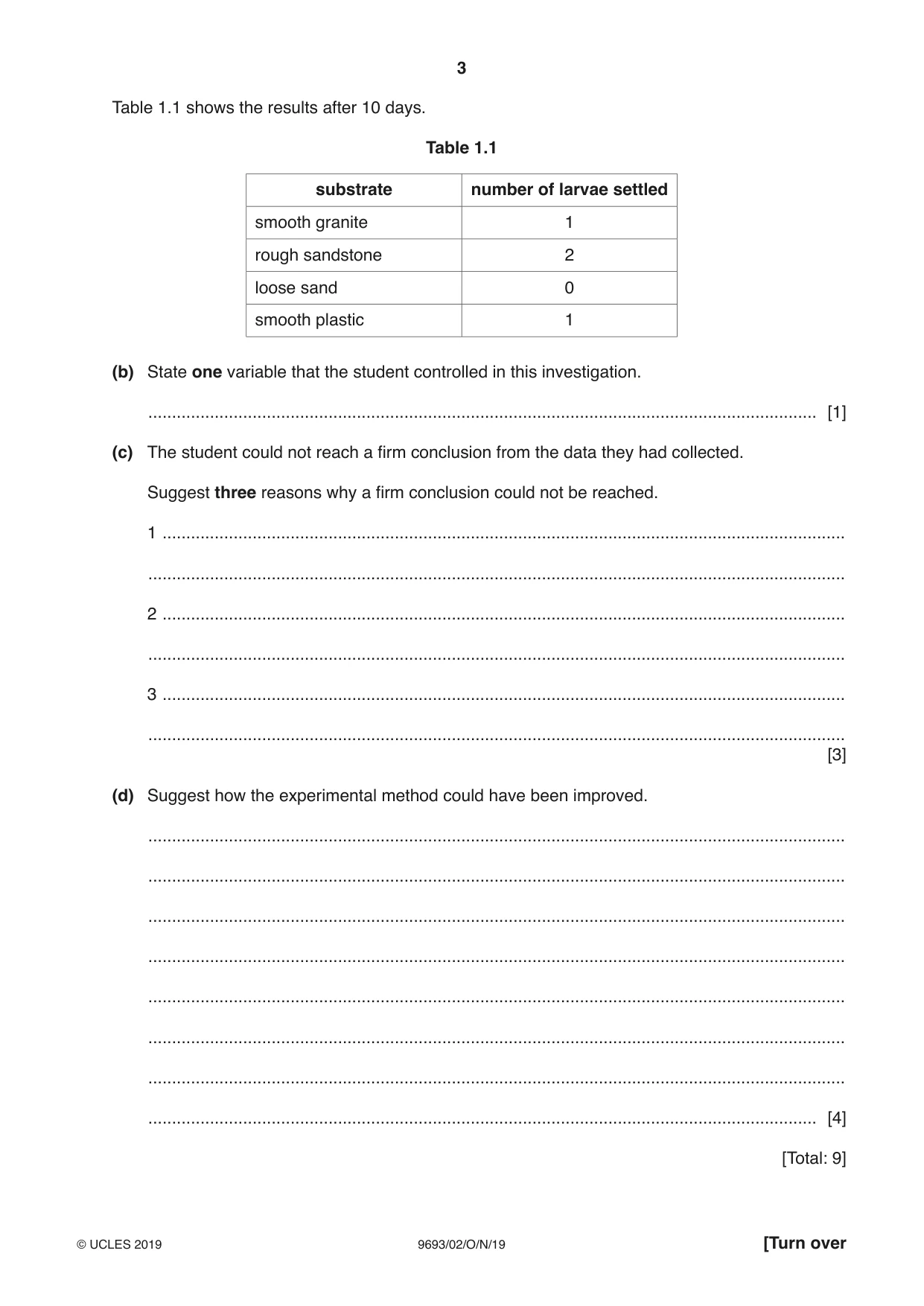
1 A student investigated the substrate (surface) that barnacle larvae preferred to settle on. They chose four substrates: • smooth granite • rough sandstone • loose sand • smooth plastic (from the hull of a boat). (a) State one hypothesis the student could test in this investigation. ................................................................................................................................................... ................................................................................................................................................... ............................................................................................................................................. [1] The student selected two pieces of each substrate, of different sizes, and placed them in four separate tanks, as shown in Fig. 1.1. Sea water was added to the tanks, and barnacle larvae of the same age, of the species Balanus glandula, were placed in the water in each tank. Phytoplankton were added to the water each day to provide food for the barnacle larvae. smooth rough loose sand smooth granite sandstone (in a tray) plastic Fig. 1.1 The student removed the pieces of substrate each day and counted the number of larvae that had settled on each piece. The substrates were then returned to the tanks, in the same position each time. Table 1.1 shows the results after 10 days. Table 1.1 substrate number of larvae settled smooth granite 1 rough sandstone 2 loose sand 0 smooth plastic 1 (b) State one variable that the student controlled in this investigation. ............................................................................................................................................. [1] (c) The student could not reach a firm conclusion from the data they had collected. Suggest three reasons why a firm conclusion could not be reached. 1 ................................................................................................................................................ ................................................................................................................................................... 2 ................................................................................................................................................ ................................................................................................................................................... 3 ................................................................................................................................................ ................................................................................................................................................... [3] (d) Suggest how the experimental method could have been improved. ................................................................................................................................................... ................................................................................................................................................... ................................................................................................................................................... ................................................................................................................................................... ................................................................................................................................................... ................................................................................................................................................... ................................................................................................................................................... ............................................................................................................................................. [4] [Total: 9]
Q2 · Tetraselmis is a single-celled phytoplankton, often cultured as a food source for the…
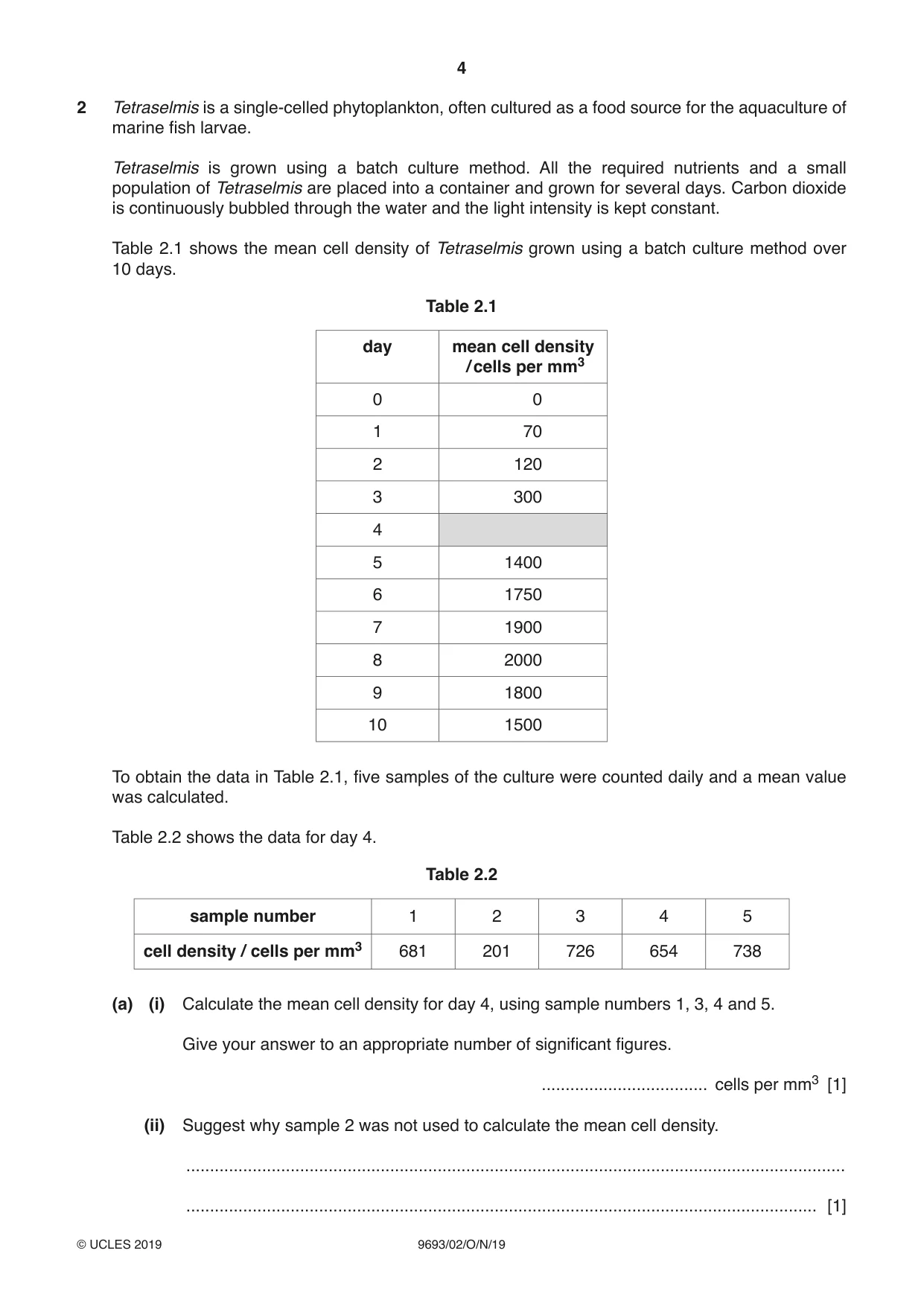
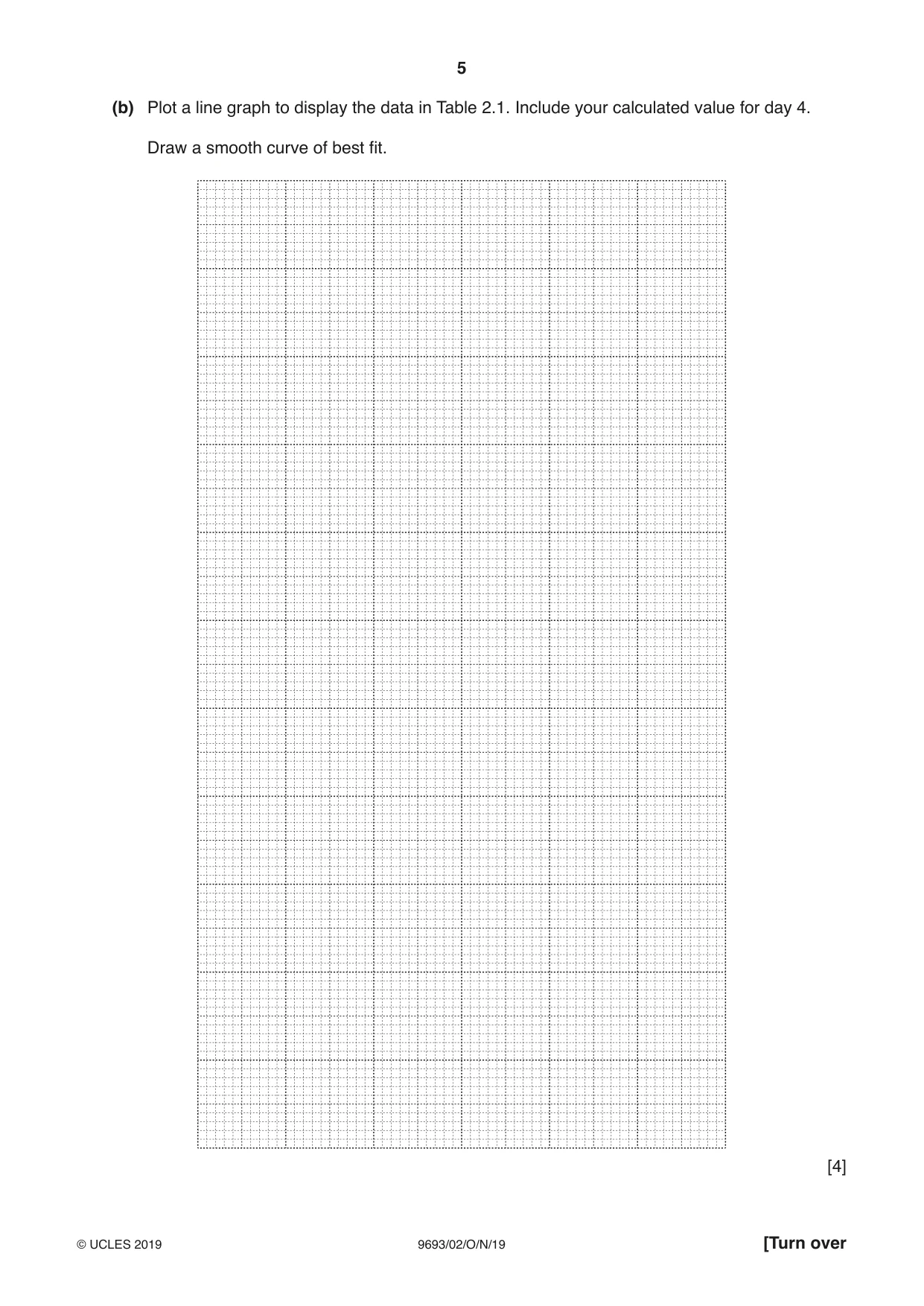
2 Tetraselmis is a single-celled phytoplankton, often cultured as a food source for the aquaculture of marine fish larvae. Tetraselmis is grown using a batch culture method. All the required nutrients and a small population of Tetraselmis are placed into a container and grown for several days. Carbon dioxide is continuously bubbled through the water and the light intensity is kept constant. Table 2.1 shows the mean cell density of Tetraselmis grown using a batch culture method over 10 days. Table 2.1 day mean cell density / cells per mm3 0 0 1 70 2 120 3 300 4 5 1400 6 1750 7 1900 8 2000 9 1800 10 1500 To obtain the data in Table 2.1, five samples of the culture were counted daily and a mean value was calculated. Table 2.2 shows the data for day 4. Table 2.2 sample number 1 2 3 4 5 cell density / cells per mm3 681 201 726 654 738 (a) (i) Calculate the mean cell density for day 4, using sample numbers 1, 3, 4 and 5. Give your answer to an appropriate number of significant figures. ................................... cells per mm3 [1] (ii) Suggest why sample 2 was not used to calculate the mean cell density. ........................................................................................................................................... ..................................................................................................................................... [1] (c) (i) Use the results in Table 2.1 and your graph to suggest the day on which it would be best to harvest Tetraselmis. Give a reason for your answer. ........................................................................................................................................... ........................................................................................................................................... ........................................................................................................................................... ..................................................................................................................................... [2] (ii) Predict what would happen to the mean cell density, if the culture was continued to day 15. Explain your prediction. ........................................................................................................................................... ........................................................................................................................................... ........................................................................................................................................... ..................................................................................................................................... [2] (d) Name the process which phytoplankton use to transfer light energy to a form available to the rest of the food chain. ................................................................................................................................................... ............................................................................................................................................. [1] [Total: 11]
Q3 · Outline the environmental factors of shorelines that are required for the development of…
3 (a) (i) Outline the environmental factors of shorelines that are required for the development of mangrove forests. ........................................................................................................................................... ........................................................................................................................................... ........................................................................................................................................... ........................................................................................................................................... ........................................................................................................................................... ........................................................................................................................................... ........................................................................................................................................... ..................................................................................................................................... [4] (ii) Explain how the tidal cycle would affect the salinity in a mangrove forest in an estuary over the period of a single day. ........................................................................................................................................... ........................................................................................................................................... ........................................................................................................................................... ........................................................................................................................................... ........................................................................................................................................... ........................................................................................................................................... ........................................................................................................................................... ..................................................................................................................................... [4] (iii) Suggest two impacts of removing mangrove forests from a shoreline. 1 ........................................................................................................................................ ........................................................................................................................................... 2 ........................................................................................................................................ ........................................................................................................................................... [2] (b) Coral reefs are rarely found near river estuaries or deltas. Explain the reasons for this. ................................................................................................................................................... ................................................................................................................................................... ................................................................................................................................................... ................................................................................................................................................... ................................................................................................................................................... ................................................................................................................................................... ................................................................................................................................................... ................................................................................................................................................... ................................................................................................................................................... ............................................................................................................................................. [5] [Total: 15]
Q4 · Describe how hydrothermal vents are formed
4 (a) (i) Describe how hydrothermal vents are formed. ........................................................................................................................................... ........................................................................................................................................... ........................................................................................................................................... ........................................................................................................................................... ........................................................................................................................................... ........................................................................................................................................... ........................................................................................................................................... ..................................................................................................................................... [4] (ii) Succession occurs at newly formed hydrothermal vents. Explain the meaning of the term succession and describe the succession at hydrothermal vents. ........................................................................................................................................... ........................................................................................................................................... ........................................................................................................................................... ........................................................................................................................................... ........................................................................................................................................... ........................................................................................................................................... ........................................................................................................................................... ........................................................................................................................................... ........................................................................................................................................... ........................................................................................................................................... ........................................................................................................................................... ..................................................................................................................................... [6] (b) Ocean acidification is a threat to many marine ecosystems. Explain the causes and effects of ocean acidification. ................................................................................................................................................... ................................................................................................................................................... ................................................................................................................................................... ................................................................................................................................................... ................................................................................................................................................... ................................................................................................................................................... ................................................................................................................................................... ................................................................................................................................................... ................................................................................................................................................... ............................................................................................................................................. [5] [Total: 15]
What was in this paper
The subtopics covered by these 4 questions, and how many questions each got. Open one in a new tab to see every Cambridge question on it.