Cambridge A Level Marine Science 9693 — 2016 May/June Paper 2 · Variant 0
9693/20/M/J/16
The question paper and its mark scheme, free to read here and free to download. This is Cambridge’s own paper, exactly as it was sat.
Question paper12 pages

Mark scheme
No mark scheme is in the library for this paper.
Paper as text
Question paper, page 1
This document consists of 10 printed pages and 2 blank pages. DC (CW/FD) 107907/2 © UCLES 2016 [Turn over Cambridge International Examinations Cambridge International Advanced Subsidiary and Advanced Level * 2 0 7 8 3 3 0 9 0 7 * MARINE SCIENCE 9693/02 Paper 2 AS Data-Handling and Free-Response May/June 2016 1 hour 15 minutes Candidates answer on the Question Paper. No Additional Materials are required. READ THESE INSTRUCTIONS FIRST Write your Centre number, candidate number and name on all the work you hand in. Write in dark blue or black pen. You may use an HB pencil for any diagrams or graphs. Do not use staples, paper clips, glue or correction fluid. DO NOT WRITE IN ANY BARCODES. Section A Answer both questions in this section. Write your answers in the spaces provided on the Question Paper. Section B Answer both questions in this section. Write your answers in the spaces provided on the Question Paper. Electronic calculators may be used. You may lose marks if you do not show your working or if you do not use appropriate units. At the end of the examination, fasten all your work securely together. The number of marks is given in brackets [ ] at the end of each question or part question.
Question paper, page 2
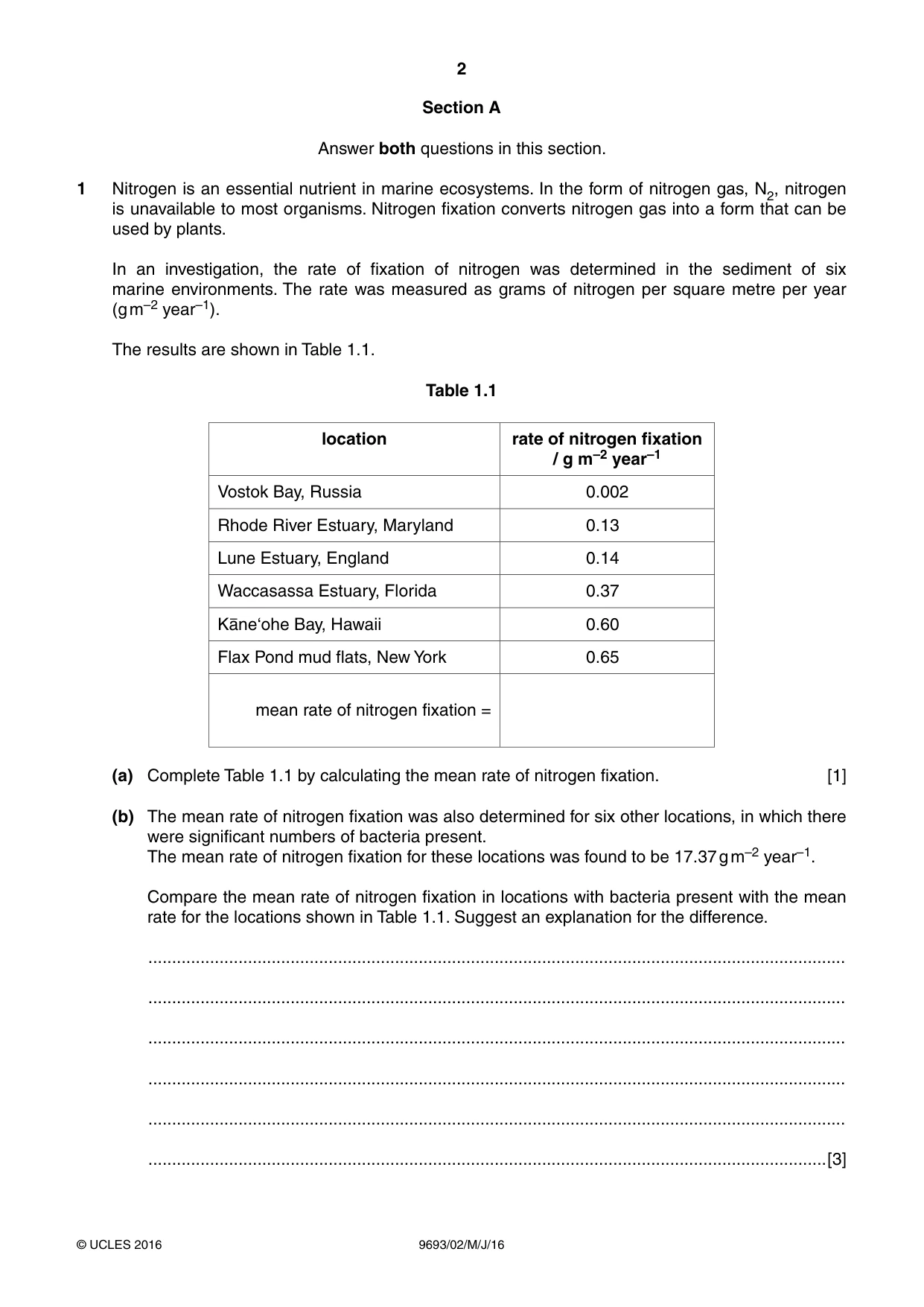
2 9693/02/M/J/16 © UCLES 2016 Section A Answer both questions in this section. 1 Nitrogen is an essential nutrient in marine ecosystems. In the form of nitrogen gas, N2, nitrogen is unavailable to most organisms. Nitrogen fixation converts nitrogen gas into a form that can be used by plants. In an investigation, the rate of fixation of nitrogen was determined in the sediment of six marine environments. The rate was measured as grams of nitrogen per square metre per year (g m–2 year–1). The results are shown in Table 1.1. Table 1.1 location rate of nitrogen fixation / g m–2 year–1 Vostok Bay, Russia 0.002 Rhode River Estuary, Maryland 0.13 Lune Estuary, England 0.14 Waccasassa Estuary, Florida 0.37 Ka–ne‘ohe Bay, Hawaii 0.60 Flax Pond mud flats, New York 0.65 mean rate of nitrogen fixation = (a) Complete Table 1.1 by calculating the mean rate of nitrogen fixation. [1] (b) The mean rate of nitrogen fixation was also determined for six other locations, in which there were significant numbers of bacteria present. The mean rate of nitrogen fixation for these locations was found to be 17.37 g m–2 year–1. Compare the mean rate of nitrogen fixation in locations with bacteria present with the mean rate for the locations shown in Table 1.1. Suggest an explanation for the difference. … … … … … …[3]
Question paper, page 3
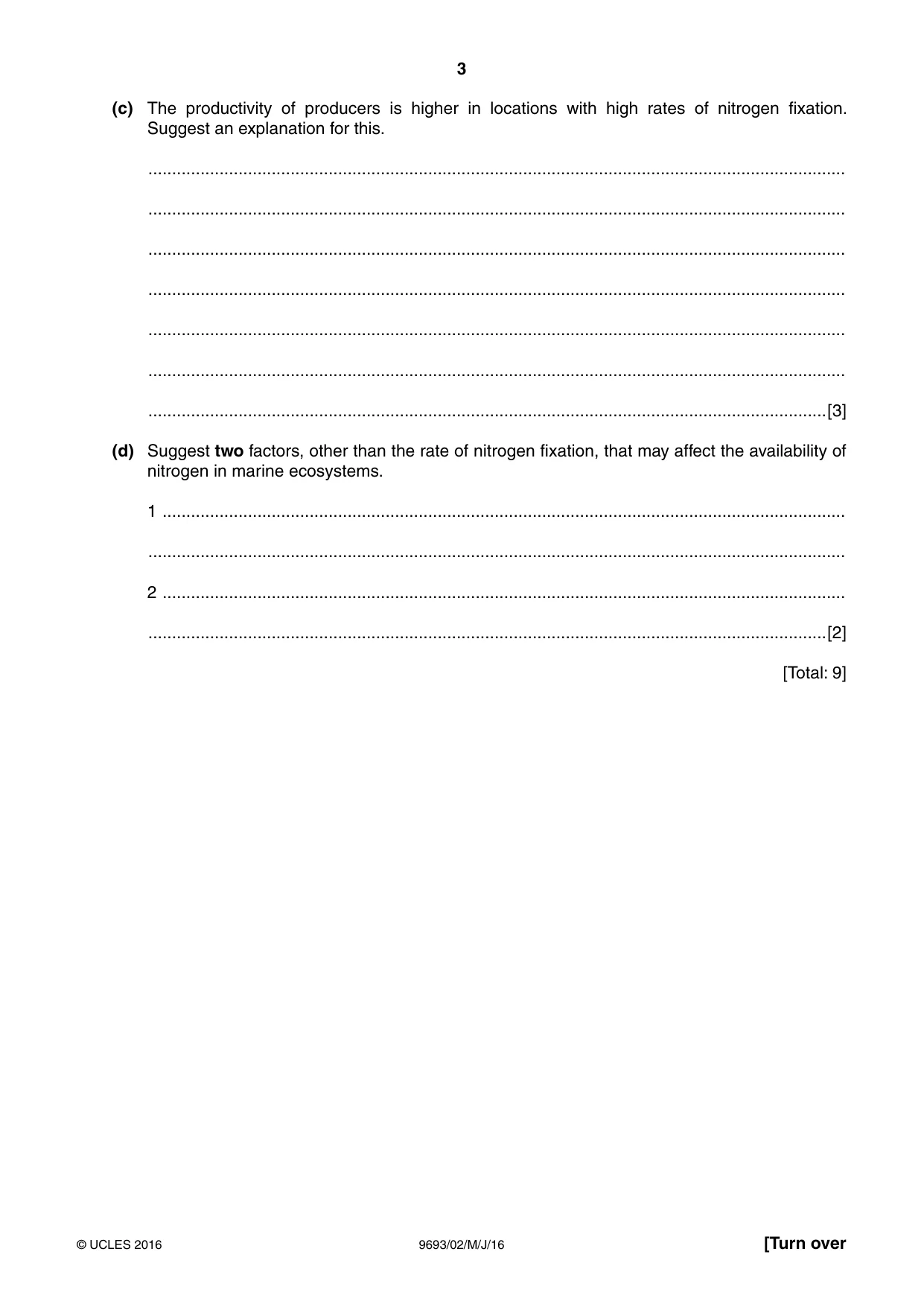
3 9693/02/M/J/16 © UCLES 2016 [Turn over (c) The productivity of producers is higher in locations with high rates of nitrogen fixation. Suggest an explanation for this. … … … … … … …[3] (d) Suggest two factors, other than the rate of nitrogen fixation, that may affect the availability of nitrogen in marine ecosystems. 1 … … 2 … …[2] [Total: 9]
Question paper, page 4
4 9693/02/M/J/16 © UCLES 2016 BLANK PAGE
Question paper, page 5
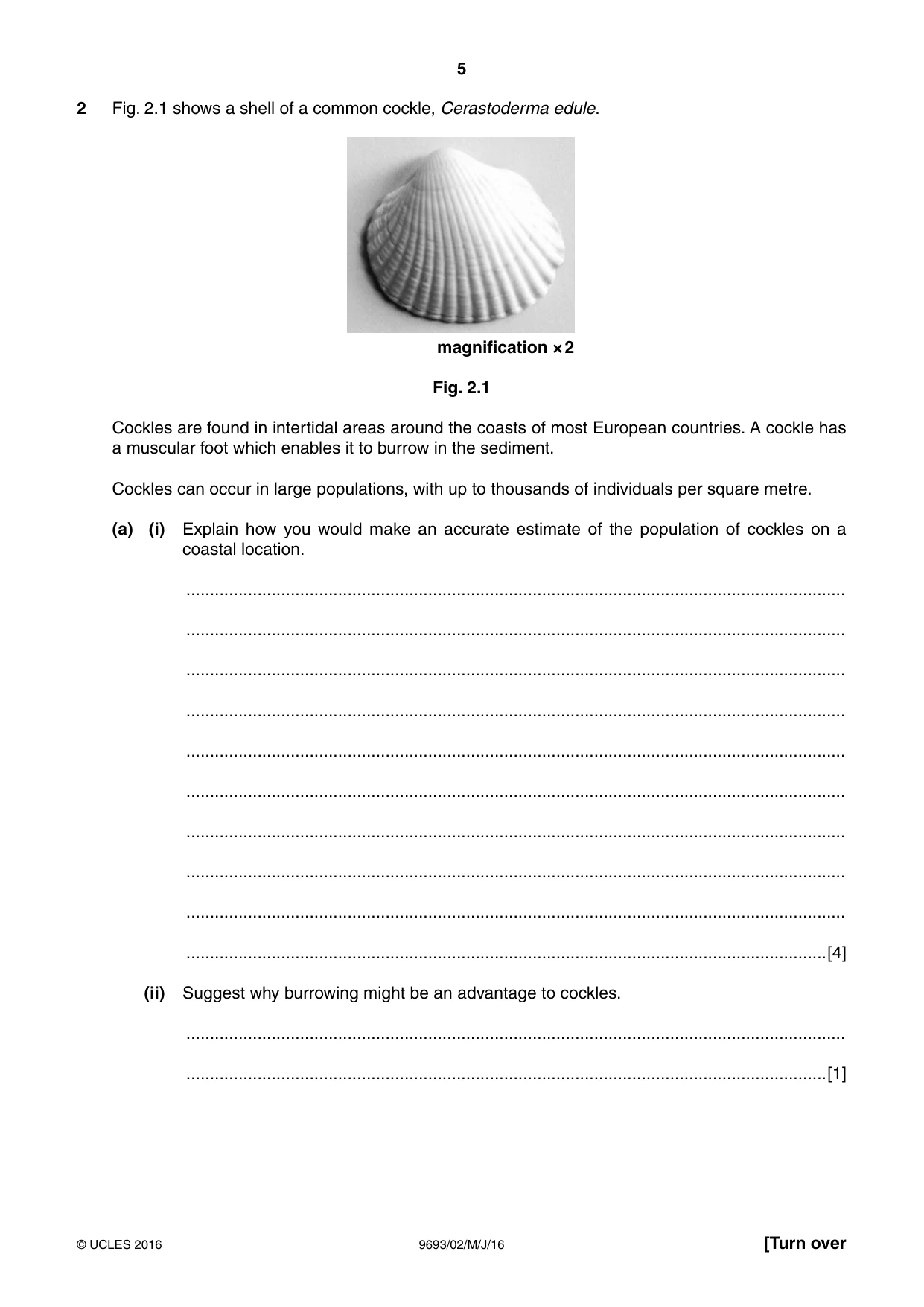
5 9693/02/M/J/16 © UCLES 2016 [Turn over 2 Fig. 2.1 shows a shell of a common cockle, Cerastoderma edule. magnification × 2 Fig. 2.1 Cockles are found in intertidal areas around the coasts of most European countries. A cockle has a muscular foot which enables it to burrow in the sediment. Cockles can occur in large populations, with up to thousands of individuals per square metre. (a) (i) Explain how you would make an accurate estimate of the population of cockles on a coastal location. … … … … … … … … … …[4] (ii) Suggest why burrowing might be an advantage to cockles. … …[1]
Question paper, page 6
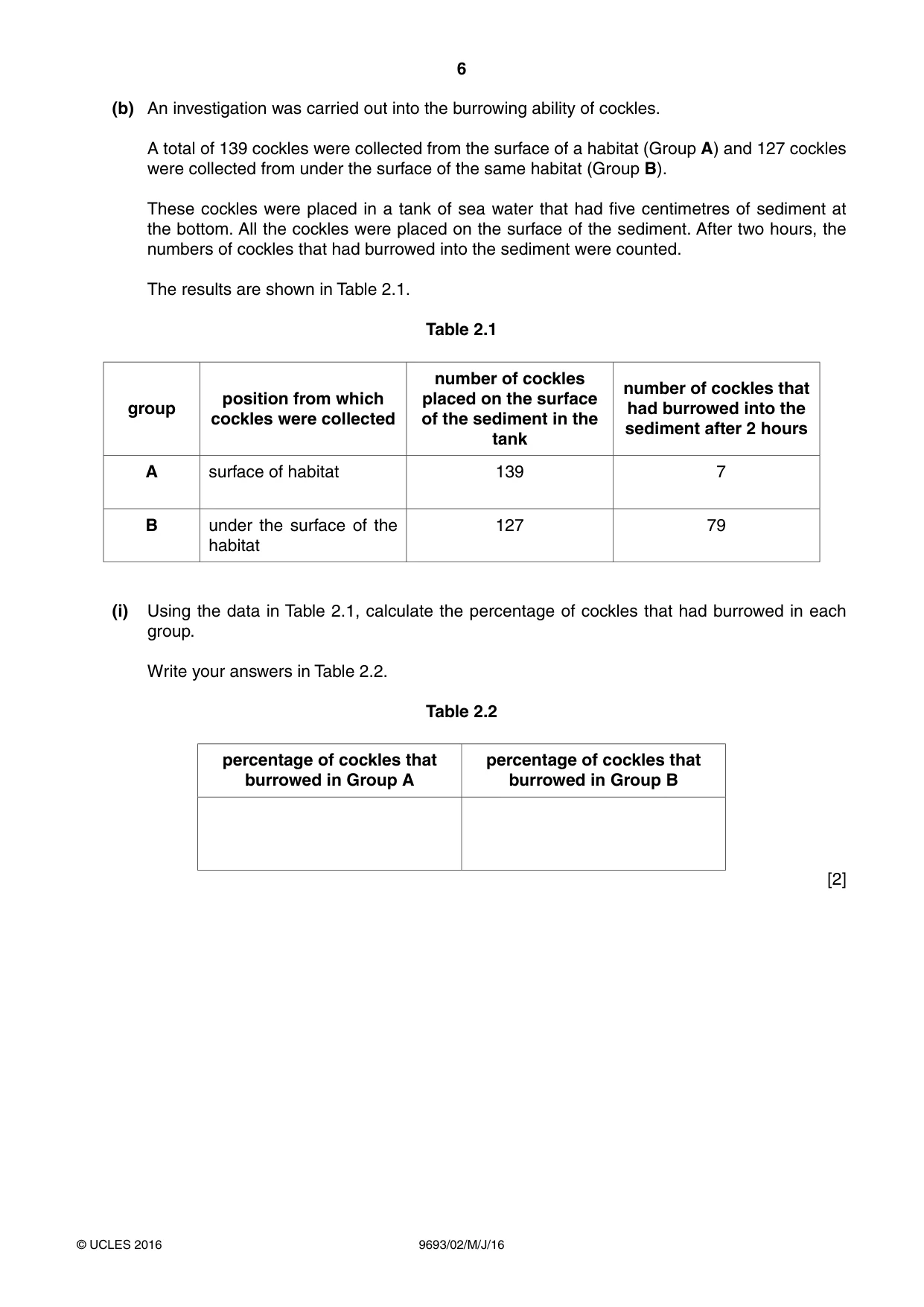
6 9693/02/M/J/16 © UCLES 2016 (b) An investigation was carried out into the burrowing ability of cockles. A total of 139 cockles were collected from the surface of a habitat (Group A) and 127 cockles were collected from under the surface of the same habitat (Group B). These cockles were placed in a tank of sea water that had five centimetres of sediment at the bottom. All the cockles were placed on the surface of the sediment. After two hours, the numbers of cockles that had burrowed into the sediment were counted. The results are shown in Table 2.1. Table 2.1 group position from which cockles were collected number of cockles placed on the surface of the sediment in the tank number of cockles that had burrowed into the sediment after 2 hours A surface of habitat 139 7 B under the surface of the habitat 127 79 (i) Using the data in Table 2.1, calculate the percentage of cockles that had burrowed in each group. Write your answers in Table 2.2. Table 2.2 percentage of cockles that burrowed in Group A percentage of cockles that burrowed in Group B [2]
Question paper, page 7
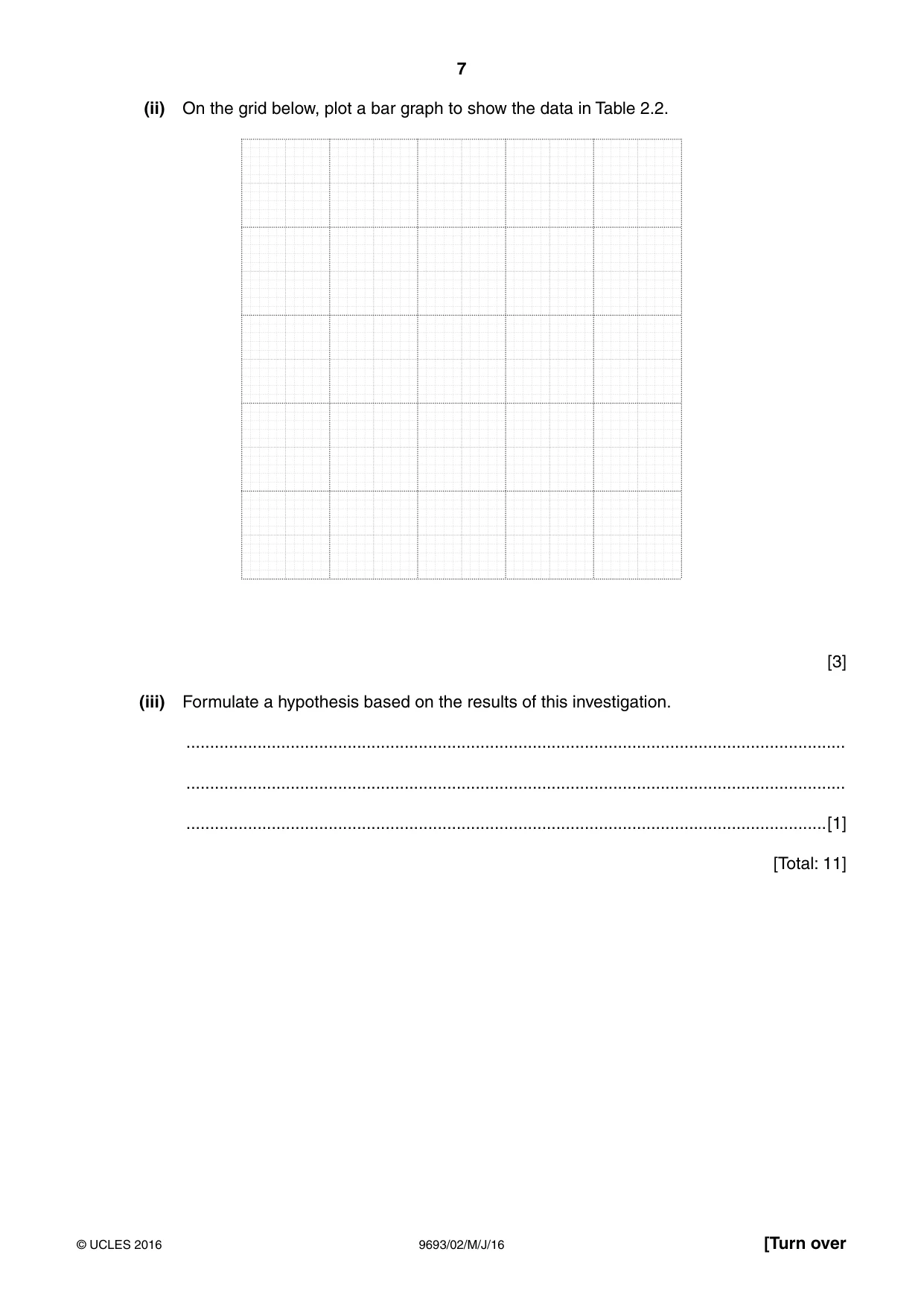
7 9693/02/M/J/16 © UCLES 2016 [Turn over (ii) On the grid below, plot a bar graph to show the data in Table 2.2. [3] (iii) Formulate a hypothesis based on the results of this investigation. … … …[1] [Total: 11]
Question paper, page 8
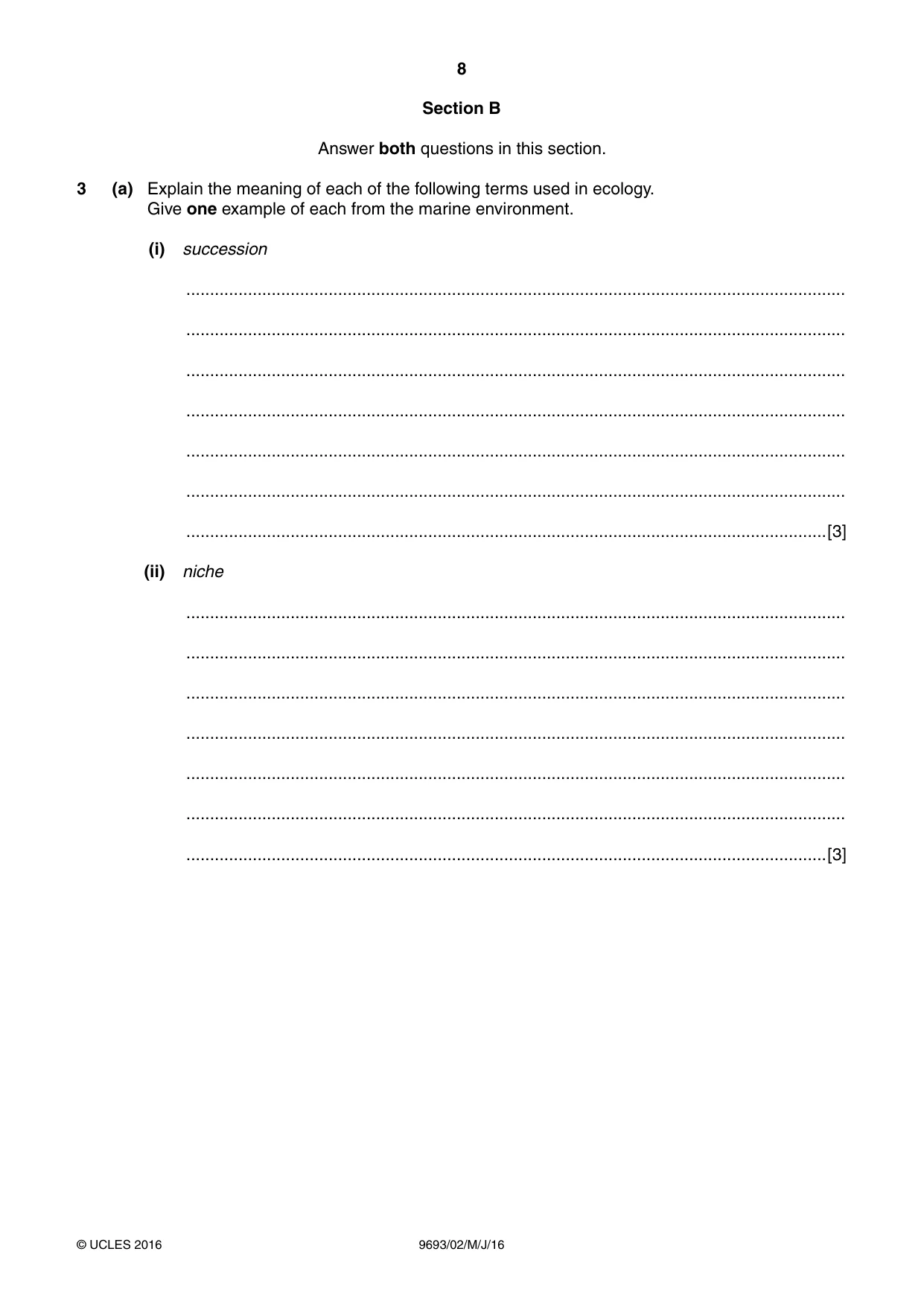
8 9693/02/M/J/16 © UCLES 2016 Section B Answer both questions in this section. 3 (a) Explain the meaning of each of the following terms used in ecology. Give one example of each from the marine environment. (i) succession … … … … … … …[3] (ii) niche … … … … … … …[3]
Question paper, page 9
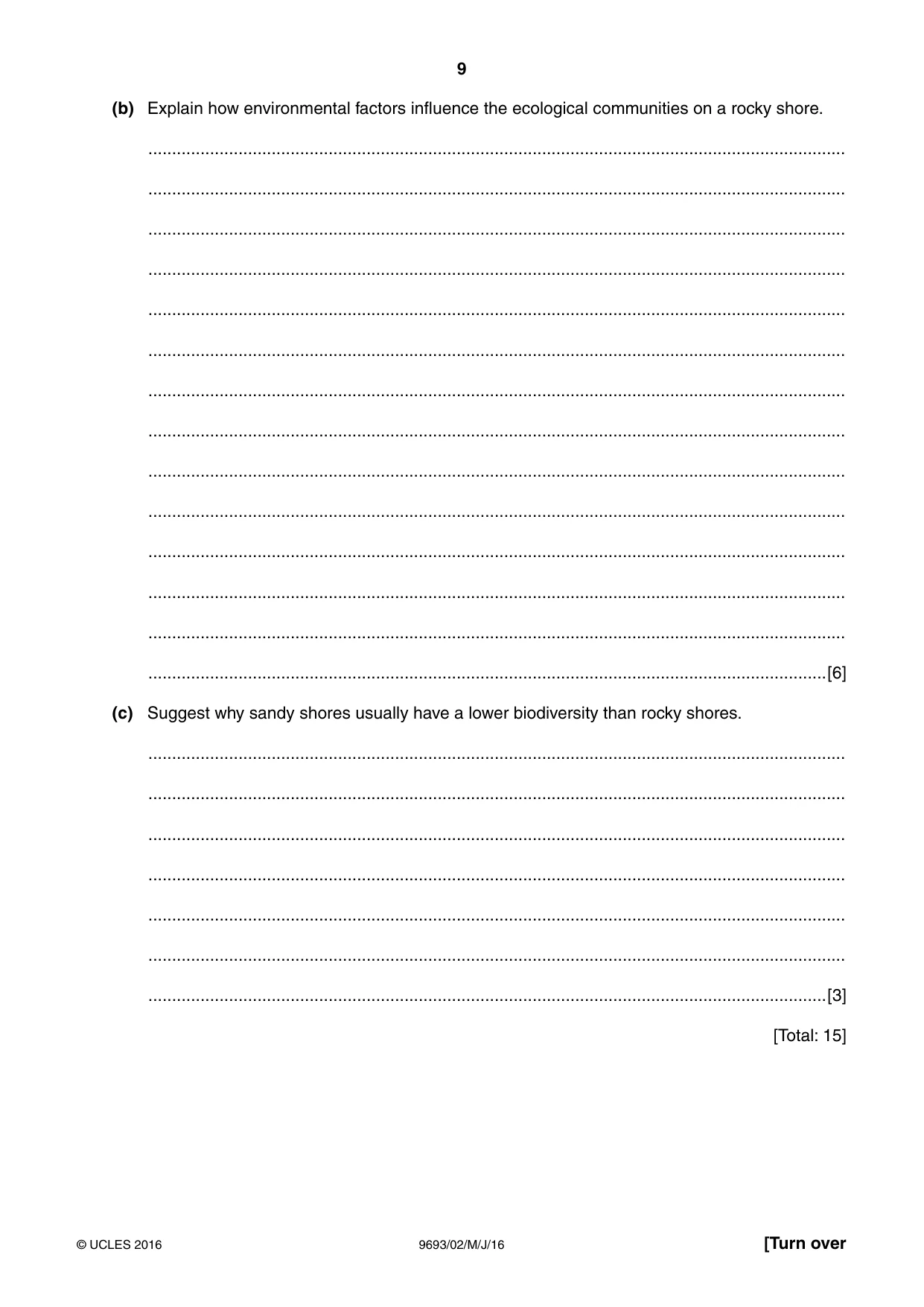
9 9693/02/M/J/16 © UCLES 2016 [Turn over (b) Explain how environmental factors influence the ecological communities on a rocky shore. … … … … … … … … … … … … … …[6] (c) Suggest why sandy shores usually have a lower biodiversity than rocky shores. … … … … … … …[3] [Total: 15]
Question paper, page 10
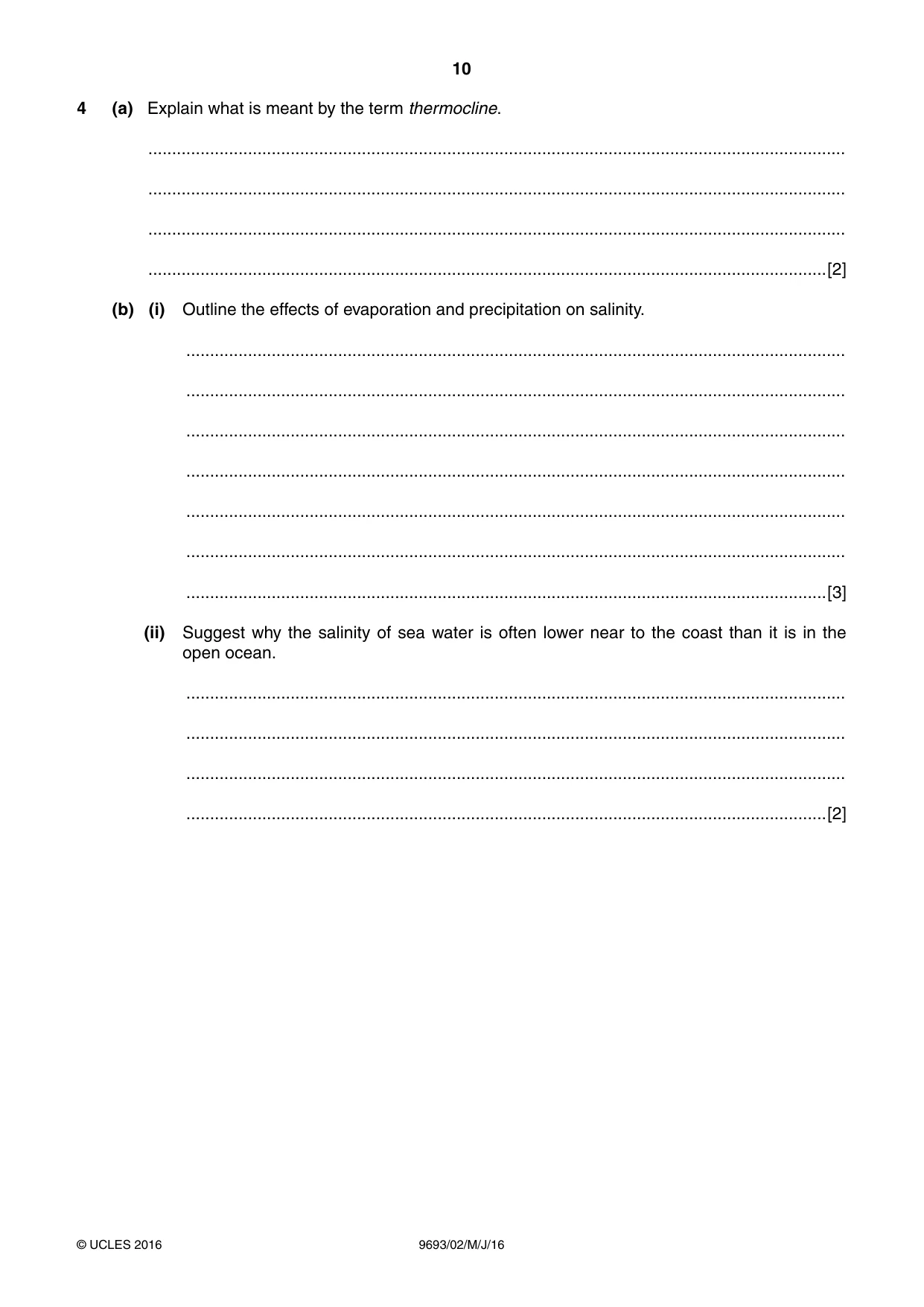
10 9693/02/M/J/16 © UCLES 2016 4 (a) Explain what is meant by the term thermocline. … … … …[2] (b) (i) Outline the effects of evaporation and precipitation on salinity. … … … … … … …[3] (ii) Suggest why the salinity of sea water is often lower near to the coast than it is in the open ocean. … … … …[2]
Question paper, page 11
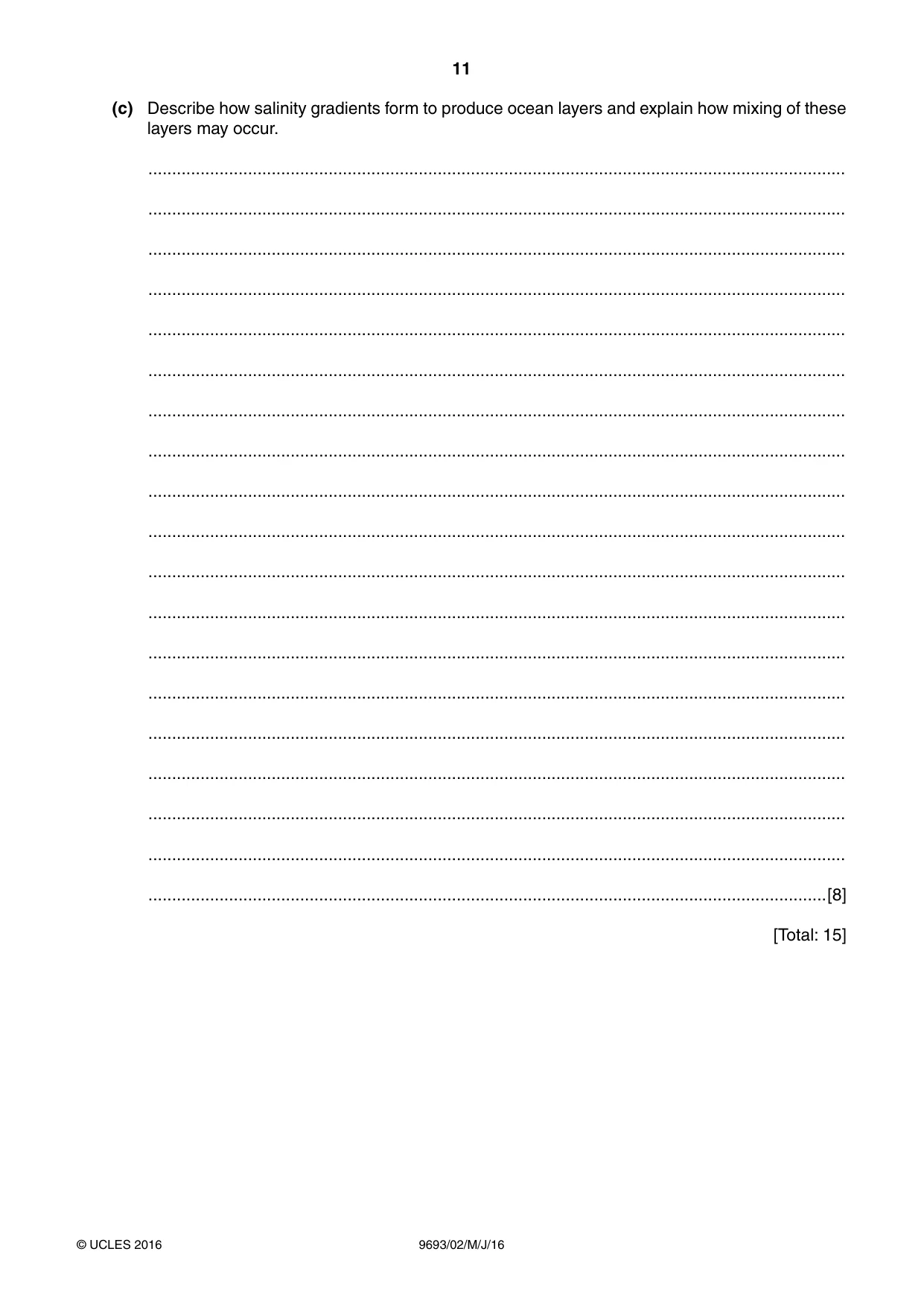
11 9693/02/M/J/16 © UCLES 2016 (c) Describe how salinity gradients form to produce ocean layers and explain how mixing of these layers may occur. … … … … … … … … … … … … … … … … … … …[8] [Total: 15]
Question paper, page 12
12 9693/02/M/J/16 © UCLES 2016 BLANK PAGE Permission to reproduce items where third-party owned material protected by copyright is included has been sought and cleared where possible. Every reasonable effort has been made by the publisher (UCLES) to trace copyright holders, but if any items requiring clearance have unwittingly been included, the publisher will be pleased to make amends at the earliest possible opportunity. To avoid the issue of disclosure of answer-related information to candidates, all copyright acknowledgements are reproduced online in the Cambridge International Examinations Copyright Acknowledgements Booklet. This is produced for each series of examinations and is freely available to download at www.cie.org.uk after the live examination series. Cambridge International Examinations is part of the Cambridge Assessment Group. Cambridge Assessment is the brand name of University of Cambridge Local Examinations Syndicate (UCLES), which is itself a department of the University of Cambridge.