Cambridge A Level Marine Science 9693 — 2019 Oct/Nov Paper 4 · Variant 0
9693/40/O/N/19 · 4 questions · 50 marks · ≈56 min
The question paper and its mark scheme, free to read here and free to download. This is Cambridge’s own paper, exactly as it was sat.
Question paper12 pages


Mark scheme
No mark scheme is in the library for this paper.
Questions as text
Q1 · There are thousands of wrecked ships around the world
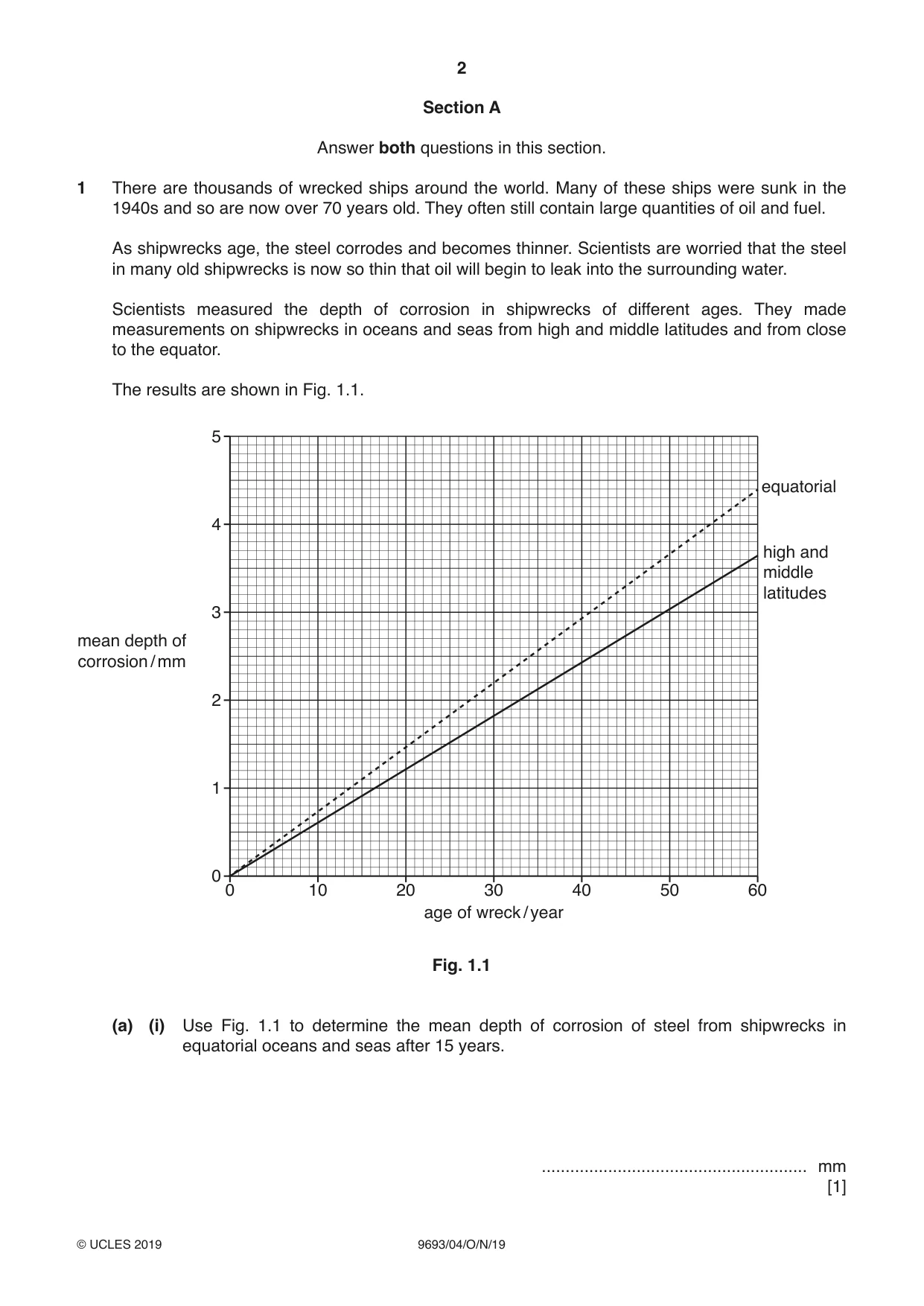
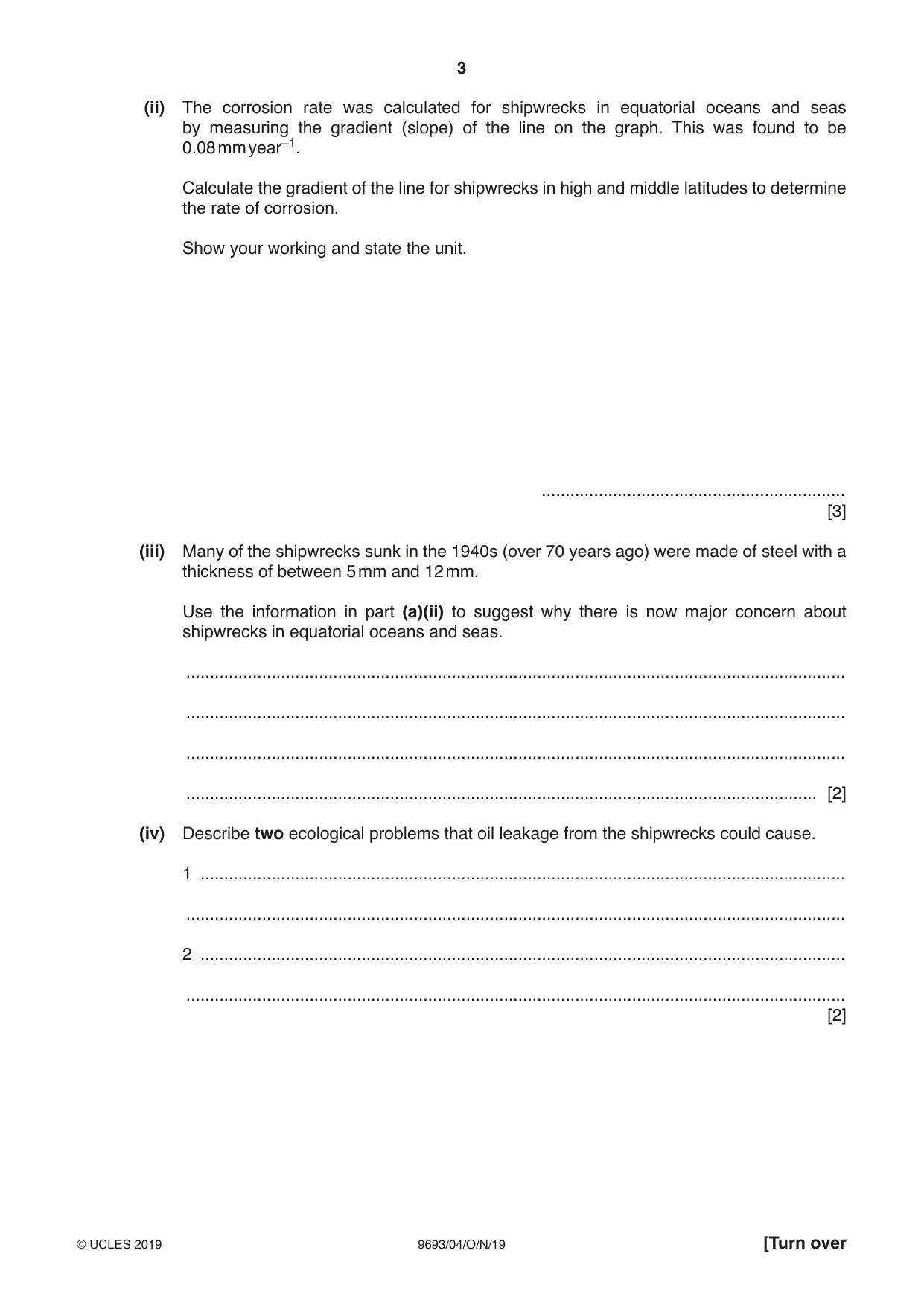
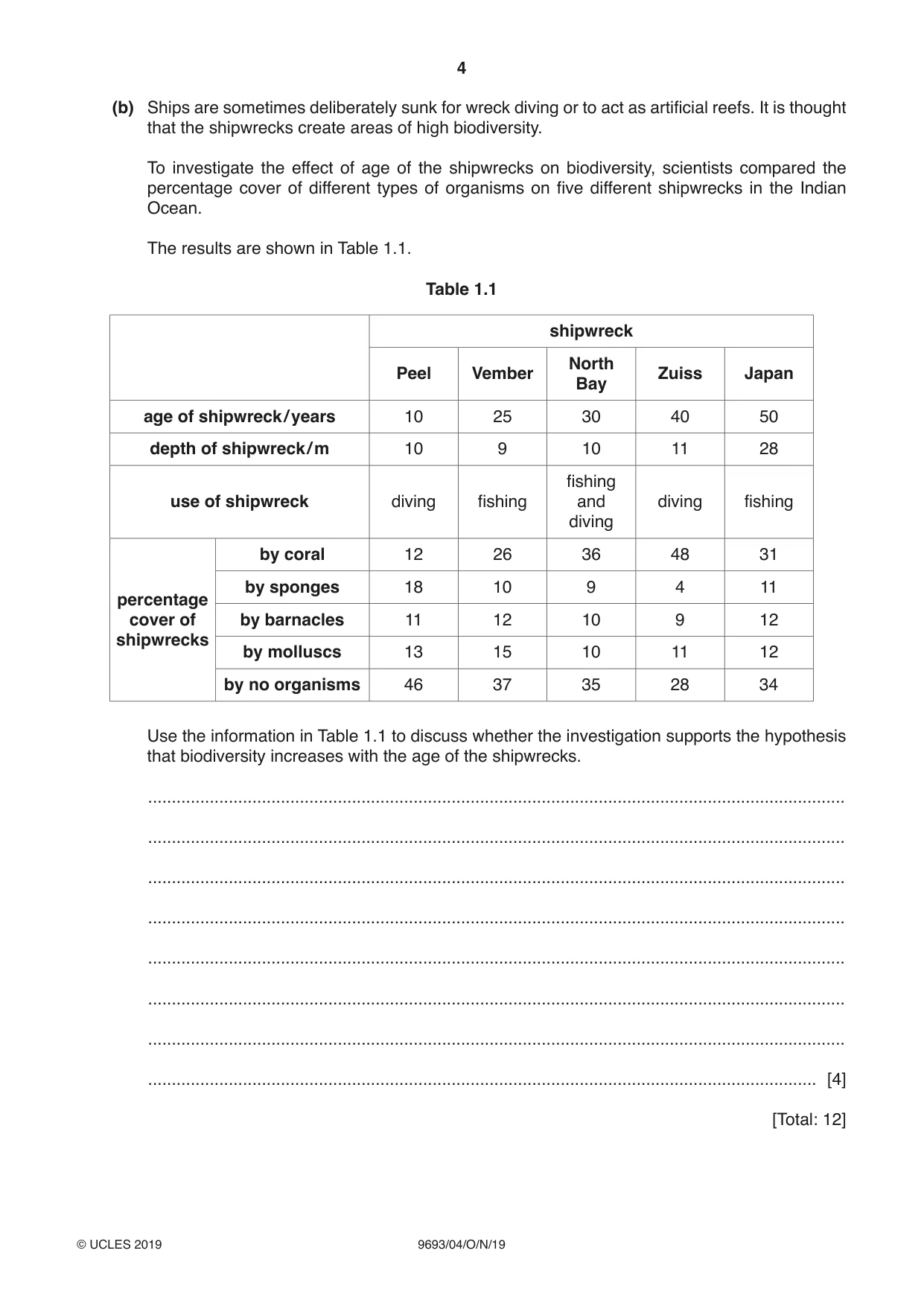
1 There are thousands of wrecked ships around the world. Many of these ships were sunk in the 1940s and so are now over 70 years old. They often still contain large quantities of oil and fuel. As shipwrecks age, the steel corrodes and becomes thinner. Scientists are worried that the steel in many old shipwrecks is now so thin that oil will begin to leak into the surrounding water. Scientists measured the depth of corrosion in shipwrecks of different ages. They made measurements on shipwrecks in oceans and seas from high and middle latitudes and from close to the equator. The results are shown in Fig. 1.1. 5 equatorial 4 high and middle latitudes 3 mean depth of corrosion / mm 2 1 0 0 10 20 30 40 50 60 age of wreck / year Fig. 1.1 (a) (i) Use Fig. 1.1 to determine the mean depth of corrosion of steel from shipwrecks in equatorial oceans and seas after 15 years. ........................................................ mm [1] (ii) The corrosion rate was calculated for shipwrecks in equatorial oceans and seas by measuring the gradient (slope) of the line on the graph. This was found to be 0.08 mm year–1. Calculate the gradient of the line for shipwrecks in high and middle latitudes to determine the rate of corrosion. Show your working and state the unit. ................................................................ [3] (iii) Many of the shipwrecks sunk in the 1940s (over 70 years ago) were made of steel with a thickness of between 5 mm and 12 mm. Use the information in part (a)(ii) to suggest why there is now major concern about shipwrecks in equatorial oceans and seas. ........................................................................................................................................... ........................................................................................................................................... ........................................................................................................................................... ..................................................................................................................................... [2] (iv) Describe two ecological problems that oil leakage from the shipwrecks could cause. 1 ........................................................................................................................................ ........................................................................................................................................... 2 ........................................................................................................................................ ........................................................................................................................................... [2] (b) Ships are sometimes deliberately sunk for wreck diving or to act as artificial reefs. It is thought that the shipwrecks create areas of high biodiversity. To investigate the effect of age of the shipwrecks on biodiversity, scientists compared the percentage cover of different types of organisms on five different shipwrecks in the Indian Ocean. The results are shown in Table 1.1. Table 1.1 shipwreck North Peel Vember Zuiss Japan Bay age of shipwreck / years 10 25 30 40 50 depth of shipwreck / m 10 9 10 11 28 fishing use of shipwreck diving fishing and diving fishing diving by coral 12 26 36 48 31 by sponges 18 10 9 4 11 percentage cover of by barnacles 11 12 10 9 12 shipwrecks by molluscs 13 15 10 11 12 by no organisms 46 37 35 28 34 Use the information in Table 1.1 to discuss whether the investigation supports the hypothesis that biodiversity increases with the age of the shipwrecks. ................................................................................................................................................... ................................................................................................................................................... ................................................................................................................................................... ................................................................................................................................................... ................................................................................................................................................... ................................................................................................................................................... ................................................................................................................................................... ............................................................................................................................................. [4] [Total: 12]
Q2 · An investigation was carried out to measure the effect of adding shrimp to aquaculture…
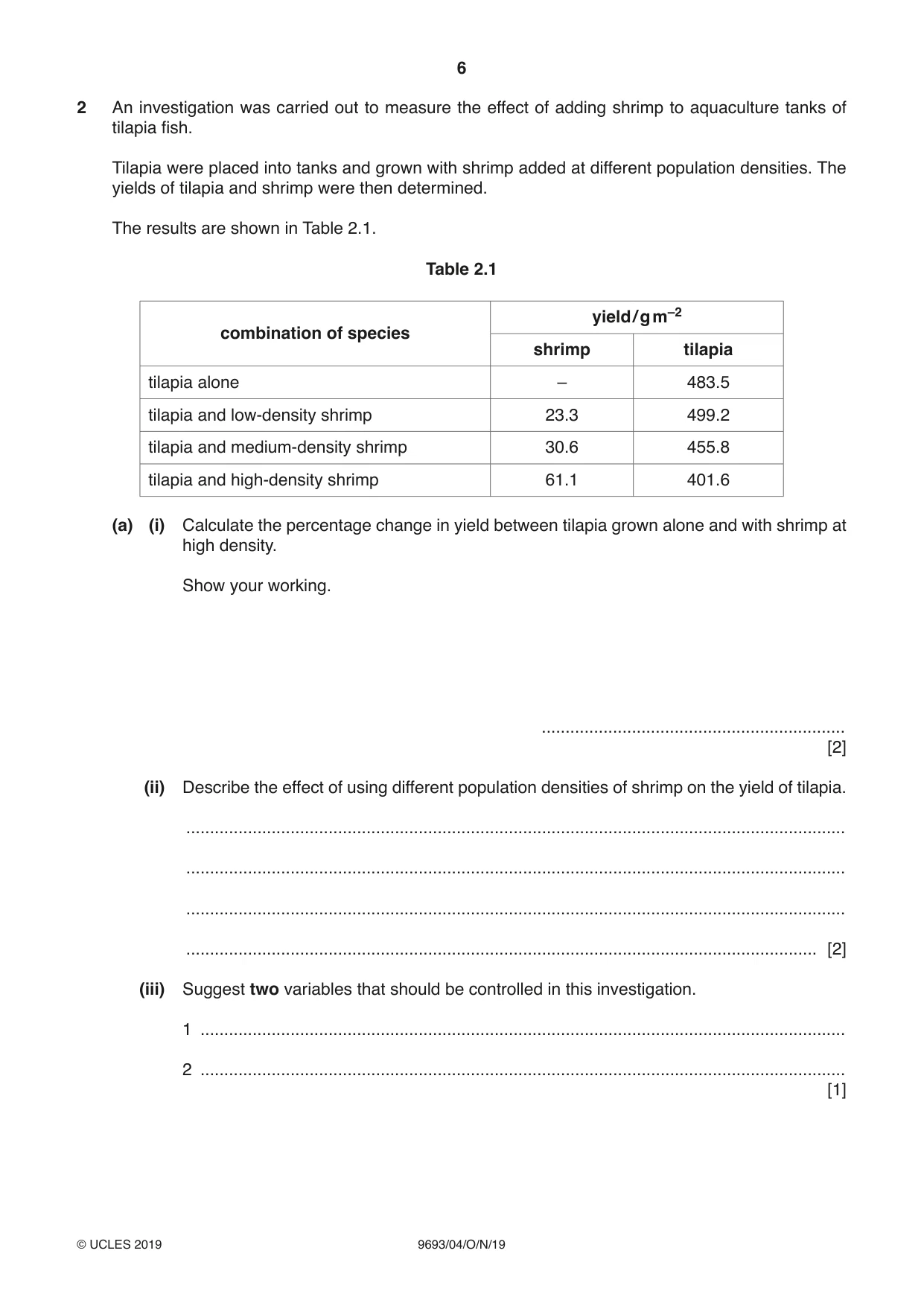
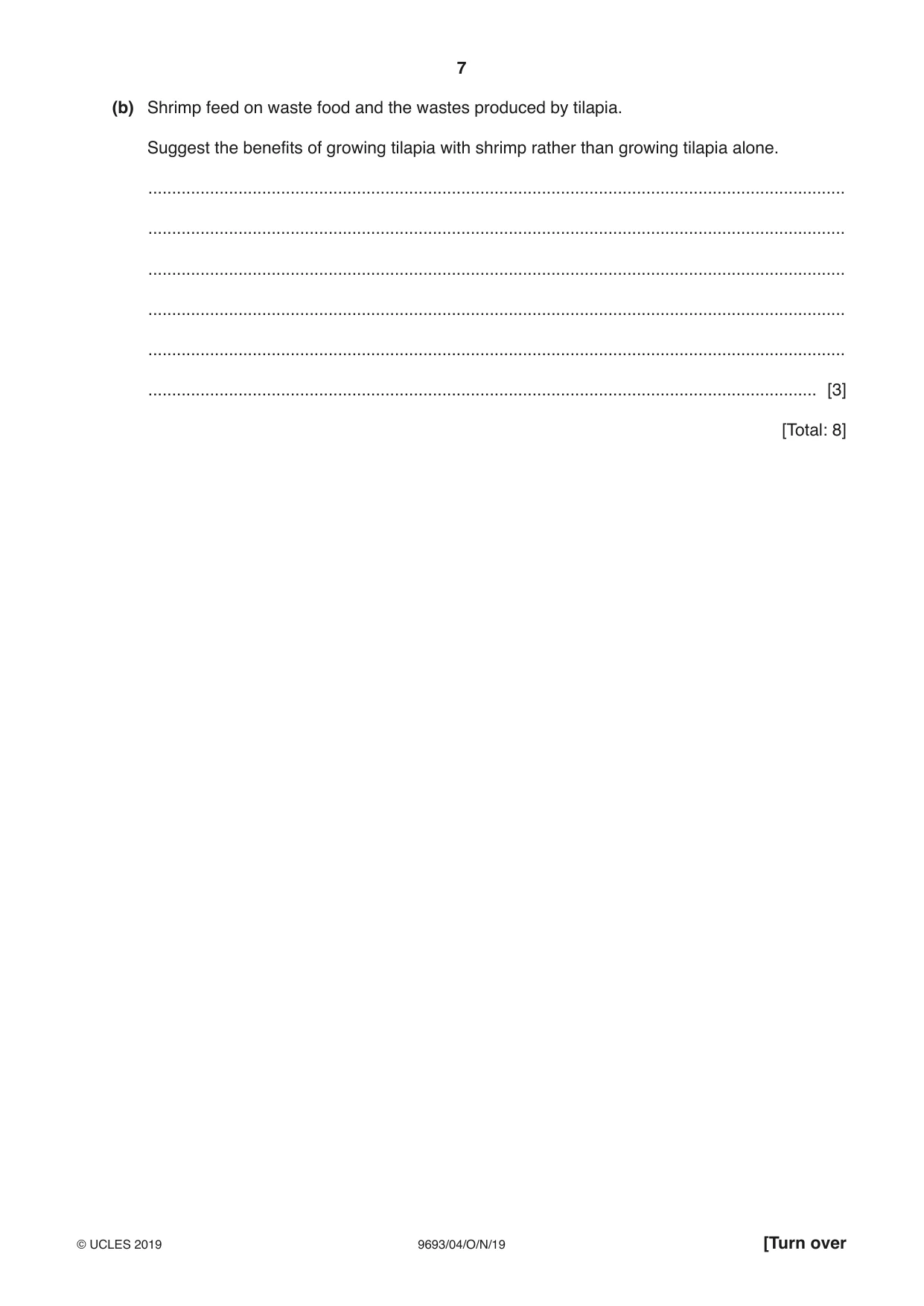
2 An investigation was carried out to measure the effect of adding shrimp to aquaculture tanks of tilapia fish. Tilapia were placed into tanks and grown with shrimp added at different population densities. The yields of tilapia and shrimp were then determined. The results are shown in Table 2.1. Table 2.1 yield / g m–2 combination of species shrimp tilapia tilapia alone – 483.5 tilapia and low-density shrimp 23.3 499.2 tilapia and medium-density shrimp 30.6 455.8 tilapia and high-density shrimp 61.1 401.6 (a) (i) Calculate the percentage change in yield between tilapia grown alone and with shrimp at high density. Show your working. ................................................................ [2] (ii) Describe the effect of using different population densities of shrimp on the yield of tilapia. ........................................................................................................................................... ........................................................................................................................................... ........................................................................................................................................... ..................................................................................................................................... [2] (iii) Suggest two variables that should be controlled in this investigation. 1 ........................................................................................................................................ 2 ........................................................................................................................................ [1] (b) Shrimp feed on waste food and the wastes produced by tilapia. Suggest the benefits of growing tilapia with shrimp rather than growing tilapia alone. ................................................................................................................................................... ................................................................................................................................................... ................................................................................................................................................... ................................................................................................................................................... ................................................................................................................................................... ............................................................................................................................................. [3] [Total: 8]
Q3 · Describe how oxygen concentrations in water differ from those in air
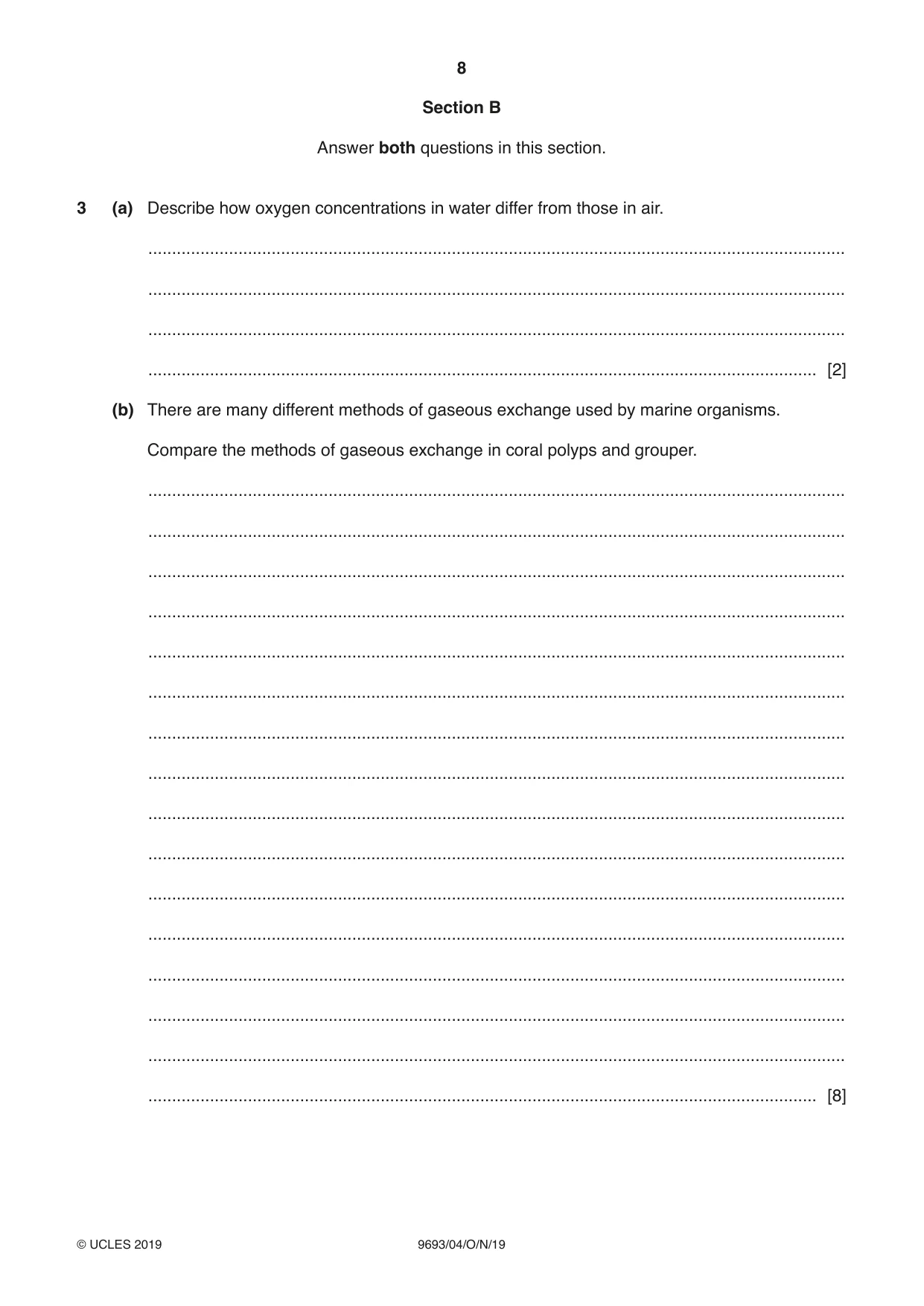
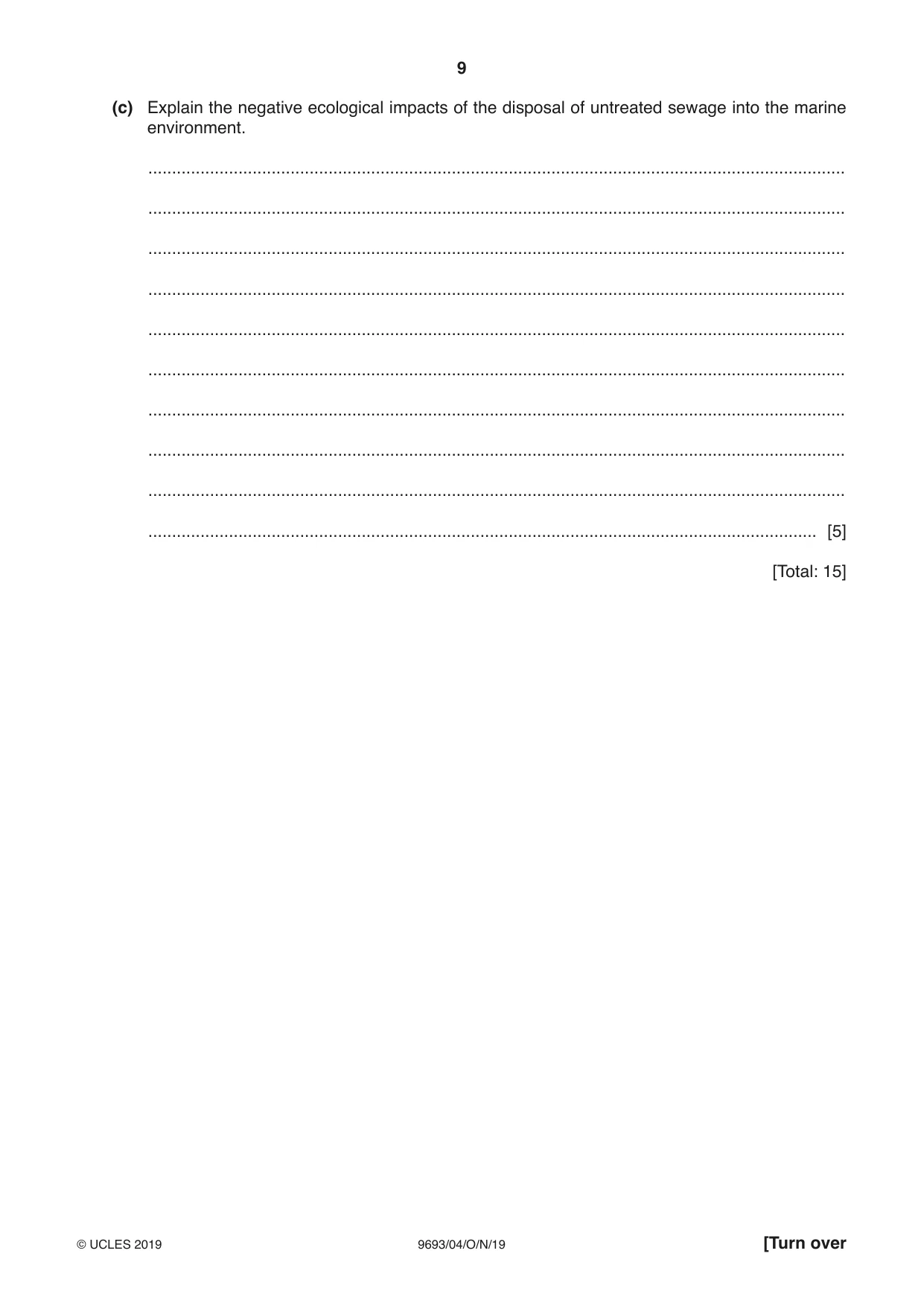
3 (a) Describe how oxygen concentrations in water differ from those in air. ................................................................................................................................................... ................................................................................................................................................... ................................................................................................................................................... ............................................................................................................................................. [2] (b) There are many different methods of gaseous exchange used by marine organisms. Compare the methods of gaseous exchange in coral polyps and grouper. ................................................................................................................................................... ................................................................................................................................................... ................................................................................................................................................... ................................................................................................................................................... ................................................................................................................................................... ................................................................................................................................................... ................................................................................................................................................... ................................................................................................................................................... ................................................................................................................................................... ................................................................................................................................................... ................................................................................................................................................... ................................................................................................................................................... ................................................................................................................................................... ................................................................................................................................................... ................................................................................................................................................... ............................................................................................................................................. [8] (c) Explain the negative ecological impacts of the disposal of untreated sewage into the marine environment. ................................................................................................................................................... ................................................................................................................................................... ................................................................................................................................................... ................................................................................................................................................... ................................................................................................................................................... ................................................................................................................................................... ................................................................................................................................................... ................................................................................................................................................... ................................................................................................................................................... ............................................................................................................................................. [5] [Total: 15]
Q4 · With reference to named examples, explain the advantages of internal fertilisation…
4 (a) With reference to named examples, explain the advantages of internal fertilisation compared to external fertilisation. ................................................................................................................................................... ................................................................................................................................................... ................................................................................................................................................... ................................................................................................................................................... ................................................................................................................................................... ............................................................................................................................................. [3] (b) Oysters use external fertilisation. Outline the life cycle of oysters. ................................................................................................................................................... ................................................................................................................................................... ................................................................................................................................................... ................................................................................................................................................... ................................................................................................................................................... ................................................................................................................................................... ................................................................................................................................................... ................................................................................................................................................... ................................................................................................................................................... ................................................................................................................................................... ............................................................................................................................................. [4] (c) Oysters are often grown by aquaculture businesses. Discuss how a new aquaculture business could affect other industries in a coastal community. ................................................................................................................................................... ................................................................................................................................................... ................................................................................................................................................... ................................................................................................................................................... ................................................................................................................................................... ................................................................................................................................................... ................................................................................................................................................... ................................................................................................................................................... ................................................................................................................................................... ................................................................................................................................................... ................................................................................................................................................... ................................................................................................................................................... ................................................................................................................................................... ................................................................................................................................................... ................................................................................................................................................... ............................................................................................................................................. [8] [Total: 15]
What was in this paper
The subtopics covered by these 4 questions, and how many questions each got. Open one in a new tab to see every Cambridge question on it.