Cambridge A Level Marine Science 9693 — 2018 Oct/Nov Paper 4 · Variant 0
9693/40/O/N/18 · 4 questions · 50 marks · ≈56 min
The question paper and its mark scheme, free to read here and free to download. This is Cambridge’s own paper, exactly as it was sat.
Question paper12 pages

Mark scheme
No mark scheme is in the library for this paper.
Questions as text
Q1 · Surface longline fishing is a fishing method in which trawlers tow long fishing lines…
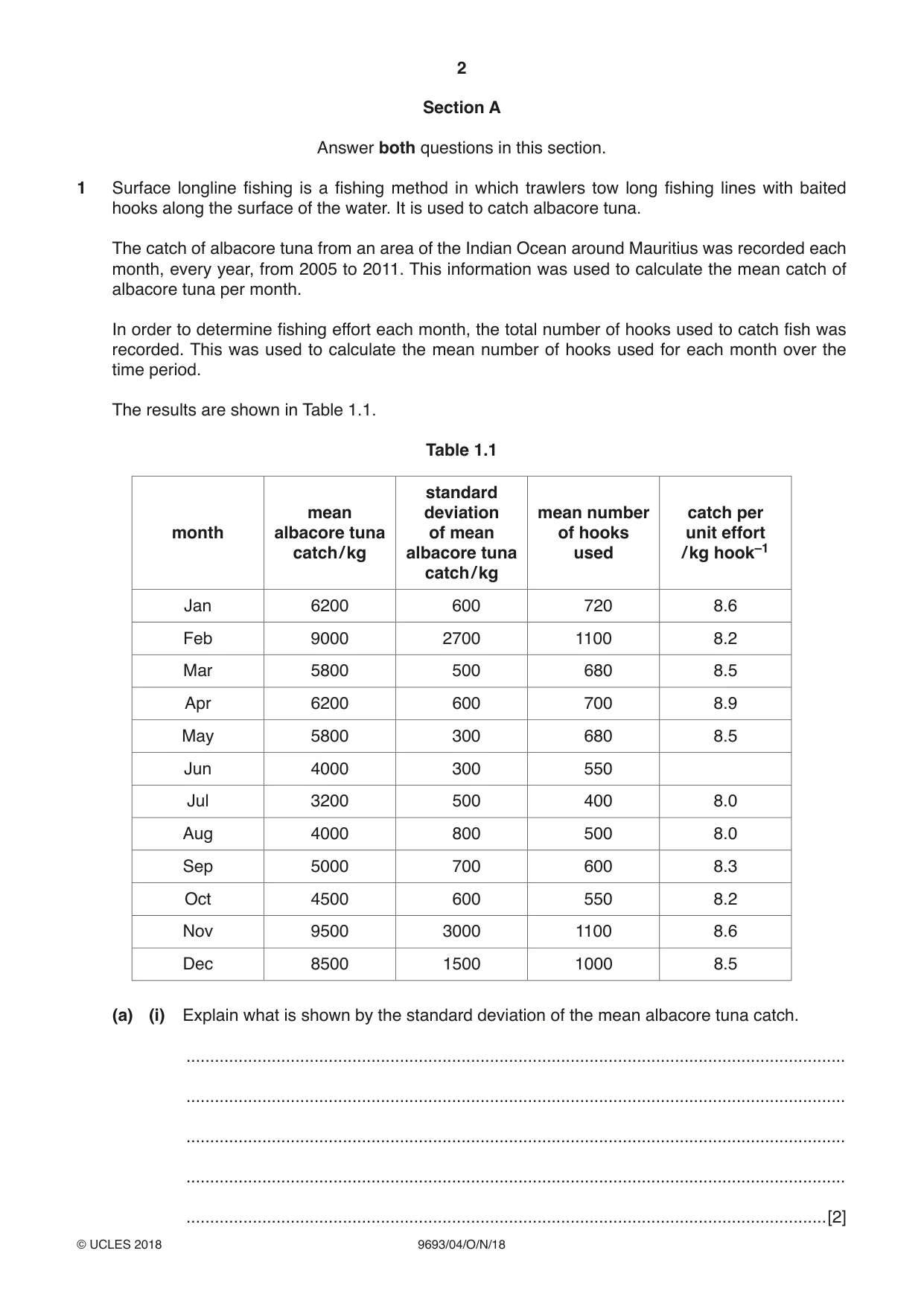
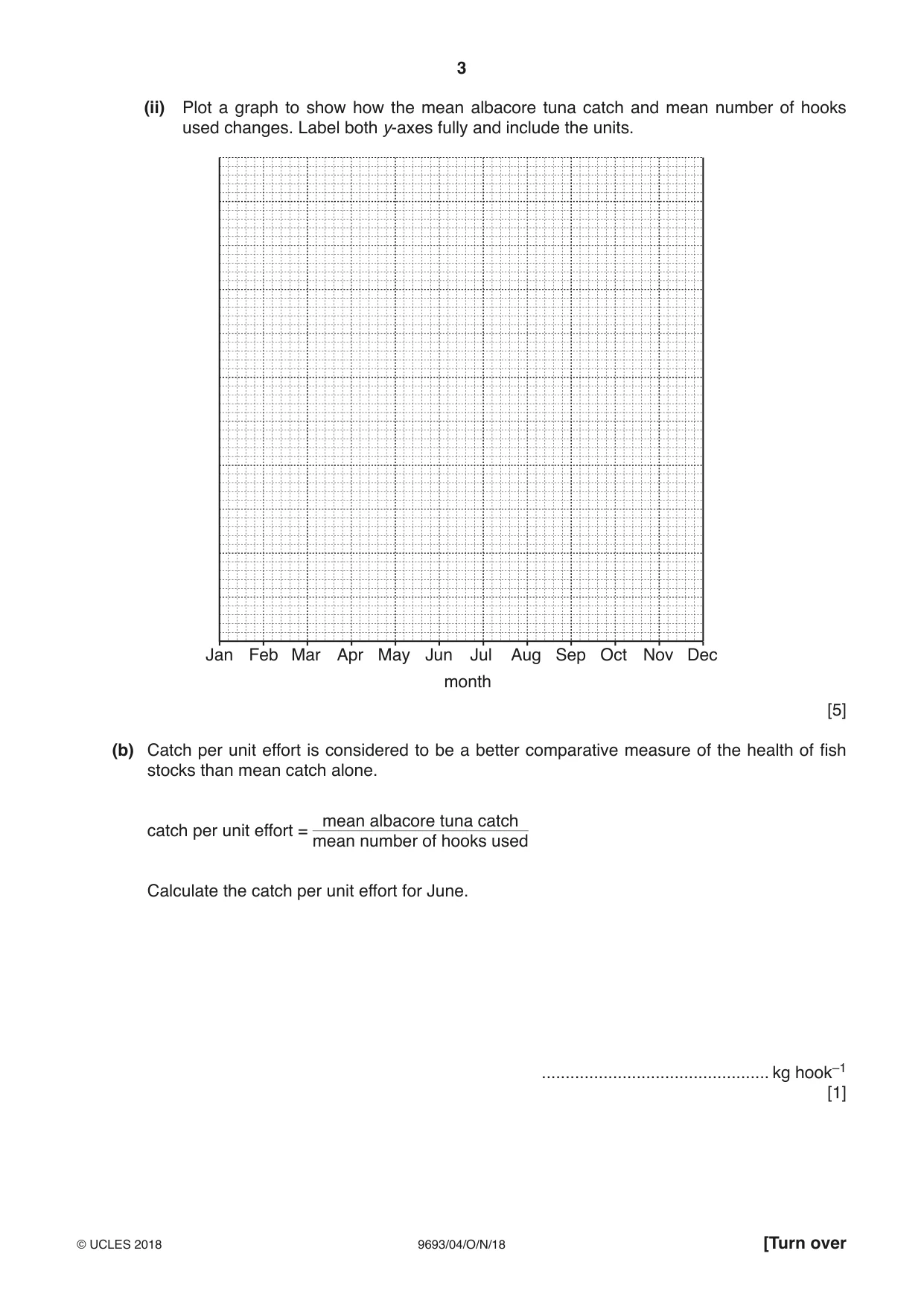
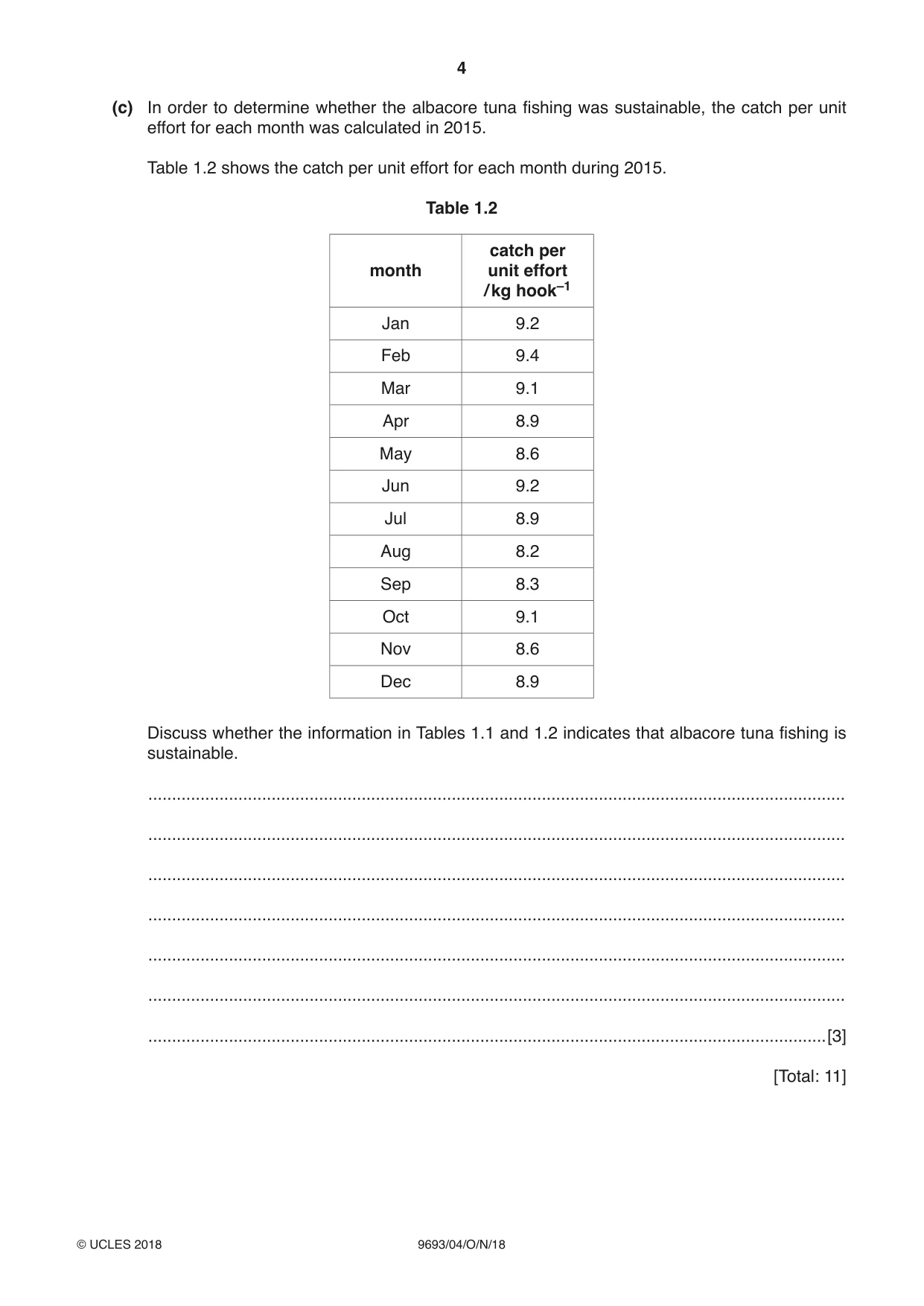
1 Surface longline fishing is a fishing method in which trawlers tow long fishing lines with baited hooks along the surface of the water. It is used to catch albacore tuna. The catch of albacore tuna from an area of the Indian Ocean around Mauritius was recorded each month, every year, from 2005 to 2011. This information was used to calculate the mean catch of albacore tuna per month. In order to determine fishing effort each month, the total number of hooks used to catch fish was recorded. This was used to calculate the mean number of hooks used for each month over the time period. The results are shown in Table 1.1. Table 1.1 standard mean deviation mean number catch per month albacore tuna of mean of hooks unit effort catch / kg albacore tuna used / kg hook–1 catch / kg Jan 6200 600 720 8.6 Feb 9000 2700 1100 8.2 Mar 5800 500 680 8.5 Apr 6200 600 700 8.9 May 5800 300 680 8.5 Jun 4000 300 550 Jul 3200 500 400 8.0 Aug 4000 800 500 8.0 Sep 5000 700 600 8.3 Oct 4500 600 550 8.2 Nov 9500 3000 1100 8.6 Dec 8500 1500 1000 8.5 (a) (i) Explain what is shown by the standard deviation of the mean albacore tuna catch. ........................................................................................................................................... ........................................................................................................................................... ........................................................................................................................................... ........................................................................................................................................... .......................................................................................................................................[2] (ii) Plot a graph to show how the mean albacore tuna catch and mean number of hooks used changes. Label both y-axes fully and include the units. Jan Feb Mar Apr May Jun Jul Aug Sep Oct Nov Dec month [5] (b) Catch per unit effort is considered to be a better comparative measure of the health of fish stocks than mean catch alone. mean albacore tuna catch catch per unit effort = mean number of hooks used Calculate the catch per unit effort for June. ................................................ kg hook–1 [1] (c) In order to determine whether the albacore tuna fishing was sustainable, the catch per unit effort for each month was calculated in 2015. Table 1.2 shows the catch per unit effort for each month during 2015. Table 1.2 catch per month unit effort / kg hook–1 Jan 9.2 Feb 9.4 Mar 9.1 Apr 8.9 May 8.6 Jun 9.2 Jul 8.9 Aug 8.2 Sep 8.3 Oct 9.1 Nov 8.6 Dec 8.9 Discuss whether the information in Tables 1.1 and 1.2 indicates that albacore tuna fishing is sustainable. ................................................................................................................................................... ................................................................................................................................................... ................................................................................................................................................... ................................................................................................................................................... ................................................................................................................................................... ................................................................................................................................................... ...............................................................................................................................................[3] [Total: 11]
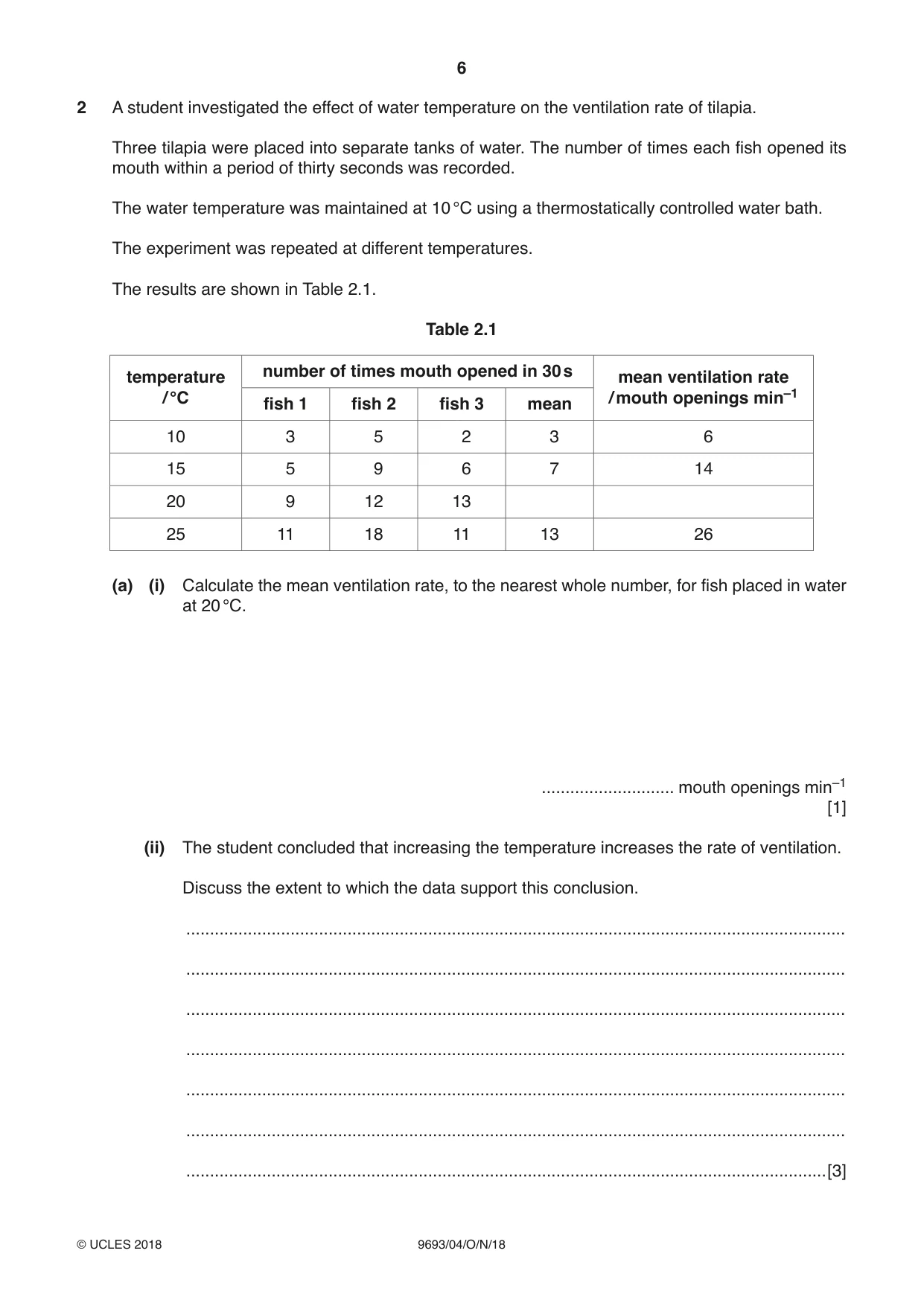
Q2 · A student investigated the effect of water temperature on the ventilation rate of tilapia
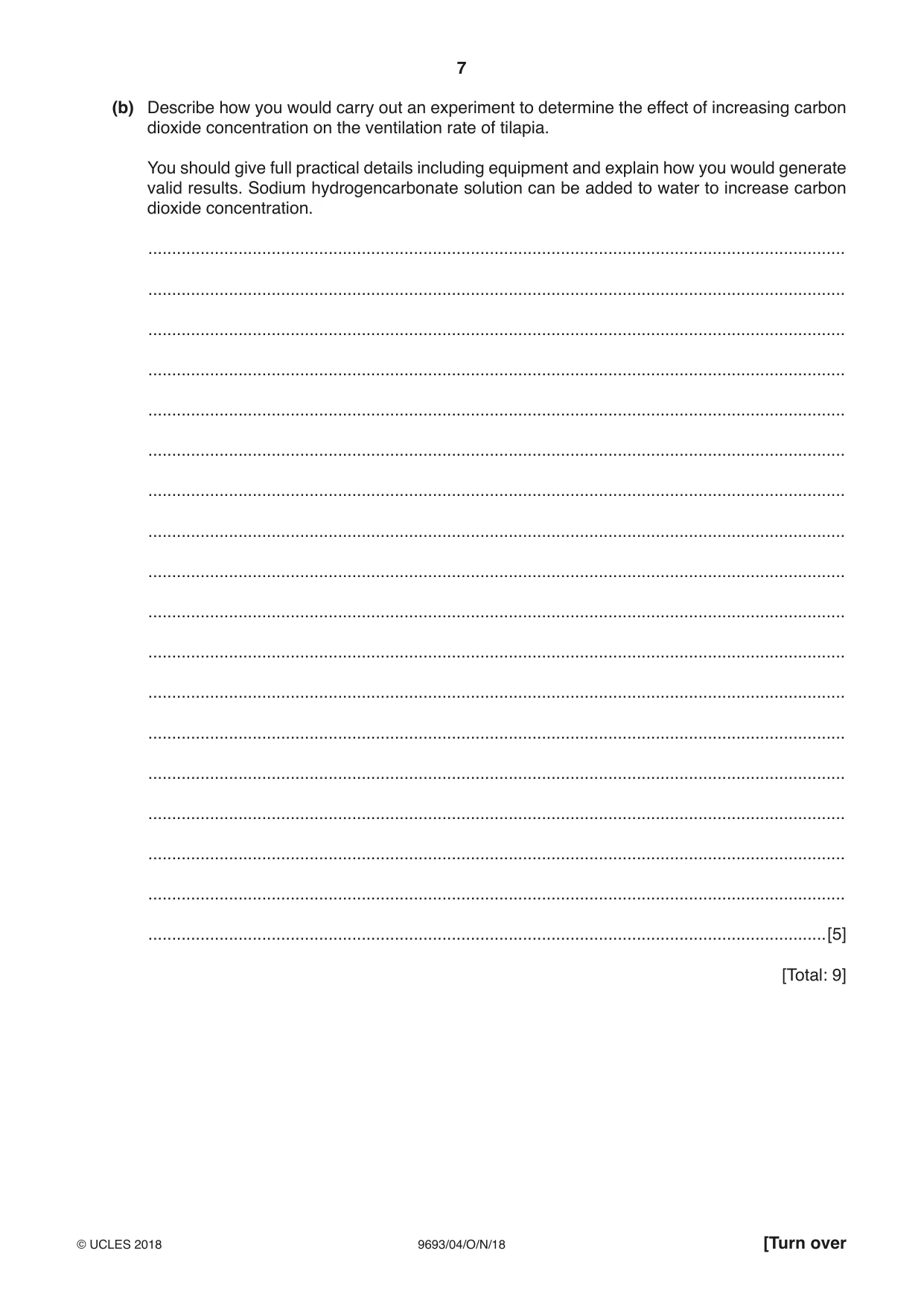
2 A student investigated the effect of water temperature on the ventilation rate of tilapia. Three tilapia were placed into separate tanks of water. The number of times each fish opened its mouth within a period of thirty seconds was recorded. The water temperature was maintained at 10 °C using a thermostatically controlled water bath. The experiment was repeated at different temperatures. The results are shown in Table 2.1. Table 2.1 number of times mouth opened in 30 s temperature mean ventilation rate / °C / mouth openings min–1 fish 1 fish 2 fish 3 mean 10 3 5 2 3 6 15 5 9 6 7 14 20 9 12 13 25 11 18 11 13 26 (a) (i) Calculate the mean ventilation rate, to the nearest whole number, for fish placed in water at 20 °C. ............................ mouth openings min–1 [1] (ii) The student concluded that increasing the temperature increases the rate of ventilation. Discuss the extent to which the data support this conclusion. ........................................................................................................................................... ........................................................................................................................................... ........................................................................................................................................... ........................................................................................................................................... ........................................................................................................................................... ........................................................................................................................................... .......................................................................................................................................[3] (b) Describe how you would carry out an experiment to determine the effect of increasing carbon dioxide concentration on the ventilation rate of tilapia. You should give full practical details including equipment and explain how you would generate valid results. Sodium hydrogencarbonate solution can be added to water to increase carbon dioxide concentration. ................................................................................................................................................... ................................................................................................................................................... ................................................................................................................................................... ................................................................................................................................................... ................................................................................................................................................... ................................................................................................................................................... ................................................................................................................................................... ................................................................................................................................................... ................................................................................................................................................... ................................................................................................................................................... ................................................................................................................................................... ................................................................................................................................................... ................................................................................................................................................... ................................................................................................................................................... ................................................................................................................................................... ................................................................................................................................................... ................................................................................................................................................... ...............................................................................................................................................[5] [Total: 9]
Q3 · In 2010, the Deepwater Horizon oil platform exploded causing a large oil spill in the…
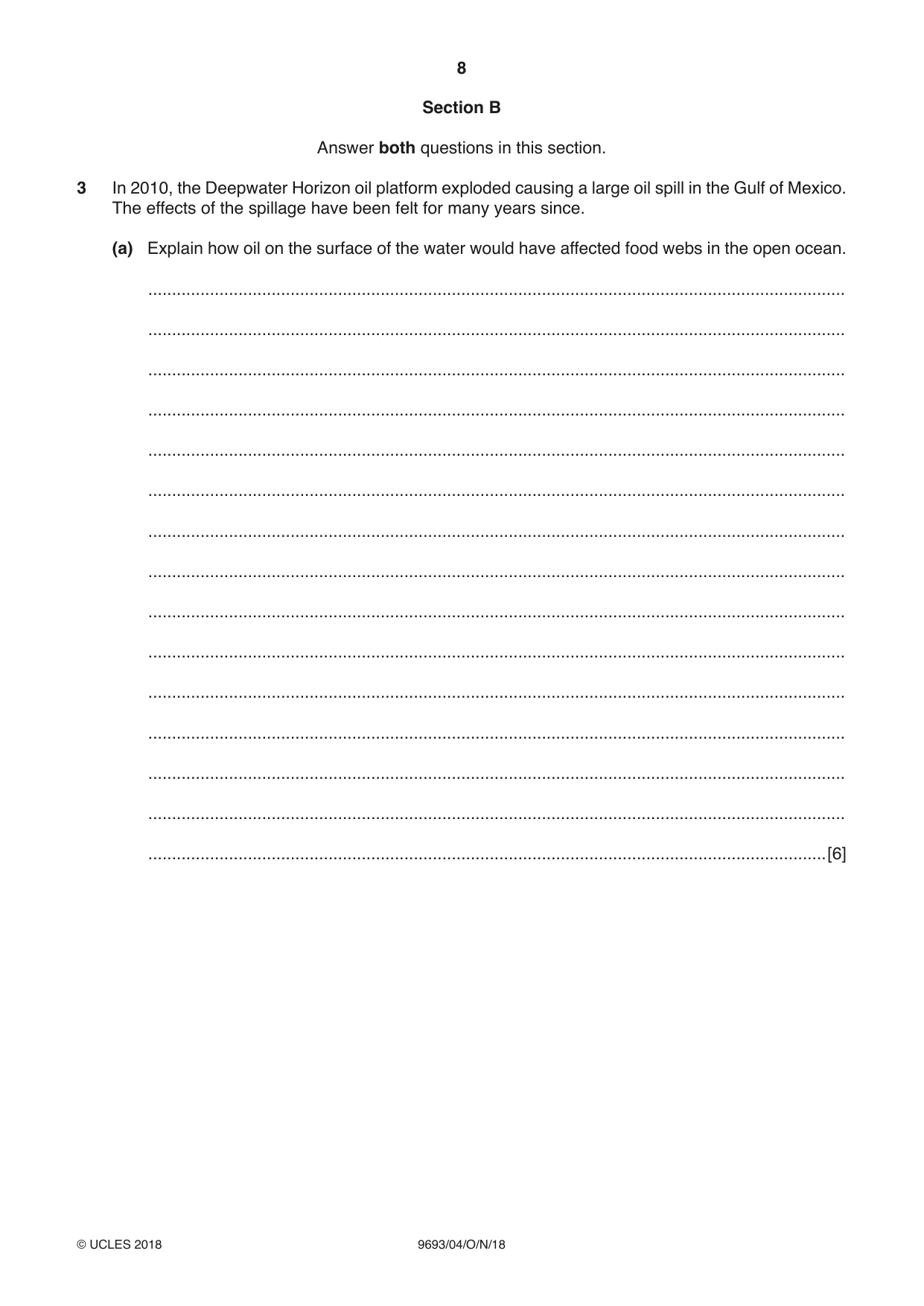
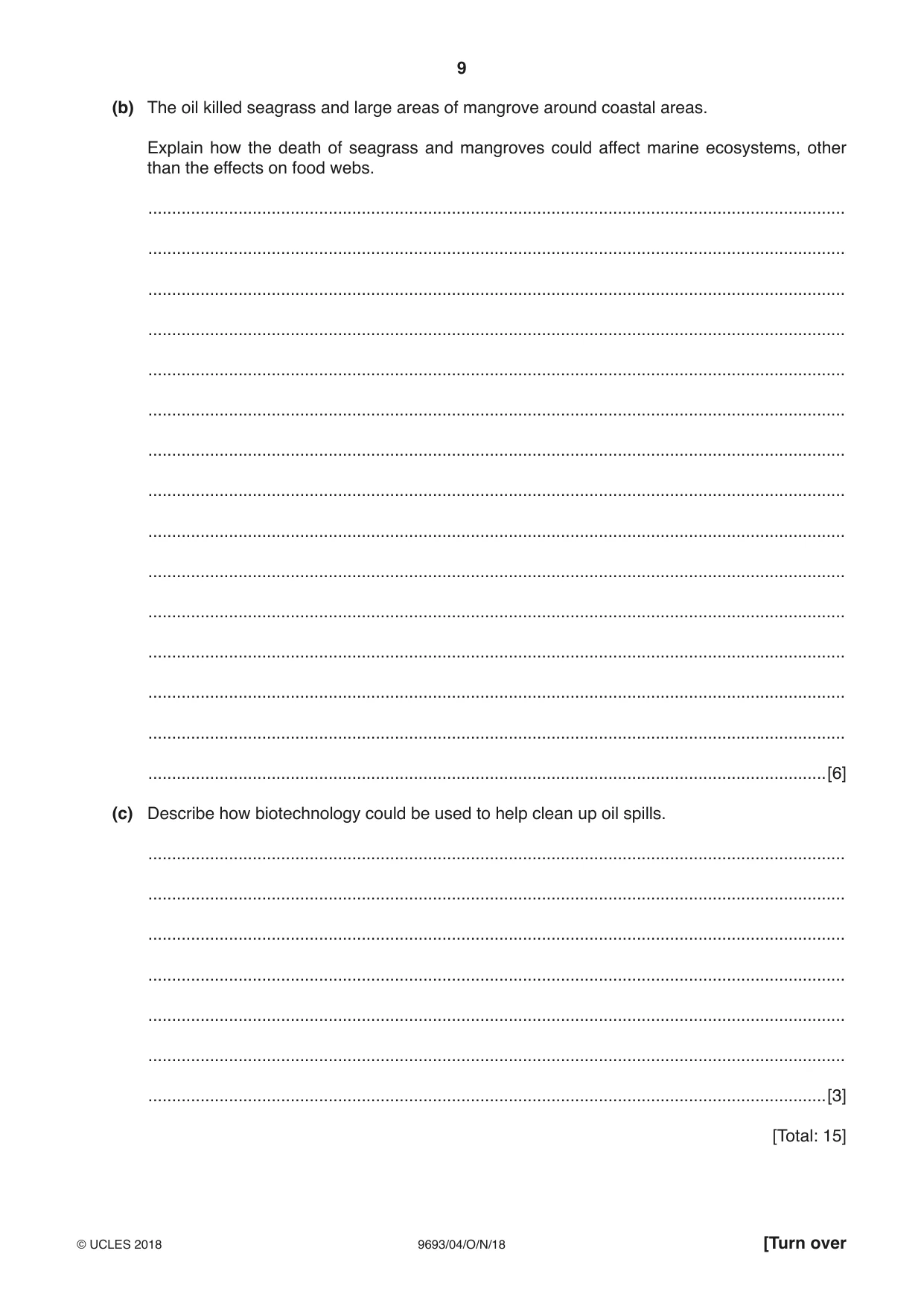
3 In 2010, the Deepwater Horizon oil platform exploded causing a large oil spill in the Gulf of Mexico. The effects of the spillage have been felt for many years since. (a) Explain how oil on the surface of the water would have affected food webs in the open ocean. ................................................................................................................................................... ................................................................................................................................................... ................................................................................................................................................... ................................................................................................................................................... ................................................................................................................................................... ................................................................................................................................................... ................................................................................................................................................... ................................................................................................................................................... ................................................................................................................................................... ................................................................................................................................................... ................................................................................................................................................... ................................................................................................................................................... ................................................................................................................................................... ................................................................................................................................................... ...............................................................................................................................................[6] (b) The oil killed seagrass and large areas of mangrove around coastal areas. Explain how the death of seagrass and mangroves could affect marine ecosystems, other than the effects on food webs. ................................................................................................................................................... ................................................................................................................................................... ................................................................................................................................................... ................................................................................................................................................... ................................................................................................................................................... ................................................................................................................................................... ................................................................................................................................................... ................................................................................................................................................... ................................................................................................................................................... ................................................................................................................................................... ................................................................................................................................................... ................................................................................................................................................... ................................................................................................................................................... ................................................................................................................................................... ...............................................................................................................................................[6] (c) Describe how biotechnology could be used to help clean up oil spills. ................................................................................................................................................... ................................................................................................................................................... ................................................................................................................................................... ................................................................................................................................................... ................................................................................................................................................... ................................................................................................................................................... ...............................................................................................................................................[3] [Total: 15]
Q4 · Wild populations of giant clams have decreased since the 1990s
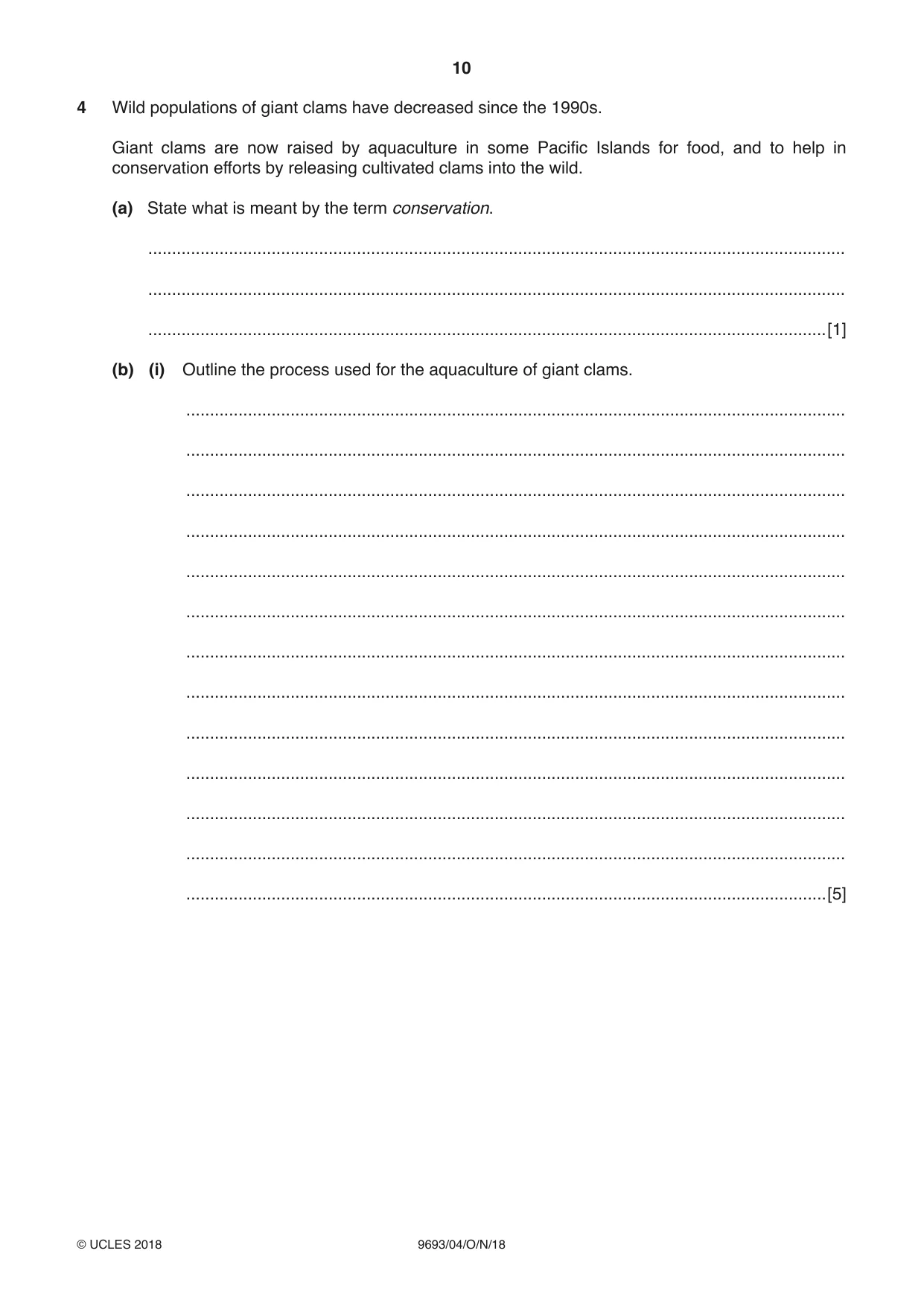
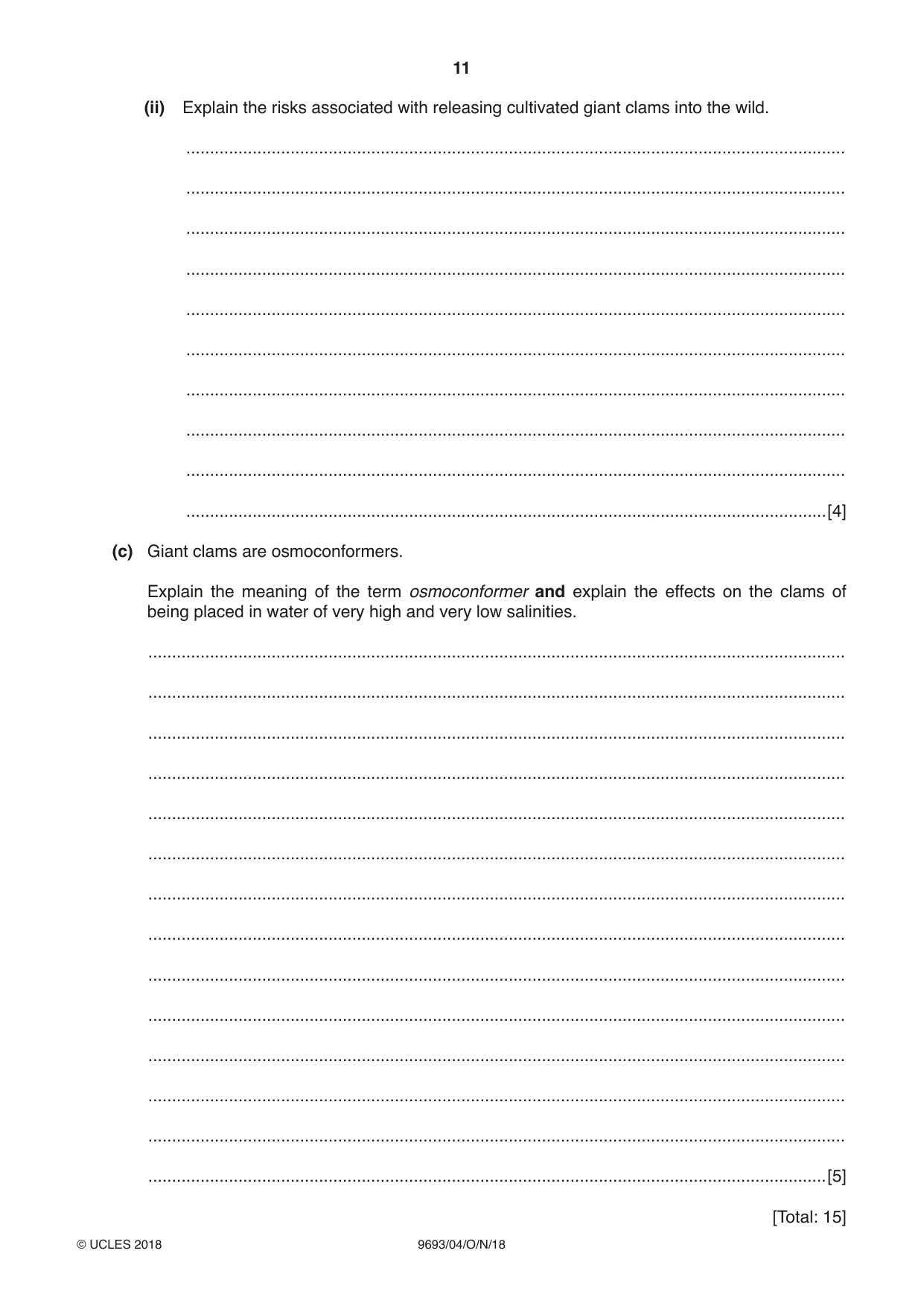
4 Wild populations of giant clams have decreased since the 1990s. Giant clams are now raised by aquaculture in some Pacific Islands for food, and to help in conservation efforts by releasing cultivated clams into the wild. (a) State what is meant by the term conservation. ................................................................................................................................................... ................................................................................................................................................... ...............................................................................................................................................[1] (b) (i) Outline the process used for the aquaculture of giant clams. ........................................................................................................................................... ........................................................................................................................................... ........................................................................................................................................... ........................................................................................................................................... ........................................................................................................................................... ........................................................................................................................................... ........................................................................................................................................... ........................................................................................................................................... ........................................................................................................................................... ........................................................................................................................................... ........................................................................................................................................... ........................................................................................................................................... .......................................................................................................................................[5] (ii) Explain the risks associated with releasing cultivated giant clams into the wild. ........................................................................................................................................... ........................................................................................................................................... ........................................................................................................................................... ........................................................................................................................................... ........................................................................................................................................... ........................................................................................................................................... ........................................................................................................................................... ........................................................................................................................................... ........................................................................................................................................... .......................................................................................................................................[4] (c) Giant clams are osmoconformers. Explain the meaning of the term osmoconformer and explain the effects on the clams of being placed in water of very high and very low salinities. ................................................................................................................................................... ................................................................................................................................................... ................................................................................................................................................... ................................................................................................................................................... ................................................................................................................................................... ................................................................................................................................................... ................................................................................................................................................... ................................................................................................................................................... ................................................................................................................................................... ................................................................................................................................................... ................................................................................................................................................... ................................................................................................................................................... ................................................................................................................................................... ...............................................................................................................................................[5]
What was in this paper
The subtopics covered by these 4 questions, and how many questions each got. Open one in a new tab to see every Cambridge question on it.